
How to Sell a Tree Service Business: 2026 Multiples & Buyer Map
Quick Answer
Tree-service businesses trade at 4.5-8.0x adjusted EBITDA in 2026, with the upper range reserved for businesses with high recurring residential maintenance revenue, certified arborist depth, and modern fleet. Valuation drivers include: (1) recurring residential and commercial maintenance revenue (vs episodic storm work), (2) fleet value (chippers, bucket trucks, stump grinders, cranes), often $500K-$3M in tangible asset value, (3) ISA Certified Arborist headcount (3+ certified arborists is a major value driver), (4) insurance and safety record (workers comp mod, OSHA incidents), and (5) geographic density (route efficiency). The dominant buyers in 2026 are Davey Tree, BrightView, SavATree, and a growing field of PE-backed regional roll-ups. Single-region businesses with $1.5M+ EBITDA are highly attractive to platform consolidators; smaller businesses trade to local strategic buyers or owner-operators.
How To Sell A Tree Service Business in 2026 depends on scale, sector, and recurring revenue percentage. Named PE-backed and strategic acquirers pursue this vertical actively, and multiples clear meaningful ranges depending on platform readiness and market cycle timing. This page covers the operational specifics that matter to owner-operators considering a sale.
A tree service business is worth 3x to 6x EBITDA in 2026, with the higher end reserved for operators with multi-year commercial maintenance contracts, route density, and certified arborists on staff. PE consolidators actively roll up tree service businesses, with storm-event revenue treated as one-time addback rather than recurring base.
Christoph Totter · Managing Partner, CT Acquisitions
Buy-side M&A across 200+ active capital partners · Home services M&A: tree service, landscaping, lawn care · Updated June 5, 2026
The U.S. tree-service industry comprises roughly 18,000-22,000 firms generating $30+ billion in annual revenue, with sharp consolidation activity since 2019 driven by PE-backed platform builders and the strategic acquirers Davey Tree, BrightView, and SavATree. The asset class has emerged as one of the most attractive home-services verticals for institutional capital because of: (a) recurring residential maintenance economics, (b) fragmented operator base (most companies are owner-operated and 1-5 trucks), (c) high barriers to entry (insurance, certifications, equipment, skilled labor), and (d) storm-revenue upside that creates lumpy but valuable cash flow.
This guide explains the specific economics, valuation drivers, buyer universe, and process steps for selling a tree-service or arborist business. It covers the difference between recurring residential maintenance revenue and episodic storm restoration work (and why buyers pay very different multiples for each), the value of an ISA-certified arborist team, fleet and equipment valuation, insurance and workers-compensation considerations, and the 6-9 month sale process.
We are CT Strategic Partners, a U.S. buy-side M&A firm based in Sheridan, Wyoming. We work with 200+ active capital partners across the lower middle market, including multiple PE-backed home-services platforms actively acquiring tree-service businesses. Our model is buyer-paid, sellers pay nothing, sign nothing, and walk away at any time. This page is educational. For a live conversation about selling your tree-service business, contact our team directly.
A note on industry timing: tree-service M&A is in mid-cycle as of 2026. Multiples have been steady for 2-3 years after rising sharply 2019-2022. PE platforms are actively pursuing add-on acquisitions, and strategic acquirers continue to consolidate. Sellers with $1M+ EBITDA businesses in growing geographies are likely to find a competitive process; below $500K EBITDA, the buyer pool narrows to local strategics and individual operators.
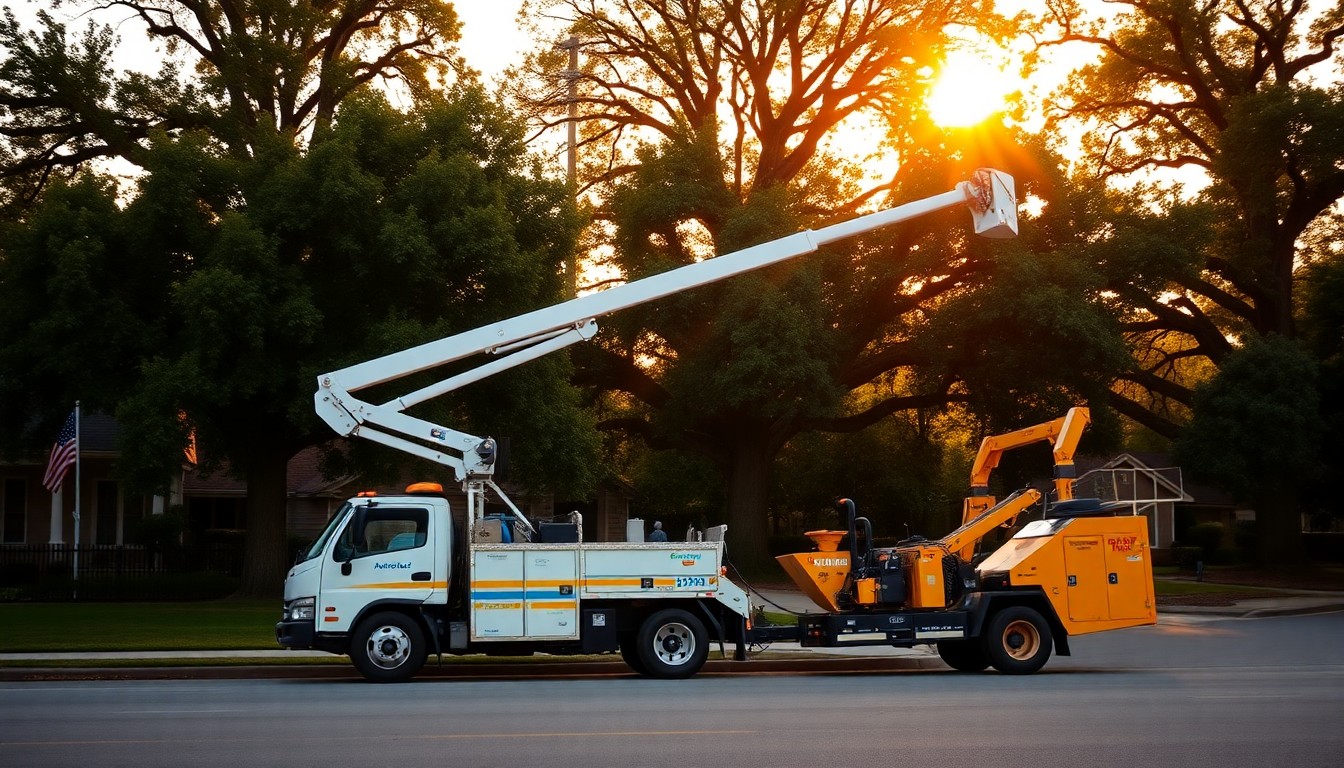
What buyers pay for: the five valuation drivers
For 2026 sell your landscaping business in Alabama with 2x-8x range by operator size, AL licensing, and buyer-paid sale process ($0 seller fee), see our reference.
For 2026 sell your landscaping business in Missouri with 2x-8x range by operator size, MO licensing, and buyer-paid sale process ($0 seller fee), see our reference.
For 2026 sell your landscaping business in Idaho with 2x-8x range, ID PCO licensing, route density, and buyer-paid sale process ($0 seller fee), see our reference.
For 2026 sell your landscaping business in Connecticut with 2x-8x range by operator size, CT licensing, and buyer-paid sale process ($0 seller fee), see our reference.
For 2026 how to buy a landscaping company with 1x-1.5x revenue (small) to 4x-6x EBITDA (mid-market), route density, SBA 7(a) financing, see our guide.
For 2026 PA tree service sale playbook with 2.5x-9x ranges by operator size and a buyer-paid sale process ($0 seller fee), see our reference guide.
For 2026 NE tree service sale playbook with 2.5x-9x ranges by operator size and a buyer-paid sale process ($0 to seller), see our guide.
For 2026 tree care valuation factors with the 8 factors that drive top-of-range multiples, see our reference guide.
Multiple at a Glance · 2026
Tree Service Business Valuation Multiples
2026 EBITDA multiples by operator scale and recurring revenue.
Source: CT Acquisitions analysis of tree service M&A. Storm-event revenue treated as one-time addback; recurring maintenance + ISA-certified arborists drive multiples.
For the founder quick-answer on landscaping business worth with 2026 multiples, see our guide.
For a deeper breakdown of multiples by operator type and the value drivers buyers pay premiums for, see our 2026 guide to commercial landscaping valuation.
1. Revenue mix: recurring maintenance vs storm restoration
This is the single most important factor. Recurring residential and commercial maintenance (pruning, removals, plant healthcare, scheduled inspections) trades at premium multiples because it represents predictable, route-density-driven cash flow. Storm restoration revenue trades at significant discount because it’s lumpy, weather-dependent, and often dilutive of margins (overtime labor, rush procurement, FEMA receivables).
- Pure residential maintenance focus (80%+ recurring): 6.0-8.0x EBITDA
- Mixed maintenance + commercial (60-80% recurring): 5.5-7.0x EBITDA
- Storm-heavy (50%+ storm restoration): 4.0-5.5x EBITDA
- Municipal contract heavy: 5.0-6.5x EBITDA depending on contract length
Buyers will normalize storm revenue to a multi-year average (often 5-year) and apply a discount factor (sometimes treating storm revenue at 50% of multiple).
2. Fleet and equipment value
Tree-service businesses are capital-intensive. Typical fleet for a $2M EBITDA business:
- 3-6 bucket trucks ($75-150K each, often 8-15 years old)
- 4-8 chip trucks with chippers ($60-100K each)
- 2-4 stump grinders ($25-60K each)
- 1-2 cranes or grapple-saw trucks ($250-500K each)
- Pickups, trailers, support equipment
- Hand tools, climbing gear, chainsaws (smaller value but constant replacement)
Total fleet value typically $750K-$3M for a $2M EBITDA business. Buyers value fleet at fair-market-value, not book value, many sellers depreciate aggressively and have $200K of book value on $1.5M of FMV equipment. Pre-sale fleet appraisal is recommended.
3. ISA Certified Arborist headcount
The International Society of Arboriculture (ISA) Certified Arborist credential is the industry’s professional qualification. Buyers (especially platform acquirers) want depth of certified arborists because: (a) insurance underwriting requires it, (b) commercial and municipal contracts often require it, (c) it’s a leading indicator of operational quality.
- 0-1 ISA Certified Arborists: hard to attract institutional buyer interest
- 2-3 ISA Certified Arborists: meets minimum institutional requirements
- 4+ ISA Certified Arborists including Board-Certified Master Arborists: premium positioning
4. Insurance, workers comp, and safety record
Tree work has high injury frequency. Workers compensation premiums often run 15-25% of payroll for climbers, 10-18% for ground crew. Buyers will scrutinize:
- Experience Modification Rate (EMR) / mod factor, below 1.0 is excellent, 1.0-1.2 is acceptable, above 1.2 raises serious questions
- OSHA incident history, recordable injuries, lost-time incidents, citations
- General liability and umbrella coverage, typically $1-5M GL, $5-25M umbrella
- Equipment and auto coverage, fleet insurance costs and claim history
5. Geographic density and route efficiency
Route density (jobs per crew per day) drives margin. Buyers prefer geographically concentrated operations with high job-density. Multi-market operations have higher overhead per dollar of revenue and trade at slight discount.
EBITDA normalization: what add-backs buyers will accept
Buyers will adjust reported EBITDA for various items. Common normalizations:
Owner compensation and benefits
- Owner W-2 salary in excess of market replacement: add back the excess
- Owner family members on payroll without operating role: add back
- Owner-owned vehicles, personal expenses run through business: add back
- Owner health insurance, retirement contributions in excess of normal: add back
One-time and non-recurring items
- Storm restoration revenue and associated costs (some buyers add back, others normalize over 5-year average)
- Insurance claims revenue from past damage events
- Legal fees from terminated lawsuits
- Equipment sales (capex recovery, not operating revenue)
- COVID-era PPP loans or ERC recovery: typically add back as non-recurring
Discretionary expenses
- Charitable contributions: add back if discretionary
- Personal travel coded as business: add back
- Equipment overbuying (new fleet purchases that exceed historical replacement pattern): partial add back
Items buyers will NOT add back
- Normal-course maintenance and repair
- Crew compensation at market rates (buyers will adjust UP if seller is paying below market)
- Insurance premiums (these continue post-close)
- Reasonable management salary for replacement of seller
- Depreciation (treated as proxy for capex requirement)
Worked example: $1.5M reported EBITDA → adjusted EBITDA
- Reported EBITDA: $1,500,000
- Add: owner W-2 in excess of $150K replacement: +$120,000
- Add: owner vehicle and personal expenses: +$45,000
- Add: spouse on payroll, no operating role: +$80,000
- Less: normalize storm revenue (high 2023 from regional ice storm): -$200,000
- Less: deferred maintenance capex required: -$50,000
- Adjusted EBITDA: $1,495,000
At a 6.0x multiple: $9.0M enterprise value. Plus fair-market-value of vehicles and equipment if structured as asset sale.
The 2026 tree-service buyer universe
Tier 1: Strategic consolidators
- The Davey Tree Expert Company, employee-owned, ~12,000 employees, the largest U.S. tree-service company. Acquires both single-market and regional operations. Long-term hold with employee-ownership culture.
- BrightView Holdings, public company, has a substantial tree-care division, often pairs tree-service acquisitions with landscape platform.
- SavATree, owned by Apax Partners (PE), aggressive consolidator focused on residential premium tree care and lawn services.
- Bartlett Tree Experts, private, family-owned, premium residential focus, more selective acquirer.
- Asplundh Tree Expert Co., private, family-owned, utility-vegetation-management focus (less residential).
Strategic consolidators typically: pay 5.5-7.5x EBITDA for quality assets, prefer $1M+ EBITDA, close in 4-6 months, retain existing management, integrate operations onto their systems within 12-18 months.
Tier 2: PE-backed regional roll-up platforms
Since 2019, multiple PE firms have established tree-service roll-up platforms. Examples (changing over time):
- Monarch Landscape Holdings, backed by various PE, regional plays
- Lawn Doctor / The Garrett Companies, tree and landscape
- Aspen Grove Capital / similar platforms, emerging regional players
- Independent sponsors backed by family offices targeting tree-service specifically
PE platforms typically: pay 5.0-7.0x EBITDA for add-ons (5.5-8.0x for platforms), prefer $750K+ EBITDA for add-ons / $2M+ EBITDA for platforms, often require 20-30% rollover equity, run aggressive growth plays.
Tier 3: Local strategic buyers
Other tree-service operators in the same region buying for tuck-in synergies. Often pay strong prices for businesses with crew depth, recurring contracts, or geographic complementarity. Faster close and less institutional bureaucracy than Tier 1-2 buyers. Many lower-middle-market deals (under $750K EBITDA) trade to local strategics.
Tier 4: Individual operators and search funders
Experienced operators or MBA-trained search funders acquiring single businesses to run personally. SBA-financed deals common for sub-$1.5M EBITDA businesses. Pay 4.5-6.0x EBITDA typically. Seller usually exits within 12-24 months.
Tier 5: Adjacent service buyers
Landscape companies, lawn care businesses, or property-services firms acquiring tree-service capabilities. Often pay strong prices to add service lines to existing customer base.
How to prepare a tree-service business for sale (12-month roadmap)
Months -12 to -9: financial cleanup
- Reconcile financial statements; close out personal expenses run through business
- Document recurring revenue (commercial contracts, residential maintenance customers, plant-healthcare programs) with renewal terms
- Begin tracking customer-level revenue and retention
- Move from cash to accrual accounting if currently cash basis (buyers strongly prefer accrual)
- Engage CPA for a financial review (not full audit) of 2-3 trailing years
Months -9 to -6: operational optimization
- Address any safety/insurance issues, work to lower EMR mod factor
- Document standard operating procedures (estimating, work-order management, climbing safety, customer billing)
- Cross-train crews to reduce key-person dependency
- Develop or invest in route optimization software, CRM, scheduling systems
- Consider adding ISA Certified Arborist staff if depth is low
- Begin a focused effort to grow recurring revenue percentage (annual maintenance contracts, plant healthcare programs)
Months -6 to -3: fleet and equipment audit
- Engage equipment appraiser for fair-market-value report
- Sell or scrap obsolete/non-functional equipment
- Document major equipment maintenance and repair history
- Consider strategic equipment purchases that increase capacity without depressing pre-sale EBITDA
Months -3 to 0: sale preparation
- Engage M&A advisor or buy-side firm with tree-service buyer relationships
- Develop confidential information memorandum (CIM)
- Build financial model with normalized EBITDA, growth scenarios, customer concentration analysis
- Identify and prioritize target buyer universe
Months 0 to 6: market and close
- Distribute teaser, then NDA-protected CIM
- Conduct management presentations with serious bidders
- Collect IOIs, then LOIs, evaluate offers across multiple dimensions (price, structure, post-close fit)
- Sign LOI with selected buyer; enter exclusivity
- Diligence (financial QoE, operational, insurance/safety, legal, environmental if applicable)
- Definitive agreement negotiation, financing close, regulatory transfers (vehicle titles, contractor licenses, permits)
- Close and transition
Curious what your business is actually worth?
A 15-minute confidential call gives you a real valuation range and tells you which buyers would compete for your business. No cost, no obligation, no pressure to sell.
Common pitfalls in tree-service business sales
1. Owner-operator key-person risk
If the owner personally drives sales, estimates jobs, manages crews, AND handles customer relationships, buyers will discount heavily. Pre-sale work to delegate these functions to crew foremen, sales managers, or office staff materially increases value. Aim for the business to run for 30 days without the owner present before going to market.
2. Cash-basis accounting confusion
Many small tree-service businesses run on cash basis, which obscures true profitability (especially with seasonal work and receivables). Convert to accrual accounting 12+ months before sale. Buyers will adjust to accrual anyway during diligence, so getting there first eliminates surprises.
3. Customer concentration risk
If 1-2 commercial or municipal customers represent 25%+ of revenue, buyers will discount valuation. Pre-sale work to diversify (or to lock in long-term contracts with concentrated customers) reduces this discount.
4. Workers comp mod-factor problems
An EMR above 1.2 raises serious questions and may significantly reduce buyer interest. Pre-sale safety investment (training, equipment, claim management) can lower the mod over 2-3 years.
5. Equipment maintenance backlog
Buyers will inspect every piece of major equipment. Hidden maintenance issues (transmissions, hydraulics, chassis) trigger price reductions. Document maintenance history meticulously and address known issues before going to market.
6. Misclassified employees
Tree-service companies often misclassify climbers and ground crew as independent contractors. Buyers will challenge this aggressively in diligence (DOL/IRS exposure can be material). Convert to W-2 employees 12+ months before sale and document.
7. Inadequate financial systems
QuickBooks Desktop with crew tickets in a shoebox doesn’t transfer to a buyer. Invest in modern CRM, work-order management, and route optimization software. Buyers pay premium for businesses with mature systems.

About the Author
Christoph Totter is the founder of CT Acquisitions, a buy-side partner headquartered in Sheridan, Wyoming. We work directly with 200+ buyers, search funders, family offices, lower middle-market PE, and strategic consolidators, including direct mandates with the largest consolidators that other intermediaries cannot access. The buyers pay us when a deal closes, not the seller. No retainer, no exclusivity, no contract until close. Connect on LinkedIn · Get in touch
Frequently Asked Questions
What multiple should I expect for my tree-service business?
Quality residential-maintenance-focused businesses with $1M+ EBITDA and clean safety records trade at 5.5-7.5x adjusted EBITDA in 2026. Storm-heavy or smaller businesses trade at 4.5-5.5x. Premium businesses with strong recurring revenue mix, deep ISA arborist team, and modern fleet can reach 7.5-8.0x. Specific multiples vary by geography and buyer type.
How does storm revenue affect my valuation?
Buyers typically normalize storm revenue across 5-year average and apply a discount factor (effectively treating $1 of storm revenue as $0.50-0.70 of recurring revenue). Pure storm-restoration businesses trade at significantly lower multiples (3.5-5.0x) because the revenue is unpredictable and often lower-margin.
Who is most likely to buy my tree-service business?
Top strategic acquirers in 2026: Davey Tree, BrightView, SavATree, Bartlett Tree Experts, Asplundh. Plus a growing universe of PE-backed regional roll-up platforms. Below $750K EBITDA, expect more interest from local strategic buyers and individual operators. Above $1.5M EBITDA, expect strong institutional competition.
How important is ISA Certified Arborist depth?
Critical for institutional buyer interest. Buyers want 2-3+ certified arborists minimum; 4+ including Board-Certified Master Arborists is premium positioning. Without depth, you’re limited to local strategic and individual buyers. Investing in certification 2-3 years before sale can meaningfully expand the buyer pool.
What’s my fleet worth?
Depends heavily on age, condition, and maintenance history. Typical tree-service business: bucket trucks $30-100K each depending on age, chip trucks $25-60K, stump grinders $15-50K, cranes $150-400K. Get a professional equipment appraisal, many sellers undervalue their fleet by 30-50% based on depreciated book value alone.
How long does a tree-service business sale take?
Typically 6-9 months from advisor engagement to closing. Pre-marketing preparation: 2-3 months. Active marketing through LOI: 2-3 months. Diligence and close: 2-3 months. Strategic acquirers run more thorough diligence than individual buyers.
Will I have to stay on after the sale?
Almost always, in some capacity. Strategic acquirers: 12-24 month transition typical. PE platforms: 2-4 year operating role with rollover equity. Local strategic buyers: 6-12 months transition. Individual operators / search funders: 6-12 months mentorship. Plan for at least 12 months of continued involvement.
What about my crew and existing customers?
Strategic and PE buyers typically retain crews, labor is scarce, and brand-loyal customers expect continuity. Compensation usually unchanged in Year 1; benefits may be improved by larger-platform employer. Customer retention post-close is typically 90-95% for well-managed transitions; sloppy transitions can see 15-25% customer churn.
Should I sell to a competitor or to a roll-up platform?
Depends on your goals. Competitors often pay strong prices for tuck-ins but may cut crew or change brand. Strategic acquirers preserve brand and crew but pay slightly lower multiples. PE platforms pay the highest headline prices but require rollover equity and longer operating commitments. Run a competitive process and evaluate offers across all dimensions, not just headline price.
Sources & References
- Tree Care Industry Association (TCIA), industry data, safety standards, accreditation programs
- International Society of Arboriculture (ISA), certification programs, professional standards
- OSHA 29 CFR 1910.269 / 1910.331-335, electrical and tree-work safety standards
- ANSI Z133.1, Arboricultural Operations Safety Requirements
- Tree Care Industry Magazine, trade publication, M&A reporting
- NCCI Workers Compensation classifications, code 0106 tree pruning and removal
Last updated: May 16, 2026. For corrections or methodology questions, get in touch.
Want a Specific Read on Your Business?
15 minutes, confidential, no contract, no cost. You leave with a read on your local buyer market and a likely valuation range.
Broker fees carry a real drag on net proceeds. See our full sell-side broker economics for the numbers.
Sellers still 12 to 24 months from listing should use the pre-sale runway checklist to sequence the value-lift work first.
The transactional action page for this vertical is the tree service owner exit resource.