Tree Care Business Valuation: Tree Service EBITDA Multiples, Free Calculator and What Your Business Is Worth in 2026
What Is a Tree Care Business Worth in 2026?
Quick Answer

Christoph Totter · Managing Partner, CT Acquisitions
M&A advisory across 500+ active capital partners · Home services M&A: tree care, landscaping, lawn care · Updated June 5, 2026
The typical tree service EBITDA multiple in 2026 is 4.5x to 6x for established operators with commercial maintenance contracts and 6x to 8x for PE-platform-ready firms above $2M of EBITDA, per CT Acquisitions analysis of tree care M&A. Smaller owner-run firms are priced on SDE instead, at roughly 2x to 4.5x.
Free Tree Care Valuation Calculator
Enter your revenue, EBITDA or SDE, and recurring revenue mix. The calculator applies the same tier logic documented below and returns a starting-point range in under a minute. It is a screening estimate, not a Quality of Earnings.
Tree care business valuations typically range from 2x to 4.5x owner’s discretionary earnings (SDE) for owner-run firms and 4.5x to 8x EBITDA for larger operators per CT Acquisitions analysis, with the final multiple determined by equipment condition, safety compliance, staff expertise, and local demand patterns. Key value drivers include operational efficiency, documented processes, regulatory adherence, and revenue stability, while specialized services and loyal customer bases command premium multiples. Professional appraisals examine equipment maintenance history, safety culture, seasonal revenue trends, and regional market conditions to establish realistic buyer expectations and identify improvement opportunities before sale. The full list of senior care franchise opportunities covers the active buyers, fee structures, and unit-economics for each. The full list of senior care franchises covers the active buyers, fee structures, and unit-economics for each.
Thinking about selling your business?
A 15-minute confidential call gives you a real valuation range and the buyers most likely to compete for your business. No cost, no obligation.
We appraise small and mid-market operations with clarity. Owners and buyers need a factual view of value. A proper appraisal starts with data, not guesses.
Peak Business Valuation specializes in valuing tree service businesses across the United States. We analyze operations, equipment, and staff skills. We also review safety protocols and compliance with local regulations.
Understanding risk and removal services helps set realistic expectations. We dig into revenue drivers and the role of skilled professionals. This gives owners a roadmap to improve value before a sale or a recap.
For a practical guide on preparing a company for market, see our detailed note on how to value a tree service. We keep analysis tight, use industry benchmarks, and present clear next steps.
Key Takeaways
- Obtain a professional business valuation early to guide decisions.
- Evaluate operations, equipment, and staff expertise as primary factors.
- Address safety and compliance to reduce risk and boost value.
- Specialized removal services and loyal customers increase appeal.
- Accurate data and benchmarks matter for buyers and owners alike.
Tree service EBITDA multiple vs SDE multiple: which one applies
Tree care deals are quoted two ways, and mixing them up is a common pricing mistake. SDE (seller’s discretionary earnings) adds back one owner’s full salary and perks. EBITDA subtracts a market salary for whoever runs the business. SDE is always higher than EBITDA for the same company, so SDE multiples are lower.
| Business profile | Usually priced on | Range (CT Acquisitions analysis) | Typical buyer |
|---|---|---|---|
| Owner-operator, storm-heavy revenue | SDE | 2x to 3x SDE (per CT analysis) | Individual buyers, often with SBA financing |
| Established residential operator | SDE | 3x to 4.5x SDE (per CT analysis) | Individual buyers, search funders, local competitors |
| Mid-market with commercial maintenance contracts | EBITDA | 4.5x to 6x EBITDA (per CT analysis) | Regional platforms, family offices |
| PE-platform-ready, $2M+ EBITDA | EBITDA | 6x to 8x EBITDA (per CT analysis) | PE-backed tree care and landscape platforms |
Illustration: a residential tree service shows $500,000 of SDE, including the owner’s $150,000 salary. If a general manager would cost the same $150,000, EBITDA is $350,000. At 3x to 4.5x SDE the business prices at $1.5M to $2.25M. Quoted on EBITDA, $1.5M is about 4.3x and $2.25M about 6.4x. A buyer quoting "5x" may mean either, so always ask which earnings figure the multiple applies to.
Three tree-specific adjustments move either figure before any multiple is applied:
- Storm revenue. Buyers treat storm work as non-recurring. Per the CT buy-side conversations quoted below, platforms credit a three-year storm average at 30% to 50%, not the full trailing twelve months.
- Equipment and capex. Bucket trucks, cranes, chippers and stump grinders wear out. Buyers subtract normal replacement spending from EBITDA, and debt on equipment usually comes off the price in a cash-free, debt-free deal.
- Recurring contracts. Utility line clearance, municipal and plant health care contracts behave like recurring revenue and push a firm toward the EBITDA tiers.
To see where your numbers land, use the calculator above, or read our guide to selling a tree service business.
Understanding Tree Care Business Valuation What Matters Most
For 2026 landscaping multiples by operator type across residential, commercial-maintenance, and platform tiers, see our guide.
CT Acquisitions · 2026 Buyer-Market Signal
What Tree Care PE Platforms Pay For in 2026
Across our buy-side conversations with PE-backed tree care platforms and roll-up consolidators in 2026:
- Storm revenue is consistently treated as one-time addback. Buyers model 3-year average storm revenue at 30-50% credit, not 100% of trailing-twelve-months.
- ISA-certified arborist depth matters more than headcount. Multi-certified senior arborists drive crew-leader multiplier, without them, buyers discount EBITDA quality.
- Route density beats geographic footprint. 80-route-stops per crew-day is the benchmark; tree care platforms underwrite drive-time variance as hard as crew utilization.
Multiple at a Glance · 2026
Tree Care Business Valuation Multiples
2026 multiples by operator type and recurring contract mix.
Source: CT Acquisitions analysis of tree care M&A. Storm revenue treated as one-time addback; ISA-certified arborists + multi-year commercial maintenance drive multiples.
A focused review of equipment, staff, and demand reveals true worth. We start with facts. Numbers over narratives. We help owners and buyers see where value sits and why.
Partnering with a professional appraiser uncovers industry nuances. We examine regional demand trends, seasonal swings, and local regulations. That context shifts a standard appraisal into a useful roadmap.

Key items in our review include owner’s discretionary earnings, equipment upkeep, safety culture, and compliance risk. Each affects the final figure.
- Operational efficiency and documented processes.
- Equipment condition and maintenance history.
- Regulatory compliance and safety protocols.
- Revenue stability and local demand patterns.
| Factor | Impact on Value | Action |
|---|---|---|
| Owner’s discretionary earnings | High | Normalize and document adjustments |
| Equipment condition | Medium | Maintain logs; schedule replacements |
| Safety & compliance | High | Train staff; update policies |
| Local demand | Medium | Track seasonality; diversify services |
We offer free consultations to clarify how to value a tree service business in your market. Contact us to cut through the noise and focus on the drivers that matter.
Tree Care Business Valuation Methodologies
We use a disciplined mix of market, income, and asset methods to estimate fair value. Each method highlights different drivers. Together they form a clearer picture for owners and buyers.

Market Approach
Compare to recent sales. We use private transaction databases and NAICS filters to find comparable companies. EBITDA and SDE multiples translate those comps into a market value range.
Income Approach
Capitalize predictable cash flow. For companies with steady revenue, we apply capitalization and discounted cash flow methods. This shows return potential versus purchase price.
Asset Approach
Count tangible and adjusted assets. Equipment, working capital, and owner interest are reviewed. This approach protects value when earnings are volatile.
| Approach | Primary Metric | When to Use | Key Risk |
|---|---|---|---|
| Market | EBITDA / SDE multiples | Active M&A market; many comps | Data quality and comparability |
| Income | Discounted cash flow / cap rate | Stable revenue & predictable cash flow | Projection accuracy |
| Asset | Adjusted net asset value | Low or lumpy earnings | Undervalued equipment or hidden liabilities |
We blend methods to reflect industry risk such as equipment upkeep, safety compliance, and operating expenses. This yields a balanced result buyers and sellers can trust.
Geographic and Market Factors in Tree Care Business Valuation
Where a company runs operations often dictates revenue stability and buyer interest. Location affects call volume, seasonality, and unit economics. We map these influences to give a realistic market value range.
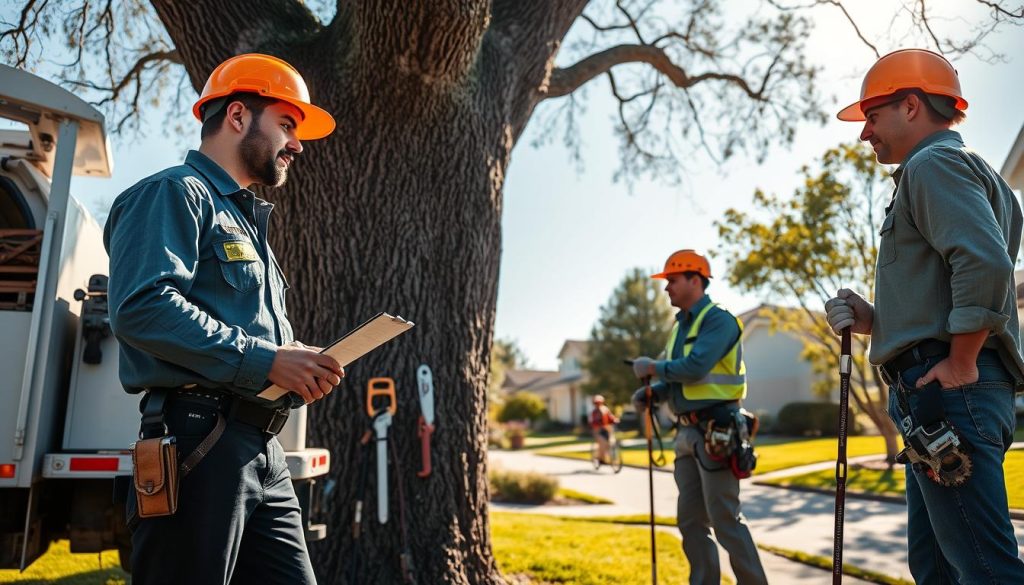
Impact of Location on Demand
Proximity matters. Urban centers and dense residential tracts generate steady demand for removal and maintenance. Rural zones produce episodic work and higher travel costs.
- Coastal climates, like Norfolk, increase requests due to salt tolerance and storm damage to trees.
- Defining a clear service area lowers response time and reduces fuel and labor costs.
- Understanding local owner needs helps position your company against competitors.
“Geography is not just background. It is a driver of revenue and buyer preference.”
| Region | Demand Profile | Impact on Market Value |
|---|---|---|
| Coastal (e.g., Norfolk) | Frequent storm work; diverse species | Higher recurring revenue potential |
| Suburban | Stable residential maintenance | Predictable cash flow; moderate multiples |
| Rural | Seasonal and removal-heavy | Lower turnover; higher per-job margins |
We factor geographic advantages into every business valuation. That creates a clearer offer picture for sellers and buyers alike.
The Role of Skilled Labor and Employee Expertise

We treat team skill as a core asset. Buyers will look past equipment and see the crew. Experience, certifications, and training reduce risk. They raise service quality and client trust.
Skilled staff lower safety incidents. That cuts downtime and liability. It also stabilizes revenue and strengthens the company story for buyers.
- Certifications and years on the job boost reputation and margins.
- Ongoing training demonstrates professional management and risk control.
- Expert execution of pruning and disease work protects equipment and client property.
“A trained team is the strongest indicator of repeat clients and higher retention.”
| Labor Factor | Impact | What We Review |
|---|---|---|
| Certifications & experience | High | Licenses, credentials, years on staff |
| Training investment | Medium | Programs, schedules, training records |
| Safety management | High | Incident logs, PPE, policies |
We quantify these elements when assessing company worth. Every client interaction is proof of team quality. That proof influences buyer interest and the final offer.
Navigating Regulatory Compliance and Operational Costs
Compliance and controllable expenses shape both risk and return. We review how local, state, and federal rules affect operations and the bottom line. Staying current avoids fines and preserves buyer interest.
Safety regulations drive day-to-day choices. We audit training records, incident logs, and PPE programs. That tells buyers whether the team follows standards and reduces liability.
Environmental compliance is equally critical. Permits, waste disposal, and protected-species rules can add direct costs and project delays. We check permits and documentation to confirm the company meets legal requirements.
- We quantify compliance expenses and show their impact on operations and margins.
- We flag regulatory risks that lower market value and recommend remediation steps.
- We verify licenses and permits so a transition to new buyers is smooth.
- We document safety and environmental practices to demonstrate operational stability.
Effective management of expenses and compliance signals a well-run service company. That reliability increases appeal to buyers and supports a stronger market value.
Monetizing Professional Expertise and Sales Estimates
Charging for expert guidance changes the economics of every site visit. We show owners how to move from free estimates to paid consults. That creates direct revenue and strengthens the sales funnel.

Jeffery Ling has long argued that certified arborists can charge for professional advice. We use his approach to quantify the value of expert time and reduce lost opportunity.
We help you separate casual leads, repeat customers, and high-value clients. That lets you assign skilled staff where they deliver the most return.
- Turn complex proposals into paid assessments.
- Price risk, permitting help, and mitigation planning.
- Capture revenue for diagnostic or management plans.
| Monetization Type | Impact on Revenue | Action |
|---|---|---|
| Paid estimate / consultation | High | Standardize scope and fee schedule |
| Contract add-ons (plans, monitoring) | Medium | Bundle with maintenance agreements |
| Specialist referrals & reports | Low-Medium | Document deliverables; charge per report |
We audit contracts and service agreements to confirm your team captures professional value. That increases documented revenue and reduces negotiation leakage.
“Charge for expertise. Buyers will pay for predictable, documented revenue streams.”
For a practical market check, review our linked market note. It shows how clear monetization strategies raise buyer interest and the final offer.
Conclusion
A clear, data-driven close lets owners move forward with confidence. We translate records and operations into a precise valuation. The result is actionable insight, not theory.
Focus on the levers that drive value. Skilled staff, regulatory compliance, and revenue strategies lift multiple offers and shorten sale timelines.
Obtain a professional business valuation to understand true worth. That step reduces negotiation friction and reveals improvement priorities.
If you’re actively acquiring or raising capital for high-quality opportunities, schedule a confidential call or use the contact form to get started. We provide transparent, data-driven support every step of the way.
About the Author
Christoph Totter is the founder of CT Acquisitions, an M&A advisory firm working both sides of the table, headquartered in Sheridan, Wyoming. We work directly with 500+ buyers, search funders, family offices, lower middle-market PE, and strategic consolidators, including direct mandates with the largest consolidators that other intermediaries cannot access. No fee to you on buy-side introductions; sell-side mandates are paid on success at closing. Connect on LinkedIn · Get in touch
FAQ
What EBITDA and SDE multiples do tree service companies sell for?
Tree service companies sell on SDE multiples at owner-operator scale and EBITDA multiples once earnings clear roughly $1M. Where you land depends on recurring municipal and utility contracts, crew depth beyond the owner, equipment age, and safety record. Recurring plant health care revenue is the single biggest premium driver because it behaves like subscription income. The tier factors on this page walk through each lever.
What are the top factors buyers look at when valuing a tree care firm?
Buyers focus on recurring revenue, gross margins, certified crews, equipment condition, and documented safety systems. They value predictable contracts, a diversified client mix, and crew leaders with ISA or similar credentials. Profitability trumps size. Reliable cash flow and low concentration risk increase appeal to private equity and family offices.
How do market, income, and asset approaches differ for service companies?
The market approach benchmarks sale multiples of comparable companies. The income approach capitalizes normalized cash flow or uses discounted cash flow to capture future earnings. The asset approach values tangible items like chippers and trucks, plus working capital, often used when earnings are weak. We use a blended view to reflect operations and market dynamics.
How does location affect demand and pricing for services?
Geography shapes seasonality, storm exposure, and urban versus rural pricing. High-density suburbs with wealthy property owners command premium rates for maintenance and emergency response. Regions with frequent storms increase recurring revenue potential from mitigation and removal work. Supply constraints for skilled crews also push margins up in certain markets.
Why is skilled labor such a critical valuation driver?
Skilled crews deliver higher-quality, safer work and allow the company to bid on complex, higher-margin jobs. Crew certifications reduce liability and insurance costs. A trained bench of foremen enables scaling without owner dependence, which directly increases buyer confidence and value.
What operational costs most influence seller price expectations?
Fuel, insurance, maintenance, and payroll typically drive the largest expense lines. Heavy equipment depreciation and financing also matter. Buyers scrutinize efficiency metrics: revenue per crew, utilization rates, and repair downtime. Lower controllable costs and transparent expense records improve valuation.
How do safety and environmental regulations impact valuation?
Strong safety programs lower OSHA incidents and reduce insurance premiums. Environmental compliance, permit records, stormwater controls, and proper green waste disposal, reduces transactional risk. Noncompliance creates significant contingent liabilities that depress offers or trigger escrow holdbacks.
Can professional credentials and brand reputation be monetized?
Yes. Certifications, regional reputation, digital presence, and long-term municipal or commercial contracts translate into higher multiples. Buyers pay for repeatable methods, documented SOPs, and marketing that generates a steady pipeline. Intellectual capital, pricing models, estimating software, and client relationships, adds tangible value.
How should owners present financials to maximize value?
Clean, normalized financial statements matter. Separate owner-related expenses, show EBITDA adjustments, and present clear backlog and recurring revenue schedules. Provide job costing details and revenue by service line. Transparency reduces due-diligence friction and improves buyer confidence.
What risks most commonly reduce offers?
High customer concentration, owner-dependent operations, outdated equipment, unresolved safety violations, and weak record-keeping. Also, regions with declining demand or increasing regulatory pressure draw lower bids. Address these before marketing for a better outcome.
Which metrics do buyers use to benchmark similar service firms?
Revenue growth, adjusted EBITDA margin, revenue per technician, equipment-to-revenue ratio, customer retention, and backlog value. We also track multiple of EBITDA and seller’s discretionary earnings as standard comparables for lower-middle-market deals.
Related Guide: What Is My Business Worth?, Learn how home services businesses are valued and what drives your multiple.
Related Guide: How to Increase Your Business’s Value, Proven strategies to grow your company’s value before a sale.
Want to Know What Your Business Is Worth?
Start with a free, confidential conversation.
Curious what your business is actually worth?
A 15-minute confidential call gives you a real valuation range and tells you which buyers would compete for your business. No cost, no obligation, no pressure to sell.
More on lower middle market M&A
Related Guide
SDE vs EBITDA, Which metric applies.
Related Guide
2026 LMM Buyer Demand Report, Service-business buyer demand.
Related Guide
Customer Concentration Risk, A common driver of multiples.
Related reading: how to sell a tree service business, a deeper look at this topic for owners and buyers thinking through the same questions.