
How to Buy a Motel: The 2026 Guide to Buying a Motel
Christoph Totter · Managing Partner, CT Acquisitions
M&A advisory across 500+ active capital partners · Motel acquisitions: STAR / RevPAR + SBA 7(a) + brand vs independent · Updated June 16, 2026
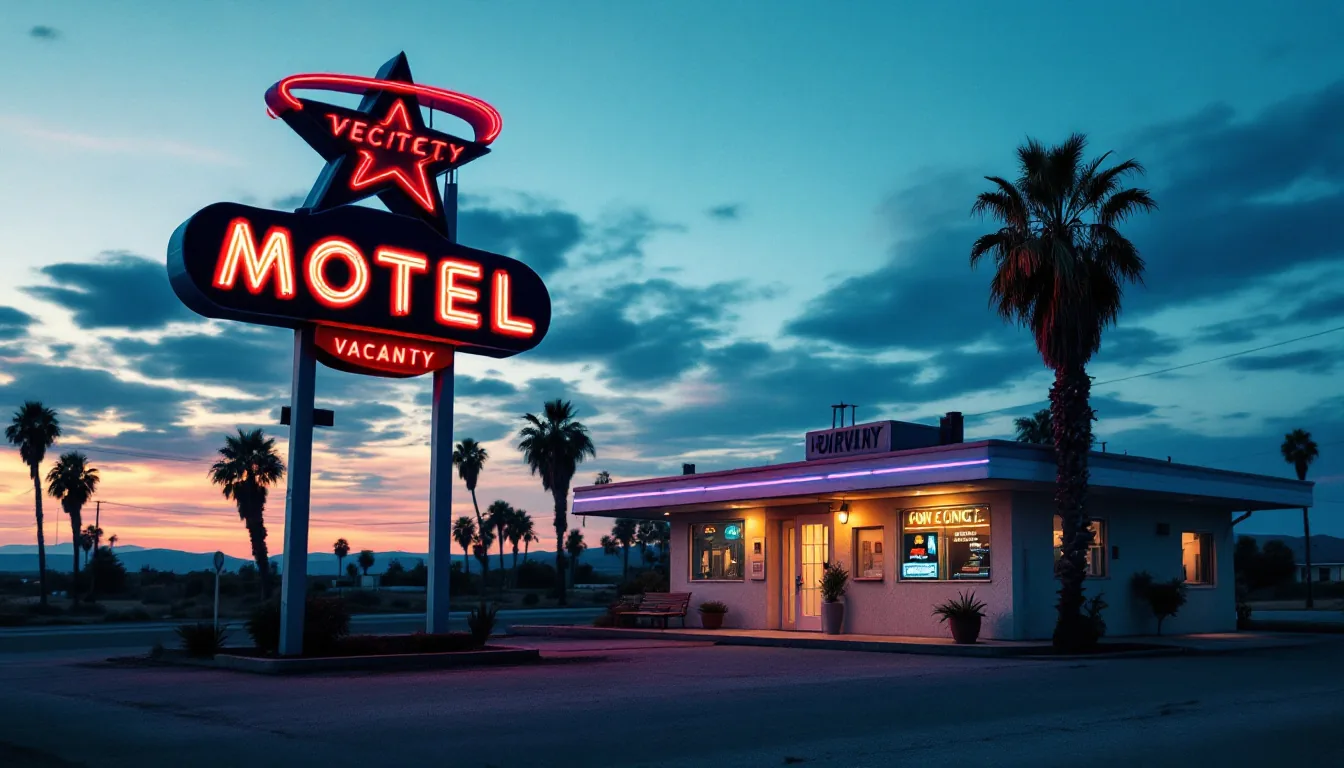
Buying a motel means buying two things in one deal: a piece of commercial real estate and a 24/7 hospitality business that runs on it. The building usually carries most of the price, but the operation decides whether you make money. This guide walks through what motels cost, branded versus independent, the diligence that catches expensive surprises, financing, and what daily life looks like after closing.
“A motel is real estate with a hospitality business attached to it. The real estate is usually the larger asset, but the operating business is where the buyer makes, or loses, value.”
TL;DR, the 90-second brief
- Motels are real estate-anchored hospitality businesses, real estate is typically 60-80% of the deal value.
- Capital requirements: typically $300K-$1.5M+ equity for smaller independent motels, $1M-$5M+ for branded or larger properties.
- Brand vs. independent is a major strategic decision, branding (Best Western, Comfort Inn, Days Inn, etc.) drives bookings but adds franchise fees and standards.
- SBA 7(a) financing is common; specialty hospitality lenders exist for larger deals.
- Diligence focuses on real estate condition, room economics (ADR, occupancy, RevPAR), brand/franchise terms, location dynamics, deferred maintenance, and operational reality.
- Many smaller motels are owner-operator; larger and branded properties typically have professional management.
Key Takeaways
- Motels are real estate-anchored hospitality businesses with 60-80% of deal value typically in real estate.
- Capital requirements: $300K-$1.5M+ equity for smaller independents; $1M-$5M+ for branded and larger.
- Brand vs. independent: branding (Best Western, Comfort Inn, etc.) drives bookings but adds fees, standards, and approval requirements.
- SBA 7(a) common; specialty hospitality lenders for larger deals.
- Diligence covers real estate condition, room economics (ADR, occupancy, RevPAR), brand/franchise terms, location dynamics, deferred maintenance.
- Smaller motels often owner-operator; larger and branded properties have professional management.
- Location dynamics matter enormously, corridor strength, traffic patterns, competitive landscape.
Motel Acquisition Snapshot (2026)
| Tier / Segment | Range (2026) |
|---|---|
| SBA 7(a) down payment | 10% minimum equity injection (SBA SOP 50 10 8); lenders may ask for more |
| Branded motel PIP capex | $500K-$2M typical |
| Brand royalty fees (% of gross) | 5%-10% |
| Independent motel ADR vs branded | 15%-25% lower (no royalty) |
| Primary diligence outputs | STAR report, PIP requirements, brand QA scores |
Ranges reflect 2026 buy-side observations across active capital partners and named industry consolidators. Specific transaction outcomes vary by geography, customer concentration, and deal structure.
What You’re Buying
From the CT desk
What 2026 motel acquisition activity reveals
- •Branded motels (Best Western, Choice Hotels Comfort Inn / Quality Inn / Sleep Inn, Wyndham Days Inn / Super 8 / Microtel, IHG Holiday Inn Express, Marriott Fairfield Inn / TownePlace) command 15-25% ADR premium over equivalent independents but require PIP capex ($500K-$2M typical) plus brand royalty fees (5-10% of gross room revenue).
- •SBA 7(a) is the primary motel acquisition vehicle for sub-$5M deals, eligible for combined real-estate-plus-business loan up to the $5M SBA 7(a) maximum with 25-year amortization on the real-estate component plus 10-year amortization on the business component. 2026 SBA 7(a) rates run Prime + 2.25-4.75% depending on lender risk grading.
- •STAR report (Smith Travel Research competitive set analysis) is the buyer-side underwriting standard for motel acquisition. The report quantifies RevPAR (Revenue Per Available Room) and ADR (Average Daily Rate) performance versus competitive set, identifies penetration index (occupancy versus market average) and yield index.
- •Operating realities matter: motel ownership requires daily owner / manager attention plus 24/7 front-desk coverage. Buyer-side underwriting models owner-operator hours-per-week (typically 60-80) versus hired-GM model ($55K-$80K plus benefits). The structural difference materially changes pro-forma cash flow assumptions.
Related Cluster GuideFor the adjacent hospitality acquisition companion on how to buy a hotel, see our reference.
For 2026 EBITDA multiples by flag and cap rates by class, see our hotel valuation by flag and RevPAR guide.
A motel acquisition typically involves: the real estate (land, building, parking, pool/amenities if any), usually the largest single component of value; the operating business (rooms inventory, reservations system, front desk operations, housekeeping, brand standing); the brand and reputation (reviews, repeat guests, brand affiliation if branded); and the team (front desk, housekeeping, often the manager). Independent motels typically have leaner staffing and lower brand-driven volume; branded motels (Best Western, Comfort Inn, Days Inn, Motel 6, La Quinta, etc.) have brand systems, marketing support, and brand standards.
Most smaller motel deals are owner-operator with the buyer (or their family) managing the property directly. Larger motels and full branded operations typically have professional general managers. The choice of operating model shapes both the diligence focus and the realistic life of the buyer post-close.
What Motels Cost
Buying a motel usually costs from the mid six figures for a small independent property to several million dollars for a branded one. BizBuySell‘s motel listings page reports a median asking price of $1,800,000 for an established motel. Plan on equity for the down payment plus cash reserves for repairs and, if branded, required upgrades.
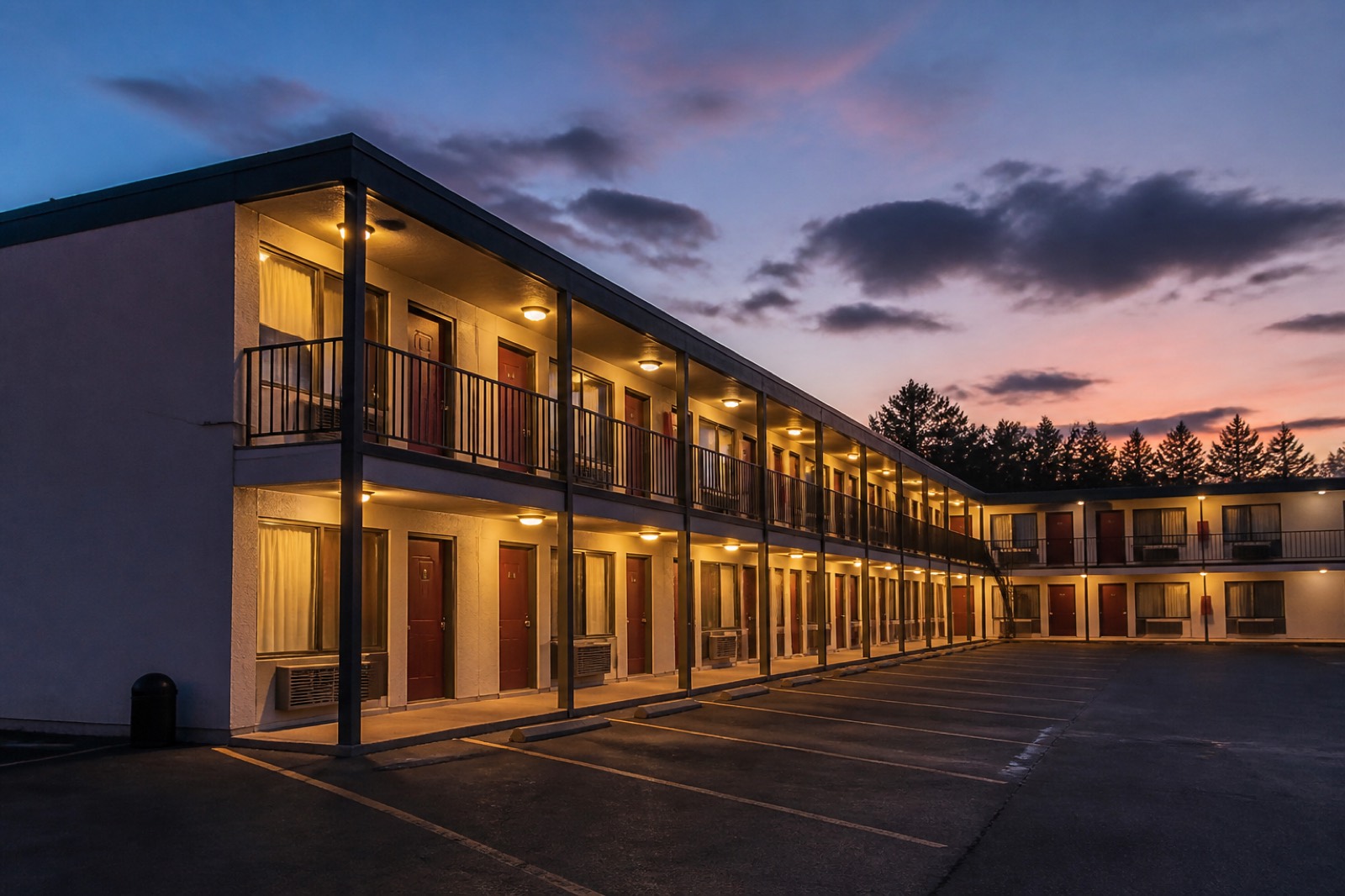
Capital ranges by size, branding, and location: smaller independent motels (15-30 rooms): $500K-$2M total deal size, $200K-$700K equity. Mid-size and branded motels (30-60 rooms): $2M-$8M total, $700K-$2.5M equity. Larger motels (60-150 rooms, branded): $5M-$20M+ total. SBA 7(a) financing is heavily used in this category; specialty hospitality lenders for larger deals.
Brand vs. Independent
A central strategic question for motel buyers. Branded motels benefit from brand-driven bookings (corporate, loyalty program members, brand search traffic), marketing systems, distribution through brand reservation channels, and signage/brand recognition. The trade-offs: franchise fees (initial + ongoing royalty + reservations + marketing), brand standards (image, operations, amenity requirements), brand approval of ownership transfer, and capital obligations for periodic brand-mandated property improvement plans (PIPs) that can be substantial.
Independent motels skip the franchise fees and standards. They rely more on direct booking, OTA exposure (Booking.com, Expedia, Airbnb), reviews, and price competition. Margins per room can be higher in good independents; brand-driven volume is lower.
The right answer depends on location, market, buyer experience, and operating model. Highway-corridor motels often benefit from brand affiliation (drive-by guests choose the brand they recognize); destination-area motels can succeed independent. PIP capital requirements alone can be a major factor, a branded motel might require $500K-$2M in mandated upgrades, per the CT Acquisitions snapshot above, on a recurring brand cycle.
Buyers should evaluate brand standing carefully. Some brands are stronger than others; brand reputation has shifted over time. A weak brand can be worse than no brand.
Want a specific read on your business?
CT Acquisitions advises buyers on hospitality acquisitions including motels and small inns. We help structure deals across the real-estate + operating stack and navigate brand vs. independent decisions. Book a confidential call.
How to Buy a Motel, Step by Step
- Learn the work first. If you have never run a hotel, spend time working a front desk or shadowing an owner. Motels run every day of the year, and the hours surprise most first-time buyers.
- Set your budget and talk to a lender early. Get prequalified with an SBA or hospitality lender before you make offers, so you know your price range and the equity you will need. See our SBA 7(a) acquisition loan guide.
- Search listings and brokers. BizBuySell and LoopNet carry many motel listings, and hotel brokers often have properties that are never advertised.
- Ask for the real numbers. Request three years of P&Ls and tax returns, monthly occupancy and average daily rate, and the STR competitive report if the property is branded. Compare reported revenue to bank deposits and to the hotel occupancy tax filings.
- Inspect the building. Hire a property condition inspector for the roof, HVAC, plumbing, and pool, and order an environmental review on older sites. Price every repair into your offer.
- Review the franchise. On a branded motel, read the franchise agreement, the transfer terms, and any property improvement plan the brand will require of a new owner.
- Sign the letter of intent and close. Expect brand approval, lender underwriting, and license transfers to set the closing date.
Buying a motel with little money down. Lenders expect real equity from the buyer. Seller financing can close part of the gap, but under SBA SOP 50 10 8 a seller note counts toward your equity injection only if it is on full standby for the life of the loan. For larger branded properties, see our guide on how to buy a hotel.
Diligence
Key focus areas: real estate condition (professional inspection essential, older motels frequently have substantial deferred maintenance: roof, HVAC, plumbing, exterior, pool/amenity); room economics (multi-year occupancy, ADR, RevPAR by month; trended); brand/franchise contract terms (royalty rates, reservations fees, PIPs, transfer approval requirements, term length); location dynamics (corridor traffic counts, recent traffic changes from highway/road changes, competitive landscape, new motel construction, recent comp openings, brand changes at competitors); reviews and online reputation (Google, TripAdvisor, brand-platform reviews); permits and compliance (operating permits, fire safety, ADA compliance, sometimes liquor license, food service); staff and management situation; OTA dependence and direct-booking strength; environmental considerations (some older motels have environmental concerns, Phase I ESA often warranted).
Financing
SBA 7(a) is heavily used for motel acquisitions, particularly for smaller and mid-size deals. Specialty hospitality lenders exist and often have better understanding of the asset class than generalist banks. Commercial real estate financing for larger transactions. Seller financing is occasionally part of the structure, particularly when the seller is retiring and willing to take a note for part of the price.
Capital intensity is meaningful: beyond purchase price, plan for working capital, deferred maintenance discovery, brand PIP capital if franchised, marketing investment if independent. Many failed motel acquisitions stem from undercapitalization, buyers stretched to make the equity contribution with nothing in reserve for the inevitable surprises.
Operating Reality
Smaller motels are 7-day, often 24-hour operations. Owner-operators frequently live on-site (a common motel-buyer pattern, particularly with first-generation immigrant owners who have driven much of the small-motel market for decades). Larger and branded motels operate with general managers, full housekeeping staff, and structured operations.
Day-to-day demands: front desk coverage, guest service, housekeeping management, reservations management, maintenance, marketing/OTA management, accounting, brand compliance (if branded), staff management. Many smaller motels also operate continental breakfast service. Margin is made or lost in operating discipline, pricing optimization (revenue management), cost control on housekeeping and maintenance, OTA-vs-direct mix.
Capital improvement cycles. Motels need ongoing investment, periodic room refresh, exterior maintenance, signage updates, amenity additions. Branded properties face brand-mandated PIPs on a regular cycle. Independent properties have more discretion but still need ongoing investment to maintain occupancy.
Common Pitfalls and Success Patterns
Pitfalls: skipping or undersizing deferred maintenance budget; underestimating brand PIP capital obligations on franchised properties; over-relying on OTA channels (margin compression); not understanding corridor and competitive dynamics; mismatched operating commitment (passive expectations on a property requiring active operator).
Success patterns: thorough property inspection and capital budget; deliberate brand-vs-independent decision matched to location; OTA channel discipline (using OTAs for fill but building direct booking); investment in continuous property improvement; understanding (and managing to) the specific corridor and demand profile; realistic operating commitment matched to scale and brand.
Putting It Together
Motels are real estate-anchored hospitality businesses with real opportunity for buyers who approach them with realistic expectations. The real estate is usually the larger asset; the operating business is where value gets made or lost. Brand vs. independent is a strategic choice with real trade-offs (brand-driven bookings vs. franchise costs and PIP obligations). Capital requirements are moderate to substantial depending on size, and SBA 7(a) financing supports most small-to-mid-size acquisitions.
Successful buyers do thorough property and operating diligence, understand the corridor and competitive dynamics, decide the brand question deliberately, budget for deferred maintenance and ongoing capital improvement, and commit operating attention proportionate to the scale and complexity. Done well, motels combine real estate appreciation with operating cash flow in a category that continues to support attractive acquisitions. Done casually, without proper inspection, capital reserves, or operational commitment, they consistently disappoint.
Frequently Asked Questions
How much does it cost to buy a motel?
Smaller independent motels (15-30 rooms): $500K-$2M total, $200K-$700K equity. Mid-size and branded motels (30-60 rooms): $2M-$8M total, $700K-$2.5M equity. Larger motels (60-150 rooms branded): $5M-$20M+. SBA 7(a) financing typically covers much of the balance.
Should I buy a branded or independent motel?
Branded motels benefit from brand-driven bookings, marketing support, and reservation channels, but come with franchise fees, brand standards, transfer approval requirements, and periodic PIP capital obligations. Independents avoid those costs but rely on OTAs, direct booking, and reviews. Corridor-traffic motels often benefit from branding; destination-area motels can succeed independent.
What is a PIP and why does it matter?
PIP = Property Improvement Plan. Brand-required upgrades imposed periodically by franchisors and typically at a change of ownership. Can run $500K-$2M on a branded motel, per CT Acquisitions buy-side observations. Buyers of branded motels need to understand current PIP status and upcoming requirements, they’re a real capital obligation.
How are motels valued?
Combination of real estate value (often dominant) and operating business value (typically EBITDA multiples). For smaller motels, SDE multiples may apply. Key drivers include real estate location and condition, occupancy and ADR trends, brand standing if applicable, deferred maintenance state, and competitive corridor dynamics.
What’s the most important diligence on a motel?
Real estate condition (professional inspection, deferred maintenance is the most common surprise), trended room economics (multi-year occupancy and ADR), brand/franchise contract terms including PIP requirements, location and competitive dynamics, reviews trajectory, permits and compliance, OTA dependence vs. direct booking strength.
Can I get an SBA loan to buy a motel?
Yes, motels are a recognized SBA 7(a) category and specialty SBA lenders familiar with hospitality acquisitions are commonly used. Larger deals may use commercial real estate financing or specialty hospitality lenders. For boutique hospitality buyers, see our companion guide on how to buy a bed and breakfast.
Do I have to live at the motel I buy?
Common but not required for smaller motels. Many smaller-motel buyers (particularly first-generation immigrant operators who have long driven much of this market) live on-site as part of the operating model. Larger or branded properties typically have professional general managers and the owner doesn’t live on-site.
What are OTA fees and why do they matter?
Online Travel Agency fees, Booking.com, Expedia, Airbnb, etc. take 15-25% commission on bookings. Heavy OTA dependence compresses margin. Strong direct-booking channels (own website, repeat guests, branded reservation system if franchised) improve economics meaningfully.
What are the biggest risks in buying a motel?
Undersized capital reserves for deferred maintenance and PIPs, OTA margin compression, location decline from corridor changes or new competition, brand reputation decline (for franchised), and operational under-commitment by passive owners. Thorough diligence and proper capital planning address most of these.
How long does it take to buy a motel?
Typically 3-6 months from LOI to closing. SBA financing, brand approval for franchised properties, and license transfers are usually the longest critical-path items. Property inspection and environmental diligence (if warranted) also take time.
Is a motel a good investment?
It can be, because you own real estate and earn cash flow from it at the same time. The risks are deferred maintenance, heavy dependence on online travel agencies, new competition on your corridor, and the daily workload. Motels reward hands-on owners who buy at a price that already covers repairs and keep reserves for surprises.
Can I buy a motel with no money down?
Rarely. Lenders, including SBA lenders, expect the buyer to put in real equity, and hospitality loans are underwritten carefully. Seller financing can cover part of the price, but under SBA SOP 50 10 8 a seller note counts toward your equity only if it stays on full standby for the life of the loan. Partners or investors are the more common way to close a gap.
Related Guide: How to Buy a Bed and Breakfast,
Related Guide: How to Buy a Campground or RV Park,
Related Guide: SBA 7(a) Loan for Business Acquisition,
Related Guide: How to Evaluate a Small Business for Acquisition,
Want a Specific Read on Your Business?
30 minutes, confidential, no contract, no cost. You leave with a read on your local buyer market and a likely valuation range.
30 N Gould St, Ste N, Sheridan, WY 82801, USA · (307) 487-7149 · Contact