
How to Buy a Hotel: 2026 Hospitality Acquisition Playbook
Christoph Totter · Managing Partner, CT Acquisitions
20+ home services M&A transactions across HVAC, plumbing, pest control, roofing · Updated April 27, 2026
TL;DR, the 90-second brief
- Buying a hotel in 2026 combines real estate acquisition with operating business underwriting.
- Three distinct decisions shape every hotel deal: branded versus independent (franchise affiliation changes RevPAR, capital requirements, and PIP obligations), full-service versus limited-service (changes operating complexity and margin profile), and segment positioning (economy, midscale, upscale each have different underwriting frameworks).
- Most independent and limited-service hotels under $10M sell at 7x to 10x EBITDA or 60-90 percent of gross revenue.
- Full-service and upscale hotels run 9x to 13x EBITDA. Critical underwriting items: PIP cost (often 15-30 percent of acquisition price), franchise transfer fees, real estate due diligence, and operating fundamentals (ADR, occupancy, RevPAR, GOP margin).
Key Takeaways
- Hotel acquisitions combine real estate (typically 60-75 percent of value) with operating business (25-40 percent)
- Limited-service hotels under $10M trade at 7x to 10x EBITDA; full-service/upscale at 9x to 13x EBITDA
- PIP (Property Improvement Plan) is the largest hidden cost; franchise will require $500K-$5M+ in renovation after acquisition
- Major brands (Marriott, Hilton, IHG, Choice, Wyndham, Hyatt) require franchise application + transfer fees ($75K-$300K typical)
- Critical operating metrics: ADR (average daily rate), occupancy, RevPAR (revenue per available room), GOP margin (gross operating profit)
- SBA 7(a) loans work for owner-operator hotel deals under $5M; larger deals use conventional bank financing plus mezzanine
Three decisions that shape every hotel deal
A hotel acquisition is the purchase of a hotel’s real estate and its operating business in one deal, usually with a franchise transfer attached. Buyers underwrite the property, the cash flow (ADR, occupancy, RevPAR, GOP margin), and the brand’s Property Improvement Plan. Limited-service hotels under $10M trade at 7x to 10x EBITDA, per the valuation framework in this guide.
For 2026 how to buy a bed and breakfast covering real-estate vs business split, capital required, financing options, diligence checklist, and operational realities, see our reference.
For 2026 EBITDA multiples by flag and cap rates by class, see our hotel business valuation guide.
Hotel acquisitions are not generic real estate deals or generic business deals. They are hybrid acquisitions where three structural decisions determine the underwriting framework, capital requirements, and post-close operations.
Decision 1: Branded versus independent
Branded hotels operate under a franchise agreement with major hotel brands (Marriott, Hilton, IHG, Choice Hotels, Wyndham, Hyatt, Best Western). The franchise provides reservation system, loyalty program access, brand standards, marketing, and brand recognition. The franchisee pays royalty fees (typically 4-8 percent of gross room revenue), marketing fund contributions (2-4 percent), and reservation/distribution fees (1-3 percent). Total brand fees: typically 8-15 percent of gross room revenue.
Independent hotels operate without brand affiliation. Lower fee structure (no franchise royalties, no marketing fund contributions). Different distribution model (OTAs, direct booking, local marketing). Lower brand recognition affects rate premium and occupancy.
Decision criteria: branded hotels typically achieve 15-25 percent higher RevPAR than equivalent independent hotels because of the brand and loyalty program. Brand fees consume 8-15 percent of gross revenue. The net difference (RevPAR premium minus fees) is the franchise’s economic value. For most mid-market hotels, branded affiliation produces better economics; independent works better for unique market position or premium locations.
Decision 2: Full-service versus limited-service
Limited-service hotels offer rooms only (some have continental breakfast). Examples: Holiday Inn Express, Hampton Inn, Best Western, Fairfield Inn, La Quinta. Operating model is rooms-only revenue; staff requirements are minimal; GOP margin runs 35-45 percent of revenue.
Full-service hotels include rooms plus restaurant, bar, banquet, meeting space, room service. Examples: Marriott, Hilton, Sheraton, Hyatt, Westin. Operating model includes multiple revenue streams; staff requirements substantially higher; GOP margin runs 25-35 percent of revenue.
Decision criteria: limited-service has higher GOP margin but lower absolute revenue. Full-service has lower margin but more revenue diversification. For owner-operator acquisitions, limited-service is typically the better fit because operating complexity is manageable. Full-service requires significant operational expertise.
Decision 3: Segment positioning
Economy segment: $50-$90 average daily rate (ADR) typical. Examples: Days Inn, Red Roof Inn, Motel 6. Lower revenue per room, higher occupancy potential, often older properties.
Midscale segment: $90-$150 ADR. Examples: Holiday Inn Express, Hampton Inn, La Quinta. Sweet spot for owner-operator acquisitions; reasonable revenue with manageable operations.
Upscale segment: $150-$250 ADR. Examples: Courtyard by Marriott, Hilton Garden Inn, Hyatt Place. Higher revenue but higher operating complexity and capital requirements.
Luxury segment: $250+ ADR. Examples: Marriott, Hilton, Hyatt full-service properties. Highest revenue but requires sophisticated operations and significant capital.
Decision criteria: most first-time hotel buyers should target midscale limited-service for the right combination of revenue potential and operational manageability.
For the broader hospitality acquisition context, see how to buy a motel for the sub-$2M lodging segment.
The flag versus no-flag question
Hotel industry term: a ‘flag’ refers to the brand affiliation. A hotel ‘flying the Marriott flag’ is a franchised Marriott property. ‘Flagged’ or ‘branded’ hotels operate under franchise; ‘unflagged’ or ‘independent’ operate without brand affiliation. Most hotel transactions are flagged-to-flagged transfers, with franchise approval being a critical closing condition.
Why midscale limited-service is the typical owner-operator sweet spot
Midscale limited-service hotels (Holiday Inn Express, Hampton Inn, Fairfield Inn, La Quinta typical) combine: manageable operating complexity (rooms-focused, smaller staff), reasonable capital requirements ($3M-$15M typical), strong brand support, established reservation systems, and decent margins (35-45 percent GOP). Most first-time hotel buyers and SBA-financed acquisitions target this segment.
How to buy a hotel: a step-by-step checklist
Most first-time hotel buyers lose time by touring properties before they know what they can finance. Work the steps in this order and each one narrows the next.
- Set your criteria. Pick a segment (economy, midscale, upscale), branded or independent, limited-service or full-service, a target market, and a total budget that includes the PIP, not just the purchase price.
- Line up capital before you look. Owner-operators often use SBA 7(a) loans, which the SBA caps at $5M. SBA SOP 50 10 8 requires at least a 10% equity injection on a change of ownership, and a seller note only counts toward it if it sits on full standby for the life of the loan. Larger deals move to conventional bank debt or CMBS.
- Source deals. Hotel-focused brokers, online listings, brand franchise development teams, and direct letters to owners of older properties all produce deal flow. The best hotels rarely reach public listings.
- Screen with STR data and the trailing P&L. Compare the hotel’s RevPAR to its competitive set. A hotel that trails its comp set with a fixable cause (weak revenue management, poor online reviews) is an opportunity. One that trails because of location is not.
- Get the PIP estimate from the brand before you set your price. Ask the franchisor for a change-of-ownership PIP and build its cost into your offer.
- Sign an LOI with a diligence period, a financing contingency, and a franchise approval condition.
- Run both diligence tracks. Real estate (title, environmental, property condition) and operations (STR history, departmental P&Ls, staffing, vendor contracts) run in parallel. See our due diligence process guide for the operating side.
- Win franchise approval. The brand reviews you as a new franchisee, sets the PIP terms, and issues a new franchise agreement.
- Close and transfer licenses. Liquor licenses, permits, the property management system, payroll, and merchant accounts all need to move. Retain the general manager through the transition.
Buying an established hotel follows the same steps as buying any hotel, with one advantage: you have years of STR and P&L history to test the seller’s story. Use all of it.
Hotel valuation methodology
Hotels value on a combination of EBITDA multiples, gross revenue multiples, and per-room values. The right multiple depends on segment, market, and property characteristics.
EBITDA multiple framework:
Limited-service hotels (under $10M):
- 7x to 10x EBITDA typical
- Upper end for newer properties (under 8 years), strong markets, premium franchise affiliation
- Lower end for older properties, secondary markets, weak brand or independent
Full-service hotels:
- 9x to 13x EBITDA typical
- Higher capital requirements and operating complexity justify multiples beyond limited-service
Upscale and luxury:
- 12x to 18x EBITDA for institutional-quality properties
- Strategic buyers (Marriott, Hilton, brand-affiliated PE platforms) pay premium multiples for trophy assets
Gross revenue multiple (alternative framework):
- Limited-service: 60-90 percent of trailing 12-month gross revenue
- Full-service: 80-110 percent of trailing 12-month gross revenue
- Often used as quick sanity check on EBITDA-based valuation
Per-room value (third framework):
- Economy: $40K-$80K per room
- Midscale limited-service: $80K-$150K per room
- Upscale select-service: $150K-$300K per room
- Full-service midscale: $150K-$350K per room
- Upscale full-service: $300K-$700K+ per room
- Luxury: $700K-$2M+ per room
Real estate vs operating business split: Most hotel deals are valued as integrated property (real estate + operating business). The implicit split: real estate typically 60-75 percent of total value; operating business 25-40 percent. The implication for due diligence: real estate appraisal and operating business analysis must both be performed; neither alone captures the full picture.
Key operating metrics that drive multiples:
ADR (Average Daily Rate): average rate per occupied room Occupancy: percentage of room nights sold RevPAR (Revenue Per Available Room): ADR x occupancy, the canonical hotel performance metric GOP Margin (Gross Operating Profit): operating profit as percentage of revenue Flow-through: incremental revenue that flows to bottom-line profit
A limited-service hotel with ADR $120, occupancy 75 percent, and RevPAR $90 in a mid-tier market would typically value at 7.5x-9x EBITDA. The same property with ADR $140, occupancy 80 percent, RevPAR $112 in a premium market might value at 9x-11x.
For broader valuation methodology, see business valuation methods 2026.
Capital expenditures and reserve requirements
Hotels require ongoing capital expenditures for room renovations, system upgrades, and brand standard compliance. Standard reserve: 4 percent of revenue annually for FF&E (furniture, fixtures, equipment). Most franchise agreements mandate the FF&E reserve. Buyers must underwrite this as a real annual expense, not optional. Reserve neglect produces the dreaded PIP situation at brand re-inspection.
Why per-room values vary by 10-20x across segments
An economy hotel might value at $50K per room while a luxury hotel values at $1M per room. The difference reflects revenue potential, capital intensity, market positioning, and operational complexity. Cross-segment comparisons are not useful for valuation; always compare within segment and market.
Who makes hotel acquisitions: the buyer landscape
Who you bid against shapes what you pay. Hotel acquisitions draw four distinct buyer types, and each one targets a different slice of the market.
Lodging REITs. Publicly traded real estate investment trusts such as Host Hotels & Resorts (upscale and luxury) and Apple Hospitality REIT (select-service Marriott and Hilton properties) buy stabilized, branded hotels in strong markets. They pay for quality and rarely compete for small or tired properties.
Private equity and hospitality funds. Firms such as Blackstone, Brookfield, and KSL Capital Partners buy portfolios, resorts, and value-add hotels where a renovation or a brand change can lift RevPAR. They underwrite on a hold of several years and an exit.
Regional owner-operators. Family companies and regional groups own many of the country’s franchised limited-service hotels. They buy one or two properties at a time, run them hands-on, and are often the most active bidders for midscale hotels in secondary markets.
First-time and individual buyers. Owner-operators financing with SBA loans compete for smaller limited-service and independent hotels. They are often outbid on clean assets and win on properties that need work, which is where PIP discipline matters most.
If you are a first-time buyer, aim where institutions do not: smaller room counts, secondary markets, and hotels with a clear operating fix. That is where hospitality acquisitions still price on fundamentals instead of auction pressure.
The PIP: largest hidden cost in hotel acquisitions
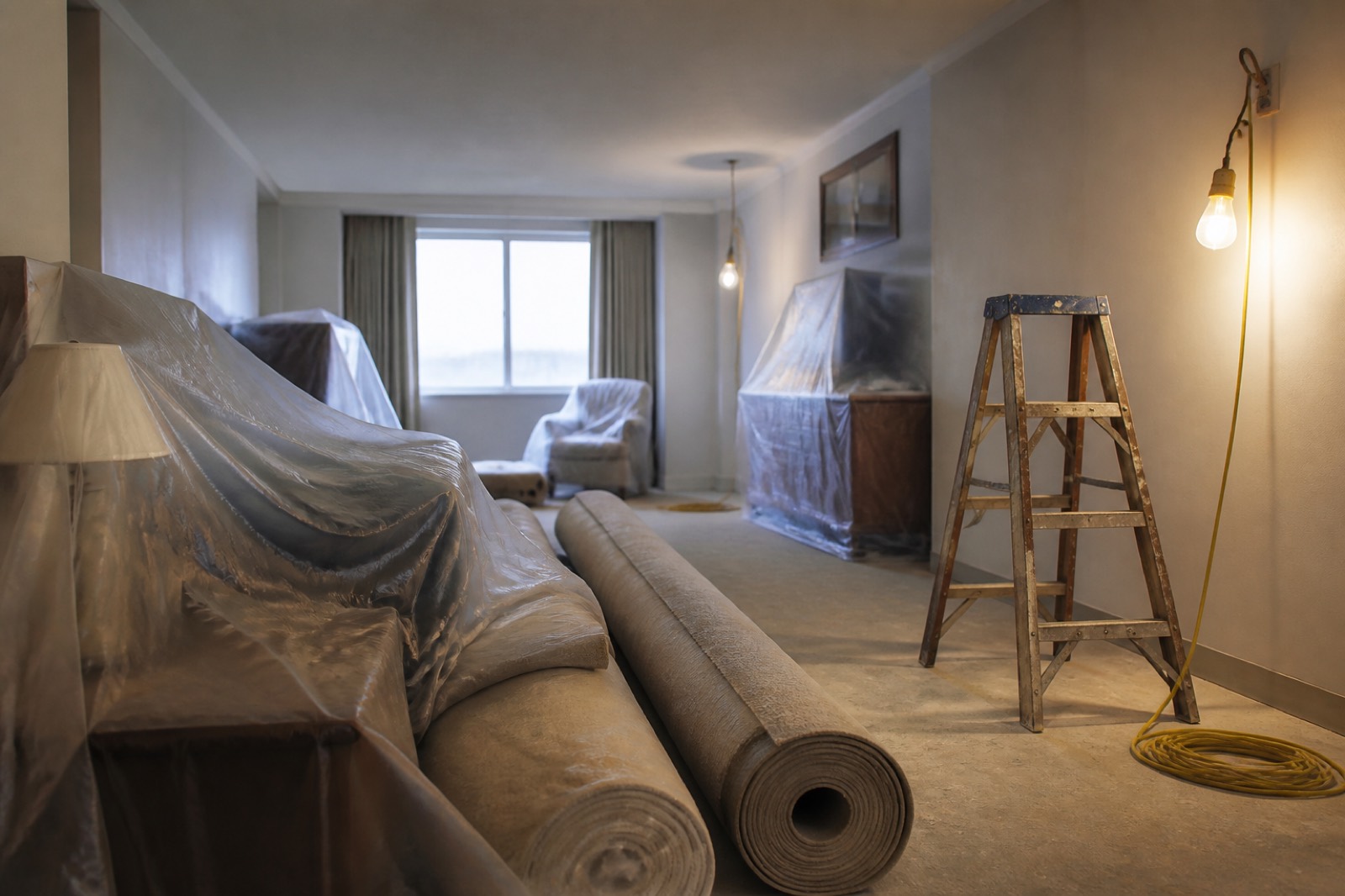
Property Improvement Plan (PIP) is the renovation and upgrade plan the franchise requires when ownership changes. Every major hotel brand requires a PIP at change of control. The PIP cost often represents 15-30 percent of the acquisition price-a hidden cost that can blow up otherwise attractive deals.
PIP structure:
The franchise brand inspects the property and identifies all items that do not meet current brand standards. The inspection result is a PIP document listing every required upgrade, the timeline (typically 12-24 months from closing), and estimated costs. The buyer must complete all PIP items within the required timeline.
Typical PIP scope:
- Guest room renovations (carpet, paint, furniture, bathroom fixtures, technology)
- Bathroom upgrades (often required every brand-standard refresh cycle)
- Public space renovations (lobby, restaurant, meeting rooms if applicable)
- Exterior upgrades (signage, landscape, parking)
- Technology upgrades (Wi-Fi, smart TV systems, brand-required tech platforms)
- Brand-standard signage and branding elements
- ADA compliance updates
- Mechanical system replacements (HVAC, plumbing if needed)
Cost ranges by hotel size and condition:
Small limited-service (under 80 rooms), good condition: $300K-$1.5M Small limited-service, fair condition (8-12 years since last renovation): $1M-$3M Mid-size limited-service (80-150 rooms), good condition: $800K-$3M Mid-size limited-service, fair condition: $2M-$6M Full-service hotels: $2M-$15M+ Upscale and luxury: highly variable, often $5M-$30M+
PIP impact on deal economics:
A $4M hotel acquisition with $1M PIP requires $5M total capital plus debt service capacity. Many buyers underestimate the PIP cost during diligence and find themselves under-capitalized after closing. The lender will require evidence of PIP funding capacity before financing.
Negotiation strategies:
- Make seller responsible for PIP that addresses pre-existing deferred maintenance
- Build PIP cost into purchase price calculation as a discount
- Phase the PIP with franchise approval (some brands allow 24-36 month completion)
- Engage with the franchise early in diligence to verify PIP scope and timeline
The PIP is the single most important pre-close due diligence item in branded hotel acquisitions. Skip it at your peril.
How to get a real PIP estimate before closing
Contact the franchise’s PIP coordinator during the LOI period. Most brands will conduct a pre-acquisition PIP assessment for a fee ($5K-$15K typical). This provides an actual PIP scope document instead of the typical ‘we estimate $1M-$3M’ range from the broker. The pre-acquisition PIP saves buyers from massive underestimates.
Independent hotels skip PIP but face market positioning challenges
Independent hotels do not have PIP requirements because no franchise mandates them. However, independent hotels often need similar capital investments to compete with branded properties. The choice is: pay PIP for franchise affiliation and revenue boost, or pay equivalent capital for independent positioning. Both require real capital.
Due diligence framework for hotel acquisitions
Hotel due diligence combines real estate due diligence with operating business due diligence. Typical timeline: 60-120 days for limited-service hotels, 90-180 days for full-service properties.
Real estate due diligence:
- Title insurance and survey
- Environmental Phase I (and Phase II if needed)
- Property condition assessment by independent engineer
- Roof inspection (often a major capital item)
- HVAC and plumbing inspection
- Electrical and life safety systems
- ADA compliance assessment
- Zoning verification
- Survey including encroachments and easements
- Real estate tax review
Operating business due diligence:
- 36-month STR report (Smith Travel Research) showing ADR, occupancy, RevPAR vs comp set
- 36-month P&L by department (rooms, F&B, telephone, other)
- 36-month occupancy mix (transient, group, corporate, government)
- Year-by-year guest mix (leisure, business, group, OTA, direct)
- Customer satisfaction scores (GuestRevu, brand-specific systems)
- Employee roster, compensation, benefits, retention
- Vendor contracts (laundry, food service, maintenance, security)
- Operating system documentation (PMS, channel manager, brand systems)
Franchise-specific due diligence:
- Franchise agreement review (term remaining, renewal terms, transfer requirements)
- PIP estimate from brand’s PIP coordinator
- Franchise transfer fee structure
- Brand standards review and current compliance
- Marketing and reservation fee structure
- Loyalty program participation requirements
- Trailing 36 months audited financials
- Adjusted EBITDA (add back owner discretionary, one-time costs)
- Working capital normalization
- FF&E reserve adequacy review
- Property tax history
- Insurance coverage and claims history
- Real estate appraisal (separate from operating business value)
Market due diligence:
- STR Comp Set analysis (typically 4-6 comparable hotels in market)
- Local market supply pipeline (new hotels in development)
- Demand generators (corporate offices, hospitals, universities, attractions)
- Local economic outlook
- Regional and national hotel industry trends
For the broader due diligence framework, see business acquisition due diligence process.
STR Report is the canonical performance data
Smith Travel Research (STR) provides the canonical hotel performance data. STR Reports compare a specific hotel to its competitive set on ADR, occupancy, and RevPAR over multiple time periods. STR data is the gold standard for hotel acquisition due diligence and is required by most lenders. STR Reports cost $200-$500 per property; commission them during LOI period.
Why the PIP estimate must come from the franchise, not the seller
Sellers and brokers will provide PIP estimates during marketing. These estimates are often optimistically low. The franchise’s actual PIP assessment is materially higher in most cases. Build the deal economics on franchise’s pre-acquisition PIP, not seller’s estimate.
Financing hotel acquisitions
Hotel financing combines acquisition debt with PIP capital. Most deals use multiple capital sources.
SBA 7(a) loans:
- Deal size: up to $5M
- Owner-operator requirement (buyer must be active in business)
- Down payment: 15-25 percent
- Amortization: typically 25 years on real estate, 10 years on goodwill/business
- Interest rate: SOFR + 2.75-4.75 percent
- Best for: owner-operator acquisitions of limited-service hotels under $5M
- Active SBA lenders for hotels: Live Oak Bank (strongest hotel SBA lender), Pinnacle Bank, BHG Bank
SBA 504 loans:
- Deal size: typically combined with conventional loan for total $5M-$15M+
- Lower down payment (10-15 percent)
- Below-market fixed-rate financing for real estate portion
- Active SBA 504 lenders for hotels: Live Oak, Pinnacle, regional CDCs
Conventional bank loans:
- Deal size: $5M-$50M typical
- Down payment: 25-35 percent
- Amortization: 20-25 years on real estate, 7-10 years on goodwill
- Recourse: typically full or partial recourse on smaller deals; can be non-recourse on $20M+
- Best for: larger deals or buyers without SBA-compatible structure
- Active hotel banks: Wells Fargo Hospitality, BMO Harris Hospitality, Capital One Hospitality, Bridge Investment Group
CMBS (Commercial Mortgage-Backed Securities):
- Deal size: $10M+ typical
- Non-recourse (with carve-outs)
- Fixed-rate, 10-year typical term
- Specific operating and reporting requirements
- Best for: stabilized, branded mid-to-upscale hotels with strong track record
Mezzanine financing:
- Deal size: 5-20 percent of total capital stack
- Fills gap between senior debt and equity
- Cost: 8-14 percent interest, sometimes with equity kicker
- Active mezzanine: Mesa West, KKR, Bridge Investment Group, Brookfield
PIP financing:
- Often financed separately from acquisition debt
- Can roll into acquisition loan if total leverage acceptable
- Brand-specific finance programs (Marriott PIP financing, Hilton PIP capital) sometimes available
- Equipment financing for FF&E (US Bank Hospitality, Wells Fargo Equipment Finance)
Typical capital stack for $8M limited-service hotel:
- Conventional senior loan: $5.6M (70 percent LTV)
- Mezzanine: $400K (5 percent of value)
- Buyer equity: $2M (25 percent)
- Plus separate PIP financing: $1M-$2.5M depending on scope
For SBA framework specifically, see can an SBA loan be used to buy a business 2026.
Why Live Oak Bank dominates hotel SBA
Live Oak Bank built a dedicated hotel SBA practice with operators who understand hospitality industry economics. They underwrite hotel deals based on STR data, brand standards, and operator capability rather than purely financial metrics. For owner-operator hotel acquisitions under $5M, Live Oak is typically the first call. Other SBA lenders can finance hotels but with longer approval timelines and less industry-specific expertise.
When CMBS is the right choice
CMBS works best for stabilized, branded mid-to-upscale hotels with 3+ years of strong operating history and $10M+ value. The non-recourse nature is attractive to buyers protecting personal assets. Operating requirements (DSCR covenants, reporting requirements, reserve requirements) are more demanding than conventional bank loans.
Post-close operations and the first 100 days
Hotel operations are operationally complex even at limited-service scale. The first 100 days post-acquisition determine whether the underwriting model holds.
Days 1-14:
- General manager retention or transition
- Franchise change of ownership filing (typically with brand)
- PMS (Property Management System) ownership transfer
- Bank accounts and merchant services transfer
- Vendor reassignment (laundry, food, maintenance, security)
- Insurance policy transfer with hospitality-specific carriers
- Staff all-hands meeting with seller and new owner
- Customer satisfaction monitoring (Guest scores, online reviews)
Days 15-30:
- Brand inspection and PIP scope confirmation
- Vendor pricing review and renegotiation
- Reservation system audit (rate parity, channel management)
- Revenue management system review (rate optimization, demand forecasting)
- Property maintenance schedule audit
- HR and payroll system transition
- Top corporate account retention calls
Days 31-60:
- PIP scope and timeline confirmation
- Capital project planning for required renovations
- Initial marketing review and budget reallocation
- Loyalty program performance review
- Group sales pipeline review
- Local market relationship building (DMOs, CVBs, corporate sales)
Days 61-100:
- First quarterly STR Report review
- Performance against underwriting model
- Reserves review and FF&E adequacy
- Local team performance evaluation
- PIP commencement planning (typically begins month 4-6)
- First quarterly board meeting with financial sponsors
The critical first-100-days success factor: retain the General Manager. The GM has the operational knowledge, brand standards expertise, and team relationships that produce stable operations. New ownership replacing the GM in the first 90 days creates massive operational disruption.
For the broader transition framework, see how to replace the seller after business acquisition.
Why GM retention is critical in hotel acquisitions
Hotels operate as 24/7 service businesses with complex brand standards, employee dynamics, and customer expectations. The General Manager carries operational knowledge that does not transfer to written SOPs cleanly. New ownership without GM continuity typically sees revenue decline 15-30 percent and customer satisfaction scores drop in months 1-6 post-close. Retain the GM through clear continuation employment and meaningful retention bonus structure.
PIP execution as project management challenge
PIP execution typically takes 12-24 months from start to completion. The project requires coordinating contractors, brand inspectors, supply chains, and ongoing operations simultaneously. Most owner-operators benefit from engaging a hotel-specific project management firm for PIP execution (typical cost: 4-8 percent of PIP budget; ROI is positive on PIP projects above $500K).
Frequently Asked Questions
How much does it cost to buy a hotel?
Wide range. Economy and small limited-service hotels: $1M-$5M. Mid-size limited-service (Holiday Inn Express, Hampton Inn): $4M-$15M. Full-service hotels: $10M-$50M. Upscale and luxury: $30M-$300M+. Per-room values range from $40K (economy) to $1M+ (luxury). Most owner-operator first-time buyers target $3M-$10M limited-service properties.
What is a PIP and why does it matter?
Property Improvement Plan (PIP) is the renovation requirement franchise brands impose at change of control. Every major brand (Marriott, Hilton, IHG, Choice, Wyndham, Hyatt) requires a PIP. Typical cost: 15-30 percent of acquisition price. Most overlooked cost in hotel acquisitions. Get pre-acquisition PIP estimate from the franchise directly, not from seller or broker.
Can I use an SBA loan to buy a hotel?
Yes for owner-operator acquisitions under $5M. SBA 7(a) loans work for limited-service hotels with active owner management. Live Oak Bank is the dominant SBA hotel lender. Standard terms: 25-year amortization on real estate, 10-year on goodwill, 15-25 percent down payment. Larger deals use conventional bank financing or CMBS.
Should I buy a branded or independent hotel?
Branded hotels typically achieve 15-25 percent higher RevPAR but pay 8-15 percent of gross revenue in franchise fees. For most mid-market deals, branded affiliation produces better net economics. Independent works better for unique market positions or premium destinations. Branded hotels have PIP requirements; independents do not.
What is RevPAR and why does it matter?
Revenue Per Available Room (RevPAR) = ADR (Average Daily Rate) × Occupancy. The canonical hotel performance metric. RevPAR allows comparison across hotels, periods, and segments. Hotel valuations and lender underwriting depend heavily on RevPAR trends and competitive set comparison.
What due diligence is required for hotel acquisition?
Combine real estate due diligence (title, environmental Phase I, property condition, ADA compliance) with operating business due diligence (STR Report, 36-month P&L, occupancy mix, customer satisfaction) and franchise-specific items (franchise agreement review, pre-acquisition PIP estimate, transfer fees). Typical timeline: 60-180 days depending on size and complexity.
How long does a hotel acquisition take to close?
Typical timeline: 90-150 days for limited-service hotels with SBA financing, 120-180 days for conventional bank financing, 150-240 days for CMBS or complex transactions. Franchise approval (10-30 days), PIP scope confirmation (30-60 days), and lender approval (45-90 days) are the longest gates.
What does GOP margin mean for hotel operations?
Gross Operating Profit (GOP) margin = operating profit as percentage of revenue. Limited-service hotels: 35-45 percent GOP. Full-service hotels: 25-35 percent GOP. Higher GOP indicates better operations. Hotels with GOP 5-10 points below segment average have meaningful operational improvement opportunity or structural challenges.
Should I retain the General Manager after acquisition?
Yes, almost always. The GM has operational knowledge, brand standards expertise, and team relationships that produce stable operations. Hotels operate 24/7 with complex service delivery; new ownership without GM continuity typically sees revenue decline 15-30 percent in months 1-6. Retain through clear continuation employment and retention bonus structure.
What is the most common mistake in hotel acquisitions?
Underestimating PIP cost. Sellers and brokers provide optimistic PIP estimates during marketing. The franchise’s actual PIP assessment is typically 30-100 percent higher. Many buyers find themselves under-capitalized post-close because they trusted seller estimates. Always get franchise’s pre-acquisition PIP assessment during LOI period.
What is a hotel acquisition?
A hotel acquisition is the purchase of a hotel property together with its operating business, usually including the franchise relationship, staff, booking systems, and future reservations. It differs from a plain real estate purchase because buyers value the cash flow and must win the brand’s approval. It differs from a typical business sale because the real estate is usually the larger part of the value.
How much money do you need to buy a hotel?
Plan for equity plus PIP reserves, not just a down payment. SBA SOP 50 10 8 sets a 10% minimum equity injection for change-of-ownership deals, and hotel lenders often ask for more. Conventional lenders typically want 25-35 percent down, per the financing section of this guide. On top of that, budget for the brand’s PIP, closing costs, and working capital.
Is owning a hotel profitable?
It can be, but profit depends on segment, location, and execution. Limited-service hotels run rooms-only models with GOP margins of 35-45 percent of revenue, per the operating benchmarks in this guide, while full-service hotels earn more revenue at lower margins. Debt service, brand fees, and PIP spending decide what reaches the owner, so underwrite all three before you buy.
Related Guide: How to Buy a Motel, Independent lodging acquisition framework for sub-$2M deals.
Related Guide: Business Acquisition Due Diligence Process, Diligence framework applicable to hospitality acquisitions.
Related Guide: Can an SBA Loan Be Used to Buy a Business, SBA 7(a) qualification framework including hotel acquisitions.
Related Guide: How to Replace the Seller After Acquisition, Transition planning and GM retention framework.
Want a Specific Read on Your Business?
30 minutes, confidential, no contract, no cost. You leave with a read on your local buyer market and a likely valuation range.
30 N Gould St, Ste N, Sheridan, WY 82801, USA · (307) 522-0262 · Contact