
How to Buy a Self Storage Business in 2026: Cap Rates, REIT Competition, and SBA vs Conventional Financing
Buying a self storage business in 2026 means paying attention to cap rate (5.5-8% depending on facility class), which drives all price math. REIT competition from Extra Space, Public Storage, and CubeSmart sets the ceiling on Class A pricing in primary markets. Value-add theses (climate control conversion, revenue management, expansion) reach 15-25% NOI growth for skilled operators. Financing splits between SBA 7(a) up to $5M and conventional cash-flow lending above.

Christoph Totter · Managing Partner, CT Acquisitions
M&A advisory across 500+ active capital partners · Self storage acquisitions: cap rate + REIT buyer pool · Updated June 7, 2026
To buy a self storage business in 2026, expect to pay 6-8% cap rates (12-17x EBITDA) for stabilized Class B / C facilities, 5-7% cap rates (15-20x EBITDA) for stabilized Class A urban / climate-controlled, and 8-12% cap rates for value-add and lease-up properties. The buyer pool is dominated by REITs (Extra Space, Public Storage, CubeSmart, National Storage Affiliates) and PE-backed platforms (Prime Storage, StorageMart, Andover Properties). SBA 7(a) covers acquisitions under $5M; conventional CRE for larger. Critical diligence: physical occupancy vs economic occupancy spread, rent roll vintage, tax assessor reassessment risk, and ECRI (existing-customer rate increase) trail.
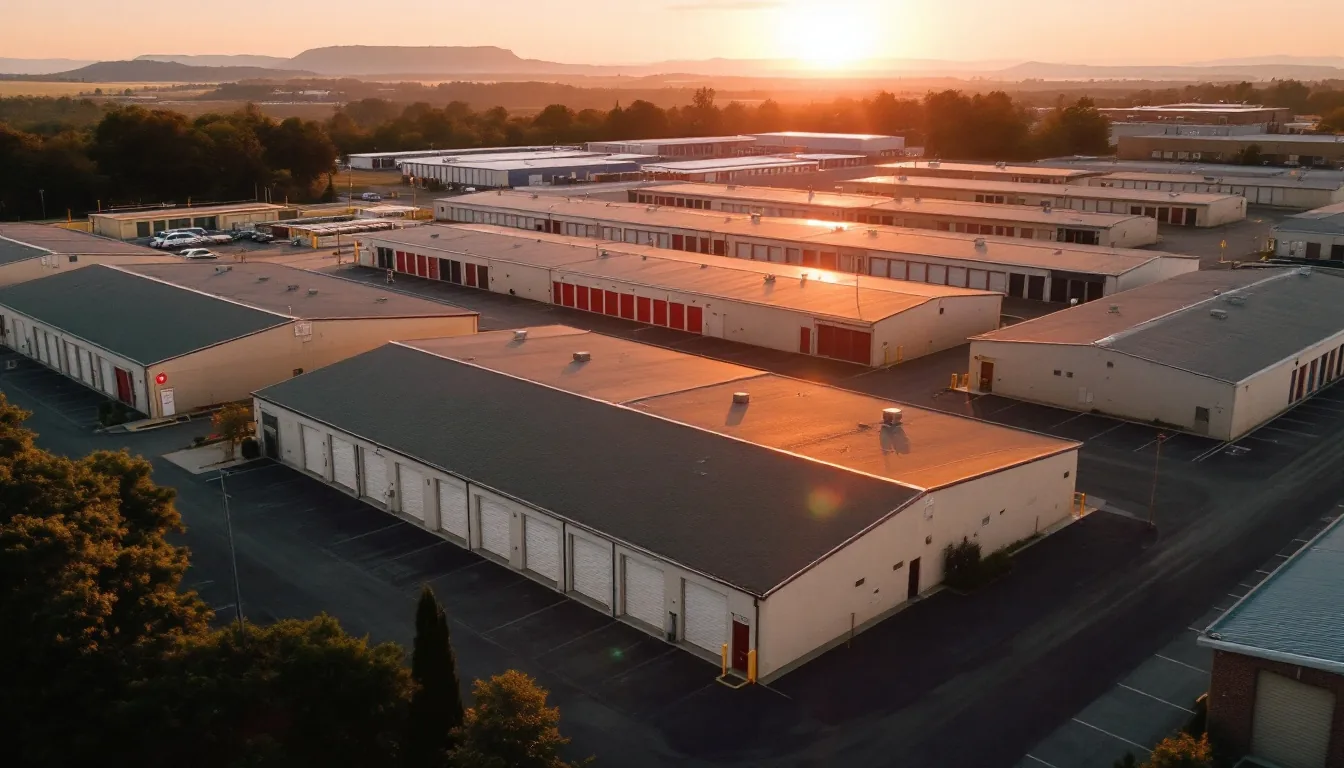 roll-up doors and asphalt drives at golden hour” loading=”eager” fetchpriority=”high” decoding=”async” width=”1344″ height=”768″ style=”width:100%;height:auto;border-radius:8px;display:block;”>
TL;DR, the 90-second brief
- Buying a self storage business means acquiring a commercial real estate asset that produces 70 to 110 percent gross profit margins and supports 90 percent plus occupancy in undersupplied markets.
- Cap rates run 5.5 to 8 percent for stabilized facilities, with Class A REIT-quality assets at 5.5 to 6.5 percent and Class C value-add deals at 7 to 9 percent.
- A stabilized 400-unit facility runs $3M to $10M, with climate-controlled and multi-story facilities driving the upper end of the range.
- SBA 7(a) loans cover self storage acquisitions up to $5M with 10 to 15 percent buyer equity, 25-year amortization on real estate, and 10-year amortization on goodwill.
- Four REIT operators (Public Storage, Extra Space, CubeSmart, National Storage Affiliates) own roughly 25 percent of U.S. self storage inventory and set the bid floor in primary markets.
Key Takeaways
- Operating expense ratio runs 35 to 45 percent of effective gross income for self storage, materially higher than RV storage but lower than most commercial real estate categories.
- Climate-controlled units rent at 30 to 60 percent premium to standard drive-up units. Modern facilities target 40 to 60 percent climate-controlled mix.
- The 3-mile demographic test matters most: target households of 7,500 plus with median income above $55K and population growth above 1 percent annually.
- Existing third-party management agreements with REIT operators (Public Storage 3rd Party, Extra Space 3rd Party) often include a Right of First Refusal that affects deal structuring.
- Value-add theses include rent rate revenue management, expansion onto adjacent land, conversion of administrative space to revenue units, and addition of ancillary revenue (locks, insurance, moving supplies).
- Sponsorship and key principal experience drives lender appetite. First-time self storage buyers typically pay 50 to 100 basis points more on senior debt than experienced operators.
- Self storage REITs trade at 16 to 22 times FFO as public market reference, but acquisition cap rates for private facilities sit materially above the implied REIT cap rate.
What you actually buy in a self storage acquisition
CT Acquisitions · 2026 Self Storage Signal
What Self Storage Buyers Find Out in Diligence
Across our buy-side conversations with self storage acquirers in 2026:
- Physical vs economic occupancy spread is the under-modeled risk. Facilities advertising 95% physical occupancy but running 78% economic occupancy reveal the deferred-rent / concession reality buyers price into the multiple.
- ECRI trail drives the operating multiple. Existing-customer rate increase history (frequency, magnitude, retention impact) is the single most buyer-priced operational metric on stabilized assets.
- Tax assessor reassessment risk gates value-add theses. Acquisition triggers reassessment in most states; modeled NOI must include the post-close tax basis, not seller-side historical taxes.
Multiple at a Glance · 2026
Self Storage Acquisition Multiples · 2026
By stabilization tier and asset class.
Source: CT Acquisitions analysis. Extra Space (EXR), Public Storage (PSA), CubeSmart (CUBE), NSA + PE-backed platforms (Prime Storage, StorageMart, Andover Properties). Our companion piece on Self Storage Valuation: 2026 Cap Rates & Buyer Data dives deeper into this topic.
For 2026 cap rates, REIT buyer activity, and the 12-month sale roadmap, see our how to sell a self-storage business guide.
Why climate control mix drives valuation
How self storage businesses are valued
REIT and institutional bid floor
Third-party management RoFR provisions
Step 1: build the location thesis
Step 2: sourcing self storage acquisitions
Step 3: due diligence on a self storage business
Red flags during self storage diligence
Step 4: financing the acquisition
Step 5: value-add theses that actually work
Step 6: the first 90 days post-close
Conclusion
Buying a self storage business in 2026 means competing in a market shaped by REIT consolidation in primary metros and durable opportunity in secondary and tertiary markets where institutional capital plays less aggressively. The buyers who win in this category share three habits. They build the location thesis using household density, income, and population growth metrics before reviewing any specific deal. They run replacement-cost analysis alongside cap-rate analysis and refuse to pay above replacement on stabilized assets. They identify which of the five value-add theses applies to a given deal and underwrite to current-state cap rates while preserving the upside for themselves. The asset class still produces 12 to 18 percent levered returns for disciplined operators, supported by 90 percent plus occupancy in most markets and durable tenant demand even through economic cycles.
Frequently Asked Questions
How much does it cost to buy a self storage business?
A stabilized 400-unit self storage facility runs $3M to $10M depending on climate-controlled mix, market tier, and facility age. Smaller 200-unit facilities in tertiary markets can trade as low as $1.2M. Newer Class A multi-story facilities in primary markets run $12M to $35M for 600 to 1,000 units. Plan for total capital required of 1.15 to 1.25x the purchase price once working capital reserves, closing costs, and any near-term capex are included.
What cap rate should I expect to pay for self storage?
Class A facilities in primary markets trade at 5.5 to 6.5 percent cap rates. Class B facilities at 6 to 7.5 percent. Class C facilities at 7 to 9 percent. Secondary and tertiary markets add 50 to 150 basis points to the cap rate. REIT competition compresses primary market pricing to the lower end of these ranges, while operator-buyers find better risk-adjusted yields in secondary and tertiary markets with value-add theses attached.
Can I finance a self storage acquisition with an SBA loan?
Yes. SBA 7(a) loans cover self storage acquisitions up to $5M. Specialty self storage lenders including Live Oak Bank, BMO Harris Self Storage Lending, and First Western Trust offer purpose-built underwriting. Typical terms include 10 to 15 percent buyer equity, 25-year amortization on real estate, 10-year amortization on goodwill components, and Prime plus 2.5 to 3 percent floating rates. SBA loans require personal guarantees and life insurance assignments.
How do self storage REITs affect the acquisition market?
Four self storage REITs (Public Storage, Extra Space, CubeSmart, National Storage Affiliates) own roughly 25 percent of U.S. inventory. Their lower cost of capital supports cap rates 100 to 150 basis points below private market pricing in primary markets. REIT competition is heaviest for $5M plus stabilized assets. Operator-buyers compete by focusing on secondary and tertiary markets, value-add theses, and speed of close rather than head-to-head pricing on Class A assets in primary markets.
What occupancy should I expect at a stabilized facility?
Well-located stabilized facilities sustain 88 to 94 percent occupancy. National market average sits around 91 to 93 percent in 2026. Facilities below 85 percent for 12 plus months signal either operational issues, oversupply in the local market, or pricing problems. Facilities at 70 percent or below typically have a value-add thesis attached and trade at materially higher cap rates to compensate for the lease-up risk.
What value-add theses produce the highest returns?
Five theses recur. Rent rate revenue management (8 to 15 percent NOI lift, zero capex). Adjacent land expansion (30 to 60 percent NOI lift with 9 to 12 percent yield on incremental investment). Administrative space conversion to revenue units (3 to 8 percent NOI lift). Ancillary revenue addition (tenant insurance, locks, supplies, adding 5 to 10 percent revenue). Climate-control conversion (15 to 25 percent NOI lift through 30 to 60 percent rent premiums on converted inventory).
How does self storage compare to RV storage as an investment?
Self storage operates at 35 to 45 percent expense ratios versus 25 to 35 percent for RV storage. Self storage rents higher per square foot ($0.85 to $2.50 versus $0.45 to $0.85 for RV) but with higher operational complexity, lower average tenancy length, and more REIT competition. Self storage cap rates run 5.5 to 9 percent versus 7 to 11 percent for RV storage. Operators with strong real estate and operational experience often prefer self storage; first-time commercial real estate buyers often find RV storage more accessible.
What due diligence should I do on a self storage business?
Six workstreams. Financial diligence reconciles rent roll against bank deposits. Operational diligence reviews aging reports, conversion rates, and lead sources. Real estate diligence covers title, survey, environmental Phase I, and zoning. Construction diligence covers roof, building envelope, electrical, fire suppression, and deferred maintenance. Insurance diligence obtains binding quotes (increasingly difficult in wildfire and hurricane zones). Software diligence verifies management software contracts and gate access maintenance schedules.
What is the biggest risk in a self storage acquisition?
Insurance carrier non-renewal in catastrophe-prone markets. Wildfire, hurricane, tornado, and flood exposure have driven premium increases of 40 to 80 percent over the past 3 years, with some carriers exiting entirely. Buyers should obtain binding insurance quotes during the diligence period before closing. Secondary risks include oversupply from new construction within 5 miles (drops occupancy 10 to 20 points), declining demographics in the trade area, and pending zoning changes that affect future expansion or operations.
Should I work with a self storage broker or buy directly?
For deals above $2M, specialty self storage brokers (Marcus and Millichap National Self Storage Group, Newmark, JLL, Argus) provide deal flow, market intelligence, and execution support that justifies the seller-paid commission. For deals under $2M, direct outreach to owner-operators often produces better deals at lower prices than the broker channel. Most operator-buyers source through a mix of broker relationships and direct outreach, with brokers covering 60 to 75 percent of closed transactions.
Related Guide: Self Storage Business Valuation, How self storage facilities are valued in detail.
Related Guide: How to Buy an RV Storage Business, RV storage acquisition playbook.
Related Guide: SBA 7(a) Loan for Business Acquisition, How SBA financing works.
Related Guide: Buying an Existing Business Checklist, General acquisition framework.
Want a Specific Read on Your Business?
30 minutes, confidential, no contract, no cost. You leave with a read on your local buyer market and a likely valuation range.
30 N Gould St, Ste N, Sheridan, WY 82801, USA · (307) 522-0262 · Contact