
How to Buy a Deli: 2026 Acquisition Playbook
Christoph Totter · Managing Partner, CT Acquisitions
20+ home services M&A transactions across HVAC, plumbing, pest control, roofing · Updated April 27, 2026
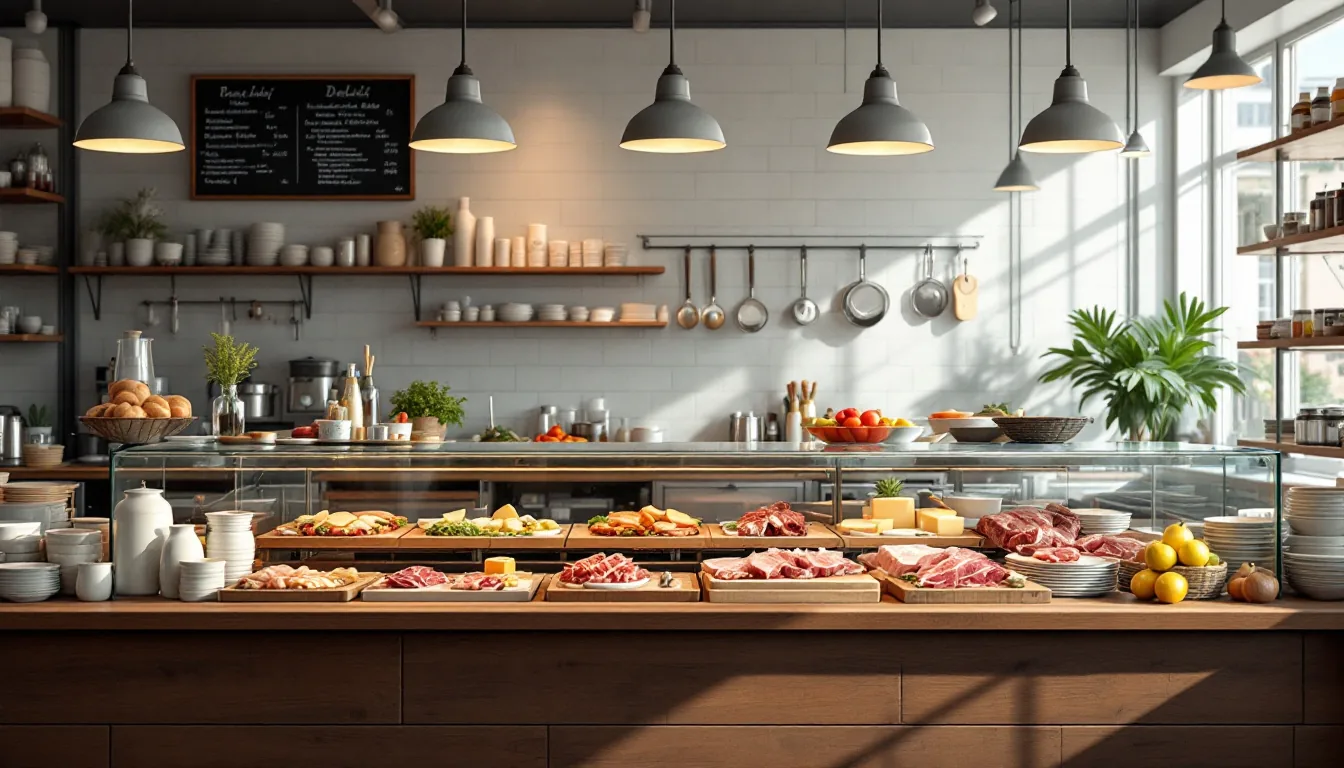
TL;DR, the 90-second brief
- Buying a deli in 2026 is a focused food service acquisition with characteristics distinct from broader restaurants.
- Most independent delis under $2M revenue sell at 2x to 3.5x SDE plus inventory at cost.
- The deal economics depend on food cost management (typical deli food cost runs 30-38 percent), lease terms (5+ years remaining important), supplier relationships (Boar’s Head, Dietz & Watson, local meat suppliers), and customer demographics.
- The biggest first-time buyer mistakes: underestimating food cost variability, missing inventory turn issues (deli meats have short shelf life), and not understanding the operational complexity of fresh food preparation.
Key Takeaways
- Delis typically sell at 2x to 3.5x SDE plus inventory at cost; specialty delis (kosher, ethnic, gourmet) at 2.5x to 4x
- Food cost discipline is critical: deli food cost 30-38 percent typical; over 40 percent signals operational issues
- Catering revenue (typical 15-35 percent of total revenue) commands higher multiples due to predictability and B2B contracts
- Supplier relationships matter: Boar’s Head, Dietz & Watson, and local meat suppliers drive product quality and pricing
- Lease terms 5+ years remaining ideal; deli equipment investment is meaningful and location-locked
- Customer demographics matter: office-adjacent locations favor weekday lunch revenue; residential locations favor weekend and family revenue
What makes delis different from broader restaurants
For 2026 how to buy a competitor covering approach mechanics, synergy valuation, deal structure, financing, and antitrust considerations, see our reference.
For 2026 motel acquisition playbook (2026) covering real-estate value, room economics, brand vs independent, SBA financing, diligence, and operating reality, see our reference.
For 2026 B&B acquisition playbook (2026) covering real-estate vs business split, capital required, financing options, diligence checklist, and operational realities, see our reference.
For the 2026 FedEx route acquisition playbook with ISP costs, approval process, and SBA 7(a) financing, see our buyer’s guide.
Delis are a focused subset of food service with characteristics distinct from full-service restaurants or quick-service formats.
Revenue profile:
- Sandwich-focused delis: 65-80 percent sandwich revenue, 20-35 percent sides/drinks/other
- Italian delis: 45-60 percent sandwiches, 25-35 percent prepared foods, 15-25 percent groceries
- Kosher delis: similar to Italian deli with religious certification overlay
- Catering-focused delis: 30-50 percent catering, 50-70 percent walk-in retail
- Convenience delis (in grocery stores, gas stations): smaller operation focus
Margin profile:
- Gross margin: 60-68 percent typical (higher than full-service restaurants)
- Food cost: 30-38 percent typical (slightly higher than QSR)
- Labor: 22-32 percent (manageable since not full-service)
- Operating margin: 8-15 percent after fair owner compensation
Why delis work as small business acquisitions:
Focused menu. Deli menus are limited to sandwich/prepared food categories. Easier to manage than full-service restaurants with broader menus.
Day-shift operations. Most delis operate 6am-7pm or 7am-9pm. Daytime hours mean better operator quality of life vs nighttime restaurants and bars.
Lower equipment intensity. Delis require less kitchen equipment than full restaurants. Slicers, displays, sandwich prep stations rather than full kitchen with ovens and ranges.
Catering revenue stream. Many delis have meaningful catering revenue (15-35 percent of total), which is higher margin and more predictable than walk-in retail.
B2B customer base. Office accounts, corporate lunch programs, hospital cafeterias, government accounts provide recurring revenue.
Where delis are challenging:
Food cost volatility. Deli meats and cheeses are commodity-priced and volatile. Recent years have seen 15-25 percent spikes in beef and cheese costs.
Inventory management. Fresh deli meats have 7-21 day shelf life. Inventory management is operationally important; spoilage drives losses.
Owner-operator dependency. Many delis depend on the owner’s personal customer relationships and sandwich-making technique. Personal goodwill is meaningful.
Competition from QSR and grocery delis. Subway, Jersey Mike’s, Firehouse Subs at the QSR end; Whole Foods, Wegmans grocery delis at the premium end. Independent delis face pressure from both.
For the broader food service framework, see how to buy a restaurant.
Why catering revenue drives valuation
A deli with 30 percent catering revenue values at higher multiples than one with 5 percent catering. Catering is: higher gross margin (typically 65-75 percent vs 55-65 percent for retail), more predictable (recurring corporate accounts), B2B with stable customers, and scalable (can grow without storefront expansion). A $1M revenue deli with $300K catering is more valuable than a $1M deli with all walk-in retail.
Specialty deli premiums
Kosher delis, Italian delis with deep heritage, ethnic delis (Polish, German, Vietnamese, Korean, Middle Eastern), and gourmet delis command higher multiples (2.5x to 4x SDE) than generic sandwich shops (2x to 3x SDE). Reasons: differentiated product, customer loyalty in specific demographics, less price competition, more catering opportunities.
Deli valuation methodology
Delis value on SDE multiples plus inventory at cost. The multiple varies based on revenue mix, customer demographics, and operational characteristics.
Independent deli SDE multiples:
Basic sandwich shop (limited menu, low margin): 1.5x to 2.5x SDE Standard neighborhood deli: 2x to 3x SDE Deli with strong catering (20+ percent catering): 2.5x to 3.5x SDE Specialty deli (Italian, kosher, ethnic, gourmet): 2.5x to 4x SDE Deli with strong corporate accounts: 3x to 4x SDE Deli with prepared foods retail (meal kits, etc.): 2.5x to 3.5x SDE
Factors driving multiple higher:
- Strong catering revenue (20+ percent of total)
- Recurring corporate accounts (hospitals, schools, offices)
- Long lease (10+ years remaining at sustainable rent)
- Established brand and online reputation (4.0+ Google rating, 200+ reviews)
- Specialty positioning (kosher, ethnic, gourmet)
- Modern equipment (under 5 years old)
- Family business with strong customer relationships transferring through transition
Factors driving multiple lower:
- Heavy owner dependency (sandwich-maker-owner with customer relationships)
- Short lease (under 3 years)
- Recent food safety violations
- Customer demographics shifting (office buildings emptying, neighborhood changing)
- Inconsistent food quality
- Heavy competition (multiple competing delis within 3-mile radius)
- Aging equipment requiring near-term replacement
Inventory typically:
- Small deli: $5K-$15K inventory at cost
- Mid-size deli: $15K-$40K inventory at cost
- Larger deli with grocery component: $40K-$100K inventory at cost
Equipment value:
- Display cases (meat, cheese, prepared foods): $5K-$30K
- Slicers (multiple typical): $2K-$8K each
- Sandwich prep stations: $3K-$8K each
- Walk-in cooler and freezer: $10K-$30K
- Espresso/coffee equipment (if applicable): $5K-$20K
- POS system: $3K-$10K
- Total typical equipment value: $40K-$150K for mid-size deli
Real estate considerations: Most delis lease their space. If the seller owns the real estate, value separately at commercial cap rate (typically 6-9 percent). Total deal: business value + equipment value + inventory at cost + real estate (if applicable).
Working example:
- SDE multiple: 3x (mid-range for strong catering): $540K
- Equipment value: $80K
- Inventory at cost: $20K
- Total deal: $640K
For restaurant context, see how to buy a restaurant for similar framework.
Why delis trade below restaurants in some segments
Delis without strong catering or specialty positioning typically trade at lower multiples than full-service restaurants because: smaller revenue per square foot, daytime-only operations limit capacity, less brand premium opportunity, and operational simplicity allows more competition. Specialty delis and catering-heavy delis trade above generic sandwich shops but still typically below upscale restaurants.
Corporate account stability premium
Delis with multi-year corporate accounts (office buildings, hospitals, schools) command higher multiples because: revenue is predictable, customer concentration is offset by contract length, billing is structured (monthly invoices), and growth opportunity is clear (expanding within existing customers, adding new accounts). Verify contract terms during diligence.
Critical due diligence items
Deli due diligence covers standard food service items plus deli-specific concerns.
1. Revenue verification Delis often have meaningful cash sales (especially in older urban areas). Verify revenue through: POS reports (trailing 24-36 months), bank deposit reconciliation, sales tax returns, credit card processor reports, catering invoice records. Triangulate at least 3 sources.
2. Food cost analysis Trailing 12-24 months of supplier invoices (Boar’s Head, Dietz & Watson, local meat suppliers, dairy distributors, bread suppliers). Calculate food cost percentage by category and overall. Industry typical: 30-38 percent. Higher than 40 percent signals operational issues.
3. Catering account verification For delis with catering revenue: pull each corporate account contract, verify trailing 12-24 months invoicing, identify contract renewal dates and assignment provisions. Catering accounts may have specific service standards, pricing terms, and renewal mechanics.
4. Equipment audit Independent restaurant equipment company audit ($1K-$3K). Verify: slicer condition, refrigeration systems (walk-in cooler, walk-in freezer, display cases), sandwich prep stations, ovens or warmers, espresso/coffee equipment if applicable, exhaust hoods if cooking, fire suppression compliance.
5. Health department records Trailing 24-36 months of health inspection reports. Pattern of violations or recent serious violations affect both immediate deal value and future operating risk. Deli operations have specific food safety requirements (temperature control, cross-contamination prevention, allergen management).
6. Supplier relationships Meat supplier (Boar’s Head, Dietz & Watson, local sources), cheese supplier, bread supplier, produce, dairy, paper goods. Trailing 24 months of supplier records, payment history, pricing trends. Some suppliers have exclusive territory arrangements affecting product availability.
7. Lease and location Lease term, assignment provisions, rent escalation, common area maintenance, exclusivity clauses (some leases prohibit competing concepts). Verify deli use is explicitly permitted under zoning. Verify outdoor seating permissions if applicable.
8. Customer demographics and trends Trade area demographics: office building occupancy nearby, residential vs commercial mix, foot traffic patterns by day and hour, online review trends. Office-heavy locations face emptying-office post-COVID risk; residential locations need to support evenings and weekends.
For the broader due diligence framework, see business acquisition due diligence process.
Why supplier relationships matter for delis
Deli quality depends on meat and cheese sourcing. Boar’s Head and Dietz & Watson have premium quality and pricing positioning. Local meat suppliers offer differentiation but variable consistency. Verify trailing 24 months of supplier relationships, exclusive territory arrangements (some Boar’s Head accounts have geographic exclusivity), and pricing trends. Supplier disruption can affect product mix and customer perception.
Recent COVID-era office traffic changes
Many urban delis depend on office worker lunch traffic. Post-COVID return-to-office patterns vary by metro and industry. Verify trailing 24-36 months of weekday vs weekend revenue trends. A deli with sharp weekday decline since 2020 in office-dependent location is a different risk profile than one with stable trends. Verify office building occupancy trends in the trade area.
Financing deli acquisitions
Deli financing typically uses SBA 7(a) loans plus seller financing.
SBA 7(a) loans for delis:
- Deal size: up to $5M
- Owner-operator requirement
- Down payment: 20-30 percent typical (similar to other food service)
- Amortization: 10 years on goodwill and equipment, 25 years on real estate
- Interest rate: SOFR + 2.75-4.75 percent
- Active SBA lenders for delis: Live Oak Bank, Pinnacle Bank, Newtek, BHG Bank, ApplePie Capital
SBA underwriting considerations:
- Industry experience preferred but not required
- Personal financial reserve (6-12 months living expenses)
- Clean food safety compliance history
- Stable revenue trend
Seller financing:
- 15-25 percent of purchase price typical
- 5-year amortization, 7-9 percent interest
- Full standby for the life of the SBA loan if the note counts toward the equity injection
- Common in deli acquisitions because of perceived food service risk
Franchise financing:
- Some franchise systems have preferred lender networks
- ApplePie Capital specializes in franchise financing
- Single-unit franchise costs typically $200K-$500K total acquisition cost
Working capital line: Deli operating capital is modest ($30K-$80K) for inventory, payroll, supplies. Bank line of credit or seller note covers this.
Typical capital stack for $600K independent deli:
- SBA 7(a) loan: $420K (70 percent)
- Seller note: $120K (20 percent)
- Buyer cash: $60K (10 percent)
For the SBA framework specifically, see can an SBA loan be used to buy a business 2026.
Franchised deli financing differs
Franchised delis (Jersey Mike’s, Subway, Jimmy John’s, Firehouse Subs) have established franchise system financing. Subway specifically has historical lender relationships through ApplePie Capital and others. Initial franchise fee, build-out, equipment, and working capital are all financeable through SBA or franchise-specific programs. Total franchise unit cost typically $200K-$500K.
Why deli SBA approval is easier than full restaurants
Delis have lower failure rates than full-service restaurants due to simpler operations and daytime-only typical hours. SBA lenders perceive lower risk. Down payment requirements are roughly equal to restaurants but approval is typically faster for delis with stable revenue trends and clean compliance history.
First 100 days of deli operations
Deli operations have distinct rhythms from full-service restaurants. The first 100 days focus on operational continuity and supplier relationship preservation.
Days 1-14:
- Health department transfer and verification
- POS system ownership transfer
- Supplier relationships introduced (Boar’s Head, Dietz & Watson, bread, produce, dairy)
- Catering customer outreach (if applicable)
- Insurance policy updates
- Banking transitions
- Employee one-on-one meetings (especially the senior sandwich-maker and counter manager)
Days 15-30:
- Inventory audit and optimization
- Food cost analysis by category
- Vendor pricing review and renegotiation
- POS data analysis (top-selling items, slow-movers, daypart traffic)
- Customer satisfaction monitoring (online reviews, customer feedback)
- Catering pipeline assessment (corporate accounts, upcoming events)
Days 31-60:
- First monthly close under new ownership
- Food cost optimization initiatives
- Catering program review and growth strategy
- Equipment maintenance schedule
- Marketing review (signage, social media, local advertising)
- Local community outreach
Days 61-100:
- Quarterly performance review against underwriting
- Menu optimization based on POS data
- Pricing review (potential adjustments after 90 days)
- Strategic decisions on menu changes, equipment upgrades, expansion
- First quarterly board meeting if financial sponsors involved
Key first-100-days success factors:
1. Preserve product quality. Customers visit delis for specific products (sandwich style, meats, cheeses). Changing supplier or recipe drives away regulars.
2. Maintain catering relationships. Corporate accounts with multi-year history are valuable. Personal outreach to top accounts (CFO, office manager, catering coordinator) within first 30 days preserves these relationships.
3. Retain key staff. Sandwich-maker, counter manager, and catering coordinator (if separate role) all have institutional knowledge. Retention bonuses for key staff ($3K-$15K typical) lock in continuity.
4. Food cost discipline. Daily inventory tracking, weekly food cost percentage review. Food cost spikes signal operational issues that need quick correction.
5. Customer experience consistency. Cleanliness, product quality, service speed. Bad customer experience drives long-term decline.
For the broader transition framework, see how to replace the seller after business acquisition.
Why sandwich-maker retention matters
Most delis have a senior sandwich-maker who handles the most complex orders, catering production, and quality control. This person typically: has 5-15 years tenure at the deli, knows regular customers by name, makes the signature sandwiches, manages the prep timing. Losing this person drives both operational issues (production speed, quality) and customer issues (regulars notice the difference). Retain through clear continuation employment and meaningful retention bonus.
Catering pipeline review timing
Corporate catering accounts often book 4-12 weeks ahead. The new owner needs to know what catering is committed for the next 90 days to ensure smooth execution. First-week task: review trailing 30 days of catering invoices AND forward 30 days of catering commitments. This reveals revenue pace and operational requirements.
Frequently Asked Questions
How much does it cost to buy a deli?
Typical range: small neighborhood deli $200K-$500K, mid-size deli with catering $400K-$1M, specialty deli (kosher, Italian, gourmet) $500K-$1.5M, deli with strong corporate accounts $700K-$2M. Most independent delis under $2M revenue trade at 2x to 3.5x SDE plus inventory at cost.
What is the most important factor in deli valuation?
Revenue mix and catering percentage. Delis with 20+ percent catering revenue trade at 2.5x to 3.5x SDE; those with under 10 percent catering trade at 1.5x to 2.5x. Catering revenue is more predictable, higher margin, and more transferable than walk-in retail traffic. Verify catering contracts and corporate account stability during due diligence.
How long does it take to close a deli acquisition?
Typical: 90-120 days from LOI to close. Faster than full-service restaurants because: simpler license structure (typically just retail business + health department), no liquor license complexity. Main gates: SBA approval (60-90 days), lease assignment (30-60 days), health department transfer (30-45 days).
Can I use an SBA loan to buy a deli?
Yes. SBA 7(a) for owner-operator deli acquisitions up to $5M. Down payment typically 20-30 percent. Active SBA lenders: Live Oak Bank, Pinnacle Bank, Newtek, BHG Bank. Approval timelines similar to other food service; clean food safety history matters.
What is a typical deli food cost percentage?
30-38 percent of revenue typical. Higher than QSR (25-32 percent) due to premium meat and cheese costs. Lower than full-service restaurants (32-40 percent) due to limited menu. Over 40 percent signals operational issues (poor inventory management, supplier pricing, recipe drift, theft).
Why are catering accounts so valuable?
Catering revenue is higher margin (65-75 percent vs 55-65 percent for retail), more predictable (recurring corporate accounts), B2B with stable customers, and scalable (can grow without storefront expansion). Multi-year corporate accounts (hospitals, schools, offices) provide foundation for valuation premium.
What is the biggest risk in deli acquisitions?
Customer demographic shifts, particularly post-COVID office traffic changes. Office-dependent delis face structural revenue decline if office buildings empty. Verify trailing 24-36 months of weekday vs weekend revenue trends and assess office building occupancy trends in trade area. Diversified customer base (residential plus office plus catering) is more resilient.
Should I buy an independent deli or franchise?
Depends on operating experience. Franchised delis (Jersey Mike’s, Subway, Firehouse Subs) have established systems but lower margins due to royalties. Independent delis allow menu flexibility and higher margins but require operational expertise. First-time deli operators often do better with franchises; experienced operators may prefer independents.
What ongoing operational items matter most for delis?
Five operational priorities: (1) Food cost discipline (daily tracking, weekly review), (2) Supplier relationship management (especially Boar’s Head, Dietz & Watson exclusivity), (3) Inventory turn management (fresh deli meats spoil in 7-21 days), (4) Catering pipeline and execution, (5) Customer service consistency at sandwich counter.
How long should the seller stay involved post-acquisition?
Minimum 60 days, ideally 90-120 days for transition. The selling owner provides: customer relationship introductions (especially top corporate accounts), supplier relationship continuity (especially specialty meat suppliers), recipe and prep technique knowledge, vendor pricing history. Pay seller during transition through consulting agreement.
Related Guide: How to Buy an Existing Restaurant, Restaurant acquisition framework with similar food service complexity.
Related Guide: Business Acquisition Due Diligence Process, Due diligence framework for food service acquisitions.
Related Guide: Can an SBA Loan Be Used to Buy a Business, SBA 7(a) qualification framework for food service acquisitions.
Related Guide: How to Replace the Seller After Acquisition, Transition planning and staff retention framework.
Want a Specific Read on Your Business?
30 minutes, confidential, no contract, no cost. You leave with a read on your local buyer market and a likely valuation range.
30 N Gould St, Ste N, Sheridan, WY 82801, USA · (307) 522-0262 · Contact