Alarm Company Sale or Acquisition: RMR Multiples in 2026
Alarm company acquisitions are priced on recurring monthly revenue (RMR), not on revenue or EBITDA, and the price per dollar of RMR depends on attrition, contract terms, and account type. This guide explains how buyers value an alarm company or an account book in 2026, who the active buyers are, how they verify account quality, and how holdbacks work, so owners can judge an offer before they sign.
Christoph Totter · Managing Partner, CT Acquisitions
20+ lower middle market M&A transactions · Updated April 27, 2026

TL;DR, the 90-second brief
- An alarm company sale is fundamentally a Recurring Monthly Revenue (RMR) transaction. Buyers pay 25 to 50 times RMR for residential and small commercial accounts, with the exact multiple determined by attrition rate, account quality, and contract structure.
- Annual revenue and EBITDA matter far less than RMR multiples in alarm company valuation. A $2M revenue alarm company with $80K RMR sells for $2.4M to $3.6M, not on revenue multiple math.
- Attrition rate is the single most important variable. Sub-5 percent annual attrition supports 40 to 50x RMR multiples. Per the attrition bands in the FAQ below, 8 to 12 percent attrition supports 32 to 40x and 12 to 18 percent supports 25 to 32x. Above 18 percent attrition makes most accounts unsellable to institutional buyers.
- Three buyer types dominate alarm company acquisitions: national alarm consolidators (ADT, Brinks Home, Vivint), regional alarm operators rolling up smaller accounts, and private equity platforms specifically focused on monitoring assets.
- The full sale process runs 4 to 9 months, with account quality verification taking 60 to 90 days through Central Station signal analysis and aging report review.
Key Takeaways
- RMR multiple varies by account type. Residential monitoring on multi-year contracts: 35 to 50x. Small commercial monitoring: 32 to 45x. Large commercial fire and burglar: 40 to 55x. Wholesale monitoring: 20 to 30x. Cellular vs landline communications: cellular premium of 2 to 5x.
- Contract terms drive valuation. Three-year contracts at signing support premium multiples. Month-to-month accounts trade at 50 to 70 percent of multi-year multiples because of churn risk.
- Attrition measurement uses 12-month rolling RMR loss as a percentage of starting RMR. Industry standard reports attrition by gross loss, net loss (gross losses minus reactivations), and account count basis.
- Central Station relationships matter. Wholesale monitoring contracts with major Central Stations (Rapid Response, COPS Monitoring, Affiliated Monitoring) are transferable but require formal consent.
- Account holdbacks are standard. Per the holdback FAQ below, buyers typically hold back 5 to 15 percent of purchase price for 12 to 24 months to cover account attrition above contracted thresholds.
- Fire alarm and integrated security accounts trade at premium multiples (45 to 55x RMR) because of code compliance, inspection revenue, and lower attrition characteristics.
- Bulk account purchases from operators exiting the industry trade at the lower end of RMR ranges (20 to 35x per the bulk account FAQ below) due to integration risk and attrition uncertainty.
Free Security and Alarm Valuation Calculator
Enter your revenue, earnings and the details the calculator asks for. It returns a starting-point value range using the same kind of multiples covered on this page. It is a screening estimate, not a formal appraisal or a Quality of Earnings review.
Why alarm company sales are RMR-based, not EBITDA-based
For 2026 sell your security integration business with 500+ vetted buyers (PE, family offices, search funds), and no 6-12% broker fee, see our reference.
For 2026 alarm monitoring book RMR sale playbook with 28x-40x RMR pricing and named buyer pool, see our reference guide.
The buyer universe for alarm company acquisitions
Alarm company acquisitions come from three buyer groups: national consolidators such as ADT and Brinks Home, which buy through dealer and bulk account programs; regional alarm operators rolling up accounts in their footprint; and PE-backed platforms such as Pye-Barker and Pavion. All three price accounts on a multiple of recurring monthly revenue, adjusted for attrition and contract terms.
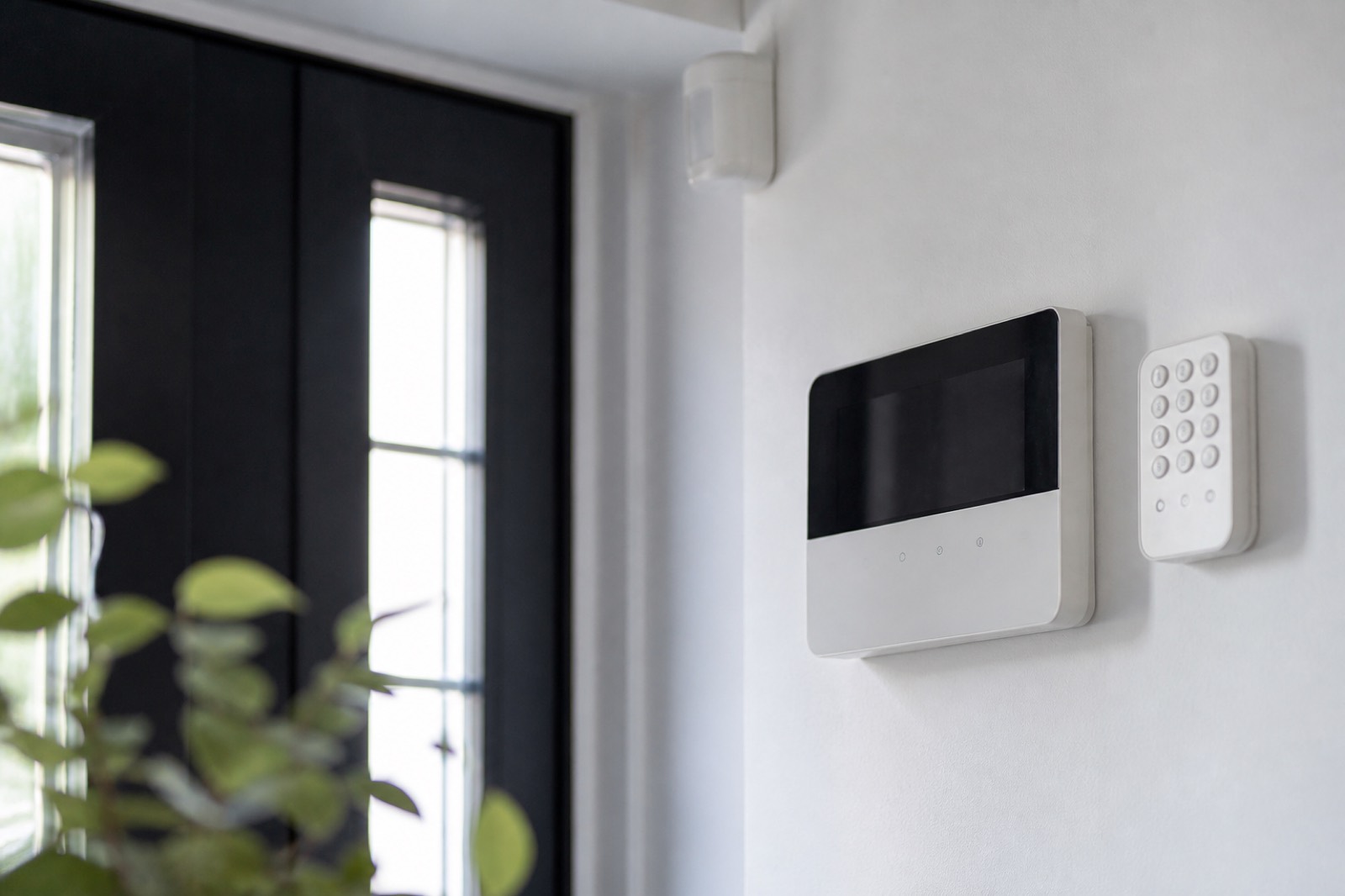
Alarm companies that buy out contracts and accounts
“Alarm companies that buy out contracts” means two different things, depending on who is asking.

If you are a homeowner or business customer
Some monitoring companies will pay off part of your remaining contract to win you as a customer. Policies vary widely, so ask any new provider in writing what it will cover and get your current early-termination figure before you switch. This page is written for alarm company owners, so the rest of this section covers the seller side.
If you own an alarm company or an account book
Buying monitoring contracts is a core growth strategy in this industry. The buyers named on this page buy contracts in three ways:
- Dealer programs. National consolidators buy new contracts from authorized dealers on an ongoing basis, usually with a chargeback period if the customer cancels early.
- Bulk account purchases. A buyer acquires a defined block of accounts while you keep the operating company, installation business, or commercial work.
- Full company acquisitions. The buyer takes the accounts, central station agreements, staff, and licenses together, which usually earns a higher multiple than a bulk sale.
Whichever route you take, buyers start with the same file: an account schedule showing RMR by account, contract start and end dates, communication type, payment history, and central station signal activity. Check that your customer contracts allow assignment, because contracts that need customer consent slow the deal and raise attrition risk. Expect an attrition guarantee or holdback that adjusts the price if accounts cancel above an agreed rate after closing.
Owners who clean up the account schedule, convert remaining landline accounts to cellular, and document attrition all three standard ways before going to market get more bids and fewer price cuts in diligence.
Conclusion
Alarm company sales and acquisitions follow a different valuation framework than almost every other small business transaction. The RMR multiple structure correctly prices the contracted forward cash flow that defines the asset, while EBITDA and revenue multiples consistently mis-price these businesses. The sellers and buyers who run successful transactions share three operational habits. They report attrition using all three industry-standard measurements and pursue active attrition reduction in the 12 to 18 months before going to market. They understand which buyer type pays the highest multiple for their specific account mix and run targeted processes rather than open auctions. They negotiate holdback and earnout structures that align incentives without trapping more than 30 percent of consideration in post-close contingencies. The asset class produces durable, predictable cash flow for buyers and capital-efficient exit pricing for sellers who run the process with discipline.
Frequently Asked Questions
What multiple does an alarm company sell for?
Alarm companies sell on Recurring Monthly Revenue (RMR) multiples rather than EBITDA or revenue. Residential monitoring on multi-year contracts trades at 35 to 50 times RMR. Small commercial monitoring trades at 32 to 45 times RMR. Large commercial fire and burglar accounts trade at 40 to 55 times RMR. Wholesale monitoring contracts trade at 20 to 30 times RMR. Integrated fire and security accounts trade at 45 to 55 times RMR. Within each range, attrition rate, contract length, and communications method (cellular versus landline) determine the exact multiple.
Why do alarm companies sell on RMR multiple instead of EBITDA?
Alarm company value sits in the contracted Recurring Monthly Revenue, not in operating EBITDA. Monitoring contracts produce predictable forward cash flow that can be modeled with high confidence over multi-year periods. Installation revenue is project-based and offers no forward visibility. Buyers running EBITDA-based valuation models for alarm companies consistently underbid because EBITDA understates the value of contracted future cash flow. The industry standardized on RMR multiples decades ago and the convention is universal among institutional buyers.
What is the most important factor in alarm company valuation?
Attrition rate. Sub-5 percent annual attrition supports 40 to 50x RMR multiples. 8 to 12 percent attrition supports 32 to 40x. 12 to 18 percent supports 25 to 32x. Above 18 percent typically makes accounts unsellable to institutional buyers. Attrition matters more than total RMR because buyers can model 95 percent of low-attrition RMR remaining at year 5, while high-attrition accounts erode rapidly post-close. Sellers should report attrition using all three industry-standard measurements (gross loss, net loss after reactivations, and account count basis).
Who buys alarm companies?
Three buyer types. National consolidators (ADT, Brinks Home, Vivint Smart Home) acquire accounts continuously through dealer programs and bulk account purchases. Regional alarm operators rolling up accounts in their footprint (Bates Security, Pye-Barker Fire and Safety, Pavion). Private equity platforms specifically focused on monitoring assets (Pye-Barker backed by Altas, Pavion backed by Wind Point Partners). National consolidators pay 25 to 35x RMR through dealer programs and 30 to 45x for bulk portfolios. Regional and PE buyers pay 32 to 50x RMR for clean operating platforms.
How long does it take to sell an alarm company?
A well-run alarm company sale takes 4 to 9 months from advisor engagement to closing. Preparation and CIM development runs 4 weeks. Outreach and management presentations take 8 weeks. Bidder narrowing and LOI selection takes 8 weeks. Exclusive diligence including sample account audit takes 10 to 16 weeks. Closing requires 2 to 4 weeks for final document execution and funding. Wholesale monitoring contract consent and state alarm license transfer can add 30 to 90 days to the closing timeline.
What are holdbacks in alarm company transactions?
Account holdbacks are standard. Buyers typically hold back 5 to 15 percent of purchase price for 12 to 24 months to cover account attrition above contracted thresholds. The buyer measures actual attrition during the holdback period against the contracted attrition assumption. If actual attrition exceeds the assumption by more than 2 to 3 percentage points, the buyer deducts the excess attrition cost from the holdback before releasing residual to the seller. Holdbacks above 15 percent or longer than 24 months should trigger negotiation.
How do buyers verify alarm account quality?
Three categories of verification. Central Station signal data showing actual account activity over 12 to 24 months. Accounts with zero signal activity over 90 days are discounted or excluded. Aging reports showing accounts receivable status. Accounts more than 60 days past due are discounted to 50 percent of value. Sample audit of 50 to 200 random accounts to verify contract terms match billing systems. Discrepancies above 5 percent typically trigger broader diligence and price retrade.
Should I sell to a national consolidator or a regional buyer?
National consolidators (ADT, Brinks, Vivint) close faster (4 to 6 months), pay slightly lower multiples (25 to 35x RMR for dealer programs, 30 to 45x for bulk portfolios), and integrate aggressively post-close. Regional buyers close slightly slower (5 to 8 months), pay competitive multiples (32 to 42x RMR), and often preserve operational continuity for the seller’s team. Private equity platforms close slowest (7 to 12 months including longer diligence), pay the highest multiples (35 to 50x RMR), and prefer to retain operational leadership for the hold period.
How do cellular versus landline accounts affect valuation?
Cellular monitoring accounts trade at a 2 to 5x RMR premium per dollar of RMR over landline accounts. The premium reflects two structural factors. First, landline infrastructure is being phased out by major telecommunications carriers, which creates conversion cost and customer disruption risk for landline accounts in the next 3 to 7 years. Second, cellular accounts produce higher reliability data (better signal verification) and lower service costs. Sellers planning a sale should accelerate the conversion of landline accounts to cellular before going to market.
Can I sell alarm accounts without selling the whole company?
Yes. Bulk account sales (where the seller sells a portion of accounts but retains the operating company) are common in the alarm industry. National consolidators routinely acquire portfolios of 500 to 5,000 accounts from regional operators. Bulk account sales trade at the lower end of RMR multiples (20 to 35x) compared to full company sales (32 to 50x) because the buyer integrates accounts into existing operations and bears integration risk. Sellers retaining the operating company can use bulk account sale proceeds to fund growth, recapitalize debt, or distribute to owners.
Do alarm companies buy out existing monitoring contracts?
Yes, in two ways. For customers, some monitoring companies offer to pay off part of a remaining contract when you switch, with terms that vary by provider. For alarm company owners, national consolidators, regional operators, and PE-backed platforms buy monitoring contracts through dealer programs, bulk account purchases, or full company acquisitions, priced as a multiple of the recurring monthly revenue the contracts produce.
What is an alarm dealer program?
A dealer program is an arrangement where an independent installer sells and installs systems under its own name, then sells the resulting monitoring contracts to a larger company at an agreed RMR multiple. The buyer takes over monitoring and billing. Most programs include a chargeback window, so if a customer cancels early, the dealer refunds or replaces that account. Read the chargeback and exclusivity terms carefully before signing.
Related Guide: How to Buy a Security Company, Buy-side playbook for security and alarm acquisitions.
Related Guide: Security Monitoring Business Valuation, RMR valuation methodology for alarm accounts.
Related Guide: SBA 7(a) Loan for Business Acquisition, How SBA financing works for security business acquisitions.
Related Guide: EBITDA Multiple by Industry, Multiples by sector with 2026 benchmarks.
Want a Specific Read on Your Business?
30 minutes, confidential, no contract, no cost. You leave with a read on your local buyer market and a likely valuation range.
The sourcing methodology behind this discussion is covered in sponsor pipeline build.
30 N Gould St, Ste N, Sheridan, WY 82801, USA · (307) 522-0262 · Contact