Home / Sell Your Business / Hood Cleaning
Sell My Hood Cleaning Business: Who Buys It and How a Confidential Sale Works
When an owner tells us “I want to sell my hood cleaning business,” they usually run a commercial kitchen exhaust hood cleaning company, often with kitchen fire suppression inspection and service bundled in. This page is for those owners. CT Acquisitions runs confidential sales and makes introductions to 500+ private equity firms, family offices, search funders and strategic acquirers. Below is who buys these companies today, what they pay for, and how the process works from first call to closing.
By the CT Acquisitions team · Updated October 2026

Sell my hood cleaning business: the short answer
Buyers come from two tracks: franchise cleaning systems on the exhaust side, and fire inspection, testing and maintenance platforms that absorb kitchen suppression work. Price follows how much of your revenue sits on written, code-driven recurring schedules, how dense your routes are, and whether your suppression license survives the sale. We run a confidential process with qualified buyers from our network, and you decide at every step. No fee to you on buy-side introductions; sell-side mandates are paid on success at closing.
Who buys hood cleaning businesses right now
Owners often expect a private equity fund that buys hood cleaning routes. That buyer does not exist at national scale. Our hood cleaning and suppression PE roll-up tracker found no disclosed 2023 to 2026 deal that was a pure private equity buyout of a hood cleaning operator. Buyers instead come from two tracks, and which one fits you depends on whether your revenue leans toward cleaning or toward suppression.
Track 1: franchise cleaning systems. HOODZ International sits inside BELFOR Franchise Group and is described as the largest kitchen exhaust cleaning network in North America (BELFOR Franchise Group). The Riverside Company invested in Green Guard Services through its EverSmith Brands platform on April 18, 2023 (Riverside Company release), and EverSmith launched the Kitchen Guard franchise brand in 2024 (IMARC Group, secondary). These systems grow mainly by adding franchisees, so for a cleaning-heavy owner the realistic exits are a local or regional strategic, a facilities services buyer, or conversion into a franchise network.
Track 2: fire inspection, testing and maintenance platforms. The institutional money reaches this trade through fire and life-safety platforms that tuck in kitchen suppression firms. Pye-Barker Fire & Safety, backed by Altas Partners and Leonard Green & Partners, added ADIA and GIC as minority investors in January 2025 (ABF Journal) and bought Fire Science Techniques, an Illinois commercial kitchen suppression firm, around February 2025 (SecurityInfoWatch). KKR acquired Marmic Fire & Safety from HGGC in July 2024 and described it as regulation-mandated inspection, testing and maintenance serving more than 56,000 customers (Latham & Watkins deal announcement). BDT & MSD Partners took a majority of Summit Companies, whose services include pre-engineered kitchen suppression systems, in August 2025 (Summit Companies). Blackstone acquired AI Fire from TruArc Partners, reported as February 2025 (CB Insights, secondary).
Smaller single-truck routes usually sell to SBA-financed individuals, local and regional operators and search funders. If suppression and other fire work is the bigger half of your revenue, our page on selling a fire protection business covers that buyer pool. If most of your revenue is repair on cooking and refrigeration equipment, see our page for kitchen equipment service companies.
Why buyers care at all: the trade is highly fragmented, made up of local owner-operators, regional franchise networks and facility maintenance firms (HOODZ franchise material; Riverside Company release). Market size estimates disagree by scope, running from roughly $413 million (IMARC Group, commercial kitchen cleaning services, 2025) to roughly $1.5 billion (MarketResearchIntellect, US commercial kitchen exhaust cleaning services, 2024).
What buyers pay for in a hood cleaning company
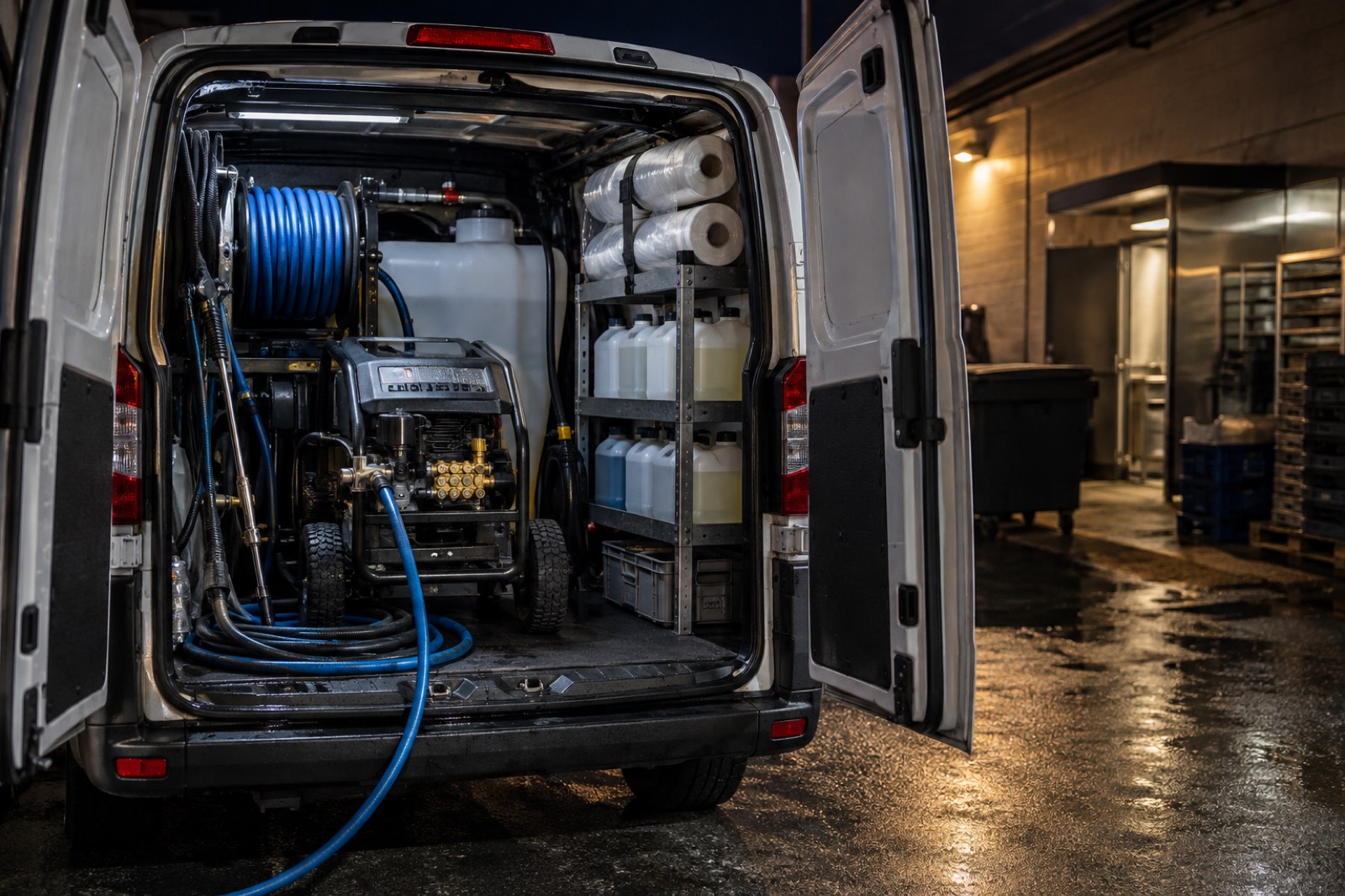
The core of the story is that your recurring revenue is code-mandated via the IFC/IMC adopting NFPA 96 and NFPA 17A by reference. International Fire Code Section 904.12 calls for commercial cooking systems to be installed and maintained in line with NFPA 96 (UpCodes), and the International and Uniform Mechanical Codes reference NFPA 96 for kitchen exhaust (Facilitec Southwest NFPA 96 codes guide). As adopted, NFPA 17A calls for wet-chemical suppression systems to be serviced at least semiannually by trained, qualified people, with fusible links replaced at least annually (NFPA 17A standard text). Insurers add pressure of their own by conditioning coverage on documented NFPA 96 compliance (OxMaint). Buyers pay for the parts of your business that prove that cadence is real and will stay with the company.
| Value driver | What a buyer checks |
|---|---|
| Written recurring contracts | Scheduled NFPA 96 cleaning and semiannual NFPA 17A inspection agreements in writing, with renewal history |
| Route density | Recurring accounts packed into a tight area, so less of each day is drive time |
| Compliance records | Service reports a fire marshal or insurer could audit on sight |
| Licensing held in-house | A suppression qualifier who is not only the owner, ideally a second licensed employee |
| Certified technicians | IKECA or CECT certified crew who will stay through the sale |
| Chain and MSA accounts | Multi-location relationships that are hard to win and hard to dislodge |
| Spread and independence | No single account dominating revenue, and a business that runs without the owner in every role |
What a hood cleaning business is worth
There is no public BizBuySell category for hood cleaning, so every benchmark is a proxy. The closest honest one is BizBuySell’s service business aggregate, which we treat as secondary because the on-page fetch was blocked and the figures came through BizBuySell’s indexed content. It describes small service businesses generally, not hood cleaning specifically.
| BizBuySell service business proxy (secondary) | Figure |
|---|---|
| Median asking price | $350,000 |
| Median revenue | $654,792 |
| Median SDE | $173,205 |
| SDE multiple | 1.58x to 3.61x, median 2.55x |
| Revenue multiple (cross-check only) | 0.41x to 1.09x, median 0.72x |
Read it as a reality check, not an appraisal. A contract-dense company with tight routes and sticky suppression inspection agreements can sit at the upper end of that SDE band or above it, while a book built on one-off deep cleans sits near the bottom. Small owner-run routes are priced on seller’s discretionary earnings; larger, management-run firms move to adjusted EBITDA as the buyer changes to platforms. The two measure different cash flows and are not interchangeable. You will also see much higher multiples quoted for scaled fire and life-safety platforms; those are not comparable to an owner-operated route, and we do not quote one here. For the full method, read our hood cleaning business valuation guide.
What lowers the price
Most hood cleaning deals that trade low or reprice after the handshake share a short list of problems:
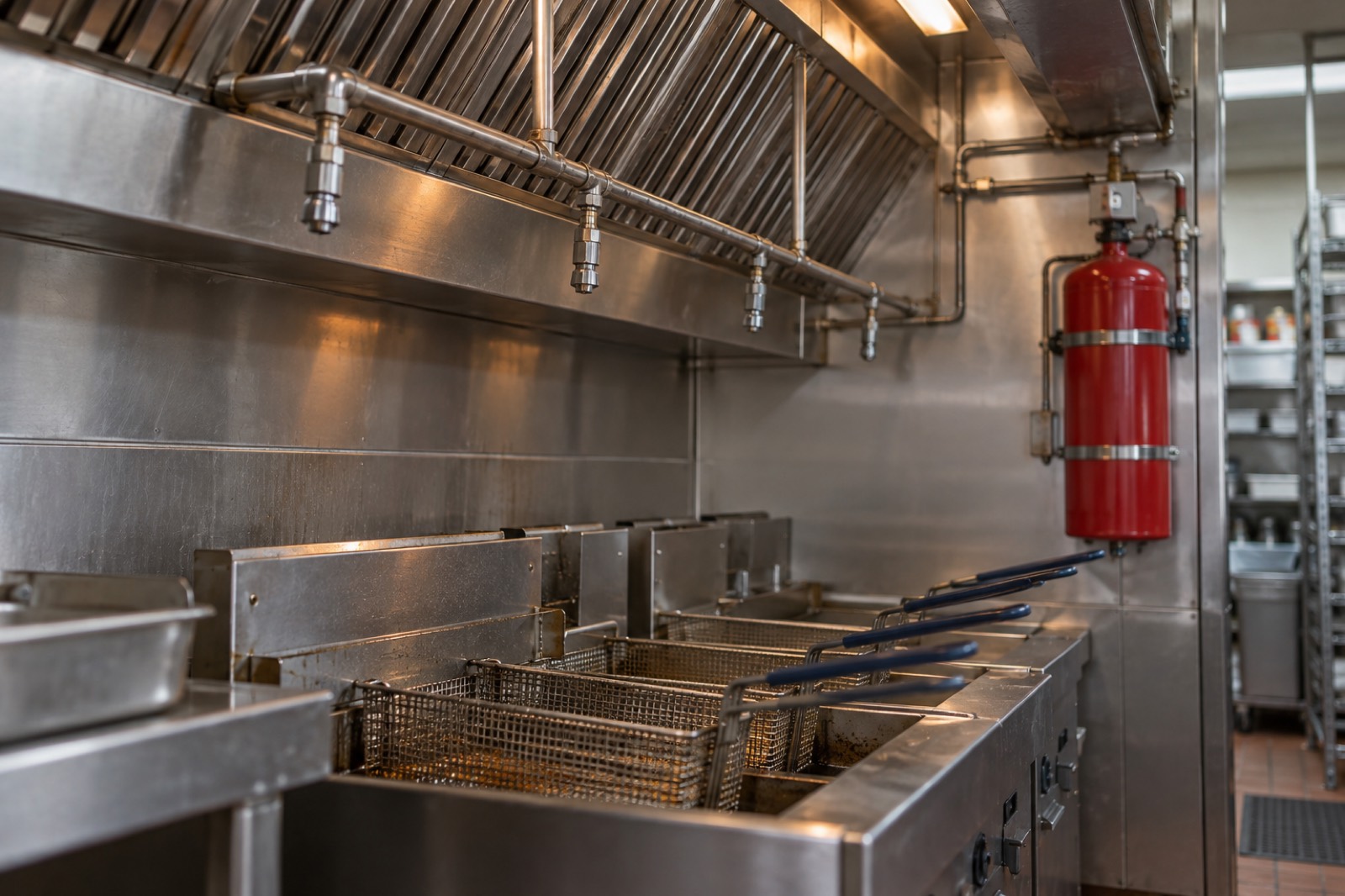
- The owner is the license qualifier. Suppression licensing often attaches to a person. Louisville requires both a state and a Louisville-Jefferson County fire suppression contractor license (Louisville Metro Government), and Colorado Springs requires an FSC-B license to service or inspect commercial kitchen hood suppression (City of Colorado Springs). If you hold the credential personally, a buyer may lose the right to do suppression work the day after closing.
- One-off work dominates. Deep cleans and call-outs without a contract underneath are the revenue a buyer trusts least.
- Handshake accounts. Scheduled customers with no written agreement can walk when the owner does.
- Thin compliance records. Missing or outdated service documentation weakens the proof that the revenue is code-driven, and insurers have denied fire claims over it (OxMaint).
- Scattered routes. The same revenue spread over a wide area is worth less because drive time eats margin.
- Concentration. A few chains or one large account carrying the book draws a discount.
- Certifications walking out the door. IKECA certifies individuals, such as through the CECT credential, not companies (IKECA), so technician retention is part of diligence.
Curious what your hood cleaning business would sell for?
A confidential call gives you a straight read on value, which buyer track fits you, and what to fix first. You decide what happens next.
How a confidential sale works with us
Selling a hood cleaning company is not a public listing. It is a controlled process run with the buyers most likely to value your contracts and licensing:
- First call. We learn about your company, your goals and your timeline. Nothing is shared with anyone.
- A buyer’s-eye read of value. We look at your contract mix, routes, compliance records and licensing the way a buyer will, and tell you plainly where you stand and which track fits.
- Preparation. We organize financials, the contract schedule and the license transfer plan so diligence holds up.
- Confidential outreach. We take a blind profile to qualified buyers from our network of 500+ private equity firms, family offices, search funders and strategic acquirers. Names are shared only after a buyer signs a confidentiality agreement and you approve.
- Offers and LOI. We compare offers on price, structure and how each buyer handles the suppression license, then negotiate a letter of intent.
- Diligence and close. We stay involved through diligence, the license and contract transfers, and closing.
You decide at every step, including whether to sell at all. No fee to you on buy-side introductions; sell-side mandates are paid on success at closing.
How to prepare in the 12 to 24 months before a sale
The changes that lift value most in this trade take the longest to build, so start with the slow ones:
- Put scheduled work on paper. Move recurring NFPA 96 cleaning customers and semiannual NFPA 17A inspection customers onto written agreements, and keep the renewal history.
- Develop a second qualifier. Get another employee licensed for suppression work so the business is not one person away from losing that revenue. This is often the longest lead item, so begin early.
- Tighten your routes. Favor accounts inside your core area and trim the far-flung ones that burn drive time.
- Keep certified technicians. Document IKECA or CECT credentials and give key techs a reason to stay through a sale.
- Organize compliance records. Make service reports complete and current, the kind an insurer or buyer could audit on sight.
- Read your chain and MSA contracts. Check each one for change-of-control and assignment terms before a buyer does.
- Clean the books. Separate personal expenses, document add-backs, and show cleaning and suppression revenue on separate lines.
Hood cleaning business broker or M&A advisor: which fits your sale
A business broker fits a small, owner-run route that will sell to an individual buyer using SBA financing. The broker lists the business, screens buyers and handles paperwork, and for a one-truck operation that is often the right tool.
An M&A advisor fits a company with written recurring contracts, more than one crew and suppression licensing, because the likely buyers change. Franchise systems, regional strategics and fire inspection platforms expect a confidential approach, clean contract data and several bidders at once. The suppression license question also needs a plan before the first offer, not after. Our guide on how to sell a fire protection business covers the licensing side in more depth.
Whichever you choose, ask how many fire or kitchen service companies they have sold, which buyers will see yours, how they will handle the qualifier transfer, and what the fee, exclusivity term and tail period are.
Thinking About Selling? Let’s Talk.
No fee to you on buy-side introductions; sell-side mandates are paid on success at closing. You leave with a clear sense of what your hood cleaning business is worth, who would compete to buy it, and whether now is the right time. If selling is not the right move, we will tell you that directly.

About the Author
Christoph Totter is the founder of CT Acquisitions, an M&A advisory firm working both sides of the table, headquartered in Sheridan, Wyoming. We work directly with 500+ private equity firms, family offices, search funders and strategic acquirers. Connect on LinkedIn
Frequently asked questions about selling a hood cleaning business
How do I sell my hood cleaning business?
Start with a confidential conversation, not a public listing. We look at your contract base, routes and licensing, tell you which buyer track fits, and then take the business to a short list of qualified buyers from our network of 500+ private equity firms, family offices, search funders and strategic acquirers. You decide at every step.
What is a hood cleaning business worth?
There is no public sales category for hood cleaning, so any benchmark is a proxy. BizBuySell’s service business aggregate, a secondary proxy reached through indexed content, shows SDE multiples from about 1.58x to 3.61x with a median near 2.55x and a median SDE near $173,205. A contract-dense, route-dense company with sticky suppression inspection agreements sits at or above the top of that band; a book of one-off cleans sits at the bottom.
Is hood cleaning revenue really required by code?
Effectively yes, with one caveat about where the mandate comes from. It is code-mandated via the IFC/IMC adopting NFPA 96 and NFPA 17A by reference. International Fire Code Section 904.12 calls for commercial cooking systems to be maintained in line with NFPA 96 (UpCodes), the mechanical codes reference NFPA 96 for kitchen exhaust (Facilitec Southwest), and fire marshals enforce the adopted code. Insurers also condition coverage on documented compliance (OxMaint).
What happens to my suppression license when I sell?
It may not transfer with the company. Kitchen suppression licensing often attaches to a qualifying individual. New Jersey, for example, requires a kitchen fire suppression contractor to list a state-certified qualifying individual who passed the ICC or NAFED pre-engineered kitchen systems exam (New Jersey Division of Fire Safety). If you are that person, plan a transition period, an earn-out, a second licensed employee, or a buyer that already holds the license.
Will my employees and customers find out?
Not unless you decide to tell them. Your business is never publicly listed. Buyers see a blind profile first and sign a confidentiality agreement before they learn your name, and staff and customers are usually told after a deal is signed.
How is CT Acquisitions paid?
It depends on the mandate. No fee to you on buy-side introductions; sell-side mandates are paid on success at closing. You will see the terms in writing before any work starts.
Related Resources