Home / Sell Your Business / Kitchen Equipment Service
Sell My Kitchen Equipment Service Business: Who Buys and What They Pay
Asking “how do I sell my kitchen equipment service business” is the right first question, and the answer depends on what you have built. This page is for owners of commercial kitchen equipment service businesses: the companies that repair, maintain and install fryers, combi ovens, walk-ins, ice machines and dishmachines, and supply the parts, for restaurants and foodservice kitchens. We are CT Acquisitions. Below we cover who buys companies like yours, what they pay for, and how a confidential sale works without putting your technicians or your chain accounts at risk.
By the CT Acquisitions team · Updated October 2026
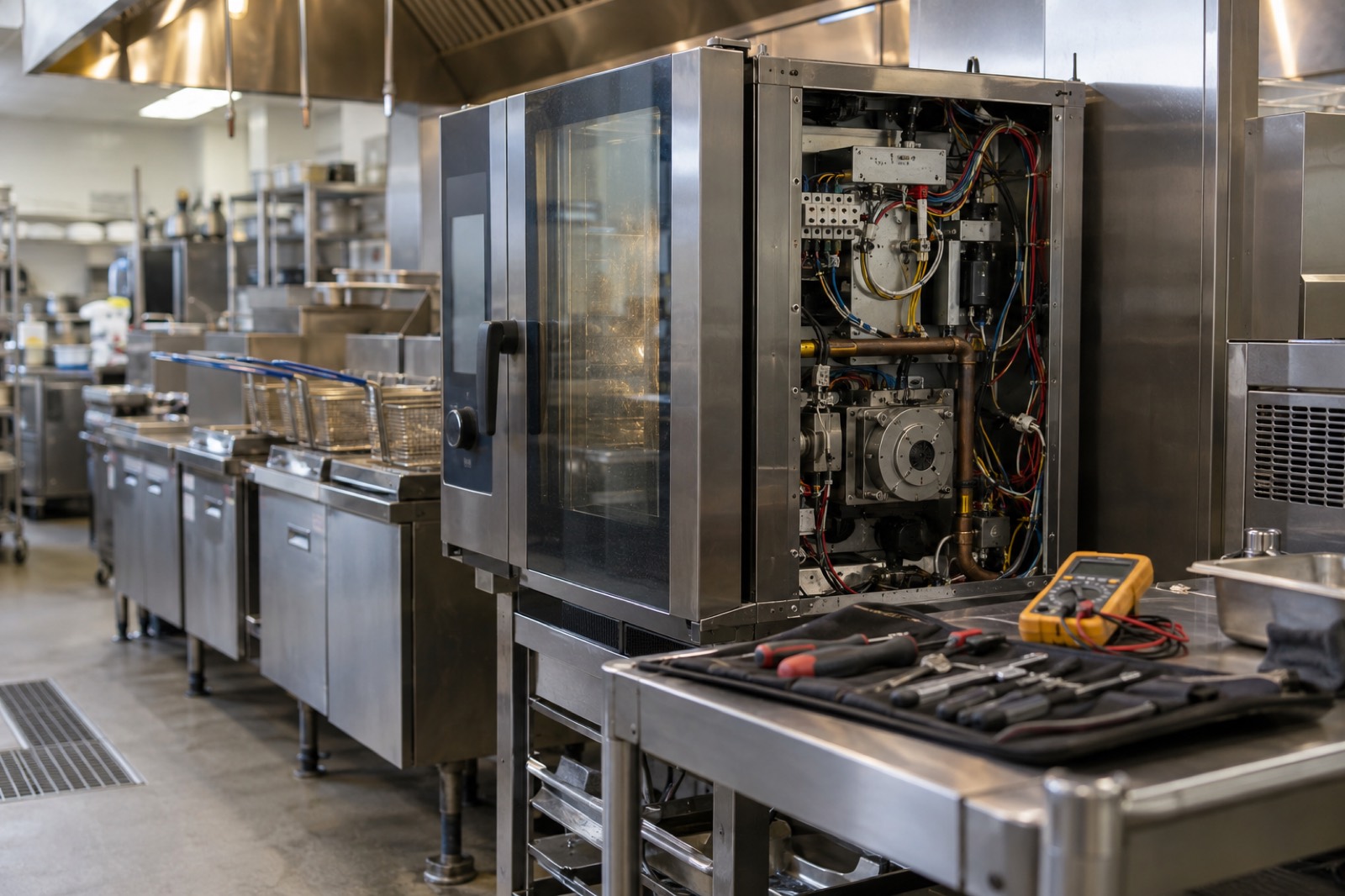
Sell my kitchen equipment service business: the short answer
Three national PE-backed platforms are buying in this trade (Smart Care, Tech24 and Unlimited Service Group), alongside HVAC and refrigeration platforms, parts-distributor service arms, search funders and local operators. Price follows how durable your revenue is: planned-maintenance contracts, OEM factory authorizations that survive a change of control, national-account and chain work, and a certified technician bench that stays after closing. We run a confidential process with no public listing, and your name goes only to qualified buyers you approve from our network of 500+ private equity firms, family offices, search funders and strategic acquirers. No fee to you on buy-side introductions; sell-side mandates are paid on success at closing.
Who buys commercial kitchen equipment service businesses right now
This is a consolidating trade with more than one national buyer. Our kitchen equipment service PE roll-up tracker profiles three platforms that are actively acquiring repair and maintenance companies:
- Smart Care Equipment Solutions. Backed by Wind Point Partners through Zone Climate Services, which acquired Smart Care from Audax Private Equity in March 2022, according to Private Equity Wire. It services commercial refrigeration, cooking and warewash equipment and has kept adding companies since.
- Tech24 (Commercial Foodservice Repair, Inc.). Took a joint investment from Vestar Capital Partners and HCI Equity Partners in October 2023. At that announcement it operated across 26 states with more than 850 technicians, according to Vestar.
- Unlimited Service Group. The service sister company to Parts Town Unlimited. It describes itself as a network of local commercial foodservice equipment repair providers with more than 125 locations and more than 1,600 manufacturer-trained technicians across the US and Canada, according to Unlimited Service Group. We do not name a current sponsor because we have not confirmed one.
Two more buyer types show up in this vertical. Parts-distributor service arms combine parts distribution with field service, and HVAC and refrigeration platforms are broadening their trade mix: Zone Climate Services, the vehicle Wind Point used to buy Smart Care, is a worked example (Private Equity Wire). If much of your work is refrigeration and HVAC, your buyer pool overlaps with the one for selling an HVAC company.
Smaller owner-run shops usually sell to a different group: SBA-financed individuals, local operators and search funders. A platform tends to look for a recurring contract base, several OEM authorizations, a staffed technician bench and earnings large enough to read in EBITDA terms. Every transaction in our tracker, including the Smart Care sale and the Tech24 investment, closed with terms not disclosed. Anyone quoting you a “platform multiple” from these deals is guessing.
What buyers pay for in a kitchen equipment service business
Two shops billing the same amount are often not worth the same. Buyers take your revenue apart stream by stream and ask how much of it survives the ownership change. These are the drivers that move price in this trade:
| Value driver | Why buyers pay for it |
|---|---|
| Planned-maintenance and MSA contracts | Scheduled, contracted work a buyer can underwrite. In the YourExitValue appliance-repair framework, used here as a proxy, service contracts at 40% or more of revenue command substantial premiums. |
| OEM factory authorizations | More authorized brands means more warranty-dispatch work and a position competitors cannot copy quickly. The same YourExitValue proxy ties five or more major manufacturer authorizations to a 25% to 35% premium. |
| National-account and chain contracts | First-call status with restaurant chains brings dispatch volume through one relationship. Buyers read a contracted, chain-anchored book very differently from scattered independents with no commitment behind them. |
| Certified technician bench | Refrigeration work depends on EPA Section 608 certified technicians, and CFESA certification covers electrical, gas, steam and refrigeration work. Keeping those people is a large part of what a buyer is paying for. |
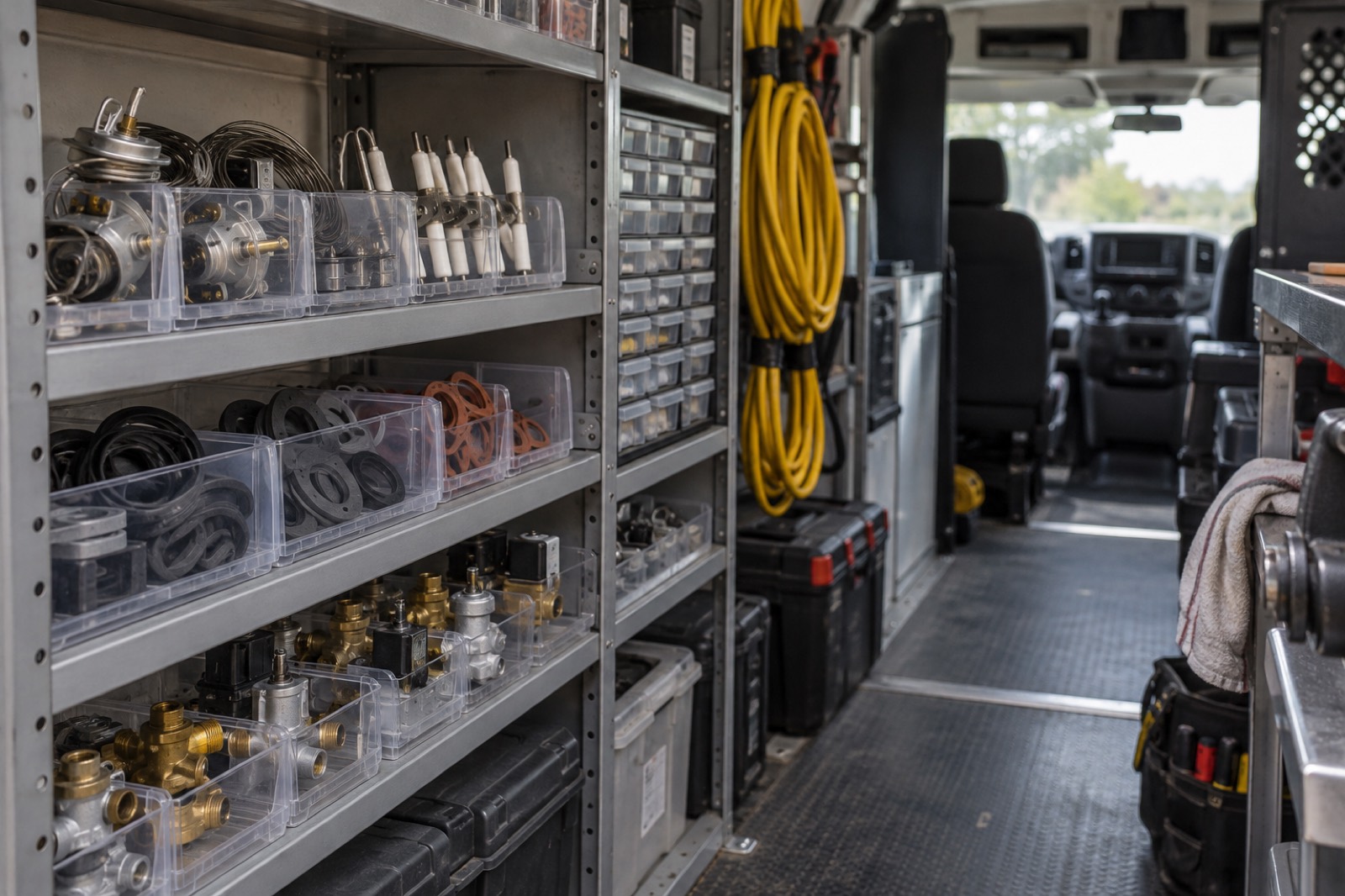
| Parts revenue and parts-stocked vans | Parts and warranty work is recurring and margin-positive. YourExitValue (appliance-repair proxy) reports roughly 70% to 80% first-call completion with parts-stocked vehicles versus 40% to 50% without. |
| Geographic density | A tight service footprint is cheaper to run and easier for a platform to fold into its existing routes. |
| A business that runs without you | If you are lead technician, dispatcher and the OEM contact at once, buyers discount for transition risk. |
What a kitchen equipment service business is worth
Straight answer first: there is no published valuation multiple for commercial kitchen equipment repair, no BizBuySell category for it, and no disclosed deal multiples on the platform transactions above. The closest named benchmarks are appliance repair and HVAC service. They are proxies, and we label them that way:
| Proxy and source | Metric | Range |
|---|---|---|
| Appliance repair (YourExitValue, proxy) | SDE multiple | 1.8x to 3.0x, with a 20% to 35% premium for well-run shops |
| Appliance repair (YourExitValue, proxy) | EBITDA multiple, businesses at $2M+ EBITDA | 3.0x to 5.0x |
| Appliance repair (YourExitValue, proxy) | Revenue multiple used by strategic buyers (cross-check only) | 0.35x to 0.65x |
| HVAC service (BizBuySell data via broker summaries, secondary proxy) | SDE multiple, five-year basis | about 2.83x |
| HVAC service (BizBuySell data via broker summaries, secondary proxy) | SDE multiple, sub-$1M owner-operators | 2.0x to 3.5x |
Two cautions. First, SDE and EBITDA measure different things and are not interchangeable: SDE includes the owner’s pay and discretionary items that EBITDA strips out. Most small owner-run shops trade on SDE, while adjusted EBITDA pricing is for scaled, multi-technician, contract-heavy companies. Second, the revenue figures are a sanity test against the earnings read, not a pricing method.
Our kitchen equipment service business valuation guide walks through the full proxy set, the move from SDE to EBITDA pricing and the add-backs buyers accept. For the related trade behind the proxies, see valuing and selling an appliance repair business.
What lowers the price of a kitchen equipment service business
The same problems come up in kitchen equipment service deals that stall or reprice in diligence:
- OEM authorizations that do not survive the sale. This is the top diligence item in the trade. Manufacturer warranty policies are typically written for the original end-user and are not transferable without prior written consent (Vollrath warranty policy), and OEM authorization agreements commonly restrict assignment or require consent on a change of control (ContractsCounsel). The moat that lifts your price is also the asset most at risk on sale.
- A break-fix book with nothing underneath it. Reactive calls are real revenue, but no contract commits the customer to call you again.
- Technicians who might leave. EPA Section 608 certification is individual, portable and does not expire (EPA), and CFESA certification is individual and valid for five years (CFESA). That means no license-transfer risk, but your refrigeration capacity walks out the door if your certified technicians do.
- One chain that is too big. Heavy customer concentration means losing a single anchor account can reprice the whole business.
- Owner dependence. If every OEM relationship, chain contact and hard diagnosis runs through you, buyers price in the risk of your exit.
- Unconfirmed licensing. Some states require a licensed mechanical or gas contractor, and that license may or may not transfer on an asset sale. Confirm it for each state you operate in.
- Contracts that live in your head. Handshake maintenance deals and unclear assignment terms are hard for a buyer to underwrite.
Curious what your kitchen equipment service business would sell for?
A confidential call gives you a straight read on value and on which buyers would compete for your business. No obligation, no pressure to sell.
How a confidential sale works with us
- First call. A confidential conversation about your business, your goals and your timing. If selling now is not the right move, we say so.
- A buyer’s-eye read of value. We look at your revenue mix, contract base, OEM authorizations and technician bench the way a platform or an SBA lender would, and give you an honest range against the proxies above.
- Preparation. We help you assemble what buyers ask for first: clean financials with documented add-backs, a list of maintenance contracts and their assignment terms, and a map of which OEM authorizations need change-of-control consent.
- Confidential outreach. Your business is never publicly listed. With your approval, we approach qualified buyers from our network of 500+ private equity firms, family offices, search funders and strategic acquirers.
- Offers and LOI. We help you compare offers on price, structure and what happens to your technicians and customers, then negotiate the letter of intent you choose.
- Diligence and close. We stay involved through diligence, manufacturer consents and closing.
You decide at every step: which buyers see your name, which offers to pursue, and whether to sell at all. No fee to you on buy-side introductions; sell-side mandates are paid on success at closing. For the general process across trades, see our guide on how to sell your business, or book a confidential call to talk through yours.
How to prepare in the 12 to 24 months before a sale
The levers that pay the most in this trade are also the slowest to build, so start with them, and start earlier if you can:
- Convert break-fix customers to planned maintenance. Push your contracted share toward the 40% of revenue level that the YourExitValue proxy ties to substantial premiums.
- Add OEM authorizations and line up consent. Work toward more major brands, and ask each manufacturer now what a change of control requires, so each authorization moves with the business.
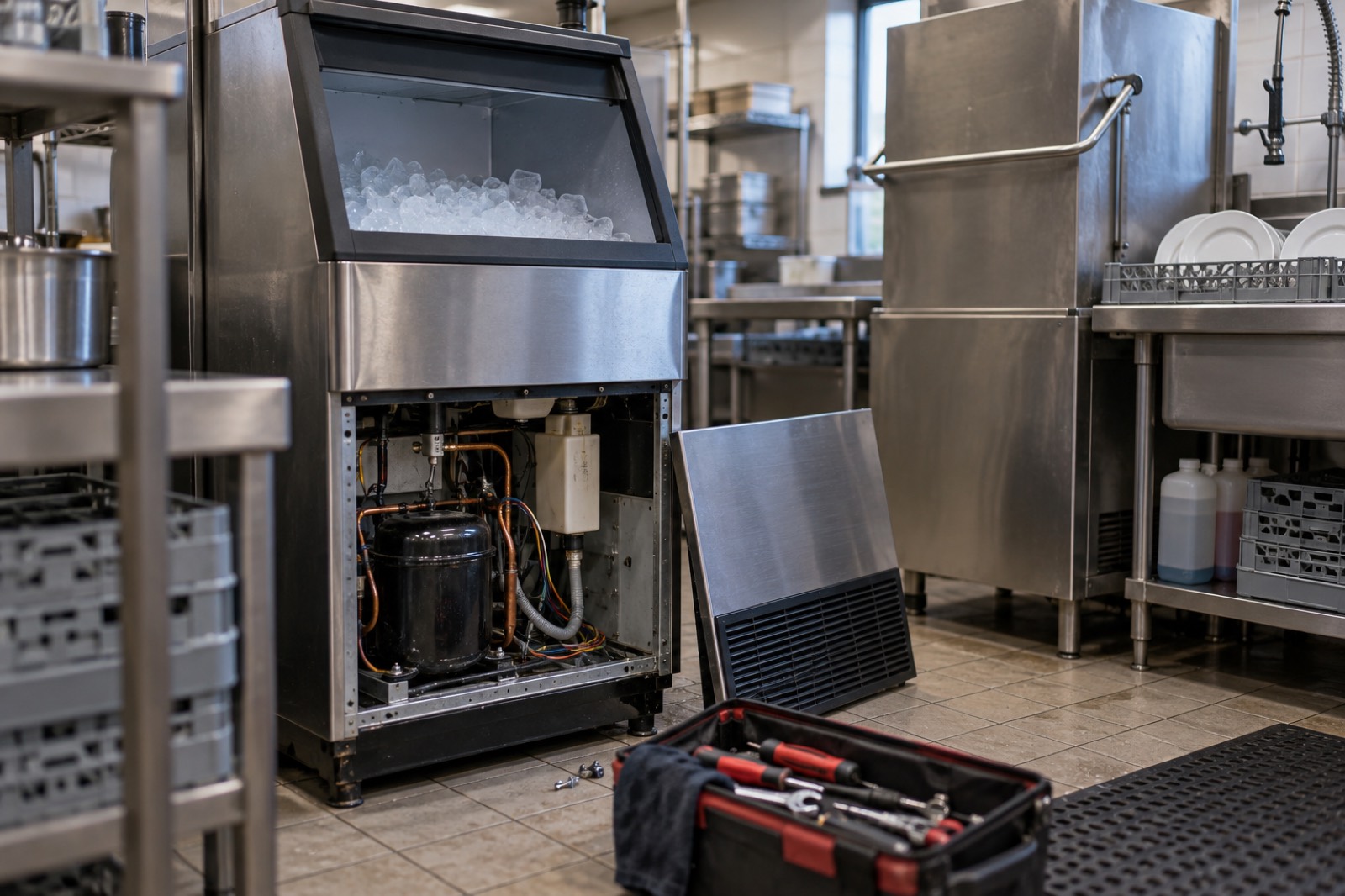
- Keep your technicians. Cross-train, document who holds EPA 608 and CFESA credentials, and plan how you will keep key people through the sale.
- Put chain and national-account work on paper. A written MSA with clear assignment terms is worth more to a buyer than a relationship that lives in your phone.
- Stock the vans. Parts discipline lifts first-call completion, margin and retention.
- Step back from the van and the dispatch board. Hire or promote a dispatcher or service manager so the business runs without you.
- Clean up the books and the licensing. Separate personal expenses, document add-backs, and build a per-state checklist of mechanical and gas contractor licenses and whether each one transfers.
Business broker or M&A advisor: which fits a kitchen equipment service sale
A business broker usually fits a small, owner-run repair shop that will sell to an individual buyer with SBA financing. That works when the buyer is stepping into your seat and buying a job plus a customer list.
An M&A advisor fits better once you have planned-maintenance contracts, OEM authorizations, chain accounts and a technician team. Those companies draw national platforms, HVAC and refrigeration acquirers and parts-distributor service arms, and those buyers expect a confidential approach, diligence-ready numbers and competing interest. Owners of hood cleaning companies serving the same restaurant customers face a similar choice.
Whoever you talk to, ask these questions:
- How many foodservice equipment, refrigeration or HVAC service businesses have you sold, and to which kinds of buyers?
- How will you handle OEM change-of-control consent so the authorizations close with the business?
- How will you present contract revenue and technician retention so a buyer can underwrite them?
- How do you keep the sale confidential from staff, chain accounts and competitors?
- What is the fee, how long is the exclusivity term, and how long is the tail after it ends?
Thinking About Selling? Let’s Talk.
No fee to you on buy-side introductions; sell-side mandates are paid on success at closing. You leave with a clear sense of what your kitchen equipment service business is worth, who would compete to buy it, and whether now is the right time. If selling is not the right move, we will tell you that directly.

About the Author
Christoph Totter is the founder of CT Acquisitions, an M&A advisory firm working both sides of the table, headquartered in Sheridan, Wyoming. We work directly with 500+ private equity firms, family offices, search funders and strategic acquirers. Connect on LinkedIn · Get in touch
Frequently asked questions
How do I sell my kitchen equipment service business without staff or customers finding out?
Start with a confidential conversation, not a public listing. We give you a read on value, help you prepare, and approach only qualified buyers you approve from our network of 500+ private equity firms, family offices, search funders and strategic acquirers. Employees, chain accounts and competitors are not told unless and until you decide to tell them.
What is a kitchen equipment service business worth?
No kitchen-repair-specific multiples are published, so buyers lean on proxies. The YourExitValue appliance-repair proxy cites 1.8x to 3.0x SDE, and 3.0x to 5.0x EBITDA for businesses at $2M or more of EBITDA. Broker summaries of BizBuySell data put HVAC service near 2.83x SDE on a five-year basis. Your contract share, OEM authorizations and technician retention decide where you land.
Do my OEM factory authorizations transfer when I sell?
Generally not automatically. Manufacturer warranty policies are typically written for the original end-user and are not transferable without prior written consent (Vollrath warranty policy), and OEM agreements commonly restrict assignment or require consent on a change of control (ContractsCounsel). Confirm each authorization with the manufacturer before you go to market.
Do EPA 608 and CFESA certifications transfer with the business?
They belong to the technician, not the company. EPA Section 608 certification is individual, portable and does not expire (EPA), and CFESA certification is individual and valid for five years (CFESA). A sale carries no license-transfer risk on this front, but it does carry technician-retention risk.
Who is buying kitchen equipment service companies?
Three national platforms are active: Smart Care (Wind Point Partners, since March 2022), Tech24 (Vestar Capital Partners and HCI Equity Partners, since October 2023) and Unlimited Service Group (sister company to Parts Town Unlimited). HVAC and refrigeration platforms, parts-distributor service arms, search funders and local operators also buy. No deal values or multiples were disclosed on any of the platform transactions.
How much does CT Acquisitions charge?
It depends on the mandate. No fee to you on buy-side introductions; sell-side mandates are paid on success at closing. You will know the terms in writing before any work starts.
Related Resources
- Kitchen Equipment Service Business Valuation 2026
- Kitchen Equipment Service PE Roll-Up Tracker 2026
- How to Sell Your Business