Sell Your Garage Door Business in Massachusetts, 200+ Active PE Buyers, $0 Seller Fees
Quick Answer
Garage door businesses in Massachusetts typically sell for 4.5x to 6x SDE in 2026, with premium valuations supported by high median home values, recurring service demand from freeze-thaw cycles, and strong buyer competition from 76+ active PE and strategic buyers including Monogram Capital Partners, Apex Service Partners, and Precision Door franchisees. Massachusetts-specific deal risks including HIC registration transfers, Construction Supervisor License requirements, wage-and-hour compliance, and the 4% surtax on income above $1M can compress multiples for operator-dependent or commercially-concentrated businesses. Sellers typically need 18-24 months of preparation to command top-of-range pricing and navigate state-specific diligence.
We also cover how garage door owners sell to private equity and what platform buyers pay nationally. Before going to market, start with our garage door business valuation guide to place your multiple.
Thinking about selling your garage door business in Massachusetts?
A 15-minute confidential call gives you a real valuation range and the Massachusetts buyers most likely to compete for your business. No cost, no obligation.
Christoph Totter · Managing Partner, CT Acquisitions
20+ home services M&A transactions across HVAC, plumbing, pest control, roofing · Updated May 7, 2026
Selling a garage door business in Massachusetts in 2026 is a premium-pricing exit market in the Northeast. Massachusetts has 7M+ residents (U.S. Census Bureau 2024), the Boston-Cambridge-Newton MSA holds 4.9M, median home values are among the highest in the U.S. supporting premium garage door service pricing, Atlantic coastal salt corrosion compresses hardware life, and freeze-thaw cycles drive recurring service demand. The combination has put Massachusetts on the buy-list for every major Northeast-active garage door consolidator. Notably, Monogram Capital Partners’ Precision Door Tri-State acquired Foris Solutions in February 2026, expanding one of the largest operators in the Precision Door Service franchise system across the Mid-Atlantic and Northeast.
But Massachusetts-specific dynamics also create deal risk. HIC registration transfers and Construction Supervisor License (CSL) requirements create coordination overhead. The 4% Fair Share Amendment surtax on income above $1M materially affects after-tax outcomes for sellers above that threshold. Massachusetts wage-and-hour law (including the 2018 Grand Bargain Act expanding paid family medical leave and minimum wage) creates labor compliance diligence. Customer concentration in Boston commercial overhead-door GC relationships compresses multiples for builder-dependent operators. This guide walks through each state-specific issue.
The framework draws on direct work with 76+ active U.S. lower middle market buyers, including 9 with explicit Massachusetts garage door mandates. A1 Garage Door Service (Cortec Group-backed), DH Pace ($1B+ revenue), Precision Door Service franchisees backed by Monogram Capital Partners (with the recently expanded Precision Door Tri-State platform), RF Investment Partners, and Franchise Equity Partners, Apex Service Partners (Alpine Investors-backed), and family offices have all closed Massachusetts garage door deals or maintain active Massachusetts buy-boxes. The buyers pay us when a deal closes, not you. Our free business valuation calculator produces a starting-point estimate.
One reality check before you start. Massachusetts garage door owners who exit at the top of the multiple range almost always started preparing 18-24 months ahead. Owners who go to market reactively, with HIC compliance gaps and incomplete wage-and-hour records, routinely receive offers 1-1.5x EBITDA below the realistic range. Read the prep section carefully.
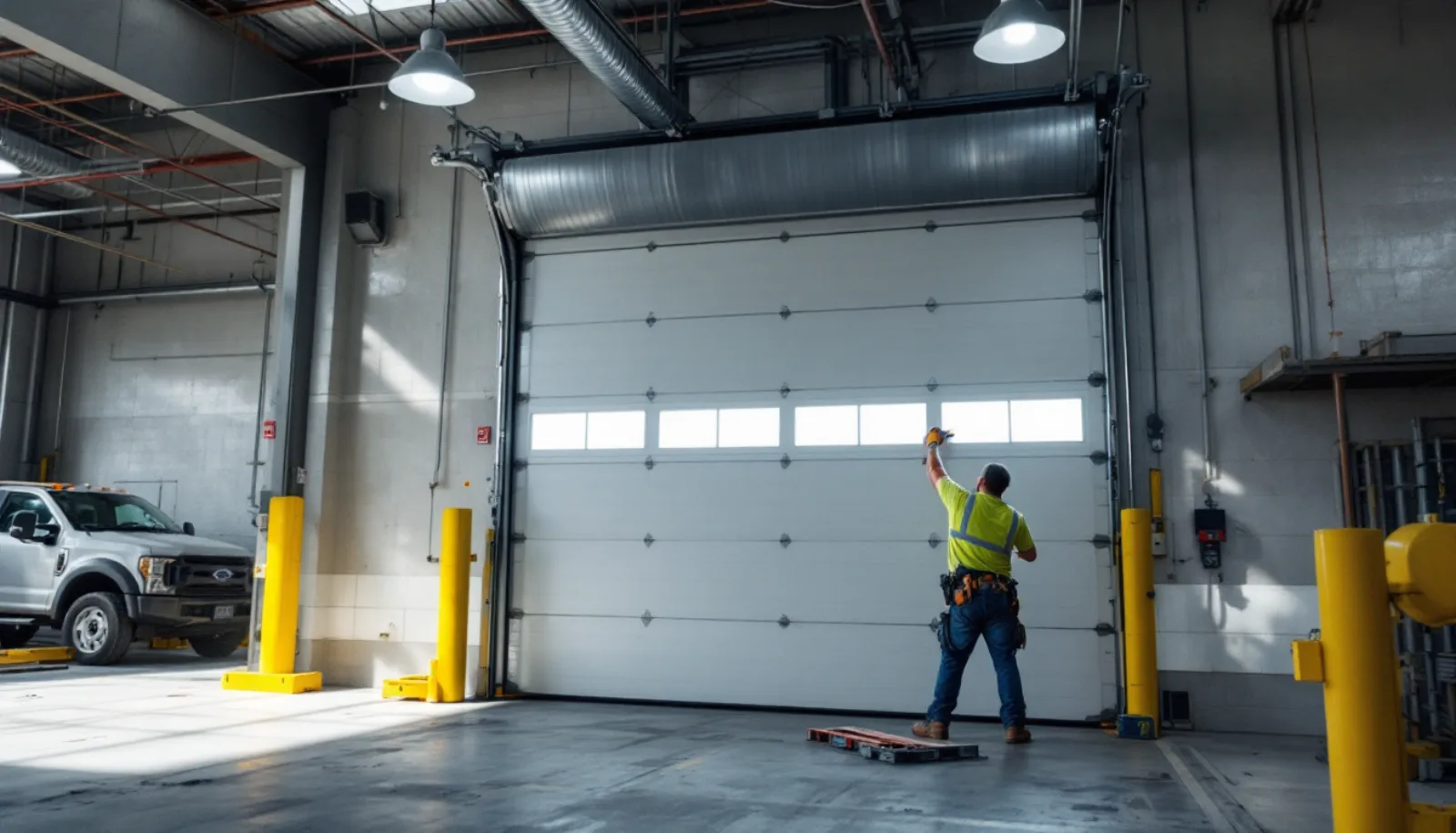
“Massachusetts is one of the most premium-pricing garage door markets in the U.S., Boston-metro premium home values support premium service pricing, coastal salt corrosion compresses hardware life, freeze-thaw cycles drive recurring service demand, and the HIC registration framework creates buyer-side diligence depth. Owners who prep their books and lock down recurring service mix routinely close at the top of the 4-6x EBITDA band. We’re a buy-side partner, the buyers pay us, no contract required.”
TL;DR, the 90-second brief
- Massachusetts garage door businesses sell for 4-6x EBITDA in 2026. Boston-metro and Worcester residential operators with $500K-$2M EBITDA and 15%+ recurring service revenue trade at 5-6x. Sub-$500K SDE shops trade at 2.5-4x SDE.
- Massachusetts requires Home Improvement Contractor (HIC) registration through the Office of Consumer Affairs and Business Regulation. The HIC registration applies to most residential exterior work including garage door installation. Larger structural projects also require Construction Supervisor License (CSL) through the Massachusetts Department of Public Safety.
- Massachusetts has 7M+ residents with Boston-Cambridge-Newton MSA at 4.9M. Atlantic coastal salt-air corrosion in Boston, North Shore, South Shore, and Cape Cod compresses garage door hardware life. Freeze-thaw cycles (40-60 days per year below 20°F per NOAA) drive bottom-seal and opener-photo-eye service demand. Premium-priced housing market supports premium service pricing.
- Massachusetts’ 5% flat state income tax plus 4% surtax on income above $1M creates a stepped rate structure. The 4% Fair Share Amendment surtax (effective 2023) pushes effective marginal rate to 9% on the portion of long-term capital gains above $1M. On a $3M Massachusetts garage door sale, expect $80-150K of additional Massachusetts state-level tax versus a flat-5%-state seller. Combined federal-and-state effective top rate approximately 32.8%.
- Of our 76+ active U.S. lower middle market buyers, 9 are bidding on garage door businesses in Massachusetts right now. A1 Garage Door Service (Cortec Group), DH Pace, Precision Door Service franchisee acquirers (notably Monogram Capital’s Precision Door Tri-State which expanded with Foris Solutions in 2026), Apex Service Partners, and Northeast-focused family offices. The buyers pay us, not you. No retainer. No contract required.
Key Takeaways
- Massachusetts garage door businesses with $500K-$3M EBITDA sell for 4-6x EBITDA in 2026, with Boston-metro residential service operators commanding the top of the band.
- Massachusetts HIC (Home Improvement Contractor) registration through OCABR is the gating credential, with CSL (Construction Supervisor License) for larger structural work.
- Massachusetts’ 5% flat state income tax plus 4% Fair Share surtax on income above $1M creates a stepped rate, sellers with gain above $1M face effective state marginal rate of 9%.
- Recurring service revenue above 15% lifts your Massachusetts multiple by 0.5-0.75x EBITDA, coastal corrosion and freeze-thaw cycles support tight service intervals.
- Use our free business valuation calculator for a 90-second starting-point Massachusetts garage door valuation range.
- Active 2026 Massachusetts garage door buyers include A1 Garage Door Service (Cortec Group), DH Pace, Precision Door Service franchisee acquirers (notably Monogram’s Precision Door Tri-State with the Foris Solutions expansion), Apex Service Partners, and 6+ family offices with explicit MA mandates.
What is the Massachusetts garage door market outlook for 2026?
Massachusetts’ garage door market is one of the highest-price-per-installation markets in the U.S. Massachusetts has 7M+ residents, Boston-Cambridge-Newton MSA holds 4.9M, and median home values exceed $500K statewide (Massachusetts Association of Realtors data). Premium home values support premium service pricing. New-construction permit volume is more constrained than fast-growth Sunbelt states (Massachusetts approximately 8,000-12,000 single-family permits annually) but the existing 2.9M housing-unit installed base creates deep replacement demand. Climate is a.
Massachusetts’ garage door market is one of the highest-price-per-installation markets in the U.S. Massachusetts has 7M+ residents, Boston-Cambridge-Newton MSA holds 4.9M, and median home values exceed $500K statewide (Massachusetts Association of Realtors data). Premium home values support premium service pricing. New-construction permit volume is more constrained than fast-growth Sunbelt states (Massachusetts approximately 8,000-12,000 single-family permits annually) but the existing 2.9M housing-unit installed base creates deep replacement demand.
Climate is a notable contributor to Massachusetts garage door demand. Massachusetts records 40-60 days per year below 20°F (NOAA climate normal), with January average lows of 18°F in Boston and below in Worcester and Springfield. Freeze-thaw cycles fatigue torsion springs, freeze bottom seals to driveways, and fail opener photo-eye sensors. Atlantic coastal exposure (Boston, North Shore, South Shore, Cape Cod, Martha’s Vineyard, Nantucket) accelerates galvanic corrosion of springs, hinges, brackets, and uncoated steel doors. Insulated-door attach rates run 20-30 percentage points above national average.
Top Massachusetts metros by garage door deal activity. Boston-Cambridge-Newton (4.9M residents, dominant), Worcester (864K), Springfield-Hartford corridor (620K Massachusetts portion), Lowell-Billerica-Chelmsford (440K), Cape Cod (215K, premium seasonal demand), and Berkshire County (125K, western Massachusetts). Each MSA supports its own buyer pool with Boston dominant.
Recent Massachusetts garage door M&A activity. Monogram Capital Partners’ Precision Door Tri-State expanded with the February 2026 Foris Solutions acquisition, building one of the largest operators in the Precision Door Service franchise system across the Mid-Atlantic and Northeast, relevant to Massachusetts as part of the broader Northeast consolidation footprint. A1 Garage Door Service (Cortec Group) maintains active Northeast buy-box mandates. Apex Service Partners (Alpine Investors) maintains substantial Massachusetts HVAC platform exposure.
What this means for your timing. Massachusetts is a premium-pricing market for garage door businesses with $500K-$3M EBITDA, 15%+ recurring revenue, and clean HIC standing. Buyers underwrite the high-price-per-install advantage and reward operators with strong recurring revenue mix.
What garage door businesses are worth in Massachusetts (multiples and ranges)
Massachusetts garage door valuations follow national multiple bands but with state-specific premiums and discounts. The starting point is the national garage door range of 4-6x EBITDA. A residential Boston-metro operator with $1M EBITDA, 20% recurring service mix, and high insulated-door attach rate trades closer to 5.5x. A new-construction installer with single-builder concentration above 35% trades closer to 4-4.5x. Sub-$500K SDE: 2.5-4x SDE. Owner-operator residential shops, often single-truck or two-truck. $500K-$2M.
Massachusetts garage door valuations follow national multiple bands but with state-specific premiums and discounts. The starting point is the national garage door range of 4-6x EBITDA. A residential Boston-metro operator with $1M EBITDA, 20% recurring service mix, and high insulated-door attach rate trades closer to 5.5x. A new-construction installer with single-builder concentration above 35% trades closer to 4-4.5x.
Sub-$500K SDE: 2.5-4x SDE. Owner-operator residential shops, often single-truck or two-truck.
$500K-$2M EBITDA: 4-6x EBITDA. Established residential and light commercial operators, 4-12 trucks, dispatch software, named operations manager, 15-25% recurring service mix.
$2M-$10M EBITDA: 5-7.5x EBITDA. Multi-market platform-quality businesses across Boston-Worcester-Springfield footprints. 12-40 trucks.
$10M+ EBITDA: 7-10x EBITDA. Institutional platform businesses. 40+ trucks, multi-state, professional management team independent of seller.
What moves the multiple within the band. Recurring service revenue percentage. Residential mix percentage. Customer concentration. Owner dependency. Boston-metro route density. Insulated-door attach rate. Coastal vs. inland mix. Brand mix (LiftMaster, Clopay, Amarr factory-authorized).
Which PE buyers and consolidators are acquiring garage door businesses in Massachusetts?
The Massachusetts garage door buyer pool in 2026 is meaningful for a Northeast state. Below is the named landscape we work with directly. A1 Garage Door Service (Cortec Group). The fastest-growing U.S. garage door consolidator. Active Northeast mandate including Massachusetts. Buy-box: $500K-$5M EBITDA, residential-heavy. DH Pace. $1B+ revenue. Strong commercial-overhead-door focus with Massachusetts industrial customer relationships. Buy-box: $1M-$15M EBITDA. Precision Door Service franchisee acquirers (Neighborly / KKR network). Multiple PE.
The Massachusetts garage door buyer pool in 2026 is meaningful for a Northeast state. Below is the named landscape we work with directly.
A1 Garage Door Service (Cortec Group). The fastest-growing U.S. garage door consolidator. Active Northeast mandate including Massachusetts. Buy-box: $500K-$5M EBITDA, residential-heavy.
DH Pace. $1B+ revenue. Strong commercial-overhead-door focus with Massachusetts industrial customer relationships. Buy-box: $1M-$15M EBITDA.
Precision Door Service franchisee acquirers (Neighborly / KKR network). Multiple PE firms rolling up Precision territories: Monogram Capital Partners’ Precision Door Tri-State expanded with Foris Solutions in February 2026 and is one of the largest Precision operators in the Northeast / Mid-Atlantic. RF Investment Partners + Burlington Capital Partners and Franchise Equity Partners are also active.
Apex Service Partners (Alpine Investors). 50+ HVAC, plumbing, and electrical brands cross-selling garage doors. Massachusetts has substantial Apex HVAC platform density.
Champion Garage Doors and regional consolidators. Multiple regional independent-sponsor and family-office-backed consolidators building Northeast garage door platforms.
Cross-vertical home-services platforms. Wrench Group, Sila Services, and similar HVAC/plumbing platforms acquiring garage door operators.
Family offices and search funders with Massachusetts mandates. We track 6+ family offices and 4+ search funders with explicit Massachusetts garage door buy-boxes in the $300K-$1.5M EBITDA range.
Selling a garage door business in Massachusetts? Talk to a buy-side partner who knows the buyers.
We’re a buy-side partner working with 200+ active buyers… the buyers pay us, not you, no contract required. Of those 76+, 9 are actively bidding on garage door businesses in Massachusetts right now, including A1 Garage Door Service (Cortec Group), DH Pace, Precision Door Service franchisee acquirers (notably Monogram Capital’s Precision Door Tri-State, which expanded with Foris Solutions in February 2026), Apex Service Partners, family offices, and search funders with explicit Boston, Worcester, and Cape Cod mandates.
| Business size | SBA buyer | Search funder | Family office | LMM PE | Strategic |
|---|---|---|---|---|---|
| Under $250K SDE | Yes | No | No | No | Rare |
| $250K-$750K SDE | Yes | Some | No | No | Add-on |
| $750K-$1.5M SDE | Some | Yes | Some | Add-on | Yes |
| $1.5M-$3M EBITDA | No | Yes | Yes | Yes | Yes |
| $3M-$10M EBITDA | No | Some | Yes | Yes | Yes |
| $10M+ EBITDA | No | No | Yes | Yes | Yes |
What are the licensing and regulatory transfer requirements for selling a garage door business in Massachusetts?
Massachusetts requires Home Improvement Contractor (HIC) registration for residential exterior and interior work, including garage door installation. The Massachusetts Office of Consumer Affairs and Business Regulation (OCABR) administers HIC registration, which applies to most residential improvement work above project thresholds. HIC registration requires proof of insurance, completion of a registration application, and compliance with consumer protection regulations. Larger structural projects also require Construction Supervisor License (CSL) through the Massachusetts Department.
Massachusetts requires Home Improvement Contractor (HIC) registration for residential exterior and interior work, including garage door installation. The Massachusetts Office of Consumer Affairs and Business Regulation (OCABR) administers HIC registration, which applies to most residential improvement work above project thresholds. HIC registration requires proof of insurance, completion of a registration application, and compliance with consumer protection regulations. Larger structural projects also require Construction Supervisor License (CSL) through the Massachusetts Department of Public Safety.
Why this matters for the sale. If your business operates with HIC registration (which most residential garage door operators do), the buyer must register the entity post-close or transfer the registration. HIC registrations are entity-specific. Buyers typically register their entity 30-60 days before close. CSL is held by individuals (Construction Supervisors), not entities, so transition planning around CSL-holding employees matters.
OCABR consumer complaint history. OCABR maintains public consumer complaint records under HIC registration. Sellers with multiple unresolved complaints, recent monetary settlements, or unresolved consumer protection cases face material discount or buyer walk-away. Pull your HIC complaint history 12+ months pre-sale and resolve all open items.
Insurance and bonding. Massachusetts HIC registration requires general liability insurance ($1M minimum typical) and workers’ compensation. The Home Improvement Contractor Guaranty Fund collects fees from registrants to compensate consumers harmed by HIC misconduct. Bonds at the project level may be required for larger commercial work.
The license-transfer timeline mechanics. Day 0: LOI signed. Day 7-30: buyer applies for HIC registration if not already held. Day 30-60: insurance and bond filings updated. Day 60-90: HIC registration confirmed. CSL transitions for individuals separately as employees are onboarded. Most Massachusetts garage door deals build a 60-90 day transition services agreement.
Common license-transfer pitfalls. Buyer not registering for HIC prior to close. Outdated insurance certificates. Open OCABR complaints. CSL-holding employees who don’t transition with the business. The fix in every case is early identification, 12+ months pre-sale.
What are the tax implications of selling a garage door business in Massachusetts?
Massachusetts’ 5% flat state income tax plus 4% Fair Share Amendment surtax on income above $1M creates a stepped rate that materially affects high-EBITDA garage door sellers. Massachusetts has had a flat 5% individual income tax for decades. The 2022 Fair Share Amendment (effective tax year 2023) added a 4% surtax on the portion of taxable income above $1M, creating an effective state marginal rate of 9% on income above.
Massachusetts’ 5% flat state income tax plus 4% Fair Share Amendment surtax on income above $1M creates a stepped rate that materially affects high-EBITDA garage door sellers. Massachusetts has had a flat 5% individual income tax for decades. The 2022 Fair Share Amendment (effective tax year 2023) added a 4% surtax on the portion of taxable income above $1M, creating an effective state marginal rate of 9% on income above that threshold (Massachusetts Department of Revenue). Combined with federal long-term capital gains (15-23.8%), the effective top combined rate is approximately 32.8% on the portion above $1M.
The dollar impact on a typical Massachusetts garage door sale. On a $3M Massachusetts garage door sale with $2.4M of the purchase price allocated to goodwill, a single-resident seller faces approximately $720K in combined federal-and-state long-term capital gains tax. A California seller pays approximately $890K. The difference: Massachusetts sellers keep $170K more than California sellers but pay $150K more than Florida sellers. The Fair Share surtax adds approximately $60-80K versus a pre-surtax Massachusetts seller.
Asset allocation in a Massachusetts garage door deal. Most Massachusetts garage door deals structure as asset sales. Working with a tax attorney to push allocation toward goodwill versus equipment recapture saves 5-12% of total tax. With the Fair Share surtax, allocation discipline matters more than in pre-surtax years.
Massachusetts sales tax considerations. Massachusetts state sales tax is 6.25%, applied to garage door materials and many services. Labor on construction work has specific exemption rules. Pre-sale, ensure all Massachusetts Department of Revenue filings are current.
Recent Massachusetts tax law changes. The 2022 Fair Share Amendment created the 4% surtax on income above $1M effective tax year 2023. The 2023 Massachusetts tax legislation (Chapter 50 of the Acts of 2023) modified estate tax thresholds and short-term capital gains treatment. There are no further pending material changes to individual long-term capital gains treatment as of mid-2026.
Massachusetts residency and the sustainable-move rule. Some garage door sellers consider relocating to New Hampshire, Florida, or other low-tax states pre-sale to capture lower rates. Massachusetts Department of Revenue scrutinizes residency claims aggressively when sale proceeds appear in the year of relocation. Genuine non-Massachusetts residency requires more than 183 days outside, primary home outside, driver’s license, voter registration, and absence of meaningful Massachusetts ties.
Who are the 5 buyer archetypes for Massachusetts garage door sales?
The Massachusetts garage door buyer pool sorts into five distinct archetypes. Knowing which archetype fits your business is the highest-leverage positioning decision before going to market. Archetype 1: Vertical PE consolidators. A1 Garage Door Service (Cortec Group), DH Pace, Precision Door Service franchisee acquirers (Monogram Capital Partners’ Precision Door Tri-State, RF Investment Partners, Franchise Equity Partners). Buy-box: $750K-$10M EBITDA, residential-heavy. Pay 5-7x EBITDA in 2026. Archetype 2: Cross-vertical home-services platforms.
The Massachusetts garage door buyer pool sorts into five distinct archetypes. Knowing which archetype fits your business is the highest-leverage positioning decision before going to market.
Archetype 1: Vertical PE consolidators. A1 Garage Door Service (Cortec Group), DH Pace, Precision Door Service franchisee acquirers (Monogram Capital Partners’ Precision Door Tri-State, RF Investment Partners, Franchise Equity Partners). Buy-box: $750K-$10M EBITDA, residential-heavy. Pay 5-7x EBITDA in 2026.
Archetype 2: Cross-vertical home-services platforms. Apex Service Partners, Wrench Group, Sila Services.
Archetype 3: Family offices. Single-family or multi-family offices with home services mandates. Pay 4-5.5x EBITDA.
Archetype 4: Strategic acquirers (commercial-overhead-door). DH Pace, Cornell Iron Works, Overhead Door Corporation regional dealers.
Archetype 5: Individual SBA buyers. Owner-operators or first-time buyers using SBA 7(a) financing. Buy-box: under $1.5M total enterprise value. Pay 2.5-4x SDE.
What drives premium multiples in Massachusetts garage door businesses
Massachusetts garage door operators land at the top of the 4-6x EBITDA multiple band when they show buyers a specific set of operational characteristics. Operators hitting 5+ of these characteristics routinely receive 5.5-6.5x EBITDA LOIs. Driver 1: Recurring service revenue above 15%. Boston-metro residential annual maintenance memberships run $200-300 per home per year, premium pricing supports premium memberships. Each 5 percentage points above 15% adds approximately 0.25-0.5x EBITDA. Driver 2:.
Massachusetts garage door operators land at the top of the 4-6x EBITDA multiple band when they show buyers a specific set of operational characteristics. Operators hitting 5+ of these characteristics routinely receive 5.5-6.5x EBITDA LOIs.
Driver 1: Recurring service revenue above 15%. Boston-metro residential annual maintenance memberships run $200-300 per home per year, premium pricing supports premium memberships. Each 5 percentage points above 15% adds approximately 0.25-0.5x EBITDA.
Driver 2: Residential revenue mix above 70%. PE consolidators almost universally prefer residential.
Driver 3: Boston-metro route density. An operator with 80% of revenue inside a 30-mile radius of a central Boston-metro dispatch hub trades better than scattered statewide coverage.
Driver 4: Owner independence. An operator with a true GM running day-to-day operations independent of the seller adds 0.5-1.0x EBITDA.
Driver 5: Technician retention and IDEA certification. Massachusetts technician labor is among the most expensive in the U.S. An operator with 80%+ technician retention over 24 months and IDEA-certified leads signals operational discipline.
Driver 6: Clean HIC and OCABR standing. No open consumer complaints. Active HIC registration. Adequate insurance and Guaranty Fund contributions current. Operators who can hand a buyer clean OCABR records accelerate the deal materially.
Driver 7: Insulated-door and premium-product mix. Massachusetts’ cold climate and premium home values drive insulated-door upselling and premium product mix (carriage-house, full-view glass, custom wood-composite). Operators with 70%+ insulated-door attach rate and premium product mix command 0.25x EBITDA premium.
What are common deal-killers in Massachusetts garage door sales?
Most Massachusetts garage door deals that fall apart fall apart for one of seven specific reasons. Knowing the failure modes lets you fix them 12-18 months pre-sale. Deal-killer 1: HIC registration gaps or open OCABR complaints. OCABR consumer complaint records are public. The fix: pull your HIC history 12+ months pre-sale, resolve every open item. Deal-killer 2: Builder concentration above 30%. Boston-metro new-construction installers with concentrated builder relationships face the.
Most Massachusetts garage door deals that fall apart fall apart for one of seven specific reasons. Knowing the failure modes lets you fix them 12-18 months pre-sale.
Deal-killer 1: HIC registration gaps or open OCABR complaints. OCABR consumer complaint records are public. The fix: pull your HIC history 12+ months pre-sale, resolve every open item.
Deal-killer 2: Builder concentration above 30%. Boston-metro new-construction installers with concentrated builder relationships face the largest discounts.
Deal-killer 3: Massachusetts wage-and-hour exposure. Massachusetts wage-and-hour law (Massachusetts Wage Act, treble damages on unpaid wages) creates aggressive employee-side leverage. Operators with 1099 misclassification, unpaid overtime, or unpaid commission exposure face contingent liability buyers price aggressively.
Deal-killer 4: Aggressive add-backs. Keep add-backs disciplined and well-documented.
Deal-killer 5: Working capital surprise. Negotiate working capital target as part of the LOI.
Deal-killer 6: Coastal-corrosion warranty exposure. Massachusetts coastal installations carry 3-7 year warranty tail. Track warranty claims by install location.
Deal-killer 7: Fair Share surtax planning gap. Sellers with $1M+ gain who don’t plan for the 4% Fair Share surtax leave $40-100K on the table. The fix: structure installment sales, use QSBS where applicable, work with a Massachusetts tax attorney 18+ months pre-sale.
What is the Massachusetts garage door sale process and timeline?
A Massachusetts garage door sale typically runs 9-12 months from prep-complete to close. The breakdown below is what we see in actual Massachusetts garage door deals at the $500K-$5M EBITDA tier in 2025-2026. Months -24 to -12: pre-sale preparation . Clean monthly closes. Track recurring service revenue. Audit HIC registration, insurance, and Guaranty Fund contributions. Resolve any OCABR complaints. Clean up Massachusetts wage-and-hour compliance. Build SOPs. Months -12 to -6:.
A Massachusetts garage door sale typically runs 9-12 months from prep-complete to close. The breakdown below is what we see in actual Massachusetts garage door deals at the $500K-$5M EBITDA tier in 2025-2026.
Months -24 to -12: pre-sale preparation. Clean monthly closes. Track recurring service revenue. Audit HIC registration, insurance, and Guaranty Fund contributions. Resolve any OCABR complaints. Clean up Massachusetts wage-and-hour compliance. Build SOPs.
Months -12 to -6: positioning and buyer identification. Build CIM emphasizing Massachusetts-specific advantages (premium pricing market, coastal-corrosion recurring service, freeze-thaw cycles).
Months -6 to -3: buyer outreach. Targeted outreach to 6-10 buyers with explicit Massachusetts garage door mandates.
Months -3 to 0: LOI, QoE, diligence. Best-and-final LOIs collected. Quality-of-earnings engagement. Operational diligence including HIC history pull, OCABR consumer complaint review, Massachusetts wage-and-hour audit.
Close: day 0 to day 30. Funds wire, HIC transitions confirmed.
Post-close transition: 60-150 days. Customer transition support, key employee retention, financial reporting handoff.
Sell Your Garage Door Business in Other States: Sibling Guides
Sibling state guides for selling a garage door business. Each guide below covers state-specific licensing, multiple ranges, tax considerations, and named PE buyers active in that geography. If you operate in multiple states, the multi-state premium typically adds 0.5-1.5x to EBITDA multiple at exit (buyers value contiguous coverage). State-by-state guides: Sell Your Garage Door Business in Texas · Sell Your Garage Door Business in Florida · Sell Your Garage Door.
Sibling state guides for selling a garage door business. Each guide below covers state-specific licensing, multiple ranges, tax considerations, and named PE buyers active in that geography. If you operate in multiple states, the multi-state premium typically adds 0.5-1.5x to EBITDA multiple at exit (buyers value contiguous coverage).
State-by-state guides: Sell Your Garage Door Business in Texas · Sell Your Garage Door Business in Florida · Sell Your Garage Door Business in California · Sell Your Garage Door Business in New York · Sell Your Garage Door Business in Pennsylvania · Sell Your Garage Door Business in Illinois · Sell Your Garage Door Business in Ohio · Sell Your Garage Door Business in Georgia
For valuation context that applies regardless of state: See our garage door business valuation guide for nationwide multiple ranges and PE buyer pool. Run our free 90-second valuation calculator for a starting-point estimate. Or browse the full sell-your-business hub for all verticals and states.
How CT Acquisitions works for Massachusetts garage door sellers
CT Acquisitions is a buy-side partner, not a sell-side broker. We work directly with 76+ active U.S. lower middle market buyers, including 9 with explicit Massachusetts garage door mandates currently open. The buyers pay us when a deal closes, you pay nothing. How that’s structurally different from a sell-side broker. A sell-side broker charges you 8-12% of deal value, runs a 9-12 month auction process, and locks you into 12-month.
CT Acquisitions is a buy-side partner, not a sell-side broker. We work directly with 76+ active U.S. lower middle market buyers, including 9 with explicit Massachusetts garage door mandates currently open. The buyers pay us when a deal closes, you pay nothing.
How that’s structurally different from a sell-side broker. A sell-side broker charges you 8-12% of deal value, runs a 9-12 month auction process, and locks you into 12-month exclusivity. We don’t run an auction.
Why buyers pay us. Our 200+ buyers maintain active mandates and need consistent deal flow.
What a typical engagement looks like. Step 1: 15-minute discovery call. Step 2: preliminary valuation range. Step 3: targeted introductions to 3-6 buyers. Step 4: management meetings, LOIs, exclusive due diligence. Step 5: close. Total elapsed time: 90-150 days.
What we don’t do. We don’t prep your books, run your QoE, or negotiate the purchase agreement. We don’t lock you up with exclusivity. We don’t take fees from you.
Curious what your Massachusetts garage door business would sell for?
A 15-minute confidential call gives you a real valuation range and tells you which buyers would compete for your business. No cost, no obligation, no pressure to sell.
Sell Your Garage Doors Business in Massachusetts: 2026 Outlook and Key Takeaways
Selling a garage door business in Massachusetts in 2026 is a premium-pricing exit market. Boston-metro premium home values support premium service pricing. Coastal salt corrosion and freeze-thaw cycles drive structural recurring demand. The HIC registration framework is well-understood by sophisticated buyers. The 5% flat tax (with 4% Fair Share surtax above $1M) preserves more after-tax proceeds than coastal high-tax states like California but costs more than no-tax states. The active buyer pool is 9-deep among our 76+ relationships. Owners who prep their books, audit HIC registration, lock down recurring service mix, clean Massachusetts wage-and-hour records, and structure tax efficiency for the Fair Share surtax routinely close at 5-6x EBITDA. Use the free business valuation calculator. We’re a buy-side partner, the buyers pay us, not you, no contract required.

About the Author
Christoph Totter is the founder of CT Acquisitions, a buy-side partner headquartered in Sheridan, Wyoming. We work directly with 200+ buyers, search funders, family offices, lower middle-market PE, and strategic consolidators, including direct mandates with the largest consolidators that other intermediaries cannot access. The buyers pay us when a deal closes, not the seller. No retainer, no exclusivity, no contract until close. Connect on LinkedIn · Get in touch
International Veterinary M&A Coverage
CT Acquisitions advises owners selling veterinary businesses across four jurisdictions outside the US. Each page is jurisdiction-specific: PE buyer list, multiples bands by EBITDA tier, regulator-transfer mechanics, and the local tax-arbitrage window. The Uk Canada Australia Ireland.
CT Acquisitions advises owners selling veterinary businesses across four jurisdictions outside the US. Each page is jurisdiction-specific: PE buyer list, multiples bands by EBITDA tier, regulator-transfer mechanics, and the local tax-arbitrage window.
Sell Your Garage Doors Business in Massachusetts: Frequently Asked Questions
How much is my Massachusetts garage door business worth?
Massachusetts garage door businesses typically sell for 4-6x EBITDA in 2026. Boston-metro residential operators with $500K-$2M EBITDA, 15%+ recurring service revenue, and clean HIC standing trade at 5-6x. Sub-$500K SDE shops trade at 2.5-4x SDE. Use our free business valuation calculator.
How do I transfer my Massachusetts HIC registration to a buyer?
The Massachusetts Office of Consumer Affairs and Business Regulation (OCABR) administers Home Improvement Contractor (HIC) registration, which is entity-specific. Buyers typically register their entity 30-60 days before close. Larger structural projects also require Construction Supervisor License (CSL) through the Massachusetts Department of Public Safety. CSL is held by individuals, so CSL-holding employees should transition with the business or be replaced.
Which PE firms are buying garage door businesses in Massachusetts right now?
A1 Garage Door Service (Cortec Group-backed), DH Pace, Precision Door Service franchisee acquirers (Monogram Capital Partners’ Precision Door Tri-State expanded with the February 2026 Foris Solutions acquisition; RF Investment Partners + Burlington Capital Partners; Franchise Equity Partners), and Apex Service Partners (Alpine Investors-backed) are all actively acquiring Massachusetts garage door operators. We work with 9 of these and other Massachusetts-mandate buyers directly.
How long does it take to sell a garage door business in Massachusetts?
Typically 9-12 months from prep-complete to close. Pre-sale preparation should ideally start 18-24 months earlier.
What are the Massachusetts tax implications of selling my garage door business?
Massachusetts has a 5% flat state income tax plus a 4% Fair Share Amendment surtax on income above $1M (effective 2023). On the portion above $1M, the effective state marginal rate is 9%. Combined with federal long-term capital gains, the effective top combined rate is approximately 32.8% on income above $1M. Sellers above the threshold should structure installment sales or QSBS where applicable to manage Fair Share exposure.
Do I need HIC registration to sell my garage door business in Massachusetts?
Yes, the contracting entity must hold active Massachusetts HIC registration through OCABR. Open OCABR complaints transfer with the entity. Resolve all complaints 12+ months pre-sale. Larger structural projects also require Construction Supervisor License (CSL).
What multiple should I expect for a Boston garage door business?
Boston-metro residential garage door operators with $500K-$3M EBITDA, 15%+ recurring service revenue, and clean HIC standing trade at 5-6x EBITDA in 2026. Boston is one of the highest-price-per-installation markets in the U.S.
How does the Massachusetts Fair Share surtax affect my garage door sale?
The 4% Fair Share Amendment surtax (effective tax year 2023) applies to taxable income above $1M, including capital gains. On a $3M garage door sale with most allocated to goodwill, the seller’s gain above $1M is taxed at the higher 9% state marginal rate. Installment sales spread the gain across years and can reduce Fair Share exposure. Work with a Massachusetts tax attorney 18+ months pre-sale.
What is recurring service revenue and why does it matter in Massachusetts?
Recurring service revenue includes annual maintenance memberships ($200-300 per home per year on Boston-metro markets), multi-year commercial service contracts, and warranty extensions. Premium home values support premium membership pricing. Each 5 percentage points above 15% adds approximately 0.25-0.5x EBITDA.
Should I sell my Massachusetts garage door business through SBA or PE financing?
Depends on size. Sub-$1M EBITDA businesses typically sell to SBA-financed individuals (2.5-4x SDE, 90-180 day close). $1M+ EBITDA businesses sell to vertical PE platforms or family offices (5-7x EBITDA, 75-120 day close).
How does coastal corrosion affect my Massachusetts garage door business value?
Coastal-Massachusetts installations within 5-10 miles of the Atlantic suffer accelerated galvanic corrosion of springs, hinges, brackets, and uncoated steel doors. This creates higher recurring service volumes (positive for valuation) but also warranty tail exposure. Operators tracking warranty claims by install location command premium multiples.
Can I retain the real estate when I sell my Massachusetts garage door business?
Yes, many Massachusetts garage door sellers retain the real estate (warehouse, showroom, truck yard) and lease it to the buyer at fair market rent. This produces ongoing rental income at lower tax brackets and preserves an appreciating asset, which is especially valuable in Massachusetts where commercial real estate has appreciated substantially.
How is CT Acquisitions different from a sell-side broker or M&A advisor?
We’re a buy-side partner, not a sell-side broker. Sell-side brokers represent you and charge 8-12% of the deal (often $200K-$500K+) plus monthly retainers, run a 9-12 month auction process, and require 12-month exclusivity. We work directly with 200+ buyers, PE platforms, family offices, strategics, and individual buyers, who pay us when a deal closes. You pay nothing. No retainer, no exclusivity, no contract until a buyer is at the closing table.
Sources & References
All claims and figures in this analysis are sourced from the publicly available references below. Massachusetts Office of Consumer Affairs and Business Regulation (OCABR), Home Improvement Contractor Registration, Massachusetts OCABR administers Home Improvement Contractor (HIC) registration for residential improvement work including garage door installation. Massachusetts Department of Revenue-Personal Income Tax, Massachusetts has a 5% flat state income tax plus 4% Fair Share Amendment surtax on.
All claims and figures in this analysis are sourced from the publicly available references below.
- Massachusetts Office of Consumer Affairs and Business Regulation (OCABR), Home Improvement Contractor Registration, Massachusetts OCABR administers Home Improvement Contractor (HIC) registration for residential improvement work including garage door installation.
- Massachusetts Department of Revenue-Personal Income Tax, Massachusetts has a 5% flat state income tax plus 4% Fair Share Amendment surtax on income above $1M effective tax year 2023.
- Massachusetts Department of Public Safety-Construction Supervisor License, Massachusetts Construction Supervisor License (CSL) is required for larger structural projects and is held by individuals, not entities.
- U.S. Census Bureau, 2024 Population Estimates, Massachusetts has 7M+ residents with the Boston-Cambridge-Newton MSA holding 4.9M.
- A1 Garage Door Service-Acquisitions, A1 Garage Door Service (Cortec Group-backed) has closed 10+ U.S. garage door acquisitions since 2022.
- Monogram Capital Partners-Precision Door Tri-State Foris Acquisition, Monogram Capital Partners’ Precision Door Tri-State acquired Foris Solutions in February 2026, expanding across the Mid-Atlantic and Northeast.
- Cortec Group-A1 Garage Door Recapitalization, Cortec Group recapitalized A1 Garage Door Service in December 2022.
- DH Pace Company, DH Pace is a $1B+ revenue privately held garage door and commercial door services company.
- Massachusetts Division of Professional Licensure
- Massachusetts Department of Revenue
- Massachusetts Census QuickFacts
Related Guide: How to Sell a Garage Door Business, Complete national playbook for garage door owners preparing to exit.
Related Guide: How to Sell a Garage Door Business in New York, New York-specific licensing, tax structure, and active buyer pool.
Related Guide: What’s My Business Worth in 2026?, EBITDA multiples, premium drivers, and free valuation calculator.
Related Guide: Private Equity in Home Services: 2026 Consolidator Landscape, Active PE platforms, deal volume, and what they pay.
Related Guide: How to Attract Private Equity to Buy Your Business, Operational signals PE buyers underwrite and how to position.
Want a Specific Read on Your Business?
15 minutes, confidential, no contract, no cost. You leave with a read on your local buyer market and a likely valuation range. Book a 15-Min Call See Our Full Approach Confidential · No Cost.
15 minutes, confidential, no contract, no cost. You leave with a read on your local buyer market and a likely valuation range.