Sell Your Garage Door Business in Florida, 200+ Active PE Buyers, $0 Seller Fees
Quick Answer
Selling a garage door business in Florida typically generates 4x to 6x seller discretionary earnings (SDE) in the lower middle market, with multiples at the higher end reserved for operators with formalized Florida Product Approval (FPA) documentation, clean DBPR licensing status, and 18-24 months of preparation. Florida ranks top-three nationally for garage door PE activity due to 22M+ residents, strict hurricane-impact building codes driving equipment replacement cycles, and zero state income tax, but recent 2024 DBPR tightening and coastal warranty tail create deal risk that preparation mitigates. CT works with 200+ active buyers including A1 Garage Door Service, DH Pace, and Apex Service Partners on an off-market basis where the buyer pays all acquisition fees at close.
Our national overview of selling a garage door business walks through every stage from preparation to close. Before going to market, start with our garage door business valuation guide to place your multiple.
Thinking about selling your garage door business in Florida?
A 15-minute confidential call gives you a real valuation range and the Florida buyers most likely to compete for your business. No cost, no obligation.
Christoph Totter · Managing Partner, CT Acquisitions
20+ home services M&A transactions across HVAC, plumbing, pest control, roofing · Updated May 7, 2026
Selling a garage door business in Florida in 2026 is one of the three or four most favorable garage door exits available in the United States. Florida has 22M+ residents (U.S. Census Bureau 2024), the strictest hurricane impact-rating code in the country (Florida Building Code HVHZ standards in South Florida and statewide impact requirements post-Hurricane Andrew), salt-air corrosion that compresses hardware life across all coastal markets, and a 0% state income tax that preserves more after-tax proceeds than any high-tax state. The combination has put Florida in the top three U.S. states for garage door PE roll-up activity since 2022.
But Florida-specific dynamics also create deal risk that owners outside the state often miss. Florida DBPR licensing tightened in 2024 with additional examination and financial-stability requirements. Hurricane impact-rating product approval (Florida Product Approval, FPA, plus Miami-Dade NOA Notice of Acceptance) is a buyer-side diligence item that smaller operators often have not formalized. Coastal salt corrosion creates warranty tail. New-construction installer concentration (national-builder GC relationships) is more common in Florida than other states. This guide walks through each of these state-specific issues with the multiples that actually transact.
The framework draws on direct work with 76+ active U.S. lower middle market buyers, including 16 with explicit Florida garage door mandates. A1 Garage Door Service (Cortec Group-backed, the fastest-growing U.S. garage door roll-up), DH Pace ($1B+ revenue, residential + commercial), Precision Door Service franchisees backed by Monogram Capital Partners, RF Investment Partners, and Franchise Equity Partners, Apex Service Partners (Alpine Investors-backed, cross-selling garage doors with HVAC platform brands), and family offices have all closed Florida garage door deals in the past 24 months. The buyers pay us when a deal closes, not you. Our free business valuation calculator produces a starting-point estimate.
One reality check before you start. Florida garage door owners who exit at the top of the multiple range almost always started preparing 18-24 months ahead, clean monthly closes, documented FPA/NOA product approval status, identified DBPR license successor, and resolved any open consumer complaints. Owners who go to market reactively, with concentrated builder relationships and incomplete FPA documentation, routinely receive offers 1-1.5x EBITDA below the realistic range. Read the prep section carefully.
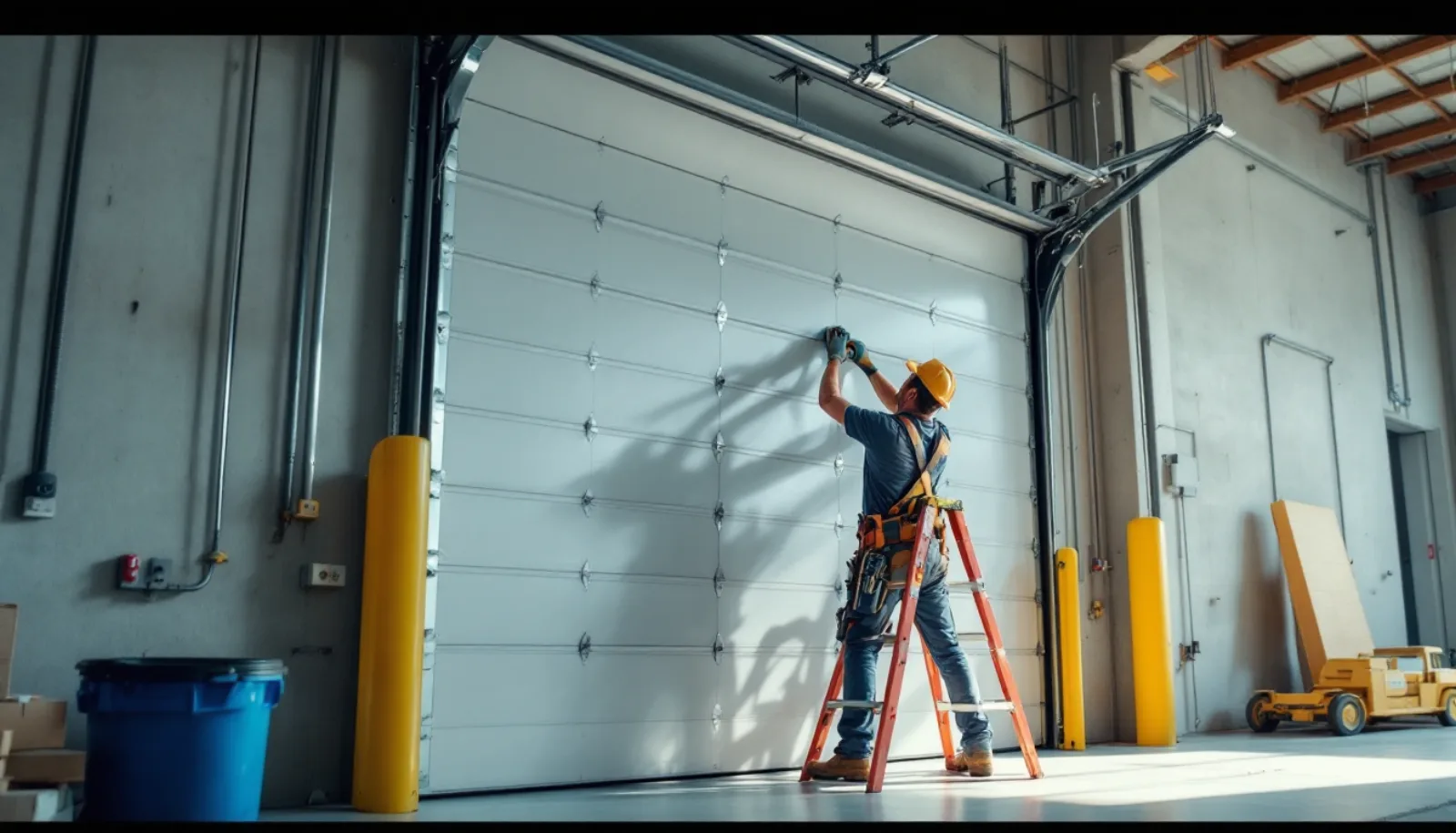
“Florida is one of the top three U.S. states for garage door PE consolidation in 2026, hurricane code drives structural impact-rated door replacement demand, salt-air corrosion compresses hardware life, the 0% state income tax preserves seller proceeds, and population growth continues across all major MSAs. Owners who prep their books and lock down DBPR licensing transitions routinely close at the top of the 4-6x EBITDA band. We’re a buy-side partner, the buyers pay us, no contract required.”
TL;DR, the 90-second brief
- Florida garage door businesses sell for 4-6x EBITDA in 2026. Miami-Dade, Broward, Palm Beach, Orlando, and Tampa residential operators with $500K-$3M EBITDA and 15%+ recurring service revenue trade at 5-6x. Sub-$500K SDE shops trade at 2.5-4x SDE.
- Florida has the strictest hurricane code in the U.S. and it drives garage door replacement demand. The Florida Building Code (FBC) HVHZ (High Velocity Hurricane Zone) requirements in Miami-Dade and Broward, plus statewide impact-rating requirements post-Hurricane Andrew, mandate impact-rated garage doors on most coastal residential. Replacement cycles tighten because compromised doors fail post-storm wind-pressure inspections.
- Florida DBPR garage door specialty licensing tightened in 2024. Florida Department of Business and Professional Regulation requires Certified Specialty Contractor or Registered Specialty Contractor for garage door work, with examination, experience, and financial stability requirements. Some counties (Miami-Dade, Broward, Palm Beach) impose additional local credentialing.
- Florida’s 0% state income tax preserves materially more after-tax proceeds than any high-tax state. On a $3M Florida garage door sale, the seller keeps approximately $260-320K more after-tax than a California seller. Florida is one of the most tax-favorable seller states in the country.
- Of our 76+ active U.S. lower middle market buyers, 16 are bidding on garage door businesses in Florida right now. Florida is one of the top three U.S. states for garage door PE roll-up activity. A1 Garage Door Service (Cortec Group), DH Pace, Precision Door Service franchisee acquirers, Apex Service Partners, and Florida-focused family offices. The buyers pay us, not you. No retainer. No contract required.
Key Takeaways
- Florida garage door businesses with $500K-$3M EBITDA sell for 4-6x EBITDA in 2026, with Miami-Dade, Broward, Orlando, and Tampa residential operators commanding the top of the band.
- Florida DBPR Certified or Registered Specialty Contractor licensing for garage doors is the #1 Florida-specific deal-killer, identify a license successor 12+ months before going to market.
- Florida’s 0% state income tax preserves $260-320K more after-tax proceeds on a typical $3M sale versus a California seller.
- Hurricane impact-rating product approval (Florida Product Approval, FPA, plus Miami-Dade Notice of Acceptance, NOA) is critical buyer-side diligence, ensure documentation is current and complete.
- Use our free business valuation calculator for a 90-second starting-point Florida garage door valuation range.
- Active 2026 Florida garage door buyers include A1 Garage Door Service (Cortec Group), DH Pace, Precision Door Service franchisee acquirers (Monogram / RF / FEP), Apex Service Partners, and 10+ family offices with explicit FL mandates.
The Florida garage door market in 2026
For 2026 WI garage door sale guide at 2.5x-4x SDE / 4x-8x EBITDA with WI DSPS licensing and Milwaukee / Madison demand, named PE buyer pool, see our reference.
For 2026 ID garage door sale guide (200+ PE buyers) at 4-6x EBITDA with Boise MSA growth + ID DOPL framework and named PE buyer pool, see our reference.
Florida’s garage door market is structurally one of the strongest in the United States. Florida has 22M+ residents (U.S. Census Bureau 2024), recorded approximately 110,000-120,000 single-family permits in 2024 per Florida Realtors and the Florida Home Builders Association, and continues to be the second-fastest-growing major state by absolute population gain. The combination of new-construction volume, replacement demand from existing 10M+ housing units, and hurricane-code-driven upgrade activity creates dense compounding demand.
Hurricane code is the structural multiplier in Florida garage door demand. The Florida Building Code (FBC) requires impact-rated garage doors throughout the state’s wind-borne debris regions, with the strictest requirements in the High Velocity Hurricane Zone (HVHZ) covering Miami-Dade and Broward Counties. Garage doors must withstand specific wind-pressure ratings and large-missile impact tests. Doors compromised by storm damage routinely fail post-storm inspection and require full replacement, not just repair. The cycle compounds with every named storm season.
Top Florida metros by garage door deal activity. Miami-Fort Lauderdale-West Palm Beach (6.2M residents, HVHZ, premium installations), Orlando-Kissimmee-Sanford (2.7M, Disney-area new-construction-heavy), Tampa-St. Petersburg-Clearwater (3.3M, Gulf coastal exposure), Jacksonville (1.7M, north-Florida anchor), Cape Coral-Fort Myers (820K, southwest Florida), Naples (385K, premium price points), and Lakeland-Winter Haven (770K, central Florida growth corridor). Each MSA supports its own dense buyer pool.
Recent Florida garage door M&A activity tells the story. A1 Garage Door Service (Cortec Group) maintains active Florida buy-box mandates with multiple disclosed acquisitions across the southeastern U.S. since 2022. Precision Door Service franchisees in Florida are direct acquisition targets for Monogram Capital, RF Investment Partners, and Franchise Equity Partners. Apex Service Partners (Alpine Investors) maintains substantial Florida HVAC platform exposure and has begun cross-selling garage doors. DH Pace has Florida commercial-overhead-door customer relationships.
What this means for your timing. Florida is a seller’s market for garage door businesses with $500K-$3M EBITDA, 15%+ recurring revenue, current FPA/NOA documentation, and clean DBPR standing. Buyers are competitive on price, and the typical Florida deal closes at 5-6x EBITDA when prep is complete. Hurricane-related demand surges (post-storm seasons) create timing windows where buyer competition intensifies.
What garage door businesses are worth in Florida (multiples and ranges)
Florida garage door valuations follow national multiple bands but with state-specific premiums and discounts. The starting point is the national garage door range of 4-6x EBITDA for $500K-$2M EBITDA businesses. A residential South Florida operator with $1M EBITDA, 20% recurring service mix, and current FPA/NOA documentation trades closer to 5.5x. A new-construction installer with single-builder concentration above 35% trades closer to 4-4.5x.
Sub-$500K SDE: 2.5-4x SDE. Owner-operator residential shops, often single-truck or two-truck. Buyer pool: individual SBA buyers, Precision Door franchisees, local consolidators.
$500K-$2M EBITDA: 4-6x EBITDA. Established residential and light commercial operators, 4-12 trucks, dispatch software, named operations manager, 15-25% recurring service mix. Buyer pool: A1 Garage Door, DH Pace, Precision Door franchisee acquirers, family offices.
$2M-$10M EBITDA: 5-7.5x EBITDA. Multi-market platform-quality businesses across South Florida, Central Florida, and Tampa Bay. 12-40 trucks, full dispatch and CRM integration. Florida operators in this tier with current hurricane impact product approvals routinely receive 6-7x EBITDA LOIs.
$10M+ EBITDA: 7-10x EBITDA. Institutional platform businesses. 40+ trucks, multi-state, professional management team independent of seller. Florida businesses at this scale exist primarily in combined South-Florida-plus-Central-Florida footprints.
What moves the multiple within the band. Recurring service revenue percentage. Residential mix percentage. Customer concentration. Owner dependency. Route density. FPA/NOA documentation quality. HVHZ-zone exposure (premium price points). Brand mix (LiftMaster, Clopay, Amarr factory-authorized with hurricane-rated products).
Active PE buyers and consolidators acquiring garage door businesses in Florida
The Florida garage door buyer pool in 2026 is the deepest in the Southeast. Below is the named landscape we work with directly.
A1 Garage Door Service (Cortec Group). The fastest-growing U.S. garage door consolidator. Recapitalized by Cortec Group in December 2022, has closed 10+ disclosed acquisitions including The Garage Doctor, Welborn Garage Door, American Veteran Garage Door Repair, Ideal Garage. Buy-box: $500K-$5M EBITDA, residential-heavy. Active Florida mandate with priority on South Florida and Central Florida MSAs.
DH Pace. Privately held, Olathe Kansas-based, $1B+ revenue. Strong commercial-overhead-door focus with Florida industrial customer relationships across Tampa, Orlando, and South Florida. Buy-box: $1M-$15M EBITDA.
Precision Door Service franchisee acquirers (Neighborly / KKR network). Multiple PE firms rolling up Precision territories: Monogram Capital Partners, RF Investment Partners + Burlington Capital Partners, and Franchise Equity Partners. Florida Precision franchisees in Miami, Orlando, Tampa, Jacksonville, and Naples are targets.
Apex Service Partners (Alpine Investors). 50+ HVAC, plumbing, and electrical brands cross-selling garage doors. Florida is a top-3 Apex market by HVAC platform density. Buy-box: $750K-$5M EBITDA in markets with existing trade-brand density.
Champion Garage Doors and regional consolidators. Multiple regional independent-sponsor and family-office-backed consolidators are building Florida-and-Southeast garage door platforms with explicit hurricane-coastal expertise.
Cross-vertical home-services platforms. Wrench Group, Sila Services, and similar HVAC/plumbing platforms acquiring garage door operators to bolt onto existing service routes.
Family offices and search funders with Florida mandates. We track 10+ family offices and 8+ search funders with explicit Florida garage door buy-boxes in the $300K-$1.5M EBITDA range, with particular interest in HVHZ-zone operators.
Selling a garage door business in Florida? Talk to a buy-side partner who knows the buyers.
We’re a buy-side partner working with 200+ active buyers… the buyers pay us, not you, no contract required. Of those 76+, 16 are actively bidding on garage door businesses in Florida right now, including A1 Garage Door Service (Cortec Group), DH Pace, Precision Door Service franchisee acquirers, Apex Service Partners, family offices, and search funders with explicit Miami, Orlando, Tampa, and Jacksonville mandates.
Book a 15-Min Call| Business size | SBA buyer | Search funder | Family office | LMM PE | Strategic |
|---|---|---|---|---|---|
| Under $250K SDE | Yes | No | No | No | Rare |
| $250K-$750K SDE | Yes | Some | No | No | Add-on |
| $750K-$1.5M SDE | Some | Yes | Some | Add-on | Yes |
| $1.5M-$3M EBITDA | No | Yes | Yes | Yes | Yes |
| $3M-$10M EBITDA | No | Some | Yes | Yes | Yes |
| $10M+ EBITDA | No | No | Yes | Yes | Yes |
Florida-specific garage door licensing and regulatory transfer
Florida garage door contracting is regulated by the Florida Department of Business and Professional Regulation (DBPR), and licensing tightened in 2024 with additional examination and financial-stability requirements. Florida requires either a Certified Specialty Contractor (state-wide) or Registered Specialty Contractor (county/local-only) credential for garage door work. Certified Specialty Contractors must pass a state examination, demonstrate at least 4 years experience, provide financial stability documentation, and maintain workers’ compensation and general liability insurance. Some counties (Miami-Dade, Broward, Palm Beach) impose additional local credentialing requirements.
Why this matters for the sale. If the seller is the qualifying licensee (which is true for the majority of small-to-mid Florida garage door operators), the buyer must produce a replacement licensee who passes the exam and meets experience requirements before the license can transfer. DBPR exam scheduling can back up 4-6 weeks. Deals close with the seller signing a temporary services agreement to act as qualifying licensee for 60-180 days post-close.
Florida Product Approval (FPA) and Miami-Dade Notice of Acceptance (NOA). Florida-installed garage doors must carry Florida Product Approval (FPA) demonstrating wind-pressure rating compliance, and Miami-Dade and Broward installations require NOA (Notice of Acceptance) demonstrating HVHZ-zone testing compliance. These approvals are product-specific (specific door model + opener combination) and tied to manufacturers. Operators must document which specific FPA/NOA-approved products they install. Buyers diligence this carefully because non-compliant installations create significant warranty and replacement liability.
DBPR bonding and complaint history. Florida DBPR maintains license complaint records publicly. Sellers with multiple unresolved consumer complaints or recent disciplinary actions face material discount or buyer walk-away. Resolve all open DBPR matters 12+ months pre-sale. Bond requirements are minimal at the state level but counties and municipalities may require local bonds.
The license-transfer timeline mechanics. Day 0: LOI signed. Day 7-21: buyer identifies qualifying licensee candidate. Day 21-60: candidate sits for DBPR examination. Day 60-90: DBPR processes license modification. Day 90-120: license officially transferred. Most Florida garage door deals build a 60-120 day transition services agreement. If county-level licensing applies (Miami-Dade, Broward, Palm Beach), additional 30-60 days for county transfers.
Common license-transfer pitfalls. Seller is the only DBPR licensee AND plans to fully exit at close. Seller has open DBPR complaints. Buyer’s designated replacement has insufficient documented experience. Inadequate FPA/NOA documentation. County-level credentialing oversights in HVHZ counties. The fix in every case is early identification, 12+ months pre-sale, with a clear transition plan.
Florida tax implications for garage door business sale
Florida’s 0% state income tax is one of the most powerful seller-side advantages in U.S. small-business M&A. Florida has no individual or corporate income tax, no capital gains tax, and no estate tax. Combined with federal long-term capital gains (15-23.8% depending on bracket), a Florida garage door seller’s effective top federal-and-state rate on goodwill gain is approximately 23.8%. Compare to California (37.1%) or New York (34.7%).
The dollar impact on a typical Florida garage door sale. On a $3M Florida garage door sale with $2.4M of the purchase price allocated to goodwill, the Florida seller pays approximately $570K in combined federal long-term capital gains tax. A California seller of the same business pays approximately $890K. The difference is $260-320K of additional after-tax proceeds for the Florida seller, which makes Florida one of the most attractive garage door selling states in the country.
Asset allocation in a Florida garage door deal. Most Florida garage door deals structure as asset sales for buyer-side liability and depreciation reasons. The IRS Form 8594 allocation typically pushes value toward goodwill versus equipment recapture. With no state income tax, allocation pressure is reduced versus high-tax states but still material at the federal level.
Florida sales-and-use tax considerations. Florida sales tax is 6% state plus county discretionary surtax (0.5-1.5% typical), applied to garage door materials. Labor on residential repair is exempt under Florida statute; labor on new-construction installation may be taxable depending on contract structure (lump-sum vs. cost-plus). Pre-sale, ensure all sales-and-use tax filings are current. Florida Department of Revenue can pursue successor liability for unpaid tax.
Florida residency benefits. Florida residency itself is highly valuable for tax purposes, sellers from California, New York, or other high-tax states often relocate to Florida pre-sale to capture the 0% state income tax. Florida residency requires more than 183 days physical presence, primary home (homestead exemption available), driver’s license, voter registration, and absence of meaningful ties to prior state. Cosmetic relocations get unwound on audit. If considering relocation for tax purposes, work with a tax attorney 24+ months pre-sale.
Florida estate and homestead protections. Florida’s homestead exemption protects primary residence equity from creditors (up to a half-acre urban or 160 acres rural). Combined with no estate tax, Florida residency creates significant generational wealth-transfer advantages for garage door sellers planning multi-decade family wealth strategies.
The 5 buyer archetypes for Florida garage door sales
The Florida garage door buyer pool sorts into five distinct archetypes. Knowing which archetype fits your business is the highest-leverage positioning decision before going to market.
Archetype 1: Vertical PE consolidators. A1 Garage Door Service (Cortec Group), DH Pace, Precision Door Service franchisee acquirers. Buy-box: $750K-$10M EBITDA, residential-heavy. Pay 5-7x EBITDA in 2026 for clean Florida assets, occasionally 7-9x for premier HVHZ-capable platforms.
Archetype 2: Cross-vertical home-services platforms. Apex Service Partners, Wrench Group, Sila Services acquiring garage door operators to cross-sell with HVAC/plumbing/electrical. Florida is a core market for these platforms.
Archetype 3: Family offices. Single-family or multi-family offices with home services mandates. Pay 4-5.5x EBITDA. Often the best cultural fit for sellers wanting continuity.
Archetype 4: Strategic acquirers (commercial-overhead-door and hurricane-specialty). DH Pace, Cornell Iron Works, Overhead Door Corporation regional dealers, plus hurricane-specialty regional consolidators acquiring for HVHZ-zone capability.
Archetype 5: Individual SBA buyers. Owner-operators or first-time buyers using SBA 7(a) financing. Buy-box: under $1.5M total enterprise value. Pay 2.5-4x SDE.
What drives premium multiples in Florida garage door businesses
Florida garage door operators land at the top of the 4-6x EBITDA multiple band when they show buyers a specific set of operational characteristics. Operators hitting 5+ of these characteristics routinely receive 5.5-6.5x EBITDA LOIs.
Driver 1: Recurring service revenue above 15%. Florida residential annual maintenance memberships run $175-275 per home per year, salt-air corrosion service intervals are tighter than inland markets. Each 5 percentage points above 15% adds approximately 0.25-0.5x EBITDA.
Driver 2: Residential revenue mix above 70%. PE consolidators almost universally prefer residential.
Driver 3: Route density in a single MSA. An operator with 80% of revenue inside a 30-mile radius of a central South Florida, Orlando, or Tampa Bay dispatch hub trades better than scattered statewide coverage.
Driver 4: Owner independence. An operator with a true GM running day-to-day operations independent of the seller adds 0.5-1.0x EBITDA.
Driver 5: Technician retention and IDEA certification. An operator with 80%+ technician retention over 24 months and IDEA-certified leads signals operational discipline.
Driver 6: Clean DBPR standing. No open complaints. Bond at correct level. License classifications matched to actual work. Florida operators who can hand a buyer a clean DBPR printout in week one of diligence accelerate the deal materially.
Driver 7: HVHZ-zone capability and current FPA/NOA documentation. Operators in Miami-Dade and Broward with documented HVHZ-zone installation capability, current Florida Product Approvals, current Miami-Dade Notice of Acceptance documentation, and OEM relationships with hurricane-rated product manufacturers command 0.25-0.5x EBITDA premium.
Common deal-killers in Florida garage door sales
Most Florida garage door deals that fall apart fall apart for one of seven specific reasons. Knowing the failure modes lets you fix them 12-18 months pre-sale.
Deal-killer 1: DBPR licensee transition with no plan. Seller is the only DBPR licensee, plans to fully retire at close, and the buyer hasn’t identified a replacement. The fix: identify a transferable licensee 12+ months pre-sale, or build a 90-180 day transition services agreement.
Deal-killer 2: Builder concentration above 30%. Florida new-construction installers with single national-builder GC concentration above 35% face the largest discounts. The fix: diversify before going to market.
Deal-killer 3: Inadequate FPA/NOA documentation. Florida-installed garage doors require Florida Product Approval and (in HVHZ counties) Miami-Dade Notice of Acceptance. Operators without complete product-approval documentation face contingent liability buyers price aggressively. The fix: audit FPA/NOA documentation by product line 12+ months pre-sale.
Deal-killer 4: Aggressive add-backs that don’t survive bank scrutiny. The fix: keep add-backs disciplined and well-documented.
Deal-killer 5: Open DBPR complaints or disciplinary actions. DBPR complaints are public record. Pull and resolve all open items 12+ months pre-sale.
Deal-killer 6: Salt-corrosion warranty exposure. Coastal Florida installations carry warranty tail on hardware corrosion. Track warranty claims by install location, set reserve at appropriate level.
Deal-killer 7: Working capital and inventory mismatch. Florida operators carrying obsolete or non-impact-rated inventory in 2026 face working-capital adjustment pressure. Rotate inventory toward current-spec hurricane-rated products.
The Florida garage door sale process and timeline
A Florida garage door sale typically runs 9-13 months from prep-complete to close, slightly longer than national average due to DBPR exam scheduling and FPA/NOA documentation diligence depth. The breakdown below is what we see in actual Florida garage door deals at the $500K-$5M EBITDA tier in 2025-2026.
Months -24 to -12: pre-sale preparation. Clean monthly closes. Track recurring service revenue, customer concentration, technician retention. Identify replacement DBPR licensee. Audit FPA/NOA product approval documentation. Resolve any open DBPR complaints. Build SOPs for owner-replaceable functions.
Months -12 to -6: positioning and buyer identification. Build CIM emphasizing Florida-specific advantages (hurricane code-driven replacement demand, 0% state tax efficiency, population growth, HVHZ capability if applicable).
Months -6 to -3: buyer outreach and management meetings. Targeted outreach to 8-15 buyers with explicit Florida garage door mandates.
Months -3 to 0: LOI, QoE, diligence. Best-and-final LOIs collected. Quality-of-earnings engagement. Operational diligence including DBPR history pull, FPA/NOA audit, warranty reserve review.
Close: day 0 to day 30. Funds wire, license transfer effective (or transition services agreement begins).
Post-close transition: 90-180 days. Seller typically remains as nominal DBPR licensee through license modification. Customer transition support, key employee retention.
Sell Your Garage Door Business in Other States: Sibling Guides
Sibling state guides for selling a garage door business. Each guide below covers state-specific licensing, multiple ranges, tax considerations, and named PE buyers active in that geography. If you operate in multiple states, the multi-state premium typically adds 0.5-1.5x to EBITDA multiple at exit (buyers value contiguous coverage).
State-by-state guides: Sell Your Garage Door Business in Texas · Sell Your Garage Door Business in California · Sell Your Garage Door Business in New York · Sell Your Garage Door Business in Pennsylvania · Sell Your Garage Door Business in Illinois · Sell Your Garage Door Business in Ohio · Sell Your Garage Door Business in Georgia · Sell Your Garage Door Business in North Carolina
For valuation context that applies regardless of state: See our garage door business valuation guide for nationwide multiple ranges and PE buyer pool. Run our free 90-second valuation calculator for a starting-point estimate. Or browse the full sell-your-business hub for all verticals and states.
How CT Acquisitions works for Florida garage door sellers
CT Acquisitions is a buy-side partner, not a sell-side broker. We work directly with 76+ active U.S. lower middle market buyers, including 16 with explicit Florida garage door mandates currently open. The buyers pay us when a deal closes, you pay nothing. No retainer. No exclusivity. No 12-month contract. No tail fee.
How that’s structurally different from a sell-side broker. A sell-side broker charges you 8-12% of deal value, runs a 9-12 month auction process, and locks you into 12-month exclusivity. We don’t run an auction, we already know which of our 200+ buyers fits your Florida garage door business.
Why buyers pay us. Our 200+ buyers maintain active mandates and need consistent deal flow. We deliver pre-qualified, well-prepared sellers in their target verticals at a fraction of their internal cost.
What a typical engagement looks like. Step 1: 15-minute discovery call. Step 2: preliminary valuation range and prep. Step 3: targeted introductions to 3-6 buyers. Step 4: management meetings, LOIs, exclusive due diligence. Step 5: close. Total elapsed time: 90-150 days.
What we don’t do. We don’t prep your books, run your QoE, or negotiate the purchase agreement. We don’t lock you up with exclusivity. We don’t take fees from you.
Curious what your Florida garage door business would sell for?
A 15-minute confidential call gives you a real valuation range and tells you which buyers would compete for your business. No cost, no obligation, no pressure to sell.
Sell Your Garage Doors Business in Florida: 2026 Outlook and Key Takeaways
Selling a garage door business in Florida in 2026 is one of the most favorable garage door exits in the country. Hurricane code drives structural impact-rated door replacement demand. Salt-air corrosion compresses hardware life. The 0% state income tax preserves 10-15% more after-tax proceeds than high-tax-state alternatives. The DBPR licensing framework is well-understood by sophisticated buyers. The active buyer pool is 16-deep among our 76+ relationships. Owners who prep their books, identify a replacement DBPR licensee, document FPA/NOA product approvals, lock down recurring service mix, and clean their DBPR record routinely close at 5-6x EBITDA. Use the free business valuation calculator. We’re a buy-side partner, the buyers pay us, not you, no contract required.

About the Author
Christoph Totter is the founder of CT Acquisitions, a buy-side partner headquartered in Sheridan, Wyoming. We work directly with 200+ buyers, search funders, family offices, lower middle-market PE, and strategic consolidators, including direct mandates with the largest consolidators that other intermediaries cannot access. The buyers pay us when a deal closes, not the seller. No retainer, no exclusivity, no contract until close. Connect on LinkedIn · Get in touch
International Wealth / RIA M&A Coverage
CT Acquisitions advises owners selling wealth / ria businesses across four jurisdictions outside the US. Each page is jurisdiction-specific: PE buyer list, multiples bands by EBITDA tier, regulator-transfer mechanics, and the local tax-arbitrage window.
Sell Your Garage Doors Business in Florida: Frequently Asked Questions
How much is my Florida garage door business worth?
Florida garage door businesses typically sell for 4-6x EBITDA in 2026. Miami-Dade, Broward, Orlando, and Tampa residential operators with $500K-$3M EBITDA, 15%+ recurring service revenue, current FPA/NOA documentation, and a transferable DBPR license trade at 5-6x. Sub-$500K SDE shops trade at 2.5-4x SDE. Use our free business valuation calculator.
How do I transfer my Florida DBPR garage door license to a buyer?
The Florida Department of Business and Professional Regulation requires the buyer to designate a qualifying licensee (Certified Specialty Contractor or Registered Specialty Contractor for garage doors) who has passed the DBPR examination and meets experience requirements. If you’re the qualifying licensee, the buyer must produce a replacement before transfer. Typical timeline 60-120 days. Counties (Miami-Dade, Broward, Palm Beach) may require additional local credentialing.
Which PE firms are buying garage door businesses in Florida right now?
A1 Garage Door Service (Cortec Group-backed), DH Pace, Precision Door Service franchisee acquirers (Monogram Capital Partners, RF Investment Partners + Burlington Capital Partners, Franchise Equity Partners), and Apex Service Partners (Alpine Investors-backed) are all actively acquiring Florida garage door operators. We work with 16 of these and other Florida-mandate buyers directly.
How long does it take to sell a garage door business in Florida?
Typically 9-13 months from prep-complete to close. Pre-sale preparation should ideally start 18-24 months earlier. The Florida-specific bottleneck is DBPR licensee transition (60-120 days post-LOI) and FPA/NOA product-approval audit.
What are the Florida tax implications of selling my garage door business?
Florida has no state income tax, no capital gains tax, and no estate tax. Combined with federal long-term capital gains (15-23.8%), the effective top combined rate is approximately 23.8%. On a $3M Florida garage door sale, this preserves $260-320K more after-tax proceeds than a California sale of the same business.
Do I need DBPR licensing to sell my garage door business in Florida?
Yes, the contracting entity must hold an active DBPR garage door specialty credential (Certified Specialty Contractor or Registered Specialty Contractor) and a qualifying licensee must be designated. Open DBPR complaints transfer with the entity. Resolve all open complaints 12+ months pre-sale.
What multiple should I expect for a Miami-Dade garage door business?
Miami-Dade and Broward (HVHZ counties) residential garage door operators with $500K-$3M EBITDA, current Notice of Acceptance documentation, and clean DBPR standing trade at 5-6.5x EBITDA in 2026. South Florida is one of the strongest garage door selling markets in the U.S. due to hurricane-code-driven replacement demand.
How does Florida hurricane code affect my garage door business value?
Florida Building Code requires impact-rated garage doors throughout wind-borne debris regions, with the strictest requirements in HVHZ counties (Miami-Dade, Broward). Operators with documented Florida Product Approval (FPA) and Miami-Dade Notice of Acceptance (NOA) for installed products command 0.25-0.5x EBITDA premium. Hurricane-driven replacement demand creates structural revenue.
What is recurring service revenue and why does it matter in Florida?
Recurring service revenue includes annual maintenance memberships ($175-275 per home per year on Florida coastal markets), multi-year commercial service contracts, and warranty extensions. Salt-air corrosion service intervals are tighter than inland markets, supporting premium membership pricing. Each 5 percentage points above 15% adds approximately 0.25-0.5x EBITDA.
Should I sell my Florida garage door business through SBA or PE financing?
Depends on size. Sub-$1M EBITDA businesses typically sell to SBA-financed individuals (2.5-4x SDE, 90-180 day close). $1M+ EBITDA businesses sell to vertical PE platforms or family offices (5-7x EBITDA, 75-120 day close).
How does salt-air corrosion affect my Florida garage door business value?
Coastal-Florida installations within 5-10 miles of the Atlantic or Gulf suffer accelerated galvanic corrosion of springs, hinges, brackets, and uncoated steel doors. This creates higher recurring service volumes (positive for valuation) but also warranty tail exposure (potential discount). Operators tracking warranty claims by install location command premium multiples.
Can I retain the real estate when I sell my Florida garage door business?
Yes, many Florida garage door sellers retain the real estate (warehouse, showroom, truck yard) and lease it to the buyer at fair market rent. With Florida’s 0% state income tax, ongoing rental income is taxed only at federal level. Florida commercial real estate has appreciated substantially in growth-corridor MSAs.
How is CT Acquisitions different from a sell-side broker or M&A advisor?
We’re a buy-side partner, not a sell-side broker. Sell-side brokers represent you and charge 8-12% of the deal (often $200K-$500K+) plus monthly retainers, run a 9-12 month auction process, and require 12-month exclusivity. We work directly with 200+ buyers, PE platforms, family offices, strategics, and individual buyers, who pay us when a deal closes. You pay nothing. No retainer, no exclusivity, no contract until a buyer is at the closing table.
Sources & References
All claims and figures in this analysis are sourced from the publicly available references below.
- Florida Department of Business and Professional Regulation (DBPR), Construction Industry Licensing, Florida DBPR regulates garage door specialty contracting through Certified or Registered Specialty Contractor credentials with examination and experience requirements.
- Florida Department of Revenue-Sales and Use Tax, Florida sales tax is 6% state plus county discretionary surtax applied to garage door materials; residential repair labor is exempt.
- Florida Building Commission-Florida Product Approval, Florida Building Code requires Florida Product Approval (FPA) for garage doors installed in wind-borne debris regions, with additional Miami-Dade Notice of Acceptance (NOA) for HVHZ installations.
- Miami-Dade County-Notice of Acceptance Search, Miami-Dade County maintains the Notice of Acceptance system requiring HVHZ-zone product testing and approval for garage doors.
- U.S. Census Bureau, 2024 Population Estimates, Florida has 22M+ residents and remains one of the fastest-growing major U.S. states by absolute population gain.
- A1 Garage Door Service-Acquisitions, A1 Garage Door Service (Cortec Group-backed) has closed 10+ U.S. garage door acquisitions since 2022.
- Cortec Group-A1 Garage Door Recapitalization, Cortec Group recapitalized A1 Garage Door Service in December 2022 to support national consolidation.
- DH Pace Company, DH Pace is a $1B+ revenue privately held garage door and commercial door services company.
- Florida DBPR, Construction Industry Licensing Board
- Florida Department of Revenue
- Florida Census QuickFacts
Related Guide: How to Sell a Garage Door Business, Complete national playbook for garage door owners preparing to exit.
Related Guide: How to Sell a Garage Door Business in Texas, Texas-specific licensing, no-tax-state premium, and active buyer pool.
Related Guide: What’s My Business Worth in 2026?, EBITDA multiples, premium drivers, and free valuation calculator.
Related Guide: Private Equity in Home Services: 2026 Consolidator Landscape, Active PE platforms, deal volume, and what they pay.
Related Guide: How to Attract Private Equity to Buy Your Business, Operational signals PE buyers underwrite and how to position.
Want a Specific Read on Your Business?
15 minutes, confidential, no contract, no cost. You leave with a read on your local buyer market and a likely valuation range.