Auto Body Shop Valuation: Free Body Shop Valuation Calculator. What’s Your Body Shop Worth in 2026?
Body shop valuation in 2026: quality multi-shop collision operators sell for roughly 3.5x to 6.0x EBITDA and platform-caliber groups for 7.0x to 10.0x or more, per Matthews (September 2026); the owned building is priced separately.
By Christoph Totter, Founder of CT Acquisitions · Last reviewed: November 2026

Thinking about selling your collision repair shop?
Skip the formulas. A 15-minute confidential call gives you a real valuation range and tells you which buyers would compete for your shop: a national consolidator such as Caliber, Gerber or Crash Champions, or a PE-backed regional platform. No cost, no obligation.
Free Body Shop Valuation Calculator
Enter your revenue, EBITDA or SDE, and recurring revenue mix. The calculator applies the multiple ranges in the table below and returns a starting range in under a minute. It is a screening estimate, not a Quality of Earnings report.
How CT Acquisitions Works
- How we are paid. We work for owners on the sell side. Our fee is success only: nothing upfront, and you pay nothing unless the business sells.
- Confidential sale. Your shop is never publicly listed, and buyers see its name only after signing an NDA.
- 500+ buyers. Our network includes national collision consolidators, PE-backed regional platforms and family offices, so you can compare a sale, a recapitalization or a later exit.
Key takeaways
- Quality multi-shop collision operators trade at roughly 3.5x to 6.0x EBITDA and platform-caliber businesses at 7.0x to 10.0x or more (Matthews Collision Repair Net Lease Report H1 2026, September 16, 2026).
- Quality Collision Group, a PE-backed buyer, says the shops that draw premium offers of 4x to 6x EBITDA have $1 million or more of EBITDA and 15% to 20% EBITDA margins (Quality Collision Group, May 13, 2025).
- The one fully disclosed platform price: Boyd Group paid about $1.3 billion for Joe Hudson’s 258 shops, 13.3x adjusted EBITDA or about 9.3x after synergies (Boyd Group release, October 29, 2025).
- At a constant 7.0x multiple, a 10% revenue decline cut the price in Focus Advisors’ example by about 19%, so a weak trailing 12 months costs more than half a turn of multiple (Focus Advisors Year in Review 2025, February 2026).
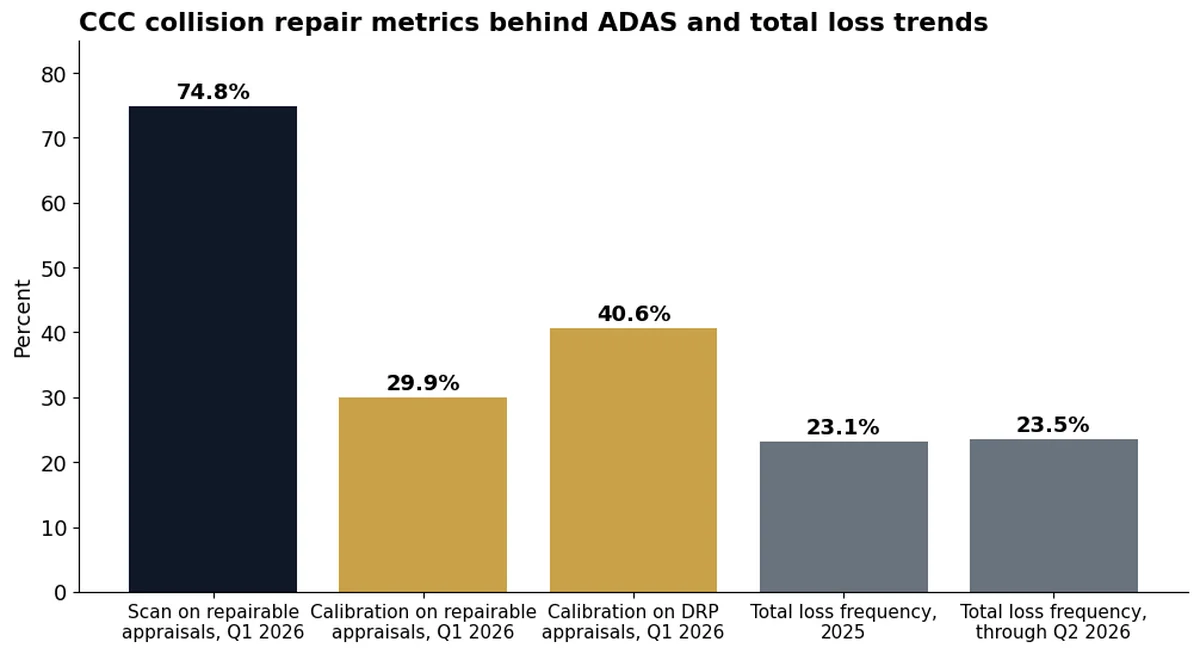
- Calibrations appeared on 29.9% of repairable appraisals in Q1 2026 and 40.6% of DRP appraisals, per CCC data reported by Repairer Driven News (October 19, 2026), which is why buyers price in-house ADAS capability.
What is a body shop worth in 2026?
A body shop is worth a multiple of its normalized earnings plus, if you own it, the building. Single-location shops are usually priced at 3.0x to 5.5x SDE or EBITDA (Auxo Capital Advisors estimate), strong shops with $1 million or more of EBITDA at 4x to 6x (Quality Collision Group), and platform-caliber groups at 7.0x to 10.0x or more (Matthews, September 2026).
No government or lower-middle-market data provider publishes single-shop collision multiples on their own, according to Axia Growth (October 2026). Every single-shop range below is therefore an advisor or buyer estimate, and the table labels each one with its source and date.
| Shop profile | Multiple | Earnings basis | Source and date |
|---|---|---|---|
| Single-location body or collision shop | 3.0x to 5.5x | SDE or EBITDA | Auxo Capital Advisors, July 2026 (advisor planning range) |
| Shop with $1M+ EBITDA, 15% to 20% margins, OEM certifications | 4x to 6x | EBITDA | Quality Collision Group, May 2025 (buyer statement) |
| Quality multi-shop operator (MSO) | 3.5x to 6.0x | EBITDA | Matthews, September 16, 2026 |
| Multi-location collision business | 5.0x to 8.0x | EBITDA | Auxo Capital Advisors, July 2026 (advisor planning range) |
| Platform-caliber group with strong insurer relationships and OEM certifications | 7.0x to 10.0x or more | EBITDA | Matthews, September 16, 2026 |
| Joe Hudson’s Collision Center (258 shops, $722 million sales) | 13.3x; about 9.3x after synergies | Adjusted EBITDA, 12 months to June 30, 2025 | Boyd Group, October 29, 2025 |
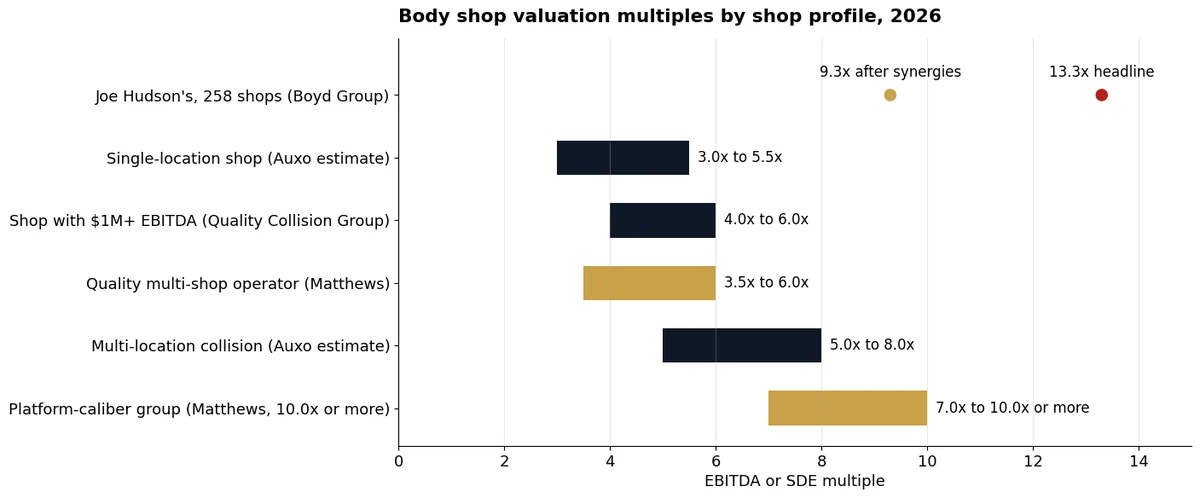
Two readings matter for a seller. The Matthews MSO band (3.5x to 6.0x) and the Quality Collision Group band (4x to 6x) overlap almost exactly, so a well-run shop with $1 million of EBITDA should test offers against 6x, not 10x. And the Joe Hudson’s headline of 13.3x was paid for 258 shops and $722 million of sales: our arithmetic puts that at about $5.0 million per location and about 1.8x sales, a platform price a single shop does not get.
How do buyers calculate a body shop valuation?
Buyers rebuild earnings first and pick the multiple second. They normalize owner pay, rent and one-time costs to get SDE or adjusted EBITDA, split revenue and gross profit by insurer, check DRP scorecards and OEM certifications, then apply a multiple from the bands above. Auxo Capital Advisors shows a 6.0x headline on EBITDA that falls from $1.5M to $1.3M moving value from $9.0M to $7.8M.
- Pick the earnings measure. Use SDE (owner pay added back) when the owner works the shop as estimator or painter; use adjusted EBITDA once a general manager runs production. Our SDE versus EBITDA explainer shows the difference line by line.
- Normalize. Replace owner pay with the market cost of the role, remove personal expenses and one-time items, and reset rent paid to an owner-affiliated LLC to market rent (Auxo flags related-party rent as a standard adjustment).
- Split revenue by payer. Pull 12 to 36 months of revenue and gross profit for each DRP carrier (State Farm, Progressive, GEICO, Allstate, USAA and others), customer pay, dealer and fleet. Quality Collision Group names “100% DRP” as a red flag.
- Check the scorecards. Buyers request each carrier’s scorecard: cycle time, customer satisfaction index (CSI), severity and supplements per repair order.
- Audit certifications and ADAS. List each OEM certification with its renewal date (I-CAR Gold Class, Honda ProFirst, Tesla, BMW, Mercedes-Benz) and the share of calibrations done in-house versus sublet.
- Separate the real estate. Charge the business a market rent and value the building on rent and cap rate, not on the EBITDA multiple.
- Apply the multiple. Start from the band that matches size and earnings basis, then adjust for carrier concentration, technician tenure and the management bench.
Which value drivers move a body shop’s multiple?
Five drivers move a collision shop’s multiple: DRP relationships spread across several insurers, OEM certifications that bring referral work, in-house ADAS calibration, a stable technician roster and owned or well-leased real estate. Quality Collision Group lists diversified revenue, OEM certifications and low staff turnover as the traits behind its 4x to 6x premium offers.
| Driver | What the buyer checks | What raises value | What lowers value | Source |
|---|---|---|---|---|
| DRP relationships | Revenue and gross profit by carrier; scorecards | Several carriers, none dominant; top-tier scorecards | One insurer or “100% DRP”; carrier tied to the owner personally | Quality Collision Group; Auxo |
| OEM certifications | Programs held, renewal dates, trained technicians | Tesla, Mercedes-Benz, Audi, BMW, Rivian named as premium | Heavy dependence on one manufacturer; Tesla-generated revenue increasingly discounted | Quality Collision Group; Focus Advisors 2026 |
| ADAS calibration | In-house versus sublet share, equipment, documentation | In-house capability at 29.9% calibration penetration | Sublet dependence adds cycle time | CCC via Repairer Driven News; Auxo |
| Technicians | Headcount, tenure, pay plan | Low turnover | Empty bays, hiring plans not yet filled | Quality Collision Group; BLS |
| Real estate | Owned or leased, lease term, rent versus market | Market lease or a building the buyer can lease on 20-year terms | Short remaining lease; above-market related-party rent | Matthews; Auxo |
| Paint booth compliance | 40 CFR 63.11173 records | 98% overspray capture filters, HVLP guns, current painter training | Lapsed training (valid 5 years) or missing records | 40 CFR 63.11173 |
How do DRP relationships affect a body shop valuation?
A direct repair program (DRP) is an insurer’s referral agreement with a shop, and it is the closest thing a collision business has to recurring revenue. Buyers value DRP volume only if it survives the owner: Auxo notes that reliance on one insurer or referral source lowers the multiple, especially when the relationship depends on the seller personally. Focus Advisors reported in August 2026 that some carriers have been dropping shops from DRPs, which makes a spread across several insurers worth more than a large share of one.
A screening rule we use, not a published standard: if one carrier supplies more than 50 percent of revenue, expect buyers to price the risk of losing it before they price the volume. The fix takes 12 to 24 months, because each carrier’s onboarding and scorecard ramp runs on the insurer’s calendar, not yours.
Do OEM certifications and Tesla work raise the price?
Certifications raise the price when they bring routed work that a buyer keeps after closing. Quality Collision Group names Tesla, Mercedes-Benz, Audi, BMW and Rivian certifications among the traits of premium sellers. Focus Advisors’ 2026 Mid-Year Review adds a caution: buyers increasingly discount Tesla-generated revenue, as Tesla’s own collision footprint grew from 60 locations in January 2026 to 67 in July 2026.
How does ADAS calibration change the value?
CCC data reported by Repairer Driven News shows 74.8% of repairable appraisals included a scan and 29.9% a calibration in Q1 2026, with calibration penetration at 40.6% on DRP appraisals. A shop that sublets calibrations hands that margin and cycle time to someone else; Auxo notes in-house work needs equipment, training and enough volume to use it.
| CCC metric | Value | Period | Source |
|---|---|---|---|
| Repairable appraisals with a scan | 74.8% | Q1 2026 | CCC via Repairer Driven News, Oct 19, 2026 |
| Repairable appraisals with a calibration | 29.9% | Q1 2026 | CCC via Repairer Driven News |
| DRP appraisals with a calibration | 40.6% | Q1 2026 | CCC via Repairer Driven News |
| Total loss frequency, all claims | 23.1% | 2025 | CCC via Matthews, Sept 2026 |
| Total loss frequency, all claims | 23.5% | Through Q2 2026 | CCC via Repairer Driven News |
| Average total cost of repair | $4,821 (0.6% above H1 2025) | H1 2026 | CCC via Repairer Driven News |
| Change in repairable claims | Down 9.7% | 2025 | CCC via Matthews |

Why does the technician roster matter?
The roster is the asset a buyer cannot replace quickly. The Bureau of Labor Statistics counts 185,800 automotive body and glass repairer jobs in 2025 at a median pay of $52,530, with about 13,900 openings a year projected through 2035. Buyers underwrite labor at the current run rate, so empty bays count against the price.
Does paint booth compliance show up in diligence?
Yes. Auto body refinishing falls under 40 CFR 63.11173, the EPA rule known in the trade as 6H: spray booth filters must capture at least 98 percent of overspray, guns must be HVLP or an approved equivalent, and painter training is valid for no more than five years. Missing training records are cheap to fix before a sale and awkward to explain during one.
Who buys body shops, and what have they paid?
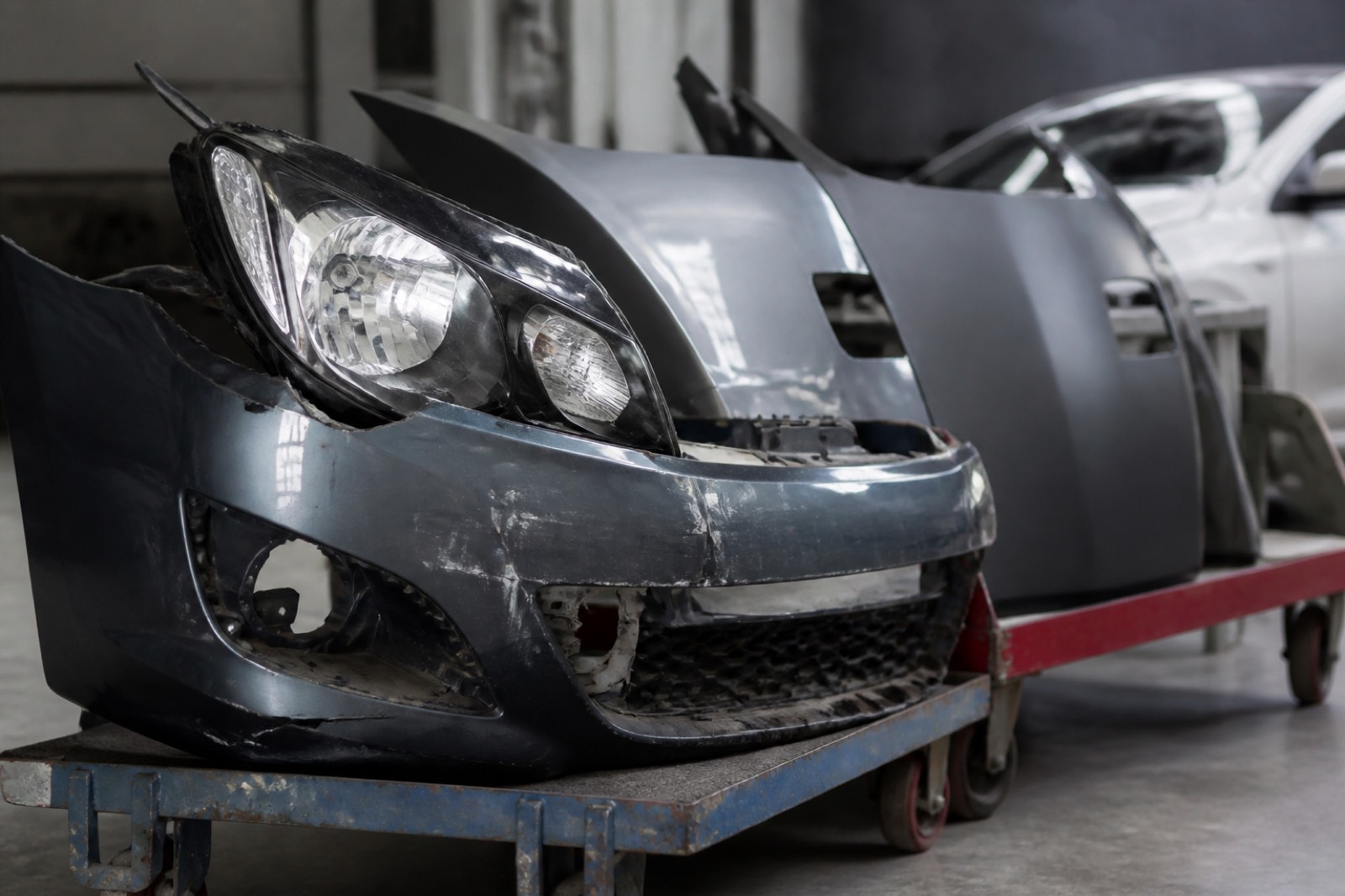
The buyers are four national consolidators (Caliber, Gerber, Crash Champions and Classic Collision), about 14 PE-backed regional platforms and a group of new entrants buying single shops. Matthews counts roughly 40,000 collision shops in a $48 billion US market, and Focus Advisors reports buyers now pursue operators with as few as 1 to 3 locations.
| Buyer | Owner or listing | Size (as of) | Source |
|---|---|---|---|
| Caliber Collision | Hellman & Friedman majority; Leonard Green & Partners and OMERS minority; confidential draft S-1 filed July 28, 2025, not priced | More than 1,800 centers (Sept 2026) | Matthews; CollisionWeek |
| Gerber Collision & Glass | Boyd Group Services, listed TSX: BYD and NYSE: BGSI | 1,321 collision locations (June 30, 2026) | Boyd Q2 2026 results |
| Crash Champions | Clearlake Capital (since July 2022) | About 650 centers, 38 states (Sept 2026) | PR Newswire, July 14, 2022; Matthews |
| Classic Collision | TPG (agreed April 2024, from New Mountain Capital) | More than 350 locations (Sept 2026) | Classic Collision release; Matthews |
| Quality Collision Group | Susquehanna Private Capital (since October 2020) | 86 locations (year-end 2025) | Business Wire, Oct 6, 2020; Focus Advisors |
| Kaizen Collision | Kinderhook Industries (March 2024) | 45 stores (H1 2026) | Kinderhook release; Focus Advisors |
| CARSTAR, ABRA, Fix Auto | Driven Brands (franchisor, grows by conversion, not purchase) | 1,077 collision locations (Dec 27, 2025) | Driven Brands FY2025 Form 10-K |
Pace matters as much as price. Consolidators, regional platforms and new entrants added only 81 locations in H1 2026 excluding Joe Hudson’s, against more than 300 in H1 2024, per the Focus Advisors 2026 Mid-Year Review. Our collision repair M&A and private equity tracker lists every active platform with its sponsor and 2026 deals.
Worked example: valuing a $1.5M EBITDA collision shop
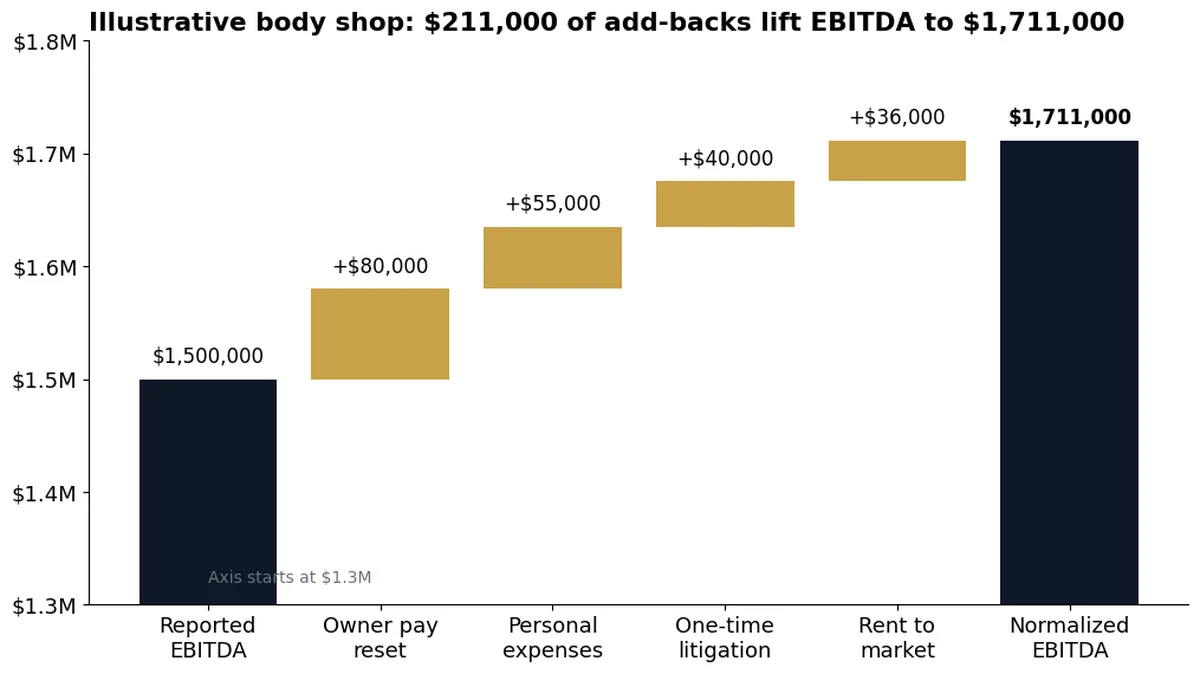
This illustrative Dallas-Fort Worth shop reports $1.5M of EBITDA on $8.4M of revenue. Four add-backs worth $211,000 lift normalized EBITDA to $1,711,000, and the Quality Collision Group band of 4x to 6x puts the operating business at $6.84M to $10.27M, before the owned building is priced on its own.
Shop profile (illustrative): one location, 11,200 square feet, owner-occupied building; $8.4M revenue; 11 technicians with a 5.5-year median tenure; I-CAR Gold Class, Honda ProFirst and Hyundai Recognized; in-house ADAS bay. Carrier mix: 28% State Farm, 19% Progressive, 14% GEICO, 8% Allstate, 5% USAA, 6% Farmers, 15% retail, 5% dealer. Top three carriers: 61%.
| Normalization line | Amount | Why |
|---|---|---|
| Reported EBITDA | $1,500,000 | From the tax return and P&L |
| Owner pay above replacement cost | +$80,000 | Owner paid $245,000; a replacement GM and estimator costs $165,000 |
| Personal expenses | +$55,000 | Not needed by a buyer |
| One-time litigation settlement | +$40,000 | Will not recur |
| Rent reset to market | +$36,000 | Owner LLC charged $14,000 a month against an $11,000 market rent |
| Normalized EBITDA | $1,711,000 | $211,000 of add-backs |
| Case | Multiple | Operating business value | Basis |
|---|---|---|---|
| Low | 4.0x | $6,844,000 | Bottom of Quality Collision Group’s 4x to 6x band |
| Mid | 5.0x | $8,555,000 | Midpoint; also inside Matthews’ 3.5x to 6.0x MSO band |
| High | 6.0x | $10,266,000 | Top of both bands |
The add-backs alone are worth $1,055,000 at the 5.0x mid case ($211,000 times 5.0), which is why the normalization schedule deserves as much attention as the multiple. A State Farm share of 28% and a top-three share of 61% keep this illustrative shop out of the platform band; spreading volume across a fourth and fifth carrier is the change most likely to move it toward 6.0x.
How much does a weak year cost?
Focus Advisors’ February 2026 review holds the multiple at 7.0x and cuts revenue 10%: EBITDA falls from about $4.5 million to about $3.65 million because only part of the cost base flexes, and the price falls about 19%, from about $31.5 million to about $25.6 million. Timing the sale after a strong trailing 12 months matters more than chasing half a turn of multiple.

How is the body shop’s building valued?
The building is valued on market rent divided by a cap rate, separate from the EBITDA multiple. Matthews reports a collision property in a major Texas metro under contract at a 5.20% cap rate in 2026 and says buildings leased to indebted or unrated guarantors trade meaningfully wider, so the tenant who signs your lease moves the price.
| Illustrative case | Annual market rent | Cap rate | Building value |
|---|---|---|---|
| Strong guarantor (Matthews 2026 Texas data point) | $132,000 | 5.20% | $2,538,000 |
| Weaker guarantor (assumption, not a quote) | $132,000 | 7.00% | $1,886,000 |
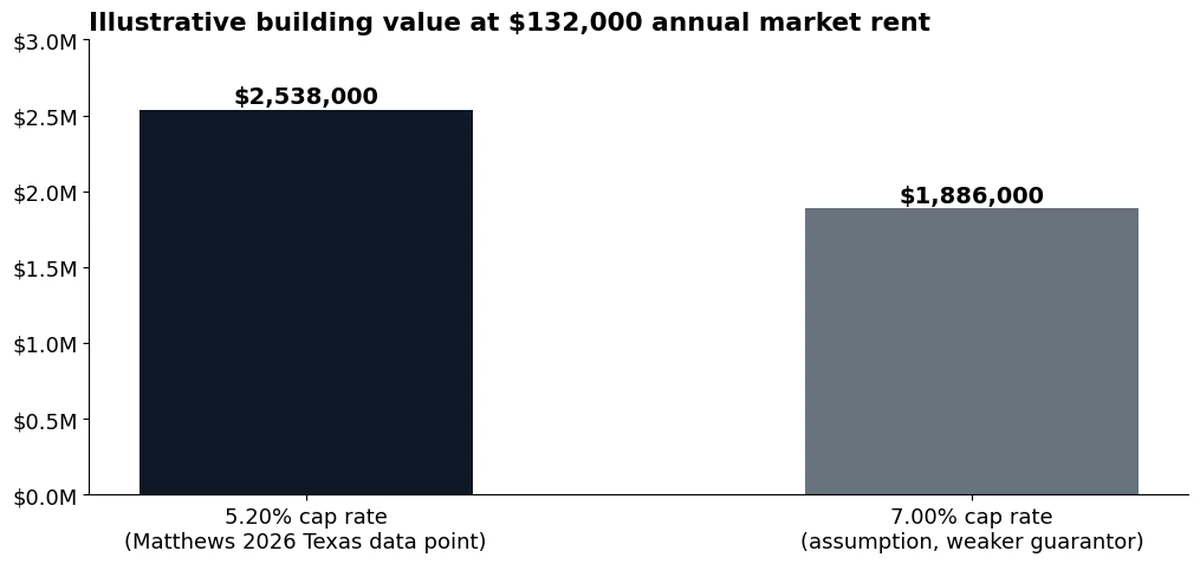
For the worked example, that puts total proceeds at the 5.0x mid case at about $11,093,000 with a 5.20% sale or $10,441,000 at 7.00%, before taxes and fees. A public REIT bought a VIVE Collision portfolio in 2025 on roughly 20-year triple-net leases (Matthews), so set rent, term and escalators in the same negotiation as the operating sale.
Which sale path fits your body shop?
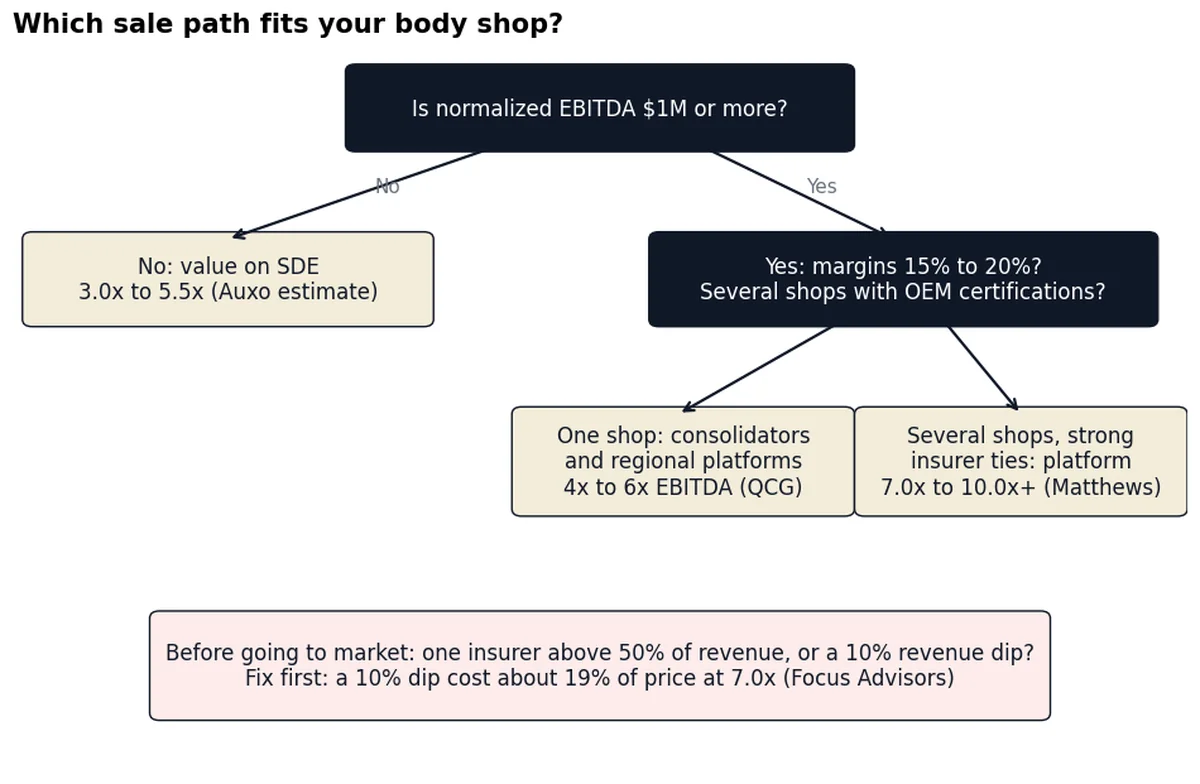
The right path follows earnings size, carrier mix and whether the numbers have peaked. A shop under $1 million of EBITDA usually sells on SDE to an individual or small operator; a shop above it with 15% to 20% margins can draw consolidator and platform offers at 4x to 6x; a multi-shop group with platform traits can test 7.0x to 10.0x or more.
| If your situation is | Then do this | Benchmark |
|---|---|---|
| If the owner works the floor and EBITDA is under $1M | Value on SDE; expect individual buyers or a small MSO | 3.0x to 5.5x (Auxo estimate) |
| If EBITDA is $1M or more and margins are 15% to 20% | Run a confidential process with consolidators and PE-backed regional platforms | 4x to 6x EBITDA (Quality Collision Group) |
| If you run several shops with strong insurer ties and OEM certifications | Test platform interest, including a recapitalization with rolled equity | 7.0x to 10.0x or more (Matthews) |
| If one insurer supplies more than 50% of revenue | Add carriers for 12 to 24 months before selling | CT screening rule; Quality Collision Group red flag |
| If Tesla work is a large share of revenue | Expect buyers to discount it; show the non-Tesla run rate | Focus Advisors, August 2026 |
| If revenue fell over the last 12 months | Wait for a recovery or show the cause; a 10% dip cost about 19% of price at 7.0x | Focus Advisors, February 2026 |
| If you own the building | Sell the business and lease the building, or sell both; negotiate the lease with the sale | 5.20% cap rate data point (Matthews) |
Owners comparing collision with mechanical repair can check the auto repair shop M&A multiples, since mechanical buyers price on SDE more often. When you are ready to plan the sale itself, our guide to selling an auto collision repair business covers the process from data room to closing.
Which body shop valuation figures are out of date?
Several figures still repeated in collision valuation guides, including the earlier version of this page, no longer match their primary sources. The table sets each one against the current figure and its dated source, so you can check what a buyer will cite in diligence.
| What guides say | What the source says | Source |
|---|---|---|
| Platform collision groups sell at 8x to 12x EBITDA | 7.0x to 10.0x or more for platform-caliber businesses; 3.5x to 6.0x for quality MSOs | Matthews, Sept 2026 |
| Total-loss rates have crossed 26 percent | 23.1% of all claims in 2025, a record; 23.5% through Q2 2026 | CCC via Matthews and Repairer Driven News |
| 38 percent of repairable claims need a calibration | 28.3% of repairable estimates (2025); 29.9% in Q1 2026 | CCC via Axia Growth and Repairer Driven News |
| Repair severity rises 6 to 9 percent a year | Average total cost of repair $4,821 in H1 2026, 0.6% above H1 2025 | CCC via Repairer Driven News |
| Body technician jobs grow only 0 to 1 percent | 4% projected growth 2025 to 2035, about 13,900 openings a year | BLS Occupational Outlook Handbook |
| Crash Champions has around 750 stores | About 650 centers in 38 states | Matthews, Sept 2026 |
| Tesla certification reliably adds enterprise value | Buyers increasingly discount Tesla-generated revenue | Focus Advisors, August 2026 |
How we compiled this
We compiled this page in November 2026 from 17 primary or first-party documents: Boyd Group’s Joe Hudson’s release and Q2 2026 results, Driven Brands’ FY2025 Form 10-K, sponsor releases for Crash Champions, Classic Collision, Quality Collision Group and Kaizen, the Matthews H1 2026 report, two Focus Advisors reviews, CCC data as reported by Repairer Driven News, the BLS handbook and 40 CFR 63.11173. Advisor ranges (Auxo, Quality Collision Group) are labeled as estimates. The worked example is illustrative; forum threads were read for question wording only.
Want to know what your collision shop is worth?
Benchmarks give you a range. A 15-minute confidential call gives you a real number, based on what consolidators and regional platforms are paying now and which ones would compete for your shop. No cost, no obligation.
Frequently asked questions
How much do body shops sell for?
Most body shops sell for a multiple of normalized earnings: about 3.0x to 5.5x SDE or EBITDA for a single location (Auxo Capital Advisors estimate), 4x to 6x EBITDA for shops with $1 million or more of EBITDA (Quality Collision Group), and 7.0x to 10.0x or more for platform-caliber groups (Matthews, September 2026). An owned building is priced separately on rent and cap rate.
What is the typical profit margin for an auto body shop?
Quality Collision Group says the shops that draw premium consolidator offers run EBITDA margins of 15% to 20% or more with gross profit margins typically over 45%. Shops below those levels still sell, usually to individual buyers or smaller operators, and usually on SDE rather than EBITDA, which puts them at the lower end of the multiple ranges.
Is a body shop valued on revenue or EBITDA?
On earnings. Owner-run shops are usually priced on SDE, and shops with a general manager, several DRP relationships or more than one location are priced on adjusted EBITDA. Revenue is only a cross-check: Auxo Capital Advisors shows $5 million of revenue producing $900,000 of EBITDA at an 18% margin but only $400,000 at 8%.
How much is Caliber Collision worth?
Caliber Collision has no public market value because it is still private. Hellman & Friedman holds the majority, with Leonard Green & Partners and OMERS as minority owners. Caliber confidentially filed a draft S-1 for an IPO on July 28, 2025, and as of September 2026 the offering had not priced, so any valuation figure for Caliber is an estimate.
Does owning the building change my body shop valuation?
Yes, but the building is valued separately. Buyers price the operating business on EBITDA after charging a market rent, then buy the property or lease it from you. Matthews reports a collision property in a major Texas metro under contract at a 5.20% cap rate in 2026, so $132,000 of annual rent supports about $2,538,000 of building value.
Does ADAS calibration increase a body shop’s value?
It can, because calibrations are now routine work: CCC data shows 29.9% of repairable appraisals and 40.6% of DRP appraisals included a calibration in Q1 2026. A shop that performs calibrations in-house keeps that margin and cycle time; a shop that sublets them depends on another vendor, which buyers review when they set the multiple.
How long does it take to raise a body shop’s value before selling?
Plan on 12 to 24 months. Adding DRP carriers, earning OEM certifications and moving insurer relationships from the owner to a manager all run on the insurer’s or manufacturer’s schedule. Timing also matters: in Focus Advisors’ example a 10% revenue decline cut the price about 19% at an unchanged 7.0x multiple, so sell after a strong trailing 12 months.
Sources
- Matthews, Collision Repair Net Lease Report H1 2026 (September 16, 2026), accessed November 2026.
- Quality Collision Group, Why Some Collision Repair Shops Get Top Dollar from Consolidators (May 13, 2025), accessed November 2026.
- Auxo Capital Advisors, Auto Body Shop and Auto Repair EBITDA Multiples (updated July 15, 2026), advisor estimates, accessed November 2026.
- Boyd Group Services, agreement to acquire Joe Hudson’s Collision Center (October 29, 2025), accessed November 2026.
- Boyd Group Services, second quarter 2026 results (August 12, 2026), accessed November 2026.
- Focus Advisors, 2026 Mid-Year Review (August 20, 2026), accessed November 2026.
- Focus Advisors, Year in Review 2025 (February 2026), accessed November 2026.
- Repairer Driven News, CCC mid-year collision repair trends update (October 19, 2026), accessed November 2026.
- Axia Growth, Auto Repair and Collision M&A (October 30, 2026), accessed November 2026.
- US Bureau of Labor Statistics, Occupational Outlook Handbook: Automotive Body and Glass Repairers, accessed November 2026.
- 40 CFR 63.11173, NESHAP subpart HHHHHH general requirements, accessed November 2026.
- CollisionWeek, Caliber files confidential draft registration statement (July 28, 2025), accessed November 2026.
- Crash Champions, growth investment from Clearlake and Service King transaction (July 14, 2022), accessed November 2026.
- Classic Collision, TPG agrees to acquire Classic Collision (April 2024), accessed November 2026.
- Business Wire, Susquehanna Private Capital acquires Brandywine Coach Works (October 6, 2020), accessed November 2026.
- Kinderhook Industries, acquisition of Kaizen Collision (March 2024), accessed November 2026.
- Driven Brands Holdings, Form 10-K for fiscal 2025, accessed November 2026.
This page is general valuation information, not legal, tax, accounting or transaction advice.
About the Author
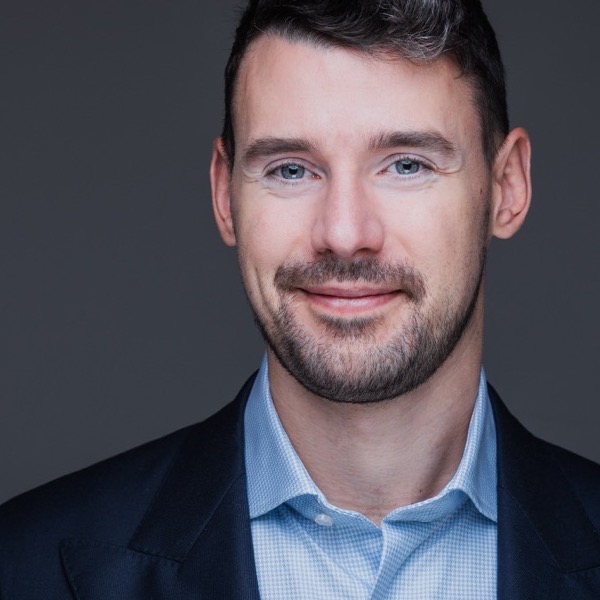
Christoph Totter is the founder of CT Acquisitions, an M&A advisory firm that helps owners of founder-owned businesses make the most of their exit through confidential sales, recapitalizations and exit planning, headquartered in Sheridan, Wyoming, with a network of 500+ buyers, including collision consolidators and PE-backed regional platforms. We work for owners on the sell side. Our fee is success only: nothing upfront, and you pay nothing unless the business sells. Connect on LinkedIn · Get in touch
Want a Specific Read on Your Collision Shop?
15 minutes, confidential, no contract, no cost. You leave with a view of your local buyer market (national consolidators and regional platforms) and a likely body shop valuation range.