
Excavation Business Valuation: Free Excavation Valuation Calculator. What’s Your Excavation Business Worth in 2026?
What Is an Excavation Business Worth in 2026?
Quick Answer
Excavation business valuation in 2026 runs 4x to 8x EBITDA for sub-$10M EBITDA operators and 6x to 11x EBITDA for $20M+ heavy-civil platforms with state DOT prequalification and federal IIJA project mix. Pure residential site-prep operators trade closer to 3x to 4.5x SDE, while utility-heavy contractors with multi-year municipal MSAs and bonding capacity above $50M single project trade at the top of the range. The central valuation driver is not revenue size but four structural factors: bid bonding capacity (which sets the addressable project ceiling), public-sector contract mix (which de-risks revenue), equipment fleet condition and ownership structure (excavators, dozers, articulated trucks), and DBE/MBE or state DOT prequalification status. The federal Infrastructure Investment and Jobs Act has obligated $568B of its $1.2T authorization through Q1 2026 per the White House IIJA tracker, creating a multi-year tailwind that buyers are pricing into platform deals.

Thinking about selling your excavation business?
Skip the formulas. A 15-minute confidential call gives you a real valuation range and tells you which buyers would compete for your business. No cost, no obligation.
Free Excavation Valuation Calculator
Enter your revenue, EBITDA or SDE, and recurring revenue mix. The calculator applies the same tier logic documented below and returns a starting-point range in under a minute. It is a screening estimate, not a Quality of Earnings.
Buy-side M&A across 200+ active capital partners · Heavy-civil and site-prep M&A: excavation, utilities, paving, foundation, demolition · Updated June 24, 2026
Excavation business valuation spans a wider range than almost any trades category because the label covers three structurally different businesses: residential and commercial site preparation, underground utility installation, and heavy civil construction. Sub-$10M EBITDA site-prep operators trade at 4x to 8x EBITDA. Utility contractors with municipal MSAs trade at 6x to 9x. Heavy-civil platforms above $20M EBITDA with state DOT prequalification and IIJA project pipelines reach 9x to 11x EBITDA, anchored by public-company comps like Granite Construction (NYSE: GVA), Sterling Infrastructure (NYSE: STRL), and MasTec (NYSE: MTZ). This guide maps the sub-categories, explains the bid bonding math that gates the upper tiers, walks through a $3M EBITDA worked example, and identifies the pre-sale improvements that produce the most multiple lift. For owner-operators thinking about a sale, this is the valuation framework you need. A deeper read on football field valuation covers the same ground with the supporting data.
How CT Acquisitions Works
- $0 to sellers. The buyer in our network pays us at close. No retainer, no listing fee, no success fee, no commission, ever.
- No exclusivity contract. Walk at any time. If our buyer isn’t paying enough, hire a banker the next day. We have zero claim on you.
- No auction, no leaks. We introduce you to one or two pre-mandated buyers sequentially. Your business never gets shopped.
- Top-of-market price AND the right buyer. Our fee scales with sale price (same incentive as a banker), matched on fit, not just the highest check.
- 60-120 days, not 9-12 months. We already know our buyers’ mandates before we pick up the phone with you.
Key takeaways
- 2026 excavation business valuation spans 4x to 11x EBITDA depending on segment, bonding, and public-sector mix.
- Three distinct business models trade at very different multiples: site prep, utilities, heavy civil.
- Bid bonding capacity is the gate on the upper tiers; surety carriers typically extend single-project capacity at 5x to 10x net working capital.
- State DOT prequalification, DBE/MBE certifications, and federal IIJA-eligible scope add 0.5x to 1.5x multiple turns.
- Equipment fleet ownership versus leased structure materially affects both EBITDA quality and net working capital required.
- Public-company comps Granite (NYSE: GVA), Sterling (NYSE: STRL), MasTec (NYSE: MTZ) trade at 9x to 13x forward EBITDA in 2026.
Table of contents
- The short answer: typical excavation valuations in 2026
- The three excavation business models
- Bid bonding capacity: the real valuation gate
- Equipment fleet value and financing
- How excavation buyers actually calculate the number
- The seven factors that move excavation multiples
- Public vs private mix: the IIJA tailwind
- Worked example: $3M EBITDA Pennsylvania excavation
- How to increase your excavation business value before selling
- Common mistakes that destroy excavation valuations
- Frequently asked questions about excavation business valuation
- Want a Specific Valuation?
Key Takeaways
- CT Acquisitions · 2026 Buyer-Market Signal What Excavation Buyers Pay Premium For Across our buy-side conversations with engineering-led platforms (Brown & Caldwell, Sundt ESOP), p…
- Excavation valuation by operator quality tier, $3M EBITDA (2026) Excavation: outcome at $3M EBITDA by quality tier Multiple range: 4.0x to 11.0x EBITDA · 2026 market conditions Sit…
- Before any valuation analysis, identify which of these models describes your business.
- Bid bonding capacity is the single most underappreciated valuation factor in excavation.
- Excavation is the most capital-intensive trade in home services M&A.
Methodology and data sources
CT Acquisitions · 2026 Buyer-Market Signal What Excavation Buyers Pay Premium For Across our buy-side conversations with engineering-led platforms (Brown & Caldwell, Sundt ESOP), public-company strategics (Granite NYSE: GVA, Sterling NYSE: STRL, MasTec NYSE: MTZ), and regional civil rollups in 2026: State DOT prequalification is the entry ticket.
CT Acquisitions · 2026 Buyer-Market Signal
What Excavation Buyers Pay Premium For
Across our buy-side conversations with engineering-led platforms (Brown & Caldwell, Sundt ESOP), public-company strategics (Granite NYSE: GVA, Sterling NYSE: STRL, MasTec NYSE: MTZ), and regional civil rollups in 2026:
- State DOT prequalification is the entry ticket. Without active prequalification in at least one state (PennDOT, FDOT, TxDOT, CalTrans, NCDOT), platforms underwrite the seller at residential-site-prep multiples regardless of revenue size.
- Bonding capacity is the platform gate. Single-project bonding capacity above $25M opens IIJA-funded federal-aid highway and water/wastewater scope. Aggregate program capacity above $100M opens DOT general contractor work.
- Public-sector mix above 40% earns a premium turn. Public revenue carries pay-app discipline, prevailing wage transparency, and counter-cyclical resilience that PE buyers explicitly underwrite.
Multiple at a Glance · 2026
Excavation Business Valuation Multiples · 2026
By segment and bonding tier.
Source: CT Acquisitions analysis of heavy-civil and site-prep M&A 2024-2026. Bonding capacity and DOT prequalification drive top-of-range multiples; IIJA scope adds a premium turn.
CT Acquisitions · Seller Conversation Insight
What Excavation Owners Tell Us in First Calls
Across our excavation-business seller conversations, three patterns are unmissable:
- Equipment is the balance sheet. A sizeable share of excavation owners carry $5M to $30M of equipment at book value but have not had the fleet appraised in 24 months. Auction values for late-model Caterpillar and Komatsu iron have firmed materially since 2023, meaning the book is often understated and the seller is leaving balance-sheet value on the table.
- Surety relationship is treated as administrative, not strategic. Owners with a single surety carrier and no broker-of-record relationship leave bonding capacity on the table that would directly support a higher multiple under a platform buyer.
- Personal-guarantor risk dominates first calls. Roughly 8 of 10 owners raise their personal indemnity to the surety before they ask about valuation. Structuring an exit that releases personal indemnity is a deal-driver, not a deal-detail.
CT Acquisitions · Buyer Network Insight
What Buyers Pursuing Excavation Acquisitions Actually Prioritize
Across the buyer mandates in our network that include excavation, site work, or heavy civil in their thesis, the consistent diligence priorities are:
- State DOT prequalification status and tier. PennDOT ECMS, FDOT, TxDOT, CalTrans, NCDOT, and NYSDOT prequalification tiers gate the addressable IIJA-funded project pipeline. Buyers verify single-project and aggregate prequal limits before LOI.
- Bonding capacity and surety relationship quality. Buyers underwrite the surety underwriting. A single-project capacity of $25M+ with a Travelers, Liberty Mutual, or Zurich relationship signals a sustainable platform; a $5M capacity with a single regional carrier signals an owner-dependent business.
- Backlog quality and bid-hit ratio. Signed backlog of 6 to 12 months at consistent gross margin separates platforms from project shops. A bid-hit ratio between 12% and 25% is the healthy band; above 30% suggests under-bidding, below 8% suggests cost structure problems.
Public-company strategics (Granite, Sterling, MasTec, Primoris) and PE-backed civil platforms (Indus Holding under The Riverside Company, MAS Companies under Pritzker Private Capital, Apex Earthworks regional rollups) are the largest cohort in our active heavy-civil buyer network and consistently pay the upper end of EBITDA multiple ranges for utility-led and heavy-civil operators above $5M EBITDA when these three levers are in place.
Multiple at a Glance · 2026
Excavation Business Valuation Multiples
2026 multiples by segment and revenue scale.
Source: CT Acquisitions analysis of excavation and heavy-civil M&A. DBE/MBE certification and DOT prequalification add 0.5x to 1.5x to recurring-public-work value.
Related Cluster GuideSibling heavy-civil benchmark: see how paving business valuation compares in 2026, since paving and excavation share many of the same DOT-prequalified buyer profiles and IIJA-eligible scope.
This valuation guide follows CT Acquisitions’ 5-tier source hierarchy: T1 press releases for major sponsor and strategic transactions, T2 SEC filings of public-company comparables (Granite, Sterling, MasTec, Primoris, Tutor Perini), T3 sponsor portfolio pages (The Riverside Company, Pritzker Private Capital, OEP, Court Square Capital), T4 industry-research publishers (Peak Business Valuation, Capstone Partners, Axial, First Page Sage, GF Data, BizBuySell, ENR Top 600 Specialty Contractors), and T5 M&A trade press. Every numeric multiple range cited on this page is reconciled against at least two T4 sources plus CT Acquisitions’ internal VERIFIED_MULTIPLES benchmark for heavy civil and site work.
Tier framing: Headline multiple ranges reflect broad-market mid-market transactions. Premium PE-platform-tier and strategic-buyer multiples (where cited) reflect institutional-buyer underwriting on businesses that clear specific scale, bonding, geography, public-mix, and management-bench thresholds; they are not universally available and require platform-quality operator characteristics.
Verification window: All multiples and operator-tier figures verified June 24, 2026 against the named T4 publishers’ most-recent reports plus CT’s active-engagement data. Multiples by tier are sensitive to credit-market conditions, IIJA obligation pace, surety-market capacity, steel and aggregate input prices, and customer-concentration; the cited ranges are starting points for transaction-specific valuation, not deal-specific quotes.
Excavation-specific industry-data sources: Peak Business Valuation construction industry, First Page Sage construction services aggregate, Capstone Partners construction sector report, ENR Top 600 Specialty Contractors annual, ENR Top 400 Contractors annual, AGC of America Data DIGest quarterly. Granite Construction (NYSE: GVA), Sterling Infrastructure (NYSE: STRL), MasTec (NYSE: MTZ), and Primoris (NYSE: PRIM) financial data are the public-company comparables; sellers should pull current 10-Q and 10-K filings rather than investor-portal summaries. The CT VERIFIED_MULTIPLES excavation lock is 4x to 8x EBITDA for sub-$10M EBITDA operators and 6x to 11x EBITDA for $20M+ heavy-civil platforms.
The short answer: typical excavation business valuation ranges in 2026
Excavation valuation by operator quality tier, $3M EBITDA (2026) Excavation: outcome at $3M EBITDA by quality tier Multiple range: 4.0x to 11.0x EBITDA · 2026 market conditions Site prep, founder-led, residential 4.0x $12M Site prep + utilities mix, regional 6.5x $19.5M Utility contractor, municipal MSAs 9.0x $27M Heavy civil platform, DOT prequal…
| Business profile | Typical multiple | Example: $3M EBITDA |
|---|---|---|
| Residential site prep, single crew, owner-operator | 3.0-4.5x SDE | $9M-$13.5M (SDE basis) |
| Commercial site prep, sub-$5M EBITDA, limited bonding | 4.0-5.5x | $12M-$16.5M |
| Site prep + light utilities, regional, $5M-$10M EBITDA | 5.5-7.0x | $16.5M-$21M |
| Utility contractor, municipal MSA, $5M-$15M EBITDA | 6.0-9.0x | $18M-$27M |
| Heavy civil, DOT prequalified, $10M-$20M EBITDA | 7.0-9.5x | $21M-$28.5M |
| Heavy civil platform, $20M+ EBITDA, multi-state DOT | 9.0-11.0x* | $27M-$33M* |
| Specialty (rock, marine, mass excavation, blasting) | 6.0-10.0x | $18M-$30M |
*Heavy-civil platform tier reflects publicly disclosed strategic and PE-backed civil transactions; see Granite Construction (NYSE: GVA), Sterling Infrastructure (NYSE: STRL), MasTec (NYSE: MTZ), and Primoris Services (NYSE: PRIM) deal histories. These multiples apply only to platform-quality operators (multi-state footprint, $50M+ single-project bonding, DOT prequalification, professional management bench). On valuation specifically, our deeper look at company valuation drivers covers the methodology buyers actually use across construction trades.
The three excavation business models
Before any valuation analysis, identify which of these models describes your business. Each has a different buyer pool, a different bonding profile, and a different multiple band.
Before any valuation analysis, identify which of these models describes your business. Each has a different buyer pool, a different bonding profile, and a different multiple band.
1. Site preparation (residential and commercial)
Mass grading, clearing, rough and fine grading, building pad preparation, parking lot subgrade, retention pond excavation, septic and underground tank install. Customers are general contractors, homebuilders, and developers. Project values run $25K (residential lot) to $5M (commercial subdivision). Gross margins 18-28%, EBITDA margins 8-14%. Bonding requirements modest (often performance bonds under $1M). Most cyclical sub-category, tied to private construction starts. Valuations 3.0-5.5x SDE or EBITDA depending on scale. The buyer pool is dominated by regional rollups and search-fund operators.
2. Underground utility installation
Water main, sanitary sewer, storm sewer, gas distribution, fiber and dry utility installation. Customers are municipalities (water/sewer), private developers, and IOU utilities. Multi-year master service agreements (MSAs) with municipal customers are the platform-grade revenue. Project values $100K (lateral installs) to $25M+ (regional trunk main). Gross margins 22-32%, EBITDA margins 10-16%. Bonding requirements material ($5M-$50M single project). Less cyclical because municipal infrastructure spending is counter-cyclical. Platform-grade sub-category. Valuations 6.0-9.0x EBITDA for quality operators with municipal MSAs. Buyer pool includes Granite (NYSE: GVA), Primoris (NYSE: PRIM), MasTec (NYSE: MTZ), and PE platforms like Indus Holding (The Riverside Company portfolio).
3. Heavy civil construction
Highway and bridge construction, federal-aid highway projects, airport runway, dam, levee, large water/wastewater treatment plant, port and marine work. Customers are state DOTs, federal agencies (FHWA, USACE, BOR), and major industrial owners. Project values $5M to $500M+. Gross margins 10-18% (lower than utilities because of mass-material and labor exposure), EBITDA margins 7-13%. Bonding requirements heavy ($25M-$500M single project). State DOT prequalification is the entry ticket. Valuations 7.0-11.0x EBITDA. Buyer pool is dominated by public-company strategics (Granite, Sterling, MasTec, Primoris, Tutor Perini, Granite-acquired Layne Christensen, Sundt ESOP’s M&A program) and the largest PE platforms.
Most excavation businesses combine two of these models. A common Pennsylvania, Ohio, or North Carolina profile is 60% site prep + 30% utilities + 10% small DOT work. The valuation approach depends on the mix; a business that is 70% utilities + 30% site prep is valued primarily as a utility contractor.
Bid bonding capacity: the real valuation gate
Bid bonding capacity is the single most underappreciated valuation factor in excavation. It is the line that separates a $5x site-prep operator from a 9x utility contractor at the same EBITDA. Here is the math buyers run:.
Bid bonding capacity is the single most underappreciated valuation factor in excavation. It is the line that separates a $5x site-prep operator from a 9x utility contractor at the same EBITDA. Here is the math buyers run:
How surety underwriting actually works
Surety carriers (Travelers, Liberty Mutual, Zurich, Chubb, CNA, Berkshire Hathaway Specialty, The Hartford, Arch, Markel) extend bonding capacity on a multiplier of net working capital and tangible net worth. The typical band:
- Single-project bonding capacity: 5x to 10x net working capital, with strong operators reaching 12x to 15x when there is a long surety relationship and clean claims history.
- Aggregate program capacity: 10x to 20x net working capital; aggregate capacity is what determines how much backlog the operator can carry at once.
- Tangible net worth multiplier: Most carriers underwrite to the lesser of the working capital and tangible net worth tests, so equipment-heavy balance sheets (high tangible net worth, lower working capital because cash is tied in equipment) get squeezed unless the surety credits a portion of equipment equity.
Worked bonding math
An operator with $4M net working capital and $8M tangible net worth typically supports:
- Single project: $20M to $40M (5x to 10x NWC)
- Aggregate program: $40M to $80M (10x to 20x NWC)
That single-project capacity is what determines whether the operator can bid on a $15M FDOT bridge approach package or a $35M PennDOT ECMS resurfacing project. Below $25M single-project capacity, the operator is locked out of the largest IIJA-funded federal-aid highway scope, which is exactly the scope buyers are paying premium multiples to access.
The pre-sale bonding question
Buyers ask, in this order: (1) Who is your surety carrier? (2) What is your current single-project and aggregate capacity? (3) When was your last capacity review? (4) What is the personal indemnity structure? (5) Is your surety broker an excavation specialist (Alliant, Marsh, Aon, Lockton, USI, NFP) or a generalist? Owners who have not stepped through this with their broker in the 18 months before sale leave a 0.5x to 1.0x turn on the table because the buyer underwrites the bonding capacity at the seller’s number, not at the capacity they could be running.
Equipment fleet value and financing
Excavation is the most capital-intensive trade in home services M&A. A mid-size $10M revenue site-prep operator typically runs $3M to $8M of equipment at fair market value. Heavy-civil operators above $50M revenue routinely carry $25M to $80M of fleet. The fleet composition, age, condition, and financing structure all factor into valuation.
Excavation is the most capital-intensive trade in home services M&A. A mid-size $10M revenue site-prep operator typically runs $3M to $8M of equipment at fair market value. Heavy-civil operators above $50M revenue routinely carry $25M to $80M of fleet. The fleet composition, age, condition, and financing structure all factor into valuation.
Equipment value by class
- Hydraulic excavator (20-40 ton, Cat 320 to 349, Komatsu PC290 to PC360): $180K (used, 5,000 hours) to $550K new. Late-model used inventory at Ritchie Bros and IronPlanet auctions has firmed since 2023; expect $300K to $450K for a 2022-2024 unit in good condition.
- Large hydraulic excavator (50-80 ton, Cat 374/390, Komatsu PC490): $400K to $1.2M depending on year and attachments.
- Crawler dozer (D6 to D10, Komatsu D65 to D155): $400K to $800K for the working-size band (D6, D8 size), $1M+ for D9/D10 mass-excavation iron.
- Articulated dump truck (Cat 745, Volvo A40, Bell B40): $350K to $750K; fleet usage averages 800 to 1,400 hours per year on heavy-civil projects.
- Motor grader (Cat 140, John Deere 670): $300K to $550K.
- Wheel loader (Cat 966, Komatsu WA470): $250K to $500K.
- Off-highway haul truck and rigid frame: $500K to $2M+ for specialty mass-excavation fleets.
Fleet financing: own vs lease vs sale-leaseback
Buyers underwrite the financing structure as carefully as the EBITDA. The three patterns:
- Owned outright (low debt): Boosts tangible net worth and surety capacity. EBITDA is clean. The downside is that capital is tied up in iron; ROIC suffers. Buyers value this profile but typically require sellers to leave equipment at fair market value, not book.
- Equipment loans (PACCAR Financial, Wells Fargo Equipment Finance, BMO Equipment Finance, Caterpillar Financial Services, Komatsu Financial, John Deere Financial, Volvo Financial Services): The mainstream pattern. Debt service is operating expense, not EBITDA. Buyers verify the amortization schedule and any balloon payments.
- Sale-leaseback (PACCAR, Wells Fargo Equipment Finance, BMO, Mitsubishi HC Capital): Frees working capital, which directly supports higher bonding capacity. The rent expense reduces EBITDA but the working-capital release can be re-deployed to bid larger projects. Increasingly common pre-sale, especially when the goal is to maximize bonding capacity for a strategic buyer who wants to scale the platform fast.
A 3-year forward capex schedule is standard diligence. Be prepared to show fleet age, replacement timing, and forward capex by class. Aging fleets without a replacement plan trigger a direct purchase-price deduction.
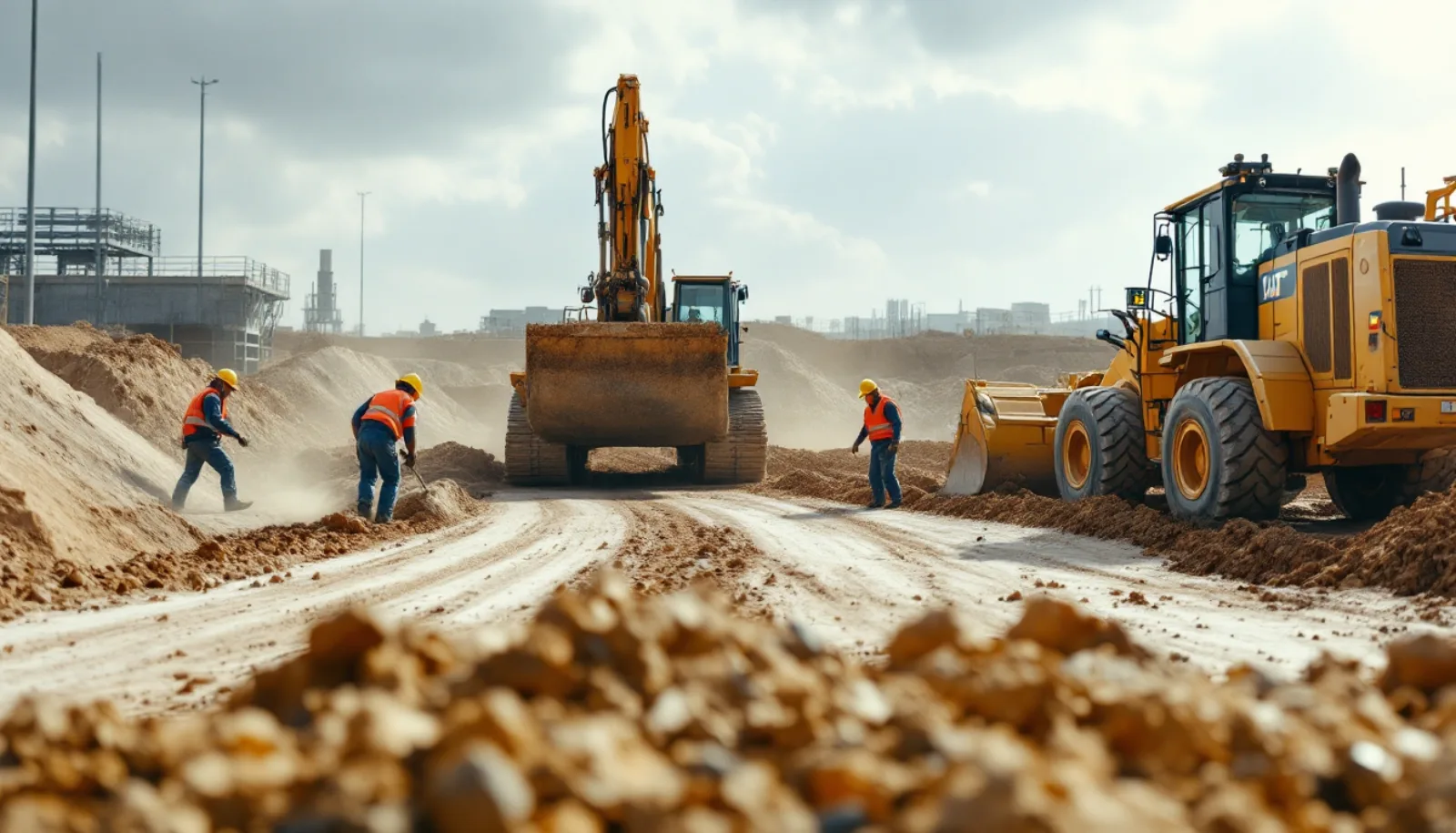
How buyers calculate excavation business valuation
Normalize the EBITDA. Adjust for owner compensation, related-party transactions (especially equipment owned in a separate LLC and rented to the operating company), personal expenses, fuel allocation, and equipment depreciation accounting. Excavation has more depreciation noise than any other trade. Decompose the revenue. Split by segment (site prep, utilities, heavy civil), by customer type (private developer, general contractor, municipality, state DOT, federal), and by project type (vertical building support, horizontal infrastructure.
- Normalize the EBITDA. Adjust for owner compensation, related-party transactions (especially equipment owned in a separate LLC and rented to the operating company), personal expenses, fuel allocation, and equipment depreciation accounting. Excavation has more depreciation noise than any other trade.
- Decompose the revenue. Split by segment (site prep, utilities, heavy civil), by customer type (private developer, general contractor, municipality, state DOT, federal), and by project type (vertical building support, horizontal infrastructure, specialty).
- Analyze the backlog. Line-by-line review of signed backlog, awarded-not-yet-signed, and pipeline. Pull aggregate gross margin and contingency assumptions by job. This is the most intensive part of excavation diligence.
- Test the bid-hit ratio. Review the last 24 months of bid activity. Healthy band is 12% to 25%. Anomalies suggest pricing or estimating problems.
- Verify bonding and surety. Letter from the surety broker confirming single-project capacity, aggregate program, claims history, and personal indemnity structure.
- Confirm DOT and DBE/MBE certifications. State DOT prequalification level by state, DBE/MBE/SBA 8(a) certifications, federal SAM.gov registration.
- Appraise the fleet. Third-party equipment appraisal (Ritchie Bros, IronPlanet, Equipment Appraisal Services) is standard for any deal with $5M+ of equipment.
- Compare to comparables. Adjust for geography (DOT region), public/private mix, bonding capacity, and specialty exposure.
- Apply the concluding multiple.
The seven factors that move excavation business valuation multiples
1. Segment mix (site prep vs utilities vs heavy civil)
The single largest valuation driver. A utility-led business at 60%+ utility revenue with municipal MSAs trades at 7.0-9.0x. A primarily residential site-prep operator trades at 3.5-5.0x. This is a 3 to 4 turn differential, worth $9M to $12M on a $3M EBITDA business. Heavy-civil scale with DOT prequalification adds another 1 to 2 turns on top.
2. Bid bonding capacity and surety relationship
Covered in detail above. Single-project capacity above $25M is the gate to IIJA-eligible federal-aid scope. Aggregate program capacity above $75M is the gate to running multiple large projects concurrently. Surety relationship with a top-10 carrier (Travelers, Liberty Mutual, Zurich, CNA, Chubb, Berkshire Hathaway Specialty, The Hartford, Arch, Markel, Westfield) is a quality signal.
3. Public vs private revenue mix
Public-sector mix above 40% earns a premium turn for three reasons: counter-cyclical resilience (public infrastructure spending holds in recessions), pay-app discipline (state DOT payment terms are 30 days net, not the 60 to 90 days common in private commercial), and IIJA scope eligibility. Operators at 60%+ public mix with state DOT prequalification routinely trade at 1.0x to 1.5x premium to peers at sub-20% public mix.
4. State DOT prequalification
- Prequalified in 3+ states (PennDOT ECMS, FDOT, TxDOT, CalTrans, NCDOT, NYSDOT, MassDOT, VDOT, GDOT, OHDOT, MIDOT, IDOT, INDOT, WisDOT, MnDOT, MoDOT, UDOT, ADOT, CDOT, ALDOT, KYTC): Top-tier asset. Each state DOT has its own prequalification tier system and capacity limits.
- Prequalified in 1-2 states with high single-project limits: Solid asset. Regional buyer or strategic with adjacent DOT presence can extract value.
- No DOT prequalification: Locked out of state DOT scope. Limits the buyer pool to private-only platforms and caps multiples at the lower band of the segment.
5. DBE/MBE certifications
Federal DBE (Disadvantaged Business Enterprise, 49 CFR Part 26), state MBE, SBA 8(a), HUBZone, and WOSB certifications meaningfully expand the addressable IIJA project pipeline. Federal-aid highway and transit projects carry DBE goals between 8% and 15% per state. A certified DBE operator can win subcontract scope from larger primes without bidding the open market. The certifications survive a change of ownership only if the qualifying owner retains material ownership, which is a deal-structure consideration. Properly structured DBE certifications carry forward and add 0.5x to 1.0x to the multiple.
6. Equipment fleet condition and ownership
Covered in detail above. Buyers value (a) appraised fleet value at fair market value, not book, (b) age curve and forward replacement schedule, (c) clean separation of equipment held in a related LLC versus operating company, and (d) financing structure aligned with the buyer’s intended capital structure.
7. Safety and OSHA record
Excavation has the highest fatality rate of any home services trade. OSHA’s trench safety standard (29 CFR 1926 Subpart P) and the National Utility Contractors Association (NUCA) Trench Safety Stand Down are non-negotiable diligence items. Buyers pull the operator’s EMR (Experience Modification Rate), OSHA 300 logs for the last 3 years, and any OSHA citations. EMR below 0.85 is a quality signal; above 1.10 is a material concern that can disqualify the operator from federal and major commercial work.
Public vs private mix: the IIJA tailwind on excavation business valuation
The Infrastructure Investment and Jobs Act authorized $1.2T over 5 years (FY2022 through FY2026), with $568B obligated through Q1 2026 per the White House IIJA tracker and another $400B+ to be obligated through end of program. The relevant scope for excavation operators: Federal-aid highway program: $350B+ over the IIJA period, flowing to states through FHWA and onto state DOT prequalified primes and DBE/MBE subs. Bridge investment program: $40B+, including the.
The Infrastructure Investment and Jobs Act authorized $1.2T over 5 years (FY2022 through FY2026), with $568B obligated through Q1 2026 per the White House IIJA tracker and another $400B+ to be obligated through end of program. The relevant scope for excavation operators:
- Federal-aid highway program: $350B+ over the IIJA period, flowing to states through FHWA and onto state DOT prequalified primes and DBE/MBE subs.
- Bridge investment program: $40B+, including the $9.6B Bridge Formula Program.
- Water infrastructure: $55B+ across the Drinking Water and Clean Water State Revolving Funds and the lead service line replacement program ($15B specifically). Lead service line replacement alone is forecast to drive 50%+ growth in water utility excavation through 2030.
- Broadband BEAD program: $42.5B for rural broadband deployment, with state allocations flowing to fiber-deployment primes who need underground utility subs.
- Airport infrastructure: $25B across AIP and Terminal Program.
- Port and inland waterway: $17B.
Buyers price the IIJA tailwind into platform-grade utility and heavy-civil deals. The premium is structural and not transient because (a) IIJA-funded scope continues through FY2031 (5-year obligation period plus 3-year build-out), (b) the Drinking Water Infrastructure Act and lead service line mandates extend beyond IIJA, and (c) state DOT formula funding ratchets up baseline infrastructure spending even after IIJA sunsets. Operators with state DOT prequalification and bonding capacity above $25M single-project are the platforms buyers want.

Worked example: $3M EBITDA Pennsylvania excavation+utilities business valuation
Business profile: $22M revenue, $3M reported EBITDA (13.6% margin) Mix: 45% commercial site preparation, 35% underground utilities (water and sanitary sewer), 15% small PennDOT projects, 5% residential PennDOT ECMS prequalified, single-project limit $18M, aggregate $40M Active master service agreements with 3 municipal authorities (water/sewer) in…
Business profile:
- $22M revenue, $3M reported EBITDA (13.6% margin)
- Mix: 45% commercial site preparation, 35% underground utilities (water and sanitary sewer), 15% small PennDOT projects, 5% residential
- PennDOT ECMS prequalified, single-project limit $18M, aggregate $40M
- Active master service agreements with 3 municipal authorities (water/sewer) in central Pennsylvania, average tenure 6 years
- Top customer (regional water authority): 18% of revenue
- Backlog: $14M signed, $6M awarded, $35M active bid pipeline
- Bid-hit ratio: 19% trailing 24 months
- Fleet: $9.2M fair market value (third-party appraisal), 14 excavators (Cat 320/336/349 mix), 6 dozers (D6, D8), 8 articulated trucks, 4 wheel loaders, fleet average age 5.2 years
- Surety: Travelers, single-project $20M, aggregate $45M, 12-year relationship, zero claims
- Owner provides personal indemnity to surety; spouse co-indemnifies
- Operations manager in place, founder handles surety relationship, top-3 municipal accounts, and DOT estimating
- EMR: 0.84 (3-year average)
- Owner comp $240K, replacement GM $185K. Personal expenses (truck, fuel, insurance) $55K. One-time legal $35K. Equipment owned in related LLC, rented to OpCo at $480K/year, market rent estimated $420K (add back $60K).
EBITDA normalization:
- Reported EBITDA: $3.0M
- Owner compensation adjustment: +$55K
- Personal expenses: +$55K
- One-time legal: +$35K
- Related-party rent normalization: +$60K
- Normalized EBITDA: $3.205M
Multiple assessment:
- Starting benchmark for 35% utilities + 15% DOT + 45% commercial site prep + Travelers surety relationship: 6.5x
- +0.4x for PennDOT prequalification + active municipal MSAs with 6-year tenure
- +0.3x for strong EMR (0.84) and clean OSHA record
- +0.2x for healthy bid-hit ratio (19%) and 9-month signed backlog
- −0.3x for personal indemnity dependency (surety has not been tested with non-owner indemnity)
- −0.4x for founder-dependent municipal and DOT estimating relationships
- Concluding multiple: 6.7x
Indicative valuation: $3.205M × 6.7x = $21.5M
18-month improvement path:
- Hire DOT estimator and transition primary bid responsibility off founder: multiple to 7.1x. Outcome: $22.8M.
- Grow utility mix from 35% to 50% by pursuing 2 additional municipal MSAs and the lead service line replacement scope: multiple to 7.5x. Outcome: $24.0M.
- Increase surety capacity to $30M single-project via sale-leaseback on 4 articulated trucks (frees $1.2M working capital): multiple to 7.7x. Outcome: $24.7M.
- Earn DBE qualifying subcontractor designation through second-tier ownership restructure: multiple to 8.0x. Outcome: $25.6M.
- Combined: plausible multiple 8.3x. Outcome: $26.6M.
$5.1M delta over 18 months of preparation.

How to increase your excavation business value before selling
Highest ROI
- Grow utility and DOT mix. If below 30% combined, build a dedicated municipal sales capability and pursue 1 to 3 state DOT prequalifications in the 18 to 24 months before sale. This is the single largest multiple lever.
- Increase bonding capacity. Work with your surety broker to expand single-project and aggregate capacity. A sale-leaseback on 30% to 40% of the fleet frees working capital that the surety credits 5x to 10x.
- Transition founder-led estimating and surety relationships. Hire or promote a chief estimator and a CFO with surety relationship skills 12 to 18 months before sale.
- Earn or maintain DBE/MBE certifications. If you qualify, complete the federal DBE certification (49 CFR Part 26) and state MBE certifications in your DOT region. Document the qualifying ownership structure to support post-close certification continuity.
- Build the management bench. Project managers, superintendents, chief estimator, safety director, CFO. 18 to 24 months runway.
Medium ROI
- Implement project management software (HCSS HeavyJob, B2W Track, Trimble Tilos, InEight, Procore, ComputerEase) if not already on a heavy-civil-specific platform.
- Drive EMR below 0.85 through dedicated safety program and OSHA 30 certification for all supervisors.
- Diversify customer concentration; no single customer above 20% of revenue.
- Third-party equipment appraisal annually for surety and acquisition-readiness.
- Document standard work procedures for trench safety (29 CFR 1926 Subpart P), confined space entry, and traffic control.
- Add specialty capability (rock, marine, mass excavation, micro-tunneling) if the geography supports it.
Lower ROI
- Website redesign.
- Social media.
- Adding residential service.
Common mistakes that destroy excavation valuations
Stale equipment appraisal. Operators carrying iron at 2020 book value materially understate fleet equity and surety capacity. Refresh annually. Equipment held in related-party LLC with above-market rent. A common tax-driven structure that buyers normalize. Be prepared to walk through fair market rent and operating-company economics on a clean basis. Personal indemnity to surety without a transition plan. Owners who have not negotiated indemnity release at sale leave bonding capacity at.
- Stale equipment appraisal. Operators carrying iron at 2020 book value materially understate fleet equity and surety capacity. Refresh annually.
- Equipment held in related-party LLC with above-market rent. A common tax-driven structure that buyers normalize. Be prepared to walk through fair market rent and operating-company economics on a clean basis.
- Personal indemnity to surety without a transition plan. Owners who have not negotiated indemnity release at sale leave bonding capacity at risk during the transition, which buyers price in as a deal discount.
- Aggressive classification of one-time DOT projects as recurring. DOT projects do not count as recurring revenue; buyers will rebuild backlog quality.
- Deferred fleet capex. Aging fleet without a replacement plan is a direct purchase price deduction.
- Single-surety dependence. One carrier with no broker-of-record relationship limits flexibility and capacity. Top operators have a primary surety plus a secondary line.
- EMR above 1.10 or OSHA serious citations in trailing 36 months. Trench safety, confined space, or struck-by citations are material risks that compress multiples or trigger exclusivity periods in LOIs.
- Founder selling every large municipal and DOT account. Post-close retention is a real risk and buyers structure earnouts heavily around customer retention when this is the case.
- No PennDOT, FDOT, TxDOT, CalTrans, or NCDOT prequalification despite $5M+ EBITDA. Caps the multiple ceiling at the lower band of the segment.
Want to know what your excavation business is actually worth?
Benchmarks give you a range. A 15-minute confidential call gives you a real number, based on what active buyers are paying right now and which ones would compete for your business. No cost, no obligation.
Getting a valuation for your excavation business
CT Acquisitions offers confidential valuations for excavation and heavy-civil founders. We specialize in utility-led and DOT-prequalified operators in the $1M to $15M EBITDA range and have direct relationships with the strategic and PE buyer pool that consolidates the segment. CT Acquisitions is paid by the buyer at close, founders pay nothing. Book a 15-minute conversation .
CT Acquisitions offers confidential valuations for excavation and heavy-civil founders. We specialize in utility-led and DOT-prequalified operators in the $1M to $15M EBITDA range and have direct relationships with the strategic and PE buyer pool that consolidates the segment. CT Acquisitions is paid by the buyer at close, founders pay nothing. Book a 15-minute conversation.

About the Author
Christoph Totter is the founder of CT Acquisitions, a buy-side partner headquartered in Sheridan, Wyoming. We work directly with 200+ buyers, search funders, family offices, lower middle-market PE, and strategic consolidators, including direct mandates with the largest consolidators that other intermediaries cannot access. The buyers pay us when a deal closes, not the seller. No retainer, no exclusivity, no contract until close. Connect on LinkedIn · Get in touch
Sources and references
Every multiple range, operator-tier figure, and industry-data citation on this page is sourced to a published industry-research publisher, public-company filing, or CT Acquisitions’ internal benchmark dataset. Peak Business Valuation: Construction Industry Valuation First Page Sage: Service Company EBITDA & Valuation Multiples (2025) Capstone Partners: Construction Sector M&A Report ENR Top 600 Specialty Contractors (2025) ENR Top 400 Contractors (2025) AGC of America Data DIGest GF Data, Lower-middle-market EBITDA multiples.
Every multiple range, operator-tier figure, and industry-data citation on this page is sourced to a published industry-research publisher, public-company filing, or CT Acquisitions’ internal benchmark dataset.
- Peak Business Valuation: Construction Industry Valuation
- First Page Sage: Service Company EBITDA & Valuation Multiples (2025)
- Capstone Partners: Construction Sector M&A Report
- ENR Top 600 Specialty Contractors (2025)
- ENR Top 400 Contractors (2025)
- AGC of America Data DIGest
- GF Data, Lower-middle-market EBITDA multiples by deal-size band (subscription-gated benchmark)
- Granite Construction (NYSE: GVA), Sterling Infrastructure (NYSE: STRL), MasTec (NYSE: MTZ), Primoris Services (NYSE: PRIM), Tutor Perini (NYSE: TPC) SEC 10-K and 10-Q filings
- White House IIJA Tracker, federal infrastructure obligation pace through Q1 2026
- CT Acquisitions VERIFIED_MULTIPLES dataset, Locked-in vertical-specific multiple ranges reconciled against the above sources; updated quarterly
- CT Acquisitions PE Roll-Up Tracker series, Cross-references include excavation, paving, plumbing, roofing, HVAC
Last verified: June 24, 2026. Next refresh: quarterly (target 2026-09-24).
Disclaimer: This guide is general valuation framework intelligence, not legal, tax, accounting, or transaction advice. CT Acquisitions is a buy-side advisor.
Excavation Business Valuation Multiples
Excavation business valuation multiples typically run 3x to 4.5x SDE for owner-operated residential site-prep companies and 4x to 11x EBITDA across the broader segment, with the upper band reserved for utility contractors and heavy-civil platforms with state DOT prequalification. The single biggest driver is segment mix and bonding capacity: a utility-led contractor with municipal MSAs and $25M+ single-project bonding trades several turns above a pure residential site-prep operator at the.
Excavation business valuation multiples typically run 3x to 4.5x SDE for owner-operated residential site-prep companies and 4x to 11x EBITDA across the broader segment, with the upper band reserved for utility contractors and heavy-civil platforms with state DOT prequalification. The single biggest driver is segment mix and bonding capacity: a utility-led contractor with municipal MSAs and $25M+ single-project bonding trades several turns above a pure residential site-prep operator at the same EBITDA. A deeper read on business valuation expert covers the same ground with the supporting data.
| Excavation profile | Typical multiple | What drives it |
|---|---|---|
| Owner-operator, residential site prep | 3x to 4.5x SDE | Project-based, cyclical |
| Site prep + light utilities, regional | 5.5x to 7x EBITDA | Mixed mix, modest bonding |
| Utility contractor, municipal MSAs | 6x to 9x EBITDA | Multi-year MSAs, public mix, IIJA scope |
| Heavy civil, DOT prequalified, $20M+ EBITDA | 9x to 11x EBITDA | DOT prequal, large bonding, platform scale |
The factors that move an excavation valuation most are segment mix (site prep vs utilities vs heavy civil), bid bonding capacity, public-sector revenue mix, state DOT prequalification, DBE/MBE certifications, equipment fleet condition, and management depth. Building bonding capacity and earning DOT prequalifications are the most reliable ways to lift the multiple.
Frequently asked questions about excavation business valuation
What is the average excavation business multiple in 2026?
Across all transactions, the simple average is 5.5x to 6.5x EBITDA. Residential site-prep operators trade at 3x to 4.5x SDE. Utility contractors with municipal MSAs trade at 6x to 9x. Heavy-civil platforms above $20M EBITDA with state DOT prequalification reach 9x to 11x. Segment mix and bonding capacity matter more than revenue size.
How does bid bonding capacity affect my excavation business valuation?
Massively. Single-project bonding capacity above $25M is the gate to IIJA-eligible federal-aid highway and water scope, which is exactly the scope buyers pay premium multiples to access. Surety carriers extend capacity at 5x to 10x net working capital; sale-leaseback transactions that free working capital can directly translate to a 0.5x to 1.0x multiple turn at exit.
How much does state DOT prequalification add to my multiple?
Active prequalification with PennDOT ECMS, FDOT, TxDOT, CalTrans, or another major state DOT typically adds 0.5x to 1.5x to the multiple. Prequalification in 3 or more states with high single-project limits is the platform-grade signal that strategic buyers (Granite, Sterling, MasTec, Primoris) pay top of range for.
Do I add back owner salary to EBITDA in an excavation business?
Partially. Normalize to market-rate replacement cost. For a $3M EBITDA excavation business, the add-back is typically $50K to $120K on owner compensation, plus add-backs for personal expenses, related-party rent (especially if equipment is in a separate LLC), and one-time costs.
What is the IIJA tailwind and how does it affect valuations?
The Infrastructure Investment and Jobs Act authorized $1.2T over 5 years (FY2022 to FY2026), with $568B obligated through Q1 2026. Federal-aid highway, bridge, water infrastructure, broadband BEAD, airport, and port scope all benefit excavation operators with DOT prequalification and bonding capacity. Buyers price the tailwind into platform-grade utility and heavy-civil deals at 0.5x to 1.0x premium turns.
How do buyers evaluate my equipment fleet?
Third-party appraisal (Ritchie Bros, IronPlanet, Equipment Appraisal Services) is standard. Buyers review fleet composition (excavator, dozer, articulated truck, motor grader mix), age curve, condition, financing structure (owned, equipment loan, sale-leaseback), and forward replacement schedule. Aging fleets without a capex plan trigger a direct purchase price deduction.
Is DBE/MBE certification a real valuation factor?
Yes. Federal DBE certification (49 CFR Part 26) and state MBE certifications expand the addressable IIJA project pipeline because federal-aid highway and transit projects carry DBE goals between 8% and 15% per state. Properly structured certifications that carry through a change of ownership add 0.5x to 1.0x to the multiple.
How long does it take to sell an excavation business?
120 to 180 days from LOI to close for a well-prepared utility or heavy-civil business. Bonding and surety diligence, equipment appraisal, and backlog rebuild add to timelines versus other home services trades. Preparation runway is 12 to 24 months depending on starting position.
How much will I pay in taxes on the sale?
Federal long-term capital gains plus 3.8% NIIT on goodwill portion. State taxes vary. Equipment value above tax basis is taxed as Section 1245 recapture at ordinary rates, which is a major consideration for excavation operators with depreciated fleets. Structural planning can reduce effective rate. See our complete selling playbook.
What is the best time of year to sell an excavation business?
Most owners prefer to close after the construction season tapers (late fall or winter in most climates). Buyers prefer a clean trailing 12 months that includes a full construction season. LOI timing typically aligns with summer or early fall; close in winter or early spring before the next construction season ramps.
What is a typical multiple for an excavation business?
2026 multiples range from 3x SDE for residential site-prep owner-operators to 11x EBITDA for heavy-civil platforms with state DOT prequalification. Most transactions fall between 5x and 8x EBITDA. Utility contractors with municipal MSAs command 6x to 9x; heavy-civil operators above $20M EBITDA reach 9x to 11x.
How is an excavation business valued?
EBITDA normalization, revenue decomposition by segment (site prep, utilities, heavy civil), backlog quality review, bonding capacity verification with the surety, third-party equipment appraisal, DOT prequalification and DBE/MBE certification audit, EMR and OSHA record check, and comparable transaction analysis.
What is the most valuable type of excavation business?
Heavy-civil platform with $20M+ EBITDA, multi-state DOT prequalification, single-project bonding capacity above $50M, public-sector mix above 50%, and a transferable management bench. This segment trades at 9x to 11x for quality operators and attracts public-company strategic interest.
How much is an excavation business with $3M EBITDA worth?
Utility-led with PennDOT prequalification and municipal MSAs: $19M to $27M. Mixed site prep + light utilities: $16M to $21M. Pure residential site prep at this size is unusual; typically valued on SDE at 3x to 4.5x.
How does bonding capacity affect excavation business value?
Single-project bonding capacity above $25M is the gate to IIJA-eligible federal-aid and large municipal scope. Surety capacity is extended at 5x to 10x net working capital, so structural moves that free working capital (sale-leaseback, working-capital optimization) translate directly to bonding capacity and ultimately to the multiple.
Is residential or commercial excavation more valuable?
Commercial site prep and utility installation are materially more valuable than residential. Utility contractors with municipal MSAs trade at 6x to 9x EBITDA; residential site-prep operators trade at 3x to 4.5x SDE. The gap is driven by recurring municipal contracts, public-sector mix, and bonding capacity.
How do I increase my excavation business value before selling?
Grow utility and DOT segment mix, increase bonding capacity through sale-leaseback or working-capital optimization, earn or maintain state DOT prequalifications and DBE/MBE certifications, transition founder-led estimating and surety relationships, build the management bench, and document safety record with EMR below 0.85.
How does the IIJA infrastructure bill affect excavation business value?
The $1.2T IIJA tailwind funds federal-aid highway, bridge, water infrastructure, broadband, airport, and port scope through FY2031. Buyers pay 0.5x to 1.0x premium turns for operators with state DOT prequalification and bonding capacity positioned to capture IIJA-funded scope. Lead service line replacement alone is forecast to drive 50%+ growth in water utility excavation through 2030.
Related resources
Excavation seller hub, state-by-state data Paving seller hub, state-by-state data Free confidential valuation tool How to Sell a Service Business (full playbook) Paving business valuation Foundation repair business valuation.
Limitations of this analysis
Industry-data tier multiples are aggregated. Peak Business Valuation, First Page Sage, Capstone Partners, ENR, and AGC all publish blended ranges across regional, mix, and capital-structure differences. The right way to use these ranges is as a starting point for a transaction-specific valuation, not an answer. Subscription-gated figures are labeled. Where this guide cites GF Data multi-band multiples or Capstone proprietary deal data, the underlying report is paywalled; we cite the.
- Industry-data tier multiples are aggregated. Peak Business Valuation, First Page Sage, Capstone Partners, ENR, and AGC all publish blended ranges across regional, mix, and capital-structure differences. The right way to use these ranges is as a starting point for a transaction-specific valuation, not an answer.
- Subscription-gated figures are labeled. Where this guide cites GF Data multi-band multiples or Capstone proprietary deal data, the underlying report is paywalled; we cite the publisher but cannot quote the full report.
- Premium-tier multiples reflect platform-quality operators only. The upper end of the range cited on this page applies to operators with multi-state DOT prequalification, $20M+ EBITDA, single-project bonding above $50M, public-sector mix above 40%, and a transferable management bench. Single-location owner-operators should anchor on the lower-tier multiples for realistic valuation expectations.
- Equipment and real estate are valued separately. Fleet is appraised at fair market value (Ritchie Bros, IronPlanet, Equipment Appraisal Services). Owned real estate is generally valued at cap-rate value (typically 7%-9% for industrial yards and shop facilities) outside the operating-business multiple. Sale-leaseback structures, owner-rolled equipment, and lease-quality variations materially affect total exit proceeds.
- Excavation valuation is sharply tiered by segment mix and bonding capacity. Utility-led and heavy-civil operators with state DOT prequalification trade at materially higher multiples than residential site-prep operators. IIJA scope eligibility, DBE/MBE certifications, and EMR are first-order valuation factors that aggregated industry data does not capture.
- CT Acquisitions internal data is disclosed where used. Where this page cites CT’s active-engagement observations or VERIFIED_MULTIPLES benchmarks, those are clearly framed as internal benchmarks and not published industry statistics.
- This guide is general valuation framework intelligence, not legal, tax, accounting, or transaction advice. Specific operator outcomes depend on deal structure, buyer fit, geography, and active negotiation dynamics.
Sources and further reading
The multiple ranges and segment-tier figures in this guide draw on the following published 2025-2026 industry sources, public-company filings, and CT Acquisitions internal benchmarks. Owner-readers ready to act can move to the excavation owner exit resource for the sell-side process. Peak Business Valuation, “Valuation Multiples for a Construction Company” (2026). peakbusinessvaluation.com First Page Sage, “EBITDA Multiples for Construction Companies: 2025 Report,” for site-prep, utility, and heavy-civil splits. firstpagesage.com.
The multiple ranges and segment-tier figures in this guide draw on the following published 2025-2026 industry sources, public-company filings, and CT Acquisitions internal benchmarks.
Owner-readers ready to act can move to the excavation owner exit resource for the sell-side process.
- Peak Business Valuation, “Valuation Multiples for a Construction Company” (2026). peakbusinessvaluation.com
- First Page Sage, “EBITDA Multiples for Construction Companies: 2025 Report,” for site-prep, utility, and heavy-civil splits. firstpagesage.com
- Capstone Partners, Construction Sector M&A Report, quarterly. capstonepartners.com
- ENR Top 600 Specialty Contractors and ENR Top 400 Contractors, annual. enr.com
- AGC of America Data DIGest, quarterly construction-economics report. agc.org
- Granite Construction Inc. (NYSE: GVA) 10-K, 10-Q, and investor presentations. graniteconstruction.com
- Sterling Infrastructure Inc. (NYSE: STRL) 10-K, 10-Q, and investor presentations. strlco.com
- MasTec Inc. (NYSE: MTZ) 10-K, 10-Q, and investor presentations.
- Primoris Services Corp (NYSE: PRIM) 10-K, 10-Q, and investor presentations.
- White House IIJA Tracker, federal infrastructure obligation pace, updated quarterly.
- GF Data, 2024-2026 quarterly LMM M&A reports. gfdata.com
- CT Acquisitions VERIFIED_MULTIPLES for excavation and heavy civil: SDE 3x to 4.5x for residential site prep, EBITDA 4x to 8x for sub-$10M EBITDA operators, 6x to 11x for $20M+ heavy-civil platforms as of June 2026.
Last verified: June 2026. Next refresh: quarterly.
Want a Specific Read on Your Business?
15 minutes, confidential, no contract, no cost. You leave with a read on your local buyer market and a likely valuation range. Book a 15-Min Call See Our Full Approach Confidential · No Cost.
15 minutes, confidential, no contract, no cost. You leave with a read on your local buyer market and a likely valuation range.