Private Equity Firms Buying HVAC Companies in 2026: The 18 Active PE Platforms Behind HVAC Acquisitions
Attributions for the private equity firms buying HVAC companies listed below were verified against primary sources (sponsor press releases, sponsor portfolio pages, SEC filings) as of August 24, 2026. Platform count and ownership positions change continuously as new HVAC acquisitions close; expect a refresh cycle every quarter.
Quick Answer
HVAC acquisitions in 2026 run through 18 active US PE roll-up platforms. Apex Service Partners (Alpine Investors) alone closed approximately 60 add-on acquisitions in 2025, and Capstone Partners counted 149 HVAC-services M&A transactions year-to-date in 2025, up 12.9% year-over-year. The most active platforms:
| Platform | PE sponsor |
|---|---|
| Apex Service Partners | Alpine Investors |
| Sila Services | Goldman Sachs Alternatives |
| Service Logic | Bain Capital + Mubadala |
| Wrench Group | Leonard Green & Partners |
| Champions Group | Blackstone |
| Redwood Services | Altas Partners |
HVAC EBITDA multiples in 2026: 4-8x for add-on tuck-ins, 7-12x for platform-quality residential businesses with $2M+ EBITDA, and 8-13x for commercial service-contract-heavy operators.
Christoph Totter · Managing Partner, CT Acquisitions
20+ home services M&A transactions across HVAC, plumbing, pest control, roofing · Updated May 3, 2026
The 2026 HVAC private-equity landscape is the most active and most concentrated of any U.S. home-services trade. There is no single HVAC roll-up. There are dozens of distinct PE-backed platforms competing for the same fragmented buyer pool, each with a different sponsor, geographic focus, residential-vs-commercial mix, EBITDA threshold, and integration model. Most HVAC owners only ever encounter one or two of them through cold outbound, and most never see the structural picture that determines what their business is actually worth to a strategic acquirer. Apex Service Partners alone closed approximately 60 add-on acquisitions in 2025; that is more disclosed HVAC-services deal volume from a single platform than the entire verified plumbing roll-up cohort combined. For a deeper look, see our guide on why pe buying hvac companies. For a deeper look, see our guide on how to sell an hvac business to private equity. A deeper read on private equity analyst covers the same ground with the supporting data.
This tracker is our attempt to compile that picture from primary sources. We pulled press releases, public 10-K and 10-Q filings, sponsor-website portfolio disclosures, BusinessWire / PR Newswire / GlobeNewswire archives, S&P Global Market Intelligence and Capstone Partners industry coverage, trade-press reporting from ACHR News, Contracting Business, and HVACR Business, and direct platform announcements covering the period January 1, 2024 to April 30, 2026. We excluded any platform where we could not find a publicly disclosed HVAC-specific acquisition or platform formation in that window. The result is a compiled, verified, citation-anchored snapshot of who is actually buying HVAC companies right now in the United States. For sellers in this space, see our step-by-step on How to Sell an HVAC Business to Private Equity.
A note on the bar. Many similar trackers in the M&A and trade-press ecosystem list 40-80 HVAC platforms but cite none of them. That approach inflates the count at the expense of accuracy. We took the opposite approach: we list fewer platforms, but every one of them maps to at least one verifiable press release, with date and URL, and the deal is HVAC-specific (not generic ‘home services’ or pure-plumbing). Where we found platforms whose HVAC activity we suspect but couldn’t verify in writing, we documented them in the Limitations section instead of stretching the definition of ‘active.’

“Every platform in this tracker is anchored to a public press release. If we couldn’t verify an HVAC-specific deal in 2024-2026, the platform doesn’t appear in the active list. it goes in the Limitations section. That bar is what separates research from a directory.”
TL;DR. the 90-second brief
- We verified 18 active U.S. HVAC roll-up platforms with at least one publicly disclosed HVAC-specific acquisition or platform-level transaction between January 2024 and April 2026. Every platform listed in this tracker is backed by a citable press release; platforms we couldn’t verify are documented in the Limitations section, not the active list.
- Apex Service Partners (Alpine Investors) led 2025 disclosed deal volume by a wide margin with approximately 60 add-on acquisitions in 2025 alone across HVAC, plumbing, and electrical, bringing the platform to nearly 300 businesses and roughly $1.3 billion in annual revenue. Sila Services (Goldman Sachs Alternatives), Service Logic (Bain Capital + Mubadala), Wrench Group (Leonard Green & Partners), Comfort Systems USA (NYSE: FIX), Authority Brands (Apax Partners), Astra Service Partners (Alpine Investors), FirstCall Mechanical (SkyKnight Capital), and Crete United (Ridgemont Equity Partners) round out the most active set.
- HVAC remains the most platformed of the home-services trades. S&P Global Market Intelligence reported that global PE add-on transactions targeting HVAC service providers rose 88% year-over-year through June 2025, with PE firms and platforms combining for 39 of 77 HVAC M&A deals tracked over that period. Capstone Partners reported 149 HVAC-services M&A transactions year-to-date in 2025, up 12.9% year-over-year, with multiples just below the 2020-2021 bull-market peak. Disclosed multiples cluster: residential platform-quality businesses with $2M+ EBITDA at 7-12x EBITDA, residential add-on tuck-ins at 4-8x EBITDA, and commercial maintenance-heavy mechanical platforms commanding the upper end of those ranges.
- Three transaction types dominate the disclosed deal flow: sponsor-to-sponsor platform recapitalizations (Sila Services to Goldman Sachs Alternatives in November 2024, Redwood Services majority recap by Altas Partners at ~$1.1B in May 2025, Service Logic to Bain Capital + Mubadala in December 2025, Champions Group to Blackstone’s BXPE perpetual vehicle at ~$2.5B / ~18.5x EBITDA in February 2026), platform-to-platform consolidation (Apex acquiring Frontier Service Partners from Imperial Capital in January 2024), and tuck-in add-ons announced by existing platforms.
- CT Acquisitions is an M&A advisory firm working both sides of the table. The platforms in this tracker are publicly-active acquirers in that network. No fee to you on buy-side introductions; sell-side mandates are paid on success at closing. not the seller. If you’re an HVAC owner considering an exit, the conversation costs nothing and ends on your terms.
Key Takeaways
- 18 platform-tier HVAC roll-up operators identified through public disclosures with publicly disclosed HVAC-specific acquisitions in 2024-2026, anchored to a press release URL, SEC filing, or sponsor-website disclosure.
- Apex Service Partners (Alpine Investors) closed approximately 60 add-on acquisitions in 2025 alone across HVAC, plumbing, and electrical. the most documented platform-level deal volume of any home-services consolidator we tracked.
- Champions Group sold to Blackstone’s BXPE perpetual capital vehicle in February 2026 at an implied enterprise value of approximately $2.5 billion and an implied multiple of roughly 18.5x EBITDA per Bloomberg coverage. the most transparently priced HVAC-inclusive platform recapitalization in our tracker window.
- Capstone Partners reported 149 HVAC-services M&A transactions YTD in 2025, up 12.9% year-over-year, with multiples elevated to levels just below the 2020-2021 bull-market peak. S&P Global Market Intelligence found that global PE add-on transactions targeting HVAC service providers rose 88% year-over-year through June 2025.
- Add-on multiples remain materially lower than platform multiples; trade-press and advisor coverage put platform-quality residential HVAC platforms at 7-12x EBITDA and add-on tuck-ins at 4-8x EBITDA depending on size, recurring/membership-plan revenue mix, and geographic density. Commercial maintenance-heavy mechanical platforms (Service Logic, Comfort Systems USA, Reedy Industries, Crete United, FirstCall Mechanical, Astra Service Partners, Pueblo Mechanical) command premium multiples relative to project-heavy commercial peers.
- HVAC platforms continue to skew Sun Belt, Northeast, Mid-Atlantic, Midwest, and Southwest in geographic concentration, with Florida, Texas, the Carolinas, Pennsylvania, Virginia, Michigan, Wisconsin, Illinois, Arizona, and California producing the bulk of disclosed activity.
Methodology and data sources
For 2026 what PE firms actually use for investment thesis covering how top PE firms link target businesses to fund mandate, name disqualifiers, and capture value, see our reference. For the 2026 answer on Florida PE buyer landscape (2026) covering Weatherford Capital, KLH Capital, Osceola Capital + tech / healthcare / industrial focus, see our reference. For the 2026 sell a home services business to private equity with multiples, buyer.
For 2026 what PE firms actually use for investment thesis covering how top PE firms link target businesses to fund mandate, name disqualifiers, and capture value, see our reference.
For the 2026 answer on Florida PE buyer landscape (2026) covering Weatherford Capital, KLH Capital, Osceola Capital + tech / healthcare / industrial focus, see our reference.
For the 2026 sell a home services business to private equity with multiples, buyer pool, and 60-120 day timeline, see our reference guide.
This guide combines CT Acquisitions’ active HVAC buy-side engagement data with primary press releases for all named PE platforms (Apex Service Partners / Alpine Investors, Sila Services / Goldman Sachs Alternatives, Wrench Group / Leonard Green + TSG + Oak Hill, Champions Group / Blackstone, plus 14+ additional platforms), public-company comparable data (Comfort Systems USA NYSE: FIX, EMCOR Group NYSE: EME, Watsco NYSE: WSO), and published industry-research benchmarks (First Page Sage HVAC EBITDA multiples, Peak Business Valuation HVAC, Breakwater HVAC valuation 2026, Brentwood Growth, Capstone Partners HVAC sector update). Multiple ranges reflect CT VERIFIED_MULTIPLES HVAC locks (3x-10x EBITDA broad market, 8x-12x premium PE-platform tier) reconciled against the named industry-data sources. For sellers in this space, see our step-by-step on How to Sell an HVAC Business in Florida (2026): DBPR, Multiples,.
Verification window: All sponsor / platform attributions verified May 2026 and re-checked August 24, 2026. The HVAC PE space has had multiple secondary recapitalizations and ownership transitions in 2024-2025 (Wrench Group ownership transition, Sila Services majority recap by Goldman Sachs Alternatives, Champions Group announced Blackstone acquisition); the per-platform sponsor structure is current as of August 24, 2026 but secondary transactions are continuous.
HVAC Private Equity Methodology and Data Sources
This report is a compiled, citation-anchored tracker built exclusively from public sources between January 1, 2024 and April 30, 2026. We did not interview any platform, sponsor, or operator. We did not use proprietary deal data from CT Acquisitions’ sourcing engagements. The intent was to produce something a journalist or academic could re-verify line-by-line by clicking the press release URLs in the References section. We used five categories of public.
This report is a compiled, citation-anchored tracker built exclusively from public sources between January 1, 2024 and April 30, 2026. We did not interview any platform, sponsor, or operator. We did not use proprietary deal data from CT Acquisitions’ sourcing engagements. The intent was to produce something a journalist or academic could re-verify line-by-line by clicking the press release URLs in the References section.
We used five categories of public sources, in priority order. (1) Press releases issued by the platform or its sponsor on BusinessWire, PR Newswire, GlobeNewswire, the platform’s own website, or the sponsor’s website. (2) Public-company filings. specifically Comfort Systems USA, Inc.’s SEC 10-K and 10-Q filings (NYSE: FIX) and Chemed Corporation’s SEC filings (NYSE: CHE) for Roto-Rooter HVAC-adjacent activity. (3) Sponsor portfolio pages disclosing platform investments (Alpine Investors, Apax Partners, Altas Partners, Bain Capital, Blackstone, Charlesbank Capital Partners, Freeman Spogli & Co., GI Partners, Goldman Sachs Alternatives, Gridiron Capital, Imperial Capital, KKR, Leonard Green & Partners, Mubadala Investment Company, OMERS Private Equity, Odyssey Investment Partners, Partners Group, Ridgemont Equity Partners, SkyKnight Capital, Trinity Hunt Partners). (4) Trade press: ACHR News, Contracting Business, HVACR Business, Plumbing & Mechanical, phcppros, HVAC Insider. (5) M&A trade press: PE Hub, PE Professional, PrivSource, Bloomberg, S&P Global Market Intelligence, Capstone Partners, PKF O’Connor Davies, BoiseDev. The full list of best franchises to own covers the active buyers, fee structures, and unit-economics for each.
Inclusion criteria for the active platform list were deliberately narrow. To appear as an active platform, a roll-up needed all four of the following: (a) institutional capital backing (PE fund, family office acting as financial sponsor, sovereign wealth co-investor, or public-company strategic), (b) explicit HVAC service offering as part of the platform’s core business, (c) at least one publicly disclosed HVAC-specific acquisition or platform-level transaction between January 1, 2024 and April 30, 2026, and (d) a citable press release, SEC filing, or sponsor-website URL we could verify directly. Platforms that operate in HVAC but issued no HVAC-relevant disclosure in the window were excluded and documented in the Limitations section. For sellers in this space, see our step-by-step on How to Sell an HVAC Business in Texas: 2026 Multiples & Buyer Map.
What this report deliberately does not include. Franchise-system tuck-ins where a single franchisee acquired another single-territory franchisee (those are operationally interesting but not platform-level). Independent buyers, search funders, or family offices acquiring single HVAC businesses without a roll-up thesis (real and important, but not the subject of this tracker). HVAC equipment manufacturers (Carrier, Lennox, Trane, Daikin, Rheem) and HVAC distributors (Watsco, Gemaire, Beacon, Averon Group, Blackhawk Supply, Fenco Supply) are referenced only as macro context. We do not include them in the active services-platform list because their consolidation thesis operates on a different value chain than service-business roll-ups. Non-public deal terms; we cite multiples and dollar values only when disclosed in public press releases, SEC filings, or attributed news coverage.
How we treat ‘HVAC-specific’ deals. Many home-services platforms acquire combined HVAC/plumbing/electrical operators. We counted a deal as HVAC-specific when the press release explicitly disclosed HVAC as part of the acquired company’s service mix and the platform’s own description names HVAC as a core offering. We did not count pure-plumbing or pure-electrical acquisitions even by platforms that also operate HVAC brands. For commercial mechanical platforms (Service Logic, Comfort Systems USA, Reedy Industries, Crete United, FirstCall Mechanical, Astra Service Partners, Pueblo Mechanical), we included transactions where the acquired business’s mechanical-services description encompassed HVAC service, retrofit, replacement, controls, or building automation.
The 2026 HVAC PE Landscape: Why Now
Related deep-dive: for sibling home-services PE roll-up patterns. See the 2026 Waste Hauling PE Roll-Up Tracker . Deal Flow Buying HVAC companies? Submit your buy box and get matching off-market deals sent to you as they surface. Free. Get HVAC Deal Flow → Related deep-dive: for sibling home-services PE roll-up patterns. See the 2026 Septic and Onsite Wastewater PE Roll-Up Tracker . Related deep-dive: for sibling home-services + infrastructure PE.
Related deep-dive: for sibling home-services PE roll-up patterns. See the 2026 Waste Hauling PE Roll-Up Tracker.
Related deep-dive: for sibling home-services PE roll-up patterns. See the 2026 Septic and Onsite Wastewater PE Roll-Up Tracker.
Related deep-dive: for sibling home-services + infrastructure PE roll-up patterns. See the 2026 Paving Asphalt PE Roll-Up Tracker.
Related deep-dive: for sibling home-services PE roll-up patterns. See the 2026 Snow and Ice Management PE Roll-Up Tracker.
Sibling home-services tracker: restoration and HVAC share the home-services PE consolidation pattern with parallel franchise economics. See the 2026 Restoration PE Roll-Up Tracker.
Sibling home-services tracker: tree service and HVAC share the home-services PE roll-up pattern. See the 2026 Tree Service PE Roll-Up Tracker.
Sibling home-services tracker: garage doors share the franchise + smart-home tech adjacency with HVAC. See the 2026 Garage Door PE Roll-Up Tracker.
Sibling home-services tracker: foundation repair shares the home-services PE consolidation pattern but with cash-pay structural mix. See the 2026 Foundation Repair PE Roll-Up Tracker.
The U.S. HVAC services industry is large, fragmented, recurring-revenue-rich, and demographically tail-windy. the four traits PE underwriters prize. IBISWorld estimated U.S. heating and air-conditioning contractors industry revenue at approximately $159.4 billion in 2026, growing at a 2.6% compound annual rate over the prior five years. The sector is structurally fragmented across tens of thousands of independent operators, with no single contractor holding meaningful national share. Kroll’s 2025 industry coverage estimated the global HVAC market in excess of $350 billion in 2025 with mid-single-digit CAGR through the next decade. That structural fragmentation is the central PE thesis: roll up enough sub-scale operators into a regional platform, professionalize call-center, dispatch, training, technician recruiting, and pricing, and the consolidated entity earns multiple-arbitrage on every add-on bought below the platform’s own trading multiple. For sellers in this space, see our step-by-step on How to Sell an HVAC Business.
HVAC has the strongest recurring-revenue and demand-resilience profile of any home-services trade. Residential HVAC service. equipment replacement, maintenance plans, indoor air quality upgrades, refrigerant transitions, electrification retrofits. is largely non-discretionary and weather-influenced rather than discretionary and economy-influenced. Membership-club / maintenance-plan revenue, which most platform-quality HVAC operators have built over the past decade, gives PE underwriters a visible recurring-revenue stack to anchor multiples against. On the commercial side, mission-critical mechanical service contracts in healthcare, data centers, education, government, hyperscale technology, and senior-living facilities deliver the highest underwriting visibility of any trade.
Several macro tailwinds are accelerating the 2026 deployment cycle. (1) The federal refrigerant transition from R-410A to A2L refrigerants (R-454B, R-32) drives equipment replacement demand across both residential and commercial fleets. (2) Aging housing stock and equipment installed in the post-2008 housing recovery is reaching end-of-useful-life. (3) Data center construction has emerged as a major commercial cooling driver, with Capstone Partners citing data center demand as a key catalyst for 2025-2026 HVAC M&A momentum. (4) Electrification incentives under federal and state programs are accelerating heat-pump replacement cycles. (5) Labor scarcity in the trades is structurally bidding up the value of platforms with proven technician-recruiting systems.
Four recent transactions reset the cap table at the top of the market. In November 2024, Goldman Sachs Alternatives acquired a majority stake in Sila Services from Morgan Stanley Capital Partners. In May 2025, Altas Partners made a majority investment in Redwood Services valuing the company at approximately $1.1 billion. In December 2025, Bain Capital and Mubadala Investment Company completed the acquisition of Service Logic from Leonard Green & Partners, repositioning the largest commercial mechanical-services platform under new sponsorship. In February 2026, Blackstone announced the acquisition of Champions Group from Odyssey Investment Partners; Bloomberg coverage cited approximately $2.5 billion in enterprise value and an implied multiple of roughly 18.5x EBITDA on approximately $140 million of EBITDA. Champions Group sits inside BXPE, Blackstone’s perpetual private-equity strategy, signaling a longer hold horizon than a standard PE fund.
The implication for sub-platform HVAC owners. When sponsors trade platforms at mid-to-high-teens EBITDA multiples, the underlying economic logic depends on continuing to source add-ons at lower multiples. That add-on demand has not slowed. Apex Service Partners alone closed roughly 60 add-on acquisitions in 2025 across HVAC, plumbing, and electrical. Sila Services disclosed multiple HVAC-specific add-ons across the Northeast, Mid-Atlantic, and Midwest in 2025. Service Logic acquired commercial HVAC operators in Boston (Caswell Mechanical and Caswell Schena Electric) and the Pacific Northwest (HVAC, Incorporated). Comfort Systems USA disclosed at least four major acquisitions in 2025. Crete United, FirstCall Mechanical, Astra Service Partners, NearU Services, Pueblo Mechanical, Authority Brands, and Reedy Industries each continued active add-on cadence.
Active Platforms: Profiles of 18 HVAC Roll-Up Operators (Public Sources)
Below is the verified list of active HVAC PE roll-up platforms in 2026. Each platform name is followed by the institutional capital backing it, the year the current sponsor entered, the company’s geographic and service focus, and at least one publicly disclosed HVAC-specific transaction with date. Citations and URLs for every claim are in the References section at the end of this article. Order is alphabetical. Apex Service Partners (Sponsor:.
Below is the verified list of active HVAC PE roll-up platforms in 2026. Each platform name is followed by the institutional capital backing it, the year the current sponsor entered, the company’s geographic and service focus, and at least one publicly disclosed HVAC-specific transaction with date. Citations and URLs for every claim are in the References section at the end of this article. Order is alphabetical.
Apex Service Partners (Sponsor: Alpine Investors with Partners Group continuation vehicle, est. 2019). Founded in 2019 by AJ Brown and Will Matson with Alpine Investors backing through the acquisition of Frank Gay Services in Orlando and Best Home Services in Naples, Florida. Headquartered in Tampa, Florida. Apex has scaled into the largest residential HVAC, plumbing, and electrical roll-up in the United States, with approximately 107 brands, $1.3 billion in annual revenue, over 8,000 tradespeople, and roughly 300 businesses across the country as of March 2026. In October 2023 (closed September), Alpine Investors completed a $3.4 billion single-asset continuation transaction with Blackstone Strategic Partners, HarbourVest Partners, Lexington Partners, and Pantheon as anchor LPs, plus a $450 million commitment from Alpine Fund IX. In January 2024, Apex acquired Frontier Service Partners (Haley Mechanical in Ann Arbor, Korte Does It All in Fort Wayne, AB May in Kansas City) from Imperial Capital, expanding the Midwest footprint. Per public reporting, Apex closed approximately 60 add-on acquisitions in 2025 across HVAC, plumbing, and electrical, the highest disclosed deal cadence of any platform in this tracker.
ARS / Rescue Rooter (Sponsor: GI Partners with continued Charlesbank Capital Partners participation, since Q4 2020). American Residential Services, headquartered in Memphis, Tennessee, operating ARS and Rescue Rooter as national brands with more than 70 service centers across 23 states and approximately 6,500 employees. GI Partners made a majority investment in 2020 alongside continued participation by Charlesbank Capital Partners. ARS is positioned by the sponsor as the largest residential HVAC and plumbing services provider in the United States and remains an active acquirer. Sponsor portfolio disclosures and historical add-on press releases (ESCO Heating Air Conditioning Plumbing & Electric in Salt Lake City, plus subsequent Salt Lake metro consolidations) document the platform’s consolidation playbook. ARS sits in the residential HVAC mainstream alongside Sila, Apex, and Wrench.
Astra Service Partners (Sponsor: Alpine Investors via Orion Group holding company, since 2020 platform formation). Astra Service Partners is the commercial and industrial mechanical-services brand network within Alpine Investors’ Orion Group platform, which began in November 2020 with Alpine’s partnership with Jackson Mechanical Service in Oklahoma City. Astra’s 2024-2025 verified HVAC-specific partnerships include: Survoy’s Superior Service (commercial refrigeration, August 28, 2024); Josko Services (Florida HVAC/plumbing/electrical to multifamily, September 4, 2024); APCCO (industrial refrigeration, September 18, 2024); Diamondback Plumbing (Phoenix-area commercial plumbing/HVAC adjacency, January 14, 2025); Agentis Plumbing (March 17, 2025); Knott Mechanical (Maryland commercial HVAC and building automation, September 22, 2025). Knott will work closely with Tustin Group, another Astra partner, to expand East Coast coverage. Astra is positioned as a network of premium commercial and industrial mechanical service providers spanning HVAC, refrigeration, plumbing, building automation, electrical, fire, and environmental.
Authority Brands (Sponsor: Apax Partners with BCI as significant minority since 2018). Headquartered in Columbia, Maryland. Authority Brands operates 15 home-service franchise brands including One Hour Heating & Air Conditioning, Benjamin Franklin Plumbing, and Mister Sparky, with strong representation in HVAC franchising. Per Authority Brands’ January 2026 year-end disclosure, the company added 246 new franchise owners and 340 new territories across 31 states in 2025, a multi-year acceleration from 190 new franchise owners in 2023 to 456 across 2024 and 2025 combined. a 140% increase. Apax Partners acquired Authority Brands in 2018; British Columbia Investment Management Corporation (BCI) led a significant investment in 2021. The franchise-platform model functions as a roll-up at the system level even when individual transactions are franchise-territory awards rather than corporate acquisitions.
Champions Group (Sponsor: Blackstone via BXPE perpetual private-equity vehicle, deal announced February 17, 2026). Headquartered in Irvine, California (Orange County). Operates a residential HVAC, plumbing, and electrical platform with over 1,800 field technicians and approximately 150,000 active membership-plan customers across tier-one U.S. metros. Blackstone announced its agreement to acquire Champions Group from Odyssey Investment Partners on February 17, 2026; Bloomberg coverage cited an implied enterprise value of approximately $2.5 billion and an implied multiple of roughly 18.5x EBITDA. Both Odyssey and Champions Group management retain a minority investment alongside Blackstone. The transaction places Champions Group inside BXPE, signaling a longer hold horizon than a standard PE fund and underscoring institutional appetite for mature HVAC-inclusive home-services platforms.
Comfort Systems USA (Public, NYSE: FIX, founded 1997). Headquartered in Houston, Texas. The largest publicly traded U.S. mechanical and electrical services contractor focused on commercial and industrial markets. Comfort Systems’ 10-K and quarterly disclosures document a continuous roll-up cadence: in 2024, the company acquired J&S Mechanical Contractors of West Jordan, Utah for approximately $120 million (announced February 1, 2024, expected $145-160 million in annualized revenue and $12-15 million in EBITDA at close). 2025 disclosed acquisitions include: Century Contractors LLC (Matthews, NC mechanical and pipe fabrication, January 1, 2025); Right Way Plumbing & Mechanical LLC (Florida, May 1, 2025); a New York mechanical service provider (May 31, 2025, $2.8 million preliminary purchase price); Feyen Zylstra Holdings LLC and Meisner Electric Inc. (October 1, 2025, expected $200-240 million in annualized revenue and $15-20 million in EBITDA at close). Comfort Systems’ share price hit record highs in early 2026 amid what trade press has described as an ‘industrial supercycle’ in commercial mechanical demand, including data center cooling.
Crete United (Sponsor: Ridgemont Equity Partners, since June 2022). Headquartered in Charlotte, North Carolina. Crete United (rebranded from Crete Mechanical Group in early 2024) is a national commercial facility and mechanical services platform spanning HVAC, electrical, plumbing, and building automation across 40 partner businesses generating roughly $680 million in annual revenue. Verified 2024 add-ons include: Hartwig Mechanical (Harvard, Illinois Chicago-area commercial mechanical contractor founded 1958, announced November 18, 2024) and ProStar Energy Solutions (March 2024, energy efficiency capability addition). Trade press reported in 2025 that Ridgemont was preparing a sale process for Crete United; that process was characterized by Mergermarket as advanced as of late 2025.
FirstCall Mechanical Group (Sponsor: SkyKnight Capital, since January 2022 platform formation). Headquartered in Austin, Texas. Founded by SkyKnight Capital with Evan Eachus as CEO. FirstCall is a Southeast and Mid-Atlantic commercial mechanical-services platform providing preventative maintenance and recurring pull-through services to blue-chip commercial and industrial customers. Public disclosures document at least 15 acquisitions since SkyKnight took control. Verified 2024-2025 add-ons include: Starnes Heating and Cooling (Lebanon, Virginia, founded 1975, healthcare and education HVAC service); Statewide Conditioning & Automated Building Solutions (Mid-Atlantic platform expansion); LC Anderson (Eastern Massachusetts commercial HVACR); CLS Facility Services (multi-craft retail/financial/industrial vendor-managed services). On August 8, 2025, FirstCall closed an upsize of its senior secured credit facility, with Holland & Knight serving as legal advisor. a typical sign of continued M&A capacity.
Legacy Service Partners (Sponsor: Gridiron Capital, since January 18, 2023). Headquartered in Tampa, Florida. Founded in 2021 by Jake Sloane, Frank Zhang, and Rob Millock. Gridiron Capital announced its growth investment on January 18, 2023. Legacy operates a national platform across 19 states with HVAC, plumbing, and electrical service brands and has raised over $531 million in total capital. Public disclosures document at least 33 add-on acquisitions since the platform’s 2021 founding. May 2023 disclosed transactions included John Henry’s Plumbing, Heating & Air and Buehler Air Conditioning. Recent verified plumbing add-ons in our window include NJ Pipe Doctor (March 2025) expanding the New Jersey footprint with HVAC adjacency.
NearU Services (Sponsors: Freeman Spogli & Co. and SkyKnight Capital, since August 2022). Headquartered in Charlotte, North Carolina. Founded in 2018 by Ashish Achlerkar. NearU operates an essential-home-services platform focused on HVAC, plumbing, and electrical services across the Carolinas and Southeastern United States. Freeman Spogli & Co. partnered with the company in August 2022; SkyKnight Capital remained a significant shareholder. Most recent verified HVAC-specific transaction: Custom Air & Plumbing (Sarasota and Manatee Counties, Florida HVAC, plumbing, design-build, and 24-hour emergency service), closed January 1, 2025. NearU has expanded into 22+ longstanding and market-leading brands across nine states.
Neighborly / Aire Serv / Mr. Rooter (Sponsor: KKR, since Q1 2025; previously Harvest Partners). Headquartered in Waco, Texas. Neighborly is the largest home-services franchisor with 28+ brands including Aire Serv (HVAC), Mr. Rooter Plumbing, Mr. Electric, and Molly Maid. KKR completed acquisition of Neighborly from Harvest Partners with closing reported during Q1 2025. In January 2025, all 19 of Neighborly’s North American brands ranked on the Franchise 500 list for the first time, with seven brands. including Mr. Rooter. ranking #1 in their respective categories. Aire Serv operates across the United States and Canada providing residential HVAC installation, maintenance, and repair plus indoor air quality services. Like Authority Brands’ One Hour Heating & Air Conditioning platform, Neighborly’s Aire Serv is a franchise-system roll-up: institutional capital owns the franchisor, growth happens at the franchise-territory level.
Pueblo Mechanical & Controls (Sponsor: OMERS Private Equity, since August 5, 2022; previously Huron Capital). Headquartered in Phoenix, Arizona. OMERS Private Equity acquired Pueblo Mechanical & Controls from Huron Capital in August 2022. Pueblo provides commercial HVAC, plumbing, and controls installation, retrofit, and repair services to education, municipal, and healthcare end markets across Arizona, Texas, and the broader Southwest. Public add-on disclosures document expansion into Texas commercial HVAC via Climate Solutions (Austin, founded 2001) and Evolution Mechanical (Dallas-area, 90 years combined HVAC and plumbing experience), plus Arizona consolidations of Uni-tech Mechanical and Commercial Air. Pueblo is a buy-and-build commercial mechanical platform sitting in the Southwestern commercial HVAC pocket of the broader PE roll-up landscape.
Redwood Services (Sponsor: Altas Partners majority investment announced May 8, 2025 valuing the company at approximately $1.1 billion; previously Union Main Group). Headquartered in Memphis, Tennessee. Redwood Services positions itself as a partnership platform for HVAC, plumbing, and electrical operators in growing U.S. markets. Reuters and PE Hub coverage cited trailing-twelve-month EBITDA of approximately $65 million at the time of the Altas transaction, implying a roughly 17x multiple. Verified HVAC-specific partnerships in our tracker window: Tony’s Plumbing (Modesto, California, 16th platform investment, November 25, 2024); Hope Plumbing (Indianapolis, Indiana, 17th partnership, February 24, 2025); Cardinal Heating, Cooling, Plumbing & Electric (Madison, Wisconsin, 18th partnership, April 7, 2025). Each Redwood partnership preserves significant minority ownership for the founding operator.
Reedy Industries (Sponsor: Partners Group, since August 2021; previously Audax Private Equity). Headquartered in Schaumburg, Illinois (later operating as PremiStar at the platform level). Founded in 1930 with a 90-year operating history. Provides mission-critical maintenance, repair, and replacement services for commercial HVAC, chilled water, plumbing, building automation, and controls equipment, with over 1,500 employees serving 9,000 customers across 10 states. Audax Private Equity oversaw 15 add-on acquisitions during its 2019-2021 hold. Partners Group acquired the platform in August 2021 with continuing add-on cadence into the tracker window across Texas, Colorado, Tennessee, Indiana, and Wisconsin.
Roto-Rooter / Chemed Corporation (Public, NYSE: CHE, public since 1971). The largest publicly traded pure-play plumbing operator in the United States, with HVAC adjacency through certain franchise territories that operate combined plumbing/HVAC services. Chemed’s 10-K filings disclose that Roto-Rooter pursues an ongoing franchise-acquisition program. In its Q1 2026 disclosures, Chemed announced the acquisition of San Francisco and Fort Worth Roto-Rooter franchise territories for approximately $20.6 million combined (announced April 1, 2026, completed March 31, 2026), expanding direct service to roughly 3.3 million additional people. We include Roto-Rooter in this HVAC tracker because several Roto-Rooter franchise territories operate combined plumbing/HVAC service, and the consolidation playbook is structurally analogous; readers focused on pure HVAC should weight this entry accordingly.
Service Logic (Sponsor: Bain Capital + Mubadala Investment Company, since December 16, 2025; previously Leonard Green & Partners). Headquartered in Charlotte, North Carolina, with more than 140 locations across North America and over 5,000 technicians. Service Logic is the largest dedicated commercial mechanical and HVAC services platform in North America, with over 110 acquisitions disclosed historically. The platform is positioned around mission-critical commercial HVAC service: preventive maintenance, emergency service, unit replacement, and retrofit projects across hyperscale data centers, healthcare, education, government, hospitality, and senior living. Bain Capital and Mubadala completed the acquisition from Leonard Green & Partners on December 16, 2025. Verified 2024 add-ons: HVAC, Incorporated (Milwaukie, Oregon, the largest privately held HVAC/Mechanical services company in North America at acquisition, founded 1986); Caswell Mechanical and Caswell Schena Electric (combined under Caswell Mechanical, Boston-area expansion alongside sister company Breen & Sullivan Mechanical Services). Service Logic’s public ‘HVAC Company Acquisitions Program’ explicitly states no minimum size threshold for target operators.
Sila Services (Sponsor: Goldman Sachs Alternatives Private Equity, since November 10, 2024; previously Morgan Stanley Capital Partners since 2021). Headquartered in King of Prussia, Pennsylvania. Operates over 40 brands across the Northeast, Mid-Atlantic, and Midwest, providing residential HVAC, plumbing, electrical, water treatment, indoor air quality, and home performance services. Verified HVAC-specific add-ons in the tracker window include: Sullivan Super Service (Pittsburgh, January 15, 2025); Norfolk Air Heating Cooling Plumbing & Electrical and Guy Smith Heating & Cooling (Virginia, April 3, 2025); Live Free Heating Cooling & Electric (Concord, New Hampshire, June 2, 2025); My Plumber Plus (DC-Maryland-Virginia, June 30, 2025); plus December 2024 acquisitions of A-Comfort Service in Pittsburgh and John Nugent & Sons in Sterling, Virginia, and New Berlin Heating & Air Conditioning in Wisconsin. Sila led documented 2024-2025 HVAC-specific deal volume in the residential Northeast/Mid-Atlantic/Midwest cohort.
Wrench Group (Sponsor: Leonard Green & Partners with TSG Consumer Partners + Oak Hill Capital as significant minority since 2022). Headquartered in Atlanta, Georgia. National home-services platform serving more than 550,000 customers annually across HVAC, plumbing, water, and electrical service in markets including Atlanta, Dallas, Denver, Fort Myers, Houston, Jacksonville, Phoenix, Naples, Sacramento, Sarasota, San Francisco Bay Area, and Tampa. Most recently verified HVAC-specific acquisition in our tracker window: Lindstrom Air Conditioning & Plumbing (Southeast Florida, founded 1975, 100,000+ homeowner customer base), February 10, 2024, which became Wrench Group’s 28th market nationwide. In September 2025, Wrench Group completed a $1.3 billion debt refinancing led by Blue Owl and Oak Hill, signaling continued sponsor support for additional platform expansion.
Considering a sale to one of these HVAC platforms?
We’re an M&A advisory firm working with 500+ active U.S. buyers, including most of the platforms in this tracker. No fee to you on buy-side introductions; sell-side mandates are paid on success at closing. A 15-minute confidential call gives you a specific read on which of these platforms would realistically compete for your HVAC business and what range of multiples you’d see. You can also try our free valuation calculator for a starting-point range.
HVAC Acquisition Velocity: What 2024-2026 Tells Us About PE Activity
Disclosed HVAC acquisitions 2025 or 2026 captured in this tracker number 18 platform-relevant transactions, anchored to publicly disclosed sources. Within our verified set, 2025 was the highest-volume year for publicly disclosed HVAC-specific add-ons by a wide margin. Apex Service Partners alone disclosed approximately 60 add-on acquisitions in 2025 across HVAC, plumbing, and electrical. more deal volume than the entire residential plumbing roll-up cohort combined. Sila Services disclosed multiple HVAC-specific add-ons.
Disclosed HVAC acquisitions 2025 or 2026 captured in this tracker number 18 platform-relevant transactions, anchored to publicly disclosed sources. Within our verified set, 2025 was the highest-volume year for publicly disclosed HVAC-specific add-ons by a wide margin. Apex Service Partners alone disclosed approximately 60 add-on acquisitions in 2025 across HVAC, plumbing, and electrical. more deal volume than the entire residential plumbing roll-up cohort combined. Sila Services disclosed multiple HVAC-specific add-ons across the Northeast, Mid-Atlantic, and New England in 2025. Comfort Systems USA disclosed at least four major acquisitions in 2025 with combined annualized revenue contribution exceeding $400 million. Service Logic disclosed multiple commercial HVAC add-ons across Boston and the Pacific Northwest. Astra Service Partners (within Alpine’s Orion Group) disclosed at least six HVAC and HVAC-adjacent partnerships across 2024-2025. FirstCall Mechanical, NearU Services, Crete United, Authority Brands, Pueblo Mechanical, Redwood Services, and Reedy Industries each continued meaningful add-on cadence.
The pattern suggests three distinct activity tiers among 2025 platforms. Tier one platforms (Apex Service Partners, Sila Services, Comfort Systems USA, Service Logic, Astra Service Partners) issued multiple HVAC-relevant press releases per year and operated at industrial cadence. Tier two platforms (Wrench Group, Crete United, FirstCall Mechanical, NearU Services, Pueblo Mechanical, Redwood Services, Authority Brands, Legacy Service Partners) issued lower-frequency HVAC announcements but operated continuously in the market. Tier three platforms (Reedy Industries, Champions Group pre-Blackstone, ARS / Rescue Rooter, Neighborly / Aire Serv, Roto-Rooter / Chemed) appear to issue smaller HVAC-specific deals less consistently or operate primarily through franchise-system mechanisms rather than direct corporate acquisitions.
S&P Global Market Intelligence reported global PE add-on transactions targeting HVAC service providers rose 88% year-over-year through June 2025. Of 77 HVAC M&A deals tracked over that period, PE firms and platforms combined for 39. a majority of disclosed deal volume. Capstone Partners independently reported 149 HVAC-services M&A transactions year-to-date through 2025 (a 12.9% YoY increase) with multiples elevated to levels just below the 2020-2021 bull-market peak. PKF O’Connor Davies’ Summer 2025 HVAC M&A update echoed the same trend. persistent multiple expansion in HVAC services even as adjacent industrial sectors decelerated.
Geographic concentration of disclosed activity. Florida, Texas, the Carolinas, Pennsylvania, Virginia, Michigan, Wisconsin, Illinois, Arizona, California, and the broader Southwest produced the bulk of verified HVAC add-on press releases in 2024-2026. The Northeast (Pennsylvania, Virginia, New York, New England, New Jersey) generated the deepest residential add-on flow via Sila Services. The Sun Belt (Florida, Texas, Arizona, North Carolina) generated the deepest mixed residential and commercial flow via Apex, Wrench Group, FirstCall Mechanical, NearU Services, and Pueblo Mechanical. The Midwest (Illinois, Wisconsin, Michigan, Indiana) generated steady flow via Crete United, Apex (Frontier), Sila, Redwood, and Reedy Industries. The Pacific Northwest and Mountain West generated comparatively fewer disclosed add-ons, though Service Logic’s HVAC, Incorporated (Milwaukie, Oregon) and Comfort Systems USA’s J&S Mechanical Contractors (West Jordan, Utah) and Right Way Plumbing & Mechanical confirm activity in those regions.
Residential vs. commercial split. Of the verified 2024-2026 HVAC transactions we tracked, residential and mixed residential/commercial deals dominated by count (Apex, Sila, Wrench, ARS, Champions, Redwood, Authority Brands, Neighborly Aire Serv, NearU, Legacy). Commercial mechanical platforms (Service Logic, Comfort Systems USA, Crete United, FirstCall Mechanical, Astra Service Partners, Pueblo Mechanical, Reedy Industries) generated lower deal counts but materially larger per-deal revenue and EBITDA. Comfort Systems USA’s J&S Mechanical alone added $145-160 million of annualized revenue at acquisition. Service Logic, Crete United, and FirstCall Mechanical each added multi-state operating density via single transactions. The two cohorts underwrite to materially different multiples and capital structures.
Sponsor-to-sponsor deal flow at the platform level. Platform-level transactions in 2024-2026 include: Apex Service Partners $3.4 billion single-asset continuation transaction with Alpine + Partners Group + secondaries LPs (closed September 2023, with subsequent platform expansion); Sila Services from Morgan Stanley Capital Partners to Goldman Sachs Alternatives in November 2024; Frontier Service Partners from Imperial Capital to Apex Service Partners in January 2024; Neighborly from Harvest Partners to KKR in Q1 2025; Redwood Services majority recapitalization to Altas Partners at approximately $1.1 billion in May 2025; Service Logic from Leonard Green & Partners to Bain Capital and Mubadala in December 2025; Champions Group from Odyssey Investment Partners to Blackstone (BXPE perpetual capital) at approximately $2.5 billion / ~18.5x EBITDA in February 2026. The pattern is clear: HVAC platforms are trading from one institutional sponsor to another at scale, not exiting the PE ecosystem.
Multiples and Deal Structure: What HVAC Owners Should Expect
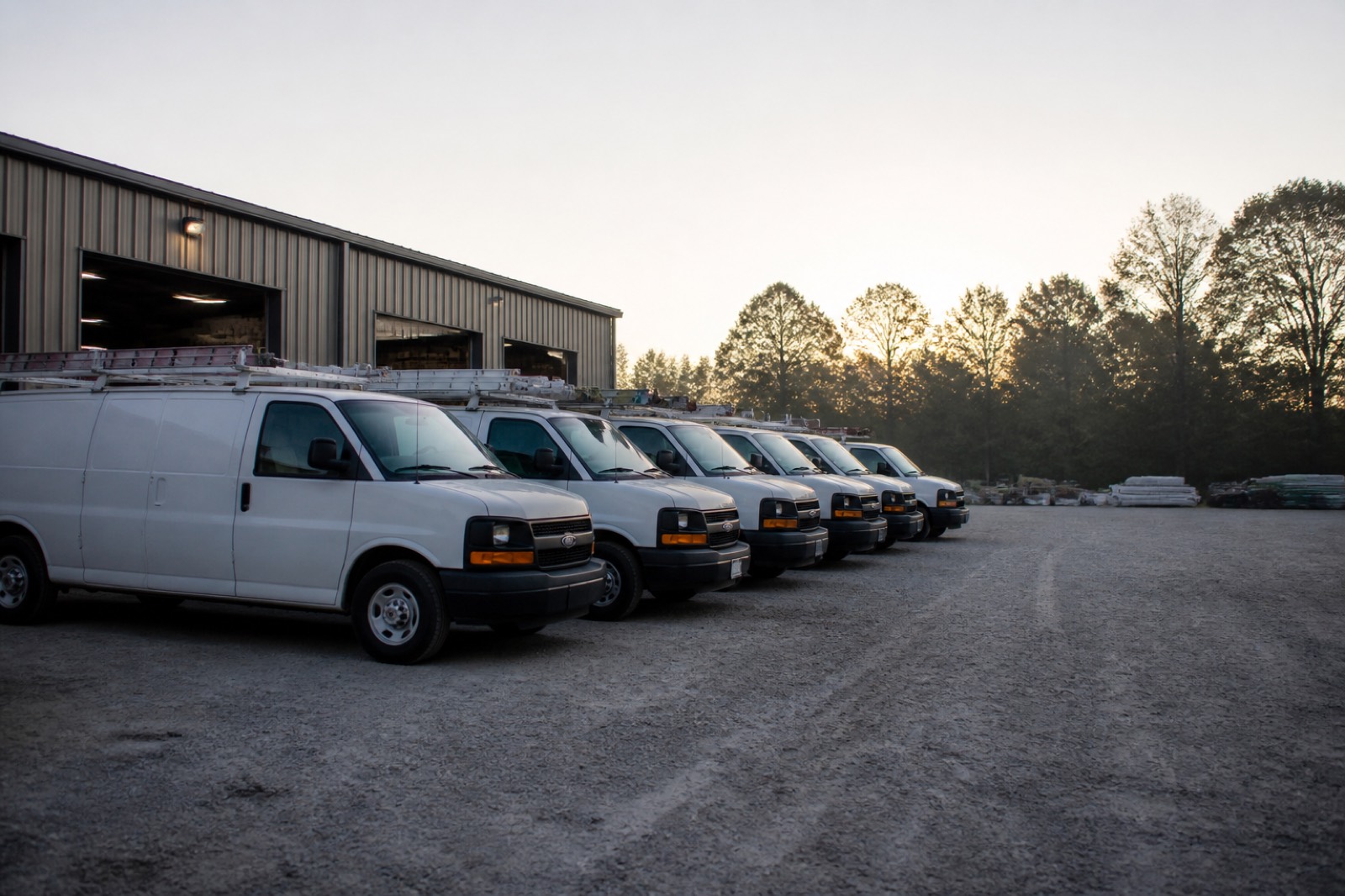
EBITDA multiple ranges cluster by size, service mix, and recurring revenue, with commercial mechanical platforms at the top of the market. Source: CT Acquisitions HVAC deal data reconciled against Brentwood Growth and Capstone Partners HVAC sector updates.
Public disclosure of HVAC M&A multiples is rare; we report what was disclosed and flag what wasn’t. The most-cited public anchor for the 2026 platform-level multiple is the Champions Group / Blackstone transaction. Bloomberg coverage cited an enterprise value of approximately $2.5 billion on a base of approximately $140 million of EBITDA, implying roughly 18.5x EBITDA. The Redwood Services / Altas Partners transaction, at approximately $1.1 billion enterprise value on.
Public disclosure of HVAC M&A multiples is rare; we report what was disclosed and flag what wasn’t. The most-cited public anchor for the 2026 platform-level multiple is the Champions Group / Blackstone transaction. Bloomberg coverage cited an enterprise value of approximately $2.5 billion on a base of approximately $140 million of EBITDA, implying roughly 18.5x EBITDA. The Redwood Services / Altas Partners transaction, at approximately $1.1 billion enterprise value on roughly $65 million trailing-twelve-month EBITDA per PE Hub coverage, implies roughly 17x EBITDA. Apex Service Partners’ September 2023 $3.4 billion continuation transaction did not disclose an explicit multiple, but the size of the secondary market validated mid-teens multiples for tier-one residential HVAC roll-ups. Other 2024-2026 platform transactions (Sila Services to Goldman Sachs, Service Logic to Bain Capital and Mubadala, Neighborly to KKR) did not publicly disclose specific multiples; trade-press estimates for Service Logic placed the deal value around $3.1 billion.
Below the platform tier, multiples scale down materially. Capstone Partners, PKF O’Connor Davies, Kroll, KPMG Corporate Finance, and L.E.K. Consulting coverage converges around the following ranges for 2025-2026 HVAC services M&A: well-run growth-oriented residential HVAC platforms with $2M+ EBITDA at 7-12x EBITDA; tuck-in residential HVAC add-ons at 4-8x EBITDA depending on quality, recurring/membership-plan revenue mix, and geographic density; commercial HVAC service-contract-heavy operators in the $3M-$15M EBITDA range at 8-13x EBITDA depending on customer mix (data centers, healthcare, hyperscale > generic commercial > construction); small SDE-based acquisitions in the sub-$500K tier at 2-4x SDE. Capstone’s 2025 commentary specifically noted that sector operators with unique offerings (data center cooling, controls, building automation) received premium valuations.
The platform-vs-add-on multiple gap is structural, not negotiable. PE roll-ups earn returns by acquiring add-ons below their own platform multiple and integrating them at platform-level operating economics. If a platform trades at 12x EBITDA and acquires add-ons at 6x EBITDA, every closed add-on creates instant multiple arbitrage. HVAC owners trying to negotiate a platform-equivalent multiple for an add-on-sized business will encounter this floor across virtually every PE buyer in our tracker. The owners who clear the floor are the ones whose business genuinely qualifies as a platform. size ($5M+ EBITDA), recurring or contracted revenue mix, market position, technology, and management depth that operates without the founder.
Deal-structure preferences in the verified 2024-2026 HVAC transactions. Most disclosed deals in our tracker explicitly mention founder/owner rollover equity. Redwood Services consistently structures partnerships in which the owner retains a ‘significant minority ownership stake’ (Tony’s Plumbing, Hope Plumbing, Cardinal Heating). Sila Services language emphasizes career-development continuity for tradespeople and continuity of local brands. Apex Service Partners has historically retained acquired brand identities. The structural preference among PE roll-up buyers for HVAC in 2024-2026 is majority control with founder rollover, with deal-by-deal flexibility on owner-continuity (some founders stay; others transition out within 12-24 months). Earnouts tied to revenue or EBITDA milestones over 12-36 months are common in add-on transactions but are rarely disclosed in detail in HVAC press releases. Cash-at-close in the 60-80% range with rollover equity in the 10-25% range with a 12-24 month earnout is the typical add-on structure across the platforms in this tracker.
What HVAC PE Platforms Look For: 2026 Acquisition Criteria
Across the 18 platform-tier operators, the buy-box patterns inferred from publicly disclosed deals are reasonably consistent. (1) EBITDA range: roughly $1M-$10M for residential add-ons, $3M-$20M for commercial mechanical add-ons, $10M-$50M+ for new platform investments. (2) Service mix: residential bias for Apex, Sila, Wrench, Champions, Redwood, ARS, NearU, Authority Brands, Neighborly Aire Serv, Legacy; commercial bias for Service Logic, Comfort Systems USA, Reedy Industries, Crete United, FirstCall Mechanical, Astra Service Partners.
Across the 18 platform-tier operators, the buy-box patterns inferred from publicly disclosed deals are reasonably consistent. (1) EBITDA range: roughly $1M-$10M for residential add-ons, $3M-$20M for commercial mechanical add-ons, $10M-$50M+ for new platform investments. (2) Service mix: residential bias for Apex, Sila, Wrench, Champions, Redwood, ARS, NearU, Authority Brands, Neighborly Aire Serv, Legacy; commercial bias for Service Logic, Comfort Systems USA, Reedy Industries, Crete United, FirstCall Mechanical, Astra Service Partners, Pueblo Mechanical. (3) Recurring revenue: explicitly preferred. membership clubs, maintenance plans, multi-year commercial service contracts. (4) Geographic fit: most platforms expand into adjacent markets where they already operate or where they see scale economics in dispatch, marketing, and technician routing. (5) Cultural fit and people: nearly every press release in our window emphasizes team continuity, career-development, and tradespeople-first culture.
Sponsors building an HVAC platform can benchmark their thesis on our buying an HVAC business at these multiples hub, which covers add-on economics and the multiple gap.
What disqualifies an HVAC business in 2026 PE underwriting. Heavy new-construction concentration (project-based, GC-dependent, customer relationship doesn’t belong to the business). Heavy customer concentration (>20% of revenue from a single customer, very common in commercial-construction HVAC). Owner-dependency without a clear succession plan. Messy permit and warranty history that surfaces in diligence. Below-floor labor practices that create regulatory or reputational risk. Material refrigerant compliance gaps under the EPA’s A2L transition. None of these are deal-killers individually for every buyer, but each one moves the deal from the platform tier toward the add-on tier. or out of the buy-box entirely.
What materially raises the multiple in 2026 HVAC diligence. (1) Membership / maintenance-plan revenue with documented retention metrics (residential platforms care about this most). (2) Multi-year commercial service-contract base with healthcare, data center, hyperscale, education, government, or senior-living customer mix. (3) Technology stack (ServiceTitan or equivalent residential dispatch and CRM, BuildOps for commercial, KPI dashboards). (4) Technician headcount that transfers reliably (not an owner-dependent rolodex). (5) Geographic density supporting dispatch efficiency. (6) Clean financial reporting with auditable add-back schedules. (7) Compliance posture for the A2L refrigerant transition and current EPA Section 608 certification. The same six-to-eight characteristics show up consistently across press-release language and trade-press buy-box descriptions.
Platform price or tuck-in price? A five-question path for HVAC owners
The criteria above describe what platforms like. The harder question for an owner is which price ladder you are standing on, because the add-on tier and the platform tier in this tracker are priced by different logic. Answer these questions in order. Each answer either sends you to the next question or tells you where you land and what to fix.
- What is your trailing EBITDA? Below $1M, you can stop here: your likely buyers are SBA-financed individuals, search funders and tuck-in acquirers, and the realistic range shown on this page is 3x to 5x EBITDA (2x to 4x SDE under $500K). Between $1M and $5M, carry on as an add-on candidate. At $5M or more, carry on as a possible platform.
- Where does your revenue come from? If new construction or GC-driven project work is the bulk of it, you will be priced at the bottom of whichever tier you sit in, and the commercial mechanical platforms are less likely to engage. If most revenue comes from service calls, maintenance plans or multi-year commercial contracts, carry on.
- Does any single customer pay you more than 20% of revenue? If yes, expect buyers to treat you as the next tier down until it is fixed. This is the question commercial construction HVAC shops fail most often. If no, carry on.
- Would the business run for 90 days without you? Test it honestly: who prices the large jobs, who holds the key customer relationships, who the technicians call when something goes wrong. If every answer is you, a platform buyer will push for a longer earnout and more rollover. If a general manager or service lead covers it, carry on.
- Can you hand over clean books and compliance files on day one of diligence? That means auditable add-back schedules, permit and warranty history, current EPA Section 608 certifications and a written plan for the A2L refrigerant transition. If yes, you are positioned at the top of your tier. If not, plan for diligence findings to pull the price toward the middle.
Reading the result. An owner with $1M to $3M of EBITDA who clears questions 2 through 5 sits at the top of the 4x to 7x add-on band and should expect more than one residential platform from the list above to bid. A commercial service-contract shop that clears them can also draw commercial mechanical buyers, where this page puts the range at 8x to 13x once EBITDA reaches $3M. An owner with $5M or more who clears every question is the platform case the tracker describes: size, recurring revenue, market position, technology and a management team that runs without the founder. Fail question 2 or question 4 at any size and the platform multiple is off the table for now, whatever the headline recapitalizations suggest.
Which fix to start first. We rank revenue mix and owner dependency ahead of financial cleanup because they take the longest to change. Moving from new construction toward service work, and handing customer relationships to a second person, are 12 to 24 month projects. Clean books and compliance files can usually be pulled together in the months before a sale process starts, so they come last in the queue, not first.
HVAC M&A in 2026: How the Deal Market Actually Works
HVAC M&A runs on two engines: private equity platforms buying scale operators as roll-up anchors, and those same platforms acquiring smaller companies as tuck-in add-ons. Deal volume in residential and commercial HVAC services climbed through 2024 and 2025 as platforms competed for a limited pool of $2M-plus EBITDA targets, and 2026 continues that pattern. Most transactions never hit a press release, so the public deal count understates true activity.
When owners search for “HVAC mergers and acquisitions” or “HVAC services M&A,” they are usually asking one of two questions: what is my company worth to these buyers, and who is transacting right now. This tracker answers both from public sources. The buyers profiled above are the demand side of the HVAC M&A market. Understanding how they structure deals tells you what to expect when you go to market.
HVAC M&A transactions cluster around a few repeatable structures. Platform acquisitions of $5M-plus EBITDA companies command the highest multiples because they can anchor a new geographic hub. Tuck-in add-ons to an existing platform trade lower on a standalone basis but close faster, since the acquirer already has the integration playbook built. Temperature-control and mechanical-contractor businesses with recurring maintenance revenue transact at a premium to pure new-construction shops, because service contracts give the buyer predictable cash flow. According to the U.S. Bureau of Labor Statistics, plumbing, heating, and air-conditioning contractors employ over 1.5 million workers, which is why consolidators treat this trade as one of the deepest roll-up opportunities in home services.
The practical takeaway for owners: HVAC M&A activity is not slowing, and the number of well-capitalized buyers competing for quality companies has grown every year since 2021. That competition is what pushes multiples up. It also means the difference between a good outcome and a great one comes down to how you run the process, not whether buyers exist.
Sell-Side vs Buy-Side: Who Represents HVAC Owners in an Exit
Sell-side advisors represent the seller and run a competitive process to drive up price. No fee to you on buy-side introductions; sell-side mandates are paid on success at closing. HVAC owners searching for “sell-side M&A advisory firms” or “top M&A firms for heating and cooling” want someone in their corner during the exit. The model you choose changes who pays, how the process runs, and where the incentives sit.
Traditional sell-side M&A firms and business brokers charge the seller a success fee, commonly 6% to 12% of the sale price, and typically run a 9-to-12-month process. In exchange, they market your company, solicit multiple bids, and negotiate on your behalf. The upside is representation. The downside is cost, timeline, and the fact that a broker paid on commission is incentivized to close any deal, not necessarily your best one.
No fee to you on buy-side introductions; sell-side mandates are paid on success at closing. That structure fits this market well, because the 18 active platforms profiled above are already actively buying and have budget to compensate the intermediary who brings them a qualified target. For an owner, the result is direct access to the exact buyers on this list without a six-figure success fee coming out of the sale proceeds. No fee to you on buy-side introductions; sell-side mandates are paid on success at closing.
Which model serves you depends on your goals. If you want a broad auction across strategic and financial buyers and you are comfortable paying a commission for that reach, a traditional sell-side firm makes sense. No fee to you on buy-side introductions; sell-side mandates are paid on success at closing. Either way, do not go to market without representation. Owners who negotiate directly with a professional acquirer, unadvised, consistently leave value on the table.
Recent developments: 2026 status of the major HVAC platforms and their PE backers
In 2026 the biggest buyers of HVAC companies are still the established PE-backed roll-ups, but two things changed: Apollo Global Management put fresh capital into Apex Service Partners at a roughly $10 billion valuation, and new commercial-focused platforms backed by AE Industrial Partners and Blackstone joined the field, while sector deal pricing cooled from its 2021 peak.
Apollo took a large minority stake in Apex Service Partners. In May 2026 Apollo Global Management agreed to invest roughly $2 billion in Apex Service Partners, the Alpine Investors platform, at a valuation of about $10 billion including debt, for a stake above 20%, with the deal expected to close in the fourth quarter. Source: U.S. News & World Report, May 27, 2026. Apex operates in nearly every U.S. state with more than 7,800 tradespeople across HVAC, plumbing, and electrical. Source: Modern Distribution Management, May 2026.
Sector deal pace held flat while pricing eased off the peak. Capstone Partners counted 92 announced or completed HVAC-services transactions year to date in its July 2026 update, down 4.2% versus the prior-year period, with financial sponsors accounting for 47 deals and PE add-ons alone making up 38 transactions, or 41.3% of all dealmaking. The same report put the sector-wide average at 11.4x EV/EBITDA across 2024 to year-to-date 2026, down from 13.4x across 2021 to 2023. Source: Capstone Partners, HVAC Services M&A Update, July 2026.
New commercial-HVAC platforms entered the roll-up. AE Industrial Partners formed a national commercial HVAC services platform through an investment in United Building Solutions, a Northeast provider, folding in North Florida’s Total Comfort Solutions at the same time. Source: Contracting Business, February 2025. That platform has kept buying, adding DFW Mechanical Group to extend into the Southeast and South-Central U.S. Source: United Building Solutions press release via Yahoo Finance, 2026.
Blackstone-backed and independent-sponsor platforms stayed active on tuck-ins. Recent disclosed HVAC add-ons in 2026 include:
- AIR Control Concepts, a Blackstone-backed commercial HVAC platform, acquired Technical Air Systems. Source: Capstone Partners, HVAC Services M&A Update, July 2026 (transaction dated February 2026).
- Liberty Services Partners, backed by NorthCurrent Partners, acquired Snidman Enterprises, formerly Arctic Breeze Air Conditioning & Heating. Source: Capstone Partners, HVAC Services M&A Update, July 2026 (transaction dated April 2026).
- Ambient Enterprises, backed by ICG, acquired Integ Systems. Source: Capstone Partners, HVAC Services M&A Update, July 2026 (transaction dated April 2026).
What it means for sellers in 2026. The platform roster that dominated 2024 and 2025 is intact and now better capitalized at the top, so competition for well-run HVAC businesses with strong recurring service-agreement revenue stays real; the step down in average sector multiples means buyers are more selective on quality than they were during the 2021 peak. Source: Capstone Partners, HVAC Services M&A Update, July 2026.
What This Means for HVAC Owners Considering an Exit
First: identify which tier of buyer you actually fit before you go to market. If your HVAC business does $1M-$3M of EBITDA, your realistic 2026 buyer pool is dominated by add-ons to existing platforms (every name in this tracker), search funders, family offices, and independent sponsors. PE platforms in our tracker generally won’t buy you directly as a new platform investment. If your business does $5M-$15M of EBITDA, you have.
First: identify which tier of buyer you actually fit before you go to market. If your HVAC business does $1M-$3M of EBITDA, your realistic 2026 buyer pool is dominated by add-ons to existing platforms (every name in this tracker), search funders, family offices, and independent sponsors. PE platforms in our tracker generally won’t buy you directly as a new platform investment. If your business does $5M-$15M of EBITDA, you have the deepest 2026 buyer pool: every platform in this tracker is a potential acquirer, plus the search-fund and family-office tier. If your business does $20M+ of EBITDA with regional or multi-state geographic potential, you’re a candidate for a new platform investment by an LMM PE firm and possibly a strategic acquirer (Comfort Systems USA, Watsco, Lennox).
Buyers hunting HVAC platforms can join through the apply to our vetted buyer network and receive direct-to-owner deal flow from our sourcing engine.
Second: target the right region against the right platform. Sila Services is concentrated in the Northeast, Mid-Atlantic, and Midwest. Wrench Group is national but has the deepest density in Atlanta, Dallas, Denver, Houston, Phoenix, Sacramento, Tampa, and San Francisco Bay. Apex Service Partners is national with a Sun Belt and Florida bias. Pueblo Mechanical & Controls is concentrated in the Southwest. Champions Group is California-centered with selective national reach. ARS / Rescue Rooter has the broadest geographic distribution. FirstCall Mechanical and NearU Services are concentrated in the Southeast and Mid-Atlantic. Crete United and Reedy Industries are commercial-mechanical Midwest-centric. Service Logic and Comfort Systems USA are national commercial mechanical. Astra Service Partners spans the East Coast and select markets nationwide. Aligning your geography with platforms that already operate density there improves your conversion probability and your competitive bid pool.
Third: understand your service-mix valuation lever. Commercial HVAC with recurring maintenance contracts (especially in data centers, healthcare, hyperscale, and senior living) is the highest-multiple service mix in 2026 HVAC M&A. Residential HVAC with strong membership/maintenance-plan revenue is the second-highest. Residential HVAC service without recurring revenue is third. Mixed residential/commercial is variable depending on how clean each segment is. New-construction and GC-dependent commercial HVAC is the lowest. If you’re a year or more away from an exit and your mix is heavily new-construction, deliberately shifting toward service-and-maintenance work is the highest-leverage pre-sale move available to you.
Fourth: when PE makes sense vs. when alternatives are stronger. PE makes sense when you have institutional-quality financials, a sub-50% owner-dependency profile, recurring or contracted revenue, and a willingness to retain rollover equity. Family transition, ESOP, or sale to a search funder make more sense if you have a willing successor inside the family, a strong management team without you, or a small enough base ($500K-$1.5M SDE) that PE add-on economics are marginal. The right answer is buyer-type-specific, not industry-specific.
Fifth: most HVAC owners over-estimate PE buyer interest at small sizes. Below $1M of EBITDA, the realistic HVAC buyer pool is dominated by SBA-financed individual buyers, search funders, and add-on tuck-ins to existing platforms. not direct PE platform formation. An HVAC owner who runs a 12-month process targeted at a generic ‘PE roll-up audience’ without sizing into the right tier will see thin response and weaker terms. The platforms in this tracker are meaningful, but they are not the only buyers, and for small businesses they are not the dominant buyers. The platforms in this tracker also tend to ignore highly seasonal heating-only or cooling-only operators in markets where year-round revenue is structurally constrained.
Limitations of This HVAC Private Equity Analysis
We want to be explicit about what this tracker does not capture. Every limitation below is a real constraint on the data. Naming them up front is what differentiates research from marketing. A reader making a decision about their own business should weigh these constraints alongside the verified platform list. Limitation 1: We may underrepresent platforms that haven’t issued public press releases. Several HVAC roll-ups operate quietly. Family-office-backed HVAC investments.
We want to be explicit about what this tracker does not capture. Every limitation below is a real constraint on the data. Naming them up front is what differentiates research from marketing. A reader making a decision about their own business should weigh these constraints alongside the verified platform list.
Limitation 1: We may underrepresent platforms that haven’t issued public press releases. Several HVAC roll-ups operate quietly. Family-office-backed HVAC investments, independent-sponsor deals, and smaller regional consolidators routinely close transactions without press coverage. We investigated additional platform candidates including TurnPoint Services (OMERS portfolio company; we did not locate publicly disclosed 2024-2026 HVAC-specific add-ons that cleared our citation bar though the platform remains operational), Aris Brands, Right Time Group (Canadian-anchored), Frontline Services Group, Trane Technologies’ service network, Modigent (formerly DPS Group), Aris Industries, Tropical Services Group, Premier Service Partners, and several smaller regional rollers. For each, either we could not locate a publicly disclosed HVAC-specific 2024-2026 acquisition or the disclosure was outside our window. They are not in the active list because they did not clear our citation bar; they are not absent because we believe they are inactive.
Limitation 2: HVAC distribution is consolidating in parallel but is excluded from this services-platform tracker. QXO’s $11 billion April 2025 acquisition of Beacon Roofing Supply (NASDAQ: BECN) and the broader 2025 Trinity Hunt Partners launch of Averon Group (Blackhawk Supply in July 2025, Fenco Supply in February 2026) are real consolidations of the HVAC and adjacent building-products distribution layer. These are macro context for the services-platform tracker but do not compete for the same HVAC service businesses. We mention them only to clarify that the ‘HVAC PE roll-up’ phenomenon spans equipment, distribution, and service, with each layer operating on its own multiples and acquisition logic. Watsco (NYSE: WSO), the largest publicly traded HVAC distributor, is an analogous public strategic in the distribution layer.
Limitation 3: Multiples and deal terms are systematically under-reported. Most M&A press releases in HVAC during 2024-2026 said ‘terms not disclosed.’ Where we report multiples, we cite the underlying source. Where we don’t, we don’t guess. Trade-press estimates for platform-level deals (Service Logic at ~$3.1B, Champions Group at ~$2.5B and ~18.5x EBITDA per Bloomberg, Redwood at ~$1.1B and ~17x per PE Hub) are useful anchors but not company-confirmed.
Limitation 4: Family offices and independent sponsors are systematically harder to identify. These buyer types frequently acquire HVAC businesses without issuing press releases, and even when they do, the announcements are often brief and not picked up by major trade press. They are real participants in the HVAC buyer pool. particularly for sub-$3M EBITDA deals. and a tracker built only from press releases will under-represent them. We work with several family-office and independent-sponsor buyers in HVAC; their disclosed-deal footprint is far smaller than their actual deal flow.
Limitation 5: Platform classification is fuzzy at the edges. Several platforms straddle home services more broadly. HVAC, plumbing, electrical, water treatment, indoor air quality, and home performance. and we counted them as HVAC platforms when HVAC is in their disclosed service mix (as it is for every active platform in this tracker). A reader interested specifically in pure-play HVAC operators will find that very few platforms in our tracker meet that bar; most are HVAC-plus-plumbing-plus-electrical or commercial mechanical with HVAC as the dominant service. Comfort Systems USA includes meaningful electrical and industrial mechanical revenue in addition to HVAC; the Feyen Zylstra and Meisner Electric acquisitions in October 2025 sit primarily in its electrical segment.
Limitation 6: Activity recency varies by platform. Wrench Group’s most recently disclosed HVAC-specific acquisition in our window was the February 2024 Lindstrom deal; we did not locate a publicly disclosed HVAC-specific add-on by Wrench Group during 2025 or early 2026. That doesn’t mean Wrench Group is inactive. the September 2025 $1.3 billion debt refinancing implies continued sponsor support. but the disclosure tempo varies, and a reader should not assume uniform activity across all 18 active platforms.
Limitation 7: Our coverage window cuts off April 30, 2026. Anything announced after that date is not in this report. We expect to refresh quarterly. The cleanest way to use this tracker is as a starting baseline for an owner-side conversation, not as a real-time deal feed.
Future HVAC PE Tracker Updates and Methodology Notes
We plan to update this tracker quarterly. Each quarterly refresh will add platforms that cleared our verification bar during the quarter, retire platforms whose HVAC-specific activity has gone dormant, update geography and add-on counts, and re-cite any platform-level multiples that became public.
We plan to update this tracker quarterly. Each quarterly refresh will add platforms that cleared our verification bar during the quarter, retire platforms whose HVAC-specific activity has gone dormant, update geography and add-on counts, and re-cite any platform-level multiples that became public. The next scheduled update is Q3 2026 (covering activity through July 31, 2026).
We will expand coverage over time in three directions. (1) Family-office and independent-sponsor HVAC activity, which is currently underrepresented because of disclosure norms. (2) Regional consolidators outside our current geographic footprint, particularly in the Pacific Northwest, Mountain West, and Northern New England. (3) HVAC-specific deal terms when disclosed in public filings. for example, Comfort Systems USA’s SEC 10-K and 10-Q filings remain a valuable data source for commercial mechanical M&A activity, and Chemed Corporation’s SEC filings remain valuable for Roto-Rooter franchise consolidation.
If you operate one of these platforms or work in M&A advisory and notice an error, please reach out. We will correct in-line and re-publish. Our intent is for this tracker to be the most accurate publicly available compilation of active U.S. HVAC PE roll-up activity, and that requires a feedback loop with the people who know the deal flow best. The contact form on the article page goes directly to our partner team.
If you’re an HVAC owner considering an exit and want a private read on which of these platforms would actually compete for your business, we work with most of them. A 15-minute confidential call can convert this tracker from an industry overview into a specific buyer list calibrated to your size, region, and service mix. No fee to you on buy-side introductions; sell-side mandates are paid on success at closing. Contact information is in the call-to-action above and at the end of this report.
Conclusion: The 2026 HVAC Private Equity Outlook
The 2026 HVAC PE landscape is the most active and most concentrated of any U.S. home-services trade, and the platform list is shorter than the trade-press hype suggests. Eighteen verified active platforms. Approximately 60 disclosed Apex Service Partners add-ons in 2025 alone, plus dozens more across Sila Services, Comfort Systems USA, Service Logic, Astra Service Partners, FirstCall Mechanical, Crete United, Authority Brands, Pueblo Mechanical, NearU Services, Redwood Services, and the.
The 2026 HVAC PE landscape is the most active and most concentrated of any U.S. home-services trade, and the platform list is shorter than the trade-press hype suggests. Eighteen verified active platforms. Approximately 60 disclosed Apex Service Partners add-ons in 2025 alone, plus dozens more across Sila Services, Comfort Systems USA, Service Logic, Astra Service Partners, FirstCall Mechanical, Crete United, Authority Brands, Pueblo Mechanical, NearU Services, Redwood Services, and the rest of the verified set. Four major sponsor-to-sponsor recapitalizations in 2024-2026 (Sila to Goldman Sachs Alternatives, Redwood to Altas Partners at ~$1.1B, Service Logic to Bain Capital + Mubadala, Champions Group to Blackstone’s BXPE at ~$2.5B / ~18.5x EBITDA) reset the cap table at the top of the market. Add-on multiples in the 4-8x EBITDA range, residential platform multiples in the 7-12x EBITDA range, commercial mechanical platform multiples in the 8-13x range, and a sub-$1M EBITDA tier where the realistic buyer pool tilts toward search funders, SBA-financed individuals, and platform add-ons rather than direct PE platform formation. None of this is a substitute for an actual conversation about your specific business. If you’d like one, the 15-minute call is the easiest place to start. We’ll tell you which platforms in this tracker would actually compete for your HVAC business, what range of multiples you’d see, and what to do over the next 6-12 months to put yourself in the best position. The conversation is confidential, costs nothing, and ends if you decide it’s not the right time.
HVAC Private Equity: Frequently Asked Questions
What is the HVAC private equity landscape in 2026?
The 2026 HVAC private equity landscape includes 18 active U.S. platforms with publicly disclosed acquisitions, with cap-table reshuffles at Sila Services (to Goldman Sachs Alternatives, Nov 2024), Redwood Services (to Altas Partners, May 2025), Service Logic (to Bain Capital and Mubadala, Dec 2025), and Champions Group (to Blackstone BXPE, Feb 2026). Press-derived platform-recapitalization multiples ranged ~17-20x EBITDA for Sila (HomePros sourced reporting) to ~18.5x for Champions Group (HomePros and Mergersight coverage). Add-on acquisitions at the sub-platform tier continue at 4-8x EBITDA depending on size, RMR mix, and geography.
Which PE firms are buying HVAC companies in 2026?
Active PE firms in U.S. HVAC consolidation as of Q1 2026 include Alpine Investors (Apex Service Partners), Goldman Sachs Alternatives (Sila Services), Blackstone BXPE (Champions Group, announced Feb 17 2026), Altas Partners (Redwood Services), Bain Capital + Mubadala (Service Logic), Leonard Green & Partners (Wrench Group), Apax Partners (Authority Brands), Alpine Investors via Orion Group (Astra Service Partners), Ridgemont Equity Partners (Crete United), Partners Group (PremiStar), and others. The complete tracker of 18 publicly active platforms with sponsor, date, and primary-source URL is documented in the Active Platforms section below.
How active is HVAC M&A in 2026?
HVAC M&A activity in 2026 remained at elevated 2024 levels per IBBA Market Pulse Q4 2025 (Construction = #1 LMM industry at 27% of deal flow) and Capstone Partners HVAC M&A Update Summer 2025. Apex Service Partners alone closed 60 add-on acquisitions in 2025 per Alpine Investors’ 2025 Year-in-Review. Four platform-level cap-table transactions closed in 2024-2026 (Sila, Redwood, Service Logic, Champions). Strategic public consolidators (Comfort Systems USA, EMCOR) continued tuck-in activity disclosed in 10-K filings.
How was the list of 18 active HVAC PE platforms compiled?
Each platform appears in the active list only if we found a publicly disclosed HVAC-specific acquisition or platform-level transaction between January 1, 2024 and April 30, 2026, anchored to a citable press release URL, SEC filing, or sponsor-website disclosure. Sources include BusinessWire, PR Newswire, GlobeNewswire, sponsor portfolio pages, public-company filings (Comfort Systems USA, Chemed), and trade press (ACHR News, Contracting Business, HVACR Business, Plumbing & Mechanical, phcppros, PE Hub, PE Professional, Capstone Partners, S&P Global Market Intelligence). Platforms whose HVAC activity we suspect but could not verify in writing are documented in the Limitations section, not the active list.
Is this tracker exhaustive?
No. It captures publicly disclosed HVAC roll-up activity. It systematically underrepresents family-office buyers, independent sponsors, and smaller regional consolidators that don’t routinely issue press releases. It also reflects only the period through April 30, 2026. deals announced after that date are not included. We update quarterly.
Why is the multiple range so wide (3-13x EBITDA)?
Because HVAC M&A multiples are highly sensitive to size, service mix, recurring revenue, customer concentration, and market position. Add-on tuck-ins below $1M EBITDA cluster at 3-5x. Mid-quality residential add-ons in the $1-3M EBITDA range cluster at 4-7x. Platform-quality residential businesses with $2M+ EBITDA, recurring membership revenue, and clean financials cluster at 7-12x. Commercial mechanical platforms with multi-year contracts, data center / healthcare exposure, and clean controls/automation capabilities cluster at 8-13x. Public sponsor-to-sponsor platform recapitalizations have implied multiples in the mid-to-high teens (Champions Group’s implied ~18.5x per Bloomberg coverage, Redwood’s implied ~17x per PE Hub coverage). The spread is structural, not negotiable.
Which platform was most active in 2025?
By disclosed deal volume, Apex Service Partners (Alpine Investors) closed approximately 60 add-on acquisitions in 2025 across HVAC, plumbing, and electrical. substantially more than any other platform we tracked. Sila Services, Comfort Systems USA, Service Logic, and Astra Service Partners (within Alpine’s Orion Group) also had active disclosed cadences.
Where does Comfort Systems USA fit in this landscape?
Comfort Systems USA (NYSE: FIX) is the largest publicly traded U.S. mechanical and electrical services contractor focused on commercial and industrial markets. Its 10-K and quarterly filings document continuous M&A: J&S Mechanical Contractors (Utah, $120M, February 2024), Century Contractors (NC, January 2025), Right Way Plumbing & Mechanical (FL, May 2025), a New York mechanical service provider ($2.8M, May 2025), and Feyen Zylstra Holdings + Meisner Electric (MI/FL, October 2025, $200-240M annualized revenue contribution at close). FIX shares hit record highs in early 2026 amid commercial mechanical demand including data center cooling. It is a public-strategic comparable to Service Logic on the commercial mechanical side.
What about Aire Serv, One Hour Heating, and other HVAC franchises?
One Hour Heating & Air Conditioning is part of Authority Brands, owned by funds advised by Apax Partners with British Columbia Investment Management Corp. as a significant minority. Aire Serv is part of Neighborly, which KKR acquired from Harvest Partners with closing in Q1 2025. Both are franchise-system roll-ups: institutional capital owns the franchisor, growth happens at the franchise-territory level. Authority Brands disclosed 246 new franchise owners and 340 new territories across 31 states in 2025. Neighborly’s Aire Serv ranked #1 HVAC franchise in Entrepreneur’s 2025 Franchise 500. Both are platforms in this tracker because the parent franchisors are PE-owned and the system-wide territory expansion functions as a roll-up, even though individual transactions are franchise awards rather than corporate acquisitions.
Is HVAC PE consolidation slowing or accelerating in 2026?
Accelerating, by every public dataset we tracked. S&P Global Market Intelligence reported global PE add-on transactions targeting HVAC service providers rose 88% YoY through June 2025. Capstone Partners reported 149 HVAC-services M&A transactions YTD 2025, up 12.9% YoY, with multiples just below the 2020-2021 bull-market peak. Sponsor-to-sponsor activity at the platform level (Sila, Service Logic, Champions Group, Neighborly, Redwood, Frontier Service Partners to Apex) accelerated in 2024-2026 vs. prior years. Sponsor capital availability (Champions Group going into Blackstone’s BXPE perpetual capital vehicle, Wrench Group’s $1.3 billion debt refinancing, Apex Service Partners’ $3.4 billion continuation transaction) suggests the buy-side has continuing capital. We see no public signals of slowing in the disclosed deal flow we tracked.
What multiple should a $2M EBITDA residential HVAC business expect?
Trade-press and advisor coverage clusters this size at 5-8x EBITDA depending on service mix, recurring/membership-plan revenue, owner dependency, and geography. The realistic 2026 buyer pool for that size includes platform add-ons (every name in this tracker), search funders, family offices, and independent sponsors. Pure PE platform investment at $2M EBITDA is rare; that’s add-on territory. Membership-plan revenue with documented retention, residential service density, ServiceTitan or equivalent technology stack, and a transferable technician roster all push toward the upper end of that range. Markets with strong year-round HVAC demand (Sun Belt) and operators with clean refrigerant/A2L compliance also command premium positioning.
Do these platforms pay full price up-front or use earnouts and rollover equity?
Most disclosed transactions in our tracker explicitly mention founder rollover equity, particularly Redwood Services partnerships (‘significant minority ownership stake’ language) and Sila Services acquisitions. Earnouts are common but rarely disclosed in detail in HVAC press releases. The structural norm in 2026 HVAC platform add-ons: 60-80% cash at close, founder rollover equity in the 10-25% range, occasional earnouts tied to revenue or EBITDA milestones over 12-36 months. Specific structures are deal-by-deal and depend on the platform’s integration model and the founder’s post-close role.
Are commercial HVAC platforms different from residential platforms?
Yes. structurally and economically. Commercial mechanical platforms (Service Logic, Comfort Systems USA, Reedy Industries, Crete United, FirstCall Mechanical, Astra Service Partners, Pueblo Mechanical) prioritize multi-year service contracts, recurring revenue density, mission-critical customer mix (data centers, healthcare, hyperscale, government, education, senior living), and controls/building automation capability. They underwrite at premium multiples per dollar of EBITDA when the customer mix is high-quality. Residential platforms (Apex, Sila, Wrench, Champions, ARS, Redwood, NearU, Authority Brands, Neighborly, Legacy) prioritize membership-plan revenue, technician productivity, brand consolidation, and Sun Belt / dense-metro density. The two cohorts compete for different operators and underwrite to different multiples; commercial mechanical platform-level multiples have generally exceeded residential platform-level multiples in 2024-2026.
What regions have the deepest 2026 HVAC buyer pool?
Based on disclosed platform geography and add-on activity in 2024-2026: Sun Belt (Florida, Texas, Arizona, Carolinas, Georgia), Northeast (Pennsylvania, New Jersey, New York, Connecticut, Massachusetts, New Hampshire), Mid-Atlantic (Virginia, DC, Maryland), Midwest (Illinois, Wisconsin, Indiana, Michigan, Ohio), and parts of California are the deepest. The Pacific Northwest, parts of the Mountain West, and Northern New England produce thinner disclosed-deal flow but include real local activity (Service Logic’s HVAC Incorporated in Oregon, Comfort Systems USA’s J&S Mechanical in Utah) that does make press releases. Texas and Florida produced the highest density of disclosed HVAC-specific 2024-2026 transactions across both residential and commercial cohorts.
How often will this tracker be updated?
Quarterly. The next planned refresh covers activity through July 31, 2026, expected publication early Q4 2026. We will add platforms that cleared the verification bar during the quarter, retire dormant platforms, and update multiples / deal counts. If you operate an HVAC platform and would like to be included in the next refresh, contact us through the form on the article page; we’ll review the disclosure and add the platform if it clears our citation bar.
How is CT Acquisitions different from a sell-side broker or M&A advisor?
We’re a buy-side partner. No fee to you on buy-side introductions; sell-side mandates are paid on success at closing. not the seller. We work with 500+ active U.S. buyers across PE platforms, family offices, search funders, independent sponsors, and strategic acquirers, including most of the HVAC platforms in this tracker. There is no engagement contract, no retainer, and no listing fee. No fee to you on buy-side introductions; sell-side mandates are paid on success at closing. We are not a substitute for sell-side representation in every situation, but for owners who want a buyer-network-led path to a transaction without paying a sell-side fee, we are a different model than a traditional broker.
Why is private equity buying HVAC companies?
HVAC service work is recurring, local, and hard to automate, and the market is split into thousands of owner-run shops that can be bought and combined. PE platforms buy these businesses, add maintenance agreements and shared back offices, and sell the larger company at a higher multiple. Per PitchBook data reported by the Wall Street Journal, private equity has bought nearly 800 HVAC, plumbing, and electrical companies since 2022.
What happens to an HVAC company after a private equity acquisition?
Most platforms keep the local brand, the trucks, and the technicians, because local reputation drives calls. What changes is behind the scenes: centralized dispatch, purchasing, pricing, and maintenance-agreement programs, plus tighter reporting. The former owner often stays on for a transition period, may roll part of the proceeds into platform equity, and may have part of the price tied to an earnout. Read the employment and rollover terms as closely as the price.
Sources & References
All claims and figures in this analysis are sourced from the publicly available references below. Free Diagnostic Want to know where your outbound is leaking deals? Download the free Sourcing Scorecard and see your gaps in five minutes. Download the Free Scorecard → Alpine Investors Closes $3.4B Single-Asset Continuation Transaction for Apex Service Partners (Alpine Investors) . Apex Service Partners $3.4B continuation transaction with Blackstone Strategic Partners, HarbourVest, Lexington, Pantheon.
All claims and figures in this analysis are sourced from the publicly available references below.
- Alpine Investors Closes $3.4B Single-Asset Continuation Transaction for Apex Service Partners (Alpine Investors). Apex Service Partners $3.4B continuation transaction with Blackstone Strategic Partners, HarbourVest, Lexington, Pantheon, plus $450M Alpine Fund IX commitment
- Imperial Capital Announces the Sale of Frontier Service Partners to Apex Service Partners (PR Newswire, January 23, 2024). Apex Service Partners platform-to-platform acquisition of Frontier Service Partners (Haley Mechanical, Korte Does It All, AB May), January 2024
- Apex Service Partners Pantheon International Case Study. Apex Service Partners scale: 100+ brands, ~$1.3B annual revenue, 8,000+ tradespeople
- Alpine Investors 2025 Year-in-Review. Apex Service Partners completed 60 add-on acquisitions in 2025; Alpine closed 190 deals across the firm in 2025; Astra/Orion completed eight add-ons
- Sila Services Equity Investment from Goldman Sachs Alternatives (BusinessWire, November 10, 2024). Sila Services platform-level recapitalization to Goldman Sachs Alternatives, November 2024
- Sila Services Acquires Sullivan Super Service to Strengthen Presence in Western Pennsylvania (PR Newswire, January 15, 2025). Sila Services Pittsburgh HVAC/plumbing acquisition, January 2025
- Sila Services Expands Footprint in Virginia with Acquisitions of Norfolk Air and Guy Smith Heating (PR Newswire, April 3, 2025). Sila Services dual Virginia HVAC acquisition, April 2025
- Sila Services Expands New England Presence with Acquisition of Live Free Heating, Cooling & Electric (PR Newswire, June 2, 2025). Sila Services New Hampshire HVAC acquisition, June 2025
- Bain Capital Completes Acquisition of Service Logic (BusinessWire, December 16, 2025). Service Logic platform-level recapitalization to Bain Capital + Mubadala, December 2025; over 140 locations and 5,000+ technicians; mission-critical commercial HVAC
- Mubadala Partners with Bain Capital in Acquisition of Service Logic (Mubadala). Mubadala Investment Company co-investor confirmation in Service Logic transaction
- Service Logic Expands HVAC Leadership in Boston (Service Logic news). Service Logic Caswell Mechanical and Caswell Schena Electric Boston acquisitions, 2024
- ACT Capital Advisors Represents HVAC, Incorporated in its Successful Sale to Service Logic (PR Newswire). Service Logic acquired HVAC, Incorporated of Milwaukie, Oregon (largest privately held HVAC mechanical services company in North America at acquisition), 2024
- Blackstone Announces Agreement to Acquire Champions Group (Blackstone press release, February 17, 2026). Champions Group HVAC/plumbing/electrical platform acquired by Blackstone BXPE perpetual capital vehicle, February 2026; 1,800+ field technicians, 150,000+ active members
- Blackstone Strikes Deal for Home Services Provider Champions Group (PE Professional, February 2026). Champions Group / Blackstone trade-press coverage including ~$2.5B value and ~18.5x EBITDA implied multiple per Bloomberg
- Redwood Services Strategic Investment from Altas Partners (BusinessWire, May 8, 2025). Redwood Services platform-level recapitalization to Altas Partners, ~$1.1B valuation, May 2025
- Altas Partners Backs Essential Home Services Platform Redwood Services (PE Hub). Redwood Services trailing-twelve-month EBITDA ~$65M, ~17x implied multiple; HVAC/plumbing/electrical platform
- Comfort Systems USA Announces Acquisition of J&S Mechanical Contractors (BusinessWire, February 2, 2024). Comfort Systems USA acquired J&S Mechanical Contractors of West Jordan, Utah for ~$120M, expected $145-160M annualized revenue and $12-15M EBITDA, February 2024
- Comfort Systems USA, Inc. 10-K filed with SEC for fiscal year ended December 31, 2024. Comfort Systems USA SEC disclosures for 2024 acquisition activity and segment composition
- Comfort Systems USA Reports Third Quarter 2025 Results (BusinessWire, October 23, 2025). Comfort Systems USA disclosed October 1, 2025 acquisition of Feyen Zylstra Holdings + Meisner Electric, expected $200-240M annualized revenue and $15-20M annual EBITDA contribution
- Crete United Expands Service Area and Adds Plumbing Capabilities to Chicago-area with Hartwig Mechanical (Crete United, November 2024). Crete United (Ridgemont Equity Partners portfolio) acquired Hartwig Mechanical of Harvard, Illinois, November 18, 2024
- Ridgemont Equity Partners Provides Growth Capital to Crete Mechanical Group. Ridgemont Equity Partners growth investment in Crete Mechanical Group (later Crete United), June 2022
- SkyKnight Capital Launches FirstCall Mechanical Group (BusinessWire, February 9, 2023). FirstCall Mechanical Group platform formation by SkyKnight Capital with founding HVAC/refrigeration/electrical/plumbing acquisitions, February 2023
- Holland & Knight Advises FirstCall Mechanical Group in Upsize of Senior Secured Credit Facility (Holland & Knight, September 2025). FirstCall Mechanical Group August 2025 senior secured credit facility upsize signaling continued M&A capacity
- Astra Service Partners Invests in Knott Mechanical (BusinessWire, September 22, 2025). Astra Service Partners (within Alpine Investors’ Orion Group) acquired Knott Mechanical of Maryland, September 2025
- Astra Partners with Leading HVAC Service Provider Josko Services (Astra Service Partners, September 4, 2024). Astra Service Partners 2024 HVAC partnership with Josko Services (Florida multifamily HVAC/plumbing/electrical)
- Alpine Investors Launches Facilities Services Platform Orion Group (BusinessWire, November 10, 2020). Orion Group / Astra Service Partners platform formation by Alpine Investors with Jackson Mechanical (Oklahoma City), November 2020
- Lindstrom Air Conditioning & Plumbing Joins Wrench Group (BusinessWire, February 12, 2024). Wrench Group HVAC acquisition activity, February 2024 (28th market nationwide)
- Authority Brands Closes Out 2025 With Strong Franchise Growth (PR Newswire, January 2026). Authority Brands 246 new franchise owners and 340 new territories across 31 states in 2025; 140% increase in new franchise ownership 2023-2025
- Authority Brands acquired by funds advised by Apax Partners (Apax Partners). Authority Brands sponsor identity (Apax Partners) and brand portfolio including One Hour Heating & Air Conditioning
- KKR to Acquire Leading Home Services Platform Neighborly (Neighborly Brands). KKR acquisition of Neighborly (parent of Aire Serv HVAC franchise and Mr. Rooter Plumbing) closing Q1 2025
- GI Partners Joins Charlesbank Capital Partners to Accelerate Growth at American Residential Services (PR Newswire, August 2020). ARS Q4 2020 majority investment by GI Partners alongside Charlesbank; >70 service centers, 23 states, 6,500 employees
- OMERS Private Equity to Acquire Pueblo Mechanical & Controls (GlobeNewswire, August 5, 2022). Pueblo Mechanical & Controls platform sponsor (OMERS Private Equity) since August 2022; commercial HVAC, plumbing, controls
- Pueblo Acquires Climate Solutions and Evolution Mechanical (Pueblo Mechanical). Pueblo Mechanical & Controls Texas commercial HVAC expansion via Climate Solutions (Austin) and Evolution Mechanical (Dallas)
- NearU Partners with Freeman Spogli & Co. for Next Phase of Growth (PR Newswire, August 17, 2022). NearU Services Freeman Spogli + SkyKnight HVAC/plumbing/electrical platform sponsorship; 22+ brands across 9 states
- Gridiron Capital Partners with Legacy Service Partners (PR Newswire, January 18, 2023). Legacy Service Partners sponsor: Gridiron Capital, January 2023; HVAC/plumbing/electrical national platform
- Roto-Rooter Completes Two Significant Franchise Acquisitions (StockTitan / Chemed Q1 2026 disclosures). Chemed / Roto-Rooter $20.6M San Francisco + Fort Worth franchise acquisition, Q1 2026, expanding direct service to ~3.3M people
- Partners Group Acquires Reedy Industries from Audax Private Equity (Partners Group press release, July 2021). Reedy Industries platform sponsor (Partners Group) since August 2021; commercial HVAC, chilled water, plumbing, building automation, controls; 1,500+ employees, 9,000 customers, 10 states
- U.S. Heating & Air-Conditioning Contractors Industry Analysis (IBISWorld, 2026). U.S. HVAC contractors industry revenue ~$159.4B in 2026, 2.6% CAGR 2021-2026
- Platform Plays in HVAC Industry; Record Private Equity Megadeal Value (S&P Global Market Intelligence, October 2025). Global PE add-on transactions targeting HVAC service providers rose 88% YoY through June 2025; PE firms and platforms combined for 39 of 77 HVAC M&A deals
- HVAC Services M&A Update July 2025 (Capstone Partners). 149 HVAC-services M&A transactions YTD 2025, +12.9% YoY; multiples elevated to levels just below 2020-2021 bull-market peak
- Kroll: M&A Residential HVAC Services Industry (2025). Global HVAC market in excess of $350B in 2025 with mid-single-digit CAGR through next decade
- PKF O’Connor Davies: US HVAC M&A Industry Update Summer 2025. Trade-press benchmarks for HVAC M&A multiples and structure in 2025
Related Guide: How to Sell an HVAC Business in 2026. Realistic multiples, residential vs. commercial buyers, the PE consolidation reality, and what to do 6-12 months pre-exit.
Related Guide: The 2026 Plumbing PE Roll-Up Tracker. Active U.S. plumbing PE platforms with verified 2024-2026 acquisitions and multiples. the companion tracker to this HVAC piece.
Related Guide: The 2026 Roofing PE Roll-Up Tracker. Active U.S. roofing PE platforms with verified 2024-2026 acquisitions, residential vs. commercial split, and what storm-density means for multiples.
Related Guide: How to Attract Private Equity to Buy Your Business. What PE platforms actually look for in HVAC acquisitions and how to position before going to market.
Related Guide: How to Prepare for PE Due Diligence. QoE, commercial DD, legal DD, and the diligence playbook PE platforms run on every HVAC add-on.
Next steps: If you’re selling your HVAC business to one of these buyers, we run a confidential M&A process. No fee to you on buy-side introductions; sell-side mandates are paid on success at closing. No public listing, and introductions to matched buyers in the broader U.S. lower-middle-market buyer landscape.
Read next: the 2026 LMM Buyer Mandate Report. a 4,500-word proprietary research piece on the 500+ active U.S. lower-middle-market buyers, mapped by EBITDA band, sector, and deal structure.
Reference: the 2026 PE Platform Map is the deeper research piece on this topic.
Related: selling an HVAC business in Oregon, the 2026 valuation, buyer landscape, licensing, and tax considerations for Oregon HVAC owners.
Related deep-dive M&A guides
Detailed sector guides with named transactions, mapped buyer landscapes, and operator-level diligence:
New data piece
21 active US pest control PE roll-up platforms profiled: Rollins (NYSE: ROL), Rentokil-Terminix (NYSE: RTO), Anticimex (EQT), Aptive (Goldman Sachs Asset Mgmt), Hawx (Aurora Capital), ProGuard (Trivest), Mantle (Knox Lane), Cook’s, Arrow, Massey, ABC, Truly Nolen + 9 more. Multiples 6x-13x EBITDA by profile. Acquisition velocity tracked 2024-2026.
Disclaimer and Methodology Notes
This research is a compiled, citation-anchored tracker built exclusively from public sources between January 1, 2024 and April 30, 2026. We did not interview any platform, sponsor, or operator for this research. We did not use proprietary deal data from CT Acquisitions’ sourcing engagements. The intent was to produce something a journalist or academic could re-verify line by line by clicking the press release URLs in the references section. Mention.
This research is a compiled, citation-anchored tracker built exclusively from public sources between January 1, 2024 and April 30, 2026. We did not interview any platform, sponsor, or operator for this research. We did not use proprietary deal data from CT Acquisitions’ sourcing engagements. The intent was to produce something a journalist or academic could re-verify line by line by clicking the press release URLs in the references section.
Mention of any sponsor or platform name in this tracker reflects publicly disclosed activity only. Inclusion does not imply any current or prior advisory relationship between CT Strategic Partners LLC and the named entity, nor any endorsement of the named entity by CT Strategic Partners LLC. CT Acquisitions has no commercial arrangement with any platform or sponsor named in this tracker beyond what is in the public record. Where activity patterns are inferred from observable transactions rather than direct disclosure, the relevant sections flag them as inferred.
This content is informational only. Nothing in this tracker constitutes investment advice, legal advice, tax advice, or a solicitation to buy or sell any business. Any business sale or acquisition decision should be made with the assistance of qualified M&A counsel, tax advisors, and where applicable, registered investment-banking or licensed brokerage representation.
Multiple ranges cited reflect observed transaction data and trade-press coverage. Specific transaction outcomes will vary based on business-specific factors, market conditions, buyer competition, and deal structure. Past transaction multiples are not a guarantee of future results.