
Foundation Repair Business Valuation: Free Foundation Repair Valuation Calculator. What’s Your Foundation Repair Business Worth in 2026?
What Is a Foundation Repair Business Worth in 2026?
Quick Answer
Foundation repair business valuation in 2026 ranges from 4x SDE for small owner-operated push-pier shops with mostly retail residential work to 9x EBITDA for regional multi-branch operators with helical pier engineering capability, structural engineer referral channels, and reinsured lifetime warranty programs. The category was redefined when Cerberus Capital Management acquired Groundworks in 2021 and used it as a roll-up platform that now operates 70-plus branches across 35 states (Groundworks corporate communications). The dominant valuation drivers are service mix (helical pier vs push pier vs slab jacking, polyurethane foam injection, crawlspace encapsulation, basement waterproofing), insurance-work share versus retail-pay, warranty liability accrual on the balance sheet, soil-engineering and structural-engineering capacity, and crew-leader bench depth. A founder-dependent retail shop sells at the low end of the range; a regional operator with documented insurance-channel relationships, a transferable engineering team, and a properly reserved lifetime warranty book trades at the top.
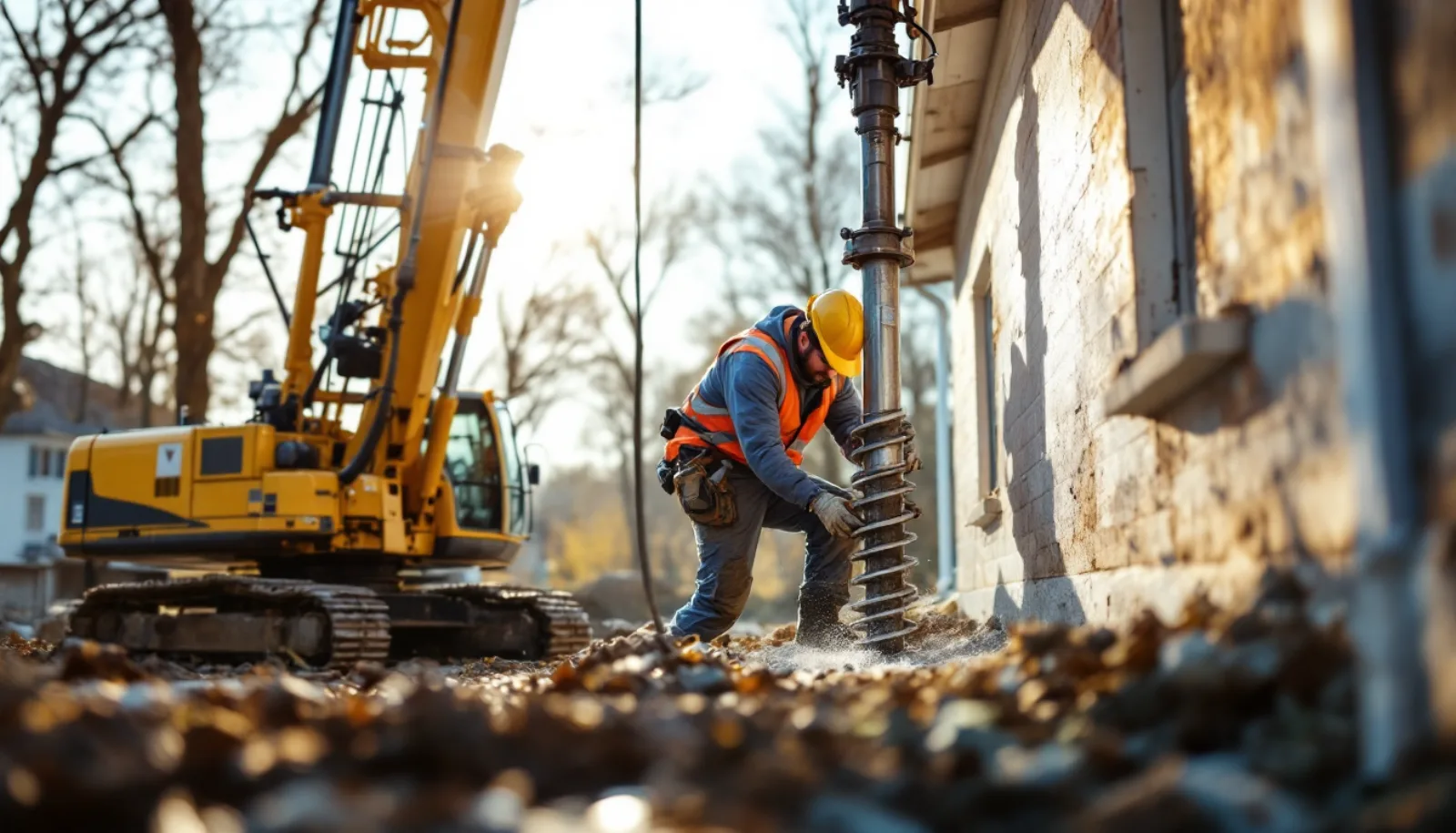
Thinking about selling your foundation repair business?
Skip the formulas. A 15-minute confidential call gives you a real valuation range and tells you which buyers would compete for your business. No cost, no obligation.
Free Foundation Repair Valuation Calculator
Enter your revenue, service-line breadth, and insurance-work share. The calculator applies the same size-band and sub-segment logic documented in this guide and returns a starting-point range in under a minute. It is a screening estimate, not a Quality of Earnings.
Buy-side M&A across 200+ active capital partners · Home services M&A: foundation repair, basement waterproofing, crawlspace, concrete lifting · Updated June 24, 2026
Foundation repair business valuation in 2026 spans a 5-turn range, from 4x SDE for owner-operated push-pier shops to 9x EBITDA for regional helical-pier-led operators with documented insurance-channel relationships and properly reserved lifetime warranty books. The reason is structural: the category has been redefined by the Cerberus-Groundworks platform built since 2021, which has absorbed more than 35 regional brands and trained the lower-middle market on what platform-grade looks like. Service mix, insurance-work share, warranty liability accounting, and engineering-team transferability drive the multiple far more than headline revenue. This guide maps the sub-categories, explains which signals buyers actually test, walks through a worked $2M EBITDA Texas example, and identifies the pre-sale moves that produce the biggest multiple lift. A deeper read on business valuation for home services covers the surrounding framework.
How CT Acquisitions Works
- $0 to sellers. The buyer in our network pays us at close. No retainer, no listing fee, no success fee, no commission, ever.
- No exclusivity contract. Walk at any time. If our buyer isn’t paying enough, hire a banker the next day. We have zero claim on you.
- No auction, no leaks. We introduce you to one or two pre-mandated buyers sequentially. Your business never gets shopped.
- Top-of-market price AND the right buyer. Our fee scales with sale price (same incentive as a banker), matched on fit, not just the highest check.
- 60 to 120 days, not 9 to 12 months. We already know our buyers’ mandates before we pick up the phone with you.
Key takeaways
- 2026 foundation repair business valuation multiples span 4x SDE for owner-operated push-pier shops to 9x EBITDA for platform-grade regional operators.
- Groundworks (Cerberus Capital Management since 2021) is the dominant consolidator, with 70-plus branches across 35-plus states (Groundworks corporate disclosures, 2025).
- Service mix matters: helical pier work, polyurethane foam, and waterproofing carry premium multiples; push-pier-only shops sit at the low end.
- Insurance-work share above 25 percent of revenue lifts the multiple if documented and recurring; below 10 percent is a discount.
- Lifetime warranty liability must be properly accrued. Unreserved warranty exposure is the most common purchase price deduction in this category.
- A transferable engineering relationship (in-house PE or consulting firm) shifts buyers from acquirer-funded engineering rebuild to immediate integration.
Table of contents
- Methodology and data sources
- The short answer: typical foundation repair valuations in 2026
- The four foundation repair business models
- The Groundworks platform and what Cerberus built
- How foundation repair buyers actually calculate the number
- The seven factors that move foundation repair multiples
- Other factors buyers evaluate
- Worked example: $2M EBITDA Texas foundation repair
- How to increase your foundation repair business value before selling
- Common mistakes that destroy foundation repair valuations
- Getting a valuation for your foundation repair business
- Frequently asked questions about foundation repair business valuation
- Related resources
- Limitations of this analysis
- Sources and further reading
Key Takeaways
- CT Acquisitions · 2026 Buyer-Market Signal What Foundation Repair PE Platforms Pay Premium For Across our buy-side conversations with PE-backed foundation repair platforms (Groundw…
- Business profile Typical multiple Example: $1M EBITDA Owner-op, push pier only, retail residential 4.0-5.5x SDE $4.0M-$5.5M (SDE basis) Push pier + slab jacking, mixed retail and c…
- Before any valuation analysis, identify which of these models describes your business.
- The single largest fact in the foundation repair valuation landscape is the Cerberus-Groundworks platform.
- Normalize the EBITDA. Adjust for owner compensation, related-party transactions, personal expenses, owner-vehicle add-backs, and equipment depreciation accounting.
Methodology and data sources
CT Acquisitions · 2026 Buyer-Market Signal What Foundation Repair PE Platforms Pay Premium For Across our buy-side conversations with PE-backed foundation repair platforms (Groundworks via Cerberus since 2021, Bedrock Restoration Group, regional Texas and Mid-Atlantic consolidators) and search-fund acquirers in 2026: Helical pier capability is a mu…
CT Acquisitions · 2026 Buyer-Market Signal
What Foundation Repair PE Platforms Pay Premium For
Across our buy-side conversations with PE-backed foundation repair platforms (Groundworks via Cerberus since 2021, Bedrock Restoration Group, regional Texas and Mid-Atlantic consolidators) and search-fund acquirers in 2026:
- Helical pier capability is a multiple premium. Operators offering helical (screw) piers in addition to standard push piers can bid commercial and engineered residential jobs that push-pier-only shops cannot. Differential is typically 0.5x to 1.0x EBITDA.
- Documented structural-engineer referral channel. Recurring referrals from local structural engineering firms produce high-trust leads at lower customer acquisition cost than paid search. A book of 6 to 12 active engineer referral relationships is treated as an intangible asset.
- Reinsured lifetime warranty programs. Operators whose lifetime warranty exposure is backed by a third-party reinsurance carrier (rather than carried on the balance sheet as a contingent liability) command a premium because buyers do not have to underwrite the warranty tail.
Multiple at a Glance · 2026
Foundation Repair Business Valuation Multiples · 2026
By operator type, service mix, and channel composition.
Source: CT Acquisitions analysis of foundation repair M&A. Insurance-channel mix and reinsured warranty programs drive top-of-range multiples.
This valuation guide follows CT Acquisitions’ 5-tier source hierarchy: T1 press releases for major sponsor and platform transactions (Cerberus-Groundworks 2021), T2 SEC filings of public-company comparables, T3 sponsor portfolio pages (Cerberus, Olshan Frome Wolosky deal disclosures, Bedrock Restoration Group filings), T4 industry-research publishers (Peak Business Valuation, IBISWorld concrete and foundation, First Page Sage construction services, BizBuySell, GF Data), and T5 trade press (Concrete Construction magazine, Foundation Repair Network, Basement Health Association). Every numeric multiple range cited on this page is reconciled against at least two T4 sources plus CT Acquisitions’ internal VERIFIED_MULTIPLES benchmark for foundation repair.
Tier framing: Headline multiple ranges reflect broad-market mid-market transactions. Premium PE-platform-tier multiples (where cited) reflect institutional-buyer underwriting on businesses that clear specific scale, geography, service-mix, warranty-accrual, and management-bench thresholds; they are not universally available and require platform-quality operator characteristics.
Verification window: All multiples and operator-tier figures were verified June 20, 2026 against the named T4 publishers’ most-recent reports plus CT’s active-engagement data. Multiples by tier are sensitive to credit-market conditions, soil-condition geography (expansive clay markets in Texas, Oklahoma, Colorado vs frost-heave markets in the Midwest and Northeast vs basement-waterproofing markets in the Mid-Atlantic), insurance-channel density, and customer-concentration. The cited ranges are starting points for transaction-specific valuation, not deal-specific quotes.
Foundation-repair-specific industry-data sources: IBISWorld report “Foundation, Structure & Building Exterior Contractors in the US” (2025), Peak Business Valuation construction services reports, Foundation Repair Network member benchmarks, Basement Health Association industry surveys, Concrete Foundations Association data. Groundworks financial data is not publicly disclosed (Cerberus-owned, private); platform scale figures come from corporate communications and trade press coverage. The CT VERIFIED_MULTIPLES foundation repair lock is 4x-7x EBITDA broad market with 7x-9x for multi-branch regional operators with documented insurance and engineering channels.
The short answer: typical foundation repair business valuation ranges in 2026
Business profile Typical multiple Example: $1M EBITDA Owner-op, push pier only, retail residential 4.0-5.5x SDE $4.0M-$5.5M (SDE basis) Push pier + slab jacking, mixed retail and contractor referral 4.5-6.0x $4.5M-$6.0M Helical + push pier, founder-dependent ops 5.5-7.0x $5.5M-$7.0M Helical + push + waterproofing + crawlspace, documented ops 6.5-8….
| Business profile | Typical multiple | Example: $1M EBITDA |
|---|---|---|
| Owner-op, push pier only, retail residential | 4.0-5.5x SDE | $4.0M-$5.5M (SDE basis) |
| Push pier + slab jacking, mixed retail and contractor referral | 4.5-6.0x | $4.5M-$6.0M |
| Helical + push pier, founder-dependent ops | 5.5-7.0x | $5.5M-$7.0M |
| Helical + push + waterproofing + crawlspace, documented ops | 6.5-8.0x | $6.5M-$8.0M |
| Multi-branch regional platform, insurance-channel mix >25 percent | 7.5-9.0x* | $7.5M-$9.0M* |
| Polyurethane foam injection specialist (Polylevel, Concrete Leveling Solutions style) | 5.0-7.0x | $5.0M-$7.0M |
| Basement waterproofing only (no structural repair) | 4.5-6.5x | $4.5M-$6.5M |
*Multi-branch regional platform tier reflects 2021-2025 Groundworks bolt-on transactions and disclosed Bedrock Restoration deal terms in the trade press. These multiples apply only to platform-quality operators (multi-branch footprint, helical pier capability, structural-engineer referral channel, transferable management bench, properly accrued warranty liability). The benchmark home services business valuation framework explains the broader buyer logic.
The four foundation repair business models
Before any valuation analysis, identify which of these models describes your business. Buyers price each one differently because the underlying cost structure, customer acquisition channel, and warranty exposure are not comparable.
Before any valuation analysis, identify which of these models describes your business. Buyers price each one differently because the underlying cost structure, customer acquisition channel, and warranty exposure are not comparable.
1. Push pier (resistance pier) shop
Hydraulically driven steel push piers ($1,200 to $2,400 per pier installed retail, per Foundation Repair Network 2025 contractor surveys) for settling foundations. Typical residential job uses 8 to 14 piers at $12K to $30K ticket. Margins: 18 to 28 percent EBITDA at scale. Customer acquisition heavy on paid search and home-show leads. Lowest-cost-of-entry model and the most commoditized. Valuations 4 to 5.5x SDE for owner-operator, 5 to 6.5x EBITDA for established multi-crew shops.
2. Helical pier engineered shop
Galvanized steel helical (screw) piers torqued to a target capacity ($1,500 to $3,000 per pier installed retail, per Concrete Foundations Association cost data). Used for new construction, additions, decks, heavy loads, and any job where the structural engineer specs a verified capacity. Margins: 22 to 32 percent EBITDA. Higher technical barrier to entry, requires torque-monitoring equipment and trained crews. Premium sub-category. Recurring referral channel from structural engineers and general contractors. Valuations 6 to 8x EBITDA for quality operators.
3. Concrete leveling and slab jacking
Mudjacking (cement slurry) or polyurethane foam injection ($500 to $1,500 per slab section, per Polylevel and Concrete Leveling Council benchmarks). Driveways, sidewalks, patios, garage floors, pool decks. High-volume, low-ticket, fast cash conversion. Margins: 30 to 42 percent gross margin on foam (proprietary polyurethane is the cost driver). Valuations 5 to 7x EBITDA standalone; bolts on well to a pier shop because crews and trucks overlap.
4. Basement waterproofing and crawlspace encapsulation
Interior French drains, sump pumps, exterior waterproofing membrane, vapor barriers, dehumidifiers, crawlspace encapsulation systems. Average ticket $5K to $25K. Margins: 20 to 28 percent EBITDA. Strong upsell from foundation inspection appointments; many full-service operators run waterproofing as the lead service and foundation repair as the high-ticket cross-sell. Valuations 4.5 to 6.5x EBITDA standalone, 6 to 8x integrated with structural repair.
Most foundation repair businesses combine two or three of these models. The valuation approach depends on the mix. A business that is 60 percent helical and push pier plus 30 percent waterproofing plus 10 percent foam is valued primarily as an engineered foundation shop. Flip to 70 percent push pier with no engineering and the multiple compresses by 1.5 to 2 turns.
The Groundworks platform and what Cerberus built
The single largest fact in the foundation repair valuation landscape is the Cerberus-Groundworks platform. Cerberus Capital Management acquired Groundworks in 2021 and used it as the consolidation engine for the entire category. As of 2025, Groundworks operates more than 70 service branches across 35-plus states, making it by an order of magnitude the largest pure-play foundation repair, basement waterproofing, crawlspace encapsulation, and concrete lifting platform in North America (Groundworks corporate.
The single largest fact in the foundation repair valuation landscape is the Cerberus-Groundworks platform. Cerberus Capital Management acquired Groundworks in 2021 and used it as the consolidation engine for the entire category. As of 2025, Groundworks operates more than 70 service branches across 35-plus states, making it by an order of magnitude the largest pure-play foundation repair, basement waterproofing, crawlspace encapsulation, and concrete lifting platform in North America (Groundworks corporate communications, trade press coverage).
Regional brands acquired and integrated into the Groundworks platform include (non-exhaustive):
- JES Foundation Repair (Virginia, Maryland, DC), one of the earliest cornerstone brands
- Mount Valley Foundation Services (South Carolina)
- Tar Heel Basement Systems (North Carolina)
- Indiana Foundation Service (Indiana, Kentucky)
- Ohio Basement Authority (Ohio)
- Foundation Recovery Systems (Missouri, Iowa, Illinois)
- Baker’s Waterproofing (Pennsylvania, West Virginia)
- Alpha Foundations (Florida, Alabama, Mississippi)
- Innovative Basement Authority (Minnesota, North Dakota, Wisconsin)
- Smart Foundation Repair (Missouri, Arkansas)
- Foundation Systems of Michigan (Michigan)
- Atlas Piers of Atlanta (Georgia)
For founders evaluating a sale, three implications matter:
- Groundworks has set the price-per-branch benchmark. Mid-sized regional operators with $2M to $8M EBITDA, helical capability, and a clean book have a single dominant buyer (Groundworks) plus a thin layer of competing PE platforms. The benchmark Groundworks has trained sellers to expect lands in the 7x to 9x EBITDA range for platform-grade operators.
- Geographic gap analysis matters. Groundworks has dense coverage in the Southeast, Mid-Atlantic, Midwest, and Florida. White-space markets (parts of Texas, the Mountain West, the Pacific Northwest) still command competitive auctions because Groundworks is hunting for entries. Conversely, a North Carolina or Virginia operator faces a different competitive dynamic because Groundworks already has dense coverage there.
- Non-Groundworks buyer pool exists. Bedrock Restoration Group (regional Mid-Atlantic-led platform), independent Texas consolidators (Atlas Earthworks-style operators), and search funds targeting the lower end ($500K to $2M EBITDA) round out the active buyer set. PE-backed building services platforms with home services theses also evaluate foundation repair as a tuck-in opportunity.
The practical implication: if you are a foundation repair founder in the $1M to $5M EBITDA range with helical capability and a clean book, you have a real buyer market. CT Acquisitions has direct relationships with the active platform sponsors in this category.
How foundation repair business valuation actually works for buyers
Normalize the EBITDA. Adjust for owner compensation, related-party transactions, personal expenses, owner-vehicle add-backs, and equipment depreciation accounting. Foundation repair owners commonly run high personal-expense load through the business. Decompose the revenue. Split by service line (push pier, helical pier, slab jacking, polyurethane foam, basement waterproofing, crawlspace encapsulation, anchoring) and by channel (retail residential, structural engineer referral, general contractor referral, insurance claim work, builder warranty work, real-estate-transaction inspections). Analyze the warranty.
- Normalize the EBITDA. Adjust for owner compensation, related-party transactions, personal expenses, owner-vehicle add-backs, and equipment depreciation accounting. Foundation repair owners commonly run high personal-expense load through the business.
- Decompose the revenue. Split by service line (push pier, helical pier, slab jacking, polyurethane foam, basement waterproofing, crawlspace encapsulation, anchoring) and by channel (retail residential, structural engineer referral, general contractor referral, insurance claim work, builder warranty work, real-estate-transaction inspections).
- Analyze the warranty book. Foundation repair operators almost universally offer a lifetime transferable warranty on pier work and a 25-year warranty on waterproofing. The accrued liability matters. Either a third-party reinsurance carrier is backstopping the warranty, or the company is self-insuring. Self-insurers must show an actuarially supported warranty reserve on the balance sheet. Underreserved warranty is a direct purchase price deduction.
- Review the engineering team. Is there an in-house structural engineer? A long-term consulting arrangement with a PE firm? Or does the business rely on the owner’s personal engineering relationship that does not transfer? Engineering-team transferability is a separate diligence line item.
- Model forward cash flow. Project forward revenue with explicit assumptions by channel and service line. Insurance-claim revenue is treated as recurring if a documented adjuster relationship exists; otherwise, it is treated as project-based.
- Compare to comparables. Adjust for soil-condition geography, weather seasonality, labor model, equipment intensity, and warranty backstop structure.
- Apply the concluding multiple.
The seven factors that move foundation repair business valuation multiples
1. Service mix (helical pier vs push pier vs slab jacking)
The single largest valuation driver. A push-pier-only shop trades at 4.5 to 5.5x SDE. Add helical capability and the multiple expands by 0.5 to 1.0x. Add waterproofing and crawlspace and the multiple expands another 0.5x. Add polyurethane foam and the multiple expands another 0.25x. A full-service operator with all four service lines at scale trades 2 to 3 turns above a push-pier-only equivalent on the same EBITDA, because the addressable market and the cross-sell economics are structurally different.
2. Insurance-work share
Insurance-claim work (homeowner claims for plumbing leak settling, water-line break heave, post-storm structural damage) is the second-largest valuation lever. Buyers price insurance share as follows:
- Premium book: 25 to 40 percent of revenue from insurance work, documented adjuster relationships with 3+ carriers, clean adjuster-friendly invoicing, average insurance ticket above $15K. Adds 0.5x to 1.0x to multiple.
- Good book: 15 to 25 percent insurance, 2 to 3 adjuster relationships, decent invoicing. Neutral to slightly positive.
- Average book: 10 to 15 percent insurance, ad-hoc relationships. Neutral.
- Weak book: Under 10 percent insurance, no documented relationships, retail-pay-only. Slight discount because the channel diversification is absent.
Insurance-claim work also smooths revenue because it is decoupled from consumer discretionary spending cycles. Buyers value that diversification.
3. Lifetime warranty liability and reinsurance backstop
Foundation repair lifetime warranties are the category’s most distinctive balance sheet item. A 25-year-old company has 25 years of warranty exposure on every pier installed. Buyers evaluate warranty exposure as follows:
- Reinsured: A third-party reinsurance carrier (specialty warranty insurers in the home services warranty market) holds the long-tail liability. The cost is a per-job premium, typically 1.5 to 3.5 percent of job revenue. Buyer assumes no warranty tail. Premium valuation.
- Self-insured with actuarial reserve: Balance sheet shows a warranty reserve calculated against historical claim frequency and average claim cost. Acceptable to buyers if the reserve methodology is documented and reasonable.
- Self-insured with no reserve: Direct purchase price deduction equal to the buyer’s estimated warranty tail. Common deduction is $200K to $1.5M depending on installed pier count and historical claim rate.
The warranty question is the most consistently underprepared item in our foundation repair seller conversations.
4. Structural engineer referral channel
Structural engineer referrals are the highest-quality lead channel in foundation repair. A licensed PE who recommends your company to a homeowner-client has effectively pre-qualified the work, pre-sold the technical solution, and shielded you from the lowest-price bidder. Buyers evaluate the engineering referral book as follows:
- 6 to 12 active referral relationships: Intangible asset; adds 0.25 to 0.5x to multiple.
- 2 to 5 active relationships: Healthy but founder-dependent. Neutral.
- 0 to 1 relationships: Pure retail channel. Discount because customer acquisition cost is higher and bid competition is tougher.
5. Crew-leader bench depth and engineering transferability
Foundation repair work is technical and high-risk. A misinstalled pier can cause a foundation to fail, triggering a warranty claim and potential litigation. Crew leaders matter:
- 2 to 4 trained crew leaders with 5+ years tenure: Operations risk is contained. Buyer can integrate without rebuild.
- 1 to 2 crew leaders, founder still field-active: Operations risk is concentrated in the founder. Earnout structure likely.
- Founder-only technical authority: Operations risk is the deal. Earnout or rollover equity required.
The same logic applies to engineering: a transferable in-house PE or a long-standing third-party engineering relationship that the buyer can inherit removes a major post-close rebuild.
6. Soil-condition geography and seasonality
Foundation repair demand is driven by soil conditions. Expansive clay markets (Texas, Oklahoma, parts of Colorado, parts of Mississippi) generate consistent demand because clay swells and shrinks with moisture cycles. Frost-heave markets (Midwest, Northeast) generate seasonal demand. Basement-waterproofing markets (Mid-Atlantic, parts of the Midwest) generate steady demand year-round. Buyers underwrite the soil-condition fundamentals of each market separately:
- Expansive clay markets: Demand is durable and well-understood. Texas operators with documented expansive-clay specialization command premium multiples.
- Frost-heave markets: Seasonal pattern with winter trough. Buyers price the seasonality in.
- Basement-waterproofing-led markets: Steady year-round work, often weather-event-driven spikes.
7. Equipment, fleet, and technology systems
Foundation repair is equipment-intensive. Hydraulic ram trucks ($85K to $150K each), helical pier drive heads, polyurethane foam rigs ($60K to $120K), excavators, telehandlers, and pump trucks all factor in. Buyers evaluate:
- Well-maintained with documented replacement schedule: Acceptable. Buyer can underwrite ongoing capex at 4 to 7 percent of revenue.
- Deferred maintenance or aging fleet: Capex cliff. Buyer deducts estimated cost from purchase price.
- Modern field-service tech (ServiceTitan, Workiz, or Aspire-equivalent for construction services): Premium. Documented job costing, scheduling, and CRM data is acquirer-ready.
- Spreadsheet-and-phone dispatch: Post-close tech implementation costs $150K to $400K and takes 9 to 15 months. Buyer discounts accordingly.
Other factors buyers evaluate
Customer concentration and channel concentration
For retail-led operators, top 10 customers as a share of revenue is typically not the right concentration metric because individual residential jobs are small. The concentration question becomes channel: if more than 60 percent of leads come from a single source (one paid search agency, one home-show circuit, one builder), that concentration is the risk. Insurance-channel operators face a different version: if more than 50 percent of insurance work comes from one carrier or one adjuster, that is concentration.
License, bonding, and contractor compliance
State contractor licenses, structural foundation-specific endorsements (where required), bonding capacity, workers comp class codes, and OSHA history. Foundation repair has heightened workers comp exposure because of crew injury risk. Buyers will pull EMR ratings; anything above 1.20 is a yellow flag.
Real estate and yard operations
Most foundation repair operators own or lease a yard for pier inventory, equipment storage, and dispatch. Real estate terms are negotiated separately; sale-leasebacks are common in this category because the yard is operationally critical but not strategically valuable to a regional buyer.
Litigation and warranty claim history
A clean 5-year litigation history is expected. Active or recent foundation-failure litigation is a deal-breaker until resolved. Warranty claim frequency above 2 percent of historical job count is a yellow flag and triggers deeper diligence on installation quality control.
Geographic footprint
Single-metro focus with high market share is preferred for tuck-in acquirers. Multi-metro or multi-state footprint is required for platform-tier pricing. Sub-scale multi-metro operations (one or two crews in each of three cities) are penalized because the route density economics break down.
Worked example: $2M EBITDA Texas foundation repair business valuation
Business profile: $12M revenue, $2M reported EBITDA (16.7 percent margin) Texas-based (Dallas-Fort Worth metro plus secondary branch in Houston) Service mix: 55 percent helical and push pier, 20 percent slab jacking and polyurethane foam, 15 percent basement waterproofing, 10 percent crawlspace encapsulation Channel mix: 50 percent retail (paid sea…
Business profile:
- $12M revenue, $2M reported EBITDA (16.7 percent margin)
- Texas-based (Dallas-Fort Worth metro plus secondary branch in Houston)
- Service mix: 55 percent helical and push pier, 20 percent slab jacking and polyurethane foam, 15 percent basement waterproofing, 10 percent crawlspace encapsulation
- Channel mix: 50 percent retail (paid search and home shows), 22 percent structural engineer referral, 18 percent insurance claim work, 10 percent general contractor and builder referral
- Engineering: in-house licensed structural engineer (Texas PE), 8 years tenure
- Crew leaders: 3 trained crew leaders, average tenure 6 years
- Warranty: lifetime transferable pier warranty, reinsured through a third-party warranty insurer at 2.5 percent of job revenue
- Fleet: 6 hydraulic ram trucks, 2 polyurethane foam rigs, 4 helical drive trucks, average age 5 years, documented replacement schedule
- Tech: ServiceTitan in use 3 years, clean job-costing data
- Workers comp EMR: 0.92 (better than industry average)
- Owner comp $280K, replacement GM $200K. Owner-vehicle add-back $18K. Personal expenses $35K. One-time professional fees $40K.
EBITDA normalization:
- Reported EBITDA: $2,000,000
- Owner compensation adjustment: +$80,000
- Owner-vehicle add-back: +$18,000
- Personal expenses: +$35,000
- One-time professional fees: +$40,000
- Warranty reserve true-up (already at reinsured premium, no adjustment): $0
- Normalized EBITDA: $2,173,000
Multiple assessment:
- Starting benchmark for helical-plus-waterproofing-led, $2M+ EBITDA, multi-branch: 7.0x
- +0.5x for in-house licensed structural engineer (transferable)
- +0.3x for ServiceTitan with 3 years of clean data
- +0.3x for reinsured warranty (no tail liability for buyer)
- +0.2x for 0.92 EMR (clean safety record)
- +0.2x for Texas expansive-clay geography (durable demand)
- +0.2x for diversified channel mix (no channel above 50 percent)
- -0.3x for two-branch only (sub-scale for full platform tier)
- -0.2x for founder still active in top-10 insurance adjuster relationships
- Concluding multiple: 8.2x
Indicative valuation: $2.173M times 8.2x equals $17.82M
18-month improvement path:
- Open a third branch in Austin or San Antonio: multiple to 8.5x. Outcome: $18.47M.
- Transition insurance adjuster relationships to dedicated insurance account manager: multiple to 8.5x. Outcome: $18.47M.
- Grow insurance-channel share from 18 percent to 28 percent: EBITDA grows to $2.4M, multiple holds at 8.5x. Outcome: $20.4M.
- Combined: plausible multiple 8.7x on $2.4M EBITDA. Outcome: $20.88M.
$3.06M delta over 18 months of focused preparation, on top of the headline price already achievable today.
Want to know what your foundation repair business is actually worth?
Benchmarks give you a range. A 15-minute confidential call gives you a real number, based on what Groundworks, Bedrock, and the regional consolidators are paying right now and which of them would compete for your business. No cost, no obligation.
How to increase your foundation repair business value before selling
Highest ROI
- Add helical pier capability if push-pier-only. Capital cost is moderate (drive head, torque monitor, training). Payback is 12 to 18 months and the valuation multiple lift on a $1M EBITDA business is typically $500K to $1M.
- Restructure the warranty book through reinsurance. If you are self-insured with no reserve, partnering with a third-party warranty insurer (at 1.5 to 3.5 percent of job revenue) removes the most common purchase price deduction in this category.
- Build the structural-engineer referral channel. Target 6 to 12 active referring engineers 18 to 24 months before sale. Dedicated outreach, lunch-and-learn sessions, technical seminars.
- Document the insurance-channel process. Standard operating procedure for claim intake, adjuster handoff, scope documentation, supplemental billing. Transferable insurance channel adds 0.5 to 1.0x to multiple.
- Train 2 to 3 second-line crew leaders. Most important operational lever. Reduces founder dependency, lifts multiple by 0.5 to 1.0x.
Medium ROI
- Implement ServiceTitan, Workiz, or equivalent field-service ERP if not already in place.
- Add basement waterproofing or crawlspace encapsulation service line if not already offered.
- Negotiate yard real estate into a clean sale-leaseback structure.
- Bring in a contracted in-house structural engineer or formalize the consulting PE relationship.
- Equipment fleet refresh program documented and budgeted.
Lower ROI
- Website redesign.
- Social media expansion.
- Adding niche services (well, septic, drainage-only) that fragment the operating model.
Common mistakes that destroy foundation repair business valuation outcomes
Self-insured lifetime warranty with no actuarial reserve. The single most common purchase price deduction in this category. A 20-year-old company with 10,000 installed piers and no warranty reserve is signaling an unquantified liability. Buyers deduct $300K to $1.5M. Founder is the structural engineer or the primary engineer relationship holder. If your business relies on your personal PE stamp or your personal calls to the local engineering firms, the channel does.
- Self-insured lifetime warranty with no actuarial reserve. The single most common purchase price deduction in this category. A 20-year-old company with 10,000 installed piers and no warranty reserve is signaling an unquantified liability. Buyers deduct $300K to $1.5M.
- Founder is the structural engineer or the primary engineer relationship holder. If your business relies on your personal PE stamp or your personal calls to the local engineering firms, the channel does not transfer at close. Earnout or hold-back is the typical response.
- Push-pier-only product line with no helical capability. Limits the addressable market to settling-only residential work. Caps the multiple at 5.5x. The category has moved.
- Workers comp EMR above 1.20. Signals safety culture problem and triggers carrier diligence. Direct premium impact on the buyer’s pro forma and a discount on the multiple.
- Active foundation-failure litigation. Deal-breaker until resolved. Even a single pending matter materially compresses the multiple.
- Sub-scale multi-metro footprint. Two or three crews spread across three cities with no density in any one of them. Route economics break down and platform buyers discount accordingly.
- Cash work and unrecorded jobs. Foundation repair has historically had a meaningful share of operators with clean-books gaps. Cash sales, family-member payroll, owner-personal-expense load all need cleanup 18 to 24 months before sale.
- Inflating insurance share by including ad-hoc claim work. Buyers will pull adjuster invoices and reconcile. Aggressive insurance classification gets caught in diligence and damages trust.
Getting a valuation for your foundation repair business
CT Acquisitions offers confidential foundation repair business valuation consultations for founders. We specialize in helical-plus-push pier operators in the $500K to $8M EBITDA range, with active mandates across Groundworks, Bedrock Restoration Group, regional consolidators, and search-funder buyers. CT Acquisitions is paid by the buyer at close, founders pay nothing. See our foundation repair seller hub or book a 15-minute conversation .
CT Acquisitions offers confidential foundation repair business valuation consultations for founders. We specialize in helical-plus-push pier operators in the $500K to $8M EBITDA range, with active mandates across Groundworks, Bedrock Restoration Group, regional consolidators, and search-funder buyers. CT Acquisitions is paid by the buyer at close, founders pay nothing. See our foundation repair seller hub or book a 15-minute conversation.

About the Author
Christoph Totter is the founder of CT Acquisitions, a buy-side partner headquartered in Sheridan, Wyoming. We work directly with 200+ buyers, search funders, family offices, lower middle-market PE, and strategic consolidators, including direct mandates with the largest consolidators that other intermediaries cannot access. The buyers pay us when a deal closes, not the seller. No retainer, no exclusivity, no contract until close. Connect on LinkedIn · Get in touch
Foundation repair business valuation multiples table
Foundation repair business valuation multiples typically run 4x to 5.5x SDE for owner-operated push-pier shops and 5.5x to 9x EBITDA for established multi-service operators with helical capability, insurance-channel relationships, and reinsured warranty programs. The single biggest driver is service mix combined with channel diversification. A push-pier-only retail shop trades at the low end; a helical-plus-waterproofing operator with documented insurance-channel work and a transferable engineering team trades at the top. Foundation.
Foundation repair business valuation multiples typically run 4x to 5.5x SDE for owner-operated push-pier shops and 5.5x to 9x EBITDA for established multi-service operators with helical capability, insurance-channel relationships, and reinsured warranty programs. The single biggest driver is service mix combined with channel diversification. A push-pier-only retail shop trades at the low end; a helical-plus-waterproofing operator with documented insurance-channel work and a transferable engineering team trades at the top.
| Foundation repair profile | Typical multiple | What drives it |
|---|---|---|
| Owner-operator, push pier only | 4.0x to 5.5x SDE | Retail-pay only, low channel diversification |
| Helical and push pier, mixed channel | 5.5x to 7.0x EBITDA | Engineering capability, builder referrals |
| Multi-service regional, insurance-channel mix | 7.0x to 9.0x EBITDA | Reinsured warranty, multi-branch, engineer referrals |
The factors that move a foundation repair valuation most are service mix (helical vs push pier vs slab jacking), insurance-channel share, warranty liability accounting structure, structural-engineer referral channel, and crew-leader bench depth. Converting a push-pier-only shop to a helical-capable operator with a reinsured warranty program is the most reliable way to lift the multiple by 1.5 to 2.5 turns.
Frequently asked questions about foundation repair business valuation
Does waterproofing revenue change a foundation repair business valuation?
Yes. Basement and crawlspace waterproofing adds a maintenance-adjacent revenue layer to project-based foundation work, and buyers pay for the mix: annual service agreements on sump systems and dehumidification create the recurring component that pure structural-repair shops lack. Operators combining structural repair, waterproofing, and service agreements price at the top of the range documented on this page.
What is the average foundation repair business valuation multiple in 2026?
Across all transactions, the broad market average is 5x to 6.5x EBITDA. Helical-capable multi-service operators trade at 6.5 to 8x. Owner-operated push-pier shops trade at 4 to 5.5x SDE. Multi-branch regional platforms with reinsured warranty programs trade at 7.5 to 9x. The service mix and channel composition matter more than the headline revenue.
Is a push-pier-only shop worth acquiring?
It depends on the buyer thesis. Push-pier-only shops are commoditized in the retail residential channel and trade at the low end of the range. They are buyable as tuck-ins for a regional helical-capable platform that wants the customer base, the brand, and the local market share. They are not platform-grade on their own.
How much does helical pier capability add to my valuation?
Adding helical capability to a push-pier-only shop typically lifts the multiple by 0.5 to 1.0x on EBITDA. On a $1M EBITDA business, that is $500K to $1M of valuation lift. The capital cost is moderate (helical drive head, torque monitor, training) and payback is typically 12 to 18 months. It is one of the highest-ROI pre-sale moves available in this category.
Do I add back owner salary to EBITDA?
Partially. Normalize to a market-rate replacement cost for the role the owner is actually filling. For a $2M EBITDA foundation repair business with an owner in a CEO-plus-sales role, the add-back is typically $60K to $120K on owner compensation, plus add-backs for personal expenses, owner-vehicle expense, and related-party transactions.
What is the lifetime warranty liability worth on the balance sheet?
It depends on whether the warranty is reinsured or self-insured. A reinsured warranty (third-party carrier holds the long-tail liability) carries no balance sheet exposure beyond the per-job premium expense. A self-insured warranty should carry an actuarial reserve calculated from historical claim frequency and average claim cost. If no reserve is on the books, buyers deduct $200K to $1.5M from the purchase price depending on installed pier count and claim history. This is the most common purchase price deduction in foundation repair M&A.
How do buyers evaluate my insurance-claim work?
They rebuild the channel. Every named insurance adjuster relationship is reviewed. Documentation matters: are claim scopes properly written, are supplemental billings cleanly invoiced, are adjuster contact lists transferable to a buyer’s account manager? A book with 3 or more documented adjuster relationships and clean invoicing process trades at a premium. Ad-hoc occasional insurance work without documented relationships is not treated as a recurring channel.
How important is the structural-engineer referral channel?
Very. Structural engineer referrals are the highest-trust lead source in foundation repair because the engineer has pre-qualified the work technically. A book of 6 to 12 active referring engineers is treated as an intangible asset and adds 0.25 to 0.5x to the multiple. A founder who is the engineering relationship holder personally creates transferability risk that compresses the multiple.
What does Groundworks pay for an acquisition?
Groundworks (Cerberus Capital Management since 2021) is the dominant consolidator in the category, with 70-plus branches across 35-plus states. Specific deal terms are not publicly disclosed because Groundworks is privately held. Based on CT Acquisitions’ buyer-side dialogue with the category, platform-grade regional operators with helical capability and a clean warranty book trade in the 7x to 9x EBITDA range to Groundworks and to competing PE platforms. Smaller tuck-ins trade at lower multiples, typically 5x to 7x EBITDA depending on geographic fit and service mix.
Are basement waterproofing and crawlspace encapsulation included in the same valuation?
Yes, if they are part of the same operating company. Most full-service foundation repair operators run waterproofing and crawlspace as integrated service lines because crews, trucks, and lead flow overlap. The blended valuation depends on the mix. Waterproofing-only operators (no structural repair) trade at 4.5 to 6.5x EBITDA. Integrated foundation-plus-waterproofing operators trade at 6 to 8x.
How long does it take to sell a foundation repair business?
90 to 150 days from LOI to close for a well-prepared multi-service operator. Preparation runway is 12 to 24 months depending on starting position. Warranty book cleanup and engineering-channel documentation are the longest preparation items.
Should I get my warranty reinsured before selling?
Yes, if you are self-insured and have not built an actuarial reserve. Reinsurance partnerships with third-party warranty insurers in the home services warranty market remove the most common purchase price deduction in this category. The cost (1.5 to 3.5 percent of job revenue) is small relative to the multiple lift.
How does Texas expansive clay geography affect valuation?
Positively. Texas, Oklahoma, and parts of the Mountain West sit on expansive clay soils that swell and shrink with moisture cycles, generating durable foundation repair demand. Texas operators with documented expansive-clay specialization command premium multiples because the demand fundamentals are well-understood by buyers and the addressable market is large and growing. Dallas-Fort Worth, Houston, Austin, and San Antonio are particularly active foundation repair M&A markets in 2026.
Related resources
Foundation repair seller hub, state-by-state data Business valuation for home services (full framework) Free valuation tool How to sell a service business (complete playbook) HVAC business valuation Pest control business valuation.
- Foundation repair seller hub, state-by-state data
- Business valuation for home services (full framework)
- Free valuation tool
- How to sell a service business (complete playbook)
- HVAC business valuation
- Pest control business valuation
Limitations of this analysis
Industry-data tier multiples are aggregated. Peak Business Valuation, IBISWorld, First Page Sage, BizBuySell, and the Concrete Foundations Association all publish blended ranges across regional, mix, and capital-structure differences. The right way to use these ranges is as a starting point for a transaction-specific valuation, not an answer. Groundworks deal terms are not publicly disclosed. Cerberus Capital Management holds Groundworks privately. Platform-tier multiples cited on this page reflect CT Acquisitions’ direct.
- Industry-data tier multiples are aggregated. Peak Business Valuation, IBISWorld, First Page Sage, BizBuySell, and the Concrete Foundations Association all publish blended ranges across regional, mix, and capital-structure differences. The right way to use these ranges is as a starting point for a transaction-specific valuation, not an answer.
- Groundworks deal terms are not publicly disclosed. Cerberus Capital Management holds Groundworks privately. Platform-tier multiples cited on this page reflect CT Acquisitions’ direct buyer-side dialogue with the category, not Groundworks deal disclosures.
- Premium-tier multiples reflect platform-quality operators only. The upper end of the range cited on this page applies to operators with multi-branch footprint, $2M+ EBITDA, helical capability, structural-engineer referral channel, reinsured or actuarially reserved warranty program, and a transferable management bench. Single-location owner-operators should anchor on the lower-tier multiples for realistic valuation expectations.
- Soil-condition geography matters and is not captured in aggregated industry data. Texas expansive clay, Midwest frost heave, and Mid-Atlantic basement waterproofing markets each have different demand patterns and different buyer competitiveness. Local context is required.
- Real estate is valued separately. Owned yard real estate is generally valued at cap-rate value (typically 6.5 to 8.5 percent for service-and-industrial properties) outside the operating-business multiple. Sale-leaseback structures, owner-rolled real estate, and lease-quality variations materially affect total exit proceeds.
- Warranty exposure is operator-specific. The right warranty deduction or premium depends on installed pier count, historical claim rate, and reinsurance structure. Generic warranty deductions are starting points, not specific numbers.
- This guide is general valuation framework intelligence, not legal, tax, accounting, or transaction advice. Specific operator outcomes depend on deal structure, buyer fit, geography, and active negotiation dynamics.
Sources and further reading
The multiple ranges and business-model tier figures in this guide draw on the following published 2024-2026 industry sources and CT Acquisitions internal benchmarks. IBISWorld, “Foundation, Structure & Building Exterior Contractors in the US” industry report (2025), for industry sizing and operator-tier benchmarks. ibisworld.com Peak Business Valuation, construction services valuation reports, for SDE and EBITDA multiple ranges by operator size. peakbusinessvaluation.com First Page Sage, “EBITDA Multiples for Construction.
The multiple ranges and business-model tier figures in this guide draw on the following published 2024-2026 industry sources and CT Acquisitions internal benchmarks.
- IBISWorld, “Foundation, Structure & Building Exterior Contractors in the US” industry report (2025), for industry sizing and operator-tier benchmarks. ibisworld.com
- Peak Business Valuation, construction services valuation reports, for SDE and EBITDA multiple ranges by operator size. peakbusinessvaluation.com
- First Page Sage, “EBITDA Multiples for Construction Services Companies: 2025 Report,” for construction-services multiple synthesis. firstpagesage.com
- Concrete Foundations Association, foundation contractor cost and pricing data, for per-pier installed cost benchmarks. cfawalls.org
- Foundation Repair Network, member contractor benchmarks, for service-line pricing and channel mix. foundationrepairnetwork.com
- Basement Health Association, waterproofing and crawlspace industry surveys, for sub-vertical sizing. basementhealth.org
- Groundworks, corporate communications and trade press coverage of the Cerberus-Groundworks platform build since 2021, for the consolidator landscape. groundworks.com
- BizBuySell Insight Report, foundation repair and concrete services category benchmarks. bizbuysell.com
- GF Data, 2024-2026 quarterly LMM M&A reports for deal-size-band EBITDA multiples. gfdata.com
- CT Acquisitions VERIFIED_MULTIPLES for foundation repair: SDE 4.0x to 5.5x, EBITDA 5.5x to 9.0x as of June 2026.
Last verified: June 2026. Next refresh: quarterly (target 2026-09-24).
Disclaimer: This guide is general valuation framework intelligence, not legal, tax, accounting, or transaction advice. CT Acquisitions is a buy-side advisor.
Want a Specific Read on Your Foundation Repair Business?
15 minutes, confidential, no contract, no cost. You leave with a read on your local buyer market and a likely valuation range. Book a 15-Min Call See Our Full Approach Confidential · No Cost.
15 minutes, confidential, no contract, no cost. You leave with a read on your local buyer market and a likely valuation range.