Sell Your HVAC Business in Oregon: 2026 Valuation, Buyers, and Process
Quick Answer
An HVAC business in Oregon sells for approximately 2.5-4x SDE for owner-operator businesses ($500K-$2M revenue), 4-7x EBITDA for established multi-tech operations ($1M-$5M EBITDA), 7-9x EBITDA for multi-location regional platforms ($5M-$15M EBITDA), and 9-12x EBITDA for premium platform-tier acquisitions with strong recurring service-contract mix. Oregon-specific drivers: the state’s CCB-licensed contractor pool is relatively small (giving buyers limited target options and pushing multiples upward in Portland metro), recurring residential service mix matters more than in warmer-climate states, and Oregon’s state capital gains rate of 9.9% creates a meaningful planning consideration compared to no-tax-state alternatives. Most Oregon HVAC owners only encounter 1-3 buyers through cold outreach. The actual addressable buyer pool for a quality Oregon HVAC business is closer to 8-15 firms across PE platforms, regional consolidators, and strategic acquirers.
Our national overview of selling an HVAC business walks through every stage from preparation to close. Our national data on HVAC valuation multiples shows what buyers actually pay by tier.
Thinking about selling your HVAC business in Oregon?
A 15-minute confidential call gives you a real valuation range and the Oregon buyers most likely to compete for your business. No cost, no obligation.
Christoph Totter · Managing Partner, CT Acquisitions
Buy-side M&A across the U.S. lower middle market · Updated May 16, 2026
If you own an HVAC business in Oregon and you are within 24-36 months of a possible exit, this is the page that explains what your business is actually worth, who will buy it, and what the sale process looks like in 2026. The market for Oregon HVAC businesses has shifted materially over the past 24 months. Multiple PE-backed national platforms expanded their Pacific Northwest footprint between 2024 and 2026. Two of the top-five publicly active HVAC consolidators (Apex Service Partners and Sila Services) have made Pacific Northwest acquisitions in this window. Regional consolidators are also competing actively.
The challenge most Oregon HVAC owners face is information asymmetry. Out of an addressable buyer pool of roughly 8-15 firms that would acquire a quality Oregon HVAC business today, most owners only encounter 1-3 through cold outbound emails. The structural picture (which platforms are actually buying in the PNW right now, what multiples they are paying, what they look for in a target) is invisible to most sellers until they engage an advisor. The price difference between negotiating with 2 buyers versus 7 fit-aligned buyers is consistently meaningful.
We are CT Strategic Partners, a U.S. buy-side M&A firm based in Sheridan, Wyoming. We operate the CT Acquisitions model: when a transaction closes, the buyer compensates us. The seller pays nothing. No retainer, no exclusivity, no contract. You are free to walk at any point in the process. Our role on a typical Oregon HVAC engagement is to take your specific business profile (revenue, EBITDA, recurring service mix, geographic footprint, management depth, owner involvement) and identify which subset of the active U.S. HVAC platform and add-on buyers actually fit, then facilitate confidential conversations with that targeted set.
A note on what this page is and isn’t. This is informational content built from publicly disclosed transaction data, sponsor portfolio pages, trade-press coverage, Oregon CCB licensing records, and Bureau of Labor Statistics data. It is not investment advice, tax advice, or legal advice. Specific valuation outcomes for your business will vary based on business-specific factors that no public-data page can address. If you want a real-market read on what your specific Oregon HVAC business would actually trade for in today’s market, the right next step is a confidential 15-minute conversation.
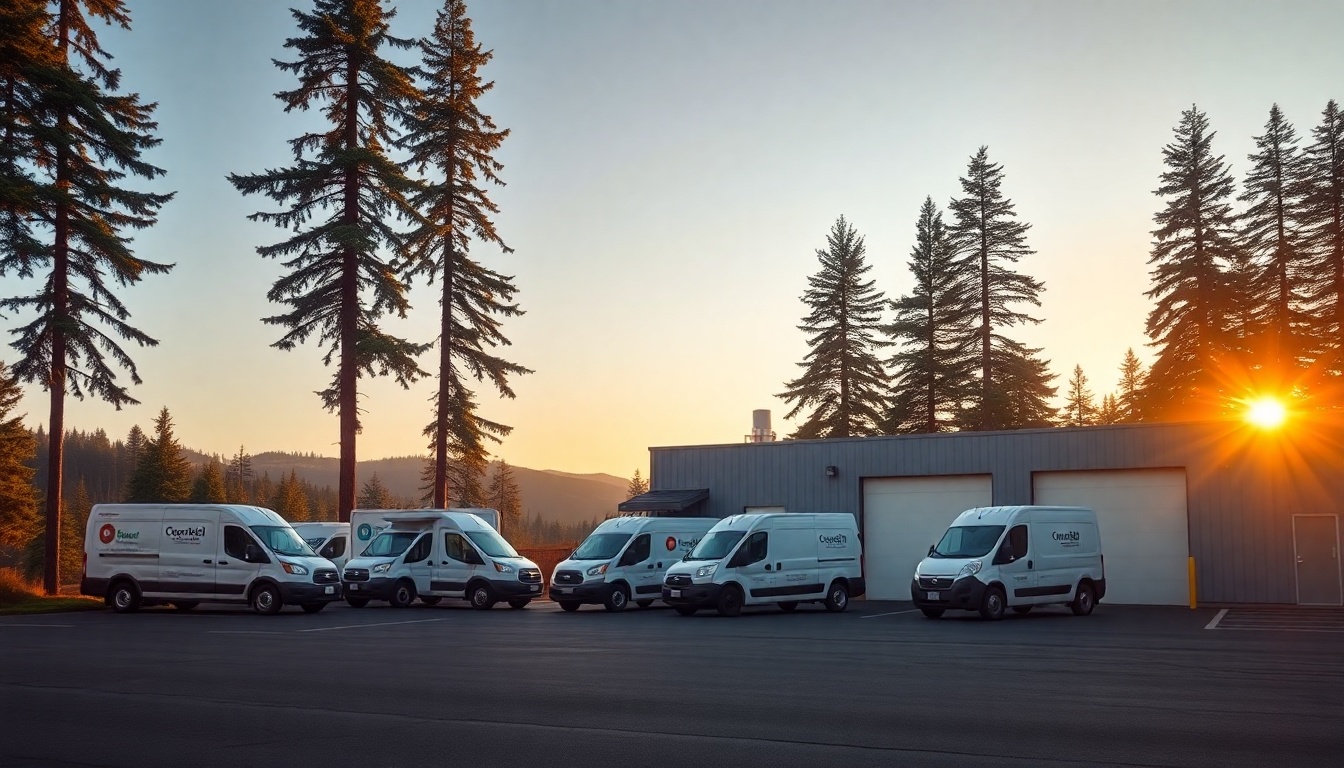
What an HVAC Business in Oregon Is Actually Worth in 2026
Valuation for an Oregon HVAC business follows the broader U.S. HVAC services market multiple curve, with some state-specific adjustment factors that matter at the margin. The bands below reflect observed transaction data from publicly-disclosed deals, industry trade-press coverage from Capstone Partners, PKF O’Connor Davies, Kroll, and KPMG Corporate Finance, and the broader 2024-2026 HVAC M&A activity in the Pacific Northwest.
Watch · 8 min
How to Sell an HVAC Business
A direct walkthrough of what HVAC owners need to know before going to market: where multiples actually land in 2026, the recurring service contract premium that drives buyer offers, what PE consolidators look at first, and the documents to have ready before you take a call.
Tier 1: Owner-operator businesses ($500K-$2M revenue, ~$100K-$400K SDE)
Realistic range: 2.5-4x SDE. Most actual closed transactions in this tier come in at 2.8-3.5x SDE. Add-on programs and SBA-financed individual buyers compete here. Cash plus seller note (typically 10-25% of purchase price) is the most common structure. Multiples of 4x+ require strong recurring service contract attachment (above 25% of revenue), low owner dependence, and clean financial documentation that survives a third-party Quality of Earnings review.
Tier 2: Established multi-technician operations ($2M-$10M revenue, ~$300K-$1.5M EBITDA)
Realistic range: 4-7x EBITDA. Most actual closed transactions land at 4.5-5.5x EBITDA. PE add-on programs from Tier 1 and Tier 2 national platforms compete actively in this band. Cash-and-rollover structures are standard, with 10-25% rollover equity typical. Multiples above 6x require demonstrably above-median EBITDA margin (15%+ in residential service, 12%+ in commercial), strong management depth that operates without daily owner involvement, and recurring service contract revenue above 35% of total.
Tier 3: Multi-location regional platforms ($10M-$50M revenue, $1.5M-$5M EBITDA)
Realistic range: 6-9x EBITDA. This is the band where multiple PE platforms compete actively. Cash-plus-rollover is universal. Earnouts appear in approximately half of these deals, typically 12-24 months tied to either revenue or EBITDA performance. Multiples in the upper end of this range require multi-state or multi-metro presence, recurring service mix above 50%, and a senior management team that the buyer can confidently inherit.
Tier 4: Premium platform-tier acquisitions ($50M+ revenue, $5M+ EBITDA)
Realistic range: 8-12x EBITDA for institutional-quality platforms with mid-teens multiples only for the rarest premium scale. The Champions Group / Blackstone transaction (February 2026, approximately $2.5 billion enterprise value on approximately $140 million EBITDA, implying around 18.5x) is the public anchor at the top end. That is not the median outcome. Most Tier 4 transactions close in the 9-11x EBITDA range.
How Oregon-specific factors affect your multiple within the band
Several factors apply specifically to Oregon HVAC businesses:
- Climate-driven service mix: Oregon has milder summers than the Sun Belt but increasingly hot summer months. Heat pump and ductless mini-split installation volume has grown materially over the past 5 years, partially driven by Oregon state and federal weatherization incentives. Businesses with strong heat pump installation revenue command upper-end pricing within their tier.
- Oregon CCB licensing scarcity: The Oregon Construction Contractors Board licenses HVAC contractors and the licensed pool is relatively small compared to higher-population states. Buyers value businesses where the license transfer mechanics are clean (an existing employee qualified to be the responsible managing employee post-close, or the owner willing to stay for a transition period to maintain license continuity).
- Portland metro concentration: Roughly 60% of Oregon HVAC service revenue concentrates in the Portland-Vancouver metro. Businesses with strong route density in Portland, Beaverton, Gresham, Hillsboro, or Salem trade at upper-band multiples. Coastal and Eastern Oregon route density is harder to underwrite and prices lower.
- Recurring service-contract attachment: The premium PE pays for predictable recurring revenue is consistent across geographies but the bar for “good” attachment in Oregon is higher than the national average (35%+ vs national 25%+) because of the milder climate’s lower break-fix call volume.
Oregon HVAC Business Valuation Ranges
The 2026 Buyer Landscape for HVAC in Oregon
The publicly active U.S. HVAC platform pool is approximately 18 verified platform-tier roll-ups plus another ~10 active add-on programs and adjacent strategic acquirers. Of those, roughly 8-12 have either made acquisitions in the Pacific Northwest in the 2024-2026 window or are actively expanding into the region.
National PE platforms active in the Pacific Northwest
Apex Service Partners (backed by Alpine Investors with Partners Group continuation vehicle) is among the most acquisitive U.S. HVAC platforms and has made multiple PNW acquisitions in the 2024-2026 window per publicly disclosed deal coverage. Sila Services (backed by Goldman Sachs Alternatives since November 2024, previously Morgan Stanley Capital Partners) maintains a national acquisition footprint that includes the Pacific Northwest. Service Logic (backed by Bain Capital and Mubadala Investment Company since December 2025) focuses on commercial mechanical and has done PNW acquisitions. Comfort Systems USA (NYSE: FIX, publicly traded) is one of the largest acquirers of commercial HVAC platforms nationally and has a meaningful Oregon footprint.
Tier 2 specialized and growth platforms
Wrench Group (backed by Leonard Green & Partners since 2022, with TSG Consumer Partners and Oak Hill Capital as significant minority investors) operates a national residential HVAC platform. Crete United (backed by Ridgemont Equity Partners since June 2022), FirstCall Mechanical Group (backed by SkyKnight Capital since January 2022), and NearU Services (backed by Freeman Spogli and SkyKnight Capital since August 2022) operate growth-stage platforms with commercial-mechanical orientation. Authority Brands (backed by Apax Partners since 2018) operates the One Hour Heating & Air Conditioning brand alongside other home-services franchises.
Regional and adjacent strategic acquirers
Beyond the national platforms, the addressable buyer pool for an Oregon HVAC business typically includes 2-4 regional consolidators with PNW concentration, plus adjacent strategic acquirers (large electrical or plumbing platforms looking to expand into multi-trade home services) and family-office direct investors. Pueblo Mechanical and Reedy Industries (backed by Partners Group since August 2021, previously Audax Private Equity) also acquire in the West.
Independent sponsors and search funders
For Oregon HVAC businesses in the $500K-$3M EBITDA range, independent sponsors and search funders represent another active buyer category. Search funders typically use SBA 7(a) financing (capped at $5M loan size, supporting purchase prices up to approximately $6-7M enterprise value) combined with committed equity from capital partners. Independent sponsors raise equity deal-by-deal from networks of HNW individuals, family offices, and fundless sponsor backers. For owners who want a clean exit with management succession (versus continued involvement post-close), this buyer category is often a good fit.
What this means for buyer selection
The right buyer for your Oregon HVAC business depends on the intersection of your EBITDA size, service mix, geographic concentration, and personal priorities. A $2M EBITDA residential service business in Portland metro with strong recurring contract revenue might attract 6-10 different buyers competitively. A $400K SDE owner-operator business in Bend would attract a smaller pool dominated by independent sponsors, regional consolidators, and add-on programs from Tier 1 platforms. Knowing which subset of the buyer pool actually fits your specific business is the highest-leverage decision in any sale process.
Want to know what your Oregon HVAC business is actually worth?
Free, confidential 15-minute conversation. We give you a fact-based valuation range plus which subset of the active buyer pool fits your specific business. $0 to sellers. No retainer. No exclusivity. No contract. We get paid by the buyer at close, not by you. Ever.

Oregon-Specific Factors That Affect Your HVAC Business Sale
Several Oregon-specific factors materially affect how buyers underwrite an HVAC business and what they will pay. Understanding these factors before you go to market lets you address weaknesses in advance and lean into strengths.
Oregon Construction Contractors Board (CCB) licensing
HVAC contractors in Oregon must be licensed by the Oregon CCB. The license is held by either the business entity or a designated responsible managing employee or officer. At sale, the buyer must take over the license or substitute a qualifying individual within a defined transition window. Stock sale structures preserve the CCB license relatively cleanly (the licensed entity continues). Asset sale structures require either license transfer paperwork (varies by buyer’s existing license footprint) or substitution of a new responsible managing party. Buyers ask about license transfer mechanics during diligence and often factor a transition-period engagement of the seller (60-180 days) into the deal structure to maintain license continuity.
Oregon labor cost and workforce dynamics
Oregon’s minimum wage structure (tiered by geography, with Portland metro at the highest tier) creates higher technician compensation baselines than in lower-cost states. The Bureau of Labor Statistics 2024-2025 data shows Oregon HVAC technician median hourly wages above the national median. Buyers price this into the underwriting. The implication is not that Oregon multiples are lower, but that gross margin assumptions in the post-close model are tighter, and buyers will scrutinize labor productivity and route efficiency closely. Businesses with documented productivity metrics (revenue per technician, route density per day, callback rate, average ticket size) defend their multiple better than businesses with informal labor management.
Oregon energy code and weatherization incentives
Oregon’s Energy Trust of Oregon and federal Inflation Reduction Act incentives have driven significant heat pump and high-efficiency HVAC retrofit activity over the past 3-5 years. Businesses with strong heat pump installation revenue, properly documented Energy Trust trade ally participation, and established relationships with utility rebate processors trade at upper-band multiples within their tier. Conversely, businesses that have not adapted to the heat pump shift face buyer skepticism about future revenue mix.
Recurring service contract attachment in Oregon
Oregon’s milder climate (lower extreme summer temperatures than Sun Belt states, fewer dramatic winter heating spikes than Northeast) means residential HVAC service-call volume is structurally lower than in extreme-climate states. The implication: recurring service contract attachment matters more in Oregon than the national average. Businesses with 40%+ revenue from contracted maintenance agreements stand out and command premium multiples. Below 25% recurring revenue, Oregon HVAC businesses underprice relative to the same business profile in Texas or Florida because the project-revenue base is thinner.
Multi-trade competition for talent
Oregon contractors compete for the same trade-skilled labor pool across HVAC, plumbing, and electrical work. Wage pressure is real. Businesses with strong technician retention metrics (low turnover, high tenure, documented training programs) defend their multiple. Businesses with high technician turnover trigger buyer concern about post-close operational continuity.
License Transfer and Sale Process Mechanics in Oregon
How your Oregon HVAC business is sold (asset sale versus stock sale) affects license mechanics, working capital handling, and tax outcomes. Both buyers and sellers have preferences here, and the choice is usually a negotiated outcome rather than a default.
Asset sale vs stock sale
Most lower-middle-market HVAC transactions are structured as asset sales. The buyer purchases identified assets (equipment, vehicles, intangibles, customer relationships, the going-concern value) but not the legal entity itself. Sellers typically prefer stock sales (cleaner exit, no residual entity to wind down) while buyers prefer asset sales (no inherited liabilities, basis step-up for depreciation). The compromise position in the Oregon HVAC market is asset sale with negotiated indemnification carve-outs for known liabilities.
Some Oregon transactions are structured as stock sales when the buyer specifically values continuity of contracts, customer relationships that are not easily assignable, or when CCB license preservation drives the structure. Section 338(h)(10) elections allow some stock sales to be treated as asset sales for buyer tax purposes while preserving stock-sale treatment for the seller.
Working capital target methodology
Working capital negotiation is often the most contentious section of an Oregon HVAC purchase agreement. The target methodology (typically a trailing-12-month or trailing-3-year average of working capital, with adjustments for seasonality) determines how much cash and receivables must remain in the business at close. Sellers should engage counsel on working capital methodology at letter-of-intent stage, not at definitive agreement, because changes between LOI and definitive agreement signal mistrust and erode buyer-seller goodwill.
Typical Oregon HVAC sale timeline
- Days 0-30: Initial buyer conversations, preliminary valuation alignment, mutual NDA execution. In a buyer-matched off-market process, this is when you meet the 3-5 strategically-fit buyers.
- Days 30-60: Indication of Interest (IOI) and Letter of Intent (LOI) negotiation. Price, structure, exclusivity period, and key business terms get locked.
- Days 60-90: Diligence period. Financial diligence (Quality of Earnings report), operational diligence, legal diligence, environmental review, CCB license review.
- Days 90-120: Definitive Purchase Agreement negotiation, financing finalization (if buyer is using debt), closing checklist completion, sign-and-close.
The 60-120 day target reflects a focused, buyer-matched process. Broad-auction processes run by sell-side brokers commonly take 9-12 months from market launch to close because the broader buyer pool requires longer diligence sequencing and more buyer-against-buyer competitive iteration.
Which Oregon HVAC buyers would actually pay top dollar for your business?
We map your business profile against the active buyer pool and tell you which 5-8 firms are realistic fits, what they would likely pay, and how to position your business for each. The CT Acquisitions model: buyers pay our fee at close, you pay nothing. No upfront cost to find out what your business is really worth in this market.
Oregon State Tax Impact on Your Net Sale Proceeds
Oregon has one of the higher state capital gains tax burdens in the country. The state taxes long-term capital gains as ordinary income at marginal rates up to 9.9% (the top marginal rate, applicable to taxable income above roughly $125,000 for individuals filing in 2026). This rate stacks on top of federal long-term capital gains rates (20% maximum for high-income filers) plus the 3.8% Net Investment Income Tax for high earners, producing an effective combined federal-plus-state capital gains rate of approximately 33.7% on the top tier.
Key planning considerations for Oregon sellers:
- Section 1202 Qualified Small Business Stock (QSBS) treatment: Oregon partially conforms to federal Section 1202 but with specific differences. Founder-owned HVAC businesses that have been structured as C-corporations for 5+ years may be eligible for federal exclusion of up to $10M (or 10x basis) of capital gains. Oregon’s conformity is partial and complex. See the comprehensive QSBS analysis for details.
- Domicile change considerations: Some Oregon sellers consider establishing residency in a no-tax state (Wyoming, Texas, Florida, Nevada, South Dakota) before a sale to avoid the 9.9% state hit. This requires genuine 18-36 month domicile changes (not paper-only moves) and triggers Oregon residency audit risk if done aggressively close to a sale date.
- Charitable Remainder Trust (CRT) structures: For founders with substantial unrealized gain who have charitable intent, a CRT can defer the immediate state and federal tax hit while providing lifetime income. The structure must be set up well before any binding sale agreement.
- Installment sale election: Spreading the gain over multiple tax years can reduce the marginal rate in any single year, particularly valuable for sellers near retirement who will have lower ordinary income in post-sale years.
For the full 50-state capital gains comparison and detailed Oregon-specific tax planning analysis, see the 2026 State Tax Map for Business Sales. For QSBS-specific planning, see the QSBS Section 1202 Comprehensive Report.
Curious what your Oregon HVAC business would sell for?
A 15-minute confidential call gives you a real valuation range and tells you which buyers would compete for your business. No cost, no obligation, no pressure to sell.
The CT Acquisitions Model: Why It Beats the Traditional Sell-Side Broker Route
Most Oregon HVAC owners default to one of two paths when they decide to sell: hire a sell-side business broker (typically charging 8-12% of transaction value) or hire an investment banking firm (typically charging a Lehman Scale fee plus retainer). Both paths have served the market for decades. Both paths have specific friction points worth understanding.
The traditional broker route
Sell-side brokers list the business on broker marketplace databases, send teasers to a broad list of potential buyers, conduct competitive auction rounds, and negotiate the close. Broker fees are typically 8-12% of transaction value, payable at close. For a $5M sale this is $400-600K. Broker engagement is exclusive (you cannot work with other advisors during the engagement period) and contractual (you owe the fee even if the deal closes after engagement expires under “tail” provisions).
The investment-banking route
Investment banks running formal sale processes typically charge a percentage-of-transaction-value success fee (often Lehman Scale at $25-50K minimum) plus monthly retainers ($10-25K) plus deal expenses. The advantage is a more competitive process and typically a higher headline sale price (15-25% premium over broker-led processes). The downside is the upfront cost (retainer plus expenses, payable regardless of close) and the longer timeline (9-12 months typical).
The CT Acquisitions model
CT Acquisitions operates a buyer-paid model. The buyer compensates us at close (typically 1-3% of transaction value). The seller pays nothing. The seller signs nothing exclusive. The seller is free to walk at any point in the process. No retainer. No monthly fee. No tail provision. No exclusivity. Our role is to match your specific business profile against the publicly active buyer pool and facilitate confidential introductions to the subset of buyers whose stated criteria fit. The process is faster (60-120 days typical versus 9-12 months for broker auctions) because it is targeted rather than broad-cast.
The model is not the right fit for every transaction. Owners who want a traditional auction process with maximum buyer exposure are better served by sell-side brokers or investment banks. Owners who value confidentiality, speed, no upfront cost, and the ability to walk away at any point find the buyer-paid model aligns better with their priorities.
Ready to See the CT Acquisitions Model in Action?
15 minutes, confidential, no contract. We walk through your Oregon HVAC business, give you a real-market valuation read, and tell you which buyers in our network would fit. $0 to sellers. Buyers pay us at close, not you.

About the Author
Christoph Totter is the founder of CT Acquisitions, a buy-side partner headquartered in Sheridan, Wyoming. We work directly with 200+ buyers, search funders, family offices, lower middle-market PE, and strategic consolidators, including direct mandates with the largest consolidators that other intermediaries cannot access. The buyers pay us when a deal closes, not the seller. No retainer, no exclusivity, no contract until close. Connect on LinkedIn · Get in touch
Frequently Asked Questions About Selling an HVAC Business in Oregon
What is an HVAC business in Oregon actually worth in 2026?
Realistic 2026 valuation ranges for Oregon HVAC businesses are 2.5-4x SDE for owner-operator businesses ($500K-$2M revenue), 4-7x EBITDA for established multi-technician operations ($1M-$5M EBITDA), 6-9x EBITDA for multi-location regional platforms ($5M-$15M EBITDA), and 8-12x EBITDA for premium platform-tier acquisitions with strong recurring service-contract mix. Specific multiples within each band depend on recurring revenue percentage, EBITDA margin, customer concentration, and Portland metro concentration.
How does Oregon CCB licensing transfer at sale?
The Oregon Construction Contractors Board license is held by either the business entity or a designated responsible managing employee or officer. Stock sale structures preserve the license relatively cleanly because the licensed entity continues. Asset sale structures require license transfer paperwork or substitution of a new responsible managing party. Most Oregon HVAC sales structure a transition period (60-180 days) where the seller stays involved to maintain license continuity until the buyer’s qualifying individual is established.
Why do Oregon HVAC businesses trade differently than HVAC businesses in Texas or Florida?
Three structural reasons: First, Oregon’s milder climate produces lower break-fix call volume per residential customer, so recurring service contract attachment matters more than in Sun Belt states. Second, Oregon’s higher labor cost baseline pressures gross margin in the post-close model. Third, the Oregon CCB-licensed contractor pool is relatively small compared to higher-population states, which can push multiples upward when active buyers find a quality Oregon target. Net effect: Oregon multiples are roughly comparable to national averages but with different drivers.
Who are the active buyers for Oregon HVAC businesses in 2026?
The publicly active U.S. HVAC platform pool of approximately 18 verified roll-up platforms plus ~10 active add-on programs. Of those, approximately 8-12 have either made Pacific Northwest acquisitions in the 2024-2026 window or are actively expanding into the region. The specific buyers that fit your business depend on your size, service mix, and geographic concentration. Most Oregon HVAC owners only encounter 2-3 of these buyers through cold outreach. A buyer-matched advisory process surfaces the broader fit-aligned subset.
How long does it take to sell an HVAC business in Oregon?
A focused buyer-matched process typically closes in 60-120 days from first conversation. Broad-auction processes run by sell-side brokers commonly take 9-12 months from market launch to close. The difference is process design: targeted introductions to 3-5 strategically-fit buyers versus broad-cast teaser distribution to a long buyer list.
What’s the difference between SDE and EBITDA for valuation purposes?
SDE (Seller’s Discretionary Earnings) adds back the owner’s compensation and benefits in addition to interest, taxes, depreciation, and amortization. SDE is appropriate for owner-operator businesses under approximately $1M in profit where a single owner draws meaningful compensation. EBITDA is appropriate for businesses where ownership and management are separable, typically above $1M in profit. The transition point varies by business but the multiple bands are calibrated differently for each metric.
Will I have to roll over equity into the buyer’s entity?
Approximately 60-75% of lower-middle-market HVAC transactions in 2024-2026 include some seller rollover equity, typically 10-30% of total consideration. Rollover equity provides participation in the buyer’s eventual exit and can produce 2-3x money-on-money returns over a 4-7 year hold. The structure is tax-deferred under Section 351/368 when properly designed. Rollover is not universally required and is often negotiable, particularly for sellers nearing retirement who prefer maximum cash at close.
What working capital must remain in the business at close?
Working capital target methodology is typically the most contentious section of an HVAC purchase agreement. Common approaches include trailing-12-month average, trailing-3-year average with seasonality adjustments, and specific dollar pegs. Sellers should engage M&A counsel on working capital methodology at letter-of-intent stage. The amount typically required ranges from 60-90 days of operating working capital, which for most Oregon HVAC businesses represents $200K-$2M depending on business size.
What earnouts are typical in Oregon HVAC deals?
Approximately 40-55% of Oregon HVAC transactions in the $5M-$25M EBITDA range include earnouts, typically 12-36 months and 15-25% of total consideration. Earnout metrics are typically EBITDA-based (more common) or revenue-based (simpler but disadvantages buyers when margin compresses). Caps and floors are negotiable. Earnout collection rates vary: approximately 46% of structured earnouts pay in full, 30-35% pay partial, and the remainder pay zero. Drafting protections matter.
What if my Oregon HVAC business is too small to interest PE platforms?
Owner-operator HVAC businesses with $500K-$2M revenue typically don’t directly fit national PE platform mandates but do fit the active independent sponsor and search funder pool. The Stanford GSB / HBS search-fund ecosystem alone produces 300+ searchers per year, most using SBA 7(a) financing combined with committed equity from capital partner networks. Independent sponsors raise equity deal-by-deal from networks of HNW individuals and family offices. For owners who want a clean exit with management succession, this buyer category is often a better cultural fit than larger PE platforms.
Disclaimer and Methodology Notes
This page is informational research compiled from publicly disclosed transaction data, sponsor portfolio pages, trade-press coverage, Oregon Construction Contractors Board licensing records, Oregon Department of Revenue published guidance, U.S. Bureau of Labor Statistics data, and broker-survey deal-points coverage published between January 2024 and May 2026.
Valuation ranges cited reflect observed transaction data from publicly disclosed deals and industry trade-press coverage. Your specific transaction outcome will vary based on business-specific factors including revenue mix, customer concentration, EBITDA margin versus industry median, management depth, recurring contract attachment, location density within Oregon, and market conditions at the time of sale. Past transaction multiples are not a guarantee of future results.
Mention of any sponsor, platform, or strategic acquirer name reflects publicly disclosed activity only. Inclusion does not imply any current or prior advisory relationship between CT Strategic Partners LLC and the named entity, nor any endorsement of the named entity by CT Strategic Partners LLC. CT Strategic Partners LLC has no commercial arrangement with any platform or sponsor named on this page beyond what is in the public record.
Nothing on this page constitutes investment advice, legal advice, tax advice, or a solicitation to buy or sell any business. Any business sale or acquisition decision should be made with the assistance of qualified M&A counsel, tax advisors, and where applicable, registered investment-banking or licensed brokerage representation. Oregon CCB licensing matters specifically should be reviewed with counsel familiar with Oregon contractor licensing law.
Sources & References
- Oregon Construction Contractors Board licensing data: oregon.gov/CCB
- Oregon Department of Revenue, personal income tax tables and capital gains treatment: oregon.gov/dor
- Energy Trust of Oregon, residential heat pump and HVAC retrofit programs: energytrust.org
- U.S. Bureau of Labor Statistics, Occupational Employment and Wage Statistics for HVAC technicians in Oregon: bls.gov/oes
- U.S. Census Bureau, Annual Business Survey data for Oregon construction and contractor establishments: census.gov/abs
- IRS Section 1202 Qualified Small Business Stock guidance and recent Treasury regulations
- SRS Acquiom annual M&A Deal Points Study (rollover equity, earnout, and working capital benchmarks)
- Capstone Partners and PKF O’Connor Davies, HVAC services M&A coverage 2024-2026
- BusinessWire, PR Newswire, GlobeNewswire archives for publicly disclosed HVAC platform transactions
- Trade-press coverage: ACHR News, Contracting Business, HVACR Business, Plumbing & Mechanical, PE Hub, S&P Global Market Intelligence
Last updated: May 16, 2026. CT Strategic Partners refreshes state-vertical analysis quarterly. For corrections or methodology questions, get in touch.
Want a Specific Read on Your Business?
15 minutes, confidential, no contract, no cost. You leave with a read on your local buyer market and a likely valuation range.