How to Sell an EV Charging Business (2026): Multiples, Named Buyers, & Playbook
Quick Answer

Christoph Totter · Managing Partner, CT Acquisitions
Buy-side M&A across 200+ active capital partners · Clean energy infrastructure M&A: EV charging, solar, storage · Updated June 6, 2026
A US EV charging business in 2026 typically sells for roughly 3x to 12x EBITDA, multiples vary wildly by business model (network operator vs. hardware reseller vs. installation contractor vs. site-host operator), capital deployed, utilization, and platform scale. The category has rationalized meaningfully from the 2021-2022 SPAC-era peak: ChargePoint (NYSE: CHPT) and Blink Charging (NASDAQ: BLNK) both trade well below IPO valuations; EVgo (NASDAQ: EVGO) has been the strongest performer. By profile: a single-region EV charging installation contractor ($500k-1.5M EBITDA) goes 3x-5x EBITDA; a regional EV installation + maintenance contractor ($1.5-5M EBITDA) goes 4x-6x; a network operator with ~50-200 active stations and material utilization ($3-10M EBITDA) goes 6x-9x; a major site-host or DCFC (DC fast charging) hub network ($10-30M EBITDA, multi-state, blue-chip site partnerships) goes 7x-10x; a premium scale platform ($30M+ EBITDA, named site-host network, utility partnerships) reaches 8x-12x+. Active buyers include ChargePoint Holdings (NYSE: CHPT, $400M+ revenue, the largest US EV charging network operator), Blink Charging (NASDAQ: BLNK, $130M+ revenue), EVgo Inc. (NASDAQ: EVGO, $250M+ revenue, DCFC-focused), Tesla (NASDAQ: TSLA, Supercharger network opening to non-Tesla via NACS), BP Pulse (BP), Shell Recharge (Shell, post Volta Charging acquisition $169M 2023), Pilot Company / Pilot Travel Network (Berkshire Hathaway), Wallbox (NYSE: WBX, residential focus), Electrify America (Volkswagen subsidiary), Beam Global (NASDAQ: BEEM, off-grid solar EV charging), plus PE infrastructure-fund sponsors (BlackRock Climate Infrastructure, Brookfield Renewable Power, KKR Infrastructure, Stonepeak Infrastructure Partners, Inclusive Capital, Energy Capital Partners). The biggest multiple drivers are utilization rate (the #1 metric), site-host quality (anchor retail + corridor location), DCFC mix (vs. Level 2), utility/state incentive participation (NEVI Federal program, state EV programs), and operator-vs-software model. Buyer-paid M&A advisory (CT Strategic Partners) costs the seller nothing.
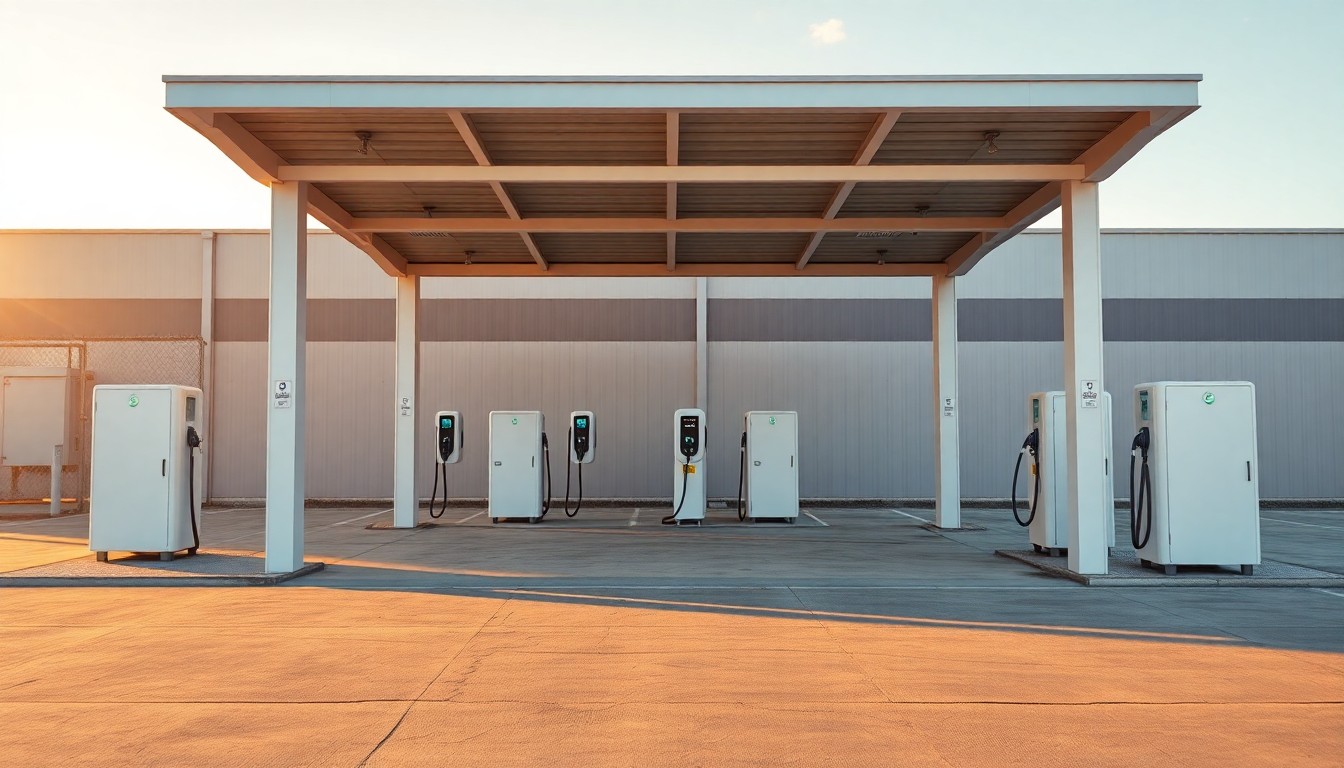
If you own a US EV charging business in 2026, the M&A market has rationalized meaningfully from the 2021-2022 SPAC peak. ChargePoint (NYSE: CHPT), Blink Charging (NASDAQ: BLNK), and EVgo (NASDAQ: EVGO) all trade well below IPO valuations. Tesla Supercharger network opening to non-Tesla via NACS (North American Charging Standard) reshaped competitive dynamics. BP Pulse, Shell Recharge (post Volta Charging $169M 2023 acquisition), Pilot Company, and oil-and-gas majors are positioning. The federal NEVI program plus state EV incentives drive infrastructure investment.
What the asset is worth depends on three things: (1) utilization rate (the #1 metric, charging stations are infrastructure assets with high fixed costs), (2) site-host quality and DCFC mix (vs. Level 2), and (3) NEVI / utility / state incentive participation. This guide covers real multiples by profile, the named buyers transacting, and the operator-level diligence buyers will run.
What this guide covers
- EV charging multiples 2026: 3x-5x EBITDA for installation contractors, 4x-6x for regional installation + maintenance, 6x-9x for network operators with material utilization, 7x-10x for DCFC hub networks, 8x-12x+ for premium scale platforms. Multiples vary wildly by business model.
- Active buyers: ChargePoint Holdings (NYSE: CHPT, $400M+ revenue, largest US EV charging network), Blink Charging (NASDAQ: BLNK, $130M+), EVgo Inc. (NASDAQ: EVGO, $250M+, DCFC-focused). Strategic: Tesla (NASDAQ: TSLA, Supercharger network), BP Pulse, Shell Recharge (post Volta Charging $169M 2023), Pilot Company (Berkshire Hathaway), Wallbox (NYSE: WBX, residential), Electrify America (Volkswagen).
- PE infrastructure-fund sponsors: BlackRock Climate Infrastructure, Brookfield Renewable Power, KKR Infrastructure, Stonepeak Infrastructure Partners, Inclusive Capital, Energy Capital Partners.
- Multiple drivers: utilization rate (the #1 metric), site-host quality (anchor retail + corridor location), DCFC mix (vs. Level 2), utility/state incentive participation (NEVI Federal program, state EV programs), operator-vs-software business model.
- Things that compress: low utilization, weak site-host portfolio, Level-2-only without DCFC, no NEVI/incentive positioning, hardware-resale-only business model, SPAC-era inflated revenue expectations.
- Sellers pay nothing on CT Strategic Partners’ buyer-paid advisory.
Named M&A transactions (2021-2025)
CT Acquisitions · 2026 EV Charging Signal
What EV Charging Buyers Pay Premium For
Across our buy-side conversations with EV charging acquirers in 2026:
- Business model classification drives 5x-10x EBITDA delta. Network operators with recurring revenue trade at 8x-12x+ EBITDA; installation contractors at 3x-5x. Sellers should position model carefully.
- Site-host operator model is increasingly favored. Operators owning charging assets at retail / hotel / municipal sites combine real estate optionality with recurring revenue.
- Utilization rate per port is buyer-priced. Operators with documented 15%+ port utilization trade above thin-utilization peers, regardless of headline port count.
Multiple at a Glance · 2026
EV Charging Business Sale Multiples · 2026
By business model.
Source: CT Acquisitions analysis of EV charging M&A. ChargePoint (CHPT), Blink (BLNK), EVgo (EVGO), BP Pulse, Shell, Tesla supercharger program + PE-backed clean-energy platforms.
Related Cluster GuideFor the related installer-side reference on electrical contractor valuation reference (electrical contractors install EV charging), see our companion.
| Target | Buyer | Year | What it tells us |
|---|---|---|---|
| Volta Charging acquired by Shell | Shell plc | 2023 | $169M disclosed; Shell entry into US EV charging via Volta’s anchor-retail network. |
| Tesla NACS opens Supercharger network | Tesla (NASDAQ: TSLA) | 2023-2024 | Tesla Supercharger opened to non-Tesla via NACS standard; reshapes competitive dynamics. |
| ChargePoint, Blink, EVgo trade below IPO | Public markets | 2022-2025 | Public EV charging valuations rationalized materially from 2021-2022 SPAC peaks. |
| Pilot Travel Network EV charging build-out | Pilot Company (Berkshire Hathaway) | 2022-2025 | Berkshire-owned travel center network builds out EV charging at truck stops. |
| NEVI program $5B federal funding rollout | Federal Highway Administration | 2022-2025 | National Electric Vehicle Infrastructure Formula Program drives state-level corridor build-out. |
| Multiple PE infrastructure-fund EV charging acquisitions | BlackRock Climate, Brookfield Renewable, KKR Infrastructure, Stonepeak | 2022-2025 | Infrastructure funds continue selective EV charging platform acquisitions. |
The named buyer landscape
Public US EV charging operators
- ChargePoint Holdings (NYSE: CHPT, ~$400M+ revenue), largest US EV charging network by station count.
- EVgo Inc. (NASDAQ: EVGO, ~$250M+ revenue), DCFC-focused.
- Blink Charging (NASDAQ: BLNK, ~$130M+ revenue).
- Wallbox (NYSE: WBX), residential and commercial Level 2.
- Beam Global (NASDAQ: BEEM), off-grid solar EV charging.
Strategic / oil-and-gas EV charging buyers
- Tesla (NASDAQ: TSLA), Supercharger network opened to non-Tesla via NACS (North American Charging Standard) in 2023-2024. Largest US DCFC network.
- BP Pulse (BP plc subsidiary), UK + US EV charging.
- Shell Recharge (Shell plc subsidiary), acquired Volta Charging for $169M in 2023.
- Pilot Company / Pilot Travel Network (Berkshire Hathaway subsidiary), truck-stop EV charging build-out.
- Electrify America (Volkswagen subsidiary), major US DCFC network.
Infrastructure-fund sponsors active in this space
- BlackRock Climate Infrastructure, Brookfield Renewable Power, KKR Infrastructure, Stonepeak Infrastructure Partners, Inclusive Capital, Energy Capital Partners, plus multiple clean-energy infrastructure PE funds.
What each buyer will pay for vs. what they reject
- Will pay premium for: utilization rate (the #1 metric, charging utilization above 15-25% is the platform benchmark), site-host quality (anchor retail like Walmart, Target, Whole Foods, or corridor locations on Interstate routes), DCFC capability and mix (DCFC vs. Level 2), NEVI program participation, utility partnership programs, named manufacturer/OEM partnerships, modern network management software, real-estate optionality.
- Will compress or reject: low utilization (below 10%), weak site-host portfolio, Level-2-only without DCFC, no NEVI/incentive positioning, hardware-resale-only business model without recurring revenue, SPAC-era inflated revenue expectations, weak network management software, no Tesla NACS compatibility.
The operator-level KPI playbook buyers will diligence
Network and utilization
- Active station count.
- Active port count.
- Utilization rate by station and port: 15-25%+ is benchmark.
- Sessions per port per day.
- kWh dispensed per port per day.
- Average revenue per session.
Station mix
- DCFC (DC fast charging) percentage: 50kW, 150kW, 350kW.
- Level 2 percentage.
- Tesla NACS compatibility post 2023-2024 standard.
- CCS1 / CHAdeMO connectors.
Site-host portfolio
- Site-host contract structure: Revenue share, lease, build-own-operate.
- Anchor retail site quality: Walmart, Target, Whole Foods, Costco, etc.
- Corridor site quality: Interstate-route locations.
- Workplace and multi-family site portfolio.
Incentive and regulatory participation
- NEVI (National Electric Vehicle Infrastructure Formula Program) state award participation.
- State EV incentive programs.
- Utility EV charging programs (managed charging, time-of-use rates, capacity charges).
- EPA Clean School Bus Program, USDA REAP for rural EV.
Operating system
- Network management software: ChargePoint cloud, Driivz, EVConnect, OpenADR, Engenuity Power.
- OCPP (Open Charge Point Protocol) compliance.
- Driver app and payment integration.
- Uptime monitoring and remote service.
Dangers and traps
1. Low utilization
Below 10% utilization compresses materially; EV charging is high-fixed-cost infrastructure.
2. Weak site-host portfolio
Anchor retail + corridor sites are the value drivers.
3. Level-2-only without DCFC
DCFC is the premium category for highway corridors and urban hubs.
4. SPAC-era inflated revenue expectations
ChargePoint, Blink, EVgo all trade well below IPO valuations; multiples have rationalized.
5. Tesla NACS competitive dynamics
Tesla Supercharger network opened to non-Tesla via NACS in 2023-2024; competitors face network-effect disadvantage.
6. Hardware-resale-only business model
Recurring revenue (charging fees, software subscriptions) is the multiple-builder.
7. NEVI funding-dependent business model
Operators dependent on NEVI funding for site construction face program-timing risk.
8. Utility partnership risk
Utility EV programs can change unfavorably (e.g., demand-charge issues).
Our POV in 2026
EV charging M&A has rationalized meaningfully from the 2021-2022 SPAC peak. ChargePoint (NYSE: CHPT), Blink (NASDAQ: BLNK), EVgo (NASDAQ: EVGO) all trade well below IPO. Tesla Supercharger opening to non-Tesla via NACS reshaped competitive dynamics. Shell Recharge (post Volta Charging $169M 2023), BP Pulse, Pilot Company are oil-and-gas-major positioning. Infrastructure funds (BlackRock Climate, Brookfield Renewable, KKR Infrastructure, Stonepeak) continue selective acquisitions.
The right time to prepare is 12-18 months before going to market, drive utilization, build DCFC capability, lock in anchor site-hosts, pursue NEVI awards, ensure Tesla NACS compatibility.
Preparing your business for sale: 12-18 months out
- Get multi-year audited financials.
- Document utilization rate and trend.
- Build DCFC capability if not present.
- Lock in anchor site-host relationships.
- Pursue NEVI program awards in operating states.
- Ensure Tesla NACS compatibility.
- Develop recurring revenue (charging fees + software subscriptions).
- Modernize network management software.
- Document utility partnership participation.
- Run a competitive process. ChargePoint Holdings (NYSE: CHPT), Blink Charging (NASDAQ: BLNK), EVgo Inc. (NASDAQ: EVGO), Tesla, BP Pulse, Shell Recharge, Pilot Company (Berkshire Hathaway), Electrify America (Volkswagen), Wallbox (NYSE: WBX), plus PE infrastructure-fund sponsors (BlackRock Climate Infrastructure, Brookfield Renewable Power, KKR Infrastructure, Stonepeak Infrastructure Partners, Inclusive Capital, Energy Capital Partners).
About the Author
Christoph Totter is the founder of CT Acquisitions, a buy-side partner headquartered in Sheridan, Wyoming. We work directly with 200+ buyers, search funders, family offices, lower middle-market PE, and strategic consolidators, including direct mandates with the largest home services consolidators that other intermediaries can’t access. The buyers pay us when a deal closes, not the seller. No retainer, no exclusivity, no contract until close. Connect on LinkedIn · Get in touch
Free, No Email Required
Get a personalized valuation in 90 seconds
Answer six quick questions and we’ll give you a sector-adjusted EBITDA multiple range plus the specific factors driving your number up or down.
Open the Valuation Tool →The five pillars of how CT Acquisitions works
Buyer pays our fee. Founders never write a check.
No engagement letter. No upfront cost. No exclusivity contract.
Search funders, family offices, lower-middle-market PE, strategics.
Confidential introductions to the right buyers. No bidding war.
Not 9-12 months. Not 18 months. Months, not years.
No Pitch · No Pressure
Ready to start a confidential conversation?
Tell us about your business. We’ll tell you what it’s likely worth, whether we have qualified buyers in our network, and what the next 60-120 days could look like. No engagement letter. No retainer. Walk at any time.
Start a Confidential Conversation →Frequently asked questions
What is the typical multiple for an EV charging business in 2026?
Single-region EV charging installation contractors ($500k-1.5M EBITDA) typically sell at 3x-5x EBITDA. Regional installation + maintenance contractors ($1.5-5M EBITDA) go 4x-6x. Network operators with material utilization ($3-10M EBITDA) go 6x-9x. DCFC hub networks ($10-30M EBITDA) go 7x-10x. Premium scale platforms ($30M+ EBITDA, named anchor site-host network, utility partnerships) reach 8x-12x+. Multiples vary wildly by business model; multiples have rationalized meaningfully from the 2021-2022 SPAC peak.
Who are the active buyers of EV charging businesses right now?
Public US EV charging operators: ChargePoint Holdings (NYSE: CHPT, ~$400M+ revenue, largest US EV charging network), EVgo Inc. (NASDAQ: EVGO, ~$250M+, DCFC-focused), Blink Charging (NASDAQ: BLNK, ~$130M+). Strategic / oil-and-gas: Tesla (NASDAQ: TSLA, Supercharger network with NACS), BP Pulse, Shell Recharge (post Volta Charging $169M 2023), Pilot Company (Berkshire Hathaway), Electrify America (Volkswagen), Wallbox (NYSE: WBX), Beam Global (NASDAQ: BEEM). Infrastructure-fund sponsors: BlackRock Climate Infrastructure, Brookfield Renewable Power, KKR Infrastructure, Stonepeak Infrastructure Partners, Inclusive Capital, Energy Capital Partners.
What hurts an EV charging business’s valuation most?
Low utilization (below 10%, the #1 metric, EV charging is high-fixed-cost infrastructure), weak site-host portfolio (anchor retail + corridor sites are the value drivers), Level-2-only without DCFC, SPAC-era inflated revenue expectations, Tesla NACS compatibility gaps, hardware-resale-only business model without recurring revenue, NEVI funding-dependent business model with program-timing risk, weak utility partnership programs.
How has the 2021-2022 SPAC peak affected EV charging M&A?
ChargePoint (NYSE: CHPT), Blink Charging (NASDAQ: BLNK), and EVgo (NASDAQ: EVGO) all trade well below their IPO/SPAC valuations. The category has rationalized: investors and buyers now scrutinize utilization rates, recurring-revenue mix, and unit economics more carefully. Sellers must reset expectations from the 2021-2022 SPAC era to current rationalized multiples.
What is the Tesla NACS / Supercharger network impact?
Tesla opened the Supercharger network to non-Tesla vehicles via NACS (North American Charging Standard) in 2023-2024. Most US automakers (Ford, GM, Hyundai, etc.) adopted NACS. The Tesla Supercharger network has the highest reliability and most extensive corridor coverage in the US. Non-Tesla EV charging operators face network-effect disadvantage; competitive dynamics shifted significantly.
Do I have to pay a broker fee?
No. CT Strategic Partners runs a buyer-paid M&A advisory model. The seller pays nothing.
How long does it take to sell an EV charging business?
Typical process 5-9 months. Real-estate site diligence extends timing. Add 12-18 months of preparation.
When should I start preparing if I plan to sell in 2027 or 2028?
12-18 months before going to market. Highest-leverage work: drive utilization, build DCFC capability, lock in anchor site-host relationships, pursue NEVI program awards, ensure Tesla NACS compatibility, develop recurring revenue mix.
Related research
- How to sell a solar installation business
- How to sell an HVAC business to PE
- How to sell an electrical contracting business
- How to sell a fleet maintenance business
- How to sell a fuel distribution business
- How to sell a data center business
- How to sell a wireless tower business
- Which industries is PE buying most in 2026
- Private equity value creation
- Business broker alternative