How to Sell a Wireless Tower Business (2026): 20x-30x EBITDA & Named Buyers
Quick Answer

Christoph Totter · Managing Partner, CT Acquisitions
Buy-side M&A across 200+ active capital partners · Digital infrastructure M&A: wireless towers, fiber, data centers · Updated June 6, 2026
A US wireless tower business in 2026 typically sells for roughly 20x to 30x EBITDA, the highest multiples in this entire series. Wireless towers are pure infrastructure assets with multi-decade tenant leases (typically 5-10 years initial term + multiple 5-year renewals), inflation-linked rate escalators, and near-zero customer churn. The asset class trades at infrastructure-fund multiples. By profile: a single-tower or small-portfolio operator (1-50 towers) goes 15x-22x EBITDA (deal-by-deal); a regional tower portfolio (50-500 towers, $2-15M EBITDA) goes 18x-25x; a mid-size platform (500-2,000 towers, $15-60M EBITDA) goes 20x-27x; a premium scale platform (2,000+ towers, $60M+ EBITDA, multi-carrier tenants) reaches 23x-30x+ EBITDA. The Big Three US tower companies dominate: American Tower Corporation (NYSE: AMT, ~$11B+ revenue, ~225,000 towers globally, ~43,000 US), Crown Castle Inc. (NYSE: CCI, ~$7B+ revenue, ~40,000 US towers post 2024 strategic review divesting fiber), and SBA Communications Corporation (NASDAQ: SBAC, ~$2.7B+ revenue, ~17,000 US towers). Other active buyers include Vertical Bridge (private, the largest private US tower owner with ~10,000 towers), Tillman Infrastructure (private), Phoenix Tower International (private), Diamond Communications (private), plus PE / infrastructure-fund sponsors (Digital Realty / DigitalBridge Group NYSE: DBRG, Stonepeak Infrastructure Partners, Brookfield Infrastructure, KKR Infrastructure, Macquarie Asset Management, GIC, Caisse de depot et placement du Quebec [CDPQ]). The biggest multiple drivers are tenant count per tower (3+ tenants is best), tenant credit quality (Verizon, AT&T, T-Mobile, DISH), lease term remaining, ground-lease ownership (vs. land lease), and tower height + structural capacity. Buyer-paid M&A advisory (CT Strategic Partners) costs the seller nothing.
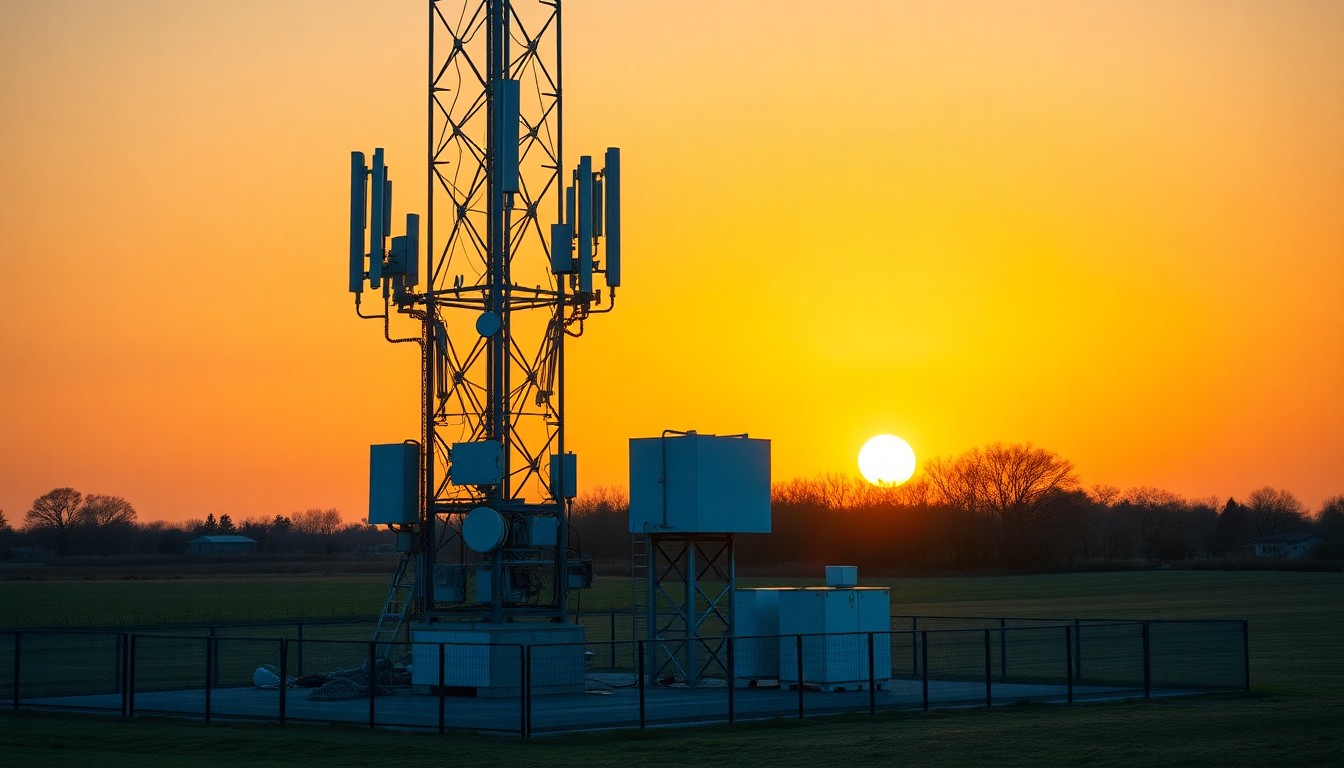
If you own a US wireless tower business in 2026, you own one of the highest-multiple asset classes in M&A. Wireless towers trade at infrastructure-fund multiples (20x-30x EBITDA) because of multi-decade tenant leases, inflation-linked escalators, and near-zero customer churn. American Tower (NYSE: AMT, ~$11B+ revenue), Crown Castle (NYSE: CCI, ~$7B+ revenue), and SBA Communications (NASDAQ: SBAC, ~$2.7B+ revenue) are the Big Three US tower REITs. Vertical Bridge (private) is the largest private US tower owner with ~10,000 towers. Infrastructure funds (DigitalBridge, Stonepeak, Brookfield, KKR Infrastructure, Macquarie, GIC, CDPQ) participate at platform scale.
What the asset is worth depends on three things: (1) tenant count per tower (3+ tenants is the goldilocks zone), (2) tenant credit quality (Verizon, AT&T, T-Mobile, DISH are the named tier-1 tenants), and (3) ground-lease ownership vs. leased land (owned-ground premium). This guide covers real multiples by profile, the named buyers transacting, and the operator-level diligence buyers will run.
What this guide covers
- Wireless tower multiples 2026: 15x-22x for single-tower or small-portfolio, 18x-25x for regional (50-500 towers), 20x-27x for mid-size platforms, 23x-30x+ for premium scale, the highest multiples in this entire M&A series.
- Big Three US tower REITs: American Tower (NYSE: AMT, ~$11B+ revenue, ~43,000 US towers), Crown Castle (NYSE: CCI, ~$7B+, ~40,000 US towers), SBA Communications (NASDAQ: SBAC, ~$2.7B+, ~17,000 US towers).
- Private platform buyers: Vertical Bridge (~10,000 US towers, largest private), Tillman Infrastructure, Phoenix Tower International, Diamond Communications.
- Infrastructure fund sponsors: DigitalBridge Group (NYSE: DBRG), Stonepeak Infrastructure Partners, Brookfield Infrastructure, KKR Infrastructure, Macquarie Asset Management, GIC, Caisse de depot et placement du Quebec (CDPQ).
- Multiple drivers: tenant count per tower (3+ is goldilocks), tier-1 tenant credit (Verizon, AT&T, T-Mobile, DISH), lease term remaining, ground-lease ownership vs. land-lease, tower height + structural capacity, 5G small-cell densification optionality.
- Things that compress the multiple: single-tenant towers, weak ground-lease terms (short or expensive), tower-structural capacity issues, single-region exposure, weak permitting / zoning position.
- Sellers pay nothing on CT Strategic Partners’ buyer-paid advisory.
Named M&A transactions (2021-2025)
CT Acquisitions · 2026 Wireless Tower Signal
What Tower Buyers Underwrite in 2026
Across our buy-side conversations with wireless tower acquirers in 2026:
- Master Lease Agreement (MLA) carrier coverage drives top-tier pricing. Operators with anchor carrier MLAs (Verizon, AT&T, T-Mobile, DISH) trade at materially above non-MLA peers.
- Lease escalators are the underwriting headline. 3-5% annual escalators standard; lower escalators face haircut. Multi-decade contracts drive 25x-30x tower-cash-flow multiples.
- Co-location density unlocks premium tier. Multi-tenant towers (vs single-tenant) trade at meaningful premium because of ancillary revenue and tenancy diversification.
Multiple at a Glance · 2026
Wireless Tower Sale Multiples · 2026
Highest multiples in our coverage.
Source: CT Acquisitions analysis of wireless tower M&A. American Tower (AMT), Crown Castle (CCI), SBA (SBAC), Vertical Bridge + PE-backed tower platforms / infrastructure funds.
| Target | Buyer | Year | What it tells us |
|---|---|---|---|
| Crown Castle fiber strategic review | Crown Castle Inc. (NYSE: CCI) | 2024 | Crown Castle announced strategic review of fiber/small-cell business; focused on tower-only operations. |
| Multiple American Tower portfolio additions | American Tower (NYSE: AMT) | 2022-2025 | Largest US tower REIT continues selective portfolio additions and developments. |
| SBA Communications continued growth | SBA Communications (NASDAQ: SBAC) | 2022-2025 | Third-largest US tower REIT continues organic builds and selective M&A. |
| Vertical Bridge tower portfolio acquisitions | Vertical Bridge (private) | 2022-2025 | Largest US private tower owner continues regional consolidation. |
| Tillman Infrastructure build-to-suit | Tillman Infrastructure | 2022-2025 | Build-to-suit tower developer continues carrier-backed greenfield projects. |
The named buyer landscape
Big Three US tower REITs
- American Tower Corporation (NYSE: AMT, ~$11B+ revenue, ~225,000 towers globally with ~43,000 in the US), the largest US public tower REIT.
- Crown Castle Inc. (NYSE: CCI, ~$7B+ revenue, ~40,000 US towers), second-largest. 2024 strategic review divested fiber/small cells.
- SBA Communications Corporation (NASDAQ: SBAC, ~$2.7B+ revenue, ~17,000 US towers), third-largest.
Major private tower owners
- Vertical Bridge (private, ~10,000 US towers), the largest private US tower owner.
- Tillman Infrastructure (private), smaller tower portfolio, build-to-suit focus.
- Phoenix Tower International (private), multinational tower operator.
- Diamond Communications (private), rooftop and small-cell focus.
Infrastructure-fund sponsors active in this space
- DigitalBridge Group (NYSE: DBRG, infrastructure manager), Stonepeak Infrastructure Partners, Brookfield Infrastructure, KKR Infrastructure, Macquarie Asset Management, GIC (Government of Singapore Investment Corporation), Caisse de depot et placement du Quebec (CDPQ), plus multiple infrastructure PE funds.
The operator-level KPI playbook buyers will diligence
Tenant and lease metrics
- Tenants per tower: 3+ tenants is the goldilocks zone. Single-tenant towers compress meaningfully.
- Tier-1 tenant credit: Verizon (NYSE: VZ), AT&T (NYSE: T), T-Mobile US (NASDAQ: TMUS), DISH Network (NASDAQ: DISH), US Cellular (NYSE: USM).
- Lease term remaining: Weighted average remaining lease term (WARLT).
- Rate escalators: Annual increase percentage (typically 3% fixed or CPI-linked).
- Tenant churn rate: Should be near zero.
Ground rights and ownership
- Ground-lease ownership vs. leased land.
- Ground-lease term remaining.
- Ground-rent as % of tenant revenue.
- Ground-buyout opportunities (fee simple conversion).
Tower structure and capacity
- Tower height (typically 100-300+ feet).
- Tower type: Self-support, guyed, monopole, rooftop.
- Structural capacity: Remaining loading capacity for additional tenants.
- Co-location revenue potential.
Geographic and regulatory
- Geographic mix: Urban, suburban, rural; 5G densification opportunity by zone.
- FAA / FCC filings and compliance.
- Zoning / permitting cleanliness.
- Environmental compliance (NEPA, SHPO).
Dangers and traps
1. Single-tenant towers
Single-tenant towers face concentration risk; multi-tenant towers achieve premium multiples through revenue diversification and amenity-loading economics.
2. Weak ground-lease terms
Short ground-lease remaining term (under 20 years) or expensive ground rent (above 10% of tenant revenue) compresses multiples.
3. Tower-structural capacity limits
Towers at maximum loading capacity cannot add tenants; remaining capacity is the growth-multiple-builder.
4. Carrier consolidation impact
T-Mobile + Sprint merger reduced tower demand at consolidated sites. Document affected sites and lease structure.
5. DISH wireless build-out risk
DISH Network’s wireless build-out has been slower than expected; if DISH is a significant tenant, document creditworthiness.
6. Carrier MLA (Master Lease Agreement) terms
Carrier MLAs increasingly include termination rights and rate caps. Document MLA specifics by carrier.
7. Small-cell + DAS competition
5G small-cell deployment can substitute for traditional towers in urban areas.
8. Regulatory and zoning issues
FAA, FCC, NEPA, SHPO compliance and state/local zoning are all diligence focus areas.
Our POV in 2026
Wireless towers are the highest-multiple asset class in US M&A, 20x-30x EBITDA at platform scale. The Big Three tower REITs (American Tower, Crown Castle, SBA Communications) dominate public-market consolidation. Vertical Bridge leads private operators. Infrastructure funds (DigitalBridge, Stonepeak, Brookfield, KKR Infrastructure, Macquarie, GIC, CDPQ) compete for platform-scale deals.
The right time to prepare is 12-18 months before going to market, lock in multi-tenant leases, secure ground-lease extensions, document structural capacity for co-location growth.
Preparing your business for sale: 12-18 months out
- Get multi-year audited financials.
- Document tenant base by carrier with credit ratings.
- Maximize multi-tenant loading.
- Lock in ground-lease extensions to 30+ years remaining.
- Pursue ground buyouts (fee simple) where economic.
- Document tower structural capacity for additional tenants.
- Confirm FAA, FCC, NEPA, SHPO, zoning compliance.
- Document MLA terms by carrier.
- Run a competitive process. American Tower (NYSE: AMT), Crown Castle (NYSE: CCI), SBA Communications (NASDAQ: SBAC), Vertical Bridge, Tillman Infrastructure, Phoenix Tower International, plus infrastructure funds (DigitalBridge NYSE: DBRG, Stonepeak, Brookfield Infrastructure, KKR Infrastructure, Macquarie, GIC, CDPQ).
Free, No Email Required
Get a personalized valuation in 90 seconds
Answer six quick questions and we’ll give you a sector-adjusted EBITDA multiple range plus the specific factors driving your number up or down.
The five pillars of how CT Acquisitions works
Buyer pays our fee. Founders never write a check.
No engagement letter. No upfront cost. No exclusivity contract.
Search funders, family offices, lower-middle-market PE, strategics.
Confidential introductions to the right buyers. No bidding war.
Not 9-12 months. Not 18 months. Months, not years.
No Pitch · No Pressure
Ready to start a confidential conversation?
Tell us about your business. We’ll tell you what it’s likely worth, whether we have qualified buyers in our network, and what the next 60-120 days could look like. No engagement letter. No retainer. Walk at any time.
Frequently asked questions
What is the typical multiple for a wireless tower business in 2026?
Single-tower or small portfolio (1-50 towers) typically sells at 15x-22x EBITDA. Regional portfolios (50-500 towers, $2-15M EBITDA) go 18x-25x. Mid-size platforms (500-2,000 towers, $15-60M EBITDA) go 20x-27x. Premium scale platforms (2,000+ towers, $60M+ EBITDA) reach 23x-30x+. These are the highest multiples in all of US M&A, reflecting infrastructure-fund economics with multi-decade leases and near-zero customer churn.
Who are the active buyers of wireless tower businesses right now?
Big Three US tower REITs: American Tower Corporation (NYSE: AMT, ~$11B+ revenue, ~43,000 US towers), Crown Castle Inc. (NYSE: CCI, ~$7B+ revenue, ~40,000 US towers), SBA Communications Corporation (NASDAQ: SBAC, ~$2.7B+ revenue, ~17,000 US towers). Major private operators: Vertical Bridge (~10,000 US towers, largest private), Tillman Infrastructure, Phoenix Tower International, Diamond Communications. Infrastructure-fund sponsors: DigitalBridge Group (NYSE: DBRG), Stonepeak Infrastructure Partners, Brookfield Infrastructure, KKR Infrastructure, Macquarie Asset Management, GIC, Caisse de depot et placement du Quebec (CDPQ).
Why do wireless towers command the highest M&A multiples in any sector?
Wireless towers are pure infrastructure assets with characteristics that drive premium multiples: multi-decade tenant leases (5-10 year initial terms + multiple 5-year renewals), inflation-linked rate escalators (3% fixed or CPI-linked), near-zero customer churn (carrier tenants like Verizon, AT&T, T-Mobile cannot easily relocate), high incremental margin (each additional tenant on a tower drops directly to EBITDA), and effective oligopoly competition. The combination creates infrastructure-fund economics that warrant 20x-30x EBITDA multiples.
What hurts a wireless tower business’s valuation most?
Single-tenant towers (concentration risk), short ground-lease remaining term (under 20 years), expensive ground rent (above 10% of tenant revenue), tower-structural capacity at maximum (no co-location growth), carrier consolidation impact (T-Mobile + Sprint merged sites), DISH Network credit risk if heavy DISH tenancy, unfavorable Master Lease Agreement (MLA) terms with carriers, and zoning / regulatory issues.
What is the impact of 5G small-cell deployment on tower multiples?
5G small-cell and DAS (distributed antenna system) deployment can substitute for traditional towers in dense urban areas, creating competitive pressure on urban tower portfolios. Rural and suburban towers face less small-cell substitution risk. The Big Three tower REITs have responded with mixed strategies: Crown Castle divested fiber/small-cells in 2024; American Tower and SBA maintain modest small-cell exposure. Buyer-side diligence assesses urban-rural mix and 5G small-cell competitive exposure.
Do I have to pay a broker fee?
No. CT Strategic Partners runs a buyer-paid M&A advisory model. The seller pays nothing. The buyer pays the success fee at closing.
How long does it take to sell a wireless tower business?
Once you go to market with a buyer-paid advisor, a typical process runs 6-9 months from initial outreach to closing. Tower-specific diligence (ground-lease title work, structural engineering reports, MLA reviews) extends the timeline. Add 12-18 months of preparation.
When should I start preparing if I plan to sell in 2027 or 2028?
12-18 months before going to market. Highest-leverage work: lock in multi-tenant leases, extend ground leases to 30+ years remaining, pursue ground-fee-simple buyouts, document structural capacity for additional tenants, confirm FAA/FCC/NEPA/zoning compliance.
Related research
- How to sell a data center business
- How to sell a cybersecurity services company
- How to sell an alarm monitoring company
- How to sell a low-voltage company
- How to sell an IT MSP business
- Which industries is PE buying most in 2026
- Private equity value creation
- Business broker alternative
- Sell your business (overview)
- Strategic buyer vs financial buyer
About the Author
Christoph Totter is the founder of CT Acquisitions, a buy-side partner headquartered in Sheridan, Wyoming. We work directly with 200+ buyers, search funders, family offices, lower middle-market PE, and strategic consolidators, including direct mandates with the largest home services consolidators that other intermediaries can’t access. The buyers pay us when a deal closes, not the seller. No retainer, no exclusivity, no contract until close. Connect on LinkedIn · Get in touch