
Sell Your Waste Hauling Business in Kentucky
If you operate a commercial waste-hauling or solid-waste-services business in Kentucky and you have searched “sell my waste hauling business in Kentucky”, the variables that drive your sale price are state-specific in ways the national category data does not capture. Your state DEP, DEQ, or environmental agency’s permit transferability timeline, the federal Motor Carrier Safety Administration’s Compliance, Safety, Accountability score at your fleet level, the specific environmental indemnity tail risk created by CERCLA successor liability at any landfill you have owned or operated, the named public strategics with active deal posture in Kentucky in 2026, the PE platform buyer pool that compounds vertical-integration premium into 9-11x EBITDA multiples, and the route-density mechanics that determine whether your book is a 4x add-on or a 9x platform candidate all reshape the multiple a buyer will pay. This page walks through the Kentucky valuation framework as commercial waste-hauling businesses are actually trading in mid-2026, the named buyers actively acquiring here, and the 18 to 24 month pre-sale playbook that converts an owner-operator route book into a platform-multiple sale.
CT Acquisitions runs a sell-side M&A advisory practice across a $2026 commercial waste-hauling market that has experienced a generational restructuring. Waste Management closed the $7.2 billion Stericycle acquisition on November 4 2024 and now operates WM Healthcare Solutions as the US medical-waste market leader, with the synergy target raised to $250 million over three years from the initial $125 million. GFL Environmental divested its Environmental Services line on March 1 2025 to Apollo, BC Partners, and HPS Investment Partners (entity “GFL Environmental Services JV LP”) while GFL Inc itself continues as a pure-play solid-waste public and closed the $900 million Frontier Waste acquisition on April 1 2026. Republic Services telegraphed $1.1 billion of strategic deal volume in 2025 and another $1 billion guided for 2026. Waste Connections posted a record $750 million annualized acquired revenue across 24 deals in 2024. The PE platform pool has consolidated since 2024 around six high-velocity acquirers (Interstate Waste Services under Littlejohn + Ares since October 24 2023, Coastal Waste & Recycling under Macquarie since June 2023, Meridian Waste under Warren Equity Fund II, Ecowaste Solutions under Kinderhook since January 2026, TXP Environmental under NMS Capital, and WIN Waste Innovations under Macquarie since early 2019). Whether you are looking at a $400K SDE owner-operator roll-off route book or a $15M EBITDA platform-quality sale with transfer station ownership, the Kentucky context matters before the data room opens.
Key Takeaways
- The US commercial waste-hauling and solid-waste-services market runs roughly $80-90 billion in annual revenue across MSW, C&D, industrial, medical, hazmat, and recycling channels.
- Kentucky waste-hauling concentrates on Louisville Rumpke dominance, Toyota Georgetown KY automotive industrial waste, Ford Louisville Assembly Plant plus Ford Kentucky Truck Plant…
- The 2026 PE buyer map: for the full sponsor-by-sponsor cap-table of 20+ active US waste hauling + environmental services PE platforms (Stericycle = WM Healthcare Solutions Nov 4 20…
- Recurring monthly contract revenue defines waste-hauling valuation in ways that mirror janitorial but with a critical twist: contract paper carries more weight because customers ha…
- Contingent consideration in waste-hauling deals operates on two distinct dimensions that other recurring-services categories do not face: environmental indemnity tail liability and…
The Kentucky commercial waste-hauling landscape in 2026
The US commercial waste-hauling and solid-waste-services market runs roughly $80-90 billion in annual revenue across MSW, C&D, industrial, medical, hazmat, and recycling channels. The largest players are public strategics: Waste Management at ~$22 billion revenue post-Stericycle, Republic Services at ~$16 billion, Waste Connections at ~$9 billion, GFL Environmental as a pure-play solid-waste public post-divestiture of Environmental Services, Casella Waste Systems at ~$1.5 billion in the Northeast, and Clean Harbors at.
The US commercial waste-hauling and solid-waste-services market runs roughly $80-90 billion in annual revenue across MSW, C&D, industrial, medical, hazmat, and recycling channels. The largest players are public strategics: Waste Management at ~$22 billion revenue post-Stericycle, Republic Services at ~$16 billion, Waste Connections at ~$9 billion, GFL Environmental as a pure-play solid-waste public post-divestiture of Environmental Services, Casella Waste Systems at ~$1.5 billion in the Northeast, and Clean Harbors at ~$5.9 billion in industrial and hazmat. Kentucky waste-hauling owners are pricing their businesses in a market where the spread between an owner-operator local hauler and a $15M+ EBITDA vertically-integrated platform seller is structural rather than cyclical, the spread compounds because vertical integration (owned landfill, transfer station, or MRF) creates merchant tip-fee revenue, route-haul cost control, and switching cost that cannot be replicated by a collection-only operator.
Commercial waste-hauling and solid-waste-services M&A multiples in 2026 spread wider than almost any other recurring-services category because vertical integration (owned landfill, transfer station, or MRF), route density (% of customers within 5-mile cluster), and commercial-account mix all compound multiplicatively rather than additively. Sub-$2M EBITDA owner-operator haulers (SDE basis) clear 3.0x-5.5x SDE, roll-off-only books sit at the low end, commercial front-load with auto-renewal at the high end. $2-5M EBITDA mid-market haulers trade 5.0x-7.0x EBITDA in the regional PE platform buyer zone. $5-15M EBITDA platform candidates without post-collection assets clear 6.5x-7.5x EBITDA; with transfer-station ownership they jump to 8.0x-9.5x EBITDA; with a permitted MSW landfill they reach 9.5x-11.0x EBITDA. The $15-50M EBITDA add-on band to public or PE platforms (Waste Management / Republic Services / Waste Connections / GFL / Casella / WIN sweet spot) runs 8.0x-11.0x EBITDA, with vertically integrated assets pushing the upper bound. The $50M+ EBITDA strategic transactions trade 10.0x-14.0x EBITDA, with landfill ownership routinely pushing 11-14x. Waste Management’s $7.2B Stericycle acquisition closed November 4 2024 at $62 per share with the synergy target subsequently raised to $250 million over three years ($100M run-rate in 2025) from the initial $125M; that deal reset medical-waste multiples. Republic Services telegraphed $1.1 billion of strategic deal volume in 2025 (up from $358M in 2024) with another $1 billion guided for 2026. Waste Connections posted a record $750 million annualized acquired revenue across 24 deals in 2024. The most consequential 2026 transaction in solid waste was GFL Environmental’s $900 million acquisition of Frontier Waste Solutions on April 1 2026, re-establishing public-strategic dominance of the Texas Triangle and removing Frontier from the PE-owned bucket where it had sat under Summer Street Capital + Concentric Equity + Tailwater Capital.
Which buyers are actually rolling up your Kentucky market, and what your location does to your negotiating position
Kentucky’s buyer story is split by geography: in Northern Kentucky the Cincinnati suburbs (Boone/Kenton/Campbell) are served by RUMPKE reaching south across the river from its Ohio disposal base, while Louisville and Lexington are integrated-major territory (WM owns the largest MSW landfill in the state at Louisville’s Outer Loop; Republic owns the Valley View Landfill in Trimble County and runs Lexington collection), with GFL present in western Kentucky.
- Rumpke Waste & Recycling: Steady family-owned consolidator; roughly 75 acquisitions since 2019.
- Waste Management (WM): Constant tuck-in acquirer; guided back to roughly $100M-$200M/yr M&A pace for 2026 after digesting the $7.2B Stericycle deal (Nov 4 2024).
- Republic Services (RSG): Aggressive; roughly $1.1B on M&A in 2025, CEO signaled about $1B more possible in 2026.
- GFL Environmental: The most aggressive roll-up of the majors; roughly 20 deals / about $718M in 2025, guided $1.5B-$2B for 2026.
- Waste Pro USA: Founder Jennings family (independent, not PE); roughly $170M on M&A in 2025; revenue projected $1.4B+.
Your location scored on five factors
Having an active consolidator in your region is the hook, but it only converts once you weigh disposal access, your franchise structure and scale, route density and demand, and the environmental and legal backdrop, which together decide how hard buyers actually compete for your book. Here is how Kentucky reads on all five.
| Factor | What it means for your exit |
|---|---|
| Consolidator in your region | Geographically split. Northern Kentucky (Boone/Kenton/Campbell Cincinnati suburbs) is Rumpke’s disposal-owning reach from Ohio; Louisville is anchored by WM’s owned Outer Loop landfill (largest MSW landfill in the state); Lexington by Republic’s owned Valley View landfill; GFL (western KY) and Waste Pro (SE-edge) add bidders. Strong in the north and the two metros, thin in the rural coal-region east. |
| Disposal access & economics | Low tipping fees (roughly $30-$45/ton, below national average; KY hosts some out-of-state waste). Great for margins, but low fees temper the internalization premium. WM (Outer Loop, Louisville) and Republic (Valley View, Trimble County) own in-state disposal, and Rumpke owns disposal across the river for the north, so owning-the-hole bargaining position is present but tempered. |
| Franchise structure & size gate | Genuinely MIXED over a distinctive SEMI-MANDATORY overlay: KRS 224.43-315 forces every county to guarantee universal collection, delivered either by county contract/franchise (durable, financeable) or by hauler registration (churnier subscription under a legal coverage floor). Value read is county-specific, not statewide, and hinges on contract-versus-registration. |
| Route density & demand | Mid-sized, slow-growth, largely rural (roughly 4.5M; 120 counties / 15 Area Development Districts). Value comes from contiguity, county-contract quality, and disposal-adjacency, not a population tailwind; the Northern-KY/Cincinnati suburbs, Louisville, and Lexington are the bright spots; the eastern coal region is thin and long-haul. |
| Environmental & legal | EEC / Division of Waste Management (401 KAR) permitting + CERCLA successor tail (rural illegal-dumping overlay) are the diligence drag; KRS 224.43-315 shapes contract-versus-registration book quality; common-law reasonableness + Hodges v. Todd make sale non-competes enforceable; low FALLING flat income tax (3.5% for 2026) with cap gains as ordinary income = favorable and improving, not zero-tax, exit. |
What is specific to Kentucky
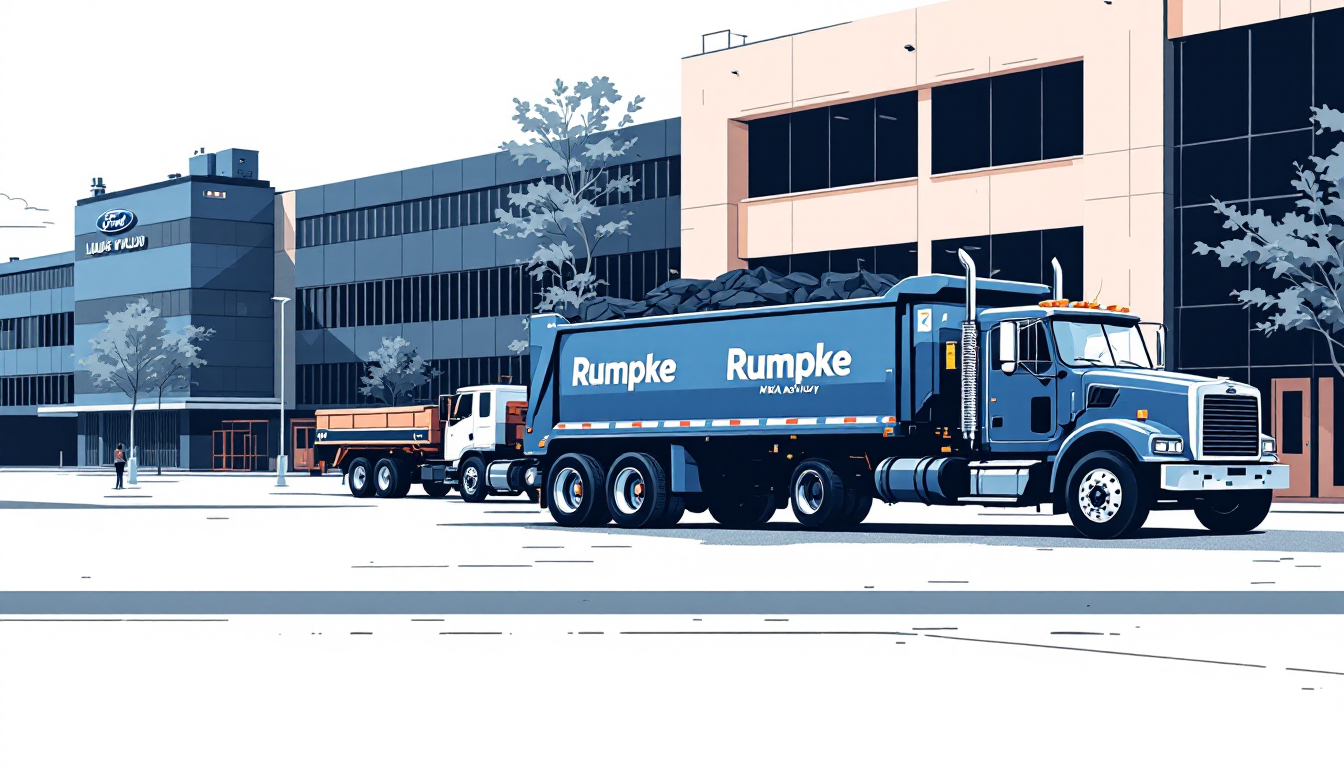
Kentucky waste-hauling concentrates on Louisville Rumpke dominance, Toyota Georgetown KY automotive industrial waste, Ford Louisville Assembly Plant plus Ford Kentucky Truck Plant captive and outsourced books, coal-region brownfield exposure, and the niche bourbon-distillery cleaning vertical (Maker’s Mark, Buffalo Trace, Heaven Hill which all carr…
Kentucky waste-hauling concentrates on Louisville Rumpke dominance, Toyota Georgetown KY automotive industrial waste, Ford Louisville Assembly Plant plus Ford Kentucky Truck Plant captive and outsourced books, coal-region brownfield exposure, and the niche bourbon-distillery cleaning vertical (Maker’s Mark, Buffalo Trace, Heaven Hill which all carry GMP-adjacent food and beverage standards). Kentucky Energy and Environment Cabinet governs permits. Republic Services closed the Green River Waste KY acquisition in Q3 2025. Active acquirers include Rumpke (regional home-field), Republic Services, and Waste Connections.
Valuation multiples for Kentucky waste-hauling businesses in 2026
The 2026 PE buyer map: for the full sponsor-by-sponsor cap-table of 20+ active US waste hauling + environmental services PE platforms (Stericycle = WM Healthcare Solutions Nov 4 2024 $7.2B; GFL ES divestiture March 1 2025 to Apollo+BC+HPS+GFL Inc; Reworld = EQT+GIC; Heritage-Crystal Clean = JFL; WIN = Macquarie).
The 2026 PE buyer map: for the full sponsor-by-sponsor cap-table of 20+ active US waste hauling + environmental services PE platforms (Stericycle = WM Healthcare Solutions Nov 4 2024 $7.2B; GFL ES divestiture March 1 2025 to Apollo+BC+HPS+GFL Inc; Reworld = EQT+GIC; Heritage-Crystal Clean = JFL; WIN = Macquarie). acquiring in Kentucky and across the US in 2024-2026, with primary-source citations on every numeric claim, see the 2026 Waste Hauling & Environmental Services PE Roll-Up Tracker.
Commercial waste-hauling and solid-waste-services M&A multiples in 2026 spread wider than almost any other recurring-services category because vertical integration (owned landfill, transfer station, or MRF), route density (% of customers within 5-mile cluster), and commercial-account mix all compound multiplicatively rather than additively. Sub-$2M EBITDA owner-operator haulers (SDE basis) clear 3.0x-5.5x SDE, roll-off-only books sit at the low end, commercial front-load with auto-renewal at the high end. $2-5M EBITDA mid-market haulers trade 5.0x-7.0x EBITDA in the regional PE platform buyer zone. $5-15M EBITDA platform candidates without post-collection assets clear 6.5x-7.5x EBITDA; with transfer-station ownership they jump to 8.0x-9.5x EBITDA; with a permitted MSW landfill they reach 9.5x-11.0x EBITDA. The $15-50M EBITDA add-on band to public or PE platforms (Waste Management / Republic Services / Waste Connections / GFL / Casella / WIN sweet spot) runs 8.0x-11.0x EBITDA, with vertically integrated assets pushing the upper bound. The $50M+ EBITDA strategic transactions trade 10.0x-14.0x EBITDA, with landfill ownership routinely pushing 11-14x. Waste Management’s $7.2B Stericycle acquisition closed November 4 2024 at $62 per share with the synergy target subsequently raised to $250 million over three years ($100M run-rate in 2025) from the initial $125M; that deal reset medical-waste multiples. Republic Services telegraphed $1.1 billion of strategic deal volume in 2025 (up from $358M in 2024) with another $1 billion guided for 2026. Waste Connections posted a record $750 million annualized acquired revenue across 24 deals in 2024. The most consequential 2026 transaction in solid waste was GFL Environmental’s $900 million acquisition of Frontier Waste Solutions on April 1 2026, re-establishing public-strategic dominance of the Texas Triangle and removing Frontier from the PE-owned bucket where it had sat under Summer Street Capital + Concentric Equity + Tailwater Capital.
The five-band valuation framework
- Sub-$2M EBITDA owner-operator hauler (SDE basis): 3.0x to 5.5x SDE. Roll-off only at lower end; commercial front-load book with auto-renewal at upper end.
- $2-5M EBITDA mid-market hauler: 5.0x to 7.0x EBITDA. Regional PE platform buyer zone.
- $5-15M EBITDA platform-candidate (collection only): 6.5x to 7.5x EBITDA.
- $5-15M EBITDA platform-candidate (with transfer station): 8.0x to 9.5x EBITDA.
- $5-15M EBITDA platform-candidate (with permitted MSW landfill): 9.5x to 11.0x EBITDA.
- $15-50M EBITDA add-on to public/PE platform: 8.0x to 11.0x EBITDA. WM / Republic / WCN / GFL / Casella / WIN sweet spot.
- $50M+ EBITDA strategic transaction: 10.0x to 14.0x EBITDA. Vertically integrated assets with landfill ownership push 11-14x.
Premium drivers (worth +0.5x to +2.0x)
- Vertical integration (owned transfer station, MRF, or MSW landfill).
- Route density above 70% of customers within 5-mile clusters.
- Commercial-account mix above 70% of revenue (vs roll-off project mix).
- Long-term municipal contracts with CPI escalators and novation-ready assignment clauses.
- MRF ownership creating recycling-stream revenue.
- CNG fleet conversion above 30%.
- Customer attrition below 5% per year.
- Clean DOT CSA score (all BASICs below 65th percentile).
- Documented Phase I environmental at every facility within the last 12 months.
Discount drivers (worth -0.5x to -2.0x)
- Third-party landfill dependency (no owned post-collection assets).
- Single-municipality contract concentration above 25% of revenue.
- Average fleet age above 8 years with no documented capex replacement plan.
- Phase II environmental findings at any operating facility.
- Under-funded post-closure landfill obligations under RCRA Subtitle D financial assurance.
- DOT CSA score above 65th percentile in unsafe driving, hours-of-service, or vehicle maintenance.
- Open EPA or state DEP enforcement actions.
- CERCLA successor liability exposure at any historic landfill ownership.
Why Kentucky recurring contracts price differently than they read on paper
Recurring monthly contract revenue defines waste-hauling valuation in ways that mirror janitorial but with a critical twist: contract paper carries more weight because customers have fewer realistic alternatives once a hauler is embedded with dumpsters on-site and pickup-day routes integrated.
Recurring monthly contract revenue defines waste-hauling valuation in ways that mirror janitorial but with a critical twist: contract paper carries more weight because customers have fewer realistic alternatives once a hauler is embedded with dumpsters on-site and pickup-day routes integrated. Commercial front-load dumpster contracts typically run 3-5 year initial terms with annual CPI escalators plus fuel and environmental surcharge pass-through clauses; 70-80% of well-run commercial books are auto-renewing with 30-90 day non-renewal notice windows. Roll-off and temporary container work is project-based and trades at a discount because recurring-revenue underwrite logic does not apply. Municipal residential subscription and curbside contracts are RFP-won 5-10 year deals with performance bonds and per-household pricing escalators, the public strategics (Republic Services, Waste Connections, GFL Environmental, Waste Management) dominate the municipal RFP channel because they can clear the bonding hurdle and underwrite the labor / equipment commitment over the contract life. Waste Pro USA is the dominant Southeast muni-contract specialist (privately held Jennings family, Longwood FL, ~$1.4B projected 2025 revenue with 32 new + 32 renewed muni contracts in 2024 representing $906 million of initial-life revenue). Industrial waste services run case-by-case master service agreements with manufacturing plants and chemical complexes; Clean Harbors and Veolia North America split the largest accounts. The single most under-appreciated value driver in waste-hauling contract paper is the novation-ready assignment clause: contracts that can be assigned without customer consent in the event of a sale-of-business trade at materially higher multiples than contracts requiring individual customer consent on assignment, because the buyer can guarantee customer continuity at closing rather than running a customer-by-customer consent process post-LOI.
The contract-terms gradient that buyers underwrite
- Commercial front-load dumpster MSA, 3-5 year initial term, annual CPI escalator + fuel and environmental surcharge, auto-renewal with 30-90 day non-renewal notice: baseline. 70-80% of well-run commercial books carry this structure.
- Roll-off / temporary container, project-based: discount band. No recurring-revenue underwrite logic applies.
- Municipal residential subscription / curbside, 5-10 year RFP-won, per-household pricing with CPI escalators, performance bond requirement: premium. Novation-ready assignment language is the deciding variable.
- Industrial waste MSA with manufacturing plant or refinery, multi-year embedded: premium. Switching cost is high; Clean Harbors and Veolia North America dominate the largest accounts.
- Medical waste contract with hospital system, ambulatory surgery center, or pharma client: WM Healthcare Solutions / Stericycle network post-November 4 2024 close defines the buyer pool.
Contingent consideration mechanics for Kentucky waste-hauling sellers
Contingent consideration in waste-hauling deals operates on two distinct dimensions that other recurring-services categories do not face: environmental indemnity tail liability and equipment carve-outs. Standard 2-year customer-retention earnouts run as the BSC-style default (50% vests year +1 if top-10 customers retained, 50% year +2), but the environmental indemnity bucket is the deal-defining variable. Phase I environmental site assessments are mandatory at every seller facility (transfer stations, MRFs, landfills, even fleet.
Contingent consideration in waste-hauling deals operates on two distinct dimensions that other recurring-services categories do not face: environmental indemnity tail liability and equipment carve-outs. Standard 2-year customer-retention earnouts run as the BSC-style default (50% vests year +1 if top-10 customers retained, 50% year +2), but the environmental indemnity bucket is the deal-defining variable. Phase I environmental site assessments are mandatory at every seller facility (transfer stations, MRFs, landfills, even fleet maintenance yards with underground or aboveground storage tanks that may have historical contamination), with Phase II subsurface investigation triggered if Phase I identifies recognized environmental conditions. Successor liability under CERCLA (the federal Superfund statute) creates joint and several liability for past contamination at any landfill the seller owned or operated, meaning a 20-year-old closed landfill can pull the buyer into a multi-party cleanup matter. Environmental indemnity caps in waste M&A typically run 30-50% of purchase price for environmental matters specifically, separate from and significantly higher than the 10-15% standard R&W cap for general indemnification, with survival periods running 5-7 years (vs. the 18-36 month general R&W survival). For landfill ownership specifically, post-closure financial assurance obligations under RCRA Subtitle D (typically funded through trust funds, surety bonds, or letters of credit) transfer to the buyer at closing and need to be reflected in the working-capital peg. Working capital pegs themselves carry two waste-specific quirks: (1) pre-billed monthly recurring revenue is a deferred-revenue liability that buyer-favorable pegs strip out of the calculation, and (2) accrued landfill post-closure obligations are usually understated in owner-operator books because the actuarial calculation is complex and rarely done by the seller. Equipment carve-outs are common: truck fleet is often valued separately or addressed through sale-leaseback structures with PACCAR Leasing, BMO Equipment Finance, or fleet-specialty lenders, with the buyer assuming or refinancing the existing equipment paper. DOT Federal Motor Carrier Safety Administration audit risk drives a separate hold-back: a seller with a poor CSA (Compliance, Safety, Accountability) score in unsafe driving, hours-of-service, or vehicle maintenance carries a quantifiable tail liability worth a 0.5-1.0x multiple haircut on its own.
Environmental indemnity bucket sizing in waste M&A
- General R&W indemnity cap: 10-15% of purchase price, 18-36 month survival. Standard across categories.
- Environmental matters indemnity cap: 30-50% of purchase price, 5-7 year survival. Carved out from R&W cap as a standalone bucket.
- CERCLA tail liability at historic landfill ownership: typically uncapped or capped at full purchase price; survival often 10-15 years or longer.
- Phase II remediation findings discovered during diligence: priced into the deal via working capital adjustment, escrow holdback, or repurchase price reduction.
- DOT FMCSA CSA score remediation holdback: 10-20% of purchase price held in escrow tied to documented score improvement over 12-24 months.
Why Kentucky platform-quality sellers price at 9-11x with landfill and add-ons at 4-6x
The platform-vs-add-on pricing gap in waste-hauling is wider than in any other recurring-services category because vertical integration (the ability to internalize tipping fees at owned landfills, run owned transfer stations to consolidate route haul economics, and process recyclables at owned MRFs) compounds at the platform level.
The platform-vs-add-on pricing gap in waste-hauling is wider than in any other recurring-services category because vertical integration (the ability to internalize tipping fees at owned landfills, run owned transfer stations to consolidate route haul economics, and process recyclables at owned MRFs) compounds at the platform level. Add-on collection-only haulers price at 4.0-6.0x EBITDA. Platform collection-only haulers price at 6.5-7.5x EBITDA. Add a permitted transfer station and the platform jumps to 8.0-9.5x EBITDA. Add a permitted MSW landfill and the multiple jumps to 9.5-11.0x EBITDA. The $50M+ EBITDA vertically integrated strategic transactions reach 11-14x. Six characteristics convert an add-on into a platform. Vertical integration: transfer-station ownership eliminates third-party tip-fee exposure; landfill ownership creates merchant-tip-fee revenue and full route-haul control. Management depth: non-owner CEO, COO, operations director, sales VP, CFO with audited statements. Owner-as-driver-and-rainmaker is the single most common downgrade signal in waste, the buyer underwrites the rainmaker walking. Route density: 70%+ of customers within 5-mile clusters with documented day-of-week routing. Fleet age and CNG conversion: average fleet age under 8 years and 30%+ CNG conversion are platform-quality benchmarks; ICE-only diesel fleets with 10+ year average age are add-on territory. Route management tech stack: Soft-Pak, AMCS Group, Routeware, Tower Software, FleetMind, Trash Flow are the leading platforms; integration with customer portals and GPS-validated container pickup verification adds 0.5-1.0x. Environmental compliance record: clean DOT CSA scores, no open EPA or state DEP enforcement actions, no Phase II findings at any facility. The most active platforms doing bolt-ons through mid-2026 are Waste Connections (24 deals / $750M annualized acquired revenue in 2024; $200M annualized by Q2 2025), Republic Services ($1.1B strategic deal volume in 2025, $1B guided 2026), GFL Environmental (Frontier Waste $900M April 1 2026; SECURE Waste Infrastructure April 13 2026; Oklahoma vertically-integrated platform 2025), Casella Waste Systems (8 deals / $200M annualized rev in 2024; pipeline $500M), Clean Harbors (HEPACO $400M March 2024 + Noble Oil May 2024 + Terra Nova Solutions $225M Carolinas May 2026), and Meridian Waste / Warren Equity Fund II (Charlotte NC HQ; 30+ acquisitions cumulative; September 1 2024 AL/MS entry was the largest single deal in Warren Equity Meridian platform history).
The six conversion levers that move you from add-on to platform
- Vertical integration: transfer-station ownership eliminates third-party tip-fee exposure; landfill ownership creates merchant tip-fee revenue. Worth 2-3 turns of multiple.
- Management depth: non-owner CEO, COO, operations director, sales VP, CFO with audited statements.
- Route density: 70%+ of customers within 5-mile clusters with documented day-of-week routing.
- Fleet age and CNG conversion: average fleet age under 8 years and 30%+ CNG conversion are platform-quality benchmarks.
- Route management tech stack: Soft-Pak, AMCS Group, Routeware, Tower Software, FleetMind, Trash Flow integration with customer portals and GPS-validated container pickup verification.
- Environmental compliance record: clean DOT CSA scores, no open EPA or state DEP enforcement actions, no Phase II findings at any facility.
Named buyers actively acquiring Kentucky waste-hauling businesses in 2026
Owners selling commercial waste-hauling and solid-waste-services businesses in 2026 face a buyer pool that fractures sharply by sub-vertical and by vertical-integration level. Public strategics : Waste Management (NYSE: WM, HQ Houston, ~$22B revenue) spent ~$800 million on solid-waste tuck-ins in 2024 plus the $7.2 billion Stericycle close on November 4 2024 (now operating as WM Healthcare Solutions; synergy target raised to $250M over 3 years with $100M in 2025); named.
Owners selling commercial waste-hauling and solid-waste-services businesses in 2026 face a buyer pool that fractures sharply by sub-vertical and by vertical-integration level. Public strategics: Waste Management (NYSE: WM, HQ Houston, ~$22B revenue) spent ~$800 million on solid-waste tuck-ins in 2024 plus the $7.2 billion Stericycle close on November 4 2024 (now operating as WM Healthcare Solutions; synergy target raised to $250M over 3 years with $100M in 2025); named 2024-2025 hauler deals include Winters Bros. Long Island ($550M July 15 2024), Patriot Disposal Arizona, Recycle Capital Florida, WB Waste Solutions DC, Countrywide Sanitation ND/SD, and Miller Recycling MA. Republic Services (NYSE: RSG, HQ Phoenix, ~$16B revenue) closed Shamrock Environmental for $358 million on February 10 2025 (from CenterOak) and ran $1.1 billion of total strategic deal volume in 2025 including RecycleSource Pittsburgh, Town & Country Sanitary Service + Peterson Sanitation WI, Green River Waste KY, Tri-County Disposal MT, and Robinson Waste UT in 2026. Waste Connections (NYSE: WCN, HQ The Woodlands TX, ~$9B revenue) posted a record 2024 with 24 deals and $750M annualized acquired revenue including Secure Energy Western Canada (CAD$1.075B January 30 2024) and Royal Waste NYC (5 Commercial Waste Zones, September 2024); 2026 included the DTG Pierce County / Tacoma C&D acquisition. GFL Environmental (TSX/NYSE: GFL, HQ Vaughan Ontario) is the most important PE-correction case: the company divested its Environmental Services line on March 1 2025 to Apollo (~22%) + BC Partners (~22%) + GFL Inc retained 34% (HPS Investment Partners subscribed for ~22% in September 2025), creating “GFL Environmental Services JV LP / GES” as a separate entity; GFL Inc itself continues as a pure-play solid-waste public with the Frontier Waste $900M acquisition closing April 1 2026 and the SECURE Waste Infrastructure deal closing April 13 2026. Casella Waste Systems (NASDAQ: CWST, HQ Rutland VT, ~$1.5B revenue) ran 8 deals and $200M annualized revenue in 2024 plus 8 deals and $40M annualized revenue in early 2025 in Eastern MA with a $500M pipeline. Clean Harbors (NYSE: CLH, HQ Norwell MA, ~$5.9B revenue) closed HEPACO for $400M on March 25 2024 (from Gryphon Investors), Noble Oil in May 2024, a portion of Depot Connect International for $130M in 2025 (5 sites in OH, LA, TX), and Terra Nova Solutions for $225M in the Carolinas in May 2026. Veolia North America ran a ~$350M spring 2025 multi-deal wave (Ingenium CA, New England Disposal Tech, New England MedWaste, plus two international) and announced the $3 billion EV acquisition of Clean Earth in November 2025 (expected close mid-2026 at ~9.8x estimated 2026 EBITDA post-synergy) which doubles US hazardous-waste position to #2. WM Healthcare Solutions / Stericycle (HQ Bannockburn IL, under WM since November 4 2024) dominates US medical waste. Reworld (formerly Covanta, HQ Morristown NJ, EQT Infrastructure 2021 $5.3B take-private + GIC 25% minority since October 2024) operates 90+ waste-to-energy facilities (up from 50 pre-EQT) with EnviroVac Waste Transport bolt-on December 12 2024 (Jacksonville IL + Arkadelphia AR) and Circon 2023 + BIOLOGIC CA expanding hazmat capability. PE-sponsored platforms: Interstate Waste Services (IWS, HQ Teaneck NJ) is BOTH Littlejohn & Co. AND Ares Management Private Equity Group (Ares closed October 24 2023 with significant equity); NYC and NJ vertically integrated with Filco Carting (NYC CWZ), Marangi Disposal (upstate NY August 2024), North Atlantic Waste, Seaside Waste, and North Haven CT in the 2024-2025 add-on sequence. Ecowaste Solutions / Kinderhook was formed January 2026 via a $1 billion continuation vehicle backed by Goldman Sachs Alternatives + Apollo S3, built from Live Oak Environmental (Bossier City LA) + CARDS Recycling (Fayetteville AR) and now covers 9 states (AL, AR, FL, KS, LA, MS, MO, OK, TX); this was the 159th Kinderhook environmental-services deal and the 9th solid-waste platform. Apex Waste Solutions / Kinderhook is the Colorado Front Range platform formed November 2023 with 75,000+ customers across Materials Management + All American Disposal Colorado Springs (May 2024), Twin Enviro + WM of Colorado divestitures (Divide, Steamboat Springs, Gypsum/Vail). WIN Waste Innovations / Macquarie Asset Management (HQ Portsmouth NH, Macquarie since early 2019 via the Wheelabrator + Tunnel Hill acquisitions; brand launched November 2021, not Cerberus, not Sun Capital, not the Murphy family) runs rail-served WTE + landfill across New England and Boston with a 3-year contract extension and Miller Recycling MA in 2025. Meridian Waste / Warren Equity Fund II (HQ Charlotte NC, Warren Equity since April 2018) ran 30+ cumulative acquisitions with the September 1 2024 Alabama/Mississippi entry as the largest single deal in platform history. Heritage-Crystal Clean / J.F. Lehman & Company (take-private October 17 2023 at $45.50/share / $1.2B EV, NOT public NASDAQ: HCCI anymore). Coastal Waste & Recycling / Macquarie Asset Management (since June 2023 $900M EV recapitalization out of founder Joseph Pantano) is the dominant Florida west-coast C&D platform with the Southwest Waste October 2024 tuck-in. TXP Environmental / NMS Capital (since April 2023 recap, parent of Texas Pride Disposal + Texas Dumpsters + Basin Disposal + Smooth Move, NOT family-owned) is the largest non-public Texas hauler platform. Sprint Waste Services / GFL Environmental (since 2022, Sugar Land TX, 2 Houston C&D landfills, 400+ vehicles). Rumpke (Cincinnati family-owned) ran 72 deals since 2016 including 10 in 2024 plus 2 landfills (Hayes Landfill closed December 19 2024). Waste Pro USA (privately held Jennings family, Longwood FL, projected $1.4B 2025 revenue with 32 new + 32 renewed muni contracts in 2024). Denali Water Solutions / TPG (since 2020, 13 add-ons, 14 billion pounds of organics recycled in 2024) dominates the agricultural and food-waste-to-soil channel.
Public strategics with active US bolt-on posture
- Waste Management (NYSE: WM), Houston TX HQ. ~$22B revenue post-Stericycle. ~$800M of solid-waste tuck-ins in 2024 plus $7.2B Stericycle close November 4 2024 ($250M / 3-year synergy target raised from initial $125M). 2024-2025 named hauler deals: Winters Bros. Long Island ($550M July 15 2024), Patriot Disposal AZ, Recycle Capital FL, WB Waste Solutions DC, Countrywide Sanitation ND/SD, Miller Recycling MA.
- Republic Services (NYSE: RSG), Phoenix AZ HQ. ~$16B revenue. $358M strategic 2024 → $1.1B 2025 actual → $1B 2026 guide. 2025 named: Shamrock Environmental ($358M Feb 10 2025 from CenterOak), RecycleSource Pittsburgh, Town & Country + Peterson WI, Green River KY, Tri-County Disposal MT, Robinson Waste UT (2026).
- Waste Connections (NYSE: WCN), The Woodlands TX HQ. ~$9B revenue. Record 2024 with 24 deals and $750M annualized acquired revenue. Named: Secure Energy Western Canada CAD$1.075B (Jan 30 2024), Royal Waste NYC (Sept 2024, 5 NYC CWZ zones), DTG Pierce County / Tacoma C&D (2026).
- GFL Environmental (TSX/NYSE: GFL), Vaughan ON HQ. Critical correction: divested Environmental Services line March 1 2025 to Apollo + BC Partners + HPS Investment Partners (~22% each post-Sept 2025) with GFL Inc retaining 34%. GFL Inc itself continues as pure-play solid waste. 2026 deals: Frontier Waste Texas ($900M April 1 2026), SECURE Waste Infrastructure (April 13 2026), Oklahoma vertically-integrated platform (2025).
- Casella Waste Systems (NASDAQ: CWST), Rutland VT HQ. ~$1.5B revenue. 8 deals + $200M annualized rev in 2024; 8 deals + $40M annualized rev in early 2025 Eastern MA. $500M pipeline.
- Clean Harbors (NYSE: CLH), Norwell MA HQ. ~$5.9B revenue. 2024: HEPACO ($400M March 25 2024 from Gryphon Investors) + Noble Oil (May 2024). 2025: Depot Connect portion ($130M, 5 sites OH/LA/TX). 2026: Terra Nova Solutions ($225M Carolinas May 2026).
- Veolia North America, Boston MA HQ (Veolia Environnement EPA: VIE parent). ~$350M spring 2025 multi-deal wave. Clean Earth $3B EV (announced Nov 2025, closing mid-2026) doubles US hazardous-waste position to #2.
- WM Healthcare Solutions / Stericycle, Bannockburn IL HQ (under WM since Nov 4 2024). $7.2B EV. US #1 medical waste.
- Reworld (formerly Covanta), Morristown NJ HQ. EQT Infrastructure 2021 take-private at $5.3B + GIC 25% minority (October 2024). 90+ facilities (up from 50). 2024: EnviroVac Waste Transport (Dec 12 2024 Jacksonville IL + Arkadelphia AR).
PE-sponsored / privately-held platforms with active deal posture
- Interstate Waste Services (IWS), Teaneck NJ HQ. BOTH Littlejohn & Co. AND Ares Management Private Equity Group (Ares closed October 24 2023). NYC/NJ vertically integrated. 2024-2025: Filco Carting (NYC CWZ), Marangi Disposal (upstate NY August 2024), North Atlantic Waste, Seaside Waste, North Haven CT.
- Ecowaste Solutions / Kinderhook, Dallas TX HQ. Formed January 2026 via $1B continuation vehicle backed by Goldman Sachs Alternatives + Apollo S3. 9 states (AL, AR, FL, KS, LA, MS, MO, OK, TX). Built from Live Oak Environmental (Bossier City LA) + CARDS Recycling (Fayetteville AR). 159th Kinderhook env-services deal; 9th solid-waste platform.
- Apex Waste Solutions / Kinderhook, Colorado Front Range. Platform formed November 2023. 75,000+ customers. 2024: Materials Management + All American Disposal Colorado Springs (May 2024); Twin Enviro + WM of Colorado divestitures (Divide, Steamboat Springs, Gypsum/Vail).
- WIN Waste Innovations / Macquarie, Portsmouth NH HQ. Macquarie since early 2019 (Wheelabrator + Tunnel Hill); brand launched November 2021, not Cerberus, not Sun Capital, not the Murphy family. Rail-served WTE + landfill across New England.
- Meridian Waste / Warren Equity Fund II, Charlotte NC HQ. Warren Equity since April 2018. 30+ acquisitions. September 1 2024 Alabama/Mississippi entry was the largest single deal in platform history.
- Coastal Waste & Recycling / Macquarie Asset Management, Florida. Since June 2023 ($900M EV recapitalization out of founder Joseph Pantano). Southwest Waste (October 2024) made it the dominant W FL C&D player.
- TXP Environmental / NMS Capital, Texas. Since April 2023 recap; parent of Texas Pride Disposal + Texas Dumpsters + Basin Disposal + Smooth Move, not family-owned.
- Heritage-Crystal Clean / J.F. Lehman & Company, Hoffman Estates IL HQ. Take-private October 17 2023 at $45.50/share / $1.2B EV, NOT NASDAQ: HCCI anymore.
- Sprint Waste Services / GFL Environmental, Sugar Land TX HQ. Since 2022. 2 Houston C&D landfills, 400+ vehicles.
- Waste Pro USA (Jennings family, privately held), Longwood FL HQ. Projected ~$1.4B 2025 revenue. SE muni-contract specialist; FL + 10 SE states. 32 new + 32 renewed muni contracts in 2024 ($906M initial-life revenue).
- Rumpke (Cincinnati family-owned), 72 deals since 2016; 10 in 2024 plus 2 landfills (Hayes Landfill closed Dec 19 2024).
- Denali Water Solutions / TPG, Since 2020. 13 add-ons. 14B lb organics recycled 2024.
Sub-vertical mix is the variable you can manage in 18 months
Sub-vertical mix is the second most important variable a waste-hauling owner can manage (after vertical integration). Commercial front-load / dumpster : the recurring-revenue core. All four big-public-strategic acquirers (WM, Republic, WCN, GFL) aggressively roll up commercial front-load books at 6-8x EBITDA. Premium drivers include average dumpster size, pickup frequency, and customer attrition under 5% annually. Roll-off / C&D debris : regional PE platforms (TXP, Coastal, Meridian) dominate; lower public-strategic interest.
Sub-vertical mix is the second most important variable a waste-hauling owner can manage (after vertical integration). Commercial front-load / dumpster: the recurring-revenue core. All four big-public-strategic acquirers (WM, Republic, WCN, GFL) aggressively roll up commercial front-load books at 6-8x EBITDA. Premium drivers include average dumpster size, pickup frequency, and customer attrition under 5% annually. Roll-off / C&D debris: regional PE platforms (TXP, Coastal, Meridian) dominate; lower public-strategic interest because of project-based volume volatility and weaker contract structure. Multiples sit 1-2 turns below the front-load benchmark. Municipal residential subscription / curbside: public strategics dominate via RFP wins, with Republic Services + Waste Connections + GFL Environmental + Waste Pro USA running aggressive bid postures. Per-household pricing with CPI escalators, 5-10 year terms, performance bond requirement, and novation-ready assignment language all determine M&A premium. Industrial waste / plant services: Clean Harbors and Veolia North America split the largest accounts; case-by-case master service agreements with manufacturing plants, refineries, and chemical complexes. Premium multiples driven by long-term embed and switching cost. Medical / regulated waste: WM Healthcare Solutions / Stericycle (under WM since November 4 2024) dominates with Daniels Health and MedPro Disposal as the next-largest players. The acquisition reset medical-waste multiples and changed the buyer pool dynamic for any seller with hospital, ambulatory surgery center, or pharma client mix. Hazardous waste / oilfield: Clean Harbors plus Heritage Environmental Services dominate; Veolia’s pending $3B Clean Earth acquisition (announced November 2025, closing mid-2026) doubles Veolia’s US hazmat position to #2. Heritage-Crystal Clean (under J.F. Lehman since October 17 2023) is the parts-cleaning and used-oil specialist. Recycling and MRFs: all four big-publics plus specialty plastics and metals processors. Pratt Industries Recycling Division (HQ Conyers GA, recently opened new Atlanta MRF) is the largest paper-focused recycler. MRF ownership is worth 0.5-1.0x of multiple as a standalone asset and 1.0-2.0x as part of a vertically integrated platform. Landfills, transfer stations, and vertically-integrated haulers: this is where the multiple-arbitrage compounds most aggressively. Public strategics plus a handful of PE platforms with infrastructure-fund backing (WIN / Macquarie; Coastal / Macquarie; Reworld / EQT + GIC) compete for vertically-integrated assets. Landfill ownership creates merchant tip-fee revenue and full route-haul control, and pushes multiples to the 9.5-11.0x band at the $5-15M EBITDA platform-candidate level.
Regulatory and permitting landscape for Kentucky waste-hauling sales
US federal regulatory layer : RCRA Subtitle D governs municipal solid-waste landfills including post-closure financial assurance requirements. RCRA Subtitle C governs hazardous waste. The Clean Air Act Section 111(d) MSW landfill emissions rule sets methane controls. Clean Water Act stormwater permits apply at transfer stations and MRFs. DOT Federal Motor Carrier Safety Administration regulates truck operations and hazmat endorsements. EPA Spill Prevention, Control, and Countermeasure (SPCC) plans apply at any.
US federal regulatory layer: RCRA Subtitle D governs municipal solid-waste landfills including post-closure financial assurance requirements. RCRA Subtitle C governs hazardous waste. The Clean Air Act Section 111(d) MSW landfill emissions rule sets methane controls. Clean Water Act stormwater permits apply at transfer stations and MRFs. DOT Federal Motor Carrier Safety Administration regulates truck operations and hazmat endorsements. EPA Spill Prevention, Control, and Countermeasure (SPCC) plans apply at any facility with significant petroleum storage. Federal contractors carry SAM.gov registration and Davis-Bacon prevailing-wage compliance on federal projects. State-level permit transferability is the highest-stakes regulatory variable in waste-hauling M&A: state DEP, DEQ, or DTSC permits for landfills, transfer stations, and MRFs do NOT auto-transfer in many states; many require permit re-application or successor-in-interest filings that can take 90-180 days post-closing. Phase I and Phase II environmental site assessments are mandatory at every operating facility including fleet maintenance yards with underground or aboveground storage tanks. Successor liability under CERCLA (federal Superfund) creates joint and several liability for past contamination at any landfill the seller owned or operated, a 20-year-old closed landfill can pull the buyer into a multi-party cleanup matter, which is why environmental indemnity caps in waste M&A run 30-50% of purchase price with 5-7 year survival periods. Municipal contract transferability: some municipalities require city or town council approval for contract assignment; some have anti-assignment clauses entirely; a few (Connecticut towns post-MIRA-closure, NYC under the Commercial Waste Zones regime) have effective non-transferability because the contract is licensed to a specific permit-holder rather than the corporate entity. State DBE/WBE/MBE certification transferability: WBE/MBE/DBE certifications typically require 60-90 day recertification post-closing in a stock sale and do NOT survive an asset sale because the underlying qualification (ownership percentages, ethnicity/gender control) does not transfer. NCCI workers comp class codes: 9403 for solid-waste collection, 9410 for transfer stations and MRFs. DOT safety rating and CSA score impact: the FMCSA Compliance, Safety, Accountability score is buyer-underwritten on M&A; a seller with a CSA score above the 65th percentile in unsafe driving, hours-of-service, or vehicle maintenance carries a 0.5-1.0x multiple haircut. State-specific environmental issues vary materially: California’s AB 939 diversion mandates and SB 1383 organics ban (effective January 1 2022 with fines effective January 1 2024), New Jersey’s Environmental Justice law (rules adopted April 17 2023), New York City’s Commercial Waste Zones rollout (Local Law 199, Queens Central live September 2024, Bronx East + Bronx West announced April 23 2025, full citywide by December 31 2027), Massachusetts’ commercial organics ban (lowered to 0.5 ton/week threshold November 2022 from 1 ton/week 2014), and Connecticut’s post-MIRA-WTE-closure waste-export drag (940,000 tons or 41% of CT MSW exported to PA/OH landfills in 2023) all create state-specific underwrite variables that buyers price into M&A bids. The CARB Advanced Clean Fleets rule status flipped: the waiver request was withdrawn early 2025 after federal admin change, and CARB voted September 25 2025 to REPEAL the Drayage and High-Priority Fleets provisions effective January 1 2027 (SLG state and local government fleets remain subject; waste haulers exclusively burning biomethane in CNG vehicles can defer compliance to 2030 under the ZEV Milestones Option).
The federal regulatory layer every Kentucky waste-hauling seller faces
- RCRA Subtitle D: governs MSW landfills, including post-closure financial assurance requirements.
- RCRA Subtitle C: governs hazardous waste.
- Clean Air Act Section 111(d) MSW landfill emissions rule: methane controls.
- Clean Water Act stormwater permits: apply at transfer stations and MRFs.
- DOT FMCSA: regulates truck operations, hazmat endorsements, hours-of-service, CSA scoring.
- EPA SPCC plans: required at any facility with significant petroleum storage.
- CERCLA successor liability: joint and several liability for past contamination at any landfill the seller has owned or operated.
- SAM.gov registration: required for federal contractors.
- Davis-Bacon prevailing wage: applies to federal contracts.
State permit transferability, the hidden Kentucky closing-timeline risk
State DEP, DEQ, or environmental agency permits for landfills, transfer stations, and MRFs do NOT auto-transfer in most states; many require permit re-application or successor-in-interest filings that can take 90-180 days post-closing for routine transfers and 6-12 months for environmental-justice-flagged jurisdictions.
State DEP, DEQ, or environmental agency permits for landfills, transfer stations, and MRFs do NOT auto-transfer in most states; many require permit re-application or successor-in-interest filings that can take 90-180 days post-closing for routine transfers and 6-12 months for environmental-justice-flagged jurisdictions. This is the most-under-discussed timing variable in waste-hauling M&A.
The mechanics in Kentucky are state-specific. The seller and buyer typically file a change-of-ownership notification 30-90 days pre-closing; the state agency reviews the application against permit conditions; and in some states (New Jersey under the Environmental Justice law, Connecticut for MIRA-successor arrangements, California under CalRecycle franchise structure) the review adds additional substantive analysis that can extend the timeline.
Three structural choices for handling permit transfer in Kentucky:
- Stock sale, preserves the operating entity’s permit-holder status, avoids re-application, but loses buyer’s asset step-up basis.
- Asset sale with successor-in-interest filing, standard 90-180 day timeline; buyer takes operating assets; permits transfer to new permit-holder entity via state-filed succession notice.
- Asset sale with new permit application, required when state regulations treat the transfer as a major modification (typically for environmental-justice-flagged jurisdictions or expanded operations). 6-12 month timeline.
Pre-sale, the highest-ROI permit-transferability move is to engage state-DEP counsel 12-18 months before going to market to map permit-transfer requirements at every facility and remediate any open enforcement actions or compliance gaps before they surface in the data room.
CERCLA successor liability and environmental indemnity bucket
The single most-under-priced risk in waste-hauling M&A is the environmental indemnity tail liability that runs through CERCLA (the federal Superfund statute, formally the Comprehensive Environmental Response, Compensation, and Liability Act of 1980). CERCLA imposes joint and several liability on past and present owners of any contaminated site, which means a 20-year-old closed landfill the seller once owned can pull the buyer into a multi-party cleanup matter with cleanup-cost shares determined.
The single most-under-priced risk in waste-hauling M&A is the environmental indemnity tail liability that runs through CERCLA (the federal Superfund statute, formally the Comprehensive Environmental Response, Compensation, and Liability Act of 1980). CERCLA imposes joint and several liability on past and present owners of any contaminated site, which means a 20-year-old closed landfill the seller once owned can pull the buyer into a multi-party cleanup matter with cleanup-cost shares determined by EPA-led settlement processes.
The mechanical impact on a Kentucky waste-hauling sale: any seller who has owned or operated a landfill at any point in the company’s history needs a Phase I environmental site assessment at every operating and closed-historical facility, with Phase II subsurface investigation triggered by any “recognized environmental condition” (REC) the Phase I identifies. The Phase II findings determine whether the deal closes with a clean environmental indemnity or with a 30-50% purchase-price-of-cap environmental indemnity bucket with 5-7 year survival.
For landfill-ownership specifically, post-closure financial assurance obligations under RCRA Subtitle D (typically funded through trust funds, surety bonds, or letters of credit) transfer to the buyer at closing and need to be reflected in the working-capital peg. Under-funded post-closure obligations are the second most-common QofE find in landfill-ownership deals (after fleet-financing-paper assumption errors).
Sophisticated buyers run a CERCLA risk assessment before LOI for any deal involving landfill ownership; deals where the seller has owned 3+ historical landfills typically carry environmental indemnity provisions that survive 10-15 years or longer.
Deal mechanics specific to Kentucky waste-hauling sales
Waste-hauling deal mechanics carry several quirks that surprise first-time sellers. Tax structure : the 338(h)(10) election for S-corp asset sales is the most common waste structure when the buyer is a strategic or a PE platform; F-reorganization for S-corps with QSubs dominates the Waste Management / Republic / WCN bolt-on lane because it preserves S-corp basis step-up while moving operating assets cleanly. Sale-leaseback of truck fleet : very common in.
Waste-hauling deal mechanics carry several quirks that surprise first-time sellers. Tax structure: the 338(h)(10) election for S-corp asset sales is the most common waste structure when the buyer is a strategic or a PE platform; F-reorganization for S-corps with QSubs dominates the Waste Management / Republic / WCN bolt-on lane because it preserves S-corp basis step-up while moving operating assets cleanly. Sale-leaseback of truck fleet: very common in waste; buyer takes operating assets and either assumes existing equipment paper (PACCAR Leasing, BMO Equipment Finance, Wells Fargo Equipment Finance) or refinances at closing. The fleet is often valued separately from the operating company, which simplifies the EV-to-equity bridge and lets the buyer finance the rolling stock separately. Permit assignment, novation, and successor-in-interest filings: state DEP/DEQ permits typically do not auto-transfer; the seller and buyer file a change-of-ownership notification 30-90 days pre-closing, and the state may require permit re-application for major-source permits. Some states (NJ in overburdened communities under the EJ law, CT for facilities affected by the MIRA closure) impose additional review that can extend the closing timeline by 6-12 months. Municipal contract assignment: most muni residential subscription contracts include assignment provisions requiring council approval; some have absolute anti-assignment clauses. CERCLA successor liability: any landfill the seller has owned or operated creates joint-and-several liability for past contamination at that site. Buyer-side environmental counsel runs a CERCLA risk assessment before LOI on any deal involving landfill ownership. Environmental indemnity buckets run 30-50% of purchase price for environmental matters specifically (vs. 10-15% for general indemnification) with 5-7 year survival periods. Customer-portfolio concentration: most PE platforms will not pay platform multiple if the top-1 customer (which counts municipalities as one customer regardless of size) exceeds 25% of revenue or top-5 exceed 50%. Equipment financing assumption: most regional haulers carry $5-50M of equipment financing on the balance sheet; the buyer either assumes existing paper or refinances at closing. Sale-leaseback structures often dominate over outright purchase because operating-lease treatment is preferable for buyer-side financial reporting. R&W insurance: standard for deals above $25M enterprise value, typical premium 0.8-1.2% of policy limit, retention 1% of EV with a $250K floor; environmental matters typically carve out of the R&W cap into a standalone indemnity bucket with higher caps and longer survival.
Tax structure choices for waste-hauling sellers
- 338(h)(10) election for S-corp asset sales: most common structure when buyer is strategic or PE platform.
- F-reorganization for S-corps with QSubs: dominant for WM / Republic / WCN bolt-ons.
- Sale-leaseback of truck fleet: very common in waste; buyer assumes existing equipment paper (PACCAR Leasing, BMO Equipment Finance, Wells Fargo) or refinances at closing.
- Stock sale: preserves customer-contract assignment but loses buyer’s asset step-up basis.
- Asset sale with environmental indemnity carve-out: standard for any deal involving landfill ownership; environmental matters move to separate indemnity bucket with 30-50% cap and 5-7 year survival.
Fleet sale-leaseback structures and the DOT CSA score impact
The truck fleet is often valued separately from the operating business in waste-hauling M&A. Most regional haulers carry $5-50M of equipment financing on the balance sheet through PACCAR Leasing, BMO Equipment Finance, Wells Fargo Equipment Finance, or fleet-specialty lenders. The buyer typically either assumes existing equipment paper at closing or refinances; sale-leaseback structures often dominate over outright purchase because operating-lease treatment is preferable for buyer-side financial reporting. The DOT FMCSA.
The truck fleet is often valued separately from the operating business in waste-hauling M&A. Most regional haulers carry $5-50M of equipment financing on the balance sheet through PACCAR Leasing, BMO Equipment Finance, Wells Fargo Equipment Finance, or fleet-specialty lenders. The buyer typically either assumes existing equipment paper at closing or refinances; sale-leaseback structures often dominate over outright purchase because operating-lease treatment is preferable for buyer-side financial reporting.
The DOT FMCSA Compliance, Safety, Accountability (CSA) score is the single most consequential operational metric in waste-hauling M&A. Buyers pull the CSA at LOI stage and review percentile rankings across the seven BASICs (Behavior Analysis and Safety Improvement Categories): Unsafe Driving, Crash Indicator, Hours-of-Service Compliance, Vehicle Maintenance, Controlled Substances / Alcohol, Hazardous Materials Compliance, and Driver Fitness. A seller with a CSA score above the 65th percentile in any BASIC carries a quantifiable buyer-side underwrite issue worth a 0.5-1.0x multiple haircut on its own.
The pre-sale CSA optimization workstream takes 12-18 months and runs through: (1) driver training and qualification file cleanup, (2) vehicle inspection cadence improvement, (3) hours-of-service compliance audit using ELDs and supporting documentation, (4) post-accident protocol documentation, and (5) Drug and Alcohol Clearinghouse compliance verification. A score improvement from the 70th to 40th percentile in unsafe driving is worth roughly 0.3-0.5x of multiple at the median deal size.
Customer concentration thresholds and municipal contract risk
The single most common reason a Kentucky waste-hauling deal gets re-priced or canceled at QofE stage is customer concentration. Most PE platforms will not pay the platform multiple if the top-1 customer (which counts municipalities as one customer regardless of household count) exceeds 25% of revenue or top-5 exceed 50%. Strategic acquirers (WM, Republic, WCN, GFL, Casella) are more flexible because they can integrate concentrated customers into a national-accounts framework.
The single most common reason a Kentucky waste-hauling deal gets re-priced or canceled at QofE stage is customer concentration. Most PE platforms will not pay the platform multiple if the top-1 customer (which counts municipalities as one customer regardless of household count) exceeds 25% of revenue or top-5 exceed 50%. Strategic acquirers (WM, Republic, WCN, GFL, Casella) are more flexible because they can integrate concentrated customers into a national-accounts framework, but they still discount aggressively.
Municipal contract concentration creates a unique risk profile: a 7-year residential subscription contract with a single municipality that represents 35% of revenue is structurally different from 35% concentration in a single commercial customer. The municipal contract has lower attrition risk during the contract term but cliff-edge re-bid risk at the renewal RFP; the commercial customer has continuous attrition risk but no cliff edge. PE platforms typically price the municipal cliff-edge as a 0.5-1.0x multiple haircut on the cliff year and adjust the earnout to capture buyer-side downside protection at re-bid.
The pre-sale fix is straightforward but takes 18-24 months: intentionally win net-new mid-size commercial accounts to dilute single-customer concentration before the data room opens. A hauler that goes from 35% top-1 customer down to 18% top-1 customer over 18 months adds 0.5 to 1.5 turns of multiple at exit.
The landfill ownership premium, why vertical integration pays 9-11x
The defining strategic decision in commercial waste-hauling M&A is whether the seller has post-collection vertical-integration assets. A collection-only operator (commercial front-load, residential subscription, and roll-off only) sits in the 6.5-7.5x EBITDA platform-candidate band even at $5-15M EBITDA. Adding a permitted transfer station jumps the band to 8.0-9.5x EBITDA. Adding a permitted MSW landfill pushes it to 9.5-11.0x EBITDA. The $50M+ EBITDA vertically integrated strategic transactions reach 11-14x. The mechanical reason:.
The defining strategic decision in commercial waste-hauling M&A is whether the seller has post-collection vertical-integration assets. A collection-only operator (commercial front-load, residential subscription, and roll-off only) sits in the 6.5-7.5x EBITDA platform-candidate band even at $5-15M EBITDA. Adding a permitted transfer station jumps the band to 8.0-9.5x EBITDA. Adding a permitted MSW landfill pushes it to 9.5-11.0x EBITDA. The $50M+ EBITDA vertically integrated strategic transactions reach 11-14x.
The mechanical reason: vertical integration creates merchant tip-fee revenue (the seller can charge third-party haulers to dispose at the owned landfill or transfer station), eliminates third-party tip-fee exposure on the seller’s own collection routes, and creates switching cost that cannot be replicated by a collection-only competitor. The landfill-gas-to-renewable-natural-gas tailwind (the Aria Energy + bp + Republic Services Canton MI landfill is the reference joint venture) adds a renewable-fuel-credit revenue stream on top of the tip-fee base.
The post-closure financial assurance obligation under RCRA Subtitle D is the offsetting consideration: landfill ownership creates 30-year post-closure monitoring obligations (groundwater monitoring, cap maintenance, gas collection system operation) that need to be funded through trust funds, surety bonds, or letters of credit. Under-funded post-closure obligations get pulled into the working-capital peg and the environmental indemnity bucket; sophisticated buyers run actuarial review of the post-closure liability before LOI.
The 18-24 month pre-sale playbook for Kentucky waste-hauling sellers
The 18-24 month pre-sale playbook for a commercial waste-hauling business has nine workstreams that run in parallel and compound into 1-3 turns of additional multiple at exit. Phase I environmental at every operating facility : this is the single highest-ROI pre-sale workstream. Buyer-side Phase I at every transfer station, MRF, landfill, and fleet maintenance yard with petroleum storage is mandatory; remediating any “recognized environmental conditions” 18 months ahead of the.
The 18-24 month pre-sale playbook for a commercial waste-hauling business has nine workstreams that run in parallel and compound into 1-3 turns of additional multiple at exit. Phase I environmental at every operating facility: this is the single highest-ROI pre-sale workstream. Buyer-side Phase I at every transfer station, MRF, landfill, and fleet maintenance yard with petroleum storage is mandatory; remediating any “recognized environmental conditions” 18 months ahead of the data room is dramatically cheaper than negotiating environmental indemnity caps and holdbacks at LOI. State permit-transferability review: engage state DEP/DEQ counsel to map permit-transfer requirements at every facility; for landfills and major-source permits, expect 90-180 day successor-in-interest processes. Customer-contract paper cleanup: signed Master Service Agreements with documented renewal terms and novation-ready assignment clauses are worth 0.5-1.0 turns; convert verbal renewals to paper before the data room opens. DOT safety audit and CSA score optimization: pull the FMCSA CSA score, identify the BASICs (Behavior Analysis and Safety Improvement Categories) with elevated percentiles, and run remediation through driver training, vehicle inspection cadence improvement, and hours-of-service compliance audit. A score improvement from the 70th to 40th percentile in unsafe driving is worth roughly 0.3-0.5x of multiple. Fleet age analysis and capex plan: average fleet age under 8 years is platform-quality; older fleets need a documented capex replacement plan and CNG conversion roadmap. Customer concentration smoothing: intentionally win net-new mid-size accounts to dilute concentration; a seller that goes from 35% top-1 customer down to 18% top-1 customer over 18 months adds 0.5-1.5 turns of multiple at exit. Management depth: hire or promote a non-owner operations director, sales VP, and CFO with audited statements. Recycling and diversion-rate documentation: sustainability-focused PE buyers want documented recycling rates, organics-stream capability (mandatory in MA at the 0.5 ton/week threshold and CA under SB 1383), and MRF ownership or partnerships. ESG and sustainability story: CNG fleet conversion percentage, electric truck pilots (Mack LR Electric, Peterbilt 520EV pilots), MRF investments, and landfill-gas-to-energy partnerships (Aria Energy + bp + Republic Services Canton MI is the reference deal) all add narrative value to PE buyer decks.
Data room checklist for Kentucky waste-hauling sales
A buyer-ready data room for a Kentucky waste-hauling sale should include the following at minimum. Sellers who organize the data room 6 to 12 months before going to market typically clear a higher multiple because the QofE process moves faster and the buyer has fewer reasons to re-price.
Financial documents
- Audited (or QofE-reviewed) financial statements for last 3 fiscal years + trailing 12 months.
- Customer-level revenue and gross margin schedule (top 25 customers minimum).
- Route-level profitability schedule.
- Tipping fee schedule by disposal facility (owned vs third-party).
- Fleet maintenance cost waterfall (by truck unit, by maintenance category).
- Equipment financing schedule (lender, asset, balance, term).
Customer + contract documents
- Master Service Agreements (signed, fully-executed) for top 25 customers.
- Municipal contract documents including RFP responses and award notices.
- Customer concentration schedule (top-1, top-5, top-10 as % of revenue).
- Contract renewal calendar with expiration dates.
- Anti-assignment clause inventory (which contracts require consent for asset sale).
- Municipal contract assignment-procedure documentation.
Environmental + permit documents
- Phase I environmental site assessments for every operating facility (within 12 months).
- Phase II reports if any RECs identified.
- State DEP / DEQ / DTSC permits for all facilities (landfills, transfer stations, MRFs).
- RCRA Subtitle D post-closure financial assurance documentation.
- EPA SPCC plans for fleet maintenance yards.
- Stormwater discharge permits at transfer stations and MRFs.
- Historic landfill ownership disclosure schedule (for CERCLA review).
- Open EPA / state DEP enforcement action documentation.
Fleet + DOT documents
- Fleet inventory with VIN, model year, mileage, maintenance history.
- DOT FMCSA CSA score with BASICs detail.
- Driver qualification files (sample audit results).
- Hours-of-service compliance audit using ELD data.
- Post-accident protocol documentation.
- Drug and Alcohol Clearinghouse compliance verification.
Workers comp + safety
- NCCI class code 9403 (collection) and 9410 (transfer station / MRF) loss runs.
- Workers comp experience modification factor (EMR) worksheet.
- OSHA 300 logs for past 5 years.
The red flags that kill Kentucky waste-hauling deals at QofE
Buyers walk away from a meaningful percentage of waste-hauling deals at the QofE stage. The pattern is consistent: the issues that surface in QofE are issues the seller could have remediated 12-18 months earlier at a fraction of the deal-cost. Phase II environmental findings at any operating facility : most common deal-killer. Underground storage tank (UST) historical leaks at fleet maintenance yards account for a meaningful share. CERCLA potentially-responsible-party letter.
Buyers walk away from a meaningful percentage of waste-hauling deals at the QofE stage. The pattern is consistent: the issues that surface in QofE are issues the seller could have remediated 12-18 months earlier at a fraction of the deal-cost.
- Phase II environmental findings at any operating facility: most common deal-killer. Underground storage tank (UST) historical leaks at fleet maintenance yards account for a meaningful share.
- CERCLA potentially-responsible-party letter at any historic landfill: pulls buyer into multi-party cleanup; deals typically restructured with massive environmental indemnity holdback.
- Under-funded post-closure financial assurance obligations: actuarial review reveals trust fund / surety bond inadequate vs RCRA Subtitle D obligation.
- DOT CSA score above 80th percentile in unsafe driving or vehicle maintenance: buyers exit at LOI.
- Customer concentration above stated thresholds: top-1 actually 35%+ when seller represented 20%.
- Municipal contract anti-assignment surprise: top-3 municipal contracts have anti-assignment clauses requiring council approval that seller did not disclose.
- Owner-as-driver-and-rainmaker structure: top 5 customers all sourced and managed by owner personally; no second-tier ops or sales leadership.
- State DEP open enforcement action: pending compliance order that has not been disclosed.
- Equipment financing assumption surprise: more lender paper on the balance sheet than seller disclosed.
- Union contract successor-liability mis-disclosure: Teamsters CBA exists on one or more accounts but seller represented non-union.
How to start a confidential Kentucky waste-hauling sale conversation
If you are exploring a sale of your Kentucky commercial waste-hauling business, CT Acquisitions runs an introductory conversation that maps your current trailing-12-month revenue and EBITDA to the band-specific buyer pool, identifies the 18-24 month pre-sale workstream priorities for your specific sub-vertical mix (commercial front-load, roll-off…
If you are exploring a sale of your Kentucky commercial waste-hauling business, CT Acquisitions runs an introductory conversation that maps your current trailing-12-month revenue and EBITDA to the band-specific buyer pool, identifies the 18-24 month pre-sale workstream priorities for your specific sub-vertical mix (commercial front-load, roll-off, municipal residential subscription, industrial, medical, hazmat), and walks through the named buyers currently active in Kentucky at your size band. The conversation is confidential, NDA-protected, and there is no obligation until you decide to engage formally.
The fastest way to move from “sell my waste hauling business in Kentucky” as a search query into a structured sale process is to set up that initial conversation. CT Acquisitions does not list businesses publicly, every introduction to a buyer is intentional, NDA-protected, and named to the specific public strategic or PE platform with active deal posture in your band and state.
Frequently asked questions: selling Kentucky commercial waste-hauling businesses in 2026
What multiple should I expect for my Kentucky commercial waste-hauling business in 2026?
In 2026, sub-$2M EBITDA owner-operator haulers in Kentucky clear 3.0 to 5.5x SDE (roll-off only at lower end; commercial front-load with auto-renewal at upper end). $2-5M EBITDA mid-market sellers trade 5.0 to 7.0x EBITDA. $5-15M EBITDA platform candidates run 6.5 to 7.5x for collection-only, 8.0 to 9.5x with transfer-station ownership, and 9.5 to 11.0x with permitted MSW landfill. $15-50M EBITDA add-ons to public/PE platforms clear 8.0 to 11.0x EBITDA. $50M+ EBITDA strategic transactions reach 10.0 to 14.0x with vertically integrated assets pushing the upper bound.
Which public strategics are actively acquiring Kentucky waste-hauling businesses in 2026?
The four most active US public strategics in 2026 are Waste Management (NYSE: WM, ~$22B revenue post-Stericycle close November 4 2024 at $7.2B), Republic Services (NYSE: RSG, $1.1B 2025 strategic deal volume and $1B 2026 guide), Waste Connections (NYSE: WCN, record 24 deals and $750M annualized acquired revenue in 2024), and GFL Environmental (TSX/NYSE: GFL, $900M Frontier Waste close April 1 2026 plus SECURE Waste Infrastructure April 13 2026). Casella Waste Systems (NASDAQ: CWST) and Clean Harbors (NYSE: CLH) round out the public strategic pool. Veolia North America announced the $3B Clean Earth acquisition in November 2025 (closing mid-2026), doubling its US hazmat position to #2.
Which PE-sponsored platforms are actively acquiring Kentucky waste-hauling businesses in 2026?
The most active PE-backed platforms in 2026 are Interstate Waste Services (BOTH Littlejohn & Co. AND Ares Management Private Equity Group, with Ares closing October 24 2023), Ecowaste Solutions (Kinderhook January 2026 via $1B continuation vehicle backed by Goldman Sachs Alternatives + Apollo S3), Apex Waste Solutions (Kinderhook November 2023 Colorado platform), WIN Waste Innovations (Macquarie since early 2019, not Cerberus and not Sun Capital, common misattribution), Meridian Waste (Warren Equity Fund II since April 2018 with 30+ acquisitions), Coastal Waste & Recycling (Macquarie since June 2023 $900M recap, not founder-Pantano-owned anymore), TXP Environmental (NMS Capital since April 2023, not family-owned), and Heritage-Crystal Clean (J.F. Lehman take-private October 17 2023, not NASDAQ: HCCI anymore).
How does CERCLA successor liability affect my Kentucky waste-hauling sale?
CERCLA (Comprehensive Environmental Response, Compensation, and Liability Act of 1980, the federal Superfund statute) imposes joint and several liability on past and present owners of any contaminated site. Any landfill the seller has owned or operated at any point in company history creates potential CERCLA exposure for the buyer. Environmental indemnity caps in waste M&A run 30-50% of purchase price (vs. 10-15% for general R&W indemnification) with 5-7 year survival periods. Sellers with 3+ historical landfill owned have indemnity provisions that survive 10-15 years or longer. Phase I environmental site assessments at every operating and closed-historical facility are mandatory pre-sale.
How does state DEP permit transferability affect my Kentucky sale timeline?
State DEP, DEQ, or environmental agency permits for landfills, transfer stations, and MRFs do NOT auto-transfer in most states. Successor-in-interest filings typically take 90-180 days for routine transfers and 6-12 months for environmental-justice-flagged jurisdictions (New Jersey EJ law, Connecticut MIRA-successor arrangements, California CalRecycle franchise structure). Pre-sale, engage state-DEP counsel 12-18 months before going to market to map permit-transfer requirements at every facility and remediate any open enforcement actions before the data room opens.
How does the DOT FMCSA CSA score affect my Kentucky waste-hauling sale price?
The DOT FMCSA Compliance, Safety, Accountability (CSA) score is the single most consequential operational metric in waste-hauling M&A. A seller with a CSA score above the 65th percentile in any of the seven BASICs (Unsafe Driving, Crash Indicator, Hours-of-Service, Vehicle Maintenance, Controlled Substances/Alcohol, Hazardous Materials, Driver Fitness) carries a 0.5-1.0x multiple haircut. Pre-sale CSA optimization runs 12-18 months through driver training, vehicle inspection cadence, ELD HOS compliance audit, and Drug & Alcohol Clearinghouse verification. A score improvement from 70th to 40th percentile in unsafe driving is worth 0.3-0.5x of multiple.
What happened with Stericycle and how does it affect medical-waste accounts in my Kentucky book?
Waste Management closed the $7.2 billion Stericycle acquisition on November 4 2024 at $62 per share, with the synergy target subsequently raised to $250 million over three years (from initial $125 million; $100M run-rate in 2025). Stericycle now operates as WM Healthcare Solutions and is the US #1 medical-waste platform. Any seller with hospital, ambulatory surgery center, or pharma client medical-waste mix in their Kentucky book is now priced against the WM Healthcare Solutions network; the acquisition reset medical-waste multiples and changed the buyer pool dynamic. Daniels Health and MedPro Disposal are the next-largest medical waste competitors.
What happened with GFL Environmental Services and how does it affect waste-hauling buyers in Kentucky?
GFL Environmental divested its Environmental Services line on March 1 2025 to Apollo (~22%) + BC Partners (~22%) + HPS Investment Partners (~22% since September 2025) with GFL Inc retaining 34%, the new entity is GFL Environmental Services JV LP, often called GES. GFL Inc itself continues as a pure-play solid-waste public and remains highly acquisitive: $900M Frontier Waste close April 1 2026, SECURE Waste Infrastructure April 13 2026, and a 2025 Oklahoma vertically-integrated platform acquisition. Kentucky sellers need to be clear which entity they are talking to, GFL Inc the solid-waste pure-play vs GES the environmental services JV, because they have separate buyer profiles, deal-team structures, and underwriting criteria.
We also cover how waste hauling owners sell to private equity and what platform buyers pay nationally.