Sell Your Roofing Business in Nevada in 2026: 3.5-7x by Tier, Storm Cycle, Named Consolidators
Quick Answer
Nevada roofing businesses typically sell for 4x to 6x SDE if they hold NSCB C-15a licensing, maintain strong manufacturer credentials (GAF Master Elite, CertainTeed Select, or Owens Corning Platinum), and operate with low customer concentration in a state with minimal storm exposure. Nevada’s lack of major hurricane or hail activity actually depresses valuation versus storm-prone states, but the 500+ active lower-middle-market buyers in the U.S. roofing consolidation cycle include 6+ PE-backed platforms with explicit Nevada theses, creating a strong off-market auction process for businesses between $1M and $30M revenue. License transferability, prevailing wage compliance on public works, and preferred-carrier program status are key value drivers that generic broker auctions typically undervalue, often resulting in 12-18 month diligence stalls or lowball offers reflecting buyer uncertainty about regulatory transition risk.
For the full national process beyond your state, see our guide on how to sell your roofing business. Unsure on price? See what a roofing business is worth in 2026.
Selling your roofing business in Nevada in 2026 clears 3.5-5.5x SDE or 5-7x EBITDA. Nevada-specific factors include state licensing transferability, storm-cycle revenue normalization, Las Vegas and Reno density supporting the strongest platform-quality deals, plus Nevada no-state-income-tax status. Storm-restoration revenue gets discounted heavily unless you can demonstrate a stable non-storm baseline. Named consolidators include Tecta America (Altas Partners), Best Choice Roofing (RCP Advisors), CentiMark (Audax), plus regional PE-backed platforms.
Thinking about selling your roofing business in Nevada?
A 15-minute confidential call gives you a real valuation range and the Nevada buyers most likely to compete for your business. No cost, no obligation.
Christoph Totter · Managing Partner, CT Acquisitions
20+ home services M&A transactions across HVAC, plumbing, pest control, roofing · Updated May 7, 2026
Selling a roofing business in Nevada in 2026 means navigating NSCB C-15a licensing, very low storm exposure, and the Nevada-active buyer pool that has emerged from a multi-year PE consolidation cycle in U.S. roofing. Nevada roofing has specific structural drivers that differentiate it from other states: NSCB C-15a Roofing & Siding license, Clark County and Washoe County permit requirements, NV monetary limit on license (separate underwriting for higher-value contracts), prevailing wage on Nevada public works. Owners who run a generic broker auction without addressing Nevada-specific dynamics, license transition, storm normalization, customer concentration, manufacturer credentials, routinely stall in diligence or accept lowball offers reflecting buyer uncertainty.
This guide is for Nevada roofing owners running between $1M and $30M of revenue, with normalized earnings between $200K SDE and $5M EBITDA. We’ll walk through Nevada State Contractors Board (NSCB) C-15a Roofing & Siding classification, the Nevada storm exposure profile and how it affects valuation, after-tax math given Nevada’s tax position, the Nevada-active buyer pool by tier and metro, manufacturer warranty programs (GAF Master Elite, CertainTeed Select, Owens Corning Platinum) that drive premium positioning, insurance carrier preferred-contractor program transferability, material cost exposure, and the 18-24 month preparation playbook that materially improves outcomes.
The framework draws on direct work with 500+ active U.S. lower middle market buyers, including those with explicit Nevada roofing theses applied to your market and your numbers. We’re a buy-side partner. No fee to you on buy-side introductions; sell-side mandates are paid on success at closing. That includes PE-backed Nevada-active roofing consolidators (Tecta America (Altas Partners) (Las Vegas commercial flat-roof platform); CentiMark (national commercial roofing with Las Vegas hospitality presence); Vertex Service Partners (Alpine Investors) (national residential platform with Western expansion); Best Choice Roofing (Brightstar Capital) (national residential consolidator); Service Logic (Bain Capital + Mubadala) (commercial-focused service platform); Regional Western U.S. independent sponsors and family offices (8-12 active in Nevada roofing search)), search funders pursuing Nevada roofing, family offices with regional home services theses, SBA-financed individuals, and strategic regional Nevada operators. Use the free calculator below for a 90-second valuation range, then read the structural sections for what actually moves the multiple in Nevada.
One realistic note before you start. Nevada roofing valuations in 2026 are tier-specific. A residential retail re-roof shop with strong recurring referral revenue is a different deal from a storm-restoration shop chasing single-event revenue, which is different from a commercial flat-roof contractor with multi-year service contracts. Buyer pools differ, multiple ranges differ, financing structures differ. The owners who exit at the high end of their tier’s range did 18-24 months of intentional preparation; the owners who go to market unprepared see initial 6x indications retrade to 4x in diligence. NSCB C-15a Qualified Individual transition, low storm exposure means stable cash flow, 0% Nevada state tax premium, Las Vegas commercial hospitality dominance.
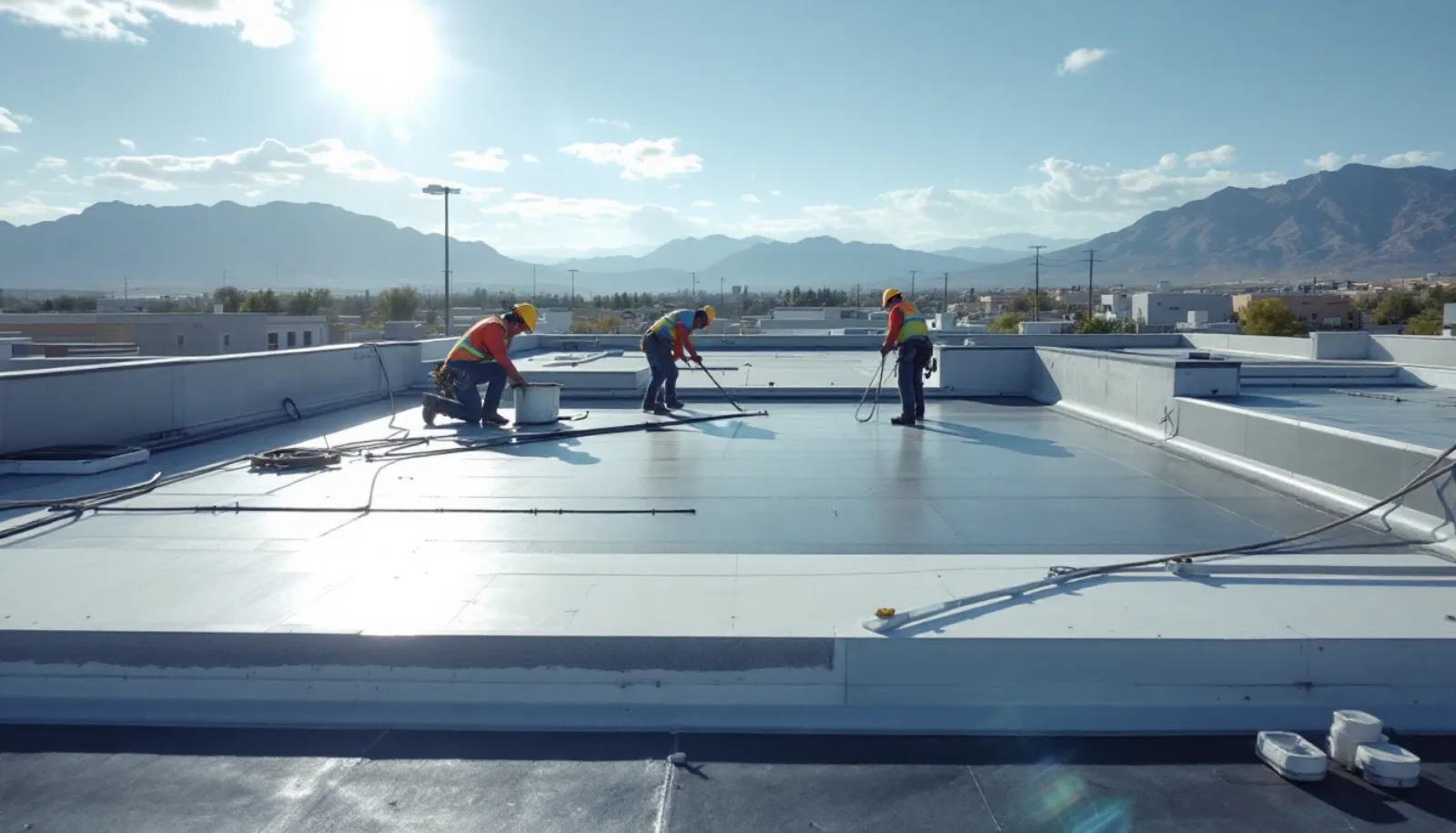
“Nevada roofing isn’t one business, it’s residential retail, storm-restoration, and commercial flat-roof, each with different buyer pools and different multiple ranges. Generic brokers send the same CIM to every buyer and watch deals retrade in diligence. The right Nevada exit hinges on revenue mix, NSCB C-15a transition planning, and matching to which of the 500+ active buyers actually underwrites your specific profile. We’re a buy-side partner, the buyers pay us, no contract required.”
TL;DR, the 90-second brief
- Nevada roofing M&A is shaped by minimal weather-driven roofing activity (occasional summer monsoon wind events in Las Vegas valley); replacement-cycle dominant. Storm exposure is minimal; replacement-cycle and commercial recurring revenue dominate underwriting. Active PE-backed buyers include Tecta America (Altas Partners), CentiMark, Vertex Service Partners (Alpine Investors), Best Choice Roofing (Brightstar Capital), Service Logic (Bain Capital + Mubadala), plus 8-15 regional rollups deploying capital across Las Vegas metro, Reno, Henderson, Carson City.
- Nevada licensing reality: NSCB C-15a. Nevada State Contractors Board (NSCB) C-15a Roofing & Siding classification. Buyers underwrite license-holder transition and local jurisdiction registration as material diligence items (qualifier transition is a deal-killer if not pre-planned).
- Nevada after-tax position: Nevada has 0% state income tax, significant after-tax premium on roofing exits versus high-tax states. Nevada’s 0% state income tax delivers meaningful after-tax premium, on a $5M Nevada roofing sale, the seller saves $300-650K versus a California seller of similar size.
- Realistic Nevada roofing multiples. Sub-$2M residential: 3-4.5x SDE; $1M-$3M EBITDA mid-market: 4.5-6.5x EBITDA; $3M+ EBITDA platforms: 6-8x EBITDA; commercial hospitality: 5-7x EBITDA. The single biggest determinant of where you fall is revenue mix (residential retail vs. storm vs. commercial), recurring-revenue percentage, and metro footprint.
- Want a starting-point number? Use our free valuation calculator below for a sub-90-second estimate. If you’d rather talk to someone who already knows the Nevada roofing buyers, we’re a buy-side partner working with 500+ active U.S. No fee to you on buy-side introductions; sell-side mandates are paid on success at closing.
Key Takeaways
- Nevada roofing PE rollup activity includes: Tecta America (Altas Partners), CentiMark, Vertex Service Partners (Alpine Investors), Best Choice Roofing (Brightstar Capital), Service Logic (Bain Capital + Mubadala), plus 8-15 regional independent sponsors and family offices deploying capital in 2026.
- NSCB C-15a licensing: Nevada State Contractors Board (NSCB) C-15a Roofing & Siding classification. Qualifier transition is the single biggest deal risk if not pre-planned 12-18 months before sale.
- Nevada tax position: Nevada has 0% state income tax, significant after-tax premium on roofing exits versus high-tax states
- Nevada roofing multiples by tier: Sub-$2M residential: 3-4.5x SDE; $1M-$3M EBITDA mid-market: 4.5-6.5x EBITDA; $3M+ EBITDA platforms: 6-8x EBITDA; commercial hospitality: 5-7x EBITDA
- Storm exposure is very low in Nevada: minimal weather-driven roofing activity (occasional summer monsoon wind events in Las Vegas valley); replacement-cycle dominant
- Manufacturer-elite credentials (GAF Master Elite, CertainTeed Select, Owens Corning Platinum) drive 0.3-0.7x multiple uplift; insurance carrier preferred-contractor relationships add 0.5-1x multiple premium when transferable.
Why Nevada roofing M&A is structurally unique in 2026
Nevada roofing M&A is shaped by a specific convergence of regulatory framework, storm exposure, metro economics, and active PE consolidation. The structural drivers in Nevada: Las Vegas commercial roofing (hospitality, gaming, retail), residential growth in Henderson and Summerlin, Reno commercial expansion (Tesla Gigafactory corridor). Storm exposure is very low, minimal weather-driven roofing activity (occasional summer monsoon wind events in Las Vegas valley); replacement-cycle dominant. License regime: NSCB C-15a. Tax: Nevada.
Nevada roofing M&A is shaped by a specific convergence of regulatory framework, storm exposure, metro economics, and active PE consolidation. The structural drivers in Nevada: Las Vegas commercial roofing (hospitality, gaming, retail), residential growth in Henderson and Summerlin, Reno commercial expansion (Tesla Gigafactory corridor). Storm exposure is very low, minimal weather-driven roofing activity (occasional summer monsoon wind events in Las Vegas valley); replacement-cycle dominant. License regime: NSCB C-15a. Tax: Nevada has 0% state income tax, significant after-tax premium on roofing exits versus high-tax states. PE consolidators have publicly announced Nevada-specific theses; strategic operators are expanding from neighboring states; individual SBA buyers are active at the sub-$1M EBITDA end.
Metro footprint matters in Nevada. Nevada’s major metros, Las Vegas metro, Reno, Henderson, Carson City, have different economic drivers, building-stock profiles, and storm exposures. A Nevada roofer concentrated in one metro is a different deal than a multi-metro operator. Premium Nevada platforms typically span at least two of the major metros, providing buyers with geographic diversification and platform-scaling opportunity.
Why this matters for your valuation expectation. Generic brokers send the same CIM to all roofing buyers regardless of state-specific dynamics, and watch Nevada deals retrade in diligence over license transition, storm normalization, customer concentration, or insurance carrier relationship verification. A buy-side partner who already knows each Nevada-active consolidator’s specific thesis matches you to the right buyer the first time. The match-quality difference is 0.5-1.5x of multiple.
PE capital deployment into Nevada roofing. Between 2021 and 2026, an estimated $200M-$1B of PE capital was deployed specifically into Nevada roofing platforms and add-ons (depending on metro size and storm cycle). The capital is hunting for tuck-in acquisitions and platforms, but the multiples paid depend on the operating metrics covered in the sections below, recurring revenue, customer concentration, manufacturer credentials, license transferability, owner dependency.
Demographic and economic drivers in Nevada. Population growth, housing-stock age, commercial development pipelines, and insurance-market dynamics combine to define Nevada’s roofing demand profile. Buyers underwrite these macro drivers as part of platform thesis-building. Roofers operating in metros with above-average population growth, commercial corridor expansion, or aging housing stock with concentrated replacement cycles command higher multiples because the platform thesis, growing organically post-acquisition, has a credible foundation.
How Nevada compares to neighboring states in roofing M&A. Buyers benchmark Nevada roofing platforms against opportunities in neighboring states. A Nevada roofer with strong fundamentals competes for capital with similar opportunities elsewhere; differentiation matters. The Nevada-specific factors that drive premium positioning, specific licensing structure, storm-cycle profile, tax position, manufacturer credentialing patterns, insurance carrier landscape, are the things to emphasize in your CIM and management presentations.
What do you need to know about Nevada roofing licensing and NSCB C-15a?
Nevada roofing licensing structure is medium-high relative to other states. Nevada State Contractors Board (NSCB) C-15a Roofing & Siding classification. License-holder structure: Qualified Individual (QI) who holds the license personally and is responsible for the entity. Buyers underwrite license transition as a material diligence item, a poorly planned qualifier transition is the single most common deal-killer in heavily licensed states. How buyers underwrite license transition in Nevada. Three transition paths:.
Nevada roofing licensing structure is medium-high relative to other states. Nevada State Contractors Board (NSCB) C-15a Roofing & Siding classification. License-holder structure: Qualified Individual (QI) who holds the license personally and is responsible for the entity. Buyers underwrite license transition as a material diligence item, a poorly planned qualifier transition is the single most common deal-killer in heavily licensed states.
How buyers underwrite license transition in Nevada. Three transition paths: (1) seller stays 12-24 months as license-holder/qualifier post-close (compresses your exit and adds compensation friction); (2) buyer’s existing license-holder qualifies the acquired entity (only available to PE-backed platforms with internal license-holders); (3) buyer recruits a new license-holder before close (60-180 day delay risk). Plan this 12-18 months pre-sale, promote a non-owner to the qualifying role, get them through the licensing exam, transfer license-holder status well before going to market.
Local jurisdiction layers in Nevada. Beyond state-level requirements, Nevada cities and counties impose additional contractor registration, bonding, and permit requirements that vary by metro. Buyers underwrite jurisdiction-by-jurisdiction operating coverage. A Nevada roofer with no registration in a metro it operates in creates liability risk that compresses multiples. Document your geographic licensing footprint clearly in the CIM.
State-level credential programs valued by buyers. Beyond required licensure, Nevada state-level professional credentials (state roofing contractor association membership, manufacturer-elite certifications, BBB ratings, third-party review platform ratings) signal professional standing. Premium platforms favor credentialed operators, pursue or maintain credentials 12-18 months pre-sale to maximize buyer-perceived quality.
Specific Nevada regulatory considerations. NSCB C-15a Roofing & Siding license, Clark County and Washoe County permit requirements, NV monetary limit on license (separate underwriting for higher-value contracts), prevailing wage on Nevada public works. Roofers operating in Nevada should document compliance with each applicable regulatory framework in their data room: license/registration certificates, bonding and insurance certificates, permit pull histories, inspection sign-offs, code compliance documentation. Missing documentation creates buyer concerns that compress multiples and extend diligence timelines.
Bonding and insurance requirements. Nevada roofers must maintain liability insurance (typically $1M-$5M general liability), workers’ compensation insurance, and in some jurisdictions surety bonds (typical bond amounts $10K-$50K). Buyers verify policies and bonds in diligence. Lapsed coverage, weak limits, or claims history compress multiples and trigger buyer concerns about operational risk.
Workers’ compensation and OSHA compliance. Roofing is a high-mod-rate industry for workers’ compensation, with experience modification factors (EMR) ranging from 0.7 (excellent safety record) to 1.5+ (poor record). Below-1.0 EMR is a meaningful premium driver because it signals safety culture and reduces operating cost. OSHA 30-hour training certifications across the workforce, documented fall-protection programs, and clean OSHA inspection history support buyer underwriting.
Why does Nevada roofing have low storm cyclicality and stable cash flow?
Nevada storm exposure is very low, which materially benefits roofing valuations relative to high-storm states. Minimal weather-driven roofing activity (occasional summer monsoon wind events in las vegas valley); replacement-cycle dominant. Without storm-cycle volatility, Nevada roofing revenue runs on replacement cycles (15-25 year asphalt, 25-50 year tile/metal) and commercial new construction / re-roof activity. Buyers underwrite stable cash flow with confidence, QoE adjustments are smaller, financing terms are more favorable, and.
Nevada storm exposure is very low, which materially benefits roofing valuations relative to high-storm states. Minimal weather-driven roofing activity (occasional summer monsoon wind events in las vegas valley); replacement-cycle dominant. Without storm-cycle volatility, Nevada roofing revenue runs on replacement cycles (15-25 year asphalt, 25-50 year tile/metal) and commercial new construction / re-roof activity. Buyers underwrite stable cash flow with confidence, QoE adjustments are smaller, financing terms are more favorable, and multiple ranges hold without normalization disputes.
Why low storm exposure typically supports higher multiples. A Nevada roofer with $1M EBITDA and stable trailing-36-month revenue trajectory typically prices at the top of its tier’s range because the buyer’s downside scenario is bounded. Compare to a high-storm state roofer with $1M EBITDA but volatile cycle-driven revenue: same earnings, lower multiple because the buyer prices in cycle risk. Nevada sellers benefit from this structural multiple advantage.
Insurance-claim work in Nevada. While Nevada doesn’t have major hurricane/hail cycle activity, occasional storm events still generate insurance-claim work. Roofers who maintain insurance carrier preferred-contractor relationships (State Farm, Allstate, USAA, Liberty Mutual, Farmers, regional carriers) capture this work consistently. Document carrier relationships in your data room with current good-standing letters and trailing volume.
Replacement-cycle revenue dominance. Nevada residential roofing demand is driven primarily by replacement cycles (asphalt shingles 15-25 years, tile 25-50 years, metal 30-70 years). Roofers with documented service-area saturation, brand recognition, and referral-driven sales capture replacement cycles consistently. This produces the steady, predictable cash flow profile that PE consolidators pay premium multiples for.
Commercial flat-roof recurring revenue in Nevada. Commercial flat-roof work in Nevada (TPO, EPDM, PVC single-ply) generates strong recurring revenue through 5+ year service contracts, scheduled maintenance, and leak-repair retainers. Multi-year contracted revenue commands premium multiples (5-7x EBITDA) because EBITDA is highly predictable. Document service contract portfolios in detail.
Reinsurance and insurance-market dynamics. The broader insurance market, reinsurance pricing, carrier capital availability, regulatory action, affects roofing demand and pricing. Hard insurance markets reduce coverage availability for homeowners (slowing claims throughput); soft markets accelerate it. Nevada roofers should track insurance-market trends and document business-model resilience across cycles.
How do insurance carrier preferred-contractor programs work in Nevada?
Insurance carrier preferred-contractor programs are a Nevada-specific premium driver that buyers underwrite explicitly. Major carriers active in Nevada (State Farm, Allstate, USAA, Liberty Mutual, Farmers, Travelers, plus state-specific carriers) maintain preferred-contractor networks. Inclusion requires good standing, documented quality, no major BBB or attorney general complaints, manufacturer credentials, and consistent volume. Roofers in the network receive direct homeowner referrals, faster claim payment cycles, and reduced reinspection rates. Why preferred-contractor status drives.
Insurance carrier preferred-contractor programs are a Nevada-specific premium driver that buyers underwrite explicitly. Major carriers active in Nevada (State Farm, Allstate, USAA, Liberty Mutual, Farmers, Travelers, plus state-specific carriers) maintain preferred-contractor networks. Inclusion requires good standing, documented quality, no major BBB or attorney general complaints, manufacturer credentials, and consistent volume. Roofers in the network receive direct homeowner referrals, faster claim payment cycles, and reduced reinspection rates.
Why preferred-contractor status drives 0.5-1.5x multiple uplift. Buyers see preferred-contractor status as: (1) volume insurance (predictable claim work flow); (2) margin protection (carriers pre-approve scope and price, eliminating bid-spread compression); (3) regulatory cover (carrier vetting reduces compliance risk); (4) platform fit (PE consolidators want preferred-contractor footprints they can scale). A roofer with active relationships across 4-6 major carriers commands premium multiple positioning.
Documenting preferred-contractor relationships in your data room. Required documentation: contractor agreement with each carrier, current good-standing letter, trailing-24-month volume by carrier, claim acceptance percentage, average claim cycle time, any complaints or removal events. Carriers do periodic audits, documentation of clean audit results materially supports buyer underwriting. Don’t list preferred relationships in the CIM without documentation; buyers will verify.
Manufacturer warranty programs as adjacent premium drivers. GAF Master Elite (top 3% of GAF roofers nationally), CertainTeed Select Shingle Master, Owens Corning Platinum Preferred, Atlas Pro+, IKO ROOFPRO are credentialing programs that allow roofers to offer enhanced warranties. Premium-tier credentials require minimum volume, training certifications, and quality audits. They drive 0.3-0.7x multiple uplift and support insurance carrier preferred-contractor status.
Carrier relationship transfer at sale. Generally yes if the operating team and license-holder/qualifier stay through transition. Carriers maintain agreements with the entity, and successor entities typically retain status if quality, license, and good-standing are maintained. Document each relationship comprehensively pre-sale, preferred-contractor status is one of the highest-leverage premium drivers in roofing M&A.
Third-party administrators (TPAs) and contractor referral networks. Beyond direct carrier relationships, third-party administrators (Crawford, Sedgwick, Pilot Catastrophe) and contractor referral networks (HomeAdvisor, Angi, Networx) drive material lead volume. Premium platforms typically build hybrid sourcing: direct carrier preferred-contractor status (highest margin) plus selected TPA/network relationships (steady volume). Document each channel’s contribution to revenue and margin in your data room.
Lead-generation channels and digital marketing assets. Modern roofing platforms increasingly depend on digital lead-generation (Google Local Service Ads, paid search, organic SEO, content marketing, review-platform presence). Buyers value documented digital marketing assets: domain authority, branded search volume, Google Business Profile rankings, lead-cost economics by channel, and conversion rates. A roofer with 30%+ of leads from organic/branded digital sources commands premium positioning.
What are Nevada roofing valuation multiples by tier (residential, commercial, multi-segment)?
Nevada roofing multiples vary significantly by sub-tier and revenue mix. The four tiers most active buyers underwrite separately: (1) residential retail re-roof; (2) residential storm-restoration / insurance claim; (3) commercial flat-roof and service; (4) multi-segment platform with $3M+ EBITDA. Each tier has a different buyer pool, different financing structure, and different multiple range. Knowing which tier you fit determines positioning and target buyer match. Tier 1: Residential retail re-roof (homeowner-pay).
Nevada roofing multiples vary significantly by sub-tier and revenue mix. The four tiers most active buyers underwrite separately: (1) residential retail re-roof; (2) residential storm-restoration / insurance claim; (3) commercial flat-roof and service; (4) multi-segment platform with $3M+ EBITDA. Each tier has a different buyer pool, different financing structure, and different multiple range. Knowing which tier you fit determines positioning and target buyer match.
Tier 1: Residential retail re-roof (homeowner-pay). Replacement-cycle driven. Demand is steady, less storm-dependent. Multiples in Nevada: 3-4.5x SDE (sub-$500K SDE) or 4-6x EBITDA ($500K-$2M EBITDA). Premium positioning requires manufacturer credentials, 4.5+ star reviews, financing partnerships (GreenSky, EnerBank, Service Finance), and brand recognition. Active buyers: SBA-financed individuals, regional Nevada operators, residential consolidators.
Tier 2: Residential storm-restoration / insurance-claim. Storm-cycle volatile in Nevada. Multiples are compressed because revenue is non-recurring at the same property. Sub-$2M revenue: 0.4-0.8x revenue or 2-3.5x SDE. Mid-market with multi-cycle history and some retail mix: 3-4.5x SDE. Premium positioning requires preferred-contractor relationships, multi-cycle stability, manufacturer credentials. Active buyers: niche storm-restoration platforms, regional rollups.
Tier 3: Commercial flat-roof and service. Long-cycle (10-25 year roof life), contracted (often pre-bid), recurring service. Higher multiples because of recurring EBITDA. $500K-$2M EBITDA: 4.5-6.5x EBITDA. $2M+ EBITDA with multi-year service contracts: 5.5-7x EBITDA. Premium positioning requires single-ply (TPO, EPDM, PVC) certifications (Carlisle, Firestone, Johns Manville, GAF), commercial GC relationships, and 3-5 year service agreement portfolios.
Tier 4: Multi-segment platforms ($3M+ EBITDA). The institutional tier. Multi-metro footprint within Nevada, diversified revenue, strong management bench, manufacturer-elite credentials, preferred-contractor relationships across multiple carriers. Multiples: 6-8x EBITDA, occasionally higher for premium platforms. Active buyers: PE-backed Nevada-active platforms, institutional family offices, public consolidators (TopBuild).
Why your revenue mix determines your multiple band. The single biggest determinant of where you fall in your tier’s range is revenue mix and recurring-revenue percentage. A residential retail roofer with 70%+ homeowner-pay re-roof and only 30% storm/insurance work prices at the top of Tier 1. A storm-restoration shop with 80%+ insurance work prices at the bottom. The 12-24 month operational shift toward retail and recurring revenue is the highest-leverage pre-sale change in Nevada.
Working capital and the working-capital peg. Working capital (accounts receivable, inventory, accounts payable, accruals) is included in most roofing transactions through a working-capital peg negotiated in the LOI. Sellers who don’t plan for the peg leave $100K-$500K of value on the table at close. Build a 12-month working capital trend, identify the ‘normal’ range, and negotiate the peg at the LOI stage rather than allowing the buyer to set it during diligence.
| Tier | Typical earnings | Multiple range | Dominant buyer type |
|---|---|---|---|
| Residential retail re-roof | $200K-$2M EBITDA | 3-6x EBITDA | SBA, regional ops, residential consolidators |
| Residential storm-restoration | $200K-$1M SDE | 0.4-0.8x revenue / 2-3.5x SDE | Storm-restoration platforms, niche rollups |
| Commercial flat-roof / service | $500K-$3M EBITDA | 4.5-7x EBITDA | Tecta America, CentiMark, Service Logic |
| Multi-segment Nevada platform | $3M+ EBITDA | 6-8x EBITDA | PE platforms, TopBuild |
Who is actively buying Nevada roofing businesses in 2026?
Nevada has a deep roofing buyer pool with PE-backed consolidators, strategic operators, and individual SBA buyers. PE-backed consolidators have publicly announced Nevada-specific theses; strategic operators are expanding from neighboring states; individual SBA buyers are active at the sub-$1M EBITDA end. The right buyer for your business depends on tier, revenue mix, geography, and management depth, not on whoever a generic broker happens to know. Tecta America (Altas Partners). Las Vegas.
Nevada has a deep roofing buyer pool with PE-backed consolidators, strategic operators, and individual SBA buyers. PE-backed consolidators have publicly announced Nevada-specific theses; strategic operators are expanding from neighboring states; individual SBA buyers are active at the sub-$1M EBITDA end. The right buyer for your business depends on tier, revenue mix, geography, and management depth, not on whoever a generic broker happens to know.
Tecta America (Altas Partners). Las Vegas commercial flat-roof platform. Strong fit for Nevada roofing owners who match the platform’s revenue mix, geographic, and EBITDA criteria. Tecta America typically engages on tuck-in opportunities through buy-side intermediaries and direct outreach, with diligence cycles of 60-120 days from first call to LOI.
CentiMark. national commercial roofing with Las Vegas hospitality presence. Strong fit for Nevada roofing owners who match the platform’s revenue mix, geographic, and EBITDA criteria. CentiMark typically engages on tuck-in opportunities through buy-side intermediaries and direct outreach, with diligence cycles of 60-120 days from first call to LOI.
Vertex Service Partners (Alpine Investors). national residential platform with Western expansion. Strong fit for Nevada roofing owners who match the platform’s revenue mix, geographic, and EBITDA criteria. Vertex Service Partners typically engages on tuck-in opportunities through buy-side intermediaries and direct outreach, with diligence cycles of 60-120 days from first call to LOI.
Best Choice Roofing (Brightstar Capital). national residential consolidator. Strong fit for Nevada roofing owners who match the platform’s revenue mix, geographic, and EBITDA criteria. Best Choice Roofing typically engages on tuck-in opportunities through buy-side intermediaries and direct outreach, with diligence cycles of 60-120 days from first call to LOI.
Service Logic (Bain Capital + Mubadala). commercial-focused service platform. Strong fit for Nevada roofing owners who match the platform’s revenue mix, geographic, and EBITDA criteria. Service Logic typically engages on tuck-in opportunities through buy-side intermediaries and direct outreach, with diligence cycles of 60-120 days from first call to LOI.
Regional Western U.S. independent sponsors and family offices. 8-12 active in Nevada roofing search. Strong fit for Nevada roofing owners who match the platform’s revenue mix, geographic, and EBITDA criteria. Regional Western U.S. independent sponsors and family offices typically engages on tuck-in opportunities through buy-side intermediaries and direct outreach, with diligence cycles of 60-120 days from first call to LOI.
Regional independent sponsors and family offices. 8-15 regional independent sponsors and family offices have explicit Nevada roofing search criteria. Many have done 1-3 platform investments and are actively seeking Nevada roofing tuck-ins or platforms. They typically pay slightly below institutional PE on multiple but offer faster close, less invasive diligence, and more rollover flexibility. Strong fit for $500K-$3M EBITDA Nevada roofers seeking partial liquidity with continuing equity.
Search funders and traditional searchers. Beyond institutional PE and family offices, traditional self-funded searchers and search-fund-backed individuals are active in Nevada roofing at the $500K-$2M EBITDA range. Searchers typically pay slightly below platform multiples but offer faster close, less invasive diligence, and meaningful operator commitment (the searcher will run the business post-close). For owners aged 55-65 looking for a clean exit with operational continuity, search funders are often the best fit.
Strategic regional operators expanding via acquisition. Established regional roofing operators in Nevada or adjacent states sometimes acquire add-ons to expand geographic footprint, vertical capabilities (residential adding commercial, asphalt adding metal), or service-mix (storm work adding retail, retail adding commercial). Strategic buyers can pay above PE platforms when synergies are real (combined sales force, distribution leverage, geographic infill). Identify likely strategic buyers as part of buy-side outreach.
Selling a Nevada roofing business? Talk to a buy-side partner who knows the Nevada-active buyers.
We’re a buy-side partner. Not a sell-side broker. Not a sell-side advisor. We work directly with 500+ active buyers, including PE-backed Nevada-active roofing consolidators (Tecta America (Altas Partners), CentiMark, Vertex Service Partners (Alpine Investors), Best Choice Roofing (Brightstar Capital), Service Logic (Bain Capital + Mubadala)), storm-restoration specialists, commercial roofing platforms, family offices with regional home services theses, and individual SBA buyers, who pay us when a deal closes. No fee to you on buy-side introductions; sell-side mandates are paid on success at closing. A 15-minute call gets you three things: a real read on what your Nevada roofing business is worth in today’s market, a sense of which Nevada-active buyers fit, and the option to meet one of them. If none of it is useful, you’ve lost 15 minutes.
Book a 15-Min CallWhat tax strategies should you use for a Nevada roofing business exit?
Nevada tax position is a material driver of after-tax outcomes in roofing M&A. Nevada has 0% state income tax, significant after-tax premium on roofing exits versus high-tax states. Nevada’s 0% state income tax delivers meaningful after-tax premium, on a $5M Nevada roofing sale, the seller saves $300-650K versus a California seller of similar size. Federal capital gains and NIIT. On a roofing sale structured as an asset sale, the.
Nevada tax position is a material driver of after-tax outcomes in roofing M&A. Nevada has 0% state income tax, significant after-tax premium on roofing exits versus high-tax states. Nevada’s 0% state income tax delivers meaningful after-tax premium, on a $5M Nevada roofing sale, the seller saves $300-650K versus a California seller of similar size.
Federal capital gains and NIIT. On a roofing sale structured as an asset sale, the seller faces federal capital gains tax (15-20% depending on income, plus 3.8% Net Investment Income Tax for high earners) on goodwill and customer-list value, and ordinary income tax (up to 37% federal plus state) on equipment recapture and inventory. Asset allocation negotiation can shift $100-250K of after-tax proceeds in the seller’s favor on a typical $3M deal.
Asset allocation in a Nevada roofing deal. Typical $3M Nevada roofing asset sale: tangible equipment and FF&E (trucks, ladders, lifts, tools) $200-400K (ordinary income recapture); inventory $30-80K (ordinary income); customer list and goodwill $1.5-2.2M (capital gains); non-compete $50-150K (ordinary income to seller). Skilled tax counsel can negotiate allocation favorably with proper supporting appraisals.
Section 1202 QSBS exclusion for C-corp owners. If your Nevada roofing business is structured as a C-corp and you’ve held the stock for 5+ years, Section 1202 QSBS exclusion can eliminate up to $10M (or 10x basis, whichever is greater) of federal capital gains. Most roofing businesses are S-corps or LLCs, but those considering an F-reorg to C-corp 5+ years pre-sale can plan for this benefit. Discuss with tax counsel.
Stock sale vs. asset sale decision. Stock sales are simpler for the seller (single capital-gains tax on goodwill and assets bundled together) but buyers typically resist because they don’t get depreciation step-up. Asset sales are more common in roofing M&A but create the dual-tax (ordinary recapture on equipment + capital gains on goodwill) for the seller. Sometimes structured as a 338(h)(10) election that lets the seller treat the deal as a stock sale for tax purposes while the buyer treats it as an asset purchase.
Estate planning intersect with the exit timeline. For owners aged 55+ planning an exit, estate planning intersect with the transaction timeline. Pre-sale gifting, GRATs, defective-grantor trusts, and other vehicles can reduce estate tax exposure on the proceeds. The work needs to happen 2-5 years pre-sale; rushed estate planning post-LOI rarely captures the full benefit. Engage estate counsel alongside tax counsel in the 18-24 month prep window.
How do material costs and manufacturer relationships affect Nevada roofing businesses?
Roofing material costs are the largest single COGS line for most Nevada roofers and they’re commodity-driven. Asphalt shingles (oil-derivative), metal panels (steel and aluminum), tile (clay and concrete), and accessories (underlayment, fasteners, vents) all move with global commodity cycles. Between 2020 and 2024, asphalt shingle prices rose 30-50% before partially correcting. Roofers who passed through cost increases rapidly maintained margin; those who absorbed increases (often in fixed-price storm jobs) saw.
Roofing material costs are the largest single COGS line for most Nevada roofers and they’re commodity-driven. Asphalt shingles (oil-derivative), metal panels (steel and aluminum), tile (clay and concrete), and accessories (underlayment, fasteners, vents) all move with global commodity cycles. Between 2020 and 2024, asphalt shingle prices rose 30-50% before partially correcting. Roofers who passed through cost increases rapidly maintained margin; those who absorbed increases (often in fixed-price storm jobs) saw 600-1,200 basis point margin compression.
Manufacturer direct-buy programs. Major manufacturers (GAF, Owens Corning, CertainTeed, Atlas, IKO, Tamko for asphalt; Carlisle, Firestone, Johns Manville for commercial single-ply) offer direct-buy programs to qualified contractors at favorable pricing, payment terms, and warranty terms. Volume thresholds typically require $300K-$1M+ annual purchases. Nevada roofers in direct-buy programs see 5-15% material-cost advantages versus distributor purchases.
Manufacturer-elite tier programs (the multiple driver). GAF Master Elite (top 3% of GAF roofers nationally), CertainTeed Select Shingle Master, Owens Corning Platinum Preferred, Atlas Pro+, IKO ROOFPRO are credentialing programs that allow roofers to offer enhanced (non-prorated, longer-term) warranties. Premium-tier credentials require minimum volume, training certifications, quality audits, and clean reputation. They drive 0.3-0.7x multiple uplift, support insurance carrier preferred-contractor status, and provide marketing differentiation.
Distributor relationships in Nevada. Beacon Roofing Supply (NASDAQ: BECN), ABC Supply, SRS Distribution (now Home Depot), and Allied Building Products are dominant Nevada roofing distributors. Distributor relationships affect pricing, payment terms, jobsite delivery reliability, and credit limits. Buyers underwrite distributor relationships as a component of operational stability, multi-distributor relationships with clean payment history reduce supply-chain concentration risk.
Material cost normalization in QoE. QoE firms will normalize material cost lines for diligence: trailing-12 vs. trailing-36 average material cost as % of revenue, gross margin trend by service line, evidence of cost pass-through to customers in price increases, distributor concentration, and manufacturer-rebate income. Roofers with documented cost-management discipline support full multiple ranges; those who absorbed material cost increases without documented price pass-through face margin-quality challenges in diligence.
Trade tariffs and steel/aluminum exposure for metal roofers. Metal roofing material costs are exposed to U.S. tariff policy on imported steel and aluminum. Section 232 tariffs and trade actions periodically raise material costs 10-25% for metal roofing contractors. Roofers with a material exposure to metal should document price-pass-through discipline and customer contract terms that allow material-cost adjustments.
How do deal dynamics differ across Nevada metros (Las Vegas, Reno, Henderson, Carson City)?
Nevada is not a single roofing market, it’s multiple distinct sub-markets with different economic drivers and buyer footprints. Buyers underwrite Nevada roofing geographically. A roofer concentrated in one metro is a different deal than a multi-metro operator. Premium Nevada platforms typically span at least two of the major metros listed above, providing buyers with geographic diversification. Premium metro positioning. In Nevada, the highest-multiple metros are typically those with combinations of:.
Nevada is not a single roofing market, it’s multiple distinct sub-markets with different economic drivers and buyer footprints. Buyers underwrite Nevada roofing geographically. A roofer concentrated in one metro is a different deal than a multi-metro operator. Premium Nevada platforms typically span at least two of the major metros listed above, providing buyers with geographic diversification.
Premium metro positioning. In Nevada, the highest-multiple metros are typically those with combinations of: residential growth (population gains driving replacement and new-construction roofing demand), commercial corridor expansion (industrial, healthcare, retail), and concentrated insurance-carrier preferred-contractor opportunity. Roofers who have built premium positioning in these metros command top-of-tier multiples.
Secondary metro positioning. Secondary Nevada metros offer different deal economics, smaller buyer pool, lower competition, more replicable unit economics. Roofers in secondary metros sometimes attract premium attention from PE platforms looking for geographic infill, particularly when a platform’s primary footprint is in nearby major metros. Geographic infill thesis can drive premium pricing on the right deal match.
Why metro footprint matters for buyer match. Different consolidators have different geographic theses within Nevada. Some focus on a primary metro and surrounding suburbs; others build multi-metro Nevada platforms; others do strategic infill across regional Southeast/Sun Belt/Northeast/Midwest footprints. A generic broker auction sends your CIM to all of them; a buy-side partner who already knows each consolidator’s geographic gap matches you to the buyer who needs your specific market. The match-quality difference is 0.5-1.5x of multiple.
Cross-metro Nevada platforms command premium. A Nevada roofer with operations in 2-3 of the major metros and consistent management/operations across the platform commands premium multiples (6-8x EBITDA at $3M+ EBITDA) because the buyer is acquiring a true Nevada-state platform rather than a single-metro tuck-in. Cross-metro continuity is harder to build organically, PE platforms often pay premiums to acquire a multi-metro footprint in a single transaction.
Service-area saturation and Google Business Profile dominance. Premium roofing platforms increasingly value service-area dominance, ranking in the top 3 Google Business Profile results for “roofer near [city]” queries across multiple metro areas. Saturation is hard to replicate post-acquisition and produces low-cost organic leads. Document Google Business Profile rankings, review counts, and review velocity for each metro you operate in, this supports premium positioning.
What should your 18-24 month pre-sale preparation playbook include?
Nevada roofers benefit from 18-24 month pre-sale prep regardless of state-specific licensing complexity. The structural risks (license/qualifier transition, storm-cycle normalization where applicable, customer concentration, owner dependency, manufacturer credentialing, insurance carrier relationship documentation) all take 12+ months to materially address. Owners who skip prep don’t exit faster, they exit at 30-50% lower after-tax proceeds. The playbook below is what buyers and their QoE teams actually look for. Months 24-18: financial cleanup.
Nevada roofers benefit from 18-24 month pre-sale prep regardless of state-specific licensing complexity. The structural risks (license/qualifier transition, storm-cycle normalization where applicable, customer concentration, owner dependency, manufacturer credentialing, insurance carrier relationship documentation) all take 12+ months to materially address. Owners who skip prep don’t exit faster, they exit at 30-50% lower after-tax proceeds. The playbook below is what buyers and their QoE teams actually look for.
Months 24-18: financial cleanup and storm normalization (where applicable). Move to monthly closes by the 15th of the following month. CPA-prepared annual financial statements (not bookkeeper-prepared). Build the trailing-60-month revenue dataset with revenue tagging by source. Where storm cycles apply, calculate trailing-36 and trailing-60 normalized run-rate. Document add-backs with receipts and explanations. Begin tracking operational metrics monthly.
Months 18-12: license/qualifier transition planning (critical for Nevada). Identify a non-owner license-holder/qualifier successor. Promote them, get them through the licensing exam, transfer license-holder status. This is the single most important pre-sale action in heavily licensed states. Document trailing-24-month sample of jobs with permit pulls, inspection sign-offs, and code compliance documentation.
Months 12-6: revenue mix optimization, manufacturer credentialing, recurring revenue build. Pivot revenue mix toward higher-multiple buckets: residential retail (homeowner-pay), commercial flat-roof, service contracts. Pursue or upgrade manufacturer-elite credentials (GAF Master Elite, CertainTeed Select Shingle Master, Owens Corning Platinum Preferred, Carlisle Authorized commercial). Build service-contract or maintenance-agreement portfolio (annual roof inspections, maintenance retainers, gutter and accessory contracts), even modest recurring revenue moves multiples.
Months 12-6: reduce owner dependency. Identify what only you do today (sales, customer relationships, manufacturer relationships, key technical decisions). Document SOPs. Promote or hire into those roles. Take a 30-day vacation 9 months before going to market. Buyers explicitly diligence this, key staff and customers will be interviewed. A roofer that survives a 30-day owner absence commands 0.5-1x multiple uplift.
Months 6-0: data room, CIM, and tax structure. Compile 36 months of tax returns, P&Ls, balance sheets, payroll registers, jobs database with revenue tagging, lease, license documentation, manufacturer agreements, insurance carrier agreements, equipment list with title documentation. Build the CIM emphasizing Nevada-specific positioning: NSCB C-15a Qualified Individual transition, low storm exposure means stable cash flow, 0% Nevada state tax premium, Las Vegas commercial hospitality dominance. Engage Nevada-experienced tax counsel for asset allocation strategy. The cleaner the package, the faster diligence runs and the better the multiple holds.
Quality of earnings (QoE) and pre-sale audit considerations. PE buyers will commission a third-party Quality of Earnings (QoE) report on any deal above $1M EBITDA. Sellers can preempt friction by commissioning a sell-side QoE 6-12 months pre-sale. The cost ($30-75K) typically pays for itself in tighter LOI numbers, faster diligence, and smaller retrade risk. Sell-side QoE identifies weak spots in your numbers before the buyer does, allowing you to address them and present a cleaner package.
Building a transition-ready management bench. Buyers underwrite the post-close operating team. A Nevada roofer with a tenured operations director, sales manager, and field foremen who’ll stay 2+ years post-close commands 0.5-1x multiple uplift versus a roofer where the owner is the only meaningful operator. If your management bench is thin, hire and develop 12-18 months pre-sale, key hires take 6-12 months to onboard before they’re ready to run the business without owner involvement.
What is the timeline and process for selling a Nevada roofing business?
A Nevada roofing sale typically runs 5-9 months from prep-complete to close, with material variance based on tier and buyer match. The fastest paths: a buy-side matched introduction to a Nevada-active consolidator who already has the diligence framework ready, 60-120 days from intro to close. The slower paths: a generic broker auction with full marketing cycle, multi-buyer LOI process, full QoE engagement, 9-15 months. Typical buy-side matched timeline (60-120 days).
A Nevada roofing sale typically runs 5-9 months from prep-complete to close, with material variance based on tier and buyer match. The fastest paths: a buy-side matched introduction to a Nevada-active consolidator who already has the diligence framework ready, 60-120 days from intro to close. The slower paths: a generic broker auction with full marketing cycle, multi-buyer LOI process, full QoE engagement, 9-15 months.
Typical buy-side matched timeline (60-120 days). Day 1-15: introduction, mutual NDA, preliminary financials shared. Day 15-30: management call, IOI from buyer. Day 30-45: LOI negotiation and signing. Day 45-90: confirmatory diligence (financial QoE, operational, legal, license transfer planning). Day 90-120: definitive agreement, close. Works for $500K-$3M EBITDA Nevada roofers with clean financials and buyer-tier match.
Generic broker auction timeline (9-15 months). Months 1-3: positioning, CIM, buyer outreach (50-150 prospects). Months 3-5: management presentations (10-20), IOIs, narrowing to 3-5 LOIs. Months 5-8: LOI negotiation, full QoE, operational diligence. Months 8-12: definitive agreement, regulatory and license approvals, close. Common fall-through points: license transfer, normalized revenue retrade, customer concentration, owner dependency, complaint discovery.
Why buy-side beats sell-side broker for most Nevada roofers. Sell-side brokers represent you and charge 6-12% of deal proceeds (often $300K-$1M+) plus monthly retainer plus 12-month exclusivity plus tail fee. They run an auction. A buy-side partner already knows the buyers, has worked with them on prior deals, knows their specific Nevada theses, and brings a matched introduction without retainer or exclusivity. No fee to you on buy-side introductions; sell-side mandates are paid on success at closing. Net difference: faster close, lower friction, 0% advisor fee, higher likelihood of multiple match.
Common Nevada-specific deal-killers. License/qualifier transition not pre-planned (forces seller to stay 12-24 months as employee post-close). Insurance carrier preferred-contractor relationships not documented or challenged in diligence. Customer concentration above 25% (single insurer, single GC, single HOA management company). Local jurisdiction registration gaps in major metros. BBB or attorney general complaint discovery. Plan for each in your 18-24 month prep.
Earnouts, rollover equity, and seller financing. Nevada roofing deals at $1M+ EBITDA frequently include some combination of earnout (10-25% of total consideration tied to forward-period performance), rollover equity (10-30% of after-tax proceeds rolled into the buyer’s capital structure), and seller financing (5-20% of consideration on a 3-7 year note). Each carries trade-offs, rollover offers second-bite-of-the-apple economics if the platform exits well; earnout creates alignment but adds execution risk; seller financing produces ongoing income but ties you to the buyer’s success. Negotiate the mix during the LOI.
What are the most common Nevada roofing valuation mistakes?
Mistake 1: poor financial documentation discipline. Move to monthly closes 24+ months pre-sale, get CPA-prepared annual financials, document all add-backs with receipts. Sloppy financial documentation triggers buyer concerns about earnings quality and compresses multiples 0.5-1.5x. Mistake 2: ignoring license/qualifier transition until diligence. Owners who assume the buyer will “figure out the license transfer” discover at LOI stage that the buyer is requiring 12-24 months of seller employment as license-holder. Plan.
Mistake 1: poor financial documentation discipline. Move to monthly closes 24+ months pre-sale, get CPA-prepared annual financials, document all add-backs with receipts. Sloppy financial documentation triggers buyer concerns about earnings quality and compresses multiples 0.5-1.5x.
Mistake 2: ignoring license/qualifier transition until diligence. Owners who assume the buyer will “figure out the license transfer” discover at LOI stage that the buyer is requiring 12-24 months of seller employment as license-holder. Plan and execute the transition 12-18 months pre-sale, promote and certify a non-owner qualifier. The exit is cleaner and you avoid the long employment tail.
Mistake 3: not pursuing manufacturer-elite credentials. GAF Master Elite, CertainTeed Select, Owens Corning Platinum credentials drive 0.3-0.7x multiple uplift and support preferred-contractor status. They take 6-18 months to attain. Owners who skip credentialing leave $100-500K of value on the table. Pursue at least one premium credential 18-24 months pre-sale.
Mistake 4: customer concentration above 25%. A Nevada roofer with 35% revenue from a single insurance carrier or GC will see 0.5-1.5x multiple compression at most institutional buyers. The fix is 12-24 months of intentional diversification. Buyers underwrite top-5 customer concentration; below 40% is healthy, above 50% is a serious problem.
Mistake 5: insurance carrier relationships not documented. Preferred-contractor relationships are a major premium driver, but only if documented with current good-standing letters, trailing-24-month volume, and claim acceptance percentages. Verbal claims of preferred status without documentation get challenged in diligence and undermine credibility.
Mistake 6: not addressing owner dependency. If you’re the salesperson, the customer relationship-holder, the manufacturer-relationship-holder, the key estimator, and the operations decision-maker, the buyer is acquiring a job that requires you to stay 1-3 years post-close. Document SOPs, promote/hire into your roles, take a 30-day vacation 9 months pre-sale to prove operations continuity. 0.5-1x multiple uplift.
Mistake 7: marketing to the wrong buyer archetype. Sub-$1M EBITDA Nevada roofers should target SBA buyers and small regional consolidators, not institutional PE platforms. $3M+ EBITDA platforms should target institutional consolidators, not SBA individuals. Mismatched positioning wastes 6-9 months and signals naivety to buyers.
Mistake 8: ignoring digital marketing and review-platform assets. Modern buyers value Google Business Profile rankings, review velocity, and digital lead-generation infrastructure as part of platform value. Roofers who treat reviews as an afterthought, run ineffective Google ads, or have weak local-SEO presence leave 0.3-0.5x multiple on the table. Invest in digital marketing infrastructure 12-18 months pre-sale.
Mistake 9: not engaging tax counsel until the LOI is signed. Asset allocation, stock-vs-asset structure, F-reorg planning, QSBS, estate-planning intersect, all of these are decisions that produce material after-tax differences. Engage tax counsel 6-12 months pre-sale, not after the LOI is signed. Late-stage tax planning rarely captures the full benefit and sometimes creates conflicts with the buyer’s preferred structure.
Sell Your Roofing Business in Other States: Sibling Guides
Sibling state guides for selling a roofing business. Each guide below covers state-specific licensing, multiple ranges, tax considerations, and named PE buyers active in that geography. If you operate in multiple states, the multi-state premium typically adds 0.5-1.5x to EBITDA multiple at exit (buyers value contiguous coverage). State-by-state guides: Sell Your Roofing Business in Texas · Sell Your Roofing Business in Florida · Sell Your Roofing Business in California ·.
Sibling state guides for selling a roofing business. Each guide below covers state-specific licensing, multiple ranges, tax considerations, and named PE buyers active in that geography. If you operate in multiple states, the multi-state premium typically adds 0.5-1.5x to EBITDA multiple at exit (buyers value contiguous coverage).
State-by-state guides: Sell Your Roofing Business in Texas · Sell Your Roofing Business in Florida · Sell Your Roofing Business in California · Sell Your Roofing Business in New York · Sell Your Roofing Business in Pennsylvania · Sell Your Roofing Business in Illinois · Sell Your Roofing Business in Ohio · Sell Your Roofing Business in Georgia
For valuation context that applies regardless of state: See our roofing business valuation guide for nationwide multiple ranges and PE buyer pool. Run our free 90-second valuation calculator for a starting-point estimate. Or browse the full sell-your-business hub for all verticals and states.
How to position your Nevada roofing business for the right buyer archetype
The single highest-leverage positioning decision is matching your Nevada roofing business to its right buyer archetype. Sub-$1M EBITDA roofers position to SBA buyers and small regional consolidators. $1M-$3M EBITDA position to PE-backed Nevada-active platforms. $3M+ EBITDA position to institutional consolidators or strategic public buyers. Storm-restoration heavy position to niche storm platforms. Commercial position to Tecta America or CentiMark. Mismatched positioning costs 6-9 months and 1-2x of multiple. Position for SBA.
The single highest-leverage positioning decision is matching your Nevada roofing business to its right buyer archetype. Sub-$1M EBITDA roofers position to SBA buyers and small regional consolidators. $1M-$3M EBITDA position to PE-backed Nevada-active platforms. $3M+ EBITDA position to institutional consolidators or strategic public buyers. Storm-restoration heavy position to niche storm platforms. Commercial position to Tecta America or CentiMark. Mismatched positioning costs 6-9 months and 1-2x of multiple.
Position for SBA individual buyers when: Your SDE is $200K-$700K, you have a transferable qualifier successor, and you’re willing to seller-finance 15-25% with a 60-120 day training period. Emphasize: stable residential retail revenue, manageable customer base, documented SOPs, willingness to support the new owner. Multiple range: 2.5-4x SDE.
Position for PE-backed Nevada-active platforms when: Your EBITDA is $1M-$5M with diversified revenue mix, multi-metro footprint within Nevada, manufacturer credentials, and clean operating model. Emphasize: platform-quality earnings, growth runway, geographic fit with the platform’s existing footprint, management bench, recurring/commercial mix. Multiple range: 5-7x EBITDA.
Position for commercial consolidators (Tecta America, CentiMark) when: Your business is 60%+ commercial flat-roof with single-ply expertise (TPO, EPDM, PVC), manufacturer commercial credentials (Carlisle, Firestone, Johns Manville), and 5+ year service contract portfolio. Emphasize: contracted recurring revenue, commercial GC relationships, service-portfolio depth. Multiple range: 5-7x EBITDA, occasionally higher.
Position for institutional family offices and independent sponsors when: You want partial liquidity with continuing equity (rollover 20-40%), management continuity, less invasive diligence than institutional PE. Emphasize: management depth, growth thesis, willingness to grow under new capital. Multiple range: 5-7x EBITDA with rollover. Often the best fit for owners aged 50-60 who want liquidity but aren’t done working.
Position for strategic regional operators when: Your business has tangible synergies with a known regional operator, complementary geography, complementary service mix, shared customer base, or shared crew capacity. Strategic synergy buyers can pay above PE platform multiples when the synergy is real and quantified. Identify likely strategic buyers in your buy-side outreach process and emphasize the synergy story in management presentations.
Position for search funders when: You’re seeking a clean exit with continuity for staff and customers, your EBITDA is $500K-$2M, you have a transferable operations platform, and you’re willing to support a 90-180 day transition. Searchers offer faster close, less invasive diligence, and operator commitment. Multiple range: 4-6x EBITDA, often with seller financing component.
Curious what your Nevada roofing business would sell for?
A 15-minute confidential call gives you a real valuation range and tells you which buyers would compete for your business. No cost, no obligation, no pressure to sell.
Sell Your Roofing Business in Nevada: 2026 Outlook and Key Takeaways
Nevada roofing valuation is real but it’s tier-specific. Residential retail re-roof shops are 3-6x EBITDA businesses. Storm-restoration heavy shops are 0.4-0.8x revenue or 2-3.5x SDE businesses. Commercial flat-roof and service shops are 4.5-7x EBITDA businesses. Multi-segment platforms with $3M+ EBITDA are 6-8x EBITDA platforms. Knowing which tier you fit, planning the license/qualifier transition 12-18 months ahead, pursuing manufacturer-elite credentials, documenting insurance carrier preferred-contractor relationships, reducing owner dependency, and matching to the right Nevada-active buyer is the difference between an exit at the high end of your tier’s range and an exit at the bottom (or no exit at all). Nevada’s 0% state income tax delivers meaningful after-tax premium, on a $5M Nevada roofing sale, the seller saves $300-650K versus a California seller of similar size. Owners who do the 18-24 month prep work and target the right buyers see 30-50% better after-tax outcomes than those who go to market unprepared. No fee to you on buy-side introductions; sell-side mandates are paid on success at closing.

About the Author
Christoph Totter is the founder of CT Acquisitions, an M&A advisory firm working both sides of the table, headquartered in Sheridan, Wyoming. We work directly with 500+ buyers, search funders, family offices, lower middle-market PE, and strategic consolidators, including direct mandates with the largest consolidators that other intermediaries cannot access. No fee to you on buy-side introductions; sell-side mandates are paid on success at closing. Connect on LinkedIn · Get in touch
Sell Your Roofing Business in Nevada: Frequently Asked Questions
What multiples do Nevada roofing businesses sell for in 2026?
Nevada roofing multiples by tier: Sub-$2M residential: 3-4.5x SDE; $1M-$3M EBITDA mid-market: 4.5-6.5x EBITDA; $3M+ EBITDA platforms: 6-8x EBITDA; commercial hospitality: 5-7x EBITDA. The single biggest determinant of where you fall in your tier’s range is revenue mix (residential retail vs. storm vs. commercial), recurring-revenue percentage, customer concentration, manufacturer credentials, and owner dependency.
Does Nevada require a state-level roofing license?
Nevada State Contractors Board (NSCB) C-15a Roofing & Siding classification. Qualifier transition planning is the single most important pre-sale action, promote a non-owner to qualifier 12-18 months pre-sale and transfer license-holder status before going to market.
How does Nevada storm exposure affect roofing valuation?
Nevada storm exposure is very low: minimal weather-driven roofing activity (occasional summer monsoon wind events in Las Vegas valley); replacement-cycle dominant. Low storm exposure typically supports higher multiples because buyers underwrite stable cash flow with confidence and downside scenarios are bounded.
How much does Nevada’s tax position matter for a roofing exit?
Nevada has 0% state income tax, significant after-tax premium on roofing exits versus high-tax states. Nevada’s 0% state income tax delivers meaningful after-tax premium, on a $5M Nevada roofing sale, the seller saves $300-650K versus a California seller of similar size. On a $5M roofing sale, the difference between favorable and unfavorable state-tax positions can range $300K-$1.3M of after-tax proceeds, material to retirement and reinvestment planning.
Who are the active 2026 PE buyers for Nevada roofing businesses?
Active Nevada-focused buyers include: Tecta America (Altas Partners) (Las Vegas commercial flat-roof platform); CentiMark (national commercial roofing with Las Vegas hospitality presence); Vertex Service Partners (Alpine Investors) (national residential platform with Western expansion); Best Choice Roofing (Brightstar Capital) (national residential consolidator); Service Logic (Bain Capital + Mubadala) (commercial-focused service platform); Regional Western U.S. independent sponsors and family offices (8-12 active in Nevada roofing search). Plus 8-15 regional independent sponsors and family offices with explicit Nevada roofing search criteria, and SBA-financed individuals at the sub-$1M EBITDA end.
Do insurance carrier preferred-contractor relationships transfer when I sell?
Generally yes if the operating team and license-holder/qualifier stay through transition. Carriers (State Farm, Allstate, USAA, Liberty Mutual, Farmers, Travelers, regional carriers) maintain agreements with the entity, and successor entities typically retain status if quality, license, and good-standing are maintained. Document each relationship with current good-standing letters, trailing-24-month volume, and claim acceptance percentages.
How do manufacturer-elite credentials affect my valuation?
GAF Master Elite (top 3% of GAF roofers nationally), CertainTeed Select Shingle Master, Owens Corning Platinum Preferred, Atlas Pro+, IKO ROOFPRO drive 0.3-0.7x multiple uplift. They take 6-18 months to attain (volume, training, audits). Pursue at least one premium credential 18-24 months pre-sale. They also support insurance carrier preferred-contractor status and provide marketing differentiation.
How long does selling a Nevada roofing business take?
5-9 months typical from prep-complete to close. Buy-side matched intros to Nevada-active consolidators close in 60-120 days. Generic broker auctions run 9-15 months with material retrade risk in diligence. Add 12-24 months on the front for proper preparation if qualifier transition, operational metrics, and customer diversification aren’t already buyer-ready.
What if my Nevada roofing business has high commercial concentration?
High commercial concentration is generally a positive (recurring service contracts, longer cycle, predictable EBITDA). Position to commercial consolidators (Tecta America, CentiMark, Service Logic). Multiple range: 5-7x EBITDA. Document multi-year service contract portfolio, single-ply manufacturer credentials, GC relationships, and customer concentration distribution.
What about customer concentration?
Customer concentration above 25% (single insurance carrier, GC, HOA management company, or commercial customer) compresses multiples 0.5-1.5x. The fix is 12-24 months of intentional diversification. Buyers underwrite top-5 customer concentration carefully, below 40% is healthy, above 50% is a serious problem that can kill institutional buyer interest.
What working capital should I expect to leave at close?
Nevada roofing working capital includes accounts receivable (insurance claims, GC progress billing, retail customer balances), accounts payable (material distributors, subcontractors), inventory (typically modest for residential roofers, larger for commercial), and accruals (warranty reserve, payroll, sales tax). On a $3M EBITDA Nevada roofing deal, working capital target is typically $200-600K. Negotiate the working capital target during the LOI.
How should I document local jurisdiction registration for a Nevada roofing sale?
Pull current contractor registrations from each city/county where you operate in Nevada. Include proof of liability insurance, bonding where required, and any business permits. Buyers verify in diligence, gaps in metros where you operate create liability risk and compress multiples.
How is CT Acquisitions different from a sell-side broker or M&A advisor for Nevada roofers?
We’re a buy-side partner, not a sell-side broker. Sell-side brokers represent you, charge you 6-12% of the deal (often $300K-$1M+) plus monthly retainers, run a 9-15 month auction, and require 12-month exclusivity plus tail fee. No fee to you on buy-side introductions; sell-side mandates are paid on success at closing. We move faster (60-120 days from intro to close at the right tier) because we already know which Nevada-active buyer fits your specific profile rather than running an auction to find one. The match-quality difference is 0.5-1.5x of multiple.
Sources & References
All claims and figures in this analysis are sourced from the publicly available references below. https://nscb.nv.gov/ https://www.westernroofing.net/ https://www.nrca.net/ https://www.alpineinvestors.com/companies/ https://www.brightstarcapital.com/portfolio/ https://www.tectaamerica.com/ https://investors.topbuild.com/news-releases/news-release-details/topbuild-announces-acquisition-progressive-roofing https://www.suncappart.com/portfolio/ Nevada Department of Taxation Nevada Census QuickFacts Related Guide: How to Sell a Roofing Business: The Complete 2026 Playbook, Step-by-step exit framework for U.S. roofing owners. Related Guide: Roofing PE Rollup Tracker (2026), Active PE-backed roofing platforms, recent acquisitions, and buy-box criteria. Related Guide: How.
All claims and figures in this analysis are sourced from the publicly available references below.
- https://nscb.nv.gov/
- https://www.westernroofing.net/
- https://www.nrca.net/
- https://www.alpineinvestors.com/companies/
- https://www.brightstarcapital.com/portfolio/
- https://www.tectaamerica.com/
- https://investors.topbuild.com/news-releases/news-release-details/topbuild-announces-acquisition-progressive-roofing
- https://www.suncappart.com/portfolio/
- Nevada Department of Taxation
- Nevada Census QuickFacts
Related Guide: How to Sell a Roofing Business: The Complete 2026 Playbook, Step-by-step exit framework for U.S. roofing owners.
Related Guide: Roofing PE Rollup Tracker (2026), Active PE-backed roofing platforms, recent acquisitions, and buy-box criteria.
Related Guide: How to Sell a Roofing Business in Florida: DBPR, Hurricane Code, AOB, Florida-specific deep dive on licensing, regulation, and storm normalization.
Related Guide: 2026 LMM Buyer Demand Report, Aggregated buy-box data from 76 active U.S. lower middle market buyers.
Related Guide: Business Valuation Calculator (2026), Quick starting-point valuation range based on SDE/EBITDA and industry.
Want a Specific Read on Your Business?
15 minutes, confidential, no contract, no cost. You leave with a read on your local buyer market and a likely valuation range. Book a 15-Min Call See Our Full Approach Confidential · No Cost.
15 minutes, confidential, no contract, no cost. You leave with a read on your local buyer market and a likely valuation range.