Sell Your Pilates Studio Business in 2026: Multiples, Named Buyers, Confidential Process
To sell a pilates studio in 2026, start with the earnings figure buyers will price. Our 2026 benchmarks put owner-operated single studios at 2.5x to 4x SDE and multi-studio groups with a real management layer at 4x to 6x EBITDA. What moves a studio within those ranges is recurring auto-billed membership, the condition of the reformer floor, how many classes the owner still teaches, and, for a franchise, the terms of the transfer.
Once qualified buyers are introduced, CT Acquisitions runs a pilates studio sale as a confidential process with an M&A advisor, which usually moves faster than a traditional broker sale. Below: the exact process, who is buying, and what they pay.
Updated April 2026 · CT Acquisitions
Last updated: 2026-05-28
Pilates is the hottest corner of boutique fitness, and that shows up in who is buying. The reformer-class model has drawn large franchisors and well-capitalized private equity, which means a studio owner today has more buyer types competing than in any other studio category. But Pilates is also equipment-heavy and splits into two very different deals: a franchise resale that runs through the franchisor, and an independent sale where you control everything. The value lives in recurring membership and a well-maintained floor of reformers, yet in most studios the owner is still teaching. This page explains what your studio is worth in 2026, how franchise and independent sales differ, who is buying, and how CT Acquisitions introduces you to those buyers directly.
Key Takeaways
- Pilates is the most actively consolidated category in boutique fitness, and the capital chasing it is real and named.
- Pilates diligence adds an equipment and franchise layer on top of the usual studio review.
- Two studios with similar revenue can sell at very different multiples, and the gap comes down to owner dependence, the durability of the membership, and the state of the equipment.
How to Sell a Pilates Studio: The Process Step by Step
To sell a pilates studio, you clean up your financials, calculate a normalized owner’s earnings figure (SDE or EBITDA), position the recurring membership base as the core asset, then run a targeted process to franchisors and private equity buyers rather than listing on an open marketplace. The recurring, contract-backed revenue is what separates a quick sale from a studio that sits unsold for a year.
The sequence matters. First, recast your profit and loss so a buyer sees true owner earnings: add back the owner’s salary, one-time costs, and any personal expenses running through the business. Small businesses across service categories change hands at earnings multiples that reward clean books and recurring revenue, according to the BizBuySell Insight Report, so this recasting step directly moves your sale price. Studios that cannot document their numbers get discounted or ignored.
Second, package the membership base. Buyers pay for predictable cash flow, so document monthly recurring revenue, member retention, average tenure, and how much of your revenue survives your departure. This is exactly what the buyers in our diligence section probe first. The more your revenue is autopilot membership dues rather than owner-taught private sessions, the higher your studio ranks against the criteria that separate a lower-multiple studio from a premium one.
Third, choose the right buyer channel. Selling a pilates studio to a franchisor or a private equity consolidator is a different process than listing on a broker marketplace, and it usually produces a stronger price because those buyers are acquiring for platform value, not just cash flow. No fee to you on buy-side introductions; sell-side mandates are paid on success at closing. See our sell your business page to start a confidential valuation.
What Pilates Studios Are Worth in 2026
For 2026 gym/fitness sale playbook with 1.5x-3.5x SDE for owner-ops and 3.5x-6x EBITDA for chains/franchises, see our reference guide.
For 2026 SDE multiples, member-retention math, and franchise-vs-independent dynamics, see our gym business valuation guide.
The large majority of independent Pilates studios are single-location and earn under $1M, so they are valued on seller’s discretionary earnings (SDE) rather than EBITDA. SDE adds the owner’s pay, benefits, and personal expenses back to net profit to show what the studio earns for one working owner, with a fair market wage subtracted for any teaching the owner does, since a buyer has to pay an instructor to replace those classes. Multi-studio groups with professional management shift to an EBITDA basis. Pilates multiples sit a touch above other studio types, because demand for reformer classes is strong and a well-run studio’s membership is sticky.
| Metric | Range | Notes |
|---|---|---|
| SDE Multiple (single studio) | 2.5x to 4x SDE | Applies to owner-operated studios under roughly $1M in earnings, which is the large majority. An owner-taught studio with worn equipment sits at the bottom; a studio on a paid instructor team with auto-pay membership and a maintained reformer floor sits at the top. |
| EBITDA Multiple (multi-studio) | 4x to 6x EBITDA | Applies to multi-studio groups above roughly $1M in earnings with a real management layer. Strong recurring membership and an owner off the floor push toward the high end. |
| Franchise resale | Earnings-based, term-dependent | A franchised location such as Club Pilates is valued on its earnings like an independent, but the price also turns on the remaining franchise term, royalty rate, and franchisor transfer approval. |
| Typical Revenue | $300K to $1.5M | A single studio commonly runs $300K to $700K. Busy reformer studios in strong markets and multi-studio operators run well past $1M. |
Pilates economics carry one cost the other studio types do not: equipment capital. A reformer studio needs ten to fifteen or more commercial reformers, plus towers, chairs, and barrels, and that floor represents serious money to buy and to maintain. On top of that sit rent and instructor pay, both of which run high because the space has to be sizable and qualified reformer instructors command good wages. After equipment, rent, and teaching payroll, owner earnings commonly land in the 12 to 28 percent range, with well-run studios that fill their reformer slots and hold membership pricing firm at the high end.
Working capital is light, but the equipment is the swing factor on the balance sheet. The deferred-revenue item buyers watch is unused class packs and prepaid memberships, money collected for classes not yet delivered. Just as important is deferred capital spending: reformers wear with heavy class use, and a studio that has let its equipment age hands the buyer a replacement bill straight off the price.
The factors that move a Pilates studio’s multiple up or down:
- Recurring membership share, the portion of revenue from auto-billed memberships rather than class packs and drop-ins
- Equipment condition, the age, brand, quantity, and maintenance of the reformer floor, since deferred replacement is priced straight out of the deal
- Owner dependence, whether the owner teaches most classes or a paid instructor team runs the floor
- Instructor retention, since qualified reformer instructors are in short supply and members follow the teachers they like
- Franchise versus independent, with a franchise resale turning on the agreement term, royalty, and franchisor approval, and an independent turning on the strength of its own brand and lease
Recurring membership and a current reformer floor are the clearest paths to a higher multiple. A studio that auto-bills memberships and has kept its equipment turnkey gives a buyer predictable revenue and no immediate capital bill. A studio living on class packs with aging reformers is worth less, because the revenue resets constantly and the buyer is staring at a replacement cost on day one.
Why Franchisors and PE Are Acquiring Pilates Studios
Pilates is the most actively consolidated category in boutique fitness, and the capital chasing it is real and named. The reformer-class model has proven it can be systematized and scaled, which is exactly what franchisors and private equity want. For a studio owner, that means an unusually deep pool of well-funded buyers, but the pool splits into the franchise side and the independent side, and they behave differently.
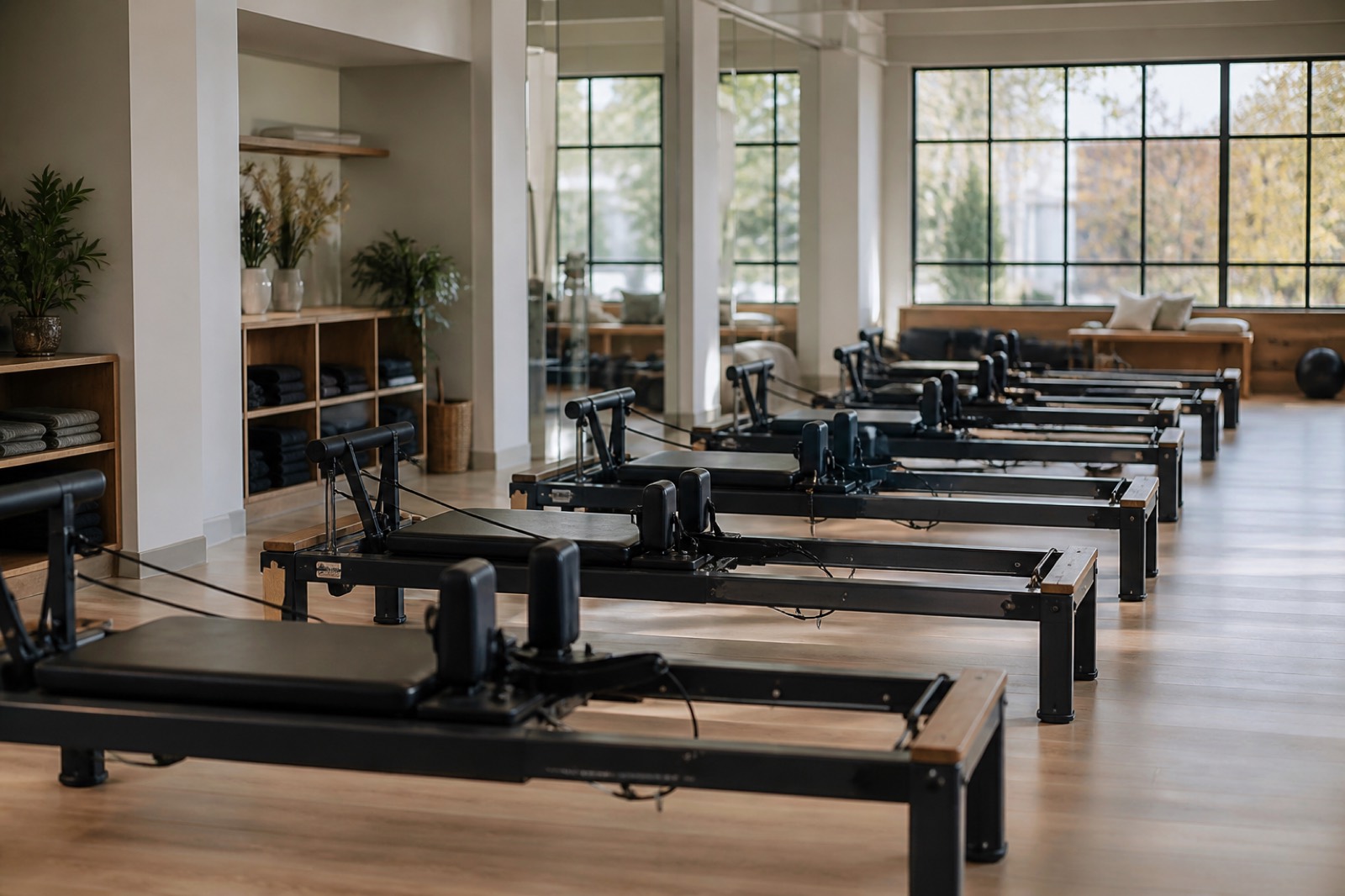
The buyer pool for Pilates studios looks like this:
- Franchise platforms and their multi-unit franchisees. The dominant franchise is Club Pilates, owned by Xponential Fitness (NYSE: XPOF), which ended 2025 with more than 1,400 studios and roughly $1M in average unit volume. Club Pilates locations change hands through large multi-unit franchisees, the largest of which, Riser Fitness, holds more than 340 licenses. If you own a Club Pilates studio, these franchisees and approved new operators are your most likely buyers.
- Private-equity-backed reformer chains. Solidcore, a national reformer-style Pilates chain, is backed by L Catterton after earlier ownership by Kohlberg & Company, and its growth shows how much capital is flowing into the equipment-heavy Pilates model. Platforms like this acquire and build studios in markets they want.
- Regional multi-studio operators building a local portfolio of independent reformer studios, who can spread instructor staffing, marketing, and back-office across locations.
- Experienced instructors and private buyers buying a profitable owner-run studio as a first acquisition, and search funds attracted to recurring Pilates membership revenue.
What every one of these buyers pays a premium for is a studio that runs like a business rather than around one instructor, with a maintained reformer floor and recurring membership. The closer a studio is to that profile, the more buyer types compete for it. A franchise location adds the franchisor’s brand and resale process, which can speed a sale but narrows the buyer pool to people the franchisor will approve. An independent gives the seller full control of the brand and the deal, at the cost of having to find the buyer.
What these buyers pay a premium for:
- Recurring, auto-billed membership that renews month over month
- A current, well-maintained reformer floor from a respected maker
- A bench of qualified instructors rather than an owner who teaches everything
- For a franchise, a long remaining term, a fair royalty, and a cooperative franchisor
- A long, assignable lease on a properly built-out studio space
- Clean membership and financial data that ties studio software to the books
What Pilates Studio Buyers Actually Care About in Diligence
Pilates diligence adds an equipment and franchise layer on top of the usual studio review. A buyer confirms the recurring revenue is real, that it does not depend on the owner teaching, that the reformer floor is sound, and, for a franchise, that the agreement transfers cleanly.
- Membership and retention data. Active member count, the split between recurring membership and class packs or drop-ins, monthly cancellation rate, and the trend over the last few years, pulled from the studio-management software.
- Equipment condition and maintenance. The age, brand, quantity, and service history of the reformers, towers, chairs, and barrels, and any reformers nearing replacement. This is unique to Pilates diligence and feeds directly into the price.
- Owner and instructor roles. How many classes the owner teaches, whether members come for the owner, how qualified the instructor team is, and whether instructors are under agreements and would stay.
- Franchise agreement, if applicable. Remaining term, royalty and marketing fees, transfer process and fee, territory rights, and franchisor approval of the buyer. A short remaining term or an uncooperative franchisor is a real obstacle.
- The lease. Remaining term, rent relative to revenue, renewal options, and landlord consent to assignment, since a built-out reformer studio is expensive to recreate.
- Worker classification. Whether instructors are employees or contractors and whether contractor treatment holds up, because misclassification creates back-tax and penalty exposure.
- Clean financials. Studio-software revenue that ties to bank deposits, quantified deferred class-pack and membership balances, separated personal and business spending, and documented add-backs.
The more the revenue sits in recurring membership, the better-maintained the reformer floor, the less the studio depends on the owner teaching, and, for a franchise, the cleaner the transfer, the faster diligence moves and the better the price holds.
Red Flags That Tank Pilates Studio Valuations
These are the issues that turn a busy-looking studio into a discounted or dead deal:

- The owner is the studio. If the owner teaches most classes and is the reason members come, the revenue does not transfer. Buyers treat the business as a job and pay accordingly.
- Class-pack and drop-in dependence. A studio living on packs and one-off classes rather than recurring membership has revenue that resets constantly and is worth less.
- Worn or mismatched reformers. An aging, inconsistent equipment floor facing replacement is a capital bill the buyer prices straight out of the deal.
- Instructor turnover. Qualified reformer instructors are in short supply, and members follow them, so high churn or dependence on one star instructor is a serious warning sign.
- A weak franchise position. For a franchise location, a short remaining term, rising royalties, a tight territory, or an uncooperative franchisor can stall a sale or narrow the buyer pool sharply.
- A short or above-market lease. A reformer studio buildout is costly, so a short term, high rent relative to revenue, or a landlord who will not assign the lease can kill a deal.
- Instructor misclassification and messy books. Treating instructors as contractors when they function as employees creates back-tax exposure, and software that does not tie to the bank lowers the earnings a buyer will credit.
What Separates a 2.5x Studio From a 6x Studio in Pilates
Two studios with similar revenue can sell at very different multiples, and the gap comes down to owner dependence, the durability of the membership, and the state of the equipment. A bottom-quartile studio is one location, owner-taught, living on class packs, with aging reformers and a short lease. It earns money, but that money is the owner’s job and a capital bill is coming.
A studio or group that earns a top-of-range multiple looks different in specific ways:
- Recurring membership carries the revenue. Most income is auto-billed membership that renews on its own, so the cash flow is predictable and financeable.
- A paid instructor team runs the floor. The owner has stepped into oversight, classes are taught by qualified instructors under agreements, and members are loyal to the studio rather than one person.
- The reformer floor is current and documented. A matching, well-maintained set from a respected maker with a clear service history, so the buyer inherits a turnkey floor with no immediate replacement bill.
- A strong franchise or brand position. For a franchise, a long remaining term, a fair royalty, and a cooperative franchisor; for an independent, a recognized local brand and a long assignable lease.
- The numbers survive a fair teaching wage. The studio still earns real profit after deducting a market wage for any classes the owner teaches, so the earnings are honest.
- Clean, documented financials. Studio-software data that ties to the bank, quantified deferred revenue, separated personal and business spending, and defensible add-backs.
Most of these are within an owner’s control in the 12 to 24 months before a sale. Moving members onto recurring membership, keeping the reformer floor current, and building an instructor team that runs classes without the owner are the moves that most reliably push a Pilates studio toward the top of its range.
Buying a Pilates studio or franchise: where they come up for sale
If you want to buy a Pilates studio rather than sell one, the inventory splits into independent studios and franchise resales.
Independent studios are mostly listed on marketplaces such as BizBuySell and BizQuest, or sold privately to instructors and local operators. BizBuySell reports a median asking price of $315,000 for an established dance, Pilates, and yoga studio, a category that mixes Pilates with other studio types. Treat any asking price as the seller’s opening number and rebuild the owner’s earnings before you make an offer.
Pilates franchise resales, such as Club Pilates locations, come up through the franchisor’s resale program and through multi-unit franchisees selling single units. If you are looking for a Pilates franchise for sale, ask the franchisor directly about resales in your market, because the franchisor must approve every buyer and many resales never reach a public listing. A resale gives you an open studio with members on day one. A new franchise unit means build-out, equipment purchases, and a presale period before revenue starts.
Before you sign a letter of intent on either path, check:
- Membership data from the studio software, including auto-billed members, monthly cancellations, and unused class packs you will owe
- The age, brand, and service records of every reformer, tower, and chair
- Which classes the owner teaches and whether members follow that instructor
- For a franchise, the remaining term, royalty and marketing fees, transfer fee, and any required remodel
- Lease term, rent against revenue, and landlord consent to assignment
Sellers can read this section from the other side: the valuation and diligence sections above show what a studio owner will expect a buyer to pay for.
How CT Acquisitions Works
CT Acquisitions connects owner-operated Pilates studios, franchise and independent, directly with qualified buyers. No public listing, no upfront fees, no tire-kickers. Here is the process.
- Confidential Consultation. We learn about your studio, your membership and retention, your reformer floor, your instructor team, your lease, and, if you are a franchise, your agreement terms, plus your goals and timeline. Nothing is shared externally without your explicit approval.
- Valuation and Positioning. We help you understand where your studio sits in the current market and how to position it, including how to frame your recurring membership, equipment condition, and franchise or independent status for the strongest outcome.
- Targeted Introductions. We introduce you directly to multi-unit franchisees, PE-backed reformer platforms, regional operators, experienced instructors, and private buyers from our network whose model and size match your studio.
- Deal Support Through Closing. We stay involved through LOI review, due diligence, and closing, including the equipment, deferred-revenue, and franchise-transfer questions specific to Pilates deals.
CT Acquisitions operates on a success-fee-only basis. No fee to you on buy-side introductions; sell-side mandates are paid on success at closing.
Most owners we work with built their studio themselves and have never sold one before. The franchise-versus-independent path, the reformer-equipment math, and the question of how much the studio depends on the owner make these deals more involved than they look. We prepare a confidential summary that highlights your strengths without revealing your identity, and buyers only learn who you are after signing an NDA and proving they are a serious fit.
Why Founders Choose CT Acquisitions
- No upfront fees. Success-fee-only. Zero retainers, zero listing fees, zero monthly charges. If a deal does not close, you owe nothing.
- Complete confidentiality. Your studio is never publicly listed. Members, instructors, and competitors stay unaware until you decide otherwise.
- The right buyers. Our network reaches the multi-unit franchisees, PE-backed platforms, and serious private buyers who understand reformer economics and franchise transfers rather than generalists who need it explained.
- Industry-specific expertise. We understand Pilates studio valuation, recurring membership versus class packs, reformer capital, instructor retention, and the franchise-versus-independent decision that drives these deals.
- Founder-first approach. We work on your timeline. You control every step, with no pressure to accept an offer that does not meet your goals.
“Most Pilates owners price their studio on class volume. The buyers who pay the most are looking at recurring membership, the condition of the reformer floor, and whether the studio runs without the owner teaching. The right introduction puts those buyers in competition for it.”
, Christoph, Managing Partner, CT Acquisitions
Frequently Asked Questions
How do I sell a pilates studio?
Sell a pilates studio in four steps: recast your financials to show true owner earnings, document your recurring membership revenue and retention, target franchisors and private equity buyers instead of open marketplaces, and run a confidential competitive process so buyers bid against each other. The recurring membership base is the asset that drives your price, so the cleaner and more transferable that revenue is, the stronger your sale.
What multiple can I expect for my Pilates studio?
Most independent Pilates studios are single-location and earn under $1M, so they sell on seller’s discretionary earnings, commonly 2.5x to 4x SDE. The reason the range runs a touch higher than other studio types is that Pilates is the hottest corner of boutique fitness right now, demand for reformer classes is strong, and recurring membership at a well-run studio is sticky. A studio where the owner teaches most classes sits at the bottom; a studio on a paid instructor team with auto-pay membership and well-maintained reformers sits at the top. A multi-studio group above roughly $1M of EBITDA can reach 4x to 6x EBITDA. A franchise resale, such as a Club Pilates location, is valued similarly on its earnings but also depends on the franchise agreement, the remaining term, and franchisor transfer approval.
Should I sell my Pilates studio as a franchise or as an independent?
It depends on what you own. If you operate a franchise such as Club Pilates, you are selling the franchised location, and the deal runs through the franchisor’s resale process: the buyer has to be approved, the franchise agreement has to transfer or be reissued, there is usually a transfer fee, and the buyer takes on the remaining term and royalty. That franchisor approval and the brand recognition can speed a sale, but it also limits your buyer pool to people the franchisor will approve. If you own an independent studio, you control the brand, the buildout, and the sale, with no franchisor approval and no transfer fee, but you and your advisor have to find the buyer. Both can sell well; the path is just different, and a buyer prices each accordingly.
How do reformers and equipment affect my studio’s value?
Reformers, towers, chairs, and barrels are real assets, not props, and their condition feeds directly into the price. A studio of ten to fifteen commercial reformers represents serious capital, and a matching, well-maintained set from a respected maker is worth more to a buyer than a worn, mismatched one they will have to replace. Buyers look at the age, brand, quantity, and maintenance history of the equipment, and any deferred replacement gets priced straight out of the deal, because reformers wear with heavy class use and are expensive to buy new. A studio that has kept its equipment current and documented its maintenance hands a buyer a turnkey floor and protects its multiple.
How long does it take to sell a Pilates studio?
Plan on 4 to 9 months from first conversation to closing for a single independent studio, and add time for a franchise resale because the franchisor approval and transfer process runs in parallel. The timeline depends on how clean your membership and financial data is, the condition of your reformers, your lease, and, for a franchise, the franchisor’s resale queue. A studio with auto-pay membership that ties to the bank, well-maintained equipment, a long assignable lease, and, where relevant, a cooperative franchisor goes to market and closes faster.
What hurts a Pilates studio’s value the most?
Owner-as-instructor dependence is the biggest value killer. If the owner teaches most of the classes and is the reason members come, the revenue does not transfer and buyers treat the business as a job. After that, the common problems are revenue that lives on class packs and drop-ins rather than recurring membership, instructor turnover in a tight market for qualified reformer teachers, worn or mismatched reformers facing replacement, a short or above-market lease, and, for a franchise, a short remaining franchise term, royalty creep, or an uncooperative franchisor. Misclassified instructors treated as contractors when they function as employees also create back-tax exposure that buyers deduct.
Who actually buys Pilates studios in 2026?
Pilates is the most actively consolidated boutique fitness category, so the buyer pool is deep. On the franchise side, the dominant brand is Club Pilates, owned by Xponential Fitness (NYSE: XPOF), with more than 1,400 studios; its franchise locations change hands through large multi-unit franchisees, and Riser Fitness is the largest, holding more than 340 licenses. On the independent and equipment-heavy side, Solidcore, backed by L Catterton after Kohlberg & Company, has built a national reformer-style chain and signals how much capital is chasing Pilates. Below the platforms are multi-unit franchisees, regional operators, experienced instructors buying their first studio, and private buyers. CT Acquisitions introduces you to the buyers whose model, whether franchise or independent, fits your studio.
Ready to Find Out What Your Pilates Studio Is Worth?
Start with a confidential conversation. No commitment, no upfront cost, and no pressure. CT Acquisitions introduces you directly to qualified Pilates franchise and independent buyers.
Ready to Explore Your Options?
A 30-minute confidential conversation is all it takes.