Sell Your Pest Control Business in New York (2026): What NY Operators Are Worth & Who’s Buying
Quick Answer
New York pest control businesses typically sell for 5 to 9x EBITDA depending on service mix, with residential operators holding 65%+ recurring contracts commanding 6-9x, while commercial-heavy and specialty operators (bed bug, wildlife, rodent) range 5-8x. Rollins, Rentokil/Terminix, Anticimex, Aptive Environmental, and 25+ regional consolidators actively acquire in New York, with valuations heavily influenced by recurring revenue percentage, customer retention, route density, and regulatory compliance (NY DEC registration and NYC DOH extermination licenses). One-time service-heavy operators typically achieve lower multiples near 4-5x, reflecting reduced recurring revenue quality.
Our national data on pest control valuation multiples shows what buyers actually pay by tier.
Thinking about selling your pest control business in New York?
A 15-minute confidential call gives you a real valuation range and the New York buyers most likely to compete for your business. No cost, no obligation.
Christoph Totter · Managing Partner, CT Acquisitions
20+ home services M&A transactions across HVAC, plumbing, pest control, roofing · Updated May 7, 2026
New York pest control is one of the most actively consolidated Northeast home services markets in the United States. Rollins (NYSE: ROL) operates Orkin, HomeTeam Pest Defense, Western Pest Services, and Trutech wildlife in New York, with NYC, Long Island, Westchester, and Hudson Valley markets disproportionately active. Rentokil/Terminix (NYSE: RTO) post the 2022 $6.7B Terminix merger remains aggressive in NY, particularly on the commercial and bed bug side. Anticimex (EQT Partners) entered the U.S. via 2018 acquisitions and has been actively building its Northeast footprint with NY as a focus state. Aptive Environmental (Bain Capital) runs its national door-to-door model in suburban Long Island and Westchester. Plus 25+ regional consolidators chasing the same recurring-revenue cash flow profile.
This guide walks through the actual valuation ranges for New York pest control specifically. Residential pest control with 65%+ recurring contract revenue: 6-9x EBITDA. Commercial-heavy operators (NYC restaurant, hospitality, multi-family, healthcare): 5-8x EBITDA. Specialty (bed bug, rodent, wildlife, mosquito/tick): 5-8x EBITDA. We’ll cover the operational metrics buyers underwrite (recurring %, retention, route density, NYC license overlay), the structural realities specific to New York (NY DEC business registration, NYC DOH&MH extermination license, dense urban route economics, 10.9% state income tax), and the buyer pool that’s actually active in NY pest control M&A in 2026.
The framework draws on direct work with 500+ active U.S. lower middle market buyers, including 8+ pest control consolidators currently buying in New York. We’re a buy-side partner. No fee to you on buy-side introductions; sell-side mandates are paid on success at closing. If you want a 90-second valuation range before reading further, the free calculator below produces a starting-point estimate based on your EBITDA, recurring revenue %, and concentration. Real-world ranges on actual deals depend on the operating metrics covered in the sections that follow.
One reality check before you start. New York is a strong-multiple state, but only for operators who have actually built a recurring contract book on top of the urban transactional pest pressure. A NY pest control company doing 70% one-and-done bed bug and rodent service calls and 30% recurring residential trades closer to 4-5x EBITDA, not the 8-9x headline. The owners who exit cleanly at the top of the range converted their transactional book into recurring rodent monitoring or quarterly residential plans 18-24 months before going to market. Read the prep section carefully.
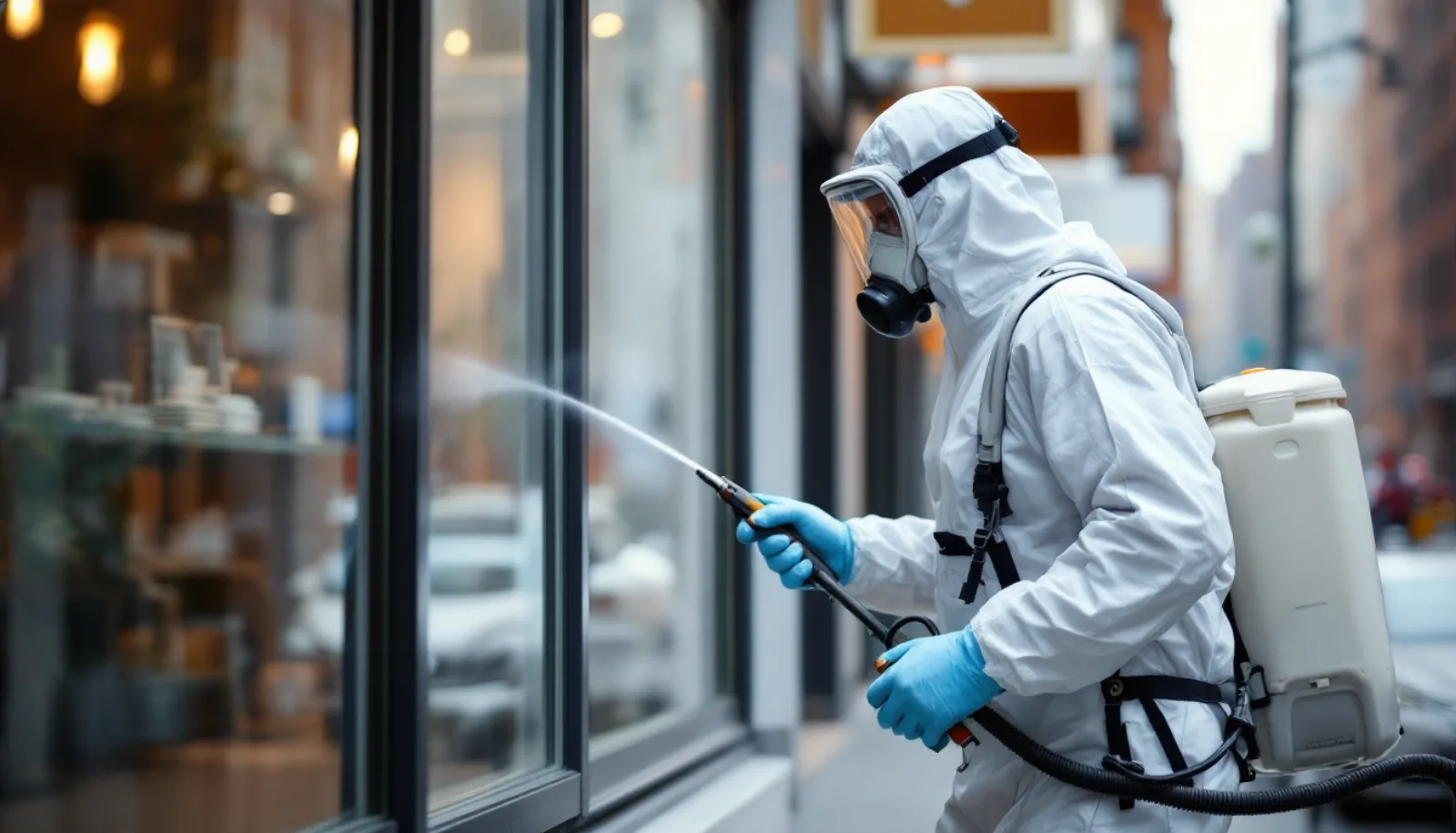
“New York pest control sits at the intersection of two underappreciated dynamics: the densest urban pest pressure in the country (NYC bed bugs, rats, German cockroaches, year-round rodent migration) and a 10.9% top state income tax that makes pre-sale tax planning materially more important than in FL or TX. PE consolidators paying 7-9x EBITDA for recurring-heavy NY operators have made the state a top-five pest M&A market. The mistake NY owners make is selling before they convert their bed bug and rodent transactional book into recurring contracts. We’re a buy-side partner, the buyers pay us, no contract required.”
TL;DR, the 90-second brief
- New York pest control trades at 6-9x EBITDA on recurring residential contracts, the highest multiples available to a Northeast home services operator. A profitable NY pest control company with $1M EBITDA and 75%+ recurring revenue typically prices in the $6.5M-$8.5M range, with NYC-metro density operators commanding the top of the band.
- New York is one of the most active Northeast states for pest control M&A. NYC, Long Island, Westchester, Rockland, and Hudson Valley produce the densest residential bed bug and rodent demand in the country, and Rollins/Rentokil/Anticimex/Aptive plus 25+ regional consolidators are all actively buying NY operators.
- NY DEC Bureau of Pesticides Management licensing is the closing-path bottleneck. The New York State Department of Environmental Conservation regulates Pesticide Applicator (Commercial) Certification and Pesticide Business Registration under 6 NYCRR Part 325. Business registration transfer to the buyer (with a qualified Certified Commercial Applicator) typically runs 45-75 days post-LOI, plus NYC-specific extermination licensing (NYC DOH&MH) for any operator working in the five boroughs.
- The four metrics NY buyers underwrite. Recurring contract revenue % (target 65%+ given NY’s heavy bed bug / rodent transactional mix), customer retention (target 85%+), route density (8-12 stops/tech/day in suburban routes, 6-10 in NYC walking routes), and bed bug / rodent service warranty exposure. NY operators with strong unit economics across all four hit the top end of 8-9x EBITDA; operators with thin recurring revenue trade at 4-6x or don’t close.
- Want a starting-point number? Use our free valuation calculator below for a sub-90-second estimate. If you’d rather talk to someone, we’re an M&A advisory firm working both sides of the table, with 500+ active U.S. No fee to you on buy-side introductions; sell-side mandates are paid on success at closing.
Key Takeaways
- New York pest control trades at 6-9x EBITDA on residential recurring contracts, the highest multiples available to a Northeast home services operator.
- NY DEC Bureau of Pesticides Management governs Pesticide Applicator (Commercial) Certification and Pesticide Business Registration; business registration transfer adds 45-75 days to closing.
- NYC DOH&MH extermination license is a separate, mandatory overlay for any operator working in the five boroughs, transfer process is independent of NY DEC.
- Active 2026 NY buyer pool: Rollins (Orkin / HomeTeam / Western / Trutech), Rentokil/Terminix, Anticimex (EQT), Aptive (Bain), plus 25+ regional Northeast consolidators including Assured Environments, Magic Exterminating, and Arrow Exterminators NY territory.
- Buyers underwrite recurring revenue %, customer retention, route density, and NYC license / bed bug / rodent service liability exposure.
- New York’s 10.9% top state income tax bracket means pre-sale residency or trust planning can shift $400K-$700K of after-tax proceeds on a $5M+ exit.
Why New York pest control commands strong multiples despite Northeast cost pressures
New York pest control combines structurally dense urban pest pressure with the deepest commercial pest control market on the East Coast, producing strong multiples even in a high-tax state. Year-round demand drivers (Norway and roof rats year-round in NYC and outer-borough housing, German cockroaches in dense apartments, bed bugs across hospitality and multi-family, mosquitoes and ticks April-October across Long Island and Hudson Valley, carpenter ants and termites in suburban housing stock, Eastern subterranean termites in Long Island and Westchester, wildlife pressure in Westchester / Rockland / Hudson Valley) eliminate the seasonality that compresses HVAC and roofing multiples. Recurring contract structure (monthly NYC commercial accounts, quarterly suburban residential, annual termite renewals) produces 60-80% recurring revenue mix on well-run NY operators, closer to a SaaS profile than transactional home services.
The NYC commercial market is structurally different from anywhere else in the country. Restaurants (under NYC Health Code Article 81 sanitation requirements), hotels, multi-family residential (Local Law 55 / asthma-trigger rules driving integrated pest management requirements), healthcare, food processing, and Class A office all require monthly or bi-weekly pest control service. Average NYC commercial account value runs 3-5x suburban residential. Stickiness is exceptional, a well-managed NYC commercial book runs 10-15 year average tenure. Buyers underwrite NYC commercial concentration as a premium asset because it’s structurally hard to replicate.
PE consolidation has been more aggressive in pest control than any other home services category, and New York has been a focus market. Rollins (NYSE: ROL, market cap roughly $24B as of early 2026) has acquired multiple NY-area operators since 2020 across Orkin, Western Pest, and Trutech brands, particularly in NYC commercial and Long Island residential. Rentokil’s 2022 acquisition of Terminix created a $4B+ revenue North American pest platform actively rolling up smaller NY operators, with strong NYC commercial focus. Anticimex (EQT Partners portfolio, $1.4B+ revenue globally) has been building its Northeast footprint with multiple NY acquisitions. Aptive Environmental (Bain Capital) brings a door-to-door residential model with strong Long Island and Westchester presence.
New York’s tax environment is the structural drag on after-tax proceeds. NY top state income tax is 10.9% (above $25M, but the 9.65% bracket starts at $1.077M for single filers and the 10.3% bracket starts at $5M). On a $5M NY pest control exit, the after-tax difference vs Florida or Texas (0% state) is $500K-$550K. NYC residents face an additional 3.876% city income tax, pushing total state-plus-city tax above 14% for high-bracket sellers. This is the single largest reason NY pest control owners run pre-sale residency planning, irrevocable trust structures (NING/DING trusts for non-grantor trust treatment), or move to FL/TX 12-24 months before closing. The NY-to-FL move alone shifts $500K+ on a $5M exit and is the most common pre-sale tax move in the state.
New York pest control valuation by operator type: residential, commercial, specialty
New York pest control valuation breaks into three distinct operator types, each with its own buyer pool and multiple range. Knowing which type you fit determines the buyers you market to and the realistic price you anchor on. NY operators who blend the categories end up frustrated, a transactional NYC bed bug shop priced like a suburban residential recurring operator, then surprised by 4-5x EBITDA LOIs.
Type 1: Suburban residential recurring (the premium tier). Quarterly residential service plans on Long Island, Westchester, Rockland, Hudson Valley, and Capital Region (Albany / Saratoga) routes. Signed contracts, average customer life 5-8 years. Typical EBITDA: $300K-$3M. Typical multiple: 6-9x EBITDA. Buyer pool: Rollins (Orkin / HomeTeam), Rentokil/Terminix, Anticimex, Aptive, regional consolidators. Multiples push toward 9x when recurring revenue exceeds 75%, customer retention exceeds 88%, and route density runs 10+ stops/tech/day. Multiples compress to 6x when recurring is 55-65%, retention is 75-82%, or there’s customer concentration above 5%.
Type 2: NYC commercial pest control (the institutional tier). NYC restaurant, hotel, multi-family, healthcare, and food-processing accounts on monthly or bi-weekly service contracts. Typical EBITDA: $500K-$5M. Typical multiple: 6-8x EBITDA. Buyer pool: Rentokil/Terminix (commercial-heavy and historically NYC-focused), Rollins (via Western Pest Services), Assured Environments, regional NYC commercial-focused operators. Commercial accounts are exceptionally sticky in NYC (10-15 year tenure typical) but lower-margin (gross margin 30-40% vs suburban residential 55-65%) given the cost structure of unionized labor, parking/transit, and NYC overhead. The right buyer pays a premium for NYC commercial route density and Local Law 55 / Article 81 IPM compliance know-how.
Type 3: Specialty (bed bug, rodent, wildlife, mosquito/tick). Bed bug remediation operators (canine inspection, heat treatment, K-9 detection), rodent control specialists (NYC Norway rat / roof rat dense market), wildlife control (Westchester / Hudson Valley raccoons, opossums, squirrels, snakes), tick / mosquito (Long Island Lyme disease pressure, Hudson Valley deer-tick endemic). Typical EBITDA: $200K-$1.5M. Typical multiple: 5-8x EBITDA. Buyer pool: Rollins (especially for wildlife via Trutech, mosquito/tick via Crane), specialty-focused regional consolidators. Multiples push to 8x when specialty + recurring (rodent monitoring contracts in NYC, tick/mosquito subscription routes on Long Island); compress to 5x when transactional one-time service is the bulk of revenue.
| Operator type | Typical EBITDA | Multiple range | Dominant buyer type |
|---|---|---|---|
| Suburban residential recurring | $300K-$3M | 6-9x EBITDA | Rollins, Rentokil, Anticimex, Aptive |
| NYC commercial / institutional | $500K-$5M | 6-8x EBITDA | Rentokil, Rollins (Western), Assured, regional NYC |
| Specialty (bed bug/rodent/wildlife/tick) | $200K-$1.5M | 5-8x EBITDA | Rollins (Trutech, Crane), specialty consolidators |
Calculating EBITDA for a New York pest control company: add-backs buyers actually accept
Pest control EBITDA calculation follows the standard small-business framework but with NY-specific add-backs and adjustments buyers know to scrutinize. Start with net income from the tax return. Add back interest, taxes (federal, NY state, NYC), depreciation, amortization. Add back owner’s W-2 salary (replaced with market-rate GM cost, NY GMs run $130K-$180K, materially above national average). Add back owner’s health and benefits, owner’s auto and phone allowances. Then add back the pest-control-specific items: owner-funded vehicle replacements that aren’t recurring, one-time DEC commercial applicator testing or training costs, NYC DOH&MH license application costs, non-recurring CRM conversion costs (PestPac, FieldRoutes, ServSuite, GorillaDesk), one-time legal costs related to a non-compete or trademark dispute.
What buyers will challenge in a NY pest control deal. Owner’s salary add-back when the owner is also the qualifying Certified Commercial Applicator on the NY DEC business registration, the buyer must replace both the GM and the Certified Commercial Applicator role. Excessive vehicle, fuel, and NYC parking add-backs (claiming personal use of branded route trucks is rare and easily disputed). NYC parking and toll costs being treated as ‘one-time’ when they’re recurring operational costs. Bed bug warranty / re-treat reserve adjustments, sellers sometimes try to add back warranty costs as ‘one-time’ when they’re actually recurring obligations. Customer acquisition costs being treated as ‘one-time marketing’ when they’re actually the cost of replacing churn.
The quality-of-revenue adjustment buyers will make. Sophisticated PE buyers don’t just underwrite EBITDA, they underwrite quality-of-revenue. They’ll segment your trailing-12-month revenue into recurring contract revenue (highest quality, full multiple), transactional residential revenue (medium quality, discounted multiple), and one-time bed bug / rodent / fumigation jobs (lowest quality, materially discounted). A NY operator with $1M EBITDA but only 50% recurring will get a blended multiple closer to 4-5x, not 8-9x. The adjustment isn’t optional, it shows up in every PE QoE report and matters more in NY than in FL or TX because NY’s transactional bed bug and rodent volume is structurally higher.
CRM and route data documentation as the cleanest diligence support. Modern pest control CRMs (PestPac by WorkWave, FieldRoutes, ServSuite by ServiceMonster, GorillaDesk, Pocomos) produce exportable customer lifetime value, retention cohorts, route density, ARR per customer, and churn analytics. Pulling 24-36 months of CRM data and reconciling it to bank deposits and tax returns is the cleanest possible diligence support. PE buyers love seeing this; it materially shortens diligence and protects multiple negotiation. NY operators still on paper or QuickBooks-only typically face a multiple haircut of 0.5-1.5x EBITDA, even larger in NYC where buyers can’t verify route density without GPS-tagged service ticket data.
Common add-back mistakes that re-price NY pest control deals. Adding back bed bug or rodent re-treat reserves as ‘non-recurring’ (they’re a real ongoing liability the buyer inherits, especially in NYC’s Local Law 55 environment). Adding back NYC parking, tolls, and congestion-zone fees as ‘one-time’ (they’re recurring). Adding back DEC certification renewal and NYC DOH&MH license fees (these are recurring). Adding back marketing costs that drove the comparable-period new customer acquisition (the buyer needs to keep that spend). These mistakes typically re-price deals 0.5-1.5x EBITDA downward during diligence.
The four operational metrics New York pest control buyers underwrite
New York pest control buyers and their lenders underwrite a specific set of operational metrics. Outside the standard EBITDA, the four numbers that determine whether a deal closes, and at what multiple, are recurring contract revenue %, customer retention %, route density (stops/tech/day, with NYC walking routes underwritten differently than suburban truck routes), and bed bug / rodent re-treat warranty exposure. NY operators outside the target bands either close at the low end of multiple ranges or don’t close at all.
Metric 1: Recurring contract revenue percentage. Target: 65%+ for premium multiples (lower than FL/TX given NY’s transactional mix). Calculated as annualized recurring contract revenue divided by total revenue. 75%+ is exceptional for NY and unlocks the 8-9x EBITDA range. 65-75% is strong and unlocks 7-8x. 55-65% is acceptable but compresses to 5-6x. Below 55%, you’re a transactional bed bug / rodent business not a recurring services business, and multiples are 3-5x. NY’s structurally higher transactional mix (bed bug remediation, one-time rodent jobs, real-estate-driven termite inspections) means the recurring threshold is calibrated lower than FL/TX, but buyers still pay a premium for converted recurring revenue.
Metric 2: Customer retention rate. Target: 85%+ annual retention. Calculated as customers retained at month 13 divided by customers active at month 1. 90%+ retention is best-in-class and supports premium multiples. 85-90% is strong. 80-85% is acceptable. Below 80% is a structural problem the buyer must fix or refuse the deal. New York’s competitive markets (NYC has 200+ licensed extermination companies, Long Island has aggressive Aptive door-to-door competition, Westchester has strong regional players) put retention pressure on smaller operators. A documented retention story (NPS scores, retention cohorts, churn reasons) is worth 0.5-1x EBITDA in negotiation. NYC commercial accounts retain at 92%+ when serviced well, so commercial-heavy operators can demonstrate exceptional cohort metrics.
Metric 3: Route density. Target: 8-12 suburban residential stops/tech/day, 6-10 NYC walking-route stops/tech/day, 4-8 commercial stops/tech/day. Route density is the gross margin lever. A suburban Long Island residential tech doing 12 stops/day at $80 average revenue per stop produces $960/day of revenue. The same tech doing 6 stops/day produces $480/day, same labor cost, half the revenue. PE buyers underwrite route density as the leading indicator of operational maturity. NY operators in the 10+ stops/day range run 50-60% gross margins; operators at 6-7 stops/day run 30-40%. NYC walking-route economics are different, transit time between dense Manhattan / Brooklyn accounts can be 15-15 minutes per move, so 6-8 quality commercial stops/day is the realistic ceiling. Operators who solve density at NYC scale command premium multiples.
Metric 4: Bed bug / rodent re-treat warranty exposure. Target: properly accrued and disclosed. New York’s bed bug and rodent volume means re-treat warranty obligations are a real ongoing cost. A typical bed bug 30-90 day re-treat warranty (NYC tenant-protection norm under Local Law 69 / Local Law 55) means the operator returns at no charge if bed bugs are confirmed within the warranty period. Annual termite warranties on Long Island and Westchester carry similar but smaller liability. Operators who don’t accrue properly look highly profitable on the P&L, until the buyer’s QoE catches the off-balance-sheet liability and re-prices the deal. A NY operator with a heavy bed bug remediation book may face a $300K-$1M reserve adjustment that comes directly out of purchase price. Accrue transparently from the start.
How buyers actually verify these metrics in New York deals. CRM exports for retention cohorts and route density. PestPac / FieldRoutes data for stops-per-day. Bank deposits cross-checked to CRM ARR. Bed bug and termite warranty database with start dates, expiration dates, and reserve balances. NY DEC and NYC DOH&MH records for any open complaints or violations. The cleaner the documentation, the higher the multiple, because the buyer’s downside scenario is bounded.
New York DEC and NYC DOH&MH licensing: business registration, applicator certification, and the closing-path bottleneck
New York pest control regulation under 6 NYCRR Part 325 is the most material regulatory factor in any NY pest control sale. The NY State Department of Environmental Conservation (DEC), Bureau of Pesticides Management, regulates pesticide business registrations, Pesticide Applicator (Commercial) certifications, technician registration, and license categories (3A general structural, 3B termite/wood-destroying organisms, 7A sewer / right-of-way, 7F aquatic, 7G mosquito/black fly, plus turf and ornamental categories). Every pest control business operating in NY must have a Pesticide Business Registration on file with DEC and at least one Certified Commercial Applicator on staff in each category.
What changes at sale. When the company sells, the certified applicator and business registration question becomes critical. Three scenarios: (1) the seller is the certified commercial applicator and stays post-close as a transition operator (typical 12-24 month employment agreement, often the cleanest path in NY because of the certification testing burden); (2) the seller is the certified applicator and exits, requiring the buyer to install their own certified applicator immediately or face DEC enforcement; (3) a non-owner certified applicator stays through the transition. NY buyers strongly prefer scenarios 1 or 3 because installing a new certified applicator from scratch requires 1+ year of verifiable experience plus passing the core and category exams, a structural barrier that affects multiple by 0.25-0.75x EBITDA depending on the bench.
DEC business registration transfer timeline and process. Business registration transfer (technically, a new business registration application reflecting the new ownership and certified applicator structure) requires DEC review and approval. Typical timeline 45-75 days post-LOI when documentation is complete and there are no compliance issues on the seller’s record. Active complaints, pending administrative penalties, or open consent orders extend the timeline materially. Termite / wood-destroying organism (3B) category requires evidence of liability insurance per DEC rules; commercial structural (3A) requires the same. DEC enforcement records are public and pulled by every institutional buyer’s QoE.
NYC DOH&MH extermination license: the NYC-specific overlay. Any pest control operator working in the five boroughs must hold an NYC Department of Health and Mental Hygiene Extermination Business License separate from the NY DEC business registration. The NYC license is per-business and requires NYC-specific application, fingerprinting, and proof of insurance. License transfer at sale is a separate process from the DEC transfer and runs on its own 30-60 day timeline. Operators selling NYC-active books must build the NYC DOH&MH license transfer into the closing checklist; buyers without an existing NYC license cannot legally service NYC accounts post-close until the license transfers.
The pre-sale DEC and NYC compliance audit. Every NY pest control operator should pull both their DEC compliance record and their NYC DOH&MH compliance record (if NYC-active) 12-18 months before going to market. Review for any open complaints, settled violations, administrative penalties, or category-license gaps. Resolve open issues before the buyer’s diligence team finds them. The buyer’s QoE will pull the same records. Anything unresolved becomes a re-pricing event, typically 0.25-1x EBITDA depending on severity. NYC violations tied to Local Law 55 IPM requirements or Local Law 69 bed bug disclosure failures are particularly damaging because they signal systemic compliance issues.
Other NY local jurisdiction overlays. Several other NY counties and municipalities (Nassau, Suffolk, Westchester, Rockland, Erie / Buffalo, Onondaga / Syracuse, Monroe / Rochester) maintain additional local consumer-protection registrations or pest-specific business licenses. These local registrations transfer separately. Build the local-license inventory into your data room early; missing a local registration in a major NY metro is the kind of detail that delays close by 30-45 days.
Bed bug, rodent, and termite warranty exposure: the New York-specific liability profile
Warranty and re-treat exposure in New York pest control deals follows a different liability profile than FL/TX termite-dominated states. NY operators carry three distinct warranty categories: bed bug re-treat warranties (heavy in NYC and dense urban Westchester/Long Island), rodent monitoring service contracts with implicit ‘no-rodents’ performance promises (common in NYC restaurants and multi-family), and Eastern subterranean termite warranties on Long Island, Westchester, and Hudson Valley housing stock. Each carries its own reserve methodology, and buyers’ QoE teams will quantify all three.
Bed bug re-treat exposure: the NYC-specific liability. Standard NYC bed bug remediation contracts include 30-90 day re-treat warranties, if bed bugs return within the warranty window, the operator retreats at no cost. For an operator doing $2M of bed bug remediation revenue annually with a 15-20% re-treat rate, the implicit warranty cost is $300K-$400K of labor and chemical exposure embedded in current period revenue. Buyers underwrite this as a real cost-of-revenue item, not a one-time expense. Document the re-treat rate, average re-treat cost, and trend over 24-36 months.
Rodent monitoring service liability: the commercial NYC profile. NYC commercial rodent monitoring contracts (Department of Health Article 81, Local Law 55 multi-family, hospitality, food service) carry an implicit performance standard, the operator must keep the account rat-free, with documented station servicing and pest activity logs. Operator failure to perform produces health department violations on the customer (not the pest control company), but customer churn is the real liability. NYC rodent-heavy operators with strong service documentation and tracked station compliance retain accounts at 92%+ rates; weak operators retain at 75%.
Termite (WDI) warranty exposure on Long Island, Westchester, and Hudson Valley. NY’s Eastern subterranean termite pressure is meaningful in suburban housing stock built before 1985. Operators offering retreat-only or retreat-plus-repair warranties on residential termite books carry the same kind of multi-year reserve obligation FL/TX operators face, just at smaller scale. A typical Long Island residential termite book of 5,000 customers with annual renewal carries $500K-$1.5M of expected future retreat / repair cost. Reserve transparently or face QoE re-pricing.
How sophisticated NY buyers underwrite the combined warranty exposure. Pull the bed bug remediation database with re-treat rates by quarter. Pull rodent monitoring contract performance logs. Pull termite warranty database (customer, treatment date, warranty expiration, warranty type, claim history). Calculate per-category reserve liability. Project forward expected future cost. Discount to present value. The result is the reserve liability the buyer carves out of purchase price, on a $1M EBITDA NY pest control operator with a heavy NYC bed bug + Long Island termite mix, this combined reserve carve-out can be $500K-$1.5M.
Active 2026 New York pest control buyer pool: who’s actually buying
New York is among the top-five most actively consolidated pest control markets in the United States, with NYC commercial as a structural standout. The buyer pool depth in NY is materially better than most Northeast states, even sub-$1M EBITDA NY operators receive multiple LOIs from credible institutional buyers if positioned correctly, especially on the NYC commercial side. Below is the actual 2026 active buyer roster with notes on what each is looking for and what they pay.
Tier 1: National public consolidators. Rollins (NYSE: ROL) operating Orkin, HomeTeam Pest Defense, Western Pest Services, Trutech (wildlife), Crane Pest Control (mosquito/tick), Critter Control. Western Pest Services is Rollins’ Northeast / NY-specialized brand and is particularly active in NYC commercial and Long Island residential. Pays 7-9x EBITDA for residential recurring operators, 6-8x for commercial. Rentokil/Terminix (NYSE: RTO) post the 2022 $6.7B Terminix merger, second-largest national consolidator, very strong NYC commercial focus, active acquirer of NY operators. Pays similar multiples to Rollins, sometimes higher for premium NYC commercial books.
Tier 2: PE-backed national platforms. Anticimex (EQT Partners), Swedish parent, $1.4B+ global revenue, building out U.S. footprint with NY as a Northeast focus state. Pays 7-9x EBITDA for residential recurring. Aptive Environmental (Bain Capital), door-to-door residential model, headquartered in Provo UT but Long Island, Westchester, and Hudson Valley territory active. Pays 6-9x EBITDA depending on contract structure. Both buyers have institutional process discipline (full QoE, formal closing checklists, escrow holdbacks 10-15%) and can move from LOI to close in 90-150 days, plus extra 30-45 days for NYC license transfer when applicable.
Tier 3: Regional NY-active platforms. Assured Environments, NYC-headquartered, premium commercial pest control platform, active in NYC / NJ / Long Island. Magic Exterminating, NYC and Long Island regional, multi-decade operator. Arrow Exterminators, GA-headquartered but NY-active through acquisition. Plus 25+ smaller NY-focused regional consolidators (Pestech, Ehrlich’s NY operations under Rentokil, Atlantic Termite, Bell Environmental, plus borough-specific operators). These regional platforms typically pay 5-8x EBITDA, slightly below the public consolidators but with faster decision cycles. Often the right buyer for $500K-$2M EBITDA NY operators.
Tier 4: Sub-regional and search-fund / individual buyers. Many search funds and individual SBA-financed buyers pursuing NY pest control because of the recurring revenue profile (SBA 7(a) financing approves more readily against pest control recurring revenue than against transactional businesses). Multiples 5-7x EBITDA, sometimes 8x for the rare premium-positioned smaller NY operator. These buyers pay through SBA financing with 10-25% seller note, less cash at close than institutional buyers but a path for sub-$500K EBITDA operators. NY’s high cost of doing business (insurance, labor, vehicles, NYC overhead) means SBA underwriters scrutinize NY pest control deals more carefully than FL/TX deals.
New York-specific pest pressure and what drives demand by metro
New York pest pressure varies materially by metro and region. Demand drivers, treatment categories, and unit economics differ between NYC, Long Island, Westchester / Rockland, Hudson Valley, Capital Region, and Western NY. Buyers underwrite metro concentration carefully, an operator concentrated in one NY metro versus diversified has a different risk profile.
NYC five boroughs (Manhattan, Brooklyn, Queens, Bronx, Staten Island). Norway and roof rats year-round (NYC Health Department estimates 2M+ rats citywide), German cockroaches in dense apartments and food service, bed bugs across hospitality and multi-family (Local Law 69 disclosure requirement), American cockroaches (waterbugs) in basement and sewer-adjacent buildings, mice citywide, occasional flea / tick from urban wildlife, increasing wildlife pressure (raccoons, squirrels, opossums) in outer boroughs. Heaviest commercial pest control density in the country, restaurants, hotels, hospitals, multi-family, food production, schools (NY City IPM Program), Class A office. Highest concentration of pest control consolidator interest in NY.
Long Island (Nassau, Suffolk). Eastern subterranean termites (heavy in older Suffolk housing stock), carpenter ants, mice (year-round), bed bugs (lower density than NYC but still significant), mosquitoes (May-October, including West Nile and EEE surveillance), ticks (deer ticks endemic, Lyme disease pressure), wildlife (deer, raccoons, opossums in eastern Suffolk). Dense suburban residential market; aggressive Aptive door-to-door competition in Nassau and western Suffolk. Strong year-round residential recurring opportunity.
Westchester / Rockland / Hudson Valley (White Plains, New Rochelle, Yonkers, Nyack, Poughkeepsie). Eastern subterranean termites, carpenter ants, mice and rats, bed bugs in commercial / multi-family, ticks (deer-tick endemic, Lyme pressure heavier than Long Island), wildlife (raccoons, opossums, squirrels, occasional bears in northern Westchester / Rockland), mosquitoes May-October. Mix of dense urban (Yonkers, New Rochelle), wealthy suburban (Scarsdale, Bronxville, Rye, Chappaqua), and rural (northern Westchester, Putnam, Dutchess). High average revenue per residential customer.
Capital Region and upstate (Albany, Saratoga, Schenectady, Troy, Glens Falls). Eastern subterranean termites (less pressure than Long Island), carpenter ants, mice and voles, ticks (deer-tick endemic, Lyme + emerging Powassan virus pressure), wildlife, mosquitoes, ground bees and wasps. State government and Albany Medical commercial demand. Lower density, lower revenue per customer, but lower competition. Opportunity for regional operators to roll up Capital Region operators at 5-7x EBITDA.
Western NY (Buffalo, Rochester, Syracuse, Binghamton). Carpenter ants and odorous house ants, mice (heavy year-round in older urban housing), bed bugs in commercial and multi-family, ticks, wildlife, mosquitoes, ground bees / wasps. Limited Eastern subterranean termite pressure. Lower density and lower per-customer revenue than downstate NY, but lower acquisition costs and less Aptive door-to-door competition. Often a regional consolidator opportunity rather than a national strategic exit.
Sale process and timeline: what to expect at each New York pest control deal size
New York pest control sale processes vary by EBITDA tier and buyer type, plus the NYC license overlay if applicable. Sub-$500K EBITDA deals typically run 5-8 months from prep-complete to close. $500K-$2M EBITDA deals run 6-10 months. $2M+ EBITDA institutional deals run 8-13 months. The timeline difference reflects buyer pool depth, financing complexity, NY DEC business registration transfer, NYC DOH&MH license transfer (if applicable), and QoE requirements at each tier.
Sub-$500K EBITDA: 5-8 month process, individual / search fund buyer. Months 1-2: positioning, CIM, buyer outreach (typically 12-30 prospect inquiries narrowing to 3-7 serious conversations). Months 2-4: management calls, IOIs, LOI signing. Months 4-7: SBA loan processing, NY DEC license transfer prep, NYC DOH&MH transfer if applicable, financial diligence, purchase agreement drafting. Months 7-8: close, with 90-180 day post-close transition (seller often stays as certified commercial applicator through transition). Common fall-through: SBA denial (15-25% in NY because of higher cost-of-living underwriting), DEC license transfer delay, NYC license transfer surprise.
$500K-$2M EBITDA: 6-10 month process, regional consolidator or PE platform. More buyer due diligence (full operational and financial QoE). More complex closing mechanics (multi-county registrations, NYC DOH&MH overlay, bed bug / termite warranty reserve negotiation, working capital target setting). Buyer pool typically 8-20 prospects narrowing to 3-6 management meetings and 2-3 LOIs. At this tier, you’re attractive to regional consolidators (Assured, Magic, Arrow’s Northeast division, Pestech) and the smaller acquisitions teams at Rollins / Rentokil / Anticimex / Aptive.
$2M+ EBITDA: 8-13 month institutional process. Institutional process. Months 1-3: buy-side intermediary engagement, CIM and management presentation development, buyer pool identification. Months 3-5: management presentations to 6-12 platform buyers (Rollins / Western, Rentokil, Anticimex, Aptive, plus regional PE-backed pest platforms), IOIs, narrowing to 2-4 LOIs. Months 5-10: LOI signing, formal QoE engagement, full operational diligence including warranty reserve analysis, CRM data audit, DEC + NYC compliance review, purchase agreement negotiation. Months 10-13: DEC business registration transfer, NYC DOH&MH transfer, close, 12-24 month transition. This tier requires institutional sell-side or buy-side support.
Pre-sale prep: the 18-24 month playbook for New York pest control specifically
New York pest control benefits from 18-24 month pre-sale prep because the four metrics buyers underwrite take 12+ months to materially shift, plus NY’s tax planning windows require advance work. NY owners who skip prep don’t exit faster, they exit at 35-55% lower after-tax proceeds (the bigger gap vs FL/TX reflects NY’s larger tax-planning leverage). The playbook below is what NY buyers and their CPAs actually look for.
Months 24-18: financial cleanup, recurring revenue conversion, CRM hygiene, NY tax planning. Move to monthly closes by the 15th of the following month. CPA-prepared annual financial statements. CRM (PestPac / FieldRoutes / ServSuite / GorillaDesk) tied to QuickBooks for daily revenue reconciliation. Begin tracking the four operational metrics monthly. Begin NY tax planning conversations: residency change to FL/TX, NING/DING trust structures, Qualified Small Business Stock (QSBS) Section 1202 evaluation if eligible, installment sale considerations, charitable remainder trust evaluation. Identify operations-fix opportunities (transactional bed bug / rodent conversion to recurring contracts, route optimization, customer concentration reduction).
Months 18-12: DEC license, NYC DOH&MH license, warranty reserve, real estate readiness. Pull DEC compliance record. Pull NYC DOH&MH compliance record if NYC-active. Resolve any open complaints or violations. Verify all county and local pest control operator registrations are current. Audit bed bug, rodent, and termite warranty books (size, warranty type mix, historical claim rate, reserve methodology). Move to proper warranty reserve accounting if not already there. For owned real estate (the office/warehouse facility), decide: sell with the business or retain and lease to buyer at market rent (NY commercial real estate appreciation often makes Option 2 attractive).
Months 12-6: reduce owner dependency, professionalize ops bench, develop non-owner certified applicator. Identify what only you do today (certified commercial applicator role, key NYC commercial customer relationships, sales close, technical inspections). For the certified applicator role specifically, develop a non-owner Certified Commercial Applicator on staff so the buyer has flexibility on the transition structure, given NY’s 1+ year experience requirement plus exam burden, this is harder than in FL or TX and takes longer. Document SOPs (route management, technician training, customer onboarding, complaint handling, NYC Local Law 55 / Local Law 69 compliance procedures). Promote or hire a GM/Operations Manager. Take a 30-day vacation 9 months before going to market.
Months 6-0: data room, CIM, tax planning execution. Compile 36 months of tax returns, P&Ls, balance sheets, bank statements, payroll registers, customer contracts, DEC business registration and applicator credentials, NYC DOH&MH license (if applicable), county / local registrations, warranty database (bed bug / rodent / termite), claim history, CRM cohort exports, route density reports, ARR per customer reports. Build a CIM emphasizing your operator type’s buyer-relevant story. Execute residency change if planned (must be substantive, 183-day rule, NY domicile audit risk). Engage tax counsel for asset allocation strategy.
New York tax treatment, residency planning, and asset allocation for pest control exits
New York’s 10.9% top state income tax bracket plus NYC’s 3.876% city income tax create the largest tax-planning leverage in the country for pest control exits. On a $5M NY pest control sale, the after-tax difference between NYC residency and FL residency can be $700K-$800K. Residency change planning, properly executed, is the single highest-ROI move a NY pest control owner can make, provided it’s substantive (actual move, primary residence change, voter registration, driver’s license, healthcare provider) and started 12-24 months before the sale to survive a NY domicile audit.
Residency planning options for NY pest control sellers. Option 1: Move to a 0% state (Florida, Texas, Tennessee, Wyoming, Nevada, South Dakota). Most aggressive savings, requires substantive move 12-24 months pre-sale, survives audit if executed properly. Option 2: NING / DING irrevocable non-grantor trust (Nevada Incomplete Non-grantor Gift Trust / Delaware equivalent), legal way to remove gain from NY tax base while keeping the seller as a discretionary beneficiary. Requires careful structuring 12-18 months pre-sale and ongoing trust administration. Option 3: QSBS Section 1202 evaluation, if the company is a C-corp held 5+ years with under $50M in gross assets, federal capital gains may be excluded up to $10M or 10x basis. NY conforms to federal QSBS treatment partially, so additional state planning is needed. Option 4: Installment sale, spread gain recognition over years to manage bracket exposure.
Asset sale vs stock sale structure for NY pest control. NY pest control deals are typically structured as asset sales for liability and depreciation reasons. The buyer wants to step into the operating entity without inheriting unknown legal exposure (DEC violations, NYC DOH&MH violations, bed bug remediation disputes, employee misclassification, customer disputes, prior chemical-use claims). Sellers face dual-tax: ordinary income tax on equipment, vehicle, and inventory recapture (federal up to 37% + NY 10.9%), and capital gains on goodwill (federal 15-20% + NY 10.9%, all-in roughly 26-31% on the goodwill bucket).
Typical asset allocation in a $3M NY pest control sale. Tangible equipment (route trucks, sprayers, baiting equipment, fumigation equipment, smallwares): $200K-$500K, ordinary income recapture. Inventory (chemicals, baiting stations, supplies): $50K-$150K, ordinary income. Vehicles: $300K-$700K depending on fleet age, ordinary income recapture. DEC business registration and customer contracts: capital gains as goodwill. Warranty book: typically allocated to goodwill but with reserve carve-out. Goodwill (brand, customer base, recurring contract book): the largest bucket, capital gains (15-20% federal + 10.9% NY = 26-31% all-in). Non-compete: $100K-$500K, ordinary income to seller, deductible to buyer.
Owned real estate and NY commercial property considerations. If you own the office/warehouse facility, options at sale: (1) sell building with the business (lump-sum capital gains, NY tax applies); (2) retain building and lease to buyer at market rent (ongoing income, plus continued depreciation, plus future appreciation in NY commercial markets); (3) 1031 exchange the building into another investment property (defer gain entirely). Option 2 or 3 often produces better after-tax economics over a 10-15 year horizon if you don’t need the lump-sum cash. NY commercial real estate has appreciated meaningfully in NYC and Long Island over the last decade, making lease-back economics particularly attractive.
Common New York pest control sale mistakes and how to avoid them
Mistake 1: anchoring on national pest control multiples without adjusting for NY’s transactional mix. Reading about Rollins paying 9x EBITDA for a residential recurring operator and assuming your transactional NYC bed bug shop will sell for 9x. The buyer pool, financing structure, and underwriting model are fundamentally different. A 9x multiple is for a residential recurring operator with 75%+ recurring revenue, 88%+ retention, and clean route density. NY’s higher transactional baseline means more operators sit at 4-6x than at 8-9x. Anchor on your operator type’s range.
Mistake 2: missing the NYC DOH&MH license overlay. Operators with NYC commercial accounts who don’t pre-clear the NYC DOH&MH license transfer process find themselves with deals that close on paper but cannot legally service NYC accounts post-close until the buyer’s NYC license issues. This causes 30-90 day customer service gaps that produce real revenue loss and post-close working capital disputes. Build the NYC transfer into the closing checklist from LOI.
Mistake 3: undisclosed bed bug or termite warranty reserve liability. Going to market without a properly accrued bed bug re-treat reserve or termite warranty book is the most expensive mistake in NY pest control deals. The buyer’s QoE will calculate the reserve liability and carve it out of purchase price, sometimes $500K-$1.5M. Reserve from the start; disclose at LOI.
Mistake 4: skipping NY tax planning until the LOI is signed. By the time the LOI is on the table, the windows for residency change, NING/DING trust structuring, and QSBS evaluation are mostly closed. NY’s domicile audit standards require substantive change 12-18 months before the sale. Operators who skip tax planning give up $400K-$700K of after-tax proceeds on a $5M+ exit.
Mistake 5: refusing seller financing or seller note. Most sub-$2M EBITDA NY pest control deals require 10-25% seller financing because SBA caps and buyer equity requirements force the gap, especially in NY where SBA underwriters apply more conservative cost-of-living adjustments. Standard NY pest control seller notes run 4-7 year terms at 7-9% with personal guarantees and cash flow coverage covenants.
Mistake 6: claiming aggressive add-backs that won’t survive QoE. An owner who claims $200K of ‘one-time marketing’ add-backs on a $1M EBITDA NY business is asking the buyer’s QoE to underwrite a 20%+ adjustment. Institutional buyers typically allow 5-12% add-back ratios with documentation. NYC parking, tolls, and union labor cost add-backs are particularly scrutinized.
Mistake 7: announcing the sale to staff and customers too early. Pest control technician retention is critical to operational continuity, and NYC has a particularly tight labor market for licensed pest control techs. A premature announcement causes route techs to start interviewing elsewhere, especially with active competitors (Aptive on Long Island, Rentokil/Terminix in NYC) recruiting. Disclose strategically post-LOI with retention bonuses for key technicians.
Mistake 8: not modeling working capital adjustment with NYC commercial deferred revenue. NYC commercial accounts are often pre-paid quarterly or annually, producing deferred revenue liability on the balance sheet. Pest control working capital includes inventory, accounts receivable (NYC commercial can run 30-60 day on hospitality), prepaid annual contracts (deferred revenue liability), and accounts payable. On a $5M NY pest control deal, working capital can be $300K-$800K of value the seller didn’t realize they were giving up. Negotiate the working capital target during the LOI.
Selling a New York pest control business? Talk to an advisor who knows the buyers.
We work both sides of the table: sell side for owners, buy side for acquirers. No fee to you on buy-side introductions; sell-side mandates are paid on success at closing. A 15-minute call gets you three things: a real read on what your NY pest control business is worth in today’s market, a sense of which buyer types fit your operator profile, and the option to meet one of them. If none of it is useful, you’ve lost 15 minutes.
Sell Your Pest Control Business in Other States: Sibling Guides
Sibling state guides for selling a pest control business. Each guide below covers state-specific licensing, multiple ranges, tax considerations, and named PE buyers active in that geography. If you operate in multiple states, the multi-state premium typically adds 0.5-1.5x to EBITDA multiple at exit (buyers value contiguous coverage).
State-by-state guides: Sell Your Pest Control Business in Texas · Sell Your Pest Control Business in Florida · Sell Your Pest Control Business in California · Sell Your Pest Control Business in Pennsylvania · Sell Your Pest Control Business in Illinois · Sell Your Pest Control Business in Ohio · Sell Your Pest Control Business in Georgia · Sell Your Pest Control Business in North Carolina
For valuation context that applies regardless of state: See our pest control business valuation guide for nationwide multiple ranges and PE buyer pool. Run our free 90-second valuation calculator for a starting-point estimate. Or browse the full sell-your-business hub for all verticals and states.
Positioning your New York pest control business for the right buyer archetype
The single highest-leverage positioning decision is matching your NY pest control business to its right buyer archetype. Sub-$500K EBITDA suburban residential recurring operators position to SBA individuals and search funds. $500K-$2M EBITDA suburban operators position to regional consolidators (Assured, Magic, Arrow Northeast, Pestech). $500K-$5M EBITDA NYC commercial operators position to Rentokil/Terminix and Rollins/Western. $2M+ EBITDA operators position directly to Rollins, Rentokil, Anticimex, and Aptive.
Position for SBA individuals / search funds when: Your EBITDA is $200K-$500K, your recurring revenue is 65%+, you have a transferable certified commercial applicator path, you’re suburban (Long Island / Westchester / Hudson Valley) rather than NYC-heavy (NYC adds license complexity that scares individual buyers), and you’re willing to seller-finance 10-25% with a 12-18 month transition. Emphasize: stable contract base, documented retention, manageable customer count.
Position for regional NY consolidators when: Your EBITDA is $500K-$2M, you have geographic concentration in a coherent NY metro, and you can demonstrate operational efficiency that a regional operator could leverage at scale. Emphasize: route density, recurring revenue %, NY-specific operational know-how (DEC compliance, NYC license if applicable, NY labor / vehicle cost management).
Position for Rollins / Rentokil / Anticimex / Aptive when: Your EBITDA is $1M+, your recurring revenue is 70%+, you have clean CRM data, your warranty reserves are properly accounted, your DEC compliance is clean (NYC DOH&MH compliance also clean if applicable), and you have either suburban residential density or NYC commercial scale. Emphasize: institutional-grade financials, recurring revenue quality, retention cohorts, route density, ARR per customer trends, platform-fit story.
Position for specialty buyers (Trutech, Crane, NYC commercial-focused consolidators) when: Your business is wildlife (Westchester / Rockland / Hudson Valley wildlife is a particularly attractive specialty), tick / mosquito (Long Island / Hudson Valley Lyme corridor), bed bug remediation (NYC), or NYC commercial / institutional pest control. Emphasize: technical specialization, regulatory compliance, recurring revenue, and proprietary techniques or routes.
Curious what your New York pest control business would sell for?
A 15-minute confidential call gives you a real valuation range and tells you which buyers would compete for your business. No cost, no obligation, no pressure to sell.
Sell Your Pest Control Business in New York: 2026 Outlook and Key Takeaways
New York pest control is one of the most attractive Northeast home services verticals for institutional buyers, but the combination of 10.9% state tax (plus NYC 3.876%) and structural transactional mix means after-tax outcomes vary dramatically based on prep. Suburban residential recurring operators with 75%+ recurring revenue and 88%+ retention land at 8-9x EBITDA. Operators with 55% recurring and 78% retention land at 5-6x. Add a 10-13% state tax drag and the after-tax difference on a $1M EBITDA business is $4M+ of after-tax proceeds. Knowing which operator type you fit (suburban residential recurring, NYC commercial, specialty), tightening your four metrics (recurring %, retention, route density, warranty exposure), securing your NY DEC business registration and NYC DOH&MH license transfer paths, executing pre-sale tax planning 18-24 months in advance, and matching to the right buyer archetype is the difference between an exit at the high end and an exit at the bottom (or no exit at all). No fee to you on buy-side introductions; sell-side mandates are paid on success at closing.

About the Author
Christoph Totter is the founder of CT Acquisitions, an M&A advisory firm working both sides of the table, headquartered in Sheridan, Wyoming. We work directly with 500+ buyers, search funders, family offices, lower middle-market PE, and strategic consolidators, including direct mandates with the largest consolidators that other intermediaries cannot access. No fee to you on buy-side introductions; sell-side mandates are paid on success at closing. Connect on LinkedIn · Get in touch
Sell Your Pest Control Business in New York: Frequently Asked Questions
How much is my New York pest control business worth?
Suburban residential recurring: 6-9x EBITDA typically. NYC commercial / institutional: 6-8x EBITDA. Specialty (bed bug, rodent, wildlife, tick): 5-8x EBITDA. Multipliers shift based on recurring revenue %, customer retention, route density, and warranty exposure (bed bug re-treat, termite, rodent monitoring). NY’s 10.9% state income tax plus NYC’s 3.876% city tax means pre-sale tax planning is worth $400K-$700K on a $5M+ exit. Use the free calculator above for a starting-point range.
What multiples do New York pest control companies actually sell for in 2026?
Suburban residential recurring NY pest control trades at 6-9x EBITDA, with 7-8x typical for $1M+ EBITDA operators. NYC commercial-heavy operators trade at 6-8x. Specialty operators trade at 5-8x. Sub-$500K EBITDA operators sometimes trade lower (5-6x) when sold to SBA individuals or search funds rather than institutional consolidators. NY’s heavier transactional bed bug / rodent mix means the average deal sits below FL/TX averages.
Why does New York pest control sell for slightly lower multiples than Florida or Texas?
Three reasons. First, NY’s transactional mix is structurally higher, bed bug remediation and one-time rodent jobs are heavier in NYC than recurring residential is in FL/TX. Second, NY’s cost of doing business (insurance, labor, NYC overhead, vehicles, parking) is materially higher, compressing operating margins. Third, NY’s regulatory complexity (DEC business registration plus NYC DOH&MH license overlay) adds friction. The premium operators with 75%+ recurring revenue still close at 8-9x, but the average is lower than FL/TX.
How do I calculate my NY pest control company’s EBITDA?
Net income + interest + taxes (federal + NY state + NYC if applicable) + depreciation + amortization + owner’s W-2 salary + owner’s benefits + owner’s auto/phone + documented owner-only personal expenses + one-time non-recurring expenses. Subtract any one-time gains. NY GM market rate is $130K-$180K (above national average). Aggressive add-backs (claiming bed bug re-treat costs as ‘non-recurring,’ NYC parking as ‘one-time,’ excessive owner family payroll) won’t survive institutional QoE.
What operational metrics do NY pest control buyers underwrite?
Four metrics: recurring contract revenue % (target 65%+ in NY given the transactional mix), customer retention rate (target 85%+), route density (8-12 suburban stops/tech/day, 6-10 NYC walking-route stops/tech/day, 4-8 commercial), and warranty exposure (bed bug re-treat reserve, termite warranty reserve, rodent monitoring performance liability). NY operators outside the target bands either close at the low end or don’t close. Buyers verify via CRM exports, warranty databases, and bank-deposit reconciliation.
How does NY DEC pesticide business registration transfer work?
The NY State Department of Environmental Conservation (DEC), Bureau of Pesticides Management, regulates Pesticide Business Registration and Pesticide Applicator (Commercial) Certification under 6 NYCRR Part 325. Business registration transfer (new business registration application reflecting new ownership and certified applicator structure) requires DEC review and approval, typically 45-75 days post-LOI. The buyer must have a Certified Commercial Applicator on staff in each category (3A general structural, 3B termite, 7A sewer, etc.). Active complaints or pending administrative penalties extend the timeline.
What’s the NYC DOH&MH extermination license, and does my deal need it?
Any pest control operator working in the five NYC boroughs must hold an NYC Department of Health and Mental Hygiene Extermination Business License separate from the NY DEC business registration. The NYC license is per-business with NYC-specific application, fingerprinting, and proof of insurance. License transfer at sale is a separate process from DEC and runs on its own 30-60 day timeline. NYC-active operators must build the NYC DOH&MH license transfer into the closing checklist from LOI.
What about bed bug and termite warranty reserves in a NY pest control sale?
NY operators carry three warranty categories: bed bug re-treat warranties (heavy in NYC, 30-90 day re-treat windows), rodent monitoring service contracts with implicit performance promises, and Eastern subterranean termite warranties on Long Island, Westchester, and Hudson Valley. Combined reserve liability on a heavy-warranty NY operator can run $500K-$1.5M. Buyers calculate via QoE and carve out of purchase price. Disclose warranty book size, type mix, historical claim rate, and reserve methodology upfront.
Who’s actually buying New York pest control businesses in 2026?
National public consolidators: Rollins (Orkin / HomeTeam / Western Pest Services / Trutech / Crane), Rentokil/Terminix. PE-backed platforms: Anticimex (EQT Partners), Aptive Environmental (Bain Capital). Regional NY-active platforms: Assured Environments (NYC commercial-focused), Magic Exterminating, Arrow Exterminators Northeast division, Pestech. 25+ smaller regional NY consolidators. Search funds and individual SBA buyers active for sub-$500K EBITDA suburban operators.
How long does it take to sell a New York pest control business?
Sub-$500K EBITDA: 5-8 months from prep-complete to close. $500K-$2M EBITDA: 6-10 months. $2M+ EBITDA: 8-13 months (institutional process). Add 30-45 days if NYC DOH&MH license transfer is required. Add 12-24 months on the front for proper preparation if your CRM, DEC compliance, NYC compliance, and warranty reserves aren’t already buyer-ready, plus tax planning windows.
Should I move to Florida before selling my New York pest control business?
On a $5M+ NY exit, residency change to a 0% state (FL, TX, TN, WY, NV, SD) saves $400K-$700K in state tax. The catch: NY domicile audits require substantive change, actual primary residence move, voter registration, driver’s license, healthcare provider, 183+ day physical presence test, started 12-24 months before sale. Half-measures fail audit. Alternatives: NING/DING irrevocable non-grantor trust structures, QSBS Section 1202 evaluation if eligible. Engage NY tax counsel 18-24 months pre-sale.
What if my NY pest control company has heavy NYC commercial concentration?
NYC commercial concentration is generally a positive for institutional buyers (Rentokil/Terminix and Rollins/Western specifically prize NYC commercial route density and Local Law 55 / Article 81 compliance know-how). Customer concentration above 15% from a single account is a re-pricing event, expect 0.5-1x EBITDA discount per concentrated account. Pre-clear the NYC DOH&MH license transfer with the buyer at LOI to avoid post-close service gaps.
How is CT Acquisitions different from a sell-side broker or M&A advisor?
We’re a buy-side partner, not a sell-side broker. Sell-side brokers represent you and charge you 8-12% of the deal (often $300K-$1M on a typical NY pest control sale) plus monthly retainers, run a 9-12 month auction process, and require 12-month exclusivity. No fee to you on buy-side introductions; sell-side mandates are paid on success at closing. We move faster (60-150 days from intro to close at the right tier) because we already know who the right NY pest control buyer is.
Sources & References
All claims and figures in this analysis are sourced from the publicly available references below.
- https://dec.ny.gov/regulatory/permits-licenses/chemical-petroleum-lng-pesticide-permits/pesticide-applicator-technician-guidance
- https://dec.ny.gov/environmental-protection/pesticides/business-agency-information
- https://www.nyc.gov/site/doh/business/permits-and-licenses/pest-control.page
- https://investor.rollins.com/
- https://www.rentokil-initial.com/investors.aspx
- https://www.anticimex.com/en/about-us/
- https://www.epa.gov/laws-regulations/summary-federal-insecticide-fungicide-and-rodenticide-act
- https://www.tax.ny.gov/pit/file/nonresident-faqs.htm
- https://www.sba.gov/funding-programs/loans/7a-loans
- https://www.irs.gov/forms-pubs/about-form-8594
- https://www.census.gov/quickfacts/NY
- New York Department of State, licensing
- New York Department of Taxation and Finance
Related Guide: How to Sell a Pest Control Business (2026 Playbook), End-to-end exit guide for residential, commercial, and specialty pest control owners.
Related Guide: Why Pest Control Sells for Higher Multiples Than Other Home Services, The recurring revenue mechanic behind 6-10x EBITDA.
Related Guide: 2026 LMM Buyer Demand Report, Aggregated buy-box data from 76 active U.S. lower middle market buyers.
Related Guide: Business Valuation Calculator (2026), Quick starting-point valuation range based on EBITDA and industry.
Related Guide: Buyer Archetypes: PE, Strategic, Search Fund, Family Office, How each buyer underwrites differently and what they pay for.
Want a Specific Read on Your Business?
15 minutes, confidential, no contract, no cost. You leave with a read on your local buyer market and a likely valuation range.