Home / Sell Your Business / Commercial Refrigeration
Sell My Commercial Refrigeration Business: Buyers, Value and a Confidential Sale
If you are asking “how do I sell my commercial refrigeration business?”, this page is for you: the owner of a service, repair, installation or retrofit contractor working for supermarkets, restaurants, cold storage and food processing customers. We run confidential sales and introduce owners to qualified buyers from a network of 500+ private equity firms, family offices, search funders and strategic acquirers. Below: who buys refrigeration contractors, what they pay for, what lowers the price, and how the process works.
By the CT Acquisitions team · Updated October 2026
Sell my commercial refrigeration business: the short answer
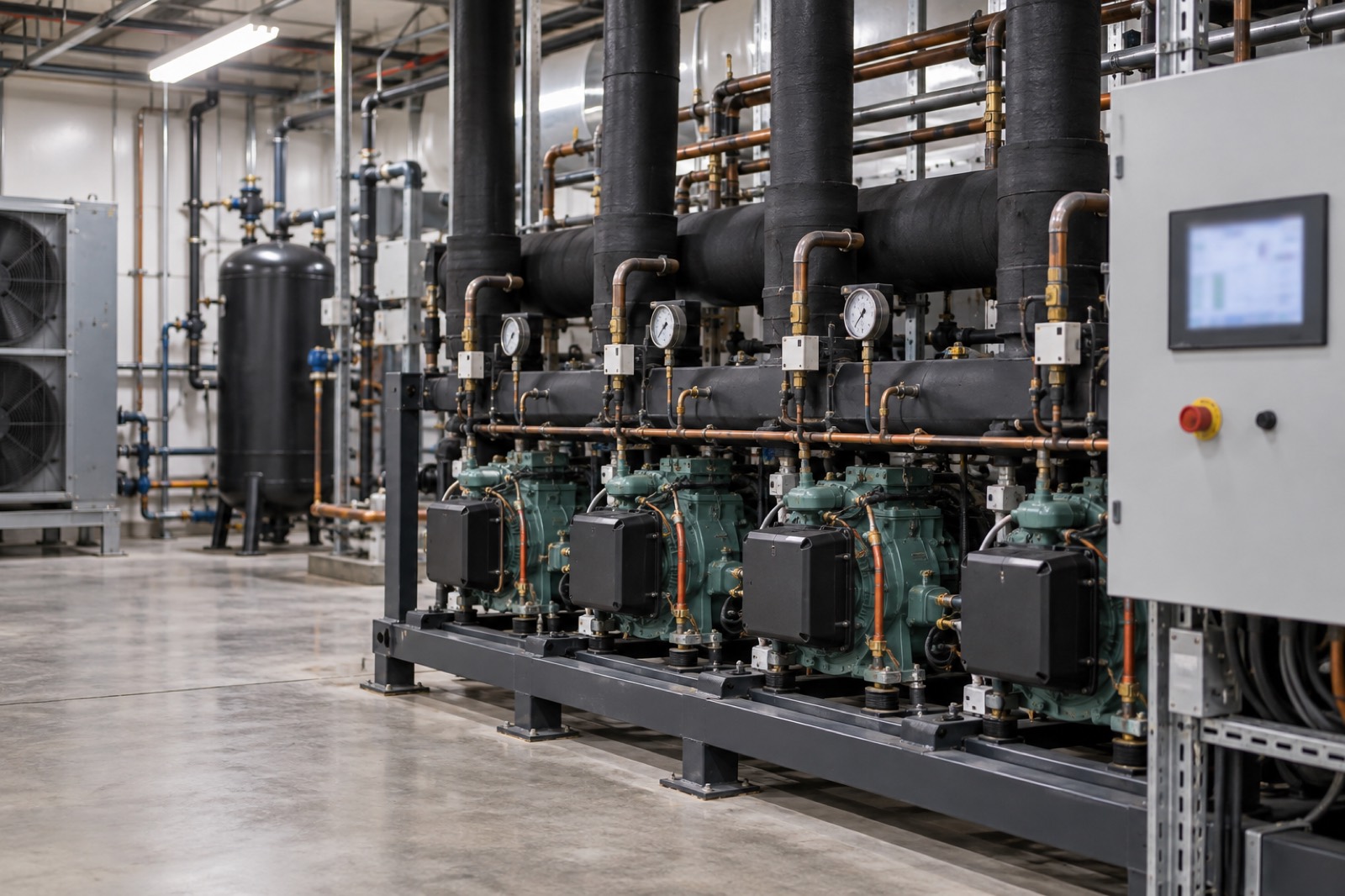
The buyers are one dedicated national refrigeration platform, Coolsys (owned by Ares Management since 2019, per coolsys.com), plus mechanical and facility-services platforms and private equity firms that add refrigeration as a capability. Price is driven by the share of revenue under written service agreements, rack and CO2 capability, a certified technician bench, a real 24/7 dispatch operation and how spread out your customers are. We prepare your company, then approach qualified buyers from our 500+ network confidentially, and you decide at every step. No fee to you on buy-side introductions; sell-side mandates are paid on success at closing.
Who buys commercial refrigeration businesses right now
The buyer pool for a refrigeration contractor is narrower than most owners expect. As our commercial refrigeration M&A multiples guide lays out, there is one dedicated national commercial refrigeration platform. Beyond it, the acquirers are mechanical and facility-services platforms that carry refrigeration as one capability rather than as their whole business.
- Coolsys. The one dedicated national commercial refrigeration and HVAC services platform, with refrigeration at its core, owned by Ares Management since March 21 2019 (per coolsys.com). Coolsys absorbed Source Refrigeration, so Source is now part of Coolsys under Ares. A common error links Source to EMCOR; it does not belong to EMCOR.
- Mechanical and facility-services platforms. EMCOR Group (NYSE: EME) carries refrigeration inside its US Mechanical Construction and Facilities Services segment rather than as a standalone line (per SEC and company filings). Service Logic, a commercial HVAC and mechanical services platform with refrigeration and controls capability, was acquired by Bain Capital at roughly $3.1B enterprise value from Leonard Green, closing December 16 2025 (per leonardgreen.com).
- Private equity firms and their add-on platforms. Sponsors building mechanical service groups buy refrigeration capability at every size, from add-ons to standalone platforms. Family offices and search funders look at smaller, well-run shops.
Two names that are often misread. Comfort Systems USA (NYSE: FIX) is a public MEP contractor whose refrigeration exposure is minimal and weighted toward data-center and industrial work. Hill Phoenix, part of Dover (NYSE: DOV), makes refrigeration equipment; it is a manufacturer, not a contractor that acquires service businesses (per dovercorporation.com and hillphoenix.com).
Why buyers keep coming: the trade is fragmented. Refrigeration contracting has no statistical code of its own and sits inside NAICS 238220 with HVAC and plumbing, a code that held roughly 109,601 establishments in 2022 at close to 11 employees each on average (per US Census Bureau, County Business Patterns 2022). If most of your revenue is comfort cooling, our page for owners who want to sell an HVAC business is the better fit. Owners of kitchen equipment service companies face a similar buyer set, and if you own the refrigerated warehouse itself rather than servicing it, read how to sell a cold storage business.
What buyers pay for in a refrigeration contractor
Two refrigeration companies with the same revenue and margins can be worth very different amounts. Seven drivers explain most of the gap.

| Value driver | What a buyer checks |
|---|---|
| Service agreement share | Revenue from written planned maintenance agreements, leak-inspection programs and service calls on covered sites. New-store buildouts and rack replacements count as project work and are valued lower. |
| Rack and supermarket depth | How many techs can diagnose a multi-compressor rack without the owner, and whether you monitor the controllers and own the alarm stream. |
| CO2 and natural refrigerant capability | Documented transcritical CO2 installs with references. CO2 has a GWP of 1, and roughly 2,800 US supermarkets ran on transcritical CO2 in 2024 (per ATMOsphere 2024, industry-association data). |
| Certified technician bench | Clean Air Act Section 608 certification for every tech (40 CFR Part 82 Subpart F), rack-qualified versus reach-in-only techs, tenure, and an apprenticeship pipeline. |
| Real 24/7 dispatch | A documented on-call rotation, written response times and alarm-monitoring integration. The owner’s cell phone does not count. |
| Customer spread | A mix across supermarkets, cold storage, restaurants, food processing and convenience retail, with no single banner dominating revenue. |
| Ammonia and industrial work | Ammonia systems are gated by OSHA Process Safety Management at a 10,000 lb anhydrous ammonia threshold quantity (29 CFR 1910.119), which thins the qualified contractor pool and supports pricing. |
What a commercial refrigeration business is worth
There is no published refrigeration-only multiples index, so buyers borrow HVAC-R trade benchmarks and adjust for rack capability, the refrigerant transition and grocery concentration. The anchors, each with its own label:
- Small owner-operated shops: for shops earning under $1M in seller’s discretionary earnings, BizBuySell reports half of comparable HVAC-R businesses sold at 1.9x to 3.3x SDE.
- HVAC companies broadly: 3.40x to 7.80x EBITDA, per Peak Business Valuation.
- Service-led commercial operators: 5.5x to 7.8x EBITDA, and 7.4x to 7.9x for commercial HVAC at $1M to $5M of EBITDA, per First Page Sage.
- High-service-mix mechanical businesses: have transacted north of 10x EBITDA, per PKF O’Connor Davies.
Do not anchor on public company multiples. Comfort Systems USA carried a trailing EV/EBITDA around 22.4x and EMCOR around 19.6x as of May 2026 (per SEC filings). Those are platform-tier numbers for large, diversified public contractors, not what a private refrigeration operator should expect. For the full tier table and a worked example, read our commercial refrigeration business valuation guide, or run your numbers through the Commercial HVAC & Refrigeration Valuation Tool.
What the HFC phase-down means for your sale
Buyers will ask how the refrigerant rules affect your book. There are two separate levers in 40 CFR Part 84.
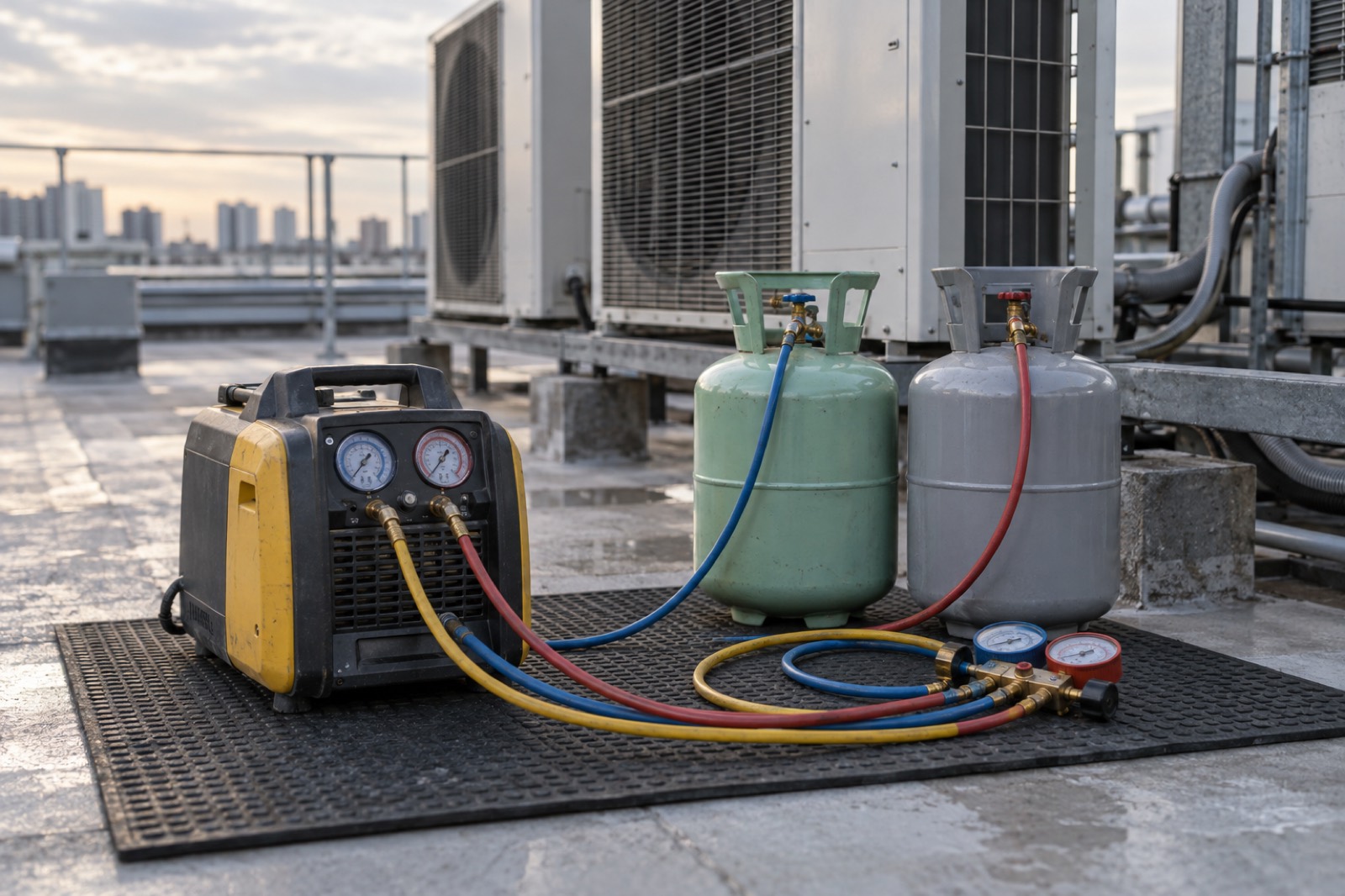
The volume lever. The statutory HFC phase-down under the AIM Act (40 CFR Part 84 Subpart A) cuts hydrofluorocarbon supply against a baseline, with a 40% reduction effective in 2024 stepping toward roughly an 85% reduction by 2036 (EPA, per 40 CFR Part 84). As supply tightens, high-GWP equipment has to be serviced, retrofitted or replaced, which drives retrofit volume. The D.C. Circuit upheld EPA’s authority on August 1 2025 in IGas Holdings v. EPA, and the Supreme Court denied certiorari on June 24 2026 in Choice Refrigerants v. EPA, No. 25-1079. The cap stands.
The install lever. The Technology Transitions program (40 CFR Part 84 Subpart B) sets GWP limits on new equipment, which governs what gets installed. A reconsideration rule published May 26 2026 relaxed near-term limits, raising the interim GWP ceiling to 1,400 for supermarket, remote-condensing and cold-storage systems (per EPA rule text). The stricter limits of 150 and 300 are scheduled to return on January 1 2032 (per Holland & Knight’s May 2026 analysis of the finalized changes).
For a seller, that means a long retrofit runway and real demand for CO2 skills, but a buyer will still ask what your recurring base looks like after the retrofit wave passes.
What lowers the price of a refrigeration contractor
- Install backlog presented as recurring revenue. Buyers rebuild the revenue split themselves, and a late surprise costs trust as well as price.
- Agreements without escalators. Refrigerant costs have been volatile through the phase-down, so locked pricing reads as margin erosion.
- Handshake grocery accounts. A decade-long relationship with no current written agreement gets modeled as at-will revenue.
- Missing compliance records. Gaps in Section 608 certification files, leak-inspection logs or refrigerant tracking read as regulatory risk. For HFCs, 40 CFR Part 84 Subpart C sets a 15 lb charge threshold for leak repair, effective January 1 2026 (per EPA rule text).
- The owner as the only rack expert. Expect a longer transition and more of the price held back or paid as an earnout.
- A few chains as most of the revenue. Losing one anchor account can reset the economics, and buyers price that risk.
- Growth that is mostly one-time retrofits. Conversion projects carry the same discount as any project work.
- Unprepared California sites. New stationary systems over 50 lb of charge in California had to use refrigerant below 150 GWP from January 1 2022 under CARB rules (CARB as origin, per Copeland and AGAS), about a decade ahead of the federal schedule. Multi-site buyers check this.
Curious what your refrigeration company would sell for?
A confidential call gives you a realistic valuation range and tells you which buyers would compete for your business. No obligation, no pressure to sell.
How a confidential sale works with us
The process is private and controlled. Nothing is listed publicly, and you decide at every step whether to go further.
- First call. We learn about your company, goals and timing, and you ask anything about the process and our fees.
- A buyer’s-eye read of value. We split service from install revenue, grade the contract book, map concentration and review the technician bench the way an acquirer will, and tell you which buyer types fit.
- Preparation. Normalized financials, the covered-site list, written agreements, Section 608 records, leak-inspection logs and after-hours call data go into a clean data room. Terms of our engagement are agreed in writing before any work starts.
- Confidential outreach. We approach qualified buyers from our network of 500+ private equity firms, family offices, search funders and strategic acquirers with an anonymous profile. Your name is shared only after a buyer signs a non-disclosure agreement and you approve.
- Offers and letter of intent. We help you compare price, cash at close, rollover equity, earnouts and transition terms, not just the headline number.
- Diligence and closing. We manage buyer requests and work with your attorney and accountant through closing.
No fee to you on buy-side introductions; sell-side mandates are paid on success at closing. For the general picture of how we work with owners in every industry, see our sell your business overview.
How to prepare in the 12 to 24 months before a sale
The preparation moves with the best return for a refrigeration contractor:
- Convert time-and-material regulars into written PM agreements. Each one turns one-off revenue into recurring revenue.
- Add refrigerant and labor escalators at the next renewal. Margin protection is a valuation argument, not just a P&L one.
- Build a second technical leader. A service manager who can commission racks without you reduces the key-person discount.
- Document the emergency operation. On-call rotation, response-time logs against your written commitments and alarm-monitoring contracts belong in the data room.
- Put natural refrigerant credentials on paper. Factory training certificates and short CO2 project case studies with system specs and reference contacts.
- Spread the customer book. Cold storage and food processing growth reduces dependence on retail grocery.
Broker or M&A advisor: which fits a commercial refrigeration sale
Both can be right. A business broker usually fits a small owner-operated shop priced on seller’s discretionary earnings and sold to an individual buyer, often through a listing. An M&A advisor usually fits a company with a management layer, a service agreement book and several institutional buyers who could compete for it, where the job is a confidential process and negotiating structure as well as price.
Whichever you pick, interview at least two firms, ask how they find buyers for refrigeration contractors, and read the exclusivity and tail terms closely.
Thinking About Selling? Let’s Talk.
No fee to you on buy-side introductions; sell-side mandates are paid on success at closing. You leave knowing what your commercial refrigeration business is worth, who would compete to buy it, and whether now is the right time.

About the Author
Christoph Totter is the founder of CT Acquisitions, an M&A advisory firm working both sides of the table, headquartered in Sheridan, Wyoming. We work directly with 500+ active buyers: private equity firms, family offices, search funders and strategic acquirers. No fee to you on buy-side introductions; sell-side mandates are paid on success at closing. Connect on LinkedIn · Get in touch
Frequently asked questions
How do I sell my commercial refrigeration business without my staff or customers finding out?
Start with a confidential conversation, not a public listing. We prepare an anonymous profile, approach qualified buyers from our network of 500+ private equity firms, family offices, search funders and strategic acquirers, and share your company name only after a buyer signs a non-disclosure agreement and you approve. Employees and customers hear about it when you decide, usually after a deal is signed.
What is a commercial refrigeration business worth in 2026?
There is no published refrigeration-only index, so buyers borrow HVAC-R benchmarks. BizBuySell reports half of comparable HVAC-R businesses sold at 1.9x to 3.3x SDE. Peak Business Valuation reports 3.40x to 7.80x EBITDA across HVAC companies, and First Page Sage reads service-led commercial operators at 5.5x to 7.8x EBITDA. Contract mix, rack and CO2 capability, technician depth and customer concentration decide where you land.
Who buys commercial refrigeration contractors?
Coolsys is the one dedicated national commercial refrigeration and HVAC services platform, owned by Ares Management since March 21 2019 per coolsys.com, and it includes the former Source Refrigeration. Beyond Coolsys, buyers are mechanical and facility-services platforms that carry refrigeration as one capability, such as EMCOR and Service Logic, which Bain Capital acquired from Leonard Green in a deal that closed December 16 2025 per leonardgreen.com.
Does the HFC phase-down raise or lower my sale price?
It helps a contractor with a real capability story. The statutory phase-down under the AIM Act cuts HFC supply on a fixed schedule and still stands after the Supreme Court denied certiorari on June 24 2026 in Choice Refrigerants v. EPA, which keeps retrofit and replacement work coming. The separate Technology Transitions install rule was relaxed by a reconsideration rule published May 26 2026, so buyers still value recurring service above one-time conversion projects.
Will buyers check our EPA Section 608 certifications and refrigerant records?
Yes. Clean Air Act Section 608 requires certification for anyone servicing equipment that contains regulated refrigerants, and buyers verify the record for every technician on the roster. They also review leak-inspection logs and refrigerant tracking. Gaps read as regulatory risk and as a sign of weak record-keeping, so organize these files before you go to market.
How does CT Acquisitions get paid?
It depends on the mandate. No fee to you on buy-side introductions; sell-side mandates are paid on success at closing. You see the terms in writing before any work starts.
Related Resources