
Sell My Business in 2026: The Comprehensive Owner Playbook From Decision to Close
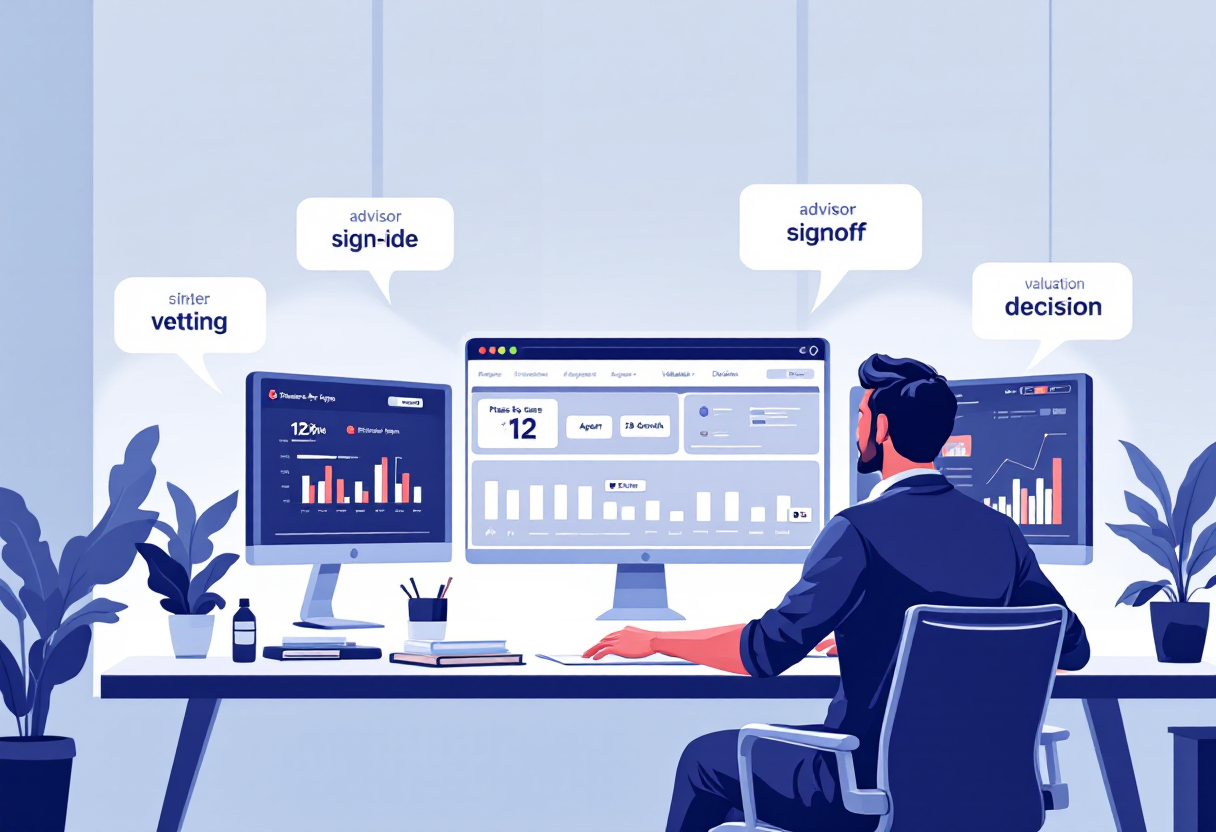
If you are a founder typing “sell my business” into Google at 11pm on a Tuesday, this playbook is the end-to-end map you actually need. It covers the full 12 to 18 month arc from the first private decision to the signed wire confirmation and the post-close transition. The market in 2026 is the deepest founder-friendly window we have seen in two decades, and the owners who treat the sale as a 10 month structured project, not a 30 day reactive scramble, are the ones who clear seven and eight figure outcomes without giving away a single basis point of value on the way out.
The numbers behind this guide come from the most recent IBBA and M&A Source Market Pulse Q4 2025 survey of 350 business brokers and M&A advisors, the BizBuySell Q1 2026 Insight Report, the Exit Planning Institute 2025 State of Owner Readiness, and current published guidance from the U.S. Small Business Administration, the FTC Bureau of Consumer Protection, and the AICPA Accredited in Business Valuation program. Where a number is cited, the source is linked inline so you can verify it yourself.
Key Takeaways
- A properly run sell side process is a structured 10 phase project, not a listing.
- The decision phase looks soft from the outside but it is the most decisive phase of the entire process.
- Preparation is the phase where you make the business legible to a third party so you can sell your business at full value.
- Valuation work runs in parallel with the back half of preparation.
- Advisor selection is where most attempts to sell your business either become structured competitive auctions or quiet failed listings.
Sell My Business: The Comprehensive 12-Month Roadmap
A properly run sell side process is a structured 10 phase project, not a listing. The headline timeline that 90 percent of founder owned deals follow looks like this: months 1 to 2 are the decision phase, months 3 to 5 are preparation and clean up, months 4 to 5 overlap with valuation work, month 6 is advisor selection and engagement, months 7 to 8 are confidential marketing, months 8.
A properly run sell side process is a structured 10 phase project, not a listing. The headline timeline that 90 percent of founder owned deals follow looks like this: months 1 to 2 are the decision phase, months 3 to 5 are preparation and clean up, months 4 to 5 overlap with valuation work, month 6 is advisor selection and engagement, months 7 to 8 are confidential marketing, months 8 to 9 are buyer screening and qualified introductions, months 9 to 10 are letters of intent and negotiation, months 10 to 11 are due diligence, month 12 is closing, and months 12 to 18 are the post close transition. The BizBuySell Q1 2026 report showed 2,345 small businesses traded in the quarter with total enterprise value of $2 billion, which gives you a sense of how active the lower end of the market is even with current SBA lending friction.
If you compress that 12 month window to four months, you give up an average of 15 to 25 percent of enterprise value, mostly through weak buyer competition and rushed due diligence concessions. If you stretch it past 18 months, buyer attention starts to drift to fresher opportunities and stale process risk becomes a real factor. Twelve months is the sweet spot. If you are looking for a tighter framework to confirm whether this is the right moment to sell your business at all, our companion guide on deciding whether to sell your business now walks through the personal and financial readiness checks that should come before any of this.
The reason the right roadmap matters so much is captured in a single data point from the Exit Planning Institute: 70 to 80 percent of privately held companies that go to market never sell. For sub $500K EBITDA businesses that failure rate climbs to 85 to 90 percent. For businesses over $3M EBITDA it drops to 40 to 50 percent. The pattern is clear. Preparation, scale, and process discipline are the variables that separate closed deals from stalled listings.
Phase 1: The Decision (Months 1-2)
The decision phase looks soft from the outside but it is the most decisive phase of the entire process. Owners who skip it almost always either pull the deal mid process or accept a structure they regret 18 months later. The work splits into three pieces: personal readiness, financial readiness, and business readiness. On personal readiness, the Pinnacle Equity Solutions Business Exit Readiness Index assessment of 1,033 owners found that.
The decision phase looks soft from the outside but it is the most decisive phase of the entire process. Owners who skip it almost always either pull the deal mid process or accept a structure they regret 18 months later. The work splits into three pieces: personal readiness, financial readiness, and business readiness.
On personal readiness, the Pinnacle Equity Solutions Business Exit Readiness Index assessment of 1,033 owners found that 85 percent of owners considering an exit have low mental readiness. That number is not a soft metric. Owners with low mental readiness terminate deals at almost three times the rate of mentally ready owners, usually somewhere between letter of intent and closing. The fix is a written answer to one question: what does day one after you sell your business look like, in hours and activities, and what does day 365 look like. If you cannot write those two paragraphs, you are not ready to sign an engagement letter to sell your business.
On financial readiness, the test is simple. Pull your current personal financial statement, project the after tax proceeds when you sell your business at a realistic multiple, and run your post sale annual spend forward 25 years at three percent inflation. If the after tax check funds your remaining life with a comfortable margin, you are financially ready. If it does not, the work is either growing the business another two to three years to widen the gap or restructuring your post sale lifestyle expectations. Doing the math first prevents the worst negotiating mistake in sell side M&A, which is needing the deal more than the buyer does.
On business readiness, run a quick eight point check pulled from John Warrillow’s Built to Sell framework: financial performance, growth potential, switzerland structure (customer, supplier, and employee concentration), valuation teeter totter (working capital intensity), recurring revenue, monopoly of control, customer satisfaction, and hub and spoke (owner dependence). Warrillow’s Value Builder data shows businesses that score 80 or higher on the eight driver assessment receive offers 71 percent higher than the average business in the same industry and revenue band. That delta is the entire case for the preparation phase.
Phase 2: Preparation and Clean-Up (Months 3-5)
Preparation is the phase where you make the business legible to a third party so you can sell your business at full value. Buyers are buying a future cash flow stream. Anything that obscures that cash flow, weakens the case for it, or makes it harder to transfer is value left on the table. The five workstreams here run in parallel. First, financial statement clean up. Move to accrual basis.
Preparation is the phase where you make the business legible to a third party so you can sell your business at full value. Buyers are buying a future cash flow stream. Anything that obscures that cash flow, weakens the case for it, or makes it harder to transfer is value left on the table. The five workstreams here run in parallel.
First, financial statement clean up. Move to accrual basis if you are on cash, complete two to three years of reviewed financials (preferably by a CPA who has done sell side work in your sector), and build a quality of earnings ready add back schedule. The add back schedule documents every owner specific, non recurring, or non operating expense that a buyer will normalize. Typical items include owner compensation above market, owner family payroll, personal vehicle and travel, one time legal or insurance settlements, and discontinued product lines. Document each add back with a source, an amount, and a one line rationale. Buyers and their quality of earnings firms will adjust your add backs down by an average of 12 to 18 percent in due diligence, so build the schedule expecting that haircut.
Second, operational documentation. Build standard operating procedures for the top 20 recurring processes, document the org chart, and write a one page role description for every position including your own. Owners who can hand a buyer a binder that explains how the business actually runs without them save four to six weeks in due diligence.
Third, contract and corporate hygiene. Locate, organize, and review every customer contract, supplier agreement, lease, licensing arrangement, employment contract, and IP assignment. Resolve any contracts with change of control clauses that would require buyer approval (these are common in supplier and customer contracts and they kill deals when discovered late). Confirm corporate records are current including minutes, stock ledger, capitalization table, and any outstanding board or shareholder resolutions.
Fourth, key employee retention. Identify the three to five people whose departure within six months of close would materially damage the business. Put stay bonus agreements in place tied to the closing date and a 12 month post close service period. Standard stay bonus pool is two to five percent of enterprise value, allocated based on criticality. Buyers will discount enterprise value by significantly more than that if key people are flight risks.
Fifth, growth narrative. Document the realistic two to three year growth case. Buyers do not pay for hope but they do pay for credible, specific, near term growth that requires capital they can provide. A documented pipeline of 50 named target customers, three product extensions costed and roadmapped, or two pending channel partnerships is worth half a turn of EBITDA on the multiple.
Phase 3: Valuation and Pricing (Months 4-5)
Valuation work runs in parallel with the back half of preparation. The goal when you sell your business is a defensible asking price and a defensible walk away price, supported by a third party valuation that buyers and their financing partners will accept. According to the IBBA and M&A Source Market Pulse Q4 2025 , Main Street deals in the $1M to $2M SDE band are trading at 3.3x to.
Valuation work runs in parallel with the back half of preparation. The goal when you sell your business is a defensible asking price and a defensible walk away price, supported by a third party valuation that buyers and their financing partners will accept. According to the IBBA and M&A Source Market Pulse Q4 2025, Main Street deals in the $1M to $2M SDE band are trading at 3.3x to 4.0x multiples, and Lower Middle Market deals at $2M to $50M EBITDA are trading at 5.3x to 6.5x, the highest band in the past decade.
The current 2026 cross section, pulled from Diamond Capital Advisors and CapitalPad lower middle market data, shows entry multiples of 6x to 8x EBITDA for sub $100M platforms, climbing to 9.8x for $100M to $500M platforms. That 2.8 turn spread between sub $100M and $100M to $500M is the structural reason private equity is so aggressive about add ons in the lower middle market right now.
Three valuation approaches matter for owner held businesses. The income approach (discounted cash flow or capitalized earnings) builds the value from projected cash flows. The market approach uses comparable transaction multiples on EBITDA, SDE, or revenue. The asset approach sums the fair market value of identifiable assets less liabilities, mostly used for asset heavy or distressed situations. For a healthy operating business, the market approach is usually the lead, the income approach is the cross check, and the asset approach is a floor.
Hire a credentialed valuation professional, not a generalist CPA. The three credentials buyers and lenders treat as authoritative are ABV from the AICPA (CPA only, requires 4,500 hours of valuation experience), ASA from the American Society of Appraisers (USPAP compliant, strongest in litigation contexts), and CVA from NACVA (broader accessibility, NCCA and ANSI dual accredited). For deeper detail on which credential fits your situation see our guides on when to hire a business valuation expert and the underlying process for determining business value.
Pricing strategy matters as much as the valuation itself. The asking price sits 10 to 20 percent above target value, the target value is what you expect the market to clear at, and the walk away price is the minimum acceptable structure including consideration mix. For practical pricing tactics including how to use comp signals, see our companion guide on how to price a business for sale.
Phase 4: Choose the Right Advisor Type (Month 6)
Advisor selection is where most attempts to sell your business either become structured competitive auctions or quiet failed listings. The three advisor categories serve different deal sizes and structures, and matching the wrong category to your deal is the single most expensive mistake in this phase. Business brokers handle Main Street deals, typically under $2M in enterprise value, often listed on public marketplaces like BizBuySell. Fee structure is usually a.
Advisor selection is where most attempts to sell your business either become structured competitive auctions or quiet failed listings. The three advisor categories serve different deal sizes and structures, and matching the wrong category to your deal is the single most expensive mistake in this phase.
Business brokers handle Main Street deals, typically under $2M in enterprise value, often listed on public marketplaces like BizBuySell. Fee structure is usually a success fee of 8 to 12 percent of enterprise value, sometimes with a small upfront listing fee. The broker model works best for owner operator businesses where the buyer pool is individual operators or smaller search funds using SBA financing.
M&A advisors and lower middle market investment banks handle deals from roughly $5M to $100M in enterprise value. Fee structure is a monthly retainer ($10K to $25K) plus a Lehman or modified Lehman success fee, often with a tail period. The model is a structured confidential auction with a curated buyer list of 50 to 200 strategics, private equity platforms, and family offices. Process discipline, financial modeling depth, and buyer network depth are the three variables that distinguish good advisors here.
Investment banks proper handle deals above $100M, with formal sell side processes, debt and equity placement capability, and fairness opinion services for the larger end. Below $50M enterprise value, a true investment bank is usually overpriced for the work.
For the vetting framework, see our deep dive on selecting an agent to sell your business and the operational checklist in finding a broker to sell your business. The shorthand: ask for the last 10 closed deals with sector, size, multiple, and reference contact, ask how many sell side mandates they are currently running (more than five at one time per banker is a red flag), and ask for a written process plan with named buyer categories before you sign.
Phase 5: Marketing the Business (Months 7-8)
Marketing to sell your business is confidentiality first, breadth second. The two core documents are the teaser (one to two pages, no company name, financial highlights, sector positioning, and reason for sale) and the confidential information memorandum or CIM (40 to 80 pages, full company narrative, financials, market position, growth plan, and management bios). The teaser goes out under no obligation, the CIM only goes out after a buyer signs.
Marketing to sell your business is confidentiality first, breadth second. The two core documents are the teaser (one to two pages, no company name, financial highlights, sector positioning, and reason for sale) and the confidential information memorandum or CIM (40 to 80 pages, full company narrative, financials, market position, growth plan, and management bios). The teaser goes out under no obligation, the CIM only goes out after a buyer signs a confidentiality agreement.
Buyer list construction is the silent driver of outcome. A well constructed sell side buyer list segments into three categories: strategics (competitors, customers, suppliers, and adjacent operators who would pay a synergy premium), financial sponsors (private equity platforms with a thesis in your sector and the right check size, plus their existing platform companies for add on consideration), and family offices and independent sponsors (longer hold horizons, often willing to keep more existing management). A strong process touches 80 to 200 buyers across the three categories. A weak process touches 10 to 30 buyers and calls it a day.
Confidentiality discipline is non negotiable. Employees, customers, suppliers, and competitors should not know the company is for sale until the process requires them to know. Code names are standard. Document storage is in a secured virtual data room with watermarking and access logs. Outbound communication runs through the advisor, not the owner, so that signaling stays controlled.
Timeline discipline matters too. The marketing phase is typically four to eight weeks from CIM release to indications of interest. Letting it drag past 10 weeks signals weak buyer interest and gives existing bidders permission to reset their bids. The Q1 2026 BizBuySell data showed the service sector, which is 42 percent of all small business transactions, saw median sale prices climb 13 percent year over year on flat volume, confirming buyers are paying up for quality but ignoring weaker assets.
Phase 6: Buyer Screening and NDAs (Months 8-9)
Buyer screening turns a long list of teaser recipients into a short list of qualified bidders who can actually close when you sell your business. The screening filter has four pieces: financial capacity (proof of equity capital available plus debt capacity), sector experience (prior deals or operating experience in the sector), process credibility (history of closing, references from prior sellers), and strategic fit (clear thesis for why this asset specifically).
Buyer screening turns a long list of teaser recipients into a short list of qualified bidders who can actually close when you sell your business. The screening filter has four pieces: financial capacity (proof of equity capital available plus debt capacity), sector experience (prior deals or operating experience in the sector), process credibility (history of closing, references from prior sellers), and strategic fit (clear thesis for why this asset specifically).
The confidentiality agreement is the gatekeeper to the CIM. Standard sell side NDAs include a two year term, non solicitation of customers and employees, non circumvention, and a specific use clause limiting the information to evaluation of this transaction. Sophisticated buyers will negotiate the NDA on the margins (often pushing for a one year term and a tighter non solicitation), but the core architecture is non negotiable.
After NDA execution and CIM delivery, the next gate is the indication of interest or IOI. The IOI is a non binding written expression of interest at a stated valuation range or specific number, with a transaction structure (stock vs. asset, cash mix, financing source), assumed working capital target, expected timeline, and known diligence requirements. A strong process generates eight to 15 IOIs from the buyer list. A weak process generates two to four.
From the IOI shortlist, the top three to six bidders are invited to management meetings, which are structured presentations and Q&A sessions with the owner and key leadership. Management meeting performance is the single biggest variable in moving a buyer from IOI to LOI at the top of their range. Owners who rehearse, present a confident growth narrative, and answer hard questions directly almost always extract higher LOIs than owners who freelance the meeting.
Phase 7: Letter of Intent and Negotiation (Months 9-10)
The letter of intent is the document that converts a buyer interest into a working framework for the definitive agreement. The LOI is mostly non binding (with narrow binding sections on exclusivity, confidentiality, and expense reimbursement), but the economic and structural points laid out in the LOI almost never improve for the seller in the definitive agreement. Negotiating the LOI is where the real money moves. The 10 LOI terms.
The letter of intent is the document that converts a buyer interest into a working framework for the definitive agreement. The LOI is mostly non binding (with narrow binding sections on exclusivity, confidentiality, and expense reimbursement), but the economic and structural points laid out in the LOI almost never improve for the seller in the definitive agreement. Negotiating the LOI is where the real money moves.
The 10 LOI terms that matter most: purchase price (the headline number), consideration mix (cash at close, seller note, rollover equity, earnout), working capital target (the peg that prevents net working capital arbitrage at close), exclusivity period (typically 60 to 90 days, do not give more than 90), escrow and indemnification structure (cap, basket, and duration), representation and warranty insurance (now standard above $10M EV), employment and non compete terms for the seller, transaction expense allocation, key conditions to closing, and timeline. For a template and walkthrough on what an LOI should and should not include, see our guide on the letter of intent to sell a business sample.
According to IBBA Market Pulse Q4 2025, sellers averaged between 76 and 89 percent cash at close in Q4 2025, meaning most sellers walked away with the bulk of their deal value upfront. That cash at close ratio is the single most important deal economic outside of the headline price. Pushing it from 70 percent to 85 percent on a $10M deal moves $1.5M from earnout uncertainty to certain cash.
Negotiation discipline matters as much as the terms themselves. Run the LOI negotiation through your advisor and your transaction attorney, not directly with the buyer principal. Maintain optionality by keeping the number two and three bidders informally warm until the LOI is signed (you cannot formally engage them once exclusivity starts). Never sign an LOI under time pressure or with material economic blanks. The LOI sets the gravity for the entire deal.
Phase 8: Due Diligence (Months 10-11)
Due diligence is the buyer side investigation phase that follows LOI execution when you sell your business. Diligence covers six workstreams typically running in parallel: financial (quality of earnings, working capital analysis, debt and debt like items), tax (federal, state, sales and use, payroll, prior audit history), legal (contracts, IP, litigation, corporate records, employment matters), commercial (customer concentration, pipeline, churn, competitive position), operational (systems, supply chain, capacity), and HR and.
Due diligence is the buyer side investigation phase that follows LOI execution when you sell your business. Diligence covers six workstreams typically running in parallel: financial (quality of earnings, working capital analysis, debt and debt like items), tax (federal, state, sales and use, payroll, prior audit history), legal (contracts, IP, litigation, corporate records, employment matters), commercial (customer concentration, pipeline, churn, competitive position), operational (systems, supply chain, capacity), and HR and benefits (key employee agreements, benefit plan compliance, ERISA, retention liability).
A typical diligence period runs 45 to 75 days for a healthy deal. Surprises that surface during diligence either lead to a price reduction (called a re trade), a structure change (more escrow, more earnout, more seller note), or a deal break. The most common diligence re trade triggers are quality of earnings adjustments to EBITDA (especially around add backs the buyer rejects), customer concentration risk that was not disclosed in the CIM, tax exposure (sales and use tax nexus, worker classification, R&D credit aggressiveness), and undocumented related party transactions. The fix is rigorous pre marketing preparation, which is why phase 2 matters so much.
For a working list of every diligence document a buyer will request when you sell your business, see our due diligence checklist for mergers and acquisitions. Running a sell side quality of earnings analysis before going to market (sometimes called a vendor QoE) is becoming standard for deals above $5M enterprise value. The sell side QoE catches the issues buyers would otherwise discover and use to re trade, and lets the seller address them on a controlled timeline.
The other critical due diligence stream is the buyer’s financing. SBA backed deals require the lender to complete their own underwriting in parallel with diligence, which adds 30 to 45 days. Private equity backed deals require the platform’s debt provider to complete their own financing diligence. Both can be sources of last minute deal risk if not actively managed.
Phase 9: Closing the Deal (Month 12)
Closing converts the signed purchase agreement to sell your business into a funded transaction. The closing checklist runs to 80 to 150 line items for a typical lower middle market deal. The major workstreams: final purchase agreement execution, escrow funding, working capital true up, debt payoff at close, equity transfer (stock deal) or asset bill of sale (asset deal), IP and contract assignments, regulatory consents and notices, employee transition documentation.
Closing converts the signed purchase agreement to sell your business into a funded transaction. The closing checklist runs to 80 to 150 line items for a typical lower middle market deal. The major workstreams: final purchase agreement execution, escrow funding, working capital true up, debt payoff at close, equity transfer (stock deal) or asset bill of sale (asset deal), IP and contract assignments, regulatory consents and notices, employee transition documentation, key vendor and customer notifications, and the closing day wire.
The two structural choices that matter most for the seller at closing are stock deal vs. asset deal, and the working capital peg. Stock deals transfer the entire legal entity to the buyer with all its assets and historical liabilities. They are simpler and usually cleaner for the seller, but buyers prefer asset deals because they get a stepped up tax basis and avoid pre closing liabilities. The premium a buyer will pay for a stock deal vs. an asset deal averages five to 10 percent of enterprise value, which is roughly the present value of the buyer’s lost tax shield from forgoing the step up.
The working capital peg is the target level of net working capital the business must have at closing, typically set at a normalized historical average (often the trailing 12 month average). If actual working capital at close is below the peg, the buyer reduces the purchase price dollar for dollar. If it is above the peg, the seller gets a true up. Manipulating the peg in your favor by a few hundred thousand dollars is among the highest impact negotiation points in the entire deal.
The closing day itself is mostly mechanical. Wires move in a specific sequence (debt payoff, fees and expenses, seller proceeds), final signatures are exchanged, and the buyer takes operational control. A well prepared deal closes in a single business day. A poorly prepared deal can stretch to three or four days with rolling wire delays and last minute document fixes.
Phase 10: Post-Close Transition (Months 12-18)
The post close transition is the period after you sell your business where the seller is still helping the buyer take operational control. For most sub $50M deals, the seller stays on for six to 12 months in a defined transition role. The structure of that transition is documented in a transition services agreement and, if the seller continues to draw a salary, an employment agreement. Three economic mechanisms typically.
The post close transition is the period after you sell your business where the seller is still helping the buyer take operational control. For most sub $50M deals, the seller stays on for six to 12 months in a defined transition role. The structure of that transition is documented in a transition services agreement and, if the seller continues to draw a salary, an employment agreement.
Three economic mechanisms typically run through the transition period. Earnouts pay the seller additional consideration based on the business hitting defined performance milestones, often two to three years of EBITDA targets. Earnouts are the most contested post close mechanism and the source of the bulk of post close litigation, so the metrics, the accounting treatment, and the buyer’s covenants to run the business consistently with past practice all matter enormously. Seller notes are deferred consideration paid by the buyer to the seller over time, usually three to seven years at a market interest rate. Rollover equity is when the seller keeps a minority stake in the post close business, typically 10 to 30 percent, which monetizes again in the buyer’s next exit.
Beyond the economics, the operational transition matters for the residual value. Customer transitions, key employee transitions, supplier transitions, and systems migrations all happen in the first 90 days. Sellers who stay engaged and supportive during this window protect their earnout and seller note economics and preserve the rollover equity value. Sellers who check out emotionally on day one often end up in disputes that consume two to three years of the next phase of their life.
The personal transition matters as much as the operational one. The same Pinnacle Equity Solutions data that showed 85 percent of owners have low pre exit mental readiness also shows that owners who plan their post exit life specifically (new operating roles, board work, philanthropy, sabbatical structure) report dramatically higher satisfaction at 12 and 24 months post close. Do the post exit planning before close, not after.
Five Common “Sell My Business” Mistakes That Kill Deals
The five most common mistakes that kill sell my business processes, in rough order of frequency: first, going to market unprepared. Sellers who skip the financial clean up, operational documentation, and add back schedule lose 15 to 25 percent of enterprise value in due diligence re trades. The math on a 60 day preparation phase is the highest ROI work in the entire process. Second, hiring the wrong advisor category.
The five most common mistakes that kill sell my business processes, in rough order of frequency: first, going to market unprepared. Sellers who skip the financial clean up, operational documentation, and add back schedule lose 15 to 25 percent of enterprise value in due diligence re trades. The math on a 60 day preparation phase is the highest ROI work in the entire process.
Second, hiring the wrong advisor category. A business broker running a $15M EBITDA deal usually clears 4x when an M&A advisor would have cleared 6.5x. A bulge bracket investment bank running a $4M EBITDA deal usually loses interest mid process. Match the advisor to the deal size and structure.
Third, signing the LOI under exclusivity without competitive tension. Once exclusivity starts, all the seller’s negotiating gravity disappears. Buyers know it. The fix is structured competition through the LOI stage and only granting exclusivity to a bidder whose terms you would accept.
Fourth, ignoring tax planning until the LOI is signed. The tax structure of the deal (asset vs. stock, allocation, installment treatment under IRC Section 453, QSBS treatment under Section 1202) drives 15 to 30 percent of after tax proceeds. Tax planning starts at the engagement letter, not the purchase agreement.
Fifth, conflating the headline number with the deal value. A $20M headline price with 50 percent in a five year earnout, a $3M working capital adjustment, a $2M escrow holdback for 24 months, and a personal guarantee on a seller note is not a $20M deal. The cash at close, the structure of the contingent consideration, and the residual liability exposure all reduce the present value of the headline. Calculate the after tax present value of the actual deal structure, not the headline.
The Tax Impact Most Owners Underestimate
Tax structure is the largest single variable in after tax outcome when you sell your business, often worth more than another half turn of EBITDA on the multiple. The five tax planning levers that matter most for owner held deals: Asset vs. stock. Asset deals generate ordinary income treatment on a portion of the price (depreciation recapture, allocation to inventory and receivables) while stock deals generate capital gains treatment on.
Tax structure is the largest single variable in after tax outcome when you sell your business, often worth more than another half turn of EBITDA on the multiple. The five tax planning levers that matter most for owner held deals:
Asset vs. stock. Asset deals generate ordinary income treatment on a portion of the price (depreciation recapture, allocation to inventory and receivables) while stock deals generate capital gains treatment on the entire proceeds. The differential can be eight to 15 percentage points of effective tax rate. Buyers will pay a premium for asset treatment, but if the gap exceeds the buyer’s tax shield value, push for stock.
Installment sale treatment under IRC Section 453 spreads gain recognition over the years payments are received. For sellers taking a seller note or earnout, installment treatment can defer significant tax to lower income years, particularly useful for sellers who plan to relocate to lower tax states post close.
Section 1202 QSBS exclusion. Per U.S. Bank guidance on Section 1202, qualified small business stock acquired after July 4, 2025 can exclude up to $15M of capital gain from federal tax. QSBS acquired on or before that date is capped at $10M of exclusion. The eligibility requirements are specific (C corp, gross assets under $50M at issuance, five year holding period, qualified trade or business) but for founders whose entity was structured correctly years ago, this can wipe out federal tax on the bulk of the gain.
State residency. Selling a business while you are a resident of a high tax state (California, New York, New Jersey, Oregon) versus a no income tax state (Florida, Texas, Tennessee, Nevada, Washington) is worth eight to 13 percentage points of state tax. Moving residency requires real planning (240 plus days in the new state, severing prior state contacts, often 24 plus months of clean record before the sale) and should be coordinated with tax counsel well ahead of the LOI.
Charitable remainder trusts and grantor retained annuity trusts. For sellers with charitable intent or estate planning goals, contributing pre sale equity to a CRT or GRAT can defer or eliminate gain on the contributed portion. These structures must be in place before the LOI signature to satisfy step transaction doctrine. The RSM US guidance on QSBS covers the interaction between Section 1202 and these structures in detail.
Engage transaction tax counsel and a wealth advisor at the engagement letter stage. Trying to optimize tax after the LOI is signed is usually too late.
SBA 7(a) Buyer Reality and How It Affects Your Sale
SBA 7(a) financing is the dominant capital source for individual buyers and search funders in the sub $5M enterprise value band, and that buyer pool drives how you sell your business if you sit in that revenue range. Understanding how SBA financing works on the buyer side is critical because it directly shapes your buyer pool, your deal structure, and your time to close. The current 2026 SBA 7(a) framework.
SBA 7(a) financing is the dominant capital source for individual buyers and search funders in the sub $5M enterprise value band, and that buyer pool drives how you sell your business if you sit in that revenue range. Understanding how SBA financing works on the buyer side is critical because it directly shapes your buyer pool, your deal structure, and your time to close.
The current 2026 SBA 7(a) framework, per SBA published guidelines, allows financing up to roughly 90 percent of total project cost. The buyer provides at least a 10 percent equity injection, half of which can come from a seller held note on full standby for the life of the SBA loan. The most consequential 2026 update is the SBA doubling the cumulative 7(a) and 504 loan limit to $10 million effective July 4, 2026. That structural change roughly doubles the buyer pool for businesses in the $5M to $10M enterprise value band.
The buyer qualification bar is meaningful. Per the BizBuySell Q1 2026 Insight Report, 45 percent of business brokers cited current lending conditions as making deals harder to close. Since March 2026, new SBA citizenship rules require all company owners seeking 7(a) and 504 loans to be U.S. citizens, which excludes green card holders and foreign nationals. Most lenders also require personal credit scores of 680 plus, relevant management or industry experience, and a debt service coverage ratio of 1.25x or better.
For sellers, the practical implications are three. First, SBA backed deals typically take 60 to 120 days from LOI to close versus 45 to 75 for cash and PE backed deals. Plan timeline accordingly. Second, SBA backed buyers will almost always ask for a seller note on standby, which means a portion of your proceeds is deferred. Third, the SBA lender’s underwriting becomes a third party with veto power over the deal, so a clean financial package and a credible buyer matter more than usual. For a deeper look at the SBA mechanics from the buyer side, see our guide on the SBA 7(a) loan to buy a business.
When to Walk Away From a Deal Mid-Process
Walking away from a deal to sell your business mid process is sometimes the right move and almost always emotionally difficult. The four scenarios where walking away protects long term value: First, when due diligence reveals a buyer is materially less qualified than they represented. A buyer who has never closed a transaction of this size, whose financing is significantly weaker than represented in the IOI, or whose operating thesis.
Walking away from a deal to sell your business mid process is sometimes the right move and almost always emotionally difficult. The four scenarios where walking away protects long term value:
First, when due diligence reveals a buyer is materially less qualified than they represented. A buyer who has never closed a transaction of this size, whose financing is significantly weaker than represented in the IOI, or whose operating thesis turns out to be incompatible with the business is a low probability close and a high probability re trade. Catch the signals in week two of diligence, not week eight.
Second, when the buyer attempts a re trade not supported by genuine diligence findings. Some buyers, especially less sophisticated ones, treat the post LOI period as a second negotiation. If a re trade attempt is not backed by a specific, verifiable diligence finding, the answer is to firmly reject it and signal willingness to terminate exclusivity. Caving on a soft re trade trains the buyer to ask for more.
Third, when the personal terms become unacceptable. A non compete that prevents you from doing what you actually want to do post close, an employment agreement with conditions that erode your post close autonomy, or a guarantee structure that puts your personal balance sheet at risk are all reasons to walk. Personal terms are often where buyers extract the most value late in the process because sellers are exhausted and emotionally committed.
Fourth, when the market materially changes. A sudden change in your sector, a regulatory shift, or a macro event can change the calculus enough to make a different timing or buyer better. The cost of walking and restarting is real (three to six months and meaningful advisor fees) but it is rarely worse than closing a deal that no longer makes sense.
The discipline of being willing to walk is the structural protection against negotiating from weakness. Sellers who have done the financial readiness work in phase 1 (the post sale spend math) almost always have the ability to walk. Sellers who have not done that work almost always feel like they cannot.
How CT Acquisitions Runs Sell-Side Mandates End-to-End
CT Acquisitions runs sell side mandates for founder owned businesses across the $2M to $50M enterprise value band, with deepest concentration in industrial services, healthcare services, professional services, and specialty distribution. The mandate model is a full process engagement, not a listing service, and the process runs the 10 phase arc described above with active engagement at every phase. The engagement starts with a written deal plan: target buyer categories.
CT Acquisitions runs sell side mandates for founder owned businesses across the $2M to $50M enterprise value band, with deepest concentration in industrial services, healthcare services, professional services, and specialty distribution. The mandate model is a full process engagement, not a listing service, and the process runs the 10 phase arc described above with active engagement at every phase.
The engagement starts with a written deal plan: target buyer categories with named buyers, valuation analysis with multiple methodology cross checks, preparation gaps with a remediation timeline, and a process calendar with specific milestones. The plan goes through internal review and is delivered to the owner before the engagement letter is countersigned.
Process discipline runs through every phase. The preparation phase includes a sell side quality of earnings analysis, a documented add back schedule with source references, a stay bonus framework for key employees, and a growth narrative tied to specific named opportunities. The marketing phase touches 80 to 200 buyers across strategics, financial sponsors, and family offices through a confidential auction. The LOI phase runs structured competition through the IOI and management meeting stages, with multiple LOIs typically in hand before exclusivity is granted.
Post LOI, the diligence and closing phases run with weekly status calls, a centralized data room with access controls, and active management of the buyer’s financing partners. The post close transition is documented in advance, with the seller’s role, time commitment, and exit ramp specified before close.
If you are at the decision phase and want a confidential conversation about whether now is the right time to sell your business, the next step is a 30 minute call. We will walk through the readiness check, the realistic valuation range, and the structural questions that should be answered before you commit to anything.
Sell My Business: Frequently Asked Questions
How long does it take to sell my business in 2026?
A well prepared sell side process runs 12 months from engagement to closing, with another six to 12 months of post close transition. The 12 month window breaks into two months of decision and preparation, three months of clean up and valuation, one month of advisor selection, two months of marketing, two months of LOI and negotiation, two months of due diligence, and one month of closing. Compressed timelines under six months typically cost 15 to 25 percent of enterprise value. Stretched timelines over 18 months invite stale process risk.
What multiple should I expect when I sell my business?
Per the IBBA Market Pulse Q4 2025, Main Street deals in the $1M to $2M SDE band trade at 3.3x to 4.0x SDE. Lower middle market deals at $2M to $50M EBITDA trade at 5.3x to 6.5x EBITDA. Lower middle market data from CapitalPad shows sub $100M platforms averaging 7.0x and $100M to $500M platforms averaging 9.8x. Your specific multiple depends on growth profile, customer concentration, recurring revenue mix, owner dependence, and sector tailwinds.
What does it cost to sell my business?
Total transaction costs for the sell side typically run six to 12 percent of enterprise value, allocated across the M&A advisor or broker (3 to 10 percent on a success fee), transaction attorney ($50K to $300K depending on deal complexity), quality of earnings firm ($35K to $100K), tax advisor ($25K to $75K), wealth and estate planning advisor (variable), and representation and warranty insurance premium if used (2 to 4 percent of policy limit). On a $10M deal, plan for $600K to $1.2M in total transaction costs.
Should I sell my business to a strategic buyer, a private equity firm, or an individual?
The right buyer depends on your priorities. Strategic buyers (competitors, customers, suppliers) usually pay the highest absolute price because they can model synergies but often want to fully integrate, ending the business as an independent operation. Private equity buyers pay strong prices, often keep management in place, and offer rollover equity for a second exit. Individual buyers (often SBA financed) typically pay lower multiples but are most likely to preserve the company’s culture and employee base. A well run process gives you options across all three categories.
Can I sell my business without a broker or advisor?
Technically yes, and a small number of owner to owner transactions do close without advisor involvement, usually with an existing relationship (a long time employee buyout or a known competitor). For most processes, the unrepresented seller typically clears 20 to 35 percent below the multiple a structured process would produce, primarily because of weak buyer competition, limited access to financial sponsors, and structural disadvantage in LOI and definitive agreement negotiation. The advisor fee is usually the highest ROI line item in the transaction cost stack.
What is a quality of earnings analysis and do I need one?
A quality of earnings or QoE analysis is a third party financial diligence report that normalizes EBITDA, validates add backs, and analyzes working capital, revenue concentration, and customer churn. Buyers commission a buy side QoE in due diligence as standard practice. Sellers increasingly commission a sell side or vendor QoE before going to market to surface and fix issues on a controlled timeline. For deals above $5M enterprise value, a sell side QoE is becoming standard and typically pays for itself many times over in prevented re trades.
How much cash will I actually walk away with at closing?
Cash at close depends on the consideration mix. IBBA Q4 2025 data shows sellers averaged 76 to 89 percent cash at close. The remainder typically lives in seller notes (deferred consideration with interest, three to seven year term), earnouts (contingent on post close performance), escrow holdbacks (typically 5 to 15 percent of enterprise value, held 12 to 24 months for indemnification), and rollover equity (a minority stake in the post close business that monetizes at the buyer’s next exit). On a $10M headline deal, plan for $7.5M to $8.5M cash at close.
What happens to my employees when I sell my business?
Employee continuity depends on the buyer type and the deal structure. Strategic buyers in adjacent geographies often integrate the workforce, sometimes with consolidation of overlapping roles. Strategic buyers in your same geography may keep operations intact or migrate them. Private equity buyers and family offices almost always retain the workforce because they are buying an operating business. Individual buyers with SBA financing typically retain everyone because they need the existing operation to support the debt service. Your purchase agreement can include employee continuity covenants for key people and severance protections for affected employees.
Do I need to tell my employees, customers, and suppliers about the sale?
Not until the process requires it. Confidentiality runs through closing for most stakeholders. Key employees may need to be informed in the final 30 to 60 days for retention conversations. Major customers and suppliers may need to be informed for change of control consents in the same window. The sequence of disclosure is negotiated with the buyer and laid out in the definitive agreement. Premature disclosure (especially to competitors) is the single most damaging confidentiality breach in sell side M&A and is the reason confidential auctions are the standard process.
What is the most common reason sell my business processes fail?
Per the Exit Planning Institute 2025 State of Owner Readiness, 70 to 80 percent of privately held companies that go to market never sell. The top failure modes, in order of frequency: insufficient preparation (financial, operational, or documentation gaps), unrealistic price expectations relative to current market multiples, weak buyer process (limited buyer list, limited competition), undisclosed material issues that surface in diligence, and owner emotional disengagement mid process. Every one of these failure modes is preventable through the 10 phase structure described in this playbook. The owners who treat the sale as a 12 month structured project, not a 30 day transaction, are the ones who actually close.