
How to Sell a Metal Fabrication Business in 2026: Multiples, Equipment Value, and the Industrial PE Reality
Quick Answer
Metal fabrication businesses typically sell for 4x to 6x EBITDA in 2026, with aerospace-certified shops (AS9100D, AWS D1.1) commanding premiums toward 6x to 7x and commodity-focused job shops trading at 3.5x to 4.5x. Equipment value is material in deals under $5M of EBITDA, often representing 20-40% of enterprise value alongside working capital. The actual multiple depends heavily on capacity utilization above 70%, customer concentration below 20% from any single buyer, modern CNC automation, and a capable second-tier management layer, since buyers discount aggressively for owner-dependent operations or under-utilized equipment.
Christoph Totter · Managing Partner, CT Acquisitions
20+ lower middle market M&A transactions · Updated May 4, 2026
Selling a metal fabrication business in 2026 is a different transaction than selling a precision machining shop, a CNC machine shop, or a contract manufacturer. The buyer pool overlaps but the multiples diverge. The equipment base is heavier. The customer concentration risk is more pronounced. The certifications matter more for some buyers than others. Owners who try to run the “generic manufacturing” playbook end up frustrated, under-priced, or stuck in deals that fall apart in diligence when the buyer’s operations team finds capacity utilization below 50% or unaddressed OEM concentration.
This guide is for metal fab owners with $1M-$30M of revenue and $250K-$5M of normalized earnings. Whether you measure it as SDE for sub-$750K owner-operator shops or EBITDA for $1M+ businesses with a real second-tier team, the realities below apply. We’ll walk through the actual buyer pool at this size, the multiples you should realistically expect, the equipment valuation mechanics that dominate sub-$5M deals, the OEM concentration trap, the certification value (AWS D1.1, ISO 9001, AS9100D for aerospace fabricators, NADCAP), and the 18-24 month preparation playbook that materially improves outcomes.
The framework draws on direct work with 500+ active U.S. lower middle market buyers, 38 of which are explicitly pursuing manufacturing platforms and add-ons. We’re a buy-side partner. No fee to you on buy-side introductions; sell-side mandates are paid on success at closing. That includes industrial PE platforms (Trive Capital, GenNx360, Industrial Growth Partners, Cortec Group, Wynnchurch Capital, Sterling Group), regional metal fab consolidators backed by LMM PE, search funders pursuing job shops with $750K-$2M EBITDA, family offices with industrial mandates, and strategic operators expanding capacity or geography. The point isn’t to convince you to sell, it’s to give you an honest read on what selling a metal fabrication business actually looks like in 2026.
One realistic note before you start. If you’ve seen a competitor sell for “7x EBITDA” and you’re running similar revenue, the math you’re running is almost certainly wrong. That competitor likely had AS9100D aerospace certification (adds 1-2 turns), diversified customer base (no concentration above 20%), modern automated equipment with documented OEE above 75%, and a real plant manager separate from the owner. Headline multiples in trade press are platform-quality businesses, not the $4M revenue job shop with one OEM at 50% and an aging press brake from 2008.

“The mistake most metal fab owners make is treating their business like a commodity job shop and getting commodity multiples. The reality is different: a clean ISO 9001 / AWS D1.1 certified fabricator with diversified OEM customers, modern equipment, and 70%+ capacity utilization is an industrial platform, and the right answer is a buy-side partner who already knows the industrial PE buyers, not a broker selling them a process.”
TL;DR, the 90-second brief
- Metal fabrication businesses typically sell for 4-6x EBITDA in 2026, lower than precision machining (5-8x) because the work is less specialized and equipment-heavy capex (15-25% of revenue) compresses free cash flow conversion. Job shops with diversified OEM customers and AWS D1.1 / ISO 9001 certifications hit the high end; commodity fabricators dependent on a single OEM hit the low end.
- Equipment value is real but tricky. A modern shop has $500K-$5M tied up in CNC press brakes (Trumpf, Amada, Mitsubishi), laser cutting (Trumpf TruLaser, Mazak Optonics), turret punches, MIG/TIG welding cells, and CMM inspection. Fair market appraisal of equipment is typically 30-60% of what the seller paid (depreciation + obsolescence) and is treated as a separate line item in asset allocation.
- Customer concentration is the #1 multiple-killer. Job shops with one OEM at 40%+ of revenue trade at 3-4x; shops with diversified OEMs (no customer above 20%) and a mix of repeat job-shop work plus contracted production runs trade at 5.5-6.5x. Buyers will normalize the concentrated customer down or apply a discount equal to 1-1.5 turns of EBITDA.
- Active industrial PE buyers in 2026 include Trive Capital, GenNx360, Industrial Growth Partners (IGP), Cortec Group, Wynnchurch Capital, and Sterling Group industrial platforms, plus 30+ regional metal fab consolidators backed by lower-middle-market PE. Strategic buyers (Mayville Engineering, Marmon Group, Linamar) buy at platform scale ($5M+ EBITDA).
- The owners who exit cleanly are the ones who normalized add-backs across 24+ months, ran capacity utilization above 70%, documented OEE (overall equipment effectiveness) above 60%, and diversified beyond a single OEM relationship. No fee to you on buy-side introductions; sell-side mandates are paid on success at closing.
Key Takeaways
- Realistic multiples: $250K-$750K SDE = 2.5-4x; $750K-$2M EBITDA = 4.5-6x; $2M-$5M EBITDA = 5-7x; $5M+ EBITDA platforms with AS9100D / ISO 9001 + diversified OEMs = 6-8x.
- Equipment-heavy capital structure: 15-25% capex intensity vs revenue is typical. Press brakes (Trumpf, Amada), lasers (Trumpf TruLaser, Mazak Optonics), turret punches, MIG/TIG welding cells, and CMM inspection. FMV equipment appraisal typically 30-60% of original purchase price.
- Customer concentration is the #1 multiple-killer. Above 30% from a single OEM = 0.5-1.5x EBITDA discount. Diversified job shops (no customer above 20%) trade at 1-2x premium to OEM-concentrated shops.
- Certifications drive premium: AWS D1.1 (structural welding) is table stakes; ISO 9001 adds value; AS9100D adds 1-2x for aerospace work; NADCAP adds 0.5-1x for special processes; ITAR registration mandatory for defense work.
- Active 2026 buyers: Trive Capital, GenNx360, Industrial Growth Partners (IGP), Cortec Group, Wynnchurch Capital, Sterling Group, plus 30+ regional consolidators and strategic acquirers (Mayville Engineering, Marmon Group, Linamar).
- Capacity utilization and OEE are the operational metrics buyers obsess over. Target 70%+ capacity utilization and 60-85% OEE before going to market, documented in your CIM, not estimated from memory.
Why metal fabrication is a structurally different M&A market than other manufacturing sub-verticals
For 2026 sell a custom millwork business at 3x-5x SDE / 4x-6x EBITDA with AWI Quality Certification + design-build GC relationships + emerging PE consolidators, see our reference.
For 2026 sell a welding business at 3x-5x SDE / 4x-6x EBITDA general, 6x-8x EBITDA with AWS D17.1 aerospace + NADCAP-NDT, named buyer pool (Liberty Hall, Wynnchurch, Sterling), see our reference.
For 2026 metal fab sale playbook at 4x-6x EBITDA, AISC certification math, and named PE buyers (Trive Capital, GenNx360, IGP, Cortec), see our guide.
Metal fabrication occupies the middle of the industrial manufacturing M&A spectrum, less specialized than precision machining or aerospace, more capital-intensive than contract assembly, and more cyclical than recurring-revenue services. The result is a buyer pool that values industrial scale and certifications but discounts commodity job-shop characteristics. PE platforms paying 6-8x for AS9100D-certified aerospace fabricators won’t pay 4x for the same revenue base in commodity structural fabrication, even with identical EBITDA. The certification, customer mix, and equipment base define which side of that line you sit on.
Capital intensity drives the multiple ceiling. Metal fab is one of the most capex-heavy manufacturing sub-verticals. A modern shop runs 15-25% capex as a percentage of revenue versus 5-10% for precision machining and 3-7% for assembly-style contract manufacturing. That capex intensity compresses free cash flow conversion, which compresses the multiple a PE buyer is willing to pay. The same $1M of EBITDA is worth less when it requires $200K of annual maintenance capex versus $50K. Buyers will pro-forma your maintenance capex and apply that haircut explicitly in their underwriting.
What this means for metal fab sellers in 2026. PE rollup activity in metal fabrication is real but more selective than HVAC or plumbing rollups. Trive Capital, GenNx360, Industrial Growth Partners, Cortec Group, Wynnchurch Capital, and Sterling Group have all made platform investments in metal fabrication and adjacent industrial services in the past 24 months. Strategic buyers like Mayville Engineering, Marmon Group, and Linamar acquire at platform scale. The buyer pool is sophisticated and looks closely at certifications, capacity utilization, OEE, and customer diversification before pricing a deal.
Who actually buys metal fabrication businesses in 2026: the five archetypes
The metal fab buyer pool divides into five archetypes, each with materially different motivations, multiples, and deal structures. Knowing which archetype fits your business is the single highest-leverage positioning decision. A $500K SDE structural fabricator marketed as if Trive Capital would buy it wastes 9 months. A $3M EBITDA AS9100D-certified aerospace fabricator marketed to SBA individuals leaves $5-10M on the table.
Archetype 1: Industrial PE platforms and bolt-on programs. Trive Capital, GenNx360, Industrial Growth Partners (IGP), Cortec Group, Wynnchurch Capital, Sterling Group, and KKR Industrials at the higher end. Typical target: $2M-$15M EBITDA with ISO 9001 minimum, AS9100D / NADCAP / ITAR for premium multiples, diversified OEM base, and 30+ FTEs. Multiples: 5.5-8x EBITDA on platforms, 4.5-6x on bolt-ons. Heavy preference for cash + 15-30% rollover equity + working capital adjustment. Close timeline: 90-180 days.
Archetype 2: Regional metal fab consolidators backed by LMM PE. Backed by lower-middle-market PE platforms, these regional consolidators bolt on $500K-$3M EBITDA fabricators in adjacent geographies or with complementary capabilities (laser cutting + press brake + welding integration). Multiples: 4.5-6x EBITDA. Often willing to pay slightly less than direct PE platforms but close faster (60-120 days) and offer continued employment for owners willing to stay on as plant managers.
Archetype 3: Search funders and independent sponsors. Individual searchers and deal-by-deal investors targeting $750K-$3M EBITDA metal fab businesses with documented systems and a real second-tier team. Multiples: 4.5-6x EBITDA. More flexible on structure than PE rollups (rollover equity, seller note 10-20%, earnout 10-20%). Searchers value businesses they can operate and grow. Close timeline: 120-180 days.
Archetype 4: Strategic operators and OEM-backed acquirers. Operating companies in adjacent industrial categories: Mayville Engineering (Tier 1 industrial fabricator), Marmon Group (Berkshire industrial holdco), Linamar (large diversified manufacturer), regional Tier 2 fabricators expanding capacity. Typical target: $2M+ EBITDA with strategic fit (capacity, capability, geography, customer overlap). Multiples: 5-9x EBITDA depending on synergy depth. Highest variance buyer category. Close timeline: 90-150 days.
Archetype 5: SBA 7(a)-financed individuals (sub-$750K SDE only). First-time owner-operators using SBA 7(a) financing for the smallest metal fab acquisitions. Typical target: $200K-$700K SDE shops with simple operations, 2-8 employees, and an owner-replaceable role. Multiples: 2.5-4x SDE. Heavy reliance on seller training, seller financing 20-30%, and personal guarantee. Equipment value affects loan sizing meaningfully. Close timeline: 60-120 days with 10-20% SBA denial risk.
| Buyer archetype | Typical multiple | Deal structure norms | Close timeline |
|---|---|---|---|
| Industrial PE platform | 5.5-8x EBITDA (platform), 4.5-6x (bolt-on) | Cash + 15-30% rollover + WC adjustment | 90-180 days |
| Regional fab consolidator | 4.5-6x EBITDA | Cash + 10-20% seller note, faster close | 60-120 days |
| Search funder / indie sponsor | 4.5-6x EBITDA | Senior debt + 10-20% seller note + earnout | 120-180 days |
| Strategic operator | 5-9x EBITDA (high variance) | Cash + earnout for customer retention | 90-150 days |
| SBA 7(a) individual (sub-$750K) | 2.5-4x SDE | 10% buyer equity, 20-30% seller note, training | 60-120 days |
Selling a metal fabrication business? Talk to a buy-side partner first.
We’re a buy-side partner working with 500+ buyers, including 38 actively pursuing manufacturing platforms and add-ons. That includes industrial PE platforms (Trive Capital, GenNx360, Industrial Growth Partners, Cortec Group, Wynnchurch Capital, Sterling Group), regional metal fab consolidators, search funders pursuing job shops, family offices with industrial mandates, and strategic operators (Mayville Engineering, Marmon Group, Linamar). No fee to you on buy-side introductions; sell-side mandates are paid on success at closing. A 30-minute call gets you three things: a real read on what your metal fab business is worth in today’s market, a sense of which buyer types fit your specific certifications, end-market exposure, and equipment base, and the option to meet one of them. Try our free valuation calculator for a starting-point range first if you prefer.
Selling a metal product manufacturer: where your shop fits
Many owners who search for how to sell a metal product manufacturer run something broader than a fab shop: a stamping house, a machine shop, a coating line, or a maker of finished metal parts. The Census Bureau groups all of them under NAICS 332, Fabricated Metal Product Manufacturing, but buyers price the sub-sectors very differently.
- Architectural and structural metals (Census NAICS 3323). Structural steel, ornamental metal, and plate work. Tied to construction cycles and project bidding, so buyers look hard at backlog quality and AISC certification.
- Forging and stamping (Census NAICS 3321). Often tooling-heavy and tied to a few automotive or appliance OEMs. Concentration and who owns the tooling drive the price.
- Machine shops, turned products, and fasteners (Census NAICS 3327). Closest to precision machining. Shops with aerospace, medical, or defense certifications draw the most buyer interest.
- Coating, heat treating, and allied work (Census NAICS 3328). Service-like revenue from repeat customers, but environmental permits and site history get heavy diligence.
- Finished metal products. Hardware, springs and wire products, tanks, and other catalog items. A product line with its own customers can sell more like a branded manufacturer than a job shop.
Listing data gives a floor for owner expectations. BizBuySell‘s metal product manufacturers listings page reports a median asking price of $1,274,500 for an established business, with asking prices from under $646,250 to over $2,800,000. Those are asking prices, not closed deals, and most of those listings are smaller owner-run shops. Larger businesses with a second-tier team rarely appear on public sites at all.
The practical step is to describe your company the way a buyer will: which sub-sector you are in, what share of revenue is repeat or contracted, and what certifications you hold. That framing decides whether you are marketed as a commodity shop or a capability a platform needs, and the size bands below show how much that is worth.
Realistic metal fab multiples by size: what 2026 deal data actually shows
The most common owner mistake is anchoring on multiples from articles written about $5M+ EBITDA aerospace fabricators or precision machining shops. When you see “metal fab sells for 6-8x EBITDA” in trade press, that’s describing platform-quality businesses with AS9100D certification, diversified OEM base, modern automated equipment, and proven plant management. That’s not the $3M revenue commodity structural fabricator with one OEM at 45% and an aging Amada press brake from 2010.
Sub-$750K SDE: 2.5-4x SDE typical. Micro-fab shops sold primarily to SBA individuals or local strategics. Almost always owner-dependent. Equipment base typically older with substantial deferred maintenance. Multiples compress further if the owner is the sole AWS-certified welder or the only person who can program the CNC press brake. Realistic range often 2.5-3.5x for owner-as-job shops.
$750K-$2M EBITDA: 4.5-6x EBITDA typical. Wider buyer pool kicks in: search funders, independent sponsors, regional consolidators, occasional PE bolt-ons. Multiples improve materially with: (a) ISO 9001 certification; (b) modern equipment under 10 years old (Trumpf, Amada, Mazak Optonics, Mitsubishi); (c) documented systems and a real plant manager; (d) customer diversification (no OEM above 25%); (e) capacity utilization above 65%.
$2M-$5M EBITDA: 5-7x EBITDA typical. Platform territory for industrial PE rollups. Trive Capital, GenNx360, Industrial Growth Partners, Cortec Group, Wynnchurch Capital all compete in this range. Multiples premium for: AS9100D / NADCAP / ITAR certifications (adds 1-2 turns for aerospace / defense work); commercial diversification across multiple end markets; documented OEE above 70%; second-tier management team capable of running operations independent of owner.
$5M+ EBITDA: 6-8x EBITDA typical, with platform premium possible. Platform-of-the-platform deals. Strategic premium from PE consolidators paying up for proven platforms they can build under, or strategic operators (Mayville Engineering, Marmon Group, Linamar) paying for capacity and capability. At this size, the buyer often values the management team and skilled tradesperson retention as much as the EBITDA itself, rollover equity and key-person retention bonuses central to deal structure.
Aerospace and defense premium: AS9100D + ITAR adds 1-2 turns. A $2M EBITDA aerospace fabricator with AS9100D certification, NADCAP for special processes (heat treat, NDT), and ITAR registration trades at 6.5-8x versus 5-6x for the same EBITDA in commercial structural fab. Defense work with CMMC 2.0 cybersecurity compliance and MIL-STD-810 testing capability adds further premium. The certification cost is substantial ($150-400K plus 12-24 months) but the multiple uplift on a $2M EBITDA business is $2-4M of additional sale price, ROI is dramatic.
| Metal fab business size | EBITDA multiple range | Dominant buyer pool | Common discount triggers |
|---|---|---|---|
| Sub-$750K SDE | 2.5-4x SDE | SBA individual + local strategic | Owner-as-welder, aging equipment |
| $750K-$2M EBITDA | 4.5-6x EBITDA | Search funder, indie sponsor, regional consolidator | OEM concentration, no ISO 9001 |
| $2M-$5M EBITDA | 5-7x EBITDA | Industrial PE platform, strategic | Commodity work, no AS9100D |
| $5M+ EBITDA platform | 6-8x EBITDA | PE platform, strategic operator (Mayville, Marmon, Linamar) | Cyclical OEM exposure |
| AS9100D / NADCAP / ITAR aerospace | 6.5-8.5x EBITDA | Industrial PE + aerospace strategic | Customer concentration on single program |
Should you sell your new metal fabrication equipment before the sale, or keep it in the deal?
If you plan to sell your new metal fabrication equipment, do it inside the business sale, not separately beforehand. Recently purchased press brakes, fiber lasers, and CNC turret punches carry the highest fair market value on the appraisal, and that value flows straight into your enterprise price when the buyer is acquiring an operating platform rather than a liquidation.
Owners often assume newer machines should be stripped out and sold off to a used-equipment dealer to pocket cash before closing. That is usually the wrong move. A strategic or private equity buyer, the archetypes described above, is paying for capacity and throughput, not a machine list. When you sell your new metal fabrication equipment as part of the going concern, the FMV appraisal (covered in the next section) supports a higher asset base, and a modern fiber laser or automated bending cell signals lower reinvestment risk, which supports the multiple rather than just the balance sheet.
The exception is genuinely idle or redundant equipment. If you bought a second brake that never entered the production schedule and the buyer will not use it, carving it out and selling it separately can make sense. But run that decision through your advisor first. Newer assets sold outside the deal reduce the appraised equipment value that anchors your asset allocation, and a thin equipment base can pull down what an acquirer will pay for the whole operation.
The right sequence is simple: get the FMV appraisal done, let the buyer see documented capacity utilization and OEE on your best machines, and price the equipment inside the enterprise. Our team walks metal fab owners through exactly which assets to keep in the deal on our sell your metal fabrication business page.
Equipment value in metal fab M&A: the FMV appraisal that drives asset allocation
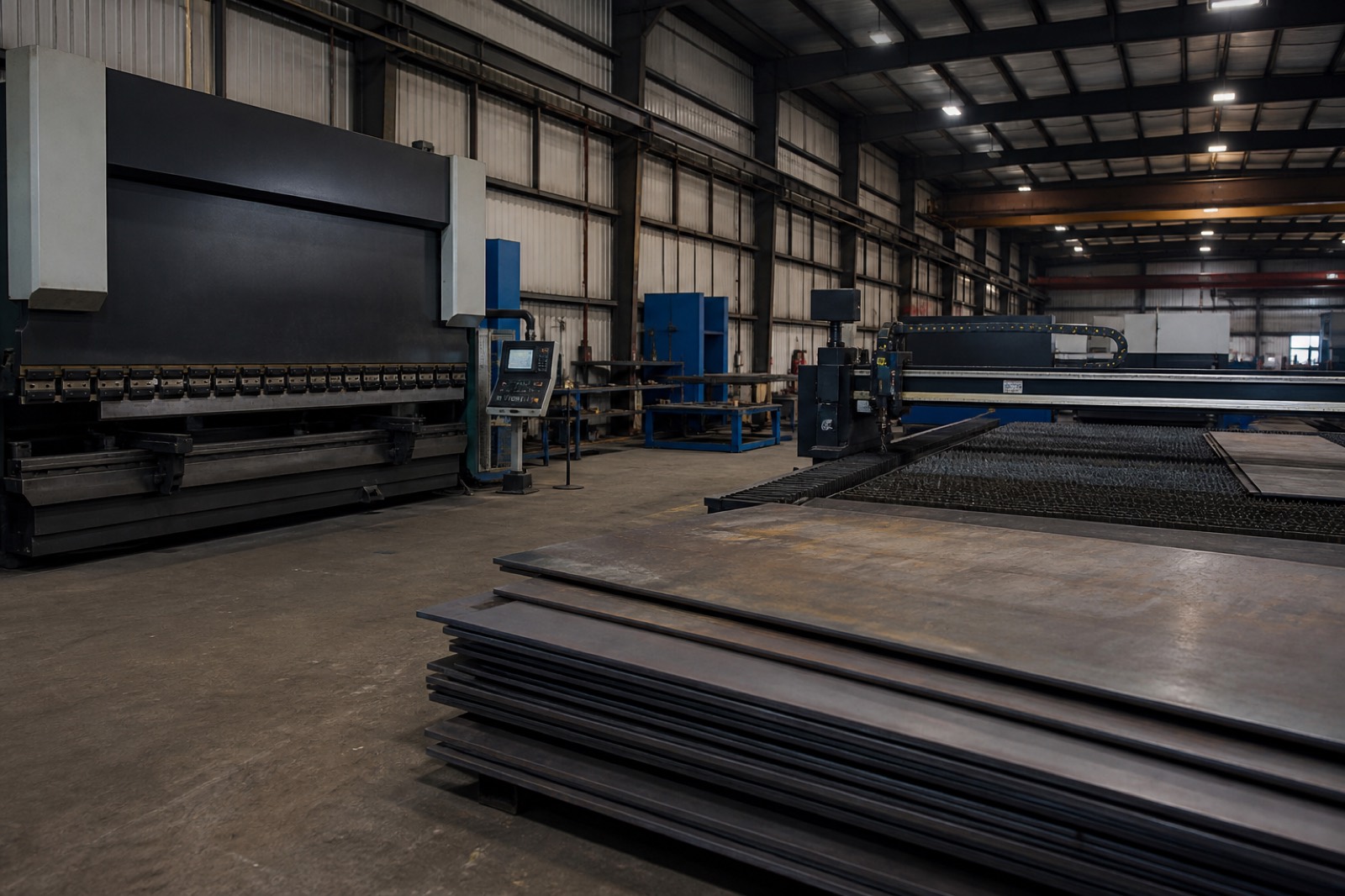
Metal fabrication is one of the few manufacturing sub-verticals where equipment value is a meaningful, separately-negotiated line item in the deal. A modern shop has $500K-$5M tied up in CNC press brakes, laser cutting systems, turret punches, MIG/TIG welding cells, plasma cutters, CMM inspection, and overhead cranes. In an asset sale, this equipment is allocated separately from goodwill on Form 8594, with material tax consequences for both buyer and seller. Understanding equipment FMV mechanics is essential to negotiating asset allocation.
What buyers look at in equipment diligence. Press brakes: brand (Trumpf, Amada, Mitsubishi, LVD, Cincinnati), tonnage, length, age, hours of use, control system (modern color HMI vs older). Laser cutters: brand (Trumpf TruLaser, Mazak Optonics, Bystronic), wattage (4kW vs 8kW vs 12kW fiber), age, throughput. Turret punches: Strippit, Amada, LVD. Welding cells: brand of MIG/TIG equipment, robotic vs manual, AWS-certified weld procedures. CMM: brand (Mitutoyo, Hexagon, Zeiss), accuracy. Overhead cranes: capacity, last inspection. Maintenance records by machine.
FMV equipment appraisal mechanics. Buyers commission a Machinery & Equipment (M&E) appraisal during diligence, typically by a certified appraiser (NEBB / ASA-MTS member). Three valuation approaches: (1) Fair Market Value-In-Use (the equipment as currently deployed in operation), (2) Fair Market Value-Removed (orderly liquidation), (3) Forced Liquidation Value (auction). FMV-In-Use is what matters for asset allocation. Typically 30-60% of original purchase price for equipment 5-15 years old, less for older equipment. A $400K Trumpf press brake from 2018 might appraise at $200-280K FMV-In-Use in 2026.
Why asset allocation is negotiated, not given. The buyer wants to push value toward equipment (faster Section 168(k) bonus depreciation or Section 179 expensing). The seller wants to push value toward goodwill (capital gains treatment at 15-20% federal vs ordinary income recapture up to 37%). On a $5M deal with $1.5M of equipment, shifting $300K of allocation between equipment and goodwill can move $50-90K of after-tax proceeds. A skilled tax attorney negotiates this allocation in the LOI, not after closing.
When equipment age becomes a deal-killer. Buyers heavily penalize fleets where the average press brake or laser is 15+ years old, lacks modern control systems, or has documented reliability issues. Rule of thumb: if your equipment fleet has weighted-average age above 12 years, expect a 0.5-1x EBITDA discount because the buyer will need to pro-forma $500K-$2M of replacement capex into year 1-3 operating model. The fix: replacing 1-2 critical machines 18-24 months pre-sale typically returns 0.5-1x in multiple, particularly if the new equipment increases capacity or reduces cycle time materially.
OEM customer concentration: the metal fab multiple-killer
Customer concentration is the single biggest multiple-compression factor in metal fab M&A. Two job shops with identical $4M revenue and $700K EBITDA can sell at materially different multiples depending on customer mix. A shop with one OEM at 50% of revenue trades at 3.5-4x. A shop with no customer above 20% and a top-10 customer concentration of 65% (vs 90%+ for the concentrated shop) trades at 5.5-6x. The math on customer concentration is unforgiving.
Why buyers obsess over concentration. A single OEM at 40%+ of revenue is an existential risk for the buyer. If that OEM in-sources fabrication, dual-sources to a competitor, or experiences their own demand shock (auto OEM model retirement, defense program cancellation, agricultural equipment cycle downturn), the acquired business loses 40%+ of revenue overnight. Buyers will pro-forma the concentrated revenue at 50% probability of churn over a 5-year hold and apply a discount equivalent to 1-1.5 turns of EBITDA. This isn’t personal, it’s underwriting math.
Concentration thresholds buyers use. Top customer above 30% = significant discount (0.5-1.5x EBITDA off multiple). Top customer 20-30% = mild discount (0.25-0.5x). Top customer below 20% = no discount. Top-3 customers above 50% = significant discount. Top-3 customers below 40% = no discount. Buyers also examine length of relationship (a 15-year relationship with a Tier 1 OEM is materially different from a 2-year relationship), contractual structure (purchase orders vs long-term agreements vs blanket POs), and end-market diversification (one OEM in three end markets is less risky than three OEMs in one end market).
The 18-24 month diversification playbook. Aggressive new-customer acquisition focused on adjacent end markets. Intentional volume reduction with the concentrated customer (often counterintuitive but materially improves multiple). New industry penetration (if you’re heavy in automotive, target agriculture, construction, or defense; if you’re heavy in aerospace, target industrial machinery or medical device). Capacity allocation toward new customers even at modestly lower margin in year 1-2 to build the diversified base before sale. Owners who execute this shift see 1-2 turns of EBITDA improvement in their final multiple, on $1M EBITDA, that’s $1-2M of additional sale price.
How metal fab owners should calculate SDE / EBITDA for sale (the right way)
Below roughly $750K of normalized earnings, metal fab buyers underwrite using Seller’s Discretionary Earnings (SDE), not EBITDA. SDE includes the owner’s full compensation package, salary, bonus, benefits, personal expenses run through the business. EBITDA assumes a market-rate plant manager and shop foreman are already in place. For owner-operator metal fab shops under $5M revenue, SDE is typically $150-400K higher than EBITDA. Pricing the same business at 4x EBITDA versus 4x SDE produces wildly different valuations.
Calculating SDE for a metal fabrication business step by step. Start with net income from the tax return. Add back interest, taxes, depreciation, amortization (the EBITDA add-backs). Then add owner’s W-2 salary, owner’s health insurance, owner’s vehicle (the personal pickup registered to the business), owner’s phone, family members on payroll above market rate, country club / personal travel through the business, owner’s discretionary perks. Subtract one-time gains (insurance settlements, equipment auction proceeds). Add back one-time expenses (legal fees on a settled lawsuit, ERP implementation, AS9100D certification audit costs, equipment installation downtime). The result is SDE.
Metal-fab-specific add-backs buyers will accept. AS9100D / ISO 9001 / NADCAP audit and certification costs (one-time). ERP / MES system implementation costs (Epicor, SYSPRO, Global Shop Solutions, JobBOSS). One-time equipment commissioning and downtime expenses for a major capex item. Legal fees on settled commercial disputes (one-time). Owner’s personal vehicle (one truck). Owner’s health insurance and phone. Spouse on payroll for bookkeeping if non-operational. Recovery of bad debt write-offs.
Add-backs buyers will reject. Cash sales not on books (impossible to verify, signals tax fraud risk). Aggressive depreciation timing where equipment is used personally. Family members on payroll well above market with no operational role. Personal residence rent paid by the business. Multiple personal vehicles for family members. Aggressive expense categorizations that don’t survive bank scrutiny or QoE. Buyers’ CPAs and Quality of Earnings firms will haircut aggressive add-backs and re-trade the deal at LOI signing or worse, at the closing table.
Certifications that drive metal fab multiples: AWS D1.1, ISO 9001, AS9100D, NADCAP, ITAR
Certifications are the single clearest signal of platform-readiness in metal fabrication M&A. An uncertified commodity job shop and a fully certified aerospace fabricator with the same EBITDA can trade at multiples that differ by 2-3 turns. The certifications signal not just regulatory compliance but operational discipline, documented quality systems, traceability, and the ability to serve high-margin end markets. Buyers will examine your certification stack before they price the deal.
AWS D1.1 (structural welding code). AWS D1.1 is the American Welding Society code for structural steel welding and is essentially table stakes for any commercial structural fabricator. Documented welding procedures (WPSs), welder qualifications (WQRs), and procedure qualification records (PQRs) under AWS D1.1 are required by most OEM customers. AWS D1.1 alone doesn’t add multiple but its absence subtracts, an uncertified shop is a 0.5-1x discount.
ISO 9001 (quality management system). ISO 9001:2015 is the broad quality management system certification. It signals documented processes, traceability, and continuous improvement discipline. ISO 9001 adds 0.25-0.5x of multiple for sub-$2M EBITDA businesses and is required by most PE buyers as a baseline expectation for $2M+ EBITDA platforms. Certification cost: $30-80K plus 6-12 months. Annual surveillance audit cost: $5-15K.
AS9100D (aerospace quality management). AS9100D is the aerospace-specific quality management standard, built on ISO 9001 with aerospace-specific requirements (FAI per AS9102, configuration management, risk management, special processes traceability). AS9100D opens the door to aerospace OEM customers (Boeing, Lockheed Martin, Northrop Grumman, Spirit AeroSystems, GE Aviation, Pratt & Whitney) and adds 1-2 turns of EBITDA at sale. Certification cost: $80-200K plus 12-18 months. Worth multiples of that at exit on a $1M+ EBITDA business.
NADCAP (National Aerospace and Defense Contractors Accreditation Program). NADCAP is process-specific accreditation for special processes in aerospace fabrication: heat treating, non-destructive testing (NDT), chemical processing, welding, surface enhancement, composites, and materials testing. A fabricator performing in-house NDT (radiographic, ultrasonic, magnetic particle, dye penetrant) with NADCAP accreditation adds 0.5-1x multiple. Required for many aerospace prime contractor relationships.
ITAR registration and CMMC 2.0 (defense work). ITAR (International Traffic in Arms Regulations) registration is required for any fabricator handling defense articles or controlled technical data. ITAR registration is straightforward ($2,250 annual fee, registration with U.S. Department of State Directorate of Defense Trade Controls) but the compliance infrastructure is meaningful. CMMC 2.0 (Cybersecurity Maturity Model Certification, replacing NIST 800-171 self-assessment for DoD contractors) is becoming mandatory for prime and subcontract relationships with the Department of Defense in 2026-2027. Defense fabricators with ITAR + CMMC 2.0 trade at premium multiples and have access to a buyer pool of defense-focused PE platforms (KKR Industrials defense vertical, AE Industrial Partners).
Capacity utilization, OEE, and book-to-bill: the metrics buyers want documented
Buyers in metal fab M&A increasingly demand documented operational metrics, not just financial statements. Three metrics dominate diligence conversations: capacity utilization (are you running at 50% or 80% of theoretical max?), Overall Equipment Effectiveness (OEE, target 60-85%), and book-to-bill ratio (orders received vs. orders shipped, target 1.0+). A shop that can demonstrate these metrics with three years of historical data and trended improvement signals operational discipline that justifies premium multiples. A shop that estimates these from memory signals an owner-dependent operation.
Capacity utilization mechanics. Calculate as (actual machine hours / available machine hours) by major equipment category (press brakes, lasers, welding cells). Industry benchmark: 60% is poor, 70-75% is good, 80%+ is excellent. Buyers want to see capacity utilization trended over 24-36 months by machine. Low utilization signals two things: (1) over-investment in equipment relative to demand (capex inefficiency), or (2) operational issues like setup times, scheduling problems, or skilled labor shortages. Both compress multiple.
OEE (Overall Equipment Effectiveness). OEE = Availability × Performance × Quality. Target 60-85% (world-class is 85%+). Availability captures planned vs. unplanned downtime. Performance captures actual vs. theoretical cycle time. Quality captures first-pass yield. Documented OEE above 70% signals lean manufacturing discipline (5S, kaizen, value stream mapping). Below 50% signals significant operational opportunity (which a buyer may price as upside, but only with discount).
Book-to-bill ratio and backlog. Book-to-bill = orders received (book) divided by orders shipped (bill). Above 1.0 = growing backlog. Below 1.0 = shrinking backlog. Buyers want to see book-to-bill trended quarterly over 24-36 months. A book-to-bill below 1.0 for multiple consecutive quarters is a structural concern that compresses multiple by 0.5-1x. Backlog quality also matters: contracted multi-year supply agreements vs. spot purchase orders. Higher backlog quality = higher multiple.
Lean manufacturing maturity (5S, kaizen, value stream mapping). Buyers value documented lean manufacturing maturity. 5S workplace organization (Sort, Set in Order, Shine, Standardize, Sustain) is the visible signal, a buyer walking the shop floor will instantly assess whether 5S is real or theatrical. Kaizen events (continuous improvement projects) tracked with measurable outcomes signal operational discipline. Value stream mapping documents process flow and waste. A fabricator with real lean maturity adds 0.25-0.5x multiple over an undisciplined operation of identical EBITDA.
Scrap recovery economics and material cost pass-through
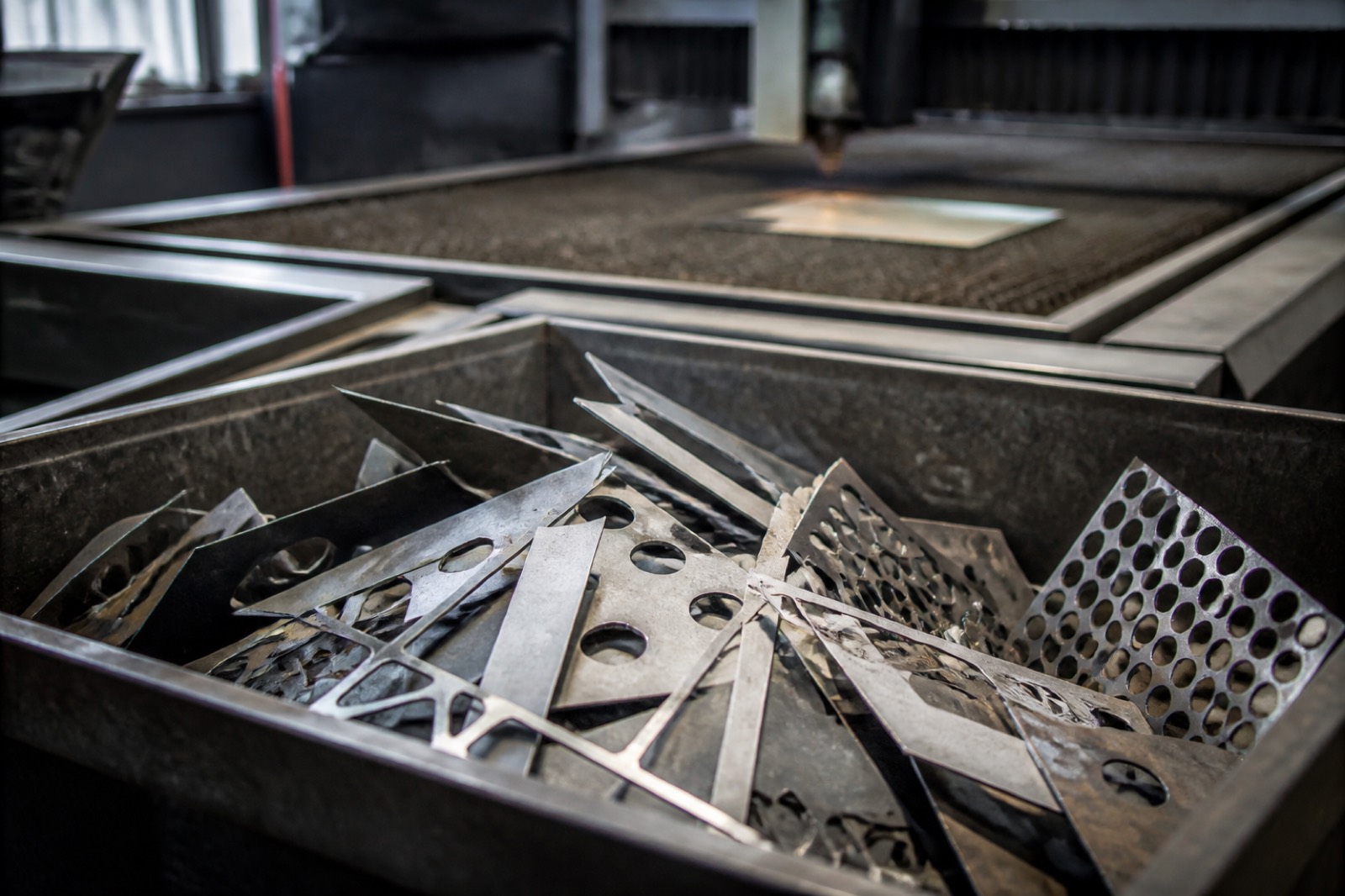
Scrap recovery is one of the most underappreciated operational levers in metal fabrication economics. A typical metal fab operation generates 8-15% scrap by weight on input material. At $0.30-$0.80/lb for steel and $1.20-$3.50/lb for stainless steel and aluminum, scrap recovery represents $50K-$500K of annual revenue depending on shop size and material mix. Owners who track scrap separately (by material grade, by job, by machine) and have proper recovery agreements with scrap dealers materially improve gross margin and signal operational maturity to buyers.
Owners weighing DIY versus full-service representation should read our sell-side fee comparison.
Material cost pass-through structure. Most metal fab work has material cost pass-through built into customer pricing, the fabricator passes through material cost (steel, aluminum, stainless) plus a markup, with labor and overhead applied separately. Buyers care deeply about pass-through structure because it isolates value-added margin (the fabricator’s actual contribution) from material cost volatility. Shops with fixed-price contracts that don’t pass through material cost are exposed to commodity volatility and trade at a discount. Shops with explicit pass-through clauses (or material cost + markup pricing) trade at a premium.
How to position scrap and material economics in your CIM. Document scrap rate by material grade over 24-36 months. Document scrap recovery revenue separately from primary revenue. Show material cost pass-through structure in customer contracts (or document the pricing model that achieves it). Show value-added margin separately from material cost. Buyers will reconstruct this analysis in diligence anyway, doing it proactively in the CIM signals discipline and accelerates underwriting.
Recent steel and aluminum price volatility implications. Steel prices have been volatile since 2021 (HRC steel ranged from $600/ton to $1,800/ton). Aluminum has been similarly volatile. Fabricators with weak material cost pass-through have seen gross margin compress meaningfully during commodity spikes. Buyers will examine your material cost trends versus customer pricing trends to assess pass-through effectiveness. Weak pass-through is a 0.25-0.5x multiple discount; strong pass-through (with explicit contractual indexation) is multiple-neutral but verifiable.
What buyers diligence in metal fab M&A: the checklist that determines your final price
Metal fab diligence at $1M EBITDA looks different from diligence at $5M EBITDA, but the underlying focus areas are consistent. Buyers verify earnings quality (SDE / EBITDA add-backs survive QoE scrutiny), validate revenue mix and customer concentration, confirm equipment condition and remaining useful life, assess workforce and skilled trades retention, examine certifications and quality systems, and identify environmental, safety, and warranty exposure.
Earnings quality and add-back validation. 24-36 months of monthly P&Ls. Tax returns matching financials within 5%. CPA-prepared annual financial statements. Bank reconciliations. AR aging and bad debt history. Job costing reports by major customer and job. Material cost as percentage of revenue trended monthly. Direct labor as percentage of revenue. Overhead absorption methodology.
Revenue mix and customer concentration. Top 10 customers as percentage of revenue (concentration math). Customer relationship tenure. Contractual structure (POs vs. blanket POs vs. long-term agreements). End-market diversification. New customer acquisition rate over 24 months. Customer churn analysis. Revenue by job type (job shop work vs. contracted production runs). Revenue by service capability (laser cutting, press brake forming, welding integration, finishing).
Equipment, fleet, and capex requirements. Major equipment list with brand, model, year, hours, original cost, current FMV. Maintenance records by machine. Replacement schedule and capex budget for next 3-5 years. Outstanding capital lease balances. Real estate ownership and lease terms. Overhead crane inspection history. Forklift fleet.
Workforce, skilled trades, and certifications. Headcount roster with tenure, comp, certifications (AWS welder qualifications, NDT Level II/III, machinist credentials), and 1099 vs. W-2 status. Skilled tradesperson retention rate over 24 months. Training program documentation. Apprenticeship pipeline. Wage rates vs. local market benchmarks. Union vs. non-union (matters significantly for some PE buyers). Workforce age distribution (skilled labor shortage is a structural risk, an aging workforce without succession is a discount factor).
Quality systems, certifications, and environmental. Current ISO 9001 / AS9100D / NADCAP / ITAR documentation. Audit findings and corrective actions over 24-36 months. Customer-specific quality requirements (e.g., supplier corrective action requests). First-pass yield and rework rates. Warranty exposure. Environmental compliance: hazardous waste manifests, air permits (welding fume, paint spray booth), wastewater discharge. EPA / OSHA history. Phase 1 environmental site assessment if owning real estate.
The metal fab sale process timeline: what actually happens month by month
Metal fab sale processes vary by buyer pool but cluster around 6-9 months from launch to close for sub-$1M EBITDA deals and 9-15 months for $1M+ EBITDA platform deals. The compressed timeline at the smaller end reflects SBA financing dominance and simpler diligence. The longer timeline at the platform end reflects QoE engagements, M&E equipment appraisals, environmental Phase 1 reports, more sophisticated buyer-side diligence, and earnout / rollover equity negotiations.
Months 1-2: positioning and outreach. Build the CIM (15-25 pages for sub-$1M; 35-60 pages for $1M+ EBITDA). Identify target buyer archetype mix. Reach out to industrial PE platforms (Trive Capital, GenNx360, IGP, Cortec, Wynnchurch, Sterling), regional fab consolidators, search funders pursuing manufacturing, family offices with industrial mandates, strategic operators (Mayville Engineering, Marmon Group, Linamar), and SBA buyers if sub-$750K SDE. Sign NDAs with serious prospects. Target 8-15 serious initial conversations.
Months 2-4: management meetings and indications of interest. Take 4-8 buyer meetings. PE-backed platforms send 2-3 person teams to walk operations, ride along with shop floor, review revenue mix, and meet key staff. Search funders typically come solo and spend a full day. Strategic operators bring operations and engineering people who will scrutinize equipment, capabilities, and customer overlap. Receive 2-5 indications of interest with non-binding price ranges. Negotiate to a single LOI.
Months 4-7: LOI, diligence, and financing. Sign LOI with 60-90 day exclusivity. Buyer-side diligence: financial QoE for $1M+ EBITDA deals (typically $40-100K cost), CPA review for sub-$1M; M&E equipment appraisal ($10-30K); operational walkthrough; skilled tradesperson interviews; customer interviews on top accounts; quality system audit; environmental Phase 1 site assessment; license / certification review. Buyer financing: PE platforms have it lined up; SBA buyers process loan application (45-90 days).
Months 7-9: definitive agreement and close. Negotiate purchase agreement: working capital target (often $200K-$1M for metal fab), indemnification caps, R&W insurance for $1M+ EBITDA deals, environmental indemnity for any real estate exposure, non-compete (typically 5 years and 50-200 mile radius), seller employment / consulting agreement. Equipment FMV appraisal locks in asset allocation. Final walkthrough. Employee notification 24-72 hours pre-close. Customer notification per contract requirements. Escrow funding. Signing. Bank account and operational system transfers.
Months 9+: transition. Post-close transition typically 60-180 days for sub-$1M SDE deals (longer training period typical when seller is the only AS9100D management representative or master welder), 90-180 days for platform deals. Seller often available by phone for an additional 6-12 months. Customer relationship transfer protocol. Earnout periods if applicable run 12-36 months post-close.
Common mistakes metal fab sellers make (and how to avoid them)
Mistake 1: anchoring on a generic 6x EBITDA multiple regardless of sub-vertical. “Manufacturing sells for 6x” is a heuristic that has very little to do with how metal fab is actually priced in 2026. A commodity structural fabricator with one OEM at 50% concentration, no ISO 9001, and an aging press brake is not a 6x business, it’s 3.5-4x. An AS9100D-certified aerospace fabricator with diversified OEM base, modern automated equipment, and documented OEE above 75% probably is 6-7x. Anchor on sub-vertical-specific data, not generic manufacturing headlines.
Mistake 2: ignoring OEM customer concentration until diligence. Buyers will discover concentration in week 2 of diligence. Owners who haven’t addressed it look unprepared and force a re-trade. Address concentration 18-24 months before market through aggressive new-customer acquisition, end-market diversification, and (counterintuitively) intentional volume reduction with the concentrated customer. Document the diversification trend in your CIM proactively.
Mistake 3: undervaluing certifications. Owners frequently underestimate the multiple impact of AS9100D, NADCAP, and ITAR. A $1.5M EBITDA shop considering whether to invest $150-300K and 12-18 months in AS9100D certification often skips it, then sells at 4.5x ($6.75M) instead of 6.5x ($9.75M) because the buyer pool is constrained to commercial work. The $3M of foregone sale value is a $20:1 return on certification investment.
Mistake 4: hiring a generalist business broker who hasn’t closed an industrial deal. Metal fab M&A is a specialist field. Industrial PE platforms have specific buy boxes (capacity, certifications, end-market exposure, geography). Search funders pursuing manufacturing have specific requirements around skilled tradesperson retention and operational systems. A generalist broker who closed a restaurant last year doesn’t know who’s actively buying metal fab in your geography this quarter, doesn’t have the relationships, and runs a generic auction that signals inexperience to sophisticated industrial buyers.
Mistake 5: under-investing in operational metrics documentation. PE buyers expect documented capacity utilization, OEE, book-to-bill, scrap rates, and first-pass yield. Owners who can produce these metrics from an ERP / MES system signal operational maturity. Owners who estimate them from memory or have never tracked them signal an owner-dependent operation. The 18-month investment in proper ERP / MES implementation (Epicor, SYSPRO, Global Shop Solutions, JobBOSS) typically returns 0.5-1x EBITDA at exit.
Mistake 6: announcing the sale to skilled tradespeople too early. Skilled welders, machinists, and shop foremen can fully derail a metal fab deal by leaving during diligence. Each tech that walks during the LOI period is interpreted as instability by the buyer. Wait until LOI signed (with retention bonuses for key tradespeople if needed), then disclose strategically, usually within 30-60 days of close, with retention bonuses paid at and after close to lock retention through the transition.
How to position for the right metal fab buyer archetype
Position for industrial PE platforms when: You have $2M+ EBITDA, ISO 9001 minimum (AS9100D / NADCAP / ITAR for premium), diversified OEM customer base (no customer above 25%), modern equipment under 10 years old, real plant management separate from owner, and willingness to roll equity 15-30% for 3-5 year second exit. Emphasize: certifications, end-market diversification, capacity utilization, OEE, second-tier management, capex efficiency.
Position for regional fab consolidators when: You have $500K-$3M EBITDA, capabilities complementary to the consolidator’s existing platforms (laser cutting + press brake + welding integration), geographic fit, and willingness to integrate operations post-close. Emphasize: capability stack, geographic logic, customer overlap potential, ease of integration.
Position for search funders / independent sponsors when: You have $750K-$3M EBITDA, real second-tier operations team, documented systems, recurring or contracted production work, low customer concentration, and growth runway. Emphasize: defensibility, organic growth opportunity, manageable operational complexity. Searchers want to operate the business and grow it.
Position for strategic operators when: You have $2M+ EBITDA and there’s a clear strategic acquirer (Mayville Engineering, Marmon Group, Linamar, regional Tier 2 fabricator) that would benefit from your capacity, capability, geography, or customer relationships. Emphasize: strategic fit, customer overlap, capability complement, geographic logic.
Position for SBA individuals when: Your SDE is $200K-$700K, the business runs on documented systems, your role is owner-replaceable (or you have a senior welder/foreman who can step up), and you’re willing to provide 90-180 days of seller training plus 20-30% seller financing. Emphasize: stability, manageable customer relationships, clear training path, equipment in good condition.
Conclusion
Selling a metal fabrication business in 2026 is a real opportunity, with one of the most active industrial PE buyer pools in the lower middle market. But the multiples and outcomes diverge wildly based on size, certifications (AWS D1.1, ISO 9001, AS9100D, NADCAP, ITAR), customer concentration, equipment condition, and which buyer archetype you target. Owners who succeed are the ones who stop benchmarking against generic manufacturing heuristics and start benchmarking against the actual 2026 metal fab buyer pool: industrial PE platforms paying 5.5-8x EBITDA on certified diversified platforms, regional consolidators paying 4.5-6x on bolt-ons, search funders paying 4.5-6x for $750K-$3M EBITDA targets with second-tier teams, strategic operators paying premium multiples for capability and capacity. Get your books clean 18-24 months ahead. Diversify OEM concentration aggressively. Pursue AS9100D / NADCAP if aerospace exposure is real. Document capacity utilization, OEE, and book-to-bill. Reduce owner dependency. Position for the right buyer archetype rather than running a generic auction. The owners who do this work see 30-50% better after-tax outcomes than the ones who go to market unprepared. No fee to you on buy-side introductions; sell-side mandates are paid on success at closing.
Frequently Asked Questions
Is it better to sell your new metal fabrication equipment separately or with the business?
Sell it with the business in almost every case. New press brakes, fiber lasers, and CNC punches carry high fair market value on the appraisal, and that value flows into your enterprise price when a strategic or private equity buyer is acquiring an operating platform. Only carve out equipment that is genuinely idle and that the buyer will not use.
What multiple should I expect when selling my metal fabrication business in 2026?
Multiples vary by size and certifications. Sub-$750K SDE: 2.5-4x SDE. $750K-$2M EBITDA: 4.5-6x EBITDA. $2M-$5M EBITDA: 5-7x EBITDA. $5M+ platforms: 6-8x EBITDA. Aerospace shops with AS9100D + NADCAP + ITAR add 1-2 turns. Customer concentration above 30% subtracts 0.5-1.5 turns.
Who are the most active PE buyers of metal fabrication businesses in 2026?
Industrial PE platforms include Trive Capital, GenNx360, Industrial Growth Partners (IGP), Cortec Group, Wynnchurch Capital, Sterling Group, plus KKR Industrials at the higher end. Regional metal fab consolidators backed by LMM PE bolt on $500K-$3M EBITDA targets aggressively. Strategic operators include Mayville Engineering, Marmon Group, and Linamar.
How does AS9100D certification affect my metal fab sale price?
AS9100D adds 1-2 turns of EBITDA at sale by opening the buyer pool to aerospace-focused industrial PE platforms and aerospace strategic acquirers (Boeing, Lockheed Martin, Northrop Grumman tier suppliers). Certification cost is $80-200K plus 12-18 months. On a $1.5M EBITDA business, the multiple uplift is $1.5-3M of additional sale price, a 10-20x return on certification investment.
What customer concentration is acceptable to metal fab buyers?
Top customer below 20% = no discount. Top customer 20-30% = mild discount (0.25-0.5x). Top customer above 30% = significant discount (0.5-1.5x EBITDA off multiple). Top-3 customers above 50% = significant discount. Buyers will pro-forma the concentrated revenue at 50% probability of churn over a 5-year hold and apply a discount accordingly.
How is equipment value handled in a metal fab business sale?
Equipment is allocated separately from goodwill on Form 8594 in asset sales. Buyers commission an M&E appraisal (typically NEBB or ASA-MTS certified appraiser, $10-30K cost) using Fair Market Value-In-Use methodology. Typical FMV is 30-60% of original purchase price for equipment 5-15 years old. Asset allocation between equipment (ordinary income recapture up to 37%) and goodwill (capital gains 15-20%) is negotiated in the LOI.
Should I implement an ERP / MES system before selling?
Yes if your business is $1M+ EBITDA and your sale is 12-18 months out. Epicor, SYSPRO, Global Shop Solutions, or JobBOSS implementation typically returns 0.5-1x EBITDA at exit by enabling documented capacity utilization, OEE, book-to-bill, and job costing metrics that buyers expect. Implementation cost: $80-300K plus 6-12 months. ROI on a $1M EBITDA business is typically 5-10x.
How long does it take to sell a metal fabrication business?
6-9 months from launch to close for sub-$1M EBITDA SBA-buyer deals; 9-15 months for $1M+ EBITDA platform deals with industrial PE platforms, regional consolidators, search funders, or strategic operators. Add 12-24 months on the front for proper preparation if your books, certifications, customer concentration, and operational metrics aren’t already buyer-ready.
What is the difference between AWS D1.1, ISO 9001, AS9100D, and NADCAP?
AWS D1.1 is the structural welding code (table stakes). ISO 9001 is the broad quality management system (adds 0.25-0.5x multiple). AS9100D is aerospace-specific quality management built on ISO 9001 (adds 1-2x multiple, opens aerospace OEM customer base). NADCAP is process-specific accreditation for special processes (heat treat, NDT, chemical processing, adds 0.5-1x multiple for aerospace work).
How important is capacity utilization and OEE to metal fab buyers?
Critical. Buyers want documented capacity utilization (target 70%+) and OEE (target 60-85%) trended over 24-36 months. Below 50% utilization signals operational issues or capex inefficiency, both compress multiple. Above 75% with documented improvement signals lean manufacturing maturity and justifies premium multiple. Documented metrics from ERP / MES system carry 5x the weight of management estimates.
Should I run a broker auction or do targeted outreach for my metal fab sale?
Targeted outreach to known industrial PE platforms and strategic acquirers almost always beats broad auction in metal fab. Industrial PE buyers have specific buy boxes (capacity, certifications, end-market exposure, geography) and existing relationships matter. Generic broker auctions burn relationships and signal inexperience. Working with someone who already knows the industrial buyers personally tends to deliver materially better outcomes.
What capex intensity do metal fab buyers expect?
Metal fab is one of the most capex-heavy manufacturing sub-verticals. Maintenance capex typically runs 15-25% of revenue. Buyers will pro-forma your maintenance capex into year 1-3 operating model and apply a discount if your equipment fleet has weighted-average age above 12 years. Replacing 1-2 critical machines (press brake or laser) 18-24 months pre-sale typically returns 0.5-1x EBITDA in multiple uplift.
How much seller financing or rollover equity should I expect?
Industrial PE platform deals: typically 0% seller note but 15-30% rollover equity. Regional consolidator deals: 10-20% seller note common. Search funder deals: 10-20% seller note common. SBA individual deals (sub-$750K SDE): 20-30% seller financing standard. Refusing rollover equity on PE platform deals typically reduces multiple by 0.5-1x because second-bite-of-the-apple economics are central to PE platform thesis.
How is CT Acquisitions different from a sell-side broker or M&A advisor?
We’re a buy-side partner, not a sell-side broker. Sell-side brokers represent you and charge you 8-12% of the deal (often $500K-$2M+ on metal fab platforms) plus monthly retainers, run a 9-12 month auction process, and require 12-month exclusivity. No fee to you on buy-side introductions; sell-side mandates are paid on success at closing. We move faster (60-150 days from intro to close) because we already know who the right buyer is rather than running an auction to find one.
Sources & References
All claims and figures in this analysis are sourced from the publicly available references below.
- U.S. Small Business Administration: 7(a) Loan Program
- National Association of Manufacturers (NAM): Manufacturing Economic Data
- Association for Manufacturing Technology (AMT): Industry Reports
- National Tooling and Machining Association (NTMA)
- AS9100D / Aerospace Industries Association
- American Welding Society (AWS) D1.1 Structural Welding Code
- NADCAP Performance Review Institute
- Trive Capital Industrial Investments (Press Releases)
Related Guide: How to Sell a Machine Shop, CNC vs manual mix, tooling library value, and book-to-bill positioning.
Related Guide: How to Sell a Precision Machining Business, AS9100, ISO 13485, and the tight-tolerance premium.
Related Guide: How to Sell a CNC Machining Business, Equipment age, automation level, and CAM software stack.
Related Guide: How to Sell a Contract Manufacturing Business, Customer concentration, value-added margin, and OEM dependencies.
Related Guide: What Is Your Business Worth in 2026?, Buyer-pool data and multiples by industry and size.
Want a Specific Read on Your Business?
30 minutes, confidential, no contract, no cost. You leave with a read on your local buyer market and a likely valuation range.
Related AEC / industrial services M&A guide
Sector deep-dive with named transactions and operator-level diligence:
Related industrial M&A guide
Sector deep-dive with named transactions and operator-level diligence:
Related M&A guide
Sector deep-dive with named transactions and operator-level diligence:
Related M&A guide
Sector deep-dive with named transactions and operator-level diligence:
Related M&A guide
Sector deep-dive with named transactions and operator-level diligence:
Related M&A guide
Sector deep-dive with named transactions and operator-level diligence: