
How to Buy a Vending Machine Route: Vending Machine Routes for Sale in 2026
If you plan to buy a vending machine route in 2026, expect small owner-operator routes to list at about 1.5x to 3x seller’s discretionary earnings (roughly $35K to $260K asking, per the BizBuySell-based comps for vending machine routes for sale in the asking-price table below) and established multi-machine networks to trade at 2x to 3x EBITDA. This guide walks through what you are actually buying, how to value a vending machine route, where routes are listed, and the diligence that separates a working asset from a sunk cost.

Christoph Totter · Managing Partner, CT Acquisitions
M&A advisory across 500+ active capital partners · Vending route acquisitions + micro-market thesis · Updated June 7, 2026
To buy a vending machine route in 2026, expect to pay 1.5x-3x SDE for small owner-op routes (roughly $35K-$260K asking, per the BizBuySell-based table below), 2x-3x EBITDA for established mid-market routes ($500K-$2M), and 4x-6x EBITDA for platform-scale operators with food-service / micro-market lines. The acquisition is 3 separable components: machines (depreciable equipment, often 5-10 years remaining life), locations (contracted accounts, the real moat), and route relationships (driver tenure, account-manager continuity). SBA 7(a) covers most under $5M. Critical diligence: location contract terms and assignability, commission rates paid to accounts, machine condition + telemetry-capable %, and route density (stops per driver-day).

“A vending route isn’t really machines, it’s location contracts with machines attached. The locations are the asset; the machines are the tools.”
TL;DR, the 90-second brief
- A vending route is a portfolio of vending machine locations under contract, what you’re really buying are the location contracts and the machine inventory.
- Capital requirements typically run $50K-$500K equity for smaller routes, more for larger and product-diversified operations.
- Diligence focuses on location contract quality and term, sales performance per machine, machine condition and modernity, and route logistics economics.
- Locations are the asset, strong locations with long contract terms are far more valuable than equivalent revenue from short-term or precarious locations.
- Operating model spans owner-operator (smaller routes, semi-passive) through full operating businesses with employees and warehouses (larger routes).
Key Takeaways
- What you’re really buying: location contracts with vending machines, not just machines.
- Locations are the central asset, quality and term length drive value.
- Capital requirements: $50K-$500K equity for smaller routes; more for larger operations.
- Diligence covers contract terms, sales by machine, machine condition, route logistics, and operating model.
- Operating model spans semi-passive owner-operator (smaller) through full operating businesses (larger).
- Locations can be lost (contract non-renewal, competitor displacement), diversification matters.
- Modern vending (card readers, telemetry, cashless payment) is increasingly required for premium locations.
- Product diversification (snacks, beverages, fresh food, coffee, healthier options) affects margins and operations.
What You’re Actually Buying
CT Acquisitions · 2026 Vending Acquisition Signal
What Vending Buyers Find Out in Diligence
Across our buy-side conversations with vending route acquirers in 2026:
- Location contract assignability is the deal-cliff issue. Many vending contracts contain non-assignment clauses; required customer consents create 60-90 day timeline risk and can re-trade pricing.
- Route density drives crew utilization. Stops per driver-day, average drop value, and machine telemetry-capable % are the buyer-priced operational metrics.
- Micro-market expansion drives multi-turn premium. Operators with mature unattended-retail / micro-market capability command premium because of margin density and growth-headroom thesis.
Multiple at a Glance · 2026
Vending Route Acquisition Multiples · 2026
By scale and route mix.
Source: CT Acquisitions analysis. SBA 7(a) typical under $5M. Diligence: location contract assignability, route density, machine telemetry, fill rates, account tenure.
Related Cluster GuideAdjacent route / unattended-retail buyer playbook: see our guide on how to buy a laundromat in 2026.
The most important reframe for a vending route buyer: you are buying location contracts more than you are buying machines. Without locations, machines have no revenue. Without contracts, locations can be lost. The contract portfolio is the asset; the machines are the tools that monetize it.
The locations. Where the machines are placed, office buildings, schools, manufacturing facilities, hospitals, gyms, apartment complexes, retail spaces. Each location generates revenue based on foot traffic, demographic match, machine product mix, and pricing.
The contracts. The agreements with each location (employer, building owner, facility manager) that allow the vending operator to place machines there. Contract terms vary widely: month-to-month vs. multi-year, exclusivity vs. shared, commission/revenue share vs. flat fee, performance guarantees, machine specifications.
The machines. The physical vending equipment, snack machines, beverage machines, combo machines, fresh food kiosks, coffee makers, sometimes specialty (laundry detergent, electronics, etc.). Age, condition, and modernity (card readers, telemetry, cashless) all matter.
The route logistics. The operational infrastructure, restocking schedule, vehicles, warehouse if any, product purchasing relationships, route planning. For smaller routes this is the owner’s vehicle and basement; for larger routes it’s a real warehouse and fleet operation.
The team. For smaller routes, often owner-only. For larger routes, route drivers, warehouse staff, sometimes office support.
Want a specific read on your business?
CT Acquisitions advises buyers on small-business acquisitions including route-based businesses. We help structure deals and run the diligence that protects buyer value. Book a confidential call.
What Vending Routes Cost
Capital varies widely with size and complexity: small part-time routes (10-25 machines): $25K-$100K, often financed in part through SBA Express or seller financing. Mid-size routes (25-75 machines): $100K-$500K. Larger operations (75-200+ machines with warehouse and employees): $500K-$2M+. Premium product-diversified operations (fresh food, coffee programs) can be higher.
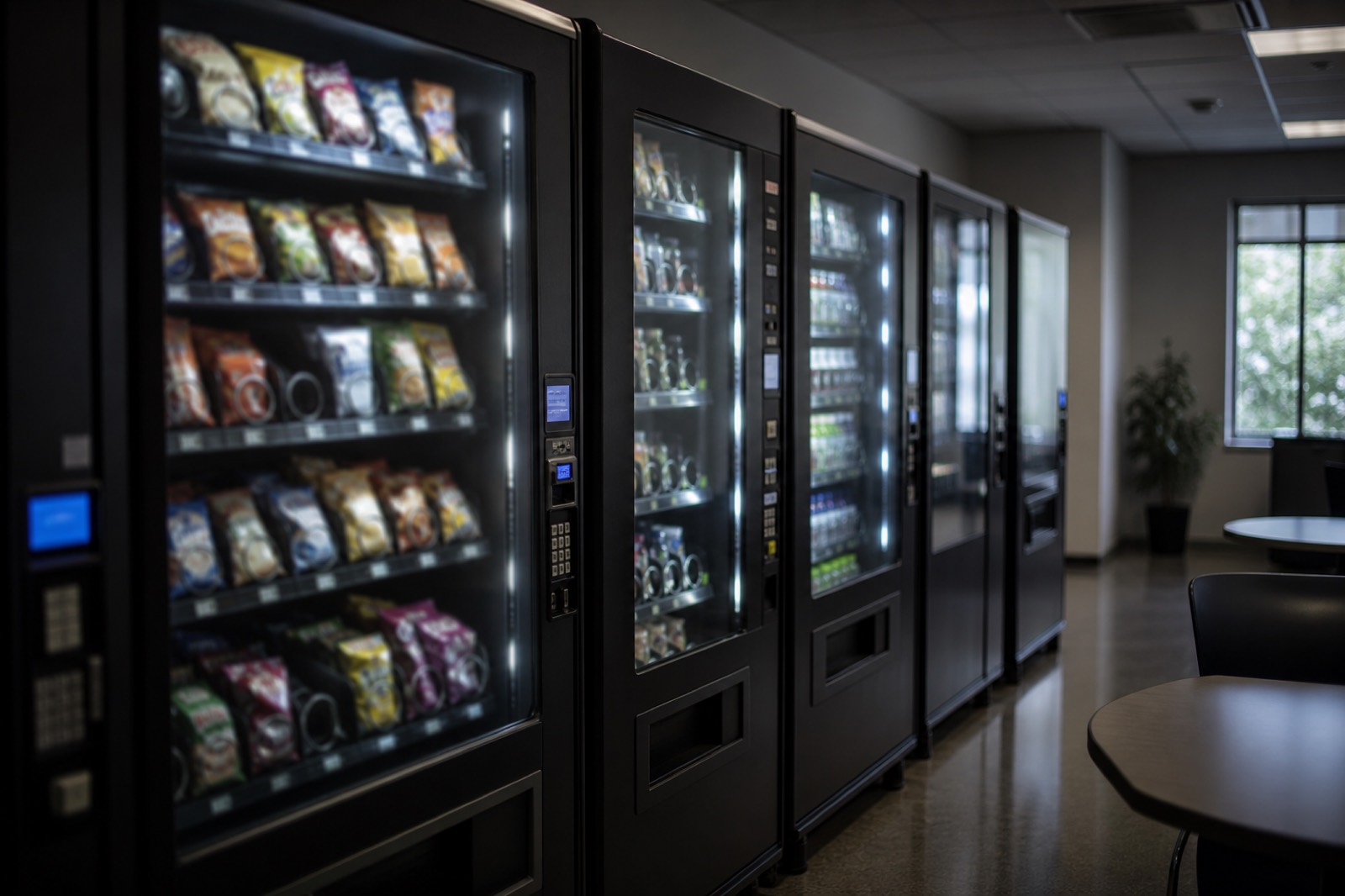
Capital structure typically: equity, possibly SBA 7(a) for larger deals, often seller financing. Working capital for inventory and operating costs is a meaningful component beyond purchase price.
How Vending Routes Are Valued
Typical valuation: multiple of SDE/EBITDA, with multiples reflecting location quality (contract terms, account stability), revenue trends, machine condition and modernity, route logistics efficiency, and operating dependence. Multiples generally run 1.5x to 3x SDE for typical routes, per the BizBuySell-based asking-price table below, higher for premium product-diversified or institutional-grade operations.
Location quality dominates. A route with long-term contracts at high-traffic locations is worth substantially more than the same revenue from short-term or low-quality locations. Single-location concentration is a risk to diligence; diversified routes are safer.
Diligence
Key focus areas: location contracts (read each one, contract term, renewal mechanics, commission structure, exclusivity, machine requirements); per-location revenue history (sales data by machine over multi-year period; identify declining locations); machine inventory (count, type, age, condition; cost to replace older units; payment-technology status); route logistics (efficiency of restocking schedules, drive time, vehicle condition); product purchasing relationships (volume pricing with suppliers, terms, alternatives); compliance (licenses, sales tax, health permits where applicable for fresh food); employee/contractor situation; competitive position (other vendors in the locations, threats of displacement).
How to buy a vending machine route, step by step
To buy a vending machine route, set your budget and financing first, find listings on BizBuySell and vending-specific marketplaces, then verify per-machine sales, read every location contract, and ride the route before you make an offer. Structure the deal as an asset purchase, with part of the price held back or seller-financed until key locations confirm they will stay.
- Set the budget and financing. Decide your all-in number, including working capital for inventory and any machine upgrades. Smaller routes are usually bought with cash or seller financing; larger ones may use an SBA 7(a) loan.
- Source listings. Look beyond BizBuySell to vending marketplaces such as The Route Exchange, VendingExchange, Vending Connection, and DealStream. The Route Exchange says its listings run from $5,000 to $100,000 or more in asking price, which shows how many small part-time routes change hands.
- Screen with real data. Ask for sales by machine and by location for at least two years, plus telemetry or cashless reports if the machines have card readers. Cash-only routes with no records deserve a steep discount or a pass.
- Read every location contract. Check the term, commission rate, exclusivity, and whether the contract can be assigned to you. Treat month-to-month locations as revenue you may lose.
- Ride the route. Spend at least one full service cycle with the seller. You will see machine condition, stock levels, drive times, and how each location treats the operator.
- Inspect the machines. Note age, model, card reader status, and repair history, and price any needed upgrades into your offer.
- Structure the offer. Use an asset purchase. Tie part of the price to location retention through a holdback or seller note, and get a non-compete and a transition period in writing.
- Close and hand over. Secure location consents before closing, update supplier accounts and permits, and have the seller introduce you to each account in person.
Operating Model and Reality
Small routes (under 25 machines) can be genuinely close to semi-passive, restocking every 1-2 weeks, often a side business for the owner. The operating intensity scales with size. For the broader category, see our guide on how to buy a route-based business.
Mid-size routes (25-100 machines) usually require more frequent restocking, often a dedicated owner-operator full-time or with hired help. Warehousing inventory becomes relevant. Route-based business buyers should also see our playbook on how to buy a FedEx route.
Larger routes (100+ machines) are real operating businesses with route drivers, warehouse operations, fleet management, supplier relationships, and administrative infrastructure. The owner’s role shifts from restocking to managing the operation.
Modern vending equipment (cashless card readers, telemetry, real-time monitoring) is increasingly required for premium accounts. Older mechanical machines lacking these features are typically losing locations to competitors offering modern payment and service. Upgrading equipment is a real capital obligation.
Product trends matter: snack and traditional beverage vending faces headwinds in some markets; coffee, fresh food, healthier options, and ‘micro markets’ (unattended retail spaces in employee break rooms) are growth segments. The product strategy of the route affects long-term viability.
Common Pitfalls and Success Patterns
Pitfalls: overestimating route stability without reading location contracts carefully (month-to-month or short contracts can disappear); underestimating equipment modernization capital; underestimating route logistics complexity; assuming passive economics on routes that actually need active management; product mix mismatched to location demographics.
Success patterns: thorough location-contract diligence; deliberate equipment modernization plan; geographic and account diversification; product mix matched to locations; building or maintaining strong account relationships; gradual scale rather than rapid expansion.
Putting It Together
Vending machine routes can be attractive small-business acquisitions when buyers understand what they’re really buying (location contracts with machines attached, not the other way around), pay accordingly for location quality and term, plan for equipment modernization capital, and match the operating model to the route’s scale.
Smaller routes can genuinely deliver semi-passive economics for the right operator; larger routes are real operating businesses with all the standard demands. Either way, the playbook is the same: read every contract, verify per-location sales trends, modernize equipment proactively, diversify accounts, and respect the operating model for what it actually is. Done that way, vending routes provide solid economics in a category that remains active for buyers with realistic expectations.
Where Vending Machine Routes Are Actually Listed in 2026
BizBuySell remains the largest open marketplace for vending machine routes for sale, with the “Vending Machine Route” subcategory under “Distribution & Wholesale” carrying a few hundred active US listings at a time (its vending category showed 258 businesses for sale in October 2026). Asking prices on that pool cluster between $35,000 for a 12 to 20 machine starter route and just under $2.4M for established operators running 600+ machines across two or three metros. The median list sits near $185,000 for a 60 to 90 machine route generating $240,000 to $340,000 in annual gross sales.
BizBuySell is the front door, but it is not where the better deals close. Industry-specific channels move faster and quieter:
- VendingMarketWatch and Automatic Merchandiser classifieds: trade-press listings that skew toward operators selling to other operators, often with cleaner machine fleets and existing cashless conversion.
- NAMA (National Automatic Merchandising Association) member directories: NAMA’s 2025 industry report pegs the US vending and refreshment services market at roughly $36B. Many of the better operator-to-operator transfers happen through state council referrals before they ever hit a public listing.
- Regional broker networks: Sunbelt Business Brokers, Transworld, and Murphy Business carry vending route inventory inside their distribution verticals, often with seller financing pre-negotiated.
- Manufacturer trade-in and refurb channels: Crane Merchandising Systems, AMS, Royal Vendors, and USI distributor networks occasionally surface route-and-equipment packages from operators consolidating fleets.
For buyers, the signal-to-noise ratio improves dramatically when you move past BizBuySell into the trade channels. A route advertised only on BizBuySell at 3x SDE is often a route that already failed to clear at 2.5x in the operator-to-operator market. Before writing an offer, you should know how the asking price compares to recent comps and what the seller is implicitly telling you by the channel they chose. Our framework on how investment bankers value a business applies to small routes as much as to lower-middle-market deals: the buyer who understands the seller’s alternatives writes the better offer.
Asking Price Benchmarks: What Routes Cost on the Open Market
Vending machine routes for sale price off two variables before anything else: route gross revenue and the share of revenue that flows through cashless payment. Geography matters at the margin. A 100 machine route in Southern California with 70% cashless will list 25 to 40% higher than the same machine count in rural Ohio with 20% cashless. The table below pulls from BizBuySell vending category data 2026 and from broker comps shared at the 2025 NAMA Show.
| Route Size | Annual Gross | Typical Asking Range | SDE Multiple |
|---|---|---|---|
| 15 to 30 machines (starter) | $60K to $120K | $35K to $95K | 1.5x to 2.0x SDE |
| 40 to 75 machines (owner-op) | $140K to $310K | $110K to $260K | 1.8x to 2.4x SDE |
| 90 to 175 machines (one driver plus owner) | $360K to $720K | $280K to $640K | 2.0x to 2.7x SDE |
| 200 to 400 machines (small operator) | $820K to $1.7M | $680K to $1.6M | 2.2x to 2.9x SDE |
| 500+ machines (regional operator) | $2.1M+ | $1.9M to $4.5M+ | 2.5x to 3.2x SDE |
Regional pricing skew based on broker comps and BizBuySell median data through Q1 2026:
| Region | Median $ per Machine | Median Asking on 100 Machine Route |
|---|---|---|
| Northeast metros (Boston, NYC, Philly) | $3,400 | $340K |
| California and Pacific Northwest | $3,200 | $320K |
| Texas and Southeast metros | $2,750 | $275K |
| Midwest non-metro | $2,100 | $210K |
| Rural Mountain and Plains | $1,750 | $175K |
The 1.5x to 3.0x SDE band is the honest range for vending routes. Sellers asking 4x or higher are usually pricing in equipment value separately or carrying a single anchor account that distorts the comp. The right approach is to triangulate against the table, then validate with a real business valuation services cost review before you put earnest money down.
Cashless Payment Conversion: Cantaloupe vs Nayax vs 365 Retail Markets
Cashless conversion is the single largest valuation lever on a vending route today. A machine taking only coins and bills in 2026 generates roughly 18 to 28% less revenue than the same machine with a tap-to-pay reader. NAMA’s 2025 data shows cashless transactions crossed 60% of total vending dollar volume in the US for the first time, up from 38% in 2021. The hardware market has consolidated around three names a buyer should know cold.
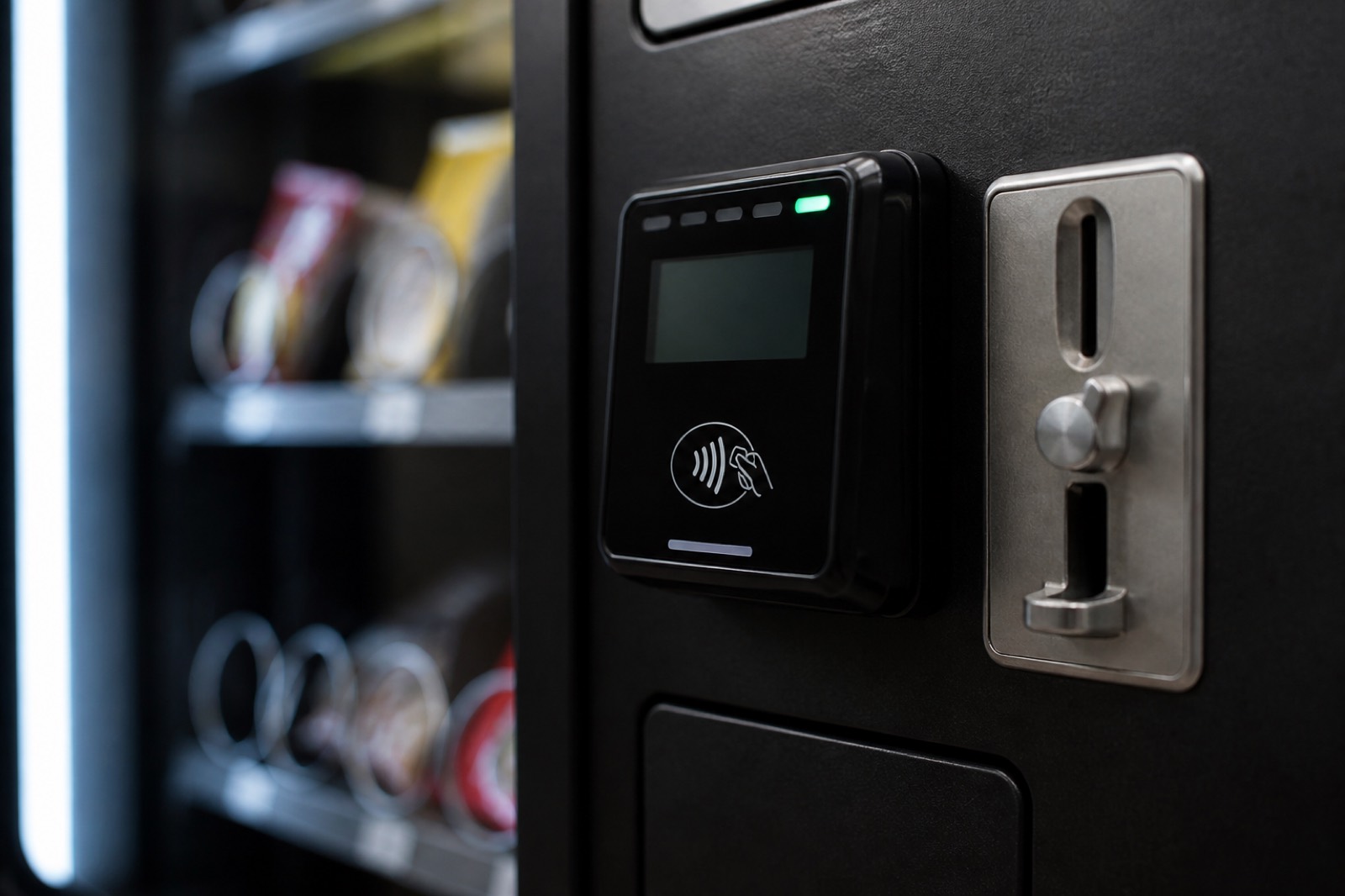
Cantaloupe Inc (NASDAQ: CTLP) is the US market leader, with roughly 1.4M cashless devices deployed across vending, micro-markets, and unattended retail as of their late-2025 reporting. Their ePort hardware plus Seed software stack is the default in most established US operator fleets. Transaction fees run 5.99% plus 8 to 10 cents per transaction on standard plans, with hardware leasing typically $15 to $22 per device per month.
Nayax (NASDAQ: NYAX) is the global cashless leader, stronger internationally but growing fast in the US. Their VPOS Touch reader competes directly with the Cantaloupe ePort and is often cited as more flexible on international card schemes and on alternative payment methods. Pricing is comparable to Cantaloupe, with some operators reporting slightly lower per-transaction fees on volume tiers.
365 Retail Markets dominates the micro-market segment that increasingly sits alongside traditional vending in office and manufacturing accounts. If the vending machine route you are evaluating includes micro-markets, 365 hardware is the de facto standard and the buyer should confirm whether contracts are transferable and what the monthly software fees look like post-close.
When you diligence a vending route, pull the last 12 months of cashless settlement reports from whichever processor the seller uses. The conversion rate, the average ticket lift on cashless versus cash, and the device-level uptime all flow directly into the offer price. A seller who claims 70% cashless but cannot produce processor statements is signaling a problem. Bake that signal into your letter of intent with explicit reps and warranties on cashless revenue and processor contract assignability.
The Healthy Vending Trend and Why It Changes Valuations
The healthy and better-for-you product mix has moved from a marketing angle to a real valuation driver. NAMA’s 2025 industry report shows better-for-you SKUs now account for 28 to 34% of unit volume on routes serving healthcare, K-12 education, government, and corporate wellness accounts, up from roughly 12% a decade ago. Several states (California, New York, Massachusetts among them) have nutrition standards written into government-building and school vending contracts. If the vending route you are buying includes any of those account types, the product mix is contractually constrained, not optional.
The valuation effect runs both directions. Routes already converted to compliant healthy mixes on captive contracts (hospitals, federal buildings, university campuses) trade at the high end of the 2.5x to 3.0x SDE range because the contracts have switching friction and the operator has already absorbed the slotting and shrink learning curve. Routes still running traditional snack-and-soda planograms on accounts that will demand healthy conversion at renewal trade at a discount, because the buyer inherits the conversion cost (new planograms, new vendor relationships, higher product cost, initial shrink) without the contract upside.
What changes in the cost structure when a vending machine route converts to healthy:
- Product cost rises 8 to 14% on average, since better-for-you SKUs carry lower manufacturer promotional support than legacy chips and soda.
- Shrink and stales rise in the first 90 days post-conversion as the operator learns velocity by SKU; expect a 200 to 400 basis point gross margin hit that normalizes by month four.
- Ticket size rises 12 to 20% because healthy SKUs price higher and consumers in captive accounts accept the price point.
- Contract renewal probability rises sharply on healthcare and education accounts that have wellness committees evaluating renewals.
For a buyer, the diligence question is simple: which accounts on this route have nutrition language in their contracts, and what does the renewal calendar look like over the next 24 months? If the answer is “most of them and soon,” the buyer is inheriting a project, not a turnkey route. Price accordingly and write the conversion plan into your post-close due diligence checklist.
Route Density and Drive-Time Math: The Hidden Operating Cost
Route density is the single most under-priced variable in small vending route deals. Two routes with identical machine counts and identical gross revenue can have radically different operating economics based on how far the truck drives between stops. A dense urban route running 80 machines inside a 12 mile radius is a different business than a rural route running 80 machines across a 240 mile loop. The seller’s P&L often hides this because fuel, vehicle depreciation, and driver hours get smoothed over annual totals.
The honest math on drive-time looks like this. A vending route operator covers, on average, 14 to 22 machines per service day for a single driver. Service time per machine averages 18 to 28 minutes (restock, cash pull, light maintenance, ticket reconciliation). Drive time between stops is the swing variable. On a dense route with 4 to 7 minute drives between stops, the driver hits 22 machines per day. On a sparse route with 18 to 35 minute drives, the same driver hits 12 to 14 machines per day. That difference flows straight to the labor line on a per-machine basis.
| Density Profile | Avg Drive Between Stops | Machines per Driver-Day | Implied Labor Cost per Machine Service |
|---|---|---|---|
| Dense urban (downtown plus inner-ring) | 4 to 7 min | 20 to 22 | $11 to $14 |
| Suburban mixed | 8 to 14 min | 16 to 18 | $15 to $18 |
| Spread metro | 15 to 22 min | 13 to 15 | $19 to $24 |
| Rural and exurban | 22 to 40 min | 9 to 12 | $26 to $34 |
Add fuel at $0.18 to $0.32 per mile (2026 diesel pricing on a Sprinter-class step van) and the difference between a dense and a sparse vending machine route can reach $40,000 to $70,000 per year in pure operating cost on a 100 machine route, even before vehicle depreciation. That cost gap is rarely reflected in the asking price.
Before you make an offer on any vending route, request the seller’s route sheets for the last 30 service days. Map them. Calculate machines-per-day and average drive-time-between-stops yourself. If the seller cannot produce route sheets, that is a diligence finding in its own right and should reset the price conversation. A dense route at 2.7x SDE may be cheap. A sparse route at 2.0x SDE may be expensive once you price in the driver hours you will actually pay to service it.
Frequently Asked Questions
How do I value a vending machine route for sale?
A vending machine route is typically valued at 1.5x to 3x SDE per BizBuySell-based asking-price comps, or a multiple of monthly cash flow, with machine age, location contracts, and route density driving the number. The most valuable routes have long-term location agreements at high-traffic accounts, modern cashless machines, and tight geographic clustering that keeps servicing costs low. Locations and their contracts matter more than the machines.
How much does it cost to buy a vending machine route?
Small part-time routes (10-25 machines): $25K-$100K. Mid-size routes (25-75 machines): $100K-$500K. Larger operations (75-200+ machines, warehouse, employees): $500K-$2M+. SBA 7(a) and seller financing typically support most acquisitions.
What am I really buying when I buy a vending route?
Location contracts with vending machines attached. The locations and contracts are the asset; the machines are the tools that monetize them. Location quality and contract term drive value far more than machine count alone.
How are vending routes valued?
Typically 1.5x to 3x SDE per BizBuySell-based asking-price comps, with location quality, contract term lengths, revenue trends, machine modernity, and operating efficiency driving multiples up or down. Premium product-diversified or institutional-grade operations can command higher.
Is a vending route passive income?
Smaller routes (under 25 machines) can be close to semi-passive, restocking every 1-2 weeks. Mid-size and larger routes require more active management, often full-time. Larger routes (100+ machines) are real operating businesses with employees, warehouse operations, and full management demands.
What’s the most important diligence on a vending route?
Reading every location contract carefully (term length, renewal mechanics, commission structure, exclusivity), verifying per-location sales history over multiple years, assessing machine condition and payment-technology modernity, route logistics efficiency, and operating model fit at the buyer’s expected involvement level.
Do I need modern card readers and cashless payment?
Increasingly, yes. Premium locations expect cashless payment, real-time inventory telemetry, and modern user experience. Older mechanical machines without these capabilities are typically losing accounts to competitors offering modern payment and service. Equipment modernization is a real ongoing capital obligation.
What kinds of locations make a route valuable?
High-traffic, demographically-matched locations with long-term contracts and stable accounts: large office buildings, manufacturing facilities, hospitals, schools, gyms, transportation hubs. Short-term, low-traffic, or month-to-month locations are less valuable even at equivalent current revenue.
What products should a modern vending route carry?
Traditional snacks and beverages remain core, but growth segments include coffee programs, healthier options, fresh food (sandwiches, salads), specialty drinks, and ‘micro markets’ (unattended retail spaces). Product mix should match location demographics and the route’s overall strategy.
How do I finance a vending route purchase?
Smaller deals: SBA Express, seller financing, or direct equity. Mid-size and larger: SBA 7(a) is common, sometimes blended with seller financing. Specialty small-business lenders familiar with route-based acquisitions can help.
What are the biggest risks in buying a vending route?
Location loss (contracts not renewed, competitor displacement), equipment obsolescence (modernization capital needs), single-account concentration, operational under-commitment for the route size, and product-mix mismatch with location demographics. Diligence and account diversification address most of these.
How do I find vending machine routes for sale?
Start with BizBuySell, then check vending marketplaces such as The Route Exchange, VendingExchange, Vending Connection, and DealStream, plus vending owner groups and regional business brokers. Operator-to-operator sales through trade contacts often offer better routes than public listings. Ask any seller for sales by machine before you spend time on a site visit.
Is it better to buy a vending route or start one from scratch?
Buying gets you placed machines and paying locations on day one, which is the hardest part to build yourself. Starting from scratch costs less up front but means months of finding locations. Buy if the route has documented per-machine sales and assignable contracts; start fresh if the listings near you are overpriced cash-only routes without records.
Related Guide: How to Buy a FedEx Route,
Related Guide: How to Buy a Route-Based Business,
Related Guide: SBA 7(a) Loan for Business Acquisition,
Related Guide: How to Evaluate a Small Business for Acquisition,
Want a Specific Read on Your Business?
30 minutes, confidential, no contract, no cost. You leave with a read on your local buyer market and a likely valuation range.
30 N Gould St, Ste N, Sheridan, WY 82801, USA · (307) 522-0262 · Contact