
How to Buy a Liquor Store: 2026 Acquisition Playbook
Christoph Totter · Managing Partner, CT Acquisitions
20+ home services M&A transactions across HVAC, plumbing, pest control, roofing · Updated April 27, 2026
TL;DR, the 90-second brief
- Buying a liquor store in 2026 is a state-by-state regulatory puzzle wrapped around an inventory-heavy retail business.
- The license transfer is the single biggest variable: some states (Texas, Florida, Georgia) allow relatively straightforward transfers in 60-120 days; others (Pennsylvania, Utah, New Hampshire, several control states) make transfers complex or impossible.
- Inventory typically represents 40-60 percent of asking price and must be valued at actual cost plus appropriate margin, not seller-quoted retail value.
- Most independent liquor stores under $2M trade at 2.5x to 4x SDE plus inventory at cost.
- The biggest first-time buyer mistakes: under-budgeting for license transfer timing, overpaying for inventory, and missing local moratoriums on new alcohol licenses that affect market positioning.
Key Takeaways
- License transfer is the dominant variable; ranges from 60-90 days (TX, FL) to 4-8 months (CA, NY) to nearly impossible (PA, UT, NH)
- Inventory is 40-60 percent of typical asking price; value at cost plus margin, not seller-quoted retail value
- Independent liquor stores sell at 2.5x to 4x SDE plus inventory at cost; SDE multiples are flat in 2026
- Critical due diligence: trailing 24-month sales by SKU, supplier relationships, local moratoriums, lottery/ATM revenue verification
- SBA 7(a) financing available with strict requirements: owner-operator, license transferable, no prior alcohol-related compliance issues
- Local moratoriums on new licenses (NY, CA, IL, several major metros) make existing licenses scarce and command premium pricing
Why liquor stores are different from other retail acquisitions
Buying a liquor store means buying three things at once: a state alcohol license, an inventory-heavy retail operation, and a location. Confirm the license can transfer to you before signing an LOI, value inventory at cost by physical count, verify sales through POS data and tax filings, and line up a lender that finances alcohol retail.
For 2026 bar / pub acquisition playbook with liquor license transfer mechanics, lease assignment diligence, revenue verification, and SBA 7(a) financing, see our guide.
For 2026 restaurant acquisition playbook with 2x-7x range, lease assignment / liquor license diligence, SBA 7(a) financing, and 8 must-do diligence items, see our guide.
Buying a liquor store looks like a generic retail acquisition on the surface: a location, inventory, and customer foot traffic. The economic reality differs in several structural ways.
License scarcity drives value. Most states limit the number of liquor licenses, either by population quotas, geographic distribution rules, or outright caps. In moratorium states or metros (parts of California, New York, Illinois, several major metros nationwide), no new licenses are issued. Existing licenses are the only path to operate. This scarcity drives meaningful value into the license itself, often $100K-$1M+ separately from the underlying business.
Inventory is the dominant asset class. A typical independent liquor store carries $80K-$300K in inventory at cost (more for larger stores). Inventory is 40-60 percent of total asking price in most deals. Inventory valuation in the LOI is one of the largest negotiation points.
Margin is thin but stable. Liquor store gross margins typically run 22-32 percent; net operating margins after rent, labor, and overhead run 5-12 percent. Lower than many retail categories but stable; alcohol demand does not fluctuate much with economic cycles.
Regulatory compliance is constant. Liquor stores face ongoing state alcohol regulation, local zoning rules, federal age verification requirements, and various tax structures (state alcohol excise tax, sales tax, federal alcohol fees). Compliance is operational reality, not optional.
Additional revenue streams matter. Many liquor stores have material lottery revenue (5-6 percent commission but high volume), ATM revenue (interchange fees plus convenience), and sometimes tobacco or convenience items. These contribute to total profit even though gross margin per dollar is lower.
Location is foundational. Liquor stores are strongly location-dependent. Foot traffic, parking, neighborhood demographics, and competitive positioning all materially affect revenue. Moving an established store rarely works.
For the broader retail business framework, see how to buy a convenience store.
License vs business value split
Most liquor store sales bundle the license with the business and inventory as a single deal. The implicit license value typically ranges 10-30 percent of total sale price depending on state license scarcity. In moratorium markets, license value can reach 40-60 percent of deal value. Always understand the implicit license value to assess whether you are paying for business goodwill or for the regulatory permit.
Why liquor stores trade on SDE multiples not EBITDA
Most independent liquor stores are owner-operated single-location businesses. The relevant metric is SDE (Seller’s Discretionary Earnings) which adds back owner compensation. SDE multiples of 2.5x-4x are standard. Multi-location operators (5+ stores) trade on EBITDA multiples (3.5x-5.5x) because management is separated from ownership.
The license transfer reality by state
Alcohol license transfer rules vary enormously by state. The transfer process is the single biggest factor affecting deal timeline and certainty.
Relatively straightforward transfer states (60-120 day typical):
- Texas: TABC license transfer with fingerprinting, background check, financial disclosure. 60-90 day typical.
- Florida: Florida Division of Alcoholic Beverages and Tobacco. 60-90 day typical. Strict on personal background.
- Arizona: AZ Department of Liquor Licenses and Control. 90-120 day typical.
- Georgia: Department of Revenue Alcohol Section. 60-90 day typical.
- North Carolina: NC ABC Commission, beer and wine permits only (spirits are sold through local ABC stores; see control states below). 90-120 day typical.
Moderate-complexity states (120-180 day typical):
- California: ABC license transfer process. 120-180 day typical. Personal background investigation thorough. Type 21 (off-sale general) license required for most liquor stores.
- New York: SLA (State Liquor Authority) review. 120-240 day typical. Slow administrative process. Local community board input required in NYC.
- Illinois: ILCC (Illinois Liquor Control Commission) plus local municipal review. 90-150 day typical. Chicago has additional local review.
- New Jersey: ABC plus local approval. 90-180 day typical.
- Massachusetts: ABCC plus local board. 120-180 day typical.
Difficult or restricted transfer states:
- Pennsylvania: PLCB controls retail alcohol distribution; private liquor stores are limited. Transfer process complex; many existing licenses are ‘restaurant licenses’ requiring food service operation.
- Utah: State-controlled retail liquor sales; private wine/beer stores have specific rules.
- New Hampshire: State-controlled retail; limited private alcohol licensing.
- Vermont, Wyoming, Montana, Alabama (some): control state restrictions affect what can be sold and who can sell.
Critical pre-LOI license verification: 1. Confirm the specific license type (off-sale general, retail beer/wine, etc.) 2. Verify transferability to your specific structure (LLC, individual, partnership) 3. Check for local moratoriums on new licenses (affects competitive landscape) 4. Review seller’s compliance history (recent violations, suspensions, fines) 5. Confirm no pending enforcement actions against the license
The license transfer process should begin during the LOI period, not at closing. Most state alcohol authorities will provide preliminary transfer guidance to qualified buyers before final purchase agreement signing.
For regulatory context across other licensed business acquisitions, see business acquisition due diligence process.
Why control states are challenging
Control states (Pennsylvania, Utah, New Hampshire, Virginia, North Carolina partial, etc.) restrict private retail alcohol sales. The state may operate retail stores directly, or limit private licenses to specific categories (wine only, beer only, restaurant licenses with food service requirements). Buyers in control states should engage state-specific counsel to verify whether the target business can actually be transferred.
Moratorium markets create license premiums
Markets with active license moratoriums (parts of California, New York, Illinois, several major metros) make existing licenses scarce. License values in these markets can reach $200K-$1M+ separately from the underlying business. A liquor store that would value at $400K based on cash flow alone might sell for $700K because the license itself carries $300K of value due to scarcity. Verify whether your target market is under moratorium before final pricing.
Inventory valuation and the LOI negotiation
Inventory is the largest single asset in most liquor store acquisitions. How inventory is valued in the LOI affects total purchase price by 10-30 percent.
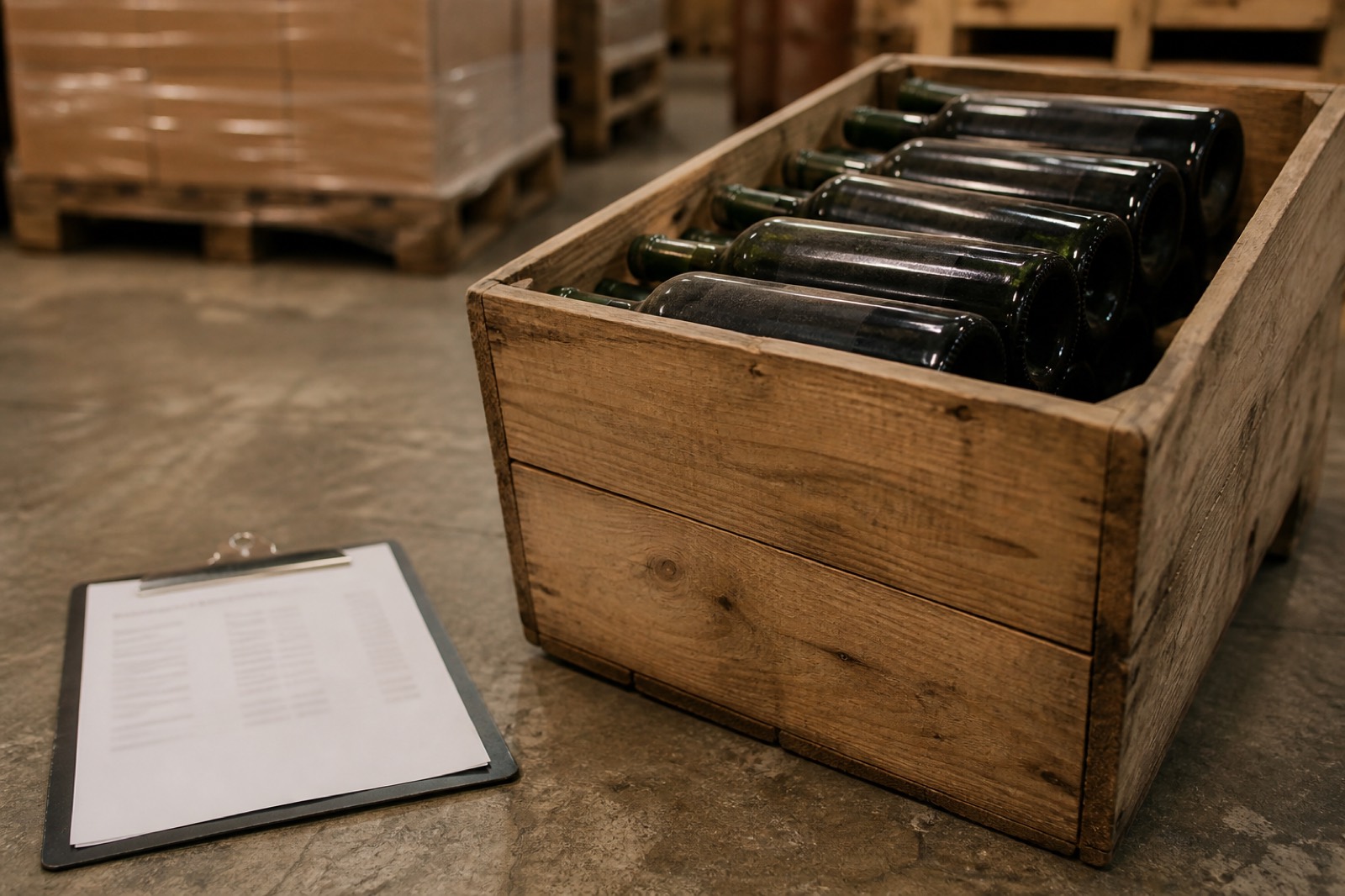
Three inventory valuation approaches:
At cost (most common):
- Pros: clean and verifiable through invoice records
- Cons: requires actual physical inventory count and invoice verification at close
At cost plus margin: Inventory is valued at cost plus a portion of the expected margin (typically 5-10 percent above cost). Used when buyer wants to capture some inventory turn benefit but seller wants compensation for restocking effort.
At retail (rare and unfavorable to buyer): Inventory is valued at retail price. This effectively transfers the future margin to the seller, leaving the buyer with no inventory turn profit. Avoid this structure.
Inventory verification at close: 1. Physical count: independent inventory service counts every SKU at close (typical cost $500-$2,000) 2. Invoice reconciliation: count compared against trailing 90-day supplier invoices 3. Slow-moving inventory adjustment: aged inventory (12+ months on shelf) discounted or excluded 4. Out-of-date or damaged inventory: excluded from valuation 5. Tax allocation: state-specific rules on inventory transfer affect tax basis
Typical inventory levels by store size:
- Small neighborhood liquor store ($500K annual sales): $40K-$80K inventory at cost
- Mid-size urban liquor store ($1.5M annual sales): $150K-$300K inventory at cost
- Large liquor store ($3M+ annual sales): $300K-$800K+ inventory at cost
- Wine specialty store: often $300K-$1M+ inventory at cost (high-value wine inventory)
Inventory diligence red flags:
- Aged inventory not turning (12+ months on shelf): signals over-buying or weak product selection
- Concentration in slow-moving categories: same signal
- Missing or incomplete invoice records: makes verification difficult
- Tobacco, lottery, or other non-alcohol inventory commingled without separate accounting
For the broader due diligence framework, see business sale due diligence checklist.
How to negotiate inventory in the LOI
Specify inventory valuation methodology in the LOI: ‘Inventory at cost as verified by physical count at close, excluding aged inventory over 12 months and damaged or out-of-date items.’ Specify who pays for the inventory service. Specify maximum or minimum inventory ranges (e.g., ‘Inventory at close will be valued between $150K and $200K; values outside this range will be adjusted by 50 percent of excess’). Without specific LOI language, inventory disputes at close are common.
Wine specialty stores need different inventory analysis
Wine specialty stores can carry $500K-$2M+ inventory with significant aged wine value. Some wines appreciate over time; some lose value. Specialized wine inventory appraisal (typically $1K-$5K) is appropriate for stores with significant aged wine collections. Standard inventory valuation does not capture wine-specific value dynamics.
Operating fundamentals and store economics
Liquor store economics follow consistent patterns across most independent stores.
Typical revenue mix:
- Spirits: 35-50 percent of revenue
- Beer: 25-35 percent of revenue
- Wine: 15-25 percent of revenue
- Tobacco: 5-12 percent of revenue
- Lottery: 3-8 percent of revenue
- ATM and other: 1-3 percent of revenue
Gross margin by category:
- Spirits: 22-28 percent gross margin
- Beer: 18-22 percent (lowest margin category, volume-driven)
- Wine: 28-38 percent (highest margin, especially premium wine)
- Tobacco: 12-18 percent (regulated pricing)
- Lottery: 5-6 percent commission
- Total blended gross margin: 22-32 percent typical
Operating expense structure:
- Rent: 4-9 percent of revenue (location-dependent)
- Labor: 6-12 percent of revenue (varies by hours of operation, format)
- Insurance: 1-2 percent
- Utilities: 1-2 percent
- Supplies, security, miscellaneous: 2-4 percent
- Total operating expenses: 15-25 percent of revenue
Net operating profit (before owner compensation):
- Strong store: 12-18 percent operating margin
- Average store: 7-12 percent
- Weak store: 3-7 percent (often signals operational issues)
For a typical $1.5M revenue store at 10 percent net operating margin (pre-owner comp): $150K operating profit. Because that profit is before owner compensation, it is the SDE: $150K. At 3x SDE multiple = $450K business value plus $200K inventory = total deal $650K.
Key performance ratios:
- Sales per square foot: $500-$1,200 typical (national chains $800-$1,500)
- Sales per labor hour: $80-$150 typical
- Inventory turn: 6-10 times per year typical (higher for high-volume stores)
- Average transaction value: $20-$35 typical
For the broader valuation framework, see business valuation methods 2026.
Why beer is the lowest margin category
Beer is high-volume, low-margin. Stores carry significant beer inventory to drive foot traffic but earn most profit on spirits and wine. Stores with above-average beer mix (40+ percent of revenue) typically have lower total profitability than stores with stronger spirits/wine mix. Understand the revenue mix in due diligence.
Lottery and ATM are not free profit
Lottery revenue carries 5-6 percent commission to the retailer. ATM revenue is interchange fees (typically $1-3 per transaction). Both contribute to profit but require: lottery insurance and bond, ATM cash management, and security considerations. The bottom-line contribution is real but not enormous.
Buying an established liquor store: pros, cons, and where to find one
Most first-time buyers are better off buying an established liquor store than opening one, because in many states the license is the scarce part. An existing store comes with a license, supplier accounts, a POS history, and regular customers. The BizBuySell liquor store listings page puts the median asking price for an established store at $475,000, with listed prices ranging from under $250,000 to well over $950,000. Asking prices are not sale prices, so treat that as a starting point.
Where to find one. BizBuySell and local business brokers carry most public listings. Wholesale distributor sales reps know which owners are retiring and often hear first. Owners nearing retirement are a common source of stores in established neighborhoods.
| Pros of an established store | Cons to underwrite |
|---|---|
| License already issued, which matters in quota and moratorium markets | License transfer timing and approval sit outside your control |
| Demand holds up through economic cycles | Thin margins and price competition from chains and grocery stores |
| Verifiable sales history through POS data and tax filings | Long hours, theft and shrink, and ID-check compliance |
| Regular customers and distributor relationships transfer with the store | Inventory ties up cash and can hide aged or unsellable stock |
Five tips for buying a liquor store.
- Ask the state alcohol authority whether the license type can transfer to your entity before you spend on diligence.
- Pull POS reports by category and reconcile them to sales tax returns and bank deposits.
- Value inventory at cost by physical count at closing, and exclude aged or damaged stock.
- Visit the store at different hours to check traffic, theft controls, and how staff handle ID checks.
- Confirm your lender finances alcohol retail before you sign the LOI. Our SBA acquisition loan guide covers the current rules.
Due diligence checklist for liquor store acquisitions
Liquor store due diligence runs 60-120 days typical for owner-operator acquisitions, longer for larger or multi-location deals.
- Trailing 36 months bank statements
- POS system reports for trailing 24 months (sales by category, by SKU, by hour)
- Sales tax returns trailing 36 months
- State alcohol excise tax reports trailing 36 months
- Federal alcohol fee compliance records
- Trailing 36 months profit and loss statements
- Inventory purchase records (supplier invoices, trailing 12 months)
- Lottery commission statements
- ATM revenue records
- Sales by category breakout (spirits, beer, wine, tobacco, lottery, other)
Operational due diligence:
- POS system functionality and ownership
- Inventory management system and accuracy
- Supplier relationships (wholesale beverage distributors)
- Refrigeration system condition and capacity
- Security system (camera, alarm, ID verification)
- Lease terms (5+ years remaining ideal)
- Lease assignment provisions
- Local zoning and permitted use confirmation
License and regulatory due diligence:
- License current and transferable
- Compliance history (violations, fines, suspensions trailing 5 years)
- Local moratoriums affecting market
- Local zoning compliance
- Federal age verification system compliance
- ID verification training records
- Tax compliance current
Location and market due diligence:
- Foot traffic patterns by time of day, day of week
- Local demographics and neighborhood trends
- Competitive landscape (number of competing stores within 1-mile, 3-mile radius)
- Customer profile (commuter, residential, corporate)
- Parking availability
- Local development plans affecting traffic
- Trade area demographics from public sources
Legal due diligence:
- Lease assignment or new lease negotiation
- Equipment ownership confirmation (some POS, refrigeration, security on lease)
- Employee non-competes if applicable
- Outstanding litigation review
- Insurance review (general liability, dram shop liability, workers comp)
For the broader buyer’s framework, see a buyers guide to business acquisition success.
Why POS system data is critical
POS data reveals what bank statements cannot: which SKUs sell, how customer mix shifts by time, what’s actually moving. Strong POS data is essential due diligence. If the seller cannot or will not provide POS data, treat as red flag. Modern POS systems (NetSuite, Lightspeed, Square for Retail, BR-Liquor) all support data export.
Dram shop liability is real risk
Dram shop liability laws hold liquor stores potentially liable for damages caused by intoxicated customers (drunk driving incidents, accidents). Insurance is mandatory in most states. Verify dram shop insurance coverage and claims history during due diligence. A pattern of dram shop claims signals operational issues (selling to obviously intoxicated customers, failing ID checks).
Financing liquor store acquisitions
Liquor store acquisitions typically use SBA 7(a) loans plus cash and seller financing. The structure depends on deal size and operator background.
SBA 7(a) loans for liquor stores:
- Deal size: up to $5M
- Owner-operator requirement (buyer must be active manager)
- Down payment: 15-25 percent typical
- Amortization: 10 years on goodwill, 10 years on equipment, 25 years on real estate (if included)
- Interest rate: SOFR + 2.75-4.75 percent
- License transferability requirement
- Clean compliance history (no recent violations, suspensions)
Active SBA 7(a) lenders for liquor stores: Live Oak Bank (specialty for retail), Pinnacle Bank, Newtek, BHG Bank, regional banks with retail SBA practices.
SBA underwriting requires:
- Personal financial statement (typically 15-25 percent down payment from buyer)
- Resume showing relevant management experience (some industry experience preferred but not always required)
- Business plan with realistic financial projections
- Evidence of post-close living expense reserve
- Clear use-of-proceeds breakdown including inventory financing
Conventional bank loans:
- Deal size: $1M-$10M typical
- Down payment: 25-35 percent
- Often requires industry experience
- Faster approval than SBA but higher down payment
- Specific lenders: regional commercial banks, community banks with retail relationships
Seller financing:
- 15-30 percent of purchase price typical
- 5-year amortization, 6-8 percent interest
- Full standby for the life of the SBA loan if the note counts toward the equity injection
- Common in liquor store deals because traditional lenders view category as cyclical (it’s not, but perception affects underwriting)
Inventory financing:
- Sometimes separate from acquisition financing
- Bank line of credit secured by inventory typical
- Floor plan financing rare in liquor stores (more common in automotive)
License financing:
- License value can be financed under SBA or conventional loan
- License is intangible asset; appraisal typically required
- License-only acquisition (sometimes happens in moratorium markets) requires specialized lender
Typical capital stack for $1M liquor store acquisition:
- SBA 7(a) loan: $750K (75 percent of purchase price plus inventory)
- Seller note: $150K (15 percent, on standby)
- Buyer cash: $100K (10 percent)
- Plus separate inventory financing or working capital line: $50K-$100K
For SBA framework specifically, see can an SBA loan be used to buy a business 2026.
Why some banks won’t finance liquor stores
Some banks have policy restrictions on alcohol-related business financing. Reasons vary: religious institutions, ESG policies, perceived legal/compliance risk. Verify lender willingness to finance liquor stores before extensive engagement. Live Oak Bank, regional retail lenders, and SBA-focused banks are most likely to fund. Mainstream commercial banks have mixed policies.
License as collateral
Liquor licenses have material value, especially in moratorium markets. Lenders can take security interest in the license as collateral, providing additional protection. License-as-collateral arrangements require state-specific recording and may need state alcohol authority approval. Specialized counsel can structure these arrangements.
First 100 days after closing
The first 100 days post-acquisition set the operational pattern for the business.
Days 1-14:
- License transfer completion documentation
- POS system ownership transfer
- Supplier relationships introduction (wholesale beverage distributors)
- Lottery commission account transfer
- ATM merchant account transfer
- Bank account transitions
- Insurance policy updates
- Employee one-on-one meetings
- Customer continuity (existing regulars and corporate accounts)
Days 15-30:
- Inventory audit and optimization plan
- Supplier pricing review (potential renegotiation)
- POS data analysis (SKU performance, traffic patterns)
- Refrigeration and equipment maintenance schedule
- Local community relationship building (neighbors, businesses, residents)
- Marketing review (signage, social media, local advertising)
Days 31-60:
- First monthly close under new ownership
- Inventory turn metrics review
- Staff scheduling optimization
- Promotional and pricing strategy review
- Loss prevention audit (theft, employee misconduct, customer fraud)
- ID verification training documentation
Days 61-100:
- Quarterly performance review against underwriting model
- Vendor consolidation if appropriate
- Strategic decisions on category expansion (premium spirits, craft beer, wine selection)
- Cross-promotional opportunities (local events, corporate accounts)
- Lease optimization review
- Compliance audit (state alcohol board, federal age verification, sales tax)
The critical operational period is days 30-60 when the rhythm of the business stabilizes under new ownership. Most successful operators retain existing staff (especially the most senior employee or store manager) for at least the first 6 months to preserve operational continuity and customer relationships.
For the broader transition framework, see how to replace the seller after business acquisition.
Why retaining staff is critical
Liquor store staff often know regulars, manage suppliers, and execute operational details that don’t transfer through written SOPs. Replacing the existing store manager or senior staff in the first 90 days produces 15-30 percent revenue decline typically. Pay retention bonuses ($3K-$15K typical) to lock in critical staff through the transition period.
Customer continuity strategies
Most independent liquor stores have a core of 100-300 regulars who visit weekly. These regulars represent 60-75 percent of revenue. Active outreach to top regulars in the first 30 days (personal greeting, loyalty program enrollment, suggestion solicitation) preserves the customer base and demonstrates new owner engagement.
Frequently Asked Questions
How much does it cost to buy a liquor store?
Typical range: small neighborhood store $400K-$1M, mid-size urban store $1M-$2.5M, large suburban store $2.5M-$6M, wine specialty store $1M-$4M. Most independent stores trade at 2.5x to 4x SDE plus inventory at cost. License value adds 10-30 percent in normal markets, 40-60 percent in moratorium markets.
How long does it take to buy a liquor store?
Depends heavily on state. Texas and Florida transfers typically run 60-90 days. California and New York transfers run 120-240 days. Pennsylvania and Utah are restricted markets where transfers may not be feasible. Most deals close in 4-7 months when license transfer is straightforward.
Can I use an SBA loan to buy a liquor store?
Yes for owner-operator acquisitions under $5M. SBA 7(a) loans work for liquor stores with transferable licenses and clean compliance history. Active SBA lenders: Live Oak Bank, Pinnacle Bank, Newtek, BHG Bank. Standard terms: 10-year amortization on goodwill, 15-25 percent down payment.
What’s the most important due diligence item for liquor stores?
License transferability and compliance history. The license is the legal permission to operate; without successful transfer, the deal fails regardless of business quality. Verify with the state alcohol authority during LOI period that the specific license type can transfer to your structure and that the seller has clean compliance history.
How is liquor store inventory valued in a sale?
Inventory is typically valued at cost (wholesale price the seller paid). Physical inventory count at close, verified against supplier invoices. Aged inventory (12+ months on shelf) and damaged or out-of-date items typically excluded. Inventory often represents 40-60 percent of total purchase price. Specify methodology in the LOI to prevent disputes at close.
What’s a fair multiple for a liquor store?
Independent liquor stores typically sell at 2.5x to 4x SDE (Seller’s Discretionary Earnings) plus inventory at cost. Top quartile stores (premium location, strong staff, growing trends) reach 4-5x. Bottom quartile (weak location, declining trends, compliance issues) at 1.5-2.5x. Multi-location operators trade on EBITDA at 3.5x-5.5x.
Do I need industry experience to buy a liquor store?
Not required for most lenders, but materially improves underwriting. SBA lenders are typically comfortable with strong general business management experience even without specific liquor industry background. Industry experience is more critical for operating success than for financing approval. Plan to retain existing staff to bridge the knowledge gap.
What is dram shop liability?
State laws holding liquor stores potentially liable for damages caused by intoxicated customers (drunk driving accidents, etc.). Dram shop insurance is mandatory in most states. Verify coverage and claims history during due diligence. Patterns of dram shop claims signal operational issues like serving obviously intoxicated customers or weak ID verification.
Should I buy a liquor store in a moratorium market?
Yes if the economics work. Moratorium markets (parts of CA, NY, IL, several major metros) create license scarcity that drives license value 40-60 percent of total deal. The premium is real but the competitive moat is also real-no new competitors can enter. Match the price to the cash flow plus license value, not just cash flow.
What are common red flags in liquor store deals?
License compliance violations or suspensions in past 3 years; declining sales trends in trailing 12 months; aged inventory not turning; supplier relationship issues; missing or incomplete POS data; pending zoning changes affecting location; recent dram shop claims; high employee turnover; pricing inconsistencies versus market; expired or non-renewable lease.
Is owning a liquor store profitable?
It can be, but margins are thin. Profit depends on product mix, rent, labor, and how well the owner controls theft and aged inventory. Spirits and wine usually carry better margins than beer, tobacco, and lottery. The best way to judge a specific store is to rebuild its SDE from POS data, sales tax returns, and bank deposits rather than trusting the listing.
Can anyone own a liquor store?
Not automatically. Every state sets its own eligibility rules for retail alcohol licenses, and most run a background check on owners. Some states limit how many licenses one person can hold or restrict who can own a package store, and some control states sell spirits only through state-run stores. Check your state alcohol authority’s rules before you make an offer.
Related Guide: How to Buy a Convenience Store, C-store acquisition framework with similar licensing complexity.
Related Guide: Business Acquisition Due Diligence Process, Complete due diligence framework for retail acquisitions.
Related Guide: Can an SBA Loan Be Used to Buy a Business, SBA 7(a) qualification framework including liquor store acquisitions.
Related Guide: How to Replace the Seller After Acquisition, Transition planning and staff retention framework.
Want a Specific Read on Your Business?
30 minutes, confidential, no contract, no cost. You leave with a read on your local buyer market and a likely valuation range.
30 N Gould St, Ste N, Sheridan, WY 82801, USA · (307) 522-0262 · Contact