
How Do You Get Into Private Equity: The 2026 Career Playbook
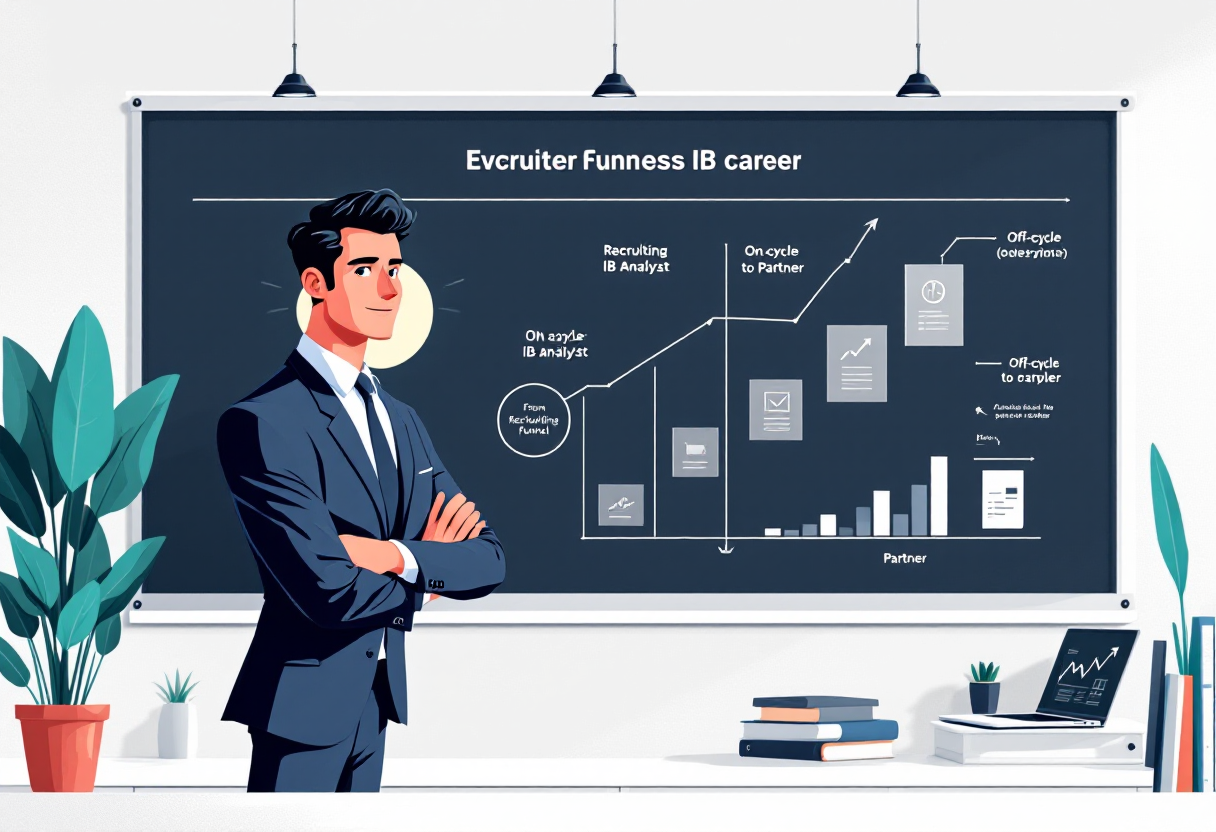
If you are asking how do you get into private equity in 2026, the honest answer is that the on-cycle recruiting calendar has compressed by roughly 12 months in the last three years, and the path that worked in 2018 (two full years of investment banking, then recruit) now ends with offers handed out before most analysts close their first deal. The Heidrick and Struggles 2025 North American Private Equity Investment Professional Compensation Survey found that roughly 70 percent of pre-MBA associates at U.S. buyout firms came directly from investment banking analyst programs, with the second-largest bucket (about 15 to 20 percent) coming from top-tier management consulting. The remaining slots split across direct-from-undergrad pipeline programs, lateral hires from corporate development, and operator routes that lead to portfolio company seats first.
Thinking About a Private Equity Exit For Your Business?
CT Acquisitions is an M&A advisory firm: we advise sellers, work with buyers and run exit planning. No fee to you on buy-side introductions; sell-side mandates are paid on success at closing. We bring qualified PE acquirers to lower-middle-market owners and run the process end to end.
Book a Free ConsultationWhat This Actually Means: The Industry Has Changed
Private equity in 2026 is a 13 trillion dollar global asset class managing capital for pension funds, sovereign wealth funds, insurance companies, and family offices. Preqin reported total assets under management of roughly 8.2 trillion dollars at the end of 2024 for traditional buyout, growth equity, and venture combined, and the broader alternatives universe (adding credit, real assets, and secondaries) pushed past 13 trillion by mid-2025. That growth has pulled headcount with it. Bain and Company estimated in its 2025 Global Private Equity Report that the industry added more than 30,000 net new investment professional seats between 2020 and 2024 across North America, Europe, and Asia.
The result is a market that hires more people than it ever has, while simultaneously raising the bar on the front door. Mega-funds like Blackstone, KKR, Apollo, Carlyle, and Bain Capital still run on-cycle processes that look for a specific resume profile (top investment bank, top group, top school, top GPA). Middle-market and lower-middle-market firms run year-round, off-cycle processes that weight relevant deal experience and cultural fit above pedigree. Credit funds, growth equity shops, and special situations groups run their own parallel tracks. Understanding which lane you are competing in is the difference between an offer and silence.
This guide walks through the six real entry paths in order of how many associates each produces, then covers the recruiting calendar, interview gauntlet, compensation math, and the lateral mistakes that close the door for good.
The Six Real Paths Into Private Equity
Path One: The Pre-MBA Investment Banking Analyst Route (Roughly 70 Percent of Pre-MBA Associates)
This is the largest pipeline by a wide margin. A graduating senior takes an investment banking analyst seat at a bulge bracket (Goldman Sachs, Morgan Stanley, JPMorgan, Bank of America, Citi, Barclays, UBS), a top elite boutique (Centerview, Evercore, Lazard, Moelis, PJT Partners, Guggenheim, Perella Weinberg), or a strong middle-market bank with a sector specialty (Houlihan Lokey, William Blair, Harris Williams, Lincoln International, Piper Sandler, Jefferies). After 12 to 24 months as an analyst, that person interviews for a pre-MBA associate seat at a buyout firm with a start date 18 to 24 months in the future.
Inside that pipeline, group matters as much as bank. Wall Street Oasis recruiting data from 2025 showed that the highest PE placement rates came from M&A, lev fin (debt-financing), financial sponsors, and the top industry coverage groups (technology, healthcare, industrials, consumer). Restructuring groups at PJT, Houlihan Lokey, Moelis, Lazard, and Evercore feed disproportionately into distressed and special situations funds. Capital markets and equity research seats face a harder climb because the day-to-day work involves less of the modeling, diligence, and process management that PE firms test for in interviews.
Path Two: The Management Consulting Route (15 to 20 Percent)
McKinsey, Bain, and BCG (collectively MBB) place a steady stream of associates and engagement managers into private equity, particularly into firms with an operational improvement thesis. Bain Capital, Advent International, Berkshire Partners, TPG Capital, Audax Group, and L Catterton all hire heavily from MBB. The pitch is straightforward: a consultant who has spent two years inside portfolio companies running commercial diligence, cost-out workstreams, and pricing studies brings exactly the skill set a value-creation team needs.
Consulting candidates compete most effectively for operationally focused funds and for sector-specialist seats (healthcare services, software, consumer, industrials). They face a steeper climb at execution-heavy mega-funds where the role is closer to a capital markets banker than a strategy operator. Bain Capital is the canonical exception because its founders came out of Bain and Company, and the firm runs a recognized consultant-to-investor conversion path.
Path Three: The Post-MBA Route (Top MBA Plus Pre-MBA Experience)
Harvard Business School, Wharton, Stanford GSB, Chicago Booth, Columbia Business School, and Kellogg supply the bulk of post-MBA hires. The 2024 to 2025 employment reports from those schools showed PE and venture capital combined accounting for 15 to 25 percent of total graduating placements depending on the school and the year. Wharton reported 16.0 percent of the Class of 2024 going to PE or VC. HBS reported a similar 15 to 17 percent range. Stanford GSB skews higher toward VC and growth equity (combined PE plus VC was 18.5 percent of the Class of 2024).
The post-MBA path is rarely a clean reset. Firms hiring post-MBA associates and senior associates expect 2 to 4 years of pre-MBA experience in investment banking, consulting, or as a pre-MBA PE associate. Career switchers without pre-MBA finance experience face long odds. The post-MBA route is best understood as a continuation of the pre-MBA path with a credentialing detour, not as an independent entry.
Path Four: The Operator and Portfolio Company Route
Operating partners, value-creation team members, and senior operators inside portfolio companies represent a small but growing share of the industry. KKR Capstone, Bain Capital Portfolio Group, Carlyle Solutions Group, Apollo Impact, and similar in-house operating teams hire former executives (CFOs, COOs, division presidents) who have run real P&L. The compensation profile is different (often heavier on cash, lighter on carry) and the entry age skews older (typically 35 to 50). For an experienced operator who has run a 50 million to 500 million dollar revenue business through scale, M&A integration, or a turnaround, this is the most accessible PE seat available.
A related path is the portfolio company CFO or COO seat as a stepping stone. Some PE firms identify candidates inside portfolio companies and convert them to firm-level operating roles after a successful hold period. The work is the work of running a company, not investing, but it puts the operator inside the PE economic model and inside the relationship.
Path Five: The Direct-from-Undergrad Route (Rare But Expanding)
Until roughly 2018, almost no buyout firm hired directly from undergrad. That has changed. Carlyle launched its Pathway program. Apollo runs a Tier 1 Apollo Analyst Program. Blackstone hires undergrads into specific groups. Bain Capital, Vista Equity Partners, Thoma Bravo, Audax, Berkshire Partners, and a cluster of Boston firms (Berkshire, HarbourVest, Summit Partners, TA Associates, Charlesbank) now run targeted undergrad programs. The Buyside Hub 2025 recruiting tracker counted 28 U.S. buyout and growth firms running active undergrad pipelines, up from 6 in 2018.
Volume is still small. A typical undergrad program hires 2 to 8 analysts per year per firm. Selection criteria look like investment banking analyst selection but with a higher bar (target school, GPA above 3.7, prior PE or banking internship, technical proficiency at modeling). For a candidate at Wharton, Harvard, MIT, Stanford, Princeton, Yale, Booth undergrad, NYU Stern, or a similar program with two summer internships in finance, the direct path is now a real option.
Path Six: The Credit, Special Situations, and Adjacent Route
Private credit and special situations are the fastest-growing corners of the alternatives universe. Preqin reported that private credit AUM crossed 1.7 trillion dollars in 2024 and is projected to reach 2.8 trillion by 2028. Ares, Blue Owl, Sixth Street, Oaktree, GoldenTree, Golub Capital, Antares, and Owl Rock all hire from lev fin, restructuring, and direct lending backgrounds. The work is closer to credit underwriting than to control-stake equity investing, but the seats pay competitively and frequently serve as a side-door into traditional buyout teams within the same firm.
Special situations and distressed groups (Apollo Hybrid Value, Oaktree Special Situations, KKR Special Situations, Centerbridge, Anchorage, Silver Point) hire heavily from restructuring banking and from law firms with bankruptcy practices. These seats are smaller in headcount but pay at the high end of the PE compensation curve.
The On-Cycle Recruiting Calendar (And Why It Keeps Moving Earlier)
On-cycle is the synchronized recruiting process that mega-fund and upper-middle-market sponsors run for pre-MBA associate seats. It is the single most-discussed feature of PE recruiting because the timeline keeps compressing. PE Hub and Private Equity International reported in late 2024 that the 2026 start-date class was effectively closed by August 2024, meaning first-year analysts received and accepted offers within roughly 6 to 10 weeks of starting their banking jobs.
Here is the rough calendar as it stood for the most recent cycle:
| Year | On-Cycle Kickoff | Process Length | Start Date For Hired Analyst |
|---|---|---|---|
| 2018 cycle | October of Year 1 | 4 to 6 weeks | Summer of Year 3 |
| 2021 cycle | September of Year 1 | 3 to 5 weeks | Summer of Year 3 |
| 2023 cycle | September of Year 1 | 2 to 4 weeks | Summer of Year 3 |
| 2024 cycle | August of Year 1 | 1 to 3 weeks | Summer of Year 3 |
| 2025 cycle | July to August of Year 1 | 72 hours to 2 weeks | Summer of Year 3 |
The functional impact is that the most important PE prep work now happens before the banking job starts. Headhunters (Henkel Search Partners, Amity Search Partners, CPI, SG Partners, Gold Coast Search, Bellcast, Oxbridge) begin candidate outreach to summer analysts before their senior year ends. The “off-cycle” middle-market process runs continuously throughout the year and is now the dominant path for any candidate who is not at a top investment banking group in a top city.
Mega-Fund Versus Middle-Market: Two Different Games
Confusing mega-fund and middle-market recruiting is one of the most common mistakes a candidate makes. The processes look different at every stage.
| Dimension | Mega-Fund (KKR, Blackstone, Apollo, Carlyle, Bain Capital) | Middle-Market and Lower-Middle-Market |
|---|---|---|
| Process | On-cycle, headhunter-driven, 72 hours to 2 weeks | Off-cycle, year-round, direct application or warm intro |
| Candidate profile | Top group at top BB or EB, top school, 3.7 plus GPA | Wider range of banks and schools, deal experience weighted heavily |
| Interview format | Modeling test (3 hour LBO), paper LBO, case, fund-specific deal walk | More qualitative, longer (5 to 10 rounds), heavy on cultural fit |
| Decision speed | Same week or next week | 4 to 12 weeks |
| Pre-MBA associate base salary | 175K to 225K | 150K to 200K |
| Pre-MBA associate all-in | 325K to 425K | 225K to 350K |
| Carry | Usually not granted at associate level | Sometimes granted at senior associate level |
| Promote path | 2 years then MBA, return as senior associate | Often direct promote to senior associate or VP without MBA |
The Heidrick and Struggles 2025 survey put the median pre-MBA associate all-in compensation at large U.S. buyout firms (defined as 5 billion dollars plus in AUM) at 348,000 dollars for the 2024 review year, with the 75th percentile at 408,000 dollars. Middle-market associates (firms with 1 to 5 billion dollars AUM) came in at a median of 287,000 dollars all-in. Lower-middle-market and growth equity ran below that, with growth equity associates often taking lower cash compensation in exchange for earlier carry participation.
The Interview Gauntlet: What Actually Gets Tested
The PE interview is not a finance trivia quiz. It is a structured evaluation of four things: (1) can you build and defend an LBO model under time pressure, (2) can you talk about a real deal with the depth of an investment committee memo, (3) do you have a defensible thesis on a sector or company, and (4) would the team want to spend 80 hours a week with you in a cramped war room.
The Paper LBO
The paper LBO is a 5 to 15 minute verbal exercise. The interviewer gives you a simple set of inputs (purchase price multiple, debt ratio, growth, margin, exit multiple) and asks you to walk through to an IRR or MOIC without a calculator. Strong candidates can hit a clean MOIC within 30 seconds and an approximate IRR within 90 seconds. Failure here ends the interview immediately.
The Three-Statement LBO Model Test
Most mega-funds and upper-middle-market firms run a timed modeling test of 90 minutes to 4 hours. You build a full LBO with sources and uses, debt schedule (revolver, TLA, TLB, mezzanine, sometimes high-yield), three-statement projections, returns analysis, sensitivity tables, and a quick written investment recommendation. The bar is not whether you finish. The bar is whether your model balances, your returns make sense, and your recommendation reads like an investment committee memo.
The Deal Walk
You will be asked to talk through one or two transactions from your banking or consulting experience. The interviewer wants the deal as if you were the sponsor, not the banker. That means thesis, key diligence questions, downside cases, value creation plan, exit timing, and what could go wrong. Practiced candidates rehearse 3 to 5 deal walks in advance, including at least one transaction where the deal had real problems or did not close.
The Investment Pitch
Some firms ask candidates to pitch a public company or a private deal as if presenting to the investment committee. This is most common at sector-specialist funds (Vista, Thoma Bravo, Stone Point, Roark Capital, L Catterton). The pitch tests sector knowledge, thesis development, and the ability to defend a position under cross-examination. A weak pitch with strong defense often beats a strong pitch with weak defense.
The Fit Round
Fit interviews at PE firms are not warm chats. They are structured behavioral interviews testing communication, judgment, and resilience. Common questions include why this firm specifically, walk through a time you disagreed with a senior banker on a deal, and what is the biggest mistake you have made on a transaction. Candidates who cannot articulate why this firm beats five other firms with similar strategies do not advance.
Worked Example: A Pre-MBA Associate Compensation Model
Consider Alex, a graduating senior who accepts an analyst seat in the M&A group at a top elite boutique. The compensation trajectory looks like this through year five of a career:
| Role | Years | Base | Bonus | All-In Cash | Carry |
|---|---|---|---|---|---|
| Investment Banking Analyst Year 1 | 0 to 1 | 110K | 90K | 200K | 0 |
| Investment Banking Analyst Year 2 | 1 to 2 | 125K | 120K | 245K | 0 |
| Pre-MBA Associate Year 1 (mega-fund) | 2 to 3 | 200K | 175K | 375K | 0 |
| Pre-MBA Associate Year 2 (mega-fund) | 3 to 4 | 225K | 200K | 425K | Token allocation |
| MBA Year 1 | 4 to 5 | 0 | 50K summer internship | 50K | 0 |
Senior associate, VP, principal, and partner compensation follows a steep curve as carry vests. The Heidrick and Struggles 2025 data showed median VP all-in cash of 525,000 dollars at large funds, with carry-allocated dollars (assuming a successful fund cycle) running 750,000 to 1.5 million dollars per year on a vested basis. Partner all-in for a fully vested partner at a top fund routinely crosses 5 million dollars per year, with carry from a single successful fund cycle running 10 million to 50 million dollars or more in lifetime distributions.
The catch is that carry only pays when the fund returns above its hurdle (usually 8 percent IRR) and a clawback applies if later deals underperform. Heidrick and Struggles found that 31 percent of associates surveyed in 2024 reported receiving zero realized carry distributions from their first fund cycle, because their tenure ended before the fund harvested.
Common Mistakes That End A PE Path Before It Starts
Mistake One: Lateraling to PE Too Late In The Analyst Program
The on-cycle calendar is brutal but consistent. A candidate who waits until year 2 of banking to start PE recruiting is competing in a market where year 1 candidates have already locked up the seats. Off-cycle middle-market remains available, but the mega-fund door closes hard by month 12 of the banking program.
Mistake Two: Undifferentiated School and Bank Combination
A candidate from a non-target school working at a non-target bank in a non-PE-feeder group faces nearly impossible odds at on-cycle mega-fund recruiting. The realistic move is to compete for off-cycle middle-market seats, or to lateral within banking first to a stronger group before re-attempting PE.
Mistake Three: No Real Deal Experience
PE interviewers test for transactions you have actually worked on, not pitches. An analyst who has only built marketing books, ran teasers, and managed virtual data rooms without sitting in on diligence sessions, structuring calls, or financing negotiations will fail the deal walk. Smart analysts angle for deal staffings early, even if it means working extra hours on the side.
Mistake Four: Overweighting Mega-Funds and Ignoring Strong Middle-Market
The middle-market and lower-middle-market PE industry employs more professionals than the mega-fund tier and pays competitively at senior levels. For a candidate who is not at the absolute top of the banking pipeline, betting everything on a mega-fund process and ignoring middle-market off-cycle is a strategic error. Many of the best long-term careers in PE are at firms most undergrads have never heard of.
Mistake Five: Treating The MBA As A Reset
A candidate without pre-MBA finance experience who applies to HBS, Wharton, or Stanford expecting to land a PE seat post-MBA is fighting a losing battle. PE firms hire post-MBA from the pool of people who already had pre-MBA PE, banking, or top consulting backgrounds. Without that foundation, the post-MBA PE path is closed at almost every brand-name firm.
Mistake Six: Ignoring The Headhunters
Headhunters run on-cycle. A candidate who does not have a strong relationship with at least three of the major PE recruiting firms (Henkel, Amity, CPI, SG, Gold Coast, Bellcast, Oxbridge, Ratio) will not see the best processes. The intro happens early, often in the spring before the banking job starts. Reaching out to a headhunter for the first time in November of analyst year 1 is too late.
The Step-By-Step Path For A Candidate Starting Today
The order of operations matters. Here is a clean sequence for an undergraduate sophomore or junior aiming at a PE seat.
- Phase 1 (Sophomore Year): Land a summer finance internship. Boutique investment bank, regional bank, or family office count. The goal is to have one finance line on the resume before junior recruiting starts.
- Phase 2 (Junior Year Fall): Recruit for a junior-year banking summer internship at a target bank. Aim for M&A, lev fin (debt-financing), financial sponsors, or a strong industry coverage group. Convert that internship to a full-time return offer.
- Phase 3 (Senior Year): Sign the banking full-time offer. Reach out to PE headhunters in spring of senior year. Begin reading PE deal commentary (Mergermarket, PitchBook, Axios Pro, Bloomberg Deals).
- Phase 4 (Pre-Banking Summer): Build technical fluency. Complete a paid LBO modeling course (Wall Street Prep, Breaking Into Wall Street, Training The Street, Adventis). Practice paper LBOs daily. Build a model from scratch on a public deal.
- Phase 5 (Banking Analyst Year 1, Months 1 to 6): Begin headhunter coffee meetings. Run mock interviews with second-year analysts who completed the prior cycle. Have 3 to 5 deal walks ready in detail.
- Phase 6 (Banking Analyst Year 1, Months 6 to 9): Execute the on-cycle process. Take headhunter calls. Convert to firm-specific interviews. Accept or decline offers within 24 to 72 hours.
- Phase 7 (Banking Analyst Year 2): Continue to perform. Stay in close contact with the PE firm that offered. Many associates have offers rescinded for poor performance in the bridging year.
- Phase 8 (Pre-MBA Associate, Years 1 to 2): Decide MBA or direct promote. Strong associates at top funds are increasingly offered direct senior associate promotes without MBA. Mid-tier associates pursue HBS, Wharton, Stanford, Booth, Columbia, or Kellogg for two years before returning.
Frequently Asked Questions
Can you get into private equity without investment banking experience?
Yes, but the path is narrower. Management consulting (MBB) is the second-largest pipeline. Direct-from-undergrad programs at Carlyle, Apollo, Blackstone, Bain Capital, Vista, Thoma Bravo, and roughly two dozen other firms now hire small classes each year. Operator and portfolio company routes lead to value-creation seats. Credit funds hire from lev fin (debt-financing) and direct lending backgrounds. Outside of these tracks, the path requires either an MBA reset combined with a pre-MBA finance pivot, or an unusual sector-specific credential.
What GPA do you need to get into private equity?
Mega-fund and upper-middle-market firms screen for 3.7 plus from target schools, with 3.8 plus for non-target schools as compensation. Middle-market firms are more flexible if deal experience is strong. GPA matters less after the first PE seat is secured, but it is a hard filter at the on-cycle resume screen stage.
Do you need a Series 7 for private equity?
No. Investment banking analysts complete the Series 79 and Series 63, and PE firms generally do not require either. The licensing structure that applies to broker-dealers and registered investment advisers does not generally apply to associates at most private equity firms. For more detail on the licensing question, see the guide on whether you need a Series 7 for private equity at do you need a Series 7 for private equity.
How much money do private equity associates make?
Pre-MBA associate all-in cash compensation ran 225,000 to 425,000 dollars in 2024 per the Heidrick and Struggles 2025 survey, with mega-funds at the top of the range and middle-market firms below. Senior associates run 350,000 to 600,000 dollars all-in. VPs run 500,000 to 1 million dollars cash plus carry. Principals run 700,000 to 2 million dollars cash plus carry. Partners cross multiple millions per year with significant variability driven by fund performance and carry vesting.
Is private equity worth it compared to investment banking?
For most analysts, yes, on a strict economic basis. PE compensation curves bend higher than banking compensation curves, and PE work concentrates on a smaller number of deeper transactions rather than the constant pitch cycle of banking. Hours are similar (60 to 80 per week) but with fewer fire-drill weekends. The trade-off is that PE careers are more thesis-dependent (your deals must perform for you to earn carry), and the up-or-out culture at most funds means roughly half of pre-MBA associates leave the industry within five years.
What is the difference between private equity and venture capital?
Private equity (specifically buyout) takes majority control positions in mature, cash-flowing businesses, typically using acquisition debt to amplify returns. Venture capital takes minority equity positions in early-stage companies expected to grow rapidly without meaningful current cash flow. The skill sets, deal structures, and return profiles differ substantially. For a broader view of how PE actually generates returns, see the guide on private equity investment how it really works.
How CT Acquisitions Approaches Private Equity Buyers
CT Acquisitions sits on the sell-side of the same market. We represent lower-middle-market business owners in sale processes, and the buyers at the table are frequently the same private equity firms candidates are competing to join. No fee to you on buy-side introductions; sell-side mandates are paid on success at closing. For owners considering a PE sale, the practical implication is that we run a competitive process, source 10 to 30 qualified PE acquirers per mandate, and negotiate price and terms against them, not for them.
For candidates studying the industry from the inside, watching how sell-side processes run is one of the fastest ways to understand how PE firms actually deploy capital. The diligence requests, the QofE workstream, the financing process, the management presentation, and the SPA negotiation are all visible from the sell-side seat in a way they are not from the buy-side seat until associate year 2 or 3. Owners interested in understanding the buy-side perspective can review the sell your business overview for the inverse view of the same process.
What to Do Next
The path into private equity in 2026 is more compressed, more headhunter-dependent, and more pedigree-sensitive than it was five years ago. The fundamentals remain the same. Strong technical preparation, real deal experience, a clear thesis, and a credible reason to want this specific firm beat every other variable. For candidates starting today, the work begins before the banking analyst seat starts, and the offer arrives before most peers know the process has opened.
For business owners on the other side of the table considering a PE sale, the process looks different. The buyer competition, valuation math, structure choices, and timeline are all things our team runs daily.
Considering Selling To Private Equity?
No fee to you on buy-side introductions; sell-side mandates are paid on success at closing. You get a competitive process, qualified buyers, and a senior advisor at the table for every conversation.
Book a Free ConsultationRelated reading: Do You Need a Series 7 for Private Equity | Private Equity Investment: How It Really Works | Sell Your Business