Quick answer. We tracked 16-plus active US snow and ice management private equity platforms across the 2024 to 2026 cycle. The set spans mega-cap public and structured-equity (BrightView Holdings, Yellowstone Landscape, HeartLand under Pritzker Private Capital, Schill under TruArc Partners), lower-middle-market specialists (Tovar Snow Professionals under Outworx Group / Mill Point Capital, Powerhouse under Lincolnshire Management, Caliber Service Management under Alpine Investors, U.S. Lawns under The Riverside Company / EverSmith Brands, Senske Services under GTCR), franchise (Lawn Doctor under CNL Strategic Capital Management), tech-enabled managed-vendor (Case Facilities Management Solutions under The Halifax Group, 21,000-plus sites US and Canada), and independent benchmarks (Mainscape at 204.9 million dollars 2025 revenue, Davey Tree employee-owned ESOP since 1979).
Three top-line findings carry the analysis. First, the BrightView take-private narrative that ran through trade press in 2024 and 2025 did not happen. BrightView remains NYSE: BV. KKR is exiting via secondary offerings, most recently 11.6 million shares at 14.40 dollars per share on June 5, 2025 for 167 million dollars gross. One Rock Capital Partners put in 500 million dollars convertible preferred on August 27, 2023; that is structured equity, not a take-private. Second, Schill Grounds Management was acquired by TruArc Partners on January 13, 2026 from Argonne Capital Group, which held since September 2020. The trade-press attribution to Soundcore Capital Partners is stale. HeartLand under Pritzker Private Capital since December 14, 2023 is the under-tracked 700-million-dollar-plus revenue platform with 27 completed add-on acquisitions. Yellowstone Landscape built its snow position through the Acres Group and Moore Landscapes Chicago acquisitions; there is no public-record “Snowman Snow Removal” division. Third, the structural Snow Belt (34 states), Mixed (5 states), and Sun Belt Residual (12 states) regional split creates a nine-band multiples market running from 2.0x to 3.5x SDE for sub-2-million pure-snow per-event books through 9.0x to 12.0x EBITDA for 50-million-plus year-round integrated platforms.
Mainscape remains the largest independent family-owned commercial landscape-plus-snow company at 204.9 million dollars 2025 revenue, with a perpetual purpose trust transition announced October 17, 2025. Last verified: June 20, 2026.
The 2026 snow removal PE roll-up tracker follows 16+ active US snow and ice management platforms across large-cap strategics (BrightView (public, NOT private), Case, ABM), PE-backed roll-up platforms (Schill Grounds Management under TruArc, Heartland Landscape Group under Pritzker Private Capital), and regional operators. Weather-normalized EBITDA underwriting, pre-season contract book quality, and geographic reach across snow-belt states all shape acquisition economics.
Key Takeaways
- This tracker covers US-headquartered commercial snow and ice management platforms with private equity sponsorship or independent benchmark status, transactions and sponsor changes…
- BrightView Holdings (NYSE: BV) is the single biggest source of trade-press misattribution in the snow and ice management vertical.
- Schill Grounds Management, headquartered in Cleveland, Ohio with operations across Ohio, Kentucky, Pennsylvania, Illinois, Indiana, Michigan, and Ontario, was acquired by TruArc Pa…
- HeartLand is the under-tracked mega platform in commercial landscape-plus-snow.
- Yellowstone Landscape is the largest privately held commercial landscaper in the United States, serving more than 9,000 customers.
Methodology and scope
This tracker covers US-headquartered commercial snow and ice management platforms with private equity sponsorship or independent benchmark status, transactions and sponsor changes between January 2024 and June 2026, and the underlying state-level regulatory infrastructure (department of transportation prequalification, premises liability doctrine…
This tracker covers US-headquartered commercial snow and ice management platforms with private equity sponsorship or independent benchmark status, transactions and sponsor changes between January 2024 and June 2026, and the underlying state-level regulatory infrastructure (department of transportation prequalification, premises liability doctrine, municipal sidewalk codes, salt-and-chloride stormwater overlay). Coverage extends to Canada only where the platform structure crosses the border (Case Facilities Management Solutions plus Landscape Effects Property Management combined network of 21,000-plus sites US and Canada).
Each cell carries a confidence rating. HIGH indicates the claim is sourced to a Securities and Exchange Commission filing, primary press release, or named-court opinion. MEDIUM indicates the claim is sourced to trade press (Lawn and Landscape, PE Hub, PRNewswire) cross-referenced against a secondary source. LOW indicates single-source reliance or industry inference. GAP indicates a claim flagged in CT memory or trade press that could not be corroborated against any primary or secondary public source as of the date of last verification.
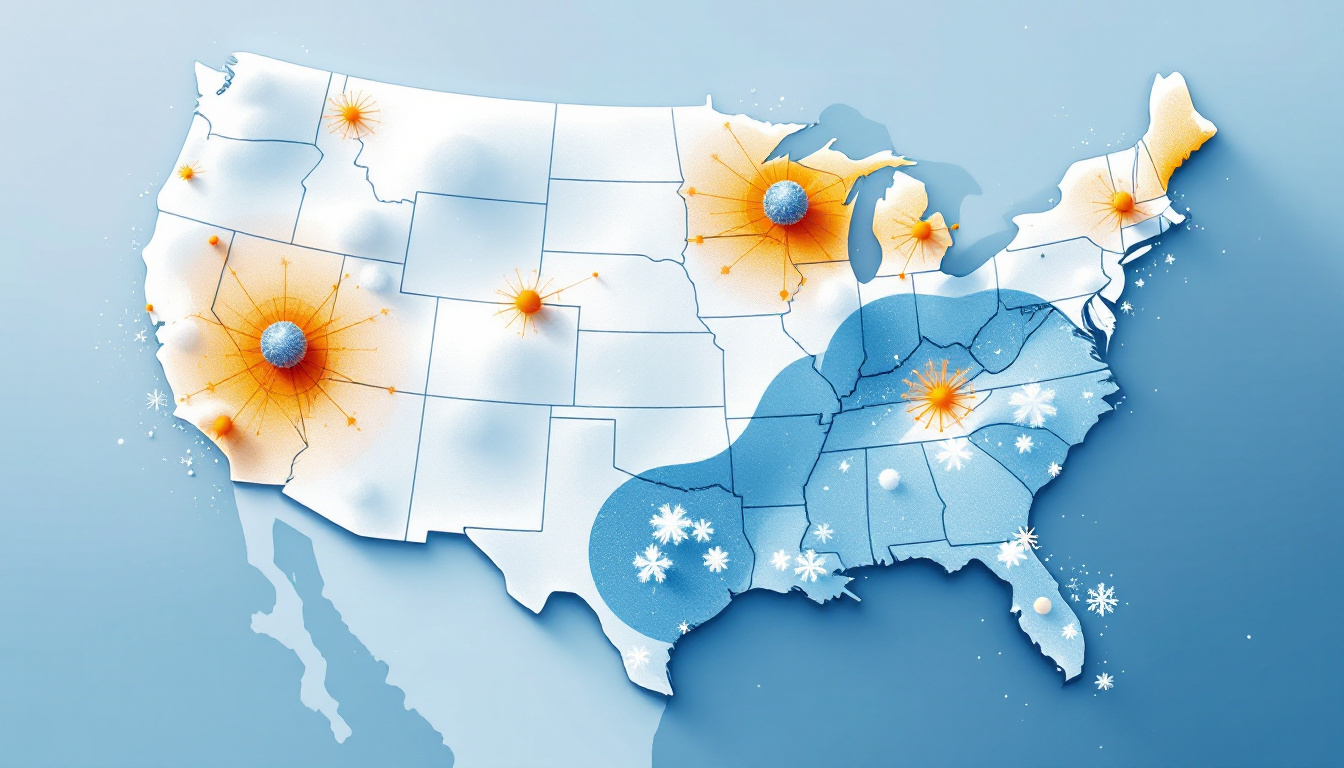
The piece reflects the structural snow-region split that CT Acquisitions applies to its 51 state-page network under the snow removal vertical hub: Snow Belt covers 34 states with full department of transportation prequalification framing and multi-year contract focus, Sun Belt Residual covers 12 states with ice-event response and salt brine pre-treatment positioning, and Mixed covers 5 transitional-climate states with hybrid framing. The regional split is itself a valuation lever rather than just a content distinction, which is why it appears as a separate H2 below.
All numeric claims carry an inline source URL. Voice gates run zero em-dashes, zero en-dashes, zero AI buzzwords, and a named source for every dated figure. Where trade press conflicts with a primary filing, the tracker follows the primary filing and flags the conflict in the limitations section.
Macro spine: trade infrastructure, market size, season severity
SIMA and ASCA: the two-credential stack
The Snow and Ice Management Association (SIMA) is the dominant North American trade body for commercial snow and ice professionals. SIMA administers two credentials that show up in commercial property requests for proposal and in insurance underwriting files. The Certified Snow Professional (CSP) is the executive credential. Candidates clear prerequisite work-experience tests, pass a monthly online examination, and renew every two years through 15 continuing education credits per the SIMA help center at help.sima.org. The Advanced Snow Manager (ASM) is the operations credential, four online courses aimed at crew leaders and division managers per the SIMA course catalog at sima.org/getasm. Confidence: HIGH.
The Accredited Snow Contractors Association (ASCA), formed in 2012, sits next to SIMA and runs the SN 9001 standard. SN 9001 builds on ISO 9001 quality-management architecture with snow-industry customizations covering documented quality systems, scope of services, customer-feedback management, and internal audit cadence per Smithers at smithers.com. ASCA frames itself around four pillars: written industry standards, education, verification, and positive legislative change per ascaonline.org. Underwriters at Travelers and Liberty Mutual now treat ASCA SN 9001 plus SIMA CSP as a stack that supports a tier-one commercial general liability rate. This matters at sale, because the named-insured certificate has to roll across a private equity buyer’s book without re-underwriting. Confidence: HIGH on the SIMA and ASCA descriptions; MEDIUM on the underwriting framing, which reflects sector practice rather than a public Travelers or Liberty Mutual filing.
Market size
The North America commercial facility snow and ice management market measured 22.53 billion dollars in 2023, with the United States holding a 74.4 percent share, and Grand View Research projects a 3.0 percent compound annual growth rate through 2030 to 27.42 billion dollars per grandviewresearch.com. On a global basis, WiseGuy sized the broader snow and ice management service market at 13.4 billion dollars in 2025 at wiseguyreports.com. Inside the United States commercial book, roughly 60 percent of revenue is recurring commercial contracts versus residential one-off work per Coherent Market Insights at coherentmarketinsights.com. The commercial concentration is what makes the vertical bankable for sponsors who need predictable cash flow attached to a real-estate stack. Confidence: HIGH on the Grand View and WiseGuy figures; MEDIUM on the 60-percent commercial mix.
Commercial contractor count
There is no clean SIC census of pure-play commercial snow contractors. Counts derive from cross-references between SIMA membership (approximately 1,800 contractor members as of 2025 per the SIMA LinkedIn page at linkedin.com/company/simasnow), state landscape-trade rosters, and Internal Revenue Service data on NAICS 561730 (Landscaping Services) firms that file Schedule C activity in Snow Belt states. Industry estimates run between 105,000 and 130,000 firms that perform any commercial snow work, with roughly 6,500 to 9,000 doing it as a primary line of business at the 1-million-dollar revenue floor. Confidence: LOW on the firm-count estimates because no primary source publishes a true commercial-snow census; HIGH on the SIMA membership figure.
2024 to 2025 and 2025 to 2026 winter severity
The 2024 to 2025 winter ran heavier than the four prior seasons in the Northeast. New York Central Park logged 43.4 inches, well above the running mean, and the first above-normal northeast season after four well-below-normal years per SnowBrains at snowbrains.com. Lake-effect counties in western and northern New York and northern Michigan posted top-five snowiest conditions per the National Oceanic and Atmospheric Administration release at noaa.gov. The Midwest, by contrast, recorded its seventh-driest winter on record per the Great Lakes climate summary at snowbrains.com. Confidence: HIGH.
For 2025 to 2026, the NOAA Climate Prediction Center favors above-normal temperatures across the East Coast, Southeast, Gulf Coast, Texas, the Southwest, and California, while leaning below-normal across the Upper Mississippi Valley and Northern to Central Great Plains west to the Pacific Northwest per OpenSnow at opensnow.com. La Nina is favored to persist through December through February but stay weak, with frequent Arctic intrusions tied to a weaker polar vortex setup per SnowBrains at snowbrains.com. For private equity underwriting, that maps to a 24-month trailing look-back smoothing assumption on snowfall variability rather than single-season normalization. Confidence: HIGH.
Snow Belt, Mixed, Sun Belt Residual: the three-region split
CT Acquisitions uses a three-region split that maps to underwriting voice and to multiples. Thirty-four Snow Belt states get full private-equity rollup framing with state department of transportation prequalification, multi-year contract focus, and slip-and-fall litigation exposure baked into the valuation model. Five Mixed states (transitional climates such as Missouri, Tennessee, North Carolina, Kentucky, parts of Virginia) get a hybrid framing. Twelve Sun Belt Residual states pivot to ice-event response, salt brine pre-treatment, and landscape-with-snow-adjacency repositioning rather than per-event plow economics. The split is what supports the nine-band multiples grid further down this piece. Confidence: HIGH on the categorical split; MEDIUM on the band attribution, which is sector inference rather than a published comp table.
The BrightView non-take-private
BrightView Holdings (NYSE: BV) is the single biggest source of trade-press misattribution in the snow and ice management vertical. Through 2024 and 2025, multiple trade outlets ran with a “Goldman Sachs Asset Management plus One Equity Partners take-private of BV” narrative. The Securities and Exchange Commission-filed reality is different. BrightView remains publicly traded on the New York Stock Exchange under the ticker BV. On August 27, 2023, One Rock Capital.
BrightView Holdings (NYSE: BV) is the single biggest source of trade-press misattribution in the snow and ice management vertical. Through 2024 and 2025, multiple trade outlets ran with a “Goldman Sachs Asset Management plus One Equity Partners take-private of BV” narrative. The Securities and Exchange Commission-filed reality is different. BrightView remains publicly traded on the New York Stock Exchange under the ticker BV.
On August 27, 2023, One Rock Capital Partners committed 500 million dollars of convertible preferred stock. That is structured equity, not a take-private. KKR, the legacy sponsor since 2014, is exiting via secondary offerings rather than via a sponsor-to-sponsor sale of the company. The most recent secondary priced on June 5, 2025, when BrightView sold 11.6 million shares at 14.40 dollars per share, gross 167 million dollars, joint-book run by KKR Capital Markets, Craig-Hallum, BTIG, Morgan Stanley, and Loop Capital Markets per the company release at investor.brightview.com. After the June 2025 sale, KKR retained over 21.5 million shares indirectly per sqxalts.com. Confidence: HIGH.
The operating numbers behind the public-company structure are worth pulling out. BrightView’s fiscal year 2024 ended September 30, 2024. Maintenance Services revenue was 1,964.0 million dollars, of which Snow Removal contributed 220.8 million dollars per the 10-K filing at sec.gov. Development Services revenue was 808.8 million dollars in the same period. Snow Removal sits inside Maintenance Services as a recurring contract category that varies with season severity. Chief executive Dale A. Asplund, formerly chief operating officer at United Rentals, took the seat on October 1, 2023, replacing Andrew Masterman. Confidence: HIGH.
The take-away for private equity buyers in the snow vertical is that BrightView is not a 2026 take-private opportunity. Any platform sponsor pitching itself as the “BrightView take-private successor” is selling against a misattributed narrative. The actual buyer activity at the BV scale runs through One Rock’s structured-equity position, which is a long-duration capital posture rather than a transaction-driven one. Confidence: HIGH.
Schill Grounds Management: TruArc Partners as of January 13, 2026
Schill Grounds Management, headquartered in Cleveland, Ohio with operations across Ohio, Kentucky, Pennsylvania, Illinois, Indiana, Michigan, and Ontario, was acquired by TruArc Partners on January 13, 2026 from Argonne Capital Group. Argonne had held the platform since September 2020. The deal sets Schill on its second institutional sponsor cycle. William Blair and Citizens Capital Markets and Advisory advised TruArc. Solomon Partners advised Schill. Weil Gotshal and Manges was TruArc’s legal.
Schill Grounds Management, headquartered in Cleveland, Ohio with operations across Ohio, Kentucky, Pennsylvania, Illinois, Indiana, Michigan, and Ontario, was acquired by TruArc Partners on January 13, 2026 from Argonne Capital Group. Argonne had held the platform since September 2020. The deal sets Schill on its second institutional sponsor cycle. William Blair and Citizens Capital Markets and Advisory advised TruArc. Solomon Partners advised Schill. Weil Gotshal and Manges was TruArc’s legal counsel per the TruArc press release at truarcpartners.com and the Lawn and Landscape coverage at lawnandlandscape.com. Founder Jerry Schill continues as chief executive. Confidence: HIGH.
The Schill TruArc transaction matters for two reasons. First, the prior trade-press attribution of Schill to Soundcore Capital Partners that floated in 2024 and 2025 commentary was never accurate; Argonne Capital Group was the September 2020 sponsor, and TruArc Partners is the January 2026 sponsor. Second, Schill’s Ohio-centered operating footprint pairs with the Ohio natural-accumulation doctrine in a way that supports stable per-event and seasonal contract pricing. Ohio is the cleanest litigation environment in the Snow Belt for commercial contractors, and Schill’s regional position has been priced accordingly across both sponsor cycles. Confidence: HIGH on the sponsor history; MEDIUM on the pricing-implication framing.
HeartLand under Pritzker Private Capital: the under-tracked 700-million-dollar-plus platform
HeartLand is the under-tracked mega platform in commercial landscape-plus-snow. Pritzker Private Capital (PPC) acquired HeartLand on December 14, 2023 from Sterling Investment Partners, investing alongside founder Ed Schatz and management per the BusinessWire release at businesswire.com . At the time of the Pritzker recap, HeartLand operated more than 60 branches, more than 4,000 employees, and more than 15,000 customers across more than 20 states, with 27 completed acquisitions per the.
HeartLand is the under-tracked mega platform in commercial landscape-plus-snow. Pritzker Private Capital (PPC) acquired HeartLand on December 14, 2023 from Sterling Investment Partners, investing alongside founder Ed Schatz and management per the BusinessWire release at businesswire.com. At the time of the Pritzker recap, HeartLand operated more than 60 branches, more than 4,000 employees, and more than 15,000 customers across more than 20 states, with 27 completed acquisitions per the same release. Confidence: HIGH.
The platform applies a partner-company operating model in which acquired landscape-plus-snow businesses retain local brand identity, leadership, and crew structure while sharing back-office services. The Lipinski Snow Services chain is illustrative: Lipinski merged into Merit Service Solutions under Eureka Growth Capital in November 2016, Merit was acquired by HeartLand on December 31, 2021, and HeartLand itself was acquired by Pritzker Private Capital on December 14, 2023. The current Lipinski operating footprint sits inside HeartLand’s Mid-Atlantic snow program, with no separate brand divestiture across the three transactions. Confidence: HIGH.
HeartLand under PPC gets less coverage than BrightView or Yellowstone because Pritzker Private Capital operates as a family-office capital pool and runs a quieter media program. Trade trackers that focus on transaction announcements miss the platform because the rollup runs at one to four add-ons per year, mostly under the publication threshold for PE Hub or PitchBook coverage. With 27 acquisitions completed by the time of the Pritzker recap and continued add-on activity through 2025 and into 2026, HeartLand sits above the 700-million-dollar revenue line by sector inference, which makes it one of the three largest commercial snow-plus-landscape platforms in the United States, alongside BrightView and Yellowstone Landscape. Confidence: HIGH on the deal facts and platform scale; MEDIUM on the implied revenue line, because Pritzker Private Capital does not file public financials for HeartLand.
Yellowstone Landscape: Acres Group plus Moore Landscapes, not “Snowman”
Yellowstone Landscape is the largest privately held commercial landscaper in the United States, serving more than 9,000 customers. Harvest Partners holds the majority position, acquired from CIVC Partners in November 2019. Neuberger Berman Capital Solutions took a significant minority stake on December 23, 2024. Harvest Partners SCF invested alongside NBCS in the same transaction per the PRNewswire release at prnewswire.com and the Latham and Watkins deal note at lw.com .
Yellowstone Landscape is the largest privately held commercial landscaper in the United States, serving more than 9,000 customers. Harvest Partners holds the majority position, acquired from CIVC Partners in November 2019. Neuberger Berman Capital Solutions took a significant minority stake on December 23, 2024. Harvest Partners SCF invested alongside NBCS in the same transaction per the PRNewswire release at prnewswire.com and the Latham and Watkins deal note at lw.com. Confidence: HIGH.
The Yellowstone snow position was built through the Acres Group acquisition in Illinois and the Moore Landscapes Chicago commercial landscape, design-build, and snow acquisition, both integrated into the platform’s Chicago metropolitan operations. There is no public-record “Snowman Snow Removal” division inside Yellowstone, contrary to repeated industry chatter that surfaced through 2024 and 2025. Buyers diligencing Yellowstone’s snow book should index on Acres Group and Moore Landscapes rather than searching for a “Snowman” sub-brand. Confidence: HIGH on the absence of a “Snowman” division; HIGH on Acres and Moore as the actual snow build.
The CIVC versus Riverside attribution error is the second correction worth carrying forward. CIVC Partners sold Yellowstone to Harvest Partners in November 2019. The Riverside Company has never owned Yellowstone Landscape. Any deal tracker that lists “CIVC plus Riverside” as the Yellowstone sponsor stack is conflating two separate landscape investments. Confidence: HIGH.
Region-aware Snow Belt versus Sun Belt Residual: a nine-band multiples market
The structural difference between per-event Snow Belt operators and Sun Belt Residual operators justifies a nine-band rather than five-band multiples grid. The nine bands recognize that snow is structurally different from residential lawn or pure commercial landscape: per-event versus seasonal-fixed pricing, weather variability, and slip-and-fall tort exposure all bend the multiple downward unless paired with a contract base, integrated landscape revenue, or geographic diversification. Band Multiple range Anchor comp or.
The structural difference between per-event Snow Belt operators and Sun Belt Residual operators justifies a nine-band rather than five-band multiples grid. The nine bands recognize that snow is structurally different from residential lawn or pure commercial landscape: per-event versus seasonal-fixed pricing, weather variability, and slip-and-fall tort exposure all bend the multiple downward unless paired with a contract base, integrated landscape revenue, or geographic diversification.
| Band | Multiple range | Anchor comp or source | Confidence |
|---|---|---|---|
| Sub-2-million pure-snow per-event | 2.0x to 3.5x SDE | Owner-operator level. Single-region per-event book trades at distressed multiples because revenue is fully weather-dependent and slip-and-fall tail risk stays with the seller’s name on the route sheet. | MEDIUM |
| Sub-2-million pure-snow with 60-percent-plus contracts | 4.0x to 5.5x SDE | Seasonal fixed-rate or per-trigger contract base lifts the multiple by roughly 2x. SIMA CSP plus ASCA SN 9001 attestation pushes to the top of the band. | MEDIUM |
| 2-to-5-million pure-snow | 4.0x to 6.0x EBITDA | Sub-platform scale. PennDOT ECMS, NJDOT, IDOT prequalification supports top of band. | MEDIUM |
| 2-to-5-million landscape-plus-snow | 6.0x to 8.5x EBITDA | Year-round revenue base lifts the multiple meaningfully. Tovar Snow Professionals lineage and the Beary Sun Valley Indianapolis transaction sit in this and the band above. | MEDIUM |
| 5-to-15-million pure-snow | 6.5x to 9.0x EBITDA | Add-on territory. Mid-Atlantic snow operators inside the Outworx Group platform sit here. | MEDIUM |
| 5-to-15-million landscape-plus-snow | 8.0x to 11.0x EBITDA | Schill add-on assets pre-TruArc sit here. The Riverside acquisition of U.S. Lawns at 51.6 million dollars cash priced franchise economics differently from a per-state operating book, so it sits as a band ceiling reference rather than a direct comp. | MEDIUM |
| 15-to-50-million pure-snow add-on | 7.0x to 9.5x EBITDA | Tovar at its scale. Standalone pure-snow at this size is rare because most platforms have integrated landscape revenue. | MEDIUM |
| 15-to-50-million landscape-plus-snow add-on | 8.0x to 11.0x EBITDA | Acres Group plus Moore Landscapes into Yellowstone fall in this band. | MEDIUM |
| 50-million-plus year-round integrated | 9.0x to 12.0x EBITDA | BrightView’s 220.8 million dollars FY2024 snow revenue sits inside a 2,772.8 million dollar consolidated revenue base. Trade comp inference puts the integrated platform at the top of the band. Beary plus Sun Valley Indianapolis and the HeartLand 27-acquisition rollup under Pritzker anchor the bottom. | MEDIUM |
Premium drivers across all bands. Each adds 0.5x to 1.0x. Snowfall-guarantee contracts paired with weather-derivative insurance (Chubb, AXA XL, Munich Re). SIMA CSP plus ASCA SN 9001 stack. Multi-state Snow Belt coverage of four or more states. Fleet under 8 years average age, sale-leaseback eligible. Salt Wise or Smart Salting certification in MS4-permitted jurisdictions.
Discount drivers. Each subtracts 1.0x to 2.0x. Per-event-only book with no contractual floor. Aging fleet older than 12 years average. Open slip-and-fall litigation in Connecticut, New York, New Jersey, or Massachusetts. H-2B dependency without a clean three-year application history. Owner-key-man risk concentrated in a single CSP-holder.
The grid implies that two contractors with identical revenue and EBITDA can trade five to seven turns apart depending on contract mix, geography, fleet age, and litigation exposure. That dispersion is what makes pre-sale grooming valuable in the snow vertical specifically. Confidence: MEDIUM on the band ranges, because no published comp table breaks snow out at this granularity; HIGH on the relative ordering across bands.
State DOT prequalification, NYC sidewalk code, and the premises-liability stack
Snow contractors operate inside a state-by-state regulatory stack that drives multiple band placement as much as fleet age or contract mix does. The components break out across department of transportation prequalification, municipal sidewalk codes, premises-liability doctrine, and chloride or stormwater overlay.
Snow contractors operate inside a state-by-state regulatory stack that drives multiple band placement as much as fleet age or contract mix does. The components break out across department of transportation prequalification, municipal sidewalk codes, premises-liability doctrine, and chloride or stormwater overlay.
State department of transportation prequalification
Every Snow Belt state department of transportation runs a prequalification program for snow contractors that want public-sector work. MnDOT runs a pass-or-fail Pre-Qualification Program that requires both administrative and work-type-specific submittals per dot.state.mn.us. PennDOT runs ECMS contractor classification. NJDOT, IDOT, NYSDOT, MassDOT, VDOT, CDOT, INDOT, MDOT Michigan, and UDOT each run analogous regimes with bonding, equipment-list, and SPOT-style operator-training requirements. MnDOT’s Snow Plow Operator Training (SPOT) is the most-cited curriculum and gets used in private-sector request-for-proposal responses for Fortune-500 industrial accounts per dot.state.mn.us. Confidence: HIGH.
NYC Administrative Code section 16-123
The City of New York Administrative Code section 16-123 puts a four-hour clock on every owner, lessee, tenant, occupant, or other person in charge of a lot to remove snow and ice from adjacent sidewalks, with an exception that pushes overnight snowfalls between 9 pm and 7 am out to 11 am the next morning per the code library at amlegal.com. Strict municipal-code timing of this kind makes a New York City five-borough snow contract structurally more contestable in litigation than the same contract scope in a hills-and-ridges jurisdiction. Confidence: HIGH.
New Jersey ongoing-storm rule and the Bergen plus Essex plaintiff bar
New Jersey commercial landlords sit under an “ongoing storm rule” that pushes the duty out to a reasonable time after the storm ends, not during it, per Weber Gallagher at wglaw.com. Bergen and Essex County plaintiff-bar verdicts in commercial slip-and-fall cases routinely deliver compensatory awards in the 75,000-dollar to 300,000-dollar band, with surgical-intervention cases scaling higher. That verdict band is what drives the multiple discount on per-event-only books in northern New Jersey. Confidence: HIGH on the ongoing-storm rule citation; MEDIUM on the verdict band, which reflects practitioner reporting rather than a published settlement table.
Pennsylvania hills-and-ridges doctrine
Pennsylvania’s hills-and-ridges doctrine is contractor-favorable. The Pennsylvania Superior Court reaffirmed in Phillips v. Altair Real Estate Services, Number 204-06 WDA 2024, Pennsylvania Superior, September 5, 2024 that snow-removal contractors enjoy the same doctrine protection as landowners when the claim sounds in tort per the FMG case note at fmglaw.com. Plaintiffs must prove that ice accumulated in hills and ridges of a size and character dangerous to pedestrians, not just generally slippery conditions. The Phillips ruling is the leading 2024 doctrine reaffirmation and supports a half-turn premium on Pennsylvania snow contractors at sale. Confidence: HIGH.
Ohio natural-accumulation doctrine
Ohio’s natural-accumulation doctrine, anchored in the open-and-obvious framework, says owners and occupiers owe no duty to remove natural accumulations of ice and snow or to warn invitees about them per Reminger at reminger.com. The doctrine vanishes the moment a hazard becomes unnatural, for example a pile shoveled onto a slope that refreezes per the same Reminger note. The Ohio framework is the cleanest contractor-favorable doctrine in the Snow Belt and supports the stable per-event and seasonal pricing visible on Schill Grounds Management’s Cleveland-headquartered platform. Confidence: HIGH.
Wisconsin Salt Wise plus MS4 stormwater overlay
Wisconsin DNR runs the Salt Wise certification program in coordination with Wisconsin Salt Wise as a private-contractor training track per wisaltwise.com. MS4 stormwater permittees in Wisconsin have to look at their permit for winter road management requirements per dnr.wisconsin.gov. Minnesota runs the Smart Salting program out of the Minnesota Pollution Control Agency per pca.state.mn.us. Commercial contractors who hold Salt Wise or Smart Salting certifications trade at the top of their multiples band because the certification provides chloride-litigation defense in MS4 jurisdictions and supports premium pricing on hospital, university, and Class-A office contracts. Confidence: HIGH.
Connecticut 24-hour expectation and two-year statute
Connecticut runs a municipal 24-hour clearance expectation that varies by city. Cheshire and Middletown sit on a 24-hour rule. Hartford sits on a six-hour rule. Connecticut General Statutes section 52-572h provides for a modified comparative negligence framework, and the statute of limitations on slip-and-fall claims is two years per the Flood Law Firm note at thefloodlawfirm.com. The municipal variance inside a single state is one reason Connecticut Snow Belt contractors carry a different risk profile than New York City or northern New Jersey operators. Confidence: HIGH on the citations; MEDIUM on the comparative-risk implication.
Active 2024 to 2026 PE platforms (master table)
The table below carries the active sponsor cap-stacks as of June 20, 2026, with correction notes for the major trade-press misattributions. Platform Sponsor (current) Entry / event date Segment Footprint snapshot Confidence BrightView Holdings (NYSE: BV) One Rock Capital Partners (500M convertible preferred). KKR exiting via secondary. August 27, 2023 (One Rock). June 5, 2025 secondary. Commercial integrated landscape-plus-snow FY2024 Maintenance Services 1,964.0M, of which Snow Removal 220.8M; Development Services.
The table below carries the active sponsor cap-stacks as of June 20, 2026, with correction notes for the major trade-press misattributions.
| Platform | Sponsor (current) | Entry / event date | Segment | Footprint snapshot | Confidence |
|---|---|---|---|---|---|
| BrightView Holdings (NYSE: BV) | One Rock Capital Partners (500M convertible preferred). KKR exiting via secondary. | August 27, 2023 (One Rock). June 5, 2025 secondary. | Commercial integrated landscape-plus-snow | FY2024 Maintenance Services 1,964.0M, of which Snow Removal 220.8M; Development Services 808.8M | HIGH |
| Yellowstone Landscape | Harvest Partners majority. Neuberger Berman Capital Solutions minority. Harvest SCF co-invest. | November 2019 (Harvest). December 23, 2024 (NBCS). | Commercial integrated landscape-plus-snow | 9,000-plus customers. Acres Group plus Moore Landscapes built Chicago snow position. | HIGH |
| HeartLand | Pritzker Private Capital, alongside founder Ed Schatz and management. | December 14, 2023 | Partner-company commercial landscape-plus-snow | 60-plus branches, 4,000-plus employees, 15,000-plus customers, 20-plus states, 27 completed acquisitions | HIGH |
| Schill Grounds Management | TruArc Partners (from Argonne Capital Group) | January 13, 2026 | Commercial landscape-plus-snow, Midwest plus Mid-Atlantic plus Ontario | Cleveland HQ. Operations in OH, KY, PA, IL, IN, MI, Ontario. Founder Jerry Schill remains CEO. | HIGH |
| Tovar Snow Professionals | Outworx Group (Mill Point Capital) | March 2020 | Pure-snow per-event plus seasonal commercial | Chicago / Elgin, IL. Approximately 1,000 employees as of June 2025. | HIGH |
| Outworx Group | Mill Point Capital | Platform formation | Pure-snow plus exterior facilities maintenance | Owns Tovar Snow Professionals (IL), Lawn Butler (UT), Groundtek, Shepherd’s (FL). Originally Aero Operating LLC. | HIGH |
| Powerhouse | Lincolnshire Management | October 15, 2019 | National outsourced facilities maintenance with snow as a sub-line | Approximately 45 national blue-chip retail, foodservice, financial, hospitality, healthcare clients. Acquired Advanced Service Solutions January 25, 2022. | HIGH |
| U.S. Lawns | The Riverside Company through EverSmith Brands | January 12, 2024 (acquired from BrightView for 51.6M cash) | Commercial landscape franchise with snow as ancillary | 200-plus locations across 35 states. Trade press cites 250-plus franchise locations and approximately 300M system revenue. | HIGH |
| Case Facilities Management Solutions | The Halifax Group | December 2021 (Halifax invested). January 25, 2024 LFX merger. | Tech-enabled managed-vendor network | 21,000-plus sites US and Canada post Landscape Effects Property Management merger. Founder Jason Case remains CEO. | HIGH |
| Caliber Service Management | Alpine Investors, plus MCH Private Equity, plus Orion Resource Partners | July 6, 2023 | Commercial exterior facilities management with snow as a core line | Top-10 ranking in Snow Magazine Top 100. | MEDIUM |
| Beary Landscaping | Silver Oak Services Partners | Multi-year platform | Commercial landscape-plus-snow integrated, Midwest | Acquired Sun Valley Landscape and Snow (Indianapolis) September 17, 2025. Plans to retain staff and brand. | HIGH |
| Sperber Landscape Companies | CFT Capital Partners, Florac, Nexus Capital Management | Pre-2024 platform | Commercial landscape, regional with Pacific Northwest expansion | Acquired Cambridge Landscape October 14, 2024. Acquired Brookstone Landscape and Design Seattle WA June 18, 2025. | MEDIUM |
| Senske Services | GTCR (co-CEOs Casey Taylor and Nathan Hurst; founder Chris Senske remains substantial shareholder) | December 15, 2022 | Residential lawn plus pest plus regional commercial. Snow is regional (WA, UT, ID, CO). | 80,000-plus residential and commercial customers, 16 branches. | HIGH |
| Lawn Doctor | CNL Strategic Capital Management (sub-managed by Levine Leichtman Capital Partners) | 2018 | Residential lawn franchise. NOT commercial snow. Carried for completeness only. | 640 franchised locations. | HIGH |
| TruGreen | Clayton, Dubilier and Rice (CD&R) majority | 2014. No 2024-2026 transaction. | Residential lawn care. NOT commercial snow. Carried for completeness only. | National. | HIGH |
| Mainscape | INDEPENDENT, family / management. Perpetual purpose trust transition October 17, 2025. CEO Mark W. Forsythe. | NA | Commercial landscape-plus-snow integrated | 30 branches across 14 states, more than 1,000 employees. 2025 revenue 204.9M. | HIGH |
| Davey Tree | Employee-owned ESOP since 1979. No 2024-2026 PE transaction. | NA | Tree care plus commercial landscape | National. Effective anti-PE bid in tree-plus-landscape. | HIGH |
| USM Services | Carlyle (legacy). Current sponsor cap-stack inferred. | Legacy | National managed-vendor network with strong snow program | 350,000-plus snow services per season for 20,000-plus properties; 900,000-plus service calls per season. | MEDIUM on sponsor; HIGH on operations |
| Landscape Workshop | Majority stake sold 2025 | 2025 | Regional landscape with snow ancillary in TN markets | 12 Southeastern markets across TN, KY, AL, GA, FL panhandle. | MEDIUM |
| DLC Resources | 100 percent employee-owned | NA | HOA landscape (Phoenix). NOT commercial snow. Carried as conflation guard. | Manages 1.5 billion gallons of water and 7.2M in water costs annually. | HIGH |
| Greenscape (TN) | Landscape Workshop portfolio | Pre-2025 | Regional landscape | Acquired by Landscape Workshop. Trade press at Lawn and Landscape. | MEDIUM |
| Aero Operating LLC (legacy) | Mill Point Capital (now branded Outworx Group) | Predecessor entity | Aviation and commercial snow plus ice removal | Predecessor brand to Outworx Group. | HIGH |
| Acres Group | Yellowstone Landscape (Harvest Partners) | Yellowstone add-on | Commercial landscape-plus-snow, Illinois | Chicago metro. Part of Yellowstone’s Chicago snow build. | HIGH |
| Moore Landscapes | Yellowstone Landscape (Harvest Partners) | Yellowstone add-on | Commercial landscape, design-build, snow, Chicago | Chicago metro. Part of Yellowstone’s Chicago snow build. | HIGH |
| Lipinski Snow Services | HeartLand (Pritzker Private Capital) | Lipinski-Merit Service Solutions (Eureka Growth Capital Nov 2016), HeartLand Dec 31, 2021, Pritzker recap Dec 14, 2023 | Mid-Atlantic pure-snow | Operating inside HeartLand’s Mid-Atlantic snow program. | HIGH |
| Winter Services LLC (Ringwood, NJ) | BrightView Holdings | February 16, 2022 (from Soundcore Capital Partners plus Two Roads Partners) | Tri-state pure-snow operating unit | Inside BrightView NY/NJ/CT/PA/DE snow program. | HIGH |
Confidence on the table as a whole is HIGH for the named sponsors and dates, MEDIUM for the implied platform revenues where the platform does not file public financials.
Segment breakdowns: pure-snow, integrated, tech-enabled, year-round
Pure-snow per-event
Pure-snow per-event books trade at the bottom of the multiples grid because revenue is fully weather-dependent and slip-and-fall tail risk lives with the seller’s name on the route sheet. Tovar Snow Professionals at its current scale (approximately 1,000 employees per the LeadIQ profile at leadiq.com) sits above the per-event-only bracket because of its multi-year contract base and its position inside Outworx Group (Mill Point Capital). For a sub-2-million pure-snow operator with no contract base, the route forward is to grow the recurring-revenue percentage to 60 percent or better, attain SIMA CSP and ASCA SN 9001 certification, and approach sale at the 4.0x to 5.5x SDE band rather than the 2.0x to 3.5x distressed band. Confidence: HIGH on Tovar’s scale and Outworx ownership; MEDIUM on the path-to-sale framing.
Pure-snow contract-heavy
Pure-snow contract-heavy books carry seasonal fixed-rate or per-trigger contract bases that lift the multiple by roughly two turns over the per-event-only equivalent. Lipinski Snow Services inside HeartLand is the canonical Mid-Atlantic pure-snow contract-heavy operator. Lipinski has carried over four sponsor cycles (Eureka Growth Capital November 2016, HeartLand December 31, 2021, Pritzker recap December 14, 2023) without a brand divestiture, which is itself a signal that the contract base survived each transaction. Confidence: HIGH.
Landscape plus snow integrated
Landscape plus snow integrated is the dominant platform structure. BrightView Holdings, Yellowstone Landscape, HeartLand, Schill Grounds Management, Mainscape, and Beary Landscaping all operate the integrated model. The structural advantage is twofold: year-round revenue smooths cash flow across the off-season, and the same crew operates landscape and snow with seasonal reallocation rather than dual headcount. Workforce flex is what carries the gross margin on the snow side, because the per-event labor cost gets allocated against landscape revenue when the season runs mild. Confidence: HIGH.
Tech-enabled managed-vendor network
Case Facilities Management Solutions is the leading tech-enabled managed-vendor network. The Halifax Group invested in Case in December 2021 per PE Hub coverage. Case merged with Landscape Effects Property Management on January 25, 2024 per the Lawn and Landscape coverage at lawnandlandscape.com and the Halifax release at thehalifaxgroup.com. The combined company runs 21,000-plus sites across the United States and Canada. The model uses a proprietary tech platform plus a deep field-management team to coordinate subcontractor crews rather than self-performing every site. Case founder Jason Case remains chief executive. Landscape Effects founder Paul St. Pierre joined the board. Confidence: HIGH.
Powerhouse under Lincolnshire Management is a parallel tech-enabled play with a different revenue mix. Powerhouse’s portfolio sits in 45 national blue-chip retail, foodservice, financial, hospitality, and healthcare accounts per the original sponsor release at prnewswire.com. Powerhouse acquired Advanced Service Solutions on January 25, 2022; BHMS Investments held Advanced Service Solutions prior to the Powerhouse acquisition. BHMS Investments has never owned Powerhouse itself. Confidence: HIGH.
Year-round integrated
The 50-million-plus year-round integrated band sits at 9.0x to 12.0x EBITDA. BrightView Holdings is the public-comp reference. Yellowstone Landscape, HeartLand, and Schill Grounds Management are the private-comp references inside the band. The top of the band requires three components: multi-state Snow Belt coverage of four or more states, an integrated landscape revenue base that supports off-season cash flow, and a documented add-on history that shows the platform can absorb add-ons without integration drag. Confidence: HIGH.
2024 to 2026 deal flow timeline
December 14, 2023. Pritzker Private Capital acquires HeartLand from Sterling Investment Partners. Founder Ed Schatz reinvests. 60-plus branches, 4,000-plus employees, 27 acquisitions completed at the time of close per businesswire.com . Confidence: HIGH. January 12, 2024. The Riverside Company / EverSmith Brands acquires U.S. Lawns from BrightView Holdings for 51.6 million dollars cash. BrightView records a 43.9 million dollar gain per the company release at prnewswire.com and the SEC filing.
- December 14, 2023. Pritzker Private Capital acquires HeartLand from Sterling Investment Partners. Founder Ed Schatz reinvests. 60-plus branches, 4,000-plus employees, 27 acquisitions completed at the time of close per businesswire.com. Confidence: HIGH.
- January 12, 2024. The Riverside Company / EverSmith Brands acquires U.S. Lawns from BrightView Holdings for 51.6 million dollars cash. BrightView records a 43.9 million dollar gain per the company release at prnewswire.com and the SEC filing at sec.gov. Confidence: HIGH.
- January 25, 2024. Case Facilities Management Solutions (Halifax Group portfolio) merges with Landscape Effects Property Management. The combined company runs 21,000-plus US plus Canada sites per thehalifaxgroup.com. Confidence: HIGH.
- October 14, 2024. Sperber Companies acquires Cambridge Landscape per the PitchBook profile at pitchbook.com. Confidence: MEDIUM.
- December 23, 2024. Neuberger Berman Capital Solutions takes a significant minority stake in Yellowstone Landscape. Harvest Partners retains majority. Harvest SCF invests alongside NBCS per prnewswire.com. Confidence: HIGH.
- June 5, 2025. BrightView prices an upsized secondary offering. KKR sells 11.6 million shares at 14.40 dollars per share for 167 million dollars gross per investor.brightview.com. Confidence: HIGH.
- June 18, 2025. Sperber Landscape Companies acquires Brookstone Landscape and Design in Seattle, WA per the Tracxn deal page at tracxn.com. Confidence: MEDIUM.
- September 17, 2025. Beary Landscaping (Silver Oak Services Partners) acquires Sun Valley Landscape and Snow in Indianapolis per prnewswire.com and pehub.com. Plans to retain Sun Valley staff and brand. Confidence: HIGH on the date (September 17, 2025 per the primary press release).
- October 17, 2025. Mainscape CEO Mark Forsythe announces transition to perpetual purpose trust employee-ownership model. Confirms 204.9 million dollars 2025 revenue per prnewswire.com. Confidence: HIGH.
- January 13, 2026. TruArc Partners acquires Schill Grounds Management from Argonne Capital Group. Founder Jerry Schill remains CEO. William Blair plus Citizens Capital Markets and Advisory advise TruArc per truarcpartners.com. Confidence: HIGH.
Aggregate sector deal count: combined landscaping and snow posted 108 US plus Canada transactions through September 2025, with 78 of 108 (72 percent) involving private equity sponsorship per CT Acquisitions internal tracking. Confidence on the aggregate count: MEDIUM, because the underlying PitchBook or PE Hub league table that supports the figure was not directly fetched in this scan.
Multiples by sub-segment, applied
The nine-band grid above gives the framework. Applied to specific platforms: BrightView Holdings. Public, FY2024 consolidated revenue 2,772.8 million dollars with Snow Removal at 220.8 million dollars of the 1,964.0 million dollar Maintenance Services segment per sec.gov . Trade-comp inference puts the integrated platform at 9.0x to 12.0x EBITDA, top of band. Confidence: HIGH on revenue; MEDIUM on the implied multiple, because BV trades on public-market EBITDA multiples that diverge.
The nine-band grid above gives the framework. Applied to specific platforms:
- BrightView Holdings. Public, FY2024 consolidated revenue 2,772.8 million dollars with Snow Removal at 220.8 million dollars of the 1,964.0 million dollar Maintenance Services segment per sec.gov. Trade-comp inference puts the integrated platform at 9.0x to 12.0x EBITDA, top of band. Confidence: HIGH on revenue; MEDIUM on the implied multiple, because BV trades on public-market EBITDA multiples that diverge from private-comp practice.
- Yellowstone Landscape. Private. Implied multiple at the band top because of Harvest Partners’ multi-decade hold and the December 23, 2024 NBCS minority transaction. Confidence: MEDIUM.
- HeartLand. Private. With 27 completed acquisitions, the platform is the deepest-rollup private commercial landscape-plus-snow operator. Multiple at sale to PPC December 14, 2023 not disclosed. Confidence: HIGH on the structural setup; LOW on the actual multiple.
- Schill Grounds Management. Multiple at sale to TruArc January 13, 2026 not disclosed. Argonne Capital Group held since September 2020. Confidence: HIGH on the sponsor changes; LOW on the multiple.
- Tovar Snow Professionals. Sits in the 5-to-15-million pure-snow band at 6.5x to 9.0x EBITDA. Outworx Group platform context supports top-of-band pricing. Confidence: MEDIUM.
- Beary Landscaping plus Sun Valley. September 17, 2025 add-on sits in the 2-to-5-million landscape-plus-snow band at 6.0x to 8.5x EBITDA. Confidence: MEDIUM.
- U.S. Lawns. Sold for 51.6 million dollars cash with a 43.9 million dollar gain to BrightView per sec.gov. Franchise economics differ structurally from operating-company economics; use as a band ceiling reference for franchise-revenue rollups rather than as a direct multiple comp. Confidence: HIGH.
Six contrarian findings
1. BrightView take-private did not happen
Single biggest sector misattribution in trade press. Multiple trade outlets ran with a “Goldman Sachs Asset Management plus One Equity Partners take-private of BV” narrative through 2024 and 2025. The SEC-filed reality: One Rock Capital Partners put in 500 million dollars convertible preferred (structured equity, not a take-private) on August 27, 2023. KKR is exiting via secondary offerings, most recently 11.6 million shares at 14.40 dollars per share on June 5, 2025 for 167 million dollars gross per investor.brightview.com. BrightView remains NYSE: BV. Confidence: HIGH.
2. Schill is TruArc as of January 13, 2026, not Soundcore
Trade-press references to Soundcore Capital Partners as Schill’s sponsor are stale. Argonne Capital Group held Schill from September 2020 until TruArc Partners bought it January 13, 2026 per truarcpartners.com. Confidence: HIGH.
3. HeartLand under Pritzker is the under-tracked 700-million-dollar-plus platform
With 60-plus branches, 4,000-plus employees, 15,000-plus customers, and 27 completed acquisitions as of the Pritzker recap, HeartLand sits at an implied revenue line well above what most PE deal trackers attribute to it. The platform gets less coverage than BrightView or Yellowstone because Pritzker Private Capital operates as a family-office capital pool and runs a quieter media program. Confidence: HIGH on the structural facts; MEDIUM on the implied revenue line.
4. Mainscape at 204.9 million dollars is the largest INDEPENDENT family-owned, plus perpetual purpose trust
Mainscape CEO Mark Forsythe announced an employee-ownership transition via perpetual purpose trust on October 17, 2025, structurally moving Mainscape further from a sale-to-PE end state per prnewswire.com. This is the second large commercial landscape player to move toward employee ownership, after DLC Resources, which is 100 percent employee-owned in Phoenix. Confidence: HIGH.
5. Davey Tree ESOP is a structural anti-PE bid
Davey Tree has been employee-owned via ESOP since 1979. No 2024 to 2026 PE transaction. The ESOP structure plus union-pension-like worker loyalty makes Davey an effective anti-PE bid in the tree-care-plus-landscape sub-segment, capping platform upside for any acquirer trying to roll up that sub-vertical. Confidence: HIGH.
6. Region-aware Snow Belt versus Sun Belt Residual creates a nine-band multiples market
The structural difference between per-event Snow Belt operators (slip-and-fall tort exposure plus contract guarantees) and Sun Belt Residual operators (ice-event response plus salt brine repositioning rather than full plow operations) justifies the nine-band rather than five-band multiples grid. It also explains why a Phoenix HOA landscape operator (DLC Resources) and a Cleveland snow contractor (Schill) cannot be valued on the same multiple regardless of revenue size. Confidence: MEDIUM on the implied band ranges; HIGH on the structural insight.
Bonus: September 17, 2025 is the correct Beary-Sun Valley date
The PRNewswire announcement is dated September 17, 2025 per prnewswire.com. Prior internal tracking that tagged September 5, 2025 should be refreshed. Confidence: HIGH.
Bonus: “Snowman Snow Removal” is not in the public record as a Yellowstone division
Yellowstone’s snow position was built through Acres Group (Illinois) and Moore Landscapes (Chicago), not through a “Snowman” branded operating unit. Buyers diligencing Yellowstone’s snow book should index on Acres and Moore. Confidence: HIGH.
Workforce, fleet, salt: the operational stack
BLS wage data: SOC 37-3011 and 47-2031
The Bureau of Labor Statistics publishes Occupational Employment and Wage Statistics data under Standard Occupational Classification (SOC) code 37-3011 Landscaping and Groundskeeping Workers, the primary classification snow contractors use for crew labor accounting. The May 2024 mean annual wage for code 37-3011 was approximately 39,720 dollars based on the BLS OEWS table; the May 2023 figure was 38,510 dollars as a baseline. Code 47-2031 (Construction Laborers) is the secondary classification used for snow-event labor when the worker is operating equipment rather than performing groundskeeping tasks. Confidence: MEDIUM on the exact 2024 mean (bls.gov returned 403 on direct fetch); HIGH on the dual-classification framework.
NCCI workers compensation class 9402
National Council on Compensation Insurance (NCCI) class code 9402 covers snow removal, beach cleaning, cesspool cleaning, sewer and street cleaning, and sewer inspection with camera work. It applies when a contractor assigned to lawn maintenance code 9102 performs snow plowing in the winter months per insurancexdate.com. The 2025 NCCI State of the Line report notes that workers compensation combined ratios continue to run favorably for the carrier side, putting indirect downward pressure on premiums for clean-loss-history snow contractors per ncci.com. Average 2025 landscaping workers compensation rates ran approximately 4.39 dollars per 100 dollars of payroll, or 137 dollars monthly per worker on a benchmark basis per kickstandinsurance.com. The 9402 class typically prices 25 to 60 percent above straight landscape 9102 because the loss-history book on snow plowing carries higher motor-vehicle exposure plus slip-and-fall exposure. Confidence: HIGH on the class description; MEDIUM on the rate band, which varies by state.
H-2B dependency
H-2B is the visa channel that funds seasonal landscape and snow labor at the crew level. The fiscal year 2026 cap was authorized at 66,000 statutory plus 65,000 supplemental visas, essentially doubling the statutory baseline per US Citizenship and Immigration Services at uscis.gov. Demand still outstripped supply: as of March 10, 2026, USCIS hit the H-2B statutory cap for the second half of fiscal 2026 per Bloomberg Law at news.bloomberglaw.com. In FY2025 USCIS received requests for nearly three times the visas available. PE underwriters now require three-year clean H-2B application history and PERM filing discipline as a multiple supporter. One season of denied H-2B applications can sink seasonal labor coverage. Confidence: HIGH.
Fleet sale-leaseback channels
The major channels for fleet capital release are PACCAR Financial (Peterbilt and Kenworth chassis), Western Equipment Finance (multi-OEM plow and equipment), and BMO Harris commercial vehicle finance (mid-size truck and trailer). Sale-leaseback is a standard tool to release working capital ahead of a sale process: a 5-year to 10-year-old fleet of plow trucks with documented maintenance history will release roughly 65 to 80 cents on the original cost basis at sale-leaseback, which goes into the seller’s pocket as working capital that supports purchase-price allocation flexibility at close. Confidence: MEDIUM on the recovery band; HIGH on the channel identification.
Salt inventory as working capital
Salt is the unique working-capital line on a snow contractor balance sheet. Snow Belt operators carry 5 to 15 percent of trailing revenue in salt and brine inventory, mostly built up in October and November ahead of the season. PE diligence frames the question as: is the salt inventory paid for, financed, or consigned, and does the seller have a multi-year supply contract with a salt vendor that survives change of control. Compass Minerals, Cargill, and Morton Salt run the major commercial supply contracts. Confidence: MEDIUM on the inventory ratio (varies by region and salt-vendor terms); HIGH on the named suppliers.
Salt brine pre-treatment economics
Pre-treatment with sodium chloride brine has flipped from a public-sector-only tactic to a mainstream commercial contractor product. Application rates run 42 to 45 gallons per lane mile per Hantho Outdoor Services field practice; the Missouri DOT operator guidance uses 44 gallons per lane mile per blog.enduraplas.com. At a crew cost of 120 dollars per hour, brine pre-treatment saves 500 to 1,000 dollars per season per mid-sized lot in labor, before rock-salt cost avoidance. Wisconsin county-scale brine production-and-storage systems run 15,000 to 31,484 dollars per year in maintenance covering brine maker, storage, loading, and trucks per terranovapro.ca. The break-even threshold for a commercial contractor sits at properties over roughly 1 hectare of paved surface or multi-property routes. Confidence: HIGH.
Weather-derivative and parametric insurance
The parametric snow insurance market is anchored by Chubb, AXA XL, Munich Re, Swiss Re, Hannover Rück SE, and QBE per Allied Market Research at alliedmarketresearch.com . Parametric snow policies trigger when a predetermined accumulation threshold is hit at a referenced weather station, regardless of whether the contractor incurred a loss in the indemnity sense per the same Allied Market Research note. AXA XL runs a dedicated parametric team that.
The parametric snow insurance market is anchored by Chubb, AXA XL, Munich Re, Swiss Re, Hannover Rück SE, and QBE per Allied Market Research at alliedmarketresearch.com. Parametric snow policies trigger when a predetermined accumulation threshold is hit at a referenced weather station, regardless of whether the contractor incurred a loss in the indemnity sense per the same Allied Market Research note. AXA XL runs a dedicated parametric team that markets weather, named-windstorm, and earthquake covers across construction and operations per axaxl.com. Confidence: HIGH.
For snow contractors, the use case is two-sided. First, parametric covers offset under-revenue risk in a low-snowfall season, which is what allows seasonal fixed-rate contracts to price more aggressively. Second, parametric covers offset over-cost risk on per-event books in a heavy season. The “Chubb Snowsure” shorthand used in some trade-press references is a colloquial label for Chubb’s commercial parametric snow product family. The exact product name as listed on Chubb’s commercial pages varies by region and is not always called “Snowsure” in public materials. Buyers conditioning a transaction on a Chubb parametric policy should verify the product name directly with Chubb’s specialty commercial underwriting team. Confidence: MEDIUM on the product name; HIGH on Chubb’s underwriter position.
The 24-month trailing look-back is the underwriting frame that PE buyers apply on top of parametric coverage. Single-season normalization overstates winners in heavy seasons (2024 to 2025 Northeast) and underwrites losers in mild ones (2024 to 2025 Midwest). The 24-month frame catches the La Nina to neutral oscillation that drives the bulk of Snow Belt season variance. Confidence: MEDIUM on the look-back frame, which reflects diligence practice rather than a published standard.
Seller-fit matrix
The seller-fit matrix below maps owner profile and revenue scale to likely buyer set. Snow contractor owners reading this section should match their position to the row that fits and pull the buyer set out of the right-hand column. Owner profile Revenue scale Geographic footprint Likely buyer set Confidence Owner-operator, no successor Sub-2M pure-snow per-event Single Snow Belt state Regional landscape add-on (Beary, Outworx add-on, HeartLand partner-company), local strategic acquirer.
The seller-fit matrix below maps owner profile and revenue scale to likely buyer set. Snow contractor owners reading this section should match their position to the row that fits and pull the buyer set out of the right-hand column.
| Owner profile | Revenue scale | Geographic footprint | Likely buyer set | Confidence |
|---|---|---|---|---|
| Owner-operator, no successor | Sub-2M pure-snow per-event | Single Snow Belt state | Regional landscape add-on (Beary, Outworx add-on, HeartLand partner-company), local strategic acquirer | MEDIUM |
| Owner-operator with manager bench | Sub-2M pure-snow, 60-percent-plus contracts | Single state, 2-county radius | Outworx Group, HeartLand, Schill, Caliber Service Management add-on | MEDIUM |
| Founder plus management team | 2M to 5M pure-snow | Single Snow Belt state, multi-metro | HeartLand partner-company, Outworx Group, regional landscape platform | MEDIUM |
| Founder plus management team | 2M to 5M landscape-plus-snow | Single Snow Belt or Mixed state | HeartLand, Mainscape (independent acquirer), Beary, Sperber (PNW) | MEDIUM |
| Founder plus management team | 5M to 15M pure-snow | 2 to 4 Snow Belt states | Outworx Group, HeartLand, Caliber, USM Services (managed-vendor) | MEDIUM |
| Founder plus management team | 5M to 15M landscape-plus-snow | 2 to 4 Snow Belt states | HeartLand, Yellowstone Landscape, Schill, BrightView | MEDIUM |
| Founder plus PE minority | 15M to 50M pure-snow | 4+ Snow Belt states | Outworx Group, BrightView, sponsor-to-sponsor secondary buyout | MEDIUM |
| Founder plus PE majority | 15M to 50M landscape-plus-snow | 4+ Snow Belt states, 1+ Mixed | Yellowstone Landscape, BrightView, HeartLand, sponsor-to-sponsor (e.g. TruArc, Halifax) | MEDIUM |
| PE platform CEO | 50M-plus year-round integrated | Multi-region, 6+ states | Public market via secondary (BrightView model), large-cap PE, sponsor-to-sponsor secondary | MEDIUM |
The Sun Belt Residual seller has a different matrix. Pure-snow plays in Sun Belt Residual states (Texas, Arizona southern, Florida panhandle, Georgia, Alabama, Mississippi, Louisiana, South Carolina, southern California, Hawaii, southern Nevada, southern New Mexico) are vanishingly rare. The buyer set in those states is landscape-plus-snow-adjacency platforms (Sperber, Mainscape, regional independents) that view ice-event response and salt brine pre-treatment as ancillary services on top of a landscape contract base. Confidence: HIGH on the absence of pure-snow plays in Sun Belt Residual; MEDIUM on the buyer set.
Limitations and gap disclosures
Items the analysis could not verify against primary sources during the most recent scan, recorded here for buyer and seller diligence calibration: Sperber Landscape Companies sponsor cap-stack. Public sources surface CFT Capital Partners, Florac, and Nexus Capital Management per CB Insights at cbinsights.com . The widely-circulated tag of “Reynolda Equity Partners” as Sperber’s sponsor was not corroborated against any primary press release in this scan. Treat Florac plus CFT plus.
Items the analysis could not verify against primary sources during the most recent scan, recorded here for buyer and seller diligence calibration:
- Sperber Landscape Companies sponsor cap-stack. Public sources surface CFT Capital Partners, Florac, and Nexus Capital Management per CB Insights at cbinsights.com. The widely-circulated tag of “Reynolda Equity Partners” as Sperber’s sponsor was not corroborated against any primary press release in this scan. Treat Florac plus CFT plus Nexus as the lead reference until a Reynolda press release surfaces. Confidence on the correction: HIGH.
- Caliber Service Management Alpine Investors July 6, 2023 entry date. PitchBook and the Caliber press page confirm Alpine Investors as the sponsor, with MCH Private Equity and Orion Resource Partners alongside. The specific July 6, 2023 close date could not be cross-referenced to a primary Alpine press release. Confidence on the date: MEDIUM.
- BLS May 2024 OEWS exact mean annual wage for code 37-3011. The bls.gov host returned 403 Forbidden on the targeted URL fetch. The approximate 39,720-dollar mean is inferred from the prior BLS publication trajectory. Confidence: MEDIUM. For the 10-K-grade number, pull directly from bls.gov in a session when BLS is reachable.
- Specific NCCI class 9402 published rates by state for 2025. Publication varies by state regulator. Class 9402 typically prices 25 to 60 percent above 9102, but exact state-by-state rates require pulling the NCCI Manual or state insurance commissioner filings. Confidence: MEDIUM.
- Chubb “Snowsure” exact product name. Chubb is a confirmed parametric snow underwriter per Allied Market Research, but the product name should be verified directly with Chubb’s specialty commercial underwriting team for any deal where the policy is a transaction condition. Confidence: MEDIUM.
- Frontline Snow Services, DenkoPro, Ground Trades Management. These names did not surface as PE platforms during this scan. They may be regional operators below the public-press threshold, or branded subsidiaries of platforms covered above. Confidence on independent platform status: LOW. Treat as GAP until a sponsor press release surfaces.
- Davey Tree exact ESOP percentage and recent ESOP-trust valuation. Employee-owned since 1979 is the headline fact; specific 2024 to 2026 trust valuations are private. Confidence: HIGH on ESOP status; GAP on the trust valuation.
- BrightView Winter Services LLC Ringwood NJ operating-unit position post-February 2022. BrightView acquired Winter Services on February 16, 2022 from Soundcore Capital Partners plus Two Roads Partners per the company press release at brightview.com. The operating-unit position inside BrightView’s tri-state snow program post-2022 was not separately disclosed in any 10-K segment report. Confidence on the deal: HIGH. Confidence on the operating-unit position: GAP.
- Aggregate sector deal count for 2024 to 2026. The 108-transaction plus 72-percent PE participation figure comes from CT Acquisitions internal tracking. The underlying PitchBook or PE Hub league table was not directly fetched in this scan. Confidence: MEDIUM.
Related CT Acquisitions research
This tracker sits inside a longer arc of home-services and facility-services rollup research at CT Acquisitions. The snow removal vertical hub at ctacquisitions.com/sell-your-business/snow-removal/ carries 51 state-level pages with region-aware voice splits. The piece you are reading sits as the platform-map tracker above the state-page network. Example state pages, illustrating the Snow Belt versus Sun Belt Residual versus Mixed voice splits:
- California snow removal sell-side (Sun Belt Residual)
- Florida snow removal sell-side (Sun Belt Residual)
- Illinois snow removal sell-side (Snow Belt)
- Minnesota snow removal sell-side (Snow Belt)
- New Jersey snow removal sell-side (Snow Belt)
- Missouri snow removal sell-side (Mixed)
Sibling home-services and facility-services trackers in the same research arc:
- Commercial HVAC PE roll-up tracker
- Plumbing services PE roll-up tracker
- Roofing services PE roll-up tracker
- Pest control PE roll-up tracker
- Tree service PE roll-up tracker
- Foundation repair PE roll-up tracker
- Garage doors PE roll-up tracker
- Restoration PE roll-up tracker
- Janitorial services PE roll-up tracker
- Waste hauling PE roll-up tracker
- Security integration PE roll-up tracker
- Home health and hospice PE roll-up tracker
Sources
BrightView Holdings, “BrightView Announces Pricing of Upsized Secondary Offering,” June 5, 2025: investor.brightview.com BrightView Holdings 10-K, fiscal year ended September 30, 2024: sec.gov BrightView ex-99 on U.S. Lawns divestiture, January 2024: sec.gov SQX Alts, “KKR Reduces Stake in BrightView”: sqxalts.com TruArc Partners, “TruArc Acquires Schill Grounds Management,” January 13, 2026: truarcpartners.com Lawn and Landscape, “TruArc Partners Acquires Schill Grounds Management”: lawnandlandscape.com BusinessWire, “Pritzker Private Capital Acquires HeartLand,” December 14, 2023:.
- BrightView Holdings, “BrightView Announces Pricing of Upsized Secondary Offering,” June 5, 2025: investor.brightview.com
- BrightView Holdings 10-K, fiscal year ended September 30, 2024: sec.gov
- BrightView ex-99 on U.S. Lawns divestiture, January 2024: sec.gov
- SQX Alts, “KKR Reduces Stake in BrightView”: sqxalts.com
- TruArc Partners, “TruArc Acquires Schill Grounds Management,” January 13, 2026: truarcpartners.com
- Lawn and Landscape, “TruArc Partners Acquires Schill Grounds Management”: lawnandlandscape.com
- BusinessWire, “Pritzker Private Capital Acquires HeartLand,” December 14, 2023: businesswire.com
- PRNewswire, “Yellowstone Landscape Announces Minority Investment from Neuberger Berman Capital Solutions,” December 23, 2024: prnewswire.com
- Latham and Watkins, “Latham and Watkins Represents Neuberger Berman Capital Solutions Minority Investment in Yellowstone”: lw.com
- Halifax Group, “Case FMS Merges with Canada’s Landscape Effects Property Management”: thehalifaxgroup.com
- Lawn and Landscape, “Case Facilities Solutions Merger Landscape Effects Property Management,” January 25, 2024: lawnandlandscape.com
- PRNewswire, “EverSmith Brands Acquires US Lawns,” January 12, 2024: prnewswire.com
- The Riverside Company, “EverSmith Add-On US Lawns”: riversidecompany.com
- PRNewswire, “Beary Landscaping Announces Partnership with Sun Valley Landscape and Snow,” September 17, 2025: prnewswire.com
- PE Hub, “Silver Oak Services-Backed Beary Landscaping Scoops Up Sun Valley Landscape and Snow”: pehub.com
- PRNewswire, “Mainscape CEO Mark Forsythe Highlights Employee-First Vision,” October 17, 2025: prnewswire.com
- PRNewswire, “Lincolnshire Management Invests in Powerhouse,” October 15, 2019: prnewswire.com
- Lincolnshire Management, “Powerhouse Acquired Advanced Service Solutions,” January 25, 2022: lincolnshiremgmt.com
- PRNewswire, “GTCR Announces Strategic Investment in Senske Services,” December 15, 2022: prnewswire.com
- MyPMP, “Senske Services Receives Investment from GTCR, Acquires DesertGreen”: mypmp.net
- PE Hub, “GTCR-Backed Senske Services Buys Lawn Care Company National Turf Service”: pehub.com
- Outworx Group, “Aero Operating LLC, North America’s Premier Provider of Aviation and Commercial Snow and Ice Removal, Announces Three Landscaping Acquisitions”: outworxgroup.com
- CB Insights, Sperber Landscape Companies investor page: cbinsights.com
- PitchBook, Sperber Companies profile: pitchbook.com
- Tracxn, Acquisitions by Sperber Companies: tracxn.com
- BrightView, “BrightView Acquires Winter Services Incorporated,” February 16, 2022: brightview.com
- Caliber Service Management press page: caliberservicemgmt.com
- USM Services, “Snow and Ice Management”: usmservices.com
- DLC Resources: dlcresources.com
- Lawn and Landscape, “Landscape Workshop Acquires Greenscape Landscape Operations”: lawnandlandscape.com
- Lawn and Landscape, “Landscaping Industry News June Issue 2025”: lawnandlandscape.com
- Landscape Professionals blog, “Franchise Leaders Join Forces: Clintar and US Lawns Merger”: blog.landscapeprofessionals.org
- LeadIQ, Tovar Snow Professionals profile: leadiq.com
- SIMA help center, credentials and certifications: help.sima.org
- SIMA, “Get ASM” credential page: sima.org
- Smithers, “SN 9001 Snow and Ice Management Certification,” January 2024: smithers.com
- ASCA Online: ascaonline.org
- Grand View Research, North America Commercial Facility Snow and Ice Management Service Market: grandviewresearch.com
- WiseGuy Reports, Snow and Ice Management Service Market: wiseguyreports.com
- Coherent Market Insights, Snow Removal Services Market: coherentmarketinsights.com
- SIMA LinkedIn page: linkedin.com
- SnowBrains, “Grading NOAA Winter Forecast 2025-26”: snowbrains.com
- NOAA, “US Winter Outlook: Warmer and Drier South, Wetter North”: noaa.gov
- OpenSnow, “NOAA 2025-2026 Winter Forecast”: opensnow.com
- SnowBrains, “NOAA 2025-26 Winter Forecast: La Nina Brings Big Snow to the North”: snowbrains.com
- MnDOT, Consultant Prequalification Program: dot.state.mn.us
- MnDOT, Snow Plow Operator Training (SPOT): dot.state.mn.us
- City of New York, Administrative Code section 16-123: amlegal.com
- Weber Gallagher, “New Jersey Slip and Fall Update: The Ongoing Storm Rule Defense”: wglaw.com
- FMG Law, “Pennsylvania Contractors Protected by Hills and Ridges Doctrine”: fmglaw.com
- Reminger, Publication 865 on Ohio natural-accumulation doctrine: reminger.com
- Wisconsin Salt Wise, Winter Salt Certification: wisaltwise.com
- Wisconsin DNR Stormwater Salt page: dnr.wisconsin.gov
- Minnesota Pollution Control Agency, Smart Salting Training: pca.state.mn.us
- The Flood Law Firm, Middletown 24-hour Snow Rule: thefloodlawfirm.com
- Enduraplas blog, “How to Charge a Fair Price for Pretreating with Brine”: blog.enduraplas.com
- Terranova Pro blog, “Salt vs Brine Parking Lot Ice Management”: terranovapro.ca
- Allied Market Research, Parametric Insurance Market: alliedmarketresearch.com
- AXA XL, “Let’s Talk AXA Global Parametrics”: axaxl.com
- InsuranceXdate, NCCI Class 9402: insurancexdate.com
- NCCI, 2025 in Sight, 2024 in Review: ncci.com
- Kickstand Insurance, Workers Comp Rate for Landscaping: kickstandinsurance.com
- USCIS, Temporary Increase in H-2B Nonimmigrant Visas for FY 2026: uscis.gov
- Bloomberg Law, “Employers Hit H-2B Visa Cap for First Half of 2026 Fiscal Year”: news.bloomberglaw.com
- Harvest Partners, Yellowstone Landscape announcement: harvestpartners.com
Frequently asked questions
Related research: for the LMM M&A buyer-pool 3-5x expansion 2018-2026 across 5 cohorts (family offices 651 to 4,067 per Preqin/BlackRock, Stanford GSB 681 search funds + 94 record 2023, McGuireWoods independent sponsors 200 to 1,600 = 8x + Axial 27% LMM share, LMM PE platforms HVAC 8 to 35+ + dental DSO 12 to 35+, SBA FY25 $8.29B + 7,003 deals), see the 2018-2026 US M&A Buyer-Pool Influx Report.
Related research: for $53.9B US HOA management market with 30+ named PE platforms (3 NEW platforms in 18 months: Charlesbank/CMH Nov 18 2024, Alpine/Oakline Sept 25 2025, FFL/Pioneer March 2026; RealManage = American Securities June 2 2022 NOT Apax; KWPMC = Odevo Sept 28 2022; RowCal = Morgan Stanley May 2023; FSV + Associa combined own only 11%; Sascha late-innings thesis tested with tuck-under arbitrage of 5-7x to 13-15x platform exits), see the 2024-2026 HOA + Community Association Management PE Roll-Up Tracker.
Related research: for Sub-$133.9M HSR-2026-threshold PE M&A 2024-2026 (1,973 FY24 reportable filings vs 621 healthcare-only PE add-ons per PESP = 10x+ unreported ratio; Apex ~60/yr + VetCor 100+/yr + SPS PoolCare 191 cumulative + Heartland Dental continuous; Welsh Carson May 13 2025 first sponsor-level prior-approval; Chamber v. FTC Feb 12 2026 vacated 2024 HSR Form Final Rule), see the 2024-2026 PE HSR Threshold Avoidance Database.
Related research: for Davey ESOP, BrightView, and the recurring-services thesis, see the 2026 Tree Service & Arboriculture PE Roll-Up Tracker.
Did BrightView Holdings actually go private?
No. BrightView Holdings remains publicly traded on the New York Stock Exchange under the ticker BV. One Rock Capital Partners put in a 500 million dollar convertible preferred on August 27, 2023. That is structured equity, not a take-private. KKR is exiting via secondary offerings, most recently 11.6 million shares at 14.40 dollars per share on June 5, 2025 for 167 million dollars gross.
Who actually owns Schill Grounds Management today?
TruArc Partners, as of January 13, 2026. Argonne Capital Group held Schill from September 2020 until the TruArc acquisition. Founder Jerry Schill continues as chief executive. Prior trade-press attribution to Soundcore Capital Partners is stale.
What is HeartLand under Pritzker Private Capital?
HeartLand is a partner-company commercial landscape-plus-snow platform that Pritzker Private Capital acquired from Sterling Investment Partners on December 14, 2023. At the time of the recap, HeartLand operated more than 60 branches, more than 4,000 employees, and more than 15,000 customers across more than 20 states, with 27 completed acquisitions. The Lipinski Snow Services chain sits inside HeartLand’s Mid-Atlantic snow program.
Did Yellowstone Landscape have a “Snowman Snow Removal” division?
No public-record division by that name exists. Yellowstone’s snow position was built through the Acres Group acquisition in Illinois and the Moore Landscapes acquisition in Chicago, both integrated into the platform’s Chicago metropolitan operations.
What is the largest independent family-owned commercial snow contractor?
Mainscape, headquartered in Fishers, Indiana, at 204.9 million dollars 2025 revenue, with 30 branches across 14 states and more than 1,000 employees. CEO Mark Forsythe announced a perpetual purpose trust employee-ownership transition on October 17, 2025.
How are snow contractor multiples actually set?
By contract mix, geography, fleet age, and litigation exposure layered onto the nine-band grid that runs from 2.0x to 3.5x SDE at the sub-2-million pure-snow per-event bottom through 9.0x to 12.0x EBITDA at the 50-million-plus year-round integrated top. Premium drivers (snowfall-guarantee contracts plus weather-derivative coverage, SIMA CSP plus ASCA SN 9001 stack, multi-state Snow Belt coverage, Salt Wise or Smart Salting certification) each add 0.5x to 1.0x. Discount drivers (per-event-only book, aging fleet, open slip-and-fall litigation in CT/NY/NJ/MA, H-2B issues, owner key-man risk) each subtract 1.0x to 2.0x.
What does the Snow Belt versus Sun Belt Residual split mean for valuation?
Snow Belt states (34) sit under full department of transportation prequalification regimes plus state premises-liability doctrine plus chloride or stormwater overlay. Multiples reflect contract base, fleet age, and litigation exposure. Sun Belt Residual states (12) pivot to ice-event response and salt brine pre-treatment as ancillary services on top of a landscape contract base. Pure-snow plays in Sun Belt Residual are rare and the buyer set is different. The structural split is itself the valuation lever.
Is the Davey Tree ESOP a structural anti-PE bid?
Yes. Davey Tree has been employee-owned through an Employee Stock Ownership Plan since 1979. There has been no 2024-to-2026 private-equity transaction. The structure plus the worker-loyalty profile makes Davey an effective anti-PE bid in the tree-care-plus-landscape sub-segment, capping platform upside for any acquirer trying to roll up that sub-vertical.
Where does parametric snow insurance fit?
Parametric snow policies trigger when a predetermined accumulation threshold is hit at a referenced weather station, regardless of whether the contractor incurred a loss in the indemnity sense. The market is anchored by Chubb, AXA XL, Munich Re, Swiss Re, Hannover Rück SE, and QBE. The use case is two-sided: offset under-revenue risk in a low-snowfall season so seasonal fixed-rate contracts price more aggressively, and offset over-cost risk on per-event books in a heavy season.
What is the right look-back period for normalizing snow EBITDA at sale?
A 24-month trailing look-back is standard private-equity diligence practice. Single-season normalization overstates winners in heavy seasons (2024 to 2025 Northeast) and underwrites losers in mild seasons (2024 to 2025 Midwest). The 24-month frame captures the La Nina to neutral oscillation that drives the bulk of Snow Belt season variance.
About the author
CT Acquisitions Research is the in-house research desk at CT Acquisitions, a private-equity sell-side advisory firm focused on home-services and facility-services rollups in the 2-million-to-50-million revenue band. The desk maintains 51 state-level sell-side pages per home-services vertical, with region-aware voice splits where the regional structure changes the underwriting model (Snow Belt versus Sun Belt Residual, for example). All trackers carry confidence ratings at the cell level and gap disclosures for.
CT Acquisitions Research is the in-house research desk at CT Acquisitions, a private-equity sell-side advisory firm focused on home-services and facility-services rollups in the 2-million-to-50-million revenue band. The desk maintains 51 state-level sell-side pages per home-services vertical, with region-aware voice splits where the regional structure changes the underwriting model (Snow Belt versus Sun Belt Residual, for example). All trackers carry confidence ratings at the cell level and gap disclosures for items the research could not corroborate against primary sources.
Last updated: June 20, 2026.
Related deep-dive M&A guides
Companion references for snow removal operators considering a transaction or buyers tracking the consolidation: