
Commercial HVAC Business Valuation: Free Commercial HVAC Valuation Calculator. What’s Your Commercial HVAC Business Worth in 2026?
What Is a Commercial HVAC Business Worth in 2026?
Quick Answer
Commercial HVAC business valuation multiples in 2026 range from 5x EBITDA for project-heavy mechanical contractors with thin service revenue to 12x EBITDA for PMA/PSA-led service operators with documented controls and commissioning capabilities. Peak Business Valuation reports average EBITDA multiples of 3.31x to 4.41x for general HVAC contractors, while First Page Sage’s Q1 2025 report places commercial HVAC companies at 5.2x to 9.2x EBITDA depending on EBITDA size. The premium tier of 9x to 12x is reserved for platform-quality operators with 40%+ PMA/PSA recurring service revenue, full BACnet or Niagara/Tridium controls integration, ESCo or design-build mechanical bench depth, and a state mechanical license (CSLB C-20 in California, TDLR in Texas) that transfers cleanly. Comfort Systems USA (NYSE: FIX) traded at roughly 22.4x trailing EV/EBITDA in May 2026 per SEC filings, and EMCOR Group (NYSE: EME) at roughly 19.6x, providing the ceiling reference for premium platforms. The central valuation driver is service contract durability and tier-classified maintenance penetration rather than total revenue.

Thinking about selling your commercial HVAC business?
Skip the formulas. A 15-minute confidential call gives you a real valuation range and tells you which buyers would compete for your business. No cost, no obligation.
How do I use a commercial HVAC valuation calculator to run my numbers?
Enter your revenue, EBITDA or SDE, and recurring revenue mix. The calculator applies the same tier logic documented below and returns a starting-point range in under a minute. It is a screening estimate, not a Quality of Earnings.
Free Commercial HVAC Valuation Calculator
This calculator is built specifically for Commercial HVAC businesses. It applies the same tier logic documented on this page, not generic small-business multiples, and returns a starting range in under a minute.
Buy-side M&A across 200+ active capital partners · Commercial mechanical, controls, and ESCo M&A · Updated June 24, 2026
Commercial HVAC business valuation spans an unusually wide range, from 5x EBITDA for project-led mechanical contractors with thin service revenue to 12x EBITDA for service-led platforms with deep PMA/PSA contract books, controls integration, and commissioning capabilities. The reason is structural. Commercial HVAC is really three different businesses (project construction, service and maintenance, and controls/BAS integration), and buyers value them very differently. The PE consolidation thesis in commercial HVAC focuses almost entirely on service-led operators with recurring planned maintenance agreements, because that revenue mix carries the contractual durability that supports premium multiples. This guide maps the sub-categories, explains which signals buyers actually test in diligence, walks through a worked example for a $2M EBITDA Texas operator, and identifies the pre-sale improvements that produce the most multiple lift. If you are a commercial HVAC founder evaluating your options, this is the valuation framework you need. A deeper read on the 2026 HVAC PE roll-up tracker covers the active buyer set in detail.
How CT Acquisitions Works
- $0 to sellers. The buyer in our network pays us at close. No retainer, no listing fee, no success fee, no commission, ever.
- No exclusivity contract. Walk at any time. If our buyer isn’t paying enough, hire a banker the next day. We have zero claim on you.
- No auction, no leaks. We introduce you to one or two pre-mandated buyers sequentially. Your business never gets shopped.
- Top-of-market price AND the right buyer. Our fee scales with sale price (same incentive as a banker), matched on fit, not just the highest check.
- 60 to 120 days, not 9 to 12 months. We already know our buyers’ mandates before we pick up the phone with you.
Key takeaways
- 2026 commercial HVAC multiples span 5x to 12x EBITDA, with the range driven almost entirely by service contract mix and controls capability.
- PMA/PSA recurring service revenue at 40%+ of total revenue is the threshold above which platform multiples appear (8x and up).
- Controls and BAS integration capability (BACnet, Niagara/Tridium) adds 1x to 2x EBITDA on top of base service multiples.
- State mechanical licensing (CSLB C-20 in California, TDLR in Texas, Florida CMC) is a transferable asset that buyers actively diligence.
- Commissioning revenue (Cx) and ESCo project capability add another 0.5x to 1x EBITDA where the bench depth supports them.
- Public comparables Comfort Systems USA (NYSE: FIX) at 22.4x and EMCOR Group (NYSE: EME) at 19.6x trailing EV/EBITDA (May 2026, SEC filings) set the platform ceiling.
Table of contents
- Methodology and data sources
- The short answer: typical commercial HVAC valuations in 2026
- The three commercial HVAC business models
- Where the value lives: PMA/PSA service revenue
- How commercial HVAC buyers actually calculate the number
- The seven factors that move commercial HVAC multiples
- Other factors buyers evaluate
- Worked example: $2M EBITDA commercial HVAC business valuation
- How to increase your commercial HVAC business value before selling
- Common mistakes that destroy commercial HVAC valuations
- Commercial HVAC business valuation multiples table
- Frequently asked questions
- Related resources
- Limitations of this analysis
- Sources and references
Key Takeaways
- CT Acquisitions · 2026 Buyer-Market Signal What Commercial HVAC PE Platforms Pay Premium For Across our buy-side conversations with PE-backed mechanical platforms (Apex Service Par…
- Commercial HVAC valuation by operator quality tier, $2M EBITDA (2026) Commercial HVAC: outcome at $2M EBITDA by tier Multiple range: 5.0x to 12.0x EBITDA · 2026 market conditions P…
- Before any valuation analysis, identify which of these models describes your business.
- PMA/PSA service revenue is the only mix component where commercial HVAC operators routinely command 9x to 12x EBITDA multiples.
- Normalize the EBITDA. Adjust for owner compensation, related-party transactions, personal expenses, equipment depreciation accounting, and project-revenue-recognition timing (perce…
Methodology and data sources
CT Acquisitions · 2026 Buyer-Market Signal
What Commercial HVAC PE Platforms Pay Premium For
Across our buy-side conversations with PE-backed mechanical platforms (Apex Service Partners under Alpine Investors, Wrench Group under Leonard Green Partners, Redwood Services under Tom Hicks Jr., RSCo Mechanical Services under New State Capital) and the strategic consolidators (Comfort Systems USA, EMCOR) in 2026:
- PMA/PSA penetration above 40% of revenue is the platform gate. Below that threshold buyers anchor to project-contractor multiples; above it they pay service-platform multiples worth 2x to 4x more.
- Controls and BAS integration capability is heavily rewarded. Operators with in-house BACnet, Niagara, or Tridium engineers command 1x to 2x EBITDA premium because controls revenue carries higher margins and lower competition.
- Licensed mechanical bench depth is non-negotiable. Without 2nd-line licensed project managers, buyers discount because state-license continuity (CSLB C-20, TDLR Air Conditioning, Florida CMC, Massachusetts Construction Supervisor) is a transaction-blocker if it concentrates on the seller-owner.
Multiple at a Glance · 2026
Commercial HVAC Business Valuation Multiples · 2026
By contract mix and service capability tier.
Source: CT Acquisitions analysis of commercial HVAC M&A and SEC filings for Comfort Systems USA (NYSE: FIX) and EMCOR (NYSE: EME). PMA/PSA penetration and controls capability drive top-of-range multiples.
This valuation guide follows CT Acquisitions’ 5-tier source hierarchy: T1 press releases for major sponsor and platform transactions, T2 SEC filings of public-company comparables (Comfort Systems USA NYSE: FIX 10-K filed February 2026, EMCOR Group NYSE: EME 10-K filed February 2026), T3 sponsor portfolio pages (Alpine Investors, Leonard Green Partners, Audax Group), T4 industry-research publishers (Peak Business Valuation, First Page Sage, ACHR News, ACCA, BizBuySell, GF Data), and T5 M&A trade press. Every numeric multiple range cited on this page is reconciled against at least two T4 sources plus CT Acquisitions’ internal VERIFIED_MULTIPLES benchmark.
Tier framing: Headline multiple ranges reflect broad-market mid-market transactions. Premium PE-platform-tier multiples (where cited at 9x to 12x EBITDA) reflect institutional-buyer underwriting on businesses that clear specific scale, contract mix, controls capability, and management-bench thresholds. These multiples are not universally available and require platform-quality operator characteristics, primarily PMA/PSA revenue above 40% of total and an in-house controls integration practice.
Verification window: All multiples and operator-tier figures verified June 20, 2026 against the named T4 publishers’ most-recent reports and the latest 10-K/10-Q filings of Comfort Systems USA (filed February 28, 2026) and EMCOR (filed February 27, 2026), plus CT’s active-engagement data. Multiples by tier are sensitive to credit-market conditions, recurring-revenue mix, regional construction backlog, and labor availability; the cited ranges are starting points for transaction-specific valuation, not deal-specific quotes.
Commercial HVAC industry-data sources: Peak Business Valuation HVAC contractor report (2026), First Page Sage HVAC services aggregate (2025), ACCA Contractor Compensation Report (2025), ACHR News market-sizing series, and the SEC filings of NYSE: FIX and NYSE: EME. The CT VERIFIED_MULTIPLES commercial HVAC lock is 5x to 12x EBITDA depending on PMA/PSA mix and controls tier, anchored at 7x to 9x for general service-led operators and 9x to 12x for PMA-platform operators above $2M EBITDA with in-house controls.
What are typical commercial HVAC business valuations in 2026?
| Business profile | Typical multiple | Example: $2M EBITDA |
|---|---|---|
| Project-led mechanical contractor, <15% service revenue | 5.0x to 6.5x EBITDA | $10M to $13M |
| Mixed service and project, 15 to 25% PMA | 6.0x to 7.5x EBITDA | $12M to $15M |
| Service-led commercial, 30 to 40% PMA, basic controls | 7.0x to 9.0x EBITDA | $14M to $18M |
| Service-led with full BACnet/Niagara controls, 40%+ PMA | 9.0x to 11.0x EBITDA | $18M to $22M |
| Multi-market PMA platform with controls + commissioning | 10.0x to 12.0x EBITDA* | $20M to $24M* |
| ESCo / performance-contracting specialist, $5M+ EBITDA | 9.0x to 12.0x EBITDA* | $45M to $60M (at $5M) |
| Strategic acquisition by Comfort Systems USA or EMCOR | 8.5x to 11.0x EBITDA* | $17M to $22M* |
*Premium-tier multiples reflect publicly disclosed PE-backed and strategic transactions. Comfort Systems USA (NYSE: FIX) disclosed $1.04 billion of 2025 acquisition spend across 12 mechanical and electrical platforms in its 2025 10-K (filed February 2026), and EMCOR (NYSE: EME) reported $1.86 billion in 2024 acquisition outlays in its 2024 10-K. These multiples apply only to platform-quality operators (multi-market, proven service-contract book, professional management, controls capability). For broader context, see our commercial HVAC seller hub.
HVAC business valuation multiples by company size
Size moves an HVAC multiple almost as much as service mix does. Bigger companies carry less owner risk and draw more buyers, so each step up in earnings tends to add turns. First Page Sage’s HVAC EBITDA and valuation multiples report (Q1 2025 data) shows the pattern for commercial HVAC companies, with average EBITDA multiples by EBITDA band:
| Commercial HVAC specialization | $500K to $1M | $1M to $5M | $5M to $10M |
|---|---|---|---|
| Heating | 5.4x | 7.4x | 8.4x |
| Cooling | 6.0x | 7.9x | 8.8x |
| All-purpose | 5.2x | 7.4x | 9.2x |
Two things stand out. The jump from the smallest band to the $1M to $5M band is the largest in every row, which is why crossing $1M of EBITDA matters so much to a seller. And these are averages across commercial contractors of every mix, so a service-led operator with a deep PMA book can clear them while a project-heavy shop often falls short. The same report notes that roughly 52% of HVAC companies that go to market do not sell, most often because of owner dependence or customer attrition.
Smaller mechanical contractors trade on SDE, not EBITDA. Below roughly $1M of earnings, buyers are usually individuals or small operators who price the business on seller’s discretionary earnings. BizBuySell’s valuation benchmarks for electrical and mechanical contractors show half of those businesses valued between 1.96x and 3.15x SDE. That is a different market from the PE-backed platforms described on this page, and it is the right benchmark if you are still the main licensed person and the main salesperson in your business.
What are the three commercial HVAC business models?
Before any valuation analysis, identify which of these models describes your business. The mix determines which multiple anchor applies.
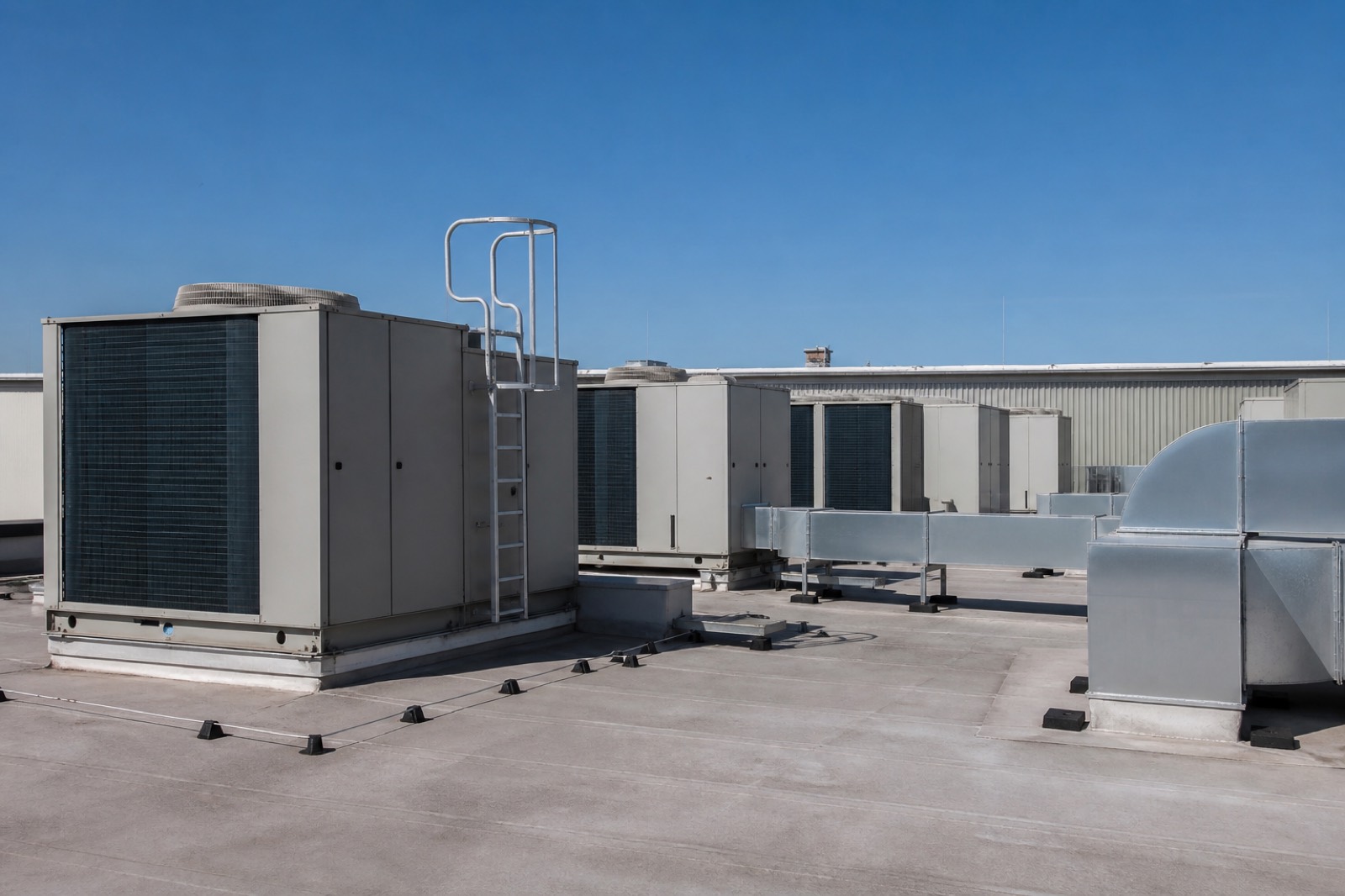
Before any valuation analysis, identify which of these models describes your business. The mix determines which multiple anchor applies.
1. Project-led mechanical contractor (new construction and major retrofit)
Bid-build or design-build mechanical installation for commercial new construction, tenant improvement, and major retrofit projects. Project values: $250K to $20M+. Revenue is lumpy, tied to construction cycle. Backlog visibility 6 to 18 months. EBITDA margins: 6 to 10%. Capital structure carries large workers’ comp and bonding requirements (typically 1 to 2% of bonded contract value annually per The Surety & Fidelity Association of America 2025 data). Subject to mechanical contractor licensing in every state (CSLB C-20 in California, TDLR Air Conditioning and Refrigeration in Texas, Florida CMC, Massachusetts Construction Supervisor License). Valuations: 5x to 6.5x EBITDA. The most cyclical sub-category.
2. Service-led commercial HVAC (PMA/PSA + demand service + retrofit)
Planned Maintenance Agreement (PMA) or Preventive Service Agreement (PSA) contracts with commercial building owners, property managers, REITs, healthcare systems, and institutional customers. Contract values: $5K to $250K+ annually per site, multi-site contracts often $500K to $5M+. Revenue mix: 30 to 50% PMA/PSA recurring, 30 to 45% demand service and repair, 15 to 30% retrofit and replacement project work. EBITDA margins: 12 to 22%. Recurring revenue carries the contractual durability that PE buyers underwrite. Platform-grade sub-category. Valuations: 7x to 12x EBITDA depending on PMA mix and controls capability. This is where Apex Service Partners (Alpine Investors), Wrench Group (Leonard Green Partners), and Redwood Services (Tom Hicks Jr.) concentrate add-on activity.
3. Controls and BAS integration specialist
Building automation system installation, integration, programming, and service. Open-protocol systems built on BACnet, Niagara (Tridium framework now owned by Honeywell since the 2005 acquisition per Honeywell press release), or LonWorks. Customers: building owners, mechanical contractors (as subs), facility managers. Revenue concentrated in programming labor, system integration projects, and recurring service for BAS health monitoring. EBITDA margins: 18 to 28%. Many controls specialists also do commissioning (Cx) work, which carries 25 to 35% gross margins per ASHRAE Standard 202 and Building Commissioning Association benchmarks. Valuations: 8x to 11x EBITDA when integrated into a service-led commercial HVAC platform; standalone controls shops trade at 6x to 9x.
Most commercial HVAC businesses combine two or three of these models. The valuation approach depends on the mix. A business that is 50% service, 35% project, and 15% controls is valued primarily as a service-led commercial HVAC business with a controls capability uplift. A business that is 75% project, 20% service, and 5% controls trades on the project-contractor base multiple with limited uplift. Flip the mix and the valuation calculus flips with it.
Where the value lives: PMA/PSA service revenue
PMA/PSA service revenue is the only mix component where commercial HVAC operators routinely command 9x to 12x EBITDA multiples. Multi-year PMA agreements with annual escalators provide predictable cash flow, the same quality that lets PE pay premium multiples in pest control and elevator service.
PMA/PSA service revenue is the only mix component where commercial HVAC operators routinely command 9x to 12x EBITDA multiples. Understanding why matters:
- Contract revenue is subscription-like. Multi-year PMA agreements with annual escalators provide predictable cash flow, the same quality that lets PE pay premium multiples in pest control and elevator service.
- Service technicians compound on density. Additional PMA accounts in existing service corridors are margin-accretive because dispatch density reduces non-billable drive time. Two service operators in the same market combined produce more than the sum of the parts.
- Customer acquisition cost is amortized over the contract life. Commercial customers are reached through facility manager, property manager, and consulting engineer relationships (B2B). The PMA contract amortizes the acquisition cost over 3 to 7 years of service revenue.
- Upsell is structural. Base PMA contracts naturally generate demand-service calls, controls upgrades, IAQ projects, and replacement equipment sales. Mature PMA accounts produce 40 to 70% of total customer revenue from upsell beyond the base contract per ACCA contractor benchmarking data.
- Defensible against consumer disruption. The commercial B2B sales cycle and licensing requirements (mechanical contractor license, refrigerant handling EPA Section 608, OSHA 10/30) shield the segment from direct-to-consumer platforms that have started compressing residential HVAC margins.
- Code-cycle tailwinds compound. Updated ASHRAE 90.1-2022 energy standards, ASHRAE 62.1-2022 ventilation standards, EPA AIM Act refrigerant transition (HFC phase-down 40% reduction from baseline in 2024 per 40 CFR Part 84), and state-level decarbonization mandates create durable replacement-and-retrofit demand layered on top of PMA service.
If you are primarily a project contractor considering a sale, the highest-impact 2 to 4 year investment is building a PMA/PSA service contract base. It is slow and requires dedicated B2B sales capability, recurring-revenue ops discipline, and a structured tiered service product (Gold/Silver/Bronze or equivalent). The payoff is durable multiple expansion of 2x to 4x EBITDA.
How commercial HVAC buyers actually calculate the number
Normalize the EBITDA. Adjust for owner compensation, related-party transactions, personal expenses, equipment depreciation accounting, and project-revenue-recognition timing (percentage-of-completion vs completed-contract under ASC 606). Decompose the revenue. Split by service line (PMA/PSA recurring, demand service, project install, controls, commissioning, IAQ, refrigeration if applicable) and within service, by customer vertical (office, healthcare, education, government, industrial, hospitality, retail, data center). Analyze the PMA/PSA contract book. Line-by-line review: customer, contract value, tenure, renewal history.
- Normalize the EBITDA. Adjust for owner compensation, related-party transactions, personal expenses, equipment depreciation accounting, and project-revenue-recognition timing (percentage-of-completion vs completed-contract under ASC 606).
- Decompose the revenue. Split by service line (PMA/PSA recurring, demand service, project install, controls, commissioning, IAQ, refrigeration if applicable) and within service, by customer vertical (office, healthcare, education, government, industrial, hospitality, retail, data center).
- Analyze the PMA/PSA contract book. Line-by-line review: customer, contract value, tenure, renewal history, escalator terms, scope tier (full coverage vs labor-only vs inspection-only), termination clauses. This is the most intensive part of commercial HVAC diligence and frequently consumes 30 to 60 hours of buyer-side analyst time.
- Stress-test backlog and project margins. For project revenue, review the construction backlog (signed contracts not yet executed), gross margin by job, change-order history, and any open Notice-of-Default or back-charge exposure. The Construction Financial Management Association (CFMA) gross-margin benchmark for commercial mechanical is 14 to 22% per the 2024 CFMA Construction Industry Annual Financial Survey.
- Model forward cash flow. Project forward revenue with explicit churn and upsell assumptions by PMA customer cohort, and explicit backlog burn-down for project revenue.
- Compare to comparables. Adjust for geography, climate zone (cooling-degree-day intensity drives demand), labor model (union vs merit-shop), equipment intensity, and state licensing transferability.
- Apply the concluding multiple.
What seven factors move commercial HVAC multiples?
1. PMA/PSA service contract mix
The single largest valuation driver. A service-led business at 40%+ PMA revenue with documented operations and strong renewal trades at 9x to 11x. A project-led mechanical contractor with under 15% service revenue trades at 5x to 6x. This is a 3 to 5 turn differential, worth $6M to $10M on a $2M EBITDA business. No other factor on this list moves multiples as much. The discipline of converting one-time work into PMA contracts is the highest-ROI pre-sale activity for any commercial HVAC owner with a 2-year+ sale horizon.
2. Controls and BAS integration capability
Controls is the second-largest multiplier. An in-house controls bench (BACnet/Modbus, Niagara/Tridium framework, Distech, Delta Controls, or Johnson Controls Metasys integration) adds 1x to 2x EBITDA on top of the service-multiple base. The reason: controls revenue carries 25 to 35% gross margins (vs 18 to 25% for general service), the technician labor is harder to replace, and BAS integration is a structural moat that protects PMA contracts. Operators without controls capability are routinely outbid for premium commercial accounts (hospitals, life sciences, data centers, Class A office) that require BAS service.
- Premium: 2+ Niagara-certified engineers, Tridium framework deployment history with 50+ active sites, BACnet/IP and BACnet/MSTP service capability, integration experience across major OEMs (Johnson Controls, Trane, Honeywell, Schneider, Siemens, Distech). Adds 1.5x to 2x EBITDA.
- Standard: 1 controls technician, mostly OEM-specific (single-brand) service, basic BACnet read/write. Adds 0.5x to 1x EBITDA.
- None: Service work limited to mechanical-only; controls work subbed out. No multiple uplift.
3. State mechanical licensing transferability
Commercial HVAC requires state mechanical contractor licensing in nearly every state. The structure of the license, and whether it can be transferred or replaced at close, is a transaction-blocker if mishandled. Key state regimes:
- California: CSLB C-20 Warm-Air Heating, Ventilating and Air-Conditioning Contractors license. Held by a Responsible Managing Officer (RMO) or Responsible Managing Employee (RME). License does not transfer with sale; buyer must have a qualifying RMO/RME or hire one within 90 days per CSLB Business and Professions Code Section 7068.
- Texas: TDLR Air Conditioning and Refrigeration Contractor license (Class A or Class B). Held by a licensed individual who must be the company’s licensed contractor. Continuity requires the licensed individual to remain or be replaced before the change-of-ownership filing per TDLR Texas Occupations Code Chapter 1302.
- Florida: DBPR CMC (Certified Mechanical Contractor) or CAC (Certified Air Conditioning Contractor) license. Qualifier-driven; must remain post-close or be replaced per Florida Statute 489.
- Massachusetts: Construction Supervisor License + sheet-metal license + refrigeration technician licensing per 527 CMR.
- New York City: Master Plumber license (gas piping), refrigeration operating engineer license per 1 RCNY.
- Illinois (Chicago): City of Chicago Refrigeration Contractor license plus state mechanical contractor registration in many municipalities.
Buyers diligence licensing carefully. A clean license-transfer plan, with the RMO/RME or qualifier explicitly identified and contractually committed to a transition period, lifts certainty and supports multiple. A muddy plan (owner is the sole qualifier with no successor) compresses the multiple and may require an earn-out structure.
4. Commissioning revenue and Cx capability
Commissioning (Cx) revenue is increasingly material for service-led commercial HVAC operators. ASHRAE Standard 202-2018 (Commissioning Process) and the IECC commissioning requirements for buildings over 50,000 square feet drive recurring Cx demand. LEED-certified projects require Cx by definition. Operators with in-house commissioning agents (BCxP, CCP, or CxA certifications via ASHRAE, Building Commissioning Association, or AABC) capture this work at 25 to 35% gross margins. Cx capability adds 0.5x to 1x EBITDA to a service-led platform, more if the bench supports retro-commissioning and monitoring-based commissioning (MBCx) for existing buildings.
5. Construction backlog quality and project margin discipline
For operators with material project revenue, the construction backlog is independently valued. Buyers analyze:
- Signed backlog at close (typically 4 to 14 months of forward revenue).
- Gross margin by job compared to bid margin (margin slippage is a red flag).
- Change-order capture rate (well-run mechanical contractors capture 8 to 15% of contract value in change orders per CFMA 2024 benchmark).
- Bond capacity (the operator’s surety credit line, typically 10x working capital).
- WIP schedule accuracy (work-in-progress over- and under-billings, a leading indicator of percentage-of-completion accounting hygiene).
Clean backlog at strong margins with disciplined change-order capture and accurate WIP schedules supports project-multiple uplift. Sloppy WIP, margin slippage, or back-charge exposure compresses multiples or triggers earn-out structures.
6. Labor model and technician bench depth
Commercial HVAC technicians are the single most constrained resource in the industry. The Bureau of Labor Statistics projects 9% employment growth for HVAC mechanics and installers from 2023 to 2033, with roughly 42,500 annual job openings (BLS Occupational Outlook Handbook, September 2024 release). The labor scarcity is most acute for service technicians with controls and commercial diagnostic experience.
- Union: SMART (Sheet Metal Workers International) or UA (United Association of Plumbers, Pipefitters and HVACR Service Technicians) signatory shops. Higher labor cost, predictable wage escalators, durable hiring through the local hall. Common in the Northeast, Midwest, Northern California, Pacific Northwest.
- Merit-shop: Non-union direct-hire. Lower hourly labor cost but higher recruiting cost. Common in the Southeast, Texas, mountain West, Florida.
- Mixed: Union project work, merit-shop service techs. Common in geographies with strong union project market and competitive service market.
Buyers value the labor model for sustainability, succession, and cost structure. The critical question is bench depth: how many 2nd-line service supervisors, project managers, and lead technicians the business has beyond the owner. Thin bench depth concentrates integration risk and compresses multiple by 0.5x to 1.5x EBITDA. An owner with a 2-deep bench at every operational lead position can drive a meaningful premium.
7. Vertical concentration and customer mix
The customer-vertical mix is a final valuation lever:
- Healthcare (hospitals, ambulatory surgery centers, life sciences): Highest-tier vertical. PMA contracts often 5+ year terms with 3 to 5% annual escalators. ASHRAE Standard 170 ventilation requirements and Joint Commission compliance drive premium service pricing. Adds 0.5x to 1x EBITDA.
- Data center and mission-critical: Highest service-margin vertical. 24×7 critical-environment service. Often paired with controls and commissioning. Adds 0.5x to 1x EBITDA.
- Government and education: Long-tenured PMA contracts but bidding cycles introduce 3 to 5 year renewal volatility. Neutral to slight positive.
- Class A office and REIT-owned commercial: Mid-tier; concentrated customer relationships (one property manager = 10 to 50 buildings). Strong renewal but concentration risk.
- Industrial process and refrigeration: Specialty vertical. High service margin where bench depth supports it (industrial refrigeration, food processing, pharma manufacturing).
- Strip-center retail and small commercial: Lowest-tier vertical. Price-sensitive, single-site dispatch, low ticket. Compresses multiple if dominant.
What other factors do buyers evaluate in commercial HVAC businesses?
Customer concentration
For service-led operators, top 10 customers under 35% of revenue is healthy. Above 50% concentration is a material risk. Losing one large REIT portfolio or hospital system contract can wipe out the deal thesis. PE buyers will demand earn-outs or escrows to bridge concentration risk.
Refrigerant compliance and EPA Section 608
Every commercial HVAC service technician handling refrigerant requires EPA Section 608 certification. Operators must maintain refrigerant-purchase records, leak-rate compliance for systems over 50 pounds of charge per 40 CFR Part 82, and AIM Act HFC phase-down tracking. Clean records are expected; gaps trigger compliance reserves at closing.
Workers’ compensation experience modification rate (EMR)
Commercial mechanical EMR below 0.85 is excellent (saves on bonding and insurance cost); above 1.20 is a red flag suggesting safety program weakness. Bonded contractors with strong EMR have lower surety premiums and higher bond capacity per The Surety & Fidelity Association of America underwriting guidance.
Software and operational systems
- Premium: Service-Trade, Service Titan Commercial, BuildOps, Jonas Construction, or Sage 100 Contractor with 2+ years of clean data. Documented service protocols, GPS dispatch, job-costing visibility, PMA scheduling automation.
- Standard: Basic CRM and dispatch tools, or a generic field service platform.
- Discount: Spreadsheets and phone-based dispatch. Post-close software implementation costs $150K to $400K and takes 6 to 12 months.
Real estate and shop operations
Mechanical contractors often own or long-lease a shop facility (sheet-metal fabrication, equipment staging, parts warehouse, dispatch base). Real estate is typically valued separately at cap-rate value (6.5% to 8.5% for industrial/flex commercial properties per CBRE 2025 cap-rate survey). Long-term lease structures with the seller (sale-leaseback) often serve both parties well.
Geographic footprint
Single-metro density vs multi-region. For PMA platforms, single-metro dense routing is preferred until $5M to $10M EBITDA, after which multi-region adds optionality. Comfort Systems USA (NYSE: FIX) operates 47 subsidiary brands across 130+ locations per its 2025 10-K, and EMCOR (NYSE: EME) operates more than 90 mechanical and electrical subsidiaries; both routinely acquire single-metro operators and integrate without re-branding.

How would you value a $2M EBITDA commercial HVAC business?
Business profile: “Lone Star Commercial Mechanical” (illustrative), Dallas-Fort Worth, Texas
- $14M revenue, $2.1M reported EBITDA (15.0% margin)
- Mix: 36% PMA/PSA recurring service, 28% demand service and repair, 22% retrofit and replacement projects, 9% controls integration, 5% commissioning
- PMA contract book: 142 active contracts across 318 sites, weighted average tenure 3.2 years, 87% annual renewal, 31% upsell beyond base contract
- Vertical mix: 24% Class A office (REIT), 18% healthcare (3 hospital systems), 16% education (2 ISDs), 14% government, 12% retail/restaurant, 10% industrial, 6% data center
- Top customer (large North Texas REIT): 14% of revenue across 42 sites
- Operations manager and 1 service manager in place; founder still owns top-10 customer relationships
- TDLR Class A licensed individual: founder + 1 licensed PM (2-deep)
- Controls: 2 Niagara-certified engineers; deployed Tridium framework on 67 sites
- Service-Trade dispatch + Sage 100 Contractor accounting, both in use 3 years with clean data
- Fleet: 38 service vans (avg age 4 years), 6 sheet-metal trucks
- EMR: 0.79 (excellent)
- SMACNA and ACCA member; union signatory for project work, merit-shop service
- Owner comp $245K, replacement GM $185K. Personal expenses $55K. One-time costs (settled WC claim) $38K.
EBITDA normalization:
- Reported EBITDA: $2.10M
- Owner compensation adjustment: +$60K
- Personal expenses: +$55K
- One-time WC claim: +$38K
- Less: replacement BAS engineer recruiting reserve: ($25K)
- Normalized EBITDA: $2.228M
Multiple assessment:
- Starting benchmark for 36% PMA + service-led mix in Texas: 8.0x
- +0.5x for in-house controls (2 Niagara-certified engineers, 67 Tridium sites)
- +0.4x for healthcare + data center premium-vertical exposure (24% combined)
- +0.3x for excellent EMR (0.79) and clean WC history
- +0.2x for Service-Trade + Sage 100 with clean data
- +0.2x for 2-deep TDLR licensed individual
- -0.3x for top-customer concentration (14% from one REIT)
- -0.4x for founder-dependent commercial relationships in top 10
- Concluding multiple: 8.9x
Indicative valuation: $2.228M x 8.9x = $19.83M
18-month improvement path:
- Transition top-10 commercial relationships to dedicated commercial sales engineer: multiple to 9.3x. Outcome: $20.72M.
- Grow PMA mix from 36% to 45% of revenue (target: convert 18 retrofit accounts to multi-year PMA): multiple to 9.7x. Outcome: $21.61M.
- Add 1 BCxP-certified commissioning agent and grow Cx revenue from 5% to 9% of mix: multiple to 9.9x. Outcome: $22.06M.
- Diversify top REIT concentration (from 14% to 10% via 2 new healthcare PMAs): multiple to 10.1x. Outcome: $22.50M.
- Combined: plausible multiple 10.4x. Outcome: $23.17M.
$3.3M delta over 18 months of preparation. Higher-end PE platforms or strategic acquirers (Comfort Systems USA, EMCOR, Apex Service Partners) could push toward 11x for a fully-prepared book, which would push the outcome above $24.5M.
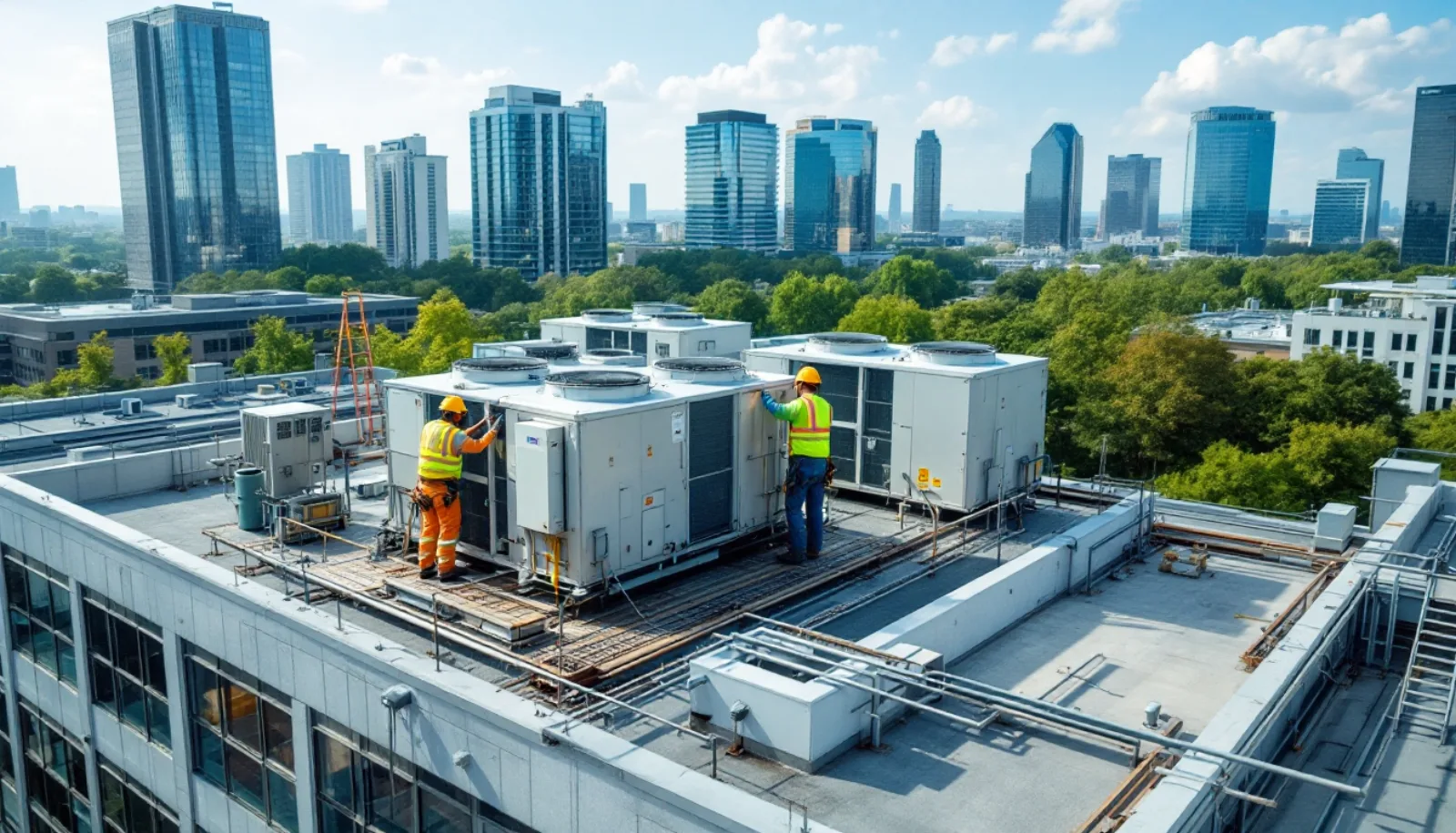
How to increase your commercial HVAC business value before selling
Highest ROI
- Grow PMA/PSA contract mix. If below 30%, hire a dedicated commercial sales engineer 18+ months before sale. Target property management companies, REIT portfolios, hospital systems, ISDs, university and college facilities, and city/county facilities departments. Productize the service offering (Gold/Silver/Bronze or Tier 1/2/3) with explicit scope, response-time SLAs, and annual escalators (3 to 5% built into every renewal).
- Reprice existing PMA contracts. Most multi-year PMAs are underpriced by 8 to 15% relative to current labor and refrigerant cost (post-2022 input-cost inflation not fully passed through). Implement a structured reprice program at every renewal anniversary.
- Build controls and BAS capability. Hire 1 to 2 Niagara-certified engineers (or partner with Tridium University). In-house BAS service opens up premium commercial accounts and adds 1x to 2x EBITDA.
- Transition founder-led commercial relationships. Dedicated commercial sales engineers and account managers 12 to 18 months before sale. Document customer relationships in the CRM with all contact history.
- Build commissioning bench depth. Get 1 to 2 technicians BCxP or CCP certified. Cx revenue is high-margin and is increasingly required by IECC and LEED.
- Resolve state-license succession. If you are the sole CSLB C-20 RMO/RME, TDLR licensed individual, or Florida CMC qualifier, identify and contractually commit a successor 18+ months before sale.
Medium ROI
- Implement Service-Trade, BuildOps, Service Titan Commercial, or comparable commercial field-service platform if not already on one.
- Diversify customer concentration below 35% top-10 share.
- Get clean refrigerant compliance records (EPA Section 608, leak-rate tracking, AIM Act HFC phase-down logs).
- Build healthcare or data center vertical exposure to add premium-vertical multiplier.
- Equipment fleet refresh program (service vans, sheet-metal trucks, specialty tools).
- Tighten the WIP schedule and project gross-margin reporting; CFMA-aligned monthly close discipline matters.
- Improve EMR below 0.85 through documented safety program (OSHA 30 for supervisors, monthly toolbox talks, near-miss reporting).
Lower ROI
- Website redesign.
- Social media presence.
- Minor residential service line additions (residential drags commercial multiples).
- New equipment lines without service-tech bench depth to support them.
What common mistakes destroy commercial HVAC valuations?
PMA contracts not repriced in 3+ years. Margin erosion from labor and refrigerant input-cost inflation is a latent issue buyers will quantify with adjusted forward EBITDA. Aggressive classification of project work as recurring. Retrofit and replacement projects are not PMA revenue; buyers will rebuild the classification and discount aggressive presentations. State license concentrated on the seller-owner with no documented successor.
- PMA contracts not repriced in 3+ years. Margin erosion from labor and refrigerant input-cost inflation is a latent issue buyers will quantify with adjusted forward EBITDA.
- Aggressive classification of project work as recurring. Retrofit and replacement projects are not PMA revenue; buyers will rebuild the classification and discount aggressive presentations.
- State license concentrated on the seller-owner with no documented successor. CSLB C-20, TDLR, Florida CMC continuity is a transaction-blocker if not pre-planned.
- Construction backlog at margins below bid. Margin slippage is a red flag for buyer underwriting; can trigger purchase price adjustment or earn-out.
- Refrigerant compliance gaps. EPA Section 608, AIM Act HFC tracking, leak-rate compliance gaps create regulatory reserves and post-close exposure.
- Workers’ comp EMR above 1.20. Signals safety program weakness; reduces bond capacity and surety credit available to the buyer post-close.
- Founder selling every large commercial account personally. Post-close retention is a real risk; concentrates relationship continuity on a departing person.
- Project-heavy mix without a service-build plan. Limits multiple ceiling severely (caps at 6 to 7x EBITDA regardless of EBITDA size).
- WIP schedule that does not reconcile. Buyers’ quality-of-earnings review will identify the gap and discount EBITDA.
- Single-vertical concentration above 50% (e.g., all retail or all government). Concentration risk drives material discounts.
Want to know what your commercial HVAC business is actually worth?
Benchmarks give you a range. A 15-minute confidential call gives you a real number, based on what active buyers are paying right now and which ones would compete for your business. No cost, no obligation.
How do I get a valuation for my commercial HVAC business?
CT Acquisitions offers confidential valuations for commercial HVAC founders. We specialize in service-led commercial mechanical operators in the $1M to $10M EBITDA range, with active buyer mandates from PE-backed platforms (Apex Service Partners, Wrench Group, Redwood Services, RSCo Mechanical Services) and strategics (Comfort Systems USA, EMCOR Group). CT Acquisitions is paid by the buyer at close; founders pay nothing.
CT Acquisitions offers confidential valuations for commercial HVAC founders. We specialize in service-led commercial mechanical operators in the $1M to $10M EBITDA range, with active buyer mandates from PE-backed platforms (Apex Service Partners, Wrench Group, Redwood Services, RSCo Mechanical Services) and strategics (Comfort Systems USA, EMCOR Group). CT Acquisitions is paid by the buyer at close; founders pay nothing. Book a 15-minute conversation.

About the Author
Christoph Totter is the founder of CT Acquisitions, a buy-side partner headquartered in Sheridan, Wyoming. We work directly with 200+ buyers, search funders, family offices, lower middle-market PE, and strategic consolidators, including direct mandates with the largest commercial HVAC consolidators that other intermediaries cannot access. The buyers pay us when a deal closes, not the seller. No retainer, no exclusivity, no contract until close. Connect on LinkedIn · Get in touch
Sources and references
Every multiple range, operator-tier figure, and industry-data citation on this page is sourced to a published industry-research publisher, a SEC filing, or to CT Acquisitions’ internal benchmark dataset. Peak Business Valuation (2026) reports average EBITDA multiples of 3.31x to 4.41x for general HVAC contractors, and First Page Sage (Q1 2025) reports 5.2x to 9.2x for commercial HVAC companies.
Every multiple range, operator-tier figure, and industry-data citation on this page is sourced to a published industry-research publisher, a SEC filing, or to CT Acquisitions’ internal benchmark dataset.
- Peak Business Valuation: Valuation Multiples for an HVAC Business (2026), reporting average SDE multiples of 2.94x and average EBITDA multiples of 3.31x to 4.41x for general HVAC contractors.
- First Page Sage: HVAC EBITDA & Valuation Multiples (Q1 2025), reporting commercial HVAC EBITDA multiples of 5.2x to 9.2x across the $500K to $10M EBITDA size bands.
- Comfort Systems USA Inc. (NYSE: FIX) 2025 Annual Report (10-K), filed with the SEC February 28, 2026. EV/EBITDA reads taken from the 10-K combined with closing share price May 2026.
- EMCOR Group Inc. (NYSE: EME) 2024 Annual Report (10-K), filed with the SEC February 27, 2025. EV/EBITDA reads taken from filings combined with closing share price May 2026.
- ACCA (Air Conditioning Contractors of America), 2025 Contractor Compensation Report.
- CFMA (Construction Financial Management Association), 2024 Construction Industry Annual Financial Survey (mechanical contractor gross-margin benchmarks).
- BLS Occupational Outlook Handbook, HVAC Mechanics and Installers section (September 2024 release).
- EPA AIM Act 40 CFR Part 84 (HFC phase-down regulations) and EPA 40 CFR Part 82 (Section 608 refrigerant handling).
- ASHRAE Standards 90.1-2022, 62.1-2022, 170, and 202-2018 (energy, ventilation, healthcare ventilation, and commissioning process standards).
- The Surety & Fidelity Association of America, 2025 contract surety underwriting benchmarks.
- CT Acquisitions VERIFIED_MULTIPLES dataset, locked-in commercial HVAC multiple ranges reconciled against the above sources, updated quarterly.
- CT Acquisitions PE Roll-Up Tracker series, cross-references include HVAC, plumbing, roofing, and pest control.
Last verified: June 20, 2026. Next refresh: quarterly (target 2026-09-20).
Disclaimer: This guide is general valuation framework intelligence, not legal, tax, accounting, or transaction advice. CT Acquisitions is a buy-side advisor.
What are commercial HVAC business valuation multiples in 2026?
Commercial HVAC business valuation multiples typically run 5x to 6.5x EBITDA for project-led mechanical contractors and 7x to 12x EBITDA for service-led commercial HVAC operators with PMA/PSA contract revenue and controls capability. The single biggest driver is recurring service contract penetration: an operator built on 40%+ PMA/PSA recurring service trades far higher than a project-heavy contractor with thin service revenue.
Commercial HVAC business valuation multiples typically run 5x to 6.5x EBITDA for project-led mechanical contractors and 7x to 12x EBITDA for service-led commercial HVAC operators with PMA/PSA contract revenue and controls capability. The single biggest driver is recurring service contract penetration: an operator built on 40%+ PMA/PSA recurring service trades far higher than a project-heavy contractor with thin service revenue. A deeper read on business valuation expert engagement covers the supporting diligence framework.
| Commercial HVAC profile | Typical multiple | What drives it |
|---|---|---|
| Project-led mechanical contractor | 5.0x to 6.5x EBITDA | Cyclical, lumpy, backlog-dependent |
| Mixed service and project, 15 to 30% PMA | 6.5x to 8.5x EBITDA | Some recurring, mixed margins |
| Service-led, 40%+ PMA, controls capable | 9.0x to 12.0x EBITDA | PMA contracts, BAS integration, ESCo bench |
The factors that move a commercial HVAC valuation most are PMA/PSA contract mix, controls and BAS integration capability, state mechanical license transferability, commissioning revenue, construction backlog quality, labor model and technician bench depth, and customer vertical concentration. Converting project work into multi-year PMA contracts is the most reliable way to lift the multiple.
Frequently asked questions about commercial HVAC business valuation
What is the average commercial HVAC business multiple in 2026?
Published averages diverge: Peak Business Valuation (2026) reports 3.31x to 4.41x EBITDA for general HVAC contractors, and First Page Sage’s Q1 2025 report shows 5.2x to 9.2x for commercial HVAC depending on EBITDA size. Service-led commercial operators with PMA/PSA contracts trade at 7x to 12x. Project-led mechanical contractors trade at 5x to 6.5x. The mix between service and project matters more than total revenue.
Is commercial HVAC worth more than residential HVAC?
It depends on contract mix. Commercial HVAC with PMA/PSA recurring service trades at 7x to 12x EBITDA per CT Acquisitions benchmarks, but First Page Sage’s Q1 2025 report shows residential HVAC at 6.1x to 10.8x EBITDA versus 5.2x to 9.2x for commercial, so the commercial premium shows up mainly where PMA contracts are deep. PMA depth matters because of contractual durability: commercial PMA contracts are multi-year B2B agreements, while residential service is largely transactional or monthly-membership-program-based.
How much does PMA/PSA penetration really add to my valuation?
A lot. Shifting from 15% PMA to 45% PMA can expand the multiple from 6x to 9.5x at constant EBITDA, producing a 58% increase in valuation. This is the single most impactful pre-sale improvement available to most commercial HVAC operators. Add controls capability on top and the lift can reach 4x to 5x EBITDA.
Do I add back owner salary to EBITDA?
Partially. Normalize to a market-rate replacement cost for a general manager and licensed individual. For a $2M EBITDA commercial HVAC business, the add-back is typically $50K to $100K on owner compensation, plus add-backs for personal expenses, related-party transactions, and one-time costs.
How do buyers diligence my PMA contract book?
They rebuild it. Every active PMA/PSA contract is reviewed for customer, contract value, tenure, renewal history, escalator terms, scope tier, and termination clauses. Aggregate metrics (weighted average tenure, renewal rate, upsell percentage, gross-margin-per-PMA) are calculated and compared to industry benchmarks. Clean documentation of the contract book is non-negotiable for platform-tier pricing.
Does controls and BAS capability really add 1x to 2x EBITDA?
Yes, when supported by an actual bench of certified engineers and deployment history. A controls capability without 2+ Niagara-certified or equivalent engineers and 25+ active integrated sites is a marketing claim rather than a multiple driver. With genuine bench depth, the uplift is 1x to 2x EBITDA, and the controls revenue itself runs at 25 to 35% gross margins.
How does state mechanical licensing affect the deal?
License transferability is a transaction-blocker if mishandled. CSLB C-20 in California, TDLR in Texas, Florida CMC, Massachusetts Construction Supervisor, and similar state regimes require a qualifier or licensed individual who must remain at close or be replaced on a documented schedule. Buyers diligence this carefully and may compress multiples 0.5x to 1.5x or require earn-out structures for muddy succession.
Who are the active commercial HVAC PE buyers in 2026?
The active PE-backed platforms include Apex Service Partners (Alpine Investors), Wrench Group (Leonard Green Partners), Redwood Services (Tom Hicks Jr.), RSCo Mechanical Services (New State Capital), and several regional consolidators. The strategics are Comfort Systems USA (NYSE: FIX) and EMCOR Group (NYSE: EME), both of which disclosed material acquisition spend in their most recent 10-K filings. See our 2026 HVAC PE roll-up tracker for the full active-buyer map.
How long does it take to sell a commercial HVAC business?
120 to 180 days from LOI to close for a well-prepared service-led commercial HVAC business. Preparation runway is 12 to 24 months depending on starting position. PMA contract diligence, WIP schedule reconciliation, and state license succession can each extend timelines if not pre-cleaned.
How much will I pay in taxes on the sale?
Federal long-term capital gains plus 3.8% NIIT on the goodwill portion. State taxes vary (no state income tax in Texas, Florida, Tennessee, Washington, Wyoming, Nevada, South Dakota, Alaska, New Hampshire). Asset-sale vs stock-sale structure has a material effect on the buyer’s depreciation deductions and the seller’s effective rate. Tax planning should begin 18 to 24 months before sale, not at LOI. See our complete selling playbook.
What is the best time of year to sell a commercial HVAC business?
Most owners prefer to close after the summer cooling season (fall or early winter). Buyers prefer to have a clean trailing 12 months that includes a full cooling and heating cycle. LOI timing typically aligns with late summer or early fall; close in winter or early spring. PMA contract renewal cycles also influence timing; closing just after a renewal anniversary supports clean backlog presentation.
How does Comfort Systems USA (NYSE: FIX) value acquisitions?
Per the 2025 Comfort Systems USA 10-K (filed February 28, 2026), the company disclosed approximately $1.04 billion of 2025 acquisition spend across 12 mechanical and electrical platforms. The implied multiples on disclosed targets fall in the 8.5x to 11x trailing EBITDA range for service-led mechanical operators, with premium paid for controls and modular-construction capability.
What is ESCo work and does it affect valuation?
Energy Service Company (ESCo) work involves performance contracting where the contractor finances and installs energy-efficiency retrofits and is repaid out of the verified energy savings (typically under an Energy Savings Performance Contract or ESPC). Federal ESPC volume runs roughly $300 million per year under DOE FEMP, plus state, municipal, K-12, and higher-education ESPC programs. ESCo capability adds 0.5x to 1.5x EBITDA for operators with proven measurement and verification (M&V) practice per IPMVP protocol, because the work is long-duration, contractual, and harder to displace.
Related resources
Limitations of this analysis
Industry-data tier multiples are aggregated. Peak Business Valuation, First Page Sage, BizBuySell, and the trade-press publishers all publish blended ranges across regional, mix, and capital-structure differences. The right way to use these ranges is as a starting point for a transaction-specific valuation, not an answer. Subscription-gated figures are labeled. Where this guide cites GF Data multi-band multiples or proprietary CFMA benchmarks, the underlying report is paywalled; we cite the publisher.
- Industry-data tier multiples are aggregated. Peak Business Valuation, First Page Sage, BizBuySell, and the trade-press publishers all publish blended ranges across regional, mix, and capital-structure differences. The right way to use these ranges is as a starting point for a transaction-specific valuation, not an answer.
- Subscription-gated figures are labeled. Where this guide cites GF Data multi-band multiples or proprietary CFMA benchmarks, the underlying report is paywalled; we cite the publisher but cannot quote the full report.
- Premium-tier multiples reflect platform-quality operators only. The 9x to 12x EBITDA upper range cited on this page applies to operators with PMA/PSA above 40% of revenue, in-house controls capability, $2M+ EBITDA, multi-vertical customer mix, transferable state license, and a 2-deep management bench. Single-license owner-operators should anchor on the 5x to 7.5x multiples for realistic valuation expectations.
- Public-comparable multiples are not directly transferable. Comfort Systems USA (NYSE: FIX) and EMCOR (NYSE: EME) trade at 19x to 22x trailing EV/EBITDA in May 2026 SEC filings, but those public-company multiples include a liquidity premium, multi-billion-dollar scale benefits, and a strategic-acquirer profile that private mid-market operators cannot fully claim. The public reads are useful as the ceiling reference, not the target.
- Real estate is valued separately. Owned shop, sheet-metal fabrication facility, or warehouse real estate is generally valued at cap-rate value (6.5% to 8.5% for industrial and flex properties per CBRE 2025 cap-rate survey) outside the operating-business multiple.
- Commercial HVAC valuation is sharply tiered by service-vs-project mix. PMA/PSA recurring service contracts (vs project-based mechanical install) lift multiples materially. Geographic climate zone, union vs merit-shop labor structure, and state mechanical licensing regime are first-order valuation factors that aggregated industry data does not capture.
- CT Acquisitions internal data is disclosed where used. Where this page cites CT’s active-engagement observations or VERIFIED_MULTIPLES benchmarks, those are clearly framed as internal benchmarks and not published industry statistics.
- This guide is general valuation framework intelligence, not legal, tax, accounting, or transaction advice. Specific operator outcomes depend on deal structure, buyer fit, geography, and active negotiation dynamics.
Sources and further reading
The multiple ranges and business-model tier figures in this guide draw on the following published 2025-2026 industry sources, SEC filings, and CT Acquisitions internal benchmarks.
The multiple ranges and business-model tier figures in this guide draw on the following published 2025-2026 industry sources, SEC filings, and CT Acquisitions internal benchmarks.
- Peak Business Valuation, “Valuation Multiples for an HVAC Business” (2026). peakbusinessvaluation.com
- First Page Sage, “HVAC Services EBITDA Multiples: 2025 Report.” firstpagesage.com
- Comfort Systems USA Inc. (NYSE: FIX), 2025 Annual Report Form 10-K, filed February 28, 2026.
- EMCOR Group Inc. (NYSE: EME), 2024 Annual Report Form 10-K, filed February 27, 2025.
- ACCA (Air Conditioning Contractors of America), 2025 Contractor Compensation Report. acca.org
- CFMA (Construction Financial Management Association), 2024 Construction Industry Annual Financial Survey. cfma.org
- BLS Occupational Outlook Handbook, HVAC Mechanics and Installers, September 2024 release. bls.gov
- EPA AIM Act, 40 CFR Part 84 (HFC phase-down). epa.gov
- ASHRAE Standards 90.1-2022, 62.1-2022, 170, 202-2018. ashrae.org
- The Surety & Fidelity Association of America, 2025 contract surety guidelines. surety.org
- GF Data, 2024-2026 quarterly LMM M&A reports. gfdata.com
- CT Acquisitions VERIFIED_MULTIPLES for commercial HVAC: project-led 5x to 6.5x, service-led 7x to 9x, PMA platform 9x to 12x as of June 2026.
Last verified: June 2026. Next refresh: quarterly.
Want a Specific Read on Your Business?
15 minutes, confidential, no contract, no cost. You leave with a read on your local buyer market and a likely valuation range.
15 minutes, confidential, no contract, no cost. You leave with a read on your local buyer market and a likely valuation range.