
Buy a Sports Surfacing Business in 2026: Multiples, Diligence, Deal Structures
Buying a sports surfacing business in 2026 clears materially different multiples by scale, sub-vertical, and platform readiness. Owner-operator single-location operators typically land 3-5x EBITDA. Multi-unit regional platforms with strong management depth reach 5-8x EBITDA. Platform-quality operators with recurring service revenue push toward the top of the band. What decides where inside your target you underwrite: recurring revenue percentage, customer concentration, second-tier management, and diligence around regulatory compliance and licensing.
Quick Answer
Buying a sports surfacing business in 2026 typically transacts between 5x and 10x EBITDA, with single-product installers at the low end and multi-product operators (synthetic turf plus running track plus tennis plus basketball) at the top. FIFA Quality Pro certification on the turf side and SAPCA-equivalent credentials on the court side are the highest-conviction value drivers, alongside a documented maintenance book and base-prep self-perform capability. Strategic consolidators like Tarkett (FieldTurf), Hellas Construction, and AstroTurf (SportGroup/IFG) dominate platform-grade deals above $2M EBITDA, while regional roll-ups and independent sponsors compete in the $500K to $2M range where capital-project cyclicality scares off institutional bidders.
Updated June 2026 · CT Acquisitions
Sports surfacing sits at the intersection of construction, recurring maintenance, and capital-project bid cycles, and that hybrid character is exactly why buying a sports surfacing business rewards careful underwriting. The category covers synthetic turf athletic fields, polyurethane and latex running tracks, post-tensioned and acrylic tennis courts, basketball and pickleball court resurfacing, gym flooring, and the base-prep work that sits beneath all of it. For buyers (private equity consolidators, infrastructure platforms, landscape and athletic-facility roll-ups, family offices, and search funders) the opportunity is real, the multiples are reasonable, and the operational moats around FIFA Quality Pro certification, NFHS approved-surface listings, and multi-decade school-district relationships are deeper than first-time bidders realize.
How CT Acquisitions Works
- How we are paid. No fee to you on buy-side introductions; sell-side mandates are paid on success at closing.
- Confidential. No public listing, and nothing moves without your approval. We have zero claim on you.
- Vetted buyers only, no leaks. We introduce you only to vetted buyers whose mandates fit. Your business is never publicly listed.
- Top-of-market price AND the right buyer. Our fee scales with sale price (same incentive as a banker), matched on fit, not just the highest check.
- We already know our buyers’ mandates before we pick up the phone with you.
Key takeaways
- Sports surfacing deals transact between 5x and 10x EBITDA in 2026, with multi-product operators commanding 8x to 10x.
- FIFA Quality Pro and FIFA Quality turf certifications are the single largest sourcing moat for the install side.
- Strategic platforms (Tarkett/FieldTurf, Hellas Construction, AstroTurf/SportGroup, Sports Construction Group) dominate $2M+ EBITDA targets.
- Independent sponsors and regional roll-ups compete on the $500K to $2M tier where capital-project cyclicality discourages PE.
- Diligence focuses on warranty tail exposure, bid backlog quality, base-prep self-perform, and surety capacity.
- SBA 7(a) works for deals up to $5M; surety-supported commercial bank lines are typical above that.
Table of contents
- Why sports surfacing is a quietly attractive buy
- What buyers are paying for sports surfacing in 2026
- The six buyer archetypes in sports surfacing
- Due diligence: the sports-surfacing deep dive
- Structuring the offer
- Integration: where acquirers create or destroy value
- Financing a sports surfacing acquisition
- Red flags that kill sports surfacing deals
- The CT Acquisitions perspective
- If you’re a buyer, here’s what we recommend
- FAQs about buying a sports surfacing business
- Related resources for buyers
This guide is the buyer’s playbook. It walks through how sports surfacing businesses are underwritten in 2026, which operational signals separate a 5x single-product installer from a 9x multi-product platform, what deal structures sellers actually accept, and how to close acquisitions that hold their margins through the next capital-spending cycle.
Why sports surfacing is a quietly attractive buy
Sports surfacing flies under the radar relative to noisier home-services categories, and that is most of the appeal. Three structural factors make buying a sports surfacing business one of the more underwritten opportunities in the 2026 lower middle market.
First, institutional demand is structural, not discretionary. Public school districts, NCAA athletic departments, NFHS-affiliated state associations, municipal parks and rec departments, and increasingly the privately funded youth sports complex segment fund athletic surface replacement on 8 to 12 year cycles. The typical synthetic turf field carries an industry-standard 8-year warranty and most fields hit end of useful life between years 10 and 14. A district with 6 high schools and 18 middle schools has a perpetual replacement queue. The capital comes from bond authorizations, Title IX compliance budgets, and athletic foundation gifts that have proven remarkably resilient through three macro cycles.
Second, spec-and-list moats are real. To bid on synthetic turf at the level that drives premium pricing you need FIFA Quality or FIFA Quality Pro certification on at least one of your installed systems, plus a presence on the NFHS approved surface list for the football and soccer governing bodies in each state you operate. SAPCA-equivalent technical credentialing matters on the tennis and track side. These certifications take 18 to 36 months to earn from a standing start and require manufacturer relationships that are not freely available. A buyer acquiring a credentialed operator is buying the credentials.
Third, fragmentation with consolidation underway. The North American sports surfacing market is bifurcated between three or four strategic platforms (Tarkett through FieldTurf, Hellas Construction, AstroTurf under SportGroup/IFG, and a growing Sports Construction Group footprint) and several hundred regional installers and resurfacing specialists doing $2M to $15M in revenue. Most regional operators are founder-led, the founders are aging, and the typical succession path runs through a regional or national strategic acquirer rather than an internal sale. That dynamic creates persistent deal flow without crowded auction processes.
The catch is real and worth naming up front: sports surfacing carries a capital-project bid cycle (90 to 180 day windows from RFP to award), seasonal install constraints, surety capacity requirements, and a warranty tail that sits on the balance sheet for 8 to 10 years. None of that is fatal. All of it has to be priced into the deal.
What buyers are actually paying for sports surfacing in 2026
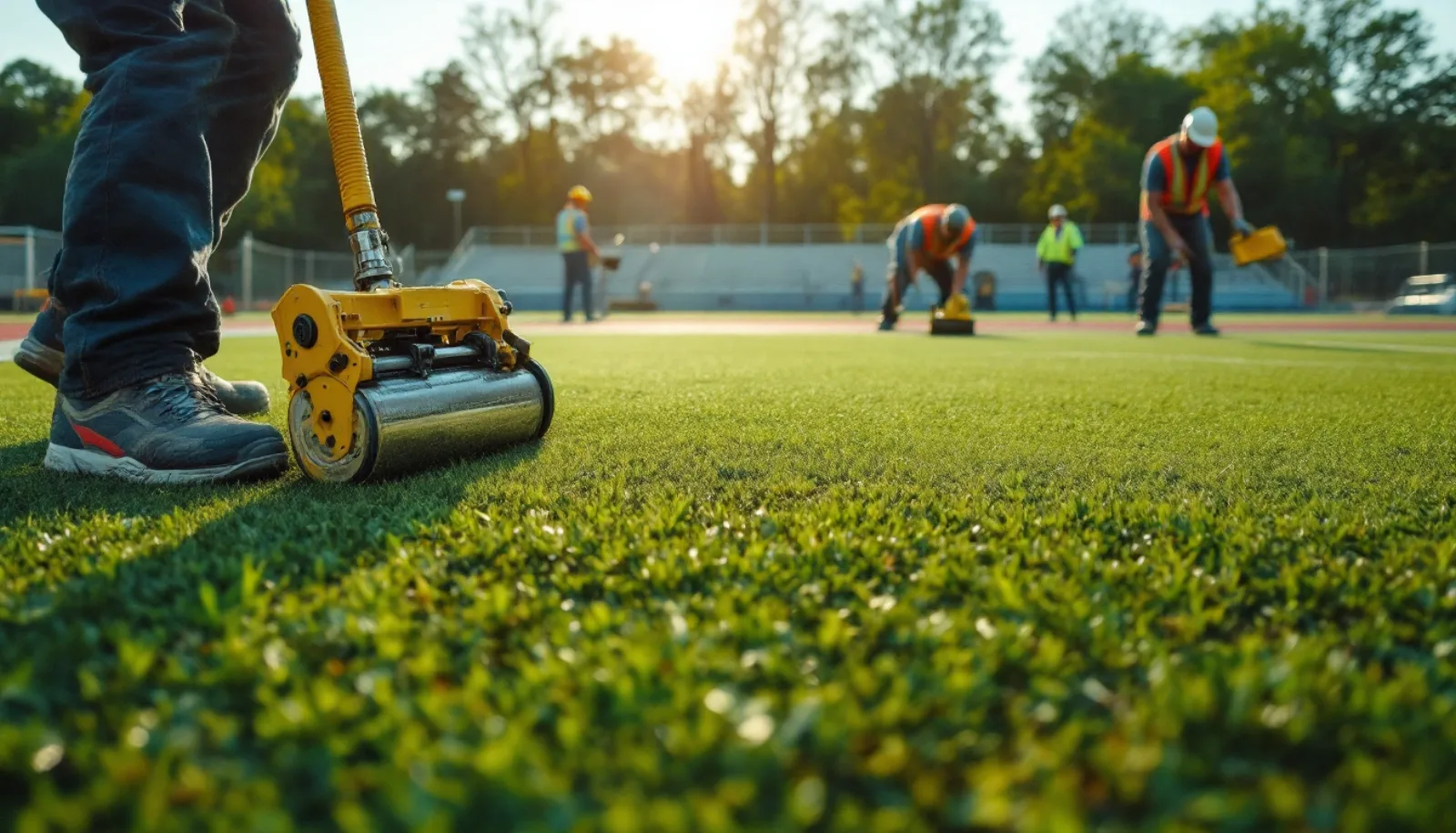
Multiples in sports surfacing carry a wider spread than most home-service categories because product mix and credentialing drive a wider quality gap. A $1.5M EBITDA single-product turf installer with a clean balance sheet and no recurring maintenance book is a different asset than a $1.5M EBITDA operator running synthetic turf, post-tension tennis courts, running tracks, and gym flooring with a documented 30% recurring resurfacing and inspection book. The multiples reflect the difference.
| Operator profile | EBITDA multiple (2026) | What buyers pay for |
|---|---|---|
| Single-product installer, project-driven, no recurring book | 5.0-6.0x | Cash flow only. Treated as construction-exposed. |
| Two-product installer, some warranty maintenance book | 6.0-7.5x | Capital project capability plus modest recurring tail. |
| Multi-product (turf + track + courts), FIFA Quality certification | 7.5-9.0x | Credentialed platform with cross-sell economics. |
| Full bundle (install + maintenance + resurfacing), 25%+ recurring | 8.5-10.0x | Platform-grade business; competitive bidding drives price. |
| Strategic anchor in a new region for an existing platform | 9.0-11.0x | Synergy premium for regional fill-in. |
The spread between 5x and 10x is not random. Sophisticated buyers in sports surfacing model six factors explicitly:
- Product breadth. Single-product installers price as construction businesses. Multi-product operators with cross-sell to the same athletic department buyer (the same superintendent buying turf this year, tennis courts next year, and running track resurfacing on the 4-year cycle) price as platforms.
- Credentialing depth. FIFA Quality and FIFA Quality Pro for synthetic turf. NFHS approved surface listing in the states where the operator bids. World Athletics (formerly IAAF) Class 1 or Class 2 certification for running tracks if the operator competes for collegiate work. SAPCA-equivalent technical sign-offs on the court side. Each credential is independently scarce.
- Recurring maintenance book. Annual inspection contracts, GMAX testing, grooming and infill top-up, court resurfacing scheduled on the warranty cycle, and crack repair on tracks. Buyers apply 8x to 10x multiples to genuinely recurring maintenance revenue and 4x to 6x to project work.
- Backlog quality and concentration. A 14-month signed backlog from 8 districts is platform-grade. A 6-month backlog from 2 districts is a discount. Single-customer concentration above 25% is often a deal breaker.
- Base-prep self-perform. Operators who self-perform site work, drainage, stone base, and laser grading retain 8 to 12 points of margin that subcontractor-dependent installers send out the door. This is the single largest hidden margin driver in the category.
- Warranty tail exposure. 8 to 10 year warranty on synthetic turf is the industry standard. Buyers model the present-value cost of warranty work on the existing book and adjust enterprise value downward for under-reserved or aggressive warranty practices.
The 2026 pricing reality
Strategic consolidators have moved aggressively for credentialed multi-product operators in the $2M to $8M EBITDA band, and pricing for that profile has compressed upward to 8x to 10x. Tarkett (through FieldTurf), Hellas Construction, AstroTurf (under SportGroup/IFG since 2016), and Sports Construction Group are the dominant active buyers. Tarkett Capital provides the parent capital structure behind FieldTurf and the broader Tarkett Sports segment. Below $2M EBITDA the competitive picture thins out quickly and founders without an advisor often underprice their businesses by a turn or more. Above $10M EBITDA the universe of credible buyers narrows to four or five strategics and a small group of infrastructure-focused PE platforms.
For independent buyers, search funders, and regional roll-up sponsors competing with the strategics, the path is to find the $500K to $2M EBITDA operator with credentials but without scale, or to develop a multi-product geographic thesis that the national strategics have not prioritized. The southeast and intermountain west are markets where regional builders have built credible $1M to $3M EBITDA businesses without seeing institutional buyer interest.
The six buyer archetypes in sports surfacing
Understanding which buyer you are (and which you are competing against) changes how you structure offers, sequence diligence, and signal credibility to founders.
1. Strategic platforms (Tarkett, Hellas, AstroTurf, SCG)
National installers and surfacing manufacturers acquiring regional installers to fill geography, add a missing product, or capture a maintenance book. They pay the highest multiples (8.5x to 11x) because they can integrate the target onto existing surety lines, manufacturer programs, and procurement contracts. Target profile: $2M+ EBITDA, credentialed, $10M+ revenue, regional density. They move methodically and often run sequential diligence, not parallel.
2. Infrastructure and athletic-facility PE platforms
Infrastructure-focused private equity sponsors and the small group of athletic-facility consolidators that have emerged in the last 5 years. Pay competitive multiples but focus heavily on recurring revenue mix, backlog visibility, and management depth. Less seasonal-cycle tolerance than the strategics. Good fit for sellers who want platform pricing with a 3 to 5 year exit horizon.
3. Independent sponsors
Deal-by-deal capital, typically a single principal or small team with LP commitments assembled per deal. They compete on creative structuring (earnouts, rollover equity, seller financing) when they cannot match strategic pricing. Good fit for founders who want a longer hold and partner-style alignment.
4. Landscape and infrastructure consolidators
Larger commercial landscape platforms and site-development consolidators looking to add athletic surfacing as a cross-sell into their existing municipal and institutional customer base. They underwrite for revenue synergies more than standalone economics, which can push pricing for the right strategic fit.
5. Family offices
Long-hold capital (10 to 25 year horizon) that does not need a 5-year exit. Price similarly to strategic platforms but with more patience on capital project cyclicality and less debt-load pressure. Attractive to sellers prioritizing legacy and management team continuity.
6. Search funders and operator roll-ups
Individual operators with institutional backing looking for one business to run, plus self-funded consolidators building regional platforms with seller financing and SBA support. Multiples: 4.5x to 6.5x SDE/EBITDA on the smaller targets. Best fit for $500K to $1.5M EBITDA operators where the founder wants an operational successor and is willing to take seller-paper structure to get one.
Due diligence: the sports-surfacing deep dive
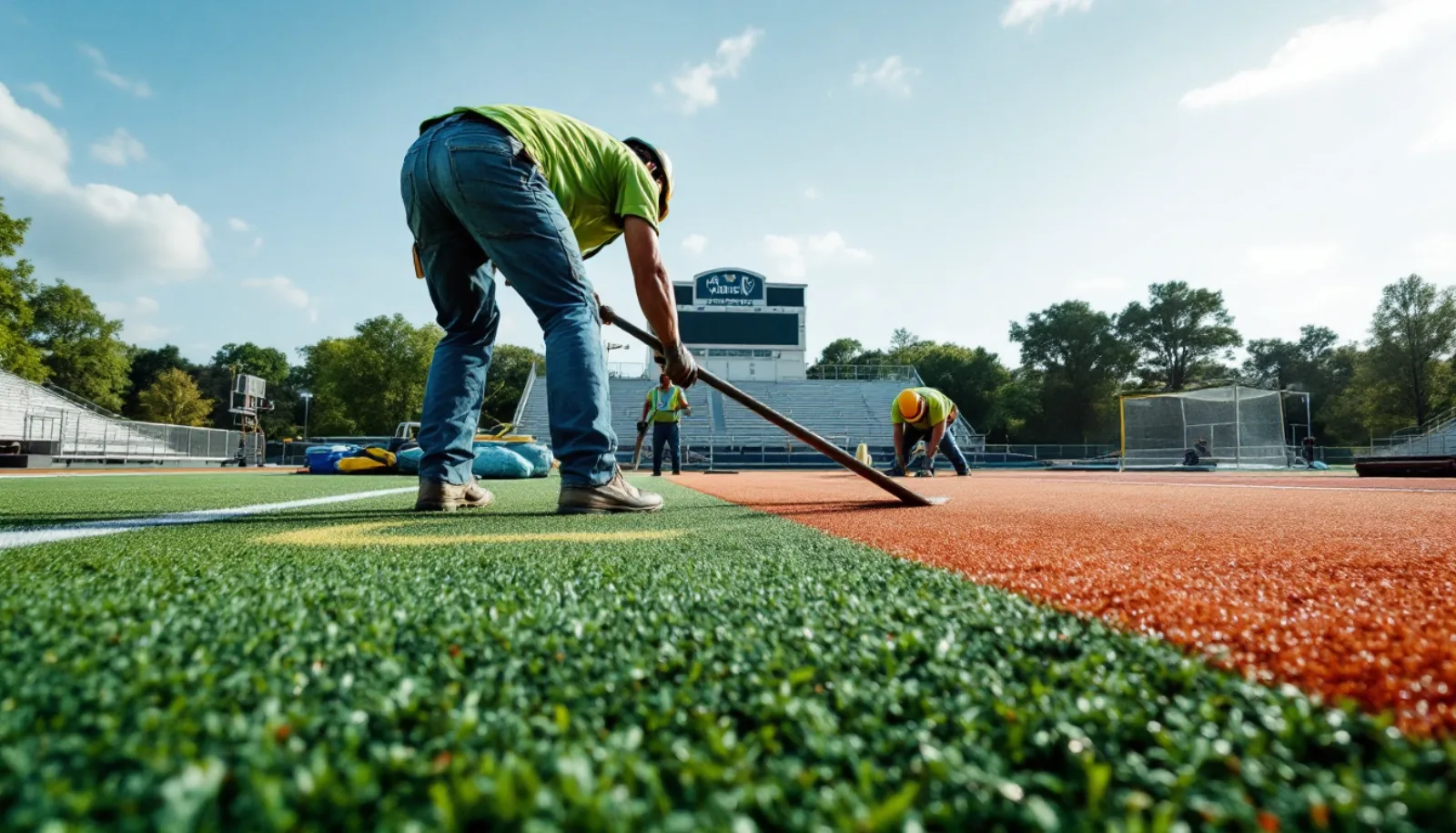
Standard M&A diligence is necessary but not sufficient for buying a sports surfacing business. The category-specific signals are where value creation and destruction actually happen. Below is what experienced buyers add to standard quality of earnings, legal, and insurance review.
Bid backlog and pipeline analysis
Pull every signed contract, every awarded but unsigned project, and every open bid for the trailing 18 months and forward 24 months. Bucket by product (turf, track, tennis, basketball, gym flooring, base prep), customer segment (public K-12, college, municipal, private athletic club, youth sports complex), award basis (low bid, best value, design-build, sole-source), and stage (open, shortlisted, awarded pending signature, signed and unstarted, in production, substantially complete). A healthy backlog shows 9 to 14 months of forward production, less than 25% concentration in any single customer, and a balanced distribution across products.
Credentialing and approved-list inventory
Request the full inventory of certifications: FIFA Quality and FIFA Quality Pro listings (by system), World Athletics Class 1 or Class 2 certifications for tracks, ITF (International Tennis Federation) court pace ratings if relevant, SAPCA member status (less common in North America but a flag of professional standards), NFHS approved surface listings by state, and state athletic association approvals. Verify each certification independently with the issuing body. Expired or contested certifications are a discount and sometimes a deal-killer.
Manufacturer relationships and distributor agreements
Sports surfacing installers depend on access to specific synthetic turf systems (FieldTurf, AstroTurf, Hellas Matrix, SportGroup Polytan, Shaw Sports Turf, Sprinturf), polyurethane track systems (Mondo, Beynon, Conica, APT), and acrylic court systems (Plexipave, Nova, DecoTurf, Laykold). Review every distributor agreement, dealer agreement, certified installer agreement, and licensed applicator status. Identify which agreements transfer on change of control and which require fresh approval from the manufacturer.
Warranty tail and reserve adequacy
Synthetic turf carries an 8-year industry standard warranty, with some manufacturers offering 10 years and a handful pushing 12 years on premium systems. Polyurethane tracks typically carry 5 to 8 year warranties. Acrylic court resurfacing runs 4 to 6 years. Pull the full warranty register for the trailing 10 years. Model the present value of expected warranty work on the installed base, compare to the warranty reserve on the balance sheet, and adjust enterprise value for the variance. Aggressive operators under-reserve. Conservative operators over-reserve. Both adjustments are material.
Surety capacity and bonding history
Public sector work in sports surfacing requires performance and payment bonds. Surety capacity scales with working capital, completed-job experience, and the surety underwriter’s comfort with management. Pull the current bonding line capacity (single project and aggregate), the trailing 5-year bonding history, any claims or partial claims, and the underwriter relationship. A buyer acquiring a $5M EBITDA operator with a $25M aggregate surety line is buying a different platform than one with $10M aggregate capacity.
Base-prep capability assessment
Walk the equipment list. Identify which base-prep work the operator self-performs (site grading, drainage, stone base, laser screed, asphalt or concrete) versus subcontracts. Self-perform operators retain 8 to 12 margin points that subcontractor-dependent installers send to others. Equipment value, operator training certifications (laser grading, GPS-equipped graders), and the depth of the foreman bench are the inputs.
Maintenance book quality
For every recurring maintenance customer, document: contract start date, current annual value, renewal history, service scope (grooming, infill top-up, GMAX testing, crack repair, color refresh), and renewal terms. A healthy sports surfacing maintenance book shows 80%+ annual renewal, multi-year terms where the customer allows, GMAX inspection tied to the warranty obligation, and pricing that has kept pace with inflation. Below-market pricing on a long-tenured maintenance book is a value-creation lever; above-market pricing on at-risk renewals is a discount.
Regulatory and environmental review
Synthetic turf has environmental and health questions around crumb rubber infill, PFAS in older systems, and end-of-life recycling. State and municipal procurement rules are tightening in California, New York, Massachusetts, and several New England jurisdictions. Review the operator’s exposure to crumb-rubber-only project history, PFAS-disclosed installations, and any pending or settled litigation related to surface composition. Workers’ compensation claim history matters; sports surfacing installation is physical work with elevated injury rates.
Structuring the offer
The best buyers in sports surfacing win on structure as often as on price. A well-structured offer can beat a higher nominal offer if it matches what the seller actually cares about, which in this category is usually warranty tail isolation and surety continuity.
The standard sports surfacing deal structure (2026)
- Cash at close: 60-75% of total consideration. Lower end when significant warranty tail is being assumed.
- Seller rollover equity: 5-15% in platform deals where the seller continues operating or in roll-ups with management equity pools. 0% in clean-exit deals.
- Earnout: 10-20% over 18-36 months. Most commonly tied to backlog conversion (signed projects that produce as estimated), maintenance renewal rate, or recurring book retention.
- Escrow: 10-15% held 18-24 months against indemnification claims. Higher than the home-services norm because of warranty exposure.
- Seller note: 0-10%, typically subordinated to senior debt. Common in independent sponsor, regional roll-up, and search fund deals; less common in strategic platform deals.
- Warranty escrow or true-up: separately structured, typically a dedicated warranty reserve of 3-5% of installed-base contract value held in escrow for 24-36 months with periodic releases as the warranty period ages out.
Where smart buyers differentiate
Sellers in this category weight: cash at close percentage, warranty allocation clarity, key employee retention (particularly the construction superintendent and the senior estimator), surety underwriter transition, cultural continuity with manufacturer reps, and timeline certainty. Price per se is often the 4th or 5th factor for founders approaching retirement.
Buyers who win on non-price factors typically: pre-arrange surety underwriter introductions before signing the LOI, commit to specific warranty handling terms with clear allocation between buyer and seller, write earnouts with achievable floors tied to operational metrics the seller controls, and minimize escrow exposure through representations and warranties insurance where economics support it.
The earnout trap
The single most destructive element of a sports surfacing deal is a poorly designed earnout. Project-based earnouts (number of awarded bids, total project value booked) reward chasing low-margin work. EBITDA-based earnouts invite arguments about post-close cost allocation, particularly around shared overhead with the buyer’s existing operations. Revenue earnouts can drive bid pricing down to hit the number.
The structures that work in sports surfacing: backlog-conversion rate (signed contracts that actually produce within their budgeted margin), maintenance contract renewal rate, and customer retention measured at the district or athletic department level. All three are metrics the seller can meaningfully influence for 18 to 36 months post-close without distorting business decisions.
Integration: where acquirers create or destroy value
Strategic and PE buyers in sports surfacing publish polished integration playbooks but the reality is more variable than the decks suggest. The deals that compound are the ones where buyers respect four principles.
Preserve the bidding cadence in year one
Sports surfacing operators win work through long-tenured relationships with school district facilities directors, college athletic operations leads, and municipal parks staff. Those relationships are built on knowing exactly when an RFP will drop, who is on the selection committee, and what the budget envelope is. Buyers who centralize bidding into a corporate estimating function in the first 6 months typically miss the next bid cycle and exit the first year with a smaller backlog than they entered with. The right approach is to let local estimating run on the existing cadence and integrate operationally over 12 to 18 months.
Hold the surety relationship steady
Surety underwriters in the construction segment have long memories and personal relationships with operators they have backed for a decade or more. A buyer who substitutes the seller’s long-tenured surety underwriter with the parent company’s national underwriter on day one often loses bonding capacity in the short term. Better to maintain the existing surety line, layer the parent’s capacity on top, and transition over 24 months if the economics support it.
Protect the construction superintendent and senior estimator
Two roles drive the production economics of a sports surfacing business more than any others: the construction superintendent who runs field crews and the senior estimator who prices bids. Both have outside options the day the deal is announced. Smart buyers structure retention bonuses (typically 15-25% of annual compensation, paid over 18 to 24 months) tied to continued employment, with a meaningful portion contingent on operational outcomes. This should be agreed before close, not negotiated after.
Manage the warranty book as a discrete portfolio
The acquired warranty book is a distinct operational responsibility from the post-close install pipeline. Buyers who fold warranty service into general operations often see warranty costs balloon as customers escalate complaints that should have been handled at a senior technical level. The cleaner pattern is to designate a warranty response function for the inherited book, fund it from the warranty escrow, and report on warranty resolution as a separate operational KPI for the first 36 months.
Financing a sports surfacing acquisition
Capital structure varies by buyer type. Some patterns are consistent in 2026.
SBA 7(a) loans
Independent buyers and search funders commonly use SBA 7(a) financing for deals up to $5M in purchase price. SBA rates are typically prime plus 2.0 to 2.75%, with 10-year amortization. The constraints in sports surfacing are real: SBA requires the seller to exit operationally within 12 months (which can clash with the founder transition the surety underwriter and largest customers expect), and the SBA does not finance the warranty escrow or surety collateral. For credentialed multi-product operators, SBA can be made to work with a clean management succession; for founder-dependent operators, it can be difficult.
Commercial bank acquisition lending with surety overlay
Regional and community banks with construction-segment experience will lend 2.0 to 3.5x EBITDA at prime plus 1.5 to 2.5%. The bank lending side has to coordinate closely with the surety underwriter because surety capacity often depends on the operator’s debt-to-EBITDA ratio and tangible net worth. The right lender for sports surfacing has construction-segment expertise and an existing relationship with one of the major specialty sureties (Travelers, Liberty Mutual, Zurich, Chubb).
Mezzanine and unitranche
For strategic platform deals or larger independent deals ($5M+ EBITDA), mezzanine or unitranche financing bridges the gap between senior debt and equity. Rates run 10 to 14% with warrants. Common providers active in construction-adjacent verticals include Twin Brook, Monroe, Antares, and regional SBIC funds with construction lending mandates.
Seller financing
Often 5 to 15% of purchase price, subordinated, 5 to 7 year term, rates typically 6 to 8%. Particularly useful in sports surfacing because seller paper can be structured to align with the warranty tail; portions of the seller note can be subordinated to warranty escrow releases, giving the buyer downside protection if warranty experience deteriorates.
Red flags that kill sports surfacing deals
Some deals should not close. The patterns that consistently predict post-close failure in sports surfacing:
- Warranty reserve below 1.5% of installed-base contract value. Suggests systemic under-reserving. The diligence true-up alone can make the deal uneconomic, and the post-close cash exposure can exceed retained earnings.
- Surety claims history with partial or full claim payments. A single partial claim is usually manageable. A pattern of claims or a current open claim is a deal killer for most buyers; surety capacity post-close drops sharply and bidding access erodes.
- Backlog concentrated in a single customer above 35%. Common when a founder has cultivated one school district or one municipal client over decades. Customer loss post-close can vaporize 18 to 24 months of forward production.
- Expired or pending revocation of FIFA Quality or NFHS-approved status. Without the certifications, the operator falls out of the upper tier of bid eligibility and the multi-product pricing thesis collapses.
- Crumb-rubber-only installed base with no PFAS disclosure history. In jurisdictions tightening procurement rules, this is an underwriting flag for both warranty risk (re-do exposure) and pipeline risk (loss of bid eligibility on new work).
- Estimator concentration in the founder. If the founder personally prices every bid, you are acquiring a person, not a business. The cost of rebuilding an estimating function post-close often exceeds the discount available on price.
- Quality of earnings reveals more than 15% EBITDA adjustment. Usually from owner compensation, related-party transactions on equipment or real estate, or aggressive revenue recognition on long-duration projects. Adjustments above this range typically signal underlying control issues.
The CT Acquisitions perspective
We work both sides of the sports surfacing market: introducing sellers to qualified buyers and sourcing deal flow for institutional buyer networks that have engaged us. Our observations from the last 24 months of sports surfacing M&A:
- Strategic buyers move methodically, not quickly. Tarkett, Hellas, AstroTurf, and Sports Construction Group all run thorough diligence processes that can take 5 to 7 months from LOI to close. Sellers who need faster timelines often find better fit with independent sponsors or regional roll-ups even if the nominal price is slightly lower.
- Multi-product operators command real premiums. Single-product turf installers in the $1M to $2M EBITDA range struggle to attract competitive bidding above 6x. The same operator with a track and tennis capability and a credible recurring book attracts 8x bids from the same set of buyers. The build-it-yourself path to multi-product (acquiring or developing capability in tennis or tracks) often returns more than waiting for a strategic exit.
- Cultural diligence predicts post-close performance. The integration failures we have seen are rarely about price or financial alignment. They are about buyers who promised local autonomy on bidding and then centralized estimating in month four. The buyers who preserve value are the ones whose diligence reaches into the field crews and the long-tenured estimating staff, not just the CFO.
- Regional dynamics matter. Texas sports surfacing economics (large district capital programs, aggressive bid pricing, sustained warm-season install windows) are fundamentally different from the Northeast (shorter install windows, premium pricing, tight municipal procurement) or the West Coast (PFAS scrutiny, organic infill demand, alternative surface composition pressure). Buyers underwriting across regions without local intelligence consistently miss on pricing and timeline.
If you’re a buyer, here’s what we recommend
Whether you are a first-time search fund buyer, an independent sponsor building a regional thesis, or a strategic platform looking for fill-in acquisitions, the same playbook works for buying a sports surfacing business:
- Write down your thesis in one page. Region, product mix, customer segment, credentialing requirements, integration model, and hold period. Every target you evaluate should be defensible against this thesis.
- Build a deal-flow machine before you need deals. Direct outreach to credentialed operators (identified through FIFA Quality, NFHS approved lists, and state association databases) consistently outperforms broker-led processes on price and terms. Relationships with construction-segment CPAs and surety brokers matter more in this category than in most home-services verticals.
- Underwrite from the warranty book up. The single largest hidden risk and value driver in sports surfacing is the warranty tail. Build your model from the installed base outward: warranty exposure, maintenance renewal economics, then forward bid pipeline.
- Do not mistake nominal price for deal quality. Buyers who pay 8x for a credentialed multi-product operator with a clean warranty book, documented backlog, and stable surety capacity typically return capital more reliably than buyers who pay 5x for a single-product installer with concentrated customer exposure and an under-reserved warranty book that looks cheap on paper.
Working with CT Acquisitions as a buyer
We maintain a qualified buyer network of strategic platforms, infrastructure PE sponsors, family offices, independent sponsors, and search funders active in sports surfacing and adjacent specialty construction verticals. If your thesis fits the deal flow we see, we are direct, fast, and selective about the introductions we make. We do not run broad auction processes. We match founders to the small number of buyers who are right for their specific business.
For buyers, this means: no wasted time on mis-fit deals, early access to deals that have not gone to market, and a sellers-first reputation that founders trust. No fee to you on buy-side introductions; sell-side mandates are paid on success at closing.
If you are actively acquiring in sports surfacing, set up a 30-minute conversation to walk us through your thesis. We will be direct about whether our deal flow fits.
Frequently asked questions about buying a sports surfacing business
What EBITDA multiple should I pay when buying a sports surfacing business in 2026?
For platform-grade multi-product operators with FIFA Quality certification, NFHS approved status in their core states, and a documented recurring maintenance book, expect competitive bidding in the 8x to 10x EBITDA range. Single-product installers without credentialing typically transact at 5x to 6x. The factors that move multiples most are product breadth, credentialing depth, and recurring maintenance revenue mix; warranty reserve adequacy and surety capacity are the next most important.
How long does it take to close a sports surfacing acquisition?
From initial LOI to close, 120 to 180 days is typical, which is longer than most home-services categories because of warranty diligence, surety transition, and the project backlog review. Strategic platforms with dedicated diligence teams can close at the faster end. Deals with significant warranty exposure, surety claim history, or multi-state operations frequently extend to 200+ days.
Should I use an SBA 7(a) loan to buy a sports surfacing business?
SBA 7(a) works for independent buyers acquiring sports surfacing businesses up to $5M in purchase price. Rates are favorable (prime plus 2.0 to 2.75%) and the 10-year amortization helps cash flow. The constraints are the SBA requirement that the seller exit operationally within 12 months (which can conflict with the founder transition that surety underwriters and key customers expect) and the fact that SBA does not finance warranty escrow or surety collateral. For credentialed operators with management succession, SBA can be a strong fit.
How do I source sports surfacing deal flow if I am new to the category?
The most effective sourcing channels, in order of yield: direct outreach to credentialed operators identified through FIFA Quality system listings, World Athletics certified track lists, and state NFHS approved surface registries; relationships with construction-segment CPAs and surety brokers; presence at AOSA (American Sports Builders Association) and SAPCA events; relationships with M&A advisors who specialize in the category (CT Acquisitions among them); and broker-listed deals where you will compete with every other buyer.
What is the biggest mistake first-time sports surfacing buyers make?
Underestimating the warranty tail. Synthetic turf carries an 8 to 10 year warranty, and the warranty obligation transfers to the buyer at close. First-time buyers often focus entirely on the forward bid pipeline and discover in years 2 through 5 that the warranty work on the inherited installed base consumes margin they did not budget for. A proper warranty reserve analysis, a dedicated warranty service function, and an escrow structure that allocates warranty risk between buyer and seller are essential.
Can I buy a sports surfacing business without construction experience?
Yes, but plan for it carefully. The cleanest path for non-operators is acquiring a business with a strong general manager and a senior construction superintendent in place, then structuring a transition period where the founder stays 18 to 24 months. Surety underwriters in particular want to see operational continuity. Search funders and independent sponsors successfully acquire sports surfacing businesses without prior construction experience using this structure. Avoid the absentee owner thesis; sports surfacing is operationally complex and surety-sensitive, and weakly managed businesses lose bonding capacity quickly.
How much working capital do I need to close a sports surfacing deal?
For a $3M EBITDA sports surfacing business, expect to fund 12 to 18% of revenue in working capital at close, which is higher than most home-services categories because of long project cycles, retainage on public sector work, and warranty escrow funding. That is typically $1.5M to $3M on top of the purchase price for a $15M revenue operator. Financing structures usually fold this into the facility, but confirm with your lender and surety underwriter before committing.
What credentials matter most when buying a sports surfacing business?
FIFA Quality and FIFA Quality Pro certifications on the synthetic turf side, NFHS approved surface listings in the states where the operator bids, World Athletics Class 1 or Class 2 certifications for running tracks, and manufacturer certified-installer agreements with the major systems (FieldTurf, AstroTurf, Hellas Matrix, Mondo, Beynon, Plexipave). Each credential is independently scarce, takes 18 to 36 months to earn from a standing start, and is the foundation of bid eligibility at the upper tier of the market.
Related resources for buyers
- Sports surfacing valuations and multiples (seller perspective), useful context on what sellers are being told
- Sports surfacing business valuation guide, deep dive on multiples drivers and EBITDA normalizations
- Buying a landscaping business, adjacent commercial-maintenance-led vertical
- Buy a Business directory, all buy-side playbooks across home and commercial services
- How to sell a service business, seller-side playbook useful for buyer conversations
Want a Specific Read on Your Business?
30 minutes, confidential, no contract, no cost. You leave with a read on your local buyer market and a likely valuation range.
How much does it cost to buy a sports surfacing business in 2026?
Purchase prices for platform-grade multi-product sports surfacing businesses typically run 8x to 10x trailing twelve months EBITDA plus working capital. A $1.5M EBITDA business with FIFA Quality certification, NFHS approved status, multi-product capability, and a documented recurring maintenance book commonly transacts for $12M to $15M plus $1.5M to $2.5M in working capital. Single-product installers without credentialing transact for 5x to 6x EBITDA.
Can I buy a sports surfacing business with no money down?
Not realistically. SBA 7(a) financing requires 10% minimum equity injection. Seller financing typically caps at 15% of purchase price. Surety capacity post-close requires tangible net worth that is usually not achievable with a fully debt-funded structure. Expect 25 to 40% total equity requirement across sources, on the higher end of the home-services range because of working capital and warranty escrow needs.
What due diligence is required when buying a sports surfacing business?
Standard M&A diligence (quality of earnings, legal, insurance) plus category-specific: bid backlog and pipeline analysis, credentialing inventory (FIFA Quality, World Athletics, NFHS), manufacturer and distributor agreement review, warranty tail and reserve adequacy, surety capacity and bonding history, base-prep capability assessment, maintenance book quality, and environmental review including PFAS exposure on older installations.
How long does a sports surfacing acquisition take to close?
120 to 180 days from signed LOI to close for a well-prepared target, longer than most home-services categories. Strategic platforms with dedicated diligence teams close at the faster end. Deals with significant warranty exposure, surety claim history, or multi-state operations extend to 200+ days.
Should I use a business broker to buy a sports surfacing business?
Buyer-side brokerage is rare in this category; most sports surfacing buyers source directly or through buy-side advisors like CT Acquisitions that represent qualified buyer networks. No fee to you on buy-side introductions; sell-side mandates are paid on success at closing. This structure is the dominant model in specialty construction M&A.
What makes a sports surfacing business a platform acquisition target?
Five characteristics: $2M+ EBITDA, multi-product capability (synthetic turf plus at least one of running track, tennis, or basketball), FIFA Quality or equivalent credentialing, recurring maintenance book of 20%+ of revenue, and base-prep self-perform capability. Geographic fit for an existing strategic platform is a meaningful bonus.
Can I buy a sports surfacing business without construction experience?
Yes, with caveats. The cleanest path is acquiring a business with a strong GM and senior construction superintendent in place plus an 18 to 24 month founder transition. Surety underwriters specifically want operational continuity. Search funders successfully acquire sports surfacing businesses using this structure. Avoid the absentee owner thesis.
How does PFAS regulation affect sports surfacing acquisitions?
Several state and municipal jurisdictions (California, New York, Massachusetts, and parts of New England) are tightening procurement rules around PFAS in synthetic turf. Buyers underwrite this as a forward bid eligibility risk and an installed-base warranty risk on older systems. Operators who have moved their primary system to PFAS-disclosed or alternative-composition products command a premium with strategics positioning for the regulatory direction.

About the Author
Christoph Totter is the founder of CT Acquisitions, an M&A advisory firm working both sides of the table, headquartered in Sheridan, Wyoming. We work directly with 500+ buyers, search funders, family offices, lower middle-market PE, and strategic consolidators, including direct mandates with the largest specialty construction and home services consolidators that other intermediaries can’t access. No fee to you on buy-side introductions; sell-side mandates are paid on success at closing. Connect on LinkedIn · Get in touch