
Buy a Foundation Repair Business in 2026: 4-9x EBITDA, Helical Pier Economics, Lifetime Warranty Liability
Buying a foundation repair business in 2026 clears 4-9x EBITDA, with the spread driven by pier type mix (helical vs push vs slab), warranty structure, geographic exposure to expansive-clay regions, and platform scale. Helical pier operators with strong repeat-customer patterns command the top of the band. Lifetime warranty reserve adequacy is the diligence line item that kills the most deals. Named consolidators driving this playbook: Groundworks (Cerberus), USW (Rotunda), plus regional PE-backed platforms.
Quick Answer
Buying a foundation repair business in 2026 typically means paying 4x to 9x EBITDA, with owner-operator shops trading at 3x to 5x SDE, $5M to $15M EBITDA operators at 5x to 7x, and platform-grade businesses commanding 7x to 10x. Helical pier and push pier mix, insurance-work concentration, and the lifetime warranty liability reserve are the three diligence items that move pricing most. Groundworks (a Cerberus Capital Management portfolio company since 2021) has acquired more than 50 regional brands and now operates roughly 280 locations, setting the consolidation pace for the category.
Updated June 2026 · CT Acquisitions
Buying a foundation repair business in 2026 sits at the intersection of two trends that rarely combine: a non-discretionary structural service category with insurance-backed demand, and a consolidator (Cerberus-backed Groundworks) running the most aggressive structural-services roll-up in the lower middle market. For PE buyers, independent sponsors, and regional consolidators, the opportunity is sizable. The discipline is sourcing the right operator profile, modeling the lifetime warranty backstop honestly, and underwriting helical pier mix, push pier mix, and slab jacking economics with the rigor the category demands.
How CT Acquisitions Works
- $0 to sellers. The buyer in our network pays us at close. No retainer, no listing fee, no success fee, no commission, ever.
- No exclusivity contract. Walk at any time. If our buyer isn’t paying enough, hire a banker the next day. We have zero claim on you.
- No auction, no leaks. We introduce you to one or two pre-mandated buyers sequentially. Your business never gets shopped.
- Top-of-market price AND the right buyer. Our fee scales with sale price (same incentive as a banker), matched on fit, not just the highest check.
- 60 to 120 days, not 9 to 12 months. We already know our buyers’ mandates before we pick up the phone with you.
Key takeaways
- Foundation repair deals typically transact between 4x and 9x EBITDA in 2026, with platform-grade operators reaching 7x to 10x.
- Helical pier ($1,500 to $3,000 each installed) and push pier ($1,200 to $2,400) mix drives gross margin and resale value.
- Lifetime warranty liability typically sits at 5% to 15% of revenue as a balance-sheet reserve; underestimating it kills deals at QofE.
- Groundworks (Cerberus, 2021) has acquired 50+ brands and operates roughly 280 locations, setting consolidation pace.
- Texas, Oklahoma, Arkansas, Missouri, Colorado, and Tennessee clay-soil markets are most actively consolidated.
- Structural engineer referral channels and insurance-work concentration are the two most overlooked multiple drivers.
- SBA 7(a) works for deals up to $5M; commercial bank + mezz typical above that.
Table of contents
- Why buying a foundation repair business makes sense in 2026
- What buyers pay when buying a foundation repair business
- Groundworks and the Cerberus thesis
- The buyer archetypes in foundation repair
- Due diligence when buying a foundation repair business
- The lifetime warranty liability
- Structuring the offer
- Integration: where acquirers win or lose
- Financing when buying a foundation repair business
- Red flags when buying a foundation repair business
- The CT Acquisitions perspective
- If you’re a buyer, here’s what we recommend
- Frequently asked questions
- Related resources for buyers
This guide is the buyer’s playbook for buying a foundation repair business. It covers how the category is underwritten in 2026, which operational signals separate a 4x business from an 8x platform, what deal structures sellers accept in this vertical, and how to integrate without breaking the warranty book or the structural-engineer referral pipeline.
Why buying a foundation repair business makes sense in 2026
Three structural reasons make foundation repair an attractive buy in 2026, and they compound rather than cancel.
First, non-discretionary demand. Foundation failure isn’t deferred maintenance. Cracked drywall, sticking doors, separating chimneys, and bowing basement walls force homeowners into the category. Roughly 25% of US homes experience some form of foundation distress in their lifetime; average residential ticket sits between $4,500 and $14,000; commercial and pre-purchase inspection work pushes above $40,000.
Second, clay-soil concentration. The most active markets (Texas, Oklahoma, Arkansas, Missouri, Colorado, Tennessee, Kansas, Mississippi) sit on expansive clay soils that swell and contract seasonally. Dallas, Fort Worth, Houston, Austin, Oklahoma City, Tulsa, Memphis, and St. Louis all generate disproportionate demand. A buyer who knows clay-soil geography can build a defensible regional thesis quickly.
Third, fragmentation under one credible consolidator. The category has roughly 6,000 to 8,000 active operators nationwide. Groundworks (the Cerberus Capital Management platform formed in 2021) has acquired more than 50 brands including Olshan Foundation Repair, Atlas Earthworks, and dozens of regional names. Bedrock Restoration, Saela, and several regional sponsors fill out the active-buyer landscape. The best assets above $2M EBITDA see competitive bidding; the long tail of $500K to $2M SDE operators remains genuinely fragmented.
What buyers pay when buying a foundation repair business in 2026
Valuation ranges are wide because operator quality varies more in foundation repair than in almost any other home services vertical. A $1M EBITDA operator running 70% retail residential work with documented helical pier specs and a clean warranty book is a fundamentally different asset than a $1M EBITDA operator running 80% insurance-claim work with an under-reserved lifetime warranty and a founder who personally sells every commercial bid. The multiples reflect the gap.
| Operator profile | Multiple (2026) | What buyers pay for |
|---|---|---|
| Owner-operator, sub-$500K SDE, single crew | 2.5x to 3.5x SDE | Job book and customer list. Treated as a job, not a business. |
| Owner-operator, $500K to $1.5M SDE, 2 to 4 crews | 3.5x to 5.0x SDE | Local brand, structural-engineer referral channel, documented processes. |
| Managed, $1.5M to $5M EBITDA, balanced retail + insurance | 5.0x to 6.5x EBITDA | Add-on candidate for regional or national platform. |
| Managed, $5M to $15M EBITDA, multi-branch, clean warranty reserve | 6.0x to 8.0x EBITDA | Platform-ready fundamentals; bolt-on for Groundworks-class buyer. |
| Platform-grade, $15M+ EBITDA, multi-state, documented integrations | 7.5x to 10.0x EBITDA | Strategic premium, competitive bidding, often anchor for a new regional platform. |
The spread between 4x and 9x is not random. It reduces to seven factors, and every disciplined buyer of a foundation repair business models them explicitly:
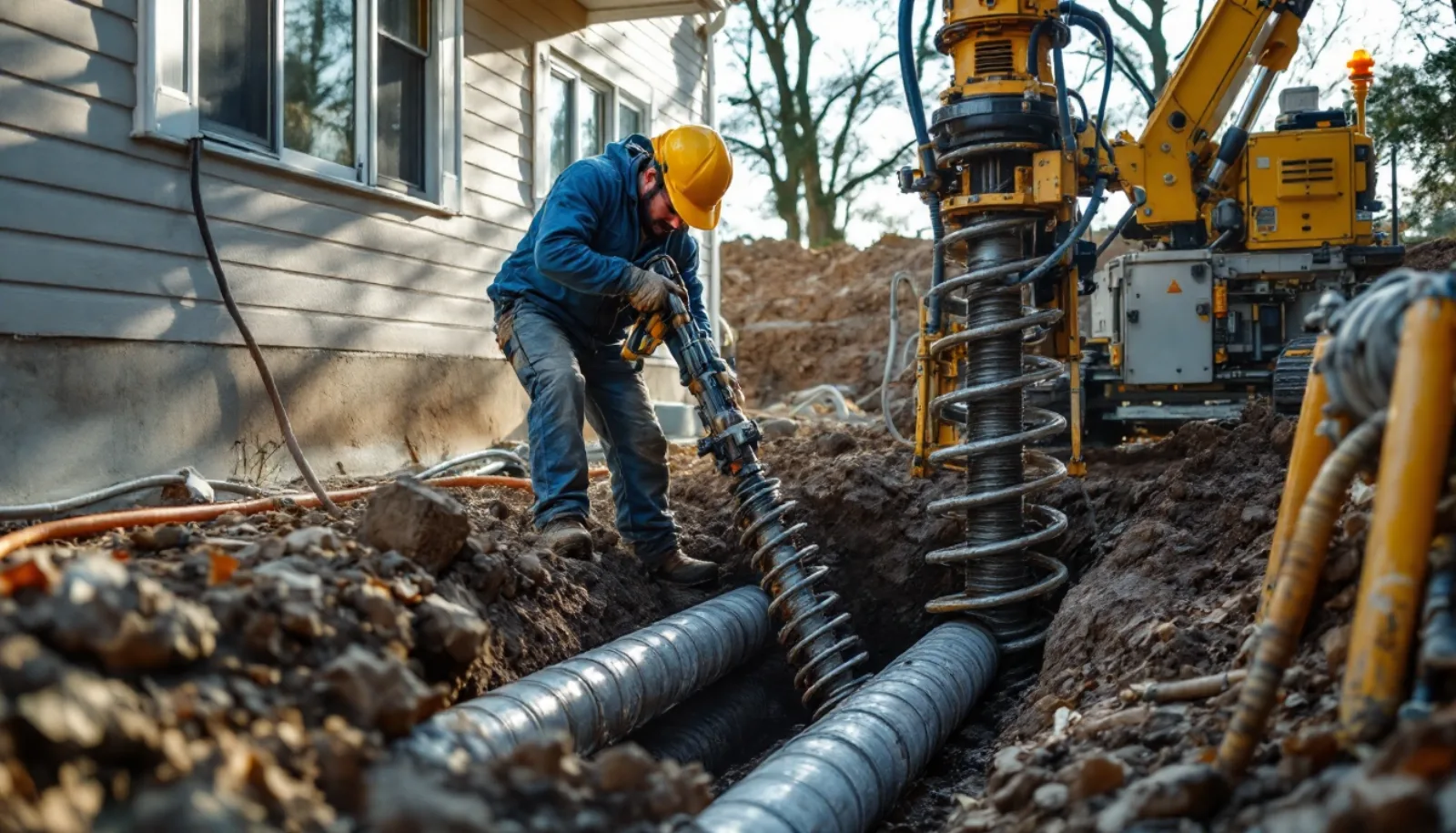
- Service mix. Helical pier work ($1,500 to $3,000 per pier installed) carries the highest gross margins (45% to 60%). Push pier work ($1,200 to $2,400 per pier) sits at 40% to 55%. Slab jacking and polyurethane foam injection ($500 to $1,500 per location) is faster but margin-thinner. Buyers price the mix.
- Retail vs insurance work. Retail residential carries higher margins and faster collections. Insurance-claim work (often 30% to 50% of revenue in clay-soil markets) collects slower (60 to 120 days), introduces adjuster relationships as a key-person risk, and is exposed to insurer policy changes on foundation coverage.
- Lifetime warranty reserve. The single most-mispriced item. Honest reserves run 5% to 15% of trailing revenue. Many sellers carry below 3%. The QofE delta closes deals or kills them.
- Structural engineer referral channel. Independent PE-licensed structural engineers refer roughly 20% to 35% of high-ticket residential and commercial work in mature markets. A documented referral relationship list with named engineers is a valuation multiplier.
- Soil report dependency. Operators that pull and document soil reports on every job (and price accordingly) build defensible legal posture. Operators that don’t face higher warranty claim rates.
- Crew capacity and equipment. Hydraulic rams, helical pier drive heads, polyurethane injection rigs, and excavation equipment. A typical mid-sized operator carries $500K to $2M in equipment. Useful life and replacement schedule matter.
- Owner dependence. If the founder personally inspects every commercial bid and manages every structural engineer relationship, buyers apply a meaningful key-person discount and structure significant earnout.
The 2026 pricing reality
Because Groundworks and a small set of regional consolidators are competing for quality targets, pricing on platform-grade operators has compressed upward. A $3M to $8M EBITDA business with a clean warranty reserve and multi-branch footprint routinely sees multiple LOIs in the 6.5x to 8x range. Founders in clay-soil markets are now sophisticated about valuation.
For independent and search-fund buyers competing with Groundworks-class platforms, you either need a differentiated thesis (specific metro, commercial structural work, an operator profile the platforms overlook) or you focus on the $500K to $1.5M SDE band where platform buyers are less active. In that range, valuations are 3.5x to 5x SDE and founders frequently prioritize continuity and warranty honor over the highest nominal check.
Groundworks and the Cerberus thesis
Every buyer of a foundation repair business in 2026 has to understand Groundworks because Groundworks sets the comp set, the integration playbook, and the labor market for the category.
Cerberus Capital Management formed Groundworks in 2021 and rolled up the category aggressively. By mid-2026, the platform operates roughly 280 locations across 50+ legacy brands including Olshan Foundation Repair (Texas), Atlas Earthworks, JES Foundation Repair (Mid-Atlantic), Foundation Recovery Systems (Missouri), Frontier Basement Systems (Tennessee), and roughly 40 others. The thesis: foundation repair plus crawlspace encapsulation plus basement waterproofing plus concrete leveling builds a multi-product structural-services platform with shared lead generation, shared back-office, and shared procurement scale on helical piers and polyurethane materials.
For buyers competing with Groundworks, three implications matter:
- Groundworks acquisition pace sets multiple expectations. Founders who sell to Groundworks in the $2M to $10M EBITDA range typically transact at 6x to 8x with meaningful rollover. Competing offers below 6x EBITDA on platform-grade assets rarely win.
- Technician labor pricing has moved. Groundworks invests heavily in technician retention. Independent operators in markets where Groundworks competes for crews see annualized wage inflation of 6% to 10%.
- The categories beyond residential foundation repair are open. Groundworks owns residential. Commercial structural work, industrial slab leveling, post-tension cable repair, and seismic retrofit are less consolidated and represent genuine whitespace for differentiated buyers.
Bedrock Restoration, Saela, and a handful of regional sponsors (notably some lower-middle-market PE firms quietly building structural-services theses) compete in adjacent segments. Independent Foundation Repair Co, Wellman Foundation Repair, Ram Jack, and several franchise systems remain genuinely independent and represent both deal flow opportunities and direct competition for the long tail of acquisitions.
The buyer archetypes in foundation repair
Understanding which buyer you are (and which you’re competing against) changes how you structure offers.
1. Groundworks and structural-services platforms
National platform with 280+ locations acquiring 15 to 25 add-ons per year. Pay the highest multiples on $2M+ EBITDA multi-branch operators with clean warranty books. They move fast and typically write 65% to 75% at close with 10% to 20% rollover.
2. Regional structural-services consolidators
Lower-middle-market PE firms building regional plays in clay-soil geographies. Competitive multiples, especially for targets that complete a metro footprint. Integration tends to be more measured because they already operate in adjacent structural-services categories.
3. Independent sponsors
Deal-by-deal capital with LP commitments assembled per deal. Compete on creative structuring (earnouts, rollover equity, seller financing) when they can’t match platform pricing. Strong fit for sellers who want a partner but reject Groundworks-style integration speed.
4. Search funds
Individual operators with institutional backing looking for one business. Multiples: 4x to 6x SDE. Target: $500K to $2M SDE with an established structural-engineer referral channel. Clean exit for founders not chasing maximum price.
5. Family offices
Long-hold capital (10 to 25 years) that doesn’t need platform exits. Price similarly to PE platforms but with more patience on integration. Attractive to sellers prioritizing legacy, warranty honor, and team continuity.
6. Roll-up founders (self-funded consolidators)
Operator-led roll-ups funded by seller financing, SBA, and mezz. Can’t match platform pricing but move fast on smaller deals ($500K to $1M EBITDA) and often offer the strongest warranty-honor story.
Due diligence when buying a foundation repair business
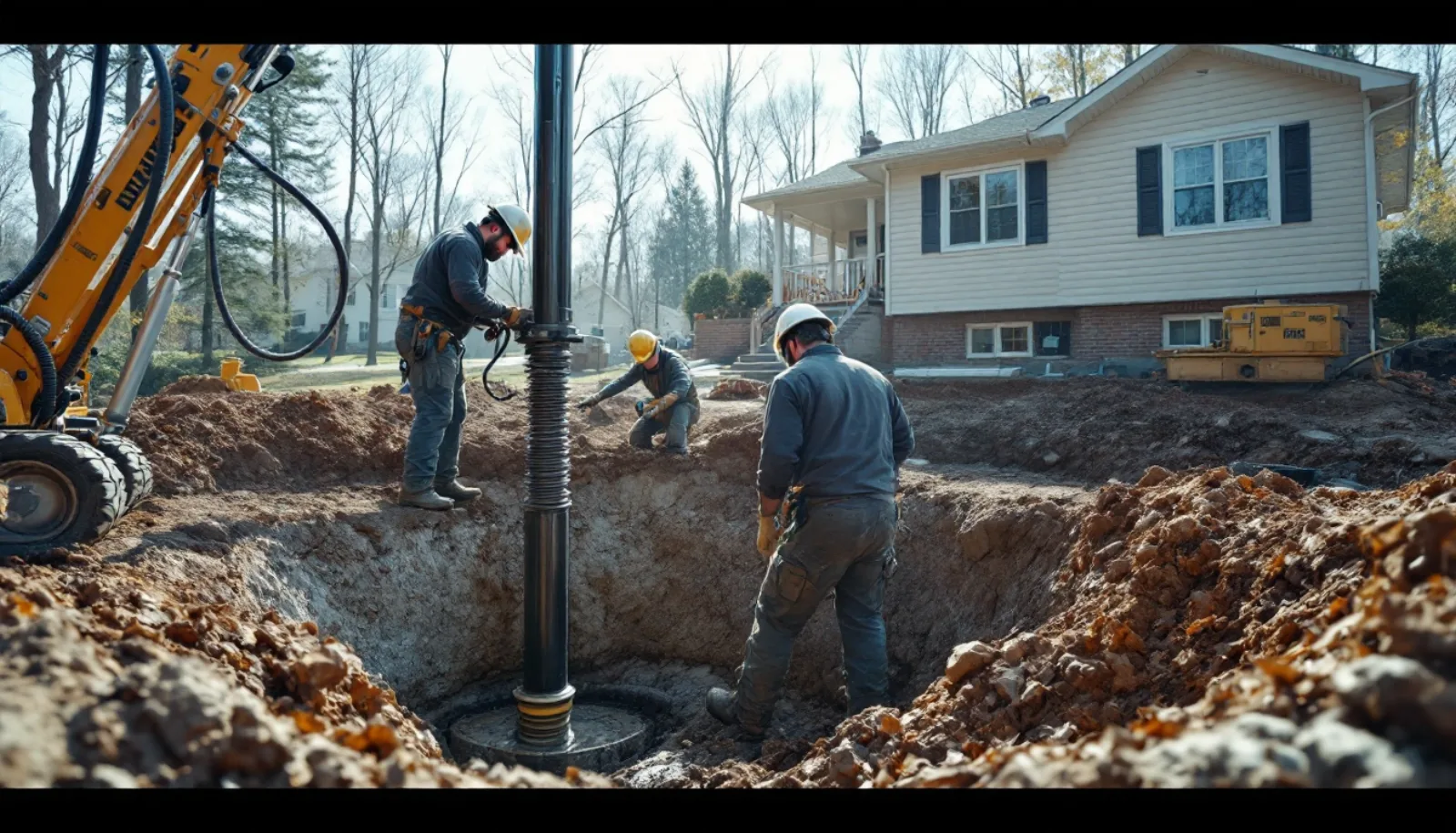
Generic M&A diligence is necessary but not sufficient when buying a foundation repair business. The category-specific signals are where value creation and destruction actually live. Here’s what experienced foundation buyers do beyond standard quality of earnings, legal, and insurance review.
Service mix decomposition
Don’t accept the seller’s description. Pull 24 months of transactional data and bucket every job into: helical pier, push pier, slab jacking (polyurethane), slab jacking (mudjacking), crawlspace encapsulation, basement waterproofing, structural beam replacement, retaining wall, and miscellaneous concrete work. Calculate revenue, gross margin, and labor hours per category.
Retail vs insurance-work split
Classify every job as retail residential, insurance-claim residential, commercial retail, commercial insurance, or pre-purchase inspection. Insurance-claim work has 60 to 120 day collection timing, adjuster dependencies (often 5 to 10 named adjusters), and exposure to insurer policy changes. A business with 60%+ insurance work needs an explicit adjuster-concentration framework.
Structural engineer referral economics
The structural engineer channel is the most underappreciated value driver. Independent PE-licensed engineers refer high-ticket residential and commercial work to a small number of trusted contractors. Pull a named list with referral volume, revenue contribution, and gross margin per engineer. Healthy businesses show 10 to 30 active referring engineers, none above 15% of referred revenue.
Warranty claim history and reserve adequacy
Pull every warranty claim in the trailing 60 months. Classify by job age, original ticket, resolution cost, and root cause (soil movement, installation defect, design error, customer modification). Calculate claim frequency per 100 jobs and average cost, then test the balance-sheet reserve. Honest reserves run 5% to 15%; many sellers carry below 3%. This single item routinely creates 10% to 25% purchase price adjustments at QofE.
Helical pier inventory and supplier relationships
Helical piers are the highest-margin product line. Pull current inventory by pier diameter and shaft type. Confirm primary supplier (Magnum Piering, Ram Jack, AB Chance Foundation Solutions, or Earth Contact Products) and verify pricing terms. Single-source supplier exposure with no documented pricing program is fragile.
Crew unit economics
Build a crew-level P&L for the trailing 12 months: revenue per crew per day (target $4,000 to $7,000 for helical pier crews), gross margin per crew, callback rate, warranty claim rate. Top-third vs bottom-third crew delta is typically 30% to 50%. That gap is post-acquisition value creation if the business has standardization problems.
Soil report and engineering documentation
Sample 25 completed jobs and verify: soil report (if applicable), pre-installation site evaluation, installation log (depths and torque values for helical piers, pressure readings for push piers), post-installation elevation survey, customer sign-off. Documented operators face lower warranty claim rates and stronger legal posture if claims escalate.
Licensing, bonding, and regulatory compliance
State contractor license status (TDLR registration in Texas; C-61/D-30 specialty license in California). Workers’ comp claim history (NCCI class 5403/5645 is a high-claim category). General liability and umbrella adequate for foundation exposure ($2M to $5M per occurrence is the typical floor). Bonding capacity for commercial work.
The lifetime warranty liability
Every experienced buyer treats the lifetime warranty backstop as the most important diligence item in foundation repair, because it’s the line item that most often turns a clean-looking deal into a problem at QofE or post-close.
Category convention: helical pier and push pier installations carry a transferable lifetime warranty against further settlement at the repaired locations. Some operators extend that to slab jacking work; most do not. The warranty runs with the work, not the customer, so a buyer inherits the entire installed base.
The reserve question is what percentage of trailing revenue should sit on the balance sheet against future warranty claims. Industry-standard ranges:
- Disciplined operator with strong installation documentation, clay-soil-aware design, and 60+ month claim history under 1.5%: 3% to 5% reserve is defensible.
- Typical mid-market operator with claim history of 2% to 4%: 5% to 10% reserve.
- Operator in highly active soil markets (Texas, Oklahoma) or with installation discipline gaps: 10% to 15% reserve.
- Operator with known systemic installation issues or pre-2018 work without modern documentation: 15%+ reserve, often with a deal-killing tail.
Sellers routinely carry reserves at 1% to 2% of revenue. Buyers who don’t recalculate before signing the LOI either renegotiate at QofE or absorb the gap post-close as multi-year cash flow drag. The right move is to pull 60 months of claim data, model the runoff curve by installation cohort, and price the reserve into the purchase price or escrow.
Structuring the offer
The best buyers of foundation repair businesses win on structure as often as on price. A well-structured offer can beat a higher nominal offer if it matches what the seller actually cares about, especially around warranty honor and crew continuity.
The standard foundation repair deal structure (2026)
- Cash at close: 60% to 75% of total consideration.
- Seller rollover equity: 5% to 15% in platform deals where the seller continues operating. 0% in clean-exit deals.
- Earnout: 10% to 20% over 12 to 24 months, typically tied to revenue retention or structural-engineer referral retention (not EBITDA, because buyers control post-close overhead).
- Escrow: 10% to 15% held 18 to 24 months against indemnification and warranty claims. Often higher escrow than other home services categories specifically because of warranty exposure.
- Warranty reserve holdback: 3% to 8% of purchase price held in a separate warranty escrow, drawn down against actual claim experience over 36 months.
- Seller note: 0% to 10%, typically subordinated to senior debt. Common in independent sponsor and search fund deals.
Where smart buyers differentiate
The offer components sellers in this category weight most heavily, in order: cash at close percentage, warranty honor commitment, crew retention commitments, structural-engineer referral continuity, earnout achievability, and timeline certainty. Price is often the 5th or 6th factor, particularly for founders approaching retirement who care about how their warranty book will be honored after they exit.
Buyers who win on non-price factors typically pre-commit to warranty honor terms in the LOI, write retention bonuses for named crew leaders (often 3 to 6 months salary), structure earnouts with achievable floors, and credibly explain how they will preserve structural-engineer referral relationships.
The earnout trap
The single most destructive element of a foundation repair deal is a poorly designed earnout. If the earnout is tied to EBITDA, sellers justifiably worry about post-close cost allocation (especially warranty reserve booking) and typically won’t perform. If it’s tied to revenue only, sellers may push low-margin slab jacking volume and ignore mix. If it’s tied to metrics the seller doesn’t control (warranty-driven repair revenue, callback work), it functions as a price reduction.
The structures that work in this vertical: revenue retention measured against a documented baseline, structural-engineer referral retention by named engineer, and customer satisfaction scoring on completed jobs. All three are things the seller can meaningfully influence for 12 to 18 months post-close.
Integration: where acquirers win or lose
Groundworks publicly cites its integration playbook but the reality is more variable than the decks suggest. The foundation repair deals that compound are the ones where buyers respect three principles.
Honor the warranty book publicly and quickly
Foundation repair customers and structural engineers track how acquirers handle warranty claims after a transaction. If the new owner is perceived as slow-walking warranty work, the structural-engineer referral channel cools within 90 days. The correct play is to communicate warranty continuity to the engineer network and former customer list in writing within the first 30 days, and to staff warranty response at or above pre-transaction levels for the first 12 months.
Lock in crew leaders before announcement
Top foundation repair crew leaders know their worth. Once a deal is announced, competitors (especially Groundworks branches and regional consolidators) reach out within 48 hours. Smart buyers structure retention bonuses (typically 15% to 25% of annual compensation, paid in 12 to 18 months) for named crew leaders, with the bonus contingent on remaining employed. This should be finalized before close, not after.
Preserve the operating rhythm and pricing discipline
Founders run foundation repair businesses with idiosyncratic bidding habits, inspection rhythms, and pricing thresholds tied to soil conditions and engineer recommendations. These are usually more important than they appear. Buyers who swap in standardized pricing in month one frequently break the structural-engineer channel and lose insurance adjuster relationships. The better practice is to document the existing rhythm, identify what’s working, and change deliberately over 9 to 18 months.
Financing when buying a foundation repair business
Capital structure varies by buyer type, but some patterns are consistent in 2026.
SBA 7(a) loans
Independent buyers and search funders commonly use SBA 7(a) for foundation repair acquisitions up to $5M. Rates are typically prime plus 2.0% to 2.75% with 10-year amortization. The constraint: SBA requires the seller to exit operationally within 12 months, which can conflict with the founder transition needed to transfer structural-engineer relationships.
Commercial bank acquisition lending
Regional banks with home services experience will lend 2.0x to 3.5x EBITDA at prime plus 1.5% to 2.5%. Best for deals with predictable margins, clean financials, and a defensible warranty reserve.
Mezzanine and unitranche
For deals above $5M EBITDA, mezzanine or unitranche financing bridges senior debt and equity. Rates run 10% to 14% with warrants. Common providers include Twin Brook, Monroe Capital, Antares, and regional SBIC funds.
Seller financing
Often 5% to 15% of purchase price, subordinated, 5 to 7 year term, rates 6% to 8%. Useful when buyers want to preserve cash and sellers want a return on capital that would otherwise sit in escrow against warranty claims.
Red flags when buying a foundation repair business
Some deals shouldn’t close. The patterns that consistently predict post-close failure when buying a foundation repair business:
- Lifetime warranty reserve below 3% with claim history above 2%. Almost always a deal-killer once recalculated honestly. The QofE adjustment alone makes the deal uneconomic.
- Insurance-claim work above 70% of revenue. High collection risk, high adjuster concentration risk, high exposure to insurer foundation-coverage policy changes. Frequently a 15% to 25% multiple discount or deal-killer.
- Single structural engineer referring more than 25% of high-ticket work. Key-person risk in the channel that built the business. Often requires meaningful earnout structure to bridge.
- Installation documentation gaps on pre-2020 work. If the business can’t produce installation logs, torque values, or depth records for the legacy installed base, warranty defense becomes very expensive.
- Crew leader turnover above 25% annually. Usually signals a compensation or culture problem that will take 18 to 24 months to fix. In active clay-soil markets, this can destroy the deal’s thesis.
- Founder personally inspects every commercial bid. If the founder is the only person who can confidently quote commercial structural work, you are acquiring a person, not a business. Plan for an explicit transition program or pass.
- Workers’ comp experience modification rate above 1.20. Suggests systemic safety culture problems. The premium load alone can move EBITDA materially.
The CT Acquisitions perspective
We work both sides of the foundation repair market. Our observations from the last 36 months of structural-services M&A:
- The best deals aren’t always the highest-priced. Sellers prioritizing warranty honor, crew preservation, and structural-engineer continuity often pick the second-highest bidder, particularly against Groundworks-class platforms where founders fear integration speed.
- Search funds win on speed in the $500K to $1.5M SDE band. Groundworks isn’t active here and platform buyers often pass below $1.5M EBITDA. Independent buyers closing in 90 days outcompete slower processes.
- Warranty diligence is underdone industry-wide. Most LOIs we see don’t contain explicit language on warranty reserve methodology. The cleanest acquirers put it in the LOI and don’t renegotiate at QofE.
- Regional nuance matters. Texas (heavy clay, fragmented insurance), California (seismic retrofit, C-61/D-30 licensing, expensive labor), and the Mid-Atlantic (basement waterproofing, freeze-thaw, Groundworks-dense) underwrite differently. Cross-region buyers without regional expertise consistently miss on pricing.
If you’re a buyer, here’s what we recommend
Whether you’re a first-time search fund buyer, an independent sponsor building a structural-services thesis, or a regional consolidator looking for bolt-ons, the same playbook works when buying a foundation repair business:
- Write down your thesis in one page. Geography (which clay-soil metros), size ($500K SDE to $5M EBITDA), buyer profile (retail-led or commercial-led), integration model, hold period. Everything you buy should be defensible against this thesis.
- Build a deal-flow machine before you need deals. Proprietary sourcing typically outperforms broker-led processes on price and terms. This means direct outreach to operators identified through state licensing databases (TDLR in Texas, CSLB in California), relationships with structural engineering firms, and presence at Foundation Performance Association and ASCE structural events.
- Underwrite the warranty book before anything else. The reserve question determines whether a deal is economic. Do this work before signing the LOI, not at QofE.
- Don’t mistake price for deal quality. Buyers who pay 7x for a platform-grade foundation repair business with a clean warranty book, documented helical pier specs, and 15+ active referring engineers typically return capital more reliably than buyers who pay 4x for a founder-dependent operator with a soft warranty reserve that looks cheap on paper.
Working with CT Acquisitions as a buyer
We maintain a qualified buyer network of PE platforms, strategic acquirers, family offices, independent sponsors, and search funds. If your thesis fits the deal flow we see, we’re direct, fast, and selective about the introductions we make. We do not run broad auction processes. We match founders to the small number of buyers who are right for their specific business.
For buyers, this means no wasted time on mis-fit deals, early access to deals that haven’t gone to market, and a sellers-first reputation that founders trust. We’re paid by the buyer at close. Founders pay nothing.
If you’re actively acquiring in foundation repair, set up a 30-minute conversation to walk us through your thesis. We’ll be direct about whether our deal flow fits.
Frequently asked questions about buying a foundation repair business
What EBITDA multiple should I pay for a foundation repair business in 2026?
Platform-grade businesses ($5M+ EBITDA, clean warranty reserve at 5% to 10%, multi-branch) see competitive bidding at 6.5x to 8x EBITDA. Managed mid-market ($1.5M to $5M EBITDA) transacts at 5x to 6.5x. Owner-operator shops ($500K to $1.5M SDE) transact at 3.5x to 5x SDE. The factor moving multiples most is warranty reserve adequacy, followed by service mix and structural-engineer referral concentration.
How does the lifetime warranty work when I buy a foundation repair business?
Lifetime warranties on helical pier and push pier installations transfer with the business and remain the new owner’s responsibility. A buyer inherits the entire installed base, which can stretch back 20+ years. Honest reserves run 5% to 15% of trailing revenue. Buyers who don’t recalculate before LOI routinely renegotiate at QofE.
How long does it take to close a foundation repair acquisition?
90 to 150 days from signed LOI to close, slightly longer than HVAC or plumbing because warranty diligence adds 2 to 4 weeks. Multi-state operations and commercial real estate components extend timelines further.
Should I use an SBA loan to buy a foundation repair business?
SBA 7(a) works for deals up to $5M. Rates are favorable (prime plus 2.0% to 2.75%) and the 10-year amortization helps cash flow. The constraint is the SBA requirement that the seller exit operationally within 12 months, which often conflicts with the founder transition needed to transfer structural-engineer relationships.
How do I source foundation repair deal flow?
Most effective channels: direct outreach to operators via state contractor licensing records (TDLR Texas, CSLB California); relationships with PE-licensed structural engineering firms; presence at Foundation Performance Association and ASCE events; relationships with home services CPAs and M&A attorneys in clay-soil metros; relationships with category-specialized M&A advisors.
What’s the biggest mistake first-time foundation repair buyers make?
Underestimating the warranty liability. First-time buyers often accept the seller’s reserve figure (1% to 2% of revenue) without rebuilding it from claim history. When QofE recalculates at 5% to 12%, deal economics shift dramatically. The second most common mistake is ignoring the structural-engineer referral channel.
Can I buy a foundation repair business with no industry experience?
Yes, with structure. The cleanest path is a business with a strong GM in place plus an 18 to 24 month founder transition focused on transferring structural-engineer relationships and warranty book knowledge. Search funders regularly do this. Avoid the absentee-owner thesis.
How much working capital do I need to close a foundation repair deal?
For a $3M EBITDA target, expect 10% to 15% of revenue in working capital at close (receivables run longer because of insurance-claim collections, plus helical pier inventory and job-in-progress). That’s typically $1.5M to $2.5M on top of purchase price.
Related resources for buyers
- Foundation repair valuations and multiples (seller perspective), useful context on what sellers are being told
- How to value a foundation repair business, the methodology guide
- Buying an excavation business, adjacent vertical with overlapping crew skills
- Buying a plumbing business, adjacent home services category
- Buying an HVAC business, recurring-revenue benchmark for the category
- Browse all buy-side guides, the full library of vertical buyer playbooks
Want a Specific Read on Your Business?
30 minutes, confidential, no contract, no cost. You leave with a read on your local buyer market and a likely valuation range.
How much does it cost to buy a foundation repair business in 2026?
Purchase prices for platform-grade foundation repair businesses typically run 6.5x to 8x trailing twelve months EBITDA plus working capital and warranty reserve. A $2M EBITDA business with disciplined installation documentation, a clean warranty book, and active structural-engineer referral channel commonly transacts for $13M to $16M plus $400K to $700K in working capital. Smaller owner-operator shops transact for 3.5x to 5x SDE.
Can I buy a foundation repair business with no money down?
Not realistically. SBA 7(a) financing requires 10% minimum equity injection. Seller financing typically caps at 15% of purchase price in this vertical because of warranty exposure. Even aggressive structures require $150K to $600K of buyer equity for a $1M to $3M EBITDA acquisition. Expect 20% to 35% total equity requirement across sources.
What due diligence is required when buying a foundation repair business?
Standard M&A diligence (quality of earnings, legal, insurance) plus foundation-specific: warranty reserve rebuild from 60 months of claim data, service mix decomposition (helical pier vs push pier vs slab jacking), structural-engineer referral concentration analysis, insurance-claim work concentration, crew unit economics, installation documentation sampling, helical pier supplier and inventory review, state contractor licensing status, and workers’ comp experience modification rate review.
How long does a foundation repair acquisition take to close?
90 to 150 days from signed LOI to close for a well-prepared target. Warranty book diligence typically adds 2 to 4 weeks compared to other home services. Deals with multi-state operations, commercial real estate, or unresolved warranty litigation extend to 180+ days.
Should I use a business broker to buy a foundation repair business?
Buyer-side brokerage is rare; most foundation repair buyers source directly or through buy-side advisors like CT Acquisitions that represent qualified buyer networks. CT Acquisitions, for example, is paid by the buyer at close, which means sellers pay no fees. This structure is standard in home services M&A.
What makes a foundation repair business a platform acquisition target?
Five characteristics: $2M+ EBITDA, balanced helical pier and push pier service mix, warranty reserve at 5% to 10% of revenue with claim history under 2%, 10+ active referring structural engineers (no single engineer above 15% of referred work), and multi-branch footprint in clay-soil metros. Geographic fit for Groundworks or a regional structural-services platform is a strategic premium driver.
How does Groundworks (Cerberus) affect the foundation repair acquisition market?
Groundworks set the comp set, the integration playbook, and the technician wage market for the category. Since 2021, the Cerberus-backed platform has acquired 50+ regional brands and operates roughly 280 locations. For independent buyers, this means platform-grade deals above $2M EBITDA see competitive bidding (often against Groundworks corporate development), but the long tail of $500K to $1.5M SDE operators remains genuinely fragmented and accessible.
Can I buy a foundation repair business without industry experience?
Yes, with caveats. The cleanest path is acquiring a business with a strong GM in place plus an 18 to 24 month founder transition focused on transferring structural-engineer referral relationships and warranty book knowledge. Search funders regularly acquire foundation repair businesses with no prior industry experience using this structure. Avoid the absentee-owner thesis; foundation repair is operations-intensive and warranty-exposed.

About the Author
Christoph Totter is the founder of CT Acquisitions, a buy-side partner headquartered in Sheridan, Wyoming. We work directly with 200+ buyers, search funders, family offices, lower middle-market PE, and strategic consolidators, including direct mandates with the largest home services consolidators that other intermediaries can’t access. The buyers pay us when a deal closes, not the seller. No retainer, no exclusivity, no contract until close. Connect on LinkedIn · Get in touch