
Best Franchises to Buy in 2026: The Existing-Unit Resale Market Guide
Best Franchises To Buy Resale Market in 2026 depends on scale, sector, and recurring revenue percentage. Named PE-backed and strategic acquirers pursue this vertical actively, and multiples clear meaningful ranges depending on platform readiness and market cycle timing. This page covers the operational specifics that matter to owner-operators considering a sale.
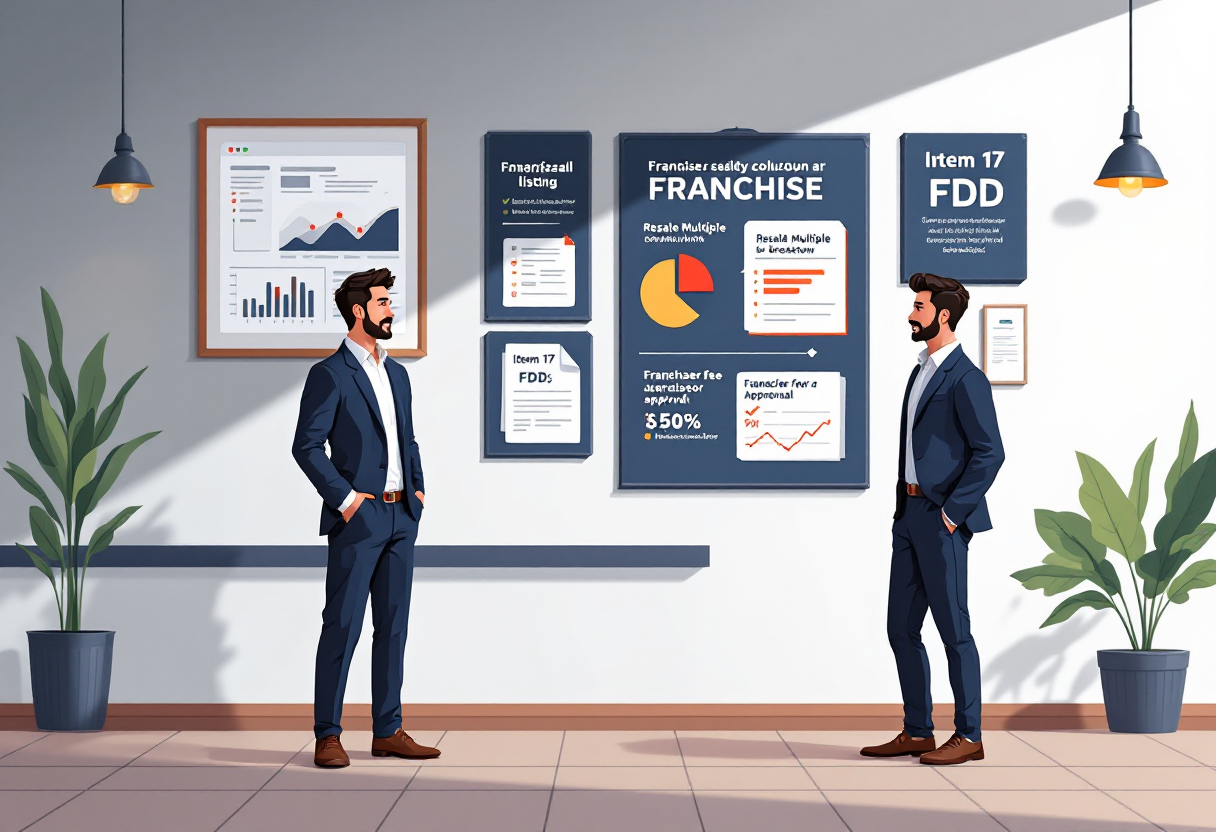
The best franchises to buy in 2026 are existing units already operating on the resale market, not new locations bought directly from a franchisor. Resale units come with real revenue, a trained team, and a customer file you can actually verify, which is why FRANdata tracked the 2024 franchise transfer rate at 4.1 percent, the highest in five years of internal data, and why We Sell Restaurants reported franchise resales up 62.7 percent year over year through Q3 2025 while the broader restaurant transaction count fell 6 percent on BizBuySell. This guide is the operator playbook for that market: how to find resale listings, how franchisor approval actually works, what transfer fees and training fees stack onto the purchase price, and which brand categories have the most active resale inventory right now.
If you are weighing opening a new unit versus buying an existing one, also read our sister guide on best franchises to own in 2026, which covers brand-by-brand new-unit economics. This page picks up where that one ends, on the day you decide to buy what is already running.
Best Franchises to Buy on the Resale Market in 2026
For 2026 foundation repair sale playbook with 500+ vetted PE / family office / search fund buyers, Groundworks (Cerberus) thesis, see our reference.
The best franchises to buy on the resale market in 2026 share four traits: a long operating history at the unit level, a franchisor that actively supports resales rather than blocks them, SBA Franchise Directory eligibility (SBA), and a category-level tailwind that survives a recession. FRANdata’s 2026 outlook tags Child Services and Commercial/Residential Services at 3.2 percent growth, Retail Food and Products at 2.3 percent, Health & Wellness at 2.1 percent, and tags QSR and Automotive under 0.5 percent. Those numbers should bias your search away from saturated quick-service brands and toward home services, senior care, child education, and specialty retail with recurring revenue.
The single best filter for resale buyers is whether the brand sits on the SBA Franchise Directory. As of the June 2025 reintroduction (Taft Law bulletin), any franchise without the new franchisor certification will be removed by June 30, 2026, and removal kills SBA 7(a) eligibility for any buyer of that brand. If the brand is off the directory, you are paying cash or finding a conventional lender willing to underwrite without it, which is rare and expensive.
Across the categories covered below, the resale candidates worth shortlisting include Mr. Rooter Plumbing, Mr. Electric, Aire Serv, and Molly Maid (all Neighborly brands with a dedicated nine-person resale team), Servpro, BrightStar Care, Home Instead, Mathnasium, Kumon, Anytime Fitness, Wingstop, Dunkin’, and select McDonald’s locations through the brand’s internal resale program. The remainder of this guide breaks down each category, what to verify, and the math that decides whether a deal is fair.
Why Buy an Existing Franchise vs Open a New One
Buying an existing unit gives you four things a new unit cannot: actual unit-level financials instead of a forward projection from Item 19 of the FDD, an existing customer file with payment history, a trained staff with institutional knowledge, and a build-out that is already paid for. The trade-off is that you inherit whatever the prior owner built, including any deferred maintenance, weak Google reviews, employee turnover, or local competitive pressure that pushed them to sell.
A new unit, by contrast, lets you site the location, hire the team, and brand the build to your standards, but you carry the ramp risk. For QSR concepts the ramp can run 18 to 36 months before a new store hits the system average, and the failure profile is front-loaded in years one and two. BizBuySell’s Q3 2025 Insight Report tracked a median small-business sale price of $375,000 in Q4 2025, up from $337,750 across the data set, and reported Q1 2026 median cash flow at $165,256 with an average cash flow multiple of 2.7x. Those benchmarks matter because a resale priced at 2.7x SDE on real cash flow is a known quantity; a new unit projection at 2.7x estimated cash flow is a hope.
The capital math also tilts toward resales when SBA 7(a) is in play. SBA underwriters lean on three years of tax returns and profit-and-loss statements from the existing unit; a new build relies on the franchisor’s Item 19 averages, which the lender discounts. That is why one of the best franchises to buy through a 7(a) loan is almost always an existing unit at a directory-listed brand.
The Resale Multiple: What Existing Franchise Units Trade At
For system-by-system multiples and the royalty math behind them, see our full guide to franchise valuation.
Franchise resale pricing follows the same SDE and EBITDA logic as any small-business sale, but with brand-specific discounts and premiums layered on top. According to the BizBuySell industry multiples data, average earnings multiples across all sectors run 2 to 3.3x SDE, with the all-sector average at 2.57x and revenue multiples averaging 0.67x. Service businesses tend to clear at 2.5x to 3.0x SDE; retail food typically trades at 2.0x to 2.7x; specialty retail at 2.3x to 2.9x.
For franchises specifically, the resale multiple is adjusted down for the royalty drag (because the buyer takes on a 4 to 8 percent royalty stream the next owner has to pay) and adjusted up for brand strength, training transferability, and territory protections. A good rule of thumb for 2026: home services franchise units with recurring contracts clear at 3.0x to 4.0x SDE; senior care and home health units clear at 2.8x to 3.5x SDE; QSR units with strong AUV clear at 2.5x to 3.5x SDE on cash flow plus equipment value; specialty retail clears at 2.0x to 2.8x SDE. IBBA Market Pulse Q4 2025 data on Main Street businesses (under $500K transaction value) shows a sale-price-to-SDE median near 2.3x, while lower-middle-market deals ($1M-$2M) cleared closer to 3.5x SDE.
Always run the multiple against verified SDE, not seller-stated revenue. Many resale listings on BizBuySell and Franchise Gator quote “gross revenue” or “estimated cash flow” without supporting tax returns; if the seller will not produce three years of returns plus profit-and-loss statements plus bank deposits, walk. For a deeper methodology on translating a small-business listing into a defensible price, see how to price a business for sale.
Best Home Services Franchises to Buy (Existing Units)
Home services is the single most active resale category in 2026, driven by aging owner-operators, private-equity roll-up activity, and recurring-revenue economics that survive both inflation and a soft housing market. FRANdata tags Commercial/Residential Services at 3.2 percent growth in 2026, the fastest of any segment.
The brand families worth tracking on the resale market include Neighborly (Mr. Rooter Plumbing, Mr. Electric, Aire Serv heating and cooling, Glass Doctor, Window Genie, Molly Maid), Authority Brands (Benjamin Franklin Plumbing, Mister Sparky electrical, One Hour Heating & Air, The Cleaning Authority), and Wrench Group portfolio brands. Neighborly publicly operates a nine-person resale team that pre-qualifies buyers and quarterbacks the transfer; this matters because franchisor cooperation is the difference between a 90-day close and a 270-day close. See home services franchise opportunities for the full vertical breakdown.
For a Mr. Rooter Plumbing resale, expect a transfer process governed by Item 17 of the brand’s FDD (Franchise Direct Mr. Rooter profile), including a transfer fee, training fee for the new owner, and franchisor right of first refusal language. The royalty on Mr. Rooter sits in the 6 to 7 percent range plus a 2 percent brand fund contribution, which the buyer must underwrite against the unit’s gross sales. Servpro resales (restoration and remediation) trade at a premium because of the brand’s national insurance-carrier relationships; royalty is 3 to 10 percent on a sliding scale per the Servpro franchise materials.
Diligence priorities for a home services resale: technician retention (count W-2s for the trailing 24 months), customer concentration (no single account over 15 percent of revenue), recurring service-agreement count, accounts receivable aging, and any pending insurance carrier audit. The technician question is the one most buyers under-weight; a plumbing or HVAC resale without its lead techs is a 40 percent discount overnight.
The other home services brand family to watch in 2026 is the Wrench Group portfolio, which has been actively acquiring independent HVAC and plumbing operators and rolling them into a franchise-style operating model. While Wrench Group brands are not classic franchises, the resale dynamics are similar: buyer must qualify, brand must approve, and the unit must clear a financial threshold. Private-equity-backed roll-ups have lifted the floor multiple in home services materially over the past five years; a plumbing resale that would have cleared 2.5x SDE in 2019 now clears 3.5x SDE in a competitive process.
Roofing is the home services category to watch closely. Multiple national franchise platforms (RoofConnect, Restoration 1, Storm Guard) compete with private-equity-funded independents like CentiMark, Tecta America, and the Cordia Resources-backed roll-ups. The 2024-2025 storm cycles produced a wave of roofing operators with one or two storm seasons of inflated revenue; resale buyers must normalize storm revenue down to non-storm baselines or risk overpaying. Underwrite roofing resales on the 36-month average revenue, not the trailing 12 months.
Best Food Franchises to Buy (Existing Units)
QSR resales are abundant in 2026 because the cohort of franchisees who bought in 2018 through 2021 is now hitting their exit window, often with two to ten units. The catch is that FRANdata tags QSR at under 0.5 percent growth in 2026, the slowest segment, so unit selection matters more than brand selection. Buy the right store at the wrong brand and you have a job, not an asset.
The food franchises with the most active resale inventory and the most workable transfer processes include Subway, Dunkin’, Wingstop, Jersey Mike’s, McDonald’s (through its internal McOpCo and franchisee resale program), and Jimmy John’s. Subway is the volume leader on resale count but also the volume leader on closures; Subway’s FDD Item 6 sets the transfer fee at 50 percent of the then-current franchise fee, currently $7,500, plus $3,000 for any satellite location, with reductions to 25 percent of the franchise fee for transfers to a spouse or child. McDonald’s runs a tightly controlled internal resale market where the franchisor effectively picks the buyer; expect 18 to 24 months from listing to close on a McDonald’s resale.
Wingstop resales are the post-2023 darling of the QSR market because of strong AUV trends and a long unit-economic ramp; expect 2.5x to 3.5x SDE on a stabilized store, with the franchisor’s 6 percent royalty and 5 percent national advertising contribution baked into the math. Dunkin’ resales in established Northeast markets clear at premium multiples driven by real-estate value embedded in the lease; Dunkin’ transfer requires franchisor approval and training of the new operator at Dunkin’ University.
For a food franchise resale, the diligence stack is heavier than home services. Pull three years of POS exports, reconcile to bank deposits, reconcile to sales tax filings, verify food cost percentage against franchisor benchmarks, audit labor cost against scheduled hours, and inspect the kitchen for deferred-maintenance equipment. A failing walk-in or a 20-year-old hood is a six-figure post-close surprise.
The remodel-cycle question is the single biggest hidden cost in QSR resales. McDonald’s runs a major remodel every 7-10 years that can cost $300,000 to $1.5M per store, and the brand strictly enforces the schedule. Dunkin’ runs a refresh cycle every 5-7 years at $150,000 to $400,000 per unit. Subway runs a “Fresh Forward” refresh that can run $100,000 to $250,000 depending on store size. If the seller is exiting on the eve of a required remodel, the unspoken reason is often the capital call. Read the franchisor’s remodel notice file before signing a letter of intent, and price the deferred remodel into your offer.
Jersey Mike’s deserves special mention as a 2026 resale target. The brand’s same-store sales growth and unit-level AUV have outpaced most QSR peers since 2021, and the brand’s franchise advisory council operates a structured internal resale process that pre-qualifies buyers. Expect strong demand and 3.0x to 4.0x SDE multiples on stabilized Jersey Mike’s units, with limited inventory because top operators tend to keep them.
One under-priced food franchise category in 2026 is the “non-traditional” QSR resale: stores located in airports, hospitals, casinos, college campuses, or military bases. These units carry contract risk (the host venue can renegotiate or terminate) but often produce 1.5x to 2x the AUV of a traditional street location. The buyer pool is thinner because non-traditional units require operator relationships with the venue, so the multiples are typically a half-turn lower than equivalent street units. If you have venue relationships, the math can be compelling.
Best Senior Care Franchises to Buy (Existing Units)
Senior care is the demographic-tailwind play of the next decade. The U.S. Census projects the 65-plus population to exceed 73 million by 2030, and FRANdata tags Health & Wellness at 2.1 percent franchise segment growth for 2026. Most senior care resale activity flows through three brand families: Home Instead (now owned by Honor), BrightStar Care, and Comfort Keepers on the non-medical side, plus Right at Home, Visiting Angels, and Always Best Care. On the medical side, BrightStar, Interim HealthCare, and BAYADA franchises trade at the highest multiples because of their Joint Commission accreditation and Medicare-reimbursable hours.
Home Instead resales typically clear at 3.0x to 4.0x SDE on stabilized agencies with $2M-$5M in gross revenue and 25-30 percent caregiver retention measured at 90 days. BrightStar Care resales command a premium because of the medical license overlay; a BrightStar agency with active Medicare certification and Joint Commission accreditation can clear 4.0x to 5.0x SDE in a competitive auction. See senior care franchise opportunities for the full vertical landscape.
Senior care diligence priorities: caregiver-to-client ratio, average billable hours per client per week, payor mix (private pay vs. long-term care insurance vs. Medicaid waiver vs. Medicare), 90-day caregiver retention, referral source concentration (no single hospital discharge planner over 20 percent of new starts), and the franchisor’s territory grant. The franchisor approval bar for senior care transfers is higher than most categories because the brand carries direct regulatory liability.
The 2026 strategic question in senior care is which payor mix the buyer wants to inherit. Private-pay-only agencies (Home Instead, Comfort Keepers, Visiting Angels) have higher gross margins (38-45 percent) but harder client acquisition. Medicare-certified agencies (BrightStar Care, Interim HealthCare, BAYADA) have lower gross margins (28-35 percent) but stickier revenue and stronger hospital referral pipelines. Long-term care insurance-funded agencies sit in between. A resale buyer should match the payor mix to their operator background; a private-pay operator buying a Medicare-certified agency without clinical staffing is a transition disaster.
Child education is the adjacent demographic-tailwind category. Mathnasium, Kumon, The Goddard School, Primrose Schools, and Code Ninjas all have active resale inventory in 2026. Mathnasium resales clear at 2.5x to 3.5x SDE; The Goddard School and Primrose Schools (which include real estate or long-term leases) clear at premium multiples of 4.0x to 5.5x SDE when bundled with the real estate. Pre-K and early childhood education resales are SBA 7(a) staples because the unit economics, with multi-year enrollment commitments and waitlist demand in good markets, support strong cash flow.
Best Automotive Franchises to Buy (Existing Units)
Automotive franchise resales are a slow-grind category in 2026, with FRANdata tagging the segment at under 0.5 percent growth, but real-estate-heavy unit economics make individual stores attractive when priced correctly. The brand families on the resale market include Jiffy Lube, Midas, Meineke, Big O Tires, Christian Brothers Automotive, Maaco, and MAACO/Driven Brands portfolio.
Christian Brothers resales clear at the highest multiples in this category because of brand-managed real estate, faith-aligned culture, and per-bay revenue that often runs 50 to 80 percent above the system average for general repair. Jiffy Lube and Take 5 Oil Change resales hinge almost entirely on traffic counts, ingress-egress, and lease terms; if the lease has fewer than 10 years remaining and the rent bumps are above CPI plus 2, the multiple compresses meaningfully.
The diligence stack for an automotive resale must include a lease abstract review, real-estate appraisal, equipment depreciation schedule, technician ASE certification census, environmental compliance file (waste oil, refrigerant, tire disposal), and parts inventory count to the last $500. Many automotive resales include real estate or a long-term lease assignment, which materially changes the financing structure and the SBA 7(a) eligibility.
A note on quick-service and express car wash franchises, which sit in the automotive-adjacent category: Take 5 Car Wash, Mister Car Wash, and Tommy’s Express resales typically include real estate worth $3M-$8M, push the deal size above the SBA 7(a) ceiling, and require conventional financing or a 504/7(a) blend. Multiples on stabilized express car wash units have compressed from 2022’s peak (when some traded at 12-15x EBITDA on the strength of subscription-revenue growth) to 7-10x EBITDA in 2026 as the category absorbs over-development in oversaturated MSAs.
The EV charging and electrified-fleet adjacency is starting to show up in automotive resale conversations. Brands like Christian Brothers Automotive and Big O Tires are training and certifying their networks on EV service, and the resale buyer should ask whether the brand is investing in EV capability or letting the unit get stranded. A general-repair shop with no EV training in 2026 is a 5-year clock against a market shift, not a permanent business.
Best Cleaning and Janitorial Franchises to Buy
Commercial cleaning is the quiet workhorse of the franchise resale market. Recurring contracts, low labor differentiation, and tight overhead make a $1.5M-revenue commercial cleaning resale a clean acquisition for an operator-buyer. The brand families to watch include Jan-Pro, Coverall, Stratus Building Solutions, Anago Cleaning Systems, JAN-PRO Cleaning & Disinfecting on the commercial side, and Molly Maid (Neighborly), The Cleaning Authority (Authority Brands), Merry Maids (ServiceMaster), and Two Maids on the residential side.
Commercial cleaning master-franchise resales (where the operator licenses individual cleaning operators in a territory) trade at 3.0x to 4.0x SDE with strong account stickiness. Single-unit residential cleaning resales clear at 2.5x to 3.5x SDE; the variable is recurring weekly and biweekly customer count, because residential cleaning customer churn runs 25 to 35 percent annually and a clean book of 400 stable recurring customers is the fundable asset.
Diligence for cleaning resales: contract renewal-rate over the trailing 24 months, customer-acquisition-cost via the franchisor’s national lead system vs. local marketing, supervisor-to-cleaner ratio, workers’ compensation experience modification rate (a high X-mod is a six-figure annual hit), and any pending OSHA or wage-and-hour claim.
Specialty cleaning, including Servpro (water and fire damage restoration), PuroClean, Rainbow Restoration (Neighborly), and 1-800 Water Damage, deserves its own bucket. These brands carry insurance-carrier preferred-vendor relationships that materially change the customer-acquisition equation; a Servpro franchise on the Allstate or State Farm preferred list has a different economic model than one without. Verify the carrier-relationship status as part of diligence, and confirm whether the relationship transfers automatically with the franchise or requires re-qualification. Multiples on restoration franchises run 3.5x to 4.5x SDE for stabilized agencies with active carrier programs.
The fourth category often missed in cleaning is post-construction and turnover cleaning, which serves multifamily property management and homebuilder customers. Brands like Maid Brigade, Maid Right, and independent operators of Anago and Stratus franchises often have a 30 to 50 percent post-construction mix that compresses with the housing cycle. Underwrite at the trailing 36-month average and stress test the housing-cycle scenario.
Where to Find Existing Franchise Resale Listings (BizBuySell, Franchise Gator, FranNet, Direct Franchisor)
Resale inventory in 2026 lives across four primary channels, each with a different signal-to-noise ratio. BizBuySell is the largest aggregator, with thousands of active franchise listings; the trade-off is that many are broker-listed without seller-verified financials and you do the work to qualify them. Franchise Gator tilts toward new-unit lead generation but carries a resale section; it is the right channel for franchisor-direct opportunities. FranNet and The Franchise Consulting Company are matchmaker networks where consultants pair buyers with franchisor-approved resale opportunities, useful when you want pre-vetted inventory and are willing to pay the consultant’s commission (paid by the franchisor, not the buyer).
The fourth channel, and often the best, is direct outreach to the franchisor’s franchise development or franchisee services team. Neighborly publicly runs a nine-person resale team; Subway, Dunkin’, McDonald’s, and most large brands maintain internal resale registers because the franchisor controls who buys. If you have a brand you want to buy into, email the franchise development director and ask which existing units are quietly on the block. About 30 to 40 percent of resales never hit a public listing.
Industry references and trade publications worth tracking: Entrepreneur Franchise 500, Franchise Times Top 400, Franchise Business Review, FRANdata reports, and the International Franchise Association Economic Outlook. For the legal framework that governs every franchise resale, the foundational document is 16 CFR 436, known as the FTC Franchise Rule. For brand-by-brand examples by industry, see franchise examples by industry.
Two more under-used channels: business brokers who specialize in franchise resales (IBBA members with a franchise practice, plus brand-specific brokers like We Sell Restaurants for QSR), and direct relationships with regional franchisee groups. Many large franchise systems have informal regional operator networks where retiring owners surface opportunities to peers before going public. Joining the brand’s franchisee advisory council or attending the annual brand convention as a prospective buyer often surfaces resales 6-12 months before they hit a public listing. Subway, McDonald’s, Wingstop, and most large food brands run annual conventions; home services brands like Mr. Rooter and Servpro run regional rallies that double as relationship-building venues.
The fifth channel worth mentioning is auction. Some franchise resales, particularly in distressed situations, move through court-supervised auctions or Chapter 11 trustee sales. These deals can clear at significant discounts to comparable healthy units but carry process risk: franchisor consent is still required, lease and equipment leases may be rejected by the trustee, and the buyer takes the unit “as is” without seller representations. Auctions are an experienced-operator channel, not a first-time-buyer channel.
The Franchise Transfer Process: Item 17 Reality
Every franchise resale runs through Item 17 of the seller’s FDD. Item 17 discloses the terms governing renewal, termination, transfer, and dispute resolution (Lusk Law Item 17 explainer). For a buyer, three things in Item 17 matter most: the conditions on transfer, the franchisor’s right of first refusal, and the transfer fee.
Conditions on transfer are the franchisor’s checklist that you must clear: net worth and liquid capital minimums, background and credit check, training completion, and acceptance of the then-current franchise agreement (not the seller’s original agreement, which is the single most under-appreciated trap in franchise resales). When you sign the then-current agreement, you take on the current royalty rate, the current ad fund contribution, the current technology fees, and the current territory definition, all of which may be less favorable than what the seller signed 10 or 15 years ago.
The franchisor’s right of first refusal (ROFR) is a clause that lets the brand match any third-party offer and buy the unit themselves, typically within 30 to 60 days of receiving the asset purchase agreement. ROFRs are most aggressive at McDonald’s, where the franchisor frequently exercises rights to consolidate strong stores into McOpCo or to a preferred franchisee. Subway, Dunkin’, and Wingstop also reserve ROFR. Plan your purchase agreement and timeline assuming the franchisor will at least seriously evaluate the deal.
The transfer fee is the cash payment owed to the franchisor at closing for processing the transfer. Subway’s transfer fee is 50 percent of the then-current franchise fee ($7,500 currently) per Lopes Law’s Subway Item 6 breakdown. Most home services brands run a $5,000-$15,000 flat transfer fee plus full new-owner training fees. Senior care brands run $7,500-$25,000 transfer fees plus training. McDonald’s runs a substantial transfer fee plus capital requirements for any deferred remodel scheduled within the next five years; that remodel obligation can add $300,000-$1.5M to a McDonald’s resale total cost.
Franchisor Approval: Why They Can Block Your Purchase
Franchisor approval is the gating event in every resale. A franchisor can decline a transfer for any reason consistent with their disclosed standards, and Item 17 of the FDD will state those standards. The most common reasons for declined transfers in 2025-2026 (compiled from broker reports and Franchise Times resale coverage):
- Buyer net worth or liquid capital below the disclosed minimum
- Buyer credit score below the franchisor’s stated threshold
- Buyer holds units in a competing brand without a non-compete waiver
- Buyer fails the brand’s training program
- Buyer’s business plan for the unit does not match the franchisor’s standards
- Buyer’s background check surfaces litigation, bankruptcy within 7 years, or regulatory action
The mitigation: get pre-qualified with the franchisor before signing a letter of intent on any resale. Most franchisors will run a pre-qualification interview at no cost; arriving at the resale-purchase table already pre-qualified shortens the close by 60 to 120 days and gives you negotiating power on price.
Beyond approval, the franchisor will typically require the buyer to attend the full new-franchisee training program even when buying an existing unit. Anytime Fitness, Mathnasium, Home Instead, BrightStar Care, Wingstop, and Servpro all require full new-owner training of the buyer regardless of the seller’s tenure; training fees run $5,000-$50,000 and training duration runs from one week (Anytime Fitness) to six weeks (BrightStar Care, due to clinical certification).
Existing-Unit Diligence: Verifying Seller Financial Claims
The single biggest mistake resale buyers make is paying a multiple of seller-stated cash flow rather than verified cash flow. Sellers and their brokers routinely add back salary, “personal” expenses, depreciation, and one-time costs to compute Seller’s Discretionary Earnings (SDE). Some of those add-backs are legitimate; many are not. A defensible SDE is what survives a full quality-of-earnings review.
The minimum diligence package for any franchise resale:
- Three years of federal tax returns (1120-S for an S-corp, 1065 for a partnership, Schedule C for a sole prop)
- Three years of profit-and-loss statements reconciled to the tax returns
- Three years of balance sheets
- Twenty-four months of bank statements reconciled to deposits and to POS or job-management system exports
- Franchisor-issued royalty reports showing reported gross sales
- Sales tax filings (state and any local) reconciled to reported gross sales
- Accounts receivable aging
- Customer or job list with revenue concentration
- Employee census with W-2 totals and 1099 totals reconciled to the tax returns
- Workers’ compensation policy and experience modification rate
- Equipment list with serial numbers and depreciation schedule
- Lease and all amendments, with options and CAM reconciliations
- Franchise agreement and any amendments
- Any pending litigation, customer claim, or regulatory action
If the seller cannot produce these items in 30 days, the deal is not real. For franchise-specific diligence, also pull the franchisor’s compliance file on the unit: every QA inspection, every brand-standard violation, every customer complaint logged through the brand’s national line, and every royalty audit. The franchisor will release these to a serious buyer under NDA. Pages 2 and 3 of business acquisition meaning explained cover the broader diligence taxonomy.
Transfer Fees, Training Fees, Renewal Fees: The Full Cost Stack
The headline purchase price of a franchise resale is rarely the full cost. The transaction cost stack at closing typically includes:
- Franchisor transfer fee: $5,000-$50,000 depending on brand
- New-owner training fee: $5,000-$50,000
- Travel and lodging for training: $2,000-$15,000
- Franchise attorney for FDD review and franchise agreement amendment: $5,000-$25,000
- M&A attorney for asset purchase agreement: $10,000-$40,000
- Quality-of-earnings or accounting diligence: $7,500-$50,000
- Lease assignment and landlord consent fees: $2,000-$15,000
- SBA loan packaging and underwriting fees: 2-3 percent of loan amount
- Title insurance, escrow, and closing costs: 1-2 percent of purchase price
- Working capital injection at close: 8-12 weeks of operating expenses
- Deferred remodel or refresh obligation: $25,000-$1.5M depending on brand
On a $750,000 resale, expect $60,000-$120,000 of transaction costs above the purchase price, plus 8-12 weeks of working capital. Underwrite the deal at the all-in number, not the asking price.
A specific category that surprises first-time resale buyers: many franchise agreements require a remodel or refresh on a fixed schedule (every 7 years for McDonald’s, every 5-7 years for Subway and Dunkin’, every 10 years for most service brands). If the seller is unloading the unit on the eve of a required remodel, you are buying the remodel. Negotiate the cost into the purchase price.
For the royalty side of the equation, see our royalty fee definition franchise explainer, which walks through how royalty stacks compound against unit-level cash flow over a 10-year hold.
SBA 7(a) Financing for Franchise Resale: How It Differs From New-Unit
SBA 7(a) is the dominant financing tool for franchise resales because the loan can fund up to $5M for an acquisition, with terms of 10 years (no real estate) or 25 years (with real estate), at the prime rate plus a lender-determined margin (typically prime + 2.25 to 2.75 percent). The 2025-2026 prime rate sits at 7.5 percent, putting a 7(a) loan in the 9.5-11 percent range. SBA fees run 2-3.75 percent of the loan amount, financeable into the loan principal.
Two SBA realities matter for franchise resales specifically. First, the brand must be on the SBA Franchise Directory for a lender to process a 7(a) loan against the unit. Second, per the June 2025 directory reintroduction, every franchisor must hold the new SBA franchisor certification by June 30, 2026, or face removal. If you are buying a resale at a brand that has not certified, the loan will not fund.
The 7(a) underwriting for a resale leans on three years of unit-level tax returns, which is the resale buyer’s structural advantage over the new-unit buyer (who can only show franchisor Item 19 averages). Plan on 10-25 percent buyer equity, 5-10 percent seller note (often required by lenders to align seller incentives), and 65-80 percent SBA loan. Closing timelines run 75-150 days from signed term sheet to funded close, with the franchisor approval and lease assignment usually being the gating items.
SBA Express (under $500,000) and the conventional 7(a) (up to $5M) are the workhorse products; the 504 loan is sometimes used for franchise resales that include real estate. For a step-by-step financing walkthrough, see how to buy a franchise step by step.
How CT Acquisitions Helps Franchise Resale Buyers and Sellers
CT Acquisitions advises operators on both sides of the franchise resale market. For buyers, we source pre-vetted resale inventory across home services, senior care, food, and commercial cleaning brands; quarterback franchisor pre-qualification; structure SBA 7(a) and seller-note packages; and run quality-of-earnings diligence to defend the multiple. For sellers, we package the unit for resale (clean financials, normalized add-backs, organized data room), engage the franchisor’s resale team early, and run a discreet limited auction process to compress timelines and lift the multiple.
If you are within 12 months of buying a franchise resale, the highest-impact first step is a 30-minute conversation about your target category, capital position, and operator background. If you are within 24 months of selling your franchise unit, the highest-impact first step is a sell-side readiness review that identifies the three to five fixes that will most lift your sale price.
Book a call with CT Acquisitions to start. We are operators, not gatekeepers, and we work on the small handful of deals where the math is real.
Best Franchises to Buy: Frequently Asked Questions
Is it better to buy an existing franchise or open a new one?
It depends on the buyer profile. An existing franchise gives you real revenue, a customer file, and a trained team, and qualifies for SBA 7(a) financing against actual tax returns. A new franchise lets you pick the site and build the culture but carries 18-36 months of ramp risk. For first-time operators, an existing unit is almost always the lower-risk path; BizBuySell data consistently shows existing-business buyers outperform new-business operators on three-year survival.
How much does a franchise resale typically cost?
Franchise resale prices vary by category and unit performance. Home services franchise units commonly trade at $400,000-$2.5M; QSR units at $300,000-$2M; senior care agencies at $500,000-$3M; specialty retail at $200,000-$800,000. The multiple is typically 2.0x to 4.0x SDE, with brand strength and recurring revenue at the high end. BizBuySell’s Q1 2026 median small-business sale ran $350,000 with median cash flow of $165,256.
Do I have to be approved by the franchisor to buy an existing unit?
Yes. Every franchise agreement requires franchisor consent to transfer ownership. Item 17 of the seller’s FDD discloses the conditions, including net worth and liquid capital minimums, training completion, and credit and background checks. Franchisors also typically reserve a right of first refusal to buy the unit themselves at the third-party offer price.
What is a transfer fee and who pays it?
The transfer fee is a cash payment to the franchisor for processing the ownership transfer. It typically runs $5,000-$50,000 and is most often paid by the seller, though it is a negotiation point in the purchase agreement. Subway’s transfer fee is 50 percent of the then-current franchise fee, currently $7,500, plus $3,000 per satellite.
Can I use an SBA 7(a) loan to buy a franchise resale?
Yes, if the brand is listed on the SBA Franchise Directory. SBA 7(a) funds up to $5M with 10-year terms (no real estate) or 25-year terms (with real estate), at prime plus a lender margin. Expect 10-25 percent buyer equity and a 5-10 percent seller note. The 75-150 day close timeline is driven by franchisor approval, lease assignment, and SBA underwriting.
How do I find franchise resale listings?
Four primary channels: BizBuySell (largest aggregator), Franchise Gator, FranNet and franchise consultant networks, and direct outreach to the franchisor’s franchise development team. About 30-40 percent of resales never hit a public listing, so direct franchisor contact is often the highest-yield channel.
What is the franchisor’s right of first refusal?
A clause in most franchise agreements that lets the franchisor match any third-party offer and buy the unit themselves, typically within 30-60 days of receiving the executed asset purchase agreement. McDonald’s, Subway, Dunkin’, and Wingstop all reserve aggressive ROFR. Build the timeline into your purchase agreement.
What due diligence should I do before buying a franchise resale?
Three years of federal tax returns reconciled to profit-and-loss statements, 24 months of bank statements reconciled to POS or job-management exports, franchisor royalty reports, sales tax filings, lease and amendments, employee census reconciled to W-2 totals, workers’ comp policy and experience modification rate, equipment list, accounts receivable aging, and the franchisor’s compliance and QA inspection file. A quality-of-earnings review by an independent accountant typically runs $7,500-$50,000 and is worth every dollar.
How long does a franchise resale take to close?
Typical close timelines run 75-150 days from signed letter of intent to funded close. Gating items include franchisor approval (30-90 days), SBA loan underwriting (45-120 days), lease assignment and landlord consent (15-60 days), and franchisor right of first refusal evaluation (30-60 days). Franchisors with dedicated resale teams (Neighborly, Subway, Dunkin’) often close faster than franchisors handling transfers ad hoc.
Which franchise category has the most active resale market in 2026?
Home services. FRANdata tags Commercial and Residential Services at 3.2 percent growth in 2026, the fastest of any segment. The combination of aging owner-operators, private-equity roll-up demand for plumbing, HVAC, electrical, and roofing brands, and recurring-revenue economics that survive a soft housing market makes home services the deepest pool of buyable franchise inventory. Mr. Rooter Plumbing, Servpro, Aire Serv, Molly Maid, and the Authority Brands portfolio all have active resale pipelines through dedicated franchisor resale teams.
Should I hire a franchise attorney for a resale purchase?
Yes, always. A franchise resale carries two parallel legal workstreams that a general business attorney is not equipped to handle: review of the seller’s existing franchise agreement plus the then-current franchise agreement you will sign, and review of the FDD itself (especially Items 7, 17, 19, and the receipt page). A franchise attorney typically bills $400-$800 per hour, with a typical resale engagement running $5,000-$25,000. The American Bar Association Forum on Franchising publishes a directory of qualified counsel. Spend the money; a missed Item 17 ROFR clause or a missed Item 7 mandatory remodel disclosure costs orders of magnitude more.
What is the difference between a franchise resale and a franchise acquisition?
A franchise resale is the sale of one or more existing units from a franchisee to a new franchisee. A franchise acquisition can mean the same thing in casual usage, but more often refers to the acquisition of the entire franchisor brand by a strategic or financial buyer (for example, when Inspire Brands acquired Jimmy John’s, or when Roark Capital acquired Subway). Resale buyers acquire operating units; brand acquirers acquire the royalty stream and the system. This guide covers the first; brand-level M&A is a separate playbook.