
Auto Service Franchise Opportunities in 2026: Top Brands, Costs, and Profitability
Auto Service Franchise Opportunities in 2026 depends on scale, sector, and recurring revenue percentage. Named PE-backed and strategic acquirers pursue this vertical actively, and multiples clear meaningful ranges depending on platform readiness and market cycle timing. This page covers the operational specifics that matter to owner-operators considering a sale.
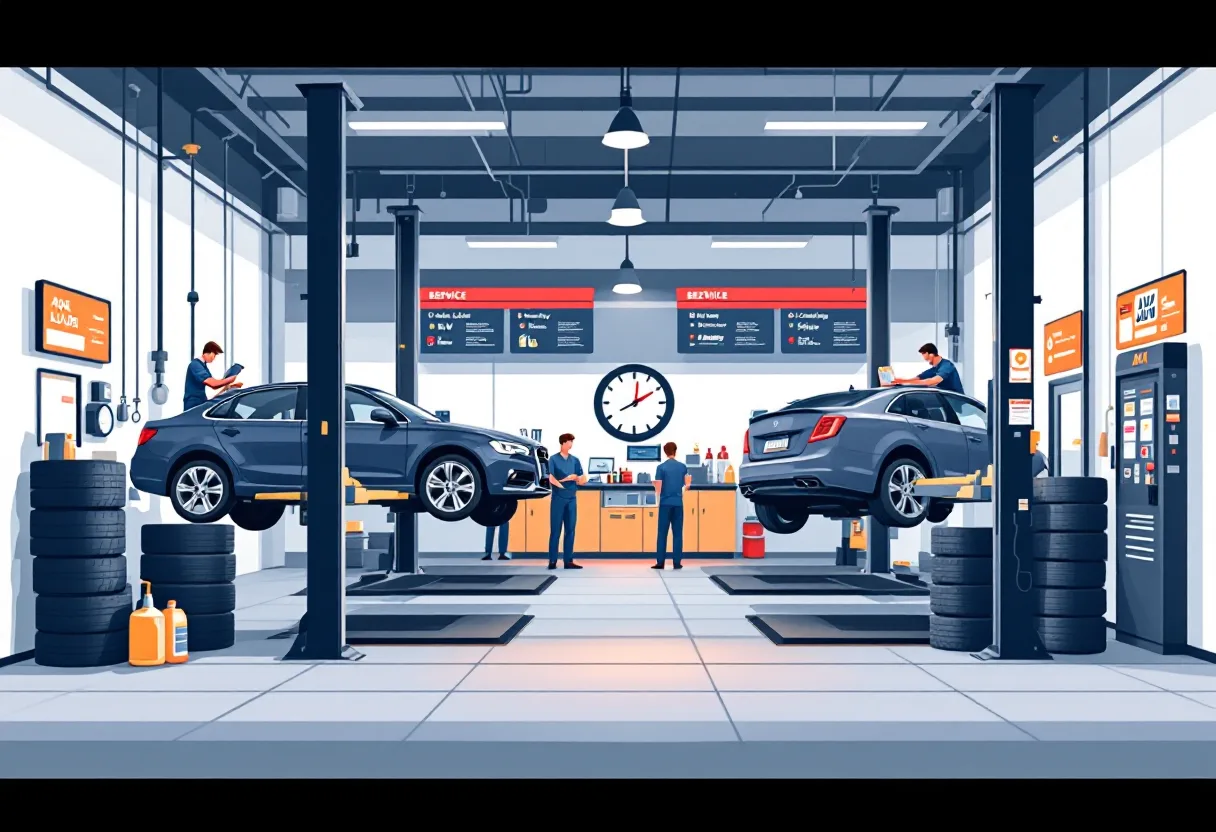
An auto service franchise lets a first-time owner enter the $115 billion US automotive aftermarket through a proven brand, established suppliers, and a national marketing engine, with initial investment ranging from $200,000 for an oil-change concept to $1.5 million for a full mechanical and tire operation. This guide compares the largest brands in 2026, breaks down the franchise disclosure documents, and explains the unit economics that separate the strong concepts from the marginal ones.
The buyer pool researching auto service brands in 2026 is wider than at any point since the 2008 recovery. First-time operators, multi-unit franchisees, and small private equity sponsors rolling up auto service bays are looking at the same brands. This guide presents the numbers the way an experienced buyer or sell-side advisor would read them.
What an Auto Service Franchise Includes
An auto service franchise is a license agreement between a franchisor (the brand owner) and a franchisee (the operator) that grants the right to operate an auto service bay or shop under the franchisor brand, using the franchisor systems, suppliers, and proprietary processes. The contract runs 10 to 20 years with renewal rights, and the franchisee pays an initial franchise fee, an ongoing royalty (usually a percentage of gross sales), and a national advertising contribution.
What the franchisee receives includes site selection assistance, a build-out specification, equipment buying power through national vendor agreements, technician training, point-of-sale and shop-management software, warranty backing on parts and labor, and inclusion in national or regional advertising campaigns. The franchisor also provides operating manuals covering everything from oil-change cycle times to brake-job complaint handling.
The automotive service category sits inside the broader $115 billion US automotive aftermarket, which IBISWorld segments into mechanical repair, body and paint, tire retail, quick lube, and specialty services such as transmission, glass, and detailing. Franchised units make up roughly 18 percent of the total US service-bay count, with the rest split between dealer service departments, independent shops, and national chains operated as company stores.
For a buyer comparing an auto service franchise to a non-franchised independent shop, the trade-off is clear. The franchise gives faster ramp to break-even, lower customer acquisition cost, and a clear playbook. The independent shop gives full margin retention, no royalty drag, and freedom to source parts from any supplier. A first-time owner without technician or fleet-manager history will almost always do better inside a franchise system.
The 2026 Auto Service Franchise Market: Size and Growth Drivers
The US automotive aftermarket reached $115 billion in 2025 service-and-repair revenue and is projected to grow 3.4 percent annually through 2030 (IBISWorld). Three drivers explain the strength. First, the average age of a US light vehicle hit 12.6 years in 2025 (S&P Global Mobility), the highest on record, pushing more service work to independent and franchised shops and away from dealer warranty bays. Second, the shift to longer financing (84-month auto loans are now 39 percent of new-car loans per Edmunds) keeps owners holding cars longer, extending the post-warranty service window. Third, EV penetration is real but slower than the headlines suggest: EVs were 8.1 percent of US light-vehicle sales in 2025, and fleet electrification will not cross 15 percent before 2032 (BloombergNEF). ICE vehicles still need oil changes, brake pads, and transmission service for at least the next decade.
Inside the franchise channel, three brand portfolios dominate auto service unit count: Driven Brands (NASDAQ: DRVN), TBC Corporation (Sumitomo-owned), and Shell Lubricants (which owns Jiffy Lube). Driven Brands is the largest US auto services franchisor by unit count, with Maaco, Meineke, Take 5 Oil Change, 1-800-Radiator, CARSTAR, and Drive N Style inside the public-company portfolio. TBC owns Midas and Big O Tires.
The independent end of the market is consolidating fast. Private equity rolled an estimated $4.8 billion into the auto services category in 2024 and 2025, with sponsors including Roark Capital, Leonard Green & Partners, and Audax Group. Many of those rollups are buying franchised units from retiring operators, firming up resale multiples and tightening the inventory of available territories.
For a 2026 buyer, the macro picture is favorable: an aging fleet, a growing customer base, and franchisor portfolios professionalized under public-company or PE ownership. Headwinds are technician labor inflation (auto tech wages rose 14 percent from 2023 to 2025 per the BLS) and rising real estate cost in growth markets.
The Five Auto Service Franchise Categories
Every brand on the market fits inside one of five operating categories. Each has a different capital requirement, a different revenue ceiling per unit, a different labor profile, and a different competitive moat. Choosing the right category matters more than choosing the right brand inside it.
Quick lube is the lowest-complexity category. A quick-lube concept typically operates a two-to-three-bay drive-through staffed by lube technicians (not certified mechanics), with a service menu limited to oil changes, fluid top-offs, air filter swaps, and wiper replacements. Average ticket runs $65 to $95, throughput is high, and labor as a percentage of sales is the lowest of any category at 18 to 24 percent.
Full-service mechanical is the most common category. These shops operate four-to-eight bays with certified ASE technicians performing brake jobs, alignments, suspension work, engine diagnostics, electrical repair, and (depending on the brand) transmission service. Average ticket runs $350 to $850, throughput is lower than quick lube, and labor runs 28 to 34 percent of sales.
Tire and wheel is capital-heavier because of inventory. A tire shop carries $180,000 to $400,000 in SKUs and needs alignment racks, balancers, and tire-mounting equipment. Average ticket on a four-tire sale runs $700 to $1,400, and most tire shops bundle in alignment and basic mechanical work to lift gross margin.
Specialty service covers transmission (AAMCO), body and paint (Maaco, CARSTAR), glass, and detailing. Each has a narrow service menu and a longer customer cycle (transmission rebuild: three to five days; body shop turn: seven to fourteen), which means slower cash-conversion and higher accounts receivable.
Mobile and tech-enabled is the newest category. Mobile mechanic concepts send a van and a technician to the customer driveway, eliminating real estate cost but capping daily ticket volume. Tech-enabled detailing brands like Tint World layer window tint, paint protection film, and detailing into a single retail concept. Capital is lower, but unit AUV ceilings are too.
Top Quick-Lube Auto Service Franchise Brands
The quick-lube end of the market is dominated by four brand portfolios, and the gap in unit economics between them is smaller than inside the full-service mechanical category.
Jiffy Lube is the largest quick-lube brand in the US by unit count, with approximately 2,100 units operating under franchise agreements with Shell Lubricants. The FDD shows initial investment of $214,000 to $444,000 for a typical 1,200-square-foot facility, a 5 percent royalty on gross sales, and a 4 percent national advertising contribution. Name recognition approaches 80 percent unaided, and the Shell parent provides supply-chain pricing on motor oil and filters that an independent operator cannot match.
Valvoline Instant Oil Change operates approximately 1,800 units across a mix of company-operated and franchised stores. Initial investment ranges from $176,000 for a single-bay express conversion to $3.4 million for a multi-bay ground-up build in a high-cost market. Royalty is 6 percent of gross sales. Valvoline reports same-store sales growth of 6 to 8 percent annually for the last six fiscal years and system-wide average ticket of $96 in 2025.
Take 5 Oil Change is the fastest-growing quick-lube concept, with more than 1,000 US units inside the Driven Brands portfolio. Initial investment runs $245,000 to $487,000, royalty is 6 percent, and the brand reports average unit volume above $1.4 million in mature markets, which puts it at the top of the quick-lube category for unit-level revenue. The 10-minute drive-through model converts higher than the walk-in waiting-room model used by older brands.
Express Oil Change & Tire is also inside the Driven Brands portfolio and is positioned slightly upscale, combining quick lube with light mechanical and tire services. The hybrid model lifts average ticket to $140 to $180 but also raises labor cost and bay-level capital. Express Oil Change typically requires $750,000 to $1.5 million in initial investment depending on real estate.
For a buyer evaluating the quick-lube category, the brand choice usually comes down to territory availability and real estate cost. Jiffy Lube and Valvoline have the deepest coverage and most resale inventory; Take 5 has the strongest unit-level growth and the longest waitlist for prime corridors; Express Oil Change suits a buyer wanting more service mix without a full mechanical operation.
Top Full-Service Mechanical Auto Service Franchise Brands
The full-service mechanical category is where the market gets more interesting and more variable. Brand selection here matters far more than in quick lube because the labor profile, the parts margin structure, and the customer-retention economics differ materially across brands.
Midas is the largest full-service mechanical brand in the US, with approximately 1,150 units operated by franchisees under license from TBC Corporation (a Sumitomo Corporation subsidiary). Midas has the deepest brand recognition in brake and exhaust, with FDD-disclosed initial investment of $356,000 to $575,000, a 5 percent royalty, and a 6 percent national advertising contribution. The brand has invested heavily in tire add-on services since 2019, and the average Midas unit now derives 38 percent of revenue from tires and tire-adjacent services.
Meineke is the second-largest mechanical brand, with approximately 700 US units inside the Driven Brands portfolio. Initial investment ranges from $194,000 (service-bay conversion) to $580,000 (new construction in a primary market). Royalty is 5 percent and national advertising is 8 percent of gross sales, the highest in the category. Meineke leans into the digital marketing platform built by Driven Brands, with unit-level digital lead conversion 12 to 15 percent above comparable independent shops.
Christian Brothers Automotive is the highest-investment and highest-return mechanical brand in the US. The system operates approximately 250 units across 30 states, with FDD-disclosed initial investment of $580,000 to $680,000 for a typical 4,200-square-foot ground-up build. Royalty is 11 percent of gross sales, but it includes national advertising and a higher level of corporate support than any other mechanical brand. Christian Brothers reports average unit volume of $2.1 million across the franchised system in 2024, more than double the category median, with the lowest franchisee turnover rate in the category (1.8 percent annually, per FDD Item 20).
AAMCO Transmissions is the dominant specialty mechanical brand, with approximately 600 US units. AAMCO is the only concept with national brand recognition specifically in transmission and drivetrain repair, which insulates it from quick-lube and tire-shop competition. Initial investment runs $234,000 to $382,000, royalty is 7 percent, and the brand has been expanding the service menu into total car care since 2020 to grow ticket count per customer.
For a buyer comparing full-service mechanical brands, the trade-off is investment-to-AUV. Midas and Meineke need less capital but produce lower unit volumes; Christian Brothers needs more capital but produces the highest AUV and the strongest resale economics. Buyers with a service-management background and $700,000 of equity usually pick Christian Brothers; buyers with $300,000 of equity and strong operating discipline usually pick Meineke.
Top Tire and Wheel Auto Service Franchise Brands
The tire and wheel category is the most capital-intensive segment because of inventory carry, equipment cost, and the larger building footprint required to store and mount tires at scale.
Big O Tires is the largest pure-play tire brand in the US, with approximately 500 units inside the TBC Corporation portfolio. Initial investment ranges from $313,000 (tire-shop conversion) to $1.59 million (new construction with full service bays and alignment racks). Royalty is 2 percent of gross sales (one of the lowest in the category), with an additional 4 percent national advertising contribution. Big O benefits from the TBC and Sumitomo supply chain, giving franchisees private-label tire programs at 8 to 12 percent below national-brand cost.
Tire Pros operates a hybrid franchise-and-buying-group model under American Tire Distributors. Franchisees pay a smaller royalty (1.5 to 2 percent of gross sales) but get less national marketing support than a Big O or Tires Plus operator. The model works best for an existing independent tire shop wanting brand affiliation and national warranty backing without full franchise overhead.
Tires Plus is a Bridgestone-owned brand combining tire retail with full mechanical service. It operates approximately 470 units, with initial investment of $400,000 to $1.2 million. The Bridgestone parent provides supply-chain advantages on Bridgestone, Firestone, and Fuzion tires, and the company-owned and franchised mix gives operational scale that pure franchise systems cannot match.
Mr. Tire is owned by Monro, the largest US chain by store count when company-operated units are included. Mr. Tire operates approximately 230 franchised units (Monro runs more than 1,200 company stores under various banners). Initial investment is $350,000 to $900,000, with a 5 percent royalty.
Specialty concepts round out the category. Maaco (Driven Brands) is the dominant body and paint franchise, with ~425 US units and investment of $419,000 to $663,000. Tint World operates ~120 units in window tint, paint protection film, and detailing, with investment of $221,000 to $369,000 and a 6 percent royalty. These work well as second or third units inside a multi-brand portfolio because they cross-sell into a primary mechanical or tire location.
Initial Investment Comparison: What You Actually Pay
The investment range disclosed in a franchise disclosure document covers the franchise fee, the build-out cost, the initial inventory, the equipment package, working capital for the first three months, and pre-opening marketing. What the FDD does not always make obvious is how much of the total investment is fixed (you pay it regardless of market) versus variable (it changes with your real estate, your local labor cost, and your build-out specification).
| Brand | Parent | Investment Range | Royalty | National Ad | Reported AUV | US Units |
|---|---|---|---|---|---|---|
| Jiffy Lube | Shell Lubricants | $214K to $444K | 5% | 4% | $1.1M to $1.5M | ~2,100 |
| Valvoline Instant Oil Change | Valvoline Inc. | $176K to $3.4M | 6% | 5% | $1.3M to $1.8M | ~1,800 |
| Take 5 Oil Change | Driven Brands | $245K to $487K | 6% | 5% | $1.4M+ | ~1,000 |
| Express Oil Change & Tire | Driven Brands | $750K to $1.5M | 5% | 3% | $1.6M to $2.4M | ~325 |
| Midas | TBC Corporation | $356K to $575K | 5% | 6% | $1.2M to $1.6M | ~1,150 |
| Meineke | Driven Brands | $194K to $580K | 5% | 8% | $900K to $1.4M | ~700 |
| Christian Brothers Automotive | Independent | $580K to $680K | 11% (incl. ad) | included | $2.1M avg | ~250 |
| AAMCO Transmissions | Independent | $234K to $382K | 7% | 5% | $700K to $1.2M | ~600 |
| Big O Tires | TBC Corporation | $313K to $1.59M | 2% | 4% | $2.2M to $3.8M | ~500 |
| Tires Plus | Bridgestone | $400K to $1.2M | 5% | 4% | $1.9M to $2.8M | ~470 |
| Mr. Tire | Monro | $350K to $900K | 5% | 3% | $1.6M to $2.4M | ~230 |
| Maaco | Driven Brands | $419K to $663K | 8% | 2% | $1.1M to $1.7M | ~425 |
| Tint World | Independent | $221K to $369K | 6% | 2% | $650K to $1.1M | ~120 |
Three line items move more than the disclosed range suggests. Real estate occupancy is the largest variable: a 4,000-square-foot service bay in a tier-one suburb of Dallas or Phoenix runs $32 to $48 per square foot NNN; the same building in a tier-three market in Ohio or upstate New York runs $14 to $22. Across a 10-year term, that gap is the difference between $1.3 million and $400,000 in total occupancy cost. Equipment is the second: a full alignment rack, lift package, scan tools, and air-compressor build for a six-bay shop runs $185,000 to $280,000. Working capital is the third: the FDD usually discloses 90 days, but buyers who do not carry six months of operating cash through ramp tend to under-invest in marketing.
A practical buyer rule: take the high end of the FDD range, add 12 percent for build-out cost overrun, add 30 percent of monthly opex as a ramp cushion, and use that figure as the actual capital requirement. For a Christian Brothers Automotive unit, that math turns a $680,000 disclosed top range into roughly $830,000 of all-in capital.
Royalty Structures and National Advertising Fees
Royalty and national advertising fees are the recurring drag on franchisee profitability, and the structure varies more than the headline percentages suggest. A 5 percent royalty plus a 4 percent national ad contribution is the median across the auto service category. Big O Tires charges a 2 percent royalty (lowest in category) because TBC makes its profit on tire wholesale margin; Christian Brothers Automotive charges 11 percent all-in including national advertising and marketing platform fees.
Three additional fee categories appear in most FDDs and rarely get the attention they deserve in discovery. Technology fees cover the franchisor POS, CRM, and shop-management software; they typically run $400 to $1,200 per month per location and are not always in the headline royalty number. Local marketing requirements are minimum-spend obligations on top of the national contribution; most brands require 1.5 to 3 percent of gross sales on local search, direct mail, and community sponsorships. Renewal fees apply when the initial 10-to-20-year term ends; renewal usually requires a new franchise fee (often discounted 50 percent), facility refurbishment to current standards, and a fresh equipment package.
For a buyer modeling unit economics, subtract the full royalty plus national advertising plus local marketing minimum from gross sales before calculating any margin. On a $1.4 million AUV at a 5 percent royalty, 4 percent national ad, and 2 percent local marketing minimum, the brand and marketing drag is $154,000 per year, or 11 percent of gross sales, before labor, occupancy, parts, and owner draw.
Unit Economics: AUV, Margins, and Path to Profitability
Unit economics vary materially across the five categories, and the category averages mask wide variance within each brand. The following ranges reflect 2024-2025 FDD Item 19 disclosures plus operator interviews across the three largest franchise consultancies (FranNet, FranChoice, IFPG).
Quick-lube auto service units report average unit volume of $850,000 to $1.5 million, with 4-wall EBITDA margins of 20 to 30 percent. The high end is achievable in dense suburban markets with strong commuter traffic; the low end is typical of tertiary markets or units that have not yet completed the three-year ramp. The fastest payback in the category comes from Take 5 and the Driven Brands portfolio, where the drive-through model and the digital marketing platform produce faster customer counts in months 6 through 18.
Full-service mechanical auto service units report average unit volume of $1.2 million to $2.5 million, with 4-wall EBITDA margins of 12 to 20 percent. The lower margin reflects the higher labor cost per bay (certified ASE technicians earn $32 to $48 per hour in 2025) and the higher parts cost as a percentage of sales. Christian Brothers Automotive sits at the top of the range on both AUV and margin because of the higher ticket count per customer and the customer retention data the brand reports (62 percent of first-time customers return for a second service within 12 months).
Tire and wheel auto service units report average unit volume of $1.5 million to $4 million, with 4-wall EBITDA margins of 8 to 15 percent. The margin compression in tire shops reflects the low gross margin on tire retail (national-brand tires sell at 22 to 28 percent gross margin) and the high inventory carrying cost. The category leans on alignment, tire installation, balancing, and TPMS services to lift the blended margin into the double digits.
| Line Item | Year 1 | Year 2 | Year 3 | Year 4 | Year 5 |
|---|---|---|---|---|---|
| Gross Sales | $680,000 | $1,050,000 | $1,310,000 | $1,440,000 | $1,520,000 |
| Cost of Goods | $245,000 | $367,000 | $445,000 | $475,000 | $486,000 |
| Labor | $218,000 | $315,000 | $367,000 | $389,000 | $395,000 |
| Occupancy | $88,000 | $91,000 | $94,000 | $97,000 | $100,000 |
| Royalty + Ad | $61,000 | $94,000 | $118,000 | $130,000 | $137,000 |
| Other Opex | $72,000 | $98,000 | $112,000 | $118,000 | $122,000 |
| 4-Wall EBITDA | ($4,000) | $85,000 | $174,000 | $231,000 | $280,000 |
| EBITDA Margin | (0.6%) | 8.1% | 13.3% | 16.0% | 18.4% |
The five-year projection above is a composite full-service mechanical concept (Midas or Meineke profile), single-unit, leased real estate, primary market. The path to profitability is consistent: months 1 to 9 are typically negative on 4-wall EBITDA, months 10 to 18 reach break-even, year 2 produces single-digit margin, year 3 hits double-digit, and years 4 and 5 settle into the mature 13 to 18 percent range. Single-unit operators who do not reach $1 million in gross sales by month 24 are usually structurally challenged on location or operations.
For a buyer or seller pricing an existing auto service franchise, the EBITDA multiple in 2026 runs 3.5x to 5.5x for single units, 5.5x to 7.0x for two-to-four-unit portfolios, and 7.0x to 9.0x for portfolios above five units. The multiple expansion reflects the operational diversification, the management depth, and the appeal to private equity buyers above the five-unit threshold. For a deeper look at how to price an existing service-bay business, see our guide on how to price a business for sale.
Real Estate: Owned, Leased, and the Build-Out Question
Real estate strategy is one of the two or three decisions that most affects long-term wealth creation for an auto service operator. Three configurations are common: leased turn-key space, leased ground-up build, and owned real estate held in a separate entity.
Leased turn-key space is the fastest, lowest-capital path. The franchisee finds an existing service bay (often a former Jiffy Lube or closed independent), signs a 10-year NNN lease with two five-year options, and invests $150,000 to $260,000 in brand-conversion build-out (signage, paint, equipment swap, POS). Occupancy runs $14 to $32 per square foot, and the franchisee builds zero real estate equity.
Leased ground-up build is the most common configuration for new construction. A developer (often a franchise-focused REIT like STORE Capital, NetSTREIT, or Spirit Realty) buys the land, builds the shop to franchisor specification, and leases it back on a 15-to-20-year NNN lease. The franchisee invests $400,000 to $750,000 in equipment, working capital, and franchise fees. This is the path used by most multi-unit operators because it preserves capital for the next location.
Owned real estate held in a separate entity is the path that builds the most long-term wealth. The franchisee (or a related real estate entity) buys the land for $400,000 to $900,000, takes out a separate SBA 504 loan at $700,000 to $1.3 million to finance the build, and pays itself rent through the operating entity. Across a 20-year hold, real estate appreciation and amortization usually exceed cumulative operating EBITDA. The downside is capital lock-up and geographic concentration risk.
For a single-unit first-time owner with $500,000 of equity, leased turn-key or leased ground-up is almost always the right choice. For a multi-unit operator with strong banking relationships and $1 million-plus of equity, owning the real estate is the wealth path and provides exit optionality: the operating business can sell at one multiple and the real estate can be retained, sold as a triple-net lease asset, or sold to the same buyer at a premium.
Financing an Auto Service Franchise: SBA 7(a) Realities
The SBA 7(a) loan program is the most common financing source for first-time buyers in this category. The SBA Franchise Directory lists every approved concept, and almost every brand in this article is listed as eligible. The 7(a) program supports loans up to $5 million, with typical terms of 10 years on equipment and working capital and 25 years when real estate is included.
Three realities of SBA 7(a) financing in 2026 are worth flagging. First, equity injection requirements have tightened: lenders now typically require 15 to 25 percent equity for first-time buyers in the auto services category, up from 10 to 15 percent in 2022, reflecting lender concern about labor inflation and the longer ramp seen in 2023-2024 vintage units. Second, personal guarantee scope has expanded: all owners holding 20 percent or more must personally guarantee the loan, and the guarantee survives a sale unless the buyer takes a novation (rare). Third, the SBA prefers experienced operators; first-time owners without industry experience can still qualify but typically need a longer in-shop training period (often 8 to 12 weeks instead of the standard 4) and may need an operating partner with mechanical experience.
Alternative financing sources include the SBA 504 program (for owned real estate only, with longer amortization and lower interest rate), franchisor-direct financing (some Driven Brands concepts offer in-house financing for second and third units to existing franchisees), and ROBS (rollover for business start-ups, which uses 401(k) assets to fund equity injection without triggering early-withdrawal penalty).
A first-time buyer with $250,000 equity and a Christian Brothers Automotive territory grant can structure a $680,000 total investment as $170,000 equity (25 percent), $510,000 SBA 7(a) loan at 10-year amortization, and an $80,000 equipment lease at 60 months. Monthly debt service runs $6,800 on the SBA loan and $1,600 on the equipment lease, which year-2 cash flow supports. For buyers thinking about acquiring an existing unit through a franchise resale, see our explainer on what business acquisition actually means in practice.
Reselling an Auto Service Franchise: Resale Multiples in 2026
The resale market for auto service units is more active in 2026 than at any point in the past decade. Three buyer pools compete for single-unit and small-portfolio listings: existing multi-unit franchisees in the same brand system who want to add a unit in an adjacent territory, first-time buyers using SBA 7(a) financing, and small private equity rollups (typically $50 million to $400 million funds) targeting two-to-ten-unit portfolios.
The 2026 resale multiples by configuration are:
- Single mature unit (5+ years operating, $1.2M+ AUV, leased real estate): 3.5x to 5.0x trailing 12-month EBITDA
- Single mature unit with owned real estate (sold together): 4.5x to 6.0x EBITDA plus real estate at a 6.5 to 7.5 percent cap rate
- Two-to-four-unit portfolio (same brand, contiguous territory): 5.5x to 7.0x portfolio EBITDA
- Five-to-ten-unit portfolio: 7.0x to 8.5x EBITDA, with higher multiples available for branded portfolios with general managers in place at every location
- Ten-plus-unit platform: 8.0x to 10.0x EBITDA, with private equity competition pushing the high end
Multiple expansion reflects three things buyers pay for: operational diversification (one bad unit cannot kill the deal), management depth (the seller is not the irreplaceable operator), and acquisition platform value (a buyer can bolt on units faster through existing infrastructure than a single-site start).
For a single-unit seller thinking about exit timing, the strongest valuation moments come when the unit has three or four years of stable AUV at the mature range, the lease has at least seven years remaining (or owned real estate is included), and the franchise agreement has at least six years remaining with renewal options. Selling before year three usually means accepting a lower multiple because the buyer is pricing in execution risk.
The transaction process typically takes six to nine months from listing to closing: confidential teaser, NDA-gated information memorandum, site visits, indications of interest from two to five buyers, LOI negotiation, 60 to 90 days of due diligence, and closing. Coordination with the franchisor on transfer approval adds 30 to 60 days to the back end. A good template for the deal-document piece is our letter of intent to sell a business sample.
Buyers researching how investment bankers structure a sell-side process for a portfolio of these units should read our overview on how investment bankers value a business and the related piece on business valuation services cost. For owners ready to walk through the full sell-side process, the home base is selling your business.
Auto Service Franchise: Frequently Asked Questions
How much does it cost to open an auto service franchise in 2026?
Total initial investment ranges from $176,000 for a single-bay Valvoline Instant Oil Change conversion to more than $1.59 million for a Big O Tires ground-up build with owned real estate. Median first-unit investment is approximately $440,000, with the largest line items being real estate build-out (40 to 55 percent of total), equipment (12 to 20 percent), and working capital (10 to 15 percent). First-time buyers typically finance 75 to 85 percent through an SBA 7(a) loan and inject the remaining 15 to 25 percent as equity.
Which automotive service brand has the highest unit-level profitability?
Christian Brothers Automotive reports the highest AUV in the full-service mechanical category at $2.1 million per unit, with mature 4-wall EBITDA margins of 18 to 22 percent. Big O Tires reports the highest absolute EBITDA dollars per unit (on AUV of $2.2 million to $3.8 million), though tire margins compress the percentage. In the quick-lube category, Take 5 Oil Change leads on year-three AUV at approximately $1.4 million. Unit profitability is more sensitive to operator quality than to brand selection inside any given category, so franchisee-validation calls with five to ten existing operators are the single most useful step in evaluating a concept.
Is an auto service business a good investment given the shift to electric vehicles?
EV adoption is real but slower than the headlines suggest. EVs were 8.1 percent of US light-vehicle sales in 2025, and BloombergNEF projects US fleet electrification will not cross 15 percent before 2032. The average US light vehicle is 12.6 years old, so ICE vehicles will dominate the service-bay workload through at least 2035. EV service is a smaller per-vehicle revenue opportunity (no oil change, no transmission service, fewer brake jobs due to regenerative braking), but tire service, alignment, suspension, and electrical work remain. Most franchisors have begun EV-specific training, and the franchised channel is likely to capture an outsized share of EV service because of the equipment investment required.
How long does it take to open an auto service franchise?
The typical timeline from franchise agreement signing to grand opening is 8 to 14 months for a leased turn-key conversion, 12 to 18 months for a leased ground-up build, and 16 to 24 months for owned real estate with new construction. The longest line items are site selection (2 to 4 months), permitting and entitlements (3 to 6 months), construction (4 to 8 months), and franchisee training (4 to 12 weeks in-shop before opening). Franchisors with strong real estate teams (Driven Brands, TBC) compress the front end by maintaining a pipeline of pre-qualified sites in target markets.
Can I own multiple units in the same brand?
Yes, and most franchisors prefer multi-unit operators. Multi-unit development agreements typically grant the right to open a specified number of units (usually three to ten) inside a defined territory over a defined period (usually three to seven years), in exchange for an upfront area development fee. Multi-unit franchisees benefit from operational scale (shared general manager, central admin office, shared marketing budget) and stronger resale economics. The largest auto service operators in the US run 30 to 80 units across multiple brands and states.
What is the difference between a branded concept and an independent auto repair shop?
A franchised shop operates under a brand license, pays royalty and national advertising fees on gross sales, follows franchisor operating standards and supplier relationships, and benefits from parent-system brand recognition and marketing reach. An independent shop operates under its own brand, retains 100 percent of gross margin, has full freedom on suppliers and pricing, and bears the full burden of customer acquisition and brand development. For a first-time owner without a technician or shop-management background, the franchise route typically delivers faster ramp to break-even and higher probability of unit success. For an experienced operator with an existing customer base, the independent route preserves more long-term margin.