
ITAD and Data Center Decommissioning M&A Multiples Report 2026: Valuation Benchmarks by Size and Model
Quick answer: ITAD M&A multiples in 2026 run along a size arc that starts near 2.0x to 3.3x SDE for sub-$2 million revenue IT asset disposition shops and rises to 6.5x to 9.0x adjusted EBITDA for $50 million plus platforms with hyperscaler decommissioning relationships. The one buyer-disclosed benchmark in the vertical is Iron Mountain’s January 2024 purchase of Regency Technologies at approximately 7.5x EBITDA on a $200 million initial price. Demand behind those numbers is structural: the four largest hyperscalers guided to roughly $725 billion of combined 2026 capital spending, up 77 percent year over year, and that hardware enters decommissioning channels on a three-to-five-year clock between 2026 and 2029. Every range below is a benchmark construction from named, linked sources with the earnings basis stated, not an appraisal of any specific company.
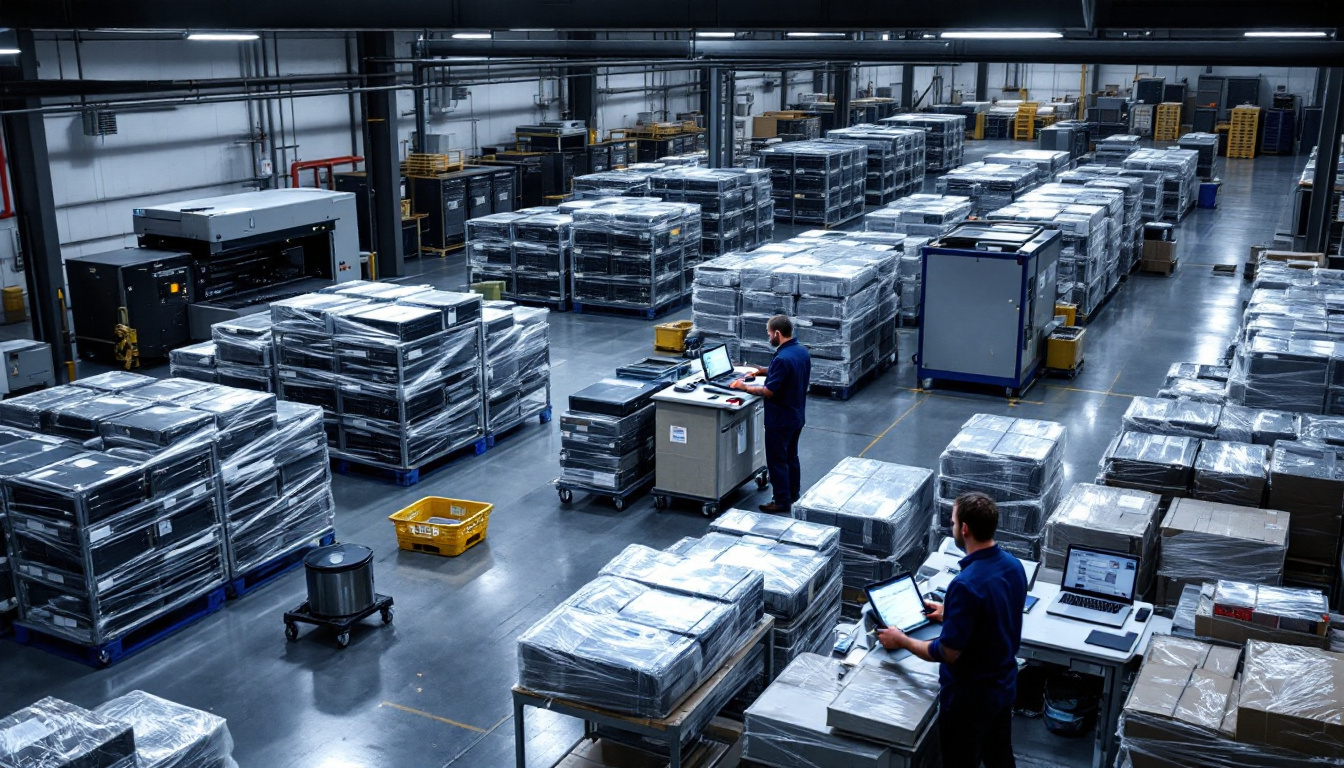
This report covers ITAD M&A multiples, meaning the valuation benchmarks buyers apply to IT asset disposition and data center decommissioning companies, the businesses that collect, wipe, resell, and recycle corporate and data center hardware. It is written for owners weighing an exit, buyers building a thesis, and advisors who need cited numbers rather than broker folklore. Almost no privately negotiated deal in this vertical discloses its multiple, so the report anchors every range to the nearest disclosed print, marketplace dataset, or survey, states the earnings basis on every figure, and labels its own syntheses as constructions. Nothing here is investment advice, legal advice, or a business appraisal; if you are buying or selling an ITAD company, commission a formal quality of earnings review and a professional valuation before acting on anything below.
Executive Summary
- The IT asset disposition industry entered 2026 with more strategic and private equity buyers pursuing platforms than at any point in its history, and the demand driver is structural rather than cyclical: the four largest US hyperscalers guided to roughly $725 billion in combined 2026 capital spending, up 77 percent from about $410 billion in 2025, and every dollar of new AI infrastructure eventually becomes decommissioned hardware that someone must wipe, resell, or shred.
- The valuation spine for the industry runs from roughly 2.0x to 3.3x SDE for sub-$2 million revenue owner-operated shops, through 4.0x to 5.5x adjusted EBITDA for $5 million to $15 million revenue certified processors, to 6.5x to 9.0x adjusted EBITDA for $50 million plus platforms with hyperscaler relationships. These are benchmark ranges constructed from the cited comp sources in each section, not survey statistics.
- The single most instructive disclosed print in the industry is Iron Mountain’s January 2024 acquisition of Regency Technologies for an initial $200 million, which the buyer disclosed as approximately 7.5x EBITDA for a US ITAD provider with trailing four quarter revenue above $100 million, plus an earnout of up to $200 million more.
- Iron Mountain’s asset lifecycle management arc is the strategic-buyer signal for the whole vertical: an approximately 80 percent stake in ITRenew for $725 million in January 2022 at a minimum implied enterprise value of $925 million, then Regency at $200 million initial in 2024, then Wisetek at a reported €51 million in September 2024, building a segment that produced $633 million of revenue in 2025 with 63 percent reported growth.
- The AI refresh supercycle is now visible in public segment data, not just vendor marketing: Sims Lifecycle Services grew fiscal 2025 revenue 22 percent to $426.6 million with repurposed unit volumes up 44.3 percent, which management attributed to hyperscaler activity and AI-linked US data center expansion.
- Certification is the moat that separates a 3x business from a 6x business: there are more than 900 R2 certified facilities in over 30 countries and more than 950 NAID AAA certified locations worldwide, yet buyers consistently pay premiums for operators holding the full stack of R2v3, NAID AAA, ISO 14001, and ISO 27001 together with a clean downstream audit chain, because replicating that stack takes 12 to 24 months a buyer does not want to spend.
- Private equity entered the vertical in force between 2024 and 2026, with SER Capital Partners forming Paladin EnviroTech from two processors in July 2025, Tailwind Capital backing DMD Systems Recovery in September 2025, Recognize taking a majority of Sprout in January 2025, and Closed Loop Partners assembling Sage Sustainable Electronics plus a strategic position in ERI, per the running deal list maintained by Sustainable Tech Partner.
- The rate backdrop finally helps sellers: the Federal Reserve’s H.15 release showed a federal funds target range of 3.50 to 3.75 percent in July 2026 after the June 2026 FOMC hold, roughly 175 basis points below the 2023 to 2024 peak, which lowers the debt cost that pressured debt-funded buyer models when the target range sat at 5.25 to 5.50 percent.
Three Numbers to Quote
| Number | What it is | Source |
|---|---|---|
| ~7.5x EBITDA | The only buyer-disclosed multiple on a large ITAD deal this cycle: Iron Mountain’s $200 million initial price for Regency Technologies, January 2024, US, trailing four quarter revenue above $100 million | Iron Mountain press release |
| ~$725 billion | Combined 2026 capital spending guidance from the four largest hyperscalers, up 77 percent from about $410 billion in 2025, the feedstock pipeline for the 2026 to 2029 decommissioning wave | Tom’s Hardware |
| $633 million, up 63% | Iron Mountain’s asset lifecycle management segment revenue in 2025 and its reported growth rate, the cleanest public proof that the demand story is trailing revenue and not just forecast | Q4 2025 results coverage |
Key Findings
1. The disclosed benchmark print sits at 7.5x EBITDA. Iron Mountain disclosed that its $200 million initial purchase price for Regency Technologies represented approximately 7.5x EBITDA, a January 2024 US transaction for an ITAD provider with trailing four quarter revenue in excess of $100 million. This is the only large ITAD deal of the current cycle with a buyer-disclosed EBITDA multiple, which makes it the anchor comp for platform-scale valuations.
2. The ITRenew deal set the ceiling for hyperscaler-exposed assets. Iron Mountain paid $725 million for approximately 80 percent of ITRenew in January 2022, with contracted payments for the remaining roughly 20 percent floored at $200 million and capped at $531 million per its 10-Q, implying a minimum enterprise value of $925 million for a business built on hyperscale data center decommissioning and rack-scale remarketing. No EBITDA multiple was disclosed, so this print anchors deal size and structure rather than multiple level.
3. Iron Mountain’s ALM segment revenue reached $633 million in 2025, up 63 percent reported and 40 percent organic, per its Q4 2025 results materials, and the company sized its addressable market at approximately $35 billion, split between roughly $10 billion of enterprise ITAD and roughly $25 billion of data center decommissioning. A strategic buyer publishing that split tells sellers exactly where the premium demand sits.
4. Sims Lifecycle Services provides the cleanest public read on segment margins. The Sims Limited fiscal 2025 results showed SLS revenue of $426.6 million, up 22.0 percent, with underlying EBIT margin of 7.6 percent, up 2.5 percentage points, driven by a mix shift toward higher-margin services. Single-digit EBIT margins at a scaled global operator explain why buyers price service-fee revenue above resale revenue.
5. Small ITAD and e-waste businesses trade like Main Street recycling businesses. BizBuySell’s waste management and recycling benchmarks show sold businesses in the category with a median cash flow multiple of 3.59x, a range of roughly 2.63x to 5.00x, a median revenue multiple of 1.05x, and median owner earnings of $190,000, US marketplace data through 2025. Sub-$2 million ITAD shops without certifications price inside this band on an SDE basis.
6. Size drives the multiple arc across the entire lower middle market. The IBBA Market Pulse Q1 2026 survey reported median selling multiples rising from about 2.0x SDE for US businesses under $500,000 in value to about 5.5x for deals between $5 million and $50 million, all industries, Q1 2026. ITAD companies ride this same size curve with a certification premium layered on top.
7. Sponsored business services deals set the platform ceiling. GF Data recorded business services multiples of about 7.5x EBITDA in the first half of 2025 for private equity sponsored US deals in the $10 million to $500 million enterprise value range, and its Q3 2025 report showed multiples holding firm even as deal volume slowed. A certified ITAD platform with recurring enterprise contracts prices as a business services company, not a scrap company.
8. The take-private of Blancco priced the data-erasure software adjacency. Francisco Partners acquired London-listed Blancco Technology Group at 223 pence per share, an equity value of approximately £175 million, completed December 2023. Every NAID AAA processor runs erasure software; the sponsor takeout of the category leader signaled conviction in the compliance layer of the stack.
9. SK ecoplant’s $1.0 billion purchase of TES remains the largest pure ITAD deal on record. The Korean company acquired 100 percent of Singapore-based TES for $1.0 billion in a deal announced February 2022 and closed that year, buying a network of more than 40 facilities across 20 countries. No earnings multiple was disclosed.
10. A Japanese smelter just bought into US ITAD. Mitsubishi Materials announced in December 2025 and completed in January 2026 the acquisition of preferred shares in Elemental USA E-Waste & ITAD that would give it a 49 percent voting position on conversion, tying its e-scrap smelting network to a US collection and ITAD platform. Metals players entering ITAD widens the buyer pool beyond PE and records-management strategics.
11. The e-waste supply curve keeps steepening. The UN’s Global E-waste Monitor 2024 documented a record 62 million tonnes of e-waste generated in 2022, of which only 22.3 percent was formally collected and recycled, with generation on track to reach 82 million tonnes by 2030. Feedstock is not the constraint in this industry; certified capacity and enterprise relationships are.
12. The AI hardware wave hits decommissioning docks between 2026 and 2029. Resource Recycling reported in March 2026 that hyperscale operators typically refresh core server infrastructure every three to five years, which places the first big wave of GPU-dense servers deployed in the 2022 to 2024 buildout into decommissioning channels between 2026 and 2029. Vendor analyses put AI-specific refresh cycles as short as 18 to 36 months, a claim buyers treat as directional rather than proven.
13. The vendor-research TAM numbers frame the growth story. Grand View Research valued the global ITAD market at $28.3 billion in 2025 and projected $65.7 billion by 2033, a 10.9 percent CAGR, with Asia Pacific holding a 42.7 percent revenue share in 2025. Treat these as vendor research estimates, useful for direction, not for underwriting.
14. Windows 10 end of support created a one-time enterprise refresh bulge. Microsoft ended Windows 10 support on October 14, 2025, and Resource Recycling identified the migration as one of the consolidation drivers pushing corporate device volumes into ITAD channels through 2025 and 2026. Sellers who can show contracted refresh pipelines rather than one-time surge revenue defend their multiple in diligence.
15. Private equity coverage of the sector has gone from occasional to systematic. Channel Dive reported that ITAD owners now field multiple sponsor inquiries per week and compared the sector’s position to the managed service provider market of 2018 to 2019, before MSP multiples re-rated. Sellers negotiating against a single buyer are leaving turns on the table in this environment; the parallel to the MSP re-rating is covered in our IT managed services multiples report.
Multiples by Size Band: The Valuation Spine
Almost no privately negotiated ITAD deal discloses its multiple. The ranges below are therefore benchmark constructions: we anchor each band to the nearest cited comp source, state the earnings basis, and adjust for the characteristics that separate ITAD from generic recycling or generic business services. Where a range is our synthesis rather than a published statistic, we say so. All figures are US market, 2024 through mid-2026 vintage unless stated otherwise. One rule governs everything that follows: SDE and adjusted EBITDA are different earnings bases, they are never blended in this report, and a multiple quoted without its basis is a number without a meaning.
Sub-$2 Million Revenue: 2.0x to 3.3x SDE
The smallest ITAD operators, typically a pickup-and-resale shop with one warehouse, a box truck or two, and an eBay storefront, price on seller’s discretionary earnings like any Main Street business. BizBuySell’s waste management and recycling category shows a median cash flow multiple of 3.59x across sold US listings, with a range of roughly 2.63x to 5.00x and median owner earnings of $190,000, marketplace data through 2025. The IBBA Market Pulse Q1 2026 survey puts the median for US businesses under $500,000 in value at about 2.0x SDE, all industries.
An uncertified ITAD shop dependent on the owner’s relationships should expect the bottom half of this band, roughly 2.0x to 2.7x SDE. A shop holding a current R2v3 or NAID AAA certificate with at least one multi-year corporate account can reach 2.8x to 3.3x SDE, and the certificate itself is frequently the reason a buyer pays at all, since SERI certification transfers require the acquirer to maintain the certified management system rather than rebuild it. These band edges are our synthesis from the two cited sources plus the certification dynamics discussed later in this report.
Why the discount to the BizBuySell category median for uncertified shops: resale-heavy micro-ITAD earnings carry commodity and consumer-electronics price exposure that junk-removal or route-based waste businesses do not, and buyers price that volatility. The BizBuySell category itself warns that the sector is more volatile than other service industries. A buyer at this size is usually an individual using savings or SBA debt, and that buyer’s lender will discount resale-driven earnings harder than the buyer will.
$2 Million to $5 Million Revenue: 2.8x to 4.3x SDE, Bridging to Roughly 4x Adjusted EBITDA
This band is where ITAD businesses stop trading purely on SDE and start attracting buyers who recast to adjusted EBITDA. A $3 million revenue processor with 15 employees might show $500,000 to $800,000 of SDE; the same business recast with a market-rate general manager salary shows meaningfully less adjusted EBITDA, which is why the SDE multiple and the EBITDA multiple describe the same price. The IBBA Market Pulse series has consistently shown US deals in the $1 million to $5 million enterprise value range clearing between roughly 3x and 4x SDE, with its Q3 2025 reading for $2 million to $5 million deals at a median near 4.8x EBITDA where earnings were expressed on an EBITDA basis.
For ITAD specifically, our synthesized placement inside that market-wide band runs 2.8x to 3.5x SDE for operators with mostly spot volume and heavy resale dependence, and 3.5x to 4.3x SDE for operators with certified facilities, documented downstream vendors, and at least a quarter of gross profit from service fees such as per-device destruction charges, logistics fees, and reporting fees. Buyers at this size are usually first-time acquirers using SBA 7(a) debt or small sponsors doing tuck-ins; both underwrite contract durability first and commodity upside last. The SBA 7(a) program caps at $5 million of loan size, which is one structural reason deal competition thins just above this band before sponsor interest picks it back up.
$5 Million to $15 Million Revenue: 4.0x to 5.5x Adjusted EBITDA
Businesses in this band typically carry $750,000 to $2.5 million of adjusted EBITDA and become visible to the organized buyer universe: PE-backed platforms such as Paladin EnviroTech, Quantum Lifecycle, and Sage Sustainable Electronics, plus strategics filling geographic gaps. The market-wide anchor is the IBBA Market Pulse Q1 2026 reading of roughly 4.5x to 5.5x on deals in the $5 million to $50 million bracket at the low end of that bracket, all industries, US.
Our synthesized ITAD placement: 4.0x to 4.7x adjusted EBITDA for regional processors with solid certifications but customer concentration above 30 percent or resale-dominated gross profit, and 4.8x to 5.5x adjusted EBITDA for operators with the full certification stack, enterprise contracts with two-plus year terms, and service-fee share of gross profit above 40 percent. Iron Mountain’s November 2025 purchase of Australia’s ACT Logistics, a business with roughly $7 million of annual revenue per trade reporting, shows that even the largest strategic in the space shops in this band for geographic entry, though no multiple was disclosed on that deal and none should be inferred.
$15 Million to $50 Million Revenue: 5.0x to 7.0x Adjusted EBITDA
At $2 million to $7 million of adjusted EBITDA, an ITAD company becomes a legitimate platform candidate rather than a tuck-in, and the buyer mix shifts to sponsors underwriting a five-year consolidation thesis. The market anchors are the IBBA reading of about 5.5x for $5 million to $50 million deals in Q1 2026 and the GF Data business services average of roughly 7.5x in the first half of 2025 for sponsored deals of $10 million to $500 million enterprise value, both US.
Our synthesized ITAD placement: 5.0x to 6.0x adjusted EBITDA for well-run regional platforms with certification depth but limited data center exposure, and 6.0x to 7.0x adjusted EBITDA where the company can document hyperscaler or colocation decommissioning revenue, national logistics reach, and audited chain-of-custody systems. The transactions in this band during 2024 to 2026, including Tailwind Capital’s investment in DMD Systems Recovery in September 2025 and Recognize’s majority acquisition of Sprout in January 2025, were all undisclosed on price, so the range rests on the cross-industry comp sources and the disclosed Regency print one band up.
$50 Million Plus Revenue: 6.5x to 9.0x Adjusted EBITDA, Platform Pricing
The top band has the industry’s one true disclosed comp: Iron Mountain’s January 2024 acquisition of Regency Technologies at approximately 7.5x EBITDA on an initial $200 million purchase price, US, trailing four quarter revenue above $100 million, with a revenue-based earnout of up to $200 million more payable in 2027 per the 10-K disclosure. Counting only the initial price, the print sits at 7.5x; a full earnout payout would imply materially more, which is why headline multiples on earnout-heavy deals need the structure footnote.
Our synthesized band: 6.5x to 7.5x adjusted EBITDA for scaled enterprise-ITAD platforms without meaningful hyperscaler decommissioning revenue, and 7.5x to 9.0x adjusted EBITDA where hyperscaler relationships, GPU and memory remarketing capability, and multi-country certified footprints are present. The upper edge is inferred from three observations rather than a disclosed print: the ITRenew minimum enterprise value of $925 million for a hyperscale-centric business in 2022, GF Data’s business services averages holding near record levels through 2025, and the 2024 to 2026 entry of infrastructure-adjacent and metals buyers such as Mitsubishi Materials that widens the auction pool at the top of the market.
Size Band Summary Table
| Size band (revenue) | Earnings basis | Benchmark range | Primary anchors |
|---|---|---|---|
| Under $2M | SDE | 2.0x to 3.3x | BizBuySell waste/recycling, IBBA Market Pulse Q1 2026 |
| $2M to $5M | SDE bridging to EBITDA | 2.8x to 4.3x SDE | IBBA Market Pulse |
| $5M to $15M | Adjusted EBITDA | 4.0x to 5.5x | IBBA Market Pulse Q1 2026 |
| $15M to $50M | Adjusted EBITDA | 5.0x to 7.0x | GF Data 1H 2025 business services, IBBA |
| $50M+ | Adjusted EBITDA | 6.5x to 9.0x | Regency 7.5x disclosed print, ITRenew $925M EV floor |
All ranges are US-market benchmark constructions on the stated earnings basis, 2024 to mid-2026 vintage, and should be read as starting points for negotiation, not appraisals.
Multiples by Sub-Segment
The size bands above shift up or down by business model. The adjustments below are our synthesis, anchored to the public economics and disclosed prints cited in each entry, and expressed as turns of adjusted EBITDA relative to a same-sized generalist ITAD company. Two same-sized companies with identical earnings can sit two or three turns apart once these adjustments stack, which is why buyers open diligence with a revenue-mix analysis before they open the financials.
Enterprise ITAD Full-Service: The Baseline
Pickup, logistics, certified destruction, resale, and reporting for corporate clients is the reference model, and the size-band spine above describes it directly. The Regency print at approximately 7.5x EBITDA on $100 million plus of trailing revenue, US, January 2024, is a full-service enterprise ITAD comp. Full-service operators win because they own the client relationship end to end; they lag when resale margin masks weak service-fee pricing, which a quality of earnings review will surface immediately.
Data Center Decommissioning Specialists: Plus 1.0 to 2.0 Turns
Operators with documented hyperscaler or colocation decommissioning revenue carry the largest premium in the vertical. Iron Mountain sized data center decommissioning at roughly $25 billion of its $35 billion addressable market in its Q4 2025 materials. Sims Lifecycle Services attributed its 44.3 percent growth in repurposed unit volumes in fiscal 2025 to hyperscaler activity and AI-driven US data center expansion. The ITRenew transaction, a hyperscale-decommissioning and rack-remarketing specialist, drew a minimum enterprise value of $925 million in January 2022. A $15 million to $50 million revenue decommissioning specialist that would benchmark at 5.0x to 7.0x as a generalist can credibly argue 6.5x to 8.5x adjusted EBITDA with contracted hyperscaler master service agreements, US, 2025 to 2026 vintage, per our synthesis. The premium collapses if the hyperscaler revenue is one project rather than a program, so buyers read statements of work, not logos.
Certified E-Waste Recyclers: Baseline to Minus 0.5 Turns
R2v3 or e-Stewards certified recyclers whose gross profit leans on commodity recovery rather than device resale or service fees price at or slightly below the generalist baseline. The reason is margin quality: even scaled operators show thin profitability, as in the 7.6 percent underlying EBIT margin at Sims Lifecycle Services in fiscal 2025. The certification itself still gates the buyer universe, since more than 900 R2 certified facilities exist across 30 plus countries and buyers will not touch uncertified volume aimed at enterprise clients. A certified recycler at $5 million to $15 million revenue benchmarks at roughly 3.8x to 5.0x adjusted EBITDA, US, 2024 to 2026, our synthesis, with the discount widening as commodity-linked revenue share rises. The Mitsubishi Materials investment in Elemental USA shows the offsetting force: smelters and metals groups value certified collection networks as feedstock security, and a strategic of that type can pay above the financial-buyer range.
Data-Destruction Pure-Plays: Plus 0.5 to 1.0 Turns
NAID AAA certified destruction businesses that charge per-device or per-pound service fees, with minimal resale exposure, carry the cleanest revenue quality in the vertical. More than 950 NAID AAA certified locations operate globally under the i-SIGMA program, and enterprise procurement teams increasingly specify the certification by name. The revenue model resembles records management, the business Iron Mountain built its core on, which is precisely why destruction-led ITAD books attract strategic interest. The software layer of this segment drew its own sponsor takeout when Francisco Partners took Blancco private at £175 million equity value, UK, completed December 2023. A destruction-led operator at $5 million to $15 million revenue benchmarks at roughly 4.5x to 6.0x adjusted EBITDA, US, 2024 to 2026, our synthesis, provided owner dependency is low and contracts are multi-year.
Remarketing and Value-Recovery-Heavy Operators: Minus 0.5 to 1.5 Turns
Businesses whose earnings depend on reselling recovered devices and components trade at a discount that scales with their commodity and price-curve exposure. Memory module and GPU resale prices move with supply cycles the operator does not control, and a Gartner estimate cited in decommissioning trade coverage holds that hardware not processed for the secondary market within 60 days can lose up to 40 percent of recoverable value. Buyers respond by recasting earnings on normalized recovery prices, then applying a lower multiple to the normalized number. A remarketing-heavy operator at $15 million to $50 million revenue benchmarks at roughly 4.5x to 5.5x adjusted EBITDA on normalized earnings, US, 2024 to 2026, our synthesis. The exception that proves the rule: remarketing capability attached to hyperscaler decommissioning contracts, the ITRenew model, converts the discount into a premium because volume is contracted even when unit prices float.
PE-Backed Platforms at Exit: 7.0x to 9.0x Plus Adjusted EBITDA
A sponsor-assembled platform with integrated systems, the full certification stack across sites, and diversified enterprise plus data center revenue exits into the business services sponsor market, where GF Data recorded averages near 7.5x for US sponsored deals of $10 million to $500 million enterprise value in the first half of 2025. Platforms with $10 million plus of EBITDA and a hyperscaler story can argue past the GF Data average toward the top of our 6.5x to 9.0x platform band. No 2024 to 2026 ITAD platform exit has disclosed its multiple, so this range remains a construction from the sponsored-market averages plus the Regency strategic print; the first disclosed sponsor exit will be the most important data point this vertical gets.
What Moves the Multiple: 15 Drivers
Each driver below can move a deal a quarter-turn to a full turn on its own; several stacked together explain how two ITAD companies with identical EBITDA can trade three turns apart. Sellers with 18 to 24 months of runway before a process can treat this list as a work plan, because most of these drivers respond to deliberate effort.
1. The Certification Stack
R2v3 from SERI, e-Stewards, NAID AAA from i-SIGMA, ISO 14001, and ISO 27001 together form the compliance moat. Each certificate takes months of audits to obtain and can be lost in one bad surveillance audit; a buyer acquiring the full stack skips 12 to 24 months of build time. SERI’s own milestone marker, crossing 1,000 R2 certified facilities in July 2023, shows certification is table stakes at the enterprise tier, which means missing certificates now subtract value faster than holding them adds it.
2. Recurring Enterprise Contracts Versus Spot Volume
A processor fed by multi-year corporate refresh agreements with defined service-level terms prices like a business services company; a processor fed by walk-in volume and one-off cleanouts prices like a scrap yard. Buyers ask what share of trailing gross profit renews contractually, and every ten points of contracted share supports the case for the next quarter-turn. Sellers should build the contract schedule before the process starts, with term, renewal history, and pricing mechanics on one page per account.
3. Hyperscaler and Colocation Relationships
Iron Mountain put roughly $25 billion of its $35 billion ALM market estimate in data center decommissioning, and Sims tied its fiscal 2025 volume surge to hyperscaler demand. A master service agreement with a hyperscaler or national colo operator is the single most valuable contract an ITAD seller can bring to market in 2026. It is also the hardest to win cold, which is why buyers pay for it rather than build it.
4. Service-Fee Share Versus Value-Recovery Share of Gross Profit
Service fees are priced by the seller; recovery revenue is priced by the memory and GPU spot market. Buyers recast commodity-linked earnings to normalized price decks before applying a multiple, so a dollar of destruction fee is worth more at closing than a dollar of resale margin. Sims’ margin expansion on a mix shift toward higher-margin services is the public-market version of this repricing.
5. Downstream Vendor Audit Chain
R2v3 requires documented downstream due diligence, and a seller whose downstream vendor files are current and complete removes the buyer’s biggest environmental-liability fear. A hole in the downstream chain, such as an uncertified export broker in the file, can kill a deal outright regardless of price, since successor liability for improperly exported e-waste follows the assets. Cross-border shipment rules under the Basel Convention framework raise the stakes on any export relationship a buyer finds in the file.
6. Data-Breach Liability Posture and Insurance
ITAD companies sit inside their clients’ data-security perimeter, and a single documented breach traced to a disposed asset can end the company. Buyers examine incident history, cyber and errors-and-omissions coverage limits, client indemnification language, and whether erasure verification is software-logged per device using tools of the class Francisco Partners bought in Blancco. Clean logs plus real insurance support the top of band; handshake-grade wiping records push a deal toward asset-sale structure at a discount.
7. Chain-of-Custody Technology
Serialized tracking from client dock to final disposition, client-facing portals, and automated certificates of destruction are the operational proof behind the certifications. Resource Recycling’s March 2026 reporting describes processors adopting machine vision and AI-driven component identification; sellers with that tooling in production, not on a roadmap, differentiate in diligence.
8. Logistics Footprint and Route Density
ITAD is partly a logistics business, and buyers pay for facilities positioned near enterprise concentrations and data center corridors. A seller with box trucks, vetted drivers with background checks, and national coverage through audited partners can serve contracts a single-site operator cannot bid. Facility positioning near the Virginia, Texas, Arizona, and Ohio data center corridors is starting to appear in buyer target screens the way route density appears in waste-hauling screens.
9. GPU and AI-Hardware Remarketing Capability
The first big wave of GPU-dense AI servers is expected to hit decommissioning channels between 2026 and 2029, and vendor market coverage cites recent-generation accelerators retaining five-figure per-unit resale values. Operators with the technical staff to test, grade, and securely handle accelerators and high-value memory will capture that wave; operators who shred it will not. Buyers in 2026 are explicitly underwriting this capability.
10. ESG and Circular-Economy Reporting Demand
Enterprise clients now buy ITAD partly to generate auditable sustainability data, and the EU WEEE directive plus right-to-repair rules keep tightening the regulatory floor, a driver Resource Recycling’s consolidation coverage names explicitly. Sellers who deliver client-ready carbon-avoidance and reuse reporting hold pricing power that shows up in both margin and multiple.
11. Owner Dependency
If the founder holds the enterprise relationships, runs pricing, and personally manages the certification program, the buyer is purchasing a job, not a company. This discount is universal across small-business M&A and hits ITAD hard because certifications name accountable managers. See our companion piece on how owner dependency affects valuation.
12. Customer Concentration
One enterprise account above 30 percent of revenue moves structure before it moves price: more earnout, more rollover, tighter reps. Above 50 percent, most buyers walk or reprice severely, and a hyperscaler relationship, for all its premium value, can itself be the concentration problem if it is the only large account.
13. Secure-Facility Footprint and Physical Controls
Cameras with retention policies, cage areas for data-bearing devices, access controls, and documented visitor logs are audit points under both NAID AAA and client security addenda. Facilities that pass client security audits without remediation lists support premium pricing; leased buildings that cannot be brought to spec cap the buyer pool.
14. Workforce Screening and Clearances
Destruction and decommissioning crews work inside client facilities, including regulated environments. Documented background checks, drug testing where contracts require it, and staff able to work in government or healthcare settings expand the contract universe a buyer can bid post-close. A workforce that cannot pass a client’s screening addendum silently shrinks the revenue synergy a buyer is willing to pay for up front.
15. Commodity and Resale Price Hedging Discipline
Operators who pre-sell recovered material under indexed offtake agreements, or who turn inventory inside 30 to 60 days, show earnings that survive diligence recasting. Slow-turning inventory into a falling memory market is the classic ITAD earnings trap, given the value-decay dynamics cited in decommissioning trade coverage, and buyers will hold back price for it in working capital negotiation even when the multiple survives.
Trend and Trajectory: 2019 Through Q3 2026
2019: A Fragmented Trade Business
Before the pandemic, ITAD was a fragmented industry of certified recyclers, destruction shops, and remarketers, with buyers mostly limited to a handful of strategics and regional consolidators. Multiples for small operators sat in the Main Street recycling range that BizBuySell still documents, roughly 2.6x to 5.0x cash flow with a median near 3.6x for the broad waste and recycling category, US marketplace data. The sector’s defining constraint was perception: generalist buyers saw scrap-yard economics and priced accordingly.
2020 to 2022: The Two Big Prints
The cycle turned when two deals proved scale ITAD could command institutional prices. Iron Mountain agreed in December 2021 to buy approximately 80 percent of ITRenew for $725 million, with the remaining-stake mechanics floored at $200 million and capped at $531 million per its 10-Q disclosure, implying a minimum enterprise value of $925 million. Weeks later, SK ecoplant announced the $1.0 billion acquisition of TES, taking 100 percent of a 20-country network. Neither deal disclosed an earnings multiple, but together they established that hyperscale decommissioning exposure and global certified footprints were nine and ten figure assets. Rates were still near zero: the federal funds target range began 2022 at 0.00 to 0.25 percent before the hiking cycle started that March, per the Federal Reserve’s H.15 history.
2023 to 2024: Rate Compression, Commodity Swings, and the Compliance Takeout
The fastest hiking cycle in four decades pushed the federal funds target range to 5.25 to 5.50 percent by the July 2023 FOMC decision, and debt-funded buyers repriced everything downstream of their debt cost. Memory and component price swings in 2022 and 2023 punished remarketing-heavy earnings at exactly the moment buyers were recasting them hardest. The deals that did clear told a compliance story: Francisco Partners took Blancco private at £175 million in late 2023, and Iron Mountain closed Regency Technologies in January 2024 at the disclosed approximately 7.5x EBITDA with nearly half the potential consideration structured as a revenue earnout per the 10-K. That structure, a disciplined headline multiple plus a large contingent tail, is the signature of the high-rate vintage. Iron Mountain added Wisetek in September 2024 at a reported €51 million against Wisetek’s reported fiscal 2022 gross revenue of €81.57 million, a price-to-revenue relationship consistent with buyer discipline, though no earnings figure was disclosed.
2025 to Q3 2026: The AI Refresh Supercycle Becomes the Story
Three things changed together. First, demand: hyperscaler capital spending guidance for 2026 reached roughly $725 billion across Amazon, Google, Meta, and Microsoft, up 77 percent year over year, and CNBC documented the cash strain of spending approaching $700 billion, all of which becomes future decommissioning volume on a three-to-five-year hyperscale refresh clock per Resource Recycling. Second, proof in public numbers: Iron Mountain’s ALM segment grew to $633 million of 2025 revenue, up 63 percent, with Resource Recycling reporting an ITAD surge and raised forecasts at mid-year, while Sims Lifecycle grew 22 percent with a 44.3 percent unit-volume jump and Sims raised fiscal 2026 guidance in June 2026. Third, capital: sponsor formation accelerated, with Paladin EnviroTech launching on two acquisitions in July 2025 and adding US and European targets into 2026, alongside the Tailwind, Recognize, Ancor Capital, and Closed Loop moves cataloged in the Sustainable Tech Partner deal list, plus the Mitsubishi Materials entry completed January 2026 and a reported ERI and ITOCHU joint venture in March 2026.
The rate context supports the sellers’ side of the table for the first time this decade. The June 2026 FOMC statement held the federal funds target range at 3.50 to 3.75 percent, and the July 2026 H.15 release confirms short rates roughly 175 basis points below the 2023 to 2024 peak. Cheaper debt does not mechanically raise multiples, but it removes the financing excuse buyers used to hold ranges down in 2023 and 2024, and the 2025 to 2026 vintage of ITAD deals is being negotiated with that headwind gone.
One caution belongs in every 2026 conversation: the demand story is partly prospective. The GPU decommissioning wave is a 2026 to 2029 forecast, not a trailing revenue line, and vendor-published claims such as 18 to 36 month AI refresh cycles remain directionally plausible but unproven at fleet scale. Sellers pricing tomorrow’s wave into today’s EBITDA should expect buyers to answer with earnouts rather than turns.
Geography Notes
The size-band spine in this report is US-market, but the buyer pool is not. Grand View Research attributes a 42.7 percent share of 2025 global ITAD revenue to Asia Pacific, vendor estimate, and three of the largest strategic acquirers of the current cycle are headquartered outside the United States: SK ecoplant in Korea, Sims in Australia, and Mitsubishi Materials in Japan. European sellers face an additional regulatory tailwind from the EU WEEE directive and right-to-repair rules, and the cross-border tuck-ins of 2024 to 2026, including Iron Mountain in Ireland and Australia and Paladin EnviroTech in the Netherlands and Ireland per the trade deal list, show acquirers paying to assemble multi-jurisdiction certified footprints. UK and EU sellers should apply the same size-band logic with two caveats: broker-market data of BizBuySell’s type is thinner outside the US, and the one clean UK print of the cycle, Blancco at £175 million equity value, was a listed software takeover rather than a services comp. Cross-border buyers also underwrite export-compliance risk conservatively, since e-waste shipment rules differ by destination country under the Basel framework, which tends to lengthen diligence timelines rather than cut price.
Named Consolidators and Strategic Buyers
Every profile below is limited to verified, publicly reported facts with sources linked. Sponsors and buyers change strategy without notice; confirm current appetite before approaching any of them.
Iron Mountain (NYSE: IRM), Asset Lifecycle Management
The records-management REIT built the industry’s reference roll-up in three moves: ITRenew, approximately 80 percent for $725 million, January 2022, with total consideration for the remainder contractually between $200 million and $531 million per its SEC filings; Regency Technologies, $200 million initial at approximately 7.5x EBITDA, January 2024, with a zero to $200 million revenue earnout payable in 2027 per the 10-K; and Wisetek of Cork, Ireland, at a reported €51 million, September 2024, adding facilities in Ireland, the UK, the US, the UAE, and Thailand. It kept tucking in, including Australia’s ACT Logistics in November 2025. The segment produced $633 million of 2025 revenue, up 63 percent reported, against a company-stated $35 billion addressable market. For sellers, Iron Mountain is the buyer that pays for enterprise contracts, certifications, and data center corridor positions, and it has shown it will use large earnouts to bridge price gaps.
SK ecoplant / SK tes
The Korean engineering and environment group bought 100 percent of TES for $1.0 billion in 2022, acquiring more than 40 facilities in 20 countries, and rebranded the platform SK tes. Its subsequent portfolio reshaping, including the reported roughly $1.1 billion sale of its Korean waste treatment unit to KKR agreed in 2025, points to concentration on the IT lifecycle and battery businesses rather than retreat from them. SK tes remains one of the few buyers able to underwrite multi-country certified footprints in a single transaction.
Sims Limited (ASX: SGM), Sims Lifecycle Services
The listed metals recycler’s SLS unit is the cleanest public comparable for scaled ITAD economics: fiscal 2025 revenue of $426.6 million, up 22.0 percent, with underlying EBIT margin of 7.6 percent and repurposed unit volumes up 44.3 percent on hyperscaler demand, followed by raised fiscal 2026 guidance. SLS has historically grown more by contract wins than acquisition, but its disclosures set the margin expectations every buyer carries into ITAD diligence.
Mitsubishi Materials / Elemental
The Japanese smelting group completed its investment in Elemental USA E-Waste & ITAD in January 2026, acquiring preferred shares convertible to a 49 percent voting position, alongside Elemental’s US e-scrap operations including Colt Recycling, per the December 2025 announcement. The strategic logic is feedstock: certified ITAD networks feed precious-metals-bearing e-scrap to smelters. Metals strategics entering US ITAD adds a buyer category that values collection volume itself, not just service EBITDA.
The 2024 to 2026 Sponsor Class
Verified sponsor activity per trade reporting and the Sustainable Tech Partner deal list: SER Capital Partners formed Paladin EnviroTech in July 2025 from Integrated Recycling Technologies and TechSmart International, then added R&L Recycling of the Netherlands in January 2026 and Ireland’s ICT in April 2026. Tailwind Capital backed DMD Systems Recovery in September 2025. Recognize took a majority of Sprout in January 2025 with New Capital Partners retaining a minority. Closed Loop Partners backs Sage Sustainable Electronics, which acquired Relectro in October 2024 and Cascade Asset Management in February 2025, and holds a strategic partnership position in ERI. Ancor Capital Partners acquired CEAR in April 2025. Korea Zinc-backed PedalPoint acquired network-hardware lifecycle firm MDSi in August 2025 at a reported price near $100 million. Resource Recycling’s consolidation analysis additionally names Closed Loop Partners, Generate Capital, EQT, Brookfield, Tailwind, Ancor, and Ara Partners as active or evaluating capital in the space. None of these transactions disclosed a multiple, and none should be quoted with one.
A note on two names sellers often ask about. Ingram Micro did not exit ITAD: its 2022 sale of the Commerce & Lifecycle Services unit to CEVA Logistics, reported at $3.0 billion, excluded the ITAD and reverse logistics business, which Ingram Micro retained. And Cascade Asset Management is no longer an independent platform candidate, having been acquired by Sage Sustainable Electronics in February 2025 per the deal list above.
Deal Structure: How ITAD Transactions Actually Close
Earnouts Tied to Contract Retention and Revenue
The Regency structure is the template: a $200 million initial price plus a zero to $200 million earnout on three-year cumulative revenue targets. ITAD earnouts key on revenue or contract retention rather than EBITDA because buyers know integration scrambles cost structure but want proof the enterprise and hyperscaler relationships survive the sign change. Sellers should cap earnout share near a third of total consideration and insist on defined operating covenants; our founder earnout benchmarks guide covers market terms by deal size.
Commodity-Price Normalization Mechanics
Buyers recast trailing earnings to a normalized recovery-price deck, typically a trailing 24 to 36 month average for memory, precious metals content, and device categories, before applying the multiple. Sellers who sold into a hot memory market will see the recast bite; sellers coming off a weak commodity year should push for the same normalization in the other direction. Some deals add a two-way collar that adjusts closing payments if reference prices move materially between signing and close.
Working Capital and Recovered-Asset Inventory
The working capital peg fight in ITAD centers on inventory of recovered devices and harvested components, which the buyer will argue is commodity-priced and fast-decaying, consistent with the value-decay estimates in trade coverage. Expect the buyer to mark aged inventory steeply, sometimes to scrap value past 90 days, and to demand a defined valuation methodology in the purchase agreement. Sellers should clear slow inventory before going to market rather than argue for it at the peg.
Rollover Equity
Sponsor platform deals in this vertical commonly ask founders to roll 10 to 30 percent into the platform, both to fund the buyout and to keep certification-accountable managers in seat. Rollover into a consolidating ITAD platform during an AI-driven demand cycle is a genuinely interesting second bite, but only with standard minority protections; see our founder rollover equity benchmarks.
Reps, Escrows, and the Liability Tail
Environmental and data-security reps run longer than in generic services deals, and buyers frequently require tail insurance for data-breach exposure on historical work. A clean downstream audit file and per-device erasure logs shrink escrows; gaps expand them. Asset-versus-stock structure is negotiated harder in ITAD than in most verticals because successor liability for exported material and past data handling follows the corporate entity.
Financing
Sub-$5 million deals still clear through SBA 7(a) channels, where a services business with contracts and certifications underwrites well; see our SBA acquisition lender rankings. Platform deals price off private credit, and the 3.50 to 3.75 percent federal funds range of mid-2026 has taken roughly 175 basis points out of the base rate debt-funded buyers faced at the 2023 peak.
Original Synthesis: Three Analyses You Will Not Find Elsewhere
1. The Certification-Stack Premium, Quantified by Scarcity
The certification bodies publish enough data to size the moat. SERI counts more than 900 R2 certified facilities across 30 plus countries, having crossed 1,000 total certificates in July 2023, and i-SIGMA counts more than 950 NAID AAA certified locations globally. The United States hosts only a few hundred of each, and the intersection, facilities holding R2v3 and NAID AAA and ISO 27001 simultaneously, is a materially smaller set that no public registry counts but every buyer’s target list defines. Set that against demand: the UN documented 62 million tonnes of e-waste in 2022 with only 22.3 percent formally recycled, and Iron Mountain alone claims a $35 billion addressable market. When a consolidation cycle needs certified capacity and the certified set numbers in the hundreds nationally, each fully certified target carries scarcity value independent of its earnings, which is why our size-band ranges show certification moving small operators up half a turn or more, and why uncertified operators increasingly sell for asset value. The practical takeaway for a seller two years from exit: completing the stack is the highest-return valuation project available, because it moves the multiple on every dollar of EBITDA at once.
2. Service-Fee Versus Value-Recovery Mix: The Two-Businesses Problem
Every ITAD company is two businesses wearing one uniform: a contracted compliance-services business, and a commodity trading operation whose inventory happens to arrive on the same trucks. Public data shows how differently those two earn. Sims Lifecycle, with substantial recovery exposure, ran a 7.6 percent underlying EBIT margin in fiscal 2025, and that was after a 2.5 point improvement driven by shifting mix toward services. Iron Mountain, whose corporate model is built on contracted storage-like fees, paid a disclosed 7.5x EBITDA for Regency while structuring nearly half the potential consideration as a revenue earnout, buying the service annuity and making the seller prove the rest. The synthesis: a dollar of service-fee gross profit is plausibly worth 1.5 to 2 times a dollar of recovery gross profit at exit, because it carries both a higher multiple and a smaller diligence haircut. Sellers can arbitrage this before a sale by repricing contracts to shift value into fixed service fees with revenue-share kickers on recovery, rather than bundling free services against resale splits. The reported economics stay similar; the transaction value does not.
3. Quantifying the AI-Refresh Decommissioning Wave
The demand linkage runs from capex to decommissioned volume with a lag equal to the refresh cycle. The four largest hyperscalers guided to roughly $725 billion of 2026 capex, up from about $410 billion in 2025, following the 2022 to 2024 buildout that Resource Recycling reports will enter decommissioning channels between 2026 and 2029 on the standard three-to-five-year hyperscale refresh clock. Even at conservative assumptions, if a low-single-digit percentage of installed infrastructure value reaches disposition channels annually, the $25 billion data center decommissioning market Iron Mountain describes is being fed by a capital base that roughly doubled in two years. The corroborating trailing evidence is already public: Iron Mountain’s ALM revenue grew 63 percent in 2025 with forecasts raised at mid-year, and Sims processed 44.3 percent more repurposed units in fiscal 2025. The honest caveat sellers must carry into negotiations: the wave arrives as staggered retirements, not a single surge, per the operators quoted in the Resource Recycling coverage, and hyperscalers may internalize the highest-value remarketing themselves. The wave is real; who captures it is the open question, and capability, not proximity, will decide.
Methodology and Source Ranking
How the ranges were built. ITAD has no dedicated transaction database, so this report maps the vertical honestly onto the nearest coverage. Small-deal data comes from BizBuySell’s waste management and recycling benchmarks, whose category includes but is not limited to electronics recyclers, and from the IBBA Market Pulse size-band medians, which are all-industry. Mid-market and platform anchors come from GF Data’s sponsored-deal averages for business services, $10 million to $500 million enterprise value, and from the disclosed Regency print. DealStats classifies comparable private transactions under NAICS 423930 (recyclable material wholesalers), 562920 (materials recovery facilities), and 541690 (technical consulting), none of which isolates ITAD; we treat its coverage as directional and quote no DealStats medians rather than present a mismatched code as a vertical statistic. Where a range is our synthesis, the text says so explicitly.
Source tiers. Tier 1, transaction data and filings: SEC filings including the Iron Mountain 10-K and 10-Q series, issuer press releases, GF Data, IBBA Market Pulse, BizBuySell. Tier 2, standards bodies and institutional research: SERI, i-SIGMA, e-Stewards, the UN Global E-waste Monitor, the Federal Reserve H.15. Tier 3, trade press and vendor research, used for deal reporting and market color and labeled accordingly: Resource Recycling, Sustainable Tech Partner, Channel Dive, and vendor market studies such as Grand View Research, which we cite as vendor estimates, never as underwriting inputs.
Corrections made during verification. Three commonly repeated claims were checked and corrected in this report: Iron Mountain’s Wisetek acquisition closed in September 2024, not 2022, at a reported €51 million; Ingram Micro retained its ITAD business when it sold Commerce & Lifecycle Services to CEVA Logistics in 2022; and Cascade Asset Management was acquired by Sage Sustainable Electronics in February 2025 and is no longer independent. No named-deal multiple appears in this report unless the buyer disclosed it.
For Journalists (About 150 Words)
ITAD, the industry that wipes, resells, and recycles corporate and data center hardware, is consolidating fast because the AI buildout guarantees its future feedstock. The four largest hyperscalers guided to roughly $725 billion of combined 2026 capital spending, and servers bought in the 2022 to 2024 wave begin retiring between 2026 and 2029. Iron Mountain has spent more than $1 billion assembling an asset lifecycle segment that grew 63 percent in 2025, and its 2024 Regency Technologies deal, disclosed at approximately 7.5x EBITDA, is the industry’s benchmark print. Private equity firms including SER Capital, Tailwind, Recognize, and Closed Loop Partners built or backed platforms in 2024 through 2026, and Japan’s Mitsubishi Materials bought into US ITAD in January 2026. Small operators still sell near 3x owner earnings; certified platforms with hyperscaler contracts command more than double that on EBITDA. Data and sourcing: CT Acquisitions, ctacquisitions.com.
Three Quotable Findings
- “The only disclosed benchmark in ITAD M&A is Iron Mountain’s 7.5x EBITDA for Regency Technologies in January 2024, and every serious negotiation in the vertical now happens in its shadow.”
- “An ITAD company is two businesses in one uniform, a compliance annuity and a commodity trade, and buyers in 2026 pay roughly twice as much for a dollar of the first as for a dollar of the second.”
- “Hyperscalers will spend about $725 billion on infrastructure in 2026, and on a three-to-five-year refresh clock every dollar of it is pre-booked future revenue for whoever holds the decommissioning contract.”
Frequently Asked Questions
What is a typical multiple for an ITAD business in 2026?
Small operators under $2 million of revenue typically sell for 2.0x to 3.3x SDE, based on BizBuySell recycling-category data and IBBA size-band medians. Certified processors between $5 million and $15 million of revenue benchmark at 4.0x to 5.5x adjusted EBITDA, and platforms above $50 million of revenue benchmark at 6.5x to 9.0x adjusted EBITDA, anchored by the disclosed 7.5x Regency print. These are US benchmark ranges, not appraisals.
Do R2v3 and NAID AAA certifications really change the price?
Yes, materially. Certifications gate which buyers can even use your capacity, and fewer than a thousand facilities worldwide hold R2 certification or NAID AAA individually, with the overlap far smaller. Expect certification depth to be worth half a turn or more at any size, and expect its absence to push a deal toward asset-sale pricing.
What is the difference between SDE and EBITDA valuation in this industry?
SDE includes the owner’s full compensation and is the standard basis below roughly $1 million of earnings; adjusted EBITDA deducts a market-rate manager salary and is the basis above it. A 3.3x SDE price and a 4.3x adjusted EBITDA price can describe the same check. Never compare multiples across bases; this report states the basis on every figure.
How does the AI boom actually help an ITAD seller?
Hyperscaler capex of roughly $725 billion guided for 2026 becomes decommissioned hardware on a three-to-five-year refresh cycle, and public operators already show the volume: Iron Mountain’s ALM segment grew 63 percent in 2025. Sellers with data center decommissioning capability capture the premium; sellers without it benefit only from the general demand tide.
Will buyers pay for my resale revenue?
They will pay for it after recasting it to normalized commodity and device prices, and at a lower effective multiple than your service fees. Buyers treat recovery revenue as commodity-exposed, consistent with the thin margins visible at Sims Lifecycle Services. Shifting contract economics toward fixed service fees before a sale is the highest-value repricing most sellers can do.
What earnout should I expect?
Platform buyers in this vertical use revenue or contract-retention earnouts, and the reference structure is Regency’s zero to $200 million earnout against a $200 million initial price. For lower middle market deals, expect buyers to propose 20 to 40 percent of consideration as contingent when customer concentration or AI-wave projections are doing the valuation work; see our earnout benchmarks.
Who are the most active buyers right now?
Iron Mountain among strategics, SK tes and Mitsubishi Materials among international strategics, and a 2024 to 2026 sponsor class including SER Capital’s Paladin EnviroTech, Tailwind, Recognize, Ancor, and Closed Loop Partners’ Sage, per the running trade deal list. A seller above $2 million of EBITDA with certifications should expect a multi-party process, not a single offer.
Does customer concentration kill ITAD deals?
Above 30 percent from one account, structure tightens; above 50 percent, many buyers pass. Hyperscaler contracts are both the biggest premium and the most common concentration risk, so buyers separate program relationships with recurring statements of work from single-project wins.
How do rates affect my sale in 2026?
The federal funds target range stood at 3.50 to 3.75 percent in mid-2026, roughly 175 basis points under the 2023 to 2024 peak, which lowers acquisition debt cost for both SBA and sponsor buyers. That removes the financing drag that suppressed 2023 and 2024 pricing, though it guarantees nothing about your specific multiple.
Is now a good time to sell an ITAD business?
The buyer pool is the deepest in the industry’s history, disclosed demand signals are strong, and the compliance moat is rising in value, which together favor sellers with certifications and contracted revenue. Sellers dependent on spot volume and resale margin face the same recasting discipline as ever. This report is market research, not advice; run a quality of earnings review and get a real valuation before deciding.
The Bottom Line for Sellers
If you own an ITAD or data center decommissioning company in 2026, three facts should shape your exit planning. First, the buyer pool has never been deeper: one strategic has publicly spent more than $1 billion assembling the category, international metals and infrastructure groups have entered, and at least half a dozen sponsors built or backed platforms between 2024 and 2026 per the trade deal record. Second, the market pays for exactly three things at a premium: the certification stack, contracted service-fee revenue, and documented data center decommissioning capability, and all three can be built deliberately in the 18 to 24 months before a sale. Third, the demand story that buyers are underwriting, the $725 billion hyperscaler capex wave turning into decommissioned hardware through 2029, is strong enough that you should not have to accept a 2023-style discount, but prospective enough that buyers will answer aggressive projections with earnout paper rather than cash. Sellers who walk in with clean chain-of-custody records, a current downstream audit file, normalized inventory, and a quality of earnings review already done will capture the top of the ranges in this report; sellers who walk in with a story will finance the gap themselves.
Related Research on CT Acquisitions
- IT Managed Services M&A Multiples 2026, the IT services cluster pillar and the consolidation playbook ITAD is now repeating
- IT Services and VAR M&A Multiples 2026, the hardware lifecycle adjacency on the deployment side
- MSSP M&A Multiples 2026, the data-security adjacency where compliance also drives the multiple
- How to Sell a Recycling Business, the broader recycling exit process
- Control System Integrator M&A Multiples 2026, publishing in the same wave for the industrial-technology services corridor
- Elevator Company M&A Multiples 2026, a same-wave sibling where recurring service contracts drive the premium
- Mechanical Contractor M&A Multiples 2026, a same-wave sibling in facility infrastructure services
- Quality of Earnings, what the recasting process will do to commodity-linked ITAD earnings
- How Owner Dependency Affects Valuation
- Founder Earnout Benchmarks by Deal Size 2026
- Founder Rollover Equity Benchmarks 2026
- SBA Acquisition Lender Rankings 2026
Disclaimer
This report is a market research synthesis published by CT Acquisitions. It is not investment advice, legal advice, tax advice, or a business appraisal, and no multiple or range in it constitutes an opinion of value for any specific company. Multiples describe market averages and benchmark constructions drawn from the named, linked sources, each with its stated earnings basis, size band, deal year, and geography, and actual transaction outcomes vary widely with facts this report cannot see. Named-deal figures are reported exactly as disclosed by buyers, sellers, or regulatory filings, and no undisclosed named-deal multiple has been estimated or implied. Verify every figure against the linked primary source before relying on it, and engage qualified M&A, legal, tax, and accounting advisors before any transaction.
Build Notes and Verification Pass
Voice gates. This article was written to the CT voice standard: zero em-dashes and zero en-dashes anywhere including the title, and zero hits against the CT voice-gate exclusion set, confirmed by programmatic scan of the final file. Conditional voice is used for all projections, and every numeric claim carries a named, linked source.
Verification summary. Every stated multiple carries its earnings basis, size band, year vintage, geography, and a hyperlinked source, and synthesized ranges are explicitly labeled as constructions. SDE and adjusted EBITDA figures are never blended. The only named-deal EBITDA multiple quoted, Regency Technologies at approximately 7.5x, was disclosed by the buyer in its press release and SEC filings. Three commonly repeated market claims were corrected during research: the Wisetek closing date (September 2024), Ingram Micro’s retention of its ITAD unit in the CEVA transaction, and Cascade Asset Management’s February 2025 acquisition by Sage Sustainable Electronics. All internal links point to the exact slugs specified for this build, external sources were verified during the July 2026 research pass, and rate references carry their H.15 and FOMC vintages. Last verified: July 2026. Next refresh: January 2027.