
Selling a Body Shop in 2026: Auto Body Shop Multiples, Named Buyers, Confidential Process
Selling a body shop or collision repair business in 2026 clears very different multiples by structure and scale. Owner-operator single-location operators typically land 3-4.5x SDE. Multi-unit or professional-managed operators reach 5-7x EBITDA, and larger platforms 7x+. What buyers focus on: recurring revenue percentage, real estate structure, average ticket size, staffing depth, and regulatory compliance history. Named strategic and regional consolidators are active across most consumer and B2B service verticals.
Selling an auto body shop business in 2026 typically closes in 4-9 months with an M&A advisor running a confidential process, vs 9-12 months with a traditional broker. Below: the exact process, who is buying, and what they pay.
Updated April 2026 · CT Acquisitions
Last updated: 2026-05-28
Collision repair is one of the most active roll-up sectors in the country. National consolidators backed by billions of dollars of private equity are buying independent body shops to add locations, density, and insurer relationships. An auto body shop is valued on its earnings, usually an EBITDA multiple once you have multiple locations and management in place, and collision trades higher than general auto repair because the demand is insurance-funded and recurring. The single biggest factor in the multiple is the strength and breadth of your direct repair program relationships, followed by your OEM certifications, cycle time, and how many locations you bring. This page explains what your shop is worth, why DRP relationships drive the number, who the real buyers are, and how CT Acquisitions introduces you to them directly.
Key Takeaways
- For 2026 how to sell an auto collision repair business with 4x-8x EBITDA multiples and named MSO buyers (Caliber, Gerber, Crash Champions), see our guide.
- The collision repair market is large, recession-resistant, and still heavily fragmented, which is the classic setup for a roll-up.
- Collision diligence centers on the durability of the insurer-funded demand, the condition of the equipment and certifications, and the transferability of the earnings.
- These are the issues that turn a strong-looking shop into a discounted or dead deal: Single-carrier dependence.
- Two shops with similar revenue can sell at very different multiples, and the gap comes down to the durability of the demand and the scalability of the business.
What Auto Body Shops Are Worth in 2026
For 2026 how to sell an auto collision repair business with 4x-8x EBITDA multiples and named MSO buyers (Caliber, Gerber, Crash Champions), see our guide. Collision shop valuations follow the same path as most service businesses, but the multiples sit higher than general mechanical repair because of how predictable the work is. A single owner-operated shop is valued on seller’s discretionary earnings, while a multi-location group with professional management is.
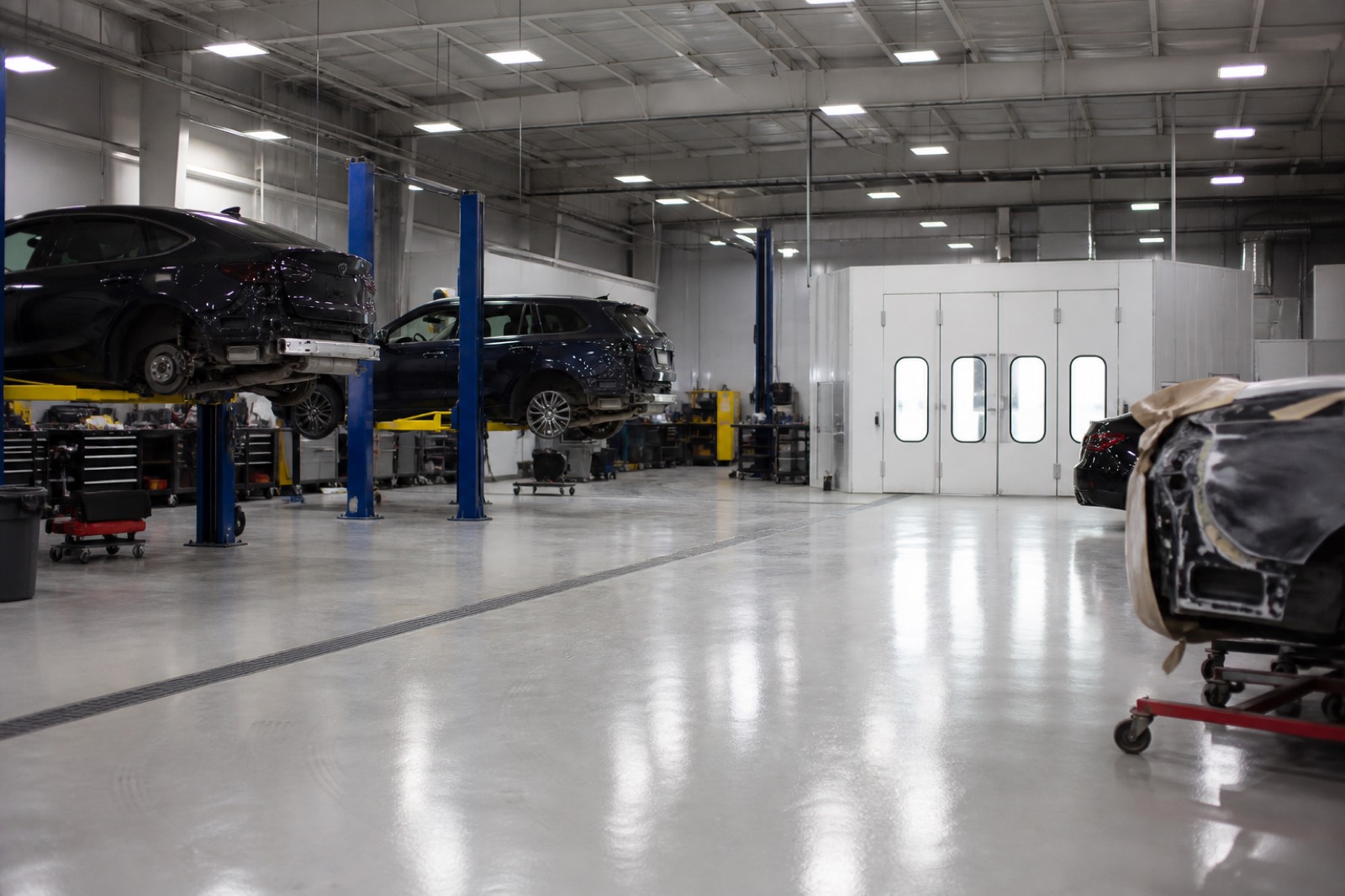
For 2026 how to sell an auto collision repair business with 4x-8x EBITDA multiples and named MSO buyers (Caliber, Gerber, Crash Champions), see our guide.
Collision shop valuations follow the same path as most service businesses, but the multiples sit higher than general mechanical repair because of how predictable the work is. A single owner-operated shop is valued on seller’s discretionary earnings, while a multi-location group with professional management is valued on EBITDA. The crossover usually happens around $1M of normalized earnings, and crossing into multi-shop, EBITDA territory adds a meaningful premium because it gives a consolidator something it can fold into its network.
| Metric | Range | Notes |
|---|---|---|
| SDE Multiple (single shop) | 3x to 4.5x SDE | Applies to owner-operated single shops under roughly $1M in earnings. Shops with strong multi-carrier DRP standing and current OEM certifications sit at the top of this range; carrier-dependent or uncertified shops sit at the bottom. |
| EBITDA Multiple (strong shop / small operator) | 5x to 7x EBITDA | Strong single shops and small multi-shop operators above about $1M EBITDA with a manager structure, broad insurer mix, and good cycle time. This is where most established independents land. |
| EBITDA Multiple (platform) | 7x+ EBITDA | Larger multi-location platforms with regional density, diversified DRP relationships, and clean financials. These attract competitive bidding from the national consolidators, who themselves raise capital at higher platform-level valuations. |
| Real estate | Valued separately | Owned buildings and land are valued on their own, either sold with the business or retained and leased to the buyer. Large freestanding collision facilities with paint booths and frame bays can be a meaningful part of the total deal. |
The economics of a body shop are defined by the relationship with insurance carriers. The large majority of collision work is paid for by an insurer rather than the car owner, which means the shop’s demand depends on where carriers send their claims. A shop with strong direct repair program standing has carriers steering a steady volume of work to it, which turns one-time accidents into a predictable pipeline. That predictability is exactly what a buyer pays for, and it is why collision earns higher multiples than the general repair and tire side of the auto world.
Margins in collision are tied to labor efficiency, parts gross profit, and cycle time. A shop that moves cars through the bays quickly, manages parts well, and keeps its carrier scorecards strong earns solid margins. As a rough illustration, a busy independent location can run several million dollars of annual revenue with mid-single-digit to low-double-digit EBITDA margins, and the larger consolidators report adjusted margins in that same neighborhood at scale. Working capital is moderate, driven by receivables from insurers and parts inventory, and insurer payment timing is a normal part of the diligence conversation.
Equipment matters a great deal in collision. Frame machines, measuring systems, paint booths, welders, and advanced driver-assistance system calibration equipment are expensive and central to the work. A buyer looks closely at whether that equipment is current or whether there is deferred capital spending that will land on them after closing, and whether the shop holds the OEM certifications that let it repair newer, higher-value vehicles.
The factors that move a collision shop’s multiple up or down:
- DRP insurer relationships, the breadth and strength of direct repair program standing across multiple carriers, which is the demand engine of the business
- Insurer concentration, whether the work is spread across several carriers or dangerously dependent on one
- OEM certifications, the manufacturer programs that let the shop repair newer and higher-value vehicles that uncertified shops cannot touch
- Cycle time, how quickly the shop completes repairs, which carriers measure and reward and which drives throughput
- Number of locations and density, since multi-shop groups in a clustered region are far more valuable to a consolidator than a lone shop
- Real estate, whether the shops sit on owned, well-located property or on leases, and the size and condition of the facilities
- Technician staffing and owner dependency, a stable, skilled team and a business that runs on systems rather than the owner personally
Why Consolidators Are Buying Auto Body Shops
The collision repair market is large, recession-resistant, and still heavily fragmented, which is the classic setup for a roll-up. Accidents happen at a steady rate regardless of the economy, the work is funded by insurance, and most of the country’s shops are still independently owned. Private equity has recognized this, deploying billions of dollars of capital into collision since late 2023 to build platforms that buy independents and add scale.
The collision repair market is large, recession-resistant, and still heavily fragmented, which is the classic setup for a roll-up. Accidents happen at a steady rate regardless of the economy, the work is funded by insurance, and most of the country’s shops are still independently owned. Private equity has recognized this, deploying billions of dollars of capital into collision since late 2023 to build platforms that buy independents and add scale. For an independent owner, that means a deep pool of well-funded buyers actively looking for shops that fit their footprint and insurer relationships.
The consolidation thesis is built on predictable, insurance-funded demand and the benefits of scale. A platform with hundreds or thousands of locations negotiates better parts and paint pricing, standardizes cycle time and quality across its sites, carries enterprise-level insurer relationships, and spreads back-office and technology cost across the network. Scale also lets the big operators invest in advanced estimating, calibration bays, and OEM certifications that individual shops struggle to fund. The four largest operators have grown to represent a large and rising share of industry revenue, yet they still hold a minority of the total, which leaves a long runway for further acquisition.
The named consolidators active in the market include:
- Caliber Collision, the largest collision repair operator in the country, which has grown to thousands of locations through aggressive acquisition including its earlier purchase of ABRA
- Crash Champions, a major national operator that combined with Service King to form a network of hundreds of shops and continues to acquire independents
- Gerber Collision & Glass, the collision business of Boyd Group, a publicly traded operator that added Joe Hudson’s Collision Center in a deal that closed in early 2026
- Classic Collision, a fast-growing national operator backed by a major private equity firm that has rolled up shops across many states
- Joe Hudson’s Collision Center, a leading southeastern operator now part of Boyd Group, named here because its brand remains an active part of that platform
Below the national names, regional multi-shop operators expand by buying neighboring shops, and individual buyers acquire single locations. The competition among these buyer types is what gives a seller leverage, especially when a shop or group brings strong insurer relationships and fits more than one acquirer’s geographic expansion plan.
What these buyers pay a premium for:
- Strong, diversified DRP relationships across multiple carriers with good performance scores
- Current OEM certifications that let the shop repair newer and higher-value vehicles
- Disciplined cycle time and the throughput that comes with it
- Multiple locations clustered in a region the buyer wants to enter or deepen
- Modern equipment and calibration capability that the buyer does not have to replace
- A stable, skilled technician team and a manager structure that runs without the owner
- Clean financials with documented, defensible add-backs
What Auto Body Shop Buyers Actually Care About in Diligence
Collision diligence centers on the durability of the insurer-funded demand, the condition of the equipment and certifications, and the transferability of the earnings. A buyer is confirming that the work will keep flowing after the sale, that the profit does not depend on the owner, and that the shop will not need a large reinvestment to stay competitive. The specific items diligence digs into: DRP relationships and insurer mix :.
Collision diligence centers on the durability of the insurer-funded demand, the condition of the equipment and certifications, and the transferability of the earnings. A buyer is confirming that the work will keep flowing after the sale, that the profit does not depend on the owner, and that the shop will not need a large reinvestment to stay competitive.
The specific items diligence digs into:
- DRP relationships and insurer mix: which carriers steer work to the shop, the volume from each, the performance scorecards, and how concentrated the business is in any single carrier
- Cycle time and KPIs: the metrics carriers track, including cycle time, quality, and customer satisfaction, and how the shop performs against them month to month
- OEM certifications: which manufacturer programs the shop holds, whether they are current, and the equipment and training those programs require
- Equipment condition: the age and state of frame machines, measuring systems, paint booths, welders, and calibration equipment, plus any deferred capital spending
- Add-backs and normalized earnings: owner compensation, personal expenses, and one-time items removed to arrive at the true EBITDA a buyer will pay against
- Real estate and leases: which locations are owned versus leased, lease length and assignability, rent at fair market, and the size and condition of each facility
- Technician staffing: headcount, certification level, turnover, and pay, since skilled body and paint technicians are hard to replace in a tight labor market
- Parts and paint purchasing: supplier relationships and pricing, which a buyer may improve through its own purchasing power
The takeaway for an owner is that the broader your insurer mix, the cleaner your financials, the more current your certifications and equipment, and the more stable your team, the faster diligence moves and the less likely a buyer is to renegotiate after seeing a single dominant carrier or a stack of deferred equipment spending.
Red Flags That Tank Auto Body Shop Valuations
These are the issues that turn a strong-looking shop into a discounted or dead deal: Single-carrier dependence. If one insurer sends most of the work, the earnings can collapse the moment that carrier reroutes its claims, and buyers treat that risk severely. Weak or declining DRP scores. Poor performance on the carriers’ cycle time and quality metrics threatens the work pipeline, since carriers steer claims toward their best-performing shops. Lapsed.
These are the issues that turn a strong-looking shop into a discounted or dead deal:
- Single-carrier dependence. If one insurer sends most of the work, the earnings can collapse the moment that carrier reroutes its claims, and buyers treat that risk severely.
- Weak or declining DRP scores. Poor performance on the carriers’ cycle time and quality metrics threatens the work pipeline, since carriers steer claims toward their best-performing shops.
- Lapsed OEM certifications. Without current manufacturer certifications, the shop cannot repair newer and higher-value vehicles, which caps pricing and the work it can win.
- Deferred equipment spend. Old frame machines, paint booths, and missing calibration capability get priced straight out of the deal, because the buyer will have to fund the upgrade.
- Owner dependency. If the owner personally holds the carrier relationships and runs the shop floor, buyers treat the business as a job rather than a transferable asset.
- Technician shortage or turnover. Skilled body and paint technicians are scarce, and a shop that cannot keep them cannot deliver the volume that the insurer relationships imply.
- A single location with no scale. One shop gives a consolidator less density and integration benefit than a regional cluster, so it is worth less per dollar of earnings.
- Short or unfavorable leases and messy financials. A short lease, above-market rent, or books that cannot support the add-backs claimed all reduce the earnings a buyer will credit.
What Separates a 4x Collision Shop From a 7x Collision Shop
Two shops with similar revenue can sell at very different multiples, and the gap comes down to the durability of the demand and the scalability of the business. A bottom-quartile shop is a single location dependent on one carrier, with lapsed certifications, aging equipment, and an owner who personally holds the insurer relationships. It makes money, but the demand is fragile and tied to the owner. A shop or group.
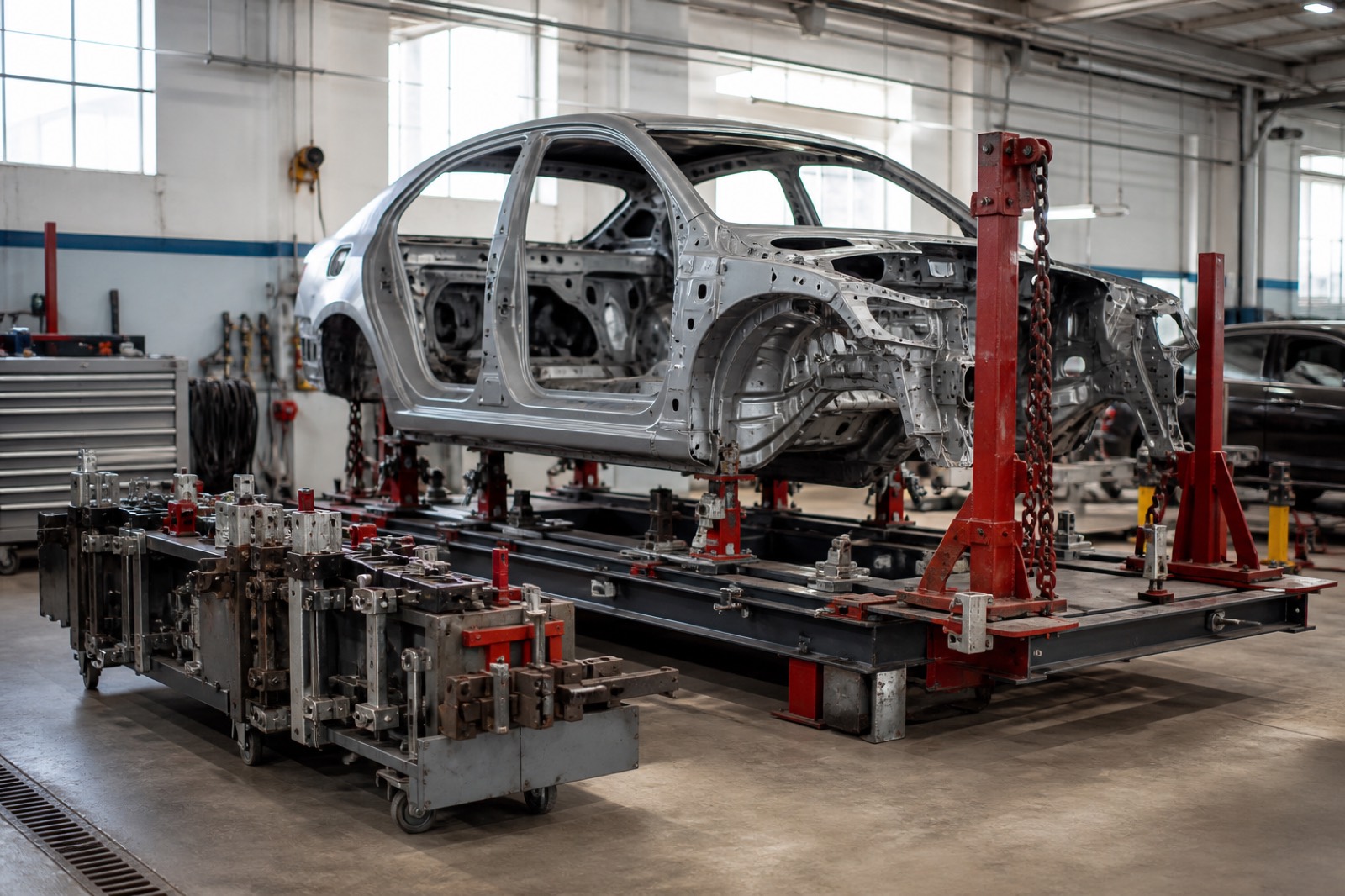
Two shops with similar revenue can sell at very different multiples, and the gap comes down to the durability of the demand and the scalability of the business. A bottom-quartile shop is a single location dependent on one carrier, with lapsed certifications, aging equipment, and an owner who personally holds the insurer relationships. It makes money, but the demand is fragile and tied to the owner.
A shop or group that earns a top-of-range multiple looks different in specific ways:
- Diversified insurer relationships. Strong DRP standing across several carriers, with good scorecards and no single carrier large enough to threaten the business if it leaves.
- Current OEM certifications. Manufacturer programs that let the shop repair newer and higher-value vehicles and protect its pricing.
- Disciplined cycle time. Fast, consistent repair throughput that keeps carrier scorecards strong and drives volume.
- Multiple locations with density. Several shops clustered in a region give a consolidator real density and integration benefit, which lifts the multiple.
- Modern equipment and a stable team. Current frame, paint, and calibration equipment, plus skilled technicians who stay through the transition.
- A manager structure and clean financials. The shops run on systems and managers rather than the owner, with normalized statements and defensible add-backs that survive diligence.
Most of these are within an owner’s control in the 12 to 24 months before a sale. Broadening the insurer mix so no single carrier dominates, keeping certifications and equipment current, and building a manager structure that holds the carrier relationships are the moves that most reliably push a collision business toward the top of its range.
How to Sell Your Body Shop or Collision Repair Shop, Step by Step
To sell a body shop, gather three years of financials and your DRP scorecards, document OEM certifications and equipment, decide whether to sell or lease the real estate, then put several buyer types in competition: national consolidators, regional multi-shop operators and individual buyers. Negotiate price, structure and team terms in the LOI before diligence starts.
- Get the numbers buyer-ready. Pull three years of tax returns and profit and loss statements, monthly revenue by insurer, and a clean list of add-backs. Buyers pay on normalized earnings, so every personal expense run through the shop needs a paper trail.
- Build your insurer and certification file. Collect DRP agreements and scorecards for each carrier, cycle time and customer satisfaction trends, OEM certification letters with renewal dates, and an equipment list with the age and condition of frame machines, paint booths and calibration tools.
- Decide on the real estate. If you own the building, choose whether to sell it with the business or keep it and sign a lease with the buyer. A long lease at a fair rent supports the business price and leaves you with rental income after the sale.
- Do not stop at the first offer. Gerber Collision & Glass, Crash Champions and other consolidators run acquisition programs with simple intake forms, and an unsolicited offer can feel like the easy path. One buyer sets the price on its own terms. Two or three interested buyers, including a regional operator for whom your location fills a gap, is what moves the multiple.
- Negotiate the LOI, not just the price. Cash at closing, any earnout or seller note, whether you roll equity, how long you stay, and what happens to your staff all belong in the letter of intent.
- Manage diligence and the handoff. Expect the buyer to review insurer volumes, technician payroll, equipment and leases. Plan how and when you tell your team and your carrier reps, since a smooth DRP handoff protects the earnings the buyer is paying for.
Selling a Body Shop and Keeping Your Team
Many owners hesitate to sell because of the people who built the shop with them. In collision, that concern lines up with the buyer’s interest. Skilled body and paint technicians are hard to replace, and the insurer relationships depend on the team that hits the cycle time and quality targets. Most buyers want your technicians, estimators and manager to stay.
What differs is what the team’s working life looks like after closing:
- National consolidator. The shop usually takes the buyer’s brand, systems, pay plans and benefits. Staff often gain benefits and training, but the name and the culture change.
- Regional or partnership-model group. Some regional groups, such as Quality Collision Group, pitch a model built around keeping the local brand, with the group adding back-office support such as accounting, payroll and marketing. Ask for that commitment, and how long it lasts, in writing.
- Individual buyer or key employee. This means the least change for the team, but the buyer pool is smaller and the financing usually leans on an SBA loan and a seller note, which keeps you tied to the business for years.
To protect your team in any deal, put it in the LOI: offers of employment to named staff at current pay, a buyer-funded stay bonus pool for key technicians and estimators, and a defined transition period for you. Tell your team when the deal is signed or close to it, not during early talks, so a rumor does not cost you technicians or a DRP before closing.
How CT Acquisitions Works
CT Acquisitions connects owner-operated collision repair shops directly with qualified buyers. No public listing, no upfront fees, no tire-kickers. Here is the process. Confidential Consultation . We learn about your shop or group, your DRP insurer relationships, your certifications and equipment, your real estate, your team, your goals, and your timeline. Nothing is shared externally without your explicit approval. Valuation and Positioning . We help you understand where your shop.
CT Acquisitions connects owner-operated collision repair shops directly with qualified buyers. No public listing, no upfront fees, no tire-kickers. Here is the process.
- Confidential Consultation. We learn about your shop or group, your DRP insurer relationships, your certifications and equipment, your real estate, your team, your goals, and your timeline. Nothing is shared externally without your explicit approval.
- Valuation and Positioning. We help you understand where your shop sits in the current market and how to position it, including how to frame your insurer mix, cycle time, certifications, and location density for the strongest outcome.
- Targeted Introductions. We introduce you directly to national collision consolidators, PE-backed platforms, regional multi-shop operators, and individual buyers from our network whose footprint, insurer relationships, and size preference match your shop.
- Deal Support Through Closing. We stay involved through LOI review, due diligence, and closing, including the DRP, certification, and real estate questions specific to collision deals.
CT Acquisitions operates on a success-fee-only basis. No fee to you on buy-side introductions; sell-side mandates are paid on success at closing.
Most owners we work with have built their shop or group over many years and have never sold one before. The insurer-relationship math, the certification and equipment questions, the multi-shop roll-up logic, and the real estate decision make these deals more involved than they look. CT Acquisitions handles the heavy lifting. We prepare a confidential summary that highlights your strengths without revealing your identity, and buyers only learn who you are after signing an NDA and proving they are a serious fit.
Why Founders Choose CT Acquisitions
- No upfront fees. Success-fee-only. Zero retainers, zero listing fees, zero monthly charges. If a deal does not close, you owe nothing.
- Complete confidentiality. Your shop is never publicly listed. Employees, customers, and competitors stay unaware until you decide otherwise.
- The right buyers. Our network reaches the national consolidators, PE-backed platforms, and serious regional operators who understand DRP economics and roll-up math rather than generalists who need it explained.
- Industry-specific expertise. We understand collision valuation, the role of insurer relationships, OEM certifications, cycle time, multi-shop density, and the real estate decision.
- Founder-first approach. We work on your timeline. You control every step, with no pressure to accept an offer that does not meet your goals.
“Most body shop owners price their business on annual sales. The buyers who pay the most are looking at the insurer relationships, the certifications, and the cycle time behind those sales. The right introduction puts those buyers in competition for all three.”
, Christoph, Managing Partner, CT Acquisitions
Frequently Asked Questions
What multiple can I expect for my auto body shop?
A single owner-operated collision shop under roughly $1M in earnings usually sells on a seller’s discretionary earnings basis around 3x to 4.5x SDE. Once you have multiple locations and professional management above about $1M of EBITDA, the business converts to an EBITDA multiple, commonly 5x to 7x for a strong single shop or small multi-shop operator and 7x or higher for a larger platform that a national consolidator can fold into its network. Collision trades higher than general auto repair because of its recurring insurance-funded demand and the value of direct repair program relationships. The biggest single lever on the multiple is the quality and breadth of your DRP insurer relationships, followed by OEM certifications, cycle time, and how many locations you bring.
Why do DRP insurer relationships drive so much of the value?
A direct repair program is a formal relationship between an insurance carrier and a collision shop, where the carrier steers a steady flow of claims to the shop in exchange for agreed pricing, cycle time, and quality standards. Those relationships are the demand engine of a body shop, because they convert one-time accidents into a predictable pipeline of insurer-funded work. A shop with strong, multi-carrier DRP standing has earnings that a buyer can underwrite with confidence. The catch is that the relationship belongs to the shop and its performance scores, not the owner personally, and a buyer wants to confirm the volume will keep flowing after the sale and that no single carrier is so large that losing it would gut the business.
How long does it take to sell a collision repair shop?
Plan on 4 to 9 months from first conversation to closing for a single shop or small group, and longer for a larger multi-location platform with more sites to diligence. The timeline depends on how clean your financials are, whether the real estate is owned or leased, the state of your DRP and OEM-certification records, and how many locations are involved. Shops with documented financials, organized insurer-program data, current certifications, and clear lease terms or property valuations go to market and close faster.
Do my OEM certifications and equipment add to the price?
Yes. Manufacturer certifications such as the aluminum-body and high-strength-steel programs from major automakers let a shop repair newer and higher-value vehicles that uncertified shops cannot touch, which protects pricing and steers work to the shop. Current advanced driver-assistance system calibration capability, frame and measuring equipment, paint booths, and welders in good condition all support the value, because the buyer does not have to reinvest after closing. Older equipment and lapsed certifications get priced out of the deal, since the buyer will carry the cost of bringing the shop up to standard.
What hurts a collision shop’s value the most?
Heavy dependence on a single insurer is the biggest risk, because the earnings can collapse if that carrier reroutes its claims. After that, the common problems are owner dependency where the shop runs on the owner personally, weak or declining DRP performance scores, poor cycle time that carriers penalize, lapsed OEM certifications and aging equipment that the buyer must replace, a single location with no scalability, technician shortages in a tight labor market, and messy financials that cannot support the add-backs claimed. A shop in a poor location or with a short, uncertain lease also gets discounted.
Who actually buys auto body shops in 2026?
Collision repair is one of the most active roll-up sectors in the country, with billions of dollars of private equity capital deployed since late 2023. The named consolidators include Caliber Collision, Crash Champions, Gerber Collision & Glass under Boyd Group, and Classic Collision, which together are the four largest operators and acquire shops to add density to their networks. Boyd Group’s collision business folded in Joe Hudson’s Collision Center in a deal that closed in early 2026, and Classic Collision is backed by a major private equity firm. Below the national names are regional multi-shop operators and individual buyers. CT Acquisitions introduces you to the buyers whose footprint, insurer relationships, and size preference fit your shop or group.
Ready to Find Out What Your Auto Body Shop Is Worth?
Start with a confidential conversation. No commitment, no upfront cost, and no pressure. CT Acquisitions introduces you directly to qualified collision repair buyers. Book a Free Consultation.
Start with a confidential conversation. No commitment, no upfront cost, and no pressure. CT Acquisitions introduces you directly to qualified collision repair buyers.
Ready to Explore Your Options?
A 30-minute confidential conversation is all it takes. Book a Free Consultation Try Our Valuation Tool.
A 30-minute confidential conversation is all it takes.