What Is the Sell-Side M&A Process in 2026? A Step-by-Step Guide to Sell-Side M&A Advisory From Preparation to Close
The sell-side M&A process in 2026 is the full path of selling a company, from preparation through close, and sell-side M&A advisory is the job of running it well, which takes 12-18 months. The stages are preparation and diligence readiness, market study and buyer identification, marketing materials (teaser, CIM), buyer outreach and NDA collection, first-round bids, management presentations, LOI negotiation, exclusive due diligence, definitive agreements, and closing. Skipping stages typically costs 15-30% of achievable value.
Christoph Totter · Managing Partner, CT Acquisitions
20+ home services M&A transactions across HVAC, plumbing, pest control, roofing · Updated April 27, 2026
“The sell-side M&A process is not just ‘finding a buyer.’ It’s a structured, multi-stage campaign, and running it well, with real competition, is what separates a maximized sale from a missed opportunity.”
TL;DR, the 90-second brief
- The sell-side M&A process is the complete, structured path of selling a company, from preparation through to closing.
- It runs through distinct stages: preparation, marketing, indications of interest, management presentations, letters of intent, due diligence, and closing.
- ‘Sell-side’ means the process is run from the seller’s side, it’s the seller’s structured campaign to sell the business well.
- A well-run sell-side process creates competition among buyers, which is what drives the best price and terms.
- Understanding the sell-side M&A process is essential for any owner who wants to sell their company successfully.
Key Takeaways
- The sell-side M&A process is the complete, structured path of selling a company.
- It runs through distinct stages: preparation, marketing, IOIs, management presentations, LOIs, due diligence, closing.
- ‘Sell-side’ means the process is run from the seller’s perspective, the seller’s structured campaign to sell well.
- The core purpose of running a process is to create competition among buyers.
- Competition among buyers is what drives the best price and terms for the seller.
- Each stage builds toward the next; skipping or rushing stages undermines the outcome.
- Understanding the process is essential for any owner who wants to sell their company successfully.
Sell-side M&A advisory: the short answer. Sell-side M&A advisory means an advisor runs the sale of your company from the seller’s side: preparation and diligence readiness, buyer identification, the teaser and CIM, NDAs and first-round bids, management presentations, LOI negotiation, due diligence and closing. The point of running the process well is real competition among buyers, which is what drives the best price and terms.
How it works with us. A confidential first conversation, a buyer’s-eye read of value, then introductions to qualified buyers from our network of 500+ private equity firms, family offices, search funders and strategic acquirers. Nothing is listed publicly, and you decide whether to go ahead. No fee to you on buy-side introductions; sell-side mandates are paid on success at closing.
The Sell-Side M&A Process Defined
For 2026 PE negotiation playbook (avoid pitfalls) covering understanding PE investment strategy, maintaining leverage, avoiding common pitfalls (lowball offers, revealing desperation), see our reference.
No fee to you on buy-side introductions; sell-side mandates are paid on success at closing.
The sell-side M&A process is the complete, structured sequence of activities involved in selling a company, from the initial preparation, through marketing the business and engaging buyers, to negotiating and finally closing the transaction.
The term ‘sell-side’ specifies whose perspective the process is run from. The sell-side is the seller’s side of an M&A transaction. The sell-side M&A process, then, is the process as run by and for the seller, the seller’s deliberate, organized campaign to sell the business as successfully as possible. (The mirror image is the ‘buy-side’ process, the same transaction seen and run from a buyer’s perspective.)
The crucial point is that the sell-side M&A process is exactly that, a process. Selling a company well is not a matter of simply finding a buyer and agreeing a price. It’s a structured, multi-stage path, and each stage has a purpose. Running that full process, properly, is what selling a company successfully actually means.
The Stages of the Sell-Side M&A Process
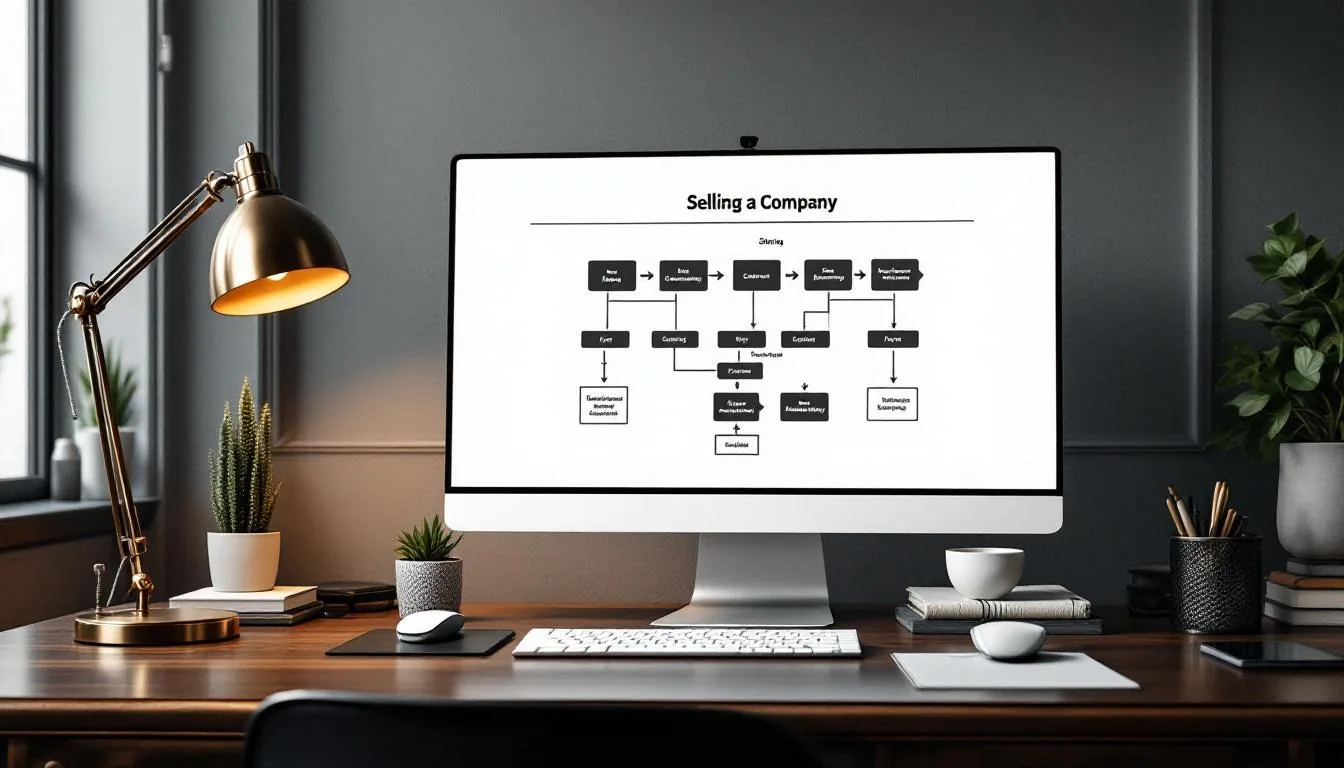
The sell-side M&A process runs through a series of distinct, sequential stages. Each one builds toward the next.
1. Preparation
Before the business goes to market, it’s prepared for sale. This means getting the financials clean and reliable, addressing issues that could weaken the sale, assembling the information buyers will need, and positioning the business well. Strong preparation is the foundation of a strong process.
2. Marketing
The business is marketed to potential buyers. This typically involves an anonymized teaser to gauge interest, confidentiality agreements with interested buyers, and a confidential information memorandum giving serious buyers the detail they need. The goal is to reach a strong pool of potential buyers.
3. Indications of Interest (IOIs)
Interested buyers submit indications of interest, non-binding expressions of interest that include a preliminary valuation range and key terms. The IOIs reveal which buyers are serious and how the market is pricing the business.
4. Management Presentations
The strongest buyers from the IOI stage are advanced to management presentations, meetings where the seller’s leadership presents the business directly and answers buyer questions. This is where buyer conviction is built.
5. Letters of Intent (LOIs)
After management presentations, buyers submit letters of intent, more specific, mostly-non-binding offers with a defined price and terms, and typically a binding exclusivity commitment. The seller selects a lead buyer.
6. Due Diligence
The selected buyer conducts due diligence, a thorough investigation of the business, while the definitive purchase agreement is negotiated in parallel. This stage verifies the deal and finalizes the terms.
7. Closing
The definitive agreement is signed, final conditions are met, and the deal closes, funds transfer, ownership changes hands, and the sale is complete.
Want a specific read on your business?
CT Acquisitions is an M&A advisory firm working sell side, buy side and exit planning, with 500+ active lower-middle-market buyer relationships. We help founders understand and navigate the sell-side process, and run the competition that maximizes their result. Book a confidential call.
Book a 30-Min CallWhy Running the Sell-Side Process Well Matters
It’s worth being clear about why the sell-side M&A process matters so much, why running it as a structured, deliberate process, rather than just finding a buyer, makes a real difference.
The central reason is competition. The fundamental purpose of running a proper sell-side process is to create competition among buyers. A structured process, marketing the business to a strong pool of buyers, gathering multiple IOIs, advancing several buyers, collecting competing LOIs, puts buyers in competition with each other.
And competition among buyers is what drives the best price and terms for the seller. When buyers know they’re competing, they put forward their strongest offers. When a seller instead negotiates with a single buyer, no process, no competition, that buyer has no pressure to offer their best. The difference in outcome between a competitive process and a single-buyer negotiation can be very large.
This is the core of why the sell-side M&A process exists and why running it well is so important. The process is the mechanism that creates competition, and competition is what maximizes the seller’s result. An owner who treats selling as a process, and runs it properly, sells far better than one who treats it as simply finding a buyer.
Why Each Stage of the Process Matters
The sell-side M&A process is a sequence, and each stage has a purpose that builds toward the outcome. Skipping or rushing stages undermines the result.
Preparation matters because a business taken to market unprepared shows poorly, invites problems in diligence, and weakens the seller’s position. Marketing matters because reaching a strong, broad pool of buyers is what makes competition possible, a narrow reach means weak competition. The IOI stage matters because it triangulates the market’s view of value and identifies the serious buyers.
Management presentations matter because they build the buyer conviction that lifts offers. The LOI stage matters because it produces the competing offers and selects the lead buyer. Due diligence matters because it’s where the deal is verified and finalized, and where a well-prepared seller protects the price. Closing matters because it’s where the deal actually completes.
Each stage feeds the next: good preparation enables good marketing, good marketing produces strong IOIs, strong IOIs lead to productive management presentations, and so on. The process works as a whole. Running every stage properly is what makes the sell-side M&A process deliver its result.
Sell-Side vs Buy-Side
The term ‘sell-side’ is defined in contrast to ‘buy-side.’ Understanding the distinction clarifies what the sell-side M&A process is.
| Feature | Sell-Side | Buy-Side |
|---|---|---|
| Whose perspective | The seller’s | The buyer’s |
| The goal | Sell the company at the best price and terms | Acquire a company at a good price and terms |
| The process | Marketing the business, creating buyer competition | Sourcing and evaluating acquisition opportunities |
| Who runs it | The seller and their advisors | The buyer and their advisors |
| The mindset | Maximize the sale outcome | Find and win good acquisitions |
Two Sides of the Same Transaction
Sell-side and buy-side are the two perspectives on any M&A transaction. The sell-side M&A process is the transaction run from the seller’s side, focused on selling well. The buy-side process is the same kind of activity from the buyer’s side, focused on acquiring well. Every deal has both a sell-side and a buy-side.
Navigating the Sell-Side M&A Process: What Owners Should Know
For an owner about to sell their company, a few principles help in navigating the sell-side M&A process well:
- Treat selling as a process, not an event, it’s a structured, multi-stage path, and running the full process is what selling well means
- Invest in preparation, the strength of the whole process depends on the business being well-prepared before it goes to market
- Aim to create genuine competition, the purpose of the process is competition among buyers, and competition is what maximizes your result
- Don’t shortcut to a single buyer, negotiating with one buyer, with no process, surrenders the competition that drives the best outcome
- Respect each stage, every stage builds toward the next; rushing or skipping stages weakens the result
- Prepare for due diligence, it’s where deals can erode, and preparation protects your price
- Use experienced M&A advisors, running a sell-side process well is a specialized undertaking, and good advisors are central to a strong outcome
Conclusion
Frequently Asked Questions
What is the sell-side M&A process?
The sell-side M&A process is the complete, structured sequence of selling a company, from preparation, through marketing the business and engaging buyers, to negotiating and closing the transaction. ‘Sell-side’ means it’s run from the seller’s perspective.
What does ‘sell-side’ mean?
Sell-side refers to the seller’s side of an M&A transaction. The sell-side M&A process is the process run by and for the seller, their deliberate campaign to sell the business well. The mirror image is the ‘buy-side’, the same transaction from a buyer’s perspective.
What are the stages of the sell-side M&A process?
The main stages are: preparation, marketing the business, indications of interest (IOIs), management presentations, letters of intent (LOIs), due diligence, and closing. Each stage builds toward the next.
Why does running a sell-side process matter?
Because the purpose of the process is to create competition among buyers, and competition is what drives the best price and terms. A structured process puts buyers in competition; a single-buyer negotiation with no process surrenders that, often costing the seller significantly.
What’s the difference between sell-side and buy-side?
Sell-side is the seller’s perspective on an M&A transaction, the goal is to sell the company at the best price and terms. Buy-side is the buyer’s perspective, the goal is to acquire well. Every deal has both a sell-side and a buy-side.
What happens in the preparation stage?
Before the business goes to market, it’s prepared for sale, getting the financials clean and reliable, addressing issues that could weaken the sale, assembling the information buyers need, and positioning the business well. Strong preparation is the foundation of a strong process.
What is the marketing stage of the sell-side process?
The marketing stage is where the business is marketed to potential buyers, typically through an anonymized teaser, confidentiality agreements with interested buyers, and a confidential information memorandum for serious buyers. The goal is to reach a strong pool of buyers.
Why is competition important in the sell-side process?
Competition among buyers is what drives the best price and terms. When buyers know they’re competing, they put forward their strongest offers. The structured sell-side process exists precisely to create that competition and maximize the seller’s result.
Can I sell my business without running a full process?
You can negotiate with a single buyer, but it usually costs you. Without a process and competition, the single buyer has no pressure to offer their best. A structured sell-side process with competing buyers typically delivers a meaningfully better price and terms.
How long does the sell-side M&A process take?
It varies by deal, but the full process, through all its stages from preparation to closing, typically takes several months to a year or more. Each stage takes time, and rushing the process tends to undermine the outcome.
What is the role of due diligence in the sell-side process?
Due diligence is the stage where the selected buyer thoroughly investigates the business, while the definitive agreement is negotiated in parallel. It verifies the deal and finalizes the terms. It’s also where deals can erode, so a well-prepared seller protects the price here.
Do I need advisors to run a sell-side M&A process?
Running a sell-side process well is a specialized undertaking. Experienced M&A advisors are central to a strong outcome, they help prepare the business, market it, create competition among buyers, manage the stages, and negotiate the deal.
Related Guide: Business Sale Process Steps,
Related Guide: What Is an Indication of Interest?,
Related Guide: What Is a Management Presentation?,
Related Guide: What Is Due Diligence?,
Want a Specific Read on Your Business?
30 minutes, confidential, no contract, no cost. You leave with a read on your local buyer market and a likely valuation range.
30 N Gould St, Ste N, Sheridan, WY 82801, USA · (307) 522-0262 · Contact