Selling a Demolition and Excavation Business in 2026: Multiples, Named Buyers, and the Operator Playbook
Quick Answer
A US demolition and excavation business in 2026 typically sells for roughly 4x to 9x EBITDA, varying heavily by mix (demolition vs. site work vs. environmental remediation), backlog quality, fleet ownership, union vs. open-shop status, and EHS track record. Demolition/excavation is one of the steadier specialty-trade consolidations because of infrastructure spending tailwinds (IIJA), data center build-out, manufacturing reshoring (CHIPS Act, IRA), and continued PE interest. By profile: a small open-shop excavation or residential demo operator ($300k-1M SDE) goes 3x-5x SDE; a profitable mid-size site-work or commercial demo contractor ($1-4M EBITDA) goes 4x-6x EBITDA; a regional commercial demolition or large site-work platform ($4-12M EBITDA) goes 5x-7x; a premium regional platform with environmental remediation/asbestos abatement, named project history, and modern fleet ($12M+ EBITDA) reaches 6x-9x+; specialty implosion / high-reach / industrial-decommissioning operators with multi-state reach can hit 7x-9x. Active buyers include NorthStar Group Services (Sun Capital Partners, one of the largest US demolition + environmental remediation platforms), Veit & Company (private, large Midwest demolition + earthwork contractor), Brandenburg Industrial Service Company (private, leading industrial demolition and decommissioning), MasTec (NYSE: MTZ, infrastructure construction with demolition + site-work capability via the Clean Energy & Infrastructure segment), AECOM Tishman (NYSE: ACM), Granite Construction (NYSE: GVA, large infrastructure with sitework), Aldridge Electric, Sterling Infrastructure (NASDAQ: STRL, site development), plus PE sponsors (Sun Capital Partners, Court Square Capital Partners, Highview Capital, Sterling Group, Wynnchurch Capital, Arsenal Capital Partners, J.F. Lehman & Company on infrastructure-services rollups, Lindsay Goldberg, Soundcore Capital Partners). The biggest multiple drivers are project mix (industrial/environmental demolition is a margin premium vs. commercial demo vs. residential), backlog visibility (12+ months of named-project backlog), fleet ownership (vs. rental-dependent), EHS track record (OSHA EMR, recordable incident rate), environmental certifications (asbestos abatement, lead, hazmat), recycling diversion rate and revenue, and union vs. open-shop classification (matters by region). Buyer-paid M&A advisory (CT Strategic Partners) costs the seller nothing.
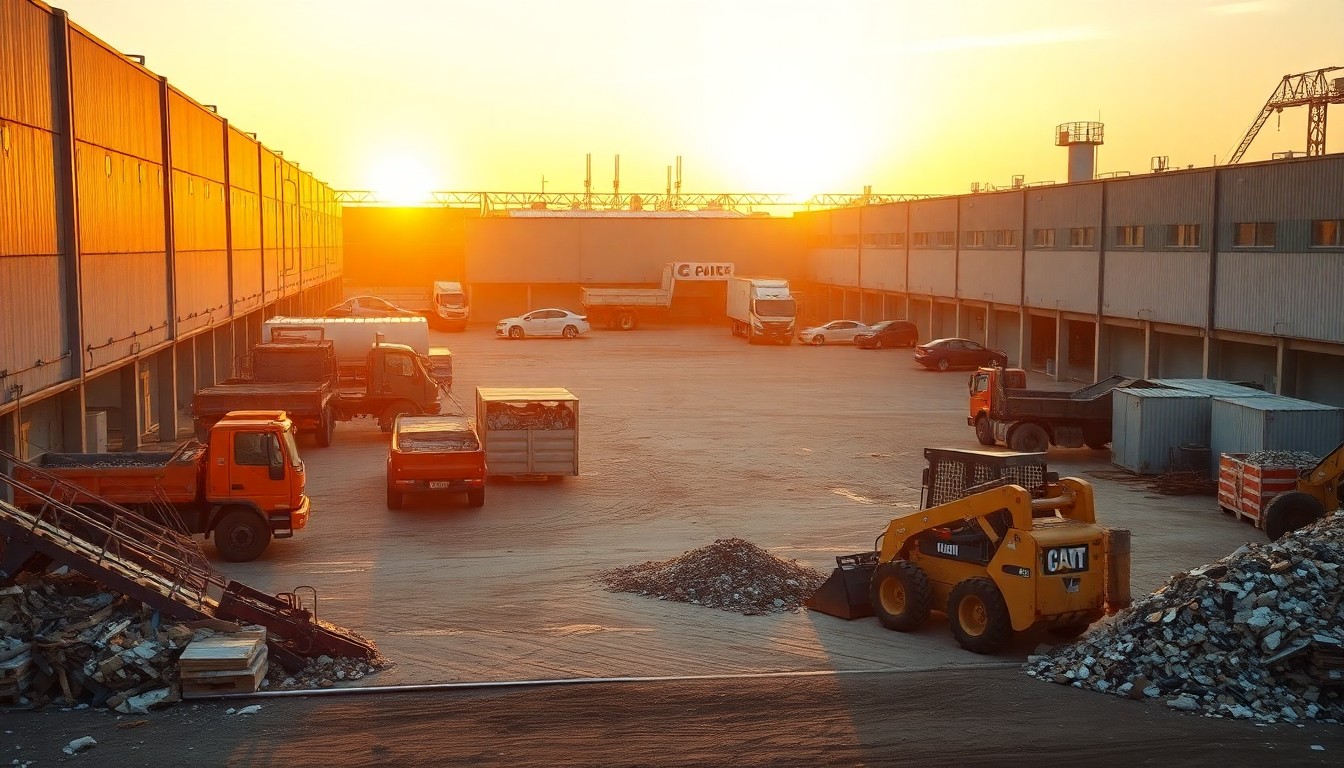
If you own a US demolition or excavation business in 2026, the M&A market is steady-to-active. NorthStar Group Services (Sun Capital Partners) is one of the largest US demolition + environmental remediation platforms. Veit & Company (private) and Brandenburg Industrial Service Company (private) anchor the industrial demolition tier. MasTec (NYSE: MTZ) and Sterling Infrastructure (NASDAQ: STRL) absorb site-work capacity at the public-company level. IIJA infrastructure spending, data center build-out, and manufacturing reshoring (CHIPS Act, IRA) are driving sustained demand.
What the asset is worth depends on three things: (1) project mix (industrial/environmental demolition is a margin premium vs. commercial demo vs. residential), (2) backlog quality and visibility (12+ months of named-project backlog), and (3) fleet ownership, EHS track record, and environmental certifications. This guide covers real multiples by profile, the named buyers transacting, and the operator-level diligence buyers will run.
What this guide covers
- Demolition/excavation multiples 2026: 3x-5x SDE for small open-shop or residential demo, 4x-6x EBITDA for mid-size site-work or commercial demo, 5x-7x for regional commercial demolition or large site-work platforms, 6x-9x+ for premium regional platforms with environmental remediation and named project history, 7x-9x for specialty implosion / high-reach / industrial-decommissioning operators with multi-state reach.
- Active buyers: NorthStar Group Services (Sun Capital Partners), Veit & Company (private, Midwest), Brandenburg Industrial Service Company (private, industrial), MasTec (NYSE: MTZ, ~$11B+ revenue via Clean Energy & Infrastructure segment), AECOM Tishman (NYSE: ACM), Granite Construction (NYSE: GVA), Sterling Infrastructure (NASDAQ: STRL), Aldridge Electric.
- PE sponsor activity: Sun Capital Partners (NorthStar), Court Square Capital Partners, Highview Capital, Sterling Group, Wynnchurch Capital, Arsenal Capital Partners, J.F. Lehman & Company (infrastructure-services), Lindsay Goldberg, Soundcore Capital Partners.
- Multiple drivers: project mix (industrial/environmental premium), backlog visibility (12+ months named-project backlog), fleet ownership (vs. rental-dependent), EHS track record (OSHA EMR, recordable incident rate), environmental certifications (asbestos / lead / hazmat), recycling diversion rate and revenue, union vs. open-shop classification by region.
- Things that compress: lumpy single-customer revenue, no environmental certifications, weak EHS / elevated EMR, rental-dependent fleet, residential-only mix, owner-operator dependence, no estimating/bidding bench, no backlog visibility.
- Sellers pay nothing on CT Strategic Partners’ buyer-paid advisory.
Named M&A transactions (2021-2025)
| Target | Buyer | Year | What it tells us |
|---|---|---|---|
| NorthStar Group Services continued platform expansion | Sun Capital Partners | 2022-2025 | One of the largest US demolition + environmental remediation platforms continues regional tuck-ins. |
| MasTec Clean Energy & Infrastructure segment growth | MasTec (NYSE: MTZ) | 2022-2025 | Site-work + demolition capability scaled via Clean Energy & Infrastructure segment for data center and clean-energy build-out. |
| Sterling Infrastructure E-Infrastructure expansion | Sterling Infrastructure (NASDAQ: STRL) | 2022-2025 | Site development platform expanded into data center site-work and large-mission-critical projects. |
| Brandenburg / Veit continued private growth | Private | 2022-2025 | Industrial-decommissioning and Midwest earthwork platforms continue organic + tuck-in growth. |
| Multiple regional demolition + site-work tuck-ins | Various PE-backed platforms | 2022-2025 | PE sponsors (Sun Capital, Court Square, Highview, Sterling Group, Wynnchurch, Arsenal, J.F. Lehman, Lindsay Goldberg) continue selective regional consolidation. |
The named buyer landscape
Dedicated demolition + environmental platforms (the most aggressive consolidators)
- NorthStar Group Services (Sun Capital Partners), one of the largest US demolition + environmental remediation platforms.
- Brandenburg Industrial Service Company (private), leading industrial demolition + decommissioning.
- Veit & Company (private), large Midwest demolition + earthwork contractor.
- LVI Services, Cherry Companies, Penhall Company, Total Wrecking & Environmental, additional regional dedicated demolition contractors.
Public infrastructure / site-work consolidators (NYSE/NASDAQ)
- MasTec (NYSE: MTZ, ~$11B+ revenue), infrastructure construction with demolition + site-work capability via the Clean Energy & Infrastructure segment.
- AECOM Tishman (NYSE: ACM, ~$14B+ revenue), construction management with selective demolition exposure.
- Granite Construction (NYSE: GVA, ~$3.5B+ revenue), large infrastructure with sitework.
- Sterling Infrastructure (NASDAQ: STRL, ~$2B+ revenue), site development + e-infrastructure.
- Aldridge Electric, Kiewit Corporation (private, ~$15B+ revenue, very selective), Skanska USA (NYSE: SKBSY).
PE sponsors active in this space
- Sun Capital Partners (NorthStar Group Services), Court Square Capital Partners, Highview Capital, Sterling Group, Wynnchurch Capital, Arsenal Capital Partners, J.F. Lehman & Company (infrastructure-services rollups), Lindsay Goldberg, Soundcore Capital Partners, plus multiple infrastructure-services PE funds.
What each buyer will pay for vs. what they reject
- Will pay premium for: industrial / environmental demolition project mix (asbestos abatement, lead, hazmat, decommissioning), 12+ months of named-project backlog with credible primes (Turner, Skanska, Clark, Mortenson, Hensel Phelps, DPR, Suffolk, Whiting-Turner), fleet ownership (excavators, high-reach, wheel loaders, articulated dump trucks, skid steers), strong EHS track record (low OSHA EMR, low recordable incident rate), environmental certifications (asbestos/lead/hazmat), recycling diversion rate + revenue, named industrial customer rosters (Big Tech hyperscaler data center work, manufacturing reshoring projects, refinery decommissioning, federal/DOE site work), multi-state reach.
- Will compress or reject: lumpy single-customer revenue, no environmental certifications, weak EHS history / elevated EMR, rental-dependent fleet, residential-only demo mix, owner-operator dependence, no estimating / bidding bench, no backlog visibility, weak union compliance if operating in union-heavy markets.
The operator-level KPI playbook buyers will diligence
Revenue mix
- Commercial demolition revenue.
- Industrial demolition / decommissioning revenue.
- Environmental remediation revenue (asbestos / lead / hazmat).
- Excavation / site-work revenue.
- Residential demolition revenue.
- Recycling / scrap revenue.
Backlog and pipeline
- Total contract backlog ($).
- Backlog by named project and prime contractor.
- Months of backlog visibility.
- Win rate on bids submitted.
- Average project size.
Fleet and equipment
- Owned-vs-rented fleet ratio.
- Excavator count and tonnage range.
- High-reach demolition capability.
- Wheel loader / dump truck / articulated truck count.
- Fleet age and book value.
EHS and certifications
- OSHA EMR.
- Recordable incident rate.
- Asbestos abatement licensure.
- Lead abatement licensure.
- Hazmat / OSHA HAZWOPER certifications.
- Recycling diversion rate (%).
Workforce
- Foreman / superintendent count and tenure.
- Operator count and CDL/equipment certifications.
- Union vs. open-shop classification.
- Estimating / bidding bench.
Dangers and traps
1. Lumpy single-customer revenue
Diversified backlog across 5+ named primes wins; single-customer revenue compresses.
2. No environmental certifications
Asbestos / lead / hazmat licensure unlocks the highest-multiple project mix.
3. Weak EHS / elevated OSHA EMR
Above-industry EMR is a hard compressor and a prime-contractor disqualifier.
4. Rental-dependent fleet
Owned fleet is a balance-sheet and margin advantage.
5. Residential-only demo mix
Commercial / industrial / environmental are the multiple-builders.
6. Owner-operator dependence
Build the superintendent / estimator bench.
7. No backlog visibility
12+ months of named-project backlog is the credibility floor.
8. Weak union compliance in union markets
Union mis-compliance kills public work in many regions.
Our POV in 2026
Demolition / excavation M&A is anchored by NorthStar Group Services (Sun Capital Partners), Brandenburg Industrial Service Company, Veit & Company, and public consolidators MasTec (NYSE: MTZ), AECOM Tishman (NYSE: ACM), Granite Construction (NYSE: GVA), and Sterling Infrastructure (NASDAQ: STRL). IIJA infrastructure spending, data center build-out, and manufacturing reshoring (CHIPS Act, IRA) are sustaining demand. Industrial / environmental demolition is the margin premium.
The right time to prepare is 12-18 months before going to market, lock in 12+ months of named-project backlog, secure environmental certifications, modernize fleet ownership, drive OSHA EMR below 1.0, document recycling diversion rate and revenue.
Preparing your business for sale: 12-18 months out
- Get multi-year audited or reviewed financials with WIP schedule.
- Lock in 12+ months of named-project backlog with credible primes.
- Secure or upgrade environmental certifications (asbestos / lead / hazmat).
- Modernize fleet ownership (reduce rental dependency).
- Drive OSHA EMR below 1.0 and document recordable incident rate.
- Document recycling diversion rate (%) and recycling revenue.
- Build the superintendent / estimator / bidding bench.
- Diversify named customer rosters across primes.
- Resolve union vs. open-shop classification clarity by region.
- Run a competitive process. NorthStar Group Services (Sun Capital Partners), Brandenburg Industrial Service Company, Veit & Company, MasTec (NYSE: MTZ), AECOM Tishman (NYSE: ACM), Granite Construction (NYSE: GVA), Sterling Infrastructure (NASDAQ: STRL), Aldridge Electric, Kiewit Corporation, plus PE sponsors directly (Sun Capital Partners, Court Square Capital Partners, Highview Capital, Sterling Group, Wynnchurch Capital, Arsenal Capital Partners, J.F. Lehman & Company, Lindsay Goldberg, Soundcore Capital Partners).

About the Author
Christoph Totter is the founder of CT Acquisitions, a buy-side partner headquartered in Sheridan, Wyoming. We work directly with 200+ buyers, search funders, family offices, lower middle-market PE, and strategic consolidators, including direct mandates with the largest home services consolidators that other intermediaries can’t access. The buyers pay us when a deal closes, not the seller. No retainer, no exclusivity, no contract until close. Connect on LinkedIn · Get in touch
Free, No Email Required
Get a personalized valuation in 90 seconds
Answer six quick questions and we’ll give you a sector-adjusted EBITDA multiple range plus the specific factors driving your number up or down.
Open the Valuation Tool →The five pillars of how CT Acquisitions works
Buyer pays our fee. Founders never write a check.
No engagement letter. No upfront cost. No exclusivity contract.
Search funders, family offices, lower-middle-market PE, strategics.
Confidential introductions to the right buyers. No bidding war.
Not 9-12 months. Not 18 months. Months, not years.
No Pitch · No Pressure
Ready to start a confidential conversation?
Tell us about your business. We’ll tell you what it’s likely worth, whether we have qualified buyers in our network, and what the next 60-120 days could look like. No engagement letter. No retainer. Walk at any time.
Start a Confidential Conversation →Frequently asked questions
What is the typical multiple for a demolition or excavation business in 2026?
Small open-shop excavation or residential demolition operators ($300k-1M SDE) typically sell at 3x-5x SDE. Mid-size site-work or commercial demolition contractors ($1-4M EBITDA) go 4x-6x EBITDA. Regional commercial demolition or large site-work platforms ($4-12M EBITDA) go 5x-7x EBITDA. Premium regional platforms with environmental remediation (asbestos / lead / hazmat) and named project history ($12M+ EBITDA) reach 6x-9x+. Specialty implosion / high-reach / industrial-decommissioning operators with multi-state reach can hit 7x-9x.
Who are the active buyers of demolition / excavation businesses right now?
Dedicated demolition + environmental platforms: NorthStar Group Services (Sun Capital Partners), Brandenburg Industrial Service Company (private, industrial demolition + decommissioning), Veit & Company (private, Midwest earthwork + demolition), LVI Services, Cherry Companies, Penhall Company, Total Wrecking & Environmental. Public infrastructure / site-work consolidators: MasTec (NYSE: MTZ, ~$11B+ revenue), AECOM Tishman (NYSE: ACM, ~$14B+ revenue), Granite Construction (NYSE: GVA, ~$3.5B+ revenue), Sterling Infrastructure (NASDAQ: STRL, ~$2B+ revenue), Aldridge Electric, Kiewit Corporation, Skanska USA. PE sponsors: Sun Capital Partners, Court Square Capital Partners, Highview Capital, Sterling Group, Wynnchurch Capital, Arsenal Capital Partners, J.F. Lehman & Company, Lindsay Goldberg, Soundcore Capital Partners.
What hurts a demolition / excavation business’s valuation most?
Lumpy single-customer revenue, no environmental certifications (asbestos / lead / hazmat), weak EHS history with above-industry OSHA EMR (above 1.0), rental-dependent fleet, residential-only demolition mix, owner-operator dependence, no estimating / bidding bench, no backlog visibility (under 6 months of named-project backlog), weak union compliance if operating in union-heavy markets, and missing recycling diversion documentation.
Why is environmental remediation (asbestos / lead / hazmat) so important?
Environmental remediation work (asbestos abatement, lead abatement, hazmat, OSHA HAZWOPER) carries the highest margins in the demolition stack and is gated by licensure. Federal site work, refinery decommissioning, manufacturing reshoring projects, and industrial demolition all require environmental capability. Operators with credentialed environmental capability achieve premium multiples vs. straight-demolition-only competitors.
Do I have to pay a broker fee?
No. CT Strategic Partners runs a buyer-paid M&A advisory model. The seller pays nothing. The buyer pays the success fee at closing.
How long does it take to sell a demolition / excavation business?
Once you go to market with a buyer-paid advisor, a typical process runs 5-9 months from initial outreach to closing. Add 12-18 months of preparation work before going to market, especially around backlog, environmental certifications, fleet ownership, and EHS metrics.
Should I pursue environmental certifications before selling?
Yes, if you have 12-18 months of runway. Asbestos / lead / hazmat licensure unlocks the highest-margin project mix and is a clear multiple-builder. If selling within 6 months, focus instead on backlog visibility, EHS track record (OSHA EMR), fleet ownership, and recycling diversion documentation.
When should I start preparing if I plan to sell in 2027 or 2028?
12-18 months before going to market is the right window. Highest-leverage pre-sale work: lock in 12+ months of named-project backlog with credible primes, secure environmental certifications, modernize fleet ownership, drive OSHA EMR below 1.0, document recycling diversion rate and revenue, build the superintendent / estimator bench.
Related research
- How to sell a disaster restoration business
- How to sell an oilfield services business
- How to sell a roofing business
- How to sell an HVAC business
- How to sell a plumbing business
- How to sell an electrical contracting business
- How to sell a pest control business
- How to sell an industrial cleaning business
- Which industries is PE buying most in 2026
- Private equity value creation
- Business broker alternative