
Should I Buy a Dry Cleaning Business? Industry Economics, Multiples, and the Buying a Dry Cleaner Checklist That Matters
Quick Answer
Dry cleaning businesses typically trade at 2x to 3x SDE (2.5x to 3.5x for multi-location operators) and appeal to first-time buyers because they offer stable local cash flow, repeat customers, and low customer concentration with SBA financing available for $50-100k down. However, the industry carries material risks: environmental liability from PERC chemicals, expensive aging equipment that costs $50-100k to replace, volatile fuel and utility costs, and two decades of industry decline that concentrates success in well-located shops with loyal customers. A well-run cleaner in the right location generates reliable owner earnings, but weak diligence on environmental compliance, equipment condition, and customer retention can expose buyers to major surprises. The buying a dry cleaner checklist below covers the six checks to finish before you sign.
Christoph Totter · Managing Partner, CT Acquisitions
20+ home services M&A transactions across HVAC, plumbing, pest control, roofing · Updated June 7, 2026
Should you buy a dry cleaning business? It’s a question many first-time small business buyers ask because dry cleaners hit several attractive criteria: stable cash flow, simple business model, low customer concentration, repeat customers, and relatively affordable purchase prices. SBA 7(a) loans typically cover most of the price, putting acquisition within reach for buyers with $50-100k of cash.
But dry cleaning has industry-specific risks that don’t exist in many other small businesses. Environmental compliance (especially the PERC chemical used in traditional dry cleaning) creates real liability exposure. Equipment is expensive and ages quickly, a single dry cleaning machine can cost $50-100k to replace. Fuel and utility costs (a major operating expense) are volatile. And the industry has been in slow decline for two decades as casual workplace dress codes have reduced suit and dress shirt demand.
The good news: well-located shops with loyal customer bases remain consistently profitable. Dry cleaning isn’t going away, people still need wedding dresses cleaned, professional clothing cared for, and household items (comforters, drapes) handled by specialists. The category is shrinking but the survivors capture more share. A well-run dry cleaner in the right location is a stable cash-flow business that can produce reliable owner earnings for many years.
This guide walks through the industry economics, typical valuations, the four major risk areas, and the diligence that separates a good acquisition from a costly mistake. The right buyer with the right diligence can make a great living owning one or several dry cleaners. The wrong buyer or weak diligence can lead to environmental liability, equipment surprises, and a customer base that drifts away. We’ll cover what to look for, what to walk away from, and how to structure a deal that protects you.

“Dry cleaning is a textbook “boring cash flow” business: stable, simple, low-glamour, and recession-resistant in good locations. The catch: environmental risk, aging equipment, and a slow industry decline that turns marginal locations into losses.”
TL;DR, the 90-second brief
- Dry cleaning is a stable cash-flow business in mature decline. The industry has been shrinking 2-3% per year as casual workplace dress codes reduce demand, but well-located shops with loyal customer bases remain consistently profitable.
- Typical multiples: 2-3x SDE. Purchase prices commonly range from $200k-$500k for single-location shops, $500k-$2.8M for multi-location operators. Real estate ownership (vs leased) significantly affects deal value and structure.
- The four big risks: environmental compliance (PERC chemical), aging equipment ($50-100k replacement cost), fuel and utility cost volatility, and demographic decline in dress-up wear. Each materially affects valuation.
- Best buyer profile: hands-on operator with retail or service business experience. Owner-operators outperform absentee owners. Multi-location operators with operational experience consolidate well.
- Diligence priorities: equipment condition, environmental compliance (especially PERC machine status), lease terms, customer counts and trends, and a careful read of route/wholesale revenue (often inflated).
Key Takeaways
- Dry cleaning industry is in slow decline (2-3% per year) but well-located shops remain profitable.
- Typical multiples are 2-3x SDE; single-location prices commonly $200k-$500k.
- PERC environmental compliance is the largest single legal/financial risk, verify machine status and history.
- Equipment replacement cost ($50-100k per machine) is significant; ask about machine age and recent repairs.
- Owner-operators outperform absentee owners; experience in retail or services helps.
- Best diligence covers: equipment, environmental, lease terms, customer counts, and route/wholesale revenue accuracy.
The dry cleaning industry: economics and trends
For 2026 industrial cleaning sale playbook with 4x-9x EBITDA (general vs specialty), named buyers (ABM, Aramark, Compass), and union / I-9 diligence, see our guide.
For the 2026 how to buy a laundromat with SBA financing and due diligence steps, see our guide.
For 2026 multiples by store count and the real-estate-vs-lease premium, see our laundromat valuation guide.
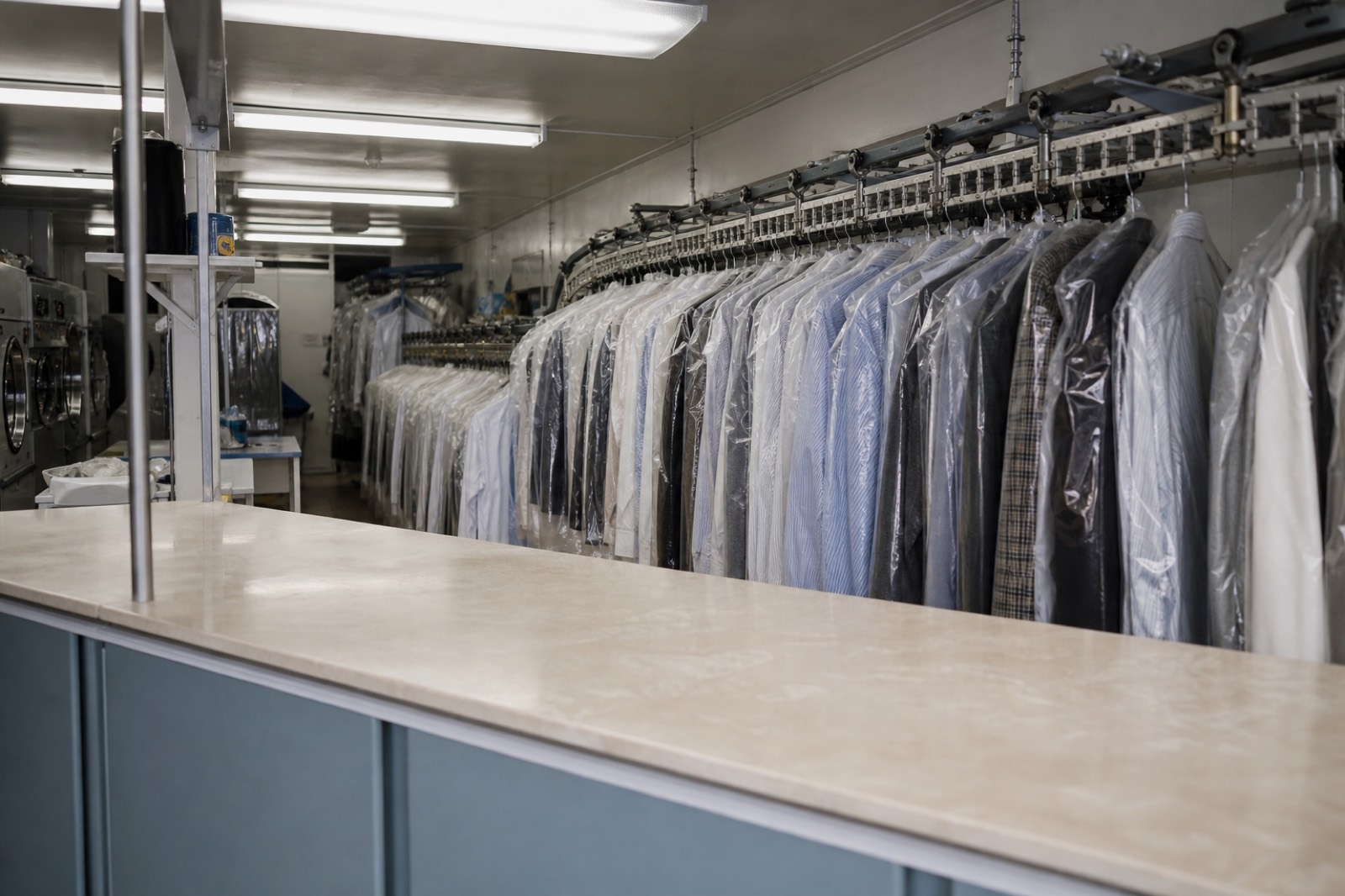
Dry cleaning is a mature, slowly declining industry. The category has been shrinking gradually for two decades, driven primarily by casual workplace dress codes. Fewer suits and dress shirts mean less weekly cleaning volume per household. Industry trade publications consistently report low-single-digit annual revenue declines across the US dry cleaning category. Individual shops can still grow share within a shrinking pie, but the macro headwind is real.
Despite decline, the customer base is stable in good locations. Households that use dry cleaners tend to keep using them. The customer base is older, higher-income, and habitual. Wedding dresses, leather goods, household items (comforters, drapes), and professional clothing all create steady demand even in casual workplaces. A dry cleaner with 1,500-3,000 active customers in a stable suburb can run for decades on word-of-mouth and routine.
Location matters more than almost anything else. Suburban shops in stable, middle-to-upper-income areas thrive. Urban shops near professional districts thrive when the local economy is strong. Shops in declining neighborhoods or transient areas struggle, their customer base erodes faster than the industry as a whole. Before buying, study the immediate neighborhood’s demographics, retail health, and 5-10 year trends. A great shop in a declining location is still a declining shop.
Revenue mix matters: walk-in vs route vs wholesale. Walk-in retail is the highest-margin and most stable revenue. Route service (pickup/delivery) is growing but operationally complex (vehicles, drivers, insurance). Wholesale (cleaning for hotels, uniform companies, other dry cleaners) is volume-heavy but lower-margin and concentration-risky. Verify the revenue mix and confirm that wholesale customers are not overrepresented or at risk of leaving.
Typical valuations and deal sizes
Most dry cleaning shops sell for 2-3x SDE. Seller’s discretionary earnings (SDE) is the standard small business valuation metric, it captures owner’s salary, perks, depreciation, and one-time items. A shop generating $100k of SDE typically sells for $200-300k. A shop generating $200k SDE sells for $400-600k. Multi-location operators with $500k+ SDE can fetch 3-3.5x ($1.5M+) due to scale and management infrastructure.
Purchase prices commonly range from $200k-$2.8M. Single-location independent shops: $200-500k typical. Multi-location operators (3-5 stores): $1.2M-$2.8M. Larger consolidators: $2.8M+. Shops with real estate ownership add the property value on top of the business value, sometimes doubling the total deal size. Real estate financing is separate from business financing (commercial mortgage vs SBA).
SBA 7(a) financing covers most acquisitions. A typical $400k dry cleaner acquisition: $40-50k buyer cash (10%), $40k seller financing (10%), $320k SBA loan (80%). Closing costs add another $15-25k. Buyers should plan for $60-80k of cash for a typical single-shop deal. Larger multi-location deals require proportionally more cash.
Equipment value is included in purchase price, but matters separately for diligence. The asking price includes existing equipment (dry cleaning machines, presses, boilers, washers/dryers). But a new buyer should separately assess equipment age and remaining useful life. A $400k deal with $300k of aging equipment that needs replacement in 2-3 years is materially different from a $400k deal with newer equipment. Adjust your offer based on equipment condition, not just on SDE multiple.
| Shop type | Typical SDE | Typical multiple | Typical price |
|---|---|---|---|
| Small single-location | $75-150k | 2-2.5x | $150-375k |
| Established single-location | $150-300k | 2.5-3x | $375-900k |
| Two-location operator | $200-400k | 2.5-3x | $500k-$1.2M |
| Multi-location (3-5 stores) | $400-800k | 3-3.5x | $1.2M-$2.8M |
| Plus real estate (owned) | Varies | Separate valuation | +$300k-$1M property |
Risk #1: environmental compliance (PERC and successors)
PERC (perchloroethylene) is the traditional dry cleaning solvent and the largest environmental risk. PERC has been the standard cleaning chemical for decades. It’s also a probable human carcinogen and groundwater contaminant. Decades of PERC use have left contaminated soil and groundwater at thousands of dry cleaner sites across the US. Liability for cleanup can run into hundreds of thousands or millions of dollars, and current owners can be liable even for contamination caused by prior owners.
Many states have phased out PERC or are in the process of doing so. California, Minnesota, and several other states have banned new PERC machines. Existing PERC machines often face mandatory retirement deadlines. Most modern dry cleaners use alternative solvents (hydrocarbon, GreenEarth, or wet cleaning systems). Buyers should verify whether the shop uses PERC, when (if ever) PERC was used historically, and whether environmental compliance is current.
Environmental diligence is non-negotiable. Before closing, order at minimum a Phase I Environmental Site Assessment ($2-5k). If the Phase I identifies recognized environmental conditions, order a Phase II (soil and groundwater sampling, $10-30k+). Some lenders require Phase I as a condition of financing. Buyers should also request all historical environmental records from the seller: regulatory filings, prior site assessments, equipment maintenance records, and any correspondence with state environmental agencies.
Liability protections to negotiate in the purchase agreement. Indemnification from the seller for pre-closing environmental liabilities (verify seller has financial capacity to back the indemnity). Survival period of at least 5 years for environmental reps. Right to environmental insurance policies (premiums vary by site). Asset sale structures (vs stock sale) help limit some inherited liability but don’t eliminate environmental exposure for the operating site.
Risk #2: aging equipment and replacement costs
Dry cleaning equipment is expensive and has finite life. A modern dry cleaning machine costs $50-100k new. Presses, boilers, washers/dryers, conveyor systems, and POS infrastructure add another $30-100k for a fully-equipped shop. Most equipment has 15-25 year useful life with proper maintenance, but neglected equipment can fail at 10 years or earlier. Replacement is a major capital expense that materially affects shop economics.
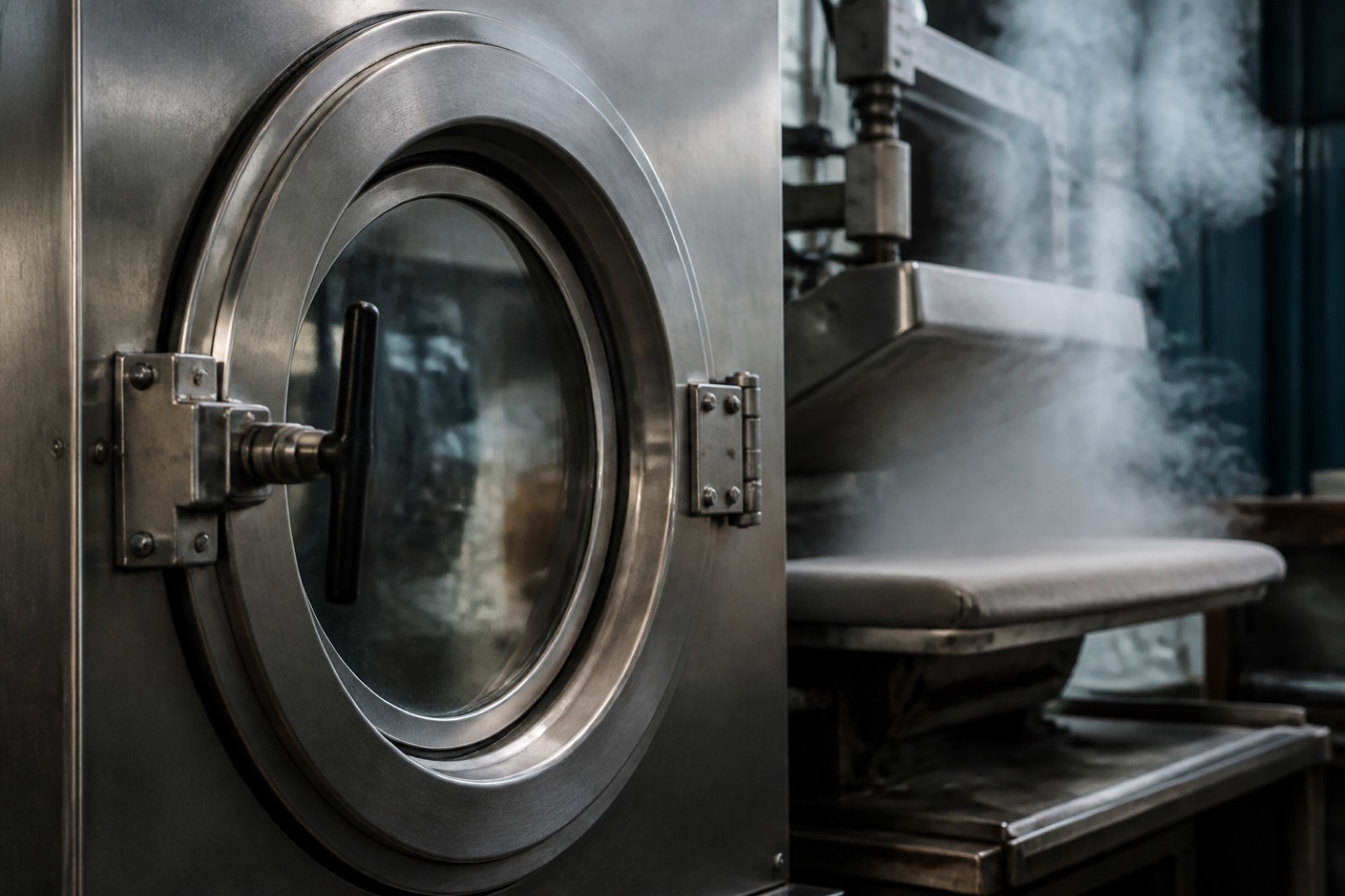
Ask for a complete equipment inventory with ages. List every major piece of equipment, its purchase year, and its current condition. Cross-reference against maintenance records. Equipment older than 15 years is approaching replacement; equipment older than 20 years should be expected to need replacement during your ownership. Build replacement reserves into your operating model.
The boiler is often the single highest-risk piece. Boilers run constantly, are expensive ($30-50k+), and are often deferred. A failing boiler can shut down the shop for days and require emergency replacement at premium cost. Have a qualified service technician inspect the boiler before close and review service records. A new buyer who inherits a failing boiler can lose 1-2 weeks of revenue plus $40k in unplanned capex.
Equipment surprises are the most common post-close issue. Buyers commonly find within 6-12 months that some piece of equipment needs replacement that wasn’t disclosed or visible during diligence. Build a reserve into your projections: assume 10-15% of equipment value as annual maintenance/replacement reserve. Don’t buy a shop with 100% of its cash flow committed to debt service, you’ll be unable to absorb equipment surprises.
Risk #3: fuel, utilities, and operating cost volatility
Dry cleaning is energy-intensive. Boilers, dryers, and presses consume natural gas or fuel oil; lighting, HVAC, and equipment motors consume electricity. Energy costs typically run 8-15% of revenue. When fuel prices spike (as they did in 2022), shop margins compress materially. A 30% increase in natural gas costs can shave 3-4 points off a shop’s margin overnight.
Hangers, plastic bags, and supplies have also seen recent inflation. Operating supplies (hangers, bags, chemicals, cleaning solutions, detergent) are 5-10% of revenue. Several of these, especially plastic bags and hangers, have faced supply chain volatility and price increases. Verify recent supply costs in the financials and assess whether margins reflect normalized prices or temporary squeezes.
Labor is the biggest single operating cost. Counter staff, pressers, cleaners, and route drivers typically run 25-35% of revenue. Local minimum wage increases hit dry cleaning hard, many roles are at or near minimum wage. Shops in high-minimum-wage states (California, New York, Washington) face structurally tighter margins than shops in lower-wage states.
Verify SDE adjustments carefully. Sellers often add back personal expenses, family-member salaries, and one-time items to inflate SDE. A common trick: adding back the owner’s entire compensation (including what a market-rate manager would earn). For an absentee buyer, this overstates true cash flow. Quality of earnings analysis should normalize compensation to market rates and remove non-recurring add-backs, this often reduces stated SDE by 10-20%.
Risk #4: industry decline and demographic shifts
Casual workplace dress codes have reduced demand for years. Suits and dress shirts, the highest-volume dry cleaning items, are worn less frequently than they were a decade ago. Remote work accelerated the trend. While the cleaning of luxury items, household textiles, and special-occasion clothing remains stable, the bread-and-butter weekly suit cleaning that drove the industry has structurally declined.
Younger consumers use dry cleaners less. Customers under 35 typically have lower dry cleaning frequency than Gen X or Boomers. Whether this is a permanent generational shift or a lifecycle effect (younger consumers will use dry cleaners more as they age into professional careers and homes with formalwear) is debated. Buyers should look at the customer-age distribution, shops with mostly older customers may face accelerating decline.
Mitigation: niche services and route expansion. Successful dry cleaners diversify into wedding dress preservation, leather/suede care, household items (comforters, drapes), and route/delivery service. Route service expansion is the most common growth strategy, it brings convenience to customers who would otherwise stop using dry cleaners. New buyers can often grow a single shop by 20-40% through route expansion.
Look for shops with growth, not just stability. A shop with flat or slightly declining revenue is buying into the industry trend. A shop with growing revenue (driven by route expansion, customer additions, or share gain from closing competitors) is fighting the trend. The growth shop is usually a better acquisition even at a slightly higher multiple.
The diligence checklist for buying a dry cleaner
A buying a dry cleaner checklist covers six checks before close: a Phase I environmental assessment, an equipment inspection with ages and repair records, a quality of earnings review, two to three years of POS customer data, lease assignment terms, and verification of route and wholesale revenue. Environmental and lease problems are the items most likely to stop a deal.
Phase I Environmental Site Assessment. Order from a qualified environmental consultant. $2-5k typical cost. Reviews historical site uses, neighboring properties, regulatory filings, and visible site conditions. Identifies any ‘recognized environmental conditions’ (RECs) that warrant further investigation. Required by most SBA lenders for dry cleaner acquisitions.
Equipment inspection and inventory. Have a qualified service technician inspect all major equipment: dry cleaning machines, presses, boilers, washers, dryers, conveyors, POS. Document age, condition, and recent repairs. Build an equipment replacement schedule into your post-close operating plan.
Quality of earnings (Q of E) analysis. For deals over $500k, a Q of E analysis is worth the $10-20k cost. Verifies revenue, normalizes SDE adjustments, identifies one-time items, and tests for working capital seasonality. Many dry cleaner SDE numbers are inflated by 10-20% in seller presentations, Q of E catches this.
Customer count and trend analysis. Pull POS data for the last 24-36 months. How many active customers? How has that count trended? What’s the average ticket size? What percentage of revenue comes from the top 100 customers? Concentration risk is real even in dry cleaning, some shops have wholesale customers (hotels, uniform companies) that represent 20%+ of revenue.
Lease review. How many years left on the lease? What are the renewal terms? Is the rent below or above market? Is the landlord cooperative for assignment to a new owner? Lease assignment is often the gating item in a dry cleaner sale, landlords have to consent, and they sometimes use the opportunity to renegotiate terms. Build lease assignment into the closing conditions.
Route and wholesale revenue verification. If the shop has route service, ride along for a day. Verify the customer list, route schedule, and pickup volumes. If the shop has wholesale customers, verify the contracts and confirm that the customers are not at risk. Wholesale revenue is often soft, major customers can leave on short notice.
Looking to acquire a business?
We work primarily with sellers, but we understand the buyer perspective, we see hundreds of small business acquisitions each year. Start with a 30-minute confidential conversation. We’ll talk through whether dry cleaning fits your situation, what to look for in target shops, and how typical deal structures work. No contract, no cost, and no follow-up if you’re not ready.
Questions to ask the seller before buying a dry cleaner
The checklist above covers what you verify. These questions cover what you ask. Put them in writing before the LOI, and compare the answers with the POS data, tax returns, and lease.
- Is this a plant or a drop store? A plant cleans on site. A drop store only takes in and returns garments and sends the work to a plant. If you are buying a drop store, ask which plant does the cleaning, what it charges, and whether that agreement transfers to you.
- What solvent runs in the machine today, and what ran here before? Ask for the solvent history of the site, not just the current machine. If PERC was ever used, ask whether the site is enrolled in a state cleanup program. Florida’s Drycleaning Solvent Cleanup Program is one example, and eligibility rules differ by state.
- How many pieces and tickets per week, by month? Revenue can be dressed up. Piece and ticket counts from the POS show whether volume is stable, growing, or sliding.
- When did prices last go up, and how do they compare with nearby cleaners? A shop priced well below its competitors has room to raise prices. A shop priced well above them may be living on old loyalty.
- Who are the largest accounts, and are they under contract? Hotels, uniform customers, and route accounts can leave on short notice. Ask for the contracts.
- Who does the spotting and pressing, and will they stay? A skilled spotter or presser is hard to replace. Find out their tenure and pay, and meet them before closing.
- Will the landlord consent to assignment, and what does the lease say about environmental liability? Some dry cleaner leases put cleanup costs on the tenant. Read that clause before you price the deal.
Vague answers on solvent history, volume, or the plant agreement are reasons to slow down. Those are the same areas where post-close surprises show up.
Best buyer profile: who succeeds owning a dry cleaner
Hands-on operator with retail or service business experience. The best dry cleaning owners are present in the shop, know the customers, and personally manage the operation. Retail experience (managing front-of-house operations, handling customers, supervising hourly staff) transfers directly. Service business experience (auto repair, restaurants, salons, other small services) is the second-best fit. Pure white-collar buyers without operating experience often struggle in the first 12 months.
Multi-location operators with operational discipline. Dry cleaning consolidates well for operators who can run 3-5+ shops with shared management infrastructure. The economics of multi-location are meaningfully better than single-location: shared management overhead, equipment redundancy, route consolidation, supplier negotiating power. Buyers with experience running multiple service or retail locations are well-suited to dry cleaning roll-ups.
Cash flow over growth. Dry cleaning is not a high-growth industry. Buyers looking for stable cash flow, predictable owner earnings, and a business they can run for 10+ years do best. Buyers looking for rapid growth, exit multiples, or category disruption will be disappointed, dry cleaning rewards patience and operational excellence, not innovation.
Local presence is non-negotiable. Out-of-state absentee owners almost always underperform. The shop needs daily attention, quality control, equipment maintenance, customer issues, employee management. Buyers who plan to manage remotely or hire absentee management often see customer attrition and operational issues within 12-24 months. Plan to live within 30 minutes of the shop.
Deal structuring tips for dry cleaner acquisitions
Asset sale, not stock sale. Almost all dry cleaner acquisitions should be structured as asset sales. Asset sales let the buyer pick which assets and liabilities to assume. Stock sales transfer all liabilities, including environmental liabilities for prior site contamination, a serious risk in this industry. Insist on asset sale structure unless there’s a compelling tax reason otherwise.
Strong environmental indemnity from the seller. Even in an asset sale, environmental liabilities can attach to the buyer. Negotiate a strong environmental indemnity from the seller covering pre-closing contamination, with a survival period of 5+ years. Verify that the seller has financial capacity to back the indemnity (consider escrow or seller note hold-back as security).
Equipment-condition representations. Include reps in the purchase agreement that all equipment is in good working condition as of closing. Couple with a brief survival period (90 days post-close) so any equipment failure in the first 3 months is covered by the seller. Most equipment surprises emerge in the first 6 months of new ownership.
Working capital target. Negotiate a working capital target as part of the purchase price. Dry cleaners have minimal working capital (a few weeks of receivables, inventory of cleaning supplies), but it’s worth confirming. Include a true-up mechanism so that working capital at close matches the target, with adjustments to the purchase price.
Transition consulting period. Most dry cleaner sellers stay on for 30-90 days post-close in a consulting role. This helps with customer introductions, operational handover, and supplier transitions. Negotiate the consulting terms in the purchase agreement: hours per week, compensation, scope of work, termination terms. A smooth transition is one of the highest-ROI parts of the deal.
Conclusion
Dry cleaning can be a great cash-flow business for the right buyer. Stable customer base, simple business model, low customer concentration, affordable purchase prices ($200-500k typical), and SBA financing make it accessible to first-time buyers. The catch: industry-specific risks that don’t exist in many other small businesses. PERC environmental compliance, aging equipment, fuel cost volatility, and slow industry decline all materially affect the deal economics. The buyers who succeed here are hands-on operators with retail or service experience, willing to be locally present, and disciplined about diligence, especially Phase I environmental assessments and equipment inspections. The buyers who struggle are absentee investors, white-collar buyers without operating experience, and anyone who skimps on environmental diligence. If you’re in the right buyer profile and willing to do the diligence work, a well-located dry cleaner can produce reliable owner earnings of $100-300k annually for many years.
Frequently Asked Questions
How much does a dry cleaning business cost to buy?
Typical single-location independent shops sell for $200-500k. Multi-location operators (3-5 stores) sell for $1.2M-$2.8M. Larger consolidators can be $2.8M+. Multiples are usually 2-3x SDE for single shops, 2.5-3.5x for multi-location operators. Real estate ownership adds separate property value on top.
Can I get an SBA loan to buy a dry cleaner?
Yes, SBA 7(a) is the most common acquisition financing for dry cleaners. Standard structure: 10% buyer cash, 5-10% seller financing, 80-85% SBA loan. Many lenders require Phase I environmental assessment as a condition of funding given the industry’s environmental risks.
What is PERC and why does it matter?
PERC (perchloroethylene) is a traditional dry cleaning solvent that’s also a probable human carcinogen and groundwater contaminant. Decades of PERC use have left soil and groundwater contamination at thousands of dry cleaner sites. Buyers can inherit liability for cleanup, sometimes hundreds of thousands of dollars. Always order Phase I environmental assessment; verify whether the shop currently uses or historically used PERC.
Is the dry cleaning industry dying?
Declining, not dying. The industry has been shrinking 2-3% per year for decades as casual workplace dress codes reduce volume. But well-located shops with loyal customer bases remain consistently profitable. The category isn’t going away, people still need wedding dresses, professional clothing, and household textiles cleaned by specialists. Survivors capture more share as marginal shops close.
How much money can I make owning a dry cleaner?
Single-location owner earnings (SDE) typically run $75-300k for established shops. Multi-location operators (3-5 stores) commonly earn $400-800k+. Owner-operators who work in the shop earn more (their labor is part of the SDE) than absentee owners who hire managers (whose labor cost is deducted from owner earnings).
What equipment does a dry cleaning shop have?
Major equipment: dry cleaning machine ($50-100k new), presses (multiple, $5-20k each), boiler ($30-50k), washers and dryers, conveyor system, POS system. Total equipment value for a fully-equipped shop is typically $100-250k. Equipment ages over 15 years should be expected to need replacement during ownership.
Should I buy a single shop or multi-location operation?
Single shops are accessible to first-time buyers ($200-500k purchase price, manageable operations). Multi-location operations have better unit economics (shared overhead, supplier leverage) but require more capital and operational experience. First-time buyers usually start with a single shop; experienced operators consolidate.
What’s the most common reason dry cleaner acquisitions fail post-close?
Three big ones: (1) environmental surprises, contamination discovered after close, leading to cleanup costs and regulatory issues; (2) equipment failures requiring unplanned capex; (3) customer attrition during transition, especially if the seller had personal relationships with key customers. Diligence reduces all three risks.
Do dry cleaners still use PERC?
Some do, many don’t. Most modern dry cleaners use alternative solvents (hydrocarbon, GreenEarth) or wet cleaning systems. Several states (California, Minnesota) have banned new PERC machines and are phasing out existing ones. Buyers should verify the current solvent system and the shop’s historical PERC use as part of environmental diligence.
Can I run a dry cleaner remotely or as an absentee owner?
Generally not advisable. Dry cleaning needs daily on-site management, quality control, equipment issues, customer relationships, employee supervision. Absentee owners typically see customer attrition and operational decline within 12-24 months. The most successful dry cleaning owners are locally present, often in the shop daily.
How long does it take to close a dry cleaner acquisition?
Typical timeline: 90-120 days from LOI to close. Major gating items: SBA loan processing (60-90 days), Phase I environmental assessment (30-45 days), lease assignment from landlord (variable), equipment inspection. Plan for 4-5 months total from initial offer to operating control.
What’s the best lease term to negotiate when buying?
5-10 years remaining on the lease (or recently renewed) plus renewal options is ideal. Short remaining lease terms create operational risk, if the landlord declines renewal, the shop has to relocate, which often loses 30-50% of customers. Always confirm landlord consent to lease assignment before close, and ideally negotiate a lease extension as part of the deal.
What should be on a buying a dry cleaner checklist?
Six items: a Phase I environmental site assessment, an equipment inspection with ages and repair records, a quality of earnings review, two to three years of POS customer and ticket data, a lease review that confirms the landlord will consent to assignment, and verification of route and wholesale revenue. Add the solvent history of the site, and the terms of the plant agreement if you are buying a drop store.
What are the signs of a good dry cleaner to buy?
Look for steady or rising piece counts, a loyal base of repeat customers, a non-PERC solvent system with clean environmental records, equipment with years of life left, and a long lease the landlord will assign. A good shop also does not depend on one wholesale account or on the owner standing at the counter every day. Route growth and recent price increases that stuck are strong signs.
Related Guide: SDE vs EBITDA: How Small Businesses Are Valued, The valuation metric that drives dry cleaner pricing, and how sellers commonly inflate it.
Related Guide: Quality of Earnings: What Buyers Actually Verify, The diligence process that catches inflated SDE adjustments and one-time items.
Related Guide: Asset Sale vs Stock Sale: Which Is Right for You?, Why dry cleaner deals should almost always be structured as asset sales, especially given environmental risks.
Related Guide: Letter of Intent (LOI), Your Complete Guide, The first major document in a dry cleaner acquisition, what to include and what to negotiate.

About the Author
Christoph Totter is the founder of CT Acquisitions, an M&A advisory firm working both sides of the table, headquartered in Sheridan, Wyoming. We work directly with 500+ buyers, search funders, family offices, lower middle-market PE, and strategic consolidators, including direct mandates with the largest home services consolidators that other intermediaries can’t access. No fee to you on buy-side introductions; sell-side mandates are paid on success at closing. Connect on LinkedIn · Get in touch
Want a Specific Read on Your Business?
30 minutes, confidential, no contract, no cost. You leave with a read on your local buyer market and a likely valuation range.