
Sell Your Gas Station Business in 2026: Three Businesses on One Piece of Dirt
Updated April 2026 · CT Acquisitions
Last updated: 2026-05-28
Learning how to sell a gas station starts with one fact: a gas station and convenience store is really three businesses sitting on one piece of dirt: a fuel operation with thin and volatile margins, a high-margin store that is the actual profit engine, and a piece of retail real estate that is often the single most valuable asset. Buyers value all three separately, then add them up. The hardest part of any gas station sale is not the price, it is the underground storage tanks and the environmental liability that comes with them, which is the central diligence item in almost every deal. This page explains what your station is worth, why inside sales matter more than gallons pumped, how the tank question gets handled, who the real buyers are, and how CT Acquisitions introduces you to them directly. If you are buying rather than selling, see our guide on how to buy a gas station.
Key Takeaways
- A gas station is almost never valued as one number.
- The convenience store market is large and still mostly independent, which is the classic setup for a roll-up.
- Gas station diligence is unlike most retail diligence because the property itself can carry a liability that exceeds the value of the business.
- Old or undocumented underground storage tanks are the single biggest deal risk, because they signal potential contamination and an open-ended cleanup cost.
- Two stations pumping similar gallons can sell at very different multiples, and the gap comes down to the quality of the earnings, the environmental record, and whether the real estate is part of the deal.
What Gas Stations Are Worth in 2026
A gas station is almost never valued as one number. A buyer splits it into the convenience store earnings, the fuel earnings, and the real estate, then prices each piece on its own logic before combining them. That matters because the three pieces behave completely differently.
A gas station is almost never valued as one number. A buyer splits it into the convenience store earnings, the fuel earnings, and the real estate, then prices each piece on its own logic before combining them. That matters because the three pieces behave completely differently. Store profit is durable and earns a healthy multiple, fuel profit is volatile and gets valued conservatively, and the land is priced like a retail property on a cap rate. Understanding which piece carries your value is the first step to pricing the sale correctly.
| Metric | Range | Notes |
|---|---|---|
| Business only (leased land) | 3x to 4.5x EBITDA | Store plus fuel operation when the real estate is leased, not owned. Inside-sales-heavy stations with food, beverage, and a car wash sit at the top of this range; thin-margin fuel-led sites sit at the bottom. |
| Business with real estate | 6x to 8x EBITDA | When the owner sells the land along with the operation. The premium reflects the buyer also acquiring a long-life retail property at a competitive cap rate. High-volume branded sites in strong locations land at the top. |
| Convenience store portion (SDE) | 2.5x to 4x SDE | For smaller owner-operated stores valued on seller’s discretionary earnings. Inside sales, food program, and car wash income drive the multiple here. |
| Real estate | Valued separately on a cap rate | The land and building are appraised on their own, either sold with the business or retained and leased to the buyer. Corner lots with good traffic and visibility can be the largest single component of the deal. |
The economics of a station are defined by the split between fuel and inside sales. Fuel is a high-volume, low-margin, heavily price-shopped commodity. Customers compare the price on the sign across the street, and the cents-per-gallon margin moves week to week with wholesale cost, so fuel profit is real but volatile and lightly valued. Inside sales are the opposite. Packaged beverages, snacks, hot food, coffee, beer, lottery, and a car wash carry far higher gross margins, bring customers in on a routine, and are far easier for a buyer to underwrite. The strongest operators treat cheap fuel as the magnet that pulls a car onto the lot and then capture a high-margin store basket on the way in. That is why inside sales, not gallons, is the central driver of value.
Working capital is moderate but specific. The main carrying items are fuel inventory in the tanks, store merchandise inventory, and lottery and money-order float, offset by fuel-card and vendor terms. Fuel inventory value swings with wholesale prices, so the working capital peg is usually set close to closing. Equipment matters too. Dispensers, the point-of-sale and age-verification systems, walk-in coolers, the food-service line, and the car wash all wear out, and a buyer looks hard at whether that equipment is current or whether there is deferred capital spending waiting after closing.
The factors that move a gas station’s multiple up or down:
- Inside sales mix, the share of gross profit coming from the high-margin store, food, and car wash rather than volatile fuel margin
- Real estate ownership, whether the land is owned and sold with the business or leased, since owned property can be the largest single piece of the deal
- Tank condition and environmental record, the age, material, and testing history of the underground storage tanks, which can add or subtract a meaningful amount
- Fuel volume and brand, monthly gallons pumped and whether the site is branded under a major fuel supplier or unbranded
- Location and traffic, corner position, traffic counts, ease of access, and the absence of a planned road change
- Owner dependency, whether the station runs on managers and systems or on the owner personally working the register
Why Chains and Consolidators Are Buying Gas Stations
The convenience store market is large and still mostly independent, which is the classic setup for a roll-up. A large share of the country’s convenience stores are operated by single-store owners, and the big chains and private-equity-backed platforms have spent years acquiring those independents to add sites, build regional density, and gain scale on fuel supply and merchandise purchasing.
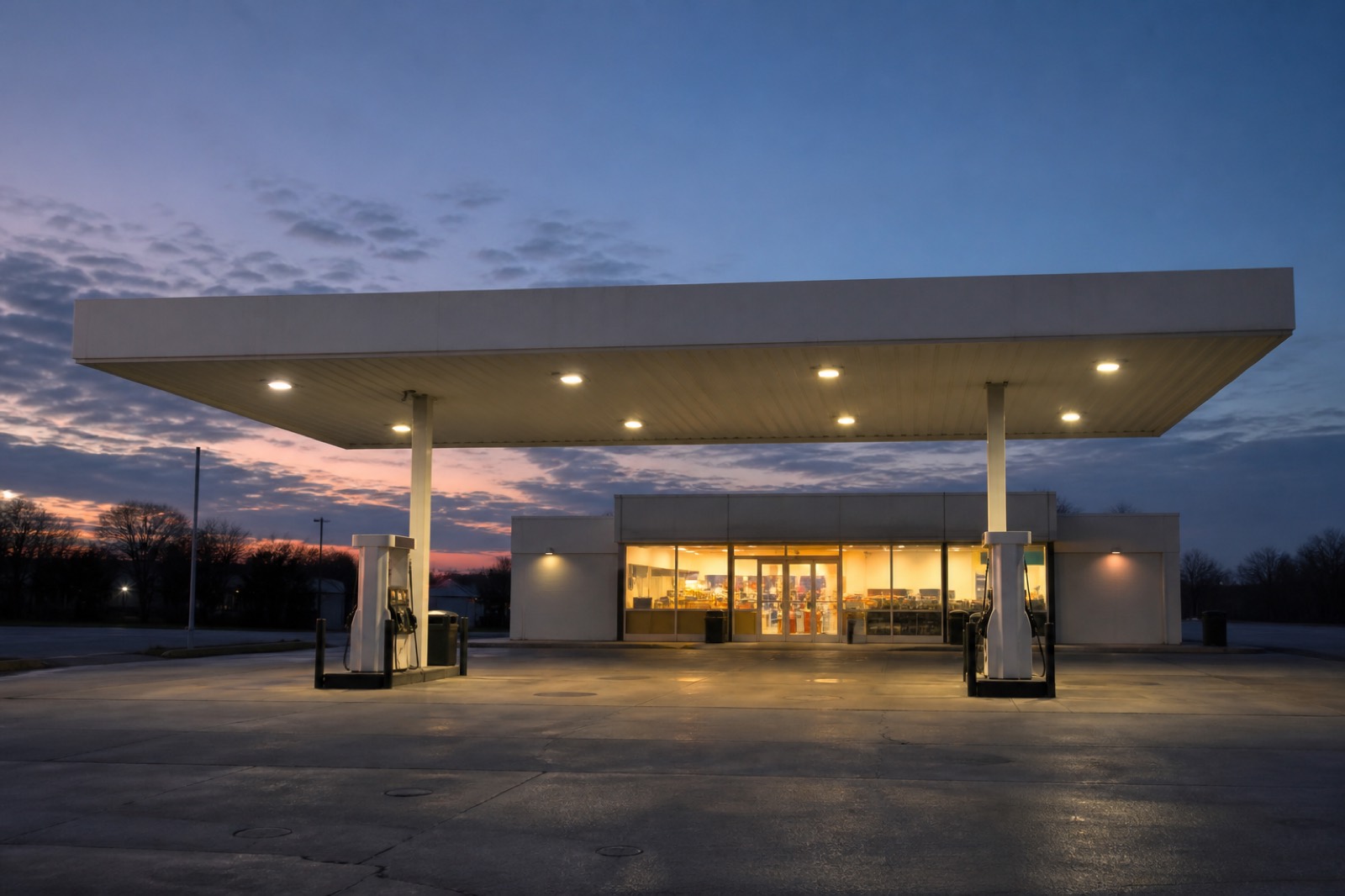
The convenience store market is large and still mostly independent, which is the classic setup for a roll-up. A large share of the country’s convenience stores are operated by single-store owners, and the big chains and private-equity-backed platforms have spent years acquiring those independents to add sites, build regional density, and gain scale on fuel supply and merchandise purchasing. For an independent owner, that means a deep pool of well-funded buyers actively hunting for stations that fit their footprint.
The consolidation thesis runs on scale, fuel logistics, and high-margin inside sales. A platform with hundreds or thousands of sites buys fuel and merchandise far cheaper than an independent, spreads back-office and marketing cost across the network, rolls out a standardized food and beverage program that lifts inside margins, and can drop a strong single operator into an existing regional cluster. Convenience retail is also resilient, with daily-need traffic that holds up through soft economic stretches. That combination of fragmentation, scale economics, and durable demand is why capital keeps flowing into the category.
The named strategic acquirers active in the market include:
- Alimentation Couche-Tard, the global operator of Circle K, which grows through acquisition and has continued to add convenience and fuel sites in North America
- Casey’s General Stores, a large publicly traded Midwestern convenience chain that has expanded aggressively through acquisition, including its purchase of Fikes Wholesale and a tranche of Circle K stores
- ARKO Corp, the parent of GPM Investments, one of the largest convenience store operators and a frequent acquirer of regional chains and independent sites
- Regional and multi-site operators, mid-sized chains buying neighboring stations to deepen density in their markets
- Fuel jobbers and distributors, fuel supply companies that expand into retail by acquiring the branded stations they already supply
Below the national names, individual buyers acquire single stations, often first-time owner-operators. The competition among these buyer types is what gives a seller leverage, especially when a station or group fits more than one acquirer’s geographic plan or a jobber’s existing supply territory.
What these buyers pay a premium for:
- Strong inside sales, with a large share of gross profit from store merchandise, hot food, coffee, beer, and a car wash
- Owned, well-located real estate on a corner with good traffic counts and easy access
- Clean underground storage tanks, meaning documented double-wall tanks with current testing and no open release
- Solid and stable fuel volume, with a brand the buyer wants or the flexibility of a strong unbranded site
- An assignable fuel supply agreement with reasonable remaining term and no costly mandated upgrade
- Clean financials and a manager structure that runs the site without the owner
What Gas Station Buyers Actually Care About in Diligence
Gas station diligence is unlike most retail diligence because the property itself can carry a liability that exceeds the value of the business. Buyers spend the bulk of their attention on the underground storage tanks, the environmental record, and the quality and transferability of the inside-sales earnings.
Gas station diligence is unlike most retail diligence because the property itself can carry a liability that exceeds the value of the business. Buyers spend the bulk of their attention on the underground storage tanks, the environmental record, and the quality and transferability of the inside-sales earnings.
The underground storage tank question sits at the center. Environmental liability for fuel contamination is strict, meaning an owner can be held responsible for cleanup even without having caused the release, simply by owning the property. Remediation for fuel contamination routinely runs from $100,000 to $500,000 or more, which is why buyers and their environmental consultants dig in hard. They examine tank age and material, with older single-wall steel tanks treated as a serious risk and documented double-wall fiberglass tanks treated as reassuring. They review leak detection, spill containment, and overfill protection equipment, tank tightness and line testing records, compliance filings, and the site’s release and closure history. Most clean deals are supported by a Phase I environmental site assessment, and a Phase II with soil and groundwater sampling if the Phase I raises a flag.
The other items diligence digs into:
- Inside-sales gross profit: the split between fuel and store income, and within the store, the contribution from food, beverage, beer, lottery, and the car wash, since inside margin drives both profit quality and multiple
- Fuel margin and volume: monthly gallons, the cents-per-gallon margin trend, and how exposed the site is to a price war across the street
- Fuel supply agreement: whether the station is branded or unbranded, the remaining term, pricing, any image-upgrade or minimum-volume commitments, and whether the agreement assigns to a buyer
- Real estate and any lease: ownership, appraised value and cap rate if owned, or lease length, rent, and assignability if leased, plus traffic counts and access
- Equipment condition: the age of dispensers, point-of-sale and age-verification systems, coolers, the food line, and the car wash, and any deferred capital spending
- Add-backs and normalized earnings: owner compensation, personal expenses, and one-time items removed to arrive at the true EBITDA a buyer pays against
- Compliance: fuel quality and weights-and-measures inspections, age-restricted sales controls for tobacco, beer, and lottery, and any health-code items for the food program
The takeaway for an owner is that the cleaner your tank records and environmental history, the stronger your inside sales, and the more documented your financials, the faster diligence moves and the less likely a buyer is to demand a price holdback after the environmental report comes back.
Red Flags That Tank Gas Station Valuations
These are the issues that turn a strong-looking station into a discounted, holdback-laden, or dead deal. Single-wall steel tanks, missing testing records, or an unknown tank age are the single biggest deal risk, because they signal potential contamination and an open-ended cleanup cost.
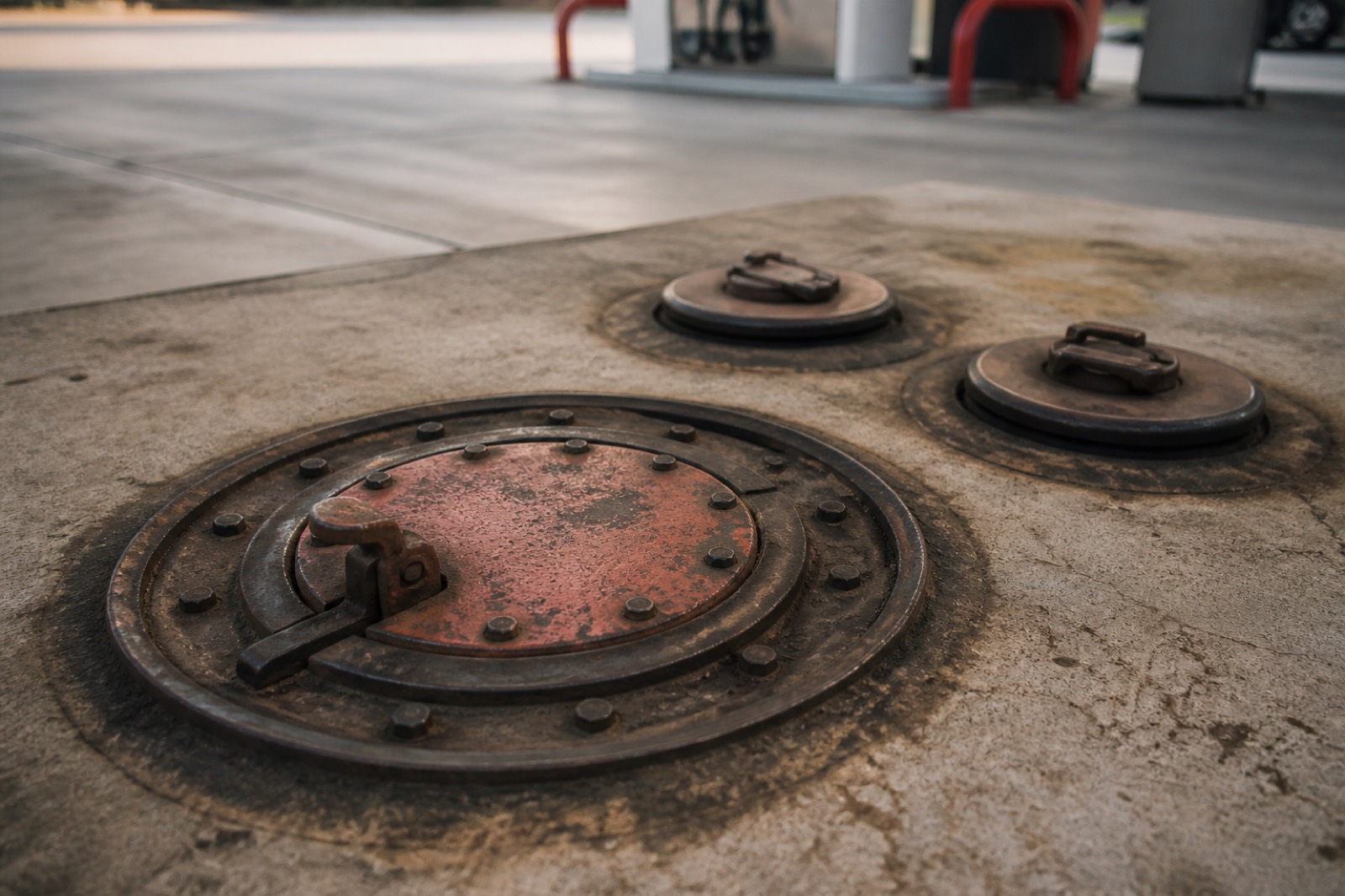
These are the issues that turn a strong-looking station into a discounted, holdback-laden, or dead deal:
- Old or undocumented tanks. Single-wall steel tanks, missing testing records, or an unknown tank age are the single biggest deal risk, because they signal potential contamination and an open-ended cleanup cost.
- A known release or active remediation. Any history of a fuel release, an open environmental case, or ongoing cleanup creates uncertainty that buyers price out aggressively or hold money back against.
- Fuel-led, weak inside sales. A station that lives on volatile fuel margin with a thin, tired store earns low-quality profit and trades at the bottom of the range.
- A problem fuel supply agreement. A near-expiry contract, a costly mandated image upgrade, an unwanted brand, or an agreement that will not assign complicates the deal and can chase buyers off.
- Owner dependency. If the owner personally runs the register, holds the vendor relationships, and keeps the books in their head, buyers treat the business as a job rather than a transferable asset.
- Location and traffic risk. A poor corner, falling traffic counts, a planned road realignment, or dependence on one nearby employer all lower value.
- Deferred equipment. Old dispensers, failing coolers, a non-compliant point-of-sale, or a worn-out car wash get priced straight out of the deal.
- Messy financials. Add-backs that cannot be documented and books that mix personal and station spending reduce the earnings a buyer will credit.
What Separates a 3x Gas Station From an 8x Gas Station
Two stations pumping similar gallons can sell at very different multiples, and the gap comes down to the quality of the earnings, the environmental record, and whether the real estate is part of the deal. A bottom-of-range station is a leased, fuel-led site with a thin store, aging single-wall tanks with patchy records, and an owner who runs the register personally.
Two stations pumping similar gallons can sell at very different multiples, and the gap comes down to the quality of the earnings, the environmental record, and whether the real estate is part of the deal. A bottom-of-range station is a leased, fuel-led site with a thin store, aging single-wall tanks with patchy records, and an owner who runs the register personally. It makes money, but the profit is volatile and the property carries risk rather than value.
A station that earns a top-of-range outcome looks different in specific ways:
- Inside sales carry the profit. A large share of gross profit comes from the store, hot food, coffee, beer, and a car wash, which is durable and easy to underwrite.
- The real estate is owned and sold with the business. A well-located corner property adds a large, separately valued component priced on a competitive cap rate.
- The tanks are clean and documented. Double-wall fiberglass tanks, current testing, and no open release remove the biggest source of buyer fear.
- The fuel program is strong and assignable. Stable volume, a brand the buyer wants or a flexible unbranded position, and a supply agreement with reasonable term that transfers cleanly.
- A manager structure runs the site. The station runs on managers and systems, not on the owner, so the earnings transfer without disruption.
- Clean, documented financials. Normalized statements with a clear fuel-versus-inside-sales split and defensible add-backs that survive diligence.
Most of these are within an owner’s control in the 12 to 24 months before a sale. Building the inside-sales and food program, getting the tank records and any environmental work in order, and putting a manager in place are the three moves that most reliably push a station toward the top of its range.
How to Sell a Gas Station, Step by Step
Most station sales follow the same order. Owners who skip a step usually pay for it later, in a price cut after the environmental report or a buyer who walks at the lender stage.
- Pull three years of clean numbers. Tax returns, monthly P&Ls, fuel gallons by month, and a split of gross profit between fuel and inside sales. A buyer prices the store and the fuel separately, so the split has to be on paper.
- Gather the tank file. Tank age and material, leak detection records, tightness and line tests, and any release or closure letters from your state agency. Order a Phase I environmental site assessment early if you have not had one, so a surprise comes out on your schedule.
- Decide on the real estate. Sell the land with the business, keep it and sign a lease with the buyer, or sell the business alone on an existing lease. Each path draws a different buyer and a different price.
- Check what transfers. Read the fuel supply agreement for term, assignment, and image or volume commitments. List every permit and license a buyer must reapply for, such as beer, tobacco, and lottery.
- Set a value range. Price the store on earnings, the fuel on a conservative basis, and the land on a cap rate. DealStream’s rules of thumb guide gives one fuel shortcut: a station selling 1.5 million gallons a year at a 20 cent per gallon margin puts about $300,000 on the fuel portion alone.
- Choose how buyers find you. Then screen them for proof of funds, sign NDAs, take letters of intent, and work through diligence and the lender to closing.
Selling a gas station online
Listing sites such as BizBuySell and LoopNet put a station in front of many buyers fast, and a lot of first-time owner-operators shop there. The cost is exposure. Employees, your fuel supplier, and the station across the street can all recognize a listing, and a site that sits unsold for months tells buyers the price is off. A private process reaches chains, jobbers, and regional operators directly, keeps the name confidential until a buyer signs an NDA, and still lets you test price against more than one bidder.
How CT Acquisitions Works
CT Acquisitions connects owner-operated gas stations and convenience stores directly with qualified buyers. No public listing, no upfront fees, no tire-kickers.
CT Acquisitions connects owner-operated gas stations and convenience stores directly with qualified buyers. No public listing, no upfront fees, no tire-kickers. Here is the process.
- Confidential Consultation. We learn about your station or group, your fuel-versus-inside-sales mix, your tank and environmental records, your real estate and supply agreement, your team, and your timeline. Nothing is shared externally without your explicit approval.
- Valuation and Positioning. We help you understand where your station sits in the current market and how to position it, including how to frame your inside sales, real estate, tank condition, and fuel brand for the strongest outcome.
- Targeted Introductions. We introduce you directly to convenience and fuel chains, PE-backed platforms, fuel jobbers expanding their retail footprint, regional operators, and individual buyers from our network whose geography, brand, and size preference match your station.
- Deal Support Through Closing. We stay involved through LOI review, environmental and tank diligence, real estate and supply-agreement questions, and closing, where gas station deals get more involved than most.
CT Acquisitions operates on a success-fee-only basis. No fee to you on buy-side introductions; sell-side mandates are paid on success at closing.
Most owners we work with have built their station over many years and have never sold one before. The three-part valuation, the underground storage tank question, the fuel supply agreement, and the real estate decision make these deals more involved than they look. CT Acquisitions handles the heavy lifting. We prepare a confidential summary that highlights your strengths without revealing your identity, and buyers only learn who you are after signing an NDA and proving they are a serious fit.
Why Founders Choose CT Acquisitions
- No upfront fees. Success-fee-only. Zero retainers, zero listing fees, zero monthly charges. If a deal does not close, you owe nothing.
- Complete confidentiality. Your station is never publicly listed. Employees, vendors, and competitors stay unaware until you decide otherwise.
- The right buyers. Our network reaches the convenience chains, PE-backed platforms, fuel jobbers, and serious regional operators who understand inside-sales economics, tank diligence, and real estate value rather than generalists who need it explained.
- Industry-specific expertise. We understand the three-part valuation, the underground storage tank liability, branded versus unbranded supply agreements, and the real estate decision.
- Founder-first approach. We work on your timeline. You control every step, with no pressure to accept an offer that does not meet your goals.
“Most station owners price their business on the gallons they pump. The buyers who pay the most are looking at inside sales, the real estate, and what the tank records say. The right introduction puts those buyers in competition for all three.”
, Christoph, Managing Partner, CT Acquisitions
Frequently Asked Questions
What multiple can I expect for my gas station?
A gas station sale is usually broken into three pieces that are valued separately: the convenience store earnings, the fuel earnings, and the real estate. The business-only portion, meaning the store and fuel operation without the land, commonly trades around 3x to 4.5x EBITDA, and inside-sales-heavy stores sit at the top of that range while thin-margin fuel-only sites sit at the bottom. When you own the real estate and it is sold with the business, the combined deal frequently lands closer to 6x to 8x EBITDA, because the buyer is also buying a long-life retail property at a competitive cap rate. The single biggest lever is your inside sales. A station that earns most of its profit from the store, hot food, coffee, beer, and a car wash trades well above one that lives on volatile fuel margin alone.
Why do inside sales matter more than fuel gallons?
Fuel is a high-volume, low-margin, price-shopped commodity, and the cents-per-gallon margin swings week to week with wholesale costs, so fuel profit is real but volatile and lightly valued. Inside store sales are the opposite: packaged drinks, snacks, hot food, coffee, beer, lottery, and a car wash carry far higher gross margins, are stickier, and are far easier for a buyer to underwrite. Two stations can pump the same gallons and be worth very different amounts because one captures a high-margin store basket on every fill-up and the other does not. Consolidators pay a premium for inside sales because that is the durable profit engine, so a station with strong food, beverage, and car wash income trades above a pure fuel seller of the same size.
How does the underground storage tank liability affect my sale?
The underground storage tanks are the central diligence item in almost every gas station sale. Environmental liability for fuel contamination is strict, meaning an owner can be responsible for cleanup even without having caused the release, and remediation routinely runs from $100,000 to $500,000 or more. A buyer will look at tank age and material, leak detection and spill containment equipment, tightness and line testing records, and the site’s release history. Older single-wall steel tanks are the biggest red flag, while documented double-wall fiberglass tanks with clean testing records and current compliance reassure buyers. Most clean deals are supported by a Phase I environmental site assessment, and a Phase II with soil and groundwater sampling if anything turns up. Owners who organize their tank records, testing history, and any closure documentation before going to market keep this issue from collapsing the deal or forcing a large price holdback.
Should I sell branded or unbranded, and does my fuel supply agreement transfer?
Branded stations operate under a major fuel brand through a supply or jobber agreement, which brings recognition and marketing support but also term commitments, image requirements, and minimum volume obligations. Unbranded stations buy fuel on the open market with more pricing flexibility and fewer obligations. When you sell, the fuel supply agreement is a key transfer item: a buyer wants to know the remaining term, the pricing terms, any image-upgrade or volume commitments, and whether the agreement assigns to a new owner or has to be renegotiated. A clean, assignable agreement with reasonable remaining term is an asset, while a near-expiry contract, a costly mandated image upgrade, or a brand the buyer does not want can complicate the deal. CT Acquisitions helps you frame the supply situation so the right buyer sees it as manageable rather than a surprise.
What hurts a gas station’s value the most?
The biggest value killers are environmental and inside-sales related. Old single-wall tanks, a known release, missing tank testing records, or active remediation create uncertainty that buyers price out aggressively or holdback against. After that, a station that lives on volatile fuel margin with weak inside sales is worth far less than one with strong store, food, and car wash income. Other common problems are owner dependency where the operator personally runs the register and the books, a fuel supply agreement that is near expiry or carries a costly mandated upgrade, a short or poorly located lease if the real estate is not owned, customer-and-traffic exposure to a single nearby employer or a planned road change, and messy financials that mix personal and business spending so a buyer cannot trust the add-backs.
Who actually buys gas stations and convenience stores in 2026?
The active buyers are large convenience store and fuel chains and private-equity-backed platforms rolling up independent sites, plus fuel jobbers and distributors expanding their retail footprint, and individual operators buying single stations. The convenience store sector remains heavily fragmented, with a large share of stores still operated by single-store owners, which is the classic setup for consolidation. Named strategic acquirers active in the category include Alimentation Couche-Tard, which operates Circle K, Casey’s General Stores, and ARKO Corp through its GPM Investments business, all of which grow through acquisition. CT Acquisitions introduces you to the chains, platforms, jobbers, and individual buyers whose geography, brand, and size preference fit your station or group.
Ready to Find Out What Your Gas Station Is Worth?
Start with a confidential conversation. No commitment, no upfront cost, and no pressure. CT Acquisitions introduces you directly to qualified convenience and fuel retail buyers.
Ready to Explore Your Options?
A 30-minute confidential conversation is all it takes.