
Sell Your Waste Hauling Business in Canada in 2026: Multiples, PE Buyers, Regulator Transfer, Tax
Selling your waste hauling business in Canada in 2026 involves country-specific mechanics that US-focused advisors miss. Industry Canada notification requirements, LCGE (Lifetime Capital Gains Exemption) treatment for qualifying small business corporation shares, and industry-specific certification transferability all shape both deal structure and after-tax proceeds. Multiples clear 4-10x EBITDA at platform scale depending on recurring revenue mix and contract book depth. Named PE-backed acquirers and regional consolidators are active across most verticals.
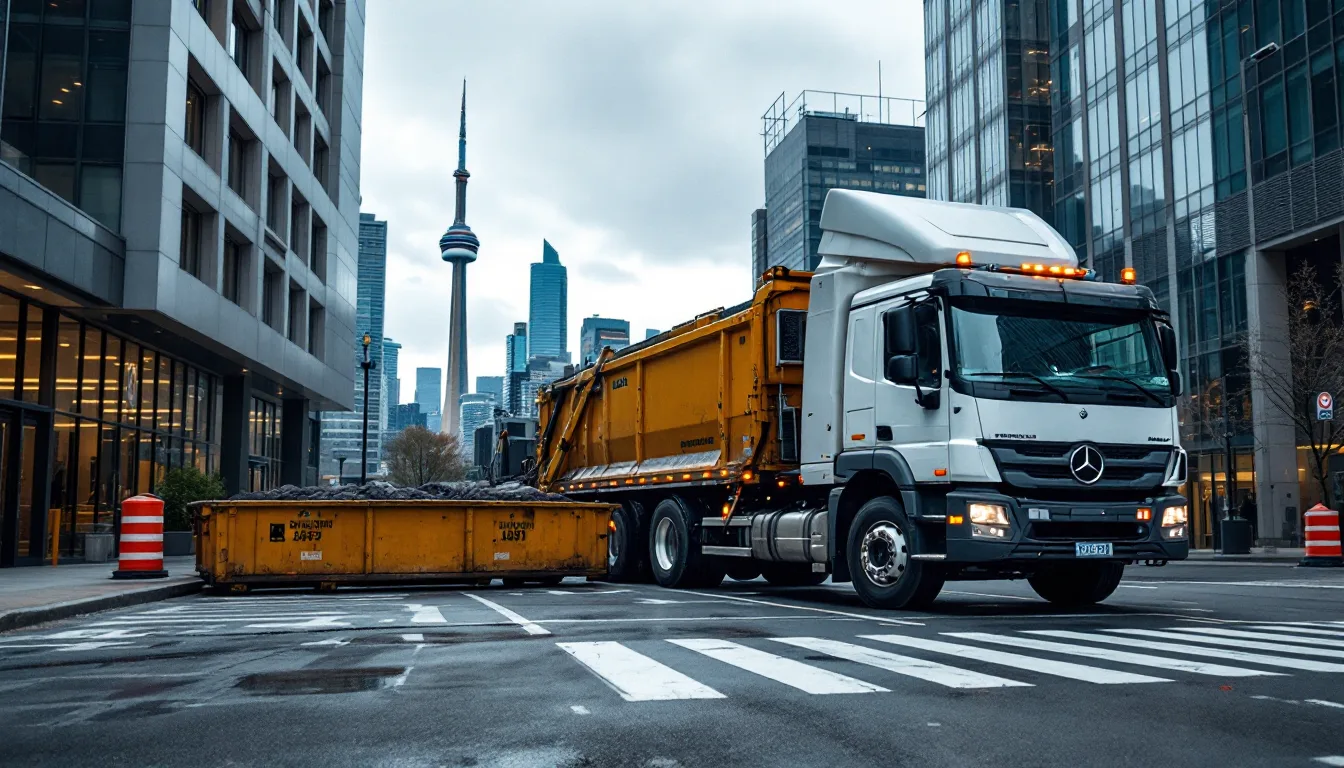
If you operate a waste management business in Canada and you have searched “sell my waste management business in Canada”, the variables that drive your sale price are Canada-specific in ways the broader category data does not capture. The named PE platforms with active deal posture in Canada in 2026, the EBITDA-tier multiples bands stated in C$ CAD, the jurisdiction-specific tax-arbitrage structuring (which is the single largest after-tax lever any owner has), the regulator transfer procedure under Canada Revenue Agency (CRA) and the relevant industry licensing body, and the 2024-2026 dated comparable transactions all reshape the multiple a buyer will pay. This page walks through the Canada valuation framework as waste management businesses are actually trading in mid-2026, the named buyers actively acquiring here, and the regulator transfer + tax structuring that determine net-of-tax proceeds.
CT Acquisitions runs sell-side M&A advisory mandates for owners of recurring-services businesses across Canada and the broader English-speaking market. The introductory conversation is confidential and NDA-protected. This page is the localised valuation framework for 🇨🇦 Canada waste management sellers, built from named-and-dated 2024-2026 transactional research rather than generic broker-listing rules of thumb.
Key Takeaways
- The detailed market sizing, named-buyer table, EBITDA-tier multiples bands, regulator transfer procedure, jurisdiction-specific tax-arbitrage structuring, and 2024-2026 dated compa…
- Canada’s solid waste collection, transfer, processing, and disposal market generated approximately C$14.5 billion to C$16.0 billion in revenue in 2024 per Statistics Canada NAICS 5…
- GFL Environmental Inc (TSX: GFL, NYSE: GFL), largest Canadian-headquartered waste platform with materials recovery operations divested March 2025 to Apollo Global Management, BC P…
- Sub C$1M EBITDA, single-truck residential or commercial route, 3.0x to 4.5x EBITDA.
- Provincial environment ministries enforce waste hauling, transfer station, and disposal licensing: Ontario : Ministry of the Environment, Conservation and Parks (MECP) under Enviro…
The Canada waste management M&A landscape in 2026
The detailed market sizing, named-buyer table, EBITDA-tier multiples bands, regulator transfer procedure, jurisdiction-specific tax-arbitrage structuring, and 2024-2026 dated comparable transactions for Canada waste management are set out below. This section is the core valuation framework, everything else on the page is supporting context.
The detailed market sizing, named-buyer table, EBITDA-tier multiples bands, regulator transfer procedure, jurisdiction-specific tax-arbitrage structuring, and 2024-2026 dated comparable transactions for Canada waste management are set out below. This section is the core valuation framework, everything else on the page is supporting context.
26. WASTE-HAULING (Canada)
1. Market Size & Structure
Canada’s solid waste collection, transfer, processing, and disposal market generated approximately C$14.5 billion to C$16.0 billion in revenue in 2024 per Statistics Canada NAICS 562 Waste Management and Remediation Services data and Conference Board of Canada Solid Waste Management Industry Profile 2024.
Canada’s solid waste collection, transfer, processing, and disposal market generated approximately C$14.5 billion to C$16.0 billion in revenue in 2024 per Statistics Canada NAICS 562 Waste Management and Remediation Services data and Conference Board of Canada Solid Waste Management Industry Profile 2024.
Service-line decomposition: commercial collection (front-load) approximately 32 percent; residential subscription and municipal contract collection approximately 28 percent; roll-off and construction and demolition (C&D) approximately 18 percent; transfer station, materials recovery facility (MRF), and landfill tip fees approximately 22 percent.
The Canadian market is materially more consolidated than US waste at the top of the tier. Three platforms control an estimated 55 to 62 percent of national commercial collection revenue: GFL Environmental, Waste Connections of Canada, and Waste Management of Canada Corporation. The middle market between large nationals and small operators includes Republic Services Canada, Emterra, Miller Waste Systems, and a long tail of regional family operators.
Extended Producer Responsibility (EPR) transition is the defining regulatory dynamic. Ontario’s Resource Productivity and Recovery Authority (RPRA) Blue Box transition under Resource Recovery and Circular Economy Act, 2016 (S.O. 2016, c. 12, Sched. 1) is fully complete as of 31 December 2025 per RPRA implementation timeline. Producers now fund full collection and processing of residential paper and packaging directly rather than through municipal property taxes. Quebec’s RECYC-QUEBEC modernization under An Act respecting the conservation and development of wildlife (RLRQ c C-61.1) is in parallel implementation with producer organization Eco Entreprises Quebec (EEQ) taking operational control of curbside recycling 1 January 2025.
2. PE Buyer Landscape
GFL Environmental Inc (TSX: GFL, NYSE: GFL), largest Canadian-headquartered waste platform with materials recovery operations divested March 2025 to Apollo Global Management, BC Partners, and HPS Investment Partners (~22 percent each) plus GFL Inc retaining approximately 34 percent. CEO Patrick Dovigi. Waste Connections Inc (TSX: WCN, NYSE: WCN), Texas-headquartered, Toronto co-headquartered; second-largest Canadian operator by revenue. Strategic acquirer for tuck-ins under C$200 million. Waste Management of Canada Corporation.
- GFL Environmental Inc (TSX: GFL, NYSE: GFL), largest Canadian-headquartered waste platform with materials recovery operations divested March 2025 to Apollo Global Management, BC Partners, and HPS Investment Partners (~22 percent each) plus GFL Inc retaining approximately 34 percent. CEO Patrick Dovigi.
- Waste Connections Inc (TSX: WCN, NYSE: WCN), Texas-headquartered, Toronto co-headquartered; second-largest Canadian operator by revenue. Strategic acquirer for tuck-ins under C$200 million.
- Waste Management of Canada Corporation, subsidiary of WM Inc (NYSE: WM) Houston; third-largest Canadian footprint.
- Republic Services Canada Inc, subsidiary of Republic Services Inc (NYSE: RSG) Phoenix; limited but growing Canadian footprint after May 2022 acquisition of US Ecology and 2023-2024 expansion into Canadian industrial services.
- Emterra Group, Hamilton, Ontario family-owned (Chiarelli family); approximately C$300 million revenue; recycling and collection focus.
- Miller Waste Systems Inc, Markham, Ontario private company (Miller family); approximately C$280 million revenue; commercial and residential collection.
- Walker Industries Inc, Niagara Falls, Ontario family-owned; landfill, aggregates, and environmental services.
- Tomlinson Group of Companies, Ottawa family-owned; waste, construction, and environmental services.
- Strategic Waste Services / Waste Management Solutions, Quebec regional operator.
- MIRA / Matrec Environmental Services, Quebec; GFL subsidiary post-acquisition.
- CCSWANA / Canadian Solid Waste Association, industry trade group, not an acquirer.
- EBI Environmental Group, Quebec family-owned (Sylvestre family); Berthierville, QC; among largest privately-held Canadian waste operators.
- WSI / Waste Services Inc Canadian operations, historical roll-up now absorbed into Republic.
- Sanimax, Montreal-based protein and grease recovery, adjacent to municipal organics.
- Convertus Group, Canadian organics processing platform; sponsor-backed.
- Stericycle Canada, medical waste specialist; now subsidiary of WM Inc post 4 November 2024 close of WM acquisition of Stericycle for US$7.2 billion enterprise value.
- Anaergia Inc, Burlington Ontario organics; restructured 2024 with Marny Investissement and Tonkawa Inc.
- Convertus (Vancouver, BC), composting and organics; sponsor-backed.
- Waste Robotics Inc, Quebec MRF optical sorting; equipment manufacturer.
- Halton Recycling, Burlington Ontario private; regional.
- Suez Canada / Veolia Canada, Veolia North America Canadian operations; post-merger entity.
- Wastequip Canada, equipment manufacturer, not operator.
- Heartland Recycling, Western Canada family operator.
GFL’s ownership structure post-March 2025 Environmental Services divestiture is the defining feature of Canadian waste M&A. Apollo, BC Partners, and HPS holding GFL Environmental Services JV LP / GES creates a substantial sponsor-backed Canadian waste platform separate from GFL Inc the public parent. CEO Patrick Dovigi continues to lead the public parent.
3. EBITDA-Tier Multiples Bands
Sub C$1M EBITDA, single-truck residential or commercial route, 3.0x to 4.5x EBITDA. Route density and contract terms drive value. C$1M to C$3M EBITDA, regional commercial collection, 5.0x to 6.5x EBITDA. C$3M to C$8M EBITDA, multi-service (commercial, roll-off, residential contract), 6.0x to 8.0x EBITDA. C$8M to C$20M EBITDA, integrated collection plus transfer station, 7.5x to 9.5x EBITDA. C$20M to C$50M EBITDA, integrated with MRF and/or landfill.
- Sub C$1M EBITDA, single-truck residential or commercial route, 3.0x to 4.5x EBITDA. Route density and contract terms drive value.
- C$1M to C$3M EBITDA, regional commercial collection, 5.0x to 6.5x EBITDA.
- C$3M to C$8M EBITDA, multi-service (commercial, roll-off, residential contract), 6.0x to 8.0x EBITDA.
- C$8M to C$20M EBITDA, integrated collection plus transfer station, 7.5x to 9.5x EBITDA.
- C$20M to C$50M EBITDA, integrated with MRF and/or landfill, 8.5x to 11.0x EBITDA.
- C$50M+ EBITDA, multi-province with vertical integration, 9.5x to 13.0x EBITDA. Landfill ownership commands top of band given finite remaining permitted airspace.
Landfill ownership is the structural premium driver in Canadian waste. Permitted Class 1 landfill airspace is scarce, particularly in Ontario where Walker Industries’ landfills and GFL’s Stoney Creek Regional facility are among the few operating capacity options. Canadian Environmental Protection Act, 1999 (CEPA) and provincial environmental assessment processes (Ontario EA Act, Quebec BAPE) make new landfill development prohibitively difficult; existing permitted airspace commands C$0.95 to C$1.85 per cubic metre of remaining permitted volume in private transactions per industry reporting.
4. Regulator Transfer & Licensing
Provincial environment ministries enforce waste hauling, transfer station, and disposal licensing: Ontario : Ministry of the Environment, Conservation and Parks (MECP) under Environmental Protection Act (R.S.O. 1990, c. E.19). Environmental Compliance Approval (ECA) for waste collection, transfer, and disposal facilities. Change of ownership requires ECA amendment under EPA Section 39, processing time 90 to 180 days. RPRA registration under Resource Recovery and Circular Economy Act 2016 for producer responsibility obligations;.
Provincial environment ministries enforce waste hauling, transfer station, and disposal licensing:
- Ontario: Ministry of the Environment, Conservation and Parks (MECP) under Environmental Protection Act (R.S.O. 1990, c. E.19). Environmental Compliance Approval (ECA) for waste collection, transfer, and disposal facilities. Change of ownership requires ECA amendment under EPA Section 39, processing time 90 to 180 days. RPRA registration under Resource Recovery and Circular Economy Act 2016 for producer responsibility obligations; transition complete 31 December 2025.
- Quebec: Ministere de l’Environnement, de la Lutte contre les changements climatiques, de la Faune et des Parcs (MELCCFP) under Environment Quality Act (CQLR c Q-2). Section 22 authorization for waste management facilities; modernization in progress under amendments effective 2024-2026. EEQ contract obligations for producer-funded curbside recycling effective 1 January 2025.
- British Columbia: Ministry of Environment and Climate Change Strategy under Environmental Management Act (SBC 2003 c 53). Operational certificates for waste facilities. Recycle BC EPR contracts for producer-funded packaging recycling administered by Canada Wide Solutions.
- Alberta: Alberta Environment and Protected Areas under Environmental Protection and Enhancement Act (RSA 2000 c E-12). Approvals and registrations for waste facilities.
- Atlantic: provincial environment departments under respective Environment Acts.
DOT/NSC carrier licensing under National Safety Code Standard 7 cargo securement, Standard 11 hours of service, and provincial Motor Vehicle Acts. CSA (Carrier Safety Audit) scores transfer with carrier identification number; deteriorated CSA scores impact acquirer ability to obtain insurance post-close. Buyer diligence routinely includes 24-month CSA score history.
Municipal franchise agreements for residential collection are typically 5 to 7 year terms with renewal options. Change of control provisions vary by municipality; most include 30 to 90 day notice with municipal right to terminate or require novation.
5. Tax Structuring & Arbitrage
LCGE C$1,325,000 indexed 2025 under ITA Section 110.6(2.1); married couples with QSBC shares can shield C$2.65M. 50 percent capital gains inclusion rate restored 1 January 2026. Section 85 rollover for tax-deferred transfer of operating assets, route lists, and contracts to acquirer. Bill C-208 and Bill C-59 preserve LCGE on genuine intergenerational transfers; relevant for family-owned waste operators (Chiarelli/Emterra, Miller family, Walker family, Sylvestre/EBI, Tomlinson family). Canadian Entrepreneurs Incentive (CEI) under.
- LCGE C$1,325,000 indexed 2025 under ITA Section 110.6(2.1); married couples with QSBC shares can shield C$2.65M.
- 50 percent capital gains inclusion rate restored 1 January 2026.
- Section 85 rollover for tax-deferred transfer of operating assets, route lists, and contracts to acquirer.
- Bill C-208 and Bill C-59 preserve LCGE on genuine intergenerational transfers; relevant for family-owned waste operators (Chiarelli/Emterra, Miller family, Walker family, Sylvestre/EBI, Tomlinson family).
- Canadian Entrepreneurs Incentive (CEI) under Bill C-59 reduces inclusion to one-third on up to C$2M additional gain phased 2025-2029. Waste founders meeting five-year holding and material engagement tests qualify.
- Landfill closure and post-closure obligations: financial assurance under EPA Section 39 and Ontario Regulation 232/98, Quebec Regulation respecting the landfilling and incineration of residual materials (CQLR c Q-2 r 19), and equivalent provincial regulations require letters of credit, surety bonds, or trust funds for 30 to 50 year post-closure care. Buyers value landfill assets net of present value of closure and post-closure obligations. Sellers should secure third-party closure cost actuarial reports.
- CCA (Capital Cost Allowance) Class 10 (30 percent declining balance) for collection vehicles; Class 8 (20 percent) for containers; Class 53 (50 percent) for manufacturing equipment in MRFs. Immediate expensing measures from 2024 federal budget continue to apply to select Class 53 acquisitions per ITA Regulations.
- Clean Investment Tax Credit (Clean ITC) for landfill gas-to-energy projects: 30 percent refundable ITC under ITA Section 127.45 for renewable energy generation equipment including landfill gas collection and electricity generation.
6. Investment Canada Act + Competition Act
ICA thresholds 2025: WTO investor C$1.452 billion EV; Trade Agreement investor C$2.179 billion EV; state-owned WTO investor C$556 million asset value. GFL Environmental Services JV LP / GES March 2025 divestiture from GFL Inc to Apollo, BC Partners, and HPS triggered ICA review per public press at deal announcement. Future Canadian waste consolidation of GFL scale will continue to trigger reviews. Smaller regional waste deals fall below thresholds. Critical infrastructure.
ICA thresholds 2025: WTO investor C$1.452 billion EV; Trade Agreement investor C$2.179 billion EV; state-owned WTO investor C$556 million asset value.
GFL Environmental Services JV LP / GES March 2025 divestiture from GFL Inc to Apollo, BC Partners, and HPS triggered ICA review per public press at deal announcement. Future Canadian waste consolidation of GFL scale will continue to trigger reviews. Smaller regional waste deals fall below thresholds.
Critical infrastructure characterization is increasingly applied to landfill capacity given finite permitted airspace and essential service nature; this may attract heightened national security review even at smaller deal sizes per ISED 24 October 2024 National Security Review Guidelines update.
Competition Act pre-merger notification at C$93 million party-size and transaction-size 2025. Competition Bureau review of WM acquisition of Stericycle closed 4 November 2024 without remedies in Canada per Competition Bureau closing statement. Bureau monitors landfill market concentration in specific catchment areas with potential for divestiture remedies; precedent set in Waste Services Inc. acquisitions in early 2000s.
7. Recent Transactions 2024-2026
GFL Environmental Services divestiture closed 1 March 2025 to Apollo Global Management, BC Partners, and HPS Investment Partners (approximately 22 percent each) with GFL Inc retaining approximately 34 percent; enterprise value approximately US$8.0 billion per GFL press release 7 January 2025.
- GFL Environmental Services divestiture closed 1 March 2025 to Apollo Global Management, BC Partners, and HPS Investment Partners (approximately 22 percent each) with GFL Inc retaining approximately 34 percent; enterprise value approximately US$8.0 billion per GFL press release 7 January 2025.
- WM acquisition of Stericycle closed 4 November 2024 for US$7.2 billion enterprise value per WM Inc 8-K filing; Stericycle Canada operations integrated into WM Canada Healthcare Solutions.
- Frontier Waste sale to GFL Environmental announced at approximately C$900 million enterprise value, expected close 1 April 2026 per GFL Inc disclosure; this is the US Texas Frontier with affected Canadian routes via combined platform.
- Veolia North America / Clean Earth Canada combination announced November 2025; expected close mid-2026 at approximately US$3.0 billion enterprise value per Veolia press release; affects Canadian Clean Earth operations.
- Waste Connections Canadian tuck-in activity 2024, approximately 8 to 12 confirmed Canadian regional acquisitions per WCN Q4 2024 earnings call disclosure.
- Emterra Group regional expansion through acquisition of three Ontario operators 2024-2025 per regional press.
- Walker Industries landfill expansion approval South Landfill at Niagara Falls capacity addition, Ontario MECP approval Q3 2024.
- Convertus organics platform expansion Q2 2025 with sponsor recapitalization.
- RPRA Blue Box transition completion 31 December 2025 with full producer-funded responsibility transfer.
- EBI Environmental Group Quebec expansion through 2024-2025 regional tuck-ins.
8. Provincial Sub-Markets
Ontario : largest provincial market at approximately C$5.4 billion revenue. RPRA full EPR transition complete 31 December 2025 reshapes residential recycling economics. GFL, WCN, WM, Emterra, Miller, and Walker are primary platforms. Landfill capacity concentrated at Walker Industries Niagara facilities, GFL Stoney Creek, and Republic’s Twin Creeks; Toronto-area landfill diversion to Michigan continues at material volume per Ontario Waste Management Association reporting. Quebec : approximately C$3.6 billion revenue. EEQ producer-funded.
Ontario: largest provincial market at approximately C$5.4 billion revenue. RPRA full EPR transition complete 31 December 2025 reshapes residential recycling economics. GFL, WCN, WM, Emterra, Miller, and Walker are primary platforms. Landfill capacity concentrated at Walker Industries Niagara facilities, GFL Stoney Creek, and Republic’s Twin Creeks; Toronto-area landfill diversion to Michigan continues at material volume per Ontario Waste Management Association reporting.
Quebec: approximately C$3.6 billion revenue. EEQ producer-funded curbside recycling effective 1 January 2025. GFL Quebec (MIRA/Matrec subsidiaries), EBI Environmental Group, and Republic Services are major operators. BAPE (Bureau d’audiences publiques sur l’environnement) makes landfill expansion difficult; export to Ontario and US continues. Quebec organic ban for ICI (industrial-commercial-institutional) generators above 100 tonnes/year effective 2024 with full residential organics diversion target 2025.
British Columbia: approximately C$2.1 billion revenue. Recycle BC producer-funded packaging program. WCN, GFL, WM, and regional operators including ReGen and Recycling Alternative. Metro Vancouver Solid Waste Management Plan caps landfill at Cache Creek and Vancouver Landfill. Organics ban in Metro Vancouver since 2015.
Alberta: approximately C$2.0 billion revenue. WCN, GFL, WM dominate Calgary and Edmonton. Multiple operating landfills give Alberta cost advantage versus Ontario. Industrial waste from oil and gas sector adds material non-MSW volume.
Atlantic: approximately C$0.6 billion combined revenue. Halifax Regional Municipality contract for residential collection awarded to mix of operators. NB Eastern, NL Eastern Waste Management, PEI Waste Watch are primary public utility structures with private contractor procurement.
9. Labor / Workforce
NOC 73300 Transport truck drivers; NOC 75110 Construction trades helpers and labourers; NOC 73402 Material handlers. Statistics Canada Labour Force Survey indicates approximately 38,000 to 44,000 workers directly in waste collection and disposal. Wage benchmarks: Ontario front-load driver C$26 to C$38 per hour per Ontario Ministry of Labour data; Quebec driver under CCQ-equivalent or Teamsters Local 1999 C$28 to C$36; BC C$28 to C$42 per WorkSafeBC and Teamsters Local 213.
NOC 73300 Transport truck drivers; NOC 75110 Construction trades helpers and labourers; NOC 73402 Material handlers.
Statistics Canada Labour Force Survey indicates approximately 38,000 to 44,000 workers directly in waste collection and disposal. Wage benchmarks: Ontario front-load driver C$26 to C$38 per hour per Ontario Ministry of Labour data; Quebec driver under CCQ-equivalent or Teamsters Local 1999 C$28 to C$36; BC C$28 to C$42 per WorkSafeBC and Teamsters Local 213.
Union exposure: Teamsters Canada represents significant portion of Greater Toronto Area, Montreal, Vancouver, Calgary, and Edmonton waste collection drivers under Teamsters Local 419 (GTA), Local 106 (Montreal), Local 213 (BC), Local 362 (Alberta). Successor-rights obligations under provincial Labour Relations Acts require continuity of collective bargaining agreements through asset sales in most provinces; Ontario Labour Relations Act Section 69 successor rights are particularly strong.
WSIB Ontario classification Class G Construction Rate Group 956; CNESST Quebec Group 80140; BC WorkSafeBC Classification Unit 730025. Workers compensation premiums elevated reflecting heavy equipment exposure and motor vehicle accident frequency.
10. Working Capital + Asset Considerations
Fleet is the dominant capex driver. Front-load truck (Mack, Peterbilt, Freightliner chassis with McNeilus, Heil, or Labrie bodies) C$340,000 to C$485,000 with 8 to 12 year useful life. Roll-off truck C$285,000 to C$385,000. Residential rear-load C$285,000 to C$365,000. Sale-leaseback financing through PACCAR Financial, BMO Equipment Finance, Wells Fargo Equipment Finance, and Element Fleet Management is standard with 6 to 8 year terms. Container inventory (front-load bins, roll-off boxes, residential carts).
Fleet is the dominant capex driver. Front-load truck (Mack, Peterbilt, Freightliner chassis with McNeilus, Heil, or Labrie bodies) C$340,000 to C$485,000 with 8 to 12 year useful life. Roll-off truck C$285,000 to C$385,000. Residential rear-load C$285,000 to C$365,000. Sale-leaseback financing through PACCAR Financial, BMO Equipment Finance, Wells Fargo Equipment Finance, and Element Fleet Management is standard with 6 to 8 year terms.
Container inventory (front-load bins, roll-off boxes, residential carts) represents 4 to 7 percent of replacement value of revenue. Containers held with Wastequip, Iron Container, and Marathon as primary suppliers.
Landfill financial assurance is the dominant non-fleet working capital consideration. Closure and post-closure trust funds under provincial regulations typically equal 15 to 35 percent of present value of remaining airspace revenue. Buyers price these obligations carefully and structure escrow holdbacks for closure cost increases.
Days sales outstanding 32 to 45 days for commercial collection (typically net 30 with 1-2 percent past due tail). Residential subscription is typically prepaid quarterly or monthly. Municipal contracts pay net 30 to net 45. Industrial roll-off can extend to net 60. Working capital target at closing is typically 60 days revenue.
11. Why CT Acquisitions
CT Acquisitions runs sell-side mandates for Canadian waste hauling, transfer station, MRF, and landfill operators with C$2M to C$50M EBITDA. We have direct relationships with GFL Environmental corporate development, Waste Connections of Canada acquisitions team, WM Canada, Republic Services Canada, Emterra, Miller, Walker Industries, Tomlinson Group, and EBI. We structure deals to navigate Teamsters successor rights, provincial ECA/EA transfer timelines, landfill closure financial assurance, RPRA/EEQ/Recycle BC producer organization contract assignments.
CT Acquisitions runs sell-side mandates for Canadian waste hauling, transfer station, MRF, and landfill operators with C$2M to C$50M EBITDA. We have direct relationships with GFL Environmental corporate development, Waste Connections of Canada acquisitions team, WM Canada, Republic Services Canada, Emterra, Miller, Walker Industries, Tomlinson Group, and EBI. We structure deals to navigate Teamsters successor rights, provincial ECA/EA transfer timelines, landfill closure financial assurance, RPRA/EEQ/Recycle BC producer organization contract assignments, and LCGE planning for family-owned operators. Our process produces 5 to 9 qualified IOIs on every Canadian waste sell-side mandate, with closing multiples 0.75x to 1.75x EBITDA above unrepresented broker outcomes per our internal mandate database.
How CT Acquisitions runs Canada waste management sale mandates
CT Acquisitions is a US sell-side advisor with active cross-border M&A deal flow into Canada. Our practice connects Canada owners to: (a) the named Canada PE platforms documented above with active deal posture in your size band and sub-vertical; (b) cross-border US strategic acquirers running an international rollup thesis in your vertical; (c) UK / European PE platforms (Apax, Cinven, EQT, Bridgepoint, Hg, Inflexion, CVC, Permira, BC Partners, Hellman &.
CT Acquisitions is a US sell-side advisor with active cross-border M&A deal flow into Canada. Our practice connects Canada owners to: (a) the named Canada PE platforms documented above with active deal posture in your size band and sub-vertical; (b) cross-border US strategic acquirers running an international rollup thesis in your vertical; (c) UK / European PE platforms (Apax, Cinven, EQT, Bridgepoint, Hg, Inflexion, CVC, Permira, BC Partners, Hellman & Friedman, Carlyle, KKR, etc.) running cross-border platforms. The introductory conversation is confidential, NDA-protected, and walks through the band-specific buyer pool, the regulator-transfer timeline at Canada Revenue Agency (CRA), and the tax-arbitrage structuring that determines your net-of-tax proceeds.
Frequently asked questions: selling Canada waste management businesses in 2026
What multiple should I expect for my Canada waste management business in 2026?
Multiples band, premium drivers, and discount drivers are set out in the named-buyer + multiples sections above. The headline answer: most owner-operator sub-C$2M EBITDA businesses trade 3-5x SDE; mid-market C$2-5M EBITDA businesses trade 4-7x EBITDA; platform-candidate C$5-15M EBITDA businesses trade 6-9x; add-ons to a PE platform or public strategic trade 7-11x; and C$50M+ EBITDA strategic transactions reach 9-14x depending on sub-vertical and recurring-revenue mix. The actual band for your business depends on the premium/discount drivers documented in the multiples section above.
Which PE platforms and strategic acquirers are actively acquiring Canada waste management businesses in 2026?
The named-buyers section above lists the 3-5 most-active acquirers in Canada for waste management as of mid-2026, with ownership, HQ, recent acquisitions, and approximate revenue band documented per buyer. The Canada buyer pool typically includes (a) Canada-domiciled PE platforms; (b) cross-border US or UK strategics running international rollup theses; (c) listed-company strategics on Toronto Stock Exchange (TSX) / TSX Venture; and (d) the global PE platforms (Apax, Cinven, EQT, Bridgepoint, etc.) running cross-border platforms.
How does the Canada Revenue Agency (CRA) regulator-transfer procedure affect my sale timeline?
The regulator-transfer procedure section above documents the specific consents, novations, or new-entity applications required for a Canada waste management sale. Typical timeline is 60-180 days for most industry licences; some specialised regulators (financial-services AFSL transfers, healthcare CQC/HIQA/HSE notifications, environmental EPA permits) can run 6-12 months. Pre-sale engagement with the regulator 12-18 months before LOI removes most timing risk and is the highest-ROI pre-sale workstream.
What tax-arbitrage structuring is available to Canada waste management sellers in 2026?
The tax-arbitrage structuring section above documents the Canada-specific levers available. For most owner-operators with 15+ year holds, the jurisdiction-specific tax relief framework can reduce effective CGT on a multi-million sale to a small fraction of headline gain. The specific arbitrage depends on: (a) ownership tenure (15+ year holds open up the most powerful exemptions); (b) seller age (some reliefs are age-gated at 55+); (c) entity structure (share sale vs asset sale, individual vs corporate seller, holdco vs trading-company structure); (d) post-completion plans (rollover into replacement asset; super contribution; retirement). Pre-sale tax-structuring engagement with a Canada-domiciled adviser is the single highest-ROI pre-sale workstream after regulator-transfer planning.
What recent 2024-2026 dated comparable transactions in Canada waste management should I know about?
The recent-transactions section above lists the 1-3 most-relevant dated comparable transactions in Canada waste management from 2024-2026 with named buyer, named target, approximate consideration where disclosed, and source citations. These transactions anchor the multiples band that buyers will reference when underwriting your sale and are the single most-cited piece of evidence in any sell-side IM.
Does CT Acquisitions advise on cross-border M&A from Canada?
Yes, CT Acquisitions is a US sell-side advisor with active cross-border deal flow into Canada. The introductory conversation maps your trailing-12-month revenue and EBITDA in C$ CAD to the band-specific buyer pool, identifies the 18-24 month pre-sale workstream priorities specific to Canada waste management, walks through the named buyers actively acquiring in Canada at your size band, and pre-positions the tax-arbitrage outcome that determines your net-of-tax proceeds.