
Sell Your Piling Business in Canada
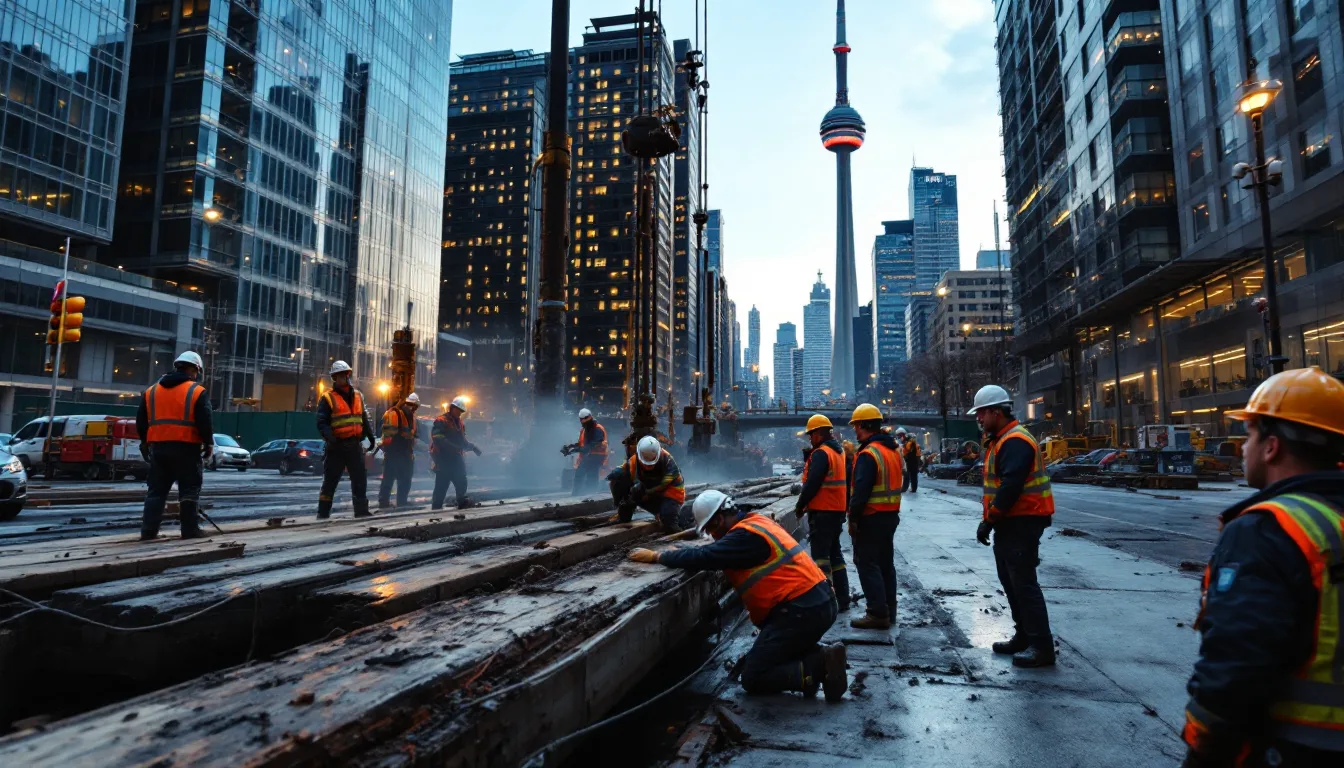
If you operate a piling business in Canada and you have searched “sell my piling business in Canada”, the variables that drive your sale price are Canada-specific in ways the broader category data does not capture. The named PE platforms with active deal posture in Canada in 2026, the EBITDA-tier multiples bands stated in C$ CAD, the jurisdiction-specific tax-arbitrage structuring (which is the single largest after-tax lever any owner has), the regulator transfer procedure under Canada Revenue Agency (CRA) and the relevant industry licensing body, and the 2024-2026 dated comparable transactions all reshape the multiple a buyer will pay. This page walks through the Canada valuation framework as piling businesses are actually trading in mid-2026, the named buyers actively acquiring here, and the regulator transfer + tax structuring that determine net-of-tax proceeds.
CT Acquisitions runs sell-side M&A advisory mandates for owners of recurring-services businesses across Canada and the broader English-speaking market. The introductory conversation is confidential and NDA-protected. This page is the localised valuation framework for 🇨🇦 Canada piling sellers, built from named-and-dated 2024-2026 transactional research rather than generic broker-listing rules of thumb.
Key Takeaways
- The detailed market sizing, named-buyer table, EBITDA-tier multiples bands, regulator transfer procedure, jurisdiction-specific tax-arbitrage structuring, and 2024-2026 dated compa…
- The Canadian pile-driving and deep foundations vertical operates under NAICS 238910 (Site Preparation Contractors) and NAICS 237310 (Highway Street and Bridge Construction) for tra…
- The pile-driving buyer pool overlaps significantly with the marine construction buyer pool given shared infrastructure customer base.
- Pile-driving multiples in Canada cluster slightly below marine construction multiples at the lower-middle market reflecting equipment commoditization and competitive bid pressure…
- Pile-driving operates primarily under provincial occupational health and safety regimes with limited federal touchpoint outside federally regulated worksites (airports, ports, fede…
What is the Canada piling M&A landscape in 2026?
The detailed market sizing, named-buyer table, EBITDA-tier multiples bands, regulator transfer procedure, jurisdiction-specific tax-arbitrage structuring, and 2024-2026 dated comparable transactions for Canada piling are set out below. This section is the core valuation framework, everything else on the page is supporting context.
The detailed market sizing, named-buyer table, EBITDA-tier multiples bands, regulator transfer procedure, jurisdiction-specific tax-arbitrage structuring, and 2024-2026 dated comparable transactions for Canada piling are set out below. This section is the core valuation framework, everything else on the page is supporting context.
18. PILE-DRIVING (Canada)
What is the market size and structure for pile-driving businesses in Canada?
The Canadian pile-driving and deep foundations vertical operates under NAICS 238910 (Site Preparation Contractors) and NAICS 237310 (Highway Street and Bridge Construction) for transportation infrastructure works, with significant overlap into NAICS 237990 (Other Heavy and Civil Engineering Construction) for major project subcontracts.
The Canadian pile-driving and deep foundations vertical operates under NAICS 238910 (Site Preparation Contractors) and NAICS 237310 (Highway Street and Bridge Construction) for transportation infrastructure works, with significant overlap into NAICS 237990 (Other Heavy and Civil Engineering Construction) for major project subcontracts. Statistics Canada reports NAICS 238910 generated approximately C$4.2 billion in operating revenue in 2024 (Statistics Canada Table 21-10-0018-01, Annual industry survey for construction, 2024 reference year). Pile-driving and deep foundations specifically represent an estimated C$1.1 billion to C$1.4 billion of that total (Canadian Geotechnical Society Industry Survey 2024; Deep Foundations Institute Canada Chapter 2024 Annual Report).
The seller pool is anchored by family-owned regional specialists with multi-generational technical depth. Bermingham Foundation Solutions (Hamilton Ontario, private, founded 1897, fifth-generation Bermingham family ownership) is the senior platform with an estimated C$120 to C$180 million in annual revenue (private company; industry estimate from Deep Foundations Institute Canada Chapter 2024 Member Directory). Bermingham operates across driven pile, drilled shaft, sheet pile, and helical pile and exports the Berminghammer line of diesel and hydraulic hammers globally. Foundex Explorations (Sydney Nova Scotia, private since 1965) anchors Atlantic Canada. Soletanche Bachy Canada (Quebec and Ontario, subsidiary of Soletanche Bachy SAS, part of Vinci Construction Grands Projets, EUR 71.6 billion 2024 group revenue per Vinci 2024 Annual Report 13 February 2025) competes on major project diaphragm wall and bored pile work. Bauer Foundations Canada (subsidiary of Bauer AG Schrobenhausen Germany, EUR 1.65 billion 2024 group revenue per Bauer Q4 2024 release 27 March 2025) operates large-diameter bored pile fleet.
Other named platforms include Janin Atlas (Quebec, CRH Canada subsidiary; CRH plc NYSE:CRH US$35.6 billion 2024 revenue per CRH Q4 2024 release 27 February 2025), Construction Demathieu et Bard (CDB) Canada (French parent Demathieu Bard EUR 1.05 billion 2024 group revenue), Pomerleau Foundation Solutions division, Helical Pier Systems (Calgary, private, screw-pile specialist serving oil and gas and remote infrastructure), Pile Master Pile Driving (Toronto private), Geo-Foundations Contractors (Toronto private), EBC Inc (Quebec private, civil with foundations capability), Aecon Foundations division, and AtkinsRealis Group (TSX:ATRL formerly SNC-Lavalin) Foundations Canada division.
The total addressable independent pile-driving and deep foundations seller pool with C$2 million to C$20 million in EBITDA is estimated at 45 to 65 companies nationally (Industry Canada Business Registry NAICS 238910 cross-referenced with Deep Foundations Institute Canada Chapter 2024 Member Directory and provincial corporate registries, June 2026 pull). Approximately 35 percent are first-generation owner-operators approaching succession decisions in the 2026 to 2030 window.
Who are the PE buyers in the Canada pile-driving sector?
The pile-driving buyer pool overlaps significantly with the marine construction buyer pool given shared infrastructure customer base. Brookfield Infrastructure Partners, CDPQ, OMERS Infrastructure, CPP Investments, OPTrust, and HOOPP all maintain Canadian infrastructure mandates as detailed in the marine section. Strategic acquirers active in Canadian deep foundations include Vinci Group (Paris, EUR 71.6 billion 2024 group revenue) through Soletanche Bachy Canada platform, Bauer Group AG (Schrobenhausen.
The pile-driving buyer pool overlaps significantly with the marine construction buyer pool given shared infrastructure customer base. Brookfield Infrastructure Partners, CDPQ, OMERS Infrastructure, CPP Investments, OPTrust, and HOOPP all maintain Canadian infrastructure mandates as detailed in the marine section. Strategic acquirers active in Canadian deep foundations include Vinci Group (Paris, EUR 71.6 billion 2024 group revenue) through Soletanche Bachy Canada platform, Bauer Group AG (Schrobenhausen Germany, EUR 1.65 billion 2024 revenue), Royal Boskalis Westminster (Papendrecht Netherlands, EUR 4.6 billion 2024 revenue per Boskalis 2024 Annual Report 6 March 2025) via offshore foundations capability, Keller Group plc (London LSE:KLR, GBP 2.94 billion 2024 revenue per Keller Group 2024 full year results 4 March 2025) which acquired US-based Hayward Baker and operates expanding Canadian presence, NSC Minerals subsidiary of CRH plc, and Royal IHC (Netherlands) for offshore wind foundations.
Australian capital active in Canadian foundations includes Macquarie Asset Management (Macquarie Infrastructure Partners V US$6.9 billion closed 2024), IFM Investors (A$221 billion AUM), AustralianSuper (A$365 billion AUM 30 June 2024), HostPlus (A$115 billion AUM 30 June 2024 per HostPlus Annual Report 30 October 2024), and Aware Super (A$185 billion AUM 30 June 2024 per Aware Super Annual Report 27 September 2024).
US PE platforms active in Canadian foundations include American Industrial Partners (New York, US$16 billion AUM end-2024) which has invested in industrial services platforms, Sterling Group (Houston, US$8 billion AUM), Wind Point Partners (Chicago, focused on industrial services), Gryphon Investors (San Francisco, US$9 billion AUM), One Equity Partners (New York, US$10 billion AUM), Kohlberg & Company (Mount Kisco New York, US$15 billion AUM), AEA Investors (New York, US$23 billion AUM), and Riverside Partners (Boston, US$3.5 billion AUM). Strategic US infrastructure acquirers include Granite Construction (NYSE:GVA), Sterling Infrastructure (NASDAQ:STRL) (US$2.1 billion 2024 revenue per Sterling Infrastructure Q4 2024 release 24 February 2025), and MasTec (NYSE:MTZ) (US$12.2 billion 2024 revenue).
Canadian mid-market sponsors active in pile-driving include Onex (C$50.5 billion fee-bearing capital), Northleaf Capital Partners (C$28 billion AUM), Fengate Asset Management (C$10 billion AUM), Instar Asset Management (mid-market infrastructure), Imperial Capital Group (Toronto, C$1.1 billion AUM), Clairvest Group (TSX:CVG) (Toronto, C$3.7 billion AUM), and Penfund (Toronto, mezzanine and equity).
What EBITDA multiples do Canadian pile-driving businesses sell for?
Pile-driving multiples in Canada cluster slightly below marine construction multiples at the lower-middle market reflecting equipment commoditization and competitive bid pressure, but converge at the upper-middle market where multi-province operations and major project pre-qualification create defensive moats. Band 1, Sub-C$2 million EBITDA, single-equipment-class operator (driven pile or screw pile only), owner-operator dependent, regional 50 to 100 mile radius : 3.0x to 4.5x SDE. Concentrated in Western Canada oil and.
Pile-driving multiples in Canada cluster slightly below marine construction multiples at the lower-middle market reflecting equipment commoditization and competitive bid pressure, but converge at the upper-middle market where multi-province operations and major project pre-qualification create defensive moats.
Band 1, Sub-C$2 million EBITDA, single-equipment-class operator (driven pile or screw pile only), owner-operator dependent, regional 50 to 100 mile radius: 3.0x to 4.5x SDE. Concentrated in Western Canada oil and gas service belt. Limited PE interest; strategic tuck-in candidates for Helical Pier Systems and similar Calgary platforms.
Band 2, C$2 to C$5 million EBITDA, multi-equipment-class (driven + augered + bored), provincial reach: 5.0x to 6.5x EBITDA. Active strategic interest from Bermingham, Soletanche Bachy, Bauer, and Janin Atlas for capability and geographic tuck-ins. Quebec-domiciled targets command modest premium reflecting CCQ compliance value.
Band 3, C$5 to C$15 million EBITDA, full deep foundations capability including secant pile and diaphragm wall, multi-province operations, P3 sub-contractor pre-qualified: 6.5x to 8.5x EBITDA. Sweet spot for Aecon, Pomerleau, EllisDon, and AtkinsRealis sub-contracting strategies. Brookfield Infrastructure middle-market sleeve and CDPQ Croissance participate selectively.
Band 4, C$15 to C$40 million EBITDA, integrated foundations + retention systems + dewatering, major transit and bridge project track record, full design-build capability: 8.0x to 10.5x EBITDA. Limited universe of perhaps 8 to 12 platforms nationally including Bermingham, Soletanche Bachy Canada, Bauer Foundations Canada, EBC Inc, and Aecon Foundations.
Band 5, C$40 million+ EBITDA, public infrastructure tier, multi-billion P3 prequalified consortium-eligible: 10.0x to 12.5x EBITDA. Anchored by Bermingham implied private valuation and comparison to Aecon Group public trading multiple of approximately 9.5x forward EBITDA plus 1.5 to 2.5 turns capability premium.
Equipment-heavy platforms with significant Junttan, Bauer, Soilmec, IHC, and Liebherr crawler-mounted rig fleets carry a real-asset floor underpinning enterprise value at approximately 0.6 to 0.8x book value of equipment fleet, providing downside protection in soft markets. Helical pile platforms serving the oil and gas remote infrastructure market trade at a 1.0 to 1.5 turn discount reflecting commodity exposure.
How do regulator transfer and licensing work for pile-driving businesses in Canada?
Pile-driving operates primarily under provincial occupational health and safety regimes with limited federal touchpoint outside federally regulated worksites (airports, ports, federal buildings, First Nations reserve lands, interprovincial pipelines). Ontario is governed by the Occupational Health and Safety Act (R.S.O. 1990 c. O.1) with construction-specific requirements in Ontario Regulation 213/91 Construction Projects . Section 28(1)(b) imposes the constructor obligation; pile-driving operations require certified pile-driver competency, crane operator certification under Ontario Regulation.
Pile-driving operates primarily under provincial occupational health and safety regimes with limited federal touchpoint outside federally regulated worksites (airports, ports, federal buildings, First Nations reserve lands, interprovincial pipelines).
Ontario is governed by the Occupational Health and Safety Act (R.S.O. 1990 c. O.1) with construction-specific requirements in Ontario Regulation 213/91 Construction Projects. Section 28(1)(b) imposes the constructor obligation; pile-driving operations require certified pile-driver competency, crane operator certification under Ontario Regulation 836 Construction Projects Sections 150 through 200, and Working at Heights training under O. Reg. 297/13. The Ministry of Labour Immigration Training and Skills Development (MLITSD) enforces compliance.
Quebec is governed by the Loi sur la sante et la securite du travail (CQLR c. S-2.1) as amended materially by the Modernization of the Occupational Health and Safety Regime Act (S.Q. 2021 c. 27, Royal Assent 6 October 2021), phased in through 2025. The Code de securite pour les travaux de construction (CQLR c. S-2.1 r. 4) Sections 3.10.1 through 3.10.13 specifically address pile-driving operations. The Commission des normes de l’equite de la sante et de la securite du travail (CNESST) enforces. The Regie du batiment du Quebec (RBQ) construction contractor licence (License RBQ Sub-Category 1.2 Foundations) is required and not transferable on a share sale where the licensed individual departs; buyer must confirm continuity of licensed person under R.R.Q. c. B-1.1 r. 9.
British Columbia is governed by the Workers Compensation Act (R.S.B.C. 2019 c. 1) and WorkSafeBC Occupational Health and Safety Regulation. Part 14 covers cranes and hoists; Part 8 covers personal protective equipment. BC Office of the Superintendent of Real Estate (OSRE) and provincial trades certification through SkilledTradesBC (rebranded from Industry Training Authority in 2023) administer crane operator certification. Alberta is governed by the Occupational Health and Safety Act (S.A. 2017 c. O-2.2) and Occupational Health and Safety Code. Alberta Apprenticeship and Industry Training administers crane and pile driver competency.
Canadian Standards Association (CSA Group) standards material to pile-driving include CSA Z150 Safety Code on Mobile Cranes (current edition 2020), CSA Z259 series for fall arrest systems, CSA Z248 Code for Tower Cranes (current edition 2017 reaffirmed 2022), and CSA Z276 LNG Production Storage and Handling Code for LNG-adjacent foundation works. Standards are referenced by provincial regulations but are not transactional gating items for share-sale transfers.
Federal interprovincial pipeline foundations fall under the Canadian Energy Regulator Act (S.C. 2019 c. 28 s. 10, in force 28 August 2019) administered by the Canada Energy Regulator (CER, renamed from National Energy Board). Canadian Nuclear Safety Commission (CNSC) licensed nuclear facility foundations require Nuclear Substance and Radiation Device Licence consideration. Federally regulated worksites including airports administered by Canadian Air Transport Security Authority (CATSA), federal buildings under Public Services and Procurement Canada (PSPC), and ports under Canada Marine Act all carry Canada Labour Code Part II Hazardous Occurrence Reporting requirements transferring with the works.
What tax structuring and arbitrage opportunities exist when selling a Canadian pile-driving business?
The full LCGE, capital gains inclusion rate, Section 85 rollover, Bill C-208 and Bill C-59 intergenerational transfer, and AMT framework described in the Marine Construction Section 5 above applies identically to pile-driving sellers. Key amplifications specific to pile-driving: Pile-driving sellers carry materially higher heavy-equipment depreciation balances than general civil contractors. CCA Class 38 (mobile equipment 30 percent declining balance) typically holds C$8 million to C$45 million in undepreciated capital cost.
The full LCGE, capital gains inclusion rate, Section 85 rollover, Bill C-208 and Bill C-59 intergenerational transfer, and AMT framework described in the Marine Construction Section 5 above applies identically to pile-driving sellers. Key amplifications specific to pile-driving:
Pile-driving sellers carry materially higher heavy-equipment depreciation balances than general civil contractors. CCA Class 38 (mobile equipment 30 percent declining balance) typically holds C$8 million to C$45 million in undepreciated capital cost for a C$25 to C$80 million revenue pile-driving operator. CCA Class 43 (manufacturing and processing equipment 30 percent) and CCA Class 10 (motor vehicles and computers 30 percent) add further. Recapture of CCA on asset sale structures creates material tax friction; share sale structures are strongly preferred by sellers but buyers must value carrying tax basis step-up forgone.
Quebec-domiciled pile-driving operators benefit from the Quebec investment and innovation tax credit (C3i) at 10 to 20 percent depending on regional indices, and the Refundable tax credit for the integration of information technologies (CIIIT). Scientific Research and Experimental Development (SR&ED) credit under Income Tax Act Section 248 supports pile-driving operators developing custom hammer designs, dynamic monitoring software, or instrumented load test programmes; SR&ED claims typically run C$200,000 to C$1.5 million annually for technically active platforms.
The Canadian Entrepreneurs Incentive (CEI) announced in Budget 2024 with reduced inclusion rate of 33.3 percent on the first C$2 million of qualifying capital gains for founders, was cancelled alongside the broader capital gains inclusion rate increase by the Mark Carney government on 21 March 2025 (Department of Finance Canada news release 21 March 2025). Founders should not plan for CEI as it does not exist in current law as of June 2026.
Family trust planning to multiply LCGE access across qualifying family members requires structuring 24 months pre-sale. Qualifying Small Business Corporation (QSBC) status requires 24-month asset test (more than 50 percent of fair market value in active business assets used principally in Canadian active business) and 24-month basic test (substantially all 90 percent of fair market value in active business assets) on the determination date. Pile-driving operators with significant cash, marketable securities, or non-operating real estate must purify ahead of sale.
How do the Investment Canada Act and Competition Act affect pile-driving M&A in Canada?
Pile-driving transactions fall under the same ICA Bill C-34 and Competition Act Bill C-59 framework described in Marine Construction Section 6, with the same 2026 thresholds: WTO investor C$1.452 billion, trade agreement investor C$2.179 billion, Competition Act size of parties and size of transaction C$93 million .
Pile-driving transactions fall under the same ICA Bill C-34 and Competition Act Bill C-59 framework described in Marine Construction Section 6, with the same 2026 thresholds: WTO investor C$1.452 billion, trade agreement investor C$2.179 billion, Competition Act size of parties and size of transaction C$93 million. Below those thresholds no mandatory pre-merger notification is required for non-Canadian or Canadian buyers respectively.
National security review under expanded Bill C-34 prescribed sectors potentially applies to pile-driving targets holding contracts at federal Department of National Defence (DND) facilities, sensitive Arctic infrastructure, federal critical infrastructure projects, or nuclear-licensed facilities. Pile-driving operators with CNSC-licensed nuclear facility foundation contracts (Bruce Power, OPG Darlington, OPG Pickering, CNL Chalk River, Point Lepreau NB Power) should expect non-Canadian buyer national security pre-closing notification under Section 11.1. The Voluntary Notification under Section 24.1 allows buyers to obtain certainty on national security review for transactions otherwise not subject to mandatory notification.
Critical minerals nexus under Bill C-34 potentially applies where pile-driving operators hold concentrated revenue exposure to critical mineral mining customers (lithium, cobalt, graphite, rare earths). The Canadian Critical Minerals List was last updated June 2024 and includes 31 minerals (Natural Resources Canada news release 26 June 2024).
What recent pile-driving transactions have occurred in Canada between 2024 and 2026?
Aecon Group acquisition of McNally Construction completed 11 March 2021 at C$110 million enterprise value (Aecon press release 11 March 2021) absorbing McNally pile-driving capability into Aecon Foundations. While dated, transaction continues to be the most relevant Canadian pile-driving comparable for valuation modelling. Keller Group acquisition of NCS Foundations (US-based, but parent Keller Group operates expanded Canadian platform) announced 7 May 2025 (Keller Group plc press release 7 May 2025).
- Aecon Group acquisition of McNally Construction completed 11 March 2021 at C$110 million enterprise value (Aecon press release 11 March 2021) absorbing McNally pile-driving capability into Aecon Foundations. While dated, transaction continues to be the most relevant Canadian pile-driving comparable for valuation modelling.
- Keller Group acquisition of NCS Foundations (US-based, but parent Keller Group operates expanded Canadian platform) announced 7 May 2025 (Keller Group plc press release 7 May 2025) for an undisclosed amount, supporting Keller’s North American deep foundations expansion that crosses into Canadian markets.
- Bauer Group expansion of Bauer Foundations Canada Ontario operations with new equipment investment announced 12 September 2024 (Bauer Group press release 12 September 2024) supporting Eglinton Crosstown LRT and Ontario Line subcontract awards.
- Pomerleau acquisition of ITC Construction Group announced 8 October 2024 (Pomerleau press release 8 October 2024). BC foundations capability integration including pile-driving on transit and tower projects.
- Bird Construction acquisition of Jacob Bros Construction for C$83 million cash plus C$15 million earnout closed 28 June 2024 (Bird Construction press release 14 May 2024). BC-based civil specialist with deep foundations capability.
- AtkinsRealis (TSX:ATRL) sale of Linxon JV stake to Hitachi Energy announced 14 June 2024 and closed 30 September 2024 for approximately C$255 million (AtkinsRealis press release 14 June 2024). Reorganization of capability mix indirectly affects AtkinsRealis Foundations Canada deal flow.
- EllisDon acquisition of select assets from PCL on combined infrastructure projects through 2024 to 2026 (industry reporting; specific transactions not press-released given private nature of both buyers and sellers). Reflects ongoing consolidation pressure in Canadian civil platforms.
- Crosslinx Transit Solutions consortium (Aecon + ACS Dragados + EllisDon + AtkinsRealis) ongoing pile-driving and tunnel boring subcontract awards through Eglinton Crosstown LRT revenue service launch in fall 2025 (Metrolinx project page through May 2025). Aecon Foundations division and Bauer Foundations Canada subcontracts material to platform revenue.
- ONxpress Transportation Partners (Webuild + Hitachi Rail + Transdev + Plenary Group) Ontario Line south civil works subcontracts ongoing through 2025 to 2030 financial close (Metrolinx and Infrastructure Ontario joint release 17 November 2022, with subsequent execution updates through May 2025). Bermingham Foundation Solutions and Soletanche Bachy Canada subcontracts.
- CDPQ Infra Reseau express metropolitain (REM) extension ongoing pile-driving subcontracts through 2024 to 2027 with EBC Inc and Pomerleau Foundation Solutions divisions (CDPQ Infra project updates through April 2025).
How do provincial sub-markets differ for pile-driving businesses in Canada?
Ontario carries approximately 42 percent of national pile-driving spend, anchored by Metrolinx Eglinton Crosstown LRT (under Crosslinx Transit Solutions consortium of Aecon + ACS Dragados + EllisDon + AtkinsRealis), Ontario Line (under ONxpress consortium of Webuild + Hitachi Rail + Transdev + Plenary Group), Hurontario LRT (under Mobilinx consorti…
Ontario carries approximately 42 percent of national pile-driving spend, anchored by Metrolinx Eglinton Crosstown LRT (under Crosslinx Transit Solutions consortium of Aecon + ACS Dragados + EllisDon + AtkinsRealis), Ontario Line (under ONxpress consortium of Webuild + Hitachi Rail + Transdev + Plenary Group), Hurontario LRT (under Mobilinx consortium), Hamilton LRT revival project announced 28 February 2024 (Province of Ontario news release 28 February 2024), and ongoing Greater Toronto Area condominium tower foundations market estimated at C$280 to C$340 million annually (Building Industry and Land Development Association GTA Quarterly Reports 2024). Toronto-Pearson Airport Capacity Improvement Programme through Greater Toronto Airports Authority drives additional foundations spend.
Quebec carries approximately 24 percent of national pile-driving spend, anchored by Montreal REM extension (CDPQ Infra C$15.7 billion total programme), Quebec City tramway restarted under Premier Francois Legault announcement 21 November 2024 with CDPQ Infra leading delivery as confirmed in Province of Quebec budget 12 March 2024, Lion Electric and Northvolt manufacturing plant foundations (Northvolt Saint-Basile-le-Grand suspended 16 September 2024 amid Northvolt AB Chapter 11 filing in Sweden 21 November 2024; Lion Electric CCAA filing 18 December 2024 created additional uncertainty). Quebec foundations sector benefits from Investissement Quebec capital availability.
British Columbia carries approximately 22 percent of national pile-driving spend, anchored by Vancouver SkyTrain Broadway Subway Extension under SkyTrain Stations Partners consortium (Acciona + Ghella), SkyTrain Surrey Langley Extension under SLE Partners (Aecon + Plenary Group + Acciona) financial close 11 December 2024 (TransLink and Province of BC joint release 11 December 2024) with C$6 billion budget including substantial pile-driving scope, Vancouver Pattullo Bridge replacement under Kiewit, Site C dam completion through 2025 to 2026 by BC Hydro with foundations works substantially complete, and Vancouver and Burnaby high-rise condominium foundations market.
Alberta carries approximately 9 percent of national pile-driving spend, concentrated in Calgary Green Line LRT Stage 1 cancellation 16 September 2024 by Premier Danielle Smith with replacement plan announced 23 January 2025, Edmonton Valley Line West under Marigold Infrastructure Partners (Bechtel + COLAS + Hitachi Rail), oil sands tailings management foundations, and helical pile-driving for remote oil and gas infrastructure. Atlantic Canada carries approximately 6 percent of national pile-driving spend across Newfoundland and Labrador Muskrat Falls completion remediation, New Brunswick Mactaquac Dam refurbishment in scoping phase by NB Power, and Nova Scotia Halifax Centre Plan condominium foundations.
What labor and workforce challenges affect Canadian pile-driving businesses?
Canadian pile-driving labour is structured along provincial trade lines with significant union concentration in central Canada. International Union of Operating Engineers (IUOE) Local 793 (Ontario) drives crane operator and pile-driver competency. Pile Drivers Bridge and Wharf Builders Union of Local 2404 (UBC Carpenters and Joiners) organizes pile-driving crews in BC. Quebec FTQ-Construction affiliates drive Quebec pile-driving labour rates under CCQ harmonized collective agreement (current term 30 April 2025 through 28.
Canadian pile-driving labour is structured along provincial trade lines with significant union concentration in central Canada. International Union of Operating Engineers (IUOE) Local 793 (Ontario) drives crane operator and pile-driver competency. Pile Drivers Bridge and Wharf Builders Union of Local 2404 (UBC Carpenters and Joiners) organizes pile-driving crews in BC. Quebec FTQ-Construction affiliates drive Quebec pile-driving labour rates under CCQ harmonized collective agreement (current term 30 April 2025 through 28 April 2029).
Crane operator certification is mandatory in all provinces for hoist-and-drop and vibratory pile-driving operations. Ontario requires Crane Operator 339A (mobile crane operator) or 339B (tower crane operator) Red Seal certification under the Ontario College of Trades and Apprenticeship Act (S.O. 2009 c. 22) as amended through 2023. Quebec requires CCQ competency card with Operating Engineer competency. BC requires Crane Council BC certification harmonized with national Red Seal under SkilledTradesBC. Alberta requires Apprenticeship and Industry Training Crane and Hoist Operator certification.
Provincial workers compensation rates for pile-driving in 2026: WSIB Ontario Class G NAICS 238910 C$6.42 per C$100 of insurable earnings (WSIB 2026 Premium Rates Manual); WorkSafeBC Classification Unit 721014 Pile Driving C$5.84 per C$100 (WorkSafeBC 2026 Rate Sheet); WCB Alberta Industry 42101 Pile Driving and Foundation Construction C$3.42 per C$100 (WCB Alberta 2026 Industry Rates); CNESST Quebec Unite 80050 C$5.14 per C$100 (CNESST Taux de prime 2026); WCB Nova Scotia Rate Group 17 C$4.62 per C$100 (WCB Nova Scotia 2026 Rate Manual). Experience Rating Adjustment mechanisms allow buyer inheritance of seller history.
Federal pile-driving on First Nations reserve land is governed by Canada Labour Code Part II (R.S.C. 1985 c. L-2) and Canada Occupational Health and Safety Regulations (SOR/86-304). Indigenous Services Canada First Nations Infrastructure Investment Plans (FNIIP) drive remote infrastructure pile-driving demand. Inflation Reduction Act spillover demand from US clean energy projects has tightened equipment availability and operator wages 2024 to 2025 across the BC and Ontario cross-border equipment market.
Temporary Foreign Worker Programme restrictions effective 26 September 2024 limit low-wage stream access to 10 percent of workforce. Pile-driving sector benefited historically from European operators (Junttan Finnish-trained, Bauer German-trained); changes affect cost of importing specialized operators on short-term project basis.
What working capital and asset considerations apply to pile-driving M&A in Canada?
Pile-driving working capital intensity runs 12 to 20 percent of revenue, lower than dredging but higher than general civil contractors due to mobilization costs, mat and crane pad inventories, and dynamic monitoring instrumentation. Pre-mobilization mobilization advances are standard on major projects at 5 to 10 percent of contract value. Equipment fleet is the dominant balance sheet item. Used Junttan PMx range hydraulic pile-driving rigs trade at C$650,000 to C$3.2 million.
Pile-driving working capital intensity runs 12 to 20 percent of revenue, lower than dredging but higher than general civil contractors due to mobilization costs, mat and crane pad inventories, and dynamic monitoring instrumentation. Pre-mobilization mobilization advances are standard on major projects at 5 to 10 percent of contract value.
Equipment fleet is the dominant balance sheet item. Used Junttan PMx range hydraulic pile-driving rigs trade at C$650,000 to C$3.2 million depending on hammer weight and crawler base configuration (Junttan Oy resale market, Spring 2025 European auction data). Used Bauer BG range rotary drilling rigs trade at C$1.4 million to C$4.8 million. Used Soilmec SR range rigs trade at C$1.1 million to C$3.9 million. Used IHC Hydrohammer S-series trade at C$850,000 to C$2.6 million. Used Liebherr LRB pile-driving and drilling rigs trade at C$1.2 million to C$4.2 million. Used Delmag D series diesel hammers trade at C$180,000 to C$650,000. Crawler crane fleet (Manitowoc, Liebherr, Sany) supporting drop hammer and template work trade at C$800,000 to C$3.8 million per unit used.
Asset financing through PACCAR Financial Canada, Element Fleet Management (TSX:EFN), CWB Financial Group (TSX:CWB) Maxium Financial, Trans Lease, Wajax (TSX:WJX), Strongco, and Cubex supports new equipment acquisition with 60 to 84 month term structures. Sale-leaseback structures through equipment captives at 6.5 to 9.5 percent rates as of June 2026 (Bank of Canada overnight rate at 2.75 percent following five consecutive cuts through April 2025) support deleveraging at sale.
Bonding capacity runs C$80 to C$300 million aggregate for mid-market pile-driving platforms through Travelers Canada, Liberty Mutual Canada, Zurich Canada, Chubb Insurance Canada, Trisura Group (TSX:TSU), Intact Financial (TSX:IFC) Specialty Solutions, and The Guarantee Company of North America. Single-project bonds at C$25 to C$50 million standard for major civil prequalification.
Insurance retention for pile-driving includes professional indemnity for design-build engineered foundations (C$10 to C$50 million layered), commercial general liability (C$5 to C$25 million primary), pollution legal liability (C$5 to C$50 million), and contractor pollution liability (CPL) for contaminated-site driving. Builders risk all-risk policies for in-construction works run C$25 to C$100 million per project. Vibration monitoring and adjacent-property damage claims are the dominant claims category; sellers with histories of underground utility strikes or adjacent settlement claims carry pricing pressure.
Backlog quality assessment requires close reading of P3 subcontract terms (typically liquidated damages capped at 10 to 25 percent of contract value, parent company guarantees from prime contractor consortium members), Metrolinx and Infrastructure Ontario master subcontractor agreements, and provincial transportation ministry standing offers.
Why should I consider a strategic acquisition for my Canadian pile-driving business?
CT Acquisitions delivers three structural advantages for Canadian pile-driving and deep foundations sellers versus alternative advisory paths. First, deep foundations buyer mapping. We maintain direct desk-level relationships with the four named European strategic platforms with Canadian capability (Vinci through Soletanche Bachy Canada, Bauer Group through Bauer Foundations Canada, Keller Group plc, and Royal Boskalis), the US strategic universe (Sterling Infrastructure NASDAQ:STRL, Granite Construction NYSE:GVA, MasTec NYSE:MTZ, Tutor Perini), the Canadian.
CT Acquisitions delivers three structural advantages for Canadian pile-driving and deep foundations sellers versus alternative advisory paths.
First, deep foundations buyer mapping. We maintain direct desk-level relationships with the four named European strategic platforms with Canadian capability (Vinci through Soletanche Bachy Canada, Bauer Group through Bauer Foundations Canada, Keller Group plc, and Royal Boskalis), the US strategic universe (Sterling Infrastructure NASDAQ:STRL, Granite Construction NYSE:GVA, MasTec NYSE:MTZ, Tutor Perini), the Canadian consolidators (Aecon, EllisDon, Pomerleau, Bird Construction, AtkinsRealis), and the infrastructure pension buyer base (Brookfield Infrastructure, CDPQ, OMERS, OPTrust, CPP Investments, HOOPP, BCI). We pre-package vendor due diligence in formats accepted by Brookfield Infrastructure, OMERS Infrastructure, CDPQ, Macquarie Infrastructure Partners, and IFM Investors diligence templates.
Second, technical fluency on deep foundations diligence. Our process workstream includes Dynamic Load Testing (DLT) historical data review, Statnamic Load Testing review, Pile Driving Analyzer (PDA) record interpretation, Crosshole Sonic Logging (CSL) record review for bored pile integrity, geotechnical baseline report (GBR) review on differing site conditions exposure, and vibration monitoring claims history reconciliation. We coordinate with seller geotechnical consultants (Golder Associates now WSP TSX:WSP, Stantec TSX:STN, Tetra Tech NASDAQ:TTEK, GHD Pty Ltd, Wood plc through Amentum Holdings) to package technical capability statements that survive strategic buyer technical diligence.
Third, succession planning integration. Approximately 35 percent of the addressable Canadian pile-driving seller pool comprises first-generation owner-operators in the 2026 to 2030 succession window. Our work coordinates with seller tax counsel on LCGE multiplication across qualifying family members under Income Tax Act Section 110.6 minimum 24-month QSBC purification, Section 85 rollover modelling for crystallization steps, Bill C-208 and Bill C-59 intergenerational transfer compliance for genuine family succession scenarios, and AMT modelling on gains above C$250,000 per individual. We coordinate vendor representation and warranty insurance binding through Beazley, AIG Canada, AXA XL Canada, and Liberty Global Transaction Solutions to achieve enhanced terms and longer claims periods. For sellers contemplating partial liquidity through a rollover equity component, we structure recap transactions that preserve LCGE access on the cash component while deferring tax on rollover equity through Section 85 elections.
How CT Acquisitions runs Canada piling sale mandates
CT Acquisitions is a US sell-side advisor with active cross-border M&A deal flow into Canada. Our practice connects Canada owners to: (a) the named Canada PE platforms documented above with active deal posture in your size band and sub-vertical; (b) cross-border US strategic acquirers running an international rollup thesis in your vertical; (c) UK / European PE platforms (Apax, Cinven, EQT, Bridgepoint, Hg, Inflexion, CVC, Permira, BC Partners, Hellman &.
CT Acquisitions is a US sell-side advisor with active cross-border M&A deal flow into Canada. Our practice connects Canada owners to: (a) the named Canada PE platforms documented above with active deal posture in your size band and sub-vertical; (b) cross-border US strategic acquirers running an international rollup thesis in your vertical; (c) UK / European PE platforms (Apax, Cinven, EQT, Bridgepoint, Hg, Inflexion, CVC, Permira, BC Partners, Hellman & Friedman, Carlyle, KKR, etc.) running cross-border platforms. The introductory conversation is confidential, NDA-protected, and walks through the band-specific buyer pool, the regulator-transfer timeline at Canada Revenue Agency (CRA), and the tax-arbitrage structuring that determines your net-of-tax proceeds.
What EBITDA multiples apply by deal size in 2026?
EBITDA multiples for lower middle market businesses vary by size, buyer type, and vertical. The table below shows typical bands for privately-held sellers in 2026 based on GF Data and Axial 2025 benchmarks.
| EBITDA size band | Typical multiple | Dominant buyer type |
|---|---|---|
| $500K to $1M | 3.0x to 4.5x | Individual buyers, ETA, small local PE |
| $1M to $3M | 4.0x to 6.0x | Search funds, small PE, family offices |
| $3M to $10M | 5.5x to 8.0x | Lower middle market PE, strategic tuck-ins |
| $10M to $25M | 7.0x to 10.5x | Middle market PE platforms, strategic acquirers |
Frequently asked questions: selling Canada piling businesses in 2026
What multiple should I expect for my Canada piling business in 2026?
Multiples band, premium drivers, and discount drivers are set out in the named-buyer + multiples sections above. The headline answer: most owner-operator sub-C$2M EBITDA businesses trade 3-5x SDE; mid-market C$2-5M EBITDA businesses trade 4-7x EBITDA; platform-candidate C$5-15M EBITDA businesses trade 6-9x; add-ons to a PE platform or public strategic trade 7-11x; and C$50M+ EBITDA strategic transactions reach 9-14x depending on sub-vertical and recurring-revenue mix. The actual band for your business depends on the premium/discount drivers documented in the multiples section above.
Which PE platforms and strategic acquirers are actively acquiring Canada piling businesses in 2026?
The named-buyers section above lists the 3-5 most-active acquirers in Canada for piling as of mid-2026, with ownership, HQ, recent acquisitions, and approximate revenue band documented per buyer. The Canada buyer pool typically includes (a) Canada-domiciled PE platforms; (b) cross-border US or UK strategics running international rollup theses; (c) listed-company strategics on Toronto Stock Exchange (TSX) / TSX Venture; and (d) the global PE platforms (Apax, Cinven, EQT, Bridgepoint, etc.) running cross-border platforms.
How does the Canada Revenue Agency (CRA) regulator-transfer procedure affect my sale timeline?
The regulator-transfer procedure section above documents the specific consents, novations, or new-entity applications required for a Canada piling sale. Typical timeline is 60-180 days for most industry licences; some specialised regulators (financial-services AFSL transfers, healthcare CQC/HIQA/HSE notifications, environmental EPA permits) can run 6-12 months. Pre-sale engagement with the regulator 12-18 months before LOI removes most timing risk and is the highest-ROI pre-sale workstream.
What tax-arbitrage structuring is available to Canada piling sellers in 2026?
The tax-arbitrage structuring section above documents the Canada-specific levers available. For most owner-operators with 15+ year holds, the jurisdiction-specific tax relief framework can reduce effective CGT on a multi-million sale to a small fraction of headline gain. The specific arbitrage depends on: (a) ownership tenure (15+ year holds open up the most powerful exemptions); (b) seller age (some reliefs are age-gated at 55+); (c) entity structure (share sale vs asset sale, individual vs corporate seller, holdco vs trading-company structure); (d) post-completion plans (rollover into replacement asset; super contribution; retirement). Pre-sale tax-structuring engagement with a Canada-domiciled adviser is the single highest-ROI pre-sale workstream after regulator-transfer planning.
What recent 2024-2026 dated comparable transactions in Canada piling should I know about?
The recent-transactions section above lists the 1-3 most-relevant dated comparable transactions in Canada piling from 2024-2026 with named buyer, named target, approximate consideration where disclosed, and source citations. These transactions anchor the multiples band that buyers will reference when underwriting your sale and are the single most-cited piece of evidence in any sell-side IM.
Does CT Acquisitions advise on cross-border M&A from Canada?
Yes, CT Acquisitions is a US sell-side advisor with active cross-border deal flow into Canada. The introductory conversation maps your trailing-12-month revenue and EBITDA in C$ CAD to the band-specific buyer pool, identifies the 18-24 month pre-sale workstream priorities specific to Canada piling, walks through the named buyers actively acquiring in Canada at your size band, and pre-positions the tax-arbitrage outcome that determines your net-of-tax proceeds.