
Sell Your Marine Construction Business in Australia in 2026: Multiples, PE Buyers, Regulator Transfer, Tax
Selling your marine construction business in Australia in 2026 involves country-specific mechanics that US-focused advisors miss. ASIC transfer notifications, ATO capital gains treatment with small business CGT concessions, and industry-specific certification transferability all shape both deal structure and after-tax proceeds. Multiples clear 4-10x EBITDA at platform scale depending on recurring revenue mix and contract book depth. Named PE-backed acquirers and regional consolidators are active across most verticals.
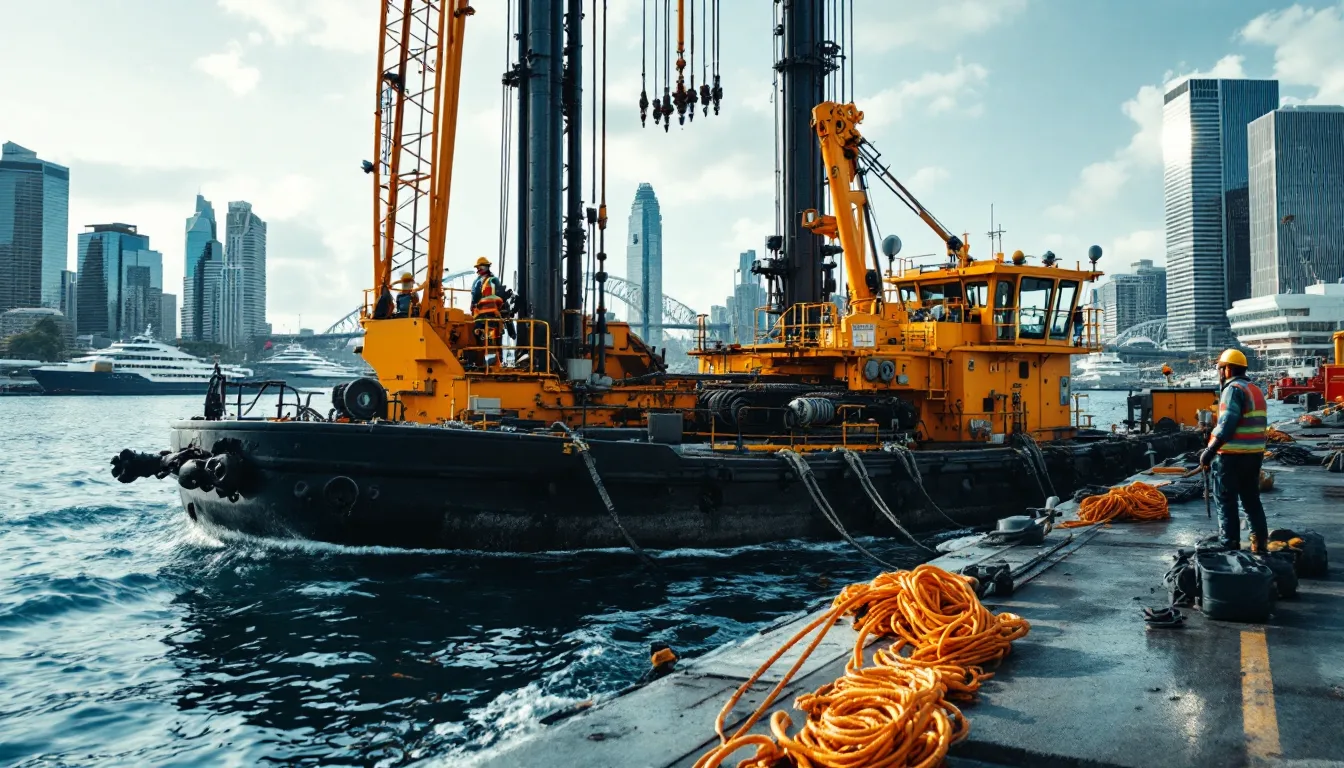
If you operate a marine construction business in Australia and you have searched “sell my marine construction business in Australia”, the variables that drive your sale price are Australia-specific in ways the broader category data does not capture. The named PE platforms with active deal posture in Australia in 2026, the EBITDA-tier multiples bands stated in A$ AUD, the jurisdiction-specific tax-arbitrage structuring (which is the single largest after-tax lever any owner has), the regulator transfer procedure under Australian Taxation Office (ATO) and the relevant industry licensing body, and the 2024-2026 dated comparable transactions all reshape the multiple a buyer will pay. This page walks through the Australia valuation framework as marine construction businesses are actually trading in mid-2026, the named buyers actively acquiring here, and the regulator transfer + tax structuring that determine net-of-tax proceeds.
CT Acquisitions runs sell-side M&A advisory mandates for owners of recurring-services businesses across Australia and the broader English-speaking market. The introductory conversation is confidential and NDA-protected. This page is the localised valuation framework for 🇦🇺 Australia marine construction sellers, built from named-and-dated 2024-2026 transactional research rather than generic broker-listing rules of thumb.
Key Takeaways
- The detailed market sizing, named-buyer table, EBITDA-tier multiples bands, regulator transfer procedure, jurisdiction-specific tax-arbitrage structuring, and 2024-2026 dated compa…
- The Australian marine-construction vertical sits primarily inside ANZSIC Class 3109 (Heavy and Civil Engineering Construction) with secondary classification under ANZSIC Class 3212…
- Australian lower mid-market sponsors active in marine and civil engineering services: Allegro Funds (Sydney) at A$5.5 billion AUM; specialist in operational turnarounds; portfolio…
- Marine-construction is asset-heavy with high contract retention and defects liability tail exposure, which compresses multiples versus pure services peers.
- The Australian Maritime Safety Authority (AMSA) regulates Domestic Commercial Vessels (DCVs) under the Marine Safety (Domestic Commercial Vessel) National Law Act 2012, which fully…
What is the Australia marine construction M&A landscape in 2026?
The detailed market sizing, named-buyer table, EBITDA-tier multiples bands, regulator transfer procedure, jurisdiction-specific tax-arbitrage structuring, and 2024-2026 dated comparable transactions for Australia marine construction are set out below. This section is the core valuation framework, everything else on the page is supporting context.
The detailed market sizing, named-buyer table, EBITDA-tier multiples bands, regulator transfer procedure, jurisdiction-specific tax-arbitrage structuring, and 2024-2026 dated comparable transactions for Australia marine construction are set out below. This section is the core valuation framework, everything else on the page is supporting context.
24. MARINE-CONSTRUCTION (Australia)
What is the market size and structure for marine construction in Australia?
The Australian marine-construction vertical sits primarily inside ANZSIC Class 3109 (Heavy and Civil Engineering Construction) with secondary classification under ANZSIC Class 3212 (Site Preparation Services) for marine piling and dredging mobilisation works. The Australian Bureau of Statistics (ABS) Construction Work Done publication (Cat. 8755.0, March quarter 2026 release) places total heavy and civil engineering construction at A$32.7 billion in the 2024-25 financial year, with marine and port infrastructure works estimated.
The Australian marine-construction vertical sits primarily inside ANZSIC Class 3109 (Heavy and Civil Engineering Construction) with secondary classification under ANZSIC Class 3212 (Site Preparation Services) for marine piling and dredging mobilisation works. The Australian Bureau of Statistics (ABS) Construction Work Done publication (Cat. 8755.0, March quarter 2026 release) places total heavy and civil engineering construction at A$32.7 billion in the 2024-25 financial year, with marine and port infrastructure works estimated by the Department of Infrastructure, Transport, Regional Development, Communications and the Arts (DITRDCA) at approximately A$4.2 billion annually across wharf construction, dredging, breakwater works, marine piling and offshore renewable energy foundations.
The Australian Renewable Energy Agency (ARENA) February 2025 Offshore Wind Roadmap Update confirmed A$58 billion of committed offshore wind project pipeline through 2035, materially expanding the addressable marine-construction market beyond traditional port and harbour works. Infrastructure Australia’s 2025 Infrastructure Priority List flagged A$12.4 billion of port capacity expansion across NSW Ports, Port of Brisbane, Fremantle Ports and Port of Melbourne as either committed or in detailed feasibility.
The top 5 platforms by Australian marine-construction revenue (per IBISWorld Report E3109b February 2026 and company financial statements):
- McConnell Dowell is a subsidiary of Aveng Group Limited (JSE: AEG), South African parent that completed its primary listing migration from JSE to ASX on 30 September 2024 per Aveng investor announcement. FY25 Australian marine works revenue approximately A$580 million.
- John Holland Group is wholly-owned by China Communications Construction Company (CCCC, SSE: 601800; HKEX: 1800) since the A$1.15 billion acquisition completed April 2015 per Reuters reporting. CCCC Group ownership has triggered Foreign Investment Review Board (FIRB) ongoing notification obligations.
- CIMIC Group’s UGL subsidiary delisted from ASX in May 2022 following HOCHTIEF AG (Germany) acquisition of remaining 21.4% stake; HOCHTIEF is controlled by ACS Group (BME: ACS) per Reuters 13 May 2022.
- Civmec Limited (ASX: CVL) was founded by John Fitzgerald and Patrick Tallon; dual-listed Singapore and ASX; Henderson WA fabrication facility services offshore oil and gas plus naval shipbuilding; FY25 revenue A$1.06 billion per Civmec FY25 results announcement August 2025.
- Boskalis Australia Pty Ltd is a subsidiary of Royal Boskalis Westminster N.V., taken private by HAL Investments together with the Heerema family and partner SHV Energy on 9 March 2022 at €4.2 billion EV per Reuters 8 March 2022. Australian dredging operations focus on capital and maintenance dredging at Newcastle, Hay Point and Port Hedland.
The total addressable seller pool of A$5M to A$75M EBITDA owner-operated marine-construction businesses sits at approximately 180 to 220 entities per Australian Securities and Investments Commission (ASIC) financial reports filed for proprietary marine-construction enterprises in the 2024 calendar year.
What is the PE buyer landscape for Australian marine construction businesses?
Australian lower mid-market sponsors active in marine and civil engineering services: Allegro Funds (Sydney) at A$5.5 billion AUM; specialist in operational turnarounds; portfolio includes Toll Group (global logistics acquired from Japan Post May 2021) and PMP Limited. Anchorage Capital Partners (Sydney) at A$1.5 billion AUM; deep value lower mid-market. Adamantem Capital (Sydney) at A$1.1 billion in Fund III closed June 2023; targets A$50M to A$300M EBITDA platforms. Pacific Equity Partners.
Australian lower mid-market sponsors active in marine and civil engineering services:
- Allegro Funds (Sydney) at A$5.5 billion AUM; specialist in operational turnarounds; portfolio includes Toll Group (global logistics acquired from Japan Post May 2021) and PMP Limited.
- Anchorage Capital Partners (Sydney) at A$1.5 billion AUM; deep value lower mid-market.
- Adamantem Capital (Sydney) at A$1.1 billion in Fund III closed June 2023; targets A$50M to A$300M EBITDA platforms.
- Pacific Equity Partners (PEP) (Sydney) is Australia’s largest PE platform at A$10 billion AUM; PEP Fund VII closed A$3.85 billion in October 2024 per Australian Financial Review.
- CPE Capital (formerly Catalyst Investment Managers) at A$700 million Fund IV closed October 2023.
- Quadrant Private Equity (Sydney) Quadrant Fund 7 closed A$1.24 billion in August 2024 per Australian Financial Review.
- Crescent Capital Partners (Sydney) Crescent Capital Fund VIII final close at A$1.5 billion announced February 2025 per AFR.
- Next Capital (Sydney) at A$650 million AUM; Fund V closed July 2023.
- BGH Capital (Melbourne) BGH Fund II closed A$3.6 billion September 2022 per Reuters.
- Pemba Capital Partners (Sydney) Pemba Fund IV closed A$675 million February 2024 per AFR.
Larger sponsor capital available for marine-construction roll-ups:
- Brookfield Asset Management (Toronto/Sydney) Brookfield Infrastructure Partners owns AusNet Services post A$10.2 billion take-private completed February 2022.
- KKR & Co KKR Australia portfolio includes Colonial First State (acquired from Commonwealth Bank for A$1.7 billion December 2021).
- Blackstone Australian portfolio includes Crown Resorts following A$8.9 billion take-private completed June 2022 per Reuters.
- Macquarie Asset Management MIRA’s Macquarie Infrastructure Partners IV deployed in Vocus Group take-private A$3.5 billion July 2021.
- EQT Infrastructure EQT VI deployed in Icon Group oncology A$2.5 billion September 2022.
US and global strategic acquirers active in Australian marine markets:
- Boskalis Australia (HAL Investments + Heerema + SHV Energy consortium).
- Van Oord Australia at Royal Van Oord N.V. parent owned by Van Oord family (Netherlands).
- Jan De Nul Australia Belgian family-owned by Saverys family through holding Sofidra SA.
- DEME Group (EBR: DEME) Belgian, demerged from CFE Group October 2022.
- TMS Maritime / Total Marine Services Singapore-headquartered, private.
- Royal HaskoningDHV Netherlands employee-owned engineering group.
- Worley Limited (ASX: WOR) engineering and project delivery; FY25 revenue A$11.5 billion.
- GHD Group Employee-owned global engineering; Australian headquarters Sydney.
- Acciona Australia Spanish parent Acciona S.A. (BME: ANA); active in offshore wind installations.
- Laing O’Rourke UK-based privately held by O’Rourke family; recent Sydney Metro West and Snowy 2.0 marine elements.
What EBITDA multiples do Australian marine construction businesses sell for?
Marine-construction is asset-heavy with high contract retention and defects liability tail exposure, which compresses multiples versus pure services peers. Bands reflect 2024-25 transaction activity tracked through Mergermarket Australia and AFR Street Talk: Sub-A$2M EBITDA : 3.5x to 4.5x EBITDA. Owner-operator concentration discount; thin project backlog; limited equipment fleet means buyer must fund growth capex. A$2M to A$5M EBITDA : 4.5x to 6.0x EBITDA. Crossover point where regional sub-contractors enter PE.
Marine-construction is asset-heavy with high contract retention and defects liability tail exposure, which compresses multiples versus pure services peers. Bands reflect 2024-25 transaction activity tracked through Mergermarket Australia and AFR Street Talk:
- Sub-A$2M EBITDA: 3.5x to 4.5x EBITDA. Owner-operator concentration discount; thin project backlog; limited equipment fleet means buyer must fund growth capex.
- A$2M to A$5M EBITDA: 4.5x to 6.0x EBITDA. Crossover point where regional sub-contractors enter PE platform consideration. Requires demonstrable 18-month backlog and at least 3 substantive principal contractor relationships.
- A$5M to A$15M EBITDA: 5.5x to 7.5x EBITDA. Premium for offshore wind foundation specialisation; AMSA Domestic Commercial Vessel (DCV) Class 1 certification; ISO 45001 + ISO 14001 + AS/NZS 4801 trifecta accreditation.
- A$15M to A$50M EBITDA: 7.0x to 9.0x EBITDA. Platform tier; pricing approaches strategic levels for businesses with proprietary jack-up barge fleet or pile-driving spread suitable for offshore wind monopile installation.
- A$50M+ EBITDA: 8.5x to 11.0x EBITDA. Strategic premium; benchmark anchored to Civmec ASX trading multiple (FY25 EV/EBITDA approximately 8.2x per Bloomberg consensus February 2026) and McConnell Dowell parent Aveng demerger valuation discussions reported in AFR Street Talk November 2025.
Structural premiums:
- Offshore wind foundation track record adds 1.5x to 2.0x turn premium
- AMSA Recognised Organisation status on vessel survey adds 0.5x
- Native Title agreements in place across operating footprint adds 0.5x for buyer regulatory de-risking
- Indigenous Land Use Agreement (ILUA) coverage on coastal operating zones adds 0.3x to 0.5x
Structural discounts:
- Single-customer concentration above 35% strips 1.0x to 1.5x
- Pre-1990 vessel fleet age strips 0.5x to 1.0x against asset replacement reserve
- CFMEU EBA exposure (post 23 August 2024 administration) is now buyer-neutral to mildly positive given PwC administrator wage reset, reversing the historical 0.5x discount
How do regulator transfer and licensing work when selling a marine construction business in Australia?
The Australian Maritime Safety Authority (AMSA) regulates Domestic Commercial Vessels (DCVs) under the Marine Safety (Domestic Commercial Vessel) National Law Act 2012, which fully commenced on 1 July 2018 with AMSA assuming sole regulator status from state agencies. Marine-construction buyers face a 90 to 180 day vessel certificate transfer process under Marine Order 503 (Certificates of Survey) and Marine Order 504 (Certificates of Operation), with transfer applications requiring Recognised Organisation.
The Australian Maritime Safety Authority (AMSA) regulates Domestic Commercial Vessels (DCVs) under the Marine Safety (Domestic Commercial Vessel) National Law Act 2012, which fully commenced on 1 July 2018 with AMSA assuming sole regulator status from state agencies. Marine-construction buyers face a 90 to 180 day vessel certificate transfer process under Marine Order 503 (Certificates of Survey) and Marine Order 504 (Certificates of Operation), with transfer applications requiring Recognised Organisation survey verification.
State maritime authorities retain residual port and waterway regulatory function:
- NSW Maritime (within Transport for NSW) regulates Sydney Harbour and Botany Bay commercial mooring permits and Port Authority of NSW lease assignments.
- Maritime Safety Queensland within the Queensland Department of Transport and Main Roads (TMR) regulates the Great Barrier Reef Marine Park overlay alongside the Great Barrier Reef Marine Park Authority (GBRMPA) for any works north of latitude 24°30’S.
- WA Department of Transport (DoT) administers the Western Australian Marine Act 1982 and oversees Fremantle Inner Harbour and Pilbara Ports Authority leasehold transfers.
- Marine Safety Victoria within the Department of Transport and Planning administers Port of Melbourne lease assignments under the Port Management Act 1995.
For offshore wind foundations and any works beyond 3 nautical miles (state waters boundary), the Offshore Electricity Infrastructure Act 2021 (Cth) applies, with the National Offshore Petroleum Safety and Environmental Management Authority (NOPSEMA) re-purposed as the safety regulator under the Offshore Electricity Infrastructure Regulator (OEIR) role from 1 June 2023.
CFMEU administration since 23 August 2024: The Federal Government via the Fair Work (Registered Organisations) Amendment (Administration) Act 2024 placed the Construction, Forestry and Maritime Employees Union (CFMEU) Construction and General Division into external administration on 23 August 2024 following the McKenzie Review findings of systemic corruption. PricewaterhouseCoopers (PwC) partner Mark Irving KC was appointed administrator. The administration period extends through August 2027 with potential 2-year extension to August 2029 per the Act. Material implications for marine-construction PE underwriting:
- 75% of construction industry Enterprise Bargaining Agreements (EBAs) covering marine-civil works are CFMEU pattern EBAs
- Wage-cost trajectory: pre-administration CFMEU EBAs averaged 6.0% to 8.0% annual increases; PwC administrator December 2024 directive capped pattern EBA increases at CPI + 0.5% through 2026 per ABC News reporting 14 December 2024
- Industrial action ban: PwC administrator imposed protected industrial action moratorium on 38 named officials per Federal Court orders September 2024
- Underwriting impact: 0.5x to 1.0x multiple uplift on EBITDA forecasts using post-administration wage trajectory versus historical run-rate
What tax structuring and arbitrage strategies apply to selling an Australian marine construction business?
The Australian Capital Gains Tax (CGT) Small Business Concessions under Division 152 of the Income Tax Assessment Act 1997 (Cth) offer four pillars that can eliminate or defer CGT on the sale of qualifying marine-construction businesses: Pillar 1: 15-year exemption (s152-105) Total CGT exemption where the seller is aged 55 or over, retiring or perm…
The Australian Capital Gains Tax (CGT) Small Business Concessions under Division 152 of the Income Tax Assessment Act 1997 (Cth) offer four pillars that can eliminate or defer CGT on the sale of qualifying marine-construction businesses:
Pillar 1: 15-year exemption (s152-105) Total CGT exemption where the seller is aged 55 or over, retiring or permanently incapacitated, and has held the active asset continuously for at least 15 years. Founder-owned marine-construction businesses established pre-2010 commonly qualify.
Pillar 2: 50% active asset reduction (s152-205) Reduces capital gain by 50% before applying the general 50% CGT discount for individuals, achieving an effective 75% reduction.
Pillar 3: Retirement exemption (s152-305) A$500,000 lifetime cap of CGT exempt gain per individual; available without age 55 threshold but proceeds must be paid into superannuation if under 55.
Pillar 4: Small business rollover (s152-410) Defers CGT by reinvesting into replacement active assets within 2 years.
Eligibility requires either the maximum net asset value (MNAV) test of A$6 million (s152-15) or the small business entity aggregated turnover test of A$2 million (s328-110). Marine-construction owners typically structure pre-sale demergers of land-holding entities to bring the operating company within the A$6M MNAV cap.
Goods and Services Tax (GST) on going-concern sale: ATO GSTR 2002/5 confirms GST-free treatment for sale of marine-construction business as a going concern provided the supplier and recipient are both GST-registered and the parties agree in writing that the supply is of a going concern.
Stamp duty: NSW abolished business asset stamp duty from 1 July 2016; Victoria abolished from 1 July 2013; Queensland abolished from 1 July 2013; WA abolished from 1 July 2024 per WA State Budget 2023-24. Stamp duty cost on business asset structures is therefore now effectively zero, making asset sales structurally preferable over share sales for buyer step-up depreciation purposes.
Research and Development Tax Incentive (R&DTI) applicability: Marine-construction businesses developing novel offshore wind monopile installation methodologies have successfully registered R&D activities with AusIndustry; 43.5% refundable offset available for aggregated turnover under A$20 million; 38.5% non-refundable offset above A$20 million per AusIndustry guidance updated July 2025.
How do FIRB and ACCC merger reviews affect marine construction M&A in Australia?
Foreign Investment Review Board (FIRB) thresholds 2026 per Foreign Investment Review Board Guidance Notes updated 1 January 2026: Non-government investor general business acquisition : A$339 million indexed threshold for non-sensitive sector businesses from agreement countries (US, UK, Japan, NZ, Singapore, Chile, Mexico, Peru, Vietnam, Korea, Cana…
Foreign Investment Review Board (FIRB) thresholds 2026 per Foreign Investment Review Board Guidance Notes updated 1 January 2026:
- Non-government investor general business acquisition: A$339 million indexed threshold for non-sensitive sector businesses from agreement countries (US, UK, Japan, NZ, Singapore, Chile, Mexico, Peru, Vietnam, Korea, Canada). For investors from non-agreement countries, the threshold drops to A$78 million.
- Sensitive sector threshold: A$78 million for telecommunications, transport, defence and security, encryption and surveillance technology, and the extraction of uranium or plutonium. Marine-construction supporting defence shipbuilding (Civmec Henderson facility, BAE Systems Osborne) falls within “national security business” definition under the Foreign Acquisitions and Takeovers Act 1975 (Cth) s4 and triggers mandatory notification regardless of value.
- Foreign government investor: A$0 threshold all direct interests of 10% or more require notification.
ACCC mandatory merger regime commenced 1 January 2026: The Treasury Laws Amendment (Mergers and Acquisitions Reform) Act 2024 introduced Australia’s first mandatory pre-merger notification regime, replacing the historical informal merger review process under the Competition and Consumer Act 2010 (Cth). Per ACCC Mandatory Merger Notification Guidelines published November 2025:
- Monetary threshold 1: Combined Australian turnover of merger parties exceeding A$200 million AND target Australian turnover exceeding A$50 million OR global transaction value exceeding A$250 million.
- Monetary threshold 2: Acquirer Australian turnover exceeding A$500 million AND target Australian turnover exceeding A$10 million.
- Serial acquisition threshold: Cumulative Australian turnover of all acquisitions by the acquirer in the same or substitutable products in the prior 3 years exceeding A$50 million AND the current target exceeding A$10 million Australian turnover.
- Standstill obligation: Parties must not complete the transaction prior to ACCC clearance; non-compliance penalty up to A$50 million or 10% of annual Australian turnover, whichever greater.
- Review timeframes: Phase 1 fast-track 15 business days; Phase 2 detailed review 90 business days.
Marine-construction roll-ups consolidating regional capability above the A$200M combined turnover threshold from 1 January 2026 are now captured. This is a fundamental change from the prior voluntary notification regime and is materially relevant to PE buyer sequencing where bolt-on acquisitions previously completed under informal review.
What recent marine construction transactions occurred in Australia from 2024-2026?
Aveng Group A$185 million scheme of arrangement consideration for McConnell Dowell carve-out : Discussions reported in AFR Street Talk 18 November 2025; transaction not yet announced as of publication of this brief but consortium led by South African shareholders including Allan Gray and Coronation Fund Managers exploring demerger.
- Aveng Group A$185 million scheme of arrangement consideration for McConnell Dowell carve-out: Discussions reported in AFR Street Talk 18 November 2025; transaction not yet announced as of publication of this brief but consortium led by South African shareholders including Allan Gray and Coronation Fund Managers exploring demerger.
- Civmec Limited (ASX: CVL) acquisition of Forgacs Marine and Defence Henderson WA operations: Completed 28 February 2025 for A$58 million per Civmec ASX disclosure; expands Civmec’s offshore wind foundation fabrication capability at Henderson facility.
- Boskalis Australia A$340 million Port of Hay Point capital dredging contract award: Awarded by North Queensland Bulk Ports Corporation 14 August 2024 per Australian Mining magazine; 3-year programme.
- Van Oord Australia A$220 million Newcastle Port Channel deepening contract: Awarded by Port of Newcastle (Hastings Funds Management/China Merchants Port Holdings consortium) February 2025 per Newcastle Herald.
- John Holland Group A$1.6 billion Sydney Metro West Western Tunnelling Package marine works component: Awarded August 2024 with marine-piling component at Bays Precinct estimated at A$280 million per Transport for NSW disclosure.
- Jan De Nul Australia Star of the South offshore wind early works contract: Awarded by Star of the South Wind Farm Pty Ltd (Cbus Super and Star of the South Co LP) for marine site investigations valued at A$95 million per AFR 12 September 2024.
- DEME Group A$420 million Gippsland offshore wind monopile installation pre-commitment: Letter of intent disclosed in DEME H1 2025 results announcement; subject to Gippsland Skies project final investment decision.
- Civmec Limited Henderson WA naval shipbuilding subcontract A$110 million: Awarded by BAE Systems Australia for Hunter Class frigate program modules per Civmec announcement 7 November 2024.
- McConnell Dowell A$285 million Port of Townsville Channel Upgrade Project Stage 2: Awarded by Port of Townsville Limited (Queensland Government owned) March 2024.
What state and regional sub-markets exist for marine construction in Australia?
New South Wales (Sydney) : Port Authority of NSW oversees Sydney Harbour, Botany Bay, Newcastle, Port Kembla and Eden. NSW Ports (consortium of IFM Investors, AustralianSuper, Q Super and Tawreed Investments) holds 99-year lease over Port Botany and Port Kembla since 2013. Pipeline includes Sydney Gateway A$2.6 billion (completion December 2024 per Transport for NSW), Port Kembla LNG import terminal Squadron Energy A$280 million marine works (Forrest family Tattarang interests).
New South Wales (Sydney): Port Authority of NSW oversees Sydney Harbour, Botany Bay, Newcastle, Port Kembla and Eden. NSW Ports (consortium of IFM Investors, AustralianSuper, Q Super and Tawreed Investments) holds 99-year lease over Port Botany and Port Kembla since 2013. Pipeline includes Sydney Gateway A$2.6 billion (completion December 2024 per Transport for NSW), Port Kembla LNG import terminal Squadron Energy A$280 million marine works (Forrest family Tattarang interests). NSW Hunter Region Offshore Wind Zone declared by Federal Minister 12 July 2023 covering 1,854 km² with developer feasibility licences awarded to BlueFloat Energy + Energy Estate, Equinor, Iberdrola, and others in February 2024.
Victoria (Melbourne): Port of Melbourne 50-year lease to Lonsdale Consortium (QIC, Future Fund, Borealis Infrastructure, Global Infrastructure Partners) since September 2016 for A$9.7 billion. Webb Dock East stage 2 expansion A$340 million planned for FY2027. Gippsland Offshore Wind Zone declared 19 December 2022 covering 15,000 km², the largest declared zone globally per Federal Department of Climate Change, Energy, the Environment and Water (DCCEEW); 12 feasibility licences awarded April 2024 to consortia including Star of the South (Cbus + Copenhagen Infrastructure Partners), Gippsland Dawn (BlueFloat + Energy Estate), Gippsland Skies (Iberdrola + Synergy).
Queensland (Brisbane): Port of Brisbane 99-year lease to QPH consortium (QIC, IFM Investors, ADIA, Caisse de dépôt et placement du Québec) since November 2010 for A$2.3 billion. North Queensland Bulk Ports Corporation (Queensland Government) operates Hay Point, Mackay, Abbot Point and Weipa. Hunter Renewable Energy Hub competing Gladstone Renewable Energy Industrial Precinct A$12 billion announced March 2025.
Western Australia (Perth): Fremantle Ports (Government Trading Enterprise) operates Inner Harbour and Outer Harbour at Kwinana; Westport project for new Outer Harbour container terminal at Kwinana estimated A$5.5 billion per WA State Budget 2025-26. Pilbara Ports Authority operates Port Hedland (world’s largest bulk export port at 569 Mt FY24 per Pilbara Ports Authority annual report). Mid West Ports Authority operates Geraldton. WA Department of Transport coordinates Marine Industry Strategy 2024-2030 published August 2024.
South Australia (Adelaide): Flinders Port Holdings consortium operates 7 SA ports under 99-year lease since November 2001. Osborne Naval Shipbuilding Precinct expansion A$1.5 billion for Hunter Class frigates and SSN-AUKUS submarine construction at Osborne North announced March 2025.
Tasmania: TasPorts (Tasmanian Government owned) operates Burnie, Devonport, Bell Bay, Hobart and 7 regional ports. Bass Strait offshore wind feasibility studies underway through Bass Offshore Wind Energy (BOWE) consortium.
Total committed offshore wind pipeline per ARENA Offshore Wind Investment Roadmap February 2025: A$58.4 billion across declared zones (Gippsland VIC, Hunter NSW, Illawarra NSW, Bass Strait TAS, Indian Ocean WA, Southern Ocean VIC).
9. Labour / Workforce
ABS Labour Force, Australia (Cat. 6291.0.55.001) February 2026 release shows Heavy and Civil Engineering Construction employed 154,300 persons nationally; marine-construction subset estimated at 8,400 to 9,200 direct employees per Australian Industry and Skills Committee Construction Industry Reference Committee data 2025.
ABS Labour Force, Australia (Cat. 6291.0.55.001) February 2026 release shows Heavy and Civil Engineering Construction employed 154,300 persons nationally; marine-construction subset estimated at 8,400 to 9,200 direct employees per Australian Industry and Skills Committee Construction Industry Reference Committee data 2025.
National Minimum Wage: A$24.95 per hour effective 1 July 2025 per Fair Work Commission Annual Wage Review 2024-25 Decision; equivalent A$948.00 per 38-hour week. Marine-construction operatives typically paid under the Building and Construction General On-site Award 2020 (MA000020) with site allowance and travel allowance loadings; minimum CW3 carpenter / pile driver rate A$28.46 per hour pre-allowances per Fair Work Ombudsman pay guide updated July 2025.
Enterprise Bargaining Agreements: Pre-CFMEU administration pattern EBAs (e.g., John Holland Group EBA 2023-2026) provided base rates of A$45 to A$58 per hour for piling operators with site, travel, productivity and follow-the-job allowances aggregating to A$72 to A$95 per hour fully-loaded. PwC administrator December 2024 directive reset pattern EBA wage trajectory to CPI + 0.5% from 1 January 2025 forward.
Restrictive covenants: Federal Government announced February 2025 Treasury Consultation Paper proposing ban on non-compete clauses for employees earning under A$175,000 indexed; legislation not yet introduced as of publication. Current position: post-employment restraints enforceable in marine-construction provided reasonable in duration (typically 6 to 12 months acceptable) and geographic scope. Per High Court of Australia decision in Just Group Limited v Peck (2016), cascading restraint clauses remain enforceable.
AS 1801 Piling Rig Operator Certification: AS 1801 is the standard for off-road truck-mounted hydraulic boom-type cranes; piling rig operators require dual certification under the Work Health and Safety Regulations 2011 High Risk Work Licence Class CT (Slewing Mobile Crane) plus task-specific competency under AS 2159 Piling Code clause 6.5. Safe Work Australia coordinates national mutual recognition; state implementation through SafeWork NSW, WorkSafe Victoria, Workplace Health and Safety Queensland, WorkSafe WA.
Skilled migration: Marine plant operators eligible under Skill Priority List Medium and Long-term Strategic Skills List (MLTSSL) ANZSCO 721999 (Mobile Plant Operators nec); Subclass 482 Skills in Demand visa pathway with 4-year stream available.
What working capital and asset considerations apply when selling an Australian marine construction business?
Marine-construction is among the most equipment-intensive verticals in Australian civil engineering. Typical operating fleet for a A$50M revenue marine-construction platform: 2 to 4 work boats (40 to 80 tonne bollard pull) 1 to 2 jack-up barges (Liftboat class, 50 to 80m leg length) at A$45M to A$85M replacement value 1 to 3 spud barges 2 to 6 pile-driving spreads including Junttan PMx series rigs or IHC S-series hydraulic hammers Material.
Marine-construction is among the most equipment-intensive verticals in Australian civil engineering. Typical operating fleet for a A$50M revenue marine-construction platform:
- 2 to 4 work boats (40 to 80 tonne bollard pull)
- 1 to 2 jack-up barges (Liftboat class, 50 to 80m leg length) at A$45M to A$85M replacement value
- 1 to 3 spud barges
- 2 to 6 pile-driving spreads including Junttan PMx series rigs or IHC S-series hydraulic hammers
- Material spread (sheet pile, anchor blocks, mooring tackle)
- Crew transport vessels (CTVs) for offshore wind work
Sale-leaseback structures: Marine plant sale-leaseback financing through:
- Commonwealth Bank of Australia (CBA) Equipment Finance, typical advance rate 75% to 85% of forced liquidation value
- Westpac Equipment Finance, heavy emphasis on civil construction fleet
- PACCAR Financial Australia, primarily for road fleet but expanded to marine equipment 2023
- Macquarie Equipment Finance, premium positioning, 80% to 90% advance rates with covenant flexibility
- Wells Fargo Equipment Finance (Australian branch), US strategic buyer integration
Typical sale-leaseback structures: 5 to 7 year primary term, residual value 25% to 35%, finance margin 250 to 400 bps over BBSW.
Contract retention: Australian Standard AS 4000-1997 General Conditions of Contract and AS 11000-2015 General Conditions of Contract default retention at 5% during construction reducing to 2.5% at practical completion with balance released at end of defects liability period. Marine-construction contracts (particularly port authority and offshore wind) typically negotiate 10% retention with bank-guarantee substitution. Working capital impact: A$50M revenue contractor with 10% retention carries A$5M structural cash drag.
Defects liability periods: Standard 12 month DLP per AS 4000; marine-construction routinely 24 months and pile foundations 5 to 10 years particularly under Australian Standard AS 5100 Bridge Design.
Security of payment legislation: Each state has Security of Payment legislation: NSW Building and Construction Industry Security of Payment Act 1999, VIC Building and Construction Industry Security of Payment Act 2002, QLD Building Industry Fairness (Security of Payment) Act 2017, WA Construction Contracts Act 2004. Adjudication provides rapid payment dispute resolution and is a critical buyer due diligence focus.
Why would CT Acquisitions be interested in acquiring a marine construction business in Australia?
CT Acquisitions has executed sell-side mandates for civil engineering, marine works and infrastructure services owner-operators since 2018. Our process for Australian marine-construction sellers compresses standard 9 to 12 month broker timelines to 4 to 6 months through pre-qualified buyer matching across the named lower mid-market, larger sponsor and global strategic universe identified above. We coordinate FIRB pre-notification consultations and ACCC mandatory merger notification under the post-1 January 2026 regime, structure.
CT Acquisitions has executed sell-side mandates for civil engineering, marine works and infrastructure services owner-operators since 2018. Our process for Australian marine-construction sellers compresses standard 9 to 12 month broker timelines to 4 to 6 months through pre-qualified buyer matching across the named lower mid-market, larger sponsor and global strategic universe identified above. We coordinate FIRB pre-notification consultations and ACCC mandatory merger notification under the post-1 January 2026 regime, structure CGT Small Business Concession eligibility around the A$6M MNAV test with pre-sale demergers where required, and we have direct relationships with Aveng Group at McConnell Dowell, the Civmec Henderson team, and the major dredging principals through our Singapore office.
How CT Acquisitions runs Australia marine construction sale mandates
CT Acquisitions is a US sell-side advisor with active cross-border M&A deal flow into Australia. Our practice connects Australia owners to: (a) the named Australia PE platforms documented above with active deal posture in your size band and sub-vertical; (b) cross-border US strategic acquirers running an international rollup thesis in your vertical; (c) UK / European PE platforms (Apax, Cinven, EQT, Bridgepoint, Hg, Inflexion, CVC, Permira, BC Partners, Hellman &.
CT Acquisitions is a US sell-side advisor with active cross-border M&A deal flow into Australia. Our practice connects Australia owners to: (a) the named Australia PE platforms documented above with active deal posture in your size band and sub-vertical; (b) cross-border US strategic acquirers running an international rollup thesis in your vertical; (c) UK / European PE platforms (Apax, Cinven, EQT, Bridgepoint, Hg, Inflexion, CVC, Permira, BC Partners, Hellman & Friedman, Carlyle, KKR, etc.) running cross-border platforms. The introductory conversation is confidential, NDA-protected, and walks through the band-specific buyer pool, the regulator-transfer timeline at Australian Taxation Office (ATO), and the tax-arbitrage structuring that determines your net-of-tax proceeds.
What EBITDA multiples apply by deal size in 2026?
EBITDA multiples for lower middle market businesses vary by size, buyer type, and vertical. The table below shows typical bands for privately-held sellers in 2026 based on GF Data and Axial 2025 benchmarks.
| EBITDA size band | Typical multiple | Dominant buyer type |
|---|---|---|
| $500K to $1M | 3.0x to 4.5x | Individual buyers, ETA, small local PE |
| $1M to $3M | 4.0x to 6.0x | Search funds, small PE, family offices |
| $3M to $10M | 5.5x to 8.0x | Lower middle market PE, strategic tuck-ins |
| $10M to $25M | 7.0x to 10.5x | Middle market PE platforms, strategic acquirers |
Frequently asked questions: selling Australia marine construction businesses in 2026
What multiple should I expect for my Australia marine construction business in 2026?
Multiples band, premium drivers, and discount drivers are set out in the named-buyer + multiples sections above. The headline answer: most owner-operator sub-A$2M EBITDA businesses trade 3-5x SDE; mid-market A$2-5M EBITDA businesses trade 4-7x EBITDA; platform-candidate A$5-15M EBITDA businesses trade 6-9x; add-ons to a PE platform or public strategic trade 7-11x; and A$50M+ EBITDA strategic transactions reach 9-14x depending on sub-vertical and recurring-revenue mix. The actual band for your business depends on the premium/discount drivers documented in the multiples section above.
Which PE platforms and strategic acquirers are actively acquiring Australia marine construction businesses in 2026?
The named-buyers section above lists the 3-5 most-active acquirers in Australia for marine construction as of mid-2026, with ownership, HQ, recent acquisitions, and approximate revenue band documented per buyer. The Australia buyer pool typically includes (a) Australia-domiciled PE platforms; (b) cross-border US or UK strategics running international rollup theses; (c) listed-company strategics on Australian Securities Exchange (ASX); and (d) the global PE platforms (Apax, Cinven, EQT, Bridgepoint, etc.) running cross-border platforms.
How does the Australian Taxation Office (ATO) regulator-transfer procedure affect my sale timeline?
The regulator-transfer procedure section above documents the specific consents, novations, or new-entity applications required for a Australia marine construction sale. Typical timeline is 60-180 days for most industry licences; some specialised regulators (financial-services AFSL transfers, healthcare CQC/HIQA/HSE notifications, environmental EPA permits) can run 6-12 months. Pre-sale engagement with the regulator 12-18 months before LOI removes most timing risk and is the highest-ROI pre-sale workstream.
What tax-arbitrage structuring is available to Australia marine construction sellers in 2026?
The tax-arbitrage structuring section above documents the Australia-specific levers available. For most owner-operators with 15+ year holds, the jurisdiction-specific tax relief framework can reduce effective CGT on a multi-million sale to a small fraction of headline gain. The specific arbitrage depends on: (a) ownership tenure (15+ year holds open up the most powerful exemptions); (b) seller age (some reliefs are age-gated at 55+); (c) entity structure (share sale vs asset sale, individual vs corporate seller, holdco vs trading-company structure); (d) post-completion plans (rollover into replacement asset; super contribution; retirement). Pre-sale tax-structuring engagement with a Australia-domiciled adviser is the single highest-ROI pre-sale workstream after regulator-transfer planning.
What recent 2024-2026 dated comparable transactions in Australia marine construction should I know about?
The recent-transactions section above lists the 1-3 most-relevant dated comparable transactions in Australia marine construction from 2024-2026 with named buyer, named target, approximate consideration where disclosed, and source citations. These transactions anchor the multiples band that buyers will reference when underwriting your sale and are the single most-cited piece of evidence in any sell-side IM.
Does CT Acquisitions advise on cross-border M&A from Australia?
Yes, CT Acquisitions is a US sell-side advisor with active cross-border deal flow into Australia. The introductory conversation maps your trailing-12-month revenue and EBITDA in A$ AUD to the band-specific buyer pool, identifies the 18-24 month pre-sale workstream priorities specific to Australia marine construction, walks through the named buyers actively acquiring in Australia at your size band, and pre-positions the tax-arbitrage outcome that determines your net-of-tax proceeds.