Selling a Commercial Laundry Business in 2026: 5-10x EBITDA and Named Buyers
Selling a commercial laundry business in 2026 clears 5-10x EBITDA depending on scale, contract book, and end-market mix. Owner-operator single-plant operators land 4-6x. Multi-plant regional operators with F500 contracts reach 7-9x. Platform-quality operators with healthcare, hospitality, and industrial diversification push toward 9-10x. Named strategic acquirers include Cintas (NASDAQ: CTAS), UniFirst (NYSE: UNF), Vestis (NYSE: VSTS), Alsco, ImageFIRST, plus PE-backed regional platforms. Route density, wash-cycle efficiency, and long-term rental contract percentage all shape final multiple.
Quick Answer
A US commercial laundry business in 2026 typically sells for roughly 5x to 10x EBITDA, varying by end-market mix, route density, contracted-revenue durability, and platform scale. By profile: a single-plant commercial laundry serving local hospitality or food service at $500k-1.5M EBITDA goes 4x-6x EBITDA; a regional commercial laundry with diversified end markets ($1.5-4M EBITDA) goes 5x-7x EBITDA; a mid-size multi-plant platform ($4-15M EBITDA) goes 6x-9x EBITDA; a premium scale commercial laundry platform ($15M+ EBITDA, multi-state, healthcare-specialty or hospitality-specialty exposure, named contracted customers, modern operating system) goes 8x-10x+ EBITDA. Active buyers include Cintas (NASDAQ: CTAS, $9B+ revenue, the largest US uniform/laundry strategic), UniFirst (NYSE: UNF, $2.5B+ revenue), Vestis Corporation (NYSE: VSTS, spinoff from Aramark 2023, $2.7B+ revenue), Alsco (private, large national uniform/laundry), ImageFIRST (PE-backed Calera Capital, healthcare laundry specialist), Crown Linen Service (PE-backed Greenbriar Equity, hospitality laundry specialist), Mission Linen Supply (private, hospitality focus), Angelica (PE-backed, healthcare laundry), Healthcare Services Group (NASDAQ: HCSG, healthcare linen and housekeeping), plus PE-backed regional consolidators (Greenbriar Equity, Calera Capital, BV Investment Partners, Trivest Partners, Audax Group, and multiple business-services PE funds). The biggest multiple drivers are end-market mix (healthcare and hospitality specialty premium to mixed industrial), contracted-revenue durability (multi-year hospital and hotel contracts), route density and per-stop economics, plant utilization and processing efficiency (lbs per hour, energy cost per pound), and modern operating system (Linen Tracker, ABS Garment, ABS Linen, Sage, MMS Avante). Buyer-paid M&A advisory (CT Strategic Partners) costs the seller nothing.
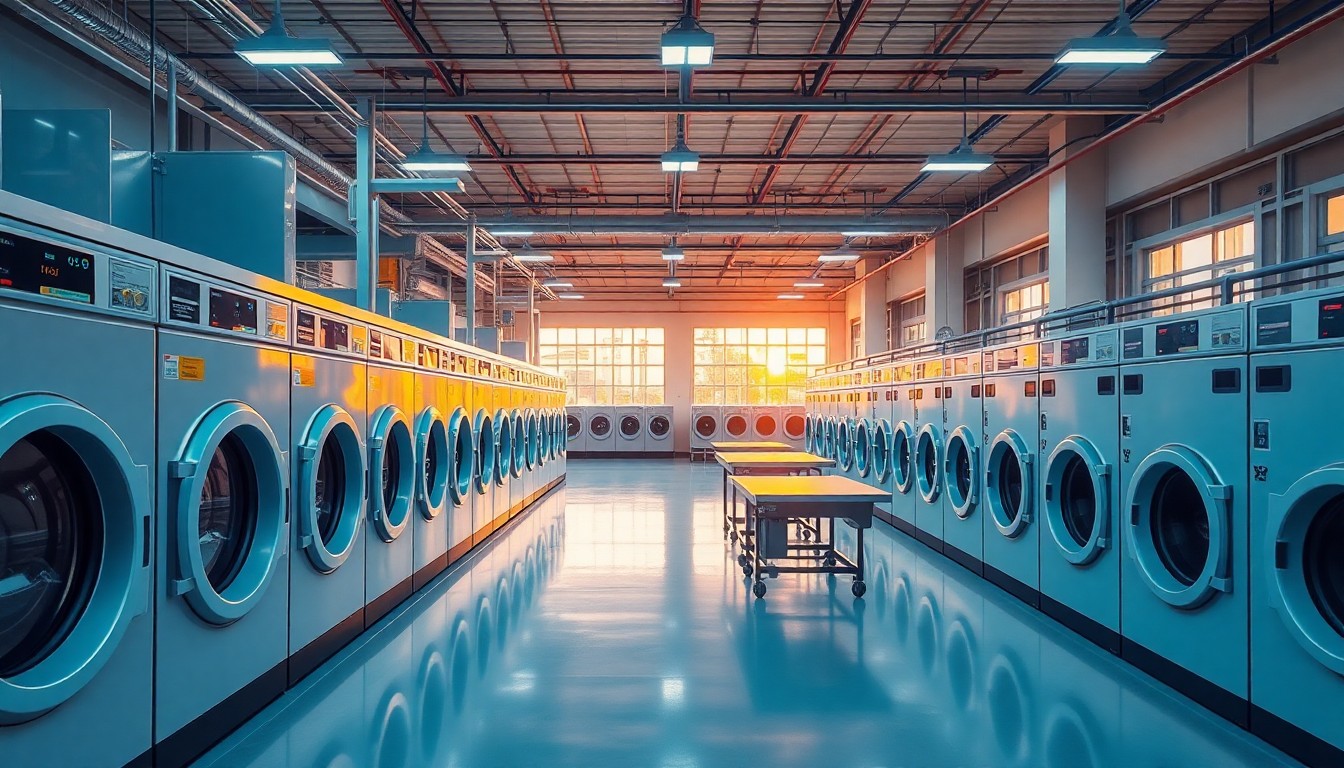
If you operate a commercial laundry business in 2026, whether that is a single-plant hospitality laundry, a healthcare linen processor, a food-service-linen route operator, or a multi-plant regional platform, the M&A market is consolidated and active. Cintas, UniFirst, and Vestis (the 2023 Aramark spinoff) are the three large public consolidators. Alsco remains a major private national operator. PE-backed specialists like ImageFIRST (healthcare) and Crown Linen Service (hospitality) continue rolling up regional players.
What the asset is worth depends on three things: (1) end-market specialty (healthcare and hospitality typically premium to mixed industrial), (2) contracted-revenue durability (multi-year hospital and hotel contracts), and (3) plant efficiency / route density / operating infrastructure. This guide covers real multiples by profile, the named buyers transacting, and the operator-level diligence buyers will run.
This guide is about commercial laundry processing (hospitality, healthcare, food-service linen, industrial wipes). If you operate a pure-play uniform rental business, our separate guide at how to sell a uniform rental business is a better starting point, the buyer pool overlaps but the customer mix and KPIs differ.
What this guide covers
- Commercial laundry multiples 2026: 4x-6x EBITDA for single-plant, 5x-7x for regional diversified, 6x-9x for mid-size multi-plant platforms, 8x-10x+ for premium scale platforms with healthcare/hospitality specialty mix and multi-state contracted revenue.
- Active buyers: Cintas (NASDAQ: CTAS, $9B+ revenue), UniFirst (NYSE: UNF, $2.5B+), Vestis (NYSE: VSTS, Aramark spinoff 2023, $2.7B+), Alsco (private), ImageFIRST (Calera Capital, healthcare specialist), Crown Linen Service (Greenbriar Equity, hospitality specialist), Mission Linen Supply, Angelica, Healthcare Services Group (NASDAQ: HCSG).
- PE sponsor activity: Greenbriar Equity, Calera Capital, BV Investment Partners, Trivest Partners, Audax Group, plus multiple business-services PE funds.
- Multiple drivers: end-market specialty (healthcare/hospitality premium), contracted multi-year revenue, route density, plant efficiency (lbs/hr, energy/lb), modern operating system (Linen Tracker, ABS Garment, ABS Linen, MMS Avante), named-customer base (Marriott, Hilton, Hyatt, HCA, Tenet, AdventHealth, etc.).
- Things that compress the multiple: mixed-industrial-only end market, single-customer concentration, old plant equipment and high energy/water costs, no contracted revenue, owner-operator dependence, environmental compliance gaps (water discharge, hazardous waste), legacy operating systems.
- Sellers pay nothing on CT Strategic Partners’ buyer-paid advisory.
Named commercial laundry M&A transactions (2022-2025)
For the 2026 laundromat acquisition playbook with SBA financing and due diligence steps, see our guide.
| Target | Buyer | Year | What it tells us |
|---|---|---|---|
| Vestis spinoff from Aramark | Public market (NYSE: VSTS) | 2023 | Aramark’s uniform/linen business spun off into independent public company; reset the public-market valuation comp set. |
| ImageFIRST continued acquisitions | Calera Capital | 2022-2025 | PE-backed healthcare laundry specialist continues tuck-in M&A. |
| Crown Linen Service expansion | Greenbriar Equity | 2023-2025 | PE-backed hospitality laundry specialist continues regional rollup. |
| Multiple regional tuck-ins | Cintas, UniFirst, Vestis, Alsco | 2022-2025 | The big-three publics + Alsco continue geographic tuck-in M&A. |
| Various PE-backed regional rollups | BV Investment Partners, Trivest, Audax | 2022-2025 | Mid-size PE sponsors continue regional commercial laundry consolidation. |
The named buyer landscape
National strategic / public buyers
- Cintas (NASDAQ: CTAS, $9B+ revenue), the largest US uniform/laundry strategic. Active acquirer in the right markets.
- UniFirst (NYSE: UNF, $2.5B+ revenue), second-largest public uniform/laundry.
- Vestis Corporation (NYSE: VSTS, $2.7B+ revenue), spinoff from Aramark in 2023.
- Alsco (private), large national uniform/laundry, family-owned.
- Healthcare Services Group (NASDAQ: HCSG, $1.7B+ revenue), healthcare linen + housekeeping.
PE-backed specialty platforms
- ImageFIRST (Calera Capital), healthcare laundry specialist.
- Crown Linen Service (Greenbriar Equity), hospitality laundry specialist.
- Mission Linen Supply (private), hospitality focus.
- Angelica (PE-backed), healthcare laundry.
- Multiple PE-backed regional commercial laundry platforms across the US.
PE sponsors active in this space
- Greenbriar Equity Group, Calera Capital, BV Investment Partners, Trivest Partners, Audax Group, plus multiple business-services PE funds.
What each buyer will pay for vs. what they reject
- Will pay premium for: healthcare or hospitality specialty mix, named contracted customers (Marriott, Hilton, Hyatt for hospitality; HCA, Tenet, AdventHealth for healthcare), multi-year contract durability, route density (drops per route per day, miles per drop), plant efficiency (lbs per labor hour, energy and water cost per pound), modern operating system (Linen Tracker, ABS Garment, ABS Linen, MMS Avante, Sage), regulatory compliance (especially Healthcare Laundry Accreditation Council [HLAC] certification for healthcare).
- Will compress or reject: mixed-industrial-only end market without specialty mix, single-customer concentration above 25%, old plant equipment with high energy/water costs, no contracted revenue (volume-only or PO-only basis), owner-operator dependence, environmental compliance gaps (water discharge permits, hazardous waste, lint dust), legacy operating systems.
The operator-level KPI playbook buyers will diligence
End-market mix and customer base
- End-market mix: Healthcare %, hospitality %, food-service %, industrial %, restaurant %, government/correctional %.
- Named contracted customers: Marriott, Hilton, Hyatt, IHG, Choice Hotels, Caesars; HCA Healthcare, Tenet, AdventHealth, Trinity Health, Ascension; major restaurant chains; etc.
- Customer concentration: No single customer above 25%.
- Contract durability: Multi-year contracts with documented renewal terms.
Route economics
- Drops per route per day: Track by route.
- Revenue per stop, revenue per route.
- Miles per drop, fuel cost per drop.
- Route density: Geographic concentration of customers.
Plant efficiency
- Lbs processed per hour per plant.
- Lbs per labor hour.
- Energy cost per pound (gas, electric).
- Water cost per pound and reclaim percentage.
- Plant capacity utilization.
- Equipment age and replacement schedule.
Compliance and certifications
- HLAC certification (Healthcare Laundry Accreditation Council) for healthcare-specialty.
- TRSA Hygienically Clean certifications.
- State environmental permits: Water discharge, hazardous waste, lint dust.
- OSHA compliance and lost-time accident records.
Operating system and technology
- Plant management system: Linen Tracker, ABS Garment, ABS Linen, MMS Avante, Sage X3, Apex Linen.
- Route management: Integrated routing optimization, customer-portal capability.
- RFID / barcode tracking: Linen-level tracking is a multiple-builder.
Workforce
- Plant headcount and tenure.
- Route driver retention.
- Wage rate vs. market, union status if applicable.
Dangers and traps in commercial laundry M&A
1. Mixed-industrial-only end market without specialty mix
Industrial laundry (uniforms, mats, wipes) without healthcare or hospitality specialty exposure faces lower multiples and a narrower buyer pool.
2. Single-customer concentration
Above 25% single-customer concentration creates churn-risk reserve.
3. Old plant equipment and rising energy costs
Energy and water are the largest variable costs in a commercial laundry. Old tunnel washers, dryers, and ironers without energy-recovery systems compress margins.
4. Environmental compliance exposure
Water discharge permits, hazardous waste management, lint dust (NFPA 33 compliance), wastewater treatment, document all permits and resolve open matters.
5. No contracted revenue (volume-only or PO-only)
Multi-year contracts with documented renewal terms are the multiple-builder. PO-only or volume-only relationships are repriced down.
6. HLAC certification gap for healthcare
If you serve healthcare without HLAC certification, the multiple compresses and the buyer pool narrows.
7. Owner-operator dependence
Build the plant manager and route supervisor bench.
8. Legacy operating systems
Modern plant management and routing optimization are multiple-builders.
Our POV on commercial laundry M&A in 2026
- Single-plant commercial laundries ($500k-1.5M EBITDA) go 4x-6x EBITDA. Buyer pool is regional consolidators and the public/strategic giants doing geographic tuck-ins.
- Regional diversified commercial laundries ($1.5-4M EBITDA) go 5x-7x EBITDA.
- Mid-size multi-plant platforms ($4-15M EBITDA) are in the strategic-acquirer sweet spot. 6x-9x EBITDA.
- Premium scale platforms ($15M+ EBITDA, multi-state, healthcare/hospitality specialty mix, named contracted customers) reach 8x-10x+.
The right time to prepare is 12-18 months before going to market, build the specialty mix (healthcare HLAC certification, hospitality contracts), lock in long-dated customer contracts, modernize plant equipment, and address environmental compliance.
Preparing your commercial laundry business for sale: 12-18 months out
- Get multi-year audited or reviewed financials. Break out revenue by end-market and by customer.
- Build specialty mix. Healthcare (with HLAC certification) and hospitality.
- Lock in multi-year customer contracts. Documented renewal terms.
- Diversify customer concentration. No customer above ~25%.
- Modernize plant equipment. Energy-recovery tunnel washers, modern dryers, ironers.
- Resolve environmental compliance. Water discharge, hazardous waste, lint dust.
- Modernize the operating system. Linen Tracker, ABS, MMS Avante, or equivalent.
- Build the plant and route management bench.
- Document KPIs. Lbs/hr, lbs/labor-hr, energy/lb, water/lb, drops/route, miles/drop.
- Run a competitive process. Cintas, UniFirst, Vestis, Alsco, ImageFIRST (Calera), Crown Linen (Greenbriar), Healthcare Services Group, plus PE sponsors (Greenbriar, Calera, BV, Trivest, Audax).
Free, No Email Required
Get a personalized valuation in 90 seconds
Answer six quick questions and we’ll give you a sector-adjusted EBITDA multiple range plus the specific factors driving your number up or down.
The five pillars of how CT Acquisitions works
Buyer pays our fee. Founders never write a check.
No engagement letter. No upfront cost. No exclusivity contract.
Search funders, family offices, lower-middle-market PE, strategics.
Confidential introductions to the right buyers. No bidding war.
Not 9-12 months. Not 18 months. Months, not years.
No Pitch · No Pressure
Ready to start a confidential conversation?
Tell us about your business. We’ll tell you what it’s likely worth, whether we have qualified buyers in our network, and what the next 60-120 days could look like. No engagement letter. No retainer. Walk at any time.
Frequently asked questions
What is the typical multiple for a commercial laundry business in 2026?
Single-plant commercial laundries ($500k-1.5M EBITDA) typically sell at 4x-6x EBITDA. Regional diversified ($1.5-4M EBITDA) go 5x-7x. Mid-size multi-plant platforms ($4-15M EBITDA) go 6x-9x. Premium scale platforms ($15M+ EBITDA, multi-state, healthcare/hospitality specialty mix, named contracted customers) reach 8x-10x+.
Who are the active buyers of commercial laundry businesses?
Public/strategic: Cintas (NASDAQ: CTAS, $9B+ revenue), UniFirst (NYSE: UNF, $2.5B+), Vestis Corporation (NYSE: VSTS, Aramark spinoff 2023, $2.7B+), Healthcare Services Group (NASDAQ: HCSG, $1.7B+). Private/large: Alsco. PE-backed specialty: ImageFIRST (Calera Capital, healthcare), Crown Linen Service (Greenbriar Equity, hospitality), Mission Linen Supply, Angelica. PE sponsors: Greenbriar Equity, Calera Capital, BV Investment Partners, Trivest Partners, Audax Group.
What hurts a commercial laundry’s valuation most?
Mixed-industrial-only end market without specialty mix, single-customer concentration above 25%, old plant equipment with high energy/water costs, no multi-year contracted revenue, environmental compliance gaps, owner-operator dependence, legacy operating systems, and HLAC certification gaps if serving healthcare.
How is a commercial laundry different from a uniform rental business?
Commercial laundry typically processes hospitality linen (hotel sheets, towels), healthcare linen (hospital bedding, scrubs), and food-service linen for end customers. Uniform rental focuses on industrial work uniform rental with a different routing, garment-tracking, and customer-base structure. The buyer pool overlaps (Cintas, UniFirst, Vestis, Alsco serve both) but the operating KPIs and specialty buyer pools differ. See our separate guide at how-to-sell-a-uniform-rental-business.
Why is HLAC certification important for healthcare laundry?
Healthcare Laundry Accreditation Council (HLAC) certification provides hygienically-clean documentation and compliance with healthcare-specific laundry processing requirements. Hospital systems and healthcare-focused buyers (ImageFIRST, HCSG, Angelica) require HLAC certification or equivalent. Premium multiples for healthcare specialty platforms require it.
Do I have to pay a broker fee?
No. CT Strategic Partners runs a buyer-paid M&A advisory model. The seller pays nothing. The buyer pays the success fee at closing.
How long does it take to sell a commercial laundry business?
Once you go to market with a buyer-paid advisor, a typical process runs 5-8 months from initial outreach to closing. Add 12-18 months of preparation work before going to market.
When should I start preparing if I plan to sell in 2027 or 2028?
12-18 months before going to market is the right window. Highest-leverage pre-sale work: build specialty mix (HLAC certification for healthcare, hospitality contracts), lock in long-dated customer contracts, modernize plant equipment, and resolve environmental compliance.
Related research
- How to sell a uniform rental business
- How to sell a document shredding business
- How to sell an environmental services company
- Which industries is PE buying most in 2026
- Private equity value creation
- Business broker alternative
- Sell your business (overview)
- How PE roll-ups open up value in home services
- How to sell a fleet maintenance business
- Strategic buyer vs financial buyer

About the Author
Christoph Totter is the founder of CT Acquisitions, a buy-side partner headquartered in Sheridan, Wyoming. We work directly with 200+ buyers, search funders, family offices, lower middle-market PE, and strategic consolidators, including direct mandates with the largest home services consolidators that other intermediaries can’t access. The buyers pay us when a deal closes, not the seller. No retainer, no exclusivity, no contract until close. Connect on LinkedIn · Get in touch