
How to Find Off-Market Amazon DSP Routes Businesses for Sale
Quick Answer
To find off-market amazon DSP routes businesses for sale, the two highest-impact channels are LinkedIn and Email. Amazon DSP owners self-identify on LinkedIn (“DSP Owner” or “Amazon Delivery Service Partner” in bio). DSP Owners Group on Facebook and LinkedIn are active communities.
Finding an Amazon DSP that is quietly for sale starts with accepting what you are buying. Amazon owns the routes, sets the daily route count and decides who may own a Delivery Service Partner. What changes hands is an operating company: its managers and drivers, its safety record and its standing with one delivery station. That changes where you look, because the owners worth approaching are visible through labor, safety and corporate records far more than through business-for-sale listings. This page sets out those sources, how to approach DSP owners, and the checks that matter once you find one.
What you are buying when you buy a DSP
A DSP is a small delivery company working under contract to Amazon, typically running about 20 to 40 Amazon-branded vans out of one station. You buy the company and its people; Amazon keeps control of the routes and the vehicles.
Amazon’s Delivery Service Partner model uses small, independently owned companies to employ the drivers who deliver Amazon parcels. Wikipedia’s account of Amazon’s logistics arm describes each DSP as running a fleet of about 20 to 40 Amazon-branded vans, with contractor employees wearing Amazon uniforms. By December 2020 the program operated in the US, Canada, Italy, Germany, Spain and the UK. Rakuten Intelligence estimated that Amazon’s own contracted network handled 56% of US last-mile deliveries in 2020, ahead of the Postal Service and UPS.
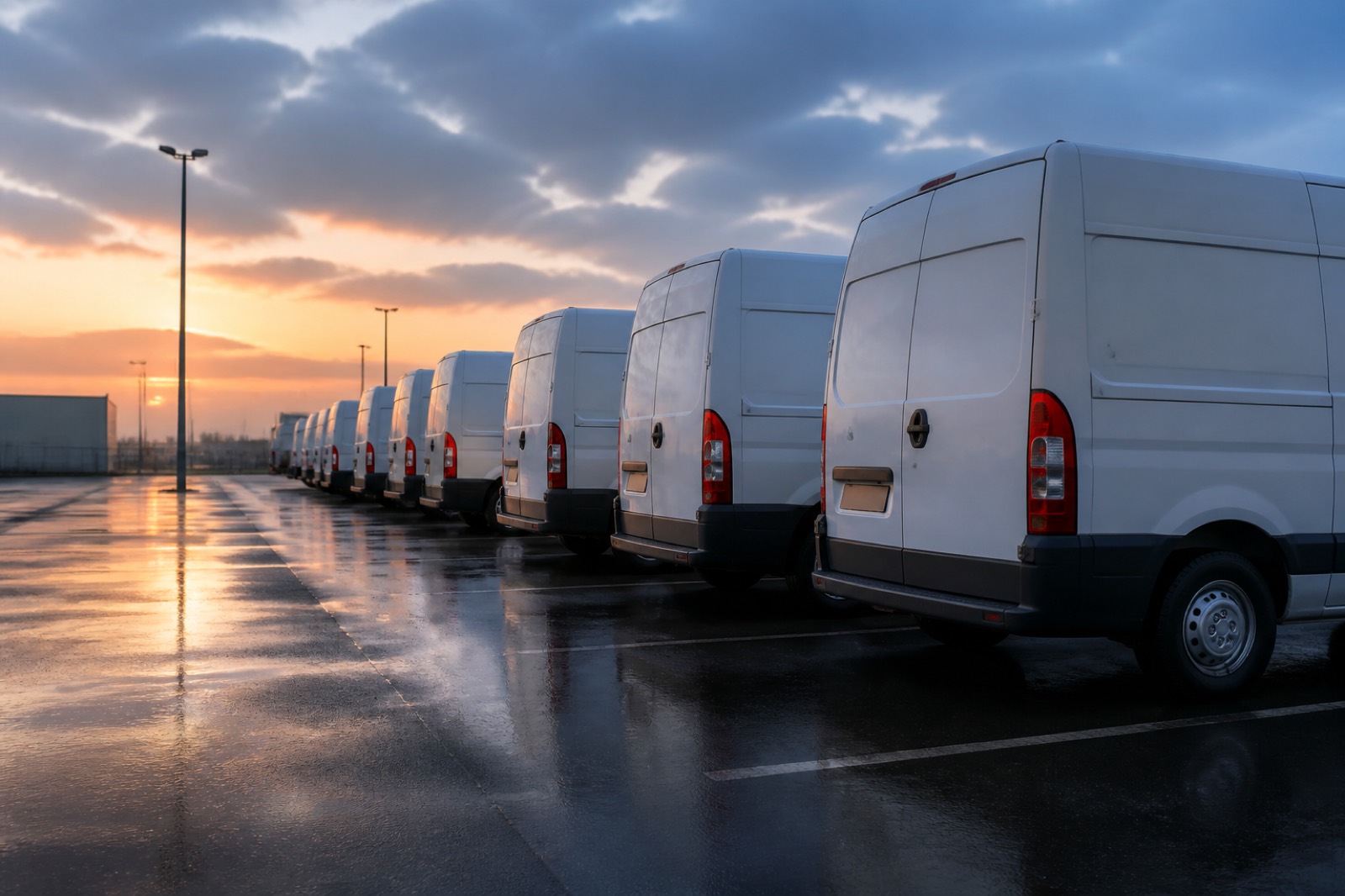
Route Consultant, a marketplace for route businesses, describes the economics from the owner’s side. Amazon pays each DSP a contract rate for every package delivered, Amazon controls how many routes the DSP dispatches each day, and Amazon supplies the delivery vehicles. It puts typical EBITDA margins at 5% to 15% of annual revenue. Put those together and the asset is clear: a labor and management operation whose revenue depends on one customer’s decisions about volume, with thin margins that reward tight operations.
The vehicle side is changing. Amazon ordered 100,000 Rivian electric delivery vans in September 2019, and Wikipedia’s page on the Rivian EDV records more than 15,000 delivered by July 2024 and 30,000 by the end of 2025, with the full order now targeted for 2030. A DSP that has already transitioned to electric vans at a station with charging in place is a different operating business from one still running older vans, and the difference shows up in fuel, maintenance and driver training costs.
For a buyer, three consequences follow. Your diligence is mostly about people and performance, not assets. Your downside is concentrated in one counterparty. And your best targets are owners whose operations are already well regarded by their station, because that standing is what you are paying for.
Amazon’s approval and the cash-only constraint
Amazon must accept a new owner, and according to Route Consultant it expects owners to be local, involved daily and carrying no acquisition debt. That rules out most buyers who depend on debt and shapes how any deal is structured.
Route Consultant’s guidance on DSP transactions is blunt. It states that Amazon requires DSP owners to enter the program without outstanding loans tied to the purchase, that a DSP deal involving financing will be rejected by Amazon, and that DSP transactions are completed in cash. It adds that Amazon expects owners to be local and actively involved every day, and that candidates interview with Amazon, which assesses whether they understand the business. The same page notes that Amazon’s application waitlist for new DSPs can be very long, which is why buyers look at existing operations at all.
Those conditions reshape the buyer field. A search fund or private equity buyer that relies on acquisition debt cannot use its normal structure, and an absentee investor will struggle to pass Amazon’s interview. The realistic buyer is a local operator with cash or equity partners, very often someone who already runs a DSP and wants a second station. If that describes you, your sourcing should target owners at nearby stations, where Amazon’s local team can see your current performance.
In practice, Amazon’s acceptance should sit in your letter of intent as a condition to closing, and the purchase price should be payable only once Amazon confirms you as the new owner. Agree with the seller how the business will be run during that review, and who speaks to the station about it, because a seller who has mentally exited can damage the scorecard you are paying for.
Public records that point to DSP owners
Amazon does not publish a list of its DSPs, but DSPs leave traces in OSHA injury data, state corporate registries, labor filings and press coverage. Combining these gives a named list of owners.
The useful sources are the ones a DSP cannot avoid creating:
- OSHA injury and illness data. OSHA publishes establishment-level Form 300A summary data for each year from 2016 through 2025, and case detail data for 2023 through 2025, as downloadable CSV files. Summaries are required from establishments with 250 or more employees and from establishments with 20 to 249 employees in listed industries, and since 2024 establishments with 100 or more employees in Appendix B industries also submit case detail. A DSP employing dozens of drivers can appear in these files under its legal name and address, which makes them one of the few public datasets that names delivery contractors directly. Filtering for courier and delivery industry codes and for addresses near known Amazon stations gives a starting list.
- State business registries. Every DSP is a registered company. Once OSHA data or local knowledge gives you a name, the Secretary of State record gives the registered agent, officers and formation date. Formation dates cluster around program onboarding waves, and an owner listed as an officer of several delivery companies is likely a multi-station operator.
- Labor filings and union activity. Organizing at DSPs creates public records. Wikipedia’s summary of criticism of Amazon describes 104 drivers at the DIL7 station in Skokie, employed by DSP Four Star Express Delivery, who organized with Teamsters Local 704 and filed charges naming Amazon and Four Star as single or joint employer. The Teamsters reported on October 5, 2026 that drivers at two Southern California facilities had demanded recognition. These records are as useful for what to avoid as for who to call: an owner facing an organizing campaign may want to sell, but the buyer inherits that situation.
- Local press and court records. Station openings, vehicle incidents and wage disputes generate local coverage and civil filings that name the DSP. A wage claim is a diligence flag; a station opening tells you which DSPs serve it.
None of these sources tells you who wants to sell. They tell you who exists, how large they are and what their record looks like, which is the list you need before any outreach.
Approaching DSP owners directly
The best first contact is peer to peer: an owner of a DSP at the same or a neighboring station, offering a confidential conversation about adding capacity, with proof of funds and a clear plan for Amazon’s approval.
DSP owners hear from recruiters, vendors and van dealers constantly, so a generic acquisition email is easy to ignore. What gets a reply is relevance. If you already run a DSP, say so, name the station or region you operate in, and explain that you are looking to add a second operation nearby. If you do not, explain your operating background and how you meet the local, hands-on ownership Amazon expects.
Points that make an approach credible to a DSP owner:
- Proof that you can close in cash. Given what Route Consultant says about financing, an owner will want to know you have the money before spending time with you.
- Understanding of the station. Owners care about what happens to their managers and drivers and about their relationship with the station. A buyer who knows how that station runs is far more persuasive than one who talks about multiples.
- Discretion. Word of a sale moving around a station can unsettle drivers and dispatchers. Offer a confidentiality agreement at first contact.
- Patience. Many owners are not ready to sell today but will be after a difficult peak season, a contract change or a health event. Staying in touch matters more than a single campaign.
Professional networks and owner groups are useful for identifying who runs which operation, but treat them carefully. A public post asking who wants to sell a DSP reaches the owners and also their drivers, managers and station contacts.
Listing sites and route brokers
Some DSPs are marketed openly. Route Consultant, for example, says it has 250+ active listings of route businesses across the US, and it states that it is not endorsed by or recommended by FedEx or Amazon. General business-for-sale marketplaces also carry occasional DSP listings. These are worth monitoring, but listed DSPs attract many inquiries, and a listing that has stayed up for a long time may reflect a problem with the station or the seller’s standing.
When you do respond to a listing, ask early for the information that tells you whether the operation is stable: how long the company has worked with its current station, how the daily route count has moved over the past year, what the recent scorecards show, and whether the seller has discussed a sale with Amazon. A broker who cannot answer those questions is selling a number, not a business.
Who competes with you for DSPs
Because Amazon expects local, hands-on owners and cash deals, the main competition is existing DSP owners adding stations and local operators with equity partners, not debt-funded financial buyers.
In most industries a buyer worries about private equity platforms outbidding them. For DSPs the constraints Amazon applies, as described by Route Consultant, narrow the field:
- Existing DSP owners. The strongest competitors. They already know Amazon’s systems, have a track record with Amazon’s local teams and can absorb a second operation’s managers. They also tend to know about a sale before anyone else.
- Local operators from adjacent industries. Owners of courier, moving or fleet businesses who can show daily involvement and operating experience.
- Equity-backed individuals. Buyers who pool equity from partners to meet the cash requirement. Amazon’s interview and daily involvement expectation still apply to the person who will run the business.
- Managers buying from owners. An operations manager who already runs the station day to day is often the natural successor, and some owners prefer that route.
Knowing the competition shapes your pitch. Against another DSP owner, your advantage has to be speed, certainty or a better plan for the existing team.
Checks specific to a DSP purchase
The checks that decide a DSP deal are Amazon’s view of the operation, the trend in routes, driver turnover and safety, labor exposure, and how dependent the business is on the current owner’s relationship with the station.
Standard diligence still applies, but DSPs have their own list:
- Amazon’s view. Scorecards and any performance warnings or improvement plans from the past year. A DSP on a warning is not the asset it appears to be in its accounts.
- Route trend. Since Amazon controls daily route counts, compare the route count today with a year ago and at the last peak season. Revenue shown in the accounts is only as good as the routes still being assigned.
- Drivers and safety. Turnover, injury records (cross-check the company’s OSHA filings if it submits them), vehicle incidents and insurance claims. Workers’ compensation and auto costs can move a thin margin a long way.
- Labor exposure. Any wage claims, union activity or unfair labor practice charges. The Skokie case shows these can involve Amazon itself, and the Canadian class action filed by subcontracted drivers in June 2020 over $200 million in unpaid wages shows the size such claims can reach.
- Regulatory direction. Wikipedia reports that Amazon spent $5 million in 2026 lobbying against New York City’s Delivery Protection Act, which would require companies to directly employ last-mile drivers. Proposals of that kind, if adopted in your market, could change the DSP model itself.
- Owner dependency. If the seller personally manages the station relationship, dispatch and driver hiring, plan for a transition period and confirm the managers you need will stay.
- Vehicle transition. Whether the operation runs electric vans, what charging is available, and what the shift means for costs and training.
A sourcing plan for DSP buyers
A practical sequence for a buyer looking for an off-market DSP:
- Define the stations. Pick the delivery stations you can realistically run from, ideally ones near any operation you already have.
- Build the list. Pull OSHA establishment data for those areas, match names to state registry records, and add DSPs identified through local press and filings.
- Screen out problems. Check labor filings, court records and press for each name before contacting it.
- Prepare your credentials. Proof of funds, your operating history and a short plan for how you would satisfy Amazon’s ownership expectations.
- Reach out peer to peer. Contact owners directly and confidentially, and keep in touch with those who are not ready yet.
- Monitor listings. Watch route marketplaces in parallel, and ask the hard questions about station standing early.
- Structure around Amazon. Make Amazon’s acceptance a closing condition and agree how the business runs while it is pending.
CT Acquisitions works on buy side, sell side and exit planning mandates for founder-owned businesses, with a network of 500+ buyers and capital partners. For DSP buyers, the value we add is in building the target list from public records, making confidential approaches and structuring a deal that fits Amazon’s requirements. No fee to you on buy-side introductions; sell-side mandates are paid on success at closing.
Frequently Asked Questions
What is the best way to find off-market amazon DSP routes businesses for sale?
The two highest-impact channels for Amazon Delivery Service Partner route acquisition sourcing are linkedin and email. Buyers running both channels on top of a proprietary data layer (joined from state license registries, BBB directories, and industry association membership rosters) consistently get to sellers first.
How many amazon DSP routes businesses exist in the US?
Amazon’s published figure is global: about 4,400 Delivery Service Partner businesses across 19 countries, employing roughly 390,000 drivers, per Amazon.
What response rate should I expect from cold email to amazon DSP routes owners?
Apollo State of Outbound 2024 documents a median B2B cold email reply rate of 1.6 percent for non-personalized sequences. Vertical-specific sequences with proprietary data underpinning typically run 4 to 7 percent reply rates for tight buy-box targeting. The amazon DSP routes-specific score in the ranking table above adjusts these benchmarks.
Is direct mail still effective for amazon DSP routes acquisition outreach in 2026?
Yes for owner-operator verticals where the owner physically reads mail to the business address. The USPS Household Diary Study 2024 documents 56 percent of small business owners physically reading business mail, versus 8 to 15 percent open rates on cold email. For Amazon Delivery Service Partner route businesses specifically, see the direct mail score in the channel ranking table above.
Should I run multiple channels at once or focus on one?
Run multiple channels in parallel. The best off-market sourcing operations combine proprietary data + at least one outbound channel + paid ads on high-intent search queries simultaneously. Channels reinforce each other: paid-ad inquiries warm up the cold-mailed list, direct mail makes cold-emailed owners more receptive, and the proprietary data layer feeds every other channel.
How long does it take to close an off-market amazon DSP routes acquisition?
From first contact to LOI typically runs 90 to 360+ days for off-market deals (versus 30 to 60 days for brokered listings). From LOI to closing typically runs another 60 to 120 days depending on financing source (SBA 7(a) adds 30 to 60 days versus conventional or cash transactions).
Can you buy Amazon delivery routes?
Not as a standalone asset. Amazon owns and assigns the routes. What a buyer can purchase is an existing Delivery Service Partner company, including its staff, vehicles or van leases and its contract, and Amazon must approve the new owner before the deal closes. Routes can still be added or cut by Amazon after the sale, so buyers price that risk in.
How much does it cost to buy an Amazon DSP?
Listed DSPs often ask 20% to 40% of annual revenue, per VettedBiz, and a LoopNet listing for a 28-route operation with 31 trucks asks $821,000. Starting a new DSP through Amazon’s program can begin at as little as $10,000 per Amazon, but new openings depend on Amazon’s needs, which is why some buyers pay for an operating company instead.
About CT Acquisitions
CT Acquisitions is a sell-side mergers and acquisitions advisor. We represent owners selling their businesses, not buyers. Buyers doing off-market sourcing typically reach us on the seller side: we are the broker for the seller. This page exists as a public resource for buyers building off-market sourcing operations and for owners researching what serious buyers are doing to reach them.
If you are an owner considering selling, the most useful preparation before serious buyer outreach is clean three-year financial statements with documented add-backs, a quality of earnings memo addressing owner compensation normalization and related-party rent, and a lender-friendly transition plan demonstrating revenue continuity through the change of ownership.