
Starting a Landscape Business From Scratch: Equipment, Pricing, and Exit
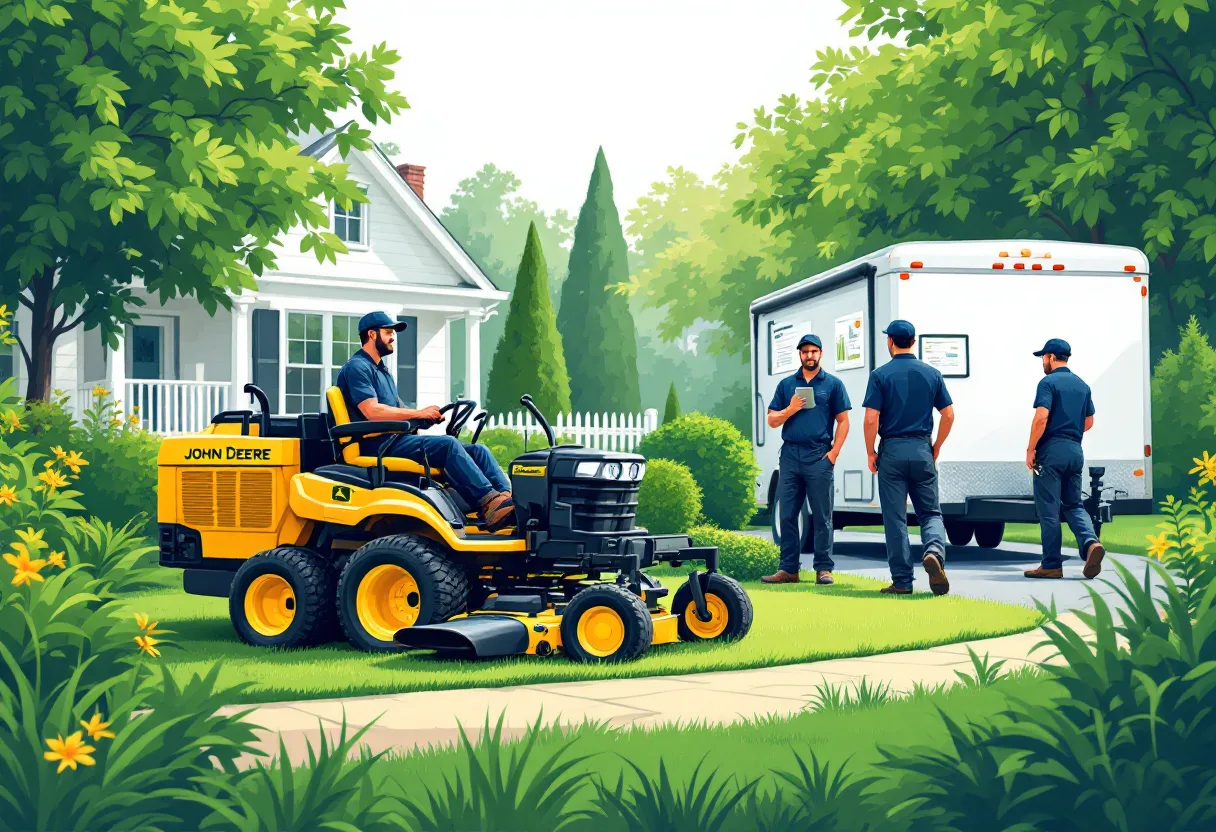
Building a landscape business in 2026 is a top-tier attractive on-ramps in home and commercial services because the category is large, fragmented, recession-resilient, and aggressively consolidated by private equity. According to the National Association of Landscape Professionals, the US landscape services industry is a $188.8 billion market employing roughly 1.4 million workers across about 693,000 firms, and the average annual growth rate from 2020 to 2025 was 6.5 percent. That fragmentation is the opportunity. A solo operator with a truck, a zero-turn, and three commercial accounts can grow into a regional platform that institutional buyers like BrightView and Yellowstone Landscape will pay six to twelve times EBITDA to acquire, provided the founder builds the right operating model on day one.
This guide is written for two readers. The first is the founder going from zero to first crew, who needs an honest answer on equipment, pricing, capital, and the unit economics of a single truck. The second is the established owner already running a route, who wants to understand what private equity actually pays for a landscape company in 2026 and how to engineer a saleable business before an exit conversation begins. We cover both, in that order, because the right way to start a landscape business is to operate it from day one as if a future acquirer will eventually inspect every contract, asset register, and route sheet.
Why Starting a Landscape Business Still Works in 2026
The fundamentals favor new entrants. Residential lawn maintenance, commercial property care, irrigation, hardscape, and tree work are local services with low customer churn when delivered well. The NALP industry brief notes that landscape services grew about 4.8 percent in 2025 against a softer broader economy, driven by suburban household formation, the build-to-rent housing wave, multifamily property managers outsourcing in-house grounds crews, and a long demographic tailwind from the boomer cohort spending on outdoor living.
On the supply side, the industry is structurally short of skilled labor. The same NALP data shows that about 70 percent of landscape firms cite labor as their primary growth constraint, which means a founder who can recruit, train, and retain a single reliable crew has a real advantage over an incumbent that is stretched thin. Equipment is cheaper and more productive than it was a decade ago. Commercial zero-turn mowers from John Deere Commercial, Toro Commercial, Exmark, Walker Manufacturing, and Hustler Turf deliver 25 to 40 percent more acres per labor hour than the same machines from 2015. Software platforms built specifically for the industry have collapsed the cost of running a route.
The other reason starting a landscape business still works is the exit. Private equity has poured capital into the category for the better part of a decade. BrightView took a 500 million dollar strategic investment from One Rock Capital Partners. Harvest Partners brought Neuberger Berman Capital Solutions into Yellowstone Landscape as a significant minority investor in late 2024, reinforcing the original 2019 Harvest control buyout from CIVC Partners. New regional platforms are formed every quarter. A landscape business built to acquirer specifications today is a saleable asset within three to seven years.
The Five Service Lines Inside a Landscape Business
Most new founders treat a landscape business as one service. It is actually five distinct service lines, each with its own margin profile, capital requirement, and acquirer appetite. Understanding the menu before you buy equipment prevents the most expensive mistake new owners make, which is buying tools for a service line they never end up running.
Maintenance is the core. Weekly or biweekly mowing, edging, blowing, and seasonal cleanups. Margins after labor and equipment land between 18 and 28 percent at scale. Acquirers value maintenance contracts because they are recurring, predictable, and renew at a 90 percent rate or better when service is consistent. This is the line that drives valuation multiples, and a landscape business heavy in recurring maintenance trades at the top of the range.
Enhancement and installation covers planting beds, mulch, seasonal color, sod, and small landscape design work for existing maintenance clients. It is project revenue layered onto a recurring base. Margins are typically 22 to 32 percent. Acquirers like enhancement revenue as a percentage of maintenance, usually 15 to 30 percent, because it indicates account control and wallet share.
Irrigation and water management is technical. Backflow testing, controller installation, smart system retrofits, leak repair, and seasonal startup or shutdown. The EPA WaterSense program has driven steady retrofit demand as commercial property owners chase utility rebates and meet local water restrictions. Irrigation margins run 25 to 35 percent and tie clients to one provider because few competitors can troubleshoot a 30-zone commercial controller in a thunderstorm.
Hardscape and design-build covers patios, walls, walkways, outdoor kitchens, and full residential landscape design. Margins look high on paper, often 30 percent plus, but the work is lumpy, capital-intensive, and not recurring. First Page Sage data shows hardscape-heavy landscape businesses trade at the lower end of the EBITDA multiple range because acquirers discount non-recurring project revenue.
Tree care and snow and ice management round out the menu. Both are seasonal complements. Tree work requires OSHA-compliant training, climbing gear, and a chipper, and the service line can be subcontracted in the early years. Snow is a winter revenue base in northern markets that lets a landscape business retain crews year-round, which is itself a recruiting advantage.
Equipment You Need on Day One (And What to Skip)
The most common day-one mistake in a landscape business is overbuying equipment. A founder reads a forum thread, panics, and shows up to the first job with 38,000 dollars of trucks and trailers servicing three accounts. The right starter package is far leaner. Below is the equipment list that lets a single-operator landscape business run a residential maintenance route from day one, with realistic 2026 pricing pulled from current dealer catalogs and trade publications like Lawn and Landscape Magazine.
Buy a commercial zero-turn mower, not a homeowner zero-turn. A new Exmark Lazer Z or Hustler Super Z in a 60-inch deck runs 11,000 to 14,000 dollars. A used commercial machine with under 800 hours runs 6,500 to 8,500 dollars and is the right call for year one. Skip residential 4,000 dollar zero-turns from big box stores. They will fail at 600 hours and leave you stranded mid-route.
Add a 21-inch commercial walk-behind for gates and tight corners. Honda and Toro Commercial walk-behinds run 1,100 to 1,500 dollars new. A commercial string trimmer from Stihl or Echo runs 350 to 500 dollars. A commercial backpack blower runs 550 to 750 dollars. An edger runs 350 dollars. Two five-gallon mix cans, hand pruners, loppers, a hedge trimmer, rakes, and basic hand tools add another 700 dollars. Total power equipment is roughly 9,000 to 17,000 dollars depending on used or new.
Transportation is the second-biggest line item. A used 3/4-ton work truck with under 150,000 miles runs 14,000 to 22,000 dollars in most markets. A 16-foot open landscape trailer with mesh sides runs 4,500 to 6,500 dollars new, or 2,500 to 3,500 dollars used. Many founders try to start with a half-ton pickup and a 5-by-8 trailer. That setup will not safely tow a zero-turn, a walk-behind, and 200 gallons of fuel plus tools through summer heat. Buy the right truck once.
Skip the things that look essential and are not. You do not need a skid steer in year one. You do not need a chipper unless tree care is your service line. You do not need a stump grinder. You do not need a dump truck, a 24-foot enclosed trailer, or a dedicated irrigation van. You do need general liability insurance from a carrier that understands landscape, commercial auto on the truck, and workers compensation the moment you hire one employee. Expect 1,800 to 3,500 dollars annually for a fully insured solo operation through carriers like Nationwide Agribusiness or Acuity.
The $50K vs $250K Startup Capital Decision
Founders ask whether they should start a landscape business with 50,000 dollars or 250,000 dollars. The honest answer is that both work, but they produce different businesses. A 50,000 dollar start is a one-truck, one-operator residential maintenance route. A 250,000 dollar start is a two-truck, four-employee residential plus light commercial operation with a small irrigation and enhancement capability. The capital decision is downstream of the service mix.
The lean path is the right choice for a first-time founder. Use a personal cash stake of 20,000 to 30,000 dollars and supplement with an SBA 7(a) loan for working capital and equipment. The SBA 7(a) program allows landscape businesses to borrow up to 5 million dollars at prime plus 2.25 to 4.75 percent, with terms up to 10 years for equipment and 25 years for real estate. A 30,000 dollar SBA-backed equipment loan combined with a 20,000 dollar founder stake gets a clean used commercial mower, walk-behind, trimmer, blower, edger, trailer, and a 3/4-ton work truck, plus 8,000 dollars of operating runway for fuel, insurance, marketing, and the first payroll cycle if you hire a helper in month three.
The 250,000 dollar path makes sense only if the founder is buying a small existing book of business or has a confirmed commercial maintenance contract from a property manager waiting to sign. In that case the capital goes to two new commercial mowers, a second truck and trailer, a Carryall or Polaris utility vehicle for tight commercial sites, basic irrigation tools, and a 60,000 dollar wage runway to staff a second crew before the contracts produce cash. This is the right call when starting a landscape business with a partner who will run the second crew, or when migrating a built book from a competitor.
The wrong answer is to spend 250,000 dollars before you know what your route density looks like. Density is everything. Five accounts in one neighborhood is worth more than fifteen accounts spread across three counties. A founder who lets the route geometry tell them what equipment to buy avoids the most common capital trap in the industry.
Pricing: Per-Hour vs Per-Job vs Per-Visit Subscription
The pricing model is the single highest-impact decision a new landscape business makes. There are three working models and one model that quietly destroys margin in year two. The three working models are per-job flat, per-visit subscription, and contract pricing for commercial accounts. The destructive model is per-hour, which trains customers to expect transparency on labor and rewards the operator who works slower.
Per-job flat pricing fits one-off enhancement, installation, and hardscape work. Quote the job at a fixed price based on materials plus labor at an internal billable rate. The internal target for a maintenance landscape business in 2026 is 75 to 110 dollars per labor hour blended, depending on geography, with crew burdened cost at roughly 32 to 45 dollars per labor hour. Target a 50 percent gross margin on flat-rate work and price accordingly.
Per-visit subscription is the right model for residential maintenance. Quote a weekly or biweekly visit at a fixed price, billed monthly, with autopay required. A typical 8,000 square foot suburban residential lot in the Sun Belt prices at 55 to 75 dollars per visit in 2026. The same property in the Mid-Atlantic prices at 65 to 90 dollars per visit. Bill four visits monthly in growth season, two in shoulder season, and roll cleanup, fertilization, and aeration into seasonal add-on charges. Autopay reduces collection cost and produces the predictable recurring revenue acquirers value.
Commercial contracts are annual agreements with 12 monthly installments. Quote based on scope of work and on-site labor minutes per visit, not on a per-visit rate. A commercial maintenance contract with an HOA, a property management firm, or a corporate campus locks in route density and creates the recurring base that lifts a landscape business from a 4x EBITDA multiple to a 7x to 10x EBITDA multiple at exit. Aim for 50 percent or more of revenue under annual commercial contracts by year three.
Run the per-hour pricing model only for emergency tree work, after-storm cleanups, and unusual one-off requests. Quote it at 95 to 145 dollars per labor hour and require a two-hour minimum. Never quote routine maintenance per hour. Customers anchor on hours, not outcomes, and you will lose pricing power within one season.
Crew Math: One Truck, One Crew, Real Revenue
A single two-person crew with a commercial zero-turn, a walk-behind, and a trailer can sustainably service 28 to 38 residential maintenance accounts per week, or about 6 to 8 light commercial accounts per week, or a blended route of roughly 20 residential plus 3 small commercial. At the 2026 per-visit pricing above, a fully booked residential one-crew operation produces between 165,000 and 235,000 dollars in maintenance revenue annually before enhancement, irrigation, and seasonal add-ons. Layer in 18 to 30 percent enhancement revenue and the same single-truck landscape business clears 200,000 to 305,000 dollars in total revenue.
The cost stack on that revenue is reasonably predictable. Cost of services, which is crew wages plus payroll taxes, fuel, equipment maintenance, and subcontractor labor, runs 52 to 60 percent for a one-truck operation that pays its founder a market wage. Sales and admin run 12 to 18 percent. Insurance and other fixed costs run 5 to 7 percent. The net is a 20 to 28 percent owner discretionary earnings figure on a typical one-truck operation, or 40,000 to 85,000 dollars in year one. That is enough to live on, retire the equipment loan, and build the route density to launch crew two in year two.
The instruction implicit in those numbers is to keep the truck full. An underutilized truck is the single biggest profit killer in a landscape business. If a crew is mowing 22 accounts a week instead of 32, the labor cost is the same but the revenue per route hour is 40 percent lower, and the net margin collapses from 25 percent to below 10 percent. Density is the unit economics. Route geometry is the operating discipline. Both are choices the founder makes when they accept or reject new accounts.
The Crew-Day Productivity Standard
The discipline that separates a saleable landscape business from a job is the crew-day standard. A crew-day is one two-person crew working one eight-hour day, equipped with a commercial mower, walk-behind, trimmer, blower, edger, and a truck and trailer. A productive crew-day in maintenance produces 16 to 22 residential lawns mowed, or 4 to 6 small commercial properties, or a combination of approximately 14 residential plus 2 commercial. A productive crew-day in enhancement produces 6 to 10 cubic yards of mulch installed, or 250 to 400 plants installed, depending on plant size.
Track crew-day output every day. The metric that matters is gross revenue per crew-day, not hours, not accounts, not miles. A profitable maintenance crew-day in 2026 produces 1,250 to 1,750 dollars of billable maintenance revenue, or 2,200 to 3,400 dollars of billable enhancement revenue. If a crew is below those numbers consistently, the issue is either route density, equipment downtime, or crew discipline, and one of those three has to be fixed before scaling.
This is also the metric acquirers use during diligence. A landscape business pitched at six times EBITDA that cannot prove crew-day productivity inside its software will get re-cut to four times EBITDA at the diligence stage. Tracking the standard from day one makes the eventual exit conversation much shorter and much friendlier.
Software Stack: Aspire vs LMN vs RealGreen
Industry-specific software is the operational backbone of any landscape business above 250,000 dollars in revenue. Four platforms dominate the category in 2026. The right choice depends on service mix, account size, and growth ambition.
Aspire Software, now part of ServiceTitan, is the platform of choice for commercial landscape businesses above 2 million dollars in revenue. Aspire handles estimating, scheduling, crew tracking, job costing, invoicing, and contract management at depth. It is expensive, with an enterprise contract typically starting at 8,000 to 15,000 dollars annually plus implementation, but it pays for itself in route optimization and job costing accuracy once a landscape business has three or more crews. Acquirers expect to see Aspire in a commercial landscape business at exit.
LMN (Landscape Management Network) is the standard for design-build, hardscape, and growing maintenance operations. LMN excels at estimating, time tracking, and budgeting and is the right call for owners who want strong estimating discipline at a lower price point than Aspire. Pricing typically starts around 99 dollars per user monthly and scales with team size.
RealGreen, part of WorkWave, is the long-standing leader in residential lawn and turf-care software, particularly for fertilization and pest control routes. RealGreen handles routing, billing, customer management, and is the platform of choice when residential turf and chemical service dominates the mix.
Service Autopilot and SingleOps are the right starter platforms for a brand new landscape business under 1 million dollars in revenue. Both handle scheduling, routing, invoicing, and customer management at a price point of roughly 100 to 250 dollars monthly, and both produce the contract and customer reporting acquirers will look for in a future diligence process.
Choose the stack that fits today, but architect customer records, contract templates, and job-cost tagging the way an acquirer will eventually want to see them. Clean software data at exit translates directly into a higher multiple.
Getting to $1M in Revenue: Year 1 to Year 3 Playbook
Reaching one million dollars in annual revenue is the threshold at which a landscape business is materially saleable and worth at least one buyer’s diligence dollar. The path is not random. The pattern repeats across every successful one-truck-to-three-truck transition the industry has produced over the past decade.
Year one focuses on route construction. Target 30 residential maintenance accounts in concentrated zip codes by month four, ramp to 40 by month eight, and finish year one at 50 residential accounts plus 4 to 6 small commercial accounts and a single mid-sized commercial maintenance contract with an HOA or small office park. Year one revenue lands between 220,000 and 320,000 dollars. The founder works in the truck. The financial goal is to retire the equipment loan and build a 30,000 dollar cash reserve.
Year two adds a second crew. Hire a foreman in February, train through the spring shoulder, and run two crews from May onward. Add a second commercial maintenance contract and double down on enhancement revenue from the year-one residential base. Year two revenue lands between 500,000 and 720,000 dollars. The founder begins to step out of the truck and into estimating, sales calls, and crew management. Margins compress slightly because of the foreman wage and training overhead, but EBITDA grows in dollar terms.
Year three is the consolidation year. Add a third crew, formalize the office and dispatch function, add an irrigation technician part time, and lock in three to five anchor commercial maintenance contracts that together represent 40 percent or more of revenue. Year three revenue lands between 950,000 and 1,400,000 dollars. EBITDA on that revenue, at a well-run shop, lands at 130,000 to 230,000 dollars. That is the moment a landscape business becomes interesting to a regional acquirer.
Scaling Past $1M: Hiring, Trucks, Multi-Crew Operations
Scaling a landscape business past one million dollars in revenue is a different operating problem than starting one. The constraint shifts from sales to operations, and the founder either learns to run a multi-crew operation or stalls.
Hiring is the first bottleneck. The NALP workforce data shows that landscape firms turn over hourly labor at 35 to 60 percent annually. The fix is to pay 15 percent above the local crew rate, run a real onboarding program, and use the H-2B seasonal visa program when route demand justifies it. Owners who pay at the bottom of the market burn through three crews to staff one, and the math always favors paying up.
Trucks are the second bottleneck. Buy or lease one truck per crew, equipped identically, so any mechanic can service any truck and any crew can drive any truck. Standardize on a single zero-turn brand and deck size across the fleet. Standardization saves 8 to 12 percent on equipment maintenance annually and removes a meaningful tax during diligence.
Multi-crew operations require a dispatcher or operations lead by the time the company hits three crews. The owner cannot be in the truck and in the office. The hire is typically a foreman promoted from inside the company at 60,000 to 80,000 dollars in 2026, which is a real cost against a 1.2 million dollar revenue base but is the prerequisite for the next doubling.
The landscape businesses that successfully scale past three million dollars in revenue look similar. They have 50 percent or more recurring maintenance contract revenue, a dispatcher running routing in Aspire or LMN, standardized trucks and mowers, written safety and onboarding programs that meet OSHA landscape industry standards, and a founder who has stepped out of daily operations into sales, finance, and strategic decisions. That is the operating template a future acquirer pays a premium for.
Why PE Has Been Rolling Up Landscape Businesses Since 2018
Private equity has been a structural buyer in landscape services for roughly a decade. The thesis is repeatable. The category is large at 188.8 billion dollars in annual US revenue per NALP. It is highly fragmented, with the largest player BrightView holding a low single-digit national share. Maintenance contracts are sticky and recurring. Cross-sell from maintenance to enhancement, irrigation, and snow doubles revenue per customer over time. Labor scarcity, while a headwind, is also a moat against new entrants.
The roll-up math is straightforward. A regional platform buys a tuck-in landscape business at five to six times trailing EBITDA, integrates the route within 60 to 90 days, eliminates duplicate overhead, and effectively reprices that EBITDA at the platform’s own multiple of eight to twelve times. Each acquisition is multiple arbitrage. BrightView Landscape has completed 34 acquisitions across its history. Yellowstone Landscape followed a similar path under CIVC and then Harvest Partners. The platforms have remained acquisitive even through the higher interest rate environment of 2023 to 2025.
For an independent landscape business owner, the implication is simple. Sustained acquirer demand means a saleable company has a real exit market. The work to engineer that exit happens during the years a founder is building the business, not during the months a banker is running a sale process.
BrightView, Yellowstone, Aspen Grove: The Active Acquirers
The active acquirer set in 2026 includes both strategic public companies and PE-backed regional platforms. Knowing the buyer universe matters when a landscape business owner thinks about positioning for sale.
BrightView Holdings (NYSE: BV) is the largest commercial landscape services company in the US, with trailing twelve-month revenue of 2.69 billion dollars per PitchBook. In 2024 BrightView named Dale Asplund as CEO and accepted a 500 million dollar strategic investment from One Rock Capital Partners, with 90 percent of proceeds used to reduce debt to approximately 3.1 times net debt to LTM adjusted EBITDA. BrightView continues to acquire commercial maintenance tuck-ins under the BrightView and LandCare brands.
Yellowstone Landscape is the number four landscape company on the Lawn and Landscape Top 100, serving over 9,000 commercial clients across the US. Yellowstone is majority owned by Harvest Partners following the 2019 buyout from CIVC, with Neuberger Berman Capital Solutions joining as a significant minority investor in late 2024. Yellowstone is a consistent acquirer of regional commercial maintenance platforms in the Southeast, Texas, the Mid-Atlantic, and the Mountain West.
Aspen Grove Landscape Companies is a KKR portfolio platform focused on commercial maintenance acquisitions across the Southeast and Mid-Atlantic. Heartland is a TPG-backed roll-up platform in residential and commercial design-build. Other active acquirers in 2026 include Monarch Landscape Holdings, Mariani Premier Group (Bow River Capital), Tovuti Garden Centers, Greenleaf Industries, Verde Solutions, and a long list of smaller PE-backed regional platforms in specific geographies.
SiteOne Landscape Supply (NYSE: SITE) is the largest landscape supply distributor in the country and a different type of consolidator. SiteOne has completed eight acquisitions in 2025 and continued into 2026 with the Bourget Flagstone and Reinders transactions, the latter adding 12 distribution locations across the Midwest. SiteOne does not buy landscape service companies, but its acquisition cadence is the clearest leading indicator of category health, because supply demand tracks service demand.
Sell-Side Multiples for Landscape Businesses (2026 Benchmarks)
Landscape business valuations vary materially by service mix, recurring revenue percentage, geography, and scale. The 2026 benchmark ranges below reflect actual transaction data and broker reporting from the past 12 months, with the major industry sources reconciled.
At the smallest scale, single-truck or two-truck residential maintenance landscape businesses with under 1 million dollars in revenue and limited contract structure trade at 2.5 to 4 times seller discretionary earnings (SDE), which is roughly equivalent to 3 to 4.5 times EBITDA after a market-rate owner wage adjustment. These are typically asset sales to a strategic regional buyer or an SBA buyer rather than a PE platform.
At the mid scale, landscape businesses with 1 to 5 million dollars in revenue, a meaningful commercial maintenance base, and clean financials trade at 4.5 to 6.5 times adjusted EBITDA. Companies in this range with 50 percent or more recurring commercial maintenance, multi-crew operations, and software-tracked job costing trade at the top of that range. The same revenue base with 80 percent project work and limited contracts trades at the bottom.
At the platform scale, landscape businesses with 10 to 50 million dollars in revenue and a defensible commercial maintenance book trade at 7 to 10 times adjusted EBITDA. First Page Sage reports landscape companies with 3 to 10 million dollars in EBITDA at 11 to 12 times for the commercial-heavy cohort, though those are full-process auction multiples on the strongest assets.
Two adjustments materially move a landscape business multiple. Recurring revenue percentage is the largest single factor. A 70 percent recurring maintenance company trades two to three turns of EBITDA higher than a 30 percent recurring project-heavy company at the same revenue. Process is the second. A landscape business sold through a competitive process led by an experienced sell-side advisor regularly clears 18 to 25 percent higher purchase prices than the same business sold bilaterally to a known acquirer, because process forces competing bids and accelerates timing. For more on how that valuation is engineered, see our guide on how to price a business for sale and how investment bankers value a business.
Working Capital and Equipment Lease Considerations
Two balance sheet items materially affect a landscape business sale and deserve specific attention before an owner takes the company to market.
Working capital is delivered with the company at close and is the single most common source of friction in landscape business transactions. Buyers expect a “normal” level of working capital, defined as the average net working capital balance over the trailing 12 months. If the seller has been running lean on receivables and payables, the working capital peg can transfer cash from the seller to the buyer at close. Audit working capital monthly for at least 12 months prior to any sale process, smooth seasonality intentionally, and arrive at the closing table with a defensible peg. For the mechanics, see the letter of intent to sell business sample guide and the due diligence checklist we use with sellers.
Equipment leases are the second balance sheet trap. Many landscape businesses lease commercial mowers, trucks, and trailers through John Deere Financial, Kubota Credit, or a regional bank lessor. Lease assumptions in a sale require lender consent, and most lessors will require the buyer to refinance or assume the lease at close. Audit every lease agreement for change-of-control language at least 12 months before a process, and budget for a 30 to 90 day refinancing window during diligence.
A clean balance sheet at close is worth at least one turn of EBITDA in real proceeds. The work is unglamorous and entirely within the owner’s control.
How CT Acquisitions Helps Landscape Owners Plan Exit
CT Acquisitions advises lower middle market landscape business owners on sell-side processes, valuation, buyer outreach, and deal execution. Most of the owners we work with reach out 12 to 36 months before a contemplated transaction, which is the right window for the structural changes that move multiple. The patterns we see across successful landscape business exits include systematic conversion of project revenue to recurring maintenance contracts, formalization of crew-day productivity standards in Aspire or LMN, consolidation of the equipment fleet onto two or three SKUs, professionalization of safety and HR programs to meet OSHA and EEOC expectations, and clean monthly financial reporting on the accrual basis with discretionary add-backs documented in real time.
For owners earlier in the journey, the same playbook still applies. Build the business as if a future acquirer will inspect every contract, every truck, every payroll record, and every customer interaction. The discipline that makes a landscape business saleable is identical to the discipline that makes it profitable. There is no other industry where the founder gets paid twice for the same work.
If you are running a landscape business and want to discuss valuation, exit timing, or buyer interest in your specific market, our team can help. We have written companion guides on business acquisition meaning explained, home services franchise opportunities, the handyman business franchise opportunities category, and adjacent service categories such as how to buy a laundromat business for owners considering both buy-side and sell-side options.
Landscape Business: Frequently Asked Questions
How much money do you need to start a landscape business?
A lean residential maintenance landscape business starts at 35,000 to 55,000 dollars in 2026, including a used commercial zero-turn, walk-behind, trimmer, blower, edger, hand tools, a used 3/4-ton truck, a 16-foot trailer, insurance, and 8,000 dollars of operating runway. A two-truck startup with light commercial capacity runs 175,000 to 275,000 dollars. The right number depends on the service mix and whether the founder has a confirmed book of business at launch.
Is a landscape business profitable?
Yes, when run with route density and cost discipline. A well-run one-truck residential maintenance landscape business produces 20 to 28 percent owner discretionary earnings on 200,000 to 305,000 dollars of revenue. A multi-crew operation with commercial maintenance contracts produces 12 to 22 percent EBITDA on revenue above 1 million dollars. Margins compress as overhead grows but absolute dollar earnings rise materially.
What is the average revenue of a landscape business?
Per NALP and IBISWorld industry data, the average US landscape business produces approximately 272,000 dollars in annual revenue, reflecting the long tail of solo operators and very small firms in the 693,000 firm census. Landscape businesses with formal multi-crew operations typically reach 1 to 5 million dollars. The top 100 landscape companies tracked by Lawn and Landscape Magazine produce between 20 million and 2.7 billion dollars at the high end (BrightView).
What EBITDA multiple does a landscape business sell for?
Landscape business sale multiples range from 3 times EBITDA for sub-1-million-dollar revenue residential operators with limited contracts, to 4.5 to 6.5 times for commercial-leaning operators between 1 and 5 million dollars, to 7 to 10 times for platform-scale companies above 10 million dollars in revenue. Recurring maintenance contract revenue as a percentage of total revenue is the largest single multiple driver.
Who buys landscape businesses?
The active acquirer set in 2026 includes BrightView (NYSE: BV) and its LandCare subsidiary, Yellowstone Landscape (Harvest Partners, Neuberger Berman), Aspen Grove Landscape Companies (KKR), Heartland (TPG), Monarch Landscape Holdings, Mariani Premier Group (Bow River Capital), Greenleaf Industries, Verde Solutions, and a long list of PE-backed regional platforms. SBA buyers and individual operators acquire smaller residential-focused landscape businesses.
How long does it take to sell a landscape business?
A well-prepared landscape business sold through a competitive process typically closes in 6 to 9 months from engagement to close. Owners who reach out to an advisor 12 to 36 months ahead of a contemplated sale have time to make the structural improvements that materially raise the eventual purchase price.
Should I start with residential or commercial accounts?
Start with residential to build route density and operating discipline, then layer in light commercial accounts beginning in year two. A pure commercial start is possible only if the founder enters with a signed commercial maintenance contract from a property manager or HOA in hand. Building a residential base first is the lower-risk path and produces a similar end state by year three.
Do I need a landscape architecture license?
Not for maintenance, enhancement, installation, irrigation, or hardscape work. Most states require a contractor or business license for landscape services above a revenue threshold, and irrigation installation often requires a separate irrigation contractor license. Landscape architecture (formal site design) does require a state-issued license in most jurisdictions and is a separate professional discipline from a landscape contracting business.
What is the best software for a landscape business?
For startups under 1 million dollars in revenue, Service Autopilot or SingleOps are the right entry points. For residential turf and chemical-focused operations, RealGreen is the standard. For design-build and growing maintenance operations, LMN. For commercial operations above 2 million dollars in revenue with formal estimating and job costing needs, Aspire Software (now part of ServiceTitan) is the platform acquirers expect to see at exit.
Is now a good time to start a landscape business?
Yes. The category grew 4.8 percent in 2025 per NALP, demand fundamentals from suburban household formation and outdoor living investment remain intact, and private equity continues to acquire landscape businesses at scale. The labor shortage that constrains incumbents is also the moat that protects new entrants who can recruit and retain a single reliable crew. The exit market in 2026 supports a clear path from one truck to a saleable business within five to seven years for a disciplined founder.