
How Much Is a Gas Station Worth? 2026 Cost and Cash Flow Guide
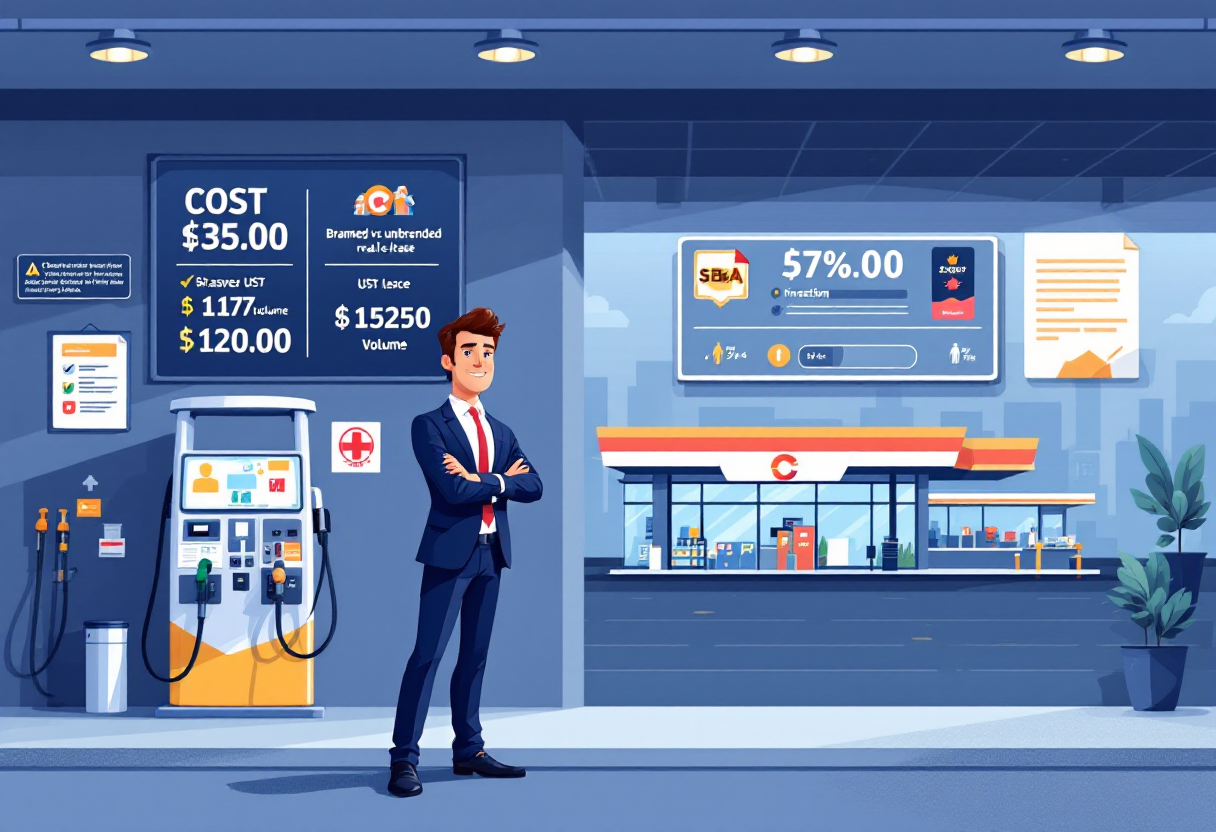
If you have ever asked how much a gas station costs, or how much is a gas station worth once you own one, the honest answer is that you can buy one for $250,000 or pay $14 million for one, and both numbers are correct depending on what you are actually buying. This guide breaks down the real 2026 price ranges, the inputs that move them, and the financial math that decides whether a deal is a winner or a money pit.
CT Acquisitions has been on both sides of gas station transactions, advising operators selling single sites and family groups acquiring portfolios. The numbers below come from BizBuySell Valuation Benchmarks, the NACS 2025 State of the Industry report, public 10-K filings from Casey’s General Stores and Murphy USA, and current listings on the open market. If you want the broader process for buying one of these businesses, our how to buy a gas station guide walks through diligence, offer construction, and closing. This article stays in pricing territory.
How Much Does a Gas Station Cost? 2026 Quick Answer
A gas station is worth what its earnings support, plus the value of any land and building it owns. Business-only leasehold sites sell for about 2.5x to 4.0x EBITDA per STAX Real Estate, and BizBuySell puts the median asking price at $450,000. Stations sold with the real estate trade at about 7x to 9x EBITDA, per the same STAX data.
The median asking price for an established gas station on the open market in 2026 sits at $450,000 according to BizBuySell, with most deals landing in a band of $231,000 on the low end and $1.12 million on the high end. That number reflects the business only usually, meaning the fuel franchise, inside sales, equipment, and goodwill, with the underlying land and building either leased from a separate owner or carved into a separate real estate deal.
When the real estate is included, the picture changes fast. A turnkey gas station with land, building, fuel canopy, tanks, and an operating C-store usually sells for $1.5 million to $5 million in most US markets. Premium-corner sites in Florida, Texas, the Carolinas, and the Northeast routinely close at $4 million to $8 million. New-build construction costs reported by industry construction estimators show projects spanning from roughly $4.8 million to $14 million depending on lot size, fueling lane count, canopy span, and environmental compliance work.
Here is the quick mental model. Three numbers tell you almost everything about what a gas station costs.
- Annual gallons pumped. Stations doing 80,000 gallons per month are different businesses than stations doing 250,000 gallons per month. NACS reports that the 122,620 fuel-selling convenience stores in the US sold roughly 80% of all gasoline purchased nationally in 2025.
- Inside sales (C-store revenue). A station doing $1.8 million per year in inside sales with 35% gross margin is worth multiples more than the same fuel volume with a $600,000 inside number.
- Real estate ownership. Fee-simple deals trade at roughly 8x EBITDA per STAX Real Estate’s 2026 valuation summary; leasehold deals run 2.5x to 4x.
Everything else, branded versus unbranded, urban versus rural, car wash attached or not, is a modifier on top of those three drivers.
Regional Price Bands
Geography swings the price as hard as any operational factor. Per STAX Real Estate’s 2026 cap rate survey, Florida trades at the tightest cap rates (around 5.11%) thanks to zero state income tax and Sunbelt population growth. Nevada sits at 5.20% to 5.40% on the back of tourism traffic and limited new supply. The Carolinas run 5.00% to 5.50%. Texas trades at roughly 5.63% with the largest available inventory in the country. Tennessee sits at 5.40% to 5.75%. Mississippi and other lower-density markets clear at 6.00% to 6.50% or wider.
What this means in dollar terms: a gas station property generating $200,000 of NNN rent prices at $3.9 million in Florida (5.11% cap), $3.55 million in Texas (5.63% cap), and roughly $3.1 million in Mississippi (6.50% cap). The same building, same rent, $800,000 of price spread driven purely by zip code.
For business-only deals, regional spreads are narrower but still meaningful. Urban California and Northeast metros run 25% to 40% premiums over national medians. Midwest and rural Plains markets often trade at 15% to 25% discounts. The premium markets get the higher prices partly because of fuel volume (denser traffic) and partly because of inside-sales price elasticity (urban customers pay $4.50 for a bottle of water that costs $1.99 in rural markets).
How to estimate what a gas station is worth
Asking prices on listing sites tell you what sellers hope for. To estimate what a specific station is worth, buyers and lenders work through the same four steps.
- Normalize the earnings. Start from tax returns and monthly P&Ls, then add back the owner’s pay, personal expenses, and one-time repairs. Owner-run sites are priced on seller’s discretionary earnings (SDE). Larger managed sites are priced on EBITDA.
- Separate the business from the real estate. If you own the land, a buyer values the operating business and the property as two assets. If you lease, the lease term and renewal options become part of the business value.
- Apply the matching multiple. STAX Real Estate data puts business-only leasehold deals in premium markets at 2.5x to 4.0x EBITDA and combined business-plus-real-estate deals at 7x to 9x EBITDA. BizBuySell reports that the average earnings multiple on gas stations sold through its marketplace has moved from about 3 toward 4 over the past five years.
- Adjust for the site. Tank age and UST compliance records, the Phase I environmental report, the remaining term of the fuel supply agreement, and any brand incentives that must be repaid on a sale all move the final number.
A hypothetical example: a leasehold station with $300,000 of normalized EBITDA, priced on the 2.5x to 4.0x range per STAX Real Estate, is worth roughly $750,000 to $1,200,000, plus fuel and store inventory at cost. If the same operator owned the land, the deal would be priced on the combined range instead, and the property would carry most of the added value.
The Three Gas Station Buying Scenarios (And Their Price Ranges)
Buyers ask about gas station cost as if it is one number. It is not. There are three completely different transactions hiding under the same phrase, and each has its own price band.
Scenario 1: Business Only, Leased Land
You buy the operating business and inherit a long-term ground lease from the landlord. The seller keeps no real estate. This is the cheapest entry point and the most common transaction in BizBuySell’s listing data.
- Typical price range: $150,000 to $700,000
- Median per BizBuySell: $450,000
- Down payment with SBA financing: 10% to 15%
- Hidden risk: lease term, escalation clauses, landlord environmental responsibility carve-outs
These deals look cheap on paper. They are also the easiest place to lose money if you fail to read the lease line by line. A 7-year remaining term with no renewal options on a $450,000 purchase is roughly $64,000 in goodwill amortization per year just to recover your purchase price before profit. The BizBuySell benchmark report shows revenue multiples on gas stations ranging from 0.14 to 0.99 with a median of 0.35, so a station doing $1.5 million in topline revenue would land near $525,000 at the median.
Scenario 2: Business Plus Real Estate (Fee Simple)
You buy the land, building, fueling equipment, tanks, canopy, and the operating business as one combined package. This is the standard small-buyer transaction and the structure most SBA 7(a) lenders prefer because the real estate gives them collateral.
- Typical price range: $1.2 million to $5 million
- Down payment with SBA 7(a) financing: 10% to 20%
- Typical EBITDA multiple: 7x to 9x for the combined deal per STAX
- Loan term: up to 25 years when real estate is involved
Most owner-operators end up here. The real estate component does three things: it stretches your loan term, it gives you a tangible asset that appreciates, and it removes the lease-renewal risk that haunts Scenario 1.
Scenario 3: Net Lease Investment (NNN Cap Rate Deal)
You buy the real estate only and lease it back to a credit-rated operator like 7-Eleven, Wawa, or Circle K. You are not operating the station. You are a landlord collecting rent on a 15- or 20-year absolute-net lease with rent escalations.
- Typical price range: $1.8 million to $7 million
- Down payment: 25% to 40% (commercial real estate financing, not SBA)
- 2026 NNN cap rates per STAX: 4.83% to 5.20% for Wawa, 5.00% to 5.40% for 7-Eleven, 5.13% for Murphy USA, 5.35% to 5.65% for Circle K
- Hidden risk: tenant credit, lease-end disposition, environmental tail risk
If a Wawa-leased gas station property generates $200,000 of triple-net rent and trades at a 5.0% cap, the building sells for $4 million. That same building with an unrated independent operator paying the same rent would trade at a 7.5% to 8.5% cap, dropping the price to $2.35 million to $2.67 million. The credit of the tenant is doing roughly $1.5 million of the price work.
Branded vs Unbranded Gas Stations: The Price Premium
A “branded” station is one that flies the colors of a major oil company and sells that brand’s fuel under a supply agreement. An “unbranded” station buys fuel on the spot market or from a jobber and operates under an independent name. The branding decision affects what a station costs to buy and what it is worth at exit.
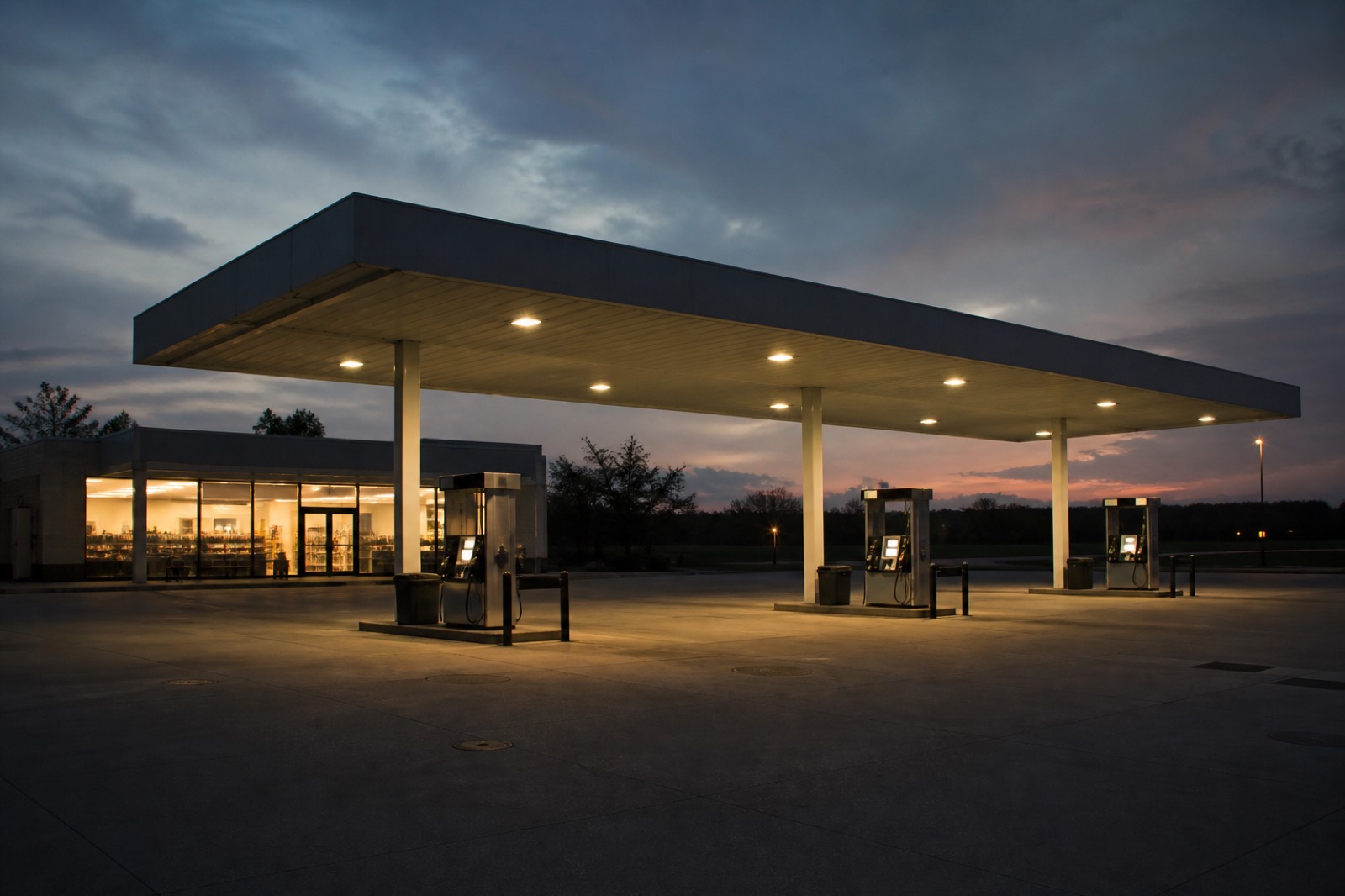
The major branded supplier networks include Shell, BP, Chevron, ExxonMobil, Marathon, Sunoco, Valero, and Phillips 66. Each runs its own dealer-marketer program with required imaging packages, point-of-sale equipment, and minimum gallons commitments.
Branded Premium
Branded stations typically sell for 15% to 30% more than otherwise-comparable unbranded stations. There are three reasons. First, branded sites usually pump more gallons per month because of brand recognition and credit card loyalty programs. Second, branded sites have lower fuel-price volatility because the supply contract smooths out spot-market swings. Third, the imaging investment is already done, so a buyer does not face a $200,000 to $500,000 capital outlay to repaint, re-canopy, and update the dispenser graphics.
The Hidden Cost of Branded
The premium comes with strings. Brand supply contracts run 10 to 15 years and require minimum monthly gallons. Fall below the minimum and the supplier can charge make-up fees or de-brand the site. Imaging refresh cycles every 7 to 10 years cost $150,000 to $400,000 depending on canopy size. Credit card processing fees on branded sites flow through the supplier’s processor, which is usually 5 to 10 basis points more expensive than what an unbranded site could negotiate independently.
Unbranded Cost Structure
Unbranded sites trade at a discount but give the operator pricing flexibility. The owner can buy from whichever jobber offers the best price that week, which in volatile markets adds 2 to 5 cents per gallon of margin. The downside is that unbranded sites often pump 25% to 40% fewer gallons than branded sites in the same market, which more than offsets the per-gallon margin advantage at most volumes.
The Real Estate Question: Owned vs Leased Land
The single biggest factor in a gas station’s price is whether the land comes with the deal. This one variable swings the price 3x to 5x and changes the financing structure, the diligence list, and the exit options.
Owned Land Math
A station doing 100,000 gallons per month with $1.5 million in inside sales and $350,000 of EBITDA, sold fee-simple including a half-acre lot, would typically transact at $2.5 million to $3.2 million in 2026. The 7.1x to 9.1x multiple on EBITDA includes the real estate component, which is usually 30% to 45% of total enterprise value.
Leased Land Math
Same station, same financials, but the land is leased from a third-party owner under a 15-year ground lease. The business-only sale would land at $875,000 to $1.4 million, applying the 2.5x to 4.0x leasehold-EBITDA multiple from STAX’s 2026 data. The buyer is paying for cash flow only, with no underlying real estate to backstop the loan.
Sale-Leaseback Strategy
Some operators buy fee-simple and immediately sell-leaseback the land to a net lease investor. A station bought for $3 million fee-simple might generate $1.2 million from a sale-leaseback of the land at a 5.5% cap rate (assuming $66,000 of ground rent). That cash gets recycled into a second acquisition. 7-Eleven used this exact playbook on the Speedway deal, generating $5 billion in net sale-leaseback proceeds to offset the $21 billion purchase price.
C-Store Size and Format: How Dollars Change
The convenience store attached to the gas station is the financial engine. The fuel canopy gets the eyeballs from the road, but per NACS data, inside sales contribute roughly 70% of gross profit while fuel contributes only 30%. C-store square footage and format drive a huge portion of a station’s purchase price.
Kiosk Format (200 to 800 sq ft)
The kiosk is a small attendant booth attached to or near the fuel canopy. Limited inventory: cigarettes, lottery, soft drinks, snacks, maybe coffee. These are the cheapest stations to buy, typically $300,000 to $1.2 million all-in. Inside sales might be $300,000 to $600,000 per year. They are also the format most at risk from competitive displacement when a larger format opens nearby.
Traditional Convenience Store (1,500 to 2,800 sq ft)
The standard footprint that defines the industry. Full beverage cooler, snack aisle, packaged food, possibly hot food and coffee bar. Inside sales of $1.2 million to $2.5 million per year. Purchase prices typically $1.5 million to $4 million fee-simple. This is the format that fits the BizBuySell median.
Large Format with Foodservice (3,500 to 6,000 sq ft)
The QuikTrip, Wawa, Sheetz, Buc-ee’s model scaled down for independent operators. Pizza station, fried chicken, made-to-order sandwiches, large beverage program. Inside sales of $3 million to $7 million per year. Purchase prices of $4 million to $9 million fee-simple. Per Casey’s $1.145 billion CEFCO acquisition in 2024, the chain paid roughly $5.78 million per store gross or $4.95 million net of tax benefits for a portfolio of large-format stores.
Travel Center Format (8,000+ sq ft)
Truck-stop scale with diesel lanes, showers, restaurant seating, and large-vehicle parking. Purchase prices start around $6 million and can exceed $25 million for prime interstate sites. This format is dominated by Pilot Flying J, Love’s, and TravelCenters of America. Independent operators rarely buy at this scale.
Gas Volume (Gallons Pumped) as the Primary Valuation Driver
If you only learn one valuation metric, learn this one. Monthly gallons pumped is the input that drives almost every other gas station number. Buyers should ask for trailing 36 months of supplier purchase records before even discussing price.
The NACS 2025 fuel sales data show the industry sold roughly 121 billion gallons across 122,620 fuel-selling convenience stores, or roughly 82,200 gallons per store per month on average. That average masks a wide distribution. The bottom quartile pumps under 40,000 gallons monthly. The top quartile pumps over 150,000 gallons. The handful of high-velocity sites near interstate exits or in dense urban infill can pump over 400,000 gallons.
Per-Gallon Margin Reality
The NACS data on fuel margins show an average gross margin of roughly 35.7 cents per gallon in 2025, but operators see only $0.03 to $0.07 of that net after credit card fees (1.5% to 2.5% of fuel price, which at $3.50 per gallon is roughly 5 to 9 cents per gallon), labor allocation, and utilities. EIA retail gasoline price data showed average prices of $3.11 per gallon in 2025, down from $3.30 in 2024.
Volume to Valuation
A useful rule of thumb in 2026 deals: each incremental 10,000 gallons per month of sustainable fuel volume adds roughly $50,000 to $90,000 of business-only enterprise value, holding inside sales constant. A station pumping 120,000 gallons per month with the same C-store as one pumping 60,000 will sell for $300,000 to $540,000 more for the fuel component alone.
Inside Sales (C-Store Revenue) as the Secondary Valuation Driver
While fuel volume gets discussed first, inside sales determine most of a station’s actual profitability and therefore most of its valuation. The NACS profitability data are unambiguous: in-store gross margins run 30% to 50% across categories, with candy and health-beauty exceeding 50%, while fuel net margins sit at 1% to 2%.
Inside Sales Mix Quality
Not all inside sales are equal. A category breakdown matters in diligence.
- Tobacco: Roughly 30% of inside sales at typical stations but only 18% to 22% gross margin. High-volume, low-margin.
- Packaged beverages: 15% to 22% of inside sales, 38% to 45% margin.
- Foodservice: 10% to 25% of inside sales, 50% to 60% margin. Foodservice growth is the single biggest profit driver in the modern C-store.
- Beer and alcohol: 8% to 15% of inside sales, 25% to 32% margin, where state law allows.
- Lottery: 5% to 12% of inside sales, only 5% to 6% commission margin.
A station with $1.5 million in inside sales but heavy lottery and tobacco concentration has materially worse cash flow than one with the same revenue but a strong foodservice and beverage mix.
Why Foodservice Multiplies the Price
Stations with a developed foodservice program (pizza, made-to-order sandwiches, breakfast, coffee bar) sell at 9x to 11x EBITDA versus 6x to 8x for stations without. The Casey’s acquisition strategy and the Wawa real estate cap rates are both driven by the foodservice premium. Casey’s EBITDA growth over the last decade has been driven primarily by prepared-food sales, not gallons pumped.
What Is Gas Station Cash Flow? How the Money Moves
Gas station cash flow is the annual owner earnings a station generates after paying operating costs, most often measured as seller discretionary earnings (SDE) on owner-run sites or EBITDA on larger, managed sites. BizBuySell reports median owner earnings on listed gas stations of $166,920 per year, and independent stations commonly run from the low six figures on small single-pump sites to over $1 million on high-volume locations with developed foodservice.
Gas station cash flow is built from three stacked profit engines on one piece of dirt: fuel margin at the pump, inside sales from the c-store, and any foodservice or car wash attached to the site. Fuel is high volume and thin margin, so most owner earnings come from inside sales, where a bag of chips and a fountain drink carry far more margin than a gallon of gas. This is why two stations pumping identical gallons will show very different cash flow when one has a busy kitchen and the other sells only fuel and cigarettes.
The average gas station transaction is small in dollar terms because most visits are a single fuel fill or a quick convenience purchase, so cash flow depends far more on daily transaction count and the share of customers who walk inside than on any one ticket. A site on a high-traffic corner that converts pump customers into c-store buyers will out-earn a higher-volume fuel-only site sitting on a quieter road.
When you buy, cash flow is what services the debt and pays you. Owner-operators track it as SDE, which adds back the owner salary and personal add-backs, while investors running a manager track it as EBITDA after paying that manager. If you plan to sell later, a clean set of books that separates fuel, inside sales, and foodservice will command more buyer attention. Our gas station sell-side advisory page walks owners through how buyers read those numbers.
Sample Financials: A $1.5M, $3M, and $5M Gas Station
Real numbers from three representative 2026 deals, anonymized but built from actual transactions. These illustrate how the price tiers stack up financially.
The $1.5 Million Station (Small Market, Owned Real Estate)
| Metric | Annual Figure |
|---|---|
| Fuel volume | 65,000 gallons / month (780,000 / year) |
| Fuel gross profit at 32 cents per gallon | $249,600 |
| Inside sales | $850,000 |
| Inside gross profit at 32% | $272,000 |
| Total gross profit | $521,600 |
| Operating expenses (labor, utilities, rent, supplies) | $315,000 |
| Seller discretionary earnings (SDE) | $206,600 |
| Purchase price (includes acre lot, building, equipment) | $1,500,000 |
| Implied multiple of SDE | 7.3x |
The $3 Million Station (Suburban, Branded, Owned Real Estate)
| Metric | Annual Figure |
|---|---|
| Fuel volume | 120,000 gallons / month (1.44M / year) |
| Fuel gross profit at 30 cents per gallon | $432,000 |
| Inside sales | $1,800,000 |
| Inside gross profit at 35% | $630,000 |
| Total gross profit | $1,062,000 |
| Operating expenses | $640,000 |
| EBITDA | $422,000 |
| Purchase price (includes acre lot, 2,400 sq ft store) | $3,000,000 |
| Implied multiple of EBITDA | 7.1x |
The $5 Million Station (Major Metro, Branded, Foodservice Program)
| Metric | Annual Figure |
|---|---|
| Fuel volume | 185,000 gallons / month (2.22M / year) |
| Fuel gross profit at 31 cents per gallon | $688,200 |
| Inside sales | $3,400,000 |
| Inside gross profit at 39% (foodservice mix) | $1,326,000 |
| Total gross profit | $2,014,200 |
| Operating expenses | $1,360,000 |
| EBITDA | $654,200 |
| Purchase price (1.2 acre lot, 4,200 sq ft store, car wash) | $5,000,000 |
| Implied multiple of EBITDA | 7.6x |
Notice that the multiples are consistent across price tiers, sitting in a 7.1x to 7.6x EBITDA range. The price differences are driven almost entirely by the underlying EBITDA, not by market sentiment. A buyer who tells you a particular station “deserves” a 10x multiple needs to justify it with foodservice mix, growth trajectory, or a credit-tenant lease structure.
Hidden Costs: UST Compliance, Phase I Environmental
The line items that trip up first-time gas station buyers are the environmental and compliance costs that do not show up in the purchase price. Budget for these separately or your deal economics fall apart.
Phase I Environmental Site Assessment
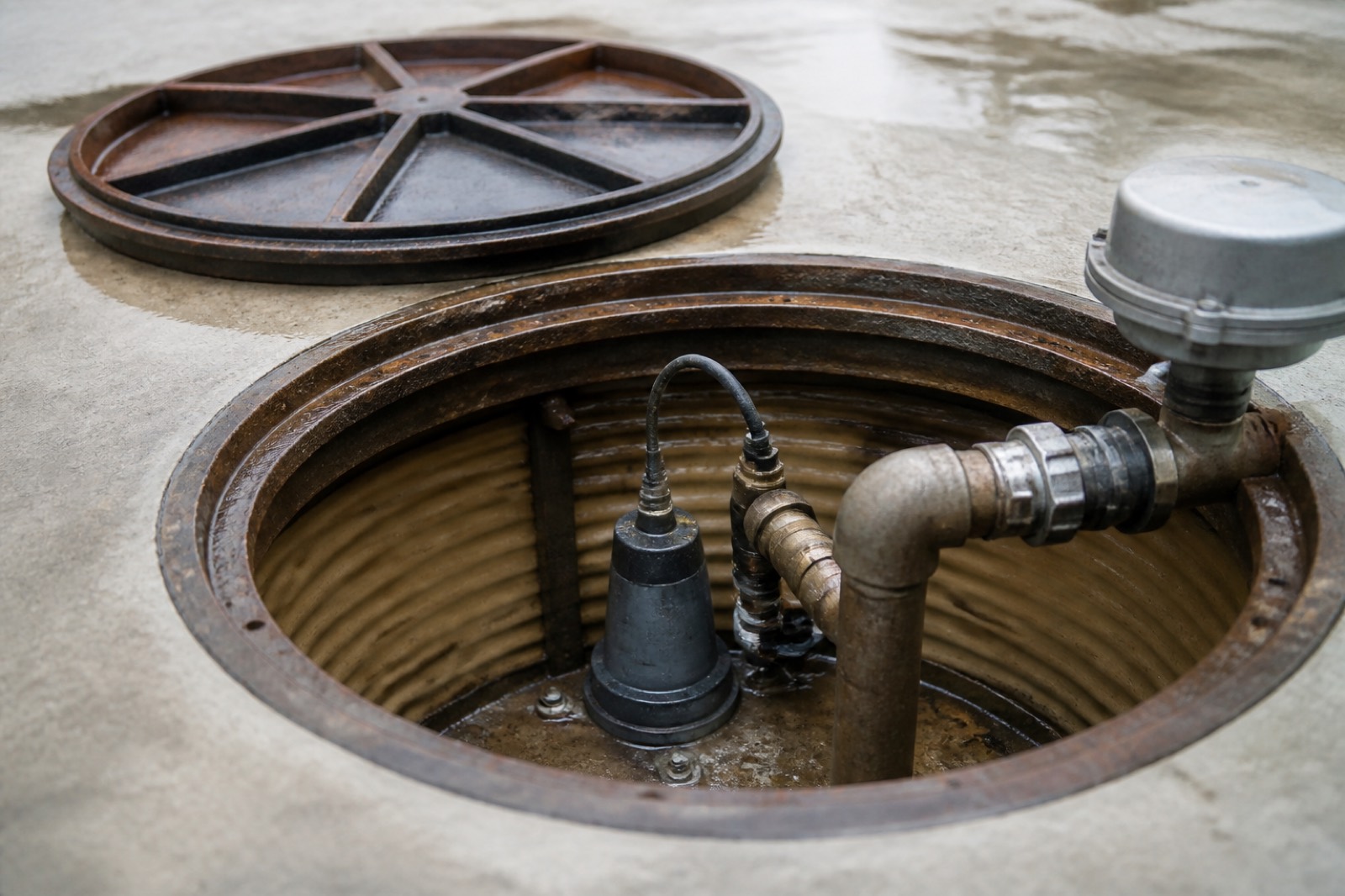
Required by virtually every SBA 7(a) lender and most commercial banks before closing. The EPA’s UST program regulates roughly 543,000 active underground storage tank systems nationally under 40 CFR Part 280. A Phase I assessment costs $2,500 to $6,500 depending on site complexity and historical use. If the Phase I flags potential contamination, a Phase II investigation with soil borings, groundwater sampling, and vapor testing runs $15,000 to $80,000.
Underground Storage Tank Compliance
Federal UST rules require leak detection, spill prevention, overfill protection, and corrosion protection. Sites with older tanks may need upgrades:
- Leak detection system: $3,000 to $8,000 per tank
- Cathodic protection retrofit: $10,000 to $48,000 per site
- Tank replacement (full): $150,000 to $400,000 for a typical 3-tank configuration
- Stage I and Stage II vapor recovery (where required): $20,000 to $60,000
Tank Closure and Removal
If a buyer plans to replace tanks during their hold period, the closure and removal cost is $25,000 to $60,000 per tank, plus any contamination remediation discovered during removal. Set aside $200,000 to $500,000 in a sinking fund over a 7- to 10-year hold to cover this without surprise.
Financial Responsibility Requirements
Per EPA rules, UST owners must demonstrate financial responsibility of $1 million per occurrence and $1 million or $2 million annual aggregate. Most owners satisfy this through pollution liability insurance at $1,800 to $4,200 per year per site, or through state-administered cleanup funds where available.
SBA 7(a) Financing for Gas Station Purchases: 2026 Reality
The SBA 7(a) program is the most common financing structure for gas station acquisitions under $5 million. The program details and current rates live on the SBA’s official 7(a) page. Here is what actually happens in practice in 2026.
Loan Size and Down Payment
SBA 7(a) loans cap at $5 million. Down payment requirements run 10% to 20% of the project cost. Gas stations with strong cash flow and an experienced buyer can sometimes qualify at the 10% minimum. Stations with marginal financials or first-time operators are pushed to 15% or 20%. Seller financing of 5% to 10% can often replace part of the buyer’s down payment when the SBA approves a seller carry on full standby.
Cash Flow Coverage
SBA lenders require a debt service coverage ratio of 1.25x at minimum, with most requiring 1.35x or better on gas stations specifically because of environmental risk. The cash flow has to cover the loan payment, a reasonable owner’s salary (usually $60,000 to $90,000), and leave room for the DSCR cushion.
Experience Requirements
The SBA has tightened experience requirements for gas station deals. A first-time owner usually needs a partner with direct C-store or fuel-retail experience, or has to retain the previous owner as a transition manager for 6 to 24 months post-close. Some lenders categorically refuse gas station loans to operators without prior industry experience.
Term and Rate
Real-estate-included gas station loans get the maximum 25-year SBA term. Business-only deals are limited to 10 years. Variable rates in 2026 run roughly Prime + 2.0% to Prime + 2.75% depending on credit, with some preferred lenders offering fixed-rate alternatives in the high 8% to low 9% range.
Why Couche-Tard, 7-Eleven, and Major Chains Pay Premium Multiples
The headline transactions in the gas station space happen at multiples that look insane next to BizBuySell’s small-deal median. Understanding why explains a lot about what makes a single station valuable.
The Speedway Deal
In 2021, 7-Eleven paid $21 billion for 3,800 Speedway stores from Marathon Petroleum. That works out to $5.5 million per store gross. After deducting $475 million to $575 million of run-rate synergies, $3 billion of tax benefits, and $5 billion of net sale-leaseback proceeds, the effective per-store cost was substantially lower. The 7.1x EBITDA multiple reflected the synergies, not the standalone economics of a Speedway site.
The Casey’s CEFCO Deal
Casey’s acquired 198 CEFCO stores for $1.145 billion in 2024, closing November 1, 2024. Net of $165 million in tax benefits, the effective purchase price was $980 million, or approximately 11x pro forma 2023 EBITDA. Casey’s was buying access to Texas and the southern US, plus operating density that supports its central distribution and foodservice supply chain.
The Couche-Tard 7-Eleven Pursuit
Couche-Tard’s 2024-2025 pursuit of Seven & i Holdings (parent of 7-Eleven) would have created the largest C-store chain in history before Couche-Tard withdrew in 2025. The bid implied multiples well above public-comp peers because Couche-Tard’s acquisition playbook historically delivers 30% to 60% of target EBITDA in synergies through procurement power, private-label penetration, and SG&A consolidation.
What This Means for a Single-Site Buyer
The chains can pay 9x to 11x EBITDA because they capture synergy value a single-site operator cannot access. A single-station buyer paying 7x to 8x on the same EBITDA stream is actually the rational buyer at that scale. Do not anchor on chain multiples when underwriting a one-off deal.
Gas Station Resale Math: What You Get Back at Exit
The acquisition price is half the story. What the station sells for at exit determines whether the investment actually works. Three exit paths dominate the market.
Path 1: Sell to Another Owner-Operator
The most common exit. A 5- to 10-year hold, then sell to the next family operator or a small portfolio buyer. Expect to transact at the same 7x to 8x EBITDA multiple range you bought at, unless you have grown EBITDA materially. The wealth creation here comes from EBITDA growth (often 30% to 60% over a 7-year hold) and from paying down the SBA loan principal.
Path 2: Sell to a Regional Chain
Regional chains like GPM Investments, Murphy USA, or Maverik roll up independent stations within their footprints. A single high-quality site sold into a roll-up typically trades at 8x to 9x EBITDA, modestly above the small-buyer multiple because the chain captures procurement and brand synergies.
Path 3: Sale-Leaseback Then Sell the Business
For owners with prime real estate, a sale-leaseback to a net lease REIT or 1031 buyer at a 5% to 6% cap rate often releases more equity than selling the combined business. The owner then sells the operating business as a leasehold deal at 2.5x to 4x EBITDA. Combined proceeds from both transactions can exceed a fee-simple sale by 15% to 30% in premium markets.
Real Estate Appreciation
The land under a gas station typically appreciates 2% to 4% per year in established markets and 5% to 8% in growth markets. A $1.2 million land parcel bought in 2020 in a high-growth Texas or Florida market often appraises at $1.7 million to $2.0 million in 2026. Real estate appreciation is frequently the single largest component of total return for owner-operator deals.
How CT Acquisitions Helps Gas Station Buyers and Sellers
CT Acquisitions advises gas station buyers and sellers on transactions from $500,000 single-site deals to $50 million portfolio sales. The work falls into three buckets.
For buyers, CT runs market searches matched to a buyer’s geographic and operational criteria, structures offers that protect against environmental tail risk, and coordinates with SBA lenders, environmental consultants, and brand-supplier transition teams. Read our how to buy a gas station guide for the full diligence sequence, and our business acquisition meaning explained guide for the underlying transaction mechanics.
For sellers, CT preps the financials, normalizes EBITDA for non-recurring items, packages the marketing materials, and runs a controlled process that includes both strategic chain buyers and individual operators. Our how to price a business for sale guide covers the valuation methodology in detail, and our how investment bankers value a business guide walks through the broader institutional framework.
For deal documentation, the letter of intent to sell business sample and due diligence checklist capture the standards CT applies to every transaction. Owners considering adjacent small-business categories may also find our how to buy a laundromat business guide useful for comparison, since both businesses share similar SBA financing dynamics and owner-operator economics.
If you want a confidential discussion about a specific opportunity, contact the CT team directly. Most gas station transactions take 4 to 9 months from first conversation to close. The earlier the conversation starts, the better the price tends to be on either side of the table.
How Much Does a Gas Station Cost: Frequently Asked Questions
What is a good cash flow for a gas station?
Cash flow varies widely by fuel volume, inside sales, and whether the site has foodservice. BizBuySell reports median owner earnings on listed gas stations of $166,920 per year, with small owner-run sites generally landing in the low six figures and high-volume stations with strong c-store and kitchen programs earning materially more. The stronger the inside sales mix, the higher the cash flow at any given gallon count.
How much does a gas station cost on average in 2026?
The median asking price for an established gas station business on BizBuySell in 2026 is $450,000 for business-only deals. When real estate is included, the typical fee-simple gas station transacts at $1.5 million to $5 million. New construction projects span $4.8 million to $14 million per latest industry construction-cost data. The right number depends on whether you are buying the business only, the business plus real estate, or a net-leased real estate investment.
How much can I make owning a gas station?
Seller discretionary earnings (SDE) on independent gas stations typically run $150,000 to $400,000 per year on the small end, $400,000 to $900,000 on mid-sized branded sites with strong inside sales, and over $1 million for high-volume sites with developed foodservice programs. The BizBuySell median owner earnings on listed gas stations is $166,920 per year, which includes the owner’s salary plus other financial benefits.
What multiple of earnings does a gas station sell for?
Business-only leasehold deals trade at 2.5x to 4.0x EBITDA in premium markets per STAX Real Estate. Combined business-plus-real-estate fee-simple deals trade at 7x to 9x EBITDA. NNN net-lease real estate deals with credit tenants like Wawa, 7-Eleven, or Circle K trade at cap rates of 4.83% to 5.65%, which equates to roughly 17x to 21x net operating income.
Do I need experience to buy a gas station?
SBA 7(a) lenders almost always require either direct gas station or C-store operating experience or a partner with that background. First-time operators without industry experience usually need to retain the seller as a transition manager for 6 to 24 months after closing, or partner with an experienced operator who can satisfy the lender’s experience requirements. Some lenders categorically decline first-time gas station operators.
How much down payment do I need for a gas station SBA loan?
SBA 7(a) down payments on gas station purchases run 10% to 20% of the total project cost. Strong cash flow and an experienced buyer can qualify at 10%. Marginal deals or first-time operators usually need 15% to 20%. Seller financing on full standby can sometimes count toward the buyer’s required equity injection, lowering the cash out of pocket at closing.
What is a Phase I environmental site assessment and how much does it cost?
A Phase I is a non-invasive environmental review of the site’s history and current condition required by virtually every lender on a gas station purchase. It costs $2,500 to $6,500 and takes 2 to 4 weeks. No fee to you on buy-side introductions; sell-side mandates are paid on success at closing.
How many gallons does a typical gas station sell per month?
The NACS 2025 industry data show roughly 82,200 gallons per month per fuel-selling convenience store on average across the 122,620 US sites. Volume varies widely: bottom quartile sites pump under 40,000 gallons monthly, top quartile sites pump over 150,000 gallons, and high-velocity interstate or urban infill sites can pump over 400,000 gallons monthly.
What is the profit margin on gasoline?
Average fuel gross margin in 2025 was roughly 35.7 cents per gallon per NACS data, but net profit after credit card fees, labor, and utilities runs only $0.03 to $0.07 per gallon. Fuel sales contribute about 70% of a typical gas station’s revenue but only 30% of gross profit. Inside C-store sales contribute the remaining 30% of revenue and 70% of profit, with foodservice margins exceeding 50%.
Is buying a gas station a good investment?
Gas stations can produce 15% to 25% cash-on-cash returns for well-located, well-operated sites bought at reasonable multiples. The risk factors are environmental liability, fuel-price volatility, brand-supply contract obligations, and the long-term shift toward electric vehicles. Stations with developed foodservice programs and prime real estate are the most resilient. Stations dependent purely on fuel margin with weak inside sales are the highest risk.
How long does it take to buy a gas station?
Most gas station transactions take 4 to 9 months from first conversation to close. Phase I environmental work alone takes 2 to 4 weeks, SBA loan underwriting takes 60 to 120 days, brand supplier transition approvals take 30 to 90 days, and lease assignment approvals (on leasehold deals) take another 30 to 60 days. Compressed timelines under 90 days are usually a sign of inadequate diligence.
Is a gas station worth 3 times profit?
For a business-only sale, roughly yes. STAX Real Estate puts leasehold gas station deals at 2.5x to 4.0x EBITDA, and BizBuySell reports the average earnings multiple on sold gas stations has moved from about 3 toward 4 over five years. When the land and building are included, the price is far higher, around 7x to 9x EBITDA per STAX, because the buyer also pays for the real estate.
Does owning the land change what a gas station is worth?
Yes, more than any other single factor. STAX Real Estate data puts fee-simple deals at 7x to 9x EBITDA versus 2.5x to 4.0x for leasehold deals with the same earnings. Some owners sell the real estate to a net lease investor and the operating business separately, which can raise total proceeds when the site and lease terms are strong.