
Royalty Fee Definition in 2026: What Franchisors Actually Charge, the FDD Item 6 Reality, and Real Brand Examples
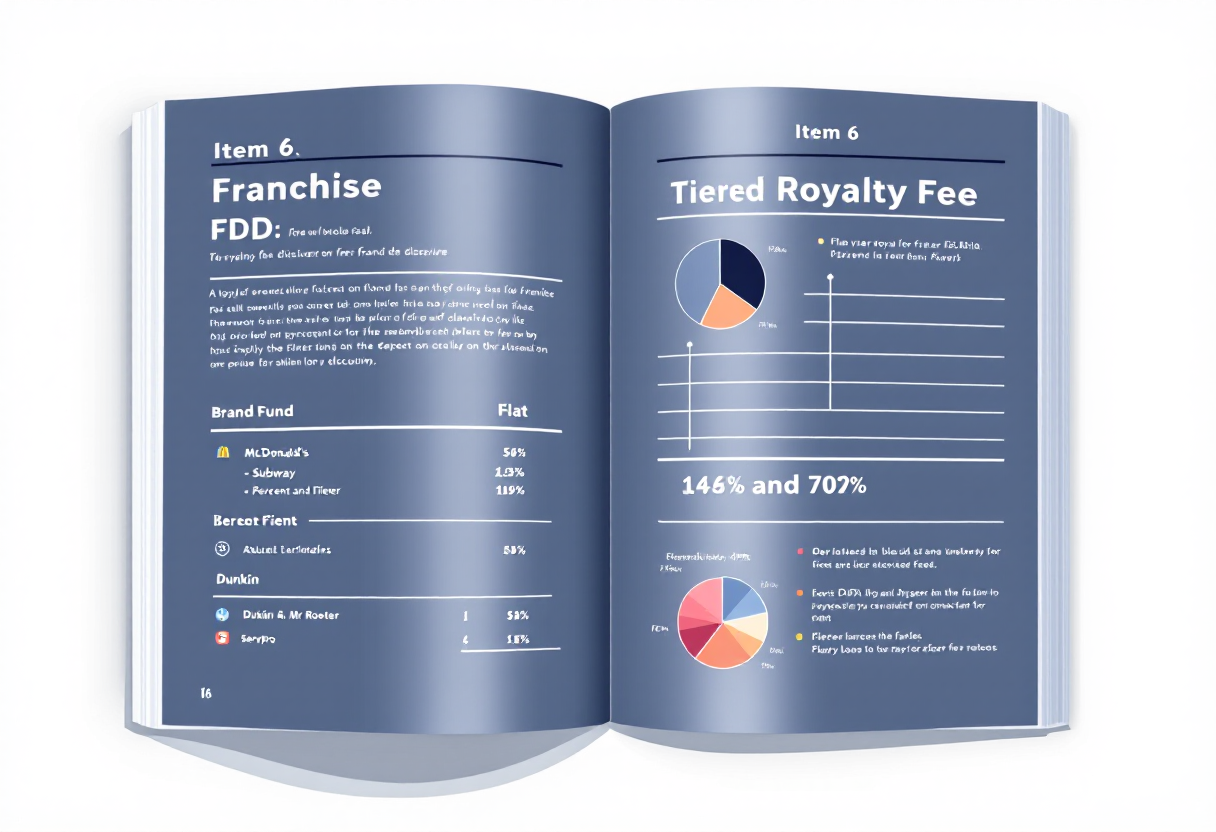
The royalty fee definition that matters in practice is this: a royalty fee is the ongoing payment a franchisee owes the franchisor for the right to keep operating under the brand, system, and trademarks after the initial franchise fee is paid, and it usually runs as a percentage of gross sales billed weekly or monthly for the life of the franchise agreement. Most US franchise royalties land between 4% and 8% of gross sales, with a system-wide median of about 6% according to FRANdata and the IFA Franchising Economic Report, but the structure, the carve-outs, and the audit clauses behind that headline number are where franchisees actually win or lose money. This guide walks through what royalty fees are, how they are disclosed in Item 6 of the Franchise Disclosure Document, and what real brands like McDonald’s, Subway, Dunkin’, Jersey Mike’s, Servpro, Mr. Rooter, Anytime Fitness, Mathnasium, and Crumbl Cookies actually charge in 2026.
What Is a Royalty Fee? Plain-Language Meaning
A royalty fee is a recurring payment one party makes to another for the ongoing right to use something of value the other party owns, most often a brand name, business system, or intellectual property. In franchising, the royalty fee is the money a franchisee pays the franchisor on a regular schedule in exchange for continued use of the brand and its operating model.
The word “royalty” gets used in several settings, and the meaning stays consistent across all of them. A songwriter earns a royalty each time a track is played. An author earns a royalty on every book sold. A mineral rights owner earns a royalty on oil pulled from their land. In each case, one side owns an asset and the other side pays for the right to use it while the value keeps producing. A franchise royalty fee follows the same logic: the franchisor owns the brand and system, and the franchisee pays to keep using both.
The distinction that matters most is recurring versus one-time. A royalty fee is ongoing, charged monthly or weekly for as long as the agreement runs. It is different from the upfront franchise fee, which is a single payment made at signing to join the system. A franchisee pays the initial fee once and the royalty fee for the life of the contract, which is why the royalty fee is the number that shapes long-term unit economics far more than the entry cost.
Most franchise royalty fees are calculated as a percentage of gross sales, though some brands charge a flat dollar amount and others use a tiered structure that shifts as revenue grows. Every one of these arrangements is spelled out in Item 6 of the Franchise Disclosure Document, which is the single authoritative source for what any given brand charges. If you are weighing a sale or purchase, the royalty structure is a core part of the business model, and our franchise sell-side team reads the FDD line by line before advising on value.
Royalty Fee Definition in Franchising
In a franchise, the royalty is the recurring license fee a franchisee pays the franchisor in exchange for the continued right to use the trademark, the operating system, the supply chain, the technology stack, and the goodwill of the brand. The US Small Business Administration describes it plainly: monthly royalties are “where franchisors earn ongoing profits” and they typically run 4% to 12% of monthly revenue depending on the category. The royalty is separate from the initial franchise fee, which is the one-time admission charge that gets a franchisee into the system in the first place.
Three things make the royalty the most important number on the deal:
- It compounds. Unlike the initial franchise fee, which a franchisee pays once, royalties keep coming every month or every week for the entire term of the franchise agreement, which is usually 10 to 20 years.
- It is calculated on gross sales, not profit. Whether a franchisee made money that month or not, the royalty is owed on top-line revenue. A 6% royalty on a unit running a 10% operating margin is effectively 60% of the operator’s profit.
- It is non-negotiable in most systems. Mature franchisors hold the line on royalty percentages because changing them for one franchisee would create disclosure and equal-treatment problems across the entire system.
The legal scaffolding for the royalty lives in two places. First, the franchise agreement defines the rate, the calculation base (gross sales vs. net sales vs. transactions), the payment cadence, and the reporting requirements. Second, the FDD Item 6 disclosure published before any sale gives the franchisee a tabular preview of every recurring fee they will owe, royalty included. The FTC Franchise Rule requires the FDD to be delivered at least 14 calendar days before the franchisee signs anything or pays any money.
Why Franchisors Charge Royalty Fees (The Economic Logic)
The royalty exists because franchising is a business model that splits ownership of the brand from ownership of the unit. The franchisor owns the trademark, the recipes, the technology, the training, and the national marketing engine. The franchisee owns the four walls of one location, the local labor, and the local profit. The royalty is the cash flow that lets the brand-owner keep building national equity without owning every store.
Inside a healthy franchise system, royalty revenue funds at least six recurring jobs:
- Brand R&D and product development. New menu items, new service categories, new SKUs.
- Operating system maintenance. Updated operations manuals, training programs, certifications.
- Technology platform. Point-of-sale, scheduling, CRM, customer apps, loyalty programs.
- Field consulting and support. Multi-unit field consultants, store visits, performance coaching.
- Legal and compliance. Annual FDD renewals across 50 state registrations, trademark enforcement, lease negotiation templates.
- Franchisor profit. The remainder, which funds franchisor growth, executive compensation, and private equity returns.
That last bullet is the one franchisees focus on. Modern franchise systems are increasingly owned by private equity firms whose return profile depends on royalty growth, not unit economics at the franchisee level. The International Franchise Association notes that royalty enforcement, including audit rights, is a top-tier contested governance topics in franchise relationships because it sits directly between franchisor profit and franchisee profit.
Economically, the royalty is a license fee that solves an agency problem. If the franchisor charged nothing per unit, it would have no incentive to build the brand and no income to fund the system. If the franchisor charged a fixed annual fee instead of a percentage, big-volume operators would get a free ride and the franchisor would underinvest in the system. The percentage royalty aligns interests: when the unit grows, the franchisor earns more, and the franchisor is incentivized to keep building tools that grow the unit.
Percentage Royalty vs Flat Royalty vs Tiered Royalty
Royalty structures fall into four common shapes. Which one a brand uses tells you a lot about its category and its maturity.
Fixed Percentage of Gross Sales
The default in food, retail, and most service categories. The franchisee remits a set percentage, almost always between 4% and 10%, of every dollar of gross sales. McDonald’s, Subway, Dunkin’, Crumbl, and Mr. Rooter all use a fixed-percentage royalty. Simple to administer, easy to forecast, and the franchisor’s revenue scales with the system.
Tiered or Variable Percentage
The percentage steps down (or up) based on volume thresholds or unit count. A franchisee doing $2 million in sales might pay 5% on the first million and 4% on the next. This structure is more common in B2B services and emerging brands trying to incentivize high-volume operators or reward multi-unit developers.
Flat Dollar Royalty
A fixed monthly amount that does not vary with sales. Anytime Fitness famously uses a flat monthly royalty of roughly $599 to $842 per location (the exact figure has crept up across recent FDD vintages, according to 2025 FDD reviews). The advantage to the franchisee is predictability and unlimited upside on a great unit. The disadvantage to the franchisor is no automatic revenue lift when units grow. Most brands that start flat eventually layer in a percentage trigger; Anytime Fitness reserves the right to convert to 8% of gross revenue with 30 days notice.
Minimum-Royalty or Greater-Of Structures
The franchisor charges either a percentage of sales or a stated dollar minimum, whichever is higher. Mathnasium uses this approach: the royalty is 10% of monthly gross receipts, but beginning in month 24 it becomes the greater of 10% or $1,500 per month, plus a base royalty layer of $650 per month, per Mathnasium’s 2025 FDD. The greater-of clause protects the franchisor against under-performing units that would otherwise be effectively free riders.
Transaction-Based or Per-Service Royalty
Less common, but used in some hospitality, reservation-driven, and lead-generation franchises. The royalty attaches to bookings, reservations, or qualified leads delivered by the franchisor’s system rather than to gross sales. This shifts royalty risk toward the brand’s ability to deliver demand.
For more on how royalty structure feeds into total franchise economics, see our overview of business acquisition models, where royalty cash flow is the single biggest cost line separating a franchise acquisition from an independent business purchase.
Typical Royalty Fee Ranges by Franchise Category
Royalty rates are not random. Each category has a defensible band that has settled in over decades of competition for franchisees.
| Category | Typical Royalty Range | Why |
|---|---|---|
| Quick-Service Restaurants (QSR) | 4% to 8% | High unit volume, thin operator margins, heavy national marketing spend |
| Fast-Casual and Specialty Food | 5% to 9% | Premium category, higher ticket, stronger brand pull |
| Coffee and Beverages | 5% to 7% | Mid-volume, defensible brand, recurring customer cadence |
| Home Services (HVAC, plumbing, restoration) | 5% to 10% | Higher-margin tickets, lower unit count per market, lead-gen value |
| Health and Fitness | 5% to 8% or flat monthly | Recurring revenue model, lower margins, flat fees common |
| Education and Tutoring | 8% to 12% | Smaller unit footprint, premium pricing, curriculum-licensing value |
| Senior Care and In-Home Services | 5% to 7% | High-touch service, regulatory complexity, mid-ticket |
| Personal Services (hair, beauty, cleaning) | 5% to 7% | Predictable rates, low ticket, volume-driven |
| Business and B2B Services | 6% to 14% | Higher operator margins, lower volume, premium intellectual property |
| Automotive Services | 5% to 10% | Mid-volume, parts-rebate dependent, defensible local moat |
| Retail Stores | 3% to 7% | Razor-thin margins force lower rates |
The FRANdata State of Franchising data published by Frandera reports a system-wide median royalty of approximately 6.0% of gross sales, with marketing/brand-fund contributions averaging around 3.5% on top. Royalties cluster around 5% to 6% for most categories, with business-related and automotive franchises sitting meaningfully above the median and retail sitting below. Buyers comparing options across categories should read our breakdown of franchise examples by industry to see how royalty rates compare against unit-level revenue across categories.
Royalty Fee Examples From Real Franchise Disclosure Documents
Numbers in the abstract are forgettable. Real numbers from real Item 6 disclosures stick. Every percentage below was pulled from a 2024 to 2026 FDD published by the franchisor, with the source linked.
| Franchise | Category | Royalty Fee | Brand/Marketing Fee | Source |
|---|---|---|---|---|
| McDonald’s | QSR | 4% legacy, 5% for new US units | 4%+ of gross sales | FDD 2025 |
| Subway | QSR | 8% of gross sales | 4.5% | FDD Item 6 review |
| Dunkin’ | QSR / Coffee | 5.9% of gross sales | 5% (national + local) | Dunkin’ FDD |
| Jersey Mike’s Subs | Fast-Casual | 6.5% of gross sales | ~6% advertising | FDD 2025 review |
| Crumbl Cookies | Specialty Food | 8% of gross sales | ~2.5% combined | FDD 2026 |
| Mr. Rooter (Neighborly) | Plumbing | 6% License Fee on gross sales | 2% MAP fee + up to 3% local co-op | FDD 2025 |
| Servpro | Restoration | 3% to 10% sliding based on volume | 3% | FDD 2025 |
| Anytime Fitness | Fitness | Flat $599 to $842/month (convertible to 8%) | $600/month ad fund | FDD 2025 |
| Mathnasium | Education | 10% of gross receipts, $1,500 minimum after month 24, plus $650 base | $250 + 2% gross receipts | FDD 2025 |
Two things to notice. First, the headline royalty is rarely the total recurring cost. Every franchise above charges a brand fund (or marketing fund, or ad fund) on top. Second, the structure varies wildly even inside the same category. Anytime Fitness and Crumbl sit in adjacent categories yet use opposite structures: a flat dollar fee versus a hard 8% percentage.
McDonald’s Royalty Structure Walkthrough
McDonald’s is the franchise that most buyers compare every other royalty against, so it is worth pulling apart in detail. Per the 2024 to 2025 McDonald’s FDD as summarized by Restaurant Business, the structure looks like this:
- Royalty (Service Fee). 4% of monthly gross sales for legacy US units. 5% of gross sales for new US and Canadian units, effective with the 2024 onboarding cohort. This is the first US royalty rate change at McDonald’s in nearly 30 years.
- Brand Standards Fund (advertising). Minimum 4% of gross sales, contributed to national and local advertising cooperatives.
- Rent. McDonald’s controls most real estate under its franchised units and charges base or percentage rent, often 8% to 12% of gross sales depending on the location. This is unique to McDonald’s and is functionally part of the franchisor’s recurring take.
- Other Item 6 charges. Technology fees, training fees, audit pass-through fees, and renewal fees.
The total recurring economic load on a US McDonald’s franchisee can therefore exceed 16% to 20% of gross sales once rent and brand fund are layered onto the 4% to 5% royalty. McDonald’s gets away with that because its average unit volume (AUV) is among the highest in the industry; the dollar profit per unit still clears six figures for most operators.
Subway, Dunkin’, Jersey Mike’s: QSR Royalty Comparison
Three sandwich and coffee brands, three radically different royalty stories.
Subway charges 8% of gross sales plus 4.5% advertising, putting its total recurring fee load at roughly 12.5% of gross sales, the highest combined load in the major QSR cohort. The 8% royalty has been Subway’s headline pain point for franchisees for decades and is one of the reasons franchisee litigation against Subway has been so visible. After the 2023 sale to Roark Capital, the brand has tried to repair franchisee relations without lowering the 8%, per LinkedIn business news.
Dunkin’ (now part of Inspire Brands) charges 5.9% royalty plus a 5% combined national and local advertising contribution, for a total recurring load of roughly 10.9%. Lower than Subway, higher than McDonald’s legacy. Dunkin’s coffee category supports the higher rate because beverage attach drives ticket and frequency.
Jersey Mike’s Subs charges 6.5% royalty plus roughly 6% in advertising co-op and marketing contributions. Jersey Mike’s has been the breakout fast-casual sub franchise of the last decade and was acquired by Blackstone in 2024, signaling that private equity sees royalty growth as the engine. The 6.5% royalty is below Subway and Crumbl but above McDonald’s, putting Jersey Mike’s in the middle of the QSR royalty curve while delivering AUVs that justify the spread.
A buyer choosing between these three is not really choosing a royalty rate. They are choosing a unit volume profile, a category trajectory, and a brand fund. The royalty is just the price tag on the system. Anyone seriously evaluating a QSR franchise should read our overview of the best franchises to own in 2026 alongside the FDD Item 19 financial performance representation for each brand.
Home Services Franchise Royalties (Mr. Rooter, Servpro, Anytime Fitness)
Home services and fitness are where royalty structures get more creative because the unit economics are less standardized than QSR.
Mr. Rooter (a Neighborly brand alongside Mr. Electric, Mr. Handyman, and Aire Serv) charges a 6% License Fee on gross sales, a 2% Marketing, Advertising, and Promotion fee, and allows local marketing cooperatives up to 3%. The Neighborly umbrella delivers shared call center infrastructure, lead routing, and software, which justifies the rate. Plumbing margins per ticket are high enough that 6% remains workable. Operators researching trades franchises should also see our deeper take on home services franchise opportunities and on handyman business franchise opportunities.
Servpro takes a sliding-scale approach disclosed in Item 6 of its FDD: the royalty rate moves between 3% and 10% of gross volume depending on the franchisee’s monthly sales tier and license type. The structure rewards scale, which is why Servpro’s largest operators tend to consolidate territories. Servpro also charges a 3% national advertising contribution.
Anytime Fitness uses the flat-monthly approach: roughly $599 to $842 per month per location depending on FDD vintage, plus a separate $600 monthly ad fund and a technology fee that can push total monthly fixed costs above $2,000 per club. A flat fee is a gift to a high-volume club and a tax on a slow ramp. The franchisor reserves the right to convert to 8% of gross revenue with 30 days notice in the franchise agreement.
For senior-care franchise buyers, royalty rates typically sit in the 5% to 7% range, with brand fund contributions of 2% to 3%. We cover this category in detail in our senior care franchise opportunities guide.
The Brand Fund (National Marketing Contribution) on Top of Royalty
The single biggest misread in franchise financial modeling is treating the royalty as the whole picture. Almost every franchise system also charges a brand fund, sometimes called the national marketing fund, advertising fund, ad co-op, or brand standards fund. The IFA reports brand fund contributions average around 3.5% of gross sales across the system, sometimes higher in QSR and fitness.
A few rules apply to brand funds:
- Brand funds must usually be spent on system-wide marketing. The franchisor is a fiduciary of the fund and usually reports back to franchisees on how the money was spent, although the reporting standards vary.
- Local advertising minimums layer on top. Many systems require franchisees to spend an additional 2% to 6% of gross sales on local marketing on top of the national brand fund.
- Brand funds are non-refundable. Even if the franchisee thinks the national campaign was a waste, the money is gone.
For a McDonald’s franchisee, the math compounds. A 5% royalty plus 4% brand fund means 9% of every gross dollar leaves the unit before food cost, labor, or rent. For Subway, it is 8% plus 4.5%, or 12.5%. For Crumbl, it is 8% plus 2.5%, or 10.5%. These are top-line numbers that come out of revenue before any operating cost is paid.
Net Royalty: After Brand Fund, Tech Fees, and Hidden Costs
Sophisticated franchise buyers do not stop at the headline royalty. They model “net royalty,” which is the total recurring fee load owed to the franchisor and its system, including:
- Base royalty (percentage or flat)
- Brand or marketing fund
- Local advertising minimums
- Technology and software platform fees
- Call center, lead routing, and CRM fees
- Required vendor markups (where the franchisor or an affiliate sells supplies to franchisees at a margin)
- Training, conference, and continuing education fees
- Audit and inspection pass-through fees
- Renewal and transfer fees (occasional, but real)
A useful exercise is to total the percentage equivalent of every recurring Item 6 line on $1 million of gross sales. For McDonald’s, that calculation typically lands between 13% and 20% of gross sales once rent is layered in. For Subway, the recurring load lands at 12.5% to 14% of gross sales. For Crumbl, it lands at 10.5% to 11%. For Servpro at the top of its sliding scale (10% royalty plus 3% brand fund), the recurring load on the largest territories can hit 13% to 14% of gross sales before any other Item 6 items.
This is why royalty modeling is the first thing CT Acquisitions does when valuing a franchise unit for exit. Every dollar of recurring franchisor fee compresses the SDE multiple a buyer is willing to pay, because franchisor fees are senior to franchisee profit and cannot be renegotiated usually.
Royalty Fee Negotiation: Where Franchisees Can Push Back
The hard truth is that mature franchisors rarely negotiate the headline royalty rate, because doing so for one franchisee creates disclosure problems with every other franchisee in the system and with the state registration authorities. The FTC Franchise Rule does not strictly prohibit individualized terms, but most franchisors stay disciplined.
What can be negotiated, in some cases, includes:
- Royalty deferral during ramp. A reduced or waived royalty for the first six to twelve months of operation, common for emerging brands or in new territories.
- Multi-unit development discounts. A franchisee committing to three or more units may secure a slightly lower royalty on units two through N, or a discounted initial franchise fee per unit.
- Veteran, minority, and first-responder discounts. Many franchisors publish formal programs reducing initial franchise fees and occasionally royalties.
- Conversion programs. When the franchisor wants to convert an independent operator into a branded unit, royalty concessions on the first contract term are sometimes available.
- Acquisition of a struggling unit. Where the franchisor needs to keep a unit open after a defaulting franchisee, the incoming buyer sometimes negotiates royalty relief.
What almost never gets negotiated is the headline rate for a standard single-unit purchase in an established system. A prospective franchisee who walks into McDonald’s, Dunkin’, or Jersey Mike’s expecting to talk the royalty down is wasting their time and the franchisor’s.
For buyers who want to understand the full sequence of negotiation levers, read our walkthrough of how to buy a franchise step by step.
Royalty Fee Reporting and Audit Rights in Franchise Agreements
Because royalties are calculated on gross sales, franchisors need a way to verify the franchisee is reporting accurately. Every modern franchise agreement contains royalty reporting obligations and audit rights, and these clauses are where royalty disputes are won or lost.
Typical reporting obligations include:
- Weekly or monthly sales reporting. Pushed automatically through the franchisor’s point-of-sale system in most QSR brands.
- Royalty payment via ACH. Auto-drafted from the franchisee’s operating account on a defined cadence.
- Tax return and financial statement delivery. Annual filings to the franchisor.
- Maintenance of supporting records. Usually three to seven years.
Audit rights typically allow the franchisor to inspect franchisee books on reasonable notice. Per the Gray, Gray and Gray franchise audit practice, the standard structure is that the franchisor bears audit costs unless the audit finds an understatement above a defined threshold, typically 2% to 5%. If the audit uncovers willful underreporting above that threshold, the franchisee owes the unpaid royalty, interest, the audit cost, and often a penalty. In serious cases, the franchisor can terminate the franchise agreement.
The most common audit findings, according to GGG’s published list of top findings, include unreported cash sales, mischaracterized gift card revenue, third-party delivery royalty exclusions that should not have been excluded, employee meals booked against sales, and incorrect treatment of refunds. Franchisees who get sloppy here lose units.
How CT Acquisitions Helps Franchise Owners Plan Exits Around Royalty Math
For how royalty structure feeds into the exit multiple, see our franchise valuation guide.
CT Acquisitions advises franchise owners on sell-side exits across QSR, home services, fitness, and senior care. Royalty math is the second-most-important number in any franchise sale, behind only the seller’s discretionary earnings (SDE). When we value a franchised unit or a franchise platform for exit, we model:
- Net royalty load as a percentage of revenue. Royalty plus brand fund plus tech plus local ad minimums. This number tells the buyer how much room they have to invest in growth.
- Royalty trend. Has the franchisor announced rate changes for new units (like McDonald’s 4% to 5% step-up)? If so, the buyer may be acquiring at the old rate but inherit the new rate on transfer.
- Transfer fee. Most FDDs disclose a transfer fee, often $5,000 to $50,000 per unit, owed at the closing of any franchise sale.
- Right of first refusal. Most franchisors reserve the right to buy the unit on the same terms as a third-party buyer, which can compress the sale process.
- Brand-required upgrades. A buyer is usually required to remodel, re-equip, or otherwise upgrade the unit within a defined window, which is an additional capital outlay that affects deal value.
For franchise owners thinking about exit, the worst possible time to learn the royalty math is the day after a letter of intent gets signed. We help owners model the full FDD Item 6 load against the buyer pool’s expected post-acquisition cash flow well before the deal goes to market, so the price reflects reality rather than an aspirational SDE multiple. Owners curious about the broader exit landscape should also review our directory of franchise examples by industry.
Royalty Fee: Frequently Asked Questions
What does royalty fee mean?
A royalty fee means a recurring payment made for the ongoing right to use an asset someone else owns, such as a brand, a business system, or intellectual property. In a franchise, it is the regular payment a franchisee makes to the franchisor, usually a percentage of gross sales, in exchange for continued use of the brand and operating system. It is charged for the life of the agreement, which separates it from the one-time upfront franchise fee paid at signing.
What is the average royalty fee for a franchise?
The system-wide median sits at approximately 6% of gross sales according to FRANdata and IFA reporting, with most franchises charging between 4% and 8%. QSR brands cluster at 4% to 8%, home services at 5% to 10%, education at 8% to 12%, and retail typically below 5%.
Are franchise royalty fees tax deductible?
Royalty fees paid by a franchisee in the course of operating the franchised business are generally deductible as ordinary and necessary business expenses on the franchisee’s federal income tax return. Franchisees should confirm treatment with a CPA familiar with franchise tax issues, and they should be aware that the initial franchise fee is amortized over 15 years under Section 197 of the Internal Revenue Code, not deducted in year one.
Do franchisees pay royalty fees on gross sales or net sales?
Almost always gross sales, with limited carve-outs disclosed in the franchise agreement. Typical exclusions include sales taxes collected from customers, refunds and returns, gift card breakage, and sometimes third-party delivery commissions. Anything not specifically excluded gets royalty-loaded.
Can a franchisor raise the royalty rate during the term?
Generally no, not for an existing franchisee under a signed agreement. The royalty rate is fixed by the franchise agreement for the term. However, on renewal the franchisor almost always has the right to require the franchisee to sign the then-current franchise agreement, which may carry a higher royalty rate. This is how McDonald’s is migrating its system from 4% to 5%: new units and renewals come in at the new rate.
What is a brand fund or marketing fund and is it part of the royalty?
It is a separate recurring fee, disclosed alongside the royalty in FDD Item 6. The brand fund is typically restricted to system-wide marketing spend, where the royalty has no use restriction and flows to the franchisor’s general account. Sophisticated franchisees treat them as a combined recurring load.
What happens if a franchisee underpays the royalty?
The franchise agreement gives the franchisor audit rights, the ability to charge interest on unpaid royalty, the ability to recoup audit costs from the franchisee if the underreporting exceeds a stated threshold (usually 2% to 5%), and ultimately the right to terminate the franchise. Willful underreporting is one of the fastest ways a franchisee can lose its agreement.
Are royalty fees negotiable for a single-unit franchisee?
In established systems, almost never. Royalty rates are usually fixed because changing them for one franchisee creates disclosure and equal-treatment problems with every other franchisee. Negotiation tends to be possible on initial franchise fees, multi-unit development incentives, ramp-period royalty deferrals, and veteran or first-responder programs, but not on the headline royalty rate of a standard deal.
Why are some franchise royalties flat dollar amounts instead of percentages?
Flat royalties are common in fitness, hospitality, and other categories where the franchisor wants to make the recurring fee predictable for the franchisee and where unit volumes vary widely. The franchisor accepts that high-volume units effectively get a lower rate. In practice, most flat-fee systems reserve the right to convert to a percentage royalty if the unit grows beyond a threshold.
Where do I find a franchise’s royalty fee in the FDD?
Item 5 of the FDD covers initial fees, and Item 6 covers all other recurring fees, including royalties, brand fund contributions, technology fees, and audit fees. The FTC Franchise Rule (16 CFR 436.5) requires the disclosure to be in tabular form so prospective franchisees can read every recurring fee at a glance.
Do I keep paying royalties if my franchise unit loses money?
Yes. Royalties are calculated on gross sales, not profit. A franchisee operating at a loss still owes royalty on every dollar of revenue. This is why net royalty load is a top-tier important metrics in franchise unit economics, and why CT Acquisitions models royalty against revenue, not against profit, when valuing a unit for exit.
If you own a franchise unit or a multi-unit platform and want a clear-eyed view of what your business is worth net of royalty math, get in touch. We work with operators across QSR, home services, fitness, education, and senior care to model exit value, prepare for transfer, and negotiate with both buyers and the franchisor’s transfer team.
One Response