
Home Services Franchise Opportunities for Sale: 2026 Owner-Operator Playbook
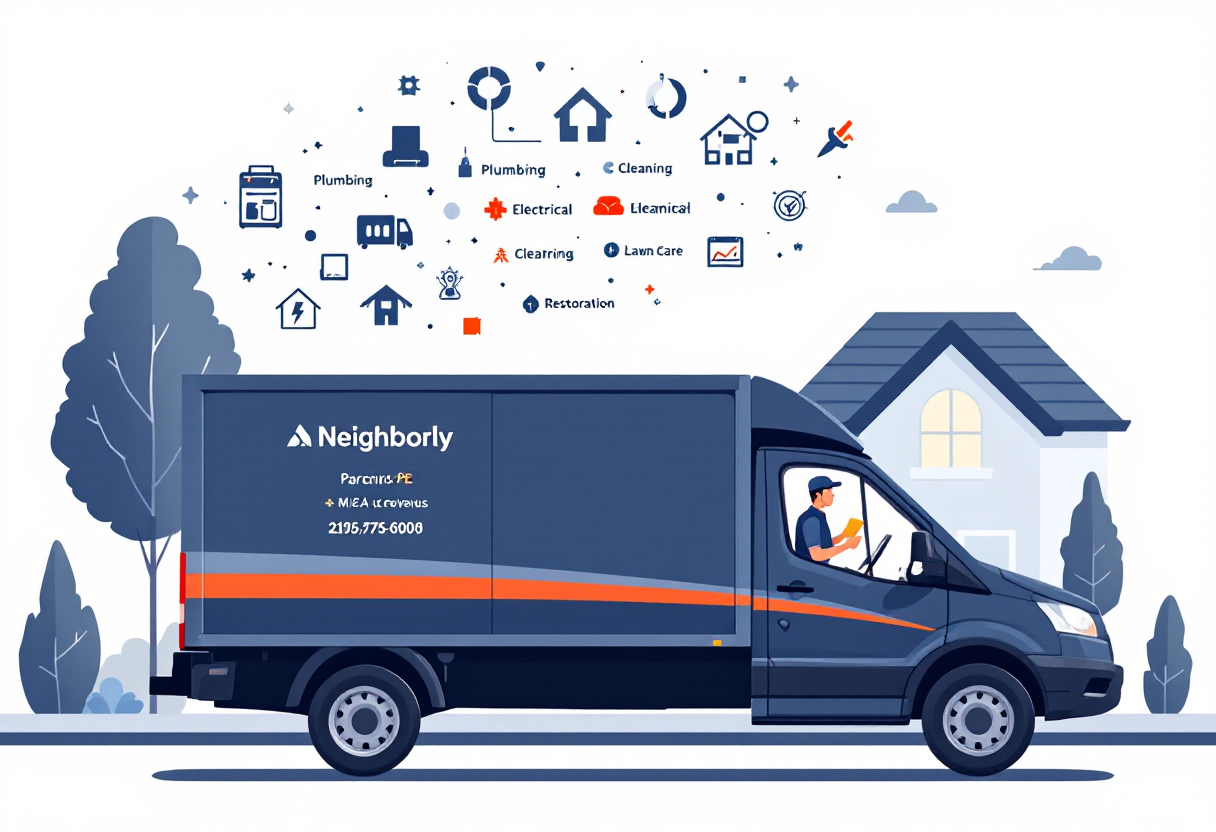
Home services franchises for sale cover every brand that sends a truck and a uniformed technician to a residential customer’s door, including HVAC, plumbing, electrical, cleaning, lawn care, pest control, painting, and restoration, and the category has been the fastest-growing slice of the US franchise industry for five consecutive years. This guide compares the largest home services franchise brands in 2026 by investment, royalty, territory, and unit economics, and explains why private equity has been aggressively rolling up home services franchisors as platform investments.
If you are evaluating a home services franchise as a path to business ownership, you are buying a packaged operating system: a brand name customers recognize, a software stack for dispatch and pricing, a marketing engine that drives leads, and a playbook for hiring and retaining the technicians who actually do the work. You are not buying a guaranteed result. The brands listed below show wide ranges of unit economics inside the same system, and the difference between a top-quartile owner and a bottom-quartile owner is almost always operational discipline, not market luck. Read the comparisons here, then read the Item 19 financial performance representation in each FDD before you write a check.
What a Home Services Franchise Includes
The term home services franchise is a category label used by the International Franchise Association and most lenders to describe any franchised business whose revenue comes from residential property work. The IFA Home Services Industry Outlook 2026 includes eight subcategories under the home services umbrella: HVAC and plumbing, electrical, cleaning (residential and commercial), lawn care and landscaping, pest control, painting, restoration and remediation, and junk removal and hauling. Each subcategory has its own brand leaders, regulatory framework, and seasonal pattern, but they share the same core economics: a fleet of branded trucks, a recurring base of residential customers, and a labor model built around skilled or semi-skilled technicians.
What separates a home services franchise from a typical retail or food franchise is the absence of a fixed location dependency. A coffee franchise lives or dies by foot traffic at a specific corner. A home services franchise lives or dies by its phone ringing, its trucks staying full, and its technicians showing up on time. That mobility is why home services franchises tend to recover faster from local recessions, weather events, and shifts in consumer spending: when the economy tightens, homeowners defer the new kitchen but they still pay to fix the broken air conditioner in July.
Most home services franchise agreements grant the franchisee a protected territory defined either by ZIP code, by population count (typically 100,000 to 250,000 residents per territory), or by a drawn boundary on a map. Territory protection is the single most negotiated term in a home services franchise FDD, and the franchisees who ignore it during the initial sale almost always regret it when the franchisor sells the next door territory to a competitor three years later.
The 2026 Home Services Franchise Market: PE Dollars and Owner Demand
IBISWorld pegs the total US home services market at over $675 billion in 2026, a figure that includes both franchised and independent operators across all eight subcategories. The franchised slice of that market is approximately $95 billion in system-wide revenue, up from roughly $58 billion in 2018, which represents an eight-year compound growth rate that no other major franchise category has matched. The IFA forecasts another 7.4% growth in franchised home services revenue for 2026, driven by three structural tailwinds.
The first tailwind is the aging US housing stock. The US Census Bureau put the median age of an American home at 44 years in its 2024 American Community Survey release, the oldest figure on record. Older homes break more often, and the systems that break (HVAC, plumbing, electrical, roofs) are exactly the systems that home services franchises specialize in fixing. The second tailwind is the technician shortage. The Bureau of Labor Statistics projects a 6% growth in HVAC technician employment through 2032 against a workforce that is retiring faster than community colleges and trade schools can replace it. That gap pushes labor rates up, which pushes ticket sizes up, which pushes franchise unit revenue up. The third tailwind is the private equity capital that has flooded into home services platforms since 2018.
Private equity now owns or controls the majority of the largest home services franchisors. KKR bought Neighborly (formerly Dwyer Group) in 2021 in a deal that valued the platform at roughly $5 billion, and Neighborly today operates more than 30 home services brands and roughly 5,500 US franchise units. Apax Partners owns Authority Brands, which controls more than a dozen home services franchise brands including One Hour Heating & Air Conditioning, Benjamin Franklin Plumbing, Mister Sparky, and Mosquito Squad. Roark Capital has built its own portfolio of home services brands through ServiceMaster Brands and other holdings. Five Star Franchising (owner of CertaPro Painters, Bin There Dump That, and others) closed a recapitalization in 2024 led by a coalition of growth investors. Empower Brands has rolled up Five Star Bath Solutions, JAN-PRO, FRSTeam, and other home services brands under a single management team.
Why is PE so aggressive in home services franchising? Three reasons. Franchise royalty streams are recurring and contractually protected, which lenders love. Home services demand is non-discretionary, which means the cash flow does not collapse in a recession. And the multiples on exit are 12x to 18x EBITDA for the franchisor entity, compared to 5x to 8x for a typical independent home services operator, which means the PE firm can buy operating companies cheap, franchise them, and sell the franchisor at a much higher multiple. For more on how acquirers think about valuation, see our guide on how investment bankers value a business.
The Eight Home Services Franchise Categories
Several of these categories also hold up outside metro areas; see our list of the best franchises for small towns for the models that work at lower population density.
The IFA classification splits home services franchising into eight categories, and each carries a distinct investment profile, labor model, and competitive dynamic. Understanding which category fits your capital, your background, and your risk tolerance is the first decision before you start comparing brands inside a category.
HVAC and plumbing franchises require the highest capital outlay and the most technical labor, with initial investments typically between $100,000 and $350,000 and a per-truck revenue ceiling around $500,000 to $600,000 for top operators. Electrical franchises sit one rung below in capital but require state licensing in most markets, which constrains the buyer pool to operators with an existing master electrician on staff. Residential cleaning franchises have the lowest capital barrier in the category, often $50,000 to $150,000 all-in, but they carry the highest labor turnover and the thinnest margins.
Lawn care and landscaping franchises are highly seasonal in the northern two-thirds of the country, with revenue concentrated between April and October, but the recurring contract model and predictable route density produce very strong unit economics for the operators who can manage the off-season cash flow. Pest control franchises are recurring revenue businesses by design (quarterly or monthly service contracts) and command some of the highest valuation multiples in the home services category on resale. Painting franchises are project based rather than recurring, with revenue concentrated in 8 to 12 week projects and a heavy reliance on subcontracted crews. Restoration and remediation franchises are insurance-funded and counter-cyclical to weather events, with the largest brands generating per-unit revenues that exceed any other home services category. Junk removal and hauling is the newest mainstream subcategory and benefits from the same labor scarcity tailwinds as the rest of the home services market.
Top HVAC and Plumbing Home Services Franchise Brands
HVAC and plumbing are the marquee categories inside the home services franchise universe because they combine the highest ticket sizes, the most predictable demand (an air conditioner in Phoenix or a water heater in Minneapolis will fail on a known statistical curve), and the largest PE-backed parent platforms. The four brands below are the ones most commonly evaluated by serious operator candidates with $200,000 or more in liquid capital.
One Hour Heating & Air Conditioning, owned by Authority Brands and ultimately by Apax Partners, operates approximately 340 US franchise units with an initial investment range of $103,000 to $281,000 and a 6% royalty on gross revenue. The brand is structured for owner-operators with a service-truck-fleet model and a centralized call center option. Benjamin Franklin Plumbing, also under the Authority Brands umbrella, operates approximately 280 US units at an investment range of $103,000 to $284,000 and shares a parallel royalty and territory structure with One Hour. Both brands benefit from Authority Brands’ shared dispatch software, national call center, and HomeAdvisor and Angi lead-generation contracts.
Mr. Rooter Plumbing, part of the Neighborly portfolio (KKR-owned), operates approximately 300 US units at a lower initial investment range of $74,000 to $210,000, which makes it one of the more accessible plumbing franchise entry points. Aire Serv (HVAC) and Mr. Electric (electrical) sit alongside Mr. Rooter in the Neighborly portfolio, with Aire Serv operating roughly 200 units at $86,000 to $219,000 and Mr. Electric operating roughly 250 units. The Neighborly stack lets a franchisee cross-sell across the trades inside a single territory, which is the strategic logic behind the platform’s $5 billion KKR valuation.
The table below summarizes the four HVAC and plumbing brands most commonly compared by candidates.
| Brand | Parent | US Units | Initial Investment | Royalty | Category |
|---|---|---|---|---|---|
| One Hour Heating & Air Conditioning | Authority Brands (Apax) | ~340 | $103K to $281K | 6% | HVAC |
| Benjamin Franklin Plumbing | Authority Brands (Apax) | ~280 | $103K to $284K | 6% | Plumbing |
| Mr. Rooter Plumbing | Neighborly (KKR) | ~300 | $74K to $210K | 6% to 7% | Plumbing |
| Aire Serv | Neighborly (KKR) | ~200 | $86K to $219K | 6% to 7% | HVAC |
| Mr. Electric | Neighborly (KKR) | ~250 | $95K to $235K | 6% to 7% | Electrical |
The choice between Authority Brands and Neighborly for a candidate evaluating HVAC or plumbing usually comes down to two questions: do you want a higher-touch, higher-royalty platform with more centralized marketing (Authority Brands) or a lower-cost-of-entry, more independent operating model with cross-brand territory rights (Neighborly)? Both PE owners have publicly committed to material reinvestment in technology, training, and field support through 2027.
Top Cleaning and Junk Removal Home Services Franchise Brands
Residential cleaning is the largest subcategory inside the home services franchise universe by unit count, with more than 4,500 US franchised units across the five major brands. The category attracts first-time franchisees because the capital requirements are the lowest in the category and the operating model is the simplest: hire and train residential housekeepers, schedule them on routes, and bill the homeowner monthly or bi-weekly. The challenge is that the labor turnover in residential cleaning routinely exceeds 100% annually, which means the operator’s most important skill is recruiting, not selling.
Molly Maid, part of the Neighborly portfolio, is the largest residential cleaning franchise in North America at approximately 480 US units, with an initial investment range of $129,000 to $167,000. Merry Maids, owned by ServiceMaster Brands, operates roughly 330 US units. MaidPro operates approximately 250 US units at a wider investment range of $58,000 to $199,000 depending on territory size. The Cleaning Authority and Two Maids round out the major residential cleaning brands at approximately 200 and 120 US units respectively. Two Maids has been acquired and consolidated into a larger holding group, which has accelerated its unit growth through both new openings and conversions of independent cleaning companies.
Commercial cleaning operates under a different franchise model entirely. Vanguard Cleaning Systems and JAN-PRO use a master franchisee plus unit franchisee structure, with the master franchisee handling sales and account management and the unit franchisee delivering the actual cleaning. Vanguard alone has more than 3,000 active US unit franchisees, most of whom operate single-truck or two-employee businesses serving a defined account roster sold by the master. Capital requirements for unit-level commercial cleaning franchises can be under $10,000, which makes them the lowest-barrier entry in the entire home services franchise category, though earnings potential is correspondingly capped.
Junk removal is the fastest-growing subcategory inside home services franchising. 1-800-GOT-JUNK, the brand that effectively invented the franchised junk removal model, operates approximately 250 US units at an initial investment of $213,000 to $313,000. College Hunks Hauling Junk operates approximately 225 US units at $124,000 to $232,000 and combines junk removal with local moving services to drive truck utilization. JDog Junk Removal & Hauling has built a differentiated brand around veteran ownership and operates approximately 250 US units. The unit economics for top junk removal operators are competitive with HVAC and plumbing, driven by the same labor scarcity tailwind and a customer base willing to pay a premium for same-day or next-day service.
Top Lawn Care and Pest Control Home Services Franchise Brands
Lawn care and pest control share a common business model: recurring service contracts billed monthly or seasonally to residential customers, route-density-driven margin expansion, and a heavy reliance on chemical application licensing that varies by state. Both categories also share a structural tailwind from the suburban housing boom that has continued through 2026 across the Sun Belt and the secondary markets of the Midwest and Southeast.
Lawn Doctor is the largest pure-play lawn care franchise by unit count, with approximately 640 US units at an initial investment of $116,000 to $148,000 and a royalty rate of 10% on gross revenue (one of the highest in home services franchising). The royalty is high because Lawn Doctor’s centralized agronomy and route-optimization software has historically produced top-quartile unit economics for its franchisees. TruGreen operates approximately 225 franchise units alongside its much larger company-owned footprint and is the largest lawn care brand by total revenue in North America. Spring-Green Lawn Care operates as a smaller, owner-operator focused brand with a heavy presence in the Midwest and Mid-Atlantic.
Pest control franchising is concentrated around mosquito and tick treatment, which has emerged as the largest residential pest subcategory by revenue growth since 2020. Mosquito Joe, part of the Neighborly portfolio, operates approximately 370 US units and has been one of the fastest-growing Neighborly brands by net unit additions. Mosquito Squad, part of Authority Brands, operates approximately 250 US units and competes head to head with Mosquito Joe in most major suburban markets. Both brands run seasonal service contracts (typically 8 to 10 treatments per year) with customer retention rates that exceed 70% year over year for top operators.
| Brand | Parent | US Units | Initial Investment | Royalty | Category |
|---|---|---|---|---|---|
| Lawn Doctor | Independent / PE-backed | ~640 | $116K to $148K | 10% | Lawn Care |
| TruGreen (franchise units) | TruGreen | ~225 | $75K to $130K | 9% | Lawn Care |
| Spring-Green Lawn Care | Independent | ~120 | $94K to $111K | 9% | Lawn Care |
| Mosquito Joe | Neighborly (KKR) | ~370 | $117K to $173K | 10% | Pest Control |
| Mosquito Squad | Authority Brands (Apax) | ~250 | $93K to $182K | 10% | Pest Control |
The strategic question for a candidate evaluating lawn care or pest control is whether to take on a single brand or to layer a seasonal brand (lawn care, mosquito) alongside an all-season brand (HVAC, plumbing) inside the same territory. The cross-brand strategy is exactly what the PE-backed platforms are built to support, and it is the most reliable path to a $5 million plus revenue territory.
Top Painting and Restoration Home Services Franchise Brands
Painting and restoration sit at opposite ends of the home services demand curve. Painting is discretionary, project-based, and concentrated in the warmer six months of the year. Restoration is non-discretionary, insurance-funded, and counter-cyclical to weather events that produce property damage. Both categories support large national franchise systems, but the operating models look almost nothing alike.
CertaPro Painters, part of Five Star Franchising, is the largest residential and commercial painting franchise in North America with approximately 390 US units at an initial investment of $107,000 to $172,000. CertaPro’s model relies on a sales-and-estimating owner who closes the work and a network of vetted subcontractor painting crews who deliver it. Five Star Painting (Neighborly) operates approximately 150 US units, and 360 Painting (also independent) operates roughly 150 units. The three brands compete primarily on lead quality, brand recognition with insurance agents and real estate brokers, and back-office software for proposal generation and project management.
Restoration is dominated by three brands that together operate more than 3,000 US franchise units. Servpro is the largest with approximately 2,200 US units, making it the largest single home services franchise system in the country by unit count and one of the largest franchise systems of any category. ServiceMaster Restore, owned by ServiceMaster Brands, operates approximately 440 US units. PuroClean operates approximately 430 US units at an investment range of $94,000 to $233,000. All three brands draw the majority of their revenue from insurance claims for water, fire, smoke, and mold damage. Verisk insurance industry data shows that average claim severity for residential water damage has risen approximately 35% since 2020, driven by both inflation in materials and the longer average drying and reconstruction time required by modern building materials, which has expanded the per-job revenue ceiling for top restoration operators.
The restoration category is also the most consolidated on the operator side. Service Brands International and several other large platform operators have aggregated dozens of Servpro and PuroClean franchises into regional multi-unit groups, and those groups have transacted at some of the highest multiples ever paid in home services franchising on resale.
Where to find home services franchises for sale: new territories and resales
There are two ways to buy into a home services franchise: a new territory from the franchisor, or an existing unit bought from a current franchisee. They are found in different places and carry different risks.
New territories. Most new units are sold directly by franchisors or by multi-brand groups that run several home services brands under one roof. Neighborly and Authority Brands, both covered above, sell territories across many trades. Premium Service Brands, whose brands include 360 Painting, ProLift Garage Doors, Maid Right, and Handyman Pro, and HorsePower Brands use the same multi-brand model. Directories such as Franchise Direct, Franchise Business Review, and the IFPG weekly rankings collect opportunities in one place; Franchise Business Review builds its lists from franchisee satisfaction surveys, which makes it a useful screen before you call a brand.
Resales. An existing unit comes with customers, trucks, technicians, and a track record, and is usually priced on a multiple of its earnings rather than on the franchise fee. Resale listings appear on BizBuySell and LoopNet, through business brokers, and through the franchisor itself, which often keeps a list of owners who want to sell.
For either route, check these items before you sign:
- FDD Items 7, 19, and 20. Item 7 shows the full initial investment, Item 19 any financial performance claims, and Item 20 how many units opened, closed, and transferred.
- Franchisee calls. Call current and former owners from the Item 20 list, not only the names the franchisor gives you.
- Territory. Confirm the boundaries, how many households they include, and whether other units or the franchisor can serve them.
- Resale terms. On a resale, confirm the transfer fee, franchisor approval and training requirements, the remaining term, and whether you must sign the current franchise agreement, which may carry higher fees.
Initial Investment Comparison Across Categories
The total initial investment for a home services franchise covers the franchise fee (typically $35,000 to $75,000), the vehicle fleet (one to three trucks at $40,000 to $80,000 each used or $60,000 to $120,000 new), tools and equipment, branded uniforms and signage, initial marketing, working capital, and three to six months of operating reserves. Investment ranges in the FDD Item 7 reflect this all-in figure and should be the number a candidate uses for financing planning, not the franchise fee alone.
The table below summarizes the investment ranges across the eight home services franchise categories at the median brand level. Outlier brands at the high and low end exist in every category, and a candidate should always read the specific FDD for the brand and territory they are evaluating.
| Category | Typical Investment Range | Franchise Fee Range | Truck Count at Open | Working Capital Needed |
|---|---|---|---|---|
| HVAC + Plumbing | $100K to $350K | $45K to $75K | 1 to 3 | $50K to $100K |
| Electrical | $90K to $250K | $45K to $65K | 1 to 2 | $40K to $80K |
| Residential Cleaning | $50K to $200K | $35K to $55K | 2 to 4 (vans) | $30K to $60K |
| Commercial Cleaning (unit) | $5K to $35K | $3K to $15K | 0 to 1 | $5K to $15K |
| Lawn Care | $95K to $175K | $40K to $60K | 1 to 3 | $30K to $60K |
| Pest Control | $90K to $200K | $40K to $60K | 1 to 3 | $30K to $60K |
| Painting | $95K to $200K | $45K to $65K | 0 to 1 (subcontractor model) | $30K to $50K |
| Restoration | $95K to $300K | $45K to $75K | 2 to 5 | $75K to $150K |
| Junk Removal | $125K to $325K | $45K to $75K | 2 to 4 | $50K to $100K |
SBA 7(a) loans remain the dominant financing vehicle for home services franchise acquisitions under $5 million, and the SBA’s franchise directory includes all of the major brands listed in this guide. Most lenders will finance up to 80% of the total project cost for a qualified candidate, which means a candidate with $50,000 to $75,000 in liquid capital can realistically acquire a home services franchise at the lower end of the investment range.
Royalty Structures and the National Brand Fund
The royalty paid by a home services franchisee to the franchisor is the single largest ongoing cost of the franchise relationship and the line item most often misread by first-time candidates. Royalty rates in home services franchising typically range from 6% to 10% of gross revenue, paid weekly or monthly, with the higher rates appearing in categories like lawn care and pest control where the franchisor’s agronomy, software, and centralized marketing produce a measurable lift in franchisee revenue.

The brand fund (sometimes called the national marketing fund or the brand development fund) is a separate fee on top of the royalty, typically 1% to 3% of gross revenue, that funds national advertising, the corporate website, search engine marketing, and brand-level public relations. The brand fund is not optional, and franchisees do not get to direct how the funds are spent, although the franchisor is typically required to report annually on fund deployment. Some platforms (notably Authority Brands and Neighborly) also operate a centralized call center that franchisees can opt into for an additional per-lead fee.
The economic question a candidate should run is: does the brand’s lead generation, software, and operating support produce enough incremental revenue to cover the royalty and brand fund and still leave more profit than I would earn running an independent home services business of similar size? The honest answer for most top-quartile operators inside a strong franchise system is yes, by a meaningful margin. The honest answer for bottom-quartile operators is often no, because they have not yet learned to use the system’s tools to drive lead conversion and pricing discipline. The variability inside the same franchise brand is large, which is why Item 19 financial performance representations in the FDD typically report results in quartiles or deciles rather than as a single average.
Unit Economics: Per-Truck Revenue, Labor Math, and Margins
The unit of economic analysis in home services franchising is the truck, not the location. Every other operating metric (revenue, labor cost, gross margin, customer acquisition cost) is best understood at the per-truck level, because that is the unit that scales linearly as the operator adds capacity.
Per-truck revenue benchmarks vary by category. Top-quartile HVAC franchise operators generate $350,000 to $600,000 per truck per year, with the top decile exceeding $700,000 in dense urban markets with strong service-agreement bases. Top-quartile lawn care operators generate $200,000 to $350,000 per truck, with route density (number of stops per route per day) being the single largest driver of variance. Top-quartile residential cleaning operators generate $250,000 to $400,000 per cleaning van, depending on whether the model uses two-person or three-person teams. Top-quartile restoration operators generate $400,000 to $700,000 per truck, with the higher figure reflecting large insurance jobs that can run over $100,000 in revenue per project.
The labor math underneath those revenue figures is what determines profitability. A fully loaded technician (wages, payroll taxes, benefits, vehicle, tools, training, uniforms) costs the operator $90,000 to $140,000 per year in most US markets for HVAC and plumbing, and roughly $55,000 to $80,000 for residential cleaning, lawn care, and pest control. Industry benchmarks for direct labor cost as a percentage of revenue land at 28% to 35% for HVAC and plumbing, 35% to 45% for cleaning and lawn care, and 25% to 32% for restoration (where materials and equipment carry a larger share of cost of goods).
EBITDA margins at the operator level in home services franchising typically range from 12% to 22% for mature, multi-truck operations, with the wide variance driven by territory density, owner involvement in field operations, and the quality of the operator’s pricing and service-agreement discipline. A franchise that produces a 20% EBITDA margin on $2 million of revenue is generating $400,000 of EBITDA, which at a 4x to 6x resale multiple on the operating company implies an enterprise value of $1.6 million to $2.4 million. For more on how operators price businesses for sale, see our guide on how to price a business for sale.
The Multi-Unit and Multi-Brand Strategy
The most successful home services franchise owners almost universally end up operating multiple units, multiple brands, or both. Single-unit ownership is the entry point, but the unit economics, the back-office efficiency, and the resale multiples all improve as the operator builds scale.
The multi-unit strategy involves acquiring additional territories of the same brand, either through new development from the franchisor or through acquisition of an existing franchisee. Multi-unit operators can share dispatch staff, call center capacity, marketing spend, and back-office accounting across territories, which compresses the overhead percentage and expands EBITDA margin. Most large home services franchise systems now have formal multi-unit development agreements that incentivize existing operators to add territories at reduced franchise fees.
The multi-brand strategy involves stacking complementary brands inside the same geographic footprint, typically through one of the PE-backed platforms (Neighborly, Authority Brands, ServiceMaster Brands, Five Star Franchising, Empower Brands). A single operator might run a Mr. Rooter Plumbing, an Aire Serv HVAC, and a Mr. Electric electrical franchise inside the same metropolitan area, sharing trucks, technicians, dispatch, and marketing across all three brands. The multi-brand model is the strategic logic behind the platform consolidation of the last decade, and it is the model that has produced the largest individual franchise operators in the home services category (some now exceeding $50 million in annual revenue across a combined brand footprint).
For candidates evaluating the multi-brand strategy, the practical question is whether to build organically (adding one brand at a time) or to acquire an existing multi-brand operator outright. Both paths work, and both require a different acquisition framework. A useful primer on the difference is our explainer on what business acquisition actually means.
Reselling a Home Services Franchise: Why PE Pays Premium Multiples
The exit market for home services franchise operators has transformed since 2018, and that transformation is the single most underappreciated reason to consider home services franchising as a path to ownership. A decade ago, the typical buyer for a $2 million revenue home services franchise was another local operator or an industry executive willing to pay 3x to 4x EBITDA. Today, the typical buyer is a PE-backed roll-up platform paying 6x to 9x EBITDA for a single operating unit and 10x to 14x EBITDA for a regional multi-unit group.
The multiple expansion is driven by structural changes in the buy-side market. Roughly two dozen PE-backed home services platforms (across HVAC, plumbing, electrical, roofing, restoration, pest control, and lawn care) are actively acquiring operating companies as part of their roll-up theses. Those platforms include both franchise-system roll-ups (acquiring inside a single brand like Servpro or One Hour Heating) and brand-agnostic roll-ups that buy whichever operator has the best local market position. The competition between platforms has pushed multiples up and continues to push them up, with the most attractive operators (recurring service-agreement base, strong technician retention, clean financials, defined transition plan) commanding the highest premiums.
For the owner planning a future exit, the implication is that the operating discipline that drives top-quartile EBITDA also drives top-quartile resale value, and the gap between the two is large. An operator running 12% EBITDA margins on $2 million revenue generates $240,000 of EBITDA and might transact at 4x to 5x, or roughly $1.0 million to $1.2 million enterprise value. The same revenue at 20% EBITDA margin generates $400,000 of EBITDA and might transact at 7x to 8x, or roughly $2.8 million to $3.2 million. The operational difference between those two outcomes is real but achievable inside the same franchise system, and it is the difference between an acceptable exit and a transformational one.
The preparation work for a home services franchise sale typically runs 12 to 24 months and involves cleaning up financials, formalizing customer-agreement documentation, building out a management layer that does not depend on the owner, and securing the franchisor’s consent to transfer (which is required in every home services franchise agreement and which the franchisor uses to vet the buyer). For the formal documentation that starts the sale process, see our template on a letter of intent to sell a business. For a sense of the cost and scope of a formal valuation engagement, see our guide on business valuation services cost. When you are ready to start a confidential conversation about your home services franchise exit, our sell-side team is the right place to begin.
Home Services Franchise: Frequently Asked Questions
What is the cheapest home services franchise to start?
Unit-level commercial cleaning franchises like Vanguard Cleaning Systems and JAN-PRO have the lowest cash entry point in the home services franchise category, with all-in initial investments often under $15,000. The trade-off is a capped earnings ceiling, because the unit franchisee operates under a master franchisee who controls account acquisition. For an owner-operator path with material earnings potential, the lowest practical entry is typically a residential cleaning brand like MaidPro or The Cleaning Authority in the $50,000 to $100,000 range, or Mr. Rooter Plumbing at the lower end of its $74,000 to $210,000 investment range.
Which home services franchise has the highest revenue per unit?
Restoration franchises (Servpro, ServiceMaster Restore, PuroClean) generate the highest average unit revenue in the home services franchise category, with top-decile operators exceeding $5 million in annual revenue per franchise unit driven by large insurance claims for water, fire, and storm damage. HVAC franchises like One Hour Heating & Air Conditioning are second, with top-decile multi-truck operators frequently exceeding $4 million in annual revenue per unit.
How long does it take to break even on a home services franchise?
Most home services franchise operators reach operating break-even between months 9 and 18, with the variance driven by the franchisee’s prior industry experience, the strength of the local market, the speed of initial hiring, and how aggressively the operator funds opening marketing. Cash-on-cash payback of the initial investment typically lands between year 2 and year 4 for solid operators. Top-quartile operators can compress payback to under 24 months, while operators who under-fund working capital or under-execute hiring can stretch payback past five years.
Do I need a license to own a home services franchise?
The franchise itself does not require a personal license in any state. However, the underlying trade work usually does. HVAC, plumbing, electrical, and pest control all require state-level trade licenses to perform the work, and most franchisors require the franchisee to either hold the qualifying license personally or to employ a qualifier (often called a master plumber, master electrician, or certified pesticide applicator) who carries the license on the franchisee’s behalf. Residential cleaning, painting, lawn care (in most states), junk removal, and restoration generally do not require state trade licenses, though most still require a standard business license and proof of insurance.
Why is private equity buying so many home services franchises?
Private equity is attracted to home services for the same reason franchise candidates are: recurring residential demand that does not collapse in a recession, fragmented operator markets that allow roll-up arbitrage (buying small operators at 4x to 5x EBITDA and combining them into platforms valued at 10x to 14x EBITDA), and the strong cash flow conversion of franchise royalty income for the franchisor entity. The IFA Home Services Industry Outlook 2026 notes that more than 70% of the largest home services franchisors are now under PE control, up from approximately 30% in 2015.
Can I own a home services franchise as an absentee owner?
Most home services franchise brands strongly prefer or contractually require owner-operator involvement, particularly during the first three years of the franchise term. The brands that explicitly permit semi-absentee or absentee ownership typically require the franchisee to install a full-time general manager who has been approved by the franchisor and who has completed the brand’s training program. Absentee ownership at the multi-unit scale is increasingly common (especially inside the PE-backed roll-up operator groups), but new single-unit candidates should plan on five to seven years of active owner involvement before transitioning toward an absentee model.
Where can I find home services franchises for sale?
New territories come from franchisors and multi-brand groups such as Neighborly, Authority Brands, and Premium Service Brands, or through directories like Franchise Direct and Franchise Business Review. Existing units for resale show up on BizBuySell and LoopNet, with business brokers, and through franchisors that track owners who want to sell. Compare both routes before you commit.
Is it better to buy an existing home services franchise or a new territory?
A resale costs more up front but comes with customers, staff, and earnings you can verify, which lowers risk and can make financing easier. A new territory is cheaper to enter, but you carry the ramp-up period yourself. Buy a resale if the books are clean and the territory is solid; buy new if resales in your market are overpriced or weak.