
Logistics M&A in 2026: Freight, 3PL, and Last-Mile Deal Activity
Logistics mergers and acquisitions in 2026 span three distinct sub-sectors with materially different deal dynamics. Truckload and LTL freight consolidation continues at 4-7x (truckload) and 7-12x (LTL) EBITDA multiples with named acquirers like Knight-Swift, Werner, and Saia. 3PL (third-party logistics) deals price at 6-10x EBITDA depending on tech stack, contract book, and vertical specialization, with named buyers including RXO (NYSE: RXO), Uber Freight, and Convoy successors. Last-mile delivery reaches 8-12x EBITDA for tech-enabled operators with Amazon DSP, GLS, or OnTrac relationships.
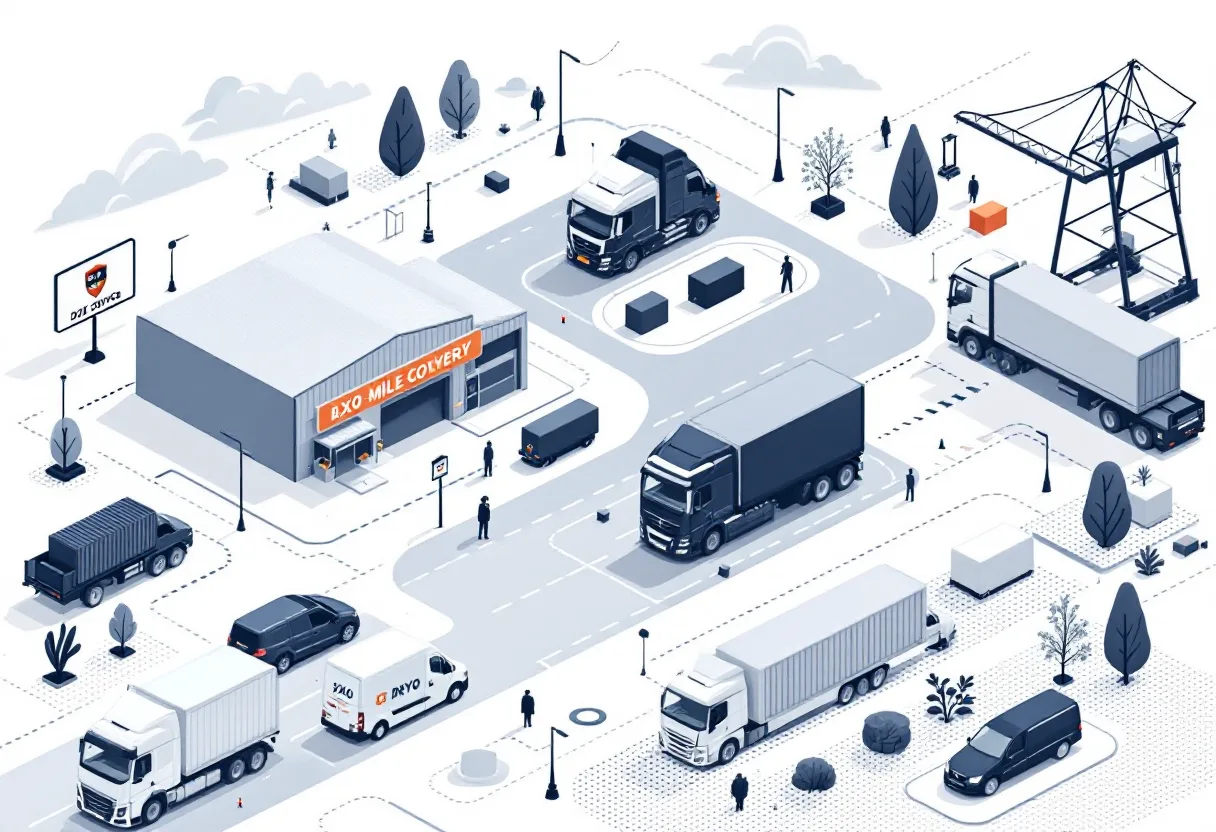
Logistics M&A in 2026 is being shaped by post-pandemic freight rate normalization, persistent supply chain reshoring, and a wave of family-owned trucking and warehousing exits as Gen-1 founders age out. Private equity and strategic acquirers are most active in 3PL aggregation, last-mile parcel and final-mile delivery, cross-border freight forwarding, and specialty trucking (refrigerated, intermodal, bulk). This guide explains the 2026 logistics M&A landscape, names the active buyers, walks through valuation multiples by sub-vertical, and lays out what a founder should do to position for sale.
Related: New York M&A advisor services. Our New York page covers who is buying, how a confidential process works, and what to prepare.
Logistics M&A in 2026: The Macro Picture
Logistics M&A in 2026 spans freight and trucking, third-party logistics (3PL), freight brokerage, warehousing and fulfillment, and last-mile delivery, with multiples ranging from 4-7x EBITDA for asset-based truckload carriers to 6-10x for asset-light, technology-enabled brokerages. Deal activity is accelerating as private equity consolidates a fragmented market and strategic acquirers buy digital capability.
The logistics sector entered 2026 after two years of freight recession. Spot truckload rates that peaked above $3.00 per loaded mile in mid-2022 fell below $1.80 by Q4 2023 (DAT Freight Analytics), and contract rates did not catch up until Q2 2025. That rate compression killed thousands of small carriers, pushed mid-sized 3PLs into receivership, and reset valuation expectations across the board. The survivors are now coming out of the trough with cleaner balance sheets, and buyers who held capital through the cycle are stepping back in.
Three macro forces are driving 2026 deal flow. First, nearshoring and Mexico-US cross-border volume continue to climb; Mexico became the largest US trade partner in 2023 (US Census Bureau) and held that position through 2025, which made cross-border freight forwarders and Laredo-based drayage operators acquisition targets. Second, parcel volume from e-commerce platforms (Amazon, Shopify Fulfillment Network, Temu, Shein) keeps growing at roughly 8 to 10 percent annually, and the regional last-mile carriers that handle Amazon DSP, OnTrac, and LaserShip-style routes are commanding premium multiples. Third, the Gen-1 founder transition is real: the American Trucking Associations reported median trucking-company-owner age above 57 in 2024, and family-held LTL and warehousing businesses are coming to market in record numbers.
From a capital markets standpoint, 2025 logistics M&A volume rebounded approximately 28 percent year-over-year per Capstone Partners‘ Transportation & Logistics M&A Update (Q4 2025), with the strongest activity in 3PL, final-mile, and asset-light freight brokerage. Strategic buyers led deal count; sponsor-backed platforms drove deal value as Apollo, Wynnchurch, and Ridgemont closed multiple bolt-ons. For 2026, bankers expect logistics M&A to keep accelerating as private equity dry powder (estimated at $2.6 trillion globally per Preqin Q1 2026) finds a home in fragmented sub-sectors.
Freight Company M&A: Trucking, Brokerage, and Carrier Deals
Trucking owners asking “what is my transportation business worth?” can start with our multiples by fleet size and carrier revenue.
Freight company M&A covers three different businesses that trade at different multiples: asset-based carriers (trucking fleets), non-asset freight brokerages, and hybrid 3PLs. Trucking and LTL carriers, where value is tied to fleet and drivers, typically change hands at 4-7x EBITDA for truckload and 7-12x for LTL terminal networks. Asset-light freight brokerages trade higher, often 6-10x, because they carry no equipment and scale on technology and carrier relationships. The 2026 freight M&A market is driven by consolidators buying density and by brokerages acquiring digital freight-matching capability.
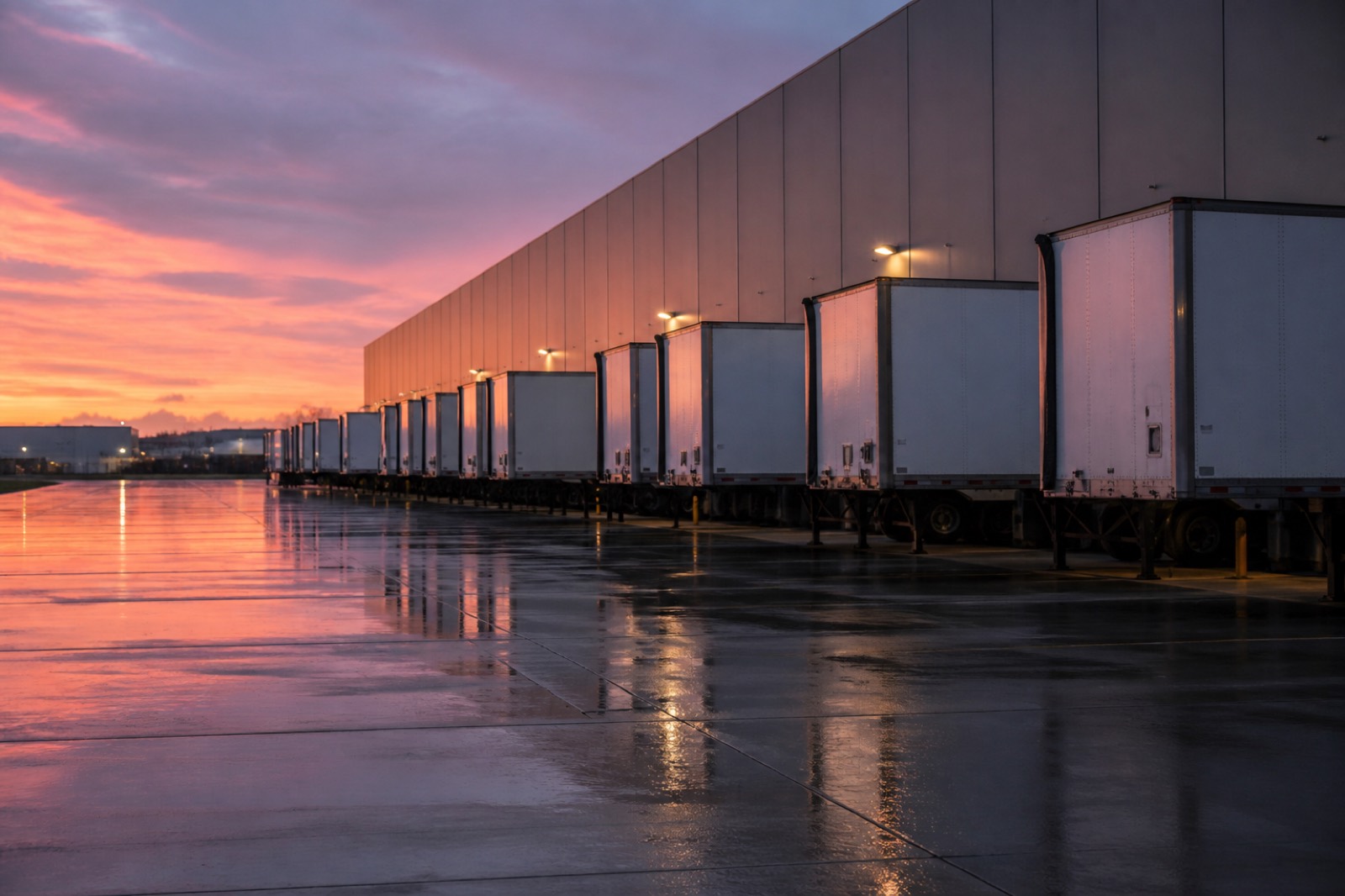
The reason freight company multiples spread so widely is the asset question. An asset-based carrier owns tractors, trailers, and terminals and employs drivers, so a buyer underwrites fleet age, maintenance liability, and driver retention alongside the earnings. That capital intensity caps the multiple. A freight brokerage owns almost nothing physical; its value is the book of shipper relationships, the carrier network, and the software that matches loads. Buyers pay up for that asset-light margin profile, which is why brokerage and freight-matching deals clear at the top of the range and why the most active freight M&A of 2026 sits in the brokerage and digital layer.
Customer concentration is the single factor that most often moves a freight deal. A carrier or brokerage with one shipper at 40% of revenue gets discounted heavily, because losing that account after close would break the model. A book spread across dozens of contracted shippers with dedicated lanes commands a premium. For an owner planning a freight company sale, the single most valuable step before going to market is diversifying the customer base and locking in contracted volume, because that is what separates a 4x outcome from a 7x one in trucking and a 6x from a 10x in brokerage.
The Five Logistics Sub-Verticals Buyers Are Pursuing
Logistics is not one market. Acquirers segment the sector by asset intensity, service model, and customer type, and multiples vary widely across these slices.
Buy-side readers can register through the CT sponsor coverage for direct-to-owner opportunities.
1. Third-party logistics and warehousing (3PL). Asset-light or asset-medium operators that run customer-owned or leased warehouses, handle pick-pack-ship for e-commerce or B2B clients, and increasingly bundle fulfillment with transportation management. The 3PL sub-vertical is the most acquired logistics category by deal count from 2023 through 2025 (PitchBook). Buyers want sticky customer relationships, automation (conveyor, AS/RS, robotics), and multi-client warehouse footprints near major population centers.
2. Less-than-truckload (LTL). A relatively consolidated sub-sector dominated by Old Dominion, Saia, XPO, Estes, and ABF. The August 2023 Yellow Corporation bankruptcy redistributed roughly $5 billion of annual revenue across the surviving carriers and triggered a wave of terminal-network acquisitions (Estes, XPO, and Saia all bid). LTL acquisitions in 2026 are mostly terminal-focused tuck-ins or regional carriers serving specific corridors (Pacific Northwest, Southeast, Texas Triangle).
3. Truckload (TL). Highly fragmented; the top 10 TL carriers control under 6 percent of the market per ATA data. Knight-Swift, Werner, Schneider National, Heartland Express, and Marten Transport are the public consolidators. Private equity has rolled up regional TL fleets with strong driver retention and dedicated-contract revenue mixes. TL valuations are the lowest in the logistics stack because of asset intensity and driver-cost exposure.
4. Final-mile, parcel, and home delivery. The fastest-growing sub-vertical by deal volume in 2024 to 2026. Amazon DSP operators, OnTrac and LaserShip regional networks, big-and-bulky furniture and appliance delivery firms, and white-glove installation specialists all sit here. RXO’s $1.025 billion acquisition of Coyote Logistics from UPS (announced June 2024, closed September 2024) is the headline deal that crystallized buyer appetite for asset-light brokerage with last-mile capability.
5. Freight forwarding, specialty trucking, and drayage. Freight forwarding (ocean and air, NVOCC licensed) trades at the highest multiples in logistics because of asset-light economics and recurring customer relationships. Specialty trucking (refrigerated reefer, intermodal containers, bulk liquid, dry bulk, hazmat tanker) commands premium multiples to dry-van TL because of equipment and driver scarcity. Drayage (the port-to-warehouse short-haul movement of ocean containers) is highly fragmented around Los Angeles/Long Beach, Savannah, New York/New Jersey, and Houston, and is being rolled up by both PE and strategic terminal operators.
Strategic Logistics Acquirers: Who Is Buying
The strategic buyer universe in logistics is wider than most founders expect. Below is the active set as of mid-2026, grouped by sub-vertical interest.
Asset-light brokerage and 3PL strategics: RXO (spun from XPO Logistics in November 2022, now the third largest US freight brokerage after C.H. Robinson and Total Quality Logistics), C.H. Robinson, Echo Global Logistics (taken private by The Jordan Company in 2021, still acquisitive), Worldwide Express, ArcBest, Hub Group, and J.B. Hunt Transport Services (J.B. Hunt’s intermodal-plus-final-mile combination plus its 2017 acquisition of Special Logistics Dedicated and ongoing dedicated-contract roll-ups make it a recurring acquirer).
LTL strategics: Old Dominion Freight Line, Saia, Estes Express Lines (family-owned, the largest privately held LTL), XPO, ArcBest, TForce Freight (formerly UPS Freight, acquired by TFI International in 2021), and Forward Air. The Yellow Corp asset auctions in late 2023 and 2024 expanded Estes, XPO, and Saia terminal counts and reset the LTL competitive map.
Truckload strategics: Knight-Swift Transportation Holdings (the most acquisitive public TL carrier of the past five years, with the U.S. Xpress acquisition in March 2023 a defining move), Schneider National, Werner Enterprises, Marten Transport, Heartland Express (acquired Smith Transport, Millis Transfer, and Contract Freighters Inc. in a 2022 rollup that still echoes in 2026 deal structures), and Covenant Logistics. Most public TL carriers prioritize dedicated-contract acquisitions over spot-exposed fleets.
Final-mile and parcel strategics: FedEx Ground (ISP network adds), UPS, DHL Supply Chain, OnTrac (combined with LaserShip in 2021), and big-and-bulky specialists like Ryder Last Mile (acquired MXD Group in 2018, still bolting on). XPO and RXO pursue last-mile assets that complement their brokerage and LTL footprints.
Global freight forwarders and ocean/air carriers: Kuehne+Nagel, DHL Global Forwarding, DSV (which acquired DB Schenker in a deal announced September 2024 and closing through 2025, creating the largest freight forwarder by revenue), Maersk (whose A.P. Moller-Maersk shifted to vertically integrated logistics with the 2022 acquisitions of LF Logistics, Pilot Freight Services, and Senator International), Expeditors International, CEVA Logistics, and Geodis. These are buyers for North American freight forwarders and customs brokers with vertical-specific expertise (life sciences cold chain, aerospace, automotive).
Private Equity in Logistics: Active Sponsors and Their Theses
Private equity reshaped logistics over the past decade and remains the largest source of deal volume by count. The active sponsors below all have current logistics platforms and continue to bolt on.
Apollo Global Management: Owns Sun Country Airlines and has backed transportation assets through Apollo Natural Resources and Hybrid Value strategies. Apollo’s logistics exposure runs through portfolio companies and Athene-backed asset-finance structures for fleet acquisitions, with a focus on air cargo and aviation services.
Cerberus Maritime (Cerberus Capital Management): The maritime arm of Cerberus that backs ocean shipping, marine services, and port-adjacent logistics. Cerberus Maritime has acquired tonnage and operating platforms across container, dry bulk, and offshore segments and pairs with port drayage and freight forwarding bolt-ons.
Wynnchurch Capital: A Chicago middle-market sponsor with a long track record in transportation and industrial services. Wynnchurch’s logistics platforms have included intermodal, specialty trucking, and warehousing. The firm targets EBITDA between $10 million and $75 million.
Ridgemont Equity Partners: Charlotte-based middle-market PE with deep transportation experience. Ridgemont’s logistics deals have included freight forwarding, customs brokerage, and asset-light 3PL. The firm typically writes equity checks of $50 million to $200 million.
Greenbriar Equity Group: Transportation-and-logistics specialist sponsor based in Rye, New York. Greenbriar has been one of the most consistent investors in logistics platforms over two decades, with prior holdings in trucking, freight brokerage, and aviation services.
Aurora Capital Partners: Los Angeles-based middle-market firm with logistics platforms across cold chain, specialty trucking, and warehousing. Aurora has been particularly active in West Coast drayage and refrigerated freight.
Sumeru Equity Partners: Growth-equity firm focused on technology-enabled businesses, including logistics software and TMS-enabled brokerages. Sumeru pairs well with founder-owned tech-forward 3PLs needing a growth capital partner.
Lindsay Goldberg: New York middle-market sponsor with logistics exposure through industrial-services and specialty-distribution platforms. Lindsay Goldberg has historically backed family-held businesses with multi-generational ownership transitions, which fits the Gen-1 trucking owner profile.
Other PE firms with active logistics platforms include Audax Group, AEA Investors, American Industrial Partners, Platinum Equity, Centerbridge Partners, Bain Capital, and Stonepeak Infrastructure Partners. For a wider survey, see our guide on the top private equity firms you should know.
Logistics Valuation Multiples by Sub-Vertical (2026 Benchmarks)
Valuations in logistics swing widely by asset intensity, customer mix, and growth profile. The ranges below are mid-2026 benchmarks pulled from Capstone Partners’ Transportation & Logistics M&A Updates (Q4 2025 and Q1 2026), GF Data Resources middle-market reports, and our own conversations with sell-side bankers active in the sector.
| Sub-Vertical | EBITDA Multiple Range | Notes |
|---|---|---|
| Asset-light freight brokerage and 3PL warehousing | 6x to 10x | Premium for sticky enterprise customers, tech stack, multi-warehouse footprint |
| Less-than-truckload (LTL) | 7x to 12x | Top end for terminal networks in supply-constrained corridors |
| Truckload (TL), dry van | 4x to 7x | Higher end for dedicated-contract revenue mix; lower for spot-exposed fleets |
| Final-mile, parcel, specialty last-mile | 8x to 12x | Premium for Amazon DSP, big-and-bulky, white-glove with installation |
| Freight forwarding (ocean and air, asset-light) | 8x to 14x | Highest end for vertical specialists (life sciences, aerospace, automotive) |
| Specialty trucking (refrigerated, intermodal, bulk) | 6x to 9x | Reefer and intermodal at top of range; hazmat tanker variable |
| Drayage and port services | 4x to 7x | Higher end for owner-operator-light fleets with port credentials |
Within those ranges, the same EBITDA-multiple math that applies across M&A applies in logistics: a business at $5 million of EBITDA in a fragmented sub-sector with a single buyer interested is at the low end; the same EBITDA in a competitive process with three to five qualified bidders is at the high end. Our guide on how investment bankers value a business walks through the comps-plus-precedent-transactions framework that drives logistics valuations.
Beyond EBITDA multiples, logistics buyers also look at adjusted EBITDA per truck or per dock door (asset-heavy), revenue per employee (asset-light), and contribution margin per shipment. A reefer carrier doing $4,000 per truck per week of contribution margin is more valuable than one doing $2,800 at the same EBITDA, because higher contribution signals pricing power and customer stickiness that converts to a multiple premium.
Named 2024-2026 Logistics M&A Deals Worth Studying
The deals below are reference points for founders thinking through what a 2026 sale process looks like. Most are public-disclosure transactions or PR-released; the private deals are well-known in the sector.
RXO acquires Coyote Logistics from UPS, $1.025 billion (announced June 2024, closed September 2024). The defining logistics deal of 2024. UPS divested Coyote to focus on small-package; RXO doubled its brokerage gross revenue and became the third largest US freight brokerage. The transaction multiple worked out to approximately 8x to 9x trailing EBITDA, on the higher end for asset-light brokerage but justified by scale and integration synergies.
DSV acquires DB Schenker, EUR 14.3 billion (announced September 2024, closing through 2025). The largest freight-forwarding deal in history, creating the world’s largest freight forwarder by revenue. The deal cemented DSV as the consolidator-of-choice in global forwarding and put pressure on Kuehne+Nagel, DHL Global Forwarding, and Expeditors to respond with their own bolt-ons.
Knight-Swift acquires U.S. Xpress, $808 million (March 2023, still echoing in 2026 deal structures). Knight-Swift took out a publicly traded truckload competitor at a moment when U.S. Xpress was under operational stress. The deal structure (an all-cash take-private at a meaningful premium to the prior trading price) became a template for distressed truckload acquisitions during the 2023-24 freight recession.
Yellow Corporation Chapter 11 asset auctions (late 2023 through 2024). Yellow’s August 2023 bankruptcy led to a series of terminal auctions. Estes Express, XPO, Saia, and ArcBest were the main bidders. Saia paid approximately $235 million for 28 terminals, XPO paid approximately $870 million for 28 terminals through a separate process, and Estes Express expanded its terminal count meaningfully. The auctions reset the LTL terminal supply-demand picture and pulled forward consolidation that would otherwise have taken three to five years.
Maersk-Pilot Freight, LF Logistics, and Senator International (2022 onward). A.P. Moller-Maersk’s vertical integration push acquired multiple last-mile, contract logistics, and air freight forwarding platforms. Total spend exceeded $7 billion. Maersk’s 2024 and 2025 reporting confirmed the strategy was working at gross-margin level even as ocean rates normalized.
J.B. Hunt and Walmart final-mile partnership (2024-2026 expansion). J.B. Hunt expanded its dedicated-contract relationship with Walmart in 2024 and added Walmart capacity in 2025. The Walmart commitment shaped J.B. Hunt’s appetite for tuck-in final-mile and dedicated-fleet acquisitions to support the expanded book.
Schneider National bolt-ons (2024-2026). Schneider added dedicated-contract and intermodal acquisitions across 2024 and 2025, including expansions of its Mexico cross-border operation. Schneider remains a recurring buyer of regional dedicated fleets in the $5 million to $25 million EBITDA range.
Family-owned trucking roll-ups (multiple 2024-2026 transactions). Wynnchurch, Ridgemont, Greenbriar, and Aurora all closed family-owned trucking acquisitions across 2024 and 2025. The pattern is consistent: $3 million to $15 million EBITDA founder-owned businesses, 5x to 7x multiples, partial rollover equity, three to five year owner transition.
The Diligence Issues Unique to Logistics Deals
Logistics diligence carries a set of issues that do not appear in most other M&A processes. Founders preparing for sale should anticipate every one of the items below; buyers will dig hard on all of them.

Independent-contractor versus employee driver classification. Misclassification risk in trucking and last-mile is the single biggest diligence issue in the sector. California AB5, the DOL classification rules partially walked back in 2025, and aggressive state laws (New Jersey, Massachusetts, Illinois) all create back-tax and class-action exposure. Buyers will demand driver-by-driver classification analyses and sometimes hold back 10 to 20 percent of the purchase price in escrow.
Fuel surcharge mechanics and pass-through. Logistics revenue and margins are distorted by fuel surcharges. Buyers want fuel-neutral margins, customer-by-customer fuel-surcharge programs, and historical pass-through ratios. A 3PL with strong pass-through discipline is worth more than one whose margins move with diesel prices.
Equipment leases versus owned fleet. Capital structure matters in trucking. Buyers analyze fleet age, residual values, lease-versus-buy economics on tractors and trailers, and the rollover schedule of operating leases. A clean ownership picture with a predictable replacement cycle is easier to underwrite than mixed lease structures.
Working capital normalization. Logistics businesses carry heavy accounts receivable (shippers pay in 45 to 75 days) and lighter inventory. Buyers and sellers fight over normalized working capital, particularly carrier-payable timing, broker float, and freight claims reserves. Our broader due diligence checklist after closing mergers and acquisitions covers the working-capital truing-up process in detail.
Insurance and claims history. Auto liability, cargo, and workers’ comp claims history flow directly into post-close insurance premiums. A trucking company with a deteriorating loss history will see insurance costs eat into EBITDA. Buyers demand a five-year claims-by-line summary as a Day-1 item.
DOT, FMCSA, and Regulatory Compliance in Logistics M&A
No logistics deal closes without a clean regulatory bill of health. The Federal Motor Carrier Safety Administration (FMCSA) and the Department of Transportation (DOT) maintain public databases that buyers will mine on Day 1 of diligence.
FMCSA Safety Rating. Every interstate motor carrier carries a Safety Rating: Satisfactory, Conditional, or Unsatisfactory. A Conditional rating is a yellow flag for buyers and will compress valuation by half a turn to a full turn. An Unsatisfactory rating effectively shuts down a sale process until the rating is upgraded.
Compliance, Safety, Accountability (CSA) scores. FMCSA’s CSA program scores carriers across seven Behavioral Analysis and Safety Improvement Categories (BASICs): Unsafe Driving, Hours-of-Service Compliance, Driver Fitness, Controlled Substances/Alcohol, Vehicle Maintenance, Hazardous Materials Compliance, and Crash Indicator. Carriers above the FMCSA intervention thresholds in any BASIC face higher inspection rates, higher insurance premiums, and customer-shipper churn. Buyers want CSA scores below the threshold in every BASIC and will dig into the trend line for the prior 24 months.
Hours of Service (HOS) and Electronic Logging Devices (ELD). ELD compliance has been mandatory since December 2017, but HOS violations remain a top FMCSA enforcement priority. Carriers with a pattern of HOS violations, ELD tampering complaints, or driver-coercion findings will face buyer pushback. Diligence will include sampling of driver logs and ELD edit records.
Drug and alcohol testing program. DOT requires pre-employment, random, post-accident, reasonable suspicion, return-to-duty, and follow-up testing. Buyers request testing-program documentation, third-party administrator records, FMCSA Clearinghouse query history, and any positive-test or refusal records.
Hazmat permits and security plans. If the carrier hauls hazardous materials, buyers verify TSA HME (Hazardous Materials Endorsement) status for drivers, the hazmat security plan, and any HM-126F or HM-181 compliance findings. Hazmat-capable carriers trade at a premium but carry meaningful regulatory exposure.
State and local operating authority. Beyond federal authority, intrastate carriers need state permits (Texas DPS, California DMV, New York DOT). Freight forwarders need FMC OTI bonds (NVOCC and Ocean Freight Forwarder). Customs brokers need a CBP license. Diligence verifies every authority and bond is current and transferable.
Driver Retention, Fleet Age, and Equipment Condition Diligence
For asset-heavy logistics businesses (TL, LTL, specialty trucking, drayage), driver retention and equipment condition are as important as customer concentration. Buyers will spend as much diligence time on these as on the financials.

Driver retention metrics. Trucking industry-wide driver turnover has historically run above 90 percent annually for large TL carriers (ATA). Carriers that hold turnover below 50 percent are valued at a meaningful premium because driver acquisition cost (recruiting, training, orientation, time-to-productivity) is one of the largest hidden costs in trucking economics. Buyers want turnover trended over 36 months, plus tenure distribution (what percentage of drivers have been with the carrier more than 2 years, 5 years, 10 years).
Driver pay competitiveness. Pay-per-mile, pay-per-stop, salary plus bonus, and percentage-of-revenue structures all influence retention. Buyers will benchmark the carrier’s driver pay against ATA pay studies and regional comps; carriers paying below market may show a temporary EBITDA tailwind but will see retention deteriorate post-close.
Fleet age and replacement schedule. The industry standard for average tractor age is 3.5 to 4.5 years for major carriers; the standard for trailers is 7 to 10 years. Carriers running older fleets show higher maintenance costs, lower fuel efficiency, and more downtime. Buyers will request a unit-by-unit asset schedule with year, make, model, mileage, and book value, plus a five-year capex plan to maintain the steady-state fleet age.
Maintenance program. In-house versus outsourced maintenance, preventive maintenance compliance rates, breakdown frequency, and warranty-recovery discipline all factor into post-close maintenance cost forecasting. A carrier with a strong in-house shop and disciplined PM compliance will see lower maintenance cost per mile than peers.
Owner-operator versus company driver mix. Many TL carriers blend company drivers with leased owner-operators. Buyers will analyze the mix, the lease-on terms, the truck-financing and fuel-program arrangements, and the historical owner-operator churn. Heavy owner-operator dependence flags both classification risk and capacity volatility.
Customer Concentration and Contract Diligence
Logistics businesses tend to have heavier customer concentration than the average middle-market industrial. A 3PL with one customer at 40 percent of revenue is common; a TL carrier with one shipper at 60 percent of dedicated capacity is normal. Buyers price concentration risk into the multiple, and the contract structure determines how steep the discount is.
Customer concentration thresholds. Buyers typically want no single customer above 25 percent of revenue and no top-three customer cluster above 50 percent. Concentration above those levels will compress the multiple by half a turn to a full turn and will trigger customer-call diligence (buyers will want to speak with the top three to five customers under NDA before closing).
Contract length and termination terms. Multi-year dedicated-contract trucking is worth materially more than spot or one-year freight. Buyers want contract documentation for every top-10 customer: term, auto-renewal language, termination-for-convenience clauses, rate-review mechanics, and minimum-volume commitments. Contracts with 30-day termination-for-convenience are essentially treated as month-to-month for valuation purposes.
Rate-review and fuel-surcharge mechanics. Locked-in rate cards with annual CPI-based escalation are favored. Open-rate contracts with annual market resets are riskier; buyers will model rate compression scenarios. Fuel-surcharge formulas tied to DOE national diesel averages are clean; bespoke fuel formulas need extra diligence.
Shipper credit quality. Buyers run credit checks on top customers. A 3PL with 35 percent of revenue from a shipper carrying weak credit (or in financial distress, as some retailers and consumer goods companies have been in 2024 and 2025) faces a meaningful concentration discount.
Customer references and renewal probability. Late-stage diligence includes confidential customer reference calls. Buyers will assess service satisfaction, propensity to renew, and latent issues (claims, billing disputes, missed pickups). A founder who has prepared customers in advance sees smoother diligence than one whose customers are surprised.
How a Founder Should Prepare a Logistics Business for Sale
The single biggest variable in logistics sale outcomes is preparation. Founders who start preparing 18 to 24 months before going to market consistently realize multiples one to two turns higher than founders who go to market reactively. The checklist below is what we walk clients through on a typical sell-side mandate.
Clean up the financials. Audited or reviewed financials for the trailing three years are table stakes for buyers above $5 million EBITDA. Recast personal expenses, owner-comp normalizations, related-party transactions, and one-time items into a defensible adjusted-EBITDA bridge. Build a quality-of-earnings package that a buyer’s accounting firm can validate quickly.
Document driver pay, classification, and benefits. Eliminate misclassification ambiguity before going to market. If contractors are functioning like employees, either reclassify them now (taking the short-term margin hit) or build a defensible contractor-program documentation package. The cost of reclassifying pre-sale is almost always lower than the post-close indemnification holdback a buyer will demand.
Tighten contracts. Renew expiring customer contracts on multi-year terms before going to market. Push for annual CPI escalators, transparent fuel formulas, and minimum-volume commitments. A contract book with weighted-average remaining term above 24 months is worth meaningfully more than one averaging 9 months.
Modernize the tech stack. A current TMS (transportation management system), modern ELD, dock-management software, and customer-facing visibility tools all matter to buyers. Asset-light buyers in particular pay premiums for tech-enabled operations. Investments in TMS modernization 12 to 18 months pre-sale typically pay back many times over in valuation lift.
Rationalize the fleet and footprint. Sell off under-used terminals, exit money-losing lanes, and dispose of aged equipment. A focused, profitable footprint sells for more than a sprawling one, even if total revenue is lower.
Address regulatory items. If the FMCSA Safety Rating is Conditional, work the rating back to Satisfactory. If any BASIC is above intervention threshold, build a corrective action plan and execute it. Resolve outstanding DOT or state investigations before going to market.
Build a management team that can run without the founder. Buyers will not pay a premium multiple for a business that depends on a founder who plans to retire. A capable COO or general manager, a dispatching team that runs on protocols, and a sales function that does not depend on the founder’s relationships are all worth real dollars at exit. Our guide on advantages of mergers and acquisitions with examples covers the strategic case for transitioning ownership in the right time window.
Hire the right advisor. A logistics-experienced M&A advisor knows the buyer universe, the diligence patterns, and the deal structures specific to the sector. A generalist banker can run a process but will miss buyers and concede ground in negotiation. The advisor selection process matters as much as any other decision in the sale.
How CT Acquisitions Runs Logistics Sell-Side Mandates
CT Acquisitions specializes in sell-side M&A for lower-middle-market business owners. In logistics, our typical client is a founder-owned 3PL, regional trucking firm, freight forwarder, drayage operator, or specialty carrier doing $2 million to $20 million of EBITDA. Our process is designed to maximize value, minimize founder fatigue, and close on a defensible timeline.
Pre-marketing prep (8 to 12 weeks). Forensic financial recasting, confidential information memorandum (CIM) build, buyer list development (typically 60 to 150 names blending strategic acquirers and PE platforms), and data room preparation. We coordinate with the client’s accountant on quality of earnings and with counsel on legal preliminaries.
Buyer outreach and indications of interest (4 to 6 weeks). We approach the curated buyer list under NDA, distribute the CIM, and field initial questions. IOIs return with a valuation range and high-level terms. We compare, debrief with the client, and select a short list for management presentations.
Management presentations and site visits (3 to 4 weeks). The founder, COO, CFO, and sometimes head of operations participate. We coach the team through the presentation, anticipate diligence questions, and manage buyer expectations.
Letter of intent (LOI) negotiation (2 to 3 weeks). We solicit revised bids and LOIs and negotiate price, structure, rollover equity, escrow, indemnification, and exclusivity, helping the client choose the winning bidder on price and certainty-to-close, not just headline number.
Confirmatory diligence and closing (8 to 12 weeks). We project-manage the buyer’s diligence work streams (financial, legal, regulatory, environmental, IT, HR, commercial), manage the data room, handle issue resolution, and shepherd the deal to closing.
Across the process, we coordinate with the client’s tax advisor on deal structure (stock versus asset, F-reorganization, rollover equity treatment), wealth manager on post-close planning, and family or partners on communications. Our objective is the highest after-tax, after-friction outcome for the founder, not just headline price. For background on the buyer-side analysis applied to your business, see business acquisition meaning explained. For founders considering horizontal combinations with peers as an alternative to a strategic or PE sale, see what is a horizontal merger.
Logistics M&A: Frequently Asked Questions
What is driving logistics M&A in 2026?
Logistics M&A in 2026 is driven by two forces: private equity consolidating a highly fragmented freight and 3PL market to build regional density, and strategic acquirers buying asset-light freight brokerages and digital freight-matching platforms to add technology and margin. Asset-based truckload carriers trade at 4-7x EBITDA while brokerages and tech-enabled 3PLs command 6-10x, so the most active deals sit in the asset-light and digital layers.
What EBITDA multiple does a 3PL trade for in 2026?
Asset-light 3PL and freight brokerage businesses in 2026 are trading in a 6x to 10x EBITDA range, with the top of the range reserved for operators with sticky enterprise customer relationships, a modern TMS, multi-warehouse footprints in major population centers, and revenue growth above sector average. Smaller or more concentrated 3PLs trade at the lower end.
Owner-readers considering a sale can start with the seller prep hub for the practical sequence.
How does the freight cycle affect logistics M&A timing?
Freight cycles compress multiples in the trough and expand them in the upturn. The 2023-2024 recession pushed many founder-owned trucking companies to delay sale plans, and the 2025-2026 upturn is bringing them back. Founders see the best outcomes when they sell into an upturn with two clear quarters of accelerating tonnage and rate growth in the historical financials.
Will a PE buyer pay more than a strategic acquirer?
It depends on the asset. PE sponsors often pay top dollar for platform investments (the first acquisition in a new logistics segment) and may pay above strategic-acquirer levels because they are pricing a platform-building thesis. For bolt-on acquisitions, strategic buyers usually win because they have integration synergies a sponsor cannot match. A competitive process between PE platforms and strategics is the best way to find the highest bidder.
How long does a logistics sale process take from kickoff to close?
A well-run logistics sell-side process takes 6 to 9 months from engagement to closing for a typical $5 million to $20 million EBITDA business. Pre-marketing prep runs 8 to 12 weeks, buyer outreach and IOIs 4 to 6 weeks, management presentations and LOIs 5 to 7 weeks, and confirmatory diligence and closing 8 to 12 weeks. Multi-state operations or regulatory issues take longer.
What is the biggest deal-killer in logistics diligence?
Driver misclassification is the most common deal-killer or value-compressor. A buyer who discovers contractor-classification exposure mid-diligence will demand a meaningful holdback, walk on price, or sometimes walk on the deal entirely. Founders who address classification 12 to 18 months pre-sale avoid the worst outcomes. Other frequent issues include unresolved FMCSA Safety Rating downgrades, undisclosed claims history, and customer-contract terms weaker than represented.
Should I run a broad auction or a targeted process?
For most lower-middle-market logistics businesses, a curated process of 60 to 150 buyers produces the best price and certainty-to-close. Targeted 5-buyer approaches leave money on the table; 400-buyer auctions create confidentiality risk and management distraction. A curated, competitive process delivers the strongest outcomes.
If you own a logistics business and are thinking about a sale in the next 12 to 36 months, the right time to start the preparation conversation is now. Reach out to CT Acquisitions for a confidential discussion about your business and the 2026 logistics M&A market.
What does a transportation and logistics M&A advisor do?
A transportation and logistics M&A advisor prepares the business for sale, builds the buyer list across strategic carriers, 3PLs and private equity platforms, runs the confidential outreach, and negotiates price and terms through closing. A sector advisor also knows the diligence issues buyers raise in this industry, such as driver classification, FMCSA safety ratings, fuel surcharge pass-through and customer concentration, and helps the owner fix them before buyers find them.
How are warehousing and fulfillment companies valued in M&A?
Warehousing and fulfillment businesses are usually valued on a multiple of adjusted EBITDA. Asset-light 3PL warehousing sits in the 6x to 10x EBITDA band in the Capstone Partners and GF Data benchmarks cited on this page. Buyers pay toward the top of that band for multi-client facilities near major population centers, contracted enterprise customers, and automation, and toward the bottom for single-customer buildings on short leases.
Which large freight companies buy smaller carriers and brokerages?
The most active strategic acquirers include Knight-Swift, Schneider National, Werner and J.B. Hunt on the truckload and dedicated side, RXO and C.H. Robinson in brokerage, and Old Dominion, Saia, XPO and Estes in less-than-truckload. Private equity platforms backed by sponsors such as Wynnchurch, Ridgemont and Greenbriar also buy founder-owned trucking and 3PL businesses as add-ons.